We've ranked the best fencing books using expert recommendations, sales data, and millions of reader ratings. At Shortform, we know books. Our book guides are the best in the world. Learn why.
For more than two thousand years, The Art of War has stood as a cornerstone of Chinese culture-a lucid epigrammatic text that reveals as much about human psychology, politics, and economics as it does about battlefield strategy. The influence of Sun-tzu's text has grown tremendously in the West in recent years, with military leaders, politicians, and corporate executives alike finding valuable insight in these ancient words. In his crisp, accessible new translation, scholar John Minford brings this seminal work to life for modern readers.
Minford opens with a lively, learned introduction in which he explores the life and times of Sun-tzu, looks at The Art of War in the context of the turbulent Warring States period, and discusses how best to read and understand the work today. There follows Minford's translation of the core text itself in two different formats-first, the unadorned thirteen chapters of the original work and then the same text reprinted with extensive running commentary by classical Chinese scholars as well as Minford himself. The result is an opportunity for Western readers to experience Sun-tzu's work in all its intensity as it applies to many aspects of our lives.
Which books should be read by every single intelligent person on planet? … The Art of War (Sun Tsu) to learn that the act of killing fellow humans can be raised to an art. If you read all of the above works you will glean profound insight into most of what has driven the history of the western world. [source]
Cover unavailable
2
The Princess Bride: S. Morgenstern's Classic Tale of True Love and High Adventure
William Goldman
4.6
A Tale of true love and high adventure, pirates, princesses, giants, miracles, fencing, and a frightening assortment of wild beasts - The Princess Bride is a modern storytelling classic.
As Florin and Guilder teeter on the verge of war, the reluctant Princess Buttercup is devastated by the loss of her true love, kidnapped by a mercenary and his henchmen, rescued by a pirate, forced to marry Prince Humperdinck, and rescued once again by the very crew who absconded with her in the first place. In the course of this dazzling adventure, she'll meet Vizzini - the criminal philosopher who'll do anything for a bag of gold; Fezzik - the gentle giant; Inigo - the Spaniard whose steel thirsts for revenge; and Count Rugen - the evil mastermind behind it all. Foiling all their plans and jumping into their stories is Westley, Princess Buttercup's one true love and a very good friend of a very dangerous pirate.
…
Recommended by A.r. Moxon (Julius Goat).
A.r. Moxon (Julius Goat)
@TByrne75 I think the book of the Princess bride is pretty great actually [source]
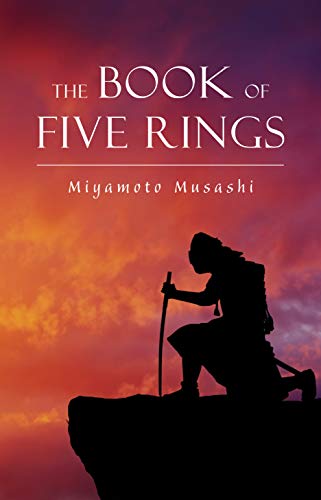
Written over three centuries ago by a Samurai warrior, the book has been hailed as a limitless source of psychological insight for businessmen-or anyone who relies on strategy and tactics for outwitting the competition.
Recommended by Steve Blank, Ryan Holiday, Bill Liao, and 2 others.
Widely held as a classic, this book is much more than a manifesto and manual on swordsmanship and martial arts. It’s about the mindset, the discipline, and the perception necessary to win in life or death situations. As a swordsman, Musashi fought mostly by himself, for himself. His wisdom, therefore, is mostly internal. He tells you how to out-think and out-move your enemies. He tells you how to fend for yourself and live by a code. And isn’t that precisely what so many of us need help with every day? [source]
Bill Liao
The human world occurs in language so best get good at it! [source]
Stephane Grand
I do not believe there are business and non-business books. Business is life, you do business like the man or woman you excavate from the person you are told you are. Hence, the most potent business books are not about business, in my opinion. What makes a great business book is that it is a book that helps you find a better version of yourself. Therefore, I would say that my favorite business book is Miyamoto Musashi’s Book of Five Rings. It is an amazing inwards look at how to win battles. [source]
Cover unavailable
4
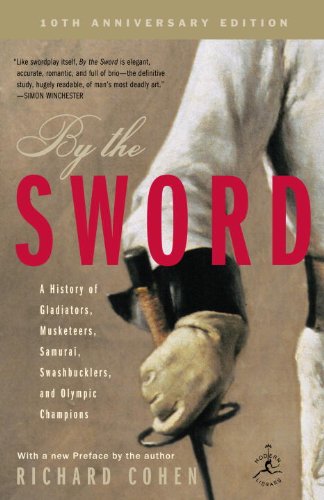
By the Sword: A History of Gladiators, Musketeers, Samurai, Swashbucklers, and Olympic Champions
Richard Cohen
4.5
Napoleon fenced. So did Shakespeare, Karl Marx, Grace Kelly, and President Truman, who would cross swords with his daughter, Margaret, when she came home from school. Lincoln was a canny dueler. Ignatius Loyola challenged a man to a duel for denying Christ’s divinity (and won). Less successful, but no less enthusiastic, was Mussolini, who would tell his wife he was “off to get spaghetti,” their code to avoid alarming the children. By the Sword is an epic history of sword fighting—a science, an art, and, for many, a religion that began at the dawn of civilization in ancient Egypt and has been an obsession for mankind ever since. With wit and insight, Richard Cohen gives us an engrossing history of the world via the sword.
With a new Preface by the author
…
Cover unavailable
5
The Art and Science of Fencing
Nick Evangelista
4.4
Often thought of as an activity just for actors or an elite few, fencing is actually an ideal sport for people of all ages. Fencing develops dexterity, endurance, flexibility, grace, and overall fitness, while also allowing participants the opportunity to hone the mind's problem-solving abilities. It is easily learned and practiced by both young and old, men and women, boys and girls. It has even been molded to fit the needs of the blind and individuals using wheelchairs. This is truly a sport for everyone. The Art and Science of Fencing covers everything from the history of the sport to the specifics of fencing technique, including the psychology of fencing, types of fencing weapons, biographies of great fencers, and information on selecting a fencing school and getting started in the sport. This book is a necessity for everyone who's ever seen an Errol Flynn movie and thought "Hey, that could be me!"
…
Cover unavailable
6
Proud: My Fight for an Unlikely American Dream
Ibtihaj Muhammad
4.4
THE FIRST FEMALE MUSLIM AMERICAN TO MEDAL AT THE OLYMPIC GAMES
NAMED ONE OF TIME'S 100 MOST INFLUENTIAL PEOPLE
Growing up in New Jersey as the only African American Muslim at school, Ibtihaj Muhammad always had to find her own way. When she discovered fencing, a sport traditionally reserved for the wealthy, she had to defy expectations and make a place for herself in a sport she grew to love.
From winning state championships to three-time All-America selections at Duke University, Ibtihaj was poised for success, but the fencing community wasn't ready to welcome her with open arms just yet. As the only woman of color and the only religious minority on Team USA's saber fencing squad, Ibtihaj had to chart her own path to success and Olympic glory.
Proud is a moving coming-of-age story from one of the nation's most influential athletes and illustrates how she rose above it all.
…
Cover unavailable
7
The Art and Science of Staff Fighting: A Complete Instructional Guide
Varady
4.4
NINE LEVELS, EASY TO EXPERT
This book stands apart from other staff training manuals. While most titles focus on forms and twirling, The Art and Science of Staff Fighting emphasizes the dynamics of combat. The author draws on thirty years of martial experience, presenting the best of both Eastern and Western traditions.
Joe Varady lays out a comprehensive course of study in nine levels, from beginner to expert. He guides readers through such fundamentals as stances, striking, blocking, and footwork. In advanced lessons, readers learn disarming techniques, groundwork, and facing multiple opponents.
But this book is not just for staff enthusiasts. Even those unfamiliar with martial arts can adapt these techniques, increasing their skill and confidence in defending themselves.
"Our environment is usually full of improvised weapons," Varady writes. "Staff fighting techniques can be effectively applied in a self-defense situation using a walking stick, coatrack, curtain rod, floor lamp, hockey stick, fallen tree branch, broom, mop, shovel, or rake."
Equipped with this knowledge, readers will begin to realize that, in one way or another, they are nearly always armed and capable of defending themselves.
This book features:
Nine levels of instruction, progressing from easy to expert Over 600 photos with motion arrows A "nondenominational" approach to staff, utilizing the best of Eastern and Western arts A comprehensive, methodical approach to building staff skills If you are already a student of the staff, these lessons will not conflict with your katas or current style. Instead, they will augment your techniques, broadening your options.
Whether you are an experienced staff fighter or a layman seeking practical techniques for self-defense, The Art and Science of Staff Fighting will help you develop the skills you need.
…
Cover unavailable
8
The Art and Science of Stick Fighting: Complete Instructional Guide
Joe Varady
4.4
"Simplicity is the shortest distance between two points." ― Bruce Lee, The Tao of Jeet Kune Do
The best of both Eastern and Western stick fighting techniques
The Art and Science of Stick Fighting is a unique, non-style specific, approach to fighting with the short stick. Its curriculum is streamlined and divided into nine logical stages of training that allow the reader to quickly and methodically learn and develop the skills needed for fighting with the stick. Whether you are just starting out, or have been practicing stick fighting for years, there is something for everyone in this book. Also included are systematic workouts and descriptions of how to make and use specific training equipment as you learn and master The Art and Science of Stick Fighting.
The Art and Science of Stick Fighting features Nine levels of instruction, progressing from easy to expert Over 700 photos with motion arrows A "nondenominational" approach to the stick, utilizing the best of Eastern and Western arts A comprehensive, methodical approach to building stick fighting skills This book stands apart from other stick fighting training manuals because it emphasizes the dynamics of combat. Many other books focus on forms and twirling. The author draws on thirty years of martial experience, presenting the best of both Eastern and Western traditions.
The Art and Science of Stick Fighting begins with the basics, upon which everything else relies.
A stable stance Basic footwork An effective guard From there you learn different types of strikes and how to practice them in helpful, easy-to-learn patterns. The aim is to grow so comfortable wielding a stick that it is as though the stick has become an extension of your body. Once the basics are in place, you learn the strategies and tactics of fighting with the stick at long, middle, and close range. By controlling the distance, you control the fight!
Learn important guidelines for sparring, from light contact up to full-contact training. Learn how to construct your own padded weapons. Learn effective fighting tips that will rev up your game. Also included are chapters on advanced techniques; combating short ranged weapons such as a knife to long range weapons like the staff. Even detailed techniques to use when your opponent is armed but you are not!
Whether you already study the stick or are just starting out, if you want to learn how to get an edge, The Art and Science of Stick Fighting is for you!
…
Cover unavailable
9
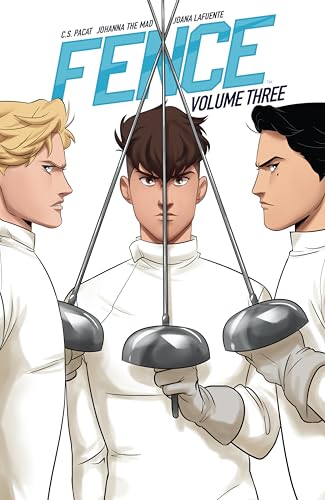
Fence, Vol. 3
C.S. Pacat, Joana la Fuente, Johanna the Mad
4.3
Combines Issues #9-12.
Scrappy fencer Nicholas Cox comes to the end of his path to prove himself worthy of a father he never knew in the face of surly upperclassmen, nearly impossible odds, and the talent of his rival, sullen fencing prodigy, Seiji Katayama.
Sparks fly white-hot on the pitch as Nicholas and Seiji finally face off once again in the halls of King’s Row. It’s a match that will change King’s Row (and both of them!) forever, and set the stage as the team journeys to face their bitter rivals and prove themselves once and for all.
The third volume of the breakneck series from writer C.S. Pacat (The Captive Prince) and fan-favorite artist Johanna the Mad comes at you as fast as a parry and hits as hard as a strike.
…
Cover unavailable
10
The Three Musketeers (The D'Artagnan Romances, #1)
Alexandre Dumas and William Robso
4.3
Alexandre Dumas’s most famous tale— and possibly the most famous historical novel of all time— in a handsome hardcover volume.
This swashbuckling epic of chivalry, honor, and derring-do, set in France during the 1620s, is richly populated with romantic heroes, unattainable heroines, kings, queens, cavaliers, and criminals in a whirl of adventure, espionage, conspiracy, murder, vengeance, love, scandal, and suspense. Dumas transforms minor historical figures into larger- than-life characters: the Comte d’Artagnan, an impetuous young man in pursuit of glory; the beguilingly evil seductress “Milady”; the powerful and devious Cardinal Richelieu; the weak King Louis XIII and his unhappy queen—and, of course, the three musketeers themselves, Athos, Porthos, and Aramis, whose motto “all for one, one for all” has come to epitomize devoted friendship. With a plot that delivers stolen diamonds, masked balls, purloined letters, and, of course, great bouts of swordplay, The Three Musketeers is eternally entertaining.
…
Cover unavailable
11
Fence, Vol. 1
C.S. Pacat, Rebecca Nalty, Johanna the Mad
4.3
An alternate cover edition can be found here.
Combines Issues #1-4.
Nicholas, the illegitimate son of a retired fencing champion, is a scrappy fencing wunderkind, and dreams of getting the chance and the training to actually compete. After getting accepted to the prodigious Kings Row private school, Nicholas is thrust into a cut-throat world, and finds himself facing not only his golden-boy half-brother, but the unbeatable, mysterious Seiji Katayama...
Through clashes, rivalries, and romance between teammates, Nicholas and the boys of Kings Row will discover there’s much more to fencing than just foils and lunges. From acclaimed writer C.S. Pacat (The Captive Prince) and fan-favorite artist Johanna the Mad.
…
Cover unavailable
12
Fencing and the Master
Laszlo Szabo
4.3
Fencing and the Master is abeloved, unique classic that distills the fencing wisdom of the twentieth century.
Of great and lasting value. -- Robert Scranton, President, USFCA The most complete book on the teaching and learning of fencing I have ever read. -- Dick Oles, Head Coach, Johns Hopkins. More great coaches have stolen ideas from this book than any other! George Edward Kolombatovich, Fencing Coach, Columbia University.
Szabo's book lays out the tools and techniques of coaching, but more than that, it opens up the heart and spirit of a maestro. Copiously illustrated. Supplemented with a discussion of fencing terminology and with a new memoir of Szabo by his student Eugene Hamori, Olympic medalist, US sabre champion, and distinguished coach.
…
Cover unavailable
13
Learning Fencing: A Training and Activity Book for 6- To 10-Year-Olds
Katrin Barth and Berndt Barth
4.3
This book, written in a style easily comprehended by a child and containing motivating illustrations, was written with the youngest of athletes in mind. By inviting kids to complete individual tasks, to solve puzzles, to answer questions and to complete drawings, the book achieves the feel of an activity book. The little cartoon character "Foily accompanies the reader throughout the book, as he offers tips and invites the child to practice independently. The contents correspond to the most basic level of fencing training. It is intended as a teaching tool for fencing instructors and trainers, to help promote understanding of the sport of fencing for fencing students, and to improve independence in training. For the parents of fencing children it is an important motivational companion to fencing instruction
…
Cover unavailable
14
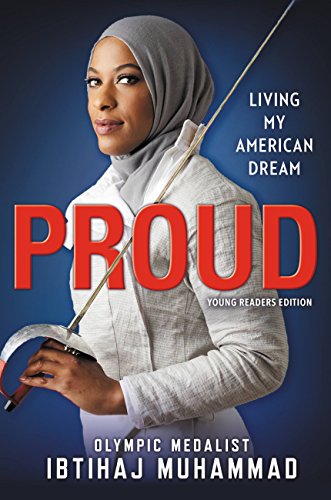
Proud (Young Readers Edition): Living My American Dream
Ibtihaj Muhammad
4.3
The inspiring and critically acclaimed all-American story of faith, family, hard work, and perseverance by Olympic fencer, activist, and Time "100 Most Influential People" honoree Ibtihaj Muhammad
At the 2016 Olympic Games, Ibtihaj Muhammad smashed barriers as the first American to compete wearing hijab, and she made history as the first Muslim American woman to win a medal. But before she was an Olympian, activist, and entrepreneur, Ibtihaj was a young outsider trying to find her place.
Growing up in suburban New Jersey, Ibtihaj was often the only African American Muslim student in her class. When she discovered and fell in love with fencing, a sport most popular with affluent young white people, she stood out even more. Rivals and teammates often pointed out Ibtihaj's differences, telling her she would never succeed. Yet she powered on, rising above bigotry and other obstacles on the path to pursue her dream.
Ibtihaj's inspiring journey from humble beginnings to the international stage is told in her own words and enhanced with helpful advice and never-before-published photographs. Proud is an all-American tale of faith, family, hard work, and self-reliance.
…
Cover unavailable
15
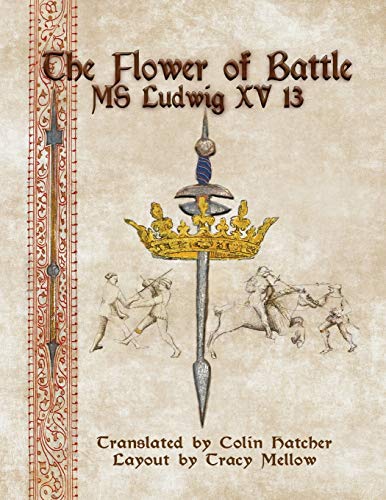
The Flower of Battle: MS Ludwig XV13
Colin Hatcher
4.3
Fiore dei Liberi was a weapons-master from Italy who was active in the 14th and early 15th century. After fifty years of training Italy's elite, he put his art to paper and created the Flower of Battle. The Flower of Battle covers unarmed combat, the use of the dagger, sword, spear, axe as well as fighting in armor, without and on horseback as well as other odds and ends. MS Ludwig XV 13 is the most complete surviving copy of Fiore's work and has been painstakingly translated by Colin Hatcher and formatted to be as close to the original as possible by Tracy Mellow in an effort to bring Fiore's work to the English-speaking world.
…
Cover unavailable
16
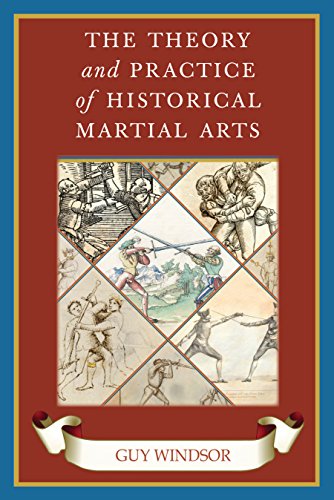
The Theory and Practice of Historical Martial Arts
Guy Windsor
4.3
Cover unavailable
17
Black Brother, Black Brother
Jewell Parker Rhodes
4.3
From award-winning and bestselling author, Jewell Parker Rhodes comes a powerful coming-of-age story about two brothers, one who presents as white, the other as black, and the complex ways in which they are forced to navigate the world, all while training for a fencing competition. Donte wishes he were invisible. As one of the few black boys at Middlefield Prep, he feels as if he is constantly swimming in whiteness. Most of the students don't look like him. They don't like him either. Dubbed the "Black Brother," Donte's teachers and classmates make it clear they wish he were more like his lighter skinned brother, Trey. Quiet, obedient.
When an incident with "King" Alan leads to Donte's arrest and suspension, he knows the only way to get even is to beat the king of the school at his own game: fencing. With the help of a former Olympic fencer, Donte embarks on a journey to carve out a spot on Middlefield Prep's fencing team and maybe learn something about himself along the way.
…
Cover unavailable
18
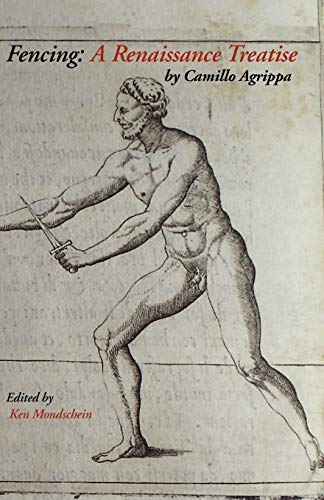
Fencing: A Renaissance Treatise
Camillo Agrippa
4.3
Camillo Agrippa's widely influential "Treatise on the Science of Arms" was a turning point in the history of fencing. The author - an engineer by trade and not a professional master of arms - was able to radically re-imagine teaching the art of fencing. Agrippa's treatise is the fundamental text of Western swordsmanship. Just as earlier swordsmanship can be better understood from Agrippa's critiques, so too was his book the starting point for the rapier era. Every other treatise of the early-modern period had to deal explicitly or implicitly with Agrippa's startling transformation of the art and science of self-defense with the sword. Likewise, all of the fundamental ideas that are still used today - distance, time, line, blade opposition, counterattacks and countertime - are expressed in this paradigm-shifting treatise. This is a work that should be on the bookshelf of anyone interested in the history, practice or teaching of fencing. His treatise was also a microcosm of sixteenth-century thought. It examines the art, reduces it to its very principles, and reconstructs it according to a way of thinking that incorporated new concepts of art, science and philosophy. Contained within this handy volume are concrete examples of a new questioning of received wisdom and a turn toward empirical proofs, hallmarks of the Enlightenment. The treatise also presents evidence for a redefinition of elite masculinity in the wake of the military revolution of the sixteenth century. At the same time, is offers suggestive clues to the place of the hermetic tradition in the early-modern intellectual life and its implications for the origins of modern science. Camillo Agrippa's "Treatise on the Science of Arms" was first published in Rome in 1553 by the papal printer Antonio Blado. The original treatise was illustrated with 67 engravings that belong to the peak of Renaissance design. They are reproduced here in full. "Mondschein has at last made available to English-speaking readers one of the most important texts in the history of European martial arts. Agrippa marks a turning point in the intellectual history of these arts.... Mondschein's introduction to his work helps the reader understand Agrippa - and the martial practices themselves - as pivotal agents in the evolving cultural and intellectual systems of the sixteenth century. Above all, Mondschein's translation is refreshingly clean and idiomatic, rendering the systematic clarity of the Italian original into equally clear modern English - evidence of the author's familiarity with modern fencing and understanding of the physical realities that his author is trying to express. Mondschein's contextualization of his topic points the way for future scholarly exploration, and his translation will doubtless be valued by both students of cultural history and practitioners of modern sword arts." - Dr. Jeffrey L. Forgeng, Paul S. Morgan Curator -Higgins Armory Museum, Adj. Assoc. Prof. of Humanities, Worcester Polytechnic Institute First English translation. Paperback, 234 pages, 67 illustrations, introduction, bibliography, glossary, appendix, index."
…
Cover unavailable
19
The Fencing Master
Arturo Perez-Reverte
4.3
In Madrid in 1868, fencing master and man of honor Don Jaime is approached by a mysterious woman who seeks to learn the unstoppable thrust, an arcane technique known only to him. All too soon he finds himself in the vortex of a plot that includes seduction, secret political documents, and more than one murder. Rich with historical detail of a decaying world that agonizes - as does the art of fencing itself - over the ideals of honor and chivalry, The Fencing Master is superb literature and a true page-turner.
…
Cover unavailable
20
Fence, Vol. 2
C.S. Pacat, Joana la Fuente, Johanna the Mad
4.3
Combines Issues #5-8.
Nicholas Cox is determined to prove himself in the world of competitive fencing, and earn his place on the Kings Row fencing team, alongside sullen fencing prodigy, Seiji Katayama, to win the right to go up against his golden-boy half-brother.
Tryouts are well underway at King’s Row for a spot on the prodigious fencing team, and scrappy fencer Nicholas isn’t sure he’s going to make the grade in the face of surly upperclassmen, nearly impossibly odds, and his seemingly unstoppable roommate, the surly, sullen Seiji Katayama. It’ll take more than sheer determination to overcome a challenge this big!
From the superstar team of C.S. Pacat (The Captive Prince) and fan-favorite artist Johanna the Mad comes the second volume of this acclaimed, dynamic series.
…
Cover unavailable
21
The Master Will Appear (Las Palmas Fencing Club, #1)
L.A. Witt, Michael Ferraiuolo, et al
4.3
Dr. Mikhail “Misha” Budnikov takes one look at fellow fencer Ryan O’Connor and instantly knows his type. The undisciplined hothead is all ego with no finesse and even less control. In short, Misha’s pet peeves personified. To put the arrogant kid in check, Misha challenges him to a sparring match, which he predictably wins.
Not so predictably, Ryan asks him to be a mentor and show him how to fence. Startled by the moment of humility, Misha agrees.
What begins as fencing lessons becomes something much hotter, and before they know it, Misha is giving Ryan an entirely different kind of education. Dominance, submission, pain, pleasure—at the hands of an older, experienced man, a whole new world is opening up for Ryan.
As the trust deepens and their bond strengthens, though, Ryan retreats because that sham called love left him jaded long ago. Cynical beyond his years, he’s not letting his guard down, least of all for a thrice-divorced man twice his age.
Now Misha has to find a way to crack through those defenses…or accept defeat and walk away from the submissive who might just be the love of his life.
…
Cover unavailable
22
The Art of Dueling: 17th Century Rapier as Taught by Salvatore Fabris
Salvator Fabris, Tom Leoni
4.2
The Italian Rapier has held a special place in the history of European swordsmanship. Famous for generations after his death, Salvatore Fabris became the personal fencing master to the equally famous King Christianus of Denmark. Towards the end of his career, and at the king's request, the great master set down the sum of his art in clear in a clear, concise manual of footwork, guards, attacks, defenses, and conterattacks with the rapier, used alone or with a dagger or cloak. A landmark work brought to English for the very first time, Tomasso Leoni offers a complete translation that accompanies the 200 17th century engravings.
…
Cover unavailable
23
Kendo: A Comprehensive Guide to Japanese Swordsmanship
Geoff Salmon
4.2
Master the art of Kendo—Japanese Swordsmanship with this illustrated and comprehensive martial arts guide.
Kendo or the "Way of the Sword" holds a special place within the martial arts as one of the few practices tracing back directly to Japan's ancient samurai heritage. Modern students flock to kendo for physically—and mentally—challenging activity that combines traditional martial arts values with strenuous physical activity.
Author Geoff Salmon has over 40 years of kendo experience gained in and outside of Japan. His goal in this kendo guide is to dispel many misconceptions about the sport and to make kendo training accessible and practical for anyone. His simple, straightforward writing style is especially helpful for beginning students and martial artists from other disciplines who wish to add kendo training to their repertoire.
The core of this kendo book is a series of detailed instructional sequences demonstrating the basic kendo techniques. The author also presents the fundamental principles and philosophy that make kendo as much an exercise of the mind as of the sword. For many adherents, the goal is to train your mind to achieve a state of mushin (no-mind). Beyond that, this book also shows you how to win competitions and integrate kendo into your fitness routines.
This is the first book to decidedly link the philosophical and mental elements of kendo to the physical techniques, thereby enabling readers to gain a holistic understanding of the martial art. It offers a comprehensive training program similar to those given by leading kendo teachers in Japan, past and present.
…
Cover unavailable
24
The Science Of Fencing: A Comprehensive Training Manual For Master And Student; Including Lesson Plans For Foil, Sabre And Epee Instruction
William M. Gaugler
4.2
The Military Fencing Masters Program, established in 1979, is where aspiring fencers go to earn legitimate degrees as teachers of the art of fencing. This internationally recognized course -- which covers all aspects of fencing -- has produced more than a few accomplished fencing masters since ts inception. It is, to date, the only successful long-term program of its kind in the United States.A comprehensive fencing training manual for both the fencing master and his students. The only book that includes lesson plans for foil, sabre and epee instruction. -- The most comprehensive text available -- Complete basic, intermediate and advanced Foil, Sabre and Epee lessons -- A companion volume to On Fencing by Aldo Nadi
…
Cover unavailable
25
Cold Steel: The Art of Fencing with the Sabre
Alfred Hutton and Ramon Martinez
4.2
A pioneer of modern fencing, Alfred Hutton was the first president of the Amateur Fencing Association and a father of modern research into the Western combat arts. In addition to his lectures about ancient weapons and his demonstrations of their use, Hutton created this 1889 classic, a continuing source of instruction and enlightenment to modern readers. The techniques associated with the sabre differ markedly from those of the épeé and the rapier. This study offers both technical and historical views of the art of the sabre. It begins with a look at the weapon's construction and its grip, followed by explanations of a variety of different strokes and parries as well as methods of combining attack and defense. Additional topics include approaches suitable for left-handed fencers, ceremonial aspects of the art, and contrasts between the sabre, the bayonet, and the French sword. Descriptions of associated weapons cover the great stick and the constable's truncheon, and the book concludes with considerations of the short sword-bayonet, or dagger. Fifty-five illustrations demonstrate how to hold the sabre, how to parry and guard, seizure, and numerous other aspects of the art of fencing with a sabre.
…
Cover unavailable
26
Girls with Swords: Why Women Need to Fight Spiritual Battles
Lisa Bevere, John Bevere
4.2
What if you discovered you have been entrusted with an invisible, invincible, and incorruptible weapon? Would you use it? Move beyond only study and begin to wield the Word of God!
“If you don’t have a sword, sell your cloak and buy one!” —Jesus
If there ever was a time for women to be armed, it’s now.
Yet the Word of God is a sword we often are more comfortable studying than wielding. It’s time we give girls swords and watch them connect heaven to earth. Worldwide, women are the targets of prejudice, sex trafficking, abuse, and even gendercide. Lisa Bevere writes that these attacks say more about who women might be in the future than who they have been in the past. In Girls with Swords she explains a spiritual enemy is seeking to disarm women on every level. It’s time women become the heroes God created them to be and stand—courageous, discerning, forgiving, and wise.
Creatively forging the imagery of swords, the Word of God, and the Cross, Girls with Swords will teach you:
• How to speak the language of heaven on earth • What it means to intercede • What it means to carry your cross • What it means to be discerning • How to disarm the enemy • Why women are the enemy’s target—and why God needs them to be heroes
It’s time to take up your sword and be a hero.
…
Cover unavailable
27
Ridolfo Capoferro's The Art and Practice of Fencing: A Practical Translation for the Modern Swordsman
Tom Leoni
4.2
In the 1600s, the elegant and deadly Italian rapier was the choice sword of duelists, officers, gentlemen and noblemen: to master the rapier was to be a feared martial artist and a paragon in single combat.
Among the original treatises on the use of this weapon, the most prized by historical fencing revivalists in the last 150 year has been the Great Representation of the Art and Practice of Fencing, written in 1610 by Master Ridolfo Capoferro. In this remarkable text, Capoferro described and illustrated--in unmatched detail--the use of the rapier alone and with a left-handed dagger, cloak and shield, offering the modern historical fencing student a true wealth of Renaissance fencing theory, form and repertoire.
With this book, expert researcher and rapier instructor Tom Leoni offers a full, accurate and accessible English translation of Capoferro’s teachings, complete with high-resolution reproductions of the 43 original illustrations. To make the book even more useful, Tom has included bullet-point synopses of all the actions illustrated by Capoferro, as well as a glossary of rapier-fencing terms with examples referring the reader to how they are used in the text. Also included is a primer on key rapier-fencing concepts and actions, as well as a historical introduction about Capoferro and his extraordinary relevance in the revival of historical martial arts.
…
Cover unavailable
28
American Fencer: Modern Lessons from an Ancient Sport
Tim Morehouse
4.2
In his fast-paced memoir, written with best-selling author Garth Sundem, Olympic silver medalist Tim Morehouse describes his life’s inspiring trajectory from a rough neighborhood in New York City to fencing halls around the world and eventually the Olympic podium. Using the Italian adage Maestro di scherma, maestro di vita (Master fencing, master life] as his compass, Tim shows us the hidden and sometimes dangerous underbelly of international saber fencing and shows how revelations on the strip can inform our lives, such as: Win the idea, lose the point”—You can fence well and still be touched, but by measuring success by your actions and not the score, you can turn the tide of a match. “Close the distance”—It’s useless to shout a pickup line from across a crowded bar, and likewise, it’s useless to feint cut Russia’s Stanislav Pozdniakov from an inch too far away. The right move from the wrong distance is no move at all.
…
Cover unavailable
29
The 'Lost' Second Book of Nicoletto Giganti(1608): A Rapier Fencing Treatise
Nicoletto Giganti, Piermarco Terminiello, et al.
4.2
Cover unavailable
30
Girls with Swords Fencing Manual Workbook
Lisa Bevere
4.2
Cover unavailable
31
The Unfettered Mind: Writings from a Zen Master to a Master Swordsman
Takuan Soho
4.2
The Japanese have always closely associated the sword and the spirit, but it was in the 1600s during the Tokugawa shogunate when the techniques of swordsmanship became forever associated with the spirit of Zen. The Unfettered Mind is a book of advice on swordsmanship and the cultivation of right mind and intention, written by the 17th-century Zen master Takuan Soho (1573-1645). Takuan was a gardener, calligrapher, poet, author, adviser to samurai and shoguns, and a pivotal figure in Zen painting. He was also known for his brilliance and acerbic wit. The succinct and pointed essays in this book were written to the samurai Yagyu Munenori, who was a great swordsman and rival to the legendary Miyamoto Musashi.
In these writings Soho is concerned primarily with understanding and refining the mind—both generally and when faced with conflict. Soho illuminates the difference between the right mind and the confused mind, the nature of right-mindedness, and what makes life precious. First published in 1988, this book is considered a true classic that influenced the direction that the art of Japanese swordsmanship has taken since.
…
Cover unavailable
32
Self-Defense for Gentlemen and Ladies: A Nineteenth-Century Treatise on Boxing, Kicking, Grappling, and Fencing with the Cane and Quarterstaff
Colonel Thomas Hoyer Monstery
4.2
Self-Defense for Gentlemen and Ladies is the treatise of Colonel Thomas Hoyer Monstery, a master swordsman who participated in more than fifty duels, fought under twelve flags, battled gangsters, and was constantly involved in the great conflicts and upheavals of his time. This book is the magnum opus of this remarkable and colorful character, originally published in the 1870s as a series of newspaper articles and collected here for the first time. Colonel Monstery presents a unique look into the Victorian-era fighting world, describing styles such as British “purring” (shin-kicking), Welsh jump-kicking, and American rough-and-tumble fighting, and provides illustrated instruction in the art of gentlemanly self-defense with a cane, staff, or one’s bare hands. Fifty rare drawings and photographs from the period illuminate Monstery’s world, while an extensive glossary of terms and an introductory biography of Colonel Monstery—including fascinating details of his many duels as well as his groundbreaking devotion to teaching fencing and self-defense skills to women—update his text to make it accessible and useful to gentlemen and ladies of any era.
CONTENTS Colonel Thomas Hoyer Monstery: The Unknown American Martial Arts Master I. Introduction. II. The Logic of Boxing. III. Standing and Striking. IV. Advancing to Strike and Feinting. V. Simple Parries in Boxing. VI. Parries with Returns. VII. Effective or Counter Parries in Boxing. VIII. Offence and Defense by Evasions. IX. Trips, Grips, and Back-Falls. X. Rules for a Set-to with Gloves. XI. Observations on Natural Weapons. XII. The Use of the Cane. XIII. The Use of the Cane (continued). XIV. The Use of the Staff. XV. The Use of the Staff (continued). Appendix: Monstery's Rules for Contests of Sparring and Fencing Glossary
…
Cover unavailable
33
Understanding Fencing
Zbigniew Czajkowski
4.2
The world-famous coach who has produced world champions and Olympic gold medalists- in all three weapons- has finally distilled his teachings in English! An in-depth look at the coach's work, starting with basic theory and progressing through fencing psychology, how to conduct lessons at every level, how to prepare for top-level competitions and what to do at them...and so much more. It's all presented with the wit, charm, and depth for which Professor Czajkowski is known around the world.
…
Cover unavailable
34
The Speed of Dark
Elizabeth Moon
4.2
In the near future, disease will be a condition of the past. Most genetic defects will be removed at birth; the remaining during infancy. Unfortunately, there will be a generation left behind. For members of that missed generation, small advances will be made. Through various programs, they will be taught to get along in the world despite their differences. They will be made active and contributing members of society. But they will never be normal.
Lou Arrendale is a member of that lost generation, born at the wrong time to reap the awards of medical science. Part of a small group of high-functioning autistic adults, he has a steady job with a pharmaceutical company, a car, friends, and a passion for fencing. Aside from his annual visits to his counselor, he lives a low-key, independent life. He has learned to shake hands and make eye contact. He has taught himself to use “please” and “thank you” and other conventions of conversation because he knows it makes others comfortable. He does his best to be as normal as possible and not to draw attention to himself.
But then his quiet life comes under attack. It starts with an experimental treatment that will reverse the effects of autism in adults. With this treatment Lou would think and act and be just like everyone else. But if he was suddenly free of autism, would he still be himself? Would he still love the same classical music–with its complications and resolutions? Would he still see the same colors and patterns in the world–shades and hues that others cannot see? Most importantly, would he still love Marjory, a woman who may never be able to reciprocate his feelings? Would it be easier for her to return the love of a “normal”?
There are intense pressures coming from the world around him–including an angry supervisor who wants to cut costs by sacrificing the supports necessary to employ autistic workers. Perhaps even more disturbing are the barrage of questions within himself. For Lou must decide if he should submit to a surgery that might completely change the way he views the world . . . and the very essence of who he is.
Thoughtful, provocative, poignant, unforgettable, The Speed of Dark is a gripping exploration into the mind of an autistic person as he struggles with profound questions of humanity and matters of the heart.
From the Hardcover edition.
…
Cover unavailable
35
Lessons of the Broadsword Masters: Essential Skills of Broadsword Fencing
Christopher Scott Thompson
4.2
Cover unavailable
36
Dragonfly Summer (Smith Mountain Lake #2)
Inglath Cooper
4.2
Just when you think you'll never find the real thing. . .
When she realizes she's to blame for her nineteen-year-old daughter's disappearance, Keegan Monroe leaves behind a successful career in L.A. for a quieter life on Smith Mountain Lake in Virginia. Raised in the foster care system, Keegan had been determined that her children would live a different life. And so, while she fully met their physical needs, the best schools and a luxurious lifestyle, she hadn't been a daily presence in their lives the way she now knows she should have been. She doesn't intend to waste her son's last year of high school in the same way and determines that things will be different between them in spite of his obvious resentment of the move to Virginia.
Bowie Dare, an ex-FBI agent turned thriller writer, loves the life he's made for himself and his dog Carson on Smith Mountain Lake. Years of seeing the evil underbelly of society led him to a point where he had to choose a different existence. He'd lost his wife in the process -- she liked the old Bowie -- the one who had been able to compartmentalize the bad stuff he saw and go on with life per normal.
When Keegan stops at Bowie's house to ask directions the night she arrives at the lake, they're both at a point of questioning their earlier choices and whether those choices had been worth the price. But in this chance encounter, they begin to realize that the puzzle pieces of life don't always make sense until we're a little further down the road. And you just never know when the real thing might come along.
***
★★★★★Love everything Inglath writes. Keegan Monroe moves to Smith Mountain Lake Virginia from Hollywood to try to save her son from going down a bad path her daughter took, they haven't heard from her in a year. Bowie Dare left the FBI for the quiet life at the lake where he can write his suspense novels. Keegan and Bowie have a chance meeting when she stops for directions driving into town. Starting over, hope and fate make for a fantastic story.
★★★★★Butterflies. Another romantic, yet thrilling novel that set my belly into a wave of butterflies and feely goods. The simplistic life has never looked more appealing and I feel blessed to be able to relate with it. Nothing better than a connection between a good book and your reality.
★★★★★Loved it! I loved this book! Good plot. Loved the quotes in between the short chapters. The type of book you can't put down. Just what I needed for relaxing on a summer afternoon/ evening and sitting outside and reading. Buying another one of many by Inglath Cooper now.
…
Cover unavailable
37
Lessons on the Thrust
Reinier van Noort, Jean Daniel L'Ange, et al
4.2
In 1664, Jéann Daniel L'Ange published the Deutliche und gründliche Erklärung der adelichen und ritterlichen freyen Fecht-Kunst in Heidelberg, Germany. This was one of the first concise and systematic treatises on the typically German style of rapier fencing that evolved from the teachings of Fabris and his German students. L'Ange presents his personal point of view on this fencing style, which includes a rather large selection of brutal grappling moves.
This first English translation of L'Ange's treatise, made by Reinier van Noort and published exactly 350 years after the original edition, provides a fascinating viewpoint on a fencing style that is underrepresented in the modern studies on historical martial arts. In this translation, Jéann Daniel L'Ange's view on fencing is presented in a way that is both close to the original, and clearly understandable by a modern reader. Meticulously cleaned scans of the 61 page size plates from the original treatise are also included.
Reinier van Noort has been researching and teaching rapier fencing since 2010, focusing mainly on the single rapier as used in the Netherlands and Germany in the late 17th century. He has translated the anonymous Vechtboek (UBL BPL 3281), Johann Georg Pascha's Kurtze iedoch Deutliche Beschribung handlend von Fechten auff den Stoß und Hieb, and more. Reinier has been a member of HEMAC since 2010.
…
Cover unavailable
38
On Fencing
Aldo Nadi
4.2
One the greatest of modern swordsmen and an Olympic champion, Nadi instructed men, women, and children in the art and science of fencing. His comprehensive and accessible manual covers fundamental and advanced foil techniques and offers philosophical and psychological evaluations of every facet of the sport.
Cover unavailable
39
I33 Fencing in the Style of the Walpurgis Manuscript 2nd edition
Andrew Kenner
4.2
The Walpurgis Manuscript (Royal Armouries I.33) is the world's oldest known personal fencing manual, having been written in early 14th century Germany. This fascinating document offers a unique window into a style of sword and buckler fencing that appears to have been both a popular sport and a means of waging war in Western Europe for more than a century. This extensively revised and extended Second Edition will take you through a series of instructions and exercises designed to have you fencing in a way which the authors of the I.33 Manuscript would have immediately recognized. Along with several important interpretation updates, the Second Edition features over 100 illustrative photographs and more than 90 exercises. Rediscover this ancient and effective medieval combat style for yourself, a style which fascinated our ancestors and is still intriguing fencers today.
…
Cover unavailable
40
The Swordman's Companion: A Modern Training Manual for the Medieval Longsword
Guy Windsor
4.2
How was the medieval sword used? Although many books have been released detailing techniques of the medieval swordmasters, none of them can really be termed easily interpreted manuals of technique. For the beginner, they are hard to decipher and interpret.The well-respected founder of the prestigious Helsinki School of European Swordsmanship, Mr. Windsor has offered a nuts-and-bolts approach to teaching Italian historical swordsmanship through drills, exercises. Based on the systems of Fiore dei Liberi, Fillipo Vadi, and others, this work should be one of the first books acquired by anyone wishing to explore swordsmanship as a practical art.
…
Cover unavailable
41
Saber Exercise 1914
Lt. George S. Patton Jr.
4.2
A true reproduction of the U.S. Army 1914 Saber Exercise written by Lt. George S. Patton, Jr. while he was "Master of the Sword" at Fort Riley, Kansas.
Cover unavailable
42
One Touch At A Time: Psychological Aspects Of Fencing
Aladar Kogler
4.2
A complete revision and substantial expansion of the first edition of Aladar Kogler's instant classic. This unique book looks at the key attributes that make elite fencers into world champions. Then it shows how you can develop these traits in yourself-- how you can strengthen yourself mentally to meet fencing's unique demands. Specific recommendations for your sense of distance, sense of tempo, bout preparation, bout psychology, and tactics. And there's much more, including a general program of mental preparation that extends to all aspects of life. Written especially for coaches but a must-read for all competitors.
…
Cover unavailable
43
Storey's Guide to Raising Dairy Goats: Breed Selection, Feeding, Fencing, Health Care, Dairying, Marketing
Jerry Belanger
4.2
This best-selling handbook is packed with detailed information on housing, feeding, and fencing dairy goats. It’s been the trusted resource on the topic for farmers and homesteaders since it was originally published in 1975, and the new edition — completely updated and redesigned — makes Storey’s Guide to Raising Dairy Goats more comprehensive and accessible than ever. In-depth sections explain every aspect of milking, including necessary equipment, proper hand-milking techniques, and handling and storing the milk. New color illustrations show each stage of kidding, and substantial chapters on dairy goat health and breeding include the most up-to-date research and practices.
…
Cover unavailable
44
The Life-Giving Sword: Secret Teachings from the House of the Shogun
Yagyu Munenori, William Scott Wilson
4.2
This is a translation of an important classic on Zen swordfighting. Yagyu Munenori was so widely renowned that he was appointed official sword instructor to two Tokugawa shoguns. (The position was always coveted by Miyamoto Musashi, but he never succeeded in gaining the post). Yagyu's style is known as the Shinkage-ryu style, for centuries the official style of the Tokugawa dynasty. His spiritual mentor was Zen priest Takuan. Here, Yagyu's Buddhist spirituality is clearly reflected in his central idea of the "life-giving sword" - the notion of controlling an opponent by the spiritual readiness to fight, rather than during the fight. His mastery of restraint and diplomacy made him a trusted political and military advisor to the shoguns. This book is a look into a master swordsman's thoughts on nonattachment and even non-violence.
…
Cover unavailable
45
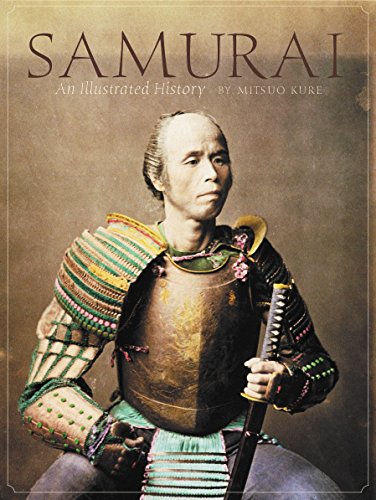
Samurai: An Illustrated History
Mitsuo Kure
4.2
Samurai: An Illustrated History brings the violent, tumultuous, and, at the same time, elegant world of the medieval Japanese samurai to life.
This Japanese history book traces the story of a unique historical phenomenon: a period of 700 years—equivalent to the entire stretch of Western history between the reigns of the Crusader king Richard the Lionhearted and of Queen Victoria at the height of the British Empire—during which an enclosed civilization was dominated by a single warrior caste.
The historical narrative of samurai history is supported by explanations of samurai armor, weapons, fortifications, tactics, and customs, and illustrated with nearly 800 fascinating color photographs, maps, and sketches, including ancient scroll paintings and surviving suits of armor preserved for centuries in Japanese shrines.
From the 12th to the 19th centuries the history of Japan was mainly the history of the samurai—the class of professional fighting men. At first, they were no more than lowly soldiery employed by the court aristocracy of Kyoto, but the growing power of the provincial warrior clans soon enabled them to brush aside the executive power of the imperial court and to form a parallel military government. Though individual dynasties came and went in cycles of vigor and decadence, the dominance of the samurai as a class proved uniquely resilient.
…
Cover unavailable
46
Foiled (Foiled, #1)
Jane Yolen, Mike Cavallaro
4.2
Aliera Carstairs just doesn't fit in.
She's invisible at high school.
She's too visible at the fencing gym.
Aliera's starting to wonder...where does she belong?
Cover unavailable
47
Fencing Is My Life
Sergei Golubitsky
4.2
The best fencing autobiography since Nadi's, with inspiration and instruction for every fencer-a great gift for young fencers and an important story for coaches. In this book, a great champion tells his story and teaches his secrets! Golubitsky, a four-time overall World Cup Champion, three-time World Champion, and winner of nineteen World Cups, recounts his difficult rise to the top, his triumphs and mistakes, and the lessons he learned from them. Sergei tells of his early days inside the old Soviet "sports machine," the breakup of the USSR, and his emergence into the new world of international fencing. This is an inspiring story of desire and persistence, frustration and triumph. Plus, it's packed with practical tips for fencing and training. Numerous photos.
…
Cover unavailable
48
Japanese Swordsmanship: Technique And Practice
Donn F. Draeger
4.2
This book offers a wonderful introduction to the martial artist who has been exposed to limited swordplay in a martial arts class and wants to continue learning separately. Illustrations and explanations of the moves and forms help readers fully learn each lesson.
Cover unavailable
49
Duellists Companion: A Training Manual for 17th Century Italian Rapier
Guy Windsor
4.2
A modern training manual for the 17th century rapier, lavishly illustrated with over 400 photographs, the Duellist's Companion is a complete training system for rapier, the Queen of Weapons. Guy Windsor, author of the popular longsword text The Swordsmans' Companion, has triumphed in this work, which guides the beginner through the rapier, based on the world of Capo Ferro's 1610 masterpiece, Gran Simulacro.Italian rapier dominated Europe from the 17th - 19th centuries. This book demonstrates convincingly why it was so successful.
…
Cover unavailable
50
Venetian Rapier: The School, or Salle: Nicoletto Giganti's 1606 Rapier Fencing Curriculum
Tom Leoni
4.2
Perhaps no other weapon represents Renaissance Italian fencing like the rapier. But do we know how it was used and how it was taught? This book takes you to the fencing School, or Salle of celebrated renaissance rapier Master Nicoletto Giganti of Venice, one among the period teachers leaving instructions on the use of this weapon. More uniquely, his 1606 text The School, or Salle is a veritable training curriculum, with its stepwise lessons and easy-to-follow explanations on the use of the rapier alone and rapier and dagger. This faithful translation of Giganti’s The School, or Salle by internationally-known rapier teacher Tom Leoni includes the complete text, original illustrations, and an introduction on rapier fencing that will make Giganti’s text easy to follow. If you are a martial artist, a fencer, or have an interest in European martial culture, this book belongs on your shelf.
…
Cover unavailable
51
Fencing: A Know the Game Handbook
Amateur Fencing Association
4.2
Cover unavailable
52
Fighting with the German Longsword
Christian Tobler
4.2
Recorded over six centuries ago, the teachings of the 14th-century Master-at-Arms Johannes Liechtenauer have been given new life by a world-wide community of modern swordsmen and women, fascinated by the elegance, efficiency and depth of his unique martial art. Christian Henry Tobler was one of the pioneers in reviving the medieval Master's art, creating the first, published syllabus for training with the two-handed longsword back in 2004. This fully rewritten, revised and expanded edition brings to bear a decade of refinement, creating a definitive, -how to- guide for students. Beginning with a short historical overview of the art, Mr. Tobler teaches stance, footwork, methods for gripping the sword, and step-by-step instructions for executing the core techniques of the Liechtenauer tradition. Additional chapters introduce students to wrestling, spear and armoured combat; demonstrating the art's depth and breadth. Heavily photo-illustrated, the book also makes use of decision-trees and training drills to aid in learning. Used as a complete, self-contained course, or a primer for studying the original medieval works themselves, this unique book will be invaluable to martial artists, reenactors, medieval historians, or anyone who has ever wondered -how did knights fight?-
…
Cover unavailable
53
Vietnamese Instant Pot Cookbook: Popular Vietnamese recipes for Pressure Cooker, Instant Pot, Multicooker, Crock Pot Express. Quick and Easy Vietnamese Meals for Any Taste!
Henry Wilson
4.1
Cover unavailable
54
Raising Animals for Fiber
Chris McLaughlin
4.1
Fiber Animals for the Backyard and Hobby Farm
Raising backyard fiber animals is rising in popularity, as more and more people seek traditional textiles for yarn-focused crafts like knitting, crocheting, and weaving, as well as spinning, embroidery, needlepoint, needle felting, wet felting, and fiber dying. This book offers an essential reference for anyone who is considering their own production of animal fibers. Author and fiber farmer Chris McLaughlin provides a comprehensive introduction to raising livestock for wool. With practical information for the aspiring beginner, Chris helps you to decide which species will best serve your own lifestyle criteria and needs.
Inside Raising Animals for Fiber
· Comprehensive guide to raising sheep, goats, angora rabbits, and alpacas
· Practical information on housing, fencing, feed, grooming, shearing, plucking, basic health care, breeding and birthing.
· Comparison of popular breeds and how their fiber differs from breed to breed.
· Frank discussion of the energy and commitment that it takes to raise livestock, and how much room and land each animal species will need.
· Essential biosecurity practices to prevent spreading pests and infectious animal diseases.
· Advice on hand spinning and crafts to utilize your homegrown fiber.
…
Cover unavailable
55
The Spirit of the Sword: Iaido, Kendo, and Test Cutting with the Japanese Sword
Nakamura Taisaburo
4.1
Nakamura Taisaburo's landmark book on the art of the sword includes technical information, thoughtful analysis, and fascinating recollections of his own training and teaching. One of the most famous Japanese swordsmen of the twentieth century, Nakamura sensei is widely acknowledged as the preeminent reinvigorator of the practice of tameshigiri (test cutting) as a test of technical and spiritual mastery. The Spirit of the Sword--first published in Japanese in 1980, now translated into English for the first time--is regarded by many as the most complete of Nakamura's writings on Japanese swordsmanship. Here Nakamura instructs the reader on the integration of iaido, kendo, and tameshigiri; the correct mental approach to sword practice; training methods; numerous kata or forms; a guide to sword maintenance; and historical notes on the use of the sword as a weapon. Illustrated with over 800 original photographs, this book is a must-have for any student of the Japanese sword and an excellent resource for sword enthusiasts in general.
…
Cover unavailable
56
The Revised Foil
Charles A. Selberg
4.1
Cover unavailable
57
The Art of Sword Combat: A 1568 German Treatise on Swordmanship
Joachim Meyer
4.1
Following the success of Jeffrey L. Forgeng's translation of Joachim Meyer's The Art of Sword Combat the author was alerted to an earlier recension of the work which was discovered in Lund University Library in Sweden.
The manuscript, produced in Strassburg around 1568, is illustrated with thirty watercolor images and seven ink diagrams.
The text covers combat with the long sword (hand-and-a-half sword), dusack (a one-handed practice weapon comparable to a saber), and rapier. The manuscript's theoretical discussion of guards is one of the most critical passages to understanding this key feature of the historical practice, not just in relation to Meyer but in relation to the medieval combat systems in general.
The manuscript offers an extensive repertoire of training drills for both the dusack and the rapier, a feature largely lacking in treatises of the period as a whole but critical to modern reconstructions of the practice. The translation also includes a biography of Meyer, much of which has only recently come to light, as well as technical terminology, and other essential information for understanding and contextualizing the work.
…
Cover unavailable
58
Fencing with the Foil
Roger Crosnier
4.1
Cover unavailable
59
The Medieval Art of Swordsmanship: Royal Armouries MS I.33
Jeffrey L. Forgeng
4.1
Royal Armouries Manuscript I.33, also known as the Tower Fechtbuch or the Walpurgis Manuscript, is the oldest known manual of swordsmanship in the Western canon. Dated to c. 1310, it is a stunning work of late medieval art and the Armouries’ most treasured manuscript, one so famous it has become known simply by its shelf number: I.33. This new edition includes a critical introduction, transcription and translation by Jeffrey L. Forgeng, the foremost authority on I.33.
…
Cover unavailable
60
How to Defend Yourself: Cane - Fists - Dirty Tricks
Georges DuBois
4.1
Cover unavailable
61
Epee 2.0: The Birth of the New Fencing Paradigm
Johan Harmenberg
4.1
Johan Harmenberg had left his native Sweden because he had "given up" on serious competitive fencing. But when he came to MIT, he met an innovative coach - the late Eric Sollee. Scribbling on a napkin in a Cambridge bar, Eric, Johan, and the other MIT fencers sketched the "Three Conjectures" of a new fencing paradigm" - a way to force a more skillful opponent to play your game. On his return to Sweden, Johan developed it into an art and a science, then put it into effect with a vengeance. Despite being snubbed by the Swedish authorities because of his unorthodox style, he won the World Championship in 1977 and the Olympic Gold Medal in 1980. In this groundbreaking book, Johan reveals his methods, showing how to neutralize the superior technique of even the best classical fencers. Plus Olympic Silver Medalist Bjorne Vaggoe adds his personal application of the new paradigm and Geoff Pingree tells how it was applied with stunning success at MIT.
…
Cover unavailable
62
SPADA 2: Anthology of Swordsmanship
Stephen Hand
4.1
An exciting new anthology of articles on the history of swordsmanship. It includes works from some of the most important names in the field, as well as some new faces. The articles cover a wide range of topics, from ancient and medieval sword and shield combat to Italian and Spanish rapier fencing. Articles include:Medical Reality of Historical WoundsDispelling Myths About the Early History of Rapier Fencing in EnglandFinding the Sword or StringereFurther Thoughts on the Mechanics of Combat with Large ShieldsThe Circle and the Sword:A Focus on Carranza and Pacheco de Narv
…
Cover unavailable
63
Essence of Ninjutsu
Masaaki Hatsumi
4.1
Looking back almost 1,000 years, the mists of Japan's chaotic past shroud the development of a way of life, an ancient struggle waged against fierce feudal lords who ruled the island nation with swords of steel and a code of death before dishonor. The people of the mountainous regions of what is now Iga prefecture wanted to live in peace, but their lords had other plans-so the people learned the martial arts of self-defense and used their meager farm tools as weapons against the samurai blades of their oppressors. Nine traditions of the ninja arts grew out of this seemingly endless struggle, and legends were told of the supernatural abilities of the ninja fighters. The ninja never gained the kind of power that topples tyrants, but they gained a reputation that made tyrants cautious. And they gained the kind of power that makes the spirit endure and the mind the master of its fate. Told in actual stories of past grandmasters and in dojo lectures on techniques-with photographs, drawings, and paintings-the last surviving grandmaster of the ancient art of ninjutsu, Dr. Masaaki Hatsumi, presents Essence of Ninjutsu: The Nine Traditions. In it, he explains why, after more than 900 years, the art of the shadow warriors continues to inspire and serve practitioners from around the world. Dr. Hatsumi's book contains historic ninja scrolls and describes techniques for self-defense, and it debunks tricks that are attributed to the ninja but actually derive more from the circus than the martial arts. Essence of Ninjutsu is a fascinating, authoritative look at the roots of ninjutsu and how it continues to enrich the lives of its practitioners today. Dr. Masaaki Hatsumi is a bone doctor, artist, and writer, as well as the 34th grandmaster of the nine schools of the ninja arts in Japan. He has toured the United States in recent years to help Americans better understand the ninja and their way of life. His articles have appeared in all of the major martial arts magazines.
…
Cover unavailable
64
The Electric Fencing Handbook: How to Choose and Install the Best Fence to Protect Your Crops and Livestock
Ann Larkin Hansen
4.1
Use electric fencing to protect your livestock, poultry, beehives, and garden. Portable electric fencing is key to successful rotational grazing, while permanent electric fencing effectively protects gardens and orchards and secures large pastures. Through clear instructions accessible to everyone, you’ll learn when to use these methods or a combination of the two, plus how to plan for, build, and maintain your electric fencing. This crucial tool is cost effective and versatile, but veteran farmer and author Ann Larkin Hansen also explains what not to do with an electric fence.
…
Cover unavailable
65
The Clue of the Broken Blade (Hardy Boys, #21)
Franklin W. Dixon
4.1
Frank and Joe Hardy become involved in an intriguing mystery which revolves around their fencing master, Ettore Russo. Proof that Russo is the rightful heir to his grandfather's estate hinges on retrieving the guard end of a broken saber lost many years ago in California. The young investigators' quest is complicated by a bank robbery during which some of their father's important records are stolen. A chase ensues in the grape-growing region of California as the boys engage in a dangerous game of hide-and-seek with the bank robbery gang.
…
Cover unavailable
66
Tai Chi Sword Classical Yang Style: The Complete Form, Qigong, and Applications
Dr. Jwing-Ming Yang Ph.D.
4.1
Beyond the Barehand Form, beyond the Qigong, lies the elegant and effective Sword of Taijiquan! Learn to extend your Qi, enhance your art and refine your self. This comprehensive guide contains not only the complete Taiji Sword Form and Taiji Sword Qigong Set, but also seldom taught sword fighting applications and matching exercises.
More than just a "how-to", this book also contains theory, history and a complete guide to fundamentals--all essential to building a deep, understanding of this art, long considered to be the highest achievement in Taijiquan, as well as the most popular of the Taiji weapons.
Strengthen and relax your body. Calm and focus your mind. Improve your balance. Develop proper Taiji breathing. Learn the complete Sword Form and Taiji Sword Qigong. Over 400 photos with detailed instruction.
…
Cover unavailable
67
Scottish Fencing: Five 18th Century Texts on the Use of the Small-sword, Broadsword, Spadroon, Cavalry Sword, and Highland Battlefield Tactics
Ben Miller
4.1
The martial heritage of Scotland and its legendary swordsmen have captured the imagination of readers worldwide for centuries. Likewise, enthusiasts of swordsmanship have cherished classic Scottish fencing treatises by those such as William Hope and Donald McBane. However, up until now, a number of obscure Scottish treatises on the use of the sword have evaded the notice of authors, scholars and researchers. Presented here are five such texts, now published again for the first time in more than two centuries. They include:
I. Examination & Vindication of the Highlander's Manner of Attacking and Fighting the Enemy in a Day of Action. -- Though not a fencing text, this is an unique early eighteenth century manuscript on battlefield techniques that has never before been published, and is now presented here with the permission of the Royal Library at Windsor Castle. Authored by an anonymous Highland veteran, it includes a spirited defense of the native manner of fighting, and provides new insight into the use of the targe during the period of the great Jacobite conflicts.
II. The Sword's-Man; Containing a Series of Observations on the Use of the Sword. -- This treatise, authored in 1788 by Edinburgh fencing instructor John Ferdinand, contains instruction in the use of the most popular side-arms of the period: the broadsword, small-sword, and spadroon.
III. A Dictionary, Explaining the Terms, Guards, and Positions, Used in the Art of the Small Sword. -- This useful and interesting glossary on the art of fencing is embedded with numerous instructions, and was written by Hary Fergusson, a native of Aberdeenshire who taught fencing in Edinburgh and North America during the 1760s and 1770s.
IV. A Treatise on the New Sword Exercise. -- This treatise on the use of the cavalry saber was first published in 1797, shortly after the widespread adoption of the 1796 pattern cavalry sword. Its author was Sholto Douglas Sorlie, a native of Edinburgh, Sergeant in the 7th Queen's Own Light Dragoons, and later a veteran of Salamanca, Vittoria, Pyrennees, Navelle, Orthes, and the Peninsular War.
V. This final chapter explores the life and career of Donald McAlpine, a soldier from Inverness and officer in the famed Queens Rangers (an early Special Operations unit), who taught the use of the back-sword in Boston during the American War of Independence. His student sketched what is currently the earliest known illustration of fencing technique in the American colonies. The full, original page containing the illustration of McAlpine's instruction is faithfully reproduced herein for the first time ever.
CONTENTS
Acknowledgments
I. Introduction and Notes by Paul Macdonald II. Examination & Vindication of the Highlanders' Manner of Attacking and Fighting the Enemy in a Day of Action III. John Ferdinand by Ben Miller IV. The Sword's-Man by John Ferdinand V. Hary Fergusson by Ben Miller VI. A Dictionary, Explaining the Terms, Guards, and Positions, Used in the Art of the Small-Sword by Hary Fergusson VII. Sholto Douglas Sorlie by Ben Miller VIII. A Treatise on the New Sword Exercise by Sholto Douglas Sorlie IX. Donald McAlpine by Ben Miller
About the Contributors
…
Cover unavailable
68
Harnessing Anger: The Inner Discipline of Athletic Excellence
Peter Westbrook, Tej Hazarika
4.1
Cover unavailable
69
Rapier: The Art And Use Of Fencing By Ridolfo Capo Ferro
Nick S. Thomas
4.1
Cover unavailable
70
Fencing: The Modern International Style
Istvan Lukovich
4.1
Cover unavailable
71
The Demon's Sermon on the Martial Arts: And Other Tales
William Scott Wilson and Issai Chozanshi
4.1
Cover unavailable
72
Samurai Mind: Lessons from Japan's Master Warriors (Classic texts on cultivating mental discipline and achieving victory)
Christopher Hellman
4.1
The Samurai Mind is a collection of five seminal Japanese texts that convey the essence of traditional samurai philosophy and ethics from very different, but complementary points of view.
These texts range from the ferocious to the esoteric—with their common thread being the importance of mastering one's own mind as the key to overcoming opponents. They were written from the mid-18th to early 19th century, The authors were acknowledged master samurai warriors keen to address a broader audience beyond their circle of students and acolytes. Their aim was to explain their craft to the outside world, and they do so with great insight.
The classic Japanese texts are:
The Mysterious Skills of the Old Cat Sword Theory A Treatise on the Sword Joseishi's Discussions on the Sword Ignorance in Swordsmanship
Four of the five texts presented here are translated into English for the first time making The Samurai Mind an important addition to the literature on Japanese martial arts and a valuable resource for all martial artists. This samurai philosophy book is an informative look at the samurai of Japan with particular emphasis on the warrior's relationship with his samurai sword—the most fabled weapon in history—and on his need to cultivate mental discipline to achieve his goals.
…
Cover unavailable
73
Fence #1 (Fence, #1)
C.S. Pacat and Johanna the Mad
4.1
Sixteen-year-old Nicholas Cox is an outsider to the competitive fencing world. Filled with raw talent but lacking proper training, he signs up for a competition that puts him head-to-head with fencing prodigy Seiji Katayama...and on the road to the elite all-boys school Kings Row. A chance at a real team and a place to belong awaits him—if he can make the cut!
Cover unavailable
74
T'ai Chi: The "Supreme Ultimate" Exercise for Health, Sport, and Self-Defense
Cheng Man-Ch'ing
4.1
Master the Chinese martial art of T'ai Chi with this accessible, illustrated guide.
T'ai-chi (Tai Chi) is an effortless and rhythmical art that stresses slow breathing, balanced and relaxed postures, and absolute calmness of mind. It requires no special equipment or place to practice and takes no more than ten minutes a day.
This book, from renowned Tai Chi master, Cheng Man-Ch'ing, introduces T'ai-chi as a means to a healthier life, as a sport and as a method of self-defense. It is a complete step-by-step manual for the beginner. With conscientious practice, readers will master the sequence of thirty-seven postures that will make up the T'ai-chi solo exercise. Students will learn how to progress from exercise to sport to self-defense with maximum efficiency. The instructions are clear and easy to follow, and more than 275 photographs and 122 foot-weighting diagrams guarantee an understanding of the correct form.
A history of T'ai-chi, including thumbnail sketches of famous masters, and the first English translation of the basic T'ai-chi document, known as the T'ai-chi Ch'uan Classics, are also included.
…
Cover unavailable
75
Fences for Pasture Garden
Gail Damerow
4.1
Whether you’re trying to protect your garden from wildlife predators or want to keep your livestock from wandering too far, effective fencing can bring welcome peace of mind. Covering the pros and cons of a variety of fencing types, Gail Damerow shows you how to build a fence that works for your needs. With clearly illustrated instructions for building wire fences, rail fences, electric fences, woven fences, and more, you’ll soon be creating effective enclosures that are guaranteed to save you time, money, and worry.
…
Cover unavailable
76
Electric Fencing: A Storey Basics Title. Design, Installation, Use
Ann Larkin Hansen
4.1
This practical guide covers everything you need to know about the types of electric fencing available, how to choose the type that is right for your needs, how electric fencing works, how to put an electric fencing system together, and even how to use portable electric fencing for rotational grazing. Whether you need to keep livestock in or predators out, you'll find the information you need in this comprehensive handbook.
…
Cover unavailable
77
Deer-Resistant Design: Fence-free Gardens that Thrive Despite the Deer
Karen Chapman
4.1
“Fear deer no more! The best source I’ve seen on the topic!” —Tracy DiSabato-Aust, award-winning garden designer and best-selling author
Deer are one of the most common problems a gardener can face. These cute but pesky animals can quickly devour hundreds of dollars’ worth of plants. And common solutions include the use of unattractive fencing and chemicals.
In Deer-Resistant Design, Karen Chapman offers another option—intentional design choices that result in beautiful gardens that coexist with wildlife. Deer-Resistant Design showcases real home gardens across North America—from a country garden in New Jersey to a hilltop hacienda in Texas—that have successfully managed the presence of deer. Each homeowner also shares their top ten deer-resistant plants, all welcome additions to a deer-challenged gardeners shopping list. A chapter on deer-resistant container gardens provides suggestions for making colorful, captivating, and imaginative containers. Lushly illustrated and filled with practical advice and inspiring design ideas, Deer-Resistant Design is packed with everything you need to confidently tackle this challenging problem.
…
Cover unavailable
78
Schools and Masters of Fencing: From the Middle Ages to the Eighteenth Century
Egerton Castle
4.1
The standard reference on historical swordsmanship since its 1885 publication, this volume is still widely considered the definitive work on fencing history and the art of European swordsmanship. The author, Egerton Castle, traces fencing from its roots in the unschooled brawling of the Middle Ages to its latter-day precision and refinement, focusing particularly on the 16th-century development of the rapier and the weapon's popularity in Renaissance Italy, where Italian masters founded the modern art of swordsmanship. Envisioning the history of the sword as a history of humanity, the author proposes that the changes in modes of fencing corresponded to changes in manners. The rough, untutored fighting of the Middle Ages, for example, mirrored the supremacy of brute force in social and political life. The more subtle Renaissance era led to the ascendancy of the rapier and dagger, weapons of vicious elegance rather than sturdy brutality. Subsequent years saw a dwindling incidence of dueling, the decline of the sword to an article of gentlemen's apparel, and the reduction of swordsmanship to a courtly accomplishment akin to dancing. "The subject is full of interest," the author notes in his Introduction, "not only for the fencer who looks upon his favourite pastime as a science, but also in a high degree for the novelist, the painter, the actor, and the antiquarian." All will welcome the return of this abundantly illustrated and long-out-of-print work.
…
Cover unavailable
79
Steel
Carrie Vaughn
4.0
It was a slender length of rusted steel, tapered to a point at one end and jagged at the other, as if it had broken. A thousand people would step over it and think it trash, but not her.
This was the tip of a rapier.
Sixteen-year-old Jill has fought in dozens of fencing tournaments, but she has never held a sharpened blade. When she finds a corroded sword piece on a Caribbean beach, she is instantly intrigued and pockets it as her own personal treasure.
The broken tip holds secrets, though, and it transports Jill through time to the deck of a pirate ship. Stranded in the past and surrounded by strangers, she is forced to sign on as crew. But a pirate's life is bloody and brief, and as Jill learns about the dark magic that brought her there, she forms a desperate scheme to get home—one that risks everything in a duel to the death with a villainous pirate captain.
Time travel, swordplay, and romance combine in an original high-seas adventure from New York Times bestseller Carrie Vaughn.
…
Cover unavailable
80
Fencing: Ancient Art and Modern Sport
Charles Louis De Beaumont
4.0
This book is designed as an encyclopedic text book for the modern fencer. The beginner as well as the established fencer will find it of enormous value for a better understanding of this 'ancient art and modern sport'.
The technique and tactics for foil, épée and sabre are in full detail related t the different schools and methods, and the advantages and disadvantages of each are discussed as by a practical fencer for fencers, not for theorists.
In many chapters covering, inter alia, training, tactics, judging and presiding, and the organisation of a club, matches and competitions, the author has sought to answer all the questions which fencers have been asking him during the last twenty-five years. A note on the historical background of fencing is completed with the results of the World Championships and Olympic Games.
The author is ideally fitted to cope with the fascinating but complex task. President of the Amateur Fencing Association and the British Empire and Commonwealth Fencing Federation, a former épée champion of Great Britain and of the Empire, he has captained four British Olympic teams and is recognised on the International Fencing Federation, of which he is a Member of Honour, as a leading authority on the organisation and technique of the sport.
It is his hope that he has provided, in this 90,000-word book, the contemporary manual to the art.
With about 100 drawings and photographs
…
Cover unavailable
81
Modern Fencing: A Comprehensive Manual For The Foil, The Epee, The Sabre
Deladrier. Clovis
4.0
First published in 1948, Modern Fencing was used to train generations of fencing students at the U.S. Naval Academy. It is unique among fencing manuals because it contains lessons in all three weapons - the foil, epee and sabre - rather than just one. Though long out of print, Modern Fencing is still considered one of the best fencing manuals ever written and is often cited by modern fencing masters for its concise lessons and excellent photos. Don't miss this opportunity to own this classic military fencing manual.
…
Cover unavailable
82
Curses! Foiled Again (Foiled, #2)
Jane Yolen, Mike Cavallaro
4.0
Defender of the Seelie Courts, Aliera Carstairs, is back!
This time her cousin and best friend, Caroline joins her in both the human and the faerie realms--where the stakes are higher than ever.
And then there's the Unseelie-defector-troll Avery tagging along, Baba Yaga herself, and much, much more that is rarely what it seems.
Cover unavailable
83
Practice Drills for Japanese Swordsmanship
Nicklaus Suino
4.0
To become an expert swordsman, one must pay close attention to detail, be highly self-critical, and practice diligently every day under the guidance of a good teacher. Unfortunately, contact time with a worthy mentor is limited for most. Practice Drills for Japanese Swordsmanship fills this obvious gap in the training of the modern swordsman by providing bokuto (wooden sword) drills to supplement the formal class activity of forms practice. Both single and two-person drills are presented, some common to iaido and kenjutsu, others extracted from iaido forms by the author and used to teach his own students the proper ways of drawing, parrying, and cutting. Each drill is illustrated with step-by-step drawings to help students hone their techniques; together they provide a comprehensive system of general skills development for anyone interested in using the Japanese sword.
…
Cover unavailable
84
Swordspoint (Riverside, #1)
Ellen Kushner
4.0
The classic forerunner to The Fall of the Kings now with three bonus stories.
Hailed by critics as "a bravura performance" (Locus) and "witty, sharp-eyed, [and] full of interesting people" (Newsday), this classic melodrama of manners, filled with remarkable plot twists and unexpected humor, takes fantasy to an unprecedented level of elegant writing and scintillating wit. Award-winning author Ellen Kushner has created a world of unforgettable characters whose political ambitions, passionate love affairs, and age-old rivalries collide with deadly results.
Swordspoint
On the treacherous streets of Riverside, a man lives and dies by the sword. Even the nobles on the Hill turn to duels to settle their disputes. Within this elite, dangerous world, Richard St. Vier is the undisputed master, as skilled as he is ruthless--until a death by the sword is met with outrage instead of awe, and the city discovers that the line between hero and villain can be altered in the blink of an eye.
…
Cover unavailable
85
Tai Chi Sword Classical Yang Style: The Complete Form, Qigong, And Applications, Revised
Jwing-Ming Yang
4.0
Cover unavailable
86
Filipino Martial Culture (Martial Culture Series)
Mark V. Wiley
4.0
Widely practiced but little understood, the Filipino martial arts have a rich history and distinctive character that until now, has not been fully documented. Written in the context of Philippine history and culture, Filipino Martial Culture uncovers the esoteric components of the Filipino martial arts and the life-histories of the men who perpetuate them.
Cover unavailable
87
The School of Fencing: With a General Explanation of the Principal Attitudes and Positions Peculiar to the Art
Domenico Angelo
4.0
The School of Fencing was first presented in 1763 by Domenico Angelo in French as L'Ecole des armes. It remained the most popular book on fencing for more than fifty years, being translated and republished five times in two decades. Before taking the throne as King George III, a young Edward, Duke of York and his brother, George the Prince of Wales, were both students of Domenico Angelo. His text was so influential that it was chosen to appear under the subject of Fencing in the famous EncyclopTdie edited by Diderot and d'Alembert. Angelo opens the treatise by discussing how to choose an appropriate blade and gives advice on mounting it. He then goes into his system of fencing, starting with drawing the sword then teaching the guards before going into the attacks. He covers the smallsword as well as smallsword and dagger, smallsword vs. smallsword and dagger, smallsword and lantern, and finally smallsword vs. broadsword. He covers how to fence against the German, Italian and Spanish guards. The School of Fencing is essential reading for any historical swordfighter or student of martial arts or military history as it allows the reader to access the knowledge of one of the masters of the art. The book is also sure to give the modern fencer new insights in technique and a greater appreciation of the history of this exciting art.
…
Cover unavailable
88
The Book of the Sword: With 293 Illustrations
Sir Richard F. Burton
4.0
"The history of the sword is the history of humanity." With these words, British author, Victorian scholar, and world traveler Richard Burton begins his eloquent and exceptionally erudite history of the "Queen of Weapons." Spanning the centuries and a wide range of cultures, Burton's rich and elegant prose illuminates the sword as both armament and potent symbol. For nearly all peoples of the world, the sword embodied the spirit of chivalry, symbolized justice and martyrdom and represented courage and freedom. In battle, it served universally as a deadly offensive weapon. Drawing on a wealth of literary, archaeological, anthropological, linguistic, and other sources, the author traces the sword's origins, from its birth as a charred and sharpened stick, through its diverse stages of development, to its full growth in the early Roman Empire. Recounting man's long association with this weapon, the author describes in brilliant detail: • The ages of wood, bone and born • The appearance of stone swords and exotic weapons such as the boomerang • The ages of copper and alloys such as bronze and brass — used in producing the long, narrow blades of rapiers • The Iron Age during which the Viking sword of carbonized iron took shape — a weapon whose form would set the standard for the next thousand years. Enhanced by nearly 300 excellent line drawings, the text provides an incredible wealth of detailed data about the sword and its variations: sabre, broadsword, cutlass, scimitar, rapier, foil, and a host of other arms, including dirks, daggers, throwing knives, flails, and much more. Military and social historians, scholars and students of weaponry, as well as armchair adventurers will find this volume a fascinating, abundantly illustrated and highly readable account of this potent symbol of power.
…
Cover unavailable
89
Epee Fencing: A Complete System
Imre Vass
4.0
Cover unavailable
90
English Swordsmanship: The True Fight of George Silver; Volume 1: Single Sword
Stephen Hand
4.0
One of the most important teachers of historical swordsmanship, Stephen Hand has delivered what may well be his Magnum Opus, a detailed study in text and photographs of his best form, the swordsmanship of the 16th century English swordmaster, George Silver. In nearly 800 photographs, Mr. Hand explores the depth of Silver's technique, presenting for the student a clear and concise path to fighting with the single-handed sword. These techniques are from the same period as William Shakespeare, and it is even supposed that Silver had something to do with the staging of swordsmanship in Shakespeare's plays. So these techniques should have special interest to those involved in swordplay on the stage. Students of fencing history, members of the SCA, LARPS, or students of Renaissance history will also find this first-ever exploration of Silver's amazingly effective techniques surpremely valuable.
…
Cover unavailable
91
Hungarian Hussar Sabre and Fokos Fencing
Russ Mitchell and Kat Laurange
4.0
Hungarian Hussar Sabre and Fokos Fencing provides a heavily-illustrated, step-by-step guide for how to fence—and how to teach!—Hungarian sabre fencing, as well as how to use the "fokos," or long-handled axe traditional to Hungary and East-Central Europe. It covers everything from basic stance work and tactics to complete synoptic tables and how to troubleshoot students who are having difficulty with the material.
The manual also provides translated comparative material in order to demonstrate how the lineage the author learned is—and is not—like other methods of fencing taught in Hungary and at the Wiener-Neustadt cadet school in the mid-to-late 19th century up through World War One.
…
Cover unavailable
92
Training Fencing
Berndt Barth, Katrin Barth, et al.
4.0
This guide shows how to train for technique and tactics in the sport of fencing and shows why fencers must improve their endurance, strength, and speed. Young fencers learn to go beyond practice bouts and enrich their training with exercises that may seem to have nothing at all to do with fencing.
Cover unavailable
93
Pool Cues, Beer Bottles, and Baseball Bats: Animal's Guide to Improvised Weapons for Self-defense and Survival
Marc MacYoung
4.0
Growing up in the streets of Los Angeles Marc "Animal" MacYoung learned a harsh – and usually ignored – reality about weapons. That is: you're more likely to be attacked by one than you are to attack with one.
Being attacked by an improvised weapon is a game changer. It's not all about offense, you have stop the incoming attack, or you'll never get the chance to stop the attacker. This also means the mechanics of defense change drastically. An empty handed block against a tire iron will shatter your arm. You need an item to take that force instead of you.
Pool Cues, Beer Bottles, and Baseball Bats is about how to use what’s in your environment to defend yourself when you are attacked with a weapon.
…
Cover unavailable
94
The Demon's Sermon on the Martial Arts: A Graphic Novel
Sean Michael Wilson
4.0
A graphic novel version of this classic collection of martial arts parables, written by Issai Chozanshi, an 18-century samurai, brings these tales alive in a captivating and immediately accessible way. The stories, which feature demons, insects, birds, cats, and numerous other creatures, may seem whimsical, but they contain essential teachings that offer insight into the fundamental principles of the martial arts.
Infused with Chozanshi’s deep understanding of Taoism, Buddhism, Confucianism, and Shinto, the tales elucidate the nature of conflict, the importance of following one’s own nature, yin and yang, the cultivation and transformation of ch’i (life energy), and the attainment of mushin (no-mind). Ultimately, the reader learns in a visually exciting way that the path of the sword is a path of self-knowledge and leads to an understanding of life itself.
…
Cover unavailable
95
Aikido Weapons Techniques: The Wooden Sword, Stick and Knife of Aikido
Phong Thong Dang
4.0
Master the wooden weapons used in Aikido with this comprehensive martial arts training manual.
Although aikido is often thought of as a nonviolent, noncompetitive martial art, the use of weapons was introduced by the art's founder O'Sensei Morihei Ueshiba. In fact, aikido techniques that use wooden weapons can enrich all aspects of your practice, helping you to understand both basic and advanced aikido technical tactics as well as conceptual strategies and skills.
Building on the authors' belief that no empty-hand system is complete without weapons training, Aikido Weapons Techniques: The Wooden Sword, Stick, and Knife of Aikido demonstrates weapon use both as a training tool to better illustrate aikido principles, and as a self-defense against weapon attacks. It focuses on the three primary weapons used in aikido:
Ken—the wooden sword
Jo—the wooden staff
Tanto—the wooden knife A complete discussion of each armament is included, with descriptions of the stances, grips, techniques, forms, defenses, and training appropriate for each.
With over 200 step-by-step photographs and detailed instructions, this aikido book provides an in-depth exploration of weapons use in aikido—from its spiritual implications to technical theory and practical application.
…
Cover unavailable
96
Notebook: Rocket space rocketship spacecraft navigation space station earth space solar system
Wild Pages Press
4.0
-Notebook measurements 5" x 8"(12.7cm x 20.32cm)-Heaps of Space with 150 Ruled Pages-Perfect distance between lines allowing plenty of room to write-Stunning softcovers, sturdy enough for everyday use -Wild Pages Press are creators of unique notebooks, journals, composition books, school exercise books, college pads, university lecture pads, memo books and travel journals. -Our range of over 18,000 quality products make amazing gifts, perfect for any special occasion or for a bit of luxury for everyday use-Our huge range of products ensures we offer a notebook or journal for any subject you can think of, simply search Wild Pages Press and the subject and you will see our great array of unique, quality items-We offer a huge array of different sized notebooks and journals so they suit every occasion you can think of-Our quality products are competitively priced so they can be enjoyed by everyone-So versatile, they come in a wide range, be it the perfect travel companion, or a stylish lecture pad for college or university, cool composition book for school, comprehensive notebook for work, or journaling every day, Wild Pages Press products are the perfect family heirloom to be treasured for years to come-Our quality products are made in the USA and competitively priced so they can be enjoyed by everyone
…
Cover unavailable
97
Basic Wing Chun Training: Wing Chun For Street Fighting and Self Defense
Sam Fury
4.0
Discover the Martial Arts Training that Made the Legends Bruce Lee and IP Man: Wing Chun Kung Fu!
Basic Wing Chun Training: Wing Chun Kung Fu Training for Street Fighting and Self Defense is a Wing Chun Kung Fu training manual designed to progressively teach basic Wing Chun techniques and principles and shows how to adapt the Wing Chun techniques learnt for use in street fighting and self defense.
Although anyone with an interest in martial arts will gain value from this basic Wing Chun training it, it is primarily intended for:
People who are thinking about learning Wing Chun Kung Fu but first want an insight. People who know they want to learn Wing Chun but want some basic knowledge of principles and techniques before joining a professional Wing Chun class. Beginners who are already learning Wing Chun and want to supplement their training and/or learn how to adapt the Wing Chun techniques and concepts to street fighting and self defense. Teachers of Wing Chun Kung Fu who want some ideas on training beginner students. Anyone that wants to self-train in Wing Chun Kung Fu. Basic Wing Chun Training is Jam packed with Wing Chun Techniques
Please Look Inside at the contents to see everything you will learn.
The legendary Wing Chun punch. Arm-locks. Wing Chun strikes including punches, kicks, elbows, knees and the chop. Trapping and grabbing. Interception and counter-attack. Repeating punches. Defending against common attacks and combinations. Contains 42 Wing Chun Lessons, 97 Training Exercises and a Never-Ending Training Timetable! Basic Wing Chun theory is embedded into practical lessons. Conditioning exercises to give your body the strength to do the techniques. Basic footwork for speed and balance. The Centerline Principle (a core concept in Wing Chun). Wing Chun training drills for developing lightening fast reflexes. The direct line principle. Use of training equipment. Correct body alignment and weight distribution for maximum stability, speed and power. Traditional Wing Chun Positions and Movements Tan Sau (Dispersing Hand) Pak Sau (Slapping Hand) Bong Sau (Wing Arm) Lap Sau (Pulling Hand) Kau Sau (Detaining Hand) Fut Sau (Outward Palm Arm) Gum Sau (Pressing Hand) Biu Sau (Darting Hand)
... and much, much more!
Basic Wing Chun Training Also Includes a Comprehensive Wing Chun Training Schedule 132 training sessions using the lessons and exercises in this book. Training sessions 89 to 132 can be repeated indefinitely - You will have a never-ending Wing Chun training schedule! Starts with the basics and progressively increases in difficulty. Practices repeat exercises so they are ingrained into your muscle memory. Easily modified for those want want to train more or less.
In modern times Wing Chun Kung Fu (also known as Wing Tsun) has been made famous by Bruce Lee and Yip Man. It is regarded as one of the best martial arts for not relying on strength or physical size.
…
Cover unavailable
98
Fencing the Sky: A Novel
James Galvin
4.0
From critically acclaimed author of The Meadow comes a haunting novel of the American West.
Circumstances spiral out of control when an accidental murder springs from the best intentions. With one man dead and another on the run, this is a story about violence and how it destroys lives when the land is at stake. This lyrical first novel--long-awaited by the many admirers of James Galvin's The Meadow--is nothing less than the story of the disappearance of the American West.