1100 Best Electromagnetism Books of All Time
We've ranked the best electromagnetism books using expert recommendations, sales data, and millions of reader ratings. At Shortform, we know books. Our book guides are the best in the world. Learn why.
1
2The Feynman Lectures on Physics
"The whole thing was basically an experiment," Richard Feynman said late in his career, looking back on the origins of his lectures. The experiment turned out to be hugely successful, spawning a book that has remained a definitive introduction to physics for decades. Ranging from the most basic principles of Newtonian physics through such formidable theories as general relativity and quantum mechanics, Feynman's lectures stand as a monument of clear exposition and deep insight. Now, we are reintroducing the printed books to the trade, fully corrected, for the first time ever, and in collaboration with Caltech. Timeless and collectible, the lectures are essential reading, not just for students of physics but for anyone seeking an introduction to the field from the inimitable Feynman.
CEO/Microsoft
You don't have to take a course to learn physics. If you're hardcore, read the Feynman book and do the problems. [source]
I think that he is one of the most intelligent people to live in the 20th century. Yet at the same time, surprisingly, he is an amazingly good teacher. This is quite an unusual combination. [source]
3A Student's Guide to Maxwell's Equations
Faraday, Maxwell, and the Electromagnetic Field: How Two Men Revolutionized Physics
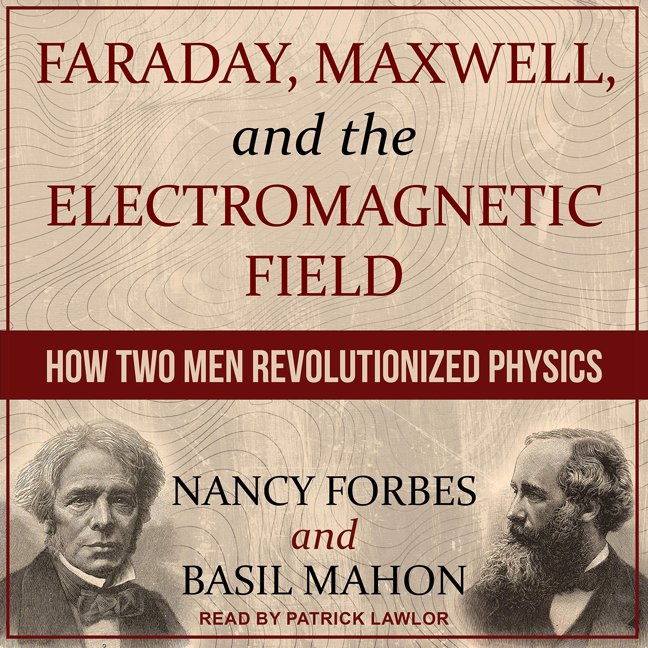
Two of the boldest and most creative scientists of all time were Michael Faraday (1791-1867) and James Clerk Maxwell (1831-1879). This is the story of how these two men - separated in age by forty years - discovered the existence of the electromagnetic field and devised a radically new theory which overturned the strictly mechanical view of the world that had prevailed since Newton's time.
The authors, veteran science writers with special expertise in physics and engineering, have created a lively narrative that interweaves rich biographical detail from each man's life with clear explanations of their scientific accomplishments. Faraday was an autodidact, who overcame class prejudice and a lack of mathematical training to become renowned for his acute powers of experimental observation, technological skills, and prodigious scientific imagination. James Clerk Maxwell was highly regarded as one of the most brilliant mathematical physicists of the age. He made an enormous number of advances in his own right. But when he translated Faraday's ideas into mathematical language, thus creating field theory, this unified framework of electricity, magnetism and light became the basis for much of later, 20th-century physics.
Faraday's and Maxwell's collaborative efforts gave rise to many of the technological innovations we take for granted today - from electric power generation to television, and much more. Told with panache, warmth, and clarity, this captivating story of their greatest work - in which each played an equal part - and their inspiring lives will bring new appreciation to these giants of science.
Vice Chairman/Berkshire Hathaway
It's a combination of scientific biography and explanation of the physics, particularly relating to electricity. It's just the best book of its kind I have ever read, and I just hugely enjoyed it. Couldn't put it down. It was a fabulous human achievement. And neither of the writers is a physicist. [source]
5Introduction to Electrodynamics
6Quantum Mechanics: The Theoretical Minimum
First he taught you classical mechanics. Now, physicist Leonard Susskind has teamed up with data engineer Art Friedman to present the theory and associated mathematics of the strange world of quantum mechanics.
In this follow-up to the New York Times best-selling The Theoretical Minimum, Susskind and Friedman provide a lively introduction to this famously difficult field, which attempts to understand the behavior of sub-atomic objects through mathematical abstractions. Unlike other popularizations that shy away from quantum mechanics' weirdness, Quantum Mechanics embraces the utter strangeness of quantum logic. The authors offer crystal-clear explanations of the principles of quantum states, uncertainty and time dependence, entanglement, and particle and wave states, among other topics, and each chapter includes exercises to ensure mastery of each area. Like The Theoretical Minimum, this volume runs parallel to Susskind's eponymous Stanford University-hosted continuing education course.
An approachable yet rigorous introduction to a famously difficult topic, Quantum Mechanics provides a tool kit for amateur scientists to learn physics at their own pace.
Managing Director/Thiel Capital
Eric Weinstein recommended this book on Twitter. [source]
7My Inventions: The Autobiography of Nikola Tesla
Founder/SpaceX
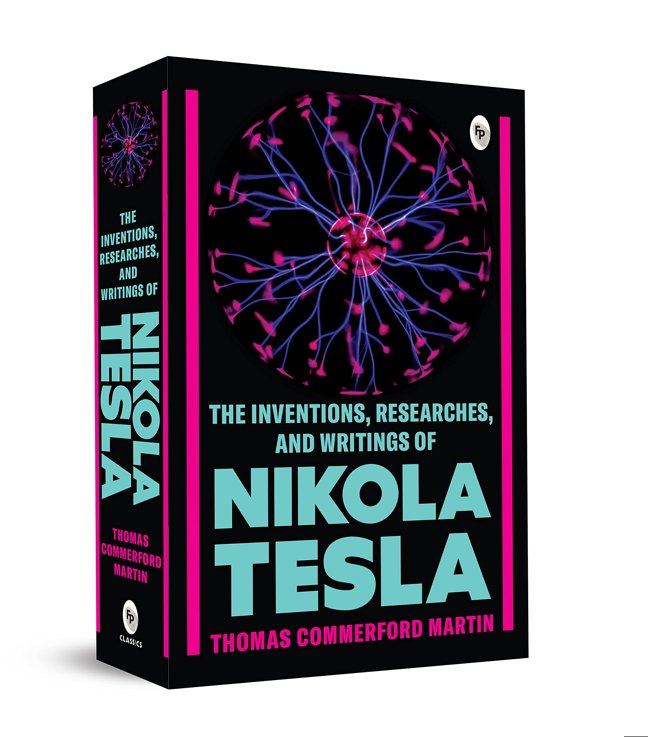
I didn't read actually very many general business books, but I like biographies and autobiographies, I think those are pretty helpful. Actually, a lot of them aren't really business. … I think it's also worth reading books on scientists and engineers. Tesla, obviously. [source]
8The Theoretical Minimum: What You Need to Know to Start Doing Physics
"Beautifully clear explanations of famously 'difficult' things," --Wall Street Journal
A Wall Street Journal Best Book of 2013
If you ever regretted not taking physics in college--or simply want to know how to think like a physicist--this is the book for you. In this bestselling introduction, physicist Leonard Susskind and hacker-scientist George Hrabovsky offer a first course in physics and associated math for the ardent amateur. Challenging, lucid, and concise, The Theoretical Minimum provides a tool kit for amateur scientists to learn physics at their own pace.
Managing Director/Thiel Capital
Eric Weinstein recommended this book on Twitter. [source]
9A Treatise on Electricity and Magnetism, Vol. 1
10The Second Kind of Impossible: The Extraordinary Quest for a New Form of Matter
One of the most fascinating scientific detective stories of the last fifty years, an exciting quest for a new form of matter. “A riveting tale of derring-do” (Nature), this book reads like James Gleick’s Chaos combined with an Indiana Jones adventure.
When leading Princeton physicist Paul Steinhardt began working in the 1980s, scientists thought they knew all the conceivable forms of matter. The Second Kind of Impossible is the story of Steinhardt’s thirty-five-year-long quest to challenge conventional wisdom. It begins with a curious geometric pattern that inspires two theoretical physicists to propose a radically new type of matter—one that raises the possibility of new materials with never before seen properties, but that violates laws set in stone for centuries. Steinhardt dubs this new form of matter “quasicrystal.” The rest of the scientific community calls it simply impossible.
The Second Kind of Impossible captures Steinhardt’s scientific odyssey as it unfolds over decades, first to prove viability, and then to pursue his wildest conjecture—that nature made quasicrystals long before humans discovered them. Along the way, his team encounters clandestine collectors, corrupt scientists, secret diaries, international smugglers, and KGB agents. Their quest culminates in a daring expedition to a distant corner of the Earth, in pursuit of tiny fragments of a meteorite forged at the birth of the solar system.
Steinhardt’s discoveries chart a new direction in science. They not only change our ideas about patterns and matter, but also reveal new truths about the processes that shaped our solar system. The underlying science is important, simple, and beautiful—and Steinhardt’s firsthand account is “packed with discovery, disappointment, exhilaration, and persistence...This book is a front-row seat to history as it is made” (Nature).
It’s a window on the process of discovery, a blow-by-blow account of a long wrangle with theory and evidence. Paul Steinhardt — a cosmologist fascinated by novel forms of matter — relates his indefatigable decades-long quest for an ‘impossible’ material, the quasicrystal, with Holmesian intensity…This is a book offering a real sense of the collaborative, generous-minded aspect of doing science. [source]
Paul Steinhardt, a world-renowned physicist, takes us on a journey through the history of our understanding of crystals. He explains how scientific orthodoxy came to a firm view as to the sorts of structures nature would generate. [source]
11Lost in Math: How Beauty Leads Physics Astray
Whether pondering black holes or predicting discoveries at CERN, physicists believe the best theories are beautiful, natural, and elegant, and this standard separates popular theories from disposable ones. This is why, Sabine Hossenfelder argues, we have not seen a major breakthrough in the foundations of physics for more than four decades. The belief in beauty has become so dogmatic that it now conflicts with scientific objectivity: observation has been unable to confirm mindboggling theories, like supersymmetry or grand unification, invented by physicists based on aesthetic criteria. Worse, these "too good to not be true" theories are actually untestable and they have left the field in a cul-de-sac. To escape, physicists must rethink their methods. Only by embracing reality as it is can science discover the truth.
This is a firecracker of a book—a shot across the bows of theoretical physics. Sabine Hossenfelder, a theoretical physicist working on quantum gravity and blogger, confronts failures in her field head-on. [source]
12The Grid: Electrical Infrastructure for a New Era
Cultural anthropologist Gretchen Bakke unveils the many facets of America's energy infrastructure, its most dynamic moments and its most stable ones, and its essential role in personal and national life. The grid, she argues, is an essentially American artifact, one which developed with us: a product of bold expansion, the occasional foolhardy vision, some genius technologies, and constant improvisation. Most of all, her focus is on how Americans are changing the grid right now, sometimes with gumption and big dreams and sometimes with legislation or the brandishing of guns.
The Grid tells--entertainingly, perceptively--the story of what has been called “the largest machine in the world”: its fascinating history, its problematic present, and its potential role in a brighter, cleaner future.
CEO/Microsoft
This book, about our aging electrical grid, fits in one of my favorite genres: 'Books About Mundane Stuff That Are Actually Fascinating. [source]
13Earthing: The Most Important Health Discovery Ever!
14Wizard: The Life and Times of Nikola Tesla: Biography of a Genius
Nikola Tesla (1856-1943), credited as the inspiration for radio, robots, and even radar, has been called the patron saint of modern electricity. Based on original material and previously unavailable documents, this acclaimed book is the definitive biography of the man considered by many to be the founding father of modern electrical technology. Among Tesla's creations were the channeling of alternating current, fluorescent and neon lighting, wireless telegraphy, and the giant turbines that harnessed the power of Niagara Falls.
This essential biography is illustrated with sixteen pages of photographs, including the July 20, 1931, Time magazine cover for an issue celebrating the inventor's career.
"Wizard is a truly remarkable biography of a remarkable man. The expression 'ahead of his time' is used too loosely and too often today but in the case of Nikola Tesla 'ahead of his time' barely describes the genius of this man. Marc Seifer makes us understand not only the man but the times in which he lived."--Nelson DeMille
"A deep and comprehensive biography of a great engineer of early electrical science--likely to become the definitive biography. Highly recommended."--American Association for the Advancement of Science
"Vivid, revelatory . . . the fullest account yet of Tesla as an entrepreneur, experimental physicist and inventor."--Publishers Weekly
15Special Relativity and Classical Field Theory: The Theoretical Minimum
Physicist Leonard Susskind and data engineer Art Friedman are back. This time, they introduce readers to Einstein's special relativity and Maxwell's classical field theory. Using their typical brand of real math, enlightening drawings, and humor, Susskind and Friedman walk us through the complexities of waves, forces, and particles by exploring special relativity and electromagnetism. It's a must-read for both devotees of the series and any armchair physicist who wants to improve their knowledge of physics' deepest truths.
16Earth Changes and the Human-Cosmic Connection (The Secret History of the World)
17Electromagnetism and Life
There are also positive aspects of the relationship between electromagnetism and life. Clinical uses of electromagnetic energy are increasing and promise to expand into important areas in the near future. This book synthesizes the various aspects of the role of electricity in biology.
18The Invisible Rainbow: A History of Electricity and Life
The story of the invention and use of electricity has often been told before, but never from an environmental point of view. The assumption of safety, and the conviction that electricity has nothing to do with life, are by now so entrenched in the human psyche that new research, and testimony by those who are being injured, are not enough to change the course that society has set. Two increasingly isolated worlds--that inhabited by the majority, who embrace new electrical technology without question, and that inhabited by a growing minority, who are fighting for survival in an electrically polluted environment--no longer even speak the same language. In The Invisible Rainbow, Arthur Firstenberg bridges the two worlds. In a story that is rigorously scientific yet easy to read, he provides a surprising answer to the question, "How can electricity be suddenly harmful today when it was safe for centuries?"
19Principles of Electrodynamics
20Principles of Charged Particle Acceleration
"Principles of Charged Particle Acceleration has been one of my primary reference books for my research in the generation, focusing, and application of high power electron and ion beams using pulsed power accelerators. . . . It remains a classic reference that is both useful and accessible."—Thomas A. Mehlhorn, Superintendent, Plasma Physics Division, Naval Research Laboratory
"The book succeeds in explaining the key accelerator concepts clearly and starting from basic physical principles. . . . I recommend this book to both novices and experts."—Richard J. Adler, Senior Principal Scientist at Applied Energetics
"Written at the first year postgraduate level, the book is a wonderful introduction to particle accelerator technology. The novice will find that the basic principles are emphasized with the intent to develop an intuitive perspective and provide practical knowledge. . . . The advanced reader will be able to discern that subtly woven into the background of the basics are complex ideas . . . [that] provide deeper insight and interest for those who are ready. Rereading the book after a few years is an enlightening and entertaining experience."—Timothy L. Houck, Group Leader, Accelerator Experiments and Operations Group, National Security Engineering Division, Lawrence Livermore National Laboratory
"In this outstandingly clear text, Stan Humphries comprehensively covers everything the beginning student or returning professional needs to know about particle accelerator physics. Whether used as a teaching tool or reference volume this book should find a place on the shelf (or the digital archive) of everyone working in the field of particle accelerators."—Kenneth Gall, Founder and Chief Technology Officer, Mevion Medical Systems
21The Ankh- African Origin of Electromagnetism
22The Feynman Lectures on Physics Vol 2
23Teach Yourself Electricity and Electronics
24The Man Who Changed Everything: The Life of James Clerk Maxwell
25Storm in a Teacup: The Physics of Everyday Life
26Empires of Light: Edison, Tesla, Westinghouse, and the Race to Electrify the World
Edison struggled to introduce his radical new direct current (DC) technology into the hurly-burly of New York City as Tesla and Westinghouse challenged his dominance with their alternating current (AC), thus setting the stage for one of the eeriest feuds in American corporate history, the War of the Electric Currents. The battlegrounds: Wall Street, the 1893 Chicago World’s Fair, Niagara Falls, and, finally, the death chamber—Jonnes takes us on the tense walk down a prison hallway and into the sunlit room where William Kemmler, convicted ax murderer, became the first man to die in the electric chair.
Empires of Light is the gripping history of electricity, the “mysterious fluid,” and how the fateful collision of Edison, Tesla, and Westinghouse left the world utterly transformed.
From the Hardcover edition.
27Spheroidal Wave Functions in Electromagnetic Theory
The topics covered in this monograph include:
Spheroidal coordinates and wave functions
Dyadic Green's functions in spheroidal systems
EM scattering by a conducting spheroid
EM scattering by a coated dielectric spheroid
Spheroid antennas
SAR distributions in a spheroidal head model The programming codes and their applications are provided online and are written in Mathematica 3.0 or 4.0. Readers can also develop their own codes according to the theory or routine described in the book to find subsequent solutions of complicated structures. Spheroidal Wave Functions in Electromagnetic Theory is a fundamental reference for scientists, engineers, and graduate students practicing modern computational electromagnetics or applied physics.
28Introductory Electromagnetics
29How to Diagnose and Fix Everything Electronic, Second Edition
Repair all kinds of electrical products, from modern digital gadgets to analog antiques, with help from this updated book. How to Diagnose and Fix Everything Electronic, Second Edition, offers expert insights, case studies, and step-by-step instruction from a lifelong electronics guru. Discover how to assemble your workbench, use the latest test equipment, zero in on and replace dead components, and handle reassembly. Instructions for specific devices, including stereos, MP3 players, digital cameras, flat-panel TVs, laptops, headsets, and mobile devices are also included in this do-it-yourself guide.
Choose the proper tools and set up your workbench
Ensure personal safety and use proper eye and ear protection
Understand how electrical components work and why they fail
Perform preliminary diagnoses based on symptoms
Use test equipment, including digital multimeters, ESR meters, frequency
counters, and oscilloscopes
Interpret block, schematic, and pictorial diagrams
Disassemble products and identify sections
Analyze circuits, locate faults, and replace dead parts
Re-establish connections and reassemble devices
30Classical Electrodynamics
31Electromagnetic Fields and Energy
32Close-Range Photogrammetry and 3D Imaging
After more than 20 years of use, close-range photogrammetry, now for the most part entirely digital, has become an accepted, powerful and readily available technique for engineers, scientists and others who wish to utilise images to make accurate 3D measurements of complex objects. Here they will find the photogrammetric fundamentals, details of system hardware and software, and broad range of real-world applications in order to achieve this.
Following the introduction, the book provides fundamental mathematics covering subjects such as image orientation, digital imaging processing and 3D reconstruction methods, as well as a discussion of imaging technology, including targeting and illumination, and its implementation in hardware and software. It concludes with an overview of photogrammetric solutions for typical applications in engineering, manufacturing, medical science, architecture, archaeology and other fields.
33Principles of Optics: Electromagnetic Theory of Propagation, Interference and Diffraction of Light
34The Spark of Life: Electricity in the Human Body
The history of how scientists discovered the role of electricity in the human body is a colorful one, filled with extraordinary personalities, fierce debates, and brilliant experiments. Moreover, present-day research on electricity and ion channels has created one of the most exciting fields in science, shedding light on conditions ranging from diabetes and allergies to cystic fibrosis, migraines, and male infertility. With inimitable wit and a clear, fresh voice, award-winning researcher Frances Ashcroft weaves together compelling real-life stories with the latest scientific findings, giving us a spectacular account of the body electric.
35The Manga Guide to Electricity
Luckily, her ever-patient tutor Hikaru is there to help. Join them in the pages of The Manga Guide to Electricity as Rereko examines everyday electrical devices like flashlights, heaters, and circuit breakers, and learns the meaning of abstract concepts like voltage, potential, current, resistance, conductivity, and electrostatic force.
The real-world examples that you'll find in The Manga Guide to Electricity will teach you:
What electricity is, how it works, how it's created, and how it can be used
The relationship between voltage, current, and resistance (Ohm's law)
Key electrical concepts like inductance and capacitance
How complicated components like transformers, semiconductors, diodes, and transistors work
How electricity produces heat and the relationship between current and magnetic fields
If thinking about how electricity works really fries your brain, let The Manga Guide to Electricity teach you all things electrical in a shockingly fun way.
36The Problem of Increasing Human Energy: With Special Reference to the Harnessing of the Sun's Energy
37Understanding Physics for JEE Main & Advanced Electricity & Magnetism
•“Sample examples” are given for subject understanding before the text.
•Each topic includes the “introductory exercise” to test the ability.
•“Extra Points” are given to follow the points in brief.
•2 leveled solved examples are given at the end of chapter
•Consist 2 leveled exercise level 1 for AIEEE and level 2 for IIT JEE, including subjective Questions, Single Correct Option, Assertion & Reason, Match the Column including Reasoning, Aptitude & Comprehension, etc.
•Chapter-wise Hints & Solutions are provided at the end of the book.
38The Electric Sky
39Hand-carried QRP antennas: Simple antennas and accessories to operate from almost anywhere
40No-Nonsense Electrodynamics: A Student Friendly Introduction
41Understanding Physics (Motion, Sound, and Heat / Light, Magnetism, and Electricity / The Electron, Proton, and Neutron)
3 Volumes in One: Motion, Sound & Heat; Light, Magnetism & Electricity; The Electron, Proton & Neutron.
1993 Barnes & Noble reprint of three Isaac Asimov classics. Originally published in 1966.
42The Future of Fusion Energy (Popular Science)
43Michael Symon's Live to Cook: Recipes and Techniques to Rock Your Kitchen
Michael is known for his easy, fresh food. He means it when he says that if a dish requires more than two pans to finish, he’s not going to make it. Cooking what he calls “heritage” food–based on the recipes beloved by his Greek—Italian—Eastern European—American parents and the community in Cleveland–Michael draws on the flavors of traditional recipes to create sophisticated dishes, such as his Beef Cheek Pierogies with Wild Mushrooms and Horseradish, which came out of the pierogies that his grandpa made. Michael translates the influences of the diverse working-class neighborhood in which he grew up into dishes with Mediterranean ingredients, such as those in Olive Oil Poached Halibut with Fennel, Rosemary, and Garlic; Italian-style handmade pastas, like Linguini with Heirloom Tomato, Capers, Anchovies, and Chilies; and re-imagined Cleveland favorites, such as Mac and Cheese with Roasted Chicken, Goat Cheese, and Rosemary.
Part of Michael’s irresistible allure on the Food Network comes from how much fun he has in the kitchen. To help readers gain confidence and have a good time, Michael Symon’s Live to Cook has advice for cooking like a pro, starting with basic instructions for how to correctly use techniques such as braising, poaching, and pickling. There’s also information on how caramelizing vegetables and toasting spices can give dishes a greater depth of flavor–instead of a heavy, time-consuming stock-based sauce–and why the perfect finishing touch to most meat or fish dishes can be a savory hot vinaigrette instead.
With fantastic four-color photography throughout and tons of helpful “Symon Says” tips, Michael Symon’s Live to Cook is bound to get anyone fired up about getting into the kitchen and cooking up something downright delicious.
From the Hardcover edition.
44University Physics Volume 2
45Electrical Machines, Drives, and Power Systems
46Electric Motors and Drives: Fundamentals, Types and Applications
Engineering Electromagnetics
48RF Circuit Design
49BASIC PHYSICS: PRINCIPLES AND CONCEPTS
50Basic Electricity
51Science At The Crossroads
52A Dynamical Theory of the Electromagnetic Field
53Op Amp Applications Handbook
The Op Amp Applications Handbook may well be the ultimate op amp reference book available. This book is brimming with up-to-date application circuits, valuable design tips, and in-depth coverage of the latest techniques to simplify op amp circuit designs, and improve their performance. As an added bonus, a selection on the history of op amp development provides an extensive and expertly researched overview, of interest to anyone involved in this important area of electronics.
54Elements of Power Electronics
. More than 160 examples, particularly design examples, and 350 chapter problems that support the presented concepts.
. An extensive World Wide Web site (http: //power.ece.uiuc.edu/krein_text) which includes additional problems, laboratory materials, selected solutions for students, computer-based examples, analysis tools for Mathcad, Matlab, and Mathematica, and author contact.
. A solutions manual which will be made available to registered faculty via both the World Wide Web site (http: //power.ece.uiuc.edu/krein_text)and an ftp site (ftp: //power.ece.uiuc.edu/krein_text)."
55The Science and the Myth of Melanin: Exposing the Truths
56Elecric Motor Repair
57Troubleshooting and Repairing Major Appliances
Diagnose and repair home appliances and air conditioners using the latest techniques"The book has it all...written by a pro with 40 years of hands-on repair and teaching experience...this book is like brain candy"--GeekDad (Wired.com)
Fully updated for current technologies and packed withhundreds of photos and diagrams, this do-it-yourself guideshows you how to safely install, operate, maintain, and fixgas and electric appliances of all types. Troubleshooting and Repairing Major Appliances, Third Edition provides easy-tofollow procedures for using test meters, replacing parts, reading circuit diagrams, interpreting fault and error codes, and diagnosing problems. Featuring a new chapter on becoming a service technician, this practical, money-saving resource is ideal for homeowners and professionals alike.
Covers all major appliances:
Automatic dishwashers
Garbage disposers
Electric water heaters
Gas water heaters
Top load automatic washers
Front load automatic washers
Automatic electric dryers
Automatic gas dryers
Electric ranges, cooktops, and ovens
Gas ranges, cooktops, and ovens
Microwave ovens
Refrigerators
Freezers
Automatic ice makers
Residential under-the-counter ice cube makers
Room air conditioners
Dehumidifiers
58Professor Maxwell’s Duplicitous Demon: The Life and Science of James Clerk Maxwell
59The Maxwellians
--D. Weaire, Trinity College, Dublin "Times Higher Education Supplement"
60Renewable and Efficient Electric Power Systems
61Schaum's Outline of Electromagnetics
62Electromagnetism
63American Electricians' Handbook, Sixteenth Edition
FULLY UPDATED FOR THE LATEST ELECTRICAL CODES AND STANDARDSFor a century, the American Electricians' Handbook has served as the definitive industry reference for information on designing, installing, operating, and maintaining electrical systems and equipment. The Sixteenth Edition is revised to complywith the 2011 National Electrical Code and the 2012 National Electrical Safety Code, and covers current energy-efficient technologies, such as photovoltaics and induction lighting. Detailed photos, diagrams, charts, tables, and calculations are included throughout. This practical, on-the-job resource is a must-have tool for every professional electrician.
Covers:
Fundamentals
Properties and splicing of conductors
Circuits and circuit calculations
General electrical equipment and batteries
Transformers
Solid-state devices and circuits
Generators and motors
Outside distribution
Interior wiring
Electric lighting
Optical fiber
Wiring and design tables
64Circuit Analysis for Dummies
Many universities require that students pursuing a degree in electrical or computer engineering take an Electric Circuit Analysis course to determine who will "make the cut" and continue in the degree program. Circuit Analysis For Dummies will help these students to better understand electric circuit analysis by presenting the information in an effective and straightforward manner.
Circuit Analysis For Dummies gives you clear-cut information about the topics covered in an electric circuit analysis courses to help further your understanding of the subject. By covering topics such as resistive circuits, Kirchhoff's laws, equivalent sub-circuits, and energy storage, this book distinguishes itself as the perfect aid for any student taking a circuit analysis course.
Tracks to a typical electric circuit analysis course Serves as an excellent supplement to your circuit analysis text Helps you score high on exam dayWhether you're pursuing a degree in electrical or computer engineering or are simply interested in circuit analysis, you can enhance you knowledge of the subject with Circuit Analysis For Dummies.
65Electromagnetism
Physicists and engineers will find this presentation particularly useful; but mathematicians have also used the book not only as an introduction to electromagnetism, but also as a means to an increased knowledge of the aims and tools of theoretical physics. The only background required to follow the development is a knowledge of the calculus and differential equations. More advanced mathematics is developed in appendixes.
66Electromagnetics
Electromagnetics provides that transition. Emphasizing concepts over problem-solving techniques, it focuses on the topics most important to EM research and those most troublesome to beginning graduate students. In Part I, the authors cover the required mathematics background and introduce the primary physical principles. From a well-posed postulate, Part II builds a complete description of the EM field in free space, and Part III completes the study by investigating the behavior of the EM field in a variety of materials. Stressing both a physical understanding and a detailed mathematical description of each topic, this text provides an account of EM theory that is in-depth, lucid, and accessible.
Highly engaging prose, clear, concise explanations, and numerous examples relating concepts to modern engineering applications create a comfortable atmosphere that enhances the reader's grasp of the material. Electromagnetics thus builds a foundation that allows readers to proceed with confidence to advanced EM studies, research, and applications.
67The Fast Track to Understanding Ham Radio Propagation
68The Electromagnetic Field
69Tesla vs Edison: The Life-Long Feud that Electrified the World
Edison and Tesla carried on a bitter feud for years, but it was Tesla's AC generators that illuminated the 1893 World's Fair in Chicago under artificial light. Today all homes and electrical appliances run on Tesla's AC current.
120 years ago, they were billed as the 'Twin Wizards of Electricity', here Nigel Cawthorne chronicles the life and times of the two great men to help us finally decide just who really is the Electric King- Edison or Tesla?
70Ham and Shortwave Radio for the Electronics Hobbyist
Get up and running as a ham radio operator--or just listen in on the shortwave bands! Ham and Shortwave Radio for the Electronics Hobbyist shows you, step by step, how to set up and operate your own ham radio station. It's also perfect for those interested in shortwave listening, without getting a ham radio license. This practical guide covers communications modes, assigned frequency ranges in the United States, details on fixed, mobile, and portable ham stations, antennas, and much more. Ham radio will work even when the Internet and other utilities fail. So get on the air and keep the lines of communication open in any situation!
Inside, you'll find out all about:
Radio waves and how they travel
Shortwave and allwave listening
Communications modes for ham radio operators, including using the Internet as a supplement
Ham radio licenses and assigned frequency ranges (bands) used in the United States
Wave-propagation characteristics and tips on the bands best suited for use at different times of the day, year, and sunspot cycle
Selecting and installing equipment for fixed ham radio stations
Setting up mobile and portable ham radio stations
Antennas and transmission lines for various frequencies and station types
How to operate your station using popular voice and digital modes
Schematic symbols and Q signals for ham radio operators
Power System Analysis and Design
72Classical Electricity and Magnetism
73Electricity And Magnetism
74Conquering the Electron: The Geniuses, Visionaries, Egomaniacs, and Scoundrels Who Built Our Electronic Age
75Spark from the Deep: How Shocking Experiments with Strongly Electric Fish Powered Scientific Discovery
William J. Turkel asks completely fresh questions about the evolutionary, environmental, and historical aspects of people’s interest in electric fish. Stimulated by painful encounters with electric catfish, torpedos, and electric eels, people learned to harness the power of electric shock for medical therapies and eventually developed technologies to store, transmit, and control electricity. Now we look to these fish as an inspiration for engineering new sensors, computer interfaces, autonomous undersea robots, and energy-efficient batteries.
76The Spinning Magnet: The Force That Created the Modern World--and Could Destroy It
77The Science of Radio: With Matlab(r) and Electronics Workbench(r) Demonstrations
78Easy Electronics (Make: Handbook)
79Elements of Electromagnetics
Streamlined to facilitate student understanding, this edition features worked examples in every chapter that explain how to use the theory presented in the text to solve different kinds of problems. Numerical methods, including MATLAB and vector analysis, are also included to help students analyze situations that they are likely to encounter in industry practice.
Elements of Electromagnetics, Fifth Edition, is designed for introductory undergraduate courses in electromagnetics.
80Field and Wave Electromagnetics
81Electromagnetic Fields and Waves
Throughout the book, the development of each topic is explicit and unhurried, an approach intended to avoid basic misconceptions that lead to major misunderstandings later on. Short exercises help the student test his grasp of the material, and the text is studded with diagrams and illustrations that supplement the content and elucidate many hard-to-visualize concepts. The book ends at a point where the use of Maxwell's equations in several important problems has been illustrated, and students are prepared to proceed to a variety of further topics.
Professor Rojansky brings many years of experience both as a teacher and a scientist (including ten years of advanced research at TRW Space Technologies Laboratories) to this lucid discussion of the fundamentals of electromagnetic fields and waves. His extensive pedagogical background enables him to communicate difficult concepts with great clarity.
82Faraday's Experimental Researches In Electricity: Guide To A First Reading
83Fitzgerald & Kingsley's Electric Machinery
84Electromagnetic Theory Volume 1
85Schaum's Outline of Vector Analysis
More than 40 million students have trusted Schaum's to help them study faster, learn better, and get top grades. Now Schaum's is better than ever-with a new look, a new format with hundreds of practice problems, and completely updated information to conform to the latest developments in every field of study.
Fully compatible with your classroom text, Schaum's highlights all the important facts you need to know. Use Schaum's to shorten your study time-and get your best test scores!
Schaum's Outlines-Problem Solved.
86Beyond Einstein's Unified Field: Gravity & Electro-Magnetism Redefined
87Elements of Chemistry
Introduction
1 Of the formation & decomposition of aeriform fluids, of the combustion of simple bodies & the formation of acids
2 Of the combination of acids with salifiable bases & of the formation of neutral salts
3 Description of the instruments & operations of chemistry
Appendix
88Anti-Gravity and the World Grid (Lost Science (Adventures Unlimited Press))
89RF Circuit Design: Theory and Applications
90Course of Theoretical Physics: Vol. 8, Electrodynamics of Continuous Media
Covers the theory of electromagnetic fields in matter, and the theory of macroscopic electric and magnetic properties of matter. There is a considerable amount of new material particularly on the theory of the magnetic properties of matter and the theory of optical phenomena with new chapters on spatial dispersion and non-linear optics.
91Foundations of Electromagnetic Theory
92Advanced Quantum Mechanics
93Electricity and Magnetism
94Engineering Electromagnetics
95High-Field Electrodynamics
This advanced undergraduate/graduate-level text provides a detailed introduction to high-field electrodynamics, from its fundamentals to some of its important modern applications. The author describes a broad collection of theoretical techniques, and where possible, approaches derivations by at least two different routes to yield deeper physical insight and a wider range of mathematical and physical techniques. He also discusses some of the outstanding ramifications of electrodynamics in areas ranging from quantum optics, squeezed states, and the Einstein-Podolsky-Rosen paradox to rotating black holes, non-Abelian gauge field theories, and the Bohm-Aharanov effect.
High-Field Electrodynamics gives a comprehensive description of the theoretical tools needed to approach this novel discipline. It highlights important modern applications and serves as a starting point for more advanced and specialized research at the frontiers of modern physics.
96The Graphene Revolution: The weird science of the ultra-thin (Hot Science)
Their efforts would win the 2010 Nobel Prize for Physics, and now the applications of graphene and other ‘two-dimensional’ substances form a worldwide industry.
Graphene is far stronger than steel, a far better conductor than any metal, and able to act as a molecular sieve to purify water. Electronic components made from graphene are a fraction of the size of silicon microchips and can be both flexible and transparent, making it possible to build electronics into clothing, produce solar cells to fit any surface, or even create invisible temporary tattoos that monitor your health.
Ultra-thin materials give us the next big step forward since the transistor revolutionised electronics. Get ready for the graphene revolution.
97Electricity and Matter
98Collective Electrodynamics: Quantum Foundations of Electromagnetism
99Lasers and Electro-Optics: Fundamentals and Engineering
100