We've ranked the best cuban books using expert recommendations, sales data, and millions of reader ratings. At Shortform, we know books. Our book guides are the best in the world. Learn why.
Cover unavailable
1
The Old Man and the Sea
Ernest Hemingway
5.0
The Old Man and the Sea, an apparently simple fable, represents the mature Hemingway at his best. He was awarded the Nobel Prize for Literature soon after its publication, and half a century later it is still one of his most read books.
I keep coming back to it. I love the straightforwardness, the tightness, and the poetry. I think it shows a common struggle that is repeated over and over in so many narratives both fictional and nonfictional. [source]
The Old Man and the Sea by Ernest Hemingway https://t.co/7dJE4Pfn56, a book from my great books list https://t.co/AxBNX3QpMb [source]
May Witwit
I taught this book to my students in Iraq during the economic sanctions. And I feel like it gave me some kind of strength to continue. [source]
Cover unavailable
2
The Fountainhead
Ayn Rand
5.0
The revolutionary literary vision that sowed the seeds of Objectivism, Ayn Rand's groundbreaking philosophy, and brought her immediate worldwide acclaim.
This modern classic is the story of intransigent young architect Howard Roark, whose integrity was as unyielding as granite...of Dominique Francon, the exquisitely beautiful woman who loved Roark passionately, but married his worst enemy...and of the fanatic denunciation unleashed by an enraged society against a great creator. As fresh today as it was then, Rand's provocative novel presents one of the most challenging ideas in all of fiction--that man's ego is the fountainhead of human progress...
"A writer of great power. She has a subtle and ingenious mind and the capacity of writing brilliantly, beautifully, bitterly...This is the only novel of ideas written by an American woman that I can recall."--The New York Times
A few months ago, I was drinking a Noah’s Mill whiskey (cute) with my good buddy Brian Balfour and talking about life... During the conversation, we got on the topic of books that changed our lives. I want to share them with you. I judge a book's success if a year later I'm still using at least 1 thing from the book. [source]
Ashley Hathaway
Sometimes I want to nerd out and pick a heavy non-fiction book. I was reading The Fountainhead earlier this year which was pretty beefy. Got that checked off the list. [source]
Cover unavailable
3
One Minute to Midnight: Kennedy, Khrushchev and Castro on the Brink of Nuclear War
Michael Dobbs
5.0
In October 1962, at the height of the Cold War, the United States and the Soviet Union appeared to be sliding inexorably toward a nuclear conflict over the placement of missiles in Cuba. Veteran Washington Post reporter Michael Dobbs has pored over previously untapped American, Soviet, and Cuban sources to produce the most authoritative book yet on the Cuban missile crisis. In his hour-by-hour chronicle of those near-fatal days, Dobbs reveals some startling new incidents that illustrate how close we really did come to Armageddon. Here, for the first time, are gripping accounts of Khrushchev's plan to destroy the U.S. naval base at Guantanamo; the accidental overflight of the Soviet Union by an American spy plane; the movement of Soviet nuclear warheads around Cuba during the tensest days of the crisis; the activities of CIA agents inside Cuba; and the crash landing of an American F-106 jet with a live nuclear weapon on board. Dobbs takes us inside the White House and the Kremlin as Kennedy and Khrushchev--rational, intelligent men separated by an ocean of ideological suspicion--agonize over the possibility of war. He shows how these two leaders recognized the terrifying realities of the nuclear age while Castro--never swayed by conventional political considerations--demonstrated the messianic ambition of a man selected by history for a unique mission. As the story unfolds, Dobbs brings us onto the decks of American ships patrolling Cuba; inside sweltering Soviet submarines and missile units as they ready their warheads; and onto the streets of Miami, where anti-Castro exiles plot the dictator's overthrow. Based on exhaustive new research and told in breathtaking prose, here is ariveting account of history's most dangerous hours, full of lessons for our time.
…
Cover unavailable
4
The Kingdom of This World
Alejo Carpentier, Pablo Medina, Edwidge Danticat
4.9
A masterful new translation of a haunting novel of nineteenth-century Haiti
A few years after its liberation from harsh French colonial rule in 1803, Haiti endured a period of great brutality under the reign of King Henri Christophe, who was born a slave but rose to become the first black king in the Western Hemisphere. In this unnerving novel from one of Cuba's most celebrated authors, Henri Christophe's oppressive rule is observed through the eyes of the elderly slave Ti Noel, who suffers abuse from masters both white and black. As he ranges across the country searching for true liberation, Ti Noel navigates bloody revolutions, maniacal rulers with false visions of grandeur, and the mysterious power of voodoo magic.
First published in English translation in 1957, The Kingdom of This World is now widely recognized as a masterpiece of Cuban and Caribbean literature. Pablo Medina's remarkable new translation renders the dreamlike prose of Alejo Carpentier with nuance and felicity while delivering anew a powerful novel about the birth of modern Haiti. Visionary and singularly twisted, The Kingdom of This World emerges from the depths of the struggle for a country into a tale of race, erotomania, magic, and madness.
…
Recommended by Brian Crecente.
Brian Crecente
Great book. Highly recommend https://t.co/5bkiTh8ooY [source]
Cover unavailable
5
Invisible Cities
Italo Calvino
4.9
"Kublai Khan does not necessarily believe everything Marco Polo says when he describes the cities visited on his expeditions, but the emperor of the Tartars does continue listening to the young Venetian with greater attention and curiosity than he shows any other messenger or explorer of his." So begins Italo Calvino's compilation of fragmentary urban images. As Marco tells the khan about Armilla, which "has nothing that makes it seem a city, except the water pipes that rise vertically where the houses should be and spread out horizontally where the floors should be," the spider-web city of Octavia, and other marvelous burgs, it may be that he is creating them all out of his imagination, or perhaps he is recreating fine details of his native Venice over and over again, or perhaps he is simply recounting some of the myriad possible forms a city might take.
Oh God. Well, officially it’s Marco Polo describing the cities of his travels to Kublai Khan. It’s been opined that every city he describes is a version of Venice, but I think that doesn’t really work. They seem to me to be marvellous imaginative fantasies, which sometimes reproduce states of mind. There are 40 or so cities described, all entirely imaginary I think, and that’s what’s so magical about them. But there are passages that are suggestive of something, and nearly always of the way memory works. It’s a very hard book to describe, because the cities are never just a description of a place. They all mirror states of mind and being. [source]
James Meek
It has different layers. The set-up is that Kublai Khan has conquered this vast empire; an empire so large that he, sitting at the centre of it, cannot know all the many parts of it. He can’t visit them, he can’t see them, and if he goes to one part all the other parts have changed. So he sits there at the centre of his empire and Marco Polo travels around and visits the various cities and comes back and describes them to Kublai Khan. [source]
Cover unavailable
6
Before Night Falls
Reinaldo Arenas
4.9
Cuban writer Reinaldo Arenas describes his poverty-stricken childhood in rural, his adolescence as a rebel fighting for Fidel Castro, and his life in revolutionary Cuba as a homosexual. Very quickly the Castro government suppressed his writing and persecuted him for his homosexuality until he was finally imprisoned.
Cover unavailable
7
Martina the Beautiful Cockroach: A Cuban Folktale
Carmen Agra Deedy, Michael Austin
4.9
Martina the beautiful cockroach doesn't know coffee beans about love and marriage. That's where her Cuban family comes in. While some of the Cucarachas offer her gifts to make her more attractive, only Abuela, her grandmother, gives her something really useful: un consejo increible, some shocking advice. At first, Martina is skeptical of her Abuela's unorthodox suggestion, but when suitor after suitor fails the Coffee Test, she wonders if a little green cockroach can ever find true love. Soon, only the gardener P'rez, a tiny brown mouse, is left. But what will happen when Martina offers him caf' cubano? After reading this sweet and witty retelling of the Cuban folktale, readers will never look at a cockroach the same way again. Also in Spanish and audio, Carmen Agra Deedy delivers a deliciously inventive Cuban version of the beloved Martina folktale, complete with a dash of caf' cubano.
…
Cover unavailable
8
Thirteen Days: A Memoir of the Cuban Missile Crisis
Robert F. Kennedy
4.9
During the thirteen days in October 1962 when the United States confronted the Soviet Union over its installation of missiles in Cuba, few people shared the behind-the-scenes story as it is told here by the late Senator Robert F. Kennedy. In this unique account, he describes each of the participants during the sometimes hour-to-hour negotiations, with particular attention to the actions and views of his brother, President John F. Kennedy. In a new foreword, the distinguished historian and Kennedy adviser Arthur Schlesinger, Jr., discusses the book's enduring importance, and the significance of new information about the crisis that has come to light, especially from the Soviet Union.
…
Cover unavailable
9
Paradiso
Jose Lezama Lima, Josoe Lezama Lima, Gregory Rabassa
4.9
In the wake of his father's premature death, Jose Cemi comes of age in a turn of the century Cuba described in the Washington Post as "an island paradise where magic and philosophy twist the lives of the old Cuban bourgeoisie into extravagant wonderful shapes."
Recommended by Oscar Hijuelos.
Oscar Hijuelos
To be blunt, this is a very hard book to get through because it is so literary. I attempted to read the Spanish very carefully. Lima was the kind of writer whom Spanish scholars study for his language and syntax. One of the descriptions he uses is “yawning grass”, which is really wonderful. He has constructions that are amazing. But what really spoke to me is one of the characters in his narrative, Jose Cemi. He is a very sick, tubercular child whom I could really relate to on a personal level, because I was sick as a child. There is also a hallucinogenic quality to the prose, which I think has to do with Lima’s use of drugs for much of his childhood. I also think this book is the first really true magical realist novel. He has a chapter where the character is out at lunch and he suddenly starts describing a centurion’s battle with a Roman army – and you are thinking, what is going on? So it is a very complicated and yet rewarding narrative. It is wonderful in its portraiture. [source]
Cover unavailable
10
The Mambo Kings Play Songs of Love
Oscar Hijuelos
4.9
Recommended by Juliet 'Kego Poetry4change.
Juliet 'Kego Poetry4change
A Pulitzer-winning book: The Mambo Kings Play Songs of Love by Oscar Hijuelos A film adaptation starring Banderas, Assante (1992) It missed some key parts of the book Hauntingly, beautiful soundtrack.. Immigrants, dreams, family, heartbreak and love https://t.co/ApyFhu63Di [source]
Cover unavailable
11
Countdown (The Sixties Trilogy, #1)
Deborah Wiles
4.9
Franny Chapman just wants some peace. But that's hard to get when her best friend is feuding with her, her sister has disappeared, and her uncle is fighting an old war in his head. Her saintly younger brother is no help, and the cute boy across the street only complicates things. Worst of all, everyone is walking around just waiting for a bomb to fall.
It's 1962, and it seems that the whole country is living in fear. When President Kennedy goes on television to say that Russia is sending nuclear missiles to Cuba, it only gets worse. Franny doesn't know how to deal with what's going on in the world -- no more than she knows how to deal with what's going on with her family and friends. But somehow she's got to make it through.
Featuring a captivating story interspersed with footage from 1962, award-winning author Deborah Wiles has created a documentary novel that will put you right alongside Franny as she navigates a dangerous time in both her history and our history.
…
Cover unavailable
12
They Both Die at the End
Adam Silvera
4.9
Adam Silvera reminds us that there’s no life without death and no love without loss in this devastating yet uplifting story about two people whose lives change over the course of one unforgettable day.
New York Times bestseller • 4 starred reviews • A School Library Journal Best Book of the Year • A Kirkus Best Book of the Year • A Booklist Editors' Choice of 2017 • A Bustle Best YA Novel of 2017 • A Paste Magazine Best YA Book of 2017 • A Book Riot Best Queer Book of 2017 • A Buzzfeed Best YA Book of the Year • A BookPage Best YA Book of the Year
On September 5, a little after midnight, Death-Cast calls Mateo Torrez and Rufus Emeterio to give them some bad news: They’re going to die today.
Mateo and Rufus are total strangers, but, for different reasons, they’re both looking to make a new friend on their End Day. The good news: There’s an app for that. It’s called the Last Friend, and through it, Rufus and Mateo are about to meet up for one last great adventure—to live a lifetime in a single day.
In the tradition of Before I Fall and If I Stay, They Both Die at the End is a tour de force from acclaimed author Adam Silvera, whose debut, More Happy Than Not, the New York Times called “profound.”
…
Cover unavailable
13
The Red Umbrella
Christina Gonzalez
4.9
The Red Umbrella is the moving tale of a 14-year-old girl's journey from Cuba to America as part of Operation Pedro Pan—an organized exodus of more than 14,000 unaccompanied children, whose parents sent them away to escape Fidel Castro's revolution.
In 1961, two years after the Communist revolution, Lucía Álvarez still leads a carefree life, dreaming of parties and her first crush. But when the soldiers come to her sleepy Cuban town, everything begins to change. Freedoms are stripped away. Neighbors disappear. Her friends feel like strangers. And her family is being watched.
As the revolution's impact becomes more oppressive, Lucía's parents make the heart-wrenching decision to send her and her little brother to the United States—on their own.
Suddenly plunked down in Nebraska with well-meaning strangers, Lucía struggles to adapt to a new country, a new language, a new way of life. But what of her old life? Will she ever see her home or her parents again? And if she does, will she still be the same girl?
The Red Umbrella is a moving story of country, culture, family, and the true meaning of home.
…
Cover unavailable
14
Heat
Mike Lupica
4.9
The #1 Bestseller!
Michael Arroyo has a pitching arm that throws serious heat along with aspirations of leading his team all the way to the Little League World Series. But his firepower is nothing compared to the heat Michael faces in his day-to-day life. Newly orphaned after his father led the family's escape from Cuba, Michael's only family is his seventeen-yearold brother Carlos. If Social Services hears of their situation, they will be separated in the foster-care system--or worse, sent back to Cuba. Together, the boys carry on alone, dodging bills and anyone who asks too many questions. But then someone wonders how a twelve-year-old boy could possibly throw with as much power as Michael Arroyo throws. With no way to prove his age, no birth certificate, and no parent to fight for his cause, Michael's secret world is blown wide open, and he discovers that family can come from the most unexpected sources.
Perfect for any Little Leaguer with dreams of making it big--as well as for fans of Mike Lupica's other New York Times bestsellers Travel Team, The Big Field, The Underdogs, Million-Dollar Throw, and The Game Changers series, this cheer-worthy baseball story shows that when the game knocks you down, champions stand tall.
…
Cover unavailable
15
90 Miles to Havana
Enrique Flores-Galbis
4.9
90 Miles to Havana is a 2011 Pura Belpré Honor Book for Narrative and a 2011 Bank Street Best Children's Book of the Year.
When Julian's parents make the heartbreaking decision to send him and his two brothers away from Cuba to Miami via the Pedro Pan operation, the boys are thrust into a new world where bullies run rampant and it's not always clear how best to protect themselves.
Cover unavailable
16
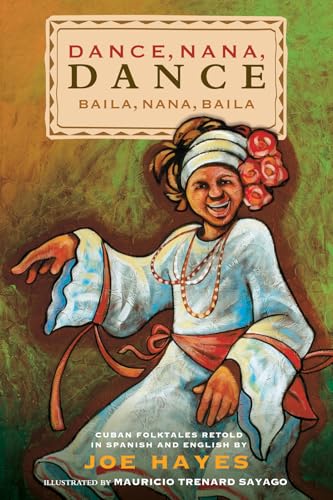
Dance, Nana, Dance / Baila, Nana, Baila: Cuban Folktales in English and Spanish
Hayes Joe and Trenard Sayago Mauricio
4.9
If you travel to Cuba, the people will greet you with a smile. Right away they’ll want you to come to their home and eat a meal. In the meal, you’ll find a mixture of foods and flavors from Spain and Africa—and from many Caribbean cultures as well. In Cuban folktales, you will taste the same delicious mixture of flavors.
Folklorist and storyteller Joe Hayes first visited Cuba in 2001. He fell in love with the island and its people and began to look for opportunities to meet and listen to Cuban storytellers and to share the stories he knew from the American Southwest. He has returned every year, establishing a rich cultural exchange between US and Cuban storytellers. Out of that collaboration came this savory collection of Cuban folktales, which Joe frames with an introduction and an all-important Note to Storytellers.
Joe Hayes is one of America’s premier storytellers. His bilingual Spanish-English tellings have earned him a distinctive place among America’s storytellers. Joe has published over twenty books. He lives in Santa Fe, New Mexico, and travels extensively throughout Texas, New Mexico, Arizona, and California.
Mauricio Trenard Sayago was born in Santiago de Cuba in 1963. He was raised in a home that was closely linked with art and was surrounded by the artistic debates sustained by the various artists and art history professors in his family. This environment strongly influenced him. Mauricio came to the United States in 2000, and now lives in Brooklyn.
…
Cover unavailable
17
Dreaming in Cuban
Cristina García
4.9
Here is the dreamy and bittersweet story of a family divided by politics and geography by the Cuban revolution. It is the family story of Celia del Pino, and her husband, daughter and grandchildren, from the mid-1930s to 1980. Celia's story mirrors the magical realism of Cuba itself, a country of beauty and poverty, idealism and corruption. DREAMING IN CUBAN presents a unique vision and a haunting lamentation for a past that might have been.
…
Cover unavailable
18
Selected Writings
Jose Marti, Esther Allen, Roberto Gonzalez Echevarria
4.9
JoséMartí (1853-1895) is the most renowned political and literary figure in the history of Cuba. A poet, essayist, orator, statesman, abolitionist, and the martyred revolutionary leader of Cuba's fight for independence from Spain, Martí lived in exile in New York for most of his adult life, earning his living working as a foreign correspondent. Throughout the 1880s and early 1890s, Martí's were the eyes through which much of Latin America saw the United States. His impassioned, kaleidoscopic evocations of that period in U.S. history, the assassination of James Garfield, the opening of the Brooklyn Bridge, the execution of the Chicago anarchists, the lynching of the Italians in New Orleans, and much more, bring it rushing back to life.
Organized chronologically, this collection begins with his early writings, including a thundering account of his political imprisonment in Cuba at age sixteen. The middle section focuses on his journalism, which offers an image of the United States in the nineteenth century, its way of life and system of government, that rivals anything written by de Tocqueville, Dickens, Trollope, or any other European commentator. Including generous selections of his poetry and private notebooks, the book concludes with his astonishing, hallucinatory final masterpiece, "War Diaries", never before translated into English.
For more than seventy years, Penguin has been the leading publisher of classic literature in the English-speaking world. With more than 1,700 titles, Penguin Classics represents a global bookshelf of the best works throughout history and across genres and disciplines. Readers trust the series to provide authoritative texts enhanced by introductions and notes by distinguished scholars and contemporary authors, as well as up-to-date translations by award-winning translators.
…
Cover unavailable
19
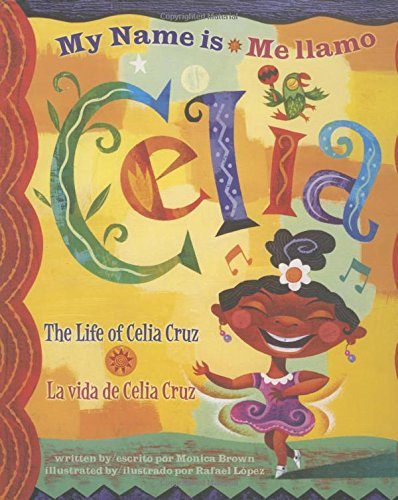
My Name Is Celia: The Life Of Celia Cruz / Me Llamo Celia: La Vida de Celia Cruz
Monica Brown, Rafael López
4.9
A Bilingual Storybook Biography of The Life of Celia Cruz, The Cuban-Born Queen of Salsa.
Cover unavailable
20
Three Trapped Tigers
Guillermo Cabrera-Infante
4.9
Many of Cuba's intellectuals embraced the Castro regime, but Guillermo Cabrera Infante, who criticized it, was condemned as a traitor and forced into exile. From this bitter experience, which included his hospitalization for mental collapse, came the vivid sketches of Cuban life that made up the acclaimed View of Dawn from the Tropics. In exile he revised this work into Three Trapped Tigers, a savage comedy that catapulted him into the first rank of Latin American novelist.
…
Recommended by Oscar Hijuelos.
Oscar Hijuelos
For me as a writer, this book is one of the first Cuban novels I have read that had an explosive and musical energy, which I found irresistible. I think that Mario Vargas Llosa has demonstrated that same kind of explosive energy in novels like Conversation in the Cathedral, with words populating the pages in the same way that vegetation takes over a forest. But few other writers can approach Infante in his verbal intensity and sense of rhythm. In his case, the words he used were vernacular and very contemporary. His language transports you to Cuba. [source]
Cover unavailable
21
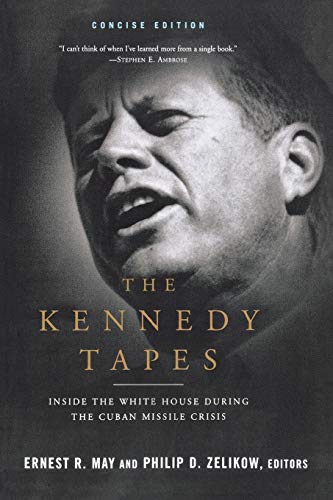
The Kennedy Tapes: Inside the White House during the Cuban Missile Crisis
Ernest R. May, Philip D. Zelikow
4.9
For sheer drama, this work of history may never be duplicated. The events of the Cuban Missile Crisis unfold in the actual words of President John F. Kennedy and his top advisers. Now available in a new, concise edition, this book retains its gripping sense of history in the making.
"[A] splendid achievement, as powerful and exciting a book as one is likely to read this year...."—Barry Gewen, New York Times Book Review "Gripping history."—Richard J. Tofel, Wall Street Journal "[M]esmerizing. I was utterly fascinated....the best, fullest account of crisis yet and will remain so for decades to come."—Stephen E. Ambrose "[A]s close as most people will ever get to being a fly on the wall during the discussions of leaders."—Los Angeles Times Sunday Book Review, James G. Blight
…
Recommended by Jonathan Glover.
Jonathan Glover
During the 1962 Cuban missile crisis, the world came the closest it has been to nuclear war. Khrushchev secretly installed missiles in Cuba, and when American spy planes spotted them Kennedy saw that American public opinion would not stand for a nuclear threat so close and possibly under Castro’s control. Should the United States bomb the missile sites in Cuba, or might that lead to Soviet retaliation? Would anything less lead to their removal? [source]
Cover unavailable
22
The Price of Paradise
Susana López Rubio and Achy Obeja
4.9
In a city as corrupt as it was luxurious, those who dared to dream were bound to pay the price.
Havana, Cuba, 1947. Young Patricio flees impoverished Spain and steps into the sultry island paradise of Havana with only the clothes on his back and half-baked dreams of a better life. Blessed with good looks and natural charm, he lands a job as a runner at El Encanto—one of the most luxurious department stores in the world.
Famous for its exquisite offerings from French haute couture to Arabian silks, El Encanto indulges the senses in opulent extravagance. It caters to visiting Hollywood stars, rising politicos, and prerevolutionary Cuba’s wealthiest power players, including the notorious mobster César Valdés.
Falling in love with the mobster’s young wife, Gloria, is suicide. But Patricio is irresistibly drawn to the beautiful girl with sad eyes, a razor-sharp intellect, and a penchant for both Christian Dior’s clothes and Einstein’s theories. Within the walls of El Encanto, anything seems possible, even a love that promises to heal them and a desire that thrums with the mambo beat of the city itself.
In a reckless love affair that spans half a century, Patricio’s and Gloria’s lives entwine time and again, challenged by every twist of fate—for in a world of murder, betrayal, and revolution, those who dare to reach for paradise seldom survive unscathed.
…
Cover unavailable
23
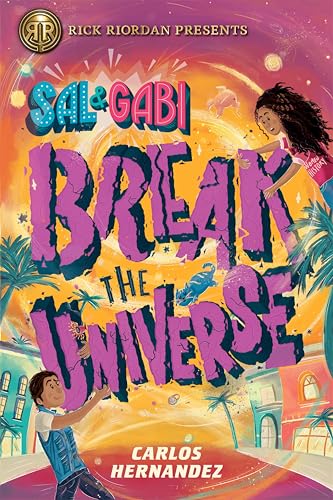
Sal and Gabi Break the Universe (Sal and Gabi, #1)
Carlos Hernande
4.9
How did a raw chicken get inside Yasmany's locker?
When Sal Vidon meets Gabi Real for the first time, it isn't under the best of circumstances. Sal is in the principal's office for the third time in three days, and it's still the first week of school. Gabi, student council president and editor of the school paper, is there to support her friend Yasmany, who just picked a fight with Sal. She is determined to prove that somehow, Sal planted a raw chicken in Yasmany's locker, even though nobody saw him do it and the bloody poultry has since mysteriously disappeared.
Sal prides himself on being an excellent magician, but for this sleight of hand, he relied on a talent no one would guess . . . except maybe Gabi, whose sharp eyes never miss a trick. When Gabi learns that he's capable of conjuring things much bigger than a chicken--including his dead mother--and she takes it all in stride, Sal knows that she is someone he can work with. There's only one slight problem: their manipulation of time and space could put the entire universe at risk.
A sassy entropy sweeper, a documentary about wedgies, a principal who wears a Venetian bauta mask, and heaping platefuls of Cuban food are just some of the delights that await in this mind-blowing novel gift-wrapped in love and laughter.
…
Cover unavailable
24
When We Left Cuba
Chanel Cleeton
4.8
In 1960s Florida, a young Cuban exile will risk her life--and heart--to take back her country in this exhilarating historical novel from the author of Next Year in Havana, a Reese Witherspoon Book Club pick.
Beautiful. Daring. Deadly.
The Cuban Revolution took everything from sugar heiress Beatriz Perez--her family, her people, her country. Recruited by the CIA to infiltrate Fidel Castro's inner circle and pulled into the dangerous world of espionage, Beatriz is consumed by her quest for revenge and her desire to reclaim the life she lost.
As the Cold War swells like a hurricane over the shores of the Florida Strait, Beatriz is caught between the clash of Cuban American politics and the perils of a forbidden affair with a powerful man driven by ambitions of his own. When the ever-changing tides of history threaten everything she has fought for, she must make a choice between her past and future--but the wrong move could cost Beatriz everything--not just the island she loves, but also the man who has stolen her heart...
…
Cover unavailable
25
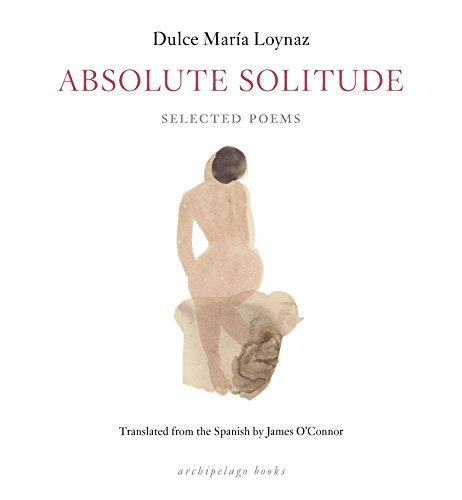
Absolute Solitude: Selected Poems
Dulce Maria Loynaz, James O'Connor
4.8
In the first comprehensive selection and translation of Dulce María Loynaz's poetry, James O'Connor invites us to hear the haunting voice of Cuba's celebrated poet, whom the Nobel Laureate Juan Ramón Jiménez terms in his Foreword, "archaic and new...tender, weightless, rich in abandon." Widely published in Spain during the 1950s, Loynaz's poetry was almost forgotten in Cuba after the Revolution. International recognition came to her late: at the age of ninety she was living in seclusion in Havana when the Royal Spanish Academy awarded her the 1992 Cervantes Prize, the highest literary accolade in the Spanish language. The first English publication of her work, Absolute Solitude contains a selection of poems from each of Loynaz's books, including the acclaimed prose poems from Poems with No Names, a selection of posthumously published work.
…
Cover unavailable
26
Learning to Die in Miami: Confessions of a Refugee Boy
Carlos Eire
4.8
In his 2003 National Book Award–winning memoir Waiting for Snow in Havana, Carlos Eire narrated his coming of age in Cuba just before and during the Castro revolution. That book literally ends in midair as eleven-year-old Carlos and his older brother leave Havana on an airplane—along with thousands of other children—to begin their new life in Miami in 1962. It would be years before he would see his mother again. He would never again see his beloved father.
Learning to Die in Miami opens as the plane lands and Carlos faces, with trepidation and excitement, his new life. He quickly realizes that in order for his new American self to emerge, his Cuban self must "die." And so, with great enterprise and purpose, he begins his journey.
We follow Carlos as he adjusts to life in his new home. Faced with learning English, attending American schools, and an uncertain future, young Carlos confronts the age-old immigrant’s plight: being surrounded by American bounty, but not able to partake right away. The abundance America has to offer excites him and, regardless of how grim his living situation becomes, he eagerly forges ahead with his own personal assimilation program, shedding the vestiges of his old life almost immediately, even changing his name to Charles. Cuba becomes a remote and vague idea in the back of his mind, something he used to know well, but now it "had ceased to be part of the world."
But as Carlos comes to grips with his strange surroundings, he must also struggle with everyday issues of growing up. His constant movement between foster homes and the eventual realization that his parents are far away in Cuba bring on an acute awareness that his life has irrevocably changed. Flashing back and forth between past and future, we watch as Carlos balances the divide between his past and present homes and finds his way in this strange new world, one that seems to hold the exhilarating promise of infinite possibilities and one that he will eventually claim as his own.
An exorcism and an ode, Learning to Die in Miami is a celebration of renewal—of those times when we’re certain we have died and then are somehow, miraculously, reborn.
…
Recommended by Oscar Hijuelos.
Oscar Hijuelos
He is best known for his earlier book, Waiting for Snow in Havana. [source]
Cover unavailable
27
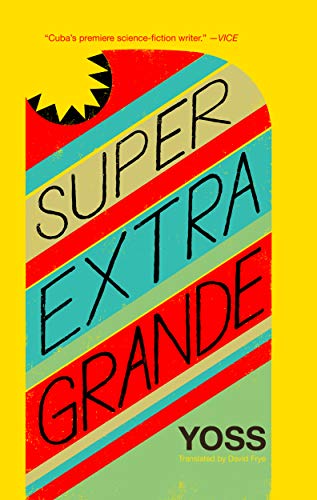
A Planet for Rent
Yoss and David Frye
4.8
The most successful and controversial Cuban Science Fiction writer of all time, Yoss (aka José Miguel Sánchez Gómez) is known for his acerbic portraits of the island under Communism. In his bestselling A Planet for Rent, Yoss pays homage to Ray Bradbury’s The Martian Chronicles and 334 by Thomas M. Disch. A critique of Cuba in the nineties, after the fall of the Soviet Union and the dissolution of the Warsaw Pact, A Planet for Rent marks the debut in English of an astonishingly brave and imaginative Latin American voice.
Wracked by economic and environmental problems, the desperate planet is rescued, for better or worse, by alien colonizers, who remake the planet as a tourist destination. Ruled over by a brutal interstellar bureaucracy, dispossessed humans seek better lives via the few routes available — working for the colonial police; eking out a living as black marketeers, drug dealers, or artists; prostituting themselves to exploitative extraterrestrial visitors — or they face the cold void of space in rickety illegal ships.
…
Cover unavailable
28
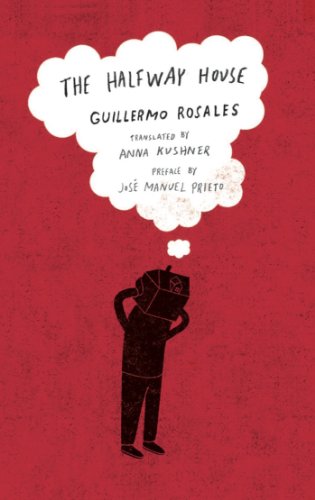
The Halfway House
Guillermo Rosales, Anna Kushner, José Manuel Prieto
4.8
Never before available in English, The Halfway House is a trip to the darkest corners of the human condition. Humiliations, filth, stench, and physical abuse comprise the asphyxiating atmosphere of a halfway house for indigents in Miami where, in a shaken mental state, the writer William Figueras lives after his exile from Cuba. He claims to have gone crazy after the Cuban government judged his first novel “morose, pornographic, and also irreverent, because it dealt harshly with the Communist Party,” and prohibited its publication. By the time he arrives in Miami twenty years later, he is a “toothless, skinny, frightened guy who had to be admitted to a psychiatric ward that very day” instead of the ready-for-success exile his relatives expected to welcome and receive among them. Placed in a halfway house, with its trapped bestial inhabitants and abusive overseers, he enters a hell. Romance appears in the form of Frances, a mentally fragile woman and an angel, with whom he tries to escape in this apocalyptic classic of Cuban literature.
“Behind the hardly one hundred pages,” Canarias Diario stated, “is the work of a tireless fabulist, a writer who delights in language, extracting verbs and adjectives which are powerful enough to stop the reader in his tracks.”
…
Cover unavailable
29
Waiting for Snow in Havana: Confessions of a Cuban Boy
Carlos Eire
4.8
In 1962, at the age of eleven, Carlos Eire was one of 14,000 children airlifted out of Cuba, his parents left behind. His life until then is the subject of Waiting for Snow in Havana, a wry, heartbreaking, intoxicatingly beautiful memoir of growing up in a privileged Havana household -- and of being exiled from his own childhood by the Cuban revolution.
That childhood, until his world changes, is as joyous and troubled as any other -- but with exotic differences. Lizards roam the house and grounds. Fights aren't waged with snowballs but with breadfruit. The rich are outlandishly rich, like the eight-year-old son of a sugar baron who has a real miniature race car, or the neighbor with a private animal garden, complete with tiger. All this is bathed in sunlight and shades of turquoise and tangerine: the island of Cuba, says one of the stern monks at Carlos's school, might have been the original Paradise -- and it is tempting to believe.
His father is a municipal judge and an obsessive collector of art and antiques, convinced that in a past life he was Louis XVI and that his wife was Marie Antoinette. His mother looks to the future; conceived on a transatlantic liner bound for Cuba from Spain, she wants her children to be modern, which means embracing all things American. His older brother electrocutes lizards. Surrounded by eccentrics, in a home crammed with portraits of Jesus that speak to him in dreams and nightmares, Carlos searches for secret proofs of the existence of God.
Then, in January 1959, President Batista is suddenly gone, a cigar-smoking guerrilla named Castro has taken his place, and Christmas is canceled. The echo of firingsquads is everywhere. At the Aquarium of the Revolution, sharks multiply in a swimming pool. And one by one, the author's schoolmates begin to disappear -- spirited away to the United States. Carlos will end up there himself, alone, never to see his father again.
Narrated with the urgency of a confession, Waiting for Snow in Havana is both an exorcism and an ode to a paradise lost. More than that, it captures the terrible beauty of those times in our lives when we are certain we have died -- and then are somehow, miraculously, reborn.
…
Cover unavailable
30
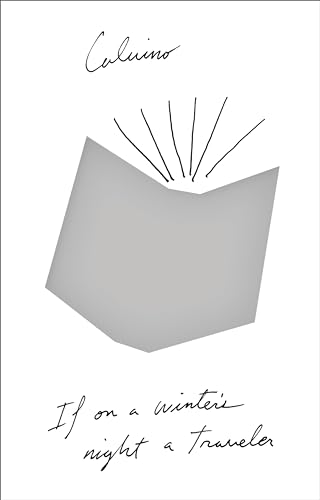
If on a Winter's Night a Traveler
Italo Calvino and William Weave
4.8
If on a Winter's Night a Traveler is a marvel of ingenuity, an experimental text that looks longingly back to the great age of narration—"when time no longer seemed stopped and did not yet seem to have exploded." Italo Calvino's novel is in one sense a comedy in which the two protagonists, the Reader and the Other Reader, ultimately end up married, having almost finished If on a Winter's Night a Traveler. In another, it is a tragedy, a reflection on the difficulties of writing and the solitary nature of reading. The Reader buys a fashionable new book, which opens with an exhortation: "Relax. Concentrate. Dispel every other thought. Let the world around you fade." Alas, after 30 or so pages, he discovers that his copy is corrupted, and consists of nothing but the first section, over and over. Returning to the bookshop, he discovers the volume, which he thought was by Calvino, is actually by the Polish writer Bazakbal. Given the choice between the two, he goes for the Pole, as does the Other Reader, Ludmilla. But this copy turns out to be by yet another writer, as does the next, and the next.
The real Calvino intersperses 10 different pastiches—stories of menace, spies, mystery, premonition—with explorations of how and why we choose to read, make meanings, and get our bearings or fail to. Meanwhile the Reader and Ludmilla try to reach, and read, each other. If on a Winter's Night is dazzling, vertiginous, and deeply romantic. "What makes lovemaking and reading resemble each other most is that within both of them times and spaces open, different from measurable time and space."
…
Cover unavailable
31
Dirty Havana Trilogy
Pedro Juan Gutierrez, Natasha Wimmer
4.8
For the last four decades, Fidel Castro's communist Cuba has survived a harsh economic blockade. In 1993, Castro attempted economic reform by allowing Cubans to use U.S. dollars and begin their own business ventures—"a huge messy free-for-all." This time of confused, low-rent capitalism is the backdrop for Pedro Juan Gutierrez's gritty, powerful, and atmospheric novel-in-stories, Dirty Havana Trilogy, translated from the original Spanish version by Natasha Wimmer.
Gutierrez, whose prose sings of grime and simple, hard-clay truths, much like the words of Junot Díaz, is a well-known member of the Latin American visual poetry movement and a magazine journalist living in Havana. Dirty Havana Trilogy is written from the semiautobiographical point of view of Pedro Juan, a 40-year-old sex-starved ex-radio journalist cobbling together an existence by selling everything from himself to drugs to whatever he can get his hands on. "Everything's worth something here," he writes.
Pedro Juan is an ex-radio journalist because in a "model" communist society nothing bad is acceptable news. Through his tormented lead character, Gutierrez provides a window into his reasons for writing such a crude book. "That's why I was disillusioned with journalism and why I started to write raw stories.... I write to jar people a little and force others to wake up and smell the shit.... That's how I terrorize cowards and mess with people who like to muzzle those of us who speak up.... My stories could run bare-assed out into the middle of the street, shouting, 'Freedom, freedom, freedom.'"
That said, be warned: Dirty Havana Trilogy is not for the faint of heart. It is raw, squarely confronting poverty, racism, violence, prostitution, and the lengths Cubans go to in order to secure the almighty buck. In one story, the man who lives across the hall from Pedro Juan, in the crumbling apartment building that serves as the focal point for much of the book, is busted by the cops for stealing human livers from the morgue and selling them on the streets as pork livers.
But survival isn't the only thing on the minds of Gutierrez's colorful characters. Oddly enough, it's the quest for release, for fits of pleasure, for some sliver of happiness no matter how warped the avenue may seem to the world outside Havana. And that quest is manifested in the hard-core sex that permeates the pages of the book. An orgasm is one of the few pleasures no one can be denied. As violent and nauseating as the sex -- and the life -- may seem on the surface, Gutierrez achieves the difficult task of lifting his characters from the muck, giving his Dirty Havana Trilogy an intellectual and emotional depth that far outweighs the carnal.
Near the end Gutierrez writes, "Born in the ruins, they just kept trying not to give up or let themselves be beaten so severely that at last they were forced to surrender. Anything was possible, everything allowed, except defeat." The book then becomes a manifesto, a well-wrought fight against literary persecution, a release the same as an orgasm, where the truth behind every dark corner, behind every door, must be told. Dirty Havana Trilogy comes from the same womb in which literature was born, a book that just may someday be held up beside those of the mighty dead.
Nelson Taylor is a freelance writer and author of the travel guide America Bizarro, published by St. Martin's Press.
…
Cover unavailable
32
Let's Explore Cuba
Walt K. Moon
4.8
There are lots of different places to visit in the world! Have you ever been on an island? What would it be like to live on one? Take a trip to tropical Cuba and learn about the history and culture of this Caribbean country. Full-color photographs and carefully leveled text bring Cuba to life, while age-appropriate critical thinking questions introduce readers to nonfiction. It's almost like being on the beach yourself!
…
Cover unavailable
33
Enchanted Air: Two Cultures, Two Wings
Margarita Engle and Edel Rodriguez
4.8
In this poetic memoir, which won the Pura Belpré Author Award, was a YALSA Nonfiction Finalist, and was named a Walter Dean Myers Award Honoree, acclaimed author Margarita Engle tells of growing up as a child of two cultures during the Cold War.
Margarita is a girl from two worlds. Her heart lies in Cuba, her mother’s tropical island country, a place so lush with vibrant life that it seems like a fairy tale kingdom. But most of the time she lives in Los Angeles, lonely in the noisy city and dreaming of the summers when she can take a plane through the enchanted air to her beloved island. Words and images are her constant companions, friendly and comforting when the children at school are not.
Then a revolution breaks out in Cuba. Margarita fears for her far-away family. When the hostility between Cuba and the United States erupts at the Bay of Pigs Invasion, Margarita’s worlds collide in the worst way possible. How can the two countries she loves hate each other so much? And will she ever get to visit her beautiful island again?
…
Cover unavailable
34
"One Hell of a Gamble": Khrushchev, Castro, and Kennedy, 1958-1964
Aleksandr Fursenko, Timothy Naftali
4.8
No other book offers this inside look at the strategies of the Soviet leadership. John F. Kennedy did not live to write his memoirs; Fidel Castro will not reveal what he knows; and the records of the Soviet Union have long been sealed from public view: Of the most frightening episode of the Cold War--the Cuban Missile Crisis--we have had an incomplete picture. When did Castro embrace the Soviet Union? What proposals were put before the Kremlin through Kennedy's back-channel diplomacy? How close did we come to nuclear war? These questions have now been answered for the first time. This important and controversial book draws the missing half of the story from secret Soviet archives revealed exclusively by the authors, including the files of Nikita Khrushchev and his leadership circle. Contained in these remarkable documents are the details of over forty secret meetings between Robert Kennedy and his Soviet contact, records of Castro's first solicitation of Soviet favor, and the plans, suspicions, and strategies of Khrushchev. This unique research opportunity has allowed the authors to tell the complete, fascinating, and terrifying story of the most dangerous days of the last half-century.
…
Cover unavailable
35
The Lost Steps
Alejo Carpentier
4.8
A composer, fleeing an empty existence in New York City, takes a journey with his mistress to one of the few remaining areas of the world not yet touched by civilization-the upper reaches of a great South American river. The Lost Steps describes his search, his adventures, and the remarkable decision he makes in a village that appears to be truly outside history.
Cover unavailable
36
Kid Start-Up: How YOU Can Become an Entrepreneur
Mark Cuban, Shaan Patel, et al.
4.8
Cover unavailable
37
Cuban Roots
Michael A Pyle
4.8
'Cuban Roots’ is a historical novel, based mostly in Cuba and also in Florida, including Daytona Beach. Luis Morales is an eighty-four year old lawyer, born in Cuba, living in Miami. He regularly travels to Cuba to deliver funds inherited by Cubans. He gives an interview to a reporter regarding his interpretation of the feeling of the people living on the island about Fidel Castro’s death, and some strongly criticize his words. After being hounded and attacked, he suffers a medical crisis, and while seemingly unconscious, relives the good and bad experiences of his youth in the country of his birth, the country that he loves, Cuba.
Michael A. Pyle, author of ‘White Sugar, Brown Sugar’, began writing Cuban Roots over thirty years ago. He has traveled all over Cuba numerous times, interviewing people, visiting museum and performing research. Senior officers of the Institute of Cuban History in Havana, Cuba have read the manuscript and found the historical references credible. The Institute has invited him twice to present the book to its annual international symposium.
…
Cover unavailable
38
One Hundred Bottles
Ena Lucía Portela, Achy Obejas
4.8
Cover unavailable
39
The Epic Fail of Arturo Zamora
Pablo Cartaya
4.8
Save the restaurant. Save the town. Get the girl. Make Abuela proud. Can thirteen-year-old Arturo Zamora do it all or is he in for a BIG, EPIC FAIL?
For Arturo, summetime in Miami means playing basketball until dark, sipping mango smoothies, and keeping cool under banyan trees. And maybe a few shifts as junior lunchtime dishwasher at Abuela's restaurant. Maybe. But this summer also includes Carmen, a cute poetry enthusiast who moves into Arturo's apartment complex and turns his stomach into a deep fryer. He almost doesn't notice the smarmy land developer who rolls into town and threatens to change it. Arturo refuses to let his family and community go down without a fight, and as he schemes with Carmen, Arturo discovers the power of poetry and protest through untold family stories and the work of Jose Marti.
…
Cover unavailable
40
El siglo de las luces
Alejo Carpentier
4.8
This fine, somber novel, by the author of the widely acclaimed The Lost Steps, deals with the French Revolution, chiefly in the Caribbean. Not an ordinary historical novel, but rather a poetic, highly informed essay, it forth, in rich prose, a host of memorable impressions -- of Revolutionary Paris, of Caribbean islands sweltering in the sunlight, and of the Revolutionary ideals which, transplanted to these islands, died in blood, sweat and a return to slavery and the old ways. Its chief protagonist is Victor Hugues, a historical figure, who is shown through the eyes of three fictional orphaned adolescents -- Carlos, Sofia, and their cousin Esteban, whom he dazzled at first meeting. Esteban follows Victor as he rises from baker's son and merchant to Revolutionary master of the Caribbean, but sickens eventually of bloodshed and of Victor's ruthless changing to fit shifting policies. Sofia, who loves Victor and joins him, is also finally sickened by the betrayal of Revolutionary ideals, and the changes power has made in Victor. Above its many modern political parallels, this story is powerful evocation of the mysterious evolution, decay and persistence of all human relations and ambitions. Splendidly written.
…
Cover unavailable
41
Cold Hard Truth On Men, Women, and Money: 50 Common Money Mistakes and How to Fix Them
Kevin O'Leary
4.8
A new financial guide on how to avoid money mistakes at every stage of life, from bestselling author and TV superstar Kevin O’Leary—“a completely unique personality. He is able to say things that are sharp and funny but ultimately meaningful” (Los Angeles Times).
Don’t spend too much. Mostly save. Always invest.
This is simple advice, but it’s often the simple advice that’s easy to swallow and hard to follow. Kevin O’Leary understands that getting a handle on your personal finances can be challenging at any age. Whether you’re a parent struggling to explain savings to your children, a student contemplating a big loan to pay for school, a newly engaged couple considering joint bank accounts, or a baby boomer entering retirement, Kevin offers solid, practical advice to help you make—and keep—more money.
As a star on ABC’s Shark Tank, Kevin’s success with money management and in business is legendary. But he’s made mistakes along the way, too, and he’s written this book so others can benefit from his experiences. Each chapter is geared to a specific age or stage in life and focuses on simple changes you can make to avoid debt, save money, and invest for a brighter future. You’ll find real-life examples of common money mistakes and strategies for avoiding them, “Cold Hard Truth” quizzes and charts aimed at boosting your financial wisdom, and tips and tricks for making more money and growing it faster to achieve financial freedom.
The Cold Hard Truth on Men, Women, and Money offers an invaluable opportunity to walk through some of life’s biggest decisions with one of the sharpest financial minds today.
…
Cover unavailable
42
Concierto barroco
Alejo Carpentier
4.8
This novella is a bizarre and compelling fantasy, a labyrinth-like journey laced with layers of allusions, insights and humor through the transculturation between the Old World and New
Cover unavailable
43
Cuban Cookbook: Traditional Cuban Recipes Made Easy
Grizzly Publishing
4.8
Cover unavailable
44
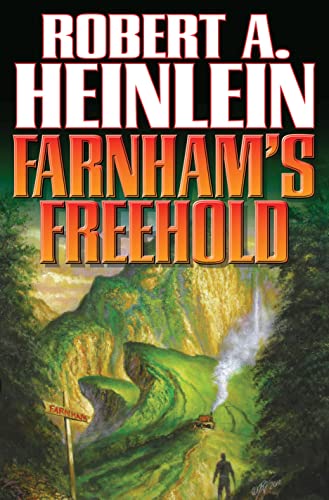
Farnham's Freehold
Robert A. Heinlein
4.8
Hugh Farnham was a practical, self-made man, and when he saw the clouds of nuclear war gathering, he built a bomb shelter under his house, hoping for peace and preparing for war. What he hadn't expected was that when the apocalypse came, a thermonuclear blast would tear apart the fabric of time and hurl his shelter across two thousand years into a future both strange and appallingly familiar. In the new world order, Farnham and his family, being members of the race that had nearly destroyed the world, were fit only to be slaves. After surviving a global nuclear war, Farnham had no intention of being anybody's slave, but the tyrannical power of the Chosen Race reached throughout the world. Even if he managed to escape, where could he run to?
…
Cover unavailable
45
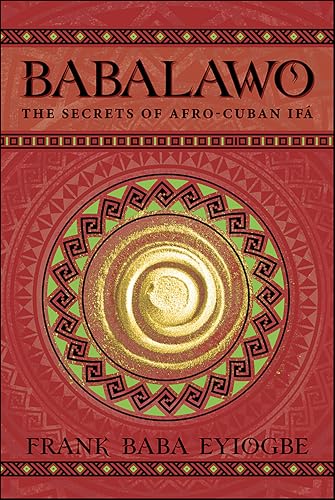
Babalawo, Santeria's High Priests: Fathers of the Secrets in Afro-Cuban Ifa
Frank Baba Eyiogbe
4.8
Cuban If� From An Insider
Hidden within the mysterious Afro-Cuban religion of Santer�a, also known as Lucum�, there is a deep body of secrets and rituals called If�, divination practiced by priests whose title, babalawo, means "Father of the Secrets." This book pulls away the veil of secrecy to reveal exactly what If� is and how it works, exploring its history, cosmology, Orichas, initiations, mythology, offerings, and sacrifices. Join Frank Baba Eyiogbe in this fascinating introduction that discusses the functions of the babalawo, the role of women, the future of If�, and much more.
Praise: "A wonderful and much needed addition to the literature on Afro-Cuban religion. Engagingly written, scholarly while remaining accessible . . . it presents an up-to-date exposition of both the history and contemporary philosophy of one of the world's most complex systems of divination."mdash;Stephan Palmi�, Chair of the Department of Anthropology and Social Sciences at the University of Chicago and author of The Cooking of History: How Not to Study Afro-Cuban Religion
…
Cover unavailable
46
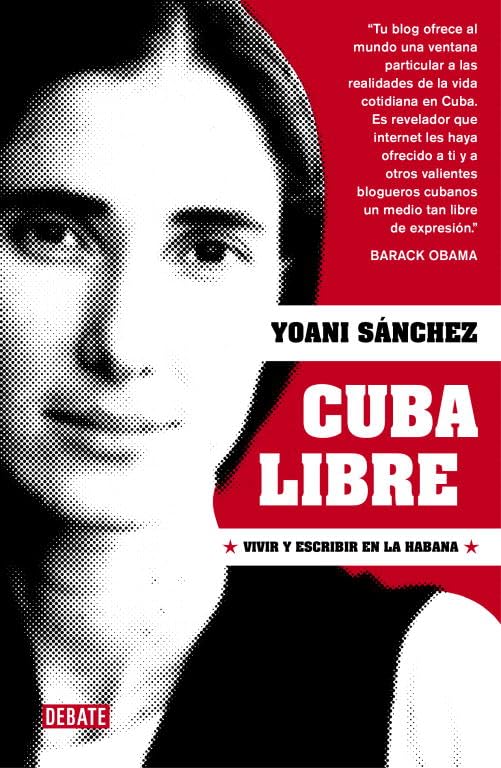
Cuba libre
Yoani Sánchez
4.8
Cover unavailable
47
The Drummer's Bible: How to Play Every Drum Style from Afro-Cuban to Zydeco
Mick Berry and Jason Gianni
4.8
Updated to include 50 additional grooves, this encyclopedic book and two-CD set contains more than 450 musical examples in standard notation, showing grooves and practical variations. Overviews of the history and development of almost all popular music styles are covered alongside innumerable helpful performance tips. The two accompanying CDs feature performances of nearly 200 of the grooves, including every primary style example, all performed both with and without a click track. Styles covered include blues, rock, jazz, reggae, country, klezmer, ska, samba, punk, surf, heavy metal, latin rock, and funk; virtually every style a performing drummer will ever need to play is in there. This revised second edition also includes an updated bibliography and discography, as well as more historical information about the individual styles.
…
Cover unavailable
48
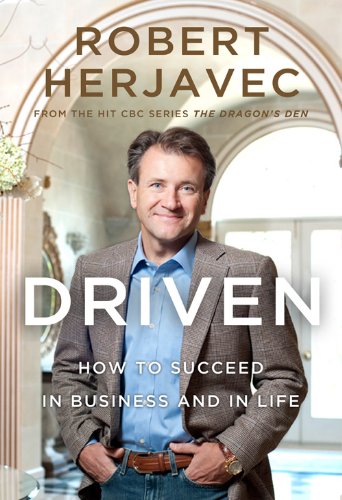
Driven: How To Succeed In Business And In Life
Robert Herjavec
4.8
Robert Herjavec has lived the classic “rags to riches” story, from having $20 in his pocket to starting up technology companies worth hundreds of millions of dollars. Now the star of television’s Dragons’ Den and Shark Tank, this son of Croatian immigrants earned his incredible wealth by overcoming the odds with hard work and determination. On television, Herjavec bankrolls the best inventions and shoots down the best of intentions. Now, he’s sharing his hard-won wisdom in one of the most inspirational business books of recent times.
In Driven, Herjavec shares the secrets that took him from his job waiting tables to growing his nascent technology company into a world-class conglomerate, The Herjavec Group. Herjavec’s principles are as valuable in the living room as they are in the boardroom. Anyone can succeed, on their own terms, by following his sage but simple advice—if they’re willing to take chances, to take control of their own future and to stay true to their own visions.
…
Cover unavailable
49
Obí: Oracle of Cuban Santería
Ócha'ni Lele and Ocha'ni Lele
4.8
• The first book to provide complete, specific instructions for casting the obi oracle of the Santería faith.
• Uses the shell of a coconut, which embodies the spirit of Obí, as a divination tool.
• Includes a detailed “mojuba” or prayer that awakens the orishas and invites them to speak.
• Examines in depth the five basic patterns that appear when obí is cast and explains how to interpret the oracle's answer.
• Explores the fifty additional patterns and meanings contributed by ten orishas closely associated with the orisha Obí
One of the paths to the spirits within Santeria is through a divination technique known as obi, the coconut oracle, which gives the petitioner access to the orisha of the same name. The orisha Obí began as a mortal human who ascended to become an orisha as a reward for good deeds done on Earth, then fell from grace because of excessive pride. When he descended back to Earth, his spirit was embodied in the coconut palm. Though he no longer has a tongue, he can answer questions posed to him through the patterns made by four pieces of coconut shell cast as a divination tool.
Obí: Oracle of Cuban Santería is the first book to fully explore the sacred body of lore surrounding Obí, as well as his particular rituals and customs, including opening considerations, casting and interpreting the oracle, and employing advanced methods of divination. Also explained are the previously unpublished secrets of closing the oracle properly so that any negative vibrations will be absorbed by the coconuts and permanently removed from the diviner's home.
…
Cover unavailable
50
Pasado Perfecto
Leonardo Padura
4.8
El primer fin de semana de 1989 una insistente llamada de teléfono arranca de su resaca al teniente Mario Conde, un policía escéptico y desengañado. El Viejo, su jefe en la Central, le llama para encargarle un misterioso y urgente caso: Rafael Morín, jefe de la Empresa de Importaciones y Exportaciones del Ministerio de Industrias, falta de su domicilio desde el día de Año Nuevo. Quiere el azar que el desaparecido sea un ex compañero de estudios de Conde, un tipo que ya entonces, aun acatando las normas establecidas, se destacaba por su brillantez y autodisciplina. Por si fuera poco, este caso enfrenta al teniente con el recuerdo de su antiguo amor por la joven Tamara, ahora casada con Morín. «El Conde» -así le conocen sus amigos-, irá descubriendo que el aparente pasado perfecto sobre el que Rafael Morín ha ido labrando su brillante carrera ocultaba ya sus sombras.
…
Cover unavailable
51
Little Birds
Anaïs Nin
4.8
Evocative and superbly erotic, Little Birds is a powerful journey into the mysterious world of sex and sensuality. From the beach towns of Normandy to the streets of New Orleans, these thirteen vignettes introduce us to a covetous French painter, a sleepless wanderer of the night, a guitar-playing gypsy, and a host of others who yearn for and dive into the turbulent depths of romantic experience.
Cover unavailable
52
Make Your Home Among Strangers
Jennine Capó Crucet
4.8
The arresting debut novel from award-winning writer Jennine Capó Crucet When Lizet—the daughter of Cuban immigrants and the first in her family to graduate from high school—secretly applies and is accepted to an ultra-elite college, her parents are furious at her decision to leave Miami. Just weeks before she's set to start school, her parents divorce and her father sells her childhood home, leaving Lizet, her mother, and Leidy—Lizet's older sister, a brand-new single mom—without a steady income and scrambling for a place to live.
Amidst this turmoil, Lizet begins her first semester at Rawlings College, distracted by both the exciting and difficult moments of freshman year. But the privileged world of the campus feels utterly foreign, as does her new awareness of herself as a minority. Struggling both socially and academically, she returns to Miami for a surprise Thanksgiving visit, only to be overshadowed by the arrival of Ariel Hernandez, a young boy whose mother died fleeing with him from Cuba on a raft. The ensuing immigration battle puts Miami in a glaring spotlight, captivating the nation and entangling Lizet's entire family, especially her mother.
Pulled between life at college and the needs of those she loves, Lizet is faced with difficult decisions that will change her life forever. Urgent and mordantly funny, Make Your Home Among Strangers tells the moving story of a young woman torn between generational, cultural, and political forces; it's the new story of what it means to be American today.
…
Cover unavailable
53
Havana Red
Leonardo Padura, Peter Bush
4.8
A young transvestite in a beautiful red dress is found strangled in a Havana park. Conde’s investigation into a violent murder exposes a stifling, corrupt society, a Cuban reality where nothing is what it seems. A dark and fascinating world of men and women born in the revolution who live without dreaming of exile and seek their identity in the midst of disaster.
Recommended by Oscar Hijuelos.
Oscar Hijuelos
Part of the reason I like his work so much is that it has a real noiresque feel about it. He has a very literary sensibility and a wonderful sense of narrative, and really knows how to build themes in a way that is rather beguiling. When I first started reading his books I said this guy has got a wonderful style, and it is reminiscent of something I like myself – and then I found out he was a big fan of my work. [source]
Cover unavailable
54
Easy Cuban Cookbook: Taste Cuba with Authentic and Easy Cuban Recipes (2nd Edition)
BookSumo Press
4.8
Welcome to Cuba.
Get your copy of the best and most unique Cuban recipes from BookSumo Press!
Come take a journey with us into the delights of easy cooking. The point of this cookbook and all our cookbooks is to exemplify the effortless nature of cooking simply.
In this book we focus on Cuban cuisine. The Easy Cuban Cookbook is a complete set of simple but very unique Cuban recipes. You will find that even though the recipes are simple, the tastes are quite amazing.
So will you join us in an adventure of simple cooking?
Here is a Preview of the Cuban Recipes You Will Learn: Rice and Beans Cuban Style Alternative Chicken and Rice Latin Crab Salad Cuban Dinner Rolls Handmade Refried Beans Pollo con Ajo Cuban Tomato Salad Cuban Jerk Chicken Cuban Crock Pot Classic Cuban Turkey Sandwich Authentic Flan Cuban Tan Bread Sofrito Steak with Capers Sauce (Ropa Vieja) Chicken Wings Cuban Round Steak with Cuban Mojo Fried Steaks with Lime Dressing Tropical Pops Dressing Soriano Cuban Habichuelas Spicy Green Hummus Cinnamon Cuba City Custard Salad Cubana Potato Salad Havanita Much, much more!
Again remember these recipes are unique so be ready to try some new things. Also remember that the style of cooking used in this cookbook is effortless. So even though the recipes will be unique and great tasting, creating them will take minimal effort!
Related Searches: Cuba cookbook, Cuba recipes, Cuba book, Cuba, cuban cookbook, cuban recipes, cuban cooking
…
Cover unavailable
55
The Week the World Stood Still: Inside the Secret Cuban Missile Crisis
Sheldon M. Stern
4.8
Cover unavailable
56
The Chase
Alejo Carpentier
4.8
Cover unavailable
57
Cuba 15
Nancy Osa
4.8
Violet Paz has just turned 15, a pivotal birthday in the eyes of her Cuban grandmother. Fifteen is the age when a girl enters womanhood, traditionally celebrating the occasion with a quinceañero. But while Violet is half Cuban, she’s also half Polish, and more importantly, she feels 100% American. Except for her zany family’s passion for playing dominoes, smoking cigars, and dancing to Latin music, Violet knows little about Cuban culture, nada about quinces, and only tidbits about the history of Cuba. So when Violet begrudgingly accepts Abuela’s plans for a quinceañero–and as she begins to ask questions about her Cuban roots–cultures and feelings collide. The mere mention of Cuba and Fidel Castro elicits her grandparents’ sadness and her father’s anger. Only Violet’s aunt Luz remains open-minded. With so many divergent views, it’s not easy to know what to believe. All Violet knows is that she’s got to form her own opinions, even if this jolts her family into unwanted confrontations. After all, a quince girl is supposed to embrace responsibility–and to Violet that includes understanding the Cuban heritage that binds her to a homeland she’s never seen. This is Nancy Osa’s first novel.
From the Hardcover edition.
…
Cover unavailable
58
Domingo de Revolución
Wendy Guerra
4.8
Ésta es la historia de Cleo, joven poeta residente en La Habana, una autora bajo sospecha. La Seguridad del Estado y el Ministerio de Cultura creen que su éxito ha sido construido por «el enemigo» como un arma de desestabilización, una invención de la CIA. Para determinado grupo de intelectuales del exilio, en cambio, Cleo es, con sus aires críticos, una infiltrada de la inteligencia cubana. Atrapada en este vaivén de elucubraciones, prohibida e ignorada en Cuba, Cleo es la controvertida pero exitosa escritora traducida a varias lenguas que estremece a quienes la leen fuera de la isla. Sus textos narran el final de un largo proceso revolucionario de casi sesenta años. El domingo de una intensa semana de revolución que ya ha conocido dos siglos. Enclaustrada en una hermosa mansión de El Vedado bajo la maravillosa luz de una ciudad detenida en el tiempo, Cleo vive una aventura sentimental con un actor de Hollywood al mismo tiempo que «descubre» a sus padres y resiste en un país que la culpa por su gran pecado: escribir lo que piensa. Mientras Wendy Guerra creaba esta ficción en La Habana, la realidad entraba por la ventana, modificando la trama e interviniendo en ella, contaminando, con sus procesos históricos, los sucesos dramáticos que aquí se narran en tiempo real. Con esta novela, Guerra se confirma como una de las autoras latinoamericanas más agudas y sofisticadas en la construcción de sus historias. Una obra marcada por el fino humor con el que esboza la tragedia cubana, por la naturalidad con la que describe sin prejuicios una realidad que conoce al dedillo y por el lenguaje sonoro con que evoca una ciudad asediada por la música, el mar y la política cotidiana.
…
Cover unavailable
59
El recurso del método
Alejo Carpentier
4.8
El Tirano Ilustrado es el personaje central de esta novela de Alejo Carpentier, que viene a sumarse al ciclo de sus novelas americanas de lo real-maravilloso. Y aunque su acción se extiende sobre un lapso de quince años, claramente situado en la historia de este siglo, el personaje, por su omnipresencia en el continente, rompe con su propia cronología, situándose, a la vez, antes y después de la época en que lo hace vivir el autor.
…
Cover unavailable
60
El rey de la Habana
Pedro Juan Gutiérrez
4.8
Ésta es la historia de un joven adolescente lanzado a las calles de La Habana de los años noventa. Una novela basada en hechos reales, escrita crudamente, sin aderezos ni adornos, en la mejor tradición del realismo sucio. Pedro Juan Gutiérrez continúa aquí su saga sobre la ciudad caribeña y su gente más pobre y marginal: mendigos, prostitutas, travestis, vendedores callejeros, pícaros, borrachos, los habitantes de un edificio abandonado y en ruinas, gente sin un centavo, con hambre, siempre al borde de la muerte. Una fauna terrible y apocalíptica.
«Ésta es la voz de los sin voz», dice el autor acerca de sus personajes. «Los que tienen que arañar la tierra cada día para buscar algo de comer, no tienen tiempo ni energía para nada más. Su objetivo único es sobrevivir. Como sea. De cualquier modo. Ni ellos mismos saben por qué ni para qué. Se empecinan en sobrevivir un día más. Sólo eso.» A pesar de todo, el amor, el sexo y la ternura marcan las vidas de estos seres atormentados.
Tras su deslumbrante debut con "Trilogía sucia de La Habana", que fue unánimemente saludada por la crítica como una de las revelaciones más impactantes de la literatura latinoamericana reciente, con esta novela se confirman las muchas esperanzas depositadas en Pedro Juan Gutiérrez.
…
Cover unavailable
61
Black Cuban, Black American: A Memoir
Evelio Grillo
4.8
Cultural Writing. Latino/Latina Studies. African American Studies. This book marks the first publication of a living author in Arte PAAblico's landmark Recovering the U.S. Hispanic Literary Heritage series. Growing up in Ygor City (now Tampa) in the early twentieth century, the young Evelio Grillo experienced the complexities of life in a horse-and-buggy society demarcated by both racial and linguistic lines. Grillo recaptures in prose this unique world that slowly faded during the Depression. An insightful and inspiring work - U.S. Representative Barbara Lee.
…
Cover unavailable
62
33 Revolutions
Canek Sánchez Guevara, Howard Curtis
4.8
The hero of this mordant portrayal of life in contemporary Cuba is a black Cuban whose parents were enthusiastic supporters of the Castro Revolution. His father, however, having fallen foul of the regime, is accused of embezzlement and dies of a stroke. Following her husband's death, his mother flees the country and settles in Madrid.
Our hero separates from his wife and now spends much of his time in the company of his Russian neighbor, from whom he discovers the pleasures of reading. The books he reads gradually open his eyes to the incongruity between party slogans and the gray oppressive reality that surrounds him: the office routine; the daily complaints of his colleagues about problems big and small; his own obsessive thoughts which circulate like a broken record. Every day he photographs the spontaneous eruptions of dissent on the streets and witnesses the sad spectacle of young people crowding onto makeshift rafts and leaving the island. Every night he suffers from Kafkaesque nightmares in which he is arrested and tried for unknown crimes. His disappointment and delusion grow until a day comes when he declares his unwillingness to become an informer, and his real troubles begin.
33 Revolutions is a candid and moving story about the disappointments of a generation that believed in the ideals of the Castro Revolution. it is a unique look into the lives of ordinary people in Cuba over the past five decades and a stylish work of fiction about a young man's awakening.
…
Cover unavailable
63
Latin Jazz Piano Improvisation: Clave, Comping, and Soloing
Rebecca Cline
4.8
Cover unavailable
64
Delta of Venus
Anais Nin
4.8
In Delta of Venus Anaïs Nin penned a lush, magical world where the characters of her imagination possess the most universal of desires and exceptional of talents. Among these provocative stories, a Hungarian adventurer seduces wealthy women then vanishes with their money; a veiled woman selects strangers from a chic restaurant for private trysts; and a Parisian hatmaker named Mathilde leaves her husband for the opium dens of Peru. Delta of Venus is an extraordinarily rich and exotic collection from the master of erotic writing.
…
Cover unavailable
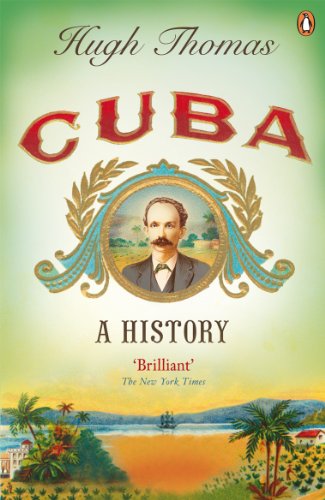
65
Cuba: A History
Hugh Thomas
4.8
From award-winning historian Hugh Thomas, Cuba: A History is the essential work for understanding one of the most fascinating and controversial countries in the world.
Hugh Thomas's acclaimed book explores the whole sweep of Cuban history from the British capture of Havana in 1762 through the years of Spanish and United States domination, down to the twentieth century and the extraordinary revolution of Fidel Castro.
Throughout this period of over two hundred years, Hugh Thomas analyses the political, economic and social events that have shaped Cuban history with extraordinary insight and panache, covering subjects ranging from sugar, tobacco and education to slavery, war and occupation.
Encyclopaedic in range and breathtaking in execution, Cuba is surely one of the seminal works of world history.
'An astonishing feat ... the author does more to explain the phenomenon of Fidel's rise to power than anybody else has done so far' Spectator
'Brilliant' The New York Times
'Immensely readable. Thomas's notion of history's scope is generous, for he has not limited himself to telling old political and military events; he describes Cuban culture at all stages ... not merely accessible but absorbing. His language is witty but never mocking, crisp but never harsh' New Yorker
'Thomas seems to have talked to everybody not dead or in jail, and read everything. He is scrupulously fair' Time
Hugh Thomas is the author of, among other books, The Spanish Civil War (1962), which won the Somerset Maugham Award, Cuba: The Pursuit of Freedom (1971), An Unfinished History of the World (1979), and the first two volumes of his Spanish Empire trilogy, Rivers of Gold (2003) and The Golden Age (2010).
…
Cover unavailable
66
La cola de la serpiente
Leonardo Padura
4.8
Unas cuantas calles casi en ruinas, asediadas por los escombros y los delincuentes, es lo que queda del viejo Barrio Chino de La Habana. Cuando se adentra en el un Conde ya ex policia, dedicado ahora a la compraventa de libros de segunda mano, no puede evitar recordar que estuvo en ese rincon exotico y agreste de la ciudad muchos anos antes, en 1989. Todo surgio de la peticion de la teniente Patricia Chion, mujer irresistible, para que le ayudara en un extrano caso: el asesinato de Pedro Cuang, un anciano solitario que aparecio ahorcado, junto con su perro, con un dedo cortado y un circulo y dos flechas grabados con una navaja en el pecho. Eran rituales de santeria que obligaron a hacer pesquisas por otros ambitos de la ciudad. Pero el Conde descubrio hilos inesperados, negocios secretos y una historia de abnegacion y desgracias que le devolvio la realidad oculta de muchas familias emigrantes asiaticas. Como dice una expresion china, tuvo que encontrar la cola de la serpiente para llegar a su cabeza. / In Havanas Chinatown, a former policeman helps in a murder of a lonely man that was hanged with his dog, with a missing finger and a circle and two arrows engraved with a knife in the chest. The investigation found business secrets and a hidden reality of Asian immigrant families. As the Chinese expression, have to find the snakes tail to find the head.
…
Cover unavailable
67
View of Dawn in the Tropics, a Novel
Guillermo Cabrera Infante
4.7
Cover unavailable
68
The Whole Island: Six Decades of Cuban Poetry, A Bilingual Anthology
Mark Weiss
4.7
Cuba's cultural influence throughout the Western Hemisphere, and especially in the United States, has been disproportionally large for so small a country. This landmark volume is the first comprehensive overview of poetry written over the past sixty years. Presented in a beautiful Spanish-English en face edition, The Whole Island makes available the astonishing achievement of a wide range of Cuban poets, including such well-known figures as Nicolás Guillén, José Lezama Lima, and Nancy Morejón, but also poets widely read in Spanish who remain almost unknown to the English-speaking world--among them Fina García Marruz, José Kozer, Raúl Hernández Novás, and Ángel Escobar--and poets born since the Revolution, like Rogelio Saunders, Omar Pérez, Alessandra Molina, and Javier Marimón. The translations, almost all of them new, convey the intensity and beauty of the accompanying Spanish originals. With their work deeply rooted in Cuban culture, many of these poets--both on and off the island--have been at the center of the political and social changes of this tempestuous period. The poems offered here constitute an essential source for understanding the literature and culture of Cuba, its diaspora, and the Caribbean at large, and provide an unparalleled perspective on what it means to be Cuban.
…
Cover unavailable
69
History of Cuba: A Captivating Guide to Cuban History, Starting from Christopher Columbus' Arrival to Fidel Castro
Captivating History
4.7
Cover unavailable
70
The Island of Eternal Love
Daina Chaviano, Andrea G. Labinger
4.7
Cover unavailable
71
La nada cotidiana
Zoe Valdes
4.7
Patria nació el año en que la Revolución triunfó en Cuba, y representa la generación de los que crecieron en un sistema que debía desterrar la injusticia. Pero el paraíso prometido se torna un infierno y Patria se sumerge en la escritura para mantener el fuego de la existencia.
Cover unavailable
72
Loving Che
Ana Menéndez
4.7
As a young Cuban woman reconstructs the life of her mother, she learns the woman engaged in a youthful affair with the dashing, charismatic rebel Ch Guvara in 1960s Havana and bore his child. "Loving Ch" is a brilliant, erotic fantasy that glimpses into the private life of a mythic public figure.
Cover unavailable
73
Guide to Afro-Cuban Herbalism
Dalia Quiros-Moran
4.7
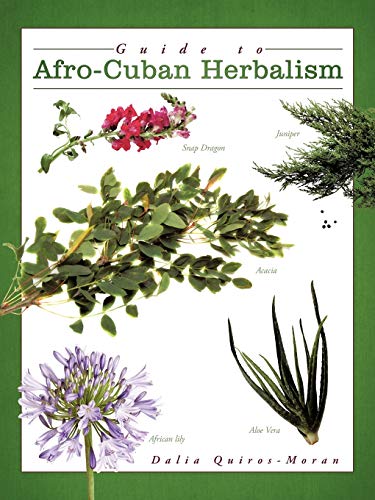
Guide to Afro-Cuban Herbalism is aimed to serve as a reference tool for practitioners of the various african based traditions such as Afro-Cuban Orisha/Ifa Worship, Vodou, Camdomble, et al. This book provides extensive information on the medicinal, religious and magical uses of 700 plants.
Cover unavailable
74
Monkey Hunting
Cristina García
4.7
In this deeply stirring novel, acclaimed author Cristina García follows one extraordinary family through four generations, from China to Cuba to America. Wonderfully evocative of time and place, rendered in the lyrical prose that is García’s hallmark, Monkey Hunting is an emotionally resonant tale of immigration, assimilation, and the prevailing integrity of self.
Cover unavailable
75
Cachorro Velho
Marco Magalhãe
4.7
Ao final do século XIX a escravidão ainda é uma realidade em Cuba, um dos destinos do tráfico de escravos e de plantações de cana de açúcar. Tirado dos braços de sua mãe ao nascer, Cachorro Velho não conheceu outra vida além da servidão em uma plantação de açúcar. Este romance oferece um relato do ponto de vista deste velho negro cubano. A história se refere constantemente às memórias de seus 70 anos como escravo. Através dessas lembranças, o leitor poderá vislumbrar o horror e desespero da vida de alguém que experimentou sucessivas perdas e a brutalidade dos senhores de escravos.
…
Cover unavailable
76
Super Extra Grande
Yoss and David Frye
4.7
The winner of the 20th annual UPC Science Fiction Award in 2011, the Cuban science fiction master Yoss delivers a space opera of intergalactic proportions in Super Extra Grande. Set in a distant future, the novel features creatures of immense variety—Amoebas that cover entire worlds, sensual females that feed on substances from their males’ reproductive systems, talking reptiles, and other creations drawn from the classics of Cuban and international science fiction—all of which serve as colleagues, fellow adventurers, sex partners, teachers, or members of the military high command in the Galactic Commonwealth governing this part of the universe. Our protagonist, Jan Amos Sangan Dongo, has a special role in this otherworldly menagerie: He is a veterinarian who specializes in treating enormous animals across the galaxy.
Coupling his own extensive studies in (earthly) biology with his vast curiosity and wild imagination, Yoss brings us a rare specimen in the richly parodic tradition of Cuban science fiction.
“One of the most prestigious science fiction authors of the island.” —On Cuba Magazine
"A gifted and daring writer." —David Iaconangelo
"José Miguel Sánchez [Yoss] is Cuba’s most decorated science fiction author, who has cultivated the most prestige for this genre in the mainstream, and the only person of all the Island’s residents who lives by his pen.” —Cuenta Regresiva
Born José Miguel Sánchez Gómez, Yoss assumed his pen name in 1988, when he won the Premio David Award in the science fiction category for Timshel. Together with his peculiar pseudonym, the author's aesthetic of an impentinent rocker has allowed him to stand out amongst his fellow Cuban writers. Earning a degree in Biology in 1991, he went on to graduate from the first ever course on Narrative Techniques at the Onelio Jorge Cardoso Center of Literary Training, in the year 1999. Today, Yoss writes both realistic and science fiction works. Alongside these novels, the author produces essays, reviews, and compilations, and actively promotes the Cuban science fiction literary workshops, Espiral and Espacio Abierto.
…
Cover unavailable
77
Everyone Leaves
Wendy Guerra, Laura Roppe, Achy Obejas
4.7
Nieve Guerra finds herself caught between the tides of her parents’ rocky relationship and a country in the midst of a revolution. Recording her daily thoughts and accounts of living with her abusive father, an alcoholic theater actor, Nieve uses her diary to express herself. From being sent away from her mother, her mother’s free-spirited and loving boyfriend, and her childhood city of Cienfuegos to being forced to call herself a Cuban “revolutionary Pioneer,” Nieve records in honest detail a life in which she loses those she loves the most—and can do nothing about it.
Through her diary entries, Nieve reveals the intimate details of a turbulent family life while painting an authentic portrait of the social and political unrest in Cuba under the rule of Castro.
…
Cover unavailable
78
War of Intervention in Angola. Volume 1: Angolan and Cuban Forces at War, 1975-1976
Tom Cooper and Adrien Fontanellaz
4.7
As of 1975, the decades long insurgency in Angola appeared to be short of its conclusion. However, with no less than three major insurgent movements fighting for supremacy, the war went on and then South Africa, USA, the Soviet Union, Zaire and Cuba became involved.
Affairs like the CIA's efforts to destabilize Angola for little else but to recoup its prestige after the catastrophic defeat in South Vietnam, or the South African military intervention in Angola - Operation Savannah - have attracted lots of public attention and are relatively well covered in related publications. On the contrary, the final stages of the Portuguese withdrawal, the military buildup of three native insurgent forces, and then the onset of the Cuban military intervention in Angola - Operation Carlotta run in 1975 and 1976 - remain largely unknown.
Based on extensive research with help of Angolan and Cuban sources, the War of Intervention in Angola is providing a unique insight precisely into the latter topic. It traces the failures of the US-supported FNLA, the growth and reorganization of the MPLA into a conventional army; deployment of Cuban military contingents, their capabilities and intentions; and the performance and experiences of the MPLA and Cuban forces at war with South Africans and the third Angolan insurgent group - UNITA.
The volume is illustrated with over 100 rare photographs, a dozen of maps and 15 color profiles.
…
Cover unavailable
79
Betrayal: Clinton, Castro & the Cuban Five
Matt Lawrence and Thomas Van Hare
4.7
On February 24, 1996, three Brothers to the Rescue aircraft took off from South Florida on a search and rescue mission meant to save the lives of Cuban balseros - yet their mission would end in death, with two planes shot down by Cuban MiG fighters. Four aviators were lost - Carlos Costa, Mario de la Pena, Armando Alejandre and Pablo Morales. Their murders were perpetuated by La Red Avispa, the "Cuban Five" spy ring and a DIA analyst turned Cuban agent, Ana Belen Montes, Castro's Queen of Spies.
Betrayal: Clinton, Castro & The Cuban Five compiles extensive research, sworn testimony and fact. It reveals a cover up spanning the Florida Straits, from Havana to Washington D.C. It uncovers that senior Clinton Administration officials, including Sandy Berger, Bill Richardson, Richard Nuccio, retired Pentagon brass, U.S diplomats and even members of the U.S. media were forewarned by Castro of the shootdown, yet somehow did nothing to stop the murders.
Cuba declares them heroes, yet the "Cuban Five" are serving jail sentences for espionage and murder. Now, in an opening gesture toward improving relations with Havana, the Obama Administration contemplates their release - but will the USA have to go so far as to pardon murderers?"
…
Cover unavailable
80
My Life with Bob: Flawed Heroine Keeps Book of Books, Plot Ensues
Alma Flor Ada, Anthony Manna, et al.
4.7
Imagine keeping a record of every book you’ve ever read. What would this reading trajectory say about you? With passion, humor, and insight, the editor of The New York Times Book Review shares the stories that have shaped her life.
Pamela Paul has kept a single book by her side for twenty-eight years – carried throughout high school and college, hauled from Paris to London to Thailand, from job to job, safely packed away and then carefully removed from apartment to house to its current perch on a shelf over her desk – reliable if frayed, anonymous-looking yet deeply personal. This book has a name: Bob.
Bob is Paul’s Book of Books, a journal that records every book she’s ever read, from Sweet Valley High to Anna Karenina, from Catch-22 to Swimming to Cambodia, a journey in reading that reflects her inner life – her fantasies and hopes, her mistakes and missteps, her dreams and her ideas, both half-baked and wholehearted. Her life, in turn, influences the books she chooses, whether for solace or escape, information or sheer entertainment.
But My Life with Bob isn’t really about those books. It’s about the deep and powerful relationship between book and reader. It’s about the way books provide each of us the perspective, courage, companionship, and imperfect self-knowledge to forge our own path. It’s about why we read what we read and how those choices make us who we are. It’s about how we make our own stories.
…
Cover unavailable
81
The Translator
John Crowley
4.7
A novel of tremendous scope and beauty, The Translator tells of the relationship between an exiled Russian poet and his American translator during the Cuban missile crisis, a time when a writer's words -- especially forbidden ones -- could be powerful enough to change the course of history.
Cover unavailable
82
Mark Cuban - Top 15 Secrets to Success in Life & Business: The Sportsmanship of Business
Entrepreneurship Facts
4.7
SPECIAL DEAL!!! Buy the paperback version of the book NOW to receive the kindle version ($2.99) for FREE! Mark Cuban is an American entrepreneur and investor. He is the owner of the NBA's Dallas Mavericks, Landmark Theatres, and Magnolia Pictures, and is the chairman of the HDTV cable network AXS TV. Cuban is also one of the main "shark" investors on the ABC reality television series, Shark Tank.
Throughout this book, we'll explore some of Mark Cuban's most famous quotes, taking a look at the context and significance of his statements. Following each is a summary of how these learnings can be applied to both business, and our daily lives.
Table of ContentsIntroduction
Short Biography
Lesson #1 - "Don't Drown In Opportunity"
Lesson #2 - "Failure is Part of the Success Equation"
Lesson #3 - "Gets Shit Done and Stays Productive"
Lesson #4 - "Money Can't Buy Happiness"
Lesson #5- "The market could go up for years... "
Lesson #6 - "Treat your customers like they own you. Because they do."
Lesson #7 - "It's not in the dreaming, it's in the doing."
Lesson #8 - "The best startup capital is 'sweat equity"
Lesson #9 - "Every rejection gets you closer to sales"
Lesson #10 - "Find your weaknesses before competitors do"
Lesson #11 - "Be the best you can be."
Lesson #12 - "Be optimistic from the moment you wake up"
Lesson #13 - "Everyone has ideas, most don't do the work required to get the job done."
Lesson #14 - "Do Something Different"
Lesson #15 - "Know Your Business Better than Anyone"


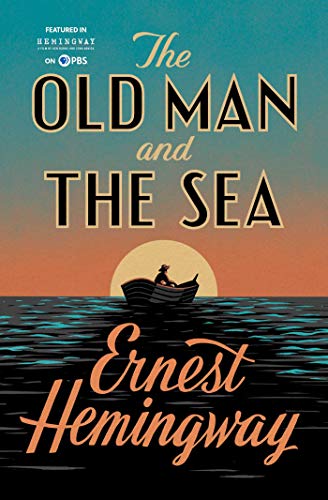 1
1