We've ranked the best commodities books using expert recommendations, sales data, and millions of reader ratings. At Shortform, we know books. Our book guides are the best in the world. Learn why.
Cover unavailable
1
Guns, Germs and Steel: The Fates of Human Societies
Explaining what William McNeill called The Rise of the West has become the central problem in the study of global history. In Guns, Germs, and Steel Jared Diamond presents the biologist's answer: geography, demography, and ecological happenstance. Diamond evenhandedly reviews human history on every continent since the Ice Age at a rate that emphasizes only the broadest movements of peoples and ideas. Yet his survey is binocular: one eye has the rather distant vision of the evolutionary biologist, while the other eye--and his heart--belongs to the people of New Guinea, where he has done field work for more than 30 years.
Fascinating.... Lays a foundation for understanding human history. [source]
Daniel Ek
A brilliant Pulitzer Prize-winning book about how the modern world was formed, analyzing how societies developed differently on different continents. [source]
I’m a fan of books that challenge our assumptions, and Diamond offers us a new and remarkably simple way of looking at our world. Learning to challenge existing assumptions is core to effective leadership for it trains us to keep an open mind. [source]
Cover unavailable
2
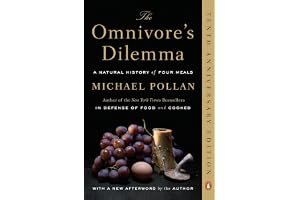
The Omnivore's Dilemma: A Natural History of Four Meals
What should we have for dinner? For omnivore's like ourselves, this simple question has always posed a dilemma: When you can eat just about anything nature (or the supermarket) has to offer, deciding what you should eat will inevitably stir anxiety, especially when some of the foods on offer might shorten your life. Today, buffeted by one food fad after another, America is suffering from what can only be described as a national eating disorder. The omnivore's dilemma has returned with a vengeance, as the cornucopia of the modern American supermarket and fast-food outlet confronts us with a bewildering and treacherous food landscape. What's at stake in our eating choices is not only our own and our children's health, but the health of the environment that sustains life on earth.
The Omnivore's Dilemma is a groundbreaking book in which one of America's most fascinating, original, and elegant writers turns his own omnivorous mind to the seemingly straightforward question of what we should have for dinner. The question has confronted us since man discovered fire, but, according to Michael Pollan, the bestselling author of The Botany of Desire, how we answer it today, ath the dawn of the twenty-first century, may well determine our very survival as a species. Should we eat a fast-food hamburger? Something organic> Or perhaps something we hunt, gather or grow ourselves?
To find out, Pollan follows each of the food chains that sustain us--industrial food, organic or alternative food, and food we forage ourselves--from the source to a final meal, and in the process develops a definitive account of the American way of eating. His absorbing narrative takes us from Iowa cornfields to food laboratories, from feedlots and fast-food restaurants to organic farms and hunting grounds, always emphasizing our dynamic coevolutionary relationship with the handful of plant and animal species we depend on. Each time Pollan sits down to a meal, he deploys his unique blend of personal and investigative journalism to trace the origins of everything consumed, revealing what we unwittingly ingest and explaining how our taste for particular foods and flavors reflects our evolutionary inheritance.
The surprising answers Pollan offers to the simple question posed by this book have profound political, economic, psychological, and even mortal implications for all of us. Ultimately, this is a book as much about visionary solutions as it is about problems, and Pollan contends that, when it comes to food, doing the right thing often turns out to be the tastiest thing an eater can do. Beautifully written and thrillingly argued, The Omnivore's Dilemma promises to change the way we think about the politics and pleasure of eating. For anyone who reads it, dinner will never again look, or taste, quite the same. --jacket
…
Recommended by Barry Estabrook, Gabriel Coarna, Paul Rozin, and 1 others.
Barry Estabrook
Michael Pollan looks at food production through four meals. One is a fast-food meal, the other is an industrial-scale organic meal, then there is a small-scale organic meal and finally he actually goes out and either grows or kills, in the case of the meat, the entire meal himself. That is the narrative. [source]
Gabriel Coarna
Michael Pollan's "The Omnivore's Dilemma" --more precisely, the first 3rd of it-- was what first made me realize how badly the Earth, as an ecosystem, is out of balance. [source]
Paul Rozin
Michael Pollan is an excellent journalist who specializes in the food domain.He proposes relying more on whole foods and less on processed foods, like Oreo Cookies. He argues that unprocessed foods are more nutritious, more wholistic and better for the environment. [source]
Cover unavailable
3
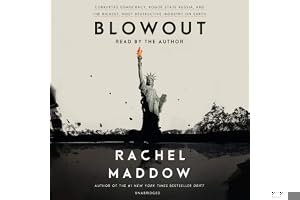
Blowout: Corrupted Democracy, Rogue State Russia, and the Richest, Most Destructive Industry on Earth
Blowout: Corrupted Democracy, Rogue State Russia, and the Richest, Most Destructive Industry on Earth
Big Oil and Gas Versus Democracy—Winner Take All
Rachel Maddow’s Blowout offers a dark, serpentine, riveting tour of the unimaginably lucrative and corrupt oil-and-gas industry. With her trademark black humor, Maddow takes us on a switchback journey around the globe—from Oklahoma City to Siberia to Equatorial Guinea—exposing the greed and incompetence of Big Oil and Gas. She shows how Russia’s rich reserves of crude have, paradoxically, stunted its growth, forcing Putin to maintain his power by spreading Russia’s rot into its rivals, its neighbors, the United States, and the West’s most important alliances. Chevron, BP, and a host of other industry players get their star turn, but ExxonMobil and the deceptively well-behaved Rex Tillerson emerge as two of the past century’s most consequential corporate villains. The oil-and-gas industry has weakened democracies in developed and developing countries, fouled oceans and rivers, and propped up authoritarian thieves and killers. But being outraged at it is, according to Maddow, “like being indignant when a lion takes down and eats a gazelle. You can’t really blame the lion. It’s in her nature.”
This book is a clarion call to contain the lion: to stop subsidizing the wealthiest industry on earth, to fight for transparency, and to check the influence of predatory oil executives and their enablers. The stakes have never been higher. As Maddow writes, “Democracy either wins this one or disappears.”
…
Recommended by Josh Long ( ), Joy Reid, Su Mohan Winblue Demswork4usa, and 1 others.
Josh Long ( )
😂 @maddow you’re so amazing. I’m listening to the Audible version of your fantastic book “Blowout” and just got to a part where you detail a sad, lonely existence and then - as an aside - declare “aw! Sad.” in a completely different voice 😂 [source]
This week I had the chance to interview my pal Rachel @Maddow about her amazing new book, Blowout!! Tune in to #amjoy at 10am ET Sunday to check it out (and find out what Equatorial Guinea, Michael Jackson's glove, black oil and Texas tea have in common...! https://t.co/mTQZKIZT2T [source]
Su Mohan Winblue Demswork4usa
.@Maddow deserves Emmy and Pulitzer.. and more.. for her work in the interview of Lev Parnas, and her book "Blowout" - she is the best reporter. True journalist. Watched 1/14 (documents) and 1/15 (Lev Parnas Interview Part-1) shows twice. I can not wait for part-2 - on 1/16/20. [source]
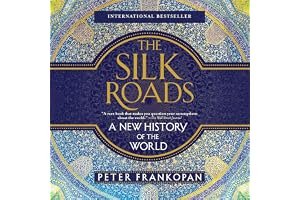
The sun is setting on the Western world. Slowly but surely, the direction in which the world spins has reversed: where for the last five centuries the globe turned westwards on its axis, it now turns to the east...For centuries, fame and fortune was to be found in the west - in the New World of the Americas. Today, it is the east which calls out to those in search of adventure and riches. The region stretching from eastern Europe and sweeping right across Central Asia deep into China and India, is taking centre stage in international politics, commerce and culture - and is shaping the modern world. This region, the true centre of the earth, is obscure to many in the English-speaking world. Yet this is where civilization itself began, where the world's great religions were born and took root. The Silk Roads were no exotic series of connections, but networks that linked continents and oceans together. Along them flowed ideas, goods, disease and death. This was where empires were won - and where they were lost. As a new era emerges, the patterns of exchange are mirroring those that have criss-crossed Asia for millennia. The Silk Roads are rising again. A major reassessment of world history, The Silk Roads> is an important account of the forces that have shaped the global economy and the political renaissance in the re-emerging east.
…
Recommended by Professor Frank Mcdonough and Raoul Pal.
Professor Frank Mcdonough
Christmas is coming and if you want to give a thought-provoking book to that history fan in your life then the recent books by the brilliant @peterfrankopan will satisfy. Some write books, this guy changes perceptions. https://t.co/gWZWZnv5TN [source]
Raoul Pal
@The92ers @zerohedge It’s fascinating. The Peter Frankopan book on the Silk Roads told history well from the perspective of Iran in particular [source]
Cover unavailable
5
The Prize: The Epic Quest for Oil, Money, and Power
Daniel Yergin
4.6
The Prize recounts the panoramic history of oil -- and the struggle for wealth and power that has always surrounded oil. This struggle has shaken the world economy, dictated the outcome of wars, and transformed the destiny of men and nations.
The Prize is as much a history of the twentieth century as of the oil industry itself. The canvas of history is enormous -- from the drilling of the first well in Pennsylvania through two great world wars to the Iraqi invasion of Kuwait and Operation Desert Storm.
From the Bestselling Author of Cod and The Basque History of the World
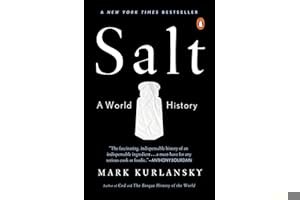
In his fifth work of nonfiction, Mark Kurlansky turns his attention to a common household item with a long and intriguing history: salt. The only rock we eat, salt has shaped civilization from the very beginning, and its story is a glittering, often surprising part of the history of humankind. A substance so valuable it served as currency, salt has influenced the establishment of trade routes and cities, provoked and financed wars, secured empires, and inspired revolutions. Populated by colorful characters and filled with an unending series of fascinating details, Salt by Mark Kurlansky is a supremely entertaining, multi-layered masterpiece.
Mark Kurlansky is the author of many books including Cod, The Basque History of the World, 1968, and The Big Oyster. His newest book is Birdseye.
…
Cover unavailable
7
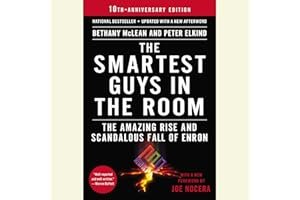
The Smartest Guys in the Room: The Amazing Rise and Scandalous Fall of Enron
There were dozens of books about Watergate, but only All the President's Men gave readers the full story, with all the drama and nuance and exclusive reporting. And thirty years later, if you're going to read only one book on Watergate, that's still the one. Today, Enron is the biggest business story of our time, and Fortune senior writers Bethany McLean and Peter Elkind are the new Woodward and Bernstein.
Remarkably, it was just two years ago that Enron was thought to epitomize a great New Economy company, with its skyrocketing profits and share price. But that was before Fortune published an article by McLean that asked a seemingly innocent question: How exactly does Enron make money? From that point on, Enron's house of cards began to crumble. Now, McLean and Elkind have investigated much deeper, to offer the definitive book about the Enron scandal and the fascinating people behind it.
Meticulously researched and character driven, Smartest Guys in the Room takes the reader deep into Enron's past—and behind the closed doors of private meetings. Drawing on a wide range of unique sources, the book follows Enron's rise from obscurity to the top of the business world to its disastrous demise. It reveals as never before major characters such as Ken Lay, Jeff Skilling, and Andy Fastow, as well as lesser known players like Cliff Baxter and Rebecca Mark. Smartest Guys in the Room is a story of greed, arrogance, and deceit—a microcosm of all that is wrong with American business today. Above all, it's a fascinating human drama that will prove to be the authoritative account of the Enron scandal.
Hot Commodities: How Anyone Can Invest Profitably in the World's Best Market
Jim Rogers
4.4
Cover unavailable
9
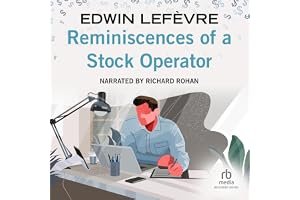
Reminiscences of a Stock Operator: The Classic Novel Based on the Life of Legendary Stock Market Speculator Jesse Livermore
Edwin Lefevre
4.4
Reminiscences of a Stock Operator is the unforgettable story of the life of Jesse Livermore, one of Wall Street's greatest ever stock speculators.
Loosely fictionalised in 1923 in collaboration with journalist Edwin Lefevre, this is the story of the highs and the lows, the strategies and the street smarts, the epic wins (and sometimes epic losses) that has inspired generations of investors and traders.
This edition comes with an exclusive foreword by Tim Price, author of Investing Through the Looking Glass.
Harriman Definitive Editions offer the best quality editions of the best financial books of all time. Meticulously proofread, beautifully typeset in new designs, accompanied by forewords by the best modern financial writers, printed and bound in high-quality hardcovers on acid-free paper - they are essential long-term additions to the portfolio of every investor and trader.
…
Recommended by Alykhan Satchu, Bill Liao, Joshua M. Brown, and 3 others.
Alykhan Satchu
My all time favorite Book https://t.co/UxwPMlAcXU [source]
Bill Liao
The human world occurs in language so best get good at it! [source]
Each new generation of traders gets inspired by this book but I have come to love it as more of a cautionary tale. and FYI, this is the better book for that context: https://t.co/116lNciXCF https://t.co/mEYn2ZAqPI [source]
Cover unavailable
10
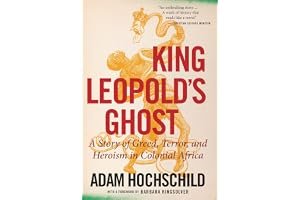
King Leopold's Ghost
Adam Hochschil
4.3
In the 1880s, as the European powers were carving up Africa, King Leopold II of Belgium seized for himself the vast and mostly unexplored territory surrounding the Congo River. Carrying out a genocidal plundering of the Congo, he looted its rubber, brutalized its people, and ultimately slashed its population by ten million--all the while shrewdly cultivating his reputation as a great humanitarian. Heroic efforts to expose these crimes eventually led to the first great human rights movement of the twentieth century, in which everyone from Mark Twain to the Archbishop of Canterbury participated. King Leopold's Ghost is the haunting account of a megalomaniac of monstrous proportions, a man as cunning, charming, and cruel as any of the great Shakespearean villains. It is also the deeply moving portrait of those who fought Leopold: a brave handful of missionaries, travelers, and young idealists who went to Africa for work or adventure and unexpectedly found themselves witnesses to a holocaust. Adam Hochschild brings this largely untold story alive with the wit and skill of a Barbara Tuchman. Like her, he knows that history often provides a far richer cast of characters than any novelist could invent. Chief among them is Edmund Morel, a young British shipping agent who went on to lead the international crusade against Leopold. Another hero of this tale, the Irish patriot Roger Casement, ended his life on a London gallows. Two courageous black Americans, George Washington Williams and William Sheppard, risked much to bring evidence of the Congo atrocities to the outside world. Sailing into the middle of the story was a young Congo River steamboat officer named Joseph Conrad. And looming above them all, the duplicitous billionaire King Leopold II. With great power and compassion, King Leopold's Ghost will brand the tragedy of the Congo--too long forgotten--onto the conscience of the West
Large parts of the Belgian establishment loathe this book. It tells, as its sub-title says, ‘a story of greed, terror and heroism’. It lays bare the absolute fiction that King Leopold’s fief in the Congo was based on some philanthropic urge – a line that Leopold managed to peddle with extraordinary success at the time. I don’t know if what Leopold did would be called ‘genocide’ today or not. But millions died under his rule, often in horrific circumstances, invisible to the rest of the world. Modern communications didn’t exist. [source]
This is an incredibly powerful, horrifying, and utterly brilliant study of Belgian colonialism of the Congo and the brutality and genocide that followed in its wake. [source]
Cover unavailable
11
Market Wizards, Updated: Interviews with Top Traders
Jack D. Schwager
4.3
The world's top trader's reveal the secrets of their phenomenal success!
How do the world's most successful traders amass tens, hundreds of millions of dollars a year? Are they masters of an occult knowledge, lucky winners in a random market lottery, natural-born virtuosi--Mozarts of the markets? In search of an answer, bestselling author Jack D. Schwager interviewed dozens of top traders across most financial markets. While their responses differed in the details, all of them could be boiled down to the same essential formula: solid methodology + proper mental attitude = trading success. In Market Wizards Schwager lets you hear, in their own words, what those super-traders had to say about their unprecedented successes, and he distils their responses down into a set of guiding principles you can use to become a trading star in your own right.
Features interviews with superstar money-makers including Bruce Kovner, Richard Dennis, Paul Tudor Jones, Michel Steinhardt, Ed Seykota, Marty Schwartz, Tom Baldwin, and more Tells the true stories behind sensational trading coups, including the one about the trader who turned $30,000 into $80 million, the hedge fund manager who's averaged 30% returns every year for the past twenty-one years, and the T-bond futures trader who parlayed $25,000 into $2 billion in a single day! "Market Wizards is one of the most fascinating books ever written about Wall Street. A few of the 'Wizards' are my friends--and Jack Schwager has nailed their modus operandi on the head." --Martin W. Zweig, Ph.D., Editor, The Zweig Forecast
…
Cover unavailable
12
Cod: A Biography of the Fish that Changed the World
Mark Kurlansky
4.3
The Cod. Wars have been fought over it, revolutions have been triggered by it, national diets have been based on it, economies and livelihoods have depended on it. To the millions it has sustained, it has been a treasure more precious that gold. This book spans 1,000 years and four continents. From the Vikings to Clarence Birdseye, Mark Kurlansky introduces the explorers, merchants, writers, chefs and fisherman, whose lives have been interwoven with this prolific fish. He chronicles the cod wars of the 16th and 20th centuries. He blends in recipes and lore from the Middle Ages to the present. In a story that brings world history and human passions into captivating focus, he shows how the most profitable fish in history is today faced with extinction.
…
Recommended by Denise Russell.
Denise Russell
Fascinating small book, immensely interesting and traces human acquaintance with this fish back for a thousand years. [source]
Cover unavailable
13
A TRADER'S FIRST BOOK ON COMMODITIES: EVERYTHING YOU NEED TO KNOW ABOUT FUTURES AND OPTIONS TRADING BEFORE PLACING A TRADE
The legendary investor shows how to identify and master the cycles that govern the markets.
We all know markets rise and fall, but when should you pull out, and when should you stay in? The answer is never black or white, but is best reached through a keen understanding of the reasons behind the rhythm of cycles. Confidence about where we are in a cycle comes when you learn the patterns of ups and downs that influence not just economics, markets and companies, but also human psychology and the investing behaviors that result.
If you study past cycles, understand their origins and remain alert for the next one, you will become keenly attuned to the investment environment as it changes. You’ll be aware and prepared while others get blindsided by unexpected events or fall victim to emotions like fear and greed.
By following Marks’s insights — drawn in part from his iconic memos over the years to Oaktree’s clients — you can master these recurring patterns to have the opportunity to improve your results.
I always say, ‘There’s no better teacher than history in determining the future.’ Howard’s book tells us how to learn from history . . . and thus get a better idea of what the future holds. [source]
When I see memos from Howard Marks in my mail, they’re the first thing I open and read. I always learn something, and that goes double for his book. [source]
Howard Marks’s Mastering the Market Cycle is a must-read, because the cycles covered in this book are important and because Howard is one of the investing greats of his generation. [source]
Cover unavailable
16
Technical Analysis of the Financial Markets
John J. Murphy
4.2
John J. Murphy has updated his landmark bestseller Technical Analysis of the Futures Markets, to include all of the financial markets.This outstanding reference has already taught thousands of traders the concepts of technical analysis and their application in the futures and stock markets. Covering the latest developments in computer technology, technical tools, and indicators, the second edition features new material on candlestick charting, intermarket relationships, stocks and stock rotation, plus state-of-the-art examples and figures. From how to read charts to understanding indicators and the crucial role technical analysis plays in investing, readers gain a thorough and accessible overview of the field of technical analysis, with a special emphasis on futures markets. Revised and expanded for the demands of today's financial world, this book is essential reading for anyone interested in tracking and analyzing market behavior.
…
Recommended by Luke Beller.
Luke Beller
If you want to learn about technical analysis this is a great book. https://t.co/PxE5SOXtlY [source]
Cover unavailable
17
The Quest: Energy, Security, and the Remaking of the Modern World
Daniel Yergin
4.2
This long-awaited successor to Daniel Yergin's Pulitzer Prize–winning The Prize provides an essential, overarching narrative of global energy, the principal engine of geopolitical and economic change
Renowned energy authority Daniel Yergin continues the riveting story begun in his Pulitzer Prize–winning book, The Prize, in this gripping account of the quest for the energy the world needs—and the power and riches that come with it. A master storyteller as well as one of the world's great experts, Yergin proves that energy is truly the engine of global political and economic change as well as central to the battle over climate change. From the jammed streets of Beijing, the shores of the Caspian Sea, and the conflicts in the Mideast to Capitol Hill and Silicon Valley, Yergin takes us inside the decisions and choices that are shaping our future. Without understanding these realities of energy we will surrender our place at the helm of history. Yergin shows how the drama of oil—the struggle for access to it, the battle for control, the insecurity of supply, the consequences of its use, its impact on the global economy, and the geopolitics that dominate it—will continue to shape our world. He tells the inside stories—of the oil market, the rise of the “petro-state,” the race to control the resources of the former Soviet empire, and the massive corporate mergers that transformed the oil landscape. He takes on the toughest questions: Will we run out of oil? Are China and the United States destined to conflict over oil? Yergin also reveals the surprising and turbulent history of nuclear and coal power, electricity, and natural gas. He investigates the “rebirth of renewables”—biofuels and wind—as well as solar energy, which venture capitalists are betting will be the next big thing for meeting the needs of a growing world economy. Understanding this greening landscape and its future role are crucial to answering energy's largest questions. Yergin brings climate change into unique perspective by offering an original and unprecedented history of how the issue went from concerning a handful of scientists, terrified of a new Ice Age, to one of the most vital issues of our times. The Quest presents an extraordinary range of characters and dramatic stories that illustrate the principles that will shape a robust and flexible energy security system for the decades to come. It is an extraordinary achievement from an author who is truly one of our nation's great resources.
Another great book I read recently was The Quest, by Daniel Yergin. For anyone interested in the dynamics shaping our energy future and all of the innovation around energy, it’s a fantastic book. In addition to my review of his book, I’ve also posted a response from the author to the follow-up questions I had about the important topics covered in his book. [source]
Cover unavailable
18
The King of Oil: The Secret Lives of Marc Rich
Daniel Ammann
4.2
Billionaire oil trader Marc Rich for the first time talks at length about his private life (including his expensive divorce from wife Denise); his invention of the spot oil market which made his fortune and changed the world economy; his lucrative and unpublicized dealings with Ayatollah Khomeini's Iran, Fidel Castro's Cuba, war-ravaged Angola, and apartheid South Africa; his quiet cooperation with the Israeli and U.S. governments (even after he was indicted for tax fraud by Rudy Guiliani) and near-comical attempts by U.S. officials to kidnap him illegally.
This sure-to-make-headlines book is the first no-holds-barred biography of Rich, who was famously pardoned by Bill Clinton, and resurfaced in the news during the confirmation hearings of Attorney General Eric Holder. The King of Oil sheds stunning new light on one of the most controversial international businessmen of all time, charting Rich's rise from the Holocaust, which he fled as a young boy, to become the wealthiest and most powerful oil and commodities trader of the century. From his earliest trading days to the present, Marc Rich's story is astonishing and compelling.
…
Cover unavailable
19
Private Empire: ExxonMobil and American Power
Steve Coll
4.2
An “extraordinary” and “monumental” exposé of Big Oil from two-time Pulitzer Prize winner Steve Coll (The Washington Post)
In this, the first hard-hitting examination of ExxonMobil—the largest and most powerful private corporation in the United States—Steve Coll reveals the true extent of its power. Private Empire pulls back the curtain, tracking the corporation’s recent history and its central role on the world stage, beginning with the Exxon Valdez accident in 1989 and leading to the Deepwater Horizon oil spill in the Gulf of Mexico in 2010. The action spans the globe—featuring kidnapping cases, civil wars, and high-stakes struggles at the Kremlin—and the narrative is driven by larger-than-life characters, including corporate legend Lee “Iron Ass” Raymond, ExxonMobil’s chief executive until 2005. A penetrating, news-breaking study, Private Empire is a defining portrait of Big Oil in American politics and foreign policy.
…
Recommended by Sheldon Whitehouse.
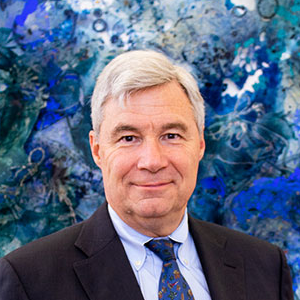
Sheldon Whitehouse
“Coll’s book is also the best resource for understanding the standard operating procedures and the central mission of ExxonMobil. Anybody who has written about the company and its leaders in the years since the publication of Private Empire owes a big debt to Coll.” [source]
Cover unavailable
20
The Fish That Ate the Whale: The Life and Times of America's Banana King
Rich Cohen
4.2
A legendary tale, both true and astonishing, from the author of Israel is Real and Sweet and Low
When Samuel Zemurray arrived in America in 1891, he was tall, gangly, and penniless. When he died in the grandest house in New Orleans sixty-nine years later, he was among the richest, most powerful men in the world. In between, he worked as a fruit peddler, a banana hauler, a dockside hustler, and a plantation owner. He battled and conquered the United Fruit Company, becoming a symbol of the best and worst of the United States: proof that America is the land of opportunity, but also a classic example of the corporate pirate who treats foreign nations as the backdrop for his adventures. In Latin America, when people shouted “Yankee, go home!” it was men like Zemurray they had in mind.
Rich Cohen’s brilliant historical profile The Fish That Ate the Whale unveils Zemurray as a hidden kingmaker and capitalist revolutionary, driven by an indomitable will to succeed. Known as El Amigo, the Gringo, or simply Z, the Banana Man lived one of the great untold stories of the last hundred years. Starting with nothing but a cart of freckled bananas, he built a sprawling empire of banana cowboys, mercenary soldiers, Honduran peasants, CIA agents, and American statesmen. From hustling on the docks of New Orleans to overthrowing Central American governments, from feuding with Huey Long to working with the Dulles brothers, Zemurray emerges as an unforgettable figure, connected to the birth of modern American diplomacy, public relations, business, and war—a monumental life that reads like a parable of the American dream.
…
Recommended by Ryan Holiday, Andrew Wilkinson, Benjamin Spall, and 1 others.
The book sucked me in completely. The subject, Samuel Zemurray, is fascinating and compelling. The writer has a voice that is utterly unique. Since reading this book, I have explored all of this further: I studied Zemurray (whose house was not far from mine in New Orleans and still stands) and am using his story in my next book. I interviewed the author, Rich Cohen. And I read his other books, am particularly found of Tough Jews: Fathers, Sons and Gangster Dreams. The book has all sorts of things going for it: it’s the American Dream, it’s history via microcosm, it’s drama/violence/intrique, and it’s a course in business strategy and leadership. Everyone I have recommended it to was blown away. I won’t say it’s as good as The Tiger, which was my favorite book of 2011, but in terms of an author I’d never heard of taking a subject I don’t care about and making it AWESOME? This book deserves to be talked about in the same breath. [source]
I loved The Fish That Ate the Whale by Rich Cohen. Not only is it a fascinating story, Cohen's writing is a reminder of just how great non-fiction writing can be if you truly care about it. [source]
Cover unavailable
21
The Arm: Inside the Billion-Dollar Mystery of the Most Valuable Commodity in Sports
Jeff Passan
4.2
NEW YORK TIMES BESTSELLER
Every year, Major League Baseball spends more than $1.5 billion on pitchers—five times the salary of all NFL quarterbacks combined. Pitchers are the lifeblood of the sport, the ones who win championships, but today they face an epidemic unlike any baseball has ever seen.
One tiny ligament in the elbow keeps snapping and sending teenagers and major leaguers alike to undergo surgery, an issue the baseball establishment ignored for decades. For three years, Jeff Passan, the lead baseball columnist for Yahoo Sports, has traveled the world to better understand the mechanics of the arm and its place in the sport’s past, present, and future. He got the inside story of how the Chicago Cubs decided to spend $155 million on one pitcher. He sat down for a rare interview with Hall of Famer Sandy Koufax, whose career ended at 30 because of an arm injury. He went to Japan to understand how another baseball-obsessed nation deals with this crisis. And he followed two major league pitchers as they returned from Tommy John surgery, the revolutionary procedure named for the former All-Star who first underwent it more than 40 years ago.
Passan discovered a culture that struggles to prevent arm injuries and lacks the support for the changes necessary to do so. He explains that without a drastic shift in how baseball thinks about its talent, another generation of pitchers will fall prey to the same problem that vexes the current one.
Equal parts medical thriller and cautionary tale, The Arm is a searing exploration of baseball’s most valuable commodity and the redemption that can be found in one fragile and mysterious limb.
…
Cover unavailable
22
Why Gold? Why Now?: The War Against Your Wealth and How to Win It
E.B. Tucker
4.2
Cover unavailable
23
The Outlaw Ocean: Journeys Across the Last Untamed Frontier
Ian Urbina
4.2
There are few remaining frontiers on our planet. But perhaps the wildest, and least understood, are the world's oceans: too big to police, and under no clear international authority, these immense regions of treacherous water play host to rampant criminality and exploitation.
Traffickers and smugglers, pirates and mercenaries, wreck thieves and repo men, vigilante conservationists and elusive poachers, seabound abortion providers, clandestine oil-dumpers, shackled slaves and cast-adrift stowaways -- drawing on five years of perilous and intrepid reporting, often hundreds of miles from shore, Ian Urbina introduces us to the inhabitants of this hidden world. Through their stories of astonishing courage and brutality, survival and tragedy, he uncovers a globe-spanning network of crime and exploitation that emanates from the fishing, oil and shipping industries, and on which the world's economies rely.
Both a gripping adventure story and a stunning expos�, this unique work of reportage brings fully into view for the first time the disturbing reality of a floating world that connects us all, a place where anyone can do anything because no one is watching.
…
Recommended by Captain Paul Watson.
Captain Paul Watson
@ian_urbina 's best selling book The Outlaw Ocean is getting rave reviews. Hope some of the world's politicians will read it and understand just how precarious biodiversity is. Underscores what I have been saying for years. "If the Ocean dies, we all die!" https://t.co/aMs2DjLmh1 [source]
Cover unavailable
24
No Logo
Naomi Klein
4.2
With a new Afterword to the 2002 edition, No Logo employs journalistic savvy and personal testament to detail the insidious practices and far-reaching effects of corporate marketing—and the powerful potential of a growing activist sect that will surely alter the course of the 21st century. First published before the World Trade Organization protests in Seattle, this is an infuriating, inspiring, and altogether pioneering work of cultural criticism that investigates money, marketing, and the anti-corporate movement.
As global corporations compete for the hearts and wallets of consumers who not only buy their products but willingly advertise them from head to toe—witness today's schoolbooks, superstores, sporting arenas, and brand-name synergy—a new generation has begun to battle consumerism with its own best weapons. In this provocative, well-written study, a front-line report on that battle, we learn how the Nike swoosh has changed from an athletic status-symbol to a metaphor for sweatshop labor, how teenaged McDonald's workers are risking their jobs to join the Teamsters, and how "culture jammers" utilize spray paint, computer-hacking acumen, and anti-propagandist wordplay to undercut the slogans and meanings of billboard ads (as in "Joe Chemo" for "Joe Camel").
No Logo will challenge and enlighten students of sociology, economics, popular culture, international affairs, and marketing.
"This book is not another account of the power of the select group of corporate Goliaths that have gathered to form our de facto global government. Rather, it is an attempt to analyze and document the forces opposing corporate rule, and to lay out the particular set of cultural and economic conditions that made the emergence of that opposition inevitable." —Naomi Klein, from her Introduction
…
Recommended by Bogdana Butnar and David Lammy.
Bogdana Butnar
I thought I might put my money where my mouth is. I keep whining that young people are not in touch with some essential books on advertising that have helped me shape the way I practise my trade today, but I never did anything about it. So I am starting here the ultimate books to read list. I will add to it as I get suggestions and as more good books get written. [source]
David Lammy
This is another modern classic worth revisiting. It charts how brands have become tangled up with identity – how they stopped being markers of quality and became symbols of identity and markers of status. Logos have moved from the inside label to being splashed all over products. Having a coffee in Starbucks is an experience not a product. What you wear helps signal your worth. [source]
Cover unavailable
25
The World for Sale: Money, Power and the Traders Who Barter the Earth’s Resources
Javier Blas
4.2
Cover unavailable
26
The Great Gold & Silver Rush of the 21st Century
Mike Maloney
4.2
Cover unavailable
27
Best Loser Wins: Why Normal Thinking Never Wins the Trading Game
Tom Hougaard
4.2
Cover unavailable
28
Boomerang: Travels in the New Third World
Michael Lewis
4.2
The tsunami of cheap credit that rolled across the planet between 2002 and 2008 was more than a simple financial phenomenon: it was temptation, offering entire societies the chance to reveal aspects of their characters they could not normally afford to indulge.
Icelanders wanted to stop fishing and become investment bankers. The Greeks wanted to turn their country into a piñata stuffed with cash and allow as many citizens as possible to take a whack at it. The Germans wanted to be even more German; the Irish wanted to stop being Irish.
Michael Lewis's investigation of bubbles beyond our shores is so brilliantly, sadly hilarious that it leads the American reader to a comfortable complacency: oh, those foolish foreigners. But when he turns a merciless eye on California and Washington, DC, we see that the narrative is a trap baited with humor, and we understand the reckoning that awaits the greatest and greediest of debtor nations.
…
Recommended by Chris Dixon.
Cover unavailable
29
Energy and Civilization: A History
Vaclav Smil
4.1
A comprehensive account of how energy has shaped society throughout history, from pre-agricultural foraging societies through today's fossil fuel-driven civilization.
I wait for new Smil books the way some people wait for the next 'Star Wars' movie. In his latest book, Energy and Civilization: A History, he goes deep and broad to explain how innovations in humans' ability to turn energy into heat, light, and motion have been a driving force behind our cultural and economic progress over the past 10,000 years. --Bill Gates, Gates Notes, Best Books of the Year
Energy is the only universal currency; it is necessary for getting anything done. The conversion of energy on Earth ranges from terra-forming forces of plate tectonics to cumulative erosive effects of raindrops. Life on Earth depends on the photosynthetic conversion of solar energy into plant biomass. Humans have come to rely on many more energy flows--ranging from fossil fuels to photovoltaic generation of electricity--for their civilized existence. In this monumental history, Vaclav Smil provides a comprehensive account of how energy has shaped society, from pre-agricultural foraging societies through today's fossil fuel-driven civilization.
Humans are the only species that can systematically harness energies outside their bodies, using the power of their intellect and an enormous variety of artifacts--from the simplest tools to internal combustion engines and nuclear reactors. The epochal transition to fossil fuels affected everything: agriculture, industry, transportation, weapons, communication, economics, urbanization, quality of life, politics, and the environment. Smil describes humanity's energy eras in panoramic and interdisciplinary fashion, offering readers a magisterial overview. This book is an extensively updated and expanded version of Smil's Energy in World History (1994). Smil has incorporated an enormous amount of new material, reflecting the dramatic developments in energy studies over the last two decades and his own research over that time.
Smil is one of my favorite authors, and this is his masterpiece. He lays out how our need for energy has shaped human history—from the era of donkey-powered mills to today’s quest for renewable energy. It’s not the easiest book to read, but at the end you’ll feel smarter and better informed about how energy innovation alters the course of civilizations. [source]
Chris Goodall
There isn’t a page you don’t learn something from. [source]
Cover unavailable
30
Hedging Commodities: A practical guide to hedging strategies with futures and options
Slobodan Jovanovic
4.1
This book is an invaluable resource of hedging case studies and examples, explaining with clarity and coherence how various instruments - such as futures and options - are used in different market scenarios to contain, control and eliminate price risk exposure. Its core objective is to elucidate hedging transactions and provide a systematic, comprehensive view on hedge performance. When it comes to hedge strategies specifically, great effort has been employed to create new instruments and concepts that will prove to be superior to classic methods and interpretations. The concept of hedge patterns - introduced here - proves it is possible to tabulate a hedging strategy and interpret its use with diagrams, so each example is shown visually with the result of radical clarity. A compelling visual pattern is also attached to each case study to give you the ability to compare different solutions and apply a best-fit hedging strategy in real-world situations. A diverse range of hedging transactions showing the ultimate payoff profiles and performance metrics are included. These have been designed to achieve the ultimate goal - to convey the necessary skills to allow business and risk management teams to develop proper hedging mechanisms and apply them in practice.
…
Cover unavailable
31
Oil 101
Morgan Downey
4.1
OIL 101 is a straightforward guide to oil and an essential read for anyone coming to grips with where oil prices, the economy and society are headed.In OIL 101, Downey provides the facts one needs to understand oil, from its history and chemistry, to refining, finished products, storage, transportation, alternatives, and how prices are determined every day in global wholesale oil markets and how those markets are connected to prices at the pump.
…
Cover unavailable
32
The Trader's Handbook: Winning habits and routines of successful traders
Richard Moglen, Nick Schmidt, Ross Haber, and Ameet Rai
4.1
Cover unavailable
33
Empire of Cotton: A Global History
Sven Beckert
4.1
The epic story of the rise and fall of the empire of cotton, its centrality to the world economy, and its making and remaking of global capitalism.
Cotton is so ubiquitous as to be almost invisible, yet understanding its history is key to understanding the origins of modern capitalism. Sven Beckert’s rich, fascinating book tells the story of how, in a remarkably brief period, European entrepreneurs and powerful statesmen recast the world’s most significant manufacturing industry, combining imperial expansion and slave labor with new machines and wage workers to change the world. Here is the story of how, beginning well before the advent of machine production in the 1780s, these men captured ancient trades and skills in Asia, and combined them with the expropriation of lands in the Americas and the enslavement of African workers to crucially reshape the disparate realms of cotton that had existed for millennia, and how industrial capitalism gave birth to an empire, and how this force transformed the world.
The empire of cotton was, from the beginning, a fulcrum of constant global struggle between slaves and planters, merchants and statesmen, workers and factory owners. Beckert makes clear how these forces ushered in the world of modern capitalism, including the vast wealth and disturbing inequalities that are with us today. The result is a book as unsettling as it is enlightening: a book that brilliantly weaves together the story of cotton with how the present global world came to exist.
The Candlestick Master Bible Profit for Beginners: The Ultimate Step-by-Step Illustrated Guide to Master Candlestick Techniqu
James Sterling
4.1
Cover unavailable
35
Diary of a Professional Commodity Trader: Lessons from 21 Weeks of Real Trading
Peter L. Brandt
4.1
Trading is generally far more difficult in practice than in theory. The reality is that no trade set up or individual trader or system can identify profitable trades in advance with complete certainty. In A Year of Trading, long-time trader Peter Brandt reveals the anxieties and uncertainties of trading in a diary of his 2009 trades. He explains his thought process as he searches for trading opportunities and executes them. Each trade includes charts, an analysis of the trade, and a play-by-play account of how the trade unfolds.
…
Cover unavailable
36
The World in a Grain: The Story of Sand and How It Transformed Civilization
Vince Beiser
4.1
The gripping story of the most important overlooked commodity in the world--sand--and the crucial role it plays in our lives.
After water and air, sand is the natural resource that we consume more than any other--even more than oil. Every concrete building and paved road on Earth, every computer screen and silicon chip, is made from sand. From Egypt's pyramids to the Hubble telescope, from the world's tallest skyscraper to the sidewalk below it, from Chartres' stained-glass windows to your iPhone, sand shelters us, empowers us, engages us, and inspires us. It's the ingredient that makes possible our cities, our science, our lives--and our future.
And, incredibly, we're running out of it.
The World in a Grain is the compelling true story of the hugely important and diminishing natural resource that grows more essential every day, and of the people who mine it, sell it, build with it--and sometimes, even kill for it. It's also a provocative examination of the serious human and environmental costs incurred by our dependence on sand, which has received little public attention. Not all sand is created equal: Some of the easiest sand to get to is the least useful. Award-winning journalist Vince Beiser delves deep into this world, taking readers on a journey across the globe, from the United States to remote corners of India, China, and Dubai to explain why sand is so crucial to modern life. Along the way, readers encounter world-changing innovators, island-building entrepreneurs, desert fighters, and murderous sand pirates. The result is an entertaining and eye-opening work, one that is both unexpected and involving, rippling with fascinating detail and filled with surprising characters.
…
Recommended by Nicholas Thompson.
Nicholas Thompson
Editor-in-Chief/Wired
A riveting, wonderfully written investigation into the many kinds of castles the world has built out of sand. You'll find something new, and something fascinating, on every page. Perhaps even in every paragraph. [source]
Cover unavailable
37
Guide To Investing in Gold & Silver: Protect Your Financial Future
Michael Maloney
4.1
Michael Maloney is widely recognized as a leading expert on monetary history, economics, economic cycles investing, and precious metals. He is CEO and founder of GoldSilver.com, one of the world's largest gold and silver bullion dealers, CEO and founder of WealthCycles.com, an educational website, and host of the most popular video series on the topics of monetary history, economics and economic cycles, The Hidden Secrets of Money.
…
Cover unavailable
38
Sweetness and Power: The Place of Sugar in Modern History
Sidney W. Mintz
4.1
Traces the history of sugar production and consumption, examines its relationship with slavery, class ambitions, and industrialization, and describes sugar's impact on modern diet and eating habits.
Recommended by Louise Fresco.
Louise Fresco
England’s Industrial Revolution wouldn’t have been the same without sugar because the poorer classes wouldn’t have had enough energy. [source]
Cover unavailable
39
The Worst Hard Time: The Untold Story of Those Who Survived the Great American Dust Bowl
Timothy Egan
4.1
The dust storms that terrorized the High Plains in the darkest years of the Depression were like nothing ever seen before or since. Timothy Egan's critically acclaimed account rescues this iconic chapter of American history from the shadows in a tour de force of historical reportage. Following a dozen families and their communities through the rise and fall of the region, Egan tells of their desperate attempts to carry on through blinding black dust blizzards, crop failure, and the death of loved ones. Brilliantly capturing the terrifying drama of catastrophe, Egan does equal justice to the human characters who become his heroes, "the stoic, long suffering men and women whose lives he opens up with urgency and respect" (New York Times).
In an era that promises ever-greater natural disasters, The Worst Hard Time is "arguably the best nonfiction book yet" (Austin Statesman Journal) on the greatest environmental disaster ever to be visited upon our land and a powerful cautionary tale about the dangers of trifling with nature.
…
Cover unavailable
40
The New Market Wizards: Conversations with America's Top Traders
Jack D. Schwager
4.1
In The New Market Wizards, successful traders relate the financial strategies that have rocketed them to success. Asking questions that readers with an interest or involvement in the financial markets would love to pose to the financial superstars, Jack D. Schwager encourages these financial wizards to share their insights. Entertaining, informative, and invaluable, The New Market Wizards is destined to become another Schwager classic.
Jack Schwager's deep knowledge of the markets and his extensive network of personal contacts throughout the industry have set him apart as the definitive market chronicler of our age. [source]
Jack Schwager simply writes the best books about trading I've ever read. These interviews always give me a lot to think about. If you like learning about traders and trading, you'll find that reading this book is time well spent. [source]
Cover unavailable
41
Atlas of the Transatlantic Slave Trade
David Eltis, David Richardson, David W. Blight, David Brion Davis
4.1
Between 1501 and 1867, the transatlantic slave trade claimed an estimated 12.5 million Africans and involved almost every country with an Atlantic coastline. In this extraordinary book, two leading historians have created the first comprehensive, up-to-date atlas on this 350-year history of kidnapping and coercion. It features nearly 200 maps, especially created for the volume, that explore every detail of the African slave traffic to the New World. The atlas is based on an online database (www.slavevoyages.org) with records on nearly 35,000 slaving voyages—roughly 80 percent of all such voyages ever made. Using maps, David Eltis and David Richardson show which nations participated in the slave trade, where the ships involved were outfitted, where the captives boarded ship, and where they were landed in the Americas, as well as the experience of the transatlantic voyage and the geographic dimensions of the eventual abolition of the traffic. Accompanying the maps are illustrations and contemporary literary selections, including poems, letters, and diary entries, intended to enhance readers’ understanding of the human story underlying the trade from its inception to its end.
This groundbreaking work provides the fullest possible picture of the extent and inhumanity of one of the largest forced migrations in history.
…
Recommended by Bernard Bailyn.
Bernard Bailyn
This book encapsulates a huge amount of scholarship on the slave trade and slavery. The writing on slavery and the slave trade is so immense that it’s almost impossible to grasp it as a whole. David Eltis’s book is actually far more than an atlas – it is a compendium of all of the massive studies of slavery that have been made, many of them by Eltis himself, presented as maps, charts, and the flow lines of slave migrations from Africa to America. The cartography is a vivid way of getting hold of what the slave trade was. For that purpose it’s the best book written, and in its dozens of maps the most readable. [source]
Cover unavailable
42
Eat Like a Fish: My Adventures as a Fisherman Turned Restorative Ocean Farmer
Bren Smith
4.1
In the face of apocalyptic climate change, a former fisherman shares a bold and hopeful new vision for saving the planet: farming the ocean. Here Bren Smith--pioneer of regenerative ocean agriculture--introduces the world to a groundbreaking solution to the global climate crisis.
A genre-defining "climate memoir," Eat Like a Fish interweaves Smith's own life--from sailing the high seas aboard commercial fishing trawlers to developing new forms of ocean farming to surfing the frontiers of the food movement--with actionable food policy and practical advice on ocean farming. Written with the humor and swagger of a fisherman telling a late-night tale, it is a powerful story of environmental renewal, and a must-read guide to saving our oceans, feeding the world, and--by creating new jobs up and down the coasts--putting working class Americans back to work.
…
Cover unavailable
43
A Complete Guide To Volume Price Analysis
Anna Coulling
4.1
It was good enough for themWhat do Charles Dow, Jesse Livermore, and Richard Ney have in common? They used volume and price to anticipate where the market was heading next, and so built their vast fortunes. For them, it was the ticker tape, for us it is the trading screen. The results are the same and can be for you too. You can be lucky tooI make no bones about the fact I believe I was lucky in starting my own trading journey using volume. To me it just made sense. The logic was inescapable. And for me, the most powerful reason is very simple. Volume is a rare commodity in trading - a leading indicator. The second and only other leading indicator is price. Everything else is lagged. It's a simple problemAs traders, investors or speculators, all we are trying to do is to forecast where the market is heading next. Is there any better way than to use the only two leading indicators we have at our disposal, namely volume and price? And such a powerful solutionIn isolation, each tells us very little. After all, volume is just that, no more no less. A price is a price. However, combine these two forces together, and the result is a powerful analytical approach to forecasting market direction with confidence. What you will discoverThis book will teach you all you need to know from first principles. So whether you're a day trader or longer-term investor in any market, instrument or timeframe, this book is the perfect platform to set you on the road to success and join those iconic traders of the past. All you need to succeed is a chart with volume and price...simple.
…
Cover unavailable
44
The Cpm Gold Yearbook 2007
CPM Group
4.1
THE CPM GOLD YEARBOOK 2OO7
Gold is often bought as protection against various economic, financial, and political risks--ranging from inflation and currency market fluctuations to war and crises at financial institutions. But to truly understand the full range of this commodity, you need information that only The CPM Gold Yearbook 2007 can provide.
CPM Group is the world's premier precious metals and commodities research and consulting company. Now, with The CPM Gold Yearbook 2007, Wall Street's top commodity research firm provides you with authoritative reference data, analysis, and yearly projections for the world's most important precious metal.
This invaluable resource contains a wealth of information for investors and traders who need to make fully informed investment decisions with regard to this commodity. Topics discussed range from the supply and demand fundamentals of gold to emerging trading and investment opportunities for this commodity.
Filled with in-depth insight and proven advice, The CPM Gold Yearbook 2007 contains all the information you need to succeed in this market.
…
Cover unavailable
45
The Moral Case for Fossil Fuels
Alex Epstein
4.1
A sure-to-be-controversial defense of the fossil fuel industry
Conventional wisdom says fossil fuels are an unsustainable form of energy that is destroying our planet. But Alex Epstein shows that if we look at the big picture, the much-hated fossil fuel industry is dramatically improving our planet by making it a far safer and richer place. The key difference between a healthy and unhealthy environment, Epstein argues, is development—the transformation of nature to meet human needs. And the energy required for development is overwhelmingly made possible by the fossil fuel industry, the only way to produce cheap, plentiful, reliable energy on a global scale. While acknowledging the challenges of fossil fuels (and every form of energy), Epstein argues that the overall benefits, including the largely ignoredenvironmental benefits, are incomparably greater.
…
Cover unavailable
46
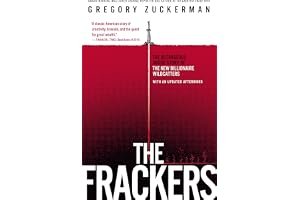
The Frackers: The Outrageous Inside Story of the New Billionaire Wildcatters
Gregory Zuckerman
4.1
Everyone knew it was crazy to try to extract oil and natural gas buried in shale rock deep below the ground. Everyone, that is, except a few reckless wildcatters - who risked their careers to prove the world wrong. Things looked grim for American energy in 2006. Oil production was in steep decline and natural gas was hard to find. The Iraq War threatened the nation’s already tenuous relations with the Middle East. China was rapidly industrializing and competing for resources. Major oil companies had just about given up on new discoveries on U.S. soil, and a new energy crisis seemed likely.
But a handful of men believed everything was about to change.
Far from the limelight, Aubrey McClendon, Harold Hamm, Mark Papa, and other wildcatters were determined to tap massive deposits of oil and gas that Exxon, Chevron, and other giants had dismissed as a waste of time. By experimenting with hydraulic fracturing through extremely dense shale—a process now known as fracking—the wildcatters started a revolution. In just a few years, they solved America’s dependence on imported energy, triggered a global environmental controversy—and made and lost astonishing fortunes.
No one understands these men—their ambitions, personalities, methods, and foibles—better than the award-winning Wall Street Journal reporter Gregory Zuckerman. His exclusive access enabled him to get close to the frackers and chronicle the untold story of how they transformed the nation and the world. The result is a dramatic narrative tracking a brutal competition among headstrong drillers. It stretches from the barren fields of North Dakota and the rolling hills of northeastern Pennsylvania to cluttered pickup trucks in Texas and tense Wall Street boardrooms.
Activists argue that the same methods that are creating so much new energy are also harming our water supply and threatening environmental chaos. The Frackers tells the story of the angry opposition unleashed by this revolution and explores just how dangerous fracking really is.
The frackers have already transformed the economic, environmental, and geopolitical course of history. Now, like the Rockefellers and the Gettys before them, they’re using their wealth and power to influence politics, education, entertainment, sports, and many other fields. Their story is one of the most important of our time.
MEET THE FRACKERS GEORGE MITCHELL, the son of a Greek goatherd, who tried to tap rock that experts deemed worthless but faced an unexpected obstacle in his quest to change history.
AUBREY McCLENDON, the charismatic scion of an Oklahoma energy family, who scored billions leading a historic land grab. He wasn’t prepared for the shocking fallout of his discoveries.
TOM WARD, who overcame a troubled childhood to become one of the nation’s wealthiest men. He could handle natural-gas fields but had more trouble with a Wall Street power broker.
HAROLD HAMM, the son of poor sharecroppers, who believed America had more oil than anyone imagined. Hamm was determined to find the crude before others caught on.
CHARIF SOUKI, the dashing Lebanese immigrant who saw his career crumble and his fortune disintegrate, leaving one last, unlikely chance for success.
MARK PAPA, the Enron castoff who panicked when he realized a resurgence of American natural gas was at hand, one that his company wasn’t prepared for.
@GZuckerman @stig_brodersen @SimonsFdn Gregory, thanks so much for coming on the show. Your book was really awesome! [source]
Cover unavailable
47
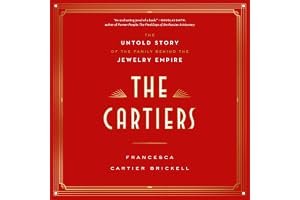
The Cartiers: The Untold Story of the Family Behind the Jewelry Empire
Francesca Cartier Brickell
4.1
"An enchanting jewel of a book."--Douglas Smith, author of Former People: The Final Days of the Russian Aristocracy
The captivating story of the family behind the Cartier empire and the three brothers who turned their grandfather's humble Parisian jewelry store into a global luxury icon--as told by a great-granddaughter with exclusive access to long-lost family archives
The Cartiers is the revealing tale of a jewelry dynasty--four generations, from revolutionary France to the 1970s. At its heart are the three Cartier brothers whose motto was "Never copy, only create" and who made their family firm internationally famous in the early days of the twentieth century, thanks to their unique and complementary talents: Louis, the visionary designer who created the first men's wristwatch to help an aviator friend tell the time without taking his hands off the controls of his flying machine; Pierre, the master dealmaker who bought the New York headquarters on Fifth Avenue for a double-stranded natural pearl necklace; and Jacques, the globe-trotting gemstone expert whose travels to India gave Cartier access to the world's best rubies, emeralds, and sapphires, inspiring the celebrated Tutti Frutti jewelry.
Francesca Cartier Brickell, whose great-grandfather was the youngest of the brothers, has traveled the world researching her family's history, tracking down those connected with her ancestors and discovering long-lost pieces of the puzzle along the way. Now she reveals never-before-told dramas, romances, intrigues, betrayals, and more.
The Cartiers also offers a behind-the-scenes look at the firm's most iconic jewelry--the notoriously cursed Hope Diamond, the Romanov emeralds, the classic panther pieces--and the long line of stars from the worlds of fashion, film, and royalty who wore them, from Indian maharajas and Russian grand duchesses to Wallis Simpson, Coco Chanel, and Elizabeth Taylor.
Published in the two-hundredth anniversary year of the birth of the dynasty's founder, Louis-Fran�ois Cartier, this book is a magnificent, definitive, epic social history shown through the deeply personal lens of one legendary family.
…
Cover unavailable
48
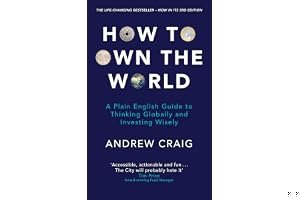
How to Own the World: A Plain English Guide to Thinking Globally and Investing Wisely
Andrew Craig
4.1
Cover unavailable
49
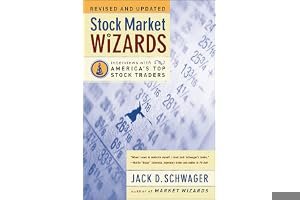
Stock Market Wizards: Interviews with America's Top Stock Traders
Jack D. Schwager
4.1
The third in the bestselling Market Wizards series, this time focusing on the barometer of the economy - the stock market.
It has been nearly a decade since the publication of the highly successful The New Market Wizards. The interim has witnessed the most dynamic bull market in US stock history, a collapse in commodity prices, dramatic failures in some of the world′s leading hedge funds, the burst of the Internet bubble, a fall into recession and subsequent rumblings of recovery. Who have been the market wizards during this tumultuous financial period? How did some traders manage to significantly outperform a stockmarket that during its heyday moved virtually straight up?
This book will feature interviews with a variety of traders who achieved phenomenal financial success during the glory days of the Internet boom. In contrast with the first two Market Wizard books, which included traders from a broad financial spectrum - stocks, bonds, currencies and futures - this volume will focus on traders in the stockmarket.
…
Cover unavailable
50
How to Trade in Stocks
Jesse Livermore
4.1
Cover unavailable
51
Trade Your Way to Financial Freedom
Van Tharp
4.1
The bestselling holy grail of trading information-now brought completely up to date to give traders an edge in the marketplace
"Sound trading advice and lots of ideas you can use to develop your own trading methodology."-Jack Schwager, author of Market Wizards and The New Market Wizards
This trading masterpiece has been fully updated to address all the concerns of today's market environment. With substantial new material, this second edition features Tharp's new 17-step trading model. Trade Your Way to Financial Freedom also addresses reward to risk multiples, as well as insightful new interviews with top traders, and features updated examples and charts.
…
Cover unavailable
52
Advanced Techniques in Day Trading: A Practical Guide to High Probability Strategies and Methods
Andrew Aziz
4.1
This well-thought-out training regimen begins with an in-depth look at the necessary tools of the trade including your scanner, software and platform; and then moves to practical advice on subjects such as how to find the right stocks to trade, how to define support and resistance levels, and how to best manage your trades in the stress of the moment. An extensive review of proven trading strategies follows, all amply illustrated with real examples from recent trades. Risk management is addressed including tips on how to determine proper entry, profit targets and stop losses. Lastly, to bring it all together, there's a "behind the scenes" look at the author's thought process as he walks you through a number of trades. While aimed at the reader with some exposure to day trading, the novice trader will also find much useful information, easily explained, on the pages within. In this book, you'll learn... - How to start day trading as a business - How to day trade stocks, not gamble on them - How to choose a direct access broker, and required tools and platforms - How to plan important day trading strategies - How to execute each trading strategies in detail: entry, exit, stop loss - How to manage the trading plan
…
Cover unavailable
53
The Disciplined Trader: Developing Winning Attitudes
Mark Douglas
4.1
The classic book that introduced the investment industry to the concept of trading psychology.
With rare insight based on his firsthand commodity trading experience, author Mark Douglas demonstrates how the mental matters that allow us function effectively in society are often psychological barriers in trading. After examining how we develop losing attitudes, this book prepares you for a thorough "mental housecleaning" of deeply rooted thought processes. And then it shows the reader how to develop and apply attitudes and behaviors that transcend psychological obstacles and lead to success.
The Disciplined Trader helps you join the elite few who have learned how to control their trading behavior (the few traders who consistently take the greatest percentage of profits out of the market) by developing a systematic, step-by-step approach to winning week after week, month after month.
The book is divided into three parts: - An overview of the psychological requirements of the trading environment - A definition of the problems and challenges of becoming a successful trader - Basic insights into what behavior may need to be changed, and how to build a framework for accomplishing this goal - How to develop specific trading skills based on a clear, objective perspective on market action
"A groundbreaking work published in 1990 examining as to why most traders cannot raise their equity on a consistent basis, bringing the reader to practical conclusions to go about changing any limiting mindset."--Larry Pesavento, TradingTutor.com
…
Cover unavailable
54
The Little Book That Still Beats the Market
Joel Greenblatt
4.1
In 2005, Joel Greenblatt published a book that is already considered one of the classics of finance literature. In The Little Book that Beats the Market--a New York Times bestseller with 300,000 copies in print--Greenblatt explained how investors can outperform the popular market averages by simply and systematically applying a formula that seeks out good businesses when they are available at bargain prices. Now, with a new Introduction and Afterword for 2010, The Little Book that Still Beats the Market updates and expands upon the research findings from the original book. Included are data and analysis covering the recent financial crisis and model performance through the end of 2009. In a straightforward and accessible style, the book explores the basic principles of successful stock market investing and then reveals the author's time-tested formula that makes buying above average companies at below average prices automatic. Though the formula has been extensively tested and is a breakthrough in the academic and professional world, Greenblatt explains it using 6th grade math, plain language and humor. He shows how to use his method to beat both the market and professional managers by a wide margin. You'll also learn why success eludes almost all individual and professional investors, and why the formula will continue to work even after everyone "knows" it. While the formula may be simple, understanding why the formula works is the true key to success for investors. The book will take readers on a step-by-step journey so that they can learn the principles of value investing in a way that will provide them with a long term strategy that they can understand and stick with through both good and bad periods for the stock market.
As the Wall Street Journal stated about the original edition, "Mr. Greenblatt...says his goal was to provide advice that, while sophisticated, could be understood and followed by his five children, ages 6 to 15. They are in luck. His 'Little Book' is one of the best, clearest guides to value investing out there."
…
Cover unavailable
55
Trading Commodities and Financial Futures: A Step-By-Step Guide to Mastering the Markets (Paperback)
George Kleinman
4.1
Commodities have become an asset class every bit as important as stocks and bonds. As the world adds 80 million new consumers every year, commodities' profit opportunities have grown larger than ever. If you're an active trader, you need to be in these markets. But in an era of unprecedented volatility driven by high-frequency computer trading, most commodities traders lose money. George Kleinman will help you become one of the winners. Kleinman introduces powerful new trend-based techniques for making the trades that are right in your "sweet spot" for profits. You'll learn exactly how the commodities markets have changed - and how you can use consistent discipline to avoid "shark-infested waters" and manage the market's most dangerous risks. Building on more than 30 years of success, Kleinman begins with the basics, explaining how futures and options trading work today, how trading psychology impacts commodity markets, and how to avoid the latest pitfalls. He offers extensively updated coverage of electronic trading, today's contracts, and advanced trading techniques - including his own exclusive Pivot Indicator approach. Three previous editions of this book have become international best-sellers; they've helped thousands of traders master commodities trading. But the game has changed. Win it the way it's played right now, with Trading Commodities and Financial Futures, Fourth Edition.
…
Cover unavailable
56
The Divine Commodity: Discovering a Faith Beyond Consumer Christianity
Skye Jethani
4.1
The challenge facing Christianity today is not a lack of motivation or resources, but a failure of imagination.
A growing number of people are disturbed by the values exhibited by the contemporary church. Worship has become entertainment, the church has become a shopping mall, and God has become a consumable product. Many sense that something is wrong, but they cannot imagine an alternative way. The Divine Commodity finally articulates what so many have been feeling and offers hope for the future of a post-consumer Christianity.
Through Scripture, history, engaging narrative, and the inspiring art of Vincent van Gogh, The Divine Commodity explores spiritual practices that liberate our imaginations to live as Christ's people in a consumer culture opposed to the values of his kingdom. Each chapter shows how our formation as consumers has distorted an element of our faith. For example, the way churches have become corporations and how branding makes us more focused on image than reality. It then energizes an alternative vision for those seeking a more meaningful faith. Before we can hope to live differently, we must have our minds released from consumerism's grip and captivated once again by Christ.
…
Cover unavailable
57
About Power: How to Democratize Electricity Now
George W. Crocker
4.0
Cover unavailable
58
The Deplorables' Guide to Global Warming
Marc Morano
4.0
Less freedom. More regulation. Higher costs. Make no mistake: those are the surefire consequences of the modern global warming campaign waged by political and cultural elites, who have long ago abandoned fact-based science for dramatic fearmongering in order to push increased central planning. The Politically Incorrect Guide to Climate Change gives a voice -- backed by statistics, real-life stories, and incontrovertible evidence -- to the millions of "deplorable" Americans skeptical about the multibillion dollar "climate change" complex, whose claims have time and time again been proven wrong.
…
Cover unavailable
59
The Big Oyster: History on the Half Shell
Mark Kurlansky
4.0
Award-winning author Mark Kurlansky tells the remarkable story of New York by following the trajectory of one of its most fascinating inhabitants–the oyster.
For centuries New York was famous for this particular shellfish, which until the early 1900s played such a dominant a role in the city’s life that the abundant bivalves were Gotham’s most celebrated export, a staple food for all classes, and a natural filtration system for the city’s congested waterways.
Filled with cultural, historical, and culinary insight–along with historic recipes, maps, drawings, and photos–this dynamic narrative sweeps readers from the seventeenth-century founding of New York to the death of its oyster beds and the rise of America’s environmentalist movement, from the oyster cellars of the rough-and-tumble Five Points slums to Manhattan’s Gilded Age dining chambers. With The Big Oyster, Mark Kurlansky serves up history at its most engrossing, entertaining, and delicious.
…
Cover unavailable
60
Investing Quickstart Guide: The Simplified Beginner's Guide to Successfully Navigating the Stock Market, Growing Your Wealth & Creating a Secure Financial Future
Ted D Snow Cfp(r) Mba
4.0
The Ultimate Beginner's Guide to Investing in the Stock Market
The ONLY investing book that is written by a CFP® practitioner with 30+ years of investment experience helping others to invest wisely to achieve all of their financial goals in life.
Ted D. Snow, CFP®, MBA has a knack for making complex ideas clear while endowing his readers with a wealth of powerful new knowledge. Whether you are a newcomer to investing or a veteran looking for a fresh perspective, you will enjoy the unique and practical vision for investing success offered in theInvesting QuickStart Guide.
Bringing the wisdom of 30+ years in the finance industry to bear--much to the benefit of novice learners and experienced investors alike--Snow provides readers with the complete picture on stocks, bonds, treasuries, ETFs, mutual funds, indexes, REITS and several other investment securities. Snow's intrepid but practical asset-allocation investment philosophy is masterfully communicated and highly appropriate for market newcomers.
The key insights of Warren Buffet, Peter Lynch, Burton Malkiel, and James Altucher all play important roles in this seminal investment resource. But unlike most of today's books on investing, the Investing QuickStart Guide is as simple as it is comprehensive. You will learn the market from end-to end, while also enjoying Snow's fascinating personal stories and insights from the front lines of the finance industry.
If you are interested in learning about the stock market but uncertain of where or how to begin, then this book is your ticket into the club and may hold the keys of abundance that could dramatically transform your financial future.
You'll Learn: Everything You Need to Know Before You Make Your First Trade! How To Take Advantage Of Opportunities In The Market Without Relying On Guesswork! How to Evaluate and Compare Stocks and Other Securities! How Disciplined Approaches to Investing Can Lead to Early Retirement and Financial Freedom! How National And Global Economic And Geopolitical Factors Can Influence Investment Prospects! This book has been reviewed by The Financial Industry Regulatory Authority (FINRA).
*FREE INVESTING DIGITAL ASSETS: Each purchase includes access to the ClydeBank Media Investing Digital Asset Vault which contains tons of online resources to help you become a better investor such as workbooks, cheat sheets, reference guides, chapter summaries and more! Follow the instructions in the book to receive your free investing digital resources*
*GIVING BACK: ClydeBank Media proudly supports the non-profit AdoptAClassroom whose mission is to advance equity in K-12 education by supplementing dwindling school funding for vital classroom materials and resources*
…
Cover unavailable
61
Wine and War: The French, the Nazis, and the Battle for France's Greatest Treasure
Donald Kladstrup and Petie Kladstrup
4.0
The remarkable untold story of France's courageous, clever vinters who protected and rescued the country's most treasured commodity from German plunder during World War II.
"To be a Frenchman means to fight for your country and its wine." -Claude Terrail, owner, Restaurant La Tour d'Argent
In 1940, France fell to the Nazis and almost immediately the German army began a campaign of pillaging one of the assets the French hold most dear: their wine. Like others in the French Resistance, winemakers mobilized to oppose their occupiers, but the tale of their extraordinary efforts has remained largely unknown-until now. This is the thrilling and harrowing story of the French wine producers who undertook ingenious, daring measures to save their cherished crops and bottles as the Germans closed in on them. Wine and War illuminates a compelling, little-known chapter of history, and stands as a tribute to extraordinary individuals who waged a battle that, in a very real way, saved the spirit of France.
…
Cover unavailable
62
The Hidden Persuaders
Vance Packard
4.0
"One of the best books around for demystifying the deliberately mysterious arts of advertising."--Salon
"Fascinating, entertaining and thought-stimulating."--The New York Times Book Review
"A brisk, authoritative and frightening report on how manufacturers, fundraisers and politicians are attempting to turn the American mind into a kind of catatonic dough that will buy, give or vote at their command--The New Yorker
Originally published in 1957 and now back in print to celebrate its fiftieth anniversary, The Hidden Persuaders is Vance Packard’s pioneering and prescient work revealing how advertisers use psychological methods to tap into our unconscious desires in order to "persuade" us to buy the products they are selling.
A classic examination of how our thoughts and feelings are manipulated by business, media and politicians, The Hidden Persuaders was the first book to expose the hidden world of “motivation research,” the psychological technique that advertisers use to probe our minds in order to control our actions as consumers. Through analysis of products, political campaigns and television programs of the 1950s, Packard shows how the insidious manipulation practices that have come to dominate today’s corporate-driven world began. Featuring an introduction by Mark Crispin Miller, The Hidden Persuaders has sold over one million copies, and forever changed the way we look at the world of advertising.
Vance Packard (1914-1996) was an American journalist, social critic, and best-selling author. Among his other books were The Status Seekers, which described American social stratification and behavior, The Waste Makers, which criticizes planned obsolescence, and The Naked Society, about the threats to privacy posed by new technologies.
…
Recommended by David Greenberg.
David Greenberg
This is a classic expose of the advertising industry from the 1950s. [source]
Cover unavailable
63
Uncommon Grounds: The History of Coffee and How It Transformed Our World
Mark Pendergrast
4.0
Uncommon Grounds tells the story of coffee from its discovery on a hill in Abyssinia to its role in intrigue in the American colonies to its rise as a national consumer product in the twentieth century and its rediscovery with the advent of Starbucks at the end of the century. A panoramic epic, Uncommon Grounds uses coffee production, trade, and consumption as a window through which to view broad historical themes: the clash and blending of cultures, the rise of marketing and the national brand, assembly line mass production, and urbanization. Coffeehouses have provided places to plan revolutions, write poetry, do business, and meet friends. The coffee industry has dominated and molded the economy, politics, and social structure of entire countries.Mark Pendergrast introduces the reader to an eccentric cast of characters, all of them with a passion for the golden bean. Uncommon Grounds is nothing less than a coffee-flavored history of the world."
…
Recommended by Tim Kaine.
Tim Kaine
My two favorite birthday gifts—Chiefs Super Bowl t-shirt from my parents and book about the history of coffee from Anne! https://t.co/Ub3D6ck1Vk [source]
Cover unavailable
64
The Mushroom at the End of the World: On the Possibility of Life in Capitalist Ruins
Anna Lowenhaupt Tsing
4.0
What a rare mushroom can teach us about sustaining life on a fragile planet
Matsutake is the most valuable mushroom in the world--and a weed that grows in human-disturbed forests across the northern hemisphere. Through its ability to nurture trees, matsutake helps forests to grow in daunting places. It is also an edible delicacy in Japan, where it sometimes commands astronomical prices. In all its contradictions, matsutake offers insights into areas far beyond just mushrooms and addresses a crucial question: what manages to live in the ruins we have made?
A tale of diversity within our damaged landscapes, The Mushroom at the End of the World follows one of the strangest commodity chains of our times to explore the unexpected corners of capitalism. Here, we witness the varied and peculiar worlds of matsutake commerce: the worlds of Japanese gourmets, capitalist traders, Hmong jungle fighters, industrial forests, Yi Chinese goat herders, Finnish nature guides, and more. These companions also lead us into fungal ecologies and forest histories to better understand the promise of cohabitation in a time of massive human destruction.
By investigating one of the world's most sought-after fungi, The Mushroom at the End of the World presents an original examination into the relation between capitalist destruction and collaborative survival within multispecies landscapes, the prerequisite for continuing life on earth.
-- "Publisher's Weekly"
…
Cover unavailable
65
The Complete TurtleTrader: The Legend, the Lessons, the Results
Michael W Covel
4.0
This is the true story behind Wall Street legend Richard Dennis, his disciples, the Turtles, and the trading techniques that made them millionaires.
What happens when ordinary people are taught a system to make extraordinary money? Richard Dennis made a fortune on Wall Street by investing according to a few simple rules. Convinced that great trading was a skill that could be taught to anyone, he made a bet with his partner and ran a classified ad in the Wall Street Journal looking for novices to train. His recruits, later known as the Turtles, had anything but traditional Wall Street backgrounds; they included a professional blackjack player, a pianist, and a fantasy game designer. For two weeks, Dennis taught them his investment rules and philosophy, and set them loose to start trading, each with a million dollars of his money. By the time the experiment ended, Dennis had made a hundred million dollars from his Turtles and created one killer Wall Street legend.
In The Complete Turtle Trader, Michael W. Covel, bestselling author of Trend Following and managing editor of TurtleTrader.com, the leading website on the Turtles, tells their riveting story with the first ever on the record interviews with individual Turtles. He describes how Dennis interviewed and selected his students, details their education and experiences while working for him, and breaks down the Turtle system and rules in full. He reveals how they made astounding fortunes, and follows their lives from the original experiment to the present day. Some have grown even wealthier than ever, and include some of today's top hedge fund managers. Equally important are those who passed along their approach to a second generation of Turtles, proving that the Turtles' system truly is reproducible, and that anyone with the discipline and the desire to succeed can do as well as—or even better than—Wall Street's top hedge fund wizards.
In an era full of slapdash investing advice and promises of hot stock tips for "the next big thing," as popularized by pundits like Jim Cramer of Mad Money, the easy-to-follow objective rules of the TurtleTrader stand out as a sound guide for truly making the most out of your money. These rules worked—and still work today—for the Turtles, and any other investor with the desire and commitment to learn from one of the greatest investing stories of all time.
…
Cover unavailable
66
La Voz de tu Alma
Lain García Calvo
4.0
La Saga de LA VOZ DE TU ALMA es un fen�meno mundial que est� transformando la vida de millones de personas en todo el mundo.
Descubre EL SECRETO para hacer que la LEY DE LA ATRACCI�N funcione, aplicando los principios atemporales de la ESPIRITUALIDAD, la METAF�SICA y la F�SICA CU�NTICA, as� como los principios que ense�aron los grandes maestros de la historia como Jes�s, Buda, Confuncio, etc.
Tambi�n son muchos los grandes maestros actuales que ense�an esto, como Ronda Byrne, Louise Hay, Esther Hicks, Wayne Dyer, Joe Vitale, Jack Canfield, John Assaraf, John Demartini, y muchos m�s, pero AHORA por fin vas a obtener claridad, juntando todos esos conocimientos ancestrales y actuales en una saga de libros que ya se han convertido en un aut�ntico BEST SELLER a nivel mundial y que te ayudar�n a TRANSFORMAR tu vida para siempre.
+ de 1.000.000 seguidores en Facebook+ de 150.000 seguidores en Instagram+ de 34.000.000 reproducciones en Youtube+ de 450.000 libros vendidos+ de 50.000 asistentes eventosMentor #1 habla hispana
La Saga de LA VOZ DE TU ALMA contiene las mejores herramientas para que puedas crear la vida que deseas y sin duda te mereces.
Para su realizaci�n se hizo una profunda investigaci�n con la lectura de m�s de 700 libros relacionados con el desarrollo personal, espiritualidad, metaf�sica, y corrientes filos�ficas de todo el mundo; que unidos a la propia experiencia del autor y la de m�s de 30 mentores con resultados extraordinarios con los que LAIN tuvo la oportunidad de estudiar, hacen de esta saga algo imprescindible en las casas de todos los seres humanos del planeta.
Compuesta por 6 libros TE�RICOS: 1-LA VOZ DE TU ALMA
2-UN MILAGRO EN 90 D�AS
3-TU PROP�SITO DE VIDA
4-ABRIENDO PUERTAS DE BENDICI�N
5-SANACI�N DEL ALMA
6-FE
Compuesta por 4 libros PR�CTICOS: 1-C�MO ATRAER LA SALUD
2-C�MO ATRAER EL DINERO
3-C�MO ATRAER EL AMOR 1 y 2
El d�a que entiendas, comprendas y aceptes, que ese pedacito del creador que reside en ti, en esa energ�a llamada ALMA, es la encargada de crear la vida que deseas; y que ese ALMA HUMANA es capaz de obrar milagros en tu vida si est� bien dirigida con el poder de tus pensamientos, ese d�a, conocer�s la verdad y ser�s libre.
M�s de 250.000 personas ya han le�do la Saga de "LA VOZ DE TU ALMA"TU CAMBIO EMPIEZA HOY BENDECIDOS PARA BENDECIRComo EMBAJADORES de los libros de LAIN, miles de personas hacen donaciones de los libros a sus familiares, amigos, y LAIN dona el 10% a causas relacionados con los ni�os.
TU PRIMER BEST SELLERDurante el evento podrás contratar la mentoría privada con LAIN que te enseñará, PASO A PASO, de una forma fácil y clara, todo lo que él ha hecho y que tú también podrás hacer para que tu mensaje sea escuchado por el mundo y puedas crear un IMPACTO en las generaciones, mientras te dedicas a lo que más amas y creas abundancia ayudando a los demás.
…
Cover unavailable
67
The Complete Guide to Building and Growing a Talent Development Firm
Stephen L. Cohen
4.0
Cover unavailable
68
A Complete Guide to the Futures Market: Technical Analysis, Trading Systems, Fundamental Analysis, Options, Spreads, and Trading Principles
Jack D. Schwager
4.0
For Amazon customers: The new version of the book, printed on higher quality paper, is now available to purchase.
The essential futures market reference guide
A Complete Guide to the Futures Market is the comprehensive resource for futures traders and analysts. Spanning everything from technical analysis, trading systems, and fundamental analysis to options, spreads, and practical trading principles, A Complete Guide is required reading for any trader or investor who wants to successfully navigate the futures market.
Clear, concise, and to the point, this fully revised and updated second edition provides a solid foundation in futures market basics, details key analysis and forecasting techniques, explores advanced trading concepts, and illustrates the practical application of these ideas with hundreds of market examples. A Complete Guideto the Futures Market
Details different trading and analytical approaches, including chart analysis, technical indicators and trading systems, regression analysis, and fundamental market models. Separates misleading market myths from reality. Gives step-by-step instruction for developing and testing original trading ideas and systems. Illustrates a wide range of option strategies, and explains the trading implications of each. Details a wealth of practical trading guidelines and market insights from a recognized trading authority. Trading futures without a firm grasp of this market's realities and nuances is a recipe for losing money. A Complete Guide to the Futures Market offers serious traders and investors the tools to keep themselves on the right side of the ledger.
…
Cover unavailable
69
The Food Explorer: The True Adventures of the Globe-Trotting Botanist Who Transformed What America Eats
Daniel Stone
4.0
The true adventures of David Fairchild, a late-nineteenth-century food explorer who traveled the globe and introduced diverse crops like avocados, mangoes, seedless grapes--and thousands more--to the American plate.
In the nineteenth century, American meals were about subsistence, not enjoyment. But as a new century approached, appetites broadened, and David Fairchild, a young botanist with an insatiable lust to explore and experience the world, set out in search of foods that would enrich the American farmer and enchant the American eater.
Kale from Croatia, mangoes from India, and hops from Bavaria. Peaches from China, avocados from Chile, and pomegranates from Malta. Fairchild's finds weren't just limited to food: From Egypt he sent back a variety of cotton that revolutionized an industry, and via Japan he introduced the cherry blossom tree, forever brightening America's capital. Along the way, he was arrested, caught diseases, and bargained with island tribes. But his culinary ambition came during a formative era, and through him, America transformed into the most diverse food system ever created.
…
Cover unavailable
70
Dirt Rich: How One Ambitiously Lazy Geek Created Passive Income in Real Estate Without Renters, Renovations, and Rehabs
Mark Podolsky
4.0
Cover unavailable
71
Shackleton's Way: Leadership Lessons from the Great Antarctic Explorer
Margot Morrell, Stephanie Capparell, Alexandra Shackleton
Summer book #3: SHACKLETON’S WAY Leadership Lessons From The Great Antarctic Explorer by @Margot__Morrell & @stephcapparell “Difficulties are just things to overcome after all.” ‘I have often marveled at the thin line which separates success from failure.” https://t.co/qw8GORpwQS [source]
Cover unavailable
72
The Rule: How I Beat the Odds in the Markets and in Life--And How You Can Too
Larry Hite and Michael Covel
4.0
The empowering story of Larry Hite's unlikely rise to the top of the hedge fund world--with critical insights and lessons you can take to the bank
In The Rule, legendary trader and hedge fund pioneer Larry Hite recounts his working-class upbringing in Brooklyn as a dyslexic, partially blind kid who was anything but a model student--and how he went on to found and run Mint Investment Management Company, one of the most profitable and largest quantitative hedge funds in the world.
Hite's wild success is based on his deep understanding that markets are flawed--just like people. Through his early-life struggles and failures, Hite came to know himself well--his fears, his frustrations, his self-doubt, and his tolerance for all of the above. This motivational book reveals that by accepting the facts of his life and of himself, he was able to accept markets as they are. And that was the key to his success.
In these pages, you'll walk of the footsteps of an investing legend, who imparts smart, practical trading lessons throughout the journey. Making a successful living in trading isn't about beating the markets. It's about meeting markets where they are, embracing the fact of risk, knowing yourself, and playing it strictly by the numbers.
The Rule shows that investing decisions are not only bets or gambles, but investments in time, energy, and attention. By focusing on realistic returns on your investments--versus what you expect or hope to get--you immediately improve your probability for success.
@jimmygib24 @Covel Great book, by a trading legend. [source]
Cover unavailable
73
Jewels: A Secret History
Victoria Finlay
4.0
Throughout history, precious stones have inspired passions and poetry, quests and curses, sacred writings and unsacred actions. In this scintillating book, journalist Victoria Finlay embarks on her own globe-circling search for the real stories behind some of the gems we prize most. Blending adventure travel, geology, exciting new research, and her own irresistible charm, Finlay has fashioned a treasure hunt for some of the most valuable, glamorous, and mysterious substances on earth.
With the same intense curiosity and narrative flair she displayed in her widely-praised book Color, Finlay journeys from the underground opal churches of outback Australia to the once pearl-rich rivers of Scotland; from the peridot mines on an Apache reservation in Arizona to the remote ruby mines in the mountains of northern Burma. She risks confronting scorpions to crawl through Cleopatra’s long-deserted emerald mines, tries her hand at gem cutting in the dusty Sri Lankan city where Marco Polo bartered for sapphires, and investigates a rumor that fifty years ago most of the world’s amber was mined by prisoners in a Soviet gulag.
Jewels is a unique and often exhilarating voyage through history, across cultures, deep into the earth’s mantle, and up to the glittering heights of fame, power, and wealth. From the fabled curse of the Hope Diamond, to the disturbing truths about how pearls are cultured, to the peasants who were once executed for carrying amber to the centuries-old quest by magicians and scientists to make a perfect diamond, Jewels tells dazzling stories with a wonderment and brilliance truly worthy of its subjects.
From the Hardcover edition.
…
Cover unavailable
74
The Hidden Hand of American Hegemony: Petrodollar Recycling and International Markets
David E. Spiro
4.0
Between 1973 and 1980, the cost of crude oil rose suddenly and dramatically, precipitating convulsions in international politics. Conventional wisdom holds that international capital markets adjusted automatically and remarkably well: enormous amounts of money flowed into oil-rich states, and efficient markets then placed that new money in cash-poor Third World economies. David Spiro has followed the money trail, and the story he tells contradicts the accepted beliefs. Most of the sudden flush of new oil wealth didn't go to poor oil-importing countries around the globe. Instead, the United States made a deal with Saudi Arabia to sell it U.S. securities in secret, a deal resulting in a substantial portion of Saudi assets being held by the U.S. government. With this arrangement, the U.S. government violated its agreements with allies in the developed world. Spiro argues that American policymakers took this action to prop up otherwise intolerable levels of U.S. public debt. In effect, recycled OPEC wealth subsidized the debt-happy policies of the U.S. government as well as the debt-happy consumption of its citizenry.
…
Cover unavailable
75
The Sugar Barons
Matthew Parker
4.0
The contemporary image of the West Indies as paradise islands conceals a turbulent, dramatic and shocking history. For 200 years after 1650, the West Indies witnessed one of the greatest power struggles of the age, as Europeans made and lost immense fortunes growing and trading in sugar - a commodity so lucrative that it was known as white gold. This compelling book tells how the islands became by far most valuable and important colonies in the British Empire. How Barbados, scene of the sugar revolution that made the English a nation of voracious consumers, was transformed from a backward outpost into England's richest colony, powered by the human misery of tens of thousands of enslaved Africans. How this model of coercion and exploitation was exported around the region, producing huge wealth for a few, but creating a society poisoned by war, disease, cruelty and corruption. How Jamaican opulence reached its zenith, and its subsequent calamitous decline;
…
Cover unavailable
76
American Canopy: Trees, Forests, and the Making of a Nation
Eric Rutkow
4.0
In the bestselling tradition of Michael Pollan’s Second Nature, this fascinating and unique historical work tells the remarkable story of the relationship between Americans and trees across the entire span of our nation’s history.
This fascinating and groundbreaking work tells the remarkable story of the relationship between Americans and their trees across the entire span of our nation’s history.
Like many of us, historians have long been guilty of taking trees for granted. Yet the history of trees in America is no less remarkable than the history of the United States itself—from the majestic white pines of New England, which were coveted by the British Crown for use as masts in navy warships, to the orange groves of California, which lured settlers west. In fact, without the country’s vast forests and the hundreds of tree species they contained, there would have been no ships, docks, railroads, stockyards, wagons, barrels, furniture, newspapers, rifles, or firewood. No shingled villages or whaling vessels in New England. No New York City, Miami, or Chicago. No Johnny Appleseed, Paul Bunyan, or Daniel Boone. No Allied planes in World War I, and no suburban sprawl in the middle of the twentieth century. America—if indeed it existed—would be a very different place without its millions of acres of trees.
As Eric Rutkow’s brilliant, epic account shows, trees were essential to the early years of the republic and indivisible from the country’s rise as both an empire and a civilization. Among American Canopy’s many fascinating stories: the Liberty Trees, where colonists gathered to plot rebellion against the British; Henry David Thoreau’s famous retreat into the woods; the creation of New York City’s Central Park; the great fire of 1871 that killed a thousand people in the lumber town of Peshtigo, Wisconsin; the fevered attempts to save the American chestnut and the American elm from extinction; and the controversy over spotted owls and the old-growth forests they inhabited. Rutkow also explains how trees were of deep interest to such figures as George Washington, Thomas Jefferson, Benjamin Franklin, Teddy Roosevelt, and FDR, who oversaw the planting of more than three billion trees nationally in his time as president.
As symbols of liberty, community, and civilization, trees are perhaps the loudest silent figures in our country’s history. America started as a nation of people frightened of the deep, seemingly infinite woods; we then grew to rely on our forests for progress and profit; by the end of the twentieth century we came to understand that the globe’s climate is dependent on the preservation of trees. Today, few people think about where timber comes from, but most of us share a sense that to destroy trees is to destroy part of ourselves and endanger the future.
Never before has anyone treated our country’s trees and forests as the subject of a broad historical study, and the result is an accessible, informative, and thoroughly entertaining read. Audacious in its four-hundred-year scope, authoritative in its detail, and elegant in its execution, American Canopy is perfect for history buffs and nature lovers alike and announces Eric Rutkow as a major new author of popular history.
…
Cover unavailable
77
2024-2025 Monthly Planner: Two year Agenda with Holidays and Inspirational Quotes floral large organizer and Schedule 8.5x11
Gladiolus Planner
4.0
Cover unavailable
78
Banana: The Fate of the Fruit That Changed the World
Dan Koeppel
4.0
A gripping biological detective story that uncovers the myth, mystery, and endangered fate of the world's most humble fruit
To most people, a banana is a banana: a simple yellow fruit. Americans eat more bananas than apples and oranges combined. In others parts of the world, bananas are what keep millions of people alive. But for all its ubiquity, the banana is surprisingly mysterious; nobody knows how bananas evolved or exactly where they originated. Rich cultural lore surrounds the fruit: In ancient translations of the Bible, the 'apple' consumed by Eve is actually a banana (it makes sense, doesn't it?). Entire Central American nations have been said to rise and fall over the banana.
But the biggest mystery about the banana today is whether it will survive. A seedless fruit with a unique reproductive system, every banana is a genetic duplicate of the next, and therefore susceptible to the same blights. Today's yellow banana, the Cavendish, is increasingly threatened by such a blight -- and there's no cure in sight.
Banana combines a pop-science journey around the globe, a fascinating tale of an iconic American business enterprise, and a look into the alternately tragic and hilarious banana subculture (one does exist) -- ultimately taking us to the high-tech labs where new bananas are literally being built in test tubes, in a race to save the world's most beloved fruit.
…
Cover unavailable
79
A History of the World in 6 Glasses
Tom Standage
4.0
Throughout human history, certain drinks have done much more than just quench thirst. As Tom Standage relates with authority and charm, six of them have had a surprisingly pervasive influence on the course of history, becoming the defining drink during a pivotal historical period.
A History of the World in 6 Glasses tells the story of humanity from the Stone Age to the 21st century through the lens of beer, wine, spirits, coffee, tea, and cola. Beer was first made in the Fertile Crescent and by 3000 B.C.E. was so important to Mesopotamia and Egypt that it was used to pay wages. In ancient Greece wine became the main export of her vast seaborne trade, helping spread Greek culture abroad. Spirits such as brandy and rum fueled the Age of Exploration, fortifying seamen on long voyages and oiling the pernicious slave trade. Although coffee originated in the Arab world, it stoked revolutionary thought in Europe during the Age of Reason, when coffeehouses became centers of intellectual exchange. And hundreds of years after the Chinese began drinking tea, it became especially popular in Britain, with far-reaching effects on British foreign policy. Finally, though carbonated drinks were invented in 18th-century Europe they became a 20th-century phenomenon, and Coca-Cola in particular is the leading symbol of globalization.
For Tom Standage, each drink is a kind of technology, a catalyst for advancing culture by which he demonstrates the intricate interplay of different civilizations. You may never look at your favorite drink the same way again.
…
Cover unavailable
80
The Colder War: How the Global Energy Trade Slipped from America's Grasp
Marin Katusa
4.0
How the massive power shift in Russia threatens the political dominance of the United States There is a new cold war underway, driven by a massive geopolitical power shift to Russia that went almost unnoticed across the globe. In The Colder War: How the Global Energy Trade Slipped from America's Grasp, energy expert Marin Katusa takes a look at the ways the western world is losing control of the energy market, and what can be done about it.
Russia is in the midst of a rapid economic and geopolitical renaissance under the rule of Vladimir Putin, a tenacious KGB officer turned modern-day tsar. Understanding his rise to power provides the keys to understanding the shift in the energy trade from Saudi Arabia to Russia. This powerful new position threatens to unravel the political dominance of the United States once and for all.
Discover how political coups, hostile takeovers, and assassinations have brought Russia to the center of the world's energy market Follow Putin's rise to power and how it has led to an upsetting of the global balance of trade Learn how Russia toppled a generation of robber barons and positioned itself as the most powerful force in the energy market Study Putin's long-range plans and their potential impact on the United States and the U.S. dollar If Putin's plans are successful, not only will Russia be able to starve other countries of power, but the BRIC countries (Brazil, Russia, India, and China) will replace the G7 in wealth and clout. The Colder War takes a hard look at what is to come in a new global energy market that is certain to cause unprecedented impact on the U.S. dollar and the American way of life.
…
Cover unavailable
81
The Death of Ramon Gonzalez: The Modern Agricultural Dilemma
Angus Wright
4.0
The Death of Ramon Gonzalez has become a benchmark book since its publication in 1990. It has been taught in undergraduate and graduate courses in every social science discipline, sustainable and alternative agriculture, environmental studies, ecology, ethnic studies, public health, and Mexican, Latin American, and environmental history. The book has also been used at the University of California-Santa Cruz as a model of interdisciplinary work and at the University of Iowa as a model of fine journalism, and has inspired numerous other books, theses, films, and investigative journalism pieces.
This revised edition of The Death of Ramon Gonzalez updates the science and politics of pesticides and agricultural development. In a new afterword, Angus Wright reconsiders the book's central ideas within the context of globalization, trade liberalization, and NAFTA, showing that in many ways what he called "the modern agricultural dilemma" should now be thoughtof as a "twenty-first century dilemma" that involves far more than agriculture.
…
Cover unavailable
82
Reminiscences of a Stock Operator
Edwin Lefevre
4.0
Cover unavailable
83
The Oil Kings: How the U.S., Iran, and Saudi Arabia Changed the Balance of Power in the Middle East
Andrew Scott Cooper
4.0
Cover unavailable
84
Stacking Silver Investors Journal: The Perfect Way To Organise And Log your Silver Investing Trades
Owthorne Notebooks
4.0
Cover unavailable
85
Options Trading For Beginners : 3 Book in 1: The most comprehensive and up-to-date step-by-step guide for beginners to zero r
Alfie Kirk
4.0
Cover unavailable
86
Investing Made Easy: 50 Extremely Beneficial Business that are Undeniable Cash Cows
Hyacil Han
4.0
Cover unavailable
87
Becoming a Category of One: How Extraordinary Companies Transcend Commodity and Defy Comparison
Joe Calloway
4.0
Learn how extraordinary companies do what they do so well, and obtain the tools and ideas you need to emulate them. Full of case studies and personal reflections by leaders of exceptional companies, this book is designed to help anyone transform their run-of-the-mill business into an extraordinary company-whether you operate a multinational corporation or a mom-and-pop shop. Calloway doesn't offer any mumbo-jumbo or flavor-of-the-day buzzwords, just simple lessons that lead to real, proven results.
…
Recommended by Timothy Ferriss, Mike Shinoda, and Drew McLellan.
Mike Shinoda
About finding ways to make what you do stand out. [source]
Drew McLellan
Question: What five books would you recommend to young people interested in your career path & why? Answer: Radical Leap by Steve Farber Becoming a Category of One by Joe Calloway Selling the Invisible by Harry Beckwith Killing Marketing by Joe Pulizzi and Robert Rose Waiting for your Cat to Bark by Bryan and Jeffrey Eisenberg The Power of Moments by Chip and Dan Heath [source]
Cover unavailable
88
Reminiscences of a Stock Operator: Wall Street’s Master of Speculation – Insights from the Legendary Stock Trader Jesse Liver
Edwin Lefèvre
4.0
Cover unavailable
89
Paper: Paging Through History
Mark Kurlansky
4.0
Paper is one of the simplest and most essential pieces of human technology. For the past two millennia, the ability to produce it in ever more efficient ways has supported the proliferation of literacy, media, religion, education, commerce, and art; it has formed the foundation of civilizations, promoting revolutions and restoring stability. One has only to look at history’s greatest press run, which produced 6.5 billion copies of Máo zhuxí yulu, Quotations from Chairman Mao Tse-tung (Zedong)—which doesn’t include editions in 37 foreign languages and in braille—to appreciate the range and influence of a single publication, in paper. Or take the fact that one of history’s most revered artists, Leonardo da Vinci, left behind only 15 paintings but 4,000 works on paper. And though the colonies were at the time calling for a boycott of all British goods, the one exception they made speaks to the essentiality of the material; they penned the Declaration of Independence on British paper.
Now, amid discussion of “going paperless”—and as speculation about the effects of a digitally dependent society grows rampant—we’ve come to a world-historic juncture. Thousands of years ago, Socrates and Plato warned that written language would be the end of “true knowledge,” replacing the need to exercise memory and think through complex questions. Similar arguments were made about the switch from handwritten to printed books, and today about the role of computer technology. By tracing paper’s evolution from antiquity to the present, with an emphasis on the contributions made in Asia and the Middle East, Mark Kurlansky challenges common assumptions about technology’s influence, affirming that paper is here to stay. Paper will be the commodity history that guides us forward in the twenty-first century and illuminates our times.
…
Cover unavailable
90
Online Investing For Dummies, 10th Edition
Matthew Krantz
4.0
Build a winning portfolio--and reduce your risk--with this bestselling guide
Online investing has never been easier--or more potentially confusing. Now that every broker or finance site has its own app, data, or approach, it can be all too easy to be misled and make a bad decision. Online Investing for Dummies helps you reduce risk and separate the gimmicks from the gold, pointing investors of all experience levels to the pro-tips, calculators, databases, useful sites, and peer communities that will lead to success.
Updated to include information on mobile trading and the influence of social media on the markets, the book also covers the basics--showing you how to figure out how much to invest, find data online, and pick an online broker. It then progresses through to more advanced topics, such as calculating returns, selecting mutual funds, buying bonds, options, commodities, and IPOs, taking you and your money wherever you want to go in the global market.
Set expectations and assess your risk Analyze stocks and financial statements Assemble the suite of tools to calculate your performance Get tips on choosing the right online broker and on protecting your information online It's time to get a pro strategy, and Online Investing for Dummies has all the inside information you need to build up that winning portfolio.
…
Cover unavailable
91
Can't Deny It
Doug Terreson
4.0
Cover unavailable
92
From Renter to Riches: The Ultimate House Hacking Blueprint
Dr. Tajii Black
4.0
Cover unavailable
93
Interest Rate Markets: A Practical Approach to Fixed Income
Siddhartha Jha
4.0
How to build a framework for forecasting interest rate market movements With trillions of dollars worth of trades conducted every year in everything from U.S. Treasury bonds to mortgage-backed securities, the U.S. interest rate market is one of the largest fixed income markets in the world.
Interest Rate Markets: A Practical Approach to Fixed Income details the typical quantitative tools used to analyze rates markets; the range of fixed income products on the cash side; interest rate movements; and, the derivatives side of the business.
Emphasizes the importance of hedging and quantitatively managing risks inherent in interest rate trades Details the common trades which can be used by investors to take views on interest rates in an efficient manner, the methods used to accurately set up these trades, as well as common pitfalls and risks?providing examples from previous market stress events such as 2008 Includes exclusive access to the Interest Rate Markets Web site which includes commonly used calculations and trade construction methods Interest Rate Markets helps readers to understand the structural nature of the rates markets and to develop a framework for thinking about these markets intuitively, rather than focusing on mathematical models
…
Cover unavailable
94
Perfectly Hedged A Practical Guide To Base Metals
Samuel Basi
4.0
Cover unavailable
95
Wealthy & Wise: How to Create Wealth by Investing in Stocks
David Chenier
4.0
Cover unavailable
96
American Catch: The Fight for Our Local Seafood
Paul Greenberg
4.0
INVESTIGATIVE REPORTERS & EDITORS Book Award, Finalist 2014
In American Catch, award-winning author Paul Greenberg takes the same skills that won him acclaim in Four Fish to uncover the tragic unraveling of the nation’s seafood supply—telling the surprising story of why Americans stopped eating from their own waters.
In 2005, the United States imported five billion pounds of seafood, nearly double what we imported twenty years earlier. Bizarrely, during that same period, our seafood exports quadrupled. American Catch examines New York oysters, Gulf shrimp, and Alaskan salmon to reveal how it came to be that 91 percent of the seafood Americans eat is foreign.
In the 1920s, the average New Yorker ate six hundred local oysters a year. Today, the only edible oysters lie outside city limits. Following the trail of environmental desecration, Greenberg comes to view the New York City oyster as a reminder of what is lost when local waters are not valued as a food source.
Farther south, a different catastrophe threatens another seafood-rich environment. When Greenberg visits the Gulf of Mexico, he arrives expecting to learn of the Deepwater Horizon oil spill’s lingering effects on shrimpers, but instead finds that the more immediate threat to business comes from overseas. Asian-farmed shrimp—cheap, abundant, and a perfect vehicle for the frying and sauces Americans love—have flooded the American market.
Finally, Greenberg visits Bristol Bay, Alaska, home to the biggest wild sockeye salmon run left in the world. A pristine, productive fishery, Bristol Bay is now at great risk: The proposed Pebble Mine project could under¬mine the very spawning grounds that make this great run possible. In his search to discover why this pre¬cious renewable resource isn’t better protected, Green¬berg encounters a shocking truth: the great majority of Alaskan salmon is sent out of the country, much of it to Asia. Sockeye salmon is one of the most nutritionally dense animal proteins on the planet, yet Americans are shipping it abroad.
Despite the challenges, hope abounds. In New York, Greenberg connects an oyster restoration project with a vision for how the bivalves might save the city from rising tides. In the Gulf, shrimpers band together to offer local catch direct to consumers. And in Bristol Bay, fishermen, environmentalists, and local Alaskans gather to roadblock Pebble Mine. With American Catch, Paul Greenberg proposes a way to break the current destructive patterns of consumption and return American catch back to American eaters.
The Washington Post: "Americans need to eat more American seafood. It’s a point [Greenberg] makes compellingly clear in his new book, American Catch: The Fight for our Local Seafood...Greenberg had at least one convert: me.”
Jane Brody, New York Times “Excellent.”
The Los Angeles Times “If this makes it sound like American Catch is another of those dry, haranguing issue-driven books that you read mostly out of obligation, you needn’t worry. While Greenberg has a firm grasp of the facts, he also has a storyteller’s knack for framing them in an entertaining way.”
The Guardian (UK) “A wonderful new book”
Tom Colicchio: "This is on the top of my summer reading list. A Fast Food Nation for fish.”
…
Cover unavailable
97
Investing: The Last Liberal Art
Robert Hagstrom
4.0
Recommended by Evarist Chahali.
Evarist Chahali
Hagstrom's book on mental models confirms my view that inspiration on how to improve intelligence analysis is best found beyond the intelligence community. #Thread [source]
Cover unavailable
98
Bay Area Coffee: A Stimulating History
Monika Trobits and George Vukasin
4.0
Cover unavailable
99
Day Trading Micro Futures for Income: The Beginner’s Gateway to Trading for a Living
Don Singletary
4.0
Cover unavailable
100
The Four Pillars of Investing: Lessons for Building a Winning Portfolio
William Bernstein
4.0
The classic guide to constructing a solid portfolio--without a financial advisor!
"With relatively little effort, you can design and assemble an investment portfolio that, because of its wide diversification and minimal expenses, will prove superior to the most professionally managed accounts. Great intelligence and good luck are not required."
William Bernstein's commonsense approach to portfolio construction has served investors well during the past turbulent decade--and it's what made The Four Pillars of Investing an instant classic when it was first published nearly a decade ago.
This down-to-earth book lays out in easy-to-understand prose the four essential topics that every investor must master: the relationship of risk and reward, the history of the market, the psychology of the investor and the market, and the folly of taking financial advice from investment salespeople.
Bernstein pulls back the curtain to reveal what really goes on in today's financial industry as he outlines a simple program for building wealth while controlling risk. Straightforward in its presentation and generous in its real-life examples, The Four Pillars of Investing presents a no-nonsense discussion of:
The art and science of mixing different asset classes into an effective blend The dangers of actively picking stocks, as opposed to investing in the whole market Behavioral finance and how state of mind can adversely affect decision making Reasons the mutual fund and brokerage industries, rather than your partners, are often your most direct competitors Strategies for managing all of your assets--savings, 401(k)s, home equity--as one portfolio Investing is not a destination. It is a journey, and along the way are stockbrokers, journalists, and mutual fund companies whose interests are diametrically opposed to yours.
More relevant today than ever, The Four Pillars of Investing shows you how to determine your own financial direction and assemble an investment program with the sole goal of building long-term wealth for you and your family.
…
Recommended by Bill Earner.
Bill Earner
Four Pillars has a good methodology for thinking about how to save and invest personally so definitely useful. [source]


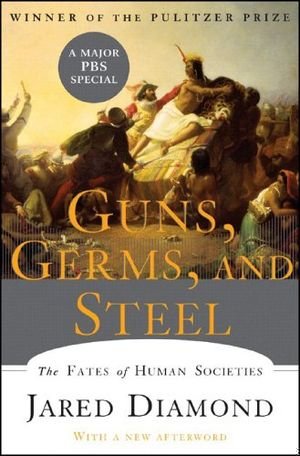 1
1