We've ranked the best american revolution books using expert recommendations, sales data, and millions of reader ratings. At Shortform, we know books. Our book guides are the best in the world. Learn why.
Cover unavailable
1
1776
David McCullough
5.0
In this stirring book, David McCullough tells the intensely human story of those who marched with General George Washington in the year of the Declaration of Independence, when the whole American cause was riding on their success, without which all hope for independence would have been dashed and the noble ideals of the Declaration would have amounted to little more than words on paper.
Based on extensive research in both American and British archives, 1776 is the story of Americans in the ranks, men of every shape, size, and color, farmers, schoolteachers, shoemakers, no-accounts, and mere boys turned soldiers. And it is the story of the British commander, William Howe, and his highly disciplined redcoats, who looked on their rebel foes with contempt and fought with a valor too little known. But it is the American commander-in-chief who stands foremost: Washington, who had never before led an army in battle.
The darkest hours of that tumultuous year were as dark as any Americans have known. Especially in our own tumultuous time, 1776 is powerful testimony to how much is owed to a rare few in that brave founding epoch, and what a miracle it was that things turned out as they did.
Written as a companion work to his celebrated biography of John Adams, David McCullough's 1776 is another landmark in the literature of American history.
The inspiration for the hit Broadway musical Hamilton!
In the first full-length biography of Alexander Hamilton in decades, National Book Award winner Ron Chernow tells the riveting story of a man who overcame all odds to shape, inspire, and scandalize the newborn America. According to historian Joseph Ellis, Alexander Hamilton is “a robust full-length portrait, in my view the best ever written, of the most brilliant, charismatic and dangerous founder of them all.”Few figures in American history have been more hotly debated or more grossly misunderstood than Alexander Hamilton. Chernow’s biography gives Hamilton his due and sets the record straight, deftly illustrating that the political and economic greatness of today’s America is the result of Hamilton’s countless sacrifices to champion ideas that were often wildly disputed during his time. “To repudiate his legacy,” Chernow writes, “is, in many ways, to repudiate the modern world.” Chernow here recounts Hamilton’s turbulent life: an illegitimate, largely self-taught orphan from the Caribbean, he came out of nowhere to take America by storm, rising to become George Washington’s aide-de-camp in the Continental Army, coauthoring The Federalist Papers, founding the Bank of New York, leading the Federalist Party, and becoming the first Treasury Secretary of the United States.
Historians have long told the story of America’s birth as the triumph of Jefferson’s democratic ideals over the aristocratic intentions of Hamilton. Chernow presents an entirely different man, whose legendary ambitions were motivated not merely by self-interest but by passionate patriotism and a stubborn will to build the foundations of American prosperity and power. His is a Hamilton far more human than we’ve encountered before—from his shame about his birth to his fiery aspirations, from his intimate relationships with childhood friends to his titanic feuds with Jefferson, Madison, Adams, Monroe, and Burr, and from his highly public affair with Maria Reynolds to his loving marriage to his loyal wife Eliza. And never before has there been a more vivid account of Hamilton’s famous and mysterious death in a duel with Aaron Burr in July of 1804.
Chernow’s biography is not just a portrait of Hamilton, but the story of America’s birth seen through its most central figure. At a critical time to look back to our roots, Alexander Hamilton will remind readers of the purpose of our institutions and our heritage as Americans.
Related and with equal weight, I want to recommend George B. McClellan: The Young Napoleon by Stephen W. Sears (a biography of the talented but utterly delusional General George McClellan), Rebel Yell: The Violence, Passion, and Redemption of Stonewall Jackson by S.C. Gwynne (a biography of the brilliant but manic Stonewall Jackson) and Ron Chernow’s Alexander Hamilton (an equally brilliant, more accomplished but equally tragic founding father). All these books made me angry, sad, and confused. But they also made me look inward and taught me quite a bit. [source]
Fabrice Grinda
I read books for fun. It just so happens that they often are also insightful, but I would not say any specific book had a huge influence on me. Some biographies like Alexander Hamilton by Ron Chernow are inspiring, but it’s not as though they changed my career path. I knew I wanted to be an Internet entrepreneur from a very young age. [source]
Cover unavailable
3
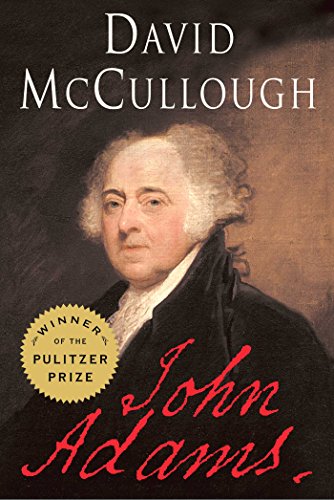
John Adams
David McCullough
4.8
The enthralling, often surprising story of John Adams, one of the most important and fascinating Americans who ever lived.
In this powerful, epic biography, David McCullough unfolds the adventurous life-journey of John Adams, the brilliant, fiercely independent, often irascible, always honest Yankee patriot -- "the colossus of independence," as Thomas Jefferson called him -- who spared nothing in his zeal for the American Revolution; who rose to become the second President of the United States and saved the country from blundering into an unnecessary war; who was learned beyond all but a few and regarded by some as "out of his senses"; and whose marriage to the wise and valiant Abigail Adams is one of the moving love stories in American history.
Like his masterly, Pulitzer Prize-winning biography Truman, David McCullough's John Adams has the sweep and vitality of a great novel. It is both a riveting portrait of an abundantly human man and a vivid evocation of his time, much of it drawn from an outstanding collection of Adams family letters and diaries. In particular, the more than one thousand surviving letters between John and Abigail Adams, nearly half of which have never been published, provide extraordinary access to their private lives and make it possible to know John Adams as no other major American of his founding era.
As he has with stunning effect in his previous books, McCullough tells the story from within -- from the point of view of the amazing eighteenth century and of those who, caught up in events, had no sure way of knowing how things would turn out. George Washington, Benjamin Franklin, John Jay, the British spy Edward Bancroft, Madame Lafayette and Jefferson's Paris "interest" Maria Cosway, Alexander Hamilton, James Madison, the scandalmonger James Callender, Sally Hemings, John Marshall, Talleyrand, and Aaron Burr all figure in this panoramic chronicle, as does, importantly, John Quincy Adams, the adored son whom Adams would live to see become President.
Crucial to the story, as it was to history, is the relationship between Adams and Jefferson, born opposites -- one a Massachusetts farmer's son, the other a Virginia aristocrat and slaveholder, one short and stout, the other tall and spare. Adams embraced conflict; Jefferson avoided it. Adams had great humor; Jefferson, very little. But they were alike in their devotion to their country.
At first they were ardent co-revolutionaries, then fellow diplomats and close friends. With the advent of the two political parties, they became archrivals, even enemies, in the intense struggle for the presidency in 1800, perhaps the most vicious election in history. Then, amazingly, they became friends again, and ultimately, incredibly, they died on the same day -- their day of days -- July 4, in the year 1826.
Much about John Adams's life will come as a surprise to many readers. His courageous voyage on the frigate Boston in the winter of 1778 and his later trek over the Pyrenees are exploits that few would have dared and that few readers will ever forget.
It is a life encompassing a huge arc -- Adams lived longer than any president. The story ranges from the Boston Massacre to Philadelphia in 1776 to the Versailles of Louis XVI, from Spain to Amsterdam, from the Court of St. James's, where Adams was the first American to stand before King George III as a representative of the new nation, to the raw, half-finished Capital by the Potomac, where Adams was the first President to occupy the White House.
This is history on a grand scale -- a book about politics and war and social issues, but also about human nature, love, religious faith, virtue, ambition, friendship and betrayal, and the far-reaching consequences of noble ideas. Above all, John Adams is an enthralling, often surprising story of one of the most important and fascinating Americans who ever lived.
…
Recommended by Barack Obama and Antonio Villaraigosa.
The biographies have been useful, because I do think that there’s a tendency, understandable, to think that whatever’s going on right now is uniquely disastrous or amazing or difficult. [source]
Antonio Villaraigosa
I love biographies and this one in particular strikes me. I don’t believe John Adams comes immediately to mind as one of the great presidents, but he was. Students of history know he had a hand in so many of the founding documents we remember today. [source]
Cover unavailable
4
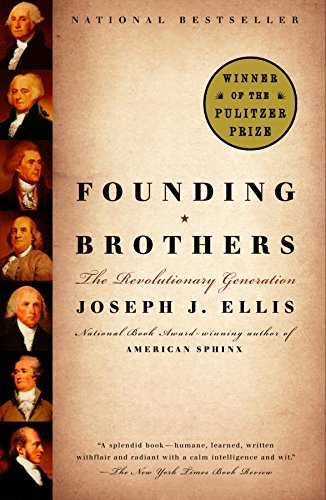
Founding Brothers: The Revolutionary Generation
Joseph J. Ellis
4.7
Informs our understanding of American politics--then and now--and gives us a new perspective on the unpredictable forces that shape history.
An illuminating study of the intertwined lives of the founders of the American republic--John Adams, Aaron Burr, Benjamin Franklin, Alexander Hamilton, Thomas Jefferson, James Madison, and George Washington.
During the 1790s, which Ellis calls the most decisive decade in our nation's history, the greatest statesmen of their generation--and perhaps any--came together to define the new republic and direct its course for the coming centuries. Ellis focuses on six discrete moments that exemplify the most crucial issues facing the fragile new nation: Burr and Hamilton's deadly duel, and what may have really happened; Hamilton, Jefferson, and Madison's secret dinner, during which the seat of the permanent capital was determined in exchange for passage of Hamilton's financial plan; Franklin's petition to end the "peculiar institution" of slavery--his last public act--and Madison's efforts to quash it; Washington's precedent-setting Farewell Address, announcing his retirement from public office and offering his country some final advice; Adams's difficult term as Washington's successor and his alleged scheme to pass the presidency on to his son; and finally, Adams and Jefferson's renewed correspondence at the end of their lives, in which they compared their different views of the Revolution and its legacy.
In a lively and engaging narrative, Ellis recounts the sometimes collaborative, sometimes archly antagonistic interactions between these men, and shows us the private characters behind the public personas: Adams, the ever-combative iconoclast, whose closest political collaborator was his wife, Abigail; Burr, crafty, smooth, and one of the most despised public figures of his time; Hamilton, whose audacious manner and deep economic savvy masked his humble origins; Jefferson, renowned for his eloquence, but so reclusive and taciturn that he rarely spoke more than a few sentences in public; Madison, small, sickly, and paralyzingly shy, yet one of the most effective debaters of his generation; and the stiffly formal Washington, the ultimate realist, larger-than-life, and America's only truly indispensable figure.
Ellis argues that the checks and balances that permitted the infant American republic to endure were not primarily legal, constitutional, or institutional, but intensely personal, rooted in the dynamic interaction of leaders with quite different visions and values. Revisiting the old-fashioned idea that character matters, Founding Brothers informs our understanding of American politics--then and now--and gives us a new perspective on the unpredictable forces that shape history.
…
Recommended by Andrea Wulf.
Andrea Wulf
Instead of writing a massive 700-page book, Ellis just gives you seven events which will tell you everything you need to know. [source]
Cover unavailable
5
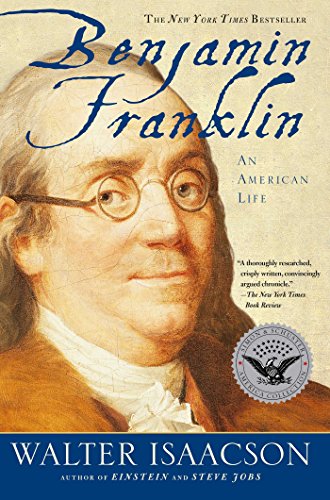
Benjamin Franklin: An American Life
Walter Isaacson
4.7
In this authoritative and engrossing full-scale biography, Walter Isaacson, bestselling author of Einstein and Steve Jobs, shows how the most fascinating of America's founders helped define our national character.
Benjamin Franklin is the founding father who winks at us, the one who seems made of flesh rather than marble. In a sweeping narrative that follows Franklin’s life from Boston to Philadelphia to London and Paris and back, Walter Isaacson chronicles the adventures of the runaway apprentice who became, over the course of his eighty-four-year life, America’s best writer, inventor, media baron, scientist, diplomat, and business strategist, as well as one of its most practical and ingenious political leaders. He explores the wit behind Poor Richard’s Almanac and the wisdom behind the Declaration of Independence, the new nation’s alliance with France, the treaty that ended the Revolution, and the compromises that created a near-perfect Constitution.
In this colorful and intimate narrative, Isaacson provides the full sweep of Franklin’s amazing life, showing how he helped to forge the American national identity and why he has a particular resonance in the twenty-first century.
I didn't read actually very many general business books, but I like biographies and autobiographies, I think those are pretty helpful. Actually, a lot of them aren't really business. … Isaacson's biography on Franklin is really good. Cause he was an entrepreneur and he sort of started from nothing, actually he was just like a run away kid, basically, and created his printing business and sort of his way of doing that, and then over time all of the science and politics. I'd say certain he's one of the few people I most admire. Franklin's pretty awesome. [source]
Brandon Stanton
The biography of Benjamin Franklin I read. [source]
Ed Zschau
Ed Zschau recommended this book on the podcast "The Tim Ferriss Show". [source]
Cover unavailable
6
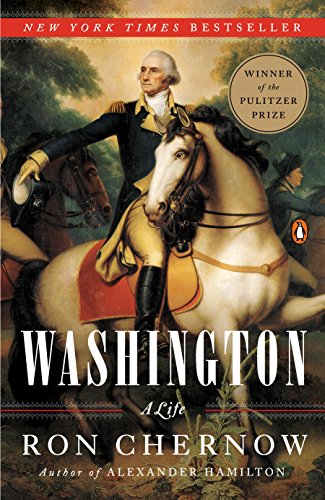
Washington: A Life
Ron Chernow
4.6
The celebrated Ron Chernow provides a richly nuanced portrait of the father of America. With a breadth and depth matched by no other one-volume life, he carries the reader through Washington's troubled boyhood, his precocious feats in the French and Indian Wars, his creation of Mount Vernon, his heroic exploits with the Continental Army, his presiding over the Constitutional Convention and his magnificent performance as America's first president.
Despite the reverence his name inspires Washington remains a waxwork to many readers, worthy but dull, a laconic man of remarkable self-control. But in this groundbreaking work Chernow revises forever the uninspiring stereotype. He portrays Washington as a strapping, celebrated horseman, elegant dancer and tireless hunter, who guarded his emotional life with intriguing ferocity. Not only did Washington gather around himself the foremost figures of the age, including James Madison, Alexander Hamilton, John Adams, and Thomas Jefferson, he orchestrated their actions to help realise his vision for the new federal government, define the separation of powers, and establish the office of the presidency.
Ron Chernow takes us on a page-turning journey through all the formative events of America's founding. This is a magisterial work from one of America's foremost writers and historians.
In Washington: A Life biographer Ron Chernow provides a richly nuanced portrait of the father of our nation. With a breadth & depth matched by no other one-volume life, this crisply paced narrative carries readers thru his troubled boyhood, his precocious feats in the French & Indian War, his creation of Mt Vernon, his heroic exploits with the Continental Army, his presiding over the Constitutional Convention & his performance as the 1st president. Despite the reverence his name inspires, Washington remains a lifeless waxwork for many, worthy but dull. A laconic man of granite self-control, he often arouses more respect than affection. This work, based on massive research, dashes the stereotype of a stolid, unemotional man. A strapping 6', Washington was a celebrated horseman, elegant dancer & tireless hunter, with a fiercely guarded emotional life. Chernow brings to vivid life a dashing, passionate man of fiery opinions & many moods. Probing his private life, he explores his fraught relationship with his crusty mother, his youthful infatuation with the married Sally Fairfax & his often conflicted feelings toward his adopted children & grandchildren. He also provides a portrait of his marriage to Martha & his complex behavior as a slave master. At the same time this is an astute portrait of a canny politician who knew how to inspire people. Not only did Washington gather around himself the foremost figures of the age, including Madison, Hamilton, Adams & Jefferson, but he also orchestrated their actions to shape the new federal government, define the separation of powers & establish the office of the presidency. This biography takes us on a page-turning journey thru the formative events of America's founding. With a dramatic sweep worthy of its subject, this is a magisterial work from an elegant storyteller.
The president also released a list of his summer favorites back in 2015: All That Is, James Salter The Sixth Extinction, Elizabeth Kolbert The Lowland, Jhumpa Lahiri Between the World and Me, Ta-Nehisi Coates Washington: A Life, Ron Chernow All the Light We Cannot See, Anthony Doerr [source]
In terms of big biographies, Ron Chernow’s biography of Washington, Eric Romm’s biography of Seneca Dying Every Day (LOVED THIS) and Edmund Morris’ final biography of Theodore Roosevelt, Col. Roosevelt were all worth every page. [source]
Cover unavailable
7
Bunker Hill: A City, A Siege, A Revolution
Nathaniel Philbrick
4.6
Nathaniel Philbrick, the bestselling author of In the Heart of the Sea--soon to be a major motion picture--and author of the forthcoming Valiant Ambition (May 2016), brings his prodigious talents to the story of the Boston battle that ignited the American Revolution.
Boston in 1775 is an island city occupied by British troops after a series of incendiary incidents by patriots who range from sober citizens to thuggish vigilantes. After the Boston Tea Party, British and American soldiers and Massachusetts residents have warily maneuvered around each other until April 19, when violence finally erupts at Lexington and Concord. In June, however, with the city cut off from supplies by a British blockade and Patriot militia poised in siege, skirmishes give way to outright war in the Battle of Bunker Hill. It would be the bloodiest battle of the Revolution to come, and the point of no return for the rebellious colonists.
Philbrick brings a fresh perspective to every aspect of the story. He finds new characters, and new facets to familiar ones. The real work of choreographing rebellion falls to a thirty-three year old physician named Joseph Warren who emerges as the on-the-ground leader of the Patriot cause and is fated to die at Bunker Hill. Others in the cast include Paul Revere, Warren’s fiancé the poet Mercy Scollay, a newly recruited George Washington, the reluctant British combatant General Thomas Gage and his more bellicose successor William Howe, who leads the three charges at Bunker Hill and presides over the claustrophobic cauldron of a city under siege as both sides play a nervy game of brinkmanship for control.
With passion and insight, Philbrick reconstructs the revolutionary landscape—geographic and ideological—in a mesmerizing narrative of the robust, messy, blisteringly real origins of America.
…
Cover unavailable
8
The British Are Coming: The War for America, Lexington to Princeton, 1775-1777
Rick Atkinson
4.5
In the initial volume of the Revolution Trilogy Rick Atkinson recounts the first twenty-one months of America’s violent war for independence. From the battles at Lexington and Concord in spring 1775 to those at Trenton and Princeton in winter 1777, American militiamen and then the ragged Continental Army take on the world’s most formidable fighting force. It is a saga alive with astonishing characters: Henry Knox, the former bookseller with an uncanny understanding of artillery; Nathanael Greene, the bumpkin who becomes a brilliant battle captain; Benjamin Franklin, who proves to be the wiliest of diplomats; George Washington, the commander in chief who learns the difficult art of leadership when the war seems all but lost. The story is also told from the British perspective, making the mortal conflict between the redcoats and the rebels all the more compelling.
…
Recommended by Mount Vernon.
Mount Vernon
@DEdHoggatt Great response, and congratulations! You've been selected to win Rick Atkinson's new book, 'The British Are Coming!' Please DM us to claim your prize, and thank you for participating in our contest! [source]
Cover unavailable
9
George Washington's Secret Six: The Spy Ring That Saved the American Revolution
Brian Kilmeade and Don Yaeger
4.5
When George Washington beat a hasty retreat from New York City in August 1776, many thought the American Revolution might soon be over. Instead, Washington rallied--thanks in large part to a little-known, top-secret group called the Culper Spy Ring. He realized that he couldn't defeat the British with military might, so he recruited a sophisticated and deeply secretive intelligence network to infiltrate New York.
Drawing on extensive research, Brian Kilmeade and Don Yaeger have offered fascinating portraits of these spies: a reserved Quaker merchant, a tavern keeper, a brash young longshoreman, a curmudgeonly Long Island bachelor, a coffeehouse owner, and a mysterious woman. Long unrecognized, the secret six are finally receiving their due among the pantheon of American heroes.
…
Cover unavailable
10
Valiant Ambition: George Washington, Benedict Arnold, and the Fate of the American Revolution
Nathaniel Philbrick
4.5
From the New York Times bestselling author of In The Heart of the Sea, comes a surprising account of the middle years of the American Revolution, and the tragic relationship between George Washington and Benedict Arnold.
In September 1776, the vulnerable Continental Army under an unsure George Washington (who had never commanded a large force in battle) evacuates New York after a devastating defeat by the British Army. Three weeks later, near the Canadian border, one of his favorite generals, Benedict Arnold, miraculously succeeds in postponing the British naval advance down Lake Champlain that might have ended the war. Four years later, as the book ends, Washington has vanquished his demons and Arnold has fled to the enemy after a foiled attempt to surrender the American fortress at West Point to the British. After four years of war, America is forced to realize that the real threat to its liberties might not come from without but from within.
Valiant Ambition is a complex, controversial, and dramatic portrait of a people in crisis and the war that gave birth to a nation. The focus is on loyalty and personal integrity, evoking a Shakespearean tragedy that unfolds in the key relationship of Washington and Arnold, who is an impulsive but sympathetic hero whose misfortunes at the hands of self-serving politicians fatally destroy his faith in the legitimacy of the rebellion. As a country wary of tyrants suddenly must figure out how it should be led, Washington’s unmatched ability to rise above the petty politics of his time enables him to win the war that really matters.
…
Cover unavailable
11
Washington's Crossing
David Hackett Fischer
4.5
Six months after the Declaration of Independence, the American Revolution was all but lost. A powerful British force had routed the Americans at New York, occupied three colonies, and advanced within sight of Philadelphia.
Yet, as David Hackett Fischer recounts in this riveting history, George Washington--and many other Americans--refused to let the Revolution die. On Christmas night, as a howling nor'easter struck the Delaware Valley, he led his men across the river and attacked the exhausted Hessian garrison at Trenton, killing or capturing nearly a thousand men. A second battle of Trenton followed within days. The Americans held off a counterattack by Lord Cornwallis's best troops, then were almost trapped by the British force. Under cover of night, Washington's men stole behind the enemy and struck them again, defeating a brigade at Princeton. The British were badly shaken. In twelve weeks of winter fighting, their army suffered severe damage, their hold on New Jersey was broken, and their strategy was ruined.
Fischer's richly textured narrative reveals the crucial role of contingency in these events. We see how the campaign unfolded in a sequence of difficult choices by many actors, from generals to civilians, on both sides. While British and German forces remained rigid and hierarchical, Americans evolved an open and flexible system that was fundamental to their success. The startling success of Washington and his compatriots not only saved the faltering American Revolution, but helped to give it new meaning.
…
Cover unavailable
12
The Glorious Cause: The American Revolution, 1763-1789
Robert Middlekauff
4.5
The first book to appear in the illustrious Oxford History of the United States, this critically acclaimed volume--a finalist for the Pulitzer Prize--offers an unsurpassed history of the Revolutionary War and the birth of the American republic.
Beginning with the French and Indian War and continuing to the election of George Washington as first president, Robert Middlekauff offers a panoramic history of the conflict between England and America, highlighting the drama and anguish of the colonial struggle for independence. Combining the political and the personal, he provides a compelling account of the key events that precipitated the war, from the Stamp Act to the Tea Act, tracing the gradual gathering of American resistance that culminated in the Boston Tea Party and "the shot heard 'round the world." The heart of the book features a vivid description of the eight-year-long war, with gripping accounts of battles and campaigns, ranging from Bunker Hill and Washington's crossing of the Delaware to the brilliant victory at Hannah's Cowpens and the final triumph at Yorktown, paying particular attention to what made men fight in these bloody encounters. The book concludes with an insightful look at the making of the Constitution in the Philadelphia Convention of 1787 and the struggle over ratification. Through it all, Middlekauff gives the reader a vivid sense of how the colonists saw these events and the importance they gave to them. Common soldiers and great generals, Sons of Liberty and African slaves, town committee-men and representatives in congress--all receive their due. And there are particularly insightful portraits of such figures as Sam and John Adams, James Otis, Thomas Jefferson, George Washington, and many others.
This new edition has been revised and expanded, with fresh coverage of topics such as mob reactions to British measures before the War, military medicine, women's role in the Revolution, American Indians, the different kinds of war fought by the Americans and the British, and the ratification of the Constitution. The book also has a new epilogue and an updated bibliography.
The cause for which the colonists fought, liberty and independence, was glorious indeed. Here is an equally glorious narrative of an event that changed the world, capturing the profound and passionate struggle to found a free nation.
The Oxford History of the United States The Oxford History of the United States is the most respected multi-volume history of our nation. The series includes three Pulitzer Prize winners, a New York Times bestseller, and winners of the Bancroft and Parkman Prizes. The Atlantic Monthly has praised it as "the most distinguished series in American historical scholarship," a series that "synthesizes a generation's worth of historical inquiry and knowledge into one literally state-of-the-art book." Conceived under the general editorship of C. Vann Woodward and Richard Hofstadter, and now under the editorship of David M. Kennedy, this renowned series blends social, political, economic, cultural, diplomatic, and military history into coherent and vividly written narrative.
Hailed by Thomas Jefferson as “the best commentary on the principles of government which was ever written", The Federalist Papers is a collection of eighty-five essays published by Founding Fathers Alexander Hamilton, James Madison, and John Jay from 1787 to 1788, as a means to persuade the public to ratify the Constitution of the United States.
With nearly two-thirds of the essays written by Hamilton, this enduring classic is perfect for modern audiences passionate about his work or seeking a deeper understanding of one of the most important documents in US history.
AmazonClassics brings you timeless works from iconic authors. Ideal for anyone who wants to read a great work for the first time or revisit an old favorite, these new editions open the door to the stories and ideas that have shaped our world.
According to the president’s Facebook page and a 2008 interview with the New York Times, these titles are among his most influential forever favorites: Moby Dick, Herman Melville Self-Reliance, Ralph Waldo Emerson Song Of Solomon, Toni Morrison Parting The Waters, Taylor Branch Gilead, Marylinne Robinson Best and the Brightest, David Halberstam The Federalist, Alexander Hamilton Souls of Black Folk, W.E.B. Du Bois The Power and the Glory, Graham Greene The Quiet American, Graham Greene Cancer Ward, Aleksandr Solzhenitsyn Gandhi’s autobiography Working, Studs Terkel Wealth of Nations, Adam Smith Theory of Moral Sentiments, Adam Smith All the King’s Men, Robert Penn Warren [source]
I think this is the greatest explanation, in one place, of the American constitution, of the essential underpinnings and structures that make American democracy possible. This is how to view the constitution in its proper perspective, as a document of limited government, and enormous personal freedom – as an attempt to understand human nature and draw on both its strengths and its weaknesses to achieve a community and nation. [source]
Cover unavailable
14
Chains (Seeds of America, #1)
Laurie Halse Anderson
4.4
As the Revolutionary War begins, thirteen-year-old Isabel wages her own fight...for freedom. Promised freedom upon the death of their owner, she and her sister, Ruth, in a cruel twist of fate become the property of a malicious New York City couple, the Locktons, who have no sympathy for the American Revolution and even less for Ruth and Isabel. When Isabel meets Curzon, a slave with ties to the Patriots, he encourages her to spy on her owners, who know details of British plans for invasion. She is reluctant at first, but when the unthinkable happens to Ruth, Isabel realizes her loyalty is available to the bidder who can provide her with freedom.
From acclaimed author Laurie Halse Anderson comes this compelling, impeccably researched novel that shows the lengths we can go to cast off our chains, both physical and spiritual.
Throughout history, some books have changed the world. They have transformed the way we see ourselves—and each other. They have inspired debate, dissent, war and revolution. They have enlightened, outraged, provoked and comforted. They have enriched lives—and destroyed them.
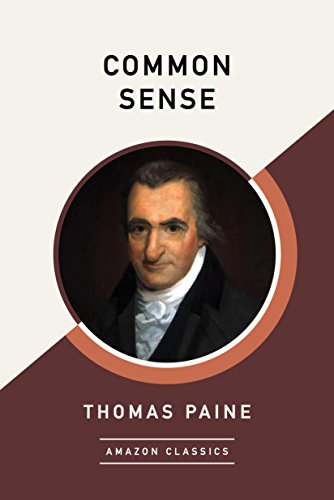
Published anonymously in 1776, six months before the Declaration of Independence, Thomas Paine’s Common Sense was a radical and impassioned call for America to free itself from British rule and set up an independent republican government. Savagely attacking hereditary kingship and aristocratic institutions, Paine urged a new beginning for his adopted country in which personal freedom and social equality would be upheld and economic and cultural progress encouraged.
His pamphlet was the first to speak directly to a mass audience—it went through fifty-six editions within a year of publication—and its assertive and often caustic style both embodied the democratic spirit he advocated, and converted thousands of citizens to the cause of American independence.
…
Cover unavailable
16
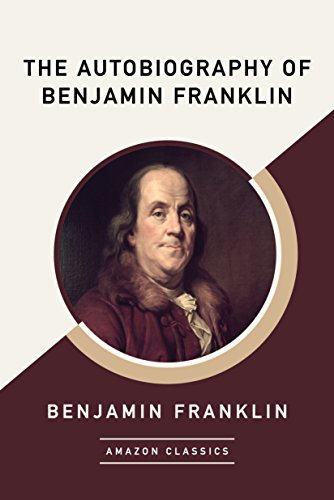
The Autobiography of Benjamin Franklin (Classic Biography)
I copied Franklin in my own book. He believed that we all could determinately sit down and come up with practical steps to make changes in our life. He identified 13 virtues that he wanted to imbue in himself and made a weekly chart to help him track his daily progress. I copied my resolutions chart from him. [source]
Cory Booker
The author didn’t mean to write his autobiography. He wanted to write a note to his family about what he’d learned in his experiments. [source]
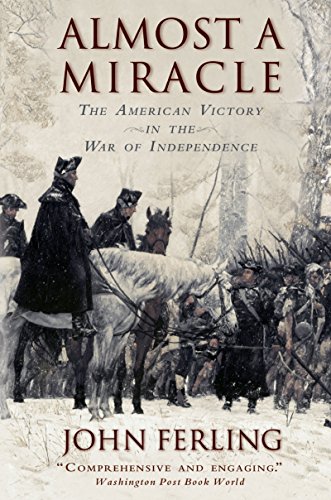
Almost a Miracle: The American Victory in the War of Independence
John Ferling
4.4
In this gripping chronicle of America's struggle for independence, award-winning historian John Ferling transports readers to the grim realities of that war, capturing an eight-year conflict filled with heroism, suffering, cowardice, betrayal, and fierce dedication. As Ferling demonstrates, it was a war that America came much closer to losing than is now usually remembered. General George Washington put it best when he said that the American victory was "little short of a standing miracle."
Almost a Miracle offers an illuminating portrait of America's triumph, offering vivid descriptions of all the major engagements, from the first shots fired on Lexington Green to the surrender of General Cornwallis at Yorktown, revealing how these battles often hinged on intangibles such as leadership under fire, heroism, good fortune, blunders, tenacity, and surprise. Ferling paints sharp-eyed portraits of the key figures in the war, including General Washington and other American officers and civilian leaders. Some do not always measure up to their iconic reputations, including Washington himself. The book also examines the many faceless men who soldiered, often for years on end, braving untold dangers and enduring abounding miseries. The author explains why they served and sacrificed, and sees them as the forgotten heroes who won American independence.
…
Cover unavailable
18
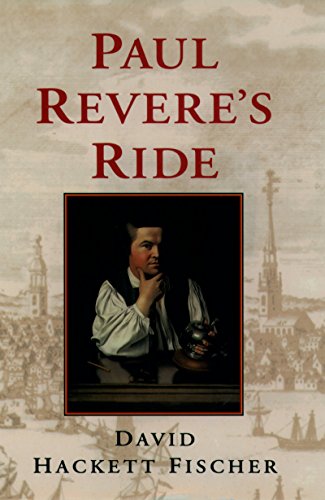
Paul Revere's Ride
David Hackett Fischer
4.4
Paul Revere's midnight ride is a legendary event in American history - yet it has been largely ignored by scholars, and left to patriotic writers and debunkers. Now one of the foremost American historians offers the first serious study of this event - what led to it, what really happened, what followed - uncovering a truth more remarkable than the many myths it has inspired. In Paul Revere's Ride, David Hackett Fischer has created an exciting narrative that offers new insight into the coming of the American Revolution. From research in British and American archives, the author unravels a plot that no novelist would dare invent - a true story of high drama and deep suspense, of old-fashioned heroes and unvarnished villains, of a beautiful American spy who betrayed her aristocratic British husband, of violent mobs and marching armies, of brave men dying on their doorsteps, of high courage, desperate fear, and the destiny of nations. The narrative is constructed around two thematic lines. One story centers on the American patriot Paul Revere; the other, on British General Thomas Gage. Both were men of high principle who played larger roles than recent historiography has recognized. Thomas Gage was not the Tory tyrant of patriot legend, but an English Whig who believed in liberty and the rule of law. In 1774 and 1775, General Gage's advice shaped the fatal choices of British leaders, and his actions guided the course of American events. Paul Revere was more than a "simple artizan, " as his most recent biographer described him fifty years ago. The author presents new evidence that revolutionary Boston was a world of many circles - more complex than we have known. Paul Revere and his friend Joseph Warren ranged more widely through those circles than any other leaders. They became the linchpins of the Whig movement. On April 18th, 1775, Paul Revere played that role in a manner that has never been told before. He and William Dawes were not the only midnight riders to ca
…
Cover unavailable
19
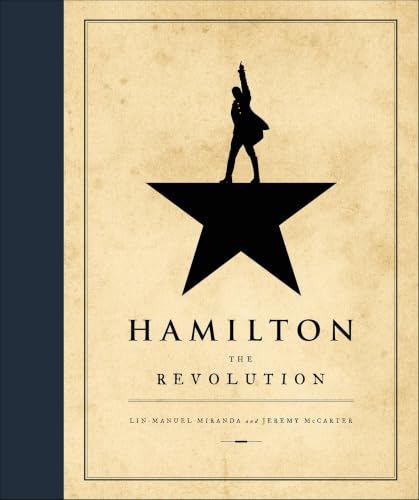
Hamilton: The Revolution
Lin-Manuel Miranda, Jeremy McCarter
4.4
Lin-Manuel Miranda's groundbreaking musical Hamilton is as revolutionary as its subject, the poor kid from the Caribbean who fought the British, defended the Constitution, and helped to found the United States. Fusing hip-hop, pop, R&B, and the best traditions of theater, this once-in-a-generation show broadens the sound of Broadway, reveals the storytelling power of rap, and claims our country's origins for a diverse new generation.
Hamilton: The Revolution gives readers an unprecedented view of both revolutions, from the only two writers able to provide it. Miranda and Jeremy McCarter, a cultural critic and theater artist who was involved in the project from its earliest stages--"since before this was even a show," according to Miranda--trace its development from an improbable performance at the White House to its landmark opening night on Broadway six years later. In addition, Miranda has written more than 200 funny, revealing footnotes for his award-winning libretto, the full text of which is published here.
Their account features photos by the renowned Frank Ockenfels and veteran Broadway photographer Joan Marcus; exclusive looks at notebooks and emails; interviews with Questlove, Stephen Sondheim, leading political commentators, and more than 40 people involved with the production; and multiple appearances by President Obama himself. The book does more than tell the surprising story of how a Broadway musical became a national phenomenon: It demonstrates that America has always been renewed by the brash upstarts and brilliant outsiders, the men and women who don't throw away their shot.
…
Recommended by André Rupp.
André Rupp
Finally some light reading, right? I chose this book because the work that we do specifically on the innovative edges of educational assessment is, as I said earlier, a mixture of scientific rigour and artful practice. Essentially, it is all about designing under constraints. The design decisions have to permeate everything, from the way you design the activities to the way you design your scoring to the way you design the reporting to the way you design how in teams you work together to make all of this happen. I am, personally, a big supporter and fan of performing arts: musicals, plays, concerts, comedy. I have seen over 900 shows in my life. [source]
Cover unavailable
20
Patriots: The Men Who Started The American Revolution
A.J. Langguth
4.4
With meticulous research and page-turning suspense, Patriots brings to life the American Revolution—the battles, the treacheries, and the dynamic personalities of the men who forged our freedom.
George Washington, John Adams, Samuel Adams, Ben Franklin, Thomas Jefferson, Patrick Henry—these heroes were men of intellect, passion, and ambition. From the secret meetings of the Sons of Liberty to the final victory at Yorktown and the new Congress, Patriots vividly re-creates one of history's great eras.
Another great history book. … Tells the history of the American Revolution. [source]
Cover unavailable
21
The Radicalism of the American Revolution
Gordon S. Wood
4.4
In a grand and immemsely readable synthesis of historical, political, cultural, and economic analysis, a prize-winning historian describes the events that made the American Revolution. Gordon S. Wood depicts a revolution that was about much more than a break from England, rather it transformed an almost feudal society into a democratic one, whose emerging realities sometimes baffled and disappointed its founding fathers.
…
Cover unavailable
22
An Echo in the Bone (Outlander, #7)
Diana Gabaldon
4.3
The Seventh Outlander novel from #1 National Bestselling author Diana Gabaldon.
Jamie Fraser, erstwhile Jacobite and reluctant rebel, knows three things about the American rebellion: the Americans will win, unlikely as that seems in 1778; being on the winning side is no guarantee of survival; and he’d rather die than face his illegitimate son — a young lieutenant in the British Army — across the barrel of a gun. Fraser’s time-travelling wife, Claire, also knows a couple of things: that the Americans will win, but that the ultimate price of victory is a mystery. What she does believe is that the price won’t include Jamie’s life or happiness — not if she has anything to say.
Claire’s grown daughter Brianna, and her husband, Roger, watch the unfolding of Brianna’s parents’ history — a past that may be sneaking up behind their own family.
…
Cover unavailable
23
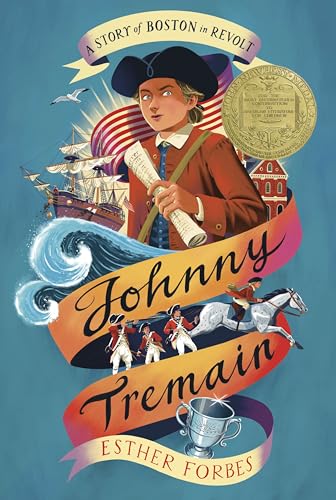
Johnny Tremain
Esther Hoskins Forbes
4.3
Johnny Tremain, a young apprentice silversmith, is caught up in the danger and excitement of 1775 Boston, just before the Revolutionary War. But even more gripping than living through the drama of Revolutionary Boston is the important discovery Johnny makes in his own life.
Cover unavailable
24
Rise to Rebellion
Jeff Shaara
4.3
Jeff Shaara dazzled readers with his bestselling novels Godsand Generals, The Last Full Measure, and Gone for Soldiers. Now the acclaimed author who illuminated the Civil War and the Mexican-American War brilliantly brings to life the American Revolution, creating a superb saga of the men who helped to forge the destiny of a nation.
In 1770, the fuse of revolution is lit by a fateful command--"Fire!"--as England's peacekeeping mission ignites into the Boston Massacre. The senseless killing of civilians leads to a tumultuous trial in which lawyer John Adams must defend the very enemy who has assaulted and abused the laws he holds sacred.
The taut courtroom drama soon broadens into a stunning epic of war as King George III leads a reckless and corrupt government in London toward the escalating abuse of his colonies. Outraged by the increasing loss of their liberties, an extraordinary gathering of America's most inspiring characters confronts the British presence with the ideals that will change history.
John Adams, the idealistic attorney devoted to the law, who rises to greatness by the power of his words . . . Ben Franklin, one of the most celebrated men of his time, the elderly and audacious inventor and philosopher who endures firsthand the hostile prejudice of the British government . . . Thomas Gage, the British general given the impossible task of crushing a colonial rebellion without starting an all-out war . . . George Washington, the dashing Virginian whose battle experience in the French and Indian War brings him the recognition that elevates him to command of a colonial army . . . and many other immortal names from the Founding Family of the colonial struggle--Abigail Adams, Thomas Jefferson, Joseph Warren, Samuel Adams, Richard Henry Lee-- captured as never before in their full flesh-and-blood humanity.
More than a powerful portrait of the people and purpose of the revolution, Rise to Rebellion is a vivid account of history's most pivotal events. The Boston Tea Party, the battles of Concord and Bunker Hill--all are recreated with the kind of breathtaking detail only a master like Jeff Shaara can muster. His most impressive achievement, Rise to Rebellion reveals with new immediacy how philosophers became fighters, ideas their ammunition, and how a scattered group of colonies became the United States of America.
Length: 6 hrs and 1 min
…
Cover unavailable
25
A Breath of Snow and Ashes (Outlander, #6)
Diana Gabaldon
4.3
A Breath of Snow and Ashes continues the extraordinary story of 18th-century Scotsman Jamie Fraser and his 20th-century wife, Claire.
The year is 1772, and on the eve of the American Revolution, the long fuse of rebellion has already been lit. Men lie dead in the streets of Boston, and in the backwoods of North Carolina, isolated cabins burn in the forest.
With chaos brewing, the governor calls upon Jamie Fraser to unite the backcountry and safeguard the colony for King and Crown. But from his wife Jamie knows that three years hence the shot heard round the world will be fired, and the result will be independence — with those loyal to the King either dead or in exile. And there is also the matter of a tiny clipping from The Wilmington Gazette, dated 1776, which reports Jamie’s death, along with his kin. For once, he hopes, his time-traveling family may be wrong about the future.
…
Cover unavailable
26
Revolutionary Summer: The Birth of American Independence
Joseph J. Elli
4.3
A distinctive portrait of the crescendo moment in American history from the Pulitzer-winning American historian, Joseph Ellis.
The summer months of 1776 witnessed the most consequential events in the story of our country’s founding. While the thirteen colonies came together and agreed to secede from the British Empire, the British were dispatching the largest armada ever to cross the Atlantic to crush the rebellion in the cradle. The Continental Congress and the Continental Army were forced to make decisions on the run, improvising as history congealed around them. In a brilliant and seamless narrative, Ellis meticulously examines the most influential figures in this propitious moment, including George Washington, John Adams, Thomas Jefferson, Benjamin Franklin, and Britain’s Admiral Lord Richard and General William Howe. He weaves together the political and military experiences as two sides of a single story, and shows how events on one front influenced outcomes on the other. Revolutionary Summer tells an old story in a new way, with a freshness at once colorful and compelling.
…
Cover unavailable
27
In the Hurricane's Eye: The Genius of George Washington and the Victory at Yorktown
Nathaniel Philbrick
4.3
NEW YORK TIMES BESTSELLER
"Nathaniel Philbrick is a masterly storyteller. Here he seeks to elevate the naval battles between the French and British to a central place in the history of the American Revolution. He succeeds, marvelously."--The New York Times Book Review
The thrilling story of the year that won the Revolutionary War from the New York Times bestselling author of In the Heart of the Seaand Valiant Ambition.
In the fall of 1780, after five frustrating years of war, George Washington had come to realize that the only way to defeat the British Empire was with the help of the French navy. But as he had learned after two years of trying, coordinating his army's movements with those of a fleet of warships based thousands of miles away was next to impossible. And then, on September 5, 1781, the impossible happened. Recognized today as one of the most important naval engagements in the history of the world, the Battle of the Chesapeake--fought without a single American ship--made the subsequent victory of the Americans at Yorktown a virtual inevitability.
In a narrative that moves from Washington's headquarters on the Hudson River, to the wooded hillside in North Carolina where Nathanael Greene fought Lord Cornwallis to a vicious draw, to Lafayette's brilliant series of maneuvers across Tidewater Virginia, Philbrick details the epic and suspenseful year through to its triumphant conclusion. A riveting and wide-ranging story, full of dramatic, unexpected turns, In the Hurricane's Eye reveals that the fate of the American Revolution depended, in the end, on Washington and the sea.
…
Cover unavailable
28
His Excellency: George Washington
Joseph J. Ellis
4.3
To this landmark biography of our first president, Joseph J. Ellis brings the exacting scholarship, shrewd analysis, and lyric prose that have made him one of the premier historians of the Revolutionary era. Training his lens on a figure who sometimes seems as remote as his effigy on Mount Rushmore, Ellis assesses George Washington as a military and political leader and a man whose “statue-like solidity” concealed volcanic energies and emotions.
Here is the impetuous young officer whose miraculous survival in combat half-convinced him that he could not be killed. Here is the free-spending landowner whose debts to English merchants instilled him with a prickly resentment of imperial power. We see the general who lost more battles than he won and the reluctant president who tried to float above the partisan feuding of his cabinet. His Excellency is a magnificent work, indispensable to an understanding not only of its subject but also of the nation he brought into being.
…
Cover unavailable
29
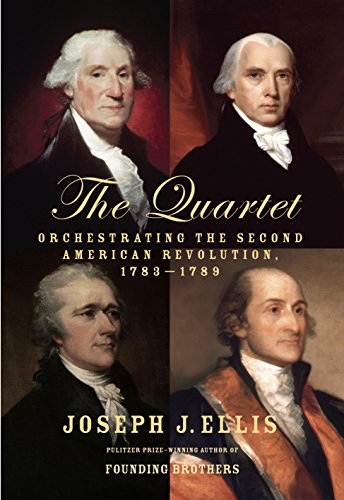
The Quartet: Orchestrating the Second American Revolution, 1783-1789
Joseph J. Ellis
4.3
In The Quartet, Pulitzer Prize–winning historian Joseph Ellis tells the unexpected story of why the thirteen colonies, having just fought off the imposition of a distant centralized governing power, would decide to subordinate themselves anew. Ellis gives us a dramatic portrait of one of the most crucial and misconstrued periods in American history: the years between the end of the Revolution and the formation of the federal government. George Washington, Alexander Hamilton, John Jay, and James Madison, with the help of Robert Morris and Gouverneur Morris, shaped the contours of American history by diagnosing the systemic dysfunctions created by the Articles of Confederation, manipulating the political process to force the calling of the Constitutional Convention, conspiring to set the agenda in Philadelphia, orchestrating the debate in the state ratifying conventions, and, finally, drafting the Bill of Rights to assure state compliance with the constitutional settlement.
The Quartet unmasks a myth, and in its place presents an even more compelling truth—one that lies at the heart of understanding the creation of the United States of America.
…
Cover unavailable
30
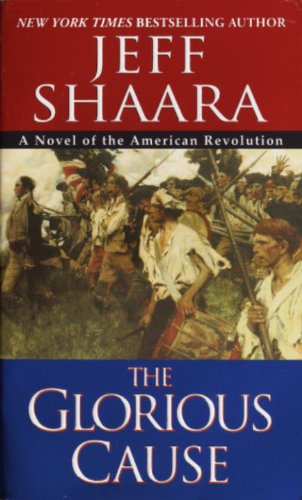
The Glorious Cause
Jeff Shaara
4.3
In Rise to Rebellion, bestselling author Jeff Shaara captured the origins of the American Revolution as brilliantly as he depicted the Civil War in Gods and Generals and The Last Full Measure. Now he continues the amazing saga of how thirteen colonies became a nation, taking the conflict from kingdom and courtroom to the bold and bloody battlefields of war.
It was never a war in which the outcome was obvious. Despite their spirit and stamina, the colonists were outmanned and outfought by the brazen British army. General George Washington found his troops trounced in the battles of Brooklyn and Manhattan and retreated toward Pennsylvania. With the future of the colonies at its lowest ebb, Washington made his most fateful decision: to cross the Delaware River and attack the enemy. The stunning victory at Trenton began a saga of victory and defeat that concluded with the British surrender at Yorktown, a moment that changed the history of the world.
The despair and triumph of America’s first great army is conveyed in scenes as powerful as any Shaara has written, a story told from the points of view of some of the most memorable characters in American history. There is George Washington, the charismatic leader who held his army together to achieve an unlikely victory; Charles Cornwallis, the no-nonsense British general, more than a match for his colonial counterpart; Nathaniel Greene, who rose from obscurity to become the finest battlefield commander in Washington’s army; The Marquis de Lafayette, the young Frenchman who brought a soldier’s passion to America; and Benjamin Franklin, a brilliant man of science and philosophy who became the finest statesman of his day.
From Nathan Hale to Benedict Arnold, William Howe to “Light Horse” Harry Lee, from Trenton and Valley Forge, Brandywine and Yorktown, the American Revolution’s most immortal characters and poignant moments are brought to life in remarkable Shaara style. Yet, The Glorious Cause is more than just a story of the legendary six-year struggle. It is a tribute to an amazing people who turned ideas into action and fought to declare themselves free. Above all, it is a riveting novel that both expands and surpasses its beloved author’s best work.
From the Hardcover edition.
…
Cover unavailable
31
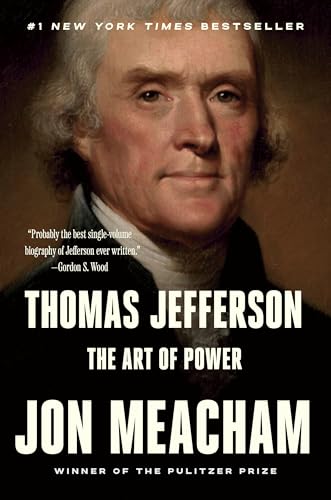
Thomas Jefferson: The Art of Power
Jon Meacham
4.3
In this magnificent biography, the Pulitzer Prize–winning author of American Lion and Franklin and Winston brings vividly to life an extraordinary man and his remarkable times. Thomas Jefferson: The Art of Power gives us Jefferson the politician and president, a great and complex human being forever engaged in the wars of his era. Philosophers think; politicians maneuver. Jefferson’s genius was that he was both and could do both, often simultaneously. Such is the art of power.
Thomas Jefferson hated confrontation, and yet his understanding of power and of human nature enabled him to move men and to marshal ideas, to learn from his mistakes, and to prevail. Passionate about many things—women, his family, books, science, architecture, gardens, friends, Monticello, and Paris—Jefferson loved America most, and he strove over and over again, despite fierce opposition, to realize his vision: the creation, survival, and success of popular government in America. Jon Meacham lets us see Jefferson’s world as Jefferson himself saw it, and to appreciate how Jefferson found the means to endure and win in the face of rife partisan division, economic uncertainty, and external threat. Drawing on archives in the United States, England, and France, as well as unpublished Jefferson presidential papers, Meacham presents Jefferson as the most successful political leader of the early republic, and perhaps in all of American history.
The father of the ideal of individual liberty, of the Louisiana Purchase, of the Lewis and Clark expedition, and of the settling of the West, Jefferson recognized that the genius of humanity—and the genius of the new nation—lay in the possibility of progress, of discovering the undiscovered and seeking the unknown. From the writing of the Declaration of Independence to elegant dinners in Paris and in the President’s House; from political maneuverings in the boardinghouses and legislative halls of Philadelphia and New York to the infant capital on the Potomac; from his complicated life at Monticello, his breathtaking house and plantation in Virginia, to the creation of the University of Virginia, Jefferson was central to the age. Here too is the personal Jefferson, a man of appetite, sensuality, and passion.
The Jefferson story resonates today not least because he led his nation through ferocious partisanship and cultural warfare amid economic change and external threats, and also because he embodies an eternal drama, the struggle of the leadership of a nation to achieve greatness in a difficult and confounding world.
My favorite non-business book is Thomas Jefferson: The Art of Power by Jon Meacham because I am a history nut, and I am fascinated by Thomas Jefferson. [source]
Cover unavailable
32
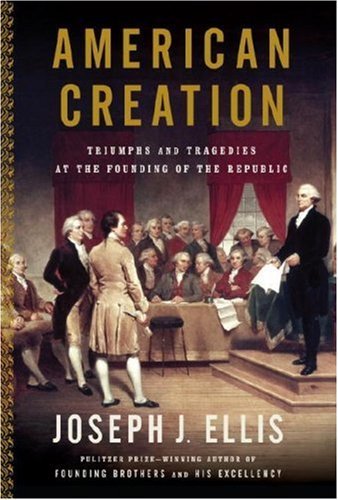
American Creation: Triumphs and Tragedies at the Founding of the Republic
Joseph J. Ellis
4.3
An ironic examination of the founding years of the United States of America. Historian Ellis guides readers thru the decisive issues of the nation's founding, and illuminates the emerging philosophies, shifting alliances, and personal and political foibles of now iconic leaders. He explains how the idea of a strong federal government, championed by Washington, was eventually embraced by the American people, the majority of whom had to be won over. He details the emergence of the two-party system--then a political novelty--which today stands as the founders' most enduring legacy. But Ellis is equally incisive about their failures, making clear how their inability to abolish slavery and to reach a just settlement with the Native Americans has played an equally important role in shaping our national character. Ellis strips the mythic veneer of the revolutionary generation to reveal men possessed of both brilliance and blindness.
…
Cover unavailable
33
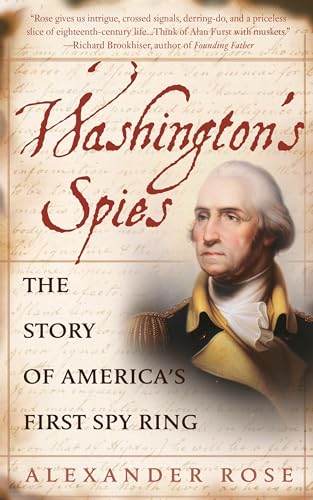
Washington's Spies: The Story of America's First Spy Ring
Alexander Rose
4.3
Turn: Washington’s Spies • Now a new original series on AMC
Based on remarkable new research, acclaimed historian Alexander Rose brings to life the true story of the spy ring that helped America win the Revolutionary War. For the first time, Rose takes us beyond the battlefront and deep into the shadowy underworld of double agents and triple crosses, covert operations and code breaking, and unmasks the courageous, flawed men who inhabited this wilderness of mirrors—including the spymaster at the heart of it all.
In the summer of 1778, with the war poised to turn in his favor, General George Washington desperately needed to know where the British would strike next. To that end, he unleashed his secret weapon: an unlikely ring of spies in New York charged with discovering the enemy’s battle plans and military strategy.
Washington’s small band included a young Quaker torn between political principle and family loyalty, a swashbuckling sailor addicted to the perils of espionage, a hard-drinking barkeep, a Yale-educated cavalryman and friend of the doomed Nathan Hale, and a peaceful, sickly farmer who begged Washington to let him retire but who always came through in the end. Personally guiding these imperfect everyday heroes was Washington himself. In an era when officers were gentlemen, and gentlemen didn’ t spy, he possessed an extraordinary talent for deception—and proved an adept spymaster.
The men he mentored were dubbed the Culper Ring. The British secret service tried to hunt them down, but they escaped by the closest of shaves thanks to their ciphers, dead drops, and invisible ink. Rose’s thrilling narrative tells the unknown story of the Revolution–the murderous intelligence war, gunrunning and kidnapping, defectors and executioners—that has never appeared in the history books. But Washington’s Spies is also a spirited, touching account of friendship and trust, fear and betrayal, amid the dark and silent world of the spy.
From the Hardcover edition.
…
Cover unavailable
34
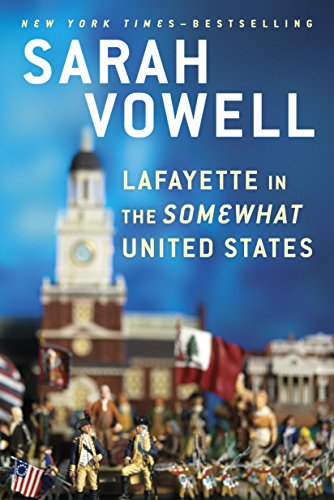
Lafayette in the Somewhat United States
Sarah Vowell
4.3
From the bestselling author of Assassination Vacation and Unfamiliar Fishes, a humorous and insightful account of the Revolutionary War hero Marquis de Lafayette--the one Frenchman we could all agree on--and an insightful portrait of a nation's idealism and its reality.
On August 16, 1824, an elderly French gentlemen sailed into New York Harbor and giddy Americans were there to welcome him. Or, rather, to welcome him back. It had been thirty years since the Revolutionary War hero the Marquis de Lafayette had last set foot in the United States, and he was so beloved that 80,000 people showed up to cheer for him. The entire population of New York at the time was 120,000.
Lafayette's arrival in 1824 coincided with one of the most contentious presidential elections in American history, Congress had just fought its first epic battle over slavery, and the threat of a Civil War loomed. But Lafayette, belonging to neither North nor South, to no political party or faction, was a walking, talking reminder of the sacrifices and bravery of the revolutionary generation and what they wanted this country to be. His return was not just a reunion with his beloved Americans, it was a reunion for Americans with their own astonishing singular past.
Lafayette in the Somewhat United States is a humorous and insightful portrait of the famed Frenchman, the impact he had on our young country, and his ongoing relationship with some of the instrumental Americans of the time, including George Washington, Alexander Hamilton, Thomas Jefferson, and many more.
…
Cover unavailable
35
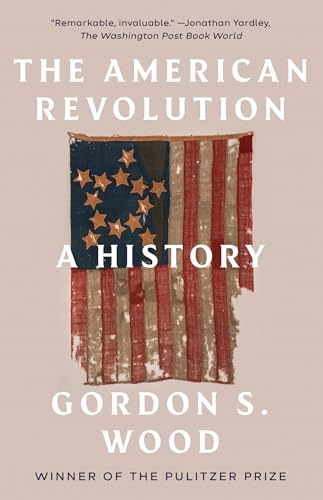
The American Revolution: A History
Gordon S. Wood
4.3
NEW YORK TIMES BESTSELLER
“An elegant synthesis done by the leading scholar in the field, which nicely integrates the work on the American Revolution over the last three decades but never loses contact with the older, classic questions that we have been arguing about for over two hundred years.”—Joseph J. Ellis, author of Founding Brothers
A magnificent account of the revolution in arms and consciousness that gave birth to the American republic.
When Abraham Lincoln sought to define the significance of the United States, he naturally looked back to the American Revolution. He knew that the Revolution not only had legally created the United States, but also had produced all of the great hopes and values of the American people. Our noblest ideals and aspirations-our commitments to freedom, constitutionalism, the well-being of ordinary people, and equality-came out of the Revolutionary era. Lincoln saw as well that the Revolution had convinced Americans that they were a special people with a special destiny to lead the world toward liberty. The Revolution, in short, gave birth to whatever sense of nationhood and national purpose Americans have had.
No doubt the story is a dramatic one: Thirteen insignificant colonies three thousand miles from the centers of Western civilization fought off British rule to become, in fewer than three decades, a huge, sprawling, rambunctious republic of nearly four million citizens. But the history of the American Revolution, like the history of the nation as a whole, ought not to be viewed simply as a story of right and wrong from which moral lessons are to be drawn. It is a complicated and at times ironic story that needs to be explained and understood, not blindly celebrated or condemned. How did this great revolution come about? What was its character? What were its consequences? These are the questions this short history seeks to answer. That it succeeds in such a profound and enthralling way is a tribute to Gordon Wood’s mastery of his subject, and of the historian’s craft.
From the Hardcover edition.
…
Cover unavailable
36
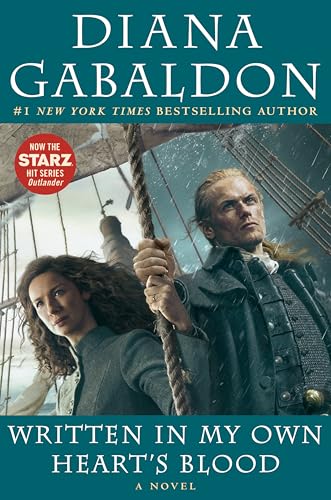
Written in My Own Heart's Blood (Outlander, #8)
Diana Gabaldon
4.3
It is June 1778, and the world seems to be turning upside-down. The British Army is withdrawing from Philadelphia, with George Washington in pursuit, and for the first time, it looks as if the rebels might actually win. But for Claire Fraser and her family, there are even more tumultuous revolutions that have to be accommodated.Her former husband, Jamie, has returned from the dead, demanding to know why in his absence she married his best friend, Lord John Grey. Lord John's son, the ninth Earl of Ellesmere, is no less shocked to discover that his real father is actually the newly resurrected Jamie Fraser, and Jamie's nephew Ian Murray discovers that his new-found cousin has an eye for the woman who has just agreed to marry him. And while Claire is terrified that one of her husbands may be about to murder the other, in the 20th century her descendants face even more desperate turns of events. Her daughter Brianna is trying to protect her son from a vicious criminal with murder on his mind, while her husband Roger has disappeared into the past . . .
…
Cover unavailable
37
American Sphinx: The Character of Thomas Jefferson
Joseph J. Ellis
4.2
Following his subject from the drafting of the Declaration of Independence to his retirement in Monticello, Joseph Ellis unravels the contradictions of the Jeffersonian character. A marvel of scholarship, a delight to read, and an essential gloss on the Jeffersonian legacy.
Cover unavailable
38
Saratoga: Turning Point of America's Revolutionary War
Richard Ketchum
4.2
In the summer of 1777 (twelve months after the Declaration of Independence) the British launched an invasion from Canada under General John Burgoyne. It was the campaign that was supposed to the rebellion, but it resulted in a series of battles that changed America's history and that of the world. Stirring narrative history, skilfully told through the perspective of those who fought in the campaign, Saratoga brings to life as never before the inspiring story of Americans who did their utmost in what seemed a lost cause, achieving what proved to be the crucial victory of the Revolution.
A New York Times Notable Book, 1997
…
Cover unavailable
39
The First American: The Life and Times of Benjamin Franklin
H. W. Brands
4.2
In the first comprehensive biography of Benjamin Franklin in over sixty years, acclaimed historian H. W. Brands brings vividly to life one of the most delightful, bawdy, brilliant, original, and important figures in American history.
A groundbreaking scientist, leading businessman, philosopher, bestselling author, inventor, diplomat, politician, and wit, Benjamin Franklin was perhaps the most beloved and celebrated American of his age, or indeed of any age. Now, in a beautifully written and meticulously researched account of Franklin's life and times, his clever repartee, generous spirit, and earthy wisdom are brought compellingly to the page.
His circle of friends and acquaintances extended around the globe, from Cotton Mather to Voltaire, from Edmund Burke to King George III, from Sir Isaac Newton to Immanuel Kant. Franklin was gifted with a restless curiosity, and his scientific experiments with electric currents and the weather made him the leading pioneer in the new field of electricity on both sides of the Atlantic; among his many inventions were the lightning rod, the Franklin stove, and the harmonica, a musical instrument that became the rage of Europe.
From his humble beginnings in Boston as a printer's apprentice, he became, within two decades, the leading printer and one of the most important businessmen in the Colonies. A longtime Philadelphia civic leader, he created Philadelphia's first fire department, wrote the bestseller Poor Richard's Almanac, served as Postmaster General for the Colonies, and in the process, completely modernized the mail service. A bon vivant and ladies' man throughout his life, he matched wits with Parliament and the Crown during the decade leading up to the Stamp Act; and as the official agent to Parliament, representing several of the Colonies, he helped push the Colonies into open rebellion.
Tracing Franklin's gradual transformation from reluctant revolutionary to charismatic leader in the fight for independence, Brands convincingly argues that on the issue of revolution, as Franklin went, so went America. During the Revolutionary War, Franklin was charged by Congress with wooing the King of France to the American cause, and it was the diplomatic alliances he forged and funds he raised in France that allowed the Continental Army to continue to fight on the battlefield. In his final years, as president of the Constitutional Convention, it was Franklin who held together the antagonistic factions and persuaded its members to sign the Constitution.
Drawing on previously unpublished letters to and from Franklin, as well as the recollections and anecdotes of Franklin's contemporaries, H. W. Brands has created a rich and compelling portrait of the eighteenth-century genius who was in every respect America's first Renaissance man, and arguably the pivotal figure in colonial and revolutionary America. A fascinating and richly textured biography of the man who was perhaps the greatest of our Founding Fathers, The First American is history on a grand scale, as well as a major contribution to understanding Franklin and the world he helped to shape.
…
Recommended by Ev Williams.
Cover unavailable
40
Forge (Seeds of America, #2)
Laurie Halse Anderson
4.2
In this compelling sequel to Chains, a National Book Award Finalist and winner of the Scott O’Dell Award for Historical Fiction, acclaimed author Laurie Halse Anderson shifts perspective from Isabel to Curzon and brings to the page the tale of what it takes for runaway slaves to forge their own paths in a world of obstacles—and in the midst of the American Revolution.
The Patriot Army was shaped and strengthened by the desperate circumstances of the Valley Forge winter. This is where Curzon the boy becomes Curzon the young man. In addition to the hardships of soldiering, he lives with the fear of discovery, for he is an escaped slave passing for free. And then there is Isabel, who is also at Valley Forge—against her will. She and Curzon have to sort out the tangled threads of their friendship while figuring out what stands between the two of them and true freedom.
…
Cover unavailable
41
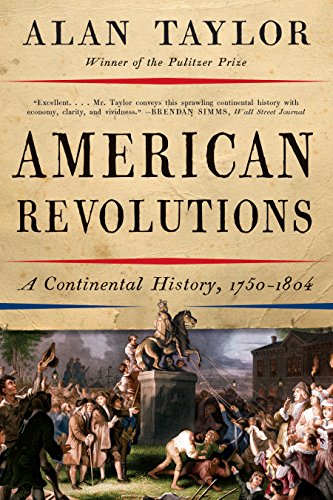
American Revolutions: A Continental History, 1750-1804
Alan Taylor
4.2
The American Revolution is often portrayed as a high-minded, orderly event whose capstone, the Constitution, provided the nation its democratic framework. Alan Taylor, a two-time Pulitzer Prize winner, gives us a different creation story in this magisterial history. The American Revolution builds like a ground fire overspreading Britain’s colonies, fueled by local conditions and resistant to control. Emerging from the continental rivalries of European empires and their native allies, the revolution pivoted on western expansion as well as seaboard resistance to British taxes. When war erupted, Patriot crowds harassed Loyalists and nonpartisans into compliance with their cause. The war exploded in set battles like Saratoga and Yorktown and spread through continuing frontier violence.
The discord smoldering within the fragile new nation called forth a movement to concentrate power through a Federal Constitution. Assuming the mantle of “We the People,” the advocates of national power ratified the new frame of government. But it was Jefferson’s expansive “empire of liberty” that carried the revolution forward, propelling white settlement and slavery west, preparing the ground for a new conflagration.
…
Cover unavailable
42
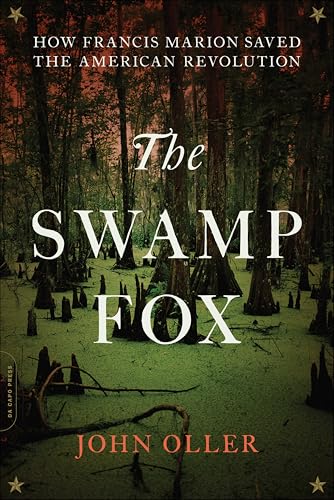
The Swamp Fox: How Francis Marion Saved the American Revolution
John Oller
4.2
Like the Robin Hood of legend, Francis Marion--the "Swamp Fox"--and his men attacked from secret hideaways before melting back into the forest or swamp, confounding the British. Although Marion bore little resemblance to the fictionalized portrayals in television and film, his exploits were no less heroic, as he and his band of militia freedom fighters kept hopes alive for the patriot cause and helped win the American Revolution.
In The Swamp Fox, John Oller compiles striking evidence and brings together much recent learning to provide a fresh look both at Marion, the man, and how he helped save the American Revolution.
…
Cover unavailable
43
The Creation of the American Republic, 1776-1787
Gordon S. Wood
4.2
During the Revolutionary era, American political theory underwent a fundamental transformation that carried the nation out of a basically classical and medieval world of political discussion into a milieu that was recognizably modern. This classic work is a study of that transformation. Gordon Wood describes in rich detail the evolution of political thought from the Declaration of Independence to the ratification of the Constitution and in the process greatly illuminates the origins of the present American political system. In a new preface, Wood discusses the debate over republicanism that has developed since - and as a result of - the book's original publication in 1969.
…
Recommended by Jack Rakove.
Jack Rakove
I remind my graduate students that Gordon Wood prepared The Creation of the American Republic as his doctoral dissertation, just to scare or, hopefully, inspire them. The fact that so much research and intellectual sophistication went into a PhD thesis is one of the staggering facts of modern intellectual life. [source]
Cover unavailable
44
The Ideological Origins of the American Revolution
Bernard Bailyn
4.2
In this 25th anniversary edition, Bailyn has added a substantial essay, Fulfillment, as a Postscript to the original text. In it he discusses the intense, nation-wide debate on the ratification of the constitution, stressing the continuities between that struggle over the foundations of the national government and the original principles of the Revolution. This study of the persistence of the nation's ideological origins adds a new dimension to the book and projects its meaning forward into vital present concerns.
…
Cover unavailable
45
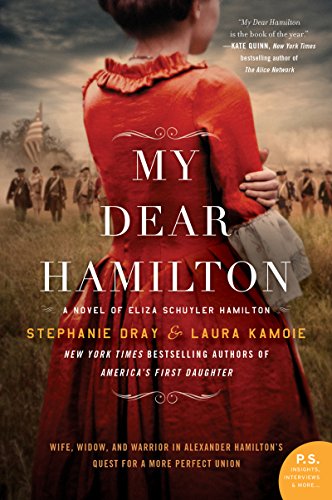
My Dear Hamilton: A Novel of Eliza Schuyler Hamilton
Stephanie Dray and Laura Kamoie
4.2
From the New York Times bestselling authors of America’s First Daughter comes the epic story of Eliza Schuyler Hamilton—a revolutionary woman who, like her new nation, struggled to define herself in the wake of war, betrayal, and tragedy. Haunting, moving, and beautifully written, Dray and Kamoie used thousands of letters and original sources to tell Eliza’s story as it’s never been told before—not just as the wronged wife at the center of a political sex scandal—but also as a founding mother who shaped an American legacy in her own right.
A general’s daughter…
Coming of age on the perilous frontier of revolutionary New York, Elizabeth Schuyler champions the fight for independence. And when she meets Alexander Hamilton, Washington’s penniless but passionate aide-de-camp, she’s captivated by the young officer’s charisma and brilliance. They fall in love, despite Hamilton’s bastard birth and the uncertainties of war.
A founding father’s wife...
But the union they create—in their marriage and the new nation—is far from perfect. From glittering inaugural balls to bloody street riots, the Hamiltons are at the center of it all—including the political treachery of America’s first sex scandal, which forces Eliza to struggle through heartbreak and betrayal to find forgiveness.
The last surviving light of the Revolution…
When a duel destroys Eliza’s hard-won peace, the grieving widow fights her husband’s enemies to preserve Alexander’s legacy. But long-buried secrets threaten everything Eliza believes about her marriage and her own legacy. Questioning her tireless devotion to the man and country that have broken her heart, she’s left with one last battle—to understand the flawed man she married and the imperfect union he could never have created without her…
…
Cover unavailable
46
The Drillmaster of Valley Forge: The Baron de Steuben and the Making of the American Army
Paul Lockhart
4.2
“A terrific biography….The dramatic story of how the American army that beat the British was forged has never been better told than in this remarkable book.” —Doris Kearns Goodwin, New York Times bestselling author of Team of Rivals
The true story of the Baron de Steuben and the making of the American Army, The Drillmaster of Valley Forge is the first biography in half a century of the immigrant Prussian soldier who molded George Washington’s ragged, demoralized troops into the fighting force that eventually triumphed in America’s War of Independence. Praised by renowned historian Thomas Fleming as “an important book for anyone interested in the American Revolution,” The Drillmaster of Valley Forge rights a historical wrong by finally giving a forgotten hero his well-deserved due.
…
Cover unavailable
47
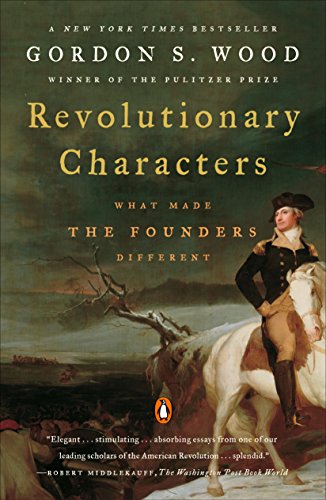
Revolutionary Characters: What Made the Founders Different
Gordon S. Wood
4.2
In this brilliantly illuminating group portrait of the men who came to be known as the Founding Fathers, the incomparable Gordon Wood has written a book that seriously asks, what made these men great? and shows us, among many other things, just how much character did in fact matter. The life of each; Washington, Adams, Jefferson, Franklin, Hamilton, Madison, Paine is presented individually as well as collectively, but the thread that binds these portraits together is the idea of character as a lived reality. They were members of the first generation in history that was self-consciously self-made men who understood that the arc of lives, as of nations, is one of moral progress.
…
Cover unavailable
48
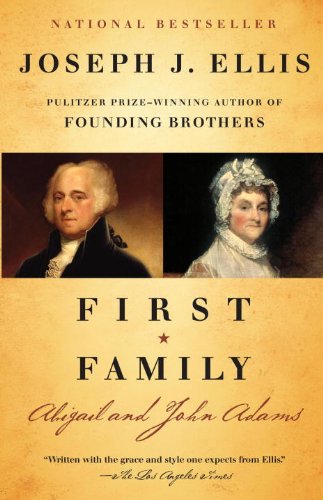
First Family: Abigail and John Adams
Joseph J. Ellis
4.2
The Pulitzer Prize-winning, best-selling author of "Founding Brothers" and "His Excellency "brings America's preeminent first couple to life in a moving and illuminating narrative that sweeps through the American Revolution and the republic's tenuous early years. John and Abigail Adams left an indelible and remarkably preserved portrait of their lives together in their personal correspondence: both Adamses were prolific letter writers (although John conceded that Abigail was clearly the more gifted of the two), and over the years they exchanged more than twelve hundred letters. Joseph J. Ellis distills this unprecedented and unsurpassed record to give us an account both intimate and panoramic; part biography, part political history, and part love story. Ellis describes the first meeting between the two as inauspicious--John was twenty-four, Abigail just fifteen, and each was entirely unimpressed with the other. But they soon began a passionate correspondence that resulted in their marriage five years later. Over the next decades, the couple were separated nearly as much as they were together. John's political career took him first to Philadelphia, where he became the boldest advocate for the measures that would lead to the Declaration of Independence. Yet in order to attend the Second Continental Congress, he left his wife and children in the middle of the war zone that had by then engulfed Massachusetts. Later he was sent to Paris, where he served as a minister to the court of France alongside Benjamin Franklin. These years apart stressed the Adamses' union almost beyond what it could bear: Abigail grew lonely, while the Adams children suffered from their father's absence. John was elected the nation's first vice president, but by the time of his reelection, Abigail's health prevented her from joining him in Philadelphia, the interim capital. She no doubt had further reservations about moving to the swamp on the Potomac when John became president, although this time he persuaded her. President Adams inherited a weak and bitterly divided country from George Washington. The political situation was perilous at best, and he needed his closest advisor by his side: "I can do nothing," John told Abigail after his election, "without you." In Ellis's rich and striking new history, John and Abigail's relationship unfolds in the context of America's birth as a nation.
…
Cover unavailable
49
Washington's Secret War
Thomas Fleming
4.2
The defining moments of the Revolutionary War did not occur on the battlefield or at the diplomatic table, claims Thomas Fleming, but at Valley Forge, where the Continental Army wintered in 1777 & 78. WASHINGTON'S SECRET WAR tells the dramatic story of how those several critical months transformed a beaten, bedraggled group of recruits into a professional army capable of defeating the world's most formidable military power.
While the British Army relaxed in Philadelphia only 20 miles away, George Washington trained his army under brutal conditions. Fleming reveals that during this difficult winter Washington was simultaneously fighting another war - one for his political life as members of the Continental Congress hatched a plot to unseat him and others plotted to betray him. For the first time, WASHINGTON'S SECRET WAR reveals how Washington's genius at negotiating the gray world of spies, double agents, and palace intrigue vaulted him from losing general to the charismatic father of his country.
…
Cover unavailable
50
My Brother Sam Is Dead
James Lincoln Collier, Christopher Collier
4.2
The classic story of one family torn apart by the Revolutionary War -- now with special After Words bonus features! The Newbery Honor Book My Brother Sam Is Dead joins the Scholastic Gold line, which features award-winning and beloved novels. Includes exclusive bonus content!
All his life, Tim Meeker has looked up to his brother Sam. Sam's smart and brave -- and is now a part of the American Revolution. Not everyone in town wants to be a part of the rebellion. Most are supporters of the British -- including Tim and Sam's father.
War is raging and Tim knows he'll have to make a choice -- between the Revolutionaries and the Redcoats . . . and between his brother and his father.
…
Cover unavailable
51
A Narrative of a Revolutionary Soldier: Some Adventures, Dangers, and Sufferings of Joseph Plumb Martin
Joseph Plumb Martin, Thomas Fleming
4.2
In this first-hand account of the Revolutionary War, Joseph Plumb Martin narrates his true adventures as an eighteen-year-old private in the Continental Army -- and gives a rare glimpse of the earthy beginnings of our nation's history.
Cover unavailable
52
Woods Runner
Gary Paulsen
4.1
Samuel, 13, spends his days in the forest, hunting for food for his family. He has grown up on the frontier of a British colony, America. Far from any town, or news of the war against the King that American patriots have begun near Boston.
But the war comes to them. British soldiers and Iroquois attack. Samuel’s parents are taken away, prisoners. Samuel follows, hiding, moving silently, determined to find a way to rescue them. Each day he confronts the enemy, and the tragedy and horror of this war. But he also discovers allies, men and women working secretly for the patriot cause. And he learns that he must go deep into enemy territory to find his parents: all the way to the British headquarters, New York City.
From the Hardcover edition.
…
Cover unavailable
53
America's First Daughter
Stephanie Dray and Laura Kamoie
4.1
From her earliest days, Patsy Jefferson knows that though her father loves his family dearly, his devotion to his country runs deeper still. As Thomas Jefferson’s oldest daughter, she becomes his helpmate, protector, and constant companion in the wake of her mother’s death, traveling with him when he becomes America's minister to France.
It is in Paris, at the glittering court and among the first tumultuous days of revolution, that fifteen-year-old Patsy learns about her father’s troubling liaison with Sally Hemings, a slave girl her own age. Meanwhile, Patsy has fallen in love—with her father’s protégé, William Short, a staunch abolitionist and ambitious diplomat. Torn between love, principles, and the bonds of family, Patsy questions whether she can choose a life as William’s wife and still be a devoted daughter.
Her choice will follow her in the years to come—to Virginia farmland, to Monticello, and even to the White House. And as scandal, tragedy, and poverty threaten her family, Patsy must decide how much she will sacrifice to protect her father's reputation, in the process defining not just Jefferson's political legacy but that of the nation he founded.
…
Cover unavailable
54
Sophia's War: A Tale of the Revolution
Avi
4.1
Lives hang in the balance in this gripping Revolutionary War adventure from a beloved Newbery Medalist.
In 1776, young Sophia Calderwood witnesses the execution of Nathan Hale in New York City, which is newly occupied by the British army. Sophia is horrified by the event and resolves to do all she can to help the American cause. Recruited as a spy, she becomes a maid in the home of General Clinton, the supreme commander of the British forces in America. Through her work she becomes aware that someone in the American army might be switching sides, and she uncovers a plot that will grievously damage the Americans if it succeeds. But the identity of the would-be traitor is so shocking that no one believes her, and so Sophia decides to stop the treacherous plot herself, at great personal peril: She’s young, she’s a girl, and she’s running out of time. And if she fails, she’s facing an execution of her own.
Master storyteller Avi shows exactly how personal politics can be in this “nail-biting thriller” (Publishers Weekly) that is rich in historical detail and rife with action.
…
Cover unavailable
55
Ratification: The People Debate the Constitution, 1787-1788
Pauline Maier
4.1
When the delegates left the Constitutional Convention in Philadelphia in September 1787, the new Constitution they had written was no more than a proposal. Elected conventions in at least nine of the thirteen states would have to ratify it before it could take effect. There was reason to doubt whether that would happen. The document we revere today as the foundation of our country’s laws, the cornerstone of our legal system, was hotly disputed at the time. Some Americans denounced the Constitution for threatening the liberty that Americans had won at great cost in the Revolutionary War. One group of fiercely patriotic opponents even burned the document in a raucous public demonstration on the Fourth of July.
In this splendid new history, Pauline Maier tells the dramatic story of the yearlong battle over ratification that brought such famous founders as Washington, Hamilton, Madison, Jay, and Henry together with less well-known Americans who sometimes eloquently and always passionately expressed their hopes and fears for their new country. Men argued in taverns and coffeehouses; women joined the debate in their parlors; broadsides and newspaper stories advocated various points of view and excoriated others. In small towns and counties across the country people read the document carefully and knew it well. Americans seized the opportunity to play a role in shaping the new nation. Then the ratifying conventions chosen by "We the People" scrutinized and debated the Constitution clause by clause.
Although many books have been written about the Constitutional Convention, this is the first major history of ratification. It draws on a vast new collection of documents and tells the story with masterful attention to detail in a dynamic narrative. Each state’s experience was different, and Maier gives each its due even as she focuses on the four critical states of Pennsylvania, Massachusetts, Virginia, and New York, whose approval of the Constitution was crucial to its success.
The New Yorker Gilbert Livingston called his participation in the ratification convention the greatest transaction of his life. The hundreds of delegates to the ratifying conventions took their responsibility seriously, and their careful inspection of the Constitution can tell us much today about a document whose meaning continues to be subject to interpretation. Ratification is the story of the founding drama of our nation, superbly told in a history that transports readers back more than two centuries to reveal the convictions and aspirations on which our country was built.
…
Recommended by Jack Rakove.
Jack Rakove
The story of how the Constitution was ratified is just as remarkable as the story of how it was framed … Until Pauline Maier published this book, that story has never been well told. There have been examinations of particular state debates. There was one older narrative, which was adequate. But no one has looked at ratification as comprehensively. Recently, the Historical Society of Wisconsin compiled some 20 volumes of ratification debate records. Maier uses those records cohesively and effectively. She tells a great story. [source]
Cover unavailable
56
Washington's Immortals: The Untold Story of an Elite Regiment Who Changed the Course of the Revolution
Patrick K. O'Donnell
4.1
In August 1776, little over a month after the Continental Congress had formally declared independence from Britain, the revolution was on the verge of a sudden and disastrous end. General George Washington found his troops outmanned and outmaneuvered at the Battle of Brooklyn, and it looked like there was no escape. But thanks to a series of desperate rear guard attacks by a single heroic regiment, famously known as the “Immortal 400,” Washington was able to evacuate his men and the nascent Continental Army lived to fight another day.
Today, only a modest, rusted and scarred metal sign near a dilapidated auto garage marks the mass grave where the bodies of the “Maryland Heroes” lie—256 men “who fell in the Battle of Brooklyn.” In Washington’s Immortals, best-selling military historian Patrick K. O’Donnell brings to life the forgotten story of this remarkable band of brothers. Known as “gentlemen of honour, family, and fortune,” they fought not just in Brooklyn, but in key battles including Trenton, Princeton, Camden, Cowpens, Guilford Courthouse, and Yorktown, where their heroism changed the course of the war.
Drawing on extensive original sources, from letters to diaries to pension applications, O’Donnell pieces together the stories of these brave men—their friendships, loves, defeats, and triumphs. He explores their arms and tactics, their struggles with hostile loyalists and shortages of clothing and food, their development into an elite unit, and their dogged opponents, including British General Lord Cornwallis. And through the prism of this one group, O’Donnell tells the larger story of the Revolutionary War. Washington’s Immortals is gripping and inspiring boots-on-the-ground history, sure to appeal to a wide readership.
…
Cover unavailable
57
Miracle at Philadelphia: The Story of the Constitutional Convention, May to September 1787
Catherine Drinker Bowen
4.1
A classic history of the Federal Convention at Philadelphia in 1787, the stormy, dramatic session that produced the most enduring of political documents: the Constitution of the United States. From Catherine Drinker Bowen, noted American biographer and National Book Award winner, comes the canonical account of the Constitutional Convention recommended as "required reading for every American." Looked at straight from the records, the Federal Convention is startlingly fresh and new, and Mrs. Bowen evokes it as if the reader were actually there, mingling with the delegates, hearing their arguments, witnessing a dramatic moment in history. Here is the fascinating record of the hot, sultry summer months of debate and decision when ideas clashed and tempers flared. Here is the country as it was then, described by contemporaries, by Berkshire farmers in Massachusetts, by Patrick Henry's Kentucky allies, by French and English travelers. Here, too, are the offstage voices--Thomas Jefferson and Tom Paine and John Adams from Europe. In all, fifty-five men attended; and in spite of the heat, in spite of clashing interests--the big states against the little, the slave states against the anti-slave states--in tension and anxiety that mounted week after week, they wrote out a working plan of government and put their signatures to it.
…
Cover unavailable
58
The Constitution of the United States of America
Founding Fathers
4.1
The landmark legal document of the United States, the U.S. Constitution comprises the primary law of the Federal Government. Signed by the members of the Constitutional Convention in Philadelphia on September 17, 1787, the Constitution outlines the powers and responsibilities of the three chief branches of the Federal Government, as well as the basic rights of the citizens of the United States. This beautiful gift edition contains the complete text of the United States Constitution, as well as all of its amendments. It is a treasure for Americans of all ages.
…
Cover unavailable
59
Founding Mothers
Cokie Roberts and HarperAudi
4.1
From #1 New York Times bestselling author Cokie Roberts comes New York Times bestseller Founding Mothers, an intimate and illuminating look at the fervently patriotic and passionate women whose tireless pursuits on behalf of their families–and their country–proved just as crucial to the forging of a new nation as the rebellion that established it.
While much has been written about the men who signed the Declaration of Independence, battled the British, and framed the Constitution, the wives, mothers, sisters and daughters they left behind have been little noticed by history. #1 New York Times bestselling author Cokie Roberts brings us women who fought the Revolution as valiantly as the men, often defending their very doorsteps. Drawing upon personal correspondence, private journals, and even favoured recipes, Roberts reveals the often surprising stories of these fascinating women, bringing to life the everyday trials and extraordinary triumphs of individuals like Abigail Adams, Mercy Otis Warren, Deborah Read Franklin, Eliza Pinckney, Catherine Littlefield Green, Esther DeBerdt Reed and Martha Washington–proving that without our exemplary women, the new country might have never survived.
…
Cover unavailable
60
Killing England: The Brutal Struggle for American Independence
Bill O'Reilly
4.1
Told through the eyes of George Washington, Benjamin Franklin, Thomas Jefferson, and Great Britain’s King George III, Killing England chronicles the path to independence in gripping detail, taking the reader from the battlefields of America to the royal courts of Europe. What started as protest and unrest in the colonies soon escalated to a world war with devastating casualties. O’Reilly and Dugard recreate the war’s landmark battles, including Bunker Hill, Long Island, Saratoga, and Yorktown, revealing the savagery of hand-to-hand combat and the often brutal conditions under which these brave American soldiers lived and fought. Also here is the reckless treachery of Benedict Arnold and the daring guerilla tactics of the “Swamp Fox” Frances Marion.
…
Cover unavailable
61
The Unknown American Revolution: The Unruly Birth of Democracy and the Struggle to Create America
Gary B. Nash
4.1
In this audacious recasting of the American Revolution, distinguished historian Gary Nash offers a profound new way of thinking about the struggle to create this country, introducing readers to a coalition of patriots from all classes and races of American society. From millennialist preachers to enslaved Africans, disgruntled women to aggrieved Indians, the people so vividly portrayed in this book did not all agree or succeed, but during the exhilarating and messy years of this country's birth, they laid down ideas that have become part of our inheritance and ideals toward which we still strive today.
…
Cover unavailable
62
The First Conspiracy: The Secret Plot to Kill George Washington
Brad Meltzer
4.1
Taking place during the most critical period of our nation's birth, The First Conspiracy tells a remarkable and previously untold piece of American history that not only reveals George Washington's character, but also illuminates the origins of America's counterintelligence movement that led to the modern day CIA.
In 1776, an elite group of soldiers were handpicked to serve as George Washington's bodyguards. Washington trusted them; relied on them. But unbeknownst to Washington, some of them were part of a treasonous plan. In the months leading up to the Revolutionary War, these traitorous soldiers, along with the Governor of New York, William Tryon, and Mayor David Mathews, launched a deadly plot against the most important member of the military: George Washington himself.
This is the story of the secret plot and how it was revealed. It is a story of leaders, liars, counterfeiters, and jailhouse confessors. It also shows just how hard the battle was for George Washington and how close America was to losing the Revolutionary War.
In this historical page-turner, New York Times bestselling author Brad Meltzer teams up with American history writer and documentary television producer, Josh Mensch to unravel the shocking true story behind what has previously been a footnote in the pages of history. Drawing on extensive research, Meltzer and Mensch capture in riveting detail how George Washington not only defeated the most powerful military force in the world, but also uncovered the secret plot against him in the tumultuous days leading up to July 4, 1776.
…
Cover unavailable
63
The Winter Soldiers: The Battles for Trenton and Princeton
Richard M. Ketchum
4.1
In the fall of 1776 the British delivered a crushing blow. New York fell and the anguished retreat through New Jersey followed. Winter came with a vengeance, bringing what Thomas Paine called “the times that try men’s souls.”
The Winter Soldiers is the story of a small band of men held together by George Washington in the face of disaster and hopelessness, desperately needing at least one victory to salvage both cause and country. It is a tale of unimaginable hardship and suffering that culminated in the battles of Trenton and Princeton. Without these triumphs, the rebellion that had begun so bravely could not have gone on.
Born in Pittsburgh, Pennsylvania, Richard M. Ketchum graduated from Yale Unviersity and commanded a subchaser in the South Atlantic during World War II. As director of book publishing at American Heritage Publishing Company for twenty years, he edited many of that firm’s volumes, including The American Heritage Book of the Revolution and The American Heritage Picture History of the Civil War, which received a Pulitzer Prize Special Citation. Ketcham was the cofounder and editor of Blair & Ketcham’s Country Journal, a monthly magazine about rural life. He and his wife live on a sheep farm in Vermont. He is the author of two other Revolutionary War classics: Decisive Day and The Winter Soldiers.
…
Cover unavailable
64
Ashes (Seeds of America, #3)
Laurie Halse Anderson, Siiri Scott
4.1
Freedom for one, freedom for all?
That’s the question that burns in Isabel’s mind as she and Curzon forge on through chaos and fear toward the dream that’s kept them alive for so many years: freedom. But her dream of living not as a “runaway” but as a free person with land and a family of her own seems impossibly far away. That dream hinges on one thing: finding her little sister, Ruth. It’s been years since Ruth was stolen from her. Is she even alive? And if Isabel can find her, how will they make it safely through the war between the Patriots and the British that rages on as dangerously as ever, while bounty hunters try to kidnap them at every turn?
In the American Revolution, one must pick a side in order to survive. But how can you care about a nation’s freedom when the very same nation has kept you in chains?
…
Cover unavailable
65
The Americanization of Benjamin Franklin
Gordon S. Wood
4.1
From the most respected chronicler of the early days of the Republic and winner of both the Pulitzer and Bancroft prizes comes a landmark work that rescues Benjamin Franklin from a mythology that has blinded generations of Americans to the man he really was and makes sense of aspects of his life and career that would have otherwise remained mysterious. In place of the genial polymath, self-improver, and quintessential American, Gordon S. Wood reveals a figure much more ambiguous and complex and much more interesting. Charting the passage of Franklin’s life and reputation from relative popular indifference (his death, while the occasion for mass mourning in France, was widely ignored in America) to posthumous glory, The Americanization of Benjamin Franklin sheds invaluable light on the emergence of our country’s idea of itself.
…
Cover unavailable
66
The First Salute
Barbara Tuchman
4.1
Presents a fresh view of the American Revolution, chronicling key events from 1776 to 1781 and assessing the repercussions for America, England, France, and other nations.
Cover unavailable
67
The Pox Party (The Astonishing Life of Octavian Nothing, Traitor to the Nation, #1)
M.T. Anderson
4.1
It sounds like a fairy tale. He is a boy dressed in silks and white wigs and given the finest of classical educations. Raised by a group of rational philosophers known only by numbers, the boy and his mother -- a princess in exile from a faraway land -- are the only persons in their household assigned names. As the boy's regal mother, Cassiopeia, entertains the house scholars with her beauty and wit, young Octavian begins to question the purpose behind his guardians' fanatical studies. Only after he dares to open a forbidden door does he learn the hideous nature of their experiments -- and his own chilling role in them. Set against the disquiet of Revolutionary Boston, M. T. Anderson's extraordinary novel takes place at a time when American Patriots rioted and battled to win liberty while African slaves were entreated to risk their lives for a freedom they would never claim. The first of two parts, this deeply provocative novel reimagines the past as an eerie place that has startling resonance for readers today.
…
Cover unavailable
68
The Winter of Red Snow: The Revolutionary War Diary of Abigail Jane Stewart, Valley Forge, Pennsylvania, 1777 (Dear America)
Kristiana Gregory
4.1
Eleven-year-old Abigail Jane Stewart records the despair and hope of the difficult winter between 1777-1778--when she witnessed George Washington readying his young soldiers on the frozen fields of Valley Forge.
Cover unavailable
69
George vs. George: The American Revolution As Seen from Both Sides
Rosalyn Schanzer
4.1
There are two sides to every story. Rosalyn Schanzer's engaging and wonderfully illustrated book brings to life both sides of the American Revolution.
The narrative introduces anew the two enemies, both named George: George Washington, the man who freed the American colonies from the British, and George III, the British king who lost them. Two leaders on different sides of the Atlantic, yet with more in common than we sometimes acknowledge. We are lead through their story, and the story of their times, and see both sides of the arguments that divided the colonies from the Kingdom. Was King George a "Royal Brute" as American patriots claimed? Or was he, as others believed, "the father of the people?" Was George Washington a scurrilous traitor, as all the king's supporters claimed? Or should we remember and celebrate him as "the father of his country?" Who was right? History teaches us that there are two sides to every story.
Rosalyn Schanzer's book is an accessible account of one the most vital periods in American history. It is also a timeless lesson in seeing history from different points of view. The author spent two years researching books, paintings, cartoons, and descriptions of Revolutionary times. She uses art, text, and first-hand accounts to illustrate how history should never be reduced to simplistic conflicts between the "good guys" and the "bad guys." Her illustrations, and her engaging quote bubbles, bring the Revolution to life again, and allow the characters of the period to speak for themselves. Through its lively text, detailed illustrations, and fully authenticated quotes, George vs. George shines fresh light on both sides of the story of our country's formative years.
…
Cover unavailable
70
The Road to Guilford Courthouse: The American Revolution in the Carolinas
John Buchanan
4.1
A brilliant account of the proud and ferocious American fighters who stood up to the British forces in savage battles crucial in deciding both the fate of the Carolina colonies and the outcome of the war.
"A tense, exciting historical account of a little known chapter of the Revolution, displaying history writing at its best."--Kirkus Reviews
"His compelling narrative brings readers closer than ever before to the reality of Revolutionary warfare in the Carolinas."--Raleigh News & Observer.
"Buchanan makes the subject come alive like few others I have seen." --Dennis Conrad, Editor, The Nathanael Greene Papers.
"John Buchanan offers us a lively, accurate account of a critical period in the War of Independence in the South. Based on numerous printed primary and secondary sources, it deserves a large reading audience." --Don Higginbotham, Professor of History, University of North Carolina, Chapel Hill.
…
Cover unavailable
71
The Turncoat (Renegades of the Revolution)
Donna Thorland
4.1
They are lovers on opposite sides of a brutal war, with everything at stake and no possibility of retreat. They can trust no one—especially not each other.
Major Lord Peter Tremayne is the last man rebel bluestocking Kate Grey should fall in love with, but when the handsome British viscount commandeers her home, Kate throws caution to the wind and responds to his seduction. She is on the verge of surrender when a spy in her own household seizes the opportunity to steal the military dispatches Tremayne carries, ensuring his disgrace—and implicating Kate in high treason. Painfully awakened to the risks of war, Kate determines to put duty ahead of desire, and offers General Washington her services as an undercover agent in the City of Brotherly Love.
Months later, having narrowly escaped court martial and hanging, Tremayne returns to decadent, British-occupied Philadelphia with no stomach for his current assignment—to capture the woman he believes betrayed him. Nor does he relish the glittering entertainments being held for General Howe’s idle officers. Worse, the glamorous woman in the midst of this social whirl, the fiancée of his own dissolute cousin, is none other than Kate Grey herself. And so begins their dangerous dance, between passion and patriotism, between certain death and the promise of a brave new future together.
…
Cover unavailable
72
1775: A Good Year for Revolution
Kevin Phillips
4.1
The contrarian historian and analyst upends the conventional reading of the American Revolution
In 1775, iconoclastic historian and bestselling author Kevin Phillips punctures the myth that 1776 was the watershed year of the American Revolution. He suggests that the great events and confrontations of 1775—Congress’s belligerent economic ultimatums to Britain, New England’s rage militaire, the exodus of British troops and expulsion of royal governors up and down the seaboard, and the new provincial congresses and hundreds of local committees that quickly reconstituted local authority in Patriot hands—achieved a sweeping Patriot control of territory and local government that Britain was never able to overcome. These each added to the Revolution’s essential momentum so when the British finally attacked in great strength the following year, they could not regain the control they had lost in 1775.
Analyzing the political climate, economic structures, and military preparations, as well as the roles of ethnicity, religion, and class, Phillips tackles the eighteenth century with the same skill and insights he has shown in analyzing contemporary politics and economics. The result is a dramatic narrative brimming with original insights. 1775 revolutionizes our understanding of America’s origins.
…
Cover unavailable
73
The Fiery Cross (Outlander, #5)
Diana Gabaldon
4.0
The year is 1771, and war is coming. Jamie Fraser’s wife tells him so. Little as he wishes to, he must believe it, for hers is a gift of dreadful prophecy—a time-traveler’s certain knowledge. Claire’s unique view of the future has brought him both danger and deliverance in the past; her knowledge of the oncoming revolution is a flickering torch that may light his way through the perilous years ahead—or ignite a conflagration that will leave their lives in ashes.
…
Cover unavailable
74
A Leap in the Dark: The Struggle to Create the American Republic
John Ferling
4.0
It was an age of fascinating leaders and difficult choices, of grand ideas eloquently expressed and of epic conflicts bitterly fought. Now comes a brilliant portrait of the American Revolution, one that is compelling in its prose, fascinating in its details, and provocative in its fresh interpretations.
In A Leap in the Dark, John Ferling offers a magisterial new history that surges from the first rumblings of colonial protest to the volcanic election of 1800. Ferling's swift-moving narrative teems with fascinating details. We see Benjamin Franklin trying to decide if his loyalty was to Great Britain or to America, and we meet George Washington when he was a shrewd planter-businessman who discovered personal economic advantages to American independence. We encounter those who supported the war against Great Britain in 1776, but opposed independence because it was a "leap in the dark." Following the war, we hear talk in the North of secession from the United States. The author offers a gripping account of the most dramatic events of our history, showing just how closely fought were the struggle for independence, the adoption of the Constitution, and the later battle between Federalists and Democratic-Republicans. Yet, without slowing the flow of events, he has also produced a landmark study of leadership and ideas. Here is all the erratic brilliance of Hamilton and Jefferson battling to shape the new nation, and here too is the passion and political shrewdness of revolutionaries, such as Samuel Adams and Patrick Henry, and their Loyalist counterparts, Joseph Galloway and Thomas Hutchinson. Here as well are activists who are not so well known today, men like Abraham Yates, who battled for democratic change, and Theodore Sedgwick, who fought to preserve the political and social system of the colonial past. Ferling shows that throughout this period the epic political battles often resembled today's politics and the politicians--the founders--played a political hardball attendant with enmities, selfish motivations, and bitterness. The political stakes, this book demonstrates, were extraordinary: first to secure independence, then to determine the meaning of the American Revolution.
John Ferling has shown himself to be an insightful historian of our Revolution, and an unusually skillful writer. A Leap in the Dark is his masterpiece, work that provokes, enlightens, and entertains in full measure.
…
Cover unavailable
75
Liberty's Exiles: American Loyalists in the Revolutionary World
Maya Jasanoff
4.0
On November 25, 1783, the last British troops pulled out of New York City, bringing the American Revolution to an end. Patriots celebrated their departure and the confirmation of U.S. independence. But for tens of thousands of American loyalists, the British evacuation spelled worry, not jubilation. What would happen to them in the new United States? Would they and their families be safe? Facing grave doubts about their futures, some sixty thousand loyalists—one in forty members of the American population—decided to leave their homes and become refugees elsewhere in the British Empire. They sailed for Britain, for Canada, for Jamaica, and for the Bahamas; some ventured as far as Sierra Leone and India. Wherever they went, the voyage out of America was a fresh beginning, and it carried them into a dynamic if uncertain new world.
A groundbreaking history of the revolutionary era, Liberty’s Exiles tells the story of this remarkable global diaspora. Through painstaking archival research and vivid storytelling, award-winning historian Maya Jasanoff re-creates the journeys of ordinary individuals whose lives were overturned by extraordinary events. She tells of refugees like Elizabeth Johnston, a young mother from Georgia, who spent nearly thirty years as a migrant, searching for a home in Britain, Jamaica, and Canada. And of David George, a black preacher born into slavery, who found freedom and faith in the British Empire, and eventually led his followers to seek a new Jerusalem in Sierra Leone. Mohawk leader Joseph Brant resettled his people under British protection in Ontario, while the adventurer William Augustus Bowles tried to shape a loyalist Creek state in Florida. For all these people and more, it was the British Empire—not the United States—that held the promise of “life, liberty, and the pursuit of happiness.” Yet as they dispersed across the empire, the loyalists also carried things from their former homes, revealing an enduring American influence on the wider British world.
Ambitious, original, and personality-filled, Liberty’s Exiles is at once an intimate narrative history and a provocative new analysis—a book that explores an unknown dimension of America’s founding to illuminate the meanings of liberty itself.
…
Cover unavailable
76
Decisive Day: The Battle for Bunker Hill
Richard M. Ketchum
4.0
Boston, 1775: A town occupied by General Thomas Gage's redcoats and groaning with Tory refugees from the Massachusetts countryside. Besieged for two months by a rabble in arms, the British decided to break out of town. American spies discovered their plans, and on the night of June 16, 1775, a thousand rebels marched out onto Charlestown peninsula and began digging a redoubt (not on Bunker Hill, which they had been ordered to fortify, but on Breeds Hill, well within cannon shot of the British batteries and ships). At daybreak, HMS Lively began firing. It was the opening round of a battle that saw unbelievable heroism and tragic blunders on both sides (a battle that marked a point of no return for England and her colonies), the beginning of all-out war.
…
Cover unavailable
77
The Guns at Last Light: The War in Western Europe, 1944-1945 (World War II Liberation Trilogy, #3)
Rick Atkinson
4.0
The magnificent conclusion to Rick Atkinson’s acclaimed Liberation Trilogy about the Allied triumph in Europe during World War II
It is the twentieth century’s unrivaled epic: at a staggering price, the United States and its allies liberated Europe and vanquished Hitler. In the first two volumes of his bestselling Liberation Trilogy, Rick Atkinson recounted how the American-led coalition fought through North Africa and Italy to the threshold of victory. Now he tells the most dramatic story of all—the titanic battle for Western Europe.
D-Day marked the commencement of the final campaign of the European war, and Atkinson’s riveting account of that bold gamble sets the pace for the masterly narrative that follows. The brutal fight in Normandy, the liberation of Paris, the disaster that was Operation Market Garden, the horrific Battle of the Bulge, and finally the thrust to the heart of the Third Reich—all these historic events and more come alive with a wealth of new material and a mesmerizing cast of characters. Atkinson tells the tale from the perspective of participants at every level, from presidents and generals to war-weary lieutenants and terrified teenage riflemen. When Germany at last surrenders, we understand anew both the devastating cost of this global conflagration and the enormous effort required to win the Allied victory.
With the stirring final volume of this monumental trilogy, Atkinson’s accomplishment is manifest. He has produced the definitive chronicle of the war that unshackled a continent and preserved freedom in the West.
http://us.macmillan.com/thegunsatlast...
…
Cover unavailable
78
Empire of Liberty: A History of the Early Republic, 1789-1815
Gordon S. Wood
4.0
The Oxford History of the United States is by far the most respected multi-volume history of our nation. The series includes three Pulitzer Prize winners, two New York Times bestsellers, and winners of the Bancroft and Parkman Prizes. Now, in the newest volume in the series, one of America's most esteemed historians, Gordon S. Wood, offers a brilliant account of the early American Republic, ranging from 1789 and the beginning of the national government to the end of the War of 1812. As Wood reveals, the period was marked by tumultuous change in all aspects of American life--in politics, society, economy, and culture. The men who founded the new government had high hopes for the future, but few of their hopes and dreams worked out quite as they expected. They hated political parties but parties nonetheless emerged. Some wanted the United States to become a great fiscal-military state like those of Britain and France; others wanted the country to remain a rural agricultural state very different from the European states. Instead, by 1815 the United States became something neither group anticipated. Many leaders expected American culture to flourish and surpass that of Europe; instead it became popularized and vulgarized. The leaders also hope to see the end of slavery; instead, despite the release of many slaves and the end of slavery in the North, slavery was stronger in 1815 than it had been in 1789. Many wanted to avoid entanglements with Europe, but instead the country became involved in Europe's wars and ended up waging another war with the former mother country. Still, with a new generation emerging by 1815, most Americans were confident and optimistic about the future of their country. Named a New York Times Notable Book, Empire of Liberty offers a marvelous account of this pivotal era when America took its first unsteady steps as a new and rapidly expanding nation.
…
Cover unavailable
79
Washington: The Indispensable Man
James Thomas Flexner
4.0
After more than two decades, this dramatic and concise single-volume distillation of James Thomas Flexner's definitive four-volume biography George Washington, which received a Pulitzer Prize citation and a National Book Award for the fourth volume, has itself become an American classic. Now in a new trade paperback edition, this masterful work explores the Father of Our Country - sometimes an unpopular hero, a man of great contradictions, but always a towering historical figure, who remains, as Flexner writes in these pages, "a fallible human being made of flesh and blood and spirit - not a statue of marble and wood... a great and good man." The author unflinchingly paints a portrait of Washington: slave owner, brave leader, man of passion, reluctant politician, and fierce general. His complex character and career are neither glorified nor vilified here; rather, Flexner sets up a brilliant counterpoint between Washington's public and private lives and gives us a challenging look at the man who has become as much a national symbol as the American flag.
…
Cover unavailable
80
Redcoat
Bernard Cornwell
4.0
It is autumn 1777, and the cradle of liberty, Philadelphia, has fallen to the British. Yet the true battle has only just begun.
On both sides, loyalties are tested and families torn asunder. The young Redcoat Sam Gilpin has seen his brother die. Now he must choose between duty to a distant king and the call of his own conscience. And for the men and women of the prosperous Becket family, the Revolution brings bitter conflict between those loyal to the crown and those with dreams of liberty.
Soon, across the fields of ice and blood in a place called Valley Forge, history will be rewritten, changing the lives and fortunes of these men and women forever.
…
Cover unavailable
81
The Midwife's Revolt (The Midwife Series, #1)
Jodi Daynar
4.0
On a dark night in 1775, Lizzie Boylston is awakened by the sound of cannons. From a hill south of Boston, she watches as fires burn in Charlestown, in a battle that she soon discovers has claimed her husband’s life.
Alone in a new town, Lizzie grieves privately but takes comfort in her deepening friendship with Abigail Adams. Soon, word spreads of Lizzie’s extraordinary midwifery and healing skills, and she begins to channel her grief into caring for those who need her. But when two traveling patriots are poisoned, Lizzie finds herself with far more complicated matters on her hands—she suspects a political plot intended to harm Abigail and her family. Determined to uncover the truth, Lizzie becomes entangled in a conspiracy that could not only destroy her livelihood—and her chance at finding love again—but also lead to the downfall of a new nation.
…
Cover unavailable
82
Angel in the Whirlwind: The Triumph of the American Revolution
Benson Bobrick
4.0
Cover unavailable
83
The Fort
Laura Perdew and Adelina Lirius
4.0
Summer 1779: a British force of fewer than 1,000 Scottish infantry were sent to build a garrison in the state of Maine. But Massachusetts was determined to expel the British, and they sent a fleet to 'captivate, kill and destroy' the enemy. Told from both sides of the battle, this story features real figures from history.
Cover unavailable
84
The Summer of 1787: The Men Who Invented the Constitution
David O. Stewart
4.0
The successful creation of the Constitution is a suspense story. The Summer of 1787 takes us into the sweltering room in which delegates struggled for four months to produce the flawed but enduring document that would define the nation -- then and now.
George Washington presided, James Madison kept the notes, Benjamin Franklin offered wisdom and humor at crucial times. The Summer of 1787 traces the struggles within the Philadelphia Convention as the delegates hammered out the charter for the world's first constitutional democracy. Relying on the words of the delegates themselves to explore the Convention's sharp conflicts and hard bargaining, David O. Stewart lays out the passions and contradictions of the often painful process of writing the Constitution.
It was a desperate balancing act. Revolutionary principles required that the people have power, but could the people be trusted? Would a stronger central government leave room for the states? Would the small states accept a Congress in which seats were alloted according to population rather than to each sovereign state? And what of slavery? The supercharged debates over America's original sin led to the most creative and most disappointing political deals of the Convention.
The room was crowded with colorful and passionate characters, some known -- Alexander Hamilton, Gouverneur Morris, Edmund Randolph -- and others largely forgotten. At different points during that sultry summer, more than half of the delegates threatened to walk out, and some actually did, but Washington's quiet leadership and the delegates' inspired compromises held the Convention together.
In a country continually arguing over the document's original intent, it is fascinating to watch these powerful characters struggle toward consensus -- often reluctantly -- to write a flawed but living and breathing document that could evolve with the nation.
…
Cover unavailable
85
Scars of Independence: America's Violent Birth
Holger Hoock
4.0
A magisterial new work that rewrites the story of America’s founding
The American Revolution is often portrayed as an orderly, restrained rebellion, with brave patriots defending their noble ideals against an oppressive empire. It’s a stirring narrative, and one the founders did their best to encourage after the war. But as historian Holger Hoock shows in this deeply researched and elegantly written account of America’s founding, the Revolution was not only a high-minded battle over principles, but also a profoundly violent civil war—one that shaped the nation, and the British Empire, in ways we have only begun to understand.
In Scars of Independence, Hoock writes the violence back into the story of the Revolution. American Patriots persecuted and tortured Loyalists. British troops massacred enemy soldiers and raped colonial women. Prisoners were starved on disease-ridden ships and in subterranean cells. African-Americans fighting for or against independence suffered disproportionately, and Washington’s army waged a genocidal campaign against the Iroquois. In vivid, authoritative prose, Hoock’s new reckoning also examines the moral dilemmas posed by this all-pervasive violence, as the British found themselves torn between unlimited war and restraint toward fellow subjects, while the Patriots documented war crimes in an ingenious effort to unify the fledgling nation.
For two centuries we have whitewashed this history of the Revolution. Scars of Independence forces a more honest appraisal, revealing the inherent tensions between moral purpose and violent tendencies in America’s past. In so doing, it offers a new origins story that is both relevant and necessary—an important reminder that forging a nation is rarely bloodless.
…
Cover unavailable
86
The Know Your Bill of Rights Book: Don't Lose Your Constitutional Rights--Learn Them!
Sean Patrick
4.0
Cover unavailable
87
The Constitution of the United States and The Declaration of Independence
Delegates of The Constitutional…
4.0
It’s more important than ever for every American to know exactly what the Constitution, the Bill of Rights, and the Declaration of Independence actually says. Here is the essential, 45-page, pocket-size edition.
The greatest gifts from our Founding Fathers are the two most fundamental documents in American politics. This quick, easy reference for our federal government’s structure, powers, and limitations includes:
The Constitution of the United States The Bill of Rights
All Amendments to the Constitution The Declaration of Independence
Whether you are a Democrat, Republican, or independent, whether you are a support of Donald Trump or not, if you live and vote in the United States of America, you understand that The Constitution of the United States and The Declaration of Independence are two of the most important documents in American history. They convey the principles on which the country was founded and provide the ideals that still guide American politics today.
Signed by the members of the Constitutional Convention in Philadelphia on September 17, 1787, The Constitution outlines the powers and responsibilities of the three chief branches of the federal government (executive branch, judicial branch, legislative branch), as well as the basic rights of the citizens of the United States (freedom of speech, freedom of the press, freedom of religion, etc.)
The Declaration of Independence was crafted by Thomas Jefferson in June of 1776 and it provides the foundation of American political philosophy. “We hold these truths to be self-evident, that all men are created equal, that they are endowed by their Creator with certain unalienable Rights, that among these are Life, Liberty and the pursuit of Happiness.”
Collected here in one affordable, pocket-sized volume are some of the most valued pieces of writing in the history of our country. This edition contains The Constitution of the United States of America, including The Bill of Rights and all of the subsequent amendments, as well as The Declaration of Independence.
These are word-for-word facsimiles of significant documents… Every American should own a copy.
…
Cover unavailable
88
Passionate Sage: The Character and Legacy of John Adams
Joseph J. Ellis Ph.D.
4.0
A fresh look at this astute, likably quirky statesman, by the author of the Pulitzer Award-winning Founding Brothers and the National Book Award winning American Sphinx.
"The most lovable and most laughable, the warmest and possibly the wisest of the founding fathers, John Adams knew himself as few men do and preserved his knowledge in a voluminous correspondence that still vibrates. Ellis has used it with great skill and perception not only to bring us the man, warts and all, but more importantly to reveal his extraordinary insights into the problems confronting the founders that resonate today in the republic they created." —Edmund S. Morgan, Sterling Professor of History Emeritus, Yale University
…
Cover unavailable
89
Bill of Rights
James Madison
4.0
Printed in two colors, this leatherette edition is a guide to the first ten amendments of the U.S.
Cover unavailable
90
Whirlwind: The American Revolution and the War That Won It
John Ferling
4.0
Amid a great collection of scholarship and narrative history on the Revolutionary War and the American struggle for independence, there is a gaping hole; one that John Ferling's latest book, Whirlwind, will fill. Books chronicling the Revolution have largely ranged from multivolume tomes that appeal to scholars and the most serious general readers to microhistories that necessarily gloss over swaths of Independence-era history with only cursory treatment.
Written in Ferling's engaging and narrative-driven style that made books like Independence and The Ascent of George Washington critical and commercial successes, Whirlwind is a fast-paced and scrupulously told one-volume history of this epochal time. Balancing social and political concerns of the period and perspectives of the average American revolutionary with a careful examination of the war itself, Ferling has crafted the ideal book for armchair military history buffs, a book about the causes of the American Revolution, the war that won it, and the meaning of the Revolution overall. Combining careful scholarship, arresting detail, and illustrative storytelling, Whirlwind is a unique and compelling addition to any collection of books on the American Revolution.
…
Cover unavailable
91
The Bastard (Kent Family Chronicles, #1)
John Jakes
4.0
One man’s quest for his destiny leads him to the New World and into the heart of the American Revolution.
Meet Phillipe Charboneau: the illegitimate son and unrecognized heir of the Duke of Kentland. Upon the Duke’s death, Phillipe is denied his birthright and left to build a life of his own. Seeking all that the New World promises, he leaves London for America, shedding his past and preparing for the future by changing his name to Philip Kent. He arrives at the brink of the American Revolution, which tests his allegiances in ways he never imagined. The first volume of John Jakes’s wildly successful and highly addictive Kent Family Chronicles, The Bastard is a triumph of historical fiction.
…
Cover unavailable
92
Alex and Eliza (Alex & Eliza, #1)
Melissa de la Cruz
4.0
Their romance shaped a nation. The rest was history.
1777. Albany, New York.
As battle cries of the American Revolution echo in the distance, servants flutter about preparing for one of New York society’s biggest events: the Schuylers’ grand ball. Descended from two of the oldest and most distinguished bloodlines in New York, the Schuylers are proud to be one of their fledgling country’s founding families, and even prouder still of their three daughters—Angelica, with her razor-sharp wit; Peggy, with her dazzling looks; and Eliza, whose beauty and charm rival that of both her sisters, though she’d rather be aiding the colonists’ cause than dressing up for some silly ball.
Still, she can barely contain her excitement when she hears of the arrival of one Alexander Hamilton, a mysterious, rakish young colonel and General George Washington’s right-hand man. Though Alex has arrived as the bearer of bad news for the Schuylers, he can’t believe his luck—as an orphan, and a bastard one at that—to be in such esteemed company. And when Alex and Eliza meet that fateful night, so begins an epic love story that would forever change the course of American history.
…
Cover unavailable
93
The Traitor's Wife
Allison Pataki
4.0
A riveting historical novel about Peggy Shippen Arnold, the cunning wife of Benedict Arnold and mastermind behind America's most infamous act of treason . . . Everyone knows Benedict Arnold--the Revolutionary War general who betrayed America and fled to the British--as history's most notorious turncoat. Many know Arnold's co-conspirator, Major John Andre, who was apprehended with Arnold's documents in his boots and hanged at the orders of General George Washington. But few know of the integral third character in the plot: a charming young woman who not only contributed to the betrayal but orchestrated it.
Socialite Peggy Shippen is half Benedict Arnold's age when she seduces the war hero during his stint as military commander of Philadelphia. Blinded by his young bride's beauty and wit, Arnold does not realize that she harbors a secret: loyalty to the British. Nor does he know that she hides a past romance with the handsome British spy John Andre. Peggy watches as her husband, crippled from battle wounds and in debt from years of service to the colonies, grows ever more disillusioned with his hero, Washington, and the American cause. Together with her former love and her disaffected husband, Peggy hatches the plot to deliver West Point to the British and, in exchange, win fame and fortune for herself and Arnold.
Told from the perspective of Peggy's maid, whose faith in the new nation inspires her to intervene in her mistress's affairs even when it could cost her everything, The Traitor's Wife brings these infamous figures to life, illuminating the sordid details and the love triangle that nearly destroyed the American fight for freedom.
…
Cover unavailable
94
Revolutionary Mothers: Women in the Struggle for America's Independence
Carol Berkin
4.0
The American Revolution was a home-front war that brought scarcity, bloodshed, and danger into the life of every American. In this groundbreaking history, Carol Berkin shows us how women played a vital role throughout the conflict.
The women of the Revolution were most active at home, organizing boycotts of British goods, raising funds for the fledgling nation, and managing the family business while struggling to maintain a modicum of normalcy as husbands, brothers and fathers died. Yet Berkin also reveals that it was not just the men who fought on the front lines, as in the story of Margaret Corbin, who was crippled for life when she took her husband’s place beside a cannon at Fort Monmouth. This incisive and comprehensive history illuminates a fascinating and unknown side of the struggle for American independence.
…
Cover unavailable
95
Washington's General: Nathanael Greene and the Triumph of the American Revolution
Terry Golway
4.0
The overlooked Quaker from Rhode Island who won the American Revolution's crucial southern campaign and helped to set up the final victory of American independence at Yorktown
Nathanael Greene is a revolutionary hero who has been lost to history. Although places named in his honor dot city and country, few people know his quintessentially American story as a self-made, self-educated military genius who renounced his Quaker upbringing-horrifying his large family-to take up arms against the British. Untrained in military matters when he joined the Rhode Island militia in 1774, he quickly rose to become Washington's right-hand man and heir apparent. After many daring exploits during the war's first four years (and brilliant service as the army's quartermaster), he was chosen in 1780 by Washington to replace the routed Horatio Gates in South Carolina.
Greene's southern campaign, which combined the forces of regular troops with bands of irregulars, broke all the rules of eighteenth-century warfare and foreshadowed the guerrilla wars of the nineteenth and twentieth centuries. His opponent in the south, Lord Cornwallis, wrote, "Greene is as dangerous as Washington. I never feel secure when I am encamped in his neighborhood. He is vigilant, enterprising, and full of resources." Greene's ingenious tactics sapped the British of their strength and resolve even as they "won" nearly every battle. Terry Golway argues that Greene's appointment as commander of the American Southern Army was the war's decisive moment, and this bold new book returns Greene to his proper place in the Revolutionary era's pantheon.
"Washington said if he went down in battle, Greene was his choice to succeed him. Read this book and you will understand why." -- Joseph J. Ellis, author of His Excellency: George Washington
…
Cover unavailable
96
Burr
Gore Vidal
4.0
Gore Vidal's Narratives of Empire series spans the history of the United States from the Revolution to the post-World War II years. With their broad canvas and large cast of fictional and historical characters, the novels in this series present a panorama of the American political and imperial experience as interpreted by one of its most worldly, knowing, and ironic observers.
Burr is a portrait of perhaps the most complex and misunderstood of the Founding Fathers. In 1804, while serving as vice president, Aaron Burr fought a duel with his political nemesis, Alexander Hamilton, and killed him. In 1807, he was arrested, tried, and acquitted of treason. In 1833, Burr is newly married, an aging statesman considered a monster by many. Burr retains much of his political influence if not the respect of all. And he is determined to tell his own story. As his amanuensis, he chooses Charles Schermerhorn Schuyler, a young New York City journalist, and together they explore both Burr's past and the continuing political intrigues of the still young United States.
…
Recommended by David Sabatini.
David Sabatini
I tend to like historical fiction, so some of the books I’ve liked a lot and given to others have been Gore Vidal books. Like this one. [source]
Cover unavailable
97
Celia Garth
Gwen Bristo
4.0
This is a story about a girl who wanted things to happen to her.
Celia Garth lived in Charleston, South Carolina, during the American Revolution. She had blond hair and brown eyes and a sassy face, and she worked in a fashionable dressmaking shop.
Things did happen to Celia, but not as she had planned. The king's army captured Charleston. The ravisher Tarleton swept through the Carolina countryside in a wave of blood and fire and debauchery. Caught up in the ruin were Celia and her friends -- the merry-minded Darren; Jimmy, whose love for Celia brought her into his tragedy; the fascinating Vivian, five times married; Godfrey, rich and powerful, who met disaster because he could control anything in town but the weather; the daredevil Luke.
Most people thought the Revolution was lost. Many Americans, like Celia's handsome cousin Roy, joined the king's side. Then out of the swamps appeared Francis Marion.
Marion was a little man. Marion was also crippled. But as Luke said of him, "When that man's leading a charge, he looks nine feet tall."
In the dressmaking shop, Celia became a spy for Marion. She sewed, she smiled sweetly, and in secret she risked her life sending information to this man that the king's whole army could not catch, the mighty little man to whom Tarleton angrily gave the name 'Swamp Fox'.
(from the front end flap)
…
Cover unavailable
98
The Idea of America: Reflections on the Birth of the United States
Gordon S. Wood
4.0
The preeminent historian of the American Revolution explains why it remains the most significant event in our history.
More than almost any other nation in the world, the United States began as an idea. For this reason, Pulitzer Prize-winning historian Gordon S. Wood believes that the American Revolution is the most important event in our history, bar none. Since American identity is so fluid and not based on any universally shared heritage, we have had to continually return to our nation's founding to understand who we are. In 'The Idea of America', Wood reflects on the birth of American nationhood and explains why the revolution remains so essential.
In a series of elegant and illuminating essays, Wood explores the ideological origins of the revolution - from ancient Rome to the European Enlightenment - and the founders' attempts to forge an American democracy. As Wood reveals, while the founders hoped to create a virtuous republic of yeoman farmers and uninterested leaders, they instead gave birth to a sprawling, licentious, and materialistic popular democracy.
Wood also traces the origins of American exceptionalism to this period, revealing how the revolutionary generation, despite living in a distant, sparsely populated country, believed itself to be the most enlightened people on earth. The revolution gave Americans their messianic sense of purpose-and perhaps our continued propensity to promote democracy around the world-because the founders believed their colonial rebellion had universal significance for oppressed peoples everywhere. Yet what may seem like audacity in retrospect reflected the fact that in the eighteenth century republicanism was a truly radical ideology-as radical as Marxism would be in the nineteenth-and one that indeed inspired revolutionaries the world over.
Today there exists what Wood calls a terrifying gap between us and the founders, such that it requires almost an act of imagination to fully recapture their era. Because we now take our democracy for granted, it is nearly impossible for us to appreciate how deeply the founders feared their grand experiment in liberty could evolve into monarchy or dissolve into licentiousness. Gracefully written and filled with insight, 'The Idea of America' helps us to recapture the fears and hopes of the revolutionary generation and its attempts to translate those ideals into a working democracy.
…
Cover unavailable
99
The Day of Battle: The War in Sicily and Italy, 1943-1944 (World War II Liberation Trilogy, #2)
Rick Atkinson
4.0
NEW YORK TIMES BESTSELLER
In the second volume of his epic trilogy about the liberation of Europe in World War II, Pulitzer Prize winner Rick Atkinson tells the harrowing story of the campaigns in Sicily and Italy
In An Army at Dawn—winner of the Pulitzer Prize—Rick Atkinson provided a dramatic and authoritative history of the Allied triumph in North Africa. Now, in The Day of Battle, he follows the strengthening American and British armies as they invade Sicily in July 1943 and then, mile by bloody mile, fight their way north toward Rome.
The Italian campaign’s outcome was never certain; in fact, Roosevelt, Churchill, and their military advisers engaged in heated debate about whether an invasion of the so-called soft underbelly of Europe was even a good idea. But once under way, the commitment to liberate Italy from the Nazis never wavered, despite the agonizingly high price. The battles at Salerno, Anzio, and Monte Cassino were particularly difficult and lethal, yet as the months passed, the Allied forces continued to drive the Germans up the Italian peninsula. Led by Lieutenant General Mark Clark, one of the war’s most complex and controversial commanders, American officers and soldiers became increasingly determined and proficient. And with the liberation of Rome in June 1944, ultimate victory at last began to seem inevitable.
Drawing on a wide array of primary source material, written with great drama and flair, this is narrative history of the first rank. With The Day of Battle, Atkinson has once again given us the definitive account of one of history’s most compelling military campaigns.
…
Cover unavailable
100
American Scripture: Making the Declaration of Independence
Pauline Maier
4.0
Pauline Maier shows us the Declaration as both the defining statement of our national identity and the moral standard by which we live as a nation. It is truly "American Scripture," and Maier tells us how it came to be -- from the Declaration's birth in the hard and tortuous struggle by which Americans arrived at Independence to the ways in which, in the nineteenth century, the document itself became sanctified.
Maier describes the transformation of the Second Continental Congress into a national government, unlike anything that preceded or followed it, and with more authority than the colonists would ever have conceded to the British Parliament; the great difficulty in making the decision for Independence; the influence of Paine's Common Sense, which shifted the terms of debate; and the political maneuvers that allowed Congress to make the momentous decision.
In Maier's hands, the Declaration of Independence is brought close to us. She lets us hear the voice of the people as revealed in the other "declarations" of 1776: the local resolutions -- most of which have gone unnoticed over the past two centuries -- that explained, advocated, and justified Independence and undergirded Congress's work. Detective-like, she discloses the origins of key ideas and phrases in the Declaration and unravels the complex story of its drafting and of the group-editing job which angered Thomas Jefferson.
Maier also reveals what happened to the Declaration after the signing and celebration: how it was largely forgotten and then revived to buttress political arguments of the nineteenth century; and, most important, how Abraham Lincoln ensured its persistence as a living force in American society. Finally, she shows how by the very act of venerating the Declaration as we do -- by holding it as sacrosanct, akin to holy writ -- we may actually be betraying its purpose and its power.