

#340 Byron Tau - The Government Doesn't Just Spy on You. It Buys You.
In this episode of the Shawn Ryan Show, Byron Tau examines how corporations collect vast amounts of consumer data through everyday devices, apps, and services—and how government agencies purchase this data to conduct surveillance without warrants. Tau explains the mechanisms behind data collection, from loyalty programs and smart home devices to mobile apps and license plate readers, and reveals how data brokers compile comprehensive profiles that are sold on a largely unregulated market.
The conversation explores how U.S. agencies exploit a legal loophole by purchasing commercial data instead of obtaining warrants, effectively bypassing Fourth Amendment protections. Tau discusses the security risks posed when foreign adversaries buy American data on the open market and addresses why privacy laws have failed to keep pace with surveillance technology. The episode concludes with practical strategies for protecting personal privacy in an era of pervasive digital tracking.


This is a preview of the Shortform summary of the Sep 17, 2026 episode of the Shawn Ryan Show
Sign up for Shortform to access the whole episode summary along with additional materials like counterarguments and context.
1-Page Summary
How Corporations Collect Data Via Consumer Devices, Apps, and Services
Byron Tau and Shawn Ryan explore the extensive ways corporations collect, store, and monetize consumer data through devices, apps, and services—while government agencies increasingly tap into these datasets with minimal public oversight.
Retailers Gather Data Through Loyalty Programs and Returns
Grocery stores and retailers track purchases through loyalty programs, collecting phone numbers, addresses, emails, and buying habits that are then sold to data brokers. Even paid memberships at stores like Costco result in detailed purchase history collection. Retailers also scan driver's licenses during returns, ostensibly for fraud prevention, but these scans provide strong identity anchors and are likely stored indefinitely.
Smart Home Devices Monitor Behavior and Environment
Modern smart TVs use screen-capture technology to monitor what viewers watch, subsidizing lower prices by monetizing this data. Robot vacuums map homes and capture images, with some footage reviewed by contractors or potentially accessible to foreign companies. Smart speakers contain always-on microphones vulnerable to hacking by criminals or nation-states, while connected cars transmit location and driving data that's sold to insurers, brokers, and law enforcement.
Mobile Apps Track Movements and Access Personal Data
Apps collect geolocation data tied to anonymized identifiers, but correlating nighttime and daytime locations can re-identify users. Apps often request permissions far exceeding their function—accessing contacts, calendars, photos, and location unnecessarily. Even vehicle tire pressure systems emit detectable identifiers that enable tracking when license plates change.
Data Brokers Compile Comprehensive Consumer Profiles
Data brokers aggregate property records, voting histories, browsing data, and purchase information to create detailed dossiers. Shopping sites track behavior and sell emails to brokers, while health wearables collect physiological data that could be weaponized by intelligence agencies to identify vulnerable recruitment moments.
License Plate Readers Create Nationwide Tracking Infrastructure
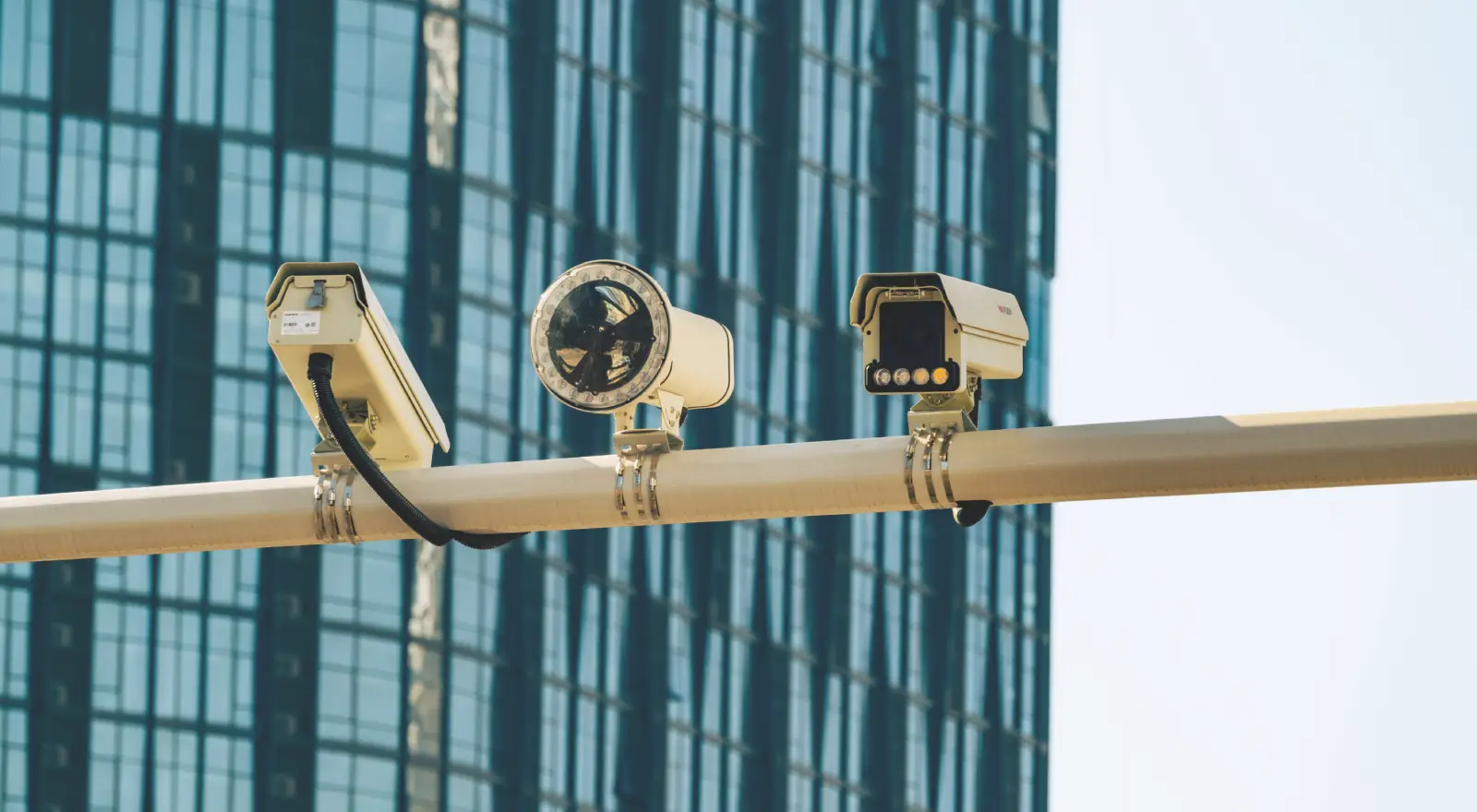
Companies like Flock, Vigilant, and Recore have deployed thousands of license plate reader cameras nationwide, offering subscription access to law enforcement. These aggregated snapshots form rich timelines of vehicle movements, with law enforcement pressuring towns to join national surveillance networks.
How U.S. Agencies Use Commercial Data For Warrantless Surveillance
U.S. agencies increasingly purchase commercial data for surveillance and intelligence work, bypassing traditional legal protections.
Agencies Buy Location Data For Counterterrorism and Intelligence
Tau explains that the Department of Defense purchases phone location data from apps to track overseas targets for counterterrorism, using it for recruiting intelligence sources and kinetic targeting operations.
DHS Uses Commercial Data For Border and Domestic Surveillance
The Department of Homeland Security operates within a 100-mile zone from borders, airports, and coasts—encompassing major cities—gathering data on American movements. DHS tracks entries, visa risks, visitor activities, and uses commercial location data to monitor border crossings and locate undocumented immigrants without warrants.
Law Enforcement Purchases Data For Crime Solving
Local police departments buy commercial data to monitor social media, track vehicles, and identify suspects based on driving patterns—often without probable cause or warrants.
Government Bypasses Fourth Amendment Through Purchases
Tau highlights a legal loophole: while obtaining 30 days of cell carrier data requires a warrant, the government can simply purchase the same information from weather apps or other sources. The Fourth Amendment doesn't cover private transactions, allowing agencies to bypass legal protections.
Data Sales to Hostile Nations Create Security Vulnerabilities
Tau references Pentagon reports showing Iranian operatives used U.S. commercial data to target American soldiers. Foreign intelligence from China, Russia, and Iran can easily purchase U.S. data on the open market, posing serious security threats to military personnel and families.
Unregulated Data Marketplace and Middlemen Facilitating Data Flow
The data brokerage industry operates largely unregulated, with middlemen connecting private sector collectors to government and foreign buyers.
Data Brokers Sell to Agencies Through Shell Companies
Companies establish shell entities that appear legitimate but funnel data to intelligence agencies. For instance, Sierra Nevada Corporation owns a Virginia marketing company that publicly claims innocuous clients but actually contracts with the intelligence community.
Commercial Data Ecosystem Spans Thousands of Companies
The global ecosystem encompasses thousands of companies collecting and trading personal information. Starting in the market costs only a few thousand dollars, with marketplaces like DataRaid accepting credit cards for data purchases. Larger government contracts easily reach six figures.
Brokers Monetize Social Media and Private Communications
Specialized brokers harvest data from public platforms like Twitter, semi-private platforms like Facebook, and private channels like Telegram, infiltrating private groups to collect messages and membership data for government sale.
Indefinite Data Retention and Shell Firms Obscure Flow
Data retention policies allow indefinite storage of behavioral records, while contractors use shell firms to mask recipients. Foreign governments routinely purchase American data through shell companies and intermediaries, evading export restrictions.
Surveillance Tech Outpaces Privacy Laws
Surveillance technology has advanced rapidly while privacy laws lag far behind, creating significant protection gaps.
U.S. Lacks Comprehensive Privacy Legislation
America remains the only major industrial democracy without comprehensive privacy law. Tau and Ryan note that congressional inaction stems from lack of technical expertise, low staff salaries, insufficient oversight, and intense lobbying pressure from the trillion-dollar data industry.
Tech Advances Outpace Constitutional Protections
While Congress historically regulated telecommunications with wiretap warrants and protected health and credit data, it failed to extend protections to internet-era data collection. Modern surveillance methods have rendered Fourth Amendment protections largely obsolete.
Restrictions on Data Sales to Adversaries Prove Ineffective
Congressional restrictions on data sales to Iran, North Korea, China, and Russia can be easily bypassed through shell companies and intermediaries. The U.S. lacks data residency requirements that China and Europe enforce, allowing corporations to transfer data internationally freely.
Data Fusion Companies Threaten Siloed Privacy Protections
Companies like Palantir now offer tools for merging disparate datasets across sectors, dissolving protective barriers between previously siloed information. This threatens to enable comprehensive tracking across multiple life facets without updated legal safeguards.
Strategies For Privacy in Digital Surveillance
Encryption and Limited Permissions Provide Protection
Strong encryption through features like Advanced Data Protection, ProtonMail, and Signal shields sensitive information. Users can limit app permissions for location, contacts, and photos without sacrificing functionality, and can manually enter addresses instead of granting GPS access.
Proxy IDs Prevent Identity Aggregation
Burner phone numbers from services like Glacier and proxy email addresses prevent real contact information from being distributed or resold, allowing users to dispose of compromised contacts.
VPNs and Secure DNS Reduce Exposure
VPNs can obscure traffic from ISPs but redirect trust to the provider—many owned by foreign companies. Secure DNS providers like 9.9.9.9 minimize data broker exposure by preventing interception of domain lookups.
Consumers Must Balance Privacy Trade-offs
Connected devices introduce significant privacy risks, exposing users to potential recruitment attempts or data mining by intelligence agencies. As consumer demand for privacy grows, subscription-based privacy products emerge as alternatives to data-monetized services, with success depending on consumers' willingness to pay for security.
1-Page Summary
Additional Materials
Counterarguments
- Many consumers willingly trade personal data for convenience, discounts, or improved services, indicating a level of informed consent in data collection practices.
- Data collected by retailers and apps is often anonymized and aggregated, reducing the risk of individual identification in many commercial contexts.
- Surveillance technologies and data analytics have contributed to crime prevention, public safety, and efficient law enforcement operations.
- Some smart device manufacturers and app developers provide clear privacy controls and transparency reports, allowing users to manage their data sharing preferences.
- The U.S. has sector-specific privacy laws (e.g., HIPAA, GLBA, COPPA) that provide protections in certain contexts, even if comprehensive legislation is lacking.
- Data-driven insights enable businesses to personalize services, improve customer experiences, and innovate products, benefiting consumers and the economy.
- Many consumers are unaware of or indifferent to data collection practices, suggesting that privacy concerns are not universally prioritized.
- Law enforcement’s use of commercial data can expedite investigations and solve crimes that might otherwise remain unresolved.
- The existence of privacy tools (encryption, VPNs, proxy emails) empowers consumers to take control of their own data protection if they choose to do so.
- International data flows are essential for global commerce and innovation, and strict data residency requirements could hinder economic growth and cross-border collaboration.
Actionables
- you can create a personal data map by listing every service, device, and membership you use, then noting what types of data each collects and where that data might go; this helps you spot unexpected data flows and decide which accounts or devices to limit, delete, or use differently (for example, you might realize your gym membership shares data with third parties, prompting you to use a cash day pass instead).
- a practical way to reduce your digital footprint is to set a recurring monthly reminder to review and delete old accounts, unused apps, and unnecessary online profiles, making it harder for data brokers to build a complete profile over time.
- you can use a decoy identity for non-essential sign-ups by creating a consistent but fictional persona (with a unique name, birthdate, and address) for loyalty programs, online forms, and non-critical memberships, so your real information is less likely to be aggregated or sold.



Get access to the context and additional materials
How Corporations Collect Data Via Consumer Devices, Apps, and Services
Byron Tau and Shawn Ryan detail the vast array of ways in which corporations collect, store, and monetize consumer data via devices, apps, and services, while noting the growing government interest in these datasets and the low level of public discussion or oversight.
Retailers Gather Purchasing Behavior and Personal Identifiers From Loyalty Programs
Companies collect as much customer information as possible: the details of purchases, interests, and willingness to pay drive advertising and pricing strategies.
Grocery Stores Sell Customer Info Gathered From Memberships To Data Brokers
Grocery stores and retailers track everything customers buy through membership and loyalty programs. Signing up for these programs means consumers receive discounts or access while giving up data—phone numbers, email addresses, home addresses, and purchasing habits. This information is regularly packaged and sold to data brokers, who in turn inform major brands what customers buy, forming a lucrative data market. Even when consumers pay for memberships at stores like Costco—sometimes with no discounts provided—the store collects every detail of their purchase history.
Stores Scan Licenses During Returns, Indefinitely Retaining Customer Identity and Transaction History Records
Retailers such as Home Depot often scan the customer’s driver’s license during returns, supposedly for anti-fraud purposes. However, collecting the license provides a strong identity anchor, and most adults comply when asked. These scans are likely stored, adding another layer of personal and transactional data to retailer records.
Smart Home Devices Monitor Behavior and Environmental Conditions
Household technologies increasingly function as surveillance devices, monitoring user activity and the environment, often subsidized by the monetization of gleaned data.
Modern TVs Use Screen Capture to Track Viewer Habits, Monetizing Data to Subsidize Lower Prices
Modern smart TVs have built-in screen-capture technology that monitors what is watched and when. These data streams allow TV makers to subsidize lower product prices—consumers trade privacy for affordability. Some TVs possess or may adopt cameras to detect viewing presence, further expanding the collection of in-home behavioral data.
Robot Vacuums Map Homes and Capture Images; Data May Be Reviewed or Sold To Foreign Entities Like Chinese Companies
Robot vacuums use onboard cameras and sensors to create maps of homes and sometimes capture images. There have been scandals involving vacuums recording highly private moments, with human contractors reviewing the footage for machine learning. Some vacuum brands are Chinese-owned, raising the risk that images and house layouts may be available to foreign companies or governments. While foreign intelligence agencies might not be interested in all homes, a unique individual could be targeted.
Smart Speakers Present Vectors For Data Collection and Hacking by Criminals or Nation-States Seeking Financial Info or Recruitment Opportunities
Smart speakers contain always-on microphones that companies claim are only activated by commands, but accidental triggers do occur, sending conversations into the cloud for AI training. These microphones are vulnerable to hacking, making the devices attractive to criminals seeking financial information, or to nation-states interested in espionage or recruitment. Thermostats and other smart home devices with microphones pose similar risks; even if features are disabled, hackers might reactivate them.
Connected Vehicles Broadcast Location and Driving Data, Sold To Insurers, Brokers, and Law Enforcement
Connected cars routinely collect and transmit driver data—including location, driving habits, and in-car activity—often as part of “free” services offered by manufacturers. Enabling features such as roadside assistance or phone pairing gives access to location and behavioral data, which is sold to insurers, shared with law enforcement, or provided to data brokers. The prevalence of built-in cellular chips in new vehicles makes it difficult to avoid this surveillance, and driving data can be used to adjust insurance rates based on behaviors such as hard braking.
Mobile Apps and Location Services Track User Movements and Patterns
Apps and mobile operating systems continuously harvest data about user locations, habits, and contacts, often under the guise of improving services or convenience.
Apps Track Movements Using Anonymized Geolocation Data
Numerous apps—weather, games, shopping—collect geolocation data tied to anonymized identifiers rather than names or phone numbers. Despite apparent anonymization, correlating nighttime and daytime locations can re-identify users, linking device patterns to real identities and precise movements.
App Permissions Allow Access to Contacts, Calendars, Photos, and Location Data Even When Unnecessary
Permissions requested by apps may far exceed the function of the app itself, opening up access to calendars, contacts, photos, and precise location even when such data isn’t necessary. Apple and Google have now implemented more visible controls, alerting users to frequent tracking attempts, but data collection remains pervasive and valuable, especially for advertising and retail analytics.
Tire Pressure Systems Emit Identifiers Detectable by Sensors, Enabling Tracking Even With License Plate Changes
Vehicle tire pressure monitoring systems emit radio signals with unique identifiers as the car drives. This allows for tracking even when license plates are swapped, as these tire-based signals persist and can be detected with highway sensors, creating an additional surveillance vector for tracking vehicles.
Television, Internet, and Financial Data Create Detailed Consumer Profiles
The various data streams converge into deep, cross-referenced consumer profiles, shaping both corporate strategy and government surveillance opportunities.
Data Brokers Compile Consumer Dossiers Using Property Records, Emails, Browsing, and Purchase Histories
Data brokers aggregate property records, voting histories, email addresses, phone numbers, magazine subscriptions, browsing history, and purchase data fr ...
Here’s what you’ll find in our full summary
How Corporations Collect Data Via Consumer Devices, Apps, and Services
Additional Materials
Counterarguments
- Many consumers willingly trade personal data for convenience, discounts, or improved services, indicating a level of informed consent.
- Data collection enables companies to personalize experiences, improve products, and offer targeted promotions that benefit consumers.
- Retailers and device manufacturers are often subject to data protection laws (such as GDPR or CCPA) that regulate how data is collected, stored, and shared.
- Anonymization and aggregation techniques are commonly used to reduce the risk of individual identification in many datasets.
- Some companies provide clear privacy policies and user controls, allowing consumers to opt out of certain types of data collection.
- Data sharing with law enforcement can aid in crime prevention and public safety when conducted with proper oversight and legal process.
- Technological advancements in security (such as encryption and secure authentication) help mitigate risks associated with data breaches and unauthorized access.
- The presence of data brokers an ...
Actionables
- you can create a personal data map by listing every device, app, and service you use, then noting what types of data each collects and shares, so you can make informed decisions about which memberships, apps, or devices to keep, limit, or remove from your daily life.
- a practical way to reduce unnecessary data exposure is to set a recurring monthly reminder to review and adjust privacy settings, permissions, and account information on all your devices and apps, focusing on removing access to contacts, location, and photos where not essential.
- you can use a simple lo ...
Get access to the context and additional materials
How U.S. Agencies Use Commercial Data For Warrantless Surveillance
U.S. agencies increasingly buy commercially available digital data to conduct surveillance and intelligence work, bypassing traditional legal protections and raising substantial privacy, legal, and security concerns.
Agencies Buy Location Data For Counterterrorism and Intelligence
DOD Buys Phone Data From Apps to Track Overseas Targets and Conduct Counterterrorism
Byron Tau explains that the Department of Defense (DOD) purchases large quantities of commercially available data—including phone location data harvested by apps on the open market—ostensibly for counterterrorism operations. Military and intelligence agencies, which usually focus on overseas operations, use commercially available data to track foreign targets, mirroring the kind of data collected on Americans.
Military and Intelligence Agencies Use This Data For Recruiting Intelligence Sources and Kinetic Targeting Operations
Military and intelligence agencies use this location data for spotting, assessing, and recruiting foreign intelligence sources. The data assists in understanding behaviors of key individuals in foreign countries and is even used to identify and “kinetically” target people. Such practices allow for detailed intelligence gathering without traditional oversight or the need for a warrant.
DHS Uses Commercial Data For Border, Immigration, and Domestic Surveillance
DHS Operates Within 100 Miles of Borders, Airports, and Coasts, Gathering Data on American Movements in Major Cities
Tau describes how the Department of Homeland Security (DHS) uses similar data but focuses inward on border security and internal monitoring. DHS has authority in a 100-mile zone extending from any border—including land borders, airports, and coasts—which encompasses many major American cities. Within this area, DHS routinely collects and analyzes the movements of people, seeking to understand immigration and goods flows, as well as general activities in the region.
Agency Tracks U.S. Entries, Visa Risks, Visitor Activities, and Suspicious Travel
DHS is interested in who is entering the U.S., who is applying for visas, and what people do once they arrive. The agency tracks the movements of visitors, who they travel with, whether they pose risks to aviation, and other indicators of suspicious travel.
DHS Uses Commercial Location Data to Track Border Crossings and Locate Undocumented Immigrants Without Warrants or Oversight
Beyond its border authority, DHS uses commercial location data to track unlawful border crossings and to locate undocumented immigrants in the country’s interior—all without judicial oversight, public discussion, or the requirement for a warrant. These practices have quietly expanded, with little transparency and few safeguards.
Law Enforcement Uses Commercial Data For Crime Solving and Surveillance
Police Use Commercial Data to Monitor Social Media, Track Vehicles, Identify Suspects
Local police departments also purchase and use commercially collected digital data in their crime-solving efforts. Police analyze what’s being said about local politicians and school boards on social media and use data to track where cars travel, monitor travel patterns to downtown areas or known drug trafficking spots, and spot other potentially suspicious activity.
Law Enforcement Identifies Suspicious Driving Patterns Without Probable Cause
Police can use these detailed geolocation records to identify patterns and possible suspect vehicles, sometimes doing so without probable cause or a warrant. This expansive use of commercial data often occurs with little oversight, increasing the risk of abuses and mistaken targeting.
Government Buys Data, Bypassing Fourth Amendment Warrant Requirement
Warrant Needed For 30 Days of Cell Carrier Data, Not for Weather App Data
Byron Tau highlights a legal loophole: If law enforcement wants 30 days of a person’s cellphone location data from their carrier, they must first obtain a judge’s warrant. However, if a consumer has opted into sharing location data through, for exa ...
Here’s what you’ll find in our full summary
How U.S. Agencies Use Commercial Data For Warrantless Surveillance
Additional Materials
Counterarguments
- The use of commercially available data by government agencies is often justified as a necessary tool for national security, counterterrorism, and law enforcement, especially when traditional intelligence methods are insufficient or too slow.
- Individuals often consent—sometimes knowingly, sometimes not—to the collection and sale of their data through app permissions and terms of service, making the data legally available for purchase by any entity, including the government.
- The data purchased is generally anonymized and aggregated, which can make it less invasive than direct surveillance or targeted wiretaps.
- Commercial data acquisition can be more efficient and cost-effective for agencies compared to traditional investigative methods.
- The practice of purchasing commercial data is not unique to the U.S.; many countries use similar methods for intelligence and law enforcement purposes.
- Some argue that the use of commercially available data is less intrusive than compelling companies to hand over user data via legal process, as it does not require dir ...
Actionables
- you can regularly review and adjust your app permissions to limit unnecessary access to your location and personal data, reducing the amount of information available for commercial purchase and potential surveillance; for example, set weather, shopping, and social media apps to only access your location while in use or never, and periodically audit your phone’s privacy settings to remove permissions from apps you no longer use.
- a practical way to reduce your digital footprint is to use cash or prepaid cards for purchases and avoid loyalty programs that track your movements and spending habits, making it harder for data brokers to build detailed profiles that could be sold to third parties; for instance, pay for transit, gas, or coffee with cash instead of cards linked to your identity.
- you can create a personal data-sh ...

Get access to the context and additional materials
Unregulated Data Marketplace and Middlemen Facilitating Data To Government and Foreign Entities
The data brokerage industry is defined by its vast, largely unregulated trade in American personal and behavioral information, facilitated by middlemen who connect private sector data collectors to government and foreign buyers.
Data Brokers Sell Information to Agencies and Private Entities
Data brokers collect and sell extensive personal data, including property, mortgage, and contact information of Americans. Companies are able to set up shell entities or subsidiaries that resemble legitimate business operations but are in fact established to funnel data to intelligence and Department of Defense agencies. For instance, Sierra Nevada Corporation, a U.S. defense contractor, owns a small Virginia-based marketing company called N context. Publicly, this company claims innocuous clients and marketing campaigns, but government procurement websites reveal it contracts with the intelligence community, suggesting it serves as a shell for transferring large volumes of commercial advertising data to U.S. government agencies.
Commercial Data Ecosystem: Companies Collecting, Aggregating, Trading Personal Information
The global commercial data ecosystem encompasses thousands—possibly tens of thousands—of companies collecting, aggregating, and trading personal information. Major advertising platforms like Google’s AdX and Meta’s ad networks not only serve ads but partner with many other companies, allowing business partners access to data about people’s online activities. Many smaller ad networks and companies, often invisible to consumers, participate in the same ecosystem. Getting started in the data brokerage market is not prohibitively expensive; a few thousand dollars is sometimes sufficient to access or sample mobility, internet, or point-of-sale data on the open market. There are marketplaces, such as DataRaid, where a credit card is enough to purchase different data streams. For higher stakes, a contractor can provide detailed movement tracking of an individual’s phone for a few thousand dollars. Larger transactions, such as whole-country feed access for government purposes, easily amount to six-figure deals, with contractors reselling data to government agencies at a markup.
Data Brokers Monetize Social Media, Including Private Communications
Specialized data brokers increasingly target data from social media, including information from public platforms like Twitter, semi-private platforms like Facebook, and private communication channels such as Telegram or large group chats. These companies sometimes infiltrate private online groups, collect messages and membership data, and then sell these details to government agencies. The result is a tiered system of access—public data is broadly available, but more closed or private community data is harvested through subterfuge or exploitation of platform weaknesses and then monetized in specialized government markets.
Data Retention Policies Allow Indefinite Storage of Behavioral and Movement Records
The data retention policies in this ecosystem allow for the indefinite storage of behavioral and movement records, assuming the customer pays the necessary storage costs and has a need for historical analysis. For clients, including government agencies, who see value in years of historical mobility or other behavioral data, vendors offer long-term storage services. The merging and aggregation of disparate data points can create holistic dossiers on individuals, though practical and technical constraints prevent the full unification of all available information into a single government or corporate megadatabase. Instead, personal data remains partitioned across a fragmented commercial landscape, sometimes providing a measur ...
Here’s what you’ll find in our full summary
Unregulated Data Marketplace and Middlemen Facilitating Data To Government and Foreign Entities
Additional Materials
Counterarguments
- While the data brokerage industry is often described as "largely unregulated," there are existing laws such as the Fair Credit Reporting Act (FCRA), the California Consumer Privacy Act (CCPA), and other state-level privacy regulations that impose some restrictions and transparency requirements on data brokers.
- Not all data brokers or advertising platforms sell data directly to government or foreign entities; many operate within strict contractual and legal boundaries, and some have policies explicitly prohibiting such sales.
- The use of shell companies or subsidiaries is a common business practice for reasons unrelated to data transfer, such as tax efficiency, liability management, or organizational structure, and does not inherently indicate illicit or deceptive activity.
- Major platforms like Google and Meta have implemented privacy controls, transparency reports, and user consent mechanisms to limit and inform data sharing, and have taken steps to restrict third-party access to sensitive data.
- The technical and practical constraints that prevent the creation of a unified "megadatabase" are significant, and the fragmentation of data across multiple entities can serve as a meaningful barrier to misuse or abuse.
- Many data brokers and contractors are subject to audits, compliance checks, and oversight, especially when dealing with government contracts, which can mitigate some ri ...
Actionables
- you can create a personal data map by listing every app, website, and service you use, then noting what types of personal information you share with each, to visualize how your data might be fragmented and traded across different companies and markets
- by mapping out where your data goes, you’ll see which platforms have access to your property, contact, and behavioral information, and you can decide where to tighten privacy settings, delete accounts, or use aliases to reduce exposure.
- a practical way to monitor if your personal information is being traded or resold is to set up unique email addresses or phone numbers for different services and track which ones receive unexpected marketing or suspicious contacts
- if you start getting messages or calls on an address or number you only gave to one company, you’ll know that data has likely been shared or sold, helping you identify which services are leaking your information.
- you can experiment with limiting your digital footprint by using privac ...

Get access to the context and additional materials
Surveillance Tech Vs. Outdated Privacy Laws Gap
Surveillance technology in the United States has advanced rapidly, while privacy laws have lagged far behind, creating significant gaps in protection for consumer data and posing new challenges for lawmakers, regulators, and citizens alike.
U.S. Lacks Comprehensive Federal Privacy Legislation
America Lacks Unified National Privacy Laws and Comprehensive Consumer Data Protection Legislation
The United States remains the only major industrial democracy without a comprehensive privacy law that applies uniformly across digital services. Instead, Americans rely on a patchwork of state laws and sporadic executive orders primarily focused on national security, such as attempts to halt certain data flows overseas. Byron Tau and Shawn Ryan note that the lack of a unified, strong privacy regulation leaves decisions about data collection and surveillance largely in the hands of what consumers will tolerate and what companies can get away with. This results in weak and uneven protections for consumer data at the federal level.
Congressional Inaction on Privacy Legislation due to Lack of Technical Expertise, Low Staffing Salaries, Insufficient Oversight, and Lobbying Pressure
The failure to enact comprehensive privacy legislation is tied to several systemic issues in Congress. Tau highlights that congressional staff are often young, underpaid, and quickly lured away by better-paying opportunities in the lobbying sector. This lack of technical expertise and turnover means Congress is ill-equipped to analyze and address complex digital issues. The tremendous financial incentives in the data broker and advertising markets, which form a trillion-dollar global industry, ensure that lobbying pressures are intense. As a result, lawmakers lack the resources and incentive to prioritize or even sufficiently understand digital privacy matters.
Tech Advances Outpace Privacy Protection Regulations
Congress Regulated Telecommunications With Wiretapping Warrants and Legislated Health Data and Credit Information but Failed to Protect Emerging Internet Privacy
Historically, Congress legislated effectively around privacy for telecommunications, requiring wiretap warrants and restricting the release of health and credit information. However, as the internet arose, lawmakers failed to apply similar protections to digital data. There has been no meaningful update of privacy legislation to cover the realities of massive internet-era data collection and use.
Modern Surveillance Methods Outpace Fourth Amendment Protections
As modern surveillance capabilities have evolved, constitutional protections have become obsolete in many contexts. Data collected by private companies falls outside Fourth Amendment protection. Both Tau and Ryan note that it now often feels as if Americans have lost meaningful Fourth Amendment safeguards, as new surveillance technologies have outstripped legal frameworks intended to protect privacy.
Efforts to Restrict Data To Adversarial Nations Ineffective due to Weak Enforcement
Congressional Data Sales Restrictions to Iran, North Korea, China, and Russia Can Be Bypassed Via Shell Companies and Intermediaries, Increasing Compliance Costs but Not Reducing Data Flow to Hostile Nations
Congress has attempted to curtail the flow of data to adversarial nations by restricting the sale of certain information to countries such as Iran, North Korea, China, and Russia. However, Tau points out that these measures are largely ineffective. Foreign adversaries can easily bypass restrictions by purchasing U.S. data through shell companies or intermediaries in other countries, rendering the intended protections largely meaningless. The only effect is an increase in compliance costs for law firms, while data continues to flow abroad.
Global Internet Infrastructure and Data Flows Hinder Data Export Restrictions, With Companies Arguing It Would Disrupt Commerce
The realities of global internet infrastructure make data residency enforcement difficult. Corporate data frequently shuttles across national boundaries for efficiency, with files sometimes stored overseas as dictated by server logistics. Companies argue that strict data localization or export restrictions would disrupt commerce and the functioning of the global economy, making any attempts to restrict international data flows politically and economically contentious.
No Data Residency Requirements Allow Export of Sensitive American Records
Unlike China and Europe With Strict Data Sovereignty Rules, The U.S. Allows Multinational Corporations to Transfer Data Internationally
Un ...
Here’s what you’ll find in our full summary
Surveillance Tech Vs. Outdated Privacy Laws Gap
Additional Materials
Clarifications
- The Fourth Amendment protects against unreasonable searches and seizures by the government, requiring warrants based on probable cause. It was created before digital technology, so it primarily covers physical spaces and tangible items. Digital data held by private companies often falls outside its scope because the amendment limits government actions, not private sector behavior. Courts are still debating how to apply these protections to modern digital privacy issues.
- Data fusion is the process of combining data from multiple sources to create a more comprehensive and detailed picture. Companies like Palantir develop software platforms that integrate and analyze diverse datasets, enabling users to identify patterns and connections that are not visible in isolated data. These platforms are used by governments and businesses for intelligence, law enforcement, and decision-making purposes. Palantir’s tools often handle sensitive information, raising concerns about privacy and surveillance.
- Data brokers collect, buy, and sell vast amounts of personal information without direct consumer interaction. The advertising industry relies heavily on this data to target ads precisely, generating billions in revenue. Both sectors lobby aggressively to prevent strict privacy laws that could limit their data access and profits. Their influence contributes to congressional reluctance to enact strong consumer data protections.
- Siloed databases are separate collections of data kept isolated to limit access and reduce privacy risks. Merging them combines diverse personal information, creating detailed profiles that reveal more about individuals than any single source alone. This aggregation increases the potential for misuse, surveillance, and identity theft. Without strong regulations, fused data can be exploited without individuals' knowledge or consent.
- Data residency rules require that data be stored within a specific country’s borders to ensure local legal control. Data sovereignty means that data is subject to the laws and governance of the country where it is stored, regardless of who owns it. These rules help protect sensitive information from foreign access and enforce national privacy standards. Without such rules, data can be transferred globally, complicating legal protections and enforcement.
- Shell companies are businesses created to hide the true owner or purpose of transactions. Intermediaries act as middlemen who purchase data from U.S. sources and then resell it to restricted countries. This layering obscures the data’s origin, making enforcement of restrictions difficult. Regulators struggle to trace and block these indirect transfers.
- In the mid-20th century, courts recognized that wiretapping without a warrant violated privacy rights. The 1968 Omnibus Crime Control and Safe Streets Act required law enforcement to obtain a court-issued wiretap warrant before intercepting phone calls. This law aimed to balance investigative needs with protecting citizens from unreasonable government intrusion. It set a precedent for regulating electronic surveillance under constitutional p ...
Counterarguments
- Some argue that a patchwork of state privacy laws allows for experimentation and innovation, enabling states to tailor protections to their residents’ specific needs and potentially serve as models for future federal legislation.
- The absence of comprehensive federal privacy law does not mean there are no protections; sector-specific laws like HIPAA (health data), GLBA (financial data), and COPPA (children’s data) provide significant safeguards in key areas.
- Critics of strict data localization requirements contend that such measures could stifle innovation, increase costs for businesses and consumers, and hinder the global competitiveness of U.S. technology firms.
- Some privacy advocates believe that consumer choice and market pressure can incentivize companies to adopt stronger privacy practices even in the absence of federal mandates.
- There is debate over whether increased regulation would actually improve privacy outcomes, as overly prescriptive laws may become ...
Get access to the context and additional materials
Strategies For Privacy in Digital Surveillance
Encryption Provides Baseline Protection for Sensitive Content
Keeping communications and files private begins with strong encryption. Built-in device features such as Advanced Data Protection on Apple phones encrypt communications and files, shielding sensitive information from prying eyes. Third-party platforms like ProtonMail and Tutanota offer encrypted email services, while encrypted drive providers and messaging apps like Signal offer robust privacy for communications. Both WhatsApp and Apple's iMessage encrypt messages, ensuring that companies like Meta cannot access their content, though they may still collect metadata about users and their contacts.
Device Permissions Limit Data Collection Without Sacrificing Smartphone Functionality
Limiting smartphone app permissions is a powerful privacy measure. Users can decline permissions for location, contacts, calendar, and photo library access; most apps perform adequately without these privileges. When using location-based services like Uber or DoorDash, consumers can manually enter their address or use map pins, bypassing the need to grant backend access to precise GPS data and reducing long-term tracking.
Proxy IDs and Burner Contacts Prevent Identity Aggregation Across Transactions
Consumers increasingly use proxy information to foil unwanted data aggregation. Burner numbers, such as those provided by Glacier, offer a way to share a temporary phone number with businesses, political campaigns, hotels, or nonprofits. When spam or privacy risks become evident, users can dispose of the old number and generate a new one—choosing from any U.S. area code. Similarly, proxy email addresses forward messages to a main email account but can be turned off if spam arises or privacy is compromised. This approach prevents real contact information from being widely distributed or resold.
VPN Selection: Balancing Privacy Risks and Benefits
Virtual Private Networks (VPNs) can obscure internet traffic from Internet Service Providers (ISPs) or mobile carriers, but they redirect trust to the VPN provider itself. Many VPNs are owned by foreign companies from countries like China, Russia, or Israel that may collect data, requiring careful evaluation of which poses a lower risk. Some VPNs accept cash and create minimal identity links, which can be valuable for privacy-conscious users. It's important to research providers, as ownership and privacy practices can change due to buyouts or company closures.
Secure DNS Reduces Data Broker Exposure
Configuring phones to use secure DNS providers, like 9.9.9.9 from Switzerland, minimizes exposure to data brokers. Secure DNS prevents applications and brokers from inferring browsing habits by intercepting unencrypted domain lookups. Selecting a trustworthy DNS provider is essential, since they can still access query patterns ...
Here’s what you’ll find in our full summary
Strategies For Privacy in Digital Surveillance
Additional Materials
Clarifications
- Advanced Data Protection is an Apple feature that extends end-to-end encryption to more types of iCloud data, such as backups, photos, and notes. It ensures that only the user can access this data, not even Apple. Enabling it requires additional account security steps, like two-factor authentication. This feature enhances privacy but may limit some recovery options if access is lost.
- Metadata is data about data, describing details like who sent a message, when, and to whom, but not the actual message content. It reveals patterns and relationships without showing the message's words or images. Metadata can be used to track behavior and connections even if the message content is encrypted. Protecting metadata is harder because it is often transmitted openly alongside encrypted content.
- Proxy phone numbers are temporary or secondary phone numbers that forward calls and texts to your real number, keeping your personal number private. Burner numbers are a type of proxy number often used for short-term purposes, like online sales or dating, and can be discarded when no longer needed. These numbers help prevent tracking and reduce spam by separating your identity from specific transactions or contacts. Apps or services generate and manage these numbers, allowing easy disposal and replacement.
- Proxy email addresses act as intermediaries that receive emails on your behalf and then forward them to your real inbox. This setup hides your actual email address from senders, reducing spam and protecting your identity. You can disable or delete the proxy address if it starts receiving unwanted messages, stopping further emails from reaching you. Services offering proxy emails often allow creating multiple addresses for different purposes, enhancing privacy control.
- VPN ownership affects privacy because companies must follow the laws of the country where they are based, which can require data sharing with local authorities. Jurisdictions with strict surveillance or data retention laws pose higher risks for user privacy. Some countries participate in international intelligence-sharing alliances, increasing exposure. Choosing a VPN in a privacy-friendly jurisdiction reduces the chance of government access to your data.
- Some VPN providers allow users to pay with cash by purchasing prepaid cards or vouchers at physical stores, avoiding credit cards or online payments that link to personal information. This method reduces digital footprints and makes it harder to associate the VPN account with a real identity. Minimal identity links mean the VPN collects little to no personal data during signup, often requiring only an email or none at all. Together, these practices enhance user anonymity and privacy.
- Secure DNS encrypts the requests your device makes to translate website names into IP addresses, preventing outsiders from seeing which sites you visit. Without encryption, these requests are visible to data brokers who collect browsing habits for profiling or advertising. By using secure DNS, your queries are hidden from intermediaries, reducing tracking opportunities. However, the DNS provider itself can still see your queries, so choosing a trustworthy one is crucial.
- Data brokers collect and sell detailed profiles of individuals based on their online and offline activities. They gather data from websites, apps, and public records to track browsing habits and preferences. This information is often used for targeted advertising, but can also be exploited for discrimination or identity theft. Because users rarely control or see this data, it poses significant privacy risks.
- Psychographic data mining involves analyzing personal data to understand individuals' personalities, values, opinions, and behaviors. Intelligence agencies use this to predict and influence people's decisions or identify vulnerabilities. This process often combines data from social media, online activ ...
Actionables
- you can create a privacy checklist for your devices and accounts to regularly review and update your security settings, helping you stay on top of new features and permissions that may affect your data exposure; for example, set a monthly reminder to check for new app permissions, review which apps have access to your contacts or location, and update your device’s privacy settings as needed.
- a practical way to reduce digital footprints is to use a dedicated browser or device profile exclusively for sensitive activities like banking or health-related searches, keeping them separate from your everyday browsing to minimize cross-tracking and data aggregation; for instance, set up a browser profile that never logs into social media or uses extensions, and only access important accounts through this profile.
- you can experiment with using han ...
Get access to the context and additional materials

 1-Page Summary
- How Corporations Collect Data Via Consumer Devices, Apps, and Services
- How U.S. Agencies Use Commercial Data For Warrantless Surveillance
- Unregulated Data Marketplace and Middlemen Facilitating Data To Government and Foreign Entities
- Surveillance Tech Vs. Outdated Privacy Laws Gap
- Strategies For Privacy in Digital Surveillance
Create Summaries for anything on the web
Download the Shortform Chrome extension for your browser
