

TRAVIS BARKER: "My Biggest Fear Actually Happened"
In this episode of On Purpose with Jay Shetty, drummer Travis Barker shares his journey from childhood musical training to surviving the 2008 plane crash that changed his life. Barker discusses how his parents' support and his mother's dying wish shaped his commitment to drumming, and how early success led to years of substance abuse as he struggled to balance touring life with fatherhood.
Barker recounts the traumatic plane crash that killed four people, his six-month hospitalization with severe burns, and the deaths of close friends that pushed him to the edge of suicide. The conversation explores how the crash became a turning point toward permanent sobriety, and how breathwork therapy helped him overcome his 20-year fear of flying. Throughout, Barker emphasizes the importance of presence in fatherhood, confronting fears directly, and transforming trauma into strength through resilience and purpose.
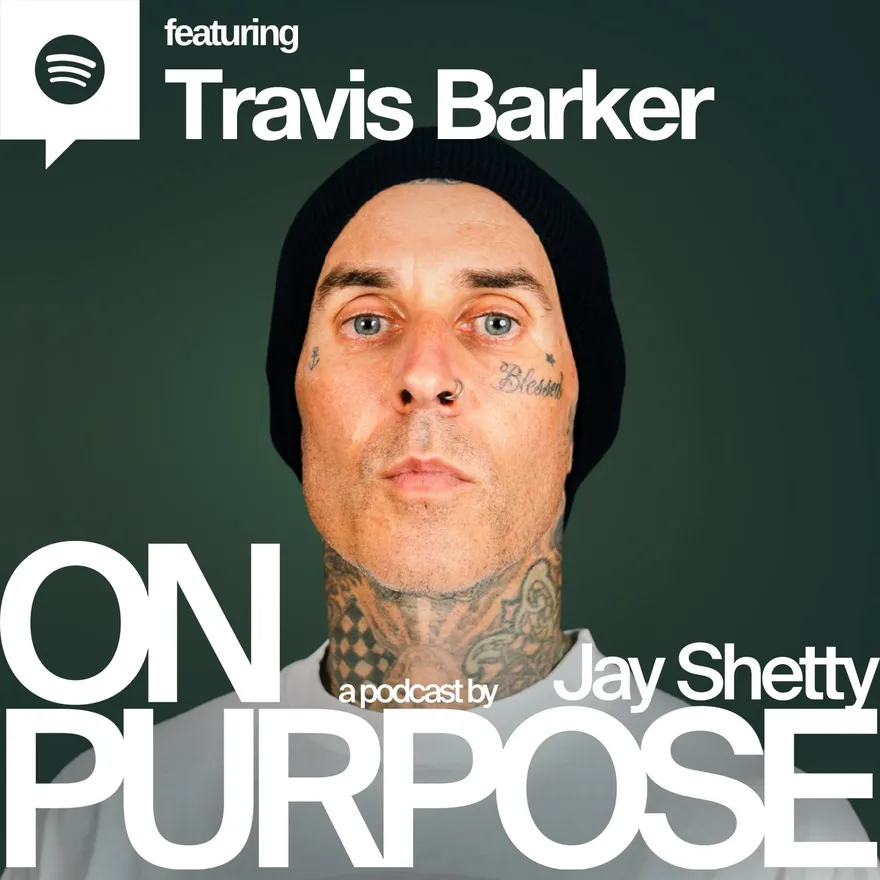

This is a preview of the Shortform summary of the Aug 10, 2026 episode of the On Purpose with Jay Shetty
Sign up for Shortform to access the whole episode summary along with additional materials like counterarguments and context.
1-Page Summary
Childhood, Musical Training, and Parental Influence
Travis Barker's drumming journey began early, banging on pots and pans until his parents bought him a Muppets "Animal" drum kit that he wore out through daily use. His parents instituted strict practice routines—three hours daily before he could skateboard or ride BMX—which built his confidence and gave him purpose. Despite frequent neighbor complaints and police visits, his parents defended his passion. His father eventually pushed him toward a clear path: make a career of music, join the military, or pay rent.
Formal instruction came through drum teacher Edwell, who taught him to read music and exposed him to jazz standards. However, Barker had to self-teach rock and metal by listening to records from the Beastie Boys to Metallica, absorbing diverse genres through skateboarding culture and skate videos.
Tragedy struck when Travis's mother passed away before high school, leaving him with a final wish: to devote his life to drumming. This promise became his anchor. Despite grieving in isolation as his family coped privately, Travis threw himself into every musical opportunity—drumline, jazz band, orchestra, and forming bands through magazine ads. Music became both his solace and life's mission.
Substance Abuse, Addiction, and the 2008 Plane Crash
Barker explains his substance use began around the "Take Off Your Pants and Jacket" era, initially using Norco to manage performance energy. The addiction deepened after becoming a father to Landon, Atiana, and Alabama. Extended tours—sometimes two months overseas—fueled intense anxiety about dying away from his children, leading him to self-medicate with 10 to 20 blunts and multiple pills daily while still maintaining a rigorous routine. He describes himself as a "well-functioning drug addict" struggling with the isolation of hotel life and the clash between rock star persona and father identity.
His bandmate DJ AM, who had over a decade of sobriety, consistently encouraged Travis to attend recovery meetings and offered crucial support, even attending therapy with him focused on overcoming substance abuse.
The plane crash came after powerful premonitions of danger. Travis confessed his reluctance to fly to his manager and even called his father expressing fear, asking him to look after his children if something happened. Once aboard, Travis followed his usual self-medicating routine. During takeoff, gunshot-like sounds erupted, smoke filled the cabin, and the plane crashed into an embankment, catching fire. Travis opened the emergency exit and jumped directly into burning jet fuel. DJ AM helped extinguish the flames on his feet moments before the wreckage exploded.
Tragically, Chris Baker, Che Hallazgo, and both pilots died. Travis was left with profound survivor's guilt, repeatedly questioning why he survived when his friends hadn't.
Recovery, Trauma, Survivor's Guilt, and Sobriety
After the crash, Travis was hospitalized for six months with 70% of his body burned, enduring 30 surgeries. Years of self-medication rendered opiates ineffective, causing extreme agony during procedures. He couldn't see his children for three months and faced the possibility of foot amputation. Surrounded by other burn victims, including children, the trauma intensified.
Heavily medicated early on, Travis didn't initially understand the full scope of what happened. He repeatedly asked about visiting Chris and Che, unaware they had died. Learning the truth devastated him. The loss deepened when DJ AM died from a [restricted term]-related overdose while Travis was still recovering. In his darkest moments, compounded trauma drove Travis to severe suicidal ideation, even offering friends money for assisted suicide.
The turning point came when Travis accepted his duty to honor his friends' memories by living fully. For 20 years after the crash, he refused to fly, letting fear dominate decisions and preventing his children from air travel. Breathwork therapy became crucial, helping him release deep trauma and summon courage to overcome his flying phobia. He had Courtney book a trip without telling him in advance, and his first sober flight to Mexico City was successful.
The six months in the burn center became Travis's unplanned "rehab," the definitive break from his cycle of opiates and weed. The crash sparked permanent sobriety and spiritual transformation, becoming a catalyst that propelled him into a wholesale lifestyle change.
Fatherhood, Relationships, and the Importance of Presence
Barker describes fatherhood as the most rewarding role of his life and the source of continual growth. He's a father to three adult children and two younger children with Courtney, and each child inspires healthier habits like running and boxing. For Travis, presence is everything: "Not like buying them things, but being present. Like putting the time in with your son or your daughter." At 50 with a two-year-old son, he feels renewed vitality and purpose.
Travis and Courtney lived down the street from each other for years, developing a deep friendship through workouts and holidays before Courtney initiated a romantic shift. They quickly fell in love, and Courtney became pregnant within months. The pregnancy ended in miscarriage, which Travis reflects "made us stronger and kind of really let us know that we wanted a child together."
During Courtney's second pregnancy, their son faced complications with his lung, and doctors advised he might not survive. Courtney underwent surgery to release fluid from the baby's lung while Travis flew home from Europe in anxiety. Against the odds, their son survived.
Travis's devotion to his children consistently influences his choices, particularly regarding touring. He contrasts himself with others who view touring as escape: "I love home life, I love my kids. Any chance I get, I'll bring them all on tour." After achieving sobriety, his children's desires motivated him to overcome his fear of flying so they could travel together.
Overcoming Fear, Resilience, and Transforming Trauma Into Strength
Travis's fear of flying once dominated his life, influencing major decisions and affecting his entire family by imposing travel limitations. He eventually recognized that allowing the fear to persist was letting it own his life, which became the catalyst to confront it directly.
Breathwork became key for trauma release and resilience. He engaged in six or seven breathwork sessions before his first flight, describing each as emotionally intense—"bawling his eyes out for an hour." Through these sessions, he connected with memories of his late mother and friend Chris. Breathwork shifted his relationship to fear, moving from intellectually understanding flying was safe to emotionally believing he could be safe. He flew sober, without substances to dull anxiety.
Barker believes purposefully confronting difficulty is vital. Running is more than exercise—it's a metaphor for actively running towards fears rather than avoiding them. He starts each day with a 3-5 mile run to signal his intention to confront life's challenges head-on.
Barker maintains a prayer list before shows that includes his mother, DJ AM, Chris, Che, and the pilots, affirming that those he's lost remain emotionally present. Overcoming trauma is inseparable from honoring those memories—flying again is a tribute to DJ AM, whom he imagines would have insisted he not let fear dictate his future. For Barker, facing fears and tragedy isn't about letting them define you, but about harnessing their power for transformation and growth.
1-Page Summary
Additional Materials
Counterarguments
- While Travis Barker's parents' strict practice routines fostered discipline, such rigidity could also risk burnout or resentment in some children, potentially stifling intrinsic motivation or creativity.
- The narrative frames parental defense of Travis's drumming as wholly positive, but frequent neighbor complaints and police visits suggest his passion may have negatively impacted others' quality of life.
- The ultimatum from Travis's father—pursue music, join the military, or pay rent—could be seen as pressuring a young person into adult responsibilities before they are emotionally ready.
- The text presents self-medication and substance use as coping mechanisms for anxiety and performance pressure, but does not address the broader risks of normalizing drug use in response to stress, especially for public figures with influence.
- The account of overcoming trauma and addiction centers on individual resilience and breathwork therapy, but does not acknowledge the importance of professional mental health support or the potential need for ongoing clinical treatment.
- The emphasis on presence and time with children as the most important aspect of fatherhood may overlook the value of providing financial stability, structure, or other forms of support that are also important in parenting.
- The portrayal of running and confronting fears as universal solutions may not be applicable or effective for everyone, as individuals process trauma and anxiety differently.
- The narrative focuses on personal transformation and growth, but does not address the long-term psychological effects of trauma, which may persist despite positive coping strategies.
Actionables
- you can create a daily non-negotiable practice window for any skill or passion by setting a timer for a fixed period before leisure activities, treating it as a personal contract; for example, commit to 30 minutes of focused drawing, language learning, or exercise before watching TV or using your phone, reinforcing discipline and building confidence over time.
- a practical way to honor lost loved ones or mentors is to keep a small, visible reminder (like a photo or token) in your workspace and dedicate a few minutes each week to reflect on how their influence shapes your current choices, using this ritual to guide decisions and maintain a sense of purpose.
- you can gradually face a persistent fear by designing a step-by-step exposure plan, starting with the least intimidating aspect and tracking your progress in a simple journal; for instance, if you fear public speaking, begin by recording yourself talking, then progress to sharing with a friend, and eventually speaking to a small group, celebrating each milestone to build courage and resilience.

Get access to the context and additional materials
Childhood, Musical Training, and Parental Influence
Drumming Passion Shaped by Parental Discipline and Support
Travis Barker's musical journey begins with relentless rhythm-making on pots and pans as a child, breaking spoons and wooden utensils until his parents recognized his passion and bought him a Muppets "Animal" drum kit. Barker recalls wearing out the drum kit with daily use, confirming his parents' belief that he was destined to be a drummer. Both his mother and father dedicated themselves to nurturing this dream, shaping their home life around Travis’s burgeoning talent.
His parents set strict routines, requiring Travis to practice up to three hours daily before being allowed to skateboard or ride BMX bikes—his other main childhood interests. This structure, which at times felt tough, built his confidence and gave him purpose, steering him away from negative influences that surrounded his neighborhood. Barker remembers early, formative experiences with his father, like being taken to the Pick and Save Warehouse to skateboard in ditches with local kids, which made him feel deeply supported beyond his music.
The family’s commitment was tested by frequent complaints from neighbors about the noise, often resulting in police visits. Despite this, his parents remained steadfast, defending his drumming and encouraging him to persevere. Travis’s father saw his pursuit with a sense of urgency—urging him, as he became an adult, to either make a career out of music, join the military, or pay rent if he chose to stay at home.
Musical Education and Self-Taught Exploration Across Genres
Formal training entered Travis's life when his parents hired drum instructor Edwell, who taught him to read music and exposed him to jazz standards and artists like Buddy Rich and Miles Davis. This education enabled Travis to later participate in orchestra, jazz band, and marching band, making him technically versatile.
However, Travis's instructor drew a line at teaching rock or metal, which meant Barker had to self-teach by listening to records. He learned songs by artists ranging from the Beastie Boys and Public Enemy to Metallica and King Diamond. His eclectic taste was fueled by skateboarding culture; skate videos introduced him to thrash, punk, and hip-hop, encouraging him to absorb and master a wide range of musical styles. Barker describes his listening and drumming habit as a fulfilling experiment, citing DJs who mixed diverse genres as inspirations for his own genre-blending drumming approach.
Mot ...
Here’s what you’ll find in our full summary
Childhood, Musical Training, and Parental Influence
Additional Materials
Counterarguments
- While strict practice routines can build discipline, they may also risk causing burnout or reducing intrinsic motivation if not balanced with autonomy and enjoyment.
- Parental pressure to pursue a specific career path (music, military, or paying rent) could be seen as limiting Barker’s freedom to explore other interests or career options.
- The lack of emotional support and open grieving within the family may have had negative psychological effects, potentially outweighing the benefits of musical focus.
- Frequent noise complaints and police visits suggest that Barker’s drumming may have negatively impacted neighbors’ quality of l ...
Actionables
- you can set a daily timer for a creative or skill-building activity you enjoy, making it a non-negotiable part of your routine before leisure or screen time; for example, practice drawing, writing, or learning a language for a set period before watching TV or scrolling social media, helping you build discipline and confidence in your chosen interest.
- a practical way to blend influences and expand your perspective is to create a weekly playlist or inspiration board that mixes music, art, or ideas from at least three different genres or cultures, then use it as a springboard to try something new—like cooking a dish, writing a poem, or attempting a dance move inspired by those sources.
- you can ...

Get access to the context and additional materials
Substance Abuse, Addiction, and the 2008 Plane Crash
Painkillers and Marijuana Used to Cope With Anxiety and Isolation As a Father
Travis Barker explains that his substance use began during the "Take Off Your Pants and Jacket" era, around the transition from "Enema of the State" to that album. Initially, Travis used Norco, a painkiller, to help mellow himself out and manage the energy required for his performances. However, the nature of the drug conflicted with his high-energy playing, forcing him to be selective about when he could use it.
Substance use deepened once Travis became a father to Landon and met Landon's mother and Atiana. He recounts anxiety and stress caused by being away from home during extended tours, especially by the thought that he could die on tour and not return to his children. This anxiety grew worse after his daughter Alabama was born. The long absences for overseas tours, sometimes lasting up to two months in Europe, Australia, or Japan, made it increasingly hard for him to cope, leading him to self-medicate heavily to handle being away from his family.
Travis describes himself during these years as a “well-functioning drug addict,” capable of consuming 10 to 20 blunts and a handful of pills daily while still maintaining a rigorous routine—running, attending meetings, and practicing with the band. He acknowledges the loneliness and isolation of hotel life on tour, despite the success and dreams achieved, and the internal struggle between his public persona as a rock star and his private identity as a father.
Upon returning from tour, his priorities clashed with his partner at the time. Whereas she wanted to go out and party, Travis wanted to stay home with his kids, further underlining his disconnection and reliance on self-medication to cope.
During this period, Travis’s bandmate DJ AM, who had over a decade of sobriety, consistently encouraged Travis to attend recovery meetings and would challenge him to remain sober for 48 hours before making any major decisions, offering crucial support and influence. DJ AM even attended therapy with Travis that focused on overcoming substance and alcohol abuse, proving to be a vital friend beyond just musical collaboration.
2008 Plane Crash Killed two of Travis's Friends, Nearly Killed Him
Travis recounts a powerful premonition of danger before boarding the flight that changed his life. On the day of the show, he confessed to his manager his reluctance to fly, even suggesting he didn’t need to travel, as he was content at home with his kids. He always mistrusted private planes and recalls his young daughter Alabama forecasting disaster, telling him she feared the roof would come off the house. The last-minute booking left none of the usual checks for pilots or maintenance, intensifying his sense of dread. Travis even called his father, describing the ominously small plane and expressing his fear, going so far as to ask his dad to look after his children if something happened to him.
Once aboard, Travis follo ...
Here’s what you’ll find in our full summary
Substance Abuse, Addiction, and the 2008 Plane Crash
Additional Materials
Counterarguments
- While Travis Barker attributes his substance use primarily to anxiety, stress, and separation from family, many individuals in similar circumstances seek healthier coping mechanisms such as therapy, exercise, or support groups rather than turning to drugs.
- The concept of being a “well-functioning drug addict” can be misleading, as substance abuse often has negative long-term effects on health, relationships, and professional reliability, even if daily routines are maintained in the short term.
- The narrative focuses on external factors (touring, family separation, trauma) as causes for substance abuse, but personal responsibility and choice also play significant roles in the development and continuation of addiction.
- The account highlights the support of DJ AM and therapy, suggesting that effective help and resources were available, which could have been utilized earlier to address substance abuse ...
Actionables
- you can create a simple travel ritual with your family or loved ones before any trip to ease separation anxiety and reinforce connection, such as recording short video messages for each other to watch when feeling lonely or worried while apart.
- a practical way to manage conflicting identities (like professional and personal roles) is to keep a private journal where you write a few sentences each day about how you felt in each role, then review weekly to spot patterns and brainstorm small changes that help you feel more balanced.
- you can se ...
Get access to the context and additional materials
Recovery, Trauma, Survivor's Guilt, and Sobriety
Travis Barker’s account of surviving a plane crash captures harrowing physical and emotional trauma, the grinding battle with survivor’s guilt, and how these experiences forced a profound reckoning with addiction and fear.
Severe Burns Covering 70% of Body Needed six Months In Hospital and 30 Surgeries
After the accident, Travis is rushed to Augusta before transferring to the Grossman Burn Center in LA, with 70% of his body burned. He is hospitalized for six months and endures 30 surgeries. Years of chronic self-medication render opiates largely ineffective; procedures and wound care cause him extreme agony. Barker recalls waking up during surgeries and lashing out in confusion and pain, once swinging at Dr. Grossman, the surgeon who saved his life. Medical staff struggle to manage his pain, and the psychological distress mounts.
Isolation compounds his suffering. For three months, he is unable to see his children due to his vulnerable condition, an absence that he describes as the hardest part of recovery. The possibility of foot amputation adds more anxiety to an already traumatic ordeal, with doctors at one point considering it as an option, leaving him fearful and uncertain about the future.
The burn center environment intensifies his experience of trauma. Travis is surrounded by children who are also recovering from burns, often from cooking accidents. Witnessing their suffering alongside his own leaves a deep impression on him, making the experience even more affecting.
Emotional Devastation From Learning Chris and Che Died, Missing Their Funerals While Hospitalized, and Losing dj Am to a [restricted term]-Related Overdose
Heavily medicated early in hospitalization, Travis does not initially understand the full scope of what’s happened. He repeatedly asks nurses about visiting Chris and Che, unaware that they have died in the crash. The truth lands with devastating impact, and he describes “losing it” upon learning of their deaths, on top of doctors not giving him a discharge timeline, the ongoing risk of amputation, and enforced separation from his children. Barker feels completely hopeless, seeing no light at the end of the tunnel.
The loss deepens when he learns, while still reeling in recovery, that Adam Goldstein, aka dj Am—his closest friend and someone who tried to help Travis get sober—has also died, this time due to a [restricted term]-related overdose. The revelation that Adam was secretly prescribed [restricted term] for flying, something neither Travis nor their circle knew, further intensifies Travis’s sense of powerlessness and grief.
In his darkest moments, the compounded trauma and loss drive Travis to severe suicidal ideation. Desperate and overwhelmed, he admits to offering friends money for assisted suicide, feeling that he was living in hell and unable to see any path out.
Survivor's Guilt Turned Into a Vow to Honor Deceased Friends By Living Fully
The burden of survivor’s guilt weighs heavily on Travis. He struggles to comprehend why he survived when so many did not, especially losing Chris, Che, and dj Am. He finds a turning point only recently, accepting his duty to honor their memories by living fully and courageously. For 20 years after the crash, Travis refuses to fly, letting fear dominate his decisions and preventing his children from air travel as well. Offers for shows or travels by plane are all turned down, with the family resorting to long drives or ocean crossings on ships.
The breakthrough comes when Travis realizes staying grounded is still being defined by the trauma; his friends would want him to reclaim his life. Breathwork therapy becomes a crucial tool, helping him release deep trauma, connect emotionally with his lost loved ones, and summon the courage ...
Here’s what you’ll find in our full summary
Recovery, Trauma, Survivor's Guilt, and Sobriety
Additional Materials
Counterarguments
- While Travis Barker’s story is deeply personal and inspiring, not all survivors of trauma have access to the same level of medical care, therapy, or support systems, which can make recovery and transformation much more difficult for others.
- The narrative centers on individual resilience and personal transformation, but it may underemphasize the importance of systemic support, such as mental health resources and social services, in trauma recovery.
- The focus on overcoming fear and reclaiming life may unintentionally suggest that those who continue to struggle with trauma or phobias are not trying hard enough, which can be discouraging or alienating for some survivors.
- The story frames sobriety as a direct result of the crash and hospitalization, but for many people, addiction recovery is a complex, ongoing process that may not be resolved by a single life event.
- The emphasis on honoring lost friends by living fully is a meaningful coping strategy for Travis, but it may not resonate with or be effecti ...
Actionables
- you can create a personal ritual to honor lost loved ones or past hardships by setting aside a specific day each year to do something meaningful in their memory, such as writing them a letter, visiting a place that reminds you of them, or making a playlist of songs that connect you to them—this helps transform grief into purposeful remembrance and ongoing connection.
- a practical way to face lingering fears or phobias is to write down the specific situations you avoid because of them, then choose the least intimidating one and plan a small, manageable exposure (like looking at photos or reading about it), gradually increasing the challenge as you feel ready—this stepwise approach helps you reclaim agency over your life.
- you can strengthen your reso ...
Get access to the context and additional materials
Fatherhood, Relationships, and the Importance of Presence
Fatherhood: His Greatest Reward and Motivation For Growth
Travis Barker describes fatherhood as the most rewarding role of his life and the source of his continual personal growth. He is a father to three adult children and two younger children with Courtney. Each child inspires him to pursue healthier habits, such as running and boxing. He recalls, “When my first child, Atlanta, was born I started running to the freeway and back. I started boxing. Every child has made me better.”
For Travis, being a father comes naturally, shaped by the disciplined upbringing he received from his own parents. He emphasizes that presence is everything: “Not like buying them things, but being present. Like putting the time in with your son or your daughter.” He places greater value on being there for his children than on material possessions, cementing the importance of time and engagement.
At 50 years old and with a two-year-old son, Travis feels a renewed vitality and purpose. His youngest child makes him feel energized and youthful, sparking the same inspiration and joy he experienced with each of his older children. He cherishes fatherhood at every age, stating, “There’s not an age where it gets old or you don’t feel like the same love you have for being their father. It’s just sort of never-ending. It’s awesome.”
From Friendship and Workouts to a Loving, Compatible Partnership With Courtney
Travis recounts that he and Courtney lived down the street from each other for years before a romantic relationship began. He spent his days in intense twenty-hour studio sessions and focused any remaining time on his children, leaving no room for romance. Despite feeling complete through his love for music and his children, he and Courtney developed a deep friendship, working out, spending holidays together, and ultimately growing “so comfortable” as companions.
Courtney initiated the romantic shift, moving their bond beyond friendship. They quickly fell in love and within months, Courtney became pregnant. The pregnancy ended in miscarriage, a challenging and emotional experience for both. Travis reflects on how this loss, while painful, ultimately strengthened their commitment: “It just made us stronger and kind of really let us know that we wanted a child together.”
Courtney became pregnant again, but this time faced complications with their son's lung. When doctors advised that their baby might not survive, Travis immediately flew home from Europe, fearing the worst. She underwent surgery to release the fluid from the baby's lung. Travis describes the anxiety and helplessness of being on a flight without internet, unable to receive updates on his family’s status. Against the ...
Here’s what you’ll find in our full summary
Fatherhood, Relationships, and the Importance of Presence
Additional Materials
Counterarguments
- While Travis Barker emphasizes the importance of presence over material possessions, some might argue that financial stability and providing material support are also crucial aspects of responsible parenting.
- The narrative centers on Travis’s personal growth and fulfillment through fatherhood, but it does not address the challenges or potential sacrifices his children or partner may experience due to his demanding career and public lifestyle.
- The text presents Travis’s approach to fatherhood as “natural” and shaped by his upbringing, but alternative parenting styles or less traditional family structures can be equally valid and effective.
- The account highlights Travis’s ability to balance work and family, yet many parents in less privileged circumstances may not have the resources or flexibility to do the same.
- The story frames overcoming person ...
Actionables
- you can create a weekly “energy swap” routine where you and your children each choose one healthy activity for the family to try together, helping everyone discover new habits and showing your kids that their interests can shape family wellness
- For example, one week your child might pick a dance video, and the next week you might introduce a simple boxing workout or a nature walk, making health a shared adventure.
- a practical way to prioritize presence over possessions is to set up a “memory jar” where every family member adds a note about a meaningful moment from the week, then read them together at the end of each month to reinforce the value of shared experiences
- This helps everyone focus on time spent together and creates a growing record of connection that doesn’t rely on material gifts.
- ...
Get access to the context and additional materials
Overcoming Fear, Resilience, and Transforming Trauma Into Strength
Travis Barker’s journey reveals the profound impact of fear, the role of resilience, and how trauma, when faced head-on, can be transformed into enduring strength and purpose.
Fear Of Flying Dominated His Life Until He Reclaimed His Freedom
Travis Barker’s fear of flying, rooted in a traumatic plane crash, once dominated his life. This phobia influenced major decisions, such as rejecting a producers’ suggestion for a cinematic plane-ending due to how triggering it was for him. Barker’s flying phobia didn’t just restrict his mobility; it affected his entire family by imposing limitations, especially on his children, as air travel was avoided altogether. He reflects on living life by substituting flights with alternatives like boats and studio sessions while always carrying the underlying knowledge that this fear still controlled him. Eventually, he recognized that allowing the fear to persist was letting it own his life, which became the catalyst pushing him to confront it directly.
Breathwork: Key For Trauma Release and Resilience Before Flying
In preparing to fly for the first time since the crash, Barker leaned on breathwork as a crucial tool for trauma release and resilience. He engaged in breathwork sessions about six or seven times ahead of his flight, each session emotionally intense—he describes “bawling his eyes out for an hour” as highly therapeutic. Through these deep, emotional sessions, he found himself connecting to the memories and presence of his late mother and his friend Chris, who had passed away. Breathwork shifted his relationship to fear: he moved from intellectually understanding that flying was statistically safe to emotionally believing he could be safe—choosing faith over fear.
Barker also mentions sobriety as essential to his process, sharing that he flew sober, without taking any substances to dull his anxiety. Combined with breathwork and the support of his wife, who would surprise him with booked flights, he slowly rebuilt his sense of trust in his own safety and in the world.
Philosophy: Embracing Challenges Defines His Approach To Obstacles and Fears
Travis Barker believes that purposefully confronting difficulty is vital. Running, for example, is more than exercise for him—it’s a metaphor for actively running towards fears and challenges rather than passively letting hardship happen. He starts each day with a long run, typically 3-5 miles, to signal his intention to confront life’s “hard shit” head-on. This ...
Here’s what you’ll find in our full summary
Overcoming Fear, Resilience, and Transforming Trauma Into Strength
Additional Materials
Counterarguments
- While Barker’s approach to overcoming fear through breathwork and confronting challenges worked for him, these methods may not be effective or accessible for everyone dealing with trauma or phobias.
- The narrative emphasizes personal willpower and resilience, but not all individuals have the same resources, support systems, or circumstances to confront trauma in similar ways.
- The focus on facing fears directly may unintentionally downplay the validity of gradual exposure, avoidance, or other coping mechanisms that can also be healthy and effective for some people.
- Barker’s ability to travel and access therapeutic modalities like breathwork may reflect a level of privilege not available to all trauma survivors.
- The idea that trauma can always be transformed into strength may not resonate with everyone; for some, trauma remains a source of ongoing pain or limitation despite their b ...
Actionables
- you can create a personal “fear inventory” by listing specific fears that limit your daily choices, then pick one small, manageable fear each week to intentionally face in a low-stakes way, such as taking a different route to work if you fear getting lost, or trying a new food if you fear unfamiliar experiences; track your reactions and progress in a simple notebook to notice patterns and growth.
- a practical way to honor the influence of lost loved ones is to write a short note or message to them before tackling a challenge, then keep these notes in a dedicated jar or box; revisit them when you need encouragement or want to feel their presence during difficult moments.
- ...

Get access to the context and additional materials


Create Summaries for anything on the web
Download the Shortform Chrome extension for your browser
