

Dr. Jill Biden: The Hardest Moments No One Saw (The Untold Story of the White House Years)
In this episode of On Purpose with Jay Shetty, Dr. Jill Biden shares her experiences as First Lady and reflects on her life with President Joe Biden. She discusses the building of their blended family, the intentional approach they took to create a lasting partnership, and how her own early divorce shaped her views on independence and relationships.
Dr. Biden addresses the family's most difficult challenges, including the loss of their son Beau to cancer and Hunter Biden's struggle with addiction. She also covers her commitment to education and her belief that building student confidence is fundamental to teaching. Additionally, the conversation touches on her advocacy for women's health research, the emotional toll of the 2024 presidential campaign, and her concerns about misinformation in the digital age. Throughout, Dr. Biden emphasizes resilience, compassion, and the importance of supporting one another through hardship.
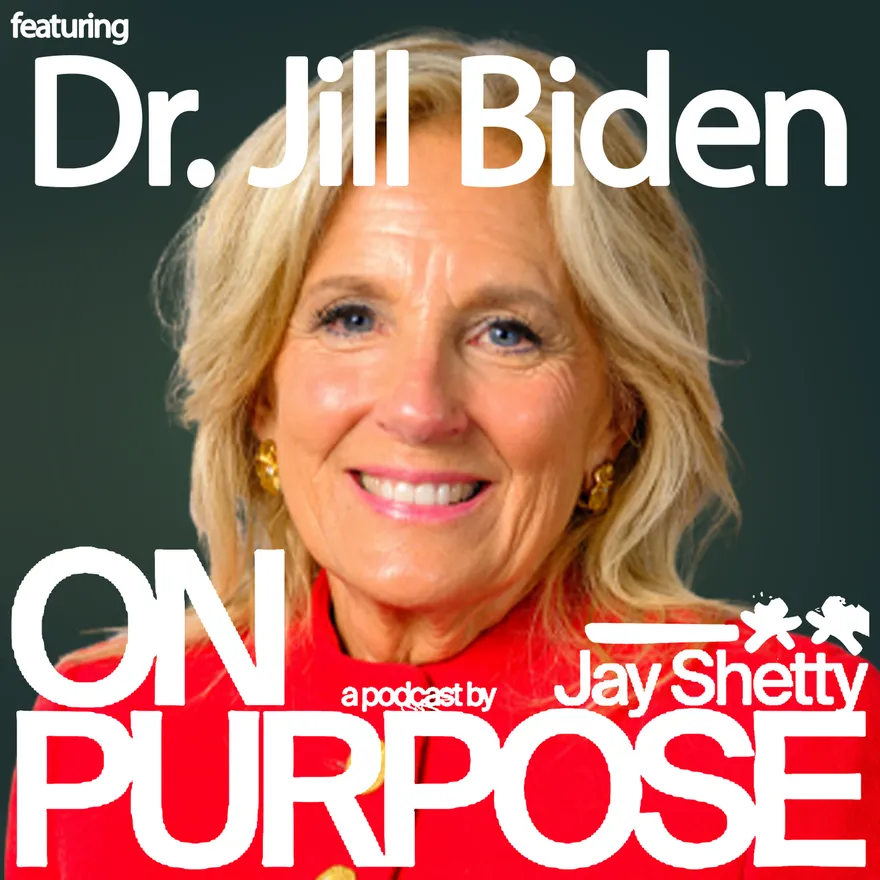

This is a preview of the Shortform summary of the Jun 22, 2026 episode of the On Purpose with Jay Shetty
Sign up for Shortform to access the whole episode summary along with additional materials like counterarguments and context.
1-Page Summary
Family, Marriage, and Long-Term Relationships
Lasting Partnership Through Intentionality and Support
Jill Biden recounts meeting Joe Biden at the University of Delaware, where his respectful and gentlemanly behavior immediately distinguished him from other men. Despite initial reservations about dating someone 10 years older with two sons, she continued seeing Joe for nearly two years. When Joe's sons expressed their hope for marriage, Joe proposed—but Jill rejected him four times before accepting the fifth proposal, wanting absolute certainty for the boys' sake.
Jill emphasizes that their family is built on love and intentionality. She left teaching for two years to focus on becoming a mother to Bo and Hunter, establishing family rituals centered around food and ensuring nightly dinners together. She involved the boys in all family milestones, including her pregnancy, allowing them to share the news and choose the baby's name. After five decades, Jill describes their marriage as rooted in mutual support and respect for each other's career ambitions and personal goals.
Parental Modeling In Shaping Relationship Values
Jill credits her parents with teaching her the value of love, laughter, and spontaneity, recalling playful family memories that she aspired to recreate for her own children. Her early marriage at nineteen ended in divorce after about five years, which was traumatic but taught her that women need their own financial security and autonomy. These experiences—her parents' example and her own hard-won independence—shaped Jill's conviction to work intentionally for the success of her blended family with Joe.
Personal Tragedy and Resilience
Navigating Unimaginable Loss Through Faith and Family Support
Jill Biden describes losing her son Beau to glioblastoma as the worst experience of her life. Despite every medical intervention and doctors' assurances of hope, a compassionate physician finally told the family the truth on the morning of Beau's death. Throughout his illness, Jill balanced full-time teaching with hospital visits while keeping the struggle private to protect her grandchildren.
Jill reflects that resilience emerged from this tragedy, making her and her family impervious to criticism—nothing could be worse than losing a child.
Addressing Family Addiction and Learning Compassion
Jill recounts the pain of Hunter Biden's addiction, when the family often didn't know his whereabouts as he disappeared between rehab stays. Initially, she blamed Hunter, but ultimately recognized addiction as a disease. When Jill attempted an intervention, Hunter ran from the house, but Joe followed and held him, demonstrating the family's commitment to loving him through his struggles. Hunter eventually maintained sobriety, remarried, fathered a son named Bo, and became involved in art and helping others with recovery.
Jill regrets not sharing Hunter's story more openly during her time as First Lady, realizing the importance of destigmatizing addiction so families know they are not alone.
Processing Grief Through Daily Practice and Community Kindness
Jill copes with Beau's loss one day at a time, sustained by ongoing support from friends and community members whose daily gestures made a lasting difference. Prayer and mindfulness begin each morning for Jill, who emphasizes the importance of kindness and compassion since everyone can be struggling beneath outward appearances.
Education and the Power Of Teaching
Building Confidence as the Foundation For Student Success
Jill Biden believes the greatest gift a teacher can offer is confidence. She introduces a poetry assignment on the first day of class where students write a poem titled "Where I'm From," helping them find their voices by sharing personal stories. Jill reads her own poem about her Italian heritage, and students gradually become eager to share their experiences, creating community bonds in the classroom. She maintains contact with many former students, celebrating their achievements and providing ongoing mentorship.
Intentionality in the Classroom and Beyond
Jill credits a high school art teacher with shaping her sense of intentionality by teaching her to question each aesthetic choice and find deeper meaning beyond surface-level appeal. This practice of questioning and seeking intention extends to her choices outside the classroom.
The Educator's Role In Addressing Societal Challenges
Jill describes the challenges educators face in addressing issues like substance abuse among students. She recounts urging students who showed up high daily to seek counseling, only to be dismissed with assertions that they had things under control. Despite the difficulty, Jill persists in advocating for students' well-being, underscoring the complex role teachers play in confronting their invisible battles.
Political Life and Public Service
Joe Biden's Presidential Campaigns and Jill's Role
Joe Biden launched his first presidential campaign in 1987, with Jill constantly traveling while balancing motherhood and teaching. The campaign ended due to plagiarism accusations, but Jill considers this serendipitous—in February 1988, Joe was diagnosed with an aneurysm and hospitalized at Walter Reed for seven months. Throughout this period, Jill continued teaching and commuting two hours after school.
Jill describes her independent convictions, recounting an incident from around 1972 when she wrote "no" across her stomach with a black marker to protest pressure for Joe to run for president. In later years, when Joe ran for president, he often made the decision without her explicit input. She emphasizes that each respected the other's independence—she supported whatever path Joe chose, just as he supported her career and volunteer work.
Navigating the 2020 Presidential Victory and Its Aftermath
Jill recalls the tense week awaiting the 2020 election results, with the moment of victory surreal and deeply emotional when their grandchildren ran out with the news. After four years out of office spent teaching at Nova University, the return to campaign life was a significant and challenging transition.
The 2024 Debate Crisis and Its Emotional Toll
During the 2024 presidential debate, Jill watched anxiously from the green room as Joe suddenly froze on stage, fearing he might be having a stroke. Afterward, Joe admitted he had messed up, but they proceeded with three more campaign events that night, determined to continue until it became clear they could not.
Jill was heartbroken when Joe ultimately left the presidential race, marking the end of his public service career after over 50 years in a negative light. While people praised Joe for his sacrifice, the emotional toll on Jill was profound. She struggled with disappointment but continued to support Harris's campaign. After the election, Jill was surprised to discover that social media metrics were more accurate predictors of electoral outcomes than the enthusiastic crowds she had witnessed at rallies, realizing that digital momentum behind President Trump was overwhelmingly strong.
Women's Health and Gender Advocacy
Advocating For Increased Women's Health Research and Funding
Jill Biden draws attention to the essential need for more research and funding in women's health. She remarks that before 1993, most medical research focused on male biology, creating significant knowledge gaps that led to misdiagnosis and disparities in treating conditions like osteoporosis, endometriosis, and heart disease. Jill joined the Milk and Women's Health Network and convinced President Biden to launch a $1 billion White House initiative focused on women's health, demonstrating that government action can drive broader change and innovation.
Addressing Contemporary Women's Health Challenges and Prevention
Jill discusses current issues, such as young women returning to tanning beds despite skin cancer risks. She recounts her personal experience with skin cancer removal during her time as First Lady and advocates for improved health education, urging women to use sunscreen, avoid smoking, and make informed decisions about their bodies.
Empowering Young Women to Advocate For Equality
Jill highlights the challenges facing young women today, including the loss of progress in gender equality, reproductive rights, and wage protections. She stresses the need for young women to actively fight for their rights and is dedicated to mentoring them, aiming to instill agency, confidence, and a sense of their own power.
Media Literacy and Truth in the Digital Age
Jill Biden raises concerns about digital media and information literacy, sharing a recent experience in which both Google and ChatGPT painted the January 6th Capitol insurrection in an undeserved positive light. She reflects on how algorithm-driven platforms and AI can distort facts, making it difficult for young people to discern truth from misinformation. Jay Shetty echoes her worries, acknowledging the challenge of balancing the regulation of misinformation with the protection of free speech in the modern digital landscape.
1-Page Summary
Additional Materials
Counterarguments
- While Jill Biden emphasizes intentionality and mutual support in her marriage, some may argue that her account downplays the challenges and compromises inherent in blended families, which can be more complex than described.
- The narrative of resilience through tragedy may not resonate with all families, as not everyone is able to find strength or become "impervious to criticism" after loss; grief and coping mechanisms vary widely.
- Jill Biden's regret about not sharing Hunter Biden's addiction story more openly could be critiqued, as some might argue that public figures have a right to privacy and that sharing such stories can have unintended negative consequences for family members.
- The emphasis on nightly family dinners and rituals as a foundation for family success may not be feasible or realistic for all families, especially those with demanding work schedules or single-parent households.
- While Jill Biden advocates for increased women's health research, some critics might point out that significant progress has been made in recent decades, and that framing the issue as primarily a result of past neglect may overlook ongoing efforts and improvements.
- The assertion that social media metrics are more accurate than rally enthusiasm in predicting electoral outcomes could be challenged, as both have limitations and can be influenced by factors such as bots, misinformation, and unrepresentative sampling.
- Jill Biden's concerns about digital misinformation and AI platforms could be countered by noting that these technologies also provide access to diverse viewpoints and can be valuable tools for education and civic engagement when used responsibly.
- The focus on empowering young women to fight for rights and equality, while important, may be critiqued by those who believe that progress has been made and that the narrative should also highlight achievements and positive changes rather than primarily focusing on setbacks.
- The portrayal of Joe Biden's respectful and gentlemanly behavior as exceptional may be seen as reinforcing traditional gender norms, which some may find outdated or limiting.
- The narrative of mutual support and independence in Jill and Joe Biden's marriage could be questioned by those who believe that major life decisions, such as running for president, should involve more explicit spousal input and shared decision-making.
Actionables
- you can create a weekly family or household check-in where each person shares one personal goal and one way others can support them, reinforcing intentionality, mutual respect, and support for individual ambitions in your closest relationships.
- a practical way to foster resilience and compassion in your family or friend group is to set up a rotating “kindness calendar,” where each person chooses a small act of support or encouragement for someone else in the group each week, especially during tough times.
- you can track your own digital information diet by keeping a simple log for one week of where you get news and fact-checking one story per day using at least two different sources, helping you recognize and counteract misinformation in your daily life.

Get access to the context and additional materials
Family, Marriage, and Long-Term Relationships
Lasting Partnership Through Intentionality and Support
Jill Met Joe Biden At the University of Delaware and, Despite Initial Reservations, Was Won Over by His Respectful Behavior and Genuine Interest After two Years
Jill Biden recounts meeting Joe Biden when she was a senior at the University of Delaware. Their first interaction was initiated by Joe, who called her and asked her out, even though Jill already had a date. Joe’s respectful and gentle manner on their first date stood out to her. Unlike other men of the time, he ended the night simply by saying, “I’d like to see you again,” without expecting anything further. This display of honor and restraint led Jill to call her mother and say, “Mom, I finally met a gentleman.”
At first, Jill found Joe different from anyone she’d dated—he wore a suit instead of the bell bottoms and tie-dye her peers wore, and he was 10 years older with two sons, Bo and Hunter, following the tragic loss of his first wife and daughter. Despite low expectations, Jill continued seeing Joe, dating nearly every night for almost two years, eventually being naturally woven into Bo and Hunter’s lives.
Jill Rejected Joe's Proposals Until Accepting the Fifth, Seeking Assurance for His Motherless Sons
After two years, Joe’s sons expressed their hope that he would marry Jill. Following this, Joe began to propose marriage, but Jill rejected him four times before finally accepting the fifth proposal. She wanted to be absolutely certain for the sake of the boys, ensuring stability and love after their earlier loss.
Principles of the Couple's Marriage: Love, Jill Leaving Teaching For Stepchildren, Family Rituals
Jill emphasizes that their family is built on love and intentionality. She left her teaching job for two years specifically to focus on becoming a mother to Bo and Hunter, making sure they felt secure and prioritized. Jill volunteered at their school library and celebrated their pride in her presence; she became involved in their sports and daily routines. She established family rituals centered around food, reflecting her belief that “food is love.” Every night, Jill ensured the family had dinner together, waiting for Joe to come home from work so they could all share dessert.
Jill Smoothly Involved Her Stepchildren In Family Events and Decisions
Jill involved Bo and Hunter in all aspects of family life, from trips to the beach and the movies to more intimate family milestones. For example, when she suspected she was pregnant, she brought the boys along to buy a pregnancy test and let them share the news with their father, allowing them to choose the baby’s name and come to the hospital for the birth. She took care to make them feel secure and included with the arrival of a new sibling.
After Five Decades, Jill and Joe Uphold Their Marriage Through Mutual Respect, Support, and Prioritization of Each Other's Career and Personal Goals
Jill describes the beauty of her relationship with Joe as rooted in mutual support and respect for one another’s choices and ambitions. Throughout their marriage, Joe has supported her career, teaching, and volunteer activities, while she has supported his political career and personal direction. This ongoing encouragement and understanding are the foundations they continue to uphold after five decades together.
Parental Modeling In Shaping Relationship Values
Parents Showcased Love, Laughter, and Spontaneity in Marriage, Shaping Her Joyful Home For Her Children
Jill credits her parents with teaching her the value of love, laughter ...
Here’s what you’ll find in our full summary
Family, Marriage, and Long-Term Relationships
Additional Materials
Clarifications
- Joe Biden is a prominent American politician who has served as the 46th President of the United States since January 2021. Before his presidency, he was Vice President from 2009 to 2017 under President Barack Obama. He has had a long career in the U.S. Senate, representing Delaware for several decades. Biden is known for his work on domestic policy, foreign relations, and his focus on unity and bipartisanship.
- Joe Biden's first wife, Neilia, and their infant daughter, Naomi, died in a car accident in 1972. The accident occurred shortly after Biden was elected to the U.S. Senate. Neilia and Naomi were struck by a truck while shopping for Christmas decorations. This tragedy deeply affected Biden and his family, shaping his personal and political life.
- Bo and Hunter Biden are Joe Biden’s two sons from his first marriage. Their mother and sister died in a car accident in 1972, deeply affecting the family. Bo and Hunter have been public figures due to their father’s political career and personal challenges. Their presence shaped Jill Biden’s approach to family and marriage.
- Bell bottoms and tie-dye were popular fashion trends in the late 1960s and early 1970s, associated with the counterculture and hippie movements. Bell bottoms are pants that flare out from the knee downward, while tie-dye is a colorful, patterned fabric created by tying and dyeing cloth. These styles symbolized youth rebellion and a casual, free-spirited lifestyle. Joe Biden’s suit contrasted with this, reflecting a more traditional, formal appearance.
- Jill’s low expectations stemmed from societal norms where dating someone significantly older with children was less common and often viewed as complicated. Joe’s recent family tragedy added emotional complexity, making a relationship with him seem uncertain. Additionally, blending into an existing family required careful consideration and commitment. These factors naturally tempered Jill’s initial hopes.
- Jill leaving her teaching job reflects a traditional family role where one partner prioritizes caregiving and household responsibilities to support the family’s emotional stability. This decision often involves sacrificing personal career advancement to focus on nurturing children and managing daily family life. It highlights the value placed on hands-on parenting and creating a secure environment for stepchildren. Such choices can strengthen family bonds but may also impact the caregiver’s long-term professional identity and financial independence.
- The phrase “food is love” means that preparing and sharing meals expresses care and affection within a family. It symbolizes nurturing relationships through time spent together around the table. Family meals create a sense of belonging and emotional connection. This ritual strengthens bonds and communicates support beyond words.
- Blended families combine members from previous relationships, creating complex emotional dynamics. Stepchildren may experience loyalty conflicts, grief, or insecurity needing sensitive integration. Successful integration requires clear communication, patience, and building trust to form new family bonds. Socially, blended families may face external judgments but can foster resilience and diverse support networks.
- Jill’s early marriage and subsequent divorce exposed her to the challenges of relying on a partner financially. This experience highlighted the risks women face without their own income or savings. It reinforced the importance of economi ...
Counterarguments
- While Jill Biden’s decision to leave her teaching job to focus on her stepchildren is portrayed positively, some may argue that women should not feel obligated to sacrifice their careers for family, and that shared parental responsibilities could have been emphasized instead.
- The narrative centers on traditional family rituals and roles, which may not resonate with or be applicable to all families, especially those with different cultural backgrounds or non-traditional structures.
- The emphasis on food as a central family ritual, while meaningful for some, may not be universally significant or possible for families with different schedules, dietary restrictions, or economic limitations.
- The story highlights mutual support and respect as the foundation of a lasting marriage, but this may not be sufficient or possible in all relationships, and some couples may require additional resources or support to maintain a healthy partnership.
- Jill’s experience of financial independence following her divorce is presented as a lesson for all women, but not all women have equal access to education, employment, or resour ...

Get access to the context and additional materials
Personal Tragedy and Resilience
Navigating Unimaginable Loss Through Faith and Family Support
Jill Biden describes losing her son Beau as the worst experience of her life. Despite every medical intervention—trials, medicines, and operations—the family clung to hope, as doctors continually assured them that the situation could turn around. Jill prayed intensely, certain that God would not take Beau. Yet, as Beau’s illness with glioblastoma worsened, reality became harder to escape. On the morning of Beau’s death at Walter Reed, doctors again spoke of hope, but a compassionate physician stopped his colleagues and told them to give the truth to the Bidens. The family then learned that Beau would likely die that day.
Throughout Beau’s illness, Jill balanced her role as a full-time teacher with hospital visits, keeping her struggle private to protect her grandchildren. She commuted to the hospital in the mornings, taught during the day, and then returned to the hospital, all while Joe Biden worked as vice president. The family shielded Beau’s children from the full extent of his illness, unwilling to compound their grief.
Jill reflects that resilience emerged from this tragedy, making her and her family impervious to criticism. After such loss, no cruelty or negativity from others could affect them. She emphasizes that nothing can be worse than losing a child.
Addressing Family Addiction and Learning Compassion
Jill recounts the pain of Hunter Biden’s addiction. The family often did not know Hunter’s whereabouts as he disappeared between rehab stays, with his daughters asking about their absent father. Initially, Jill blamed Hunter, questioning how he could turn to drugs when he had been given so much, but she ultimately recognized addiction as a disease.
Jill attempted an intervention by flying someone in to help Hunter. When Hunter realized what was happening, he ran from the house, but Joe followed and held him, demonstrating the family's deep commitment to loving him through his struggles. Over time, Hunter maintained sobriety, remarried, fathered a son named Bo, and became involved in art and helping others with recovery.
Jill regrets not sharing Hunter’s st ...
Here’s what you’ll find in our full summary
Personal Tragedy and Resilience
Additional Materials
Counterarguments
- While Jill Biden describes her family as "impervious to criticism" after Beau's death, some may argue that personal tragedy does not necessarily make individuals immune to the effects of public scrutiny or negativity.
- The decision to shield Beau’s children from the full extent of his illness could be questioned, as some child psychologists advocate for age-appropriate honesty to help children process grief and avoid confusion.
- The narrative centers on faith and prayer as coping mechanisms, but others may find resilience through secular means or different belief systems.
- Jill’s regret about not sharing Hunter’s addiction story more openly highlights a missed opportunity for public advocacy, which some may view as a lack of transparency during her tenure as First Lady.
- The emphasis on family and community support may not reflect the reality for individuals who lack such resources, and the text does not address the challenges faced by ...
Actionables
- you can create a private, rotating support calendar with a few trusted friends or family members so that each week, someone checks in on you with a small gesture or message, ensuring ongoing support rather than just initial sympathy; for example, one person might send a funny meme, another might drop off a favorite snack, and another might simply text to ask how you’re doing.
- a practical way to protect children from overwhelming family stress is to develop a simple, age-appropriate communication plan for difficult times, such as preparing a set of reassuring phrases or activities you can use when kids sense something is wrong but aren’t ready for the full truth; for instance, you might say, “We’re all taking care of each other right now,” a ...
Get access to the context and additional materials
Education and the Power Of Teaching
Building Confidence as the Foundation For Student Success
Jill Biden believes the greatest gift a teacher can offer is confidence. She stresses that it is less important for students to instantly master academic structure—like writing a paragraph or a topic sentence—than it is for them to believe in their ability to try. Confidence, she insists, can be transformative for student outcomes.
To help students find their voices and build this foundation, Jill introduces a poetry assignment on the first day of class. She tells her students they will write a poem titled "Where I'm From," often met with resistance and disbelief. To ease them into the task, she reads George L. Alliance’s poem, then shares her own poem, drawing on her Italian heritage by describing the sauce bubbling on the stove and noodles drying in the kitchen. Using food and family memories as a starting point helps students relate and engage. Jill reads poems from previous classes, and students gradually become eager to share their own stories, finding connections such as realizing they, too, are from Peru or have grandmothers who made the same dishes. This exercise helps students overcome shyness, fosters vulnerability, enables them to share experiences, and creates community bonds in the classroom.
Jill maintains contact with many of her former students, celebrating their achievements and supporting their journeys. She mentors young women, hears their stories, provides guidance, and continues to bolster their confidence even after they leave her classroom. This ongoing relationship highlights her dedication to her students’ long-term growth.
Intentionality in the Classroom and Beyond
Jill credits a pivotal educational influence—a high school art teacher—with shaping her sense of intentionality. This teacher taught her to question each aesthetic choice in her artwork, asking "why" behind every decision, not settling for the answer that something simply looked good. The lesson was to find deeper meaning and purpose beyond surface-level appeal.
Jill recognizes that this practice of questioning ...
Here’s what you’ll find in our full summary
Education and the Power Of Teaching
Additional Materials
Clarifications
- Jill Biden is the First Lady of the United States and a lifelong educator. She has worked as a community college professor for many years. Her experience in teaching shapes her advocacy for education and student support. She often emphasizes the importance of confidence and intentionality in learning.
- Confidence is crucial because it motivates students to engage and persist despite challenges. Without confidence, fear of failure can prevent trying new skills. Building confidence creates a positive mindset that supports learning and growth. Mastery of skills often follows once students believe in their ability to succeed.
- Using food and family memories in poetry helps students connect personal experiences to their writing, making abstract tasks more relatable. This approach taps into familiar, emotional themes that encourage self-expression and cultural identity. It creates a safe space for sharing, which builds trust and community in the classroom. Ultimately, it makes poetry more accessible and meaningful for students.
- Intentionality in art means making deliberate choices with clear reasons, not just for appearance. It involves understanding the purpose behind each element to convey deeper meaning. In teaching and life, this means acting thoughtfully, ensuring decisions align with values and goals. This approach fosters meaningful, purposeful actions rather than random or superficial ones.
- Educators often lack specialized training to identify and address substance abuse effectively. Students may hide their struggles due to stigma or fear of punishment, making detection difficult. Limited school resources and support services constrain intervention efforts. Teachers must balance discipline with empathy while navigating legal and ethical boundaries.
- Teachers often form close bonds with students and ...
Counterarguments
- While building student confidence is important, some educators argue that mastery of academic skills should not be deprioritized, as foundational knowledge is essential for long-term academic and professional success.
- Focusing primarily on confidence-building may risk neglecting students who require more structured academic support or who benefit from clear, measurable learning objectives.
- Not all students may relate to or feel comfortable with personal storytelling or poetry assignments, potentially making such activities less effective for diverse classrooms.
- The emphasis on sharing personal experiences in class could inadvertently pressure students to disclose information they are not ready to share, potentially causing discomfort or anxiety.
- Maintaining ongoing relationships with former students, while supportive, may not be feasible or appropriate for all educators due to time constraints, boundaries, or differing professional philosophies.
- The approach of intentional questioning and seeking deeper meaning may not resonate with all students, particularly those who thri ...


Get access to the context and additional materials
Political Life and Public Service
Joe Biden's Presidential Campaigns and Jill's Role
Joe Biden launched his first presidential campaign in 1987. During this time, Jill recounts constantly traveling to campaign events in Iowa, balancing her responsibilities as a mother to three children—including a six-year-old Ashley—and teaching. Despite her effort, the campaign ended due to accusations that Joe plagiarized a passage from a speech by Kinnick. In hindsight, Jill considers this campaign’s end to be serendipitous, as it likely saved Joe’s life: in February 1988, while teaching, she received an urgent call and rushed home to find Joe gravely ill. He was taken to Walter Reed hospital and diagnosed with an aneurysm. Jill remembers confronting a priest delivering last rites, insisting Joe wasn’t going to die after all the children had already lost their mother.
Joe remained hospitalized at Walter Reed for about seven months. Throughout this period, Jill continued working as a teacher, commuting two hours after school and relying on friends and babysitters to help at home. Beau was away at the University of Pennsylvania, and the period was among the toughest of their lives, but ultimately Joe recovered.
Jill’s independent convictions also shaped their political path. She describes an incident from around 1972 when supporters pressured Joe to run for president. Young and resolute, she wrote “no” across her stomach with a black marker and calmly presented herself to the group, sending a clear message. Jill emphasizes that when Joe ran for president in later years, he often made the decision without her explicit input. In their partnership, each respected the other's independence: Jill supported whatever path Joe chose, just as he supported her career, teaching, and volunteer work. She believed in the value of mutual respect and partnership in marriage.
Her experience during Joe’s vice presidency influenced her view of the presidency. Jill learned about the demands and sacrifices required by public office as Joe served under President Obama, and this background shaped her thinking when pressure mounted for Joe to run for president again in 2020. Ultimately, she felt Joe had to make that decision on his own, weighing not only public pressure and the question of age, but also their shared understanding of the challenges of political life.
Navigating the 2020 Presidential Victory and Its Aftermath
Joe's Presidency Victory
Jill recalls the tense week awaiting the results of the 2020 presidential election, with continuous news coverage by Steve Kornacki and mounting exhaustion. To escape the tension, she and Joe took a quiet coffee break by their lakeside dock, only to be interrupted by their grandchildren running out with news of their victory. The moment was surreal and deeply emotional for the family.
After Four Years Out of Office, Jill Transitioned To a Nova University Teacher, Making Her Return to Politics Challenging and Significant
After Joe’s vice presidency, they spent four years out of public office. Jill commuted from Delaware to teach at Nova, cherishing the routine and pursuing other interests. The return to campaign life for 2020 was a significant transition—both challenging and rewarding—marking a return to the demanding realities of public service at the national level.
The 2024 Debate Crisis and Its Emotional Toll
During the 2024 presidential debate, Jill watched anxiously from the green room as Joe suddenly froze on stage, fearing he might be having a stroke. She was scared and started pacing, uncertain about his condition. Afterward, Jill rushed onto the stage to check on him. Joe admitted, “I really f-ed up,” to which she agreed. Doctors assured her that Joe wa ...
Here’s what you’ll find in our full summary
Political Life and Public Service
Additional Materials
Clarifications
- The "Kinnick" referenced is likely a mistaken or fictional name, as no well-known speech or figure named Kinnick is associated with Joe Biden's 1987 campaign. The plagiarism accusation involved Biden using parts of a speech by British Labour leader Neil Kinnock without proper attribution. This controversy contributed to Biden's withdrawal from the 1988 presidential race. The incident highlighted the importance of originality and integrity in political campaigns.
- Walter Reed National Military Medical Center is a premier U.S. military hospital known for treating high-profile patients, including presidents. It specializes in complex and critical care, such as neurosurgery for aneurysms. Joe Biden's treatment there ensured access to top medical expertise and advanced technology. The hospital's reputation underscores the seriousness of his condition and quality of care received.
- Last rites are a Catholic sacrament given to a person who is seriously ill or near death. They include prayers, anointing with oil, and confession to prepare the soul for passing. The ritual offers spiritual comfort and forgiveness of sins. It reflects the belief in the importance of dying in a state of grace.
- Steve Kornacki is a political journalist and television host known for his detailed and energetic election coverage. During the 2020 election, he provided real-time analysis of voting data and projections on MSNBC. His work helped viewers understand complex election results as they unfolded. Kornacki became a prominent figure for his clear explanations and engaging presentation style.
- Nova Southeastern University, often called Nova University, is a private research university in Florida known for its strong education and health programs. Jill Biden teaching there is notable because it highlights her commitment to education and maintaining a professional career outside of politics. Her role at Nova reflects her identity as an educator, separate from her public life as First Lady. This dual role underscores her dedication to both public service and personal vocation.
- During the 2024 presidential debate, Joe Biden's sudden freezing on stage raised immediate concerns about his health, specifically the possibility of a stroke. Such an event can indicate a serious neurological issue requiring urgent medical evaluation. This incident highlighted the physical and mental demands of high-stakes political campaigns on aging candidates. It also influenced public perception and campaign decisions, contributing to Biden's eventual withdrawal from the race.
- Kamala Harris is the Vice President of the United States, serving alongside Joe Biden since 2021. In the 2024 campaign, she became the Democratic Party's presidential candidate after Biden withdrew. Harris is the first woman, first Black person, and first South Asian American to hold the vice presidency. Her campaign represented a continuation of the Democratic leadership following Biden's departure.
- Social media metrics measure how much peo ...
Counterarguments
- The narrative emphasizes Jill Biden's balancing of family, teaching, and campaign responsibilities, but some may argue that access to resources such as friends, babysitters, and political connections provided her with support not available to most working parents.
- The claim that the end of the 1987 campaign "likely saved Joe Biden’s life" is speculative; while the timing of his aneurysm was fortuitous, there is no way to know if campaign stress directly contributed to or prevented a worse outcome.
- The portrayal of mutual respect and independence in the Bidens' marriage may overlook the potential impact of unilateral decision-making on family dynamics, especially when major life choices are made without explicit spousal input.
- The text suggests that Jill’s experience as Second Lady gave her unique insight into the presidency, but critics might argue that proximity to power does not necessarily equate to a comprehensive understanding of the presidency’s demands.
- The surprise at the predictive power of social media met ...


Get access to the context and additional materials
Women's Health and Gender Advocacy
Advocating For Increased Women's Health Research and Funding
Jill Biden draws attention to the essential need for more research and funding in women’s health. She remarks on how, before 1993, most medical research was focused on male biology, creating significant knowledge gaps in women’s health. This absence of dedicated research has led to misdiagnosis and disparities in the treatment of conditions such as osteoporosis, endometriosis, menopause, heart disease, and autoimmune diseases. Observing the urgent need for progress, Jill joined the Milk and Women's Health Network, using her platform to highlight the gap in women’s medical research and convincing President Joe Biden to launch a $1 billion White House initiative focused on women's health. This federal investment has begun to spur venture capital and critical research, demonstrating that government action can drive broader change and innovation in the field.
Jill expresses her admiration for the young women scientists and researchers she has met in the field, noting the hope she finds in their discoveries and dedication to curing rare diseases. She recognizes the importance of multidisciplinary collaboration and feels optimistic that women's health is moving in the right direction.
Addressing Contemporary Women's Health Challenges and Prevention
Jill Biden discusses current issues, such as the trend of young women returning to tanning beds despite established risks of skin cancer. She recounts her personal experience with skin cancer removal during her time as First Lady, describing the trauma and the importance of prevention. Jill advocates for improved health education and urges women to use sunscreen, avoid smoking, eat healthy foods, and make informed decisions about their bodies. She emphasizes the vital role of self-management and preventive care so young women can positively direct their own health outcomes.
Empowering Young Women to Advocate For Equality
Jill highlights the challenges facing young women today, including the loss of progress in gender equality, reproductive rights, and wage protections. She stresses the need for young women to actively fight for their rights, seek answers to their health questions, and question societal norms surrounding gender equality. Jill is dedicated to mentoring young women, aiming to instill in them agency, confidence, and a sense of their own power to contribute to so ...
Here’s what you’ll find in our full summary
Women's Health and Gender Advocacy
Additional Materials
Clarifications
- Before 1993, most clinical studies excluded women or did not analyze data by sex, leading to gaps in understanding female health. The National Institutes of Health (NIH) Revitalization Act of 1993 mandated the inclusion of women in NIH-funded clinical research. This law aimed to ensure that medical research findings would be applicable to both sexes. It marked a turning point toward recognizing biological differences and improving women's health outcomes.
- Multidisciplinary collaboration means experts from different fields work together on a problem. In women's health, this could include doctors, biologists, psychologists, and data scientists combining their knowledge. This approach leads to more comprehensive research and innovative solutions. It helps address complex health issues that one discipline alone cannot solve.
- Many young women use tanning beds due to social and cultural beauty standards that associate tanned skin with attractiveness and health. Peer pressure and media portrayals reinforce the desire for a bronzed appearance. Additionally, tanning can release endorphins, creating a temporary feeling of well-being or relaxation. Despite awareness of risks, these factors often outweigh concerns about skin cancer.
- Jill Biden's personal experience with skin cancer removal involved undergoing a medical procedure to excise cancerous skin cells, which can be physically and emotionally distressing. This experience highlights the real dangers of skin cancer, often caused by excessive UV exposure, such as from tanning beds. It underscores the importance of prevention measures like sunscreen use and avoiding harmful behaviors. Her story serves to personalize and strengthen her advocacy for skin cancer awareness and prevention.
- Self-management involves individuals actively monitoring and managing their own health behaviors and conditions. Preventive care includes actions like vaccinations, screenings, and lifestyle choices that reduce the risk of disease. Together, they help detect health issues early and maintain well-being, leading to better long-term health outcomes. Empowering people to take charge of their health reduces complications and healthcare costs.
- Gender equality has faced setbacks due to political and social resistance, reversing some legal protections and cultural gains. Reproductive rights have been restricted in many areas through laws limiting access to abortion and contraception. Wage protections remain inadequate, with persistent pay gaps and weakened enforcement of equal pay laws. These challenges undermine progress toward fairness and economic security for women.
- Mentorship provides young women with guidance, support, and role models to navigate personal and professional challenges. It helps build confidence, skills, and networks essential for career and social advancement. Mentors share knowledge and experiences that empower mentees to make informed decisions and overcome barriers. This relationship fosters leadership and encourages active participation in social and gender equality efforts.
- Digital media platforms use algorithms that prioritize content based on engagement, not accuracy, often amplifying sensational or misleading information. AI algorithms can generate or promote false content by learning from biased or incomplete data. These systems create echo chambers where users see information that reinforces their existing beliefs, limiting exposure to diverse perspectives. The rapid spread and personalization of content make it difficult for users ...
Counterarguments
- While medical research historically focused more on male biology, significant progress has been made since 1993, and many current research initiatives now include women, making the gap less pronounced than in the past.
- Some critics argue that government funding alone may not be the most efficient way to drive innovation, and that private sector incentives or public-private partnerships could be more effective in advancing women’s health research.
- The assertion that young women are regressing in gender equality and rights is debated; some data suggest that women have made substantial gains in education, workforce participation, and leadership roles in recent decades.
- Risky behaviors like tanning are not exclusive to young women; young men also engage in health-risk behaviors, so prevention efforts should be broadly targeted.
- There is ongoing debate about the extent and form of government regulation of digital media and AI, with concerns that increased regulation could threa ...
Get access to the context and additional materials


Create Summaries for anything on the web
Download the Shortform Chrome extension for your browser
