

 1
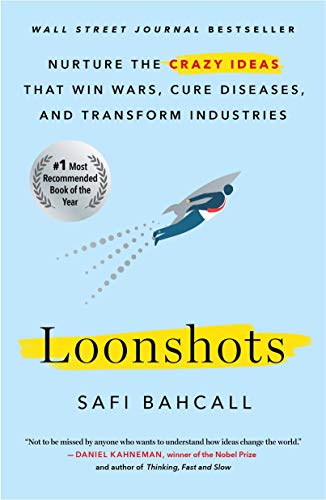
1Loonshots: How to Nurture the Crazy Ideas That Win Wars, Cure Diseases, and Transform Industries
In Loonshots, physicist and entrepreneur Safi Bahcall reveals a surprising new way of thinking about the mysteries of group behavior that challenges everything we thought we knew about nurturing radical breakthroughs.
Drawing on the science of phase transitions, Bahcall shows why teams, companies, or any group with a mission will suddenly change from embracing wild new ideas to rigidly rejecting them, just as flowing water will suddenly change into brittle ice. Mountains of print have been written about culture. Loonshots identifies the small shifts in structure that control this transition, the same way that temperature controls the change from water to ice.
Using examples that range from the spread of fires in forests to the hunt for terrorists online, and stories of thieves and geniuses and kings, Bahcall shows how this new kind of science helps us understand the behavior of companies and the fate of empires. Loonshots distills these insights into lessons for creatives, entrepreneurs, and visionaries everywhere.

Author
A wonderful book that explores the beauty, quirkiness and complexity of ideas, Loonshots will both educate and entertain you. If you care about ideas—especially new and out-of-the-box ones—you need to read this book. [source]

Nobel Prize Winner, Author
This book has everything: new ideas, bold insights, entertaining history and convincing analysis. Not to be missed by anyone who wants to understand how ideas change the world. [source]

Author & Entrepreneur
It really is a damn good book. So I encourage people, loonshots.com, take a look at the book. And if you’re like, “I still need to be sold,” okay. Go read up on Safi and you’ll be like, “Okay, there are probably additional things that I could learn from Safi and from the historical examples that you weave together, right?” It’s really the way that I like to learn personally and I think it’s the way a lot of humans learn as you pointed out, is through stories that illustrate points. And it’s tempting I think, and this is another thing that impresses me about you, is to, from the influence of, in some cases academics too, to speak in abstractions and conceptual frameworks without the real life sort of human glue that makes it memorable. And the memorable component is really important because if you don’t have the acronyms, the stickiness of these concepts, how the hell are you going to apply them when the time comes that they are actually important to implement? So check out Loonshots. [source]