Want to know what books Charles Cumming recommends? We've researched interviews, social media posts, podcasts, and articles to build a comprehensive list of Charles Cumming's favorite book recommendations of all time. At Shortform, we know books. Our book guides are the best in the world. Learn why.
Cover unavailable
1
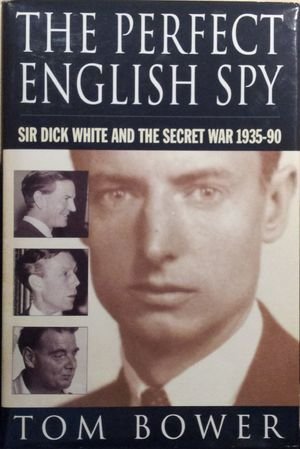
The Perfect English Spy: Sir Dick White And The Secret War, 1935 1990
When I was 25 I was approached for a job by MI6. The experience that I had – which was brief but extremely interesting – was crying out to be dramatised. I had always wanted to write a novel, but up to that point I didn’t have a subject, I didn’t have a story. [source]
Chapman Pincher is about 95, still alive, and has been a thorn in the side of the Establishment throughout his long career as a journalist. In the early 1980s, he published Their Trade is Treachery in which he alleged that Sir Roger Hollis, who had been the head of MI5, was a Soviet agent. The book caused a great scandal when it was published. Most of Pincher’s information came from a man called Peter Wright, who wrote Spycatcher. Wright now has something of a reputation as a paranoid fantasist. [source]
Cover unavailable
3
The Mask of Dimitrios (Charles Latimer, #1)
Eric Ambler
4.1
A chance encounter with a Turkish colonel leads Charles Latimer, the author of a handful of successful mysteries, into a world of sinister political and criminal maneuvers. At first merely curious to reconstruct the career of the notorious Dimitrios, whose body has been identified in an Istanbul morgue, Latimer soon finds himself caught up in a shadowy web of assassination, espionage, drugs, and treachery that spans the Balkans. The classic story of an ordinary man seemingly out of his depth, A Coffin for Dimitrios remains Eric Ambler's most widely acclaimed novel.
Eric Ambler is the grandfather of the serious spy novel. [source]
Cover unavailable
4
The Constant Gardener
John le Carre
4.0
Now a major motion picture from Fernando Meirelles, the Academy Award-nominated director of City of God
The Constant Gardener is a magnificent exploration of the new world order by one of the most compelling and elegant storytellers of our time. The novel opens in northern Kenya with the gruesome murder of Tessa Quayle--young, beautiful, and dearly beloved to husband Justin. When Justin sets out on a personal odyssey to uncover the mystery of her death, what he finds could make him not only a suspect among his own colleagues, but a target for Tessa's killers as well.
A master chronicler of the betrayals of ordinary people caught in political conflict, John le Carre portrays the dark side of unbridled capitalism as only he can. In The Constant Gardener he tells a compelling, complex story of a man elevated through tragedy as Justin Quayle--amateur gardener, aging widower, and ineffectual bureaucrat--discovers his own natural resources and the extraordinary courage of the woman he barely had time to love.
There is actually only one spy in The Constant Gardener, an MI6 officer in Kenya, who I think at one point is involved with Quayle, the lead character, because he needs a piece of information about his dead wife. [source]
Cover unavailable
5
Sex, Lies, and Videotape
James Spader, Andie MacDowell, Steven Soderbergh
4.0
The annotated screenplay and production notes from the award-winning and extremely popular movie, including an essay about the origins and making of the film by its highly acclaimed writer/director. Illustrated.
The story of sex, lies and videotape is the story of a marriage between a lawyer, who is having an affair with his wife’s sister, a savvy, sassy barmaid, and his rather straitlaced, you might say frigid, wife, played by Andy MacDowell. And into their lives comes a character played by James Spader, an old university friend of the husband. It’s at least ten years since they were at college. Spader’s character has changed a great deal in that time and has rejected corporate, bourgeois suburban life. He’s also impotent. He gets his kicks by winning the trust of women – he’s very honest about who he is and what his problem is – and getting them to talk about their sex lives on camera. It sounds like the seediest film, but it works, principally because all the characters – with the exception of the husband – are sympathetic. Damaged and strange, but sympathetic. That in itself is an achievement. [source]
Lionel Davidson was writing it before the collapse of the Soviet Union, but it was published shortly afterwards. In many ways, it’s a throwback, an old-fashioned Cold War novel. But it had great success when it was first published in the mid-1990s and then had a reboot here in the UK about five years ago and sold like hotcakes, largely thanks to Waterstones getting behind it. It’s a fabulous book, very detailed, very strange. It’s got a slightly ludicrous plot about a secret scientific facility in Russia and a very unusual hero: an Indigenous Canadian. It’s fantastically well written and the last third of the novel, the exfiltration out of Siberia across the Bering Strait into Alaska, is breathtaking. [source]
David Shukman
I absolutely love this. It’s a very, very skilful thriller, and very innovative. Lionel Davidson came up with this extremely unusual hero, a Canadian Indian from one of the tribes in British Columbia. The character is given great linguistic abilities and the looks that are typical of the Arctic peoples. And the whole plot revolves around getting him into this incredibly secret base in a very, very closed and remote part of Siberia, to discover a great secret. As it happens, it’s a place I’ve been to, not the base, which is fictional, but the town and region of Cherskii. What I love about this thriller is that the author is just wonderfully sympathetic to the Arctic peoples, who get a slightly rough press sometimes. There is the assumption among many that you’ve got the eskimos living in igloos up in the Arctic, and that’s about it. What this book does is delve into the richness of the different cultures, into the diversity of the different peoples there, their rivalries, and where they feel united. It’s all in the context of the racism of the Russians, who never liked or seem to have respected the people of the Arctic, or even the Arctic itself, except as something to exploit. And it’s a theme that rings very true. Particularly under the Soviet Union, the different peoples of the Arctic were collectivised and there was industrialisation of the crudest kind, exploitation of minerals, and ghastly tales of the gulags. This is all up in this region that’s now going through extraordinary change with the melt opening up great competition for resources, for new shipping routes and for control. The Russians planting a Russian flag on the sea bed at the North Pole was really a signal of intent, that they see the Arctic as their backyard. The book was written long before that event happened, which was only three years ago. But it’s all part of the context there. And I just think it’s a cracking story. I’ve reread it a number of times. [source]
It’s a brilliant opening scene…It’s an IRA story, a throwback to the sorts of novels Gerald Seymour or Jack Higgins used to write. Before Putin and 9/11, the principal existential threat to the UK was Irish Republicanism: a bomb going off in Harrods, say, or a shopping centre in Manchester [source]
In the post-Cold War, post-9/11 world, however, you have Holly Watt and Charlotte Philby, who are writing not specifically spy stories, but political thrillers from a female point of view. In the case of To the Lions, Holly Watt’s first book, it’s about a tough, hard-bitten female journalist, Casey Benedict. Journalism and spying are quite similar professions. They’re both about finding out information, about scoops and employing cloak-and-dagger tradecraft to get what you want. Holly and Charlotte are both doing something new, which is to put women front and center in stories which have been typically male-dominated—from James Bond to George Smiley to Jackson Lamb. [source]


 1
1 Recommended by Charles Cumming.