1100 Best Zoology Books of All Time
We've ranked the best zoology books using expert recommendations, sales data, and millions of reader ratings. At Shortform, we know books. Our book guides are the best in the world. Learn why.
1
2The Sixth Extinction: An Unnatural History
In prose that is at once frank, entertaining, and deeply informed, The New Yorker writer Elizabeth Kolbert tells us why and how human beings have altered life on the planet in a way no species has before. Interweaving research in half a dozen disciplines, descriptions of the fascinating species that have already been lost, and the history of extinction as a concept, Kolbert provides a moving and comprehensive account of the disappearances occurring before our very eyes. She shows that the sixth extinction is likely to be mankind's most lasting legacy, compelling us to rethink the fundamental question of what it means to be human.
Former USA President
The president also released a list of his summer favorites back in 2015: All That Is, James Salter The Sixth Extinction, Elizabeth Kolbert The Lowland, Jhumpa Lahiri Between the World and Me, Ta-Nehisi Coates Washington: A Life, Ron Chernow All the Light We Cannot See, Anthony Doerr [source]
CEO/Microsoft
The Sixth Extinction: An Unnatural History, by Elizabeth Kolbert. Climate change is a big problem—one of the biggest we’ll face this century—but it’s not the only environmental concern on the horizon. Humans are putting down massive amounts of pavement, moving species around the planet, over-fishing and acidifying the oceans, changing the chemical composition of rivers, and more. Natural scientists posit that there have been five extinction events in the Earth’s history (think of the asteroid that wiped out the dinosaurs), and Kolbert makes a compelling case that human activity is leading to the sixth. Unlike a lot of people who write about the environment, Kolbert doesn’t resort to hype. She just lays out the facts and wraps them in memorable anecdotes. It’s a sobering but engaging and informative read. [source]
Founder/Amazon
"In his autobiography, Walmart's founder expounds on the principles of discount retailing and discusses his core values of frugality and a bias for action — a willingness to try a lot of things and make many mistakes. Bezos included both in Amazon's corporate values," Brad Stone writes. [source]
3The Selfish Gene
Why are there miles and miles of "unused" DNA within each of our bodies? Why should a bee give up its own chance to reproduce to help raise her sisters and brothers? With a prophet's clarity, Dawkins told us the answers from the perspective of molecules competing for limited space and resources to produce more of their own kind. Drawing fascinating examples from every field of biology, he paved the way for a serious re-evaluation of evolution. He also introduced the concept of self-reproducing ideas, or memes, which (seemingly) use humans exclusively for their propagation. If we are puppets, he says, at least we can try to understand our strings. --Rob Lightner
Vice Chairman/Berkshire Hathaway
recommends this book in the second edition of Poor Charlie’s Almanack. [source]
Turned evolutionary biology on its head and was written like a great detective story. [source]
CEO/Evernote
Had a profound influence on me pretty early on. [source]
4Last Chance to See
THE WASHINGTON POST BOOK WORLD
Join bestselling author Douglas Adams and zooligist Mark Carwardine as they take off around the world in search of exotic, endangered creatures. Hilarious and poignant--as only Douglas Adams can be--LAST CHANCE TO SEE is an entertaining and arresting odyssey through the Earth's magnificent wildlife galaxy.
He describes in this book not only the beauty of these animals, but the human landscape they live in and what a disastrous time he has getting to these locations. [source]
This is a book obviously for readers but it’s also a book for writers of science to understand how to capture the imagination of readers. [source]
For me, Last Chance to See is a real eye-opener, with the idea that you can take a depressing subject – species on the verge of extinction – and present it in a way which is so engaging, so funny and so humane. [source]
5The Origin of Species by Means of Natural Selection: Or, the Preservation of Favored Races in the Struggle for Life
Yet The Origin of Species (1859) is also a humane and inspirational vision of ecological interrelatedness, revealing the complex mutual interdependencies between animal and plant life, climate and physical environment, and—by implication—within the human world.
Written for the general reader, in a style which combines the rigour of science with the subtlety of literature, The Origin of Species remains one of the founding documents of the modern age.
Astrophysicist, Author & Science Communicator
Which books should be read by every single intelligent person on planet? … On the Origin of Species (Darwin) to learn of our kinship with all other life on Earth. If you read all of the above works you will glean profound insight into most of what has driven the history of the western world. [source]
It is one of the most important books written, and I always urge people to read it. [source]
For me (and many others) this book forms the foundation for modern biology. It is all about humans’ concept of themselves. [source]
6Your Inner Fish: A Journey Into the 3.5-Billion-Year History of the Human Body
Neil Shubin, a leading paleontologist and professor of anatomy who discovered Tiktaalik-the "missing link" that made headlines around the world in April 2006-tells the story of evolution by tracing the organs of the human body back millions of years, long before the first creatures walked the earth. By examining fossils and DNA, Shubin shows us that our hands actually resemble fish fins, our head is organized like that of a long-extinct jawless fish, and major parts of our genome look and function like those of worms and bacteria.
Shubin makes us see ourselves and our world in a completely new light. Your Inner Fish is science writing at its finest-enlightening, accessible, and told with irresistible enthusiasm.
7The Soul of an Octopus: A Surprising Exploration Into the Wonder of Consciousness
Scientists have only recently accepted the intelligence of dogs, birds, and chimpanzees but now are watching octopuses solve problems and are trying to decipher the meaning of the animal’s color-changing techniques. With her “joyful passion for these intelligent and fascinating creatures” (Library Journal Editors’ Spring Pick), Montgomery chronicles the growing appreciation of this mollusk as she tells a unique love story. By turns funny, entertaining, touching, and profound, The Soul of an Octopus reveals what octopuses can teach us about the meeting of two very different minds.
8My Family and Other Animals (Corfu Trilogy #1)
It’s a real work of genius and needs to be kept on every child’s bedside table. [source]
9The Genius of Birds
In The Genius of Birds, acclaimed author Jennifer Ackerman explores the newly discovered brilliance of birds. As she travels around the world to the most cutting-edge frontiers of research--the distant laboratories of Barbados and New Caledonia, the great tit communities of the United Kingdom and the bowerbird habitats of Australia, the ravaged mid-Atlantic coast after Hurricane Sandy and the warming mountains of central Virginia and the western states--Ackerman not only tells the story of the recently uncovered genius of birds but also delves deeply into the latest findings about the bird brain itself that are shifting our view of what it means to be intelligent.
Consider, as Ackerman does, the Clark's nutcracker, a bird that can hide as many as 30,000 seeds over dozens of square miles and remember several months later where it put them, or the mockingbirds and thrashers, species that can store 200 to 2,000 different songs in a brain a thousand times smaller than ours.
But beyond highlighting how birds use their unique genius in technical ways, Ackerman points out the impressive social smarts of birds. They deceive and manipulate. They eavesdrop. They give gifts. They kiss to console one another. They blackmail their parents. They alert one another to danger. They summon witnesses to the death of a peer. They may even grieve.
This elegant scientific investigation and travelogue weaves personal anecdotes with fascinating science. Ackerman delivers an extraordinary story that will both give readers a new appreciation for the exceptional talents of birds and let them discover what birds can reveal about our changing world. Richly informative and beautifully written, The Genius of Birds celebrates the triumphs of these surprising and fiercely intelligent creatures. From the Hardcover edition.
10In the Shadow of Man
11Beyond Words: What Animals Think and Feel
Weaving decades of field observations with exciting new discoveries about the brain, Carl Safina's landmark book offers an intimate view of animal behavior to challenge the fixed boundary between humans and nonhuman animals. In Beyond Words, readers travel to Amboseli National Park in the threatened landscape of Kenya and witness struggling elephant families work out how to survive poaching and drought, then to Yellowstone National Park to observe wolves sort out the aftermath of one pack's personal tragedy, and finally plunge into the astonishingly peaceful society of killer whales living in the crystalline waters of the Pacific Northwest.
Beyond Words brings forth powerful and illuminating insight into the unique personalities of animals through extraordinary stories of animal joy, grief, jealousy, anger, and love. The similarity between human and nonhuman consciousness, self-awareness, and empathy calls us to re-evaluate how we interact with animals. Wise, passionate, and eye-opening at every turn, Beyond Words is ultimately a graceful examination of humanity's place in the world.
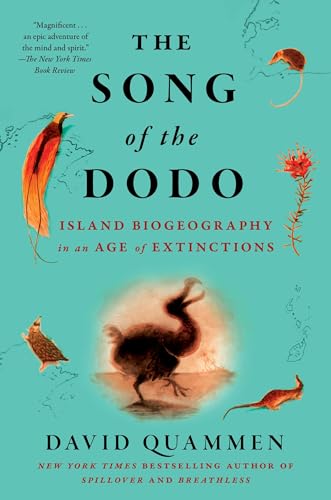
12The Song of the Dodo: Island Biogeography in an Age of Extinctions
In The Song of the Dodo, we follow Quammen's keen intellect through the ideas, theories, and experiments of prominent naturalists of the last two centuries. We trail after him as he travels the world, tracking the subject of island biogeography, which encompasses nothing less than the study of the origin and extinction of all species. Why is this island idea so important? Because islands are where species most commonly go extinct -- and because, as Quammen points out, we live in an age when all of Earth's landscapes are being chopped into island-like fragments by human activity.
Through his eyes, we glimpse the nature of evolution and extinction, and in so doing come to understand the monumental diversity of our planet, and the importance of preserving its wild landscapes, animals, and plants. We also meet some fascinating human characters. By the book's end we are wiser, and more deeply concerned, but Quammen leaves us with a message of excitement and hope.
Quammen’s wondrous peregrination of islands takes us on a journey of evolutions and extinctions in order to illustrate how like islands our continents have become. [source]
The book covers the role that islands have played in our thinking about how nature works. [source]
A brilliant journalist who can tell scientific stories with the kind of panache you’d expect from a novelist. [source]
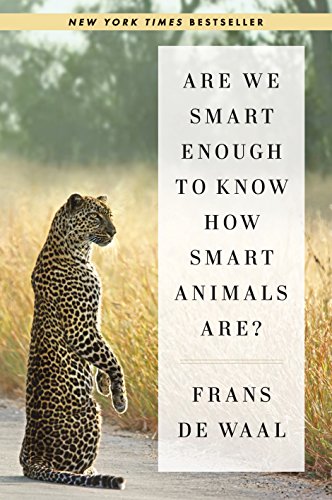
13Are We Smart Enough to Know How Smart Animals Are?
People often assume a cognitive ladder, from lower to higher forms, with our own intelligence at the top. But what if it is more like a bush, with cognition taking different forms that are often incomparable to ours? Would you presume yourself dumber than a squirrel because you’re less adept at recalling the locations of hundreds of buried acorns? Or would you judge your perception of your surroundings as more sophisticated than that of a echolocating bat? De Waal reviews the rise and fall of the mechanistic view of animals and opens our minds to the idea that animal minds are far more intricate and complex than we have assumed. De Waal’s landmark work will convince you to rethink everything you thought you knew about animal—and human—intelligence.
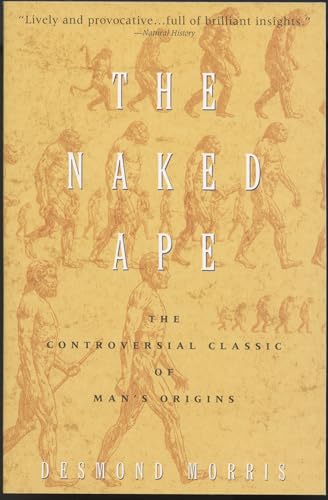
14The Naked Ape: A Zoologist's Study of the Human Animal
This is a book that demonstrates the misogynistic lens through which some male biologists have viewed the past. Morris routinely and repeatedly peddles the view that women have evolved to be monogamous, stay-at-home caregivers while men have pushed up human intelligence through their actions as hunters and providers. [source]
When a look back at my career path, it is the one of an entrepreneur. I have built various businesses, from accounting and financial advisory firms to tech and security businesses. I have also spent most of my adult life in China, a country that is quite hostile to foreigners and very unfair. I have accepted to suffer the hardships of building my business without any investment from anybody, and stick very firmly to my values. I would recommend young people to read about adventure, hardships, and moral choices. Of course, it would be important to also read about the drivers of our humanity, hence the motley list below: … The Naked Ape, Desmond Moriss’s classic zoological study of the human being. [source]
15The Sound of a Wild Snail Eating
While an illness keeps her bedridden, Bailey watches a wild snail that has taken up residence on her nightstand. As a result, she discovers the solace and sense of wonder that this mysterious creature brings and comes to a greater understanding of her own confined place in the world.
Intrigued by the snail’s molluscan anatomy, cryptic defenses, clear decision making, hydraulic locomotion, and mysterious courtship activities, Bailey becomes an astute and amused observer, providing a candid and engaging look into the curious life of this underappreciated small animal.
Told with wit and grace, The Sound of a Wild Snail Eating is a remarkable journey of survival and resilience, showing us how a small part of the natural world illuminates our own human existence and provides an appreciation of what it means to be fully alive.
This is the autobiographical story of a woman who gets ill with a mysterious virus that totally incapacitates her for years. Somebody brings her a violet in a pot which has a snail on it, and she becomes fascinated with this snail. And she starts to learn everything about snails, which are not what you would have as the usual household pet. It is an engaging story of snails, which is surprising. This is also an example of a book that you would want to have in your library, because it is such a handsome book and nicely illustrated. It is a beautiful little book which is written with a real gentleness and is very enjoyable to read. [source]
16Other Minds: The Octopus, the Sea, and the Deep Origins of Consciousness
Although mammals and birds are widely regarded as the smartest creatures on earth, it has lately become clear that a very distant branch of the tree of life has also sprouted higher intelligence: the cephalopods, consisting of the squid, the cuttlefish, and above all the octopus. In captivity, octopuses have been known to identify individual human keepers, raid neighboring tanks for food, turn off lightbulbs by spouting jets of water, plug drains, and make daring escapes. How is it that a creature with such gifts evolved through an evolutionary lineage so radically distant from our own? What does it mean that evolution built minds not once but at least twice? The octopus is the closest we will come to meeting an intelligent alien. What can we learn from the encounter?
In Other Minds, Peter Godfrey-Smith, a distinguished philosopher of science and a skilled scuba diver, tells a bold new story of how subjective experience crept into being—how nature became aware of itself. As Godfrey-Smith stresses, it is a story that largely occurs in the ocean, where animals first appeared. Tracking the mind’s fitful development, Godfrey-Smith shows how unruly clumps of seaborne cells began living together and became capable of sensing, acting, and signaling. As these primitive organisms became more entangled with others, they grew more complicated. The first nervous systems evolved, probably in ancient relatives of jellyfish; later on, the cephalopods, which began as inconspicuous mollusks, abandoned their shells and rose above the ocean floor, searching for prey and acquiring the greater intelligence needed to do so. Taking an independent route, mammals and birds later began their own evolutionary journeys.
But what kind of intelligence do cephalopods possess? Drawing on the latest scientific research and his own scuba-diving adventures, Godfrey-Smith probes the many mysteries that surround the lineage. How did the octopus, a solitary creature with little social life, become so smart? What is it like to have eight tentacles that are so packed with neurons that they virtually “think for themselves”? What happens when some octopuses abandon their hermit-like ways and congregate, as they do in a unique location off the coast of Australia?
By tracing the question of inner life back to its roots and comparing human beings with our most remarkable animal relatives, Godfrey-Smith casts crucial new light on the octopus mind—and on our own.

An enjoyable read that will make you think. [source]
17The Rise and Fall of the Dinosaurs: A New History of a Lost World
Brusatte also recalls compelling stories from his globe-trotting expeditions during one of the most exciting eras in dinosaur research—which he calls “a new golden age of discovery”—and offers thrilling accounts of some of the remarkable findings he and his colleagues have made, including primitive human-sized tyrannosaurs; monstrous carnivores even larger than T. rex; and paradigm-shifting feathered raptors from China.
18A Dictionary of Zoology
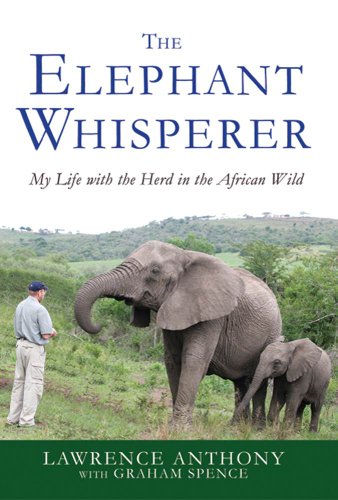
19The Elephant Whisperer: My Life with the Herd in the African Wild
In order to save their lives, Anthony took them in. In the years that followed he became a part of their family. And as he battled to create a bond with the elephants, he came to realize that they had a great deal to teach him about life, loyalty, and freedom.
The Elephant Whisperer is a heartwarming, exciting, funny, and sometimes sad memoir of Anthony's experiences with these huge yet sympathetic creatures. Set against the background of life on an African game reserve, with unforgettable characters and exotic wildlife, Anthony's unrelenting efforts at animal protection and his remarkable connection with nature will inspire animal lovers and adventurous souls everywhere.
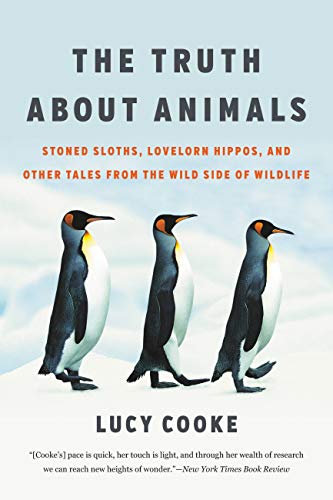
20The Truth About Animals: Stoned Sloths, Lovelorn Hippos, and Other Tales from the Wild Side of Wildlife
Whether we're seeing a viral video of romping baby pandas or a picture of penguins "holding hands," it's hard for us to think of animals as anything but playful paragons of innocence and virtue. So you've probably never considered if moose get drunk, penguins cheat on their mates, or worker ants lay about. They do--and that's just for starters. In The Truth About Animals, Lucy Cooke embarks on a global adventure to meet everyone from a Colombian hippo castrator to a Chinese panda porn peddler, all to lay bare the secret--and often hilarious-habits of the animal kingdom. Charming and at times downright weird, this modern bestiary is perfect for anyone who has ever suspected that virtue might be unnatural.
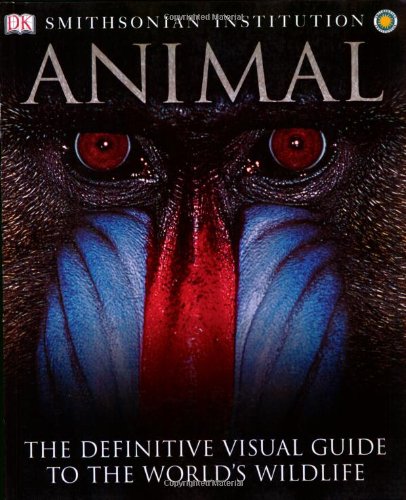
21Animal: The Definitive Visual Guide to the World's Wildlife
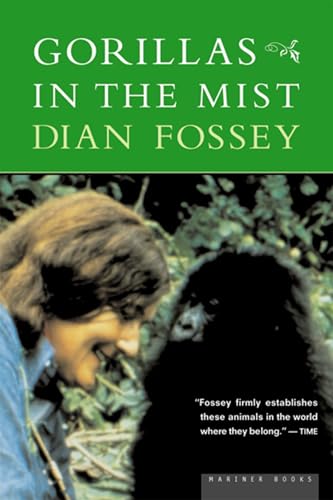
22Gorillas in the Mist
One of the most important books ever written about our connection to the natural world, Gorillas in the Mist is the riveting account of Dian Fossey's thirteen years in a remote African rain forest with the greatest of the great apes. Fossey's extraordinary efforts to ensure the future of the rain forest and its remaining mountain gorillas are captured in her own words and in candid photographs of this fascinating endangered species. As only she could, Fossey combined her personal adventure story with groundbreaking scientific reporting in an unforgettable portrait of one of our closest primate relatives. Although Fossey's work ended tragically in her murder, Gorillas in the Mist remains an invaluable testament to one of the longest-running field studies of primates and reveals her undying passion for her subject.
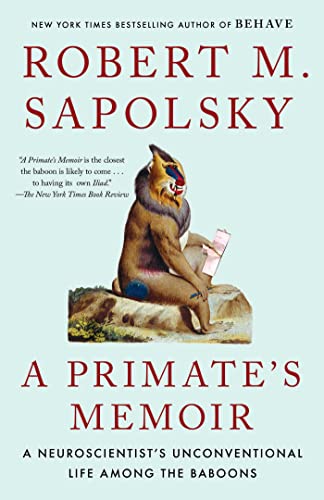
23A Primate's Memoir: A Neuroscientist's Unconventional Life Among the Baboons
“I had never planned to become a savanna baboon when I grew up; instead, I had always assumed I would become a mountain gorilla,” writes Robert Sapolsky in this witty and riveting chronicle of a scientist’s coming-of-age in remote Africa.
An exhilarating account of Sapolsky’s twenty-one-year study of a troop of rambunctious baboons in Kenya, A Primate’s Memoir interweaves serious scientific observations with wry commentary about the challenges and pleasures of living in the wilds of the Serengeti — for man and beast alike. Over two decades, Sapolsky survives culinary atrocities, gunpoint encounters, and a surreal kidnapping, while witnessing the encroachment of the tourist mentality on the farthest vestiges of unspoiled Africa. As he conducts unprecedented physiological research on wild primates, he becomes evermore enamored of his subjects — unique and compelling characters in their own right — and he returns to them summer after summer, until tragedy finally prevents him.
By turns hilarious and poignant, A Primate’s Memoir is a magnum opus from one of our foremost science writers.
Sapolsky’s book is my favourite in the modern scientist-author canon.He places you in his shoes, and shows you how his ensemble cast of baboons (generations of them, actually) have personality, agency, and succumb to the same foibles that we do. [source]
24Animals in Translation: Using the Mysteries of Autism to Decode Animal Behavior
Autistic people can often think the way animals think -- in fact, Grandin and co-author Catherine Johnson see autism as a kind of way station on the road from animals to humans -- putting autistic people in the perfect position to translate "animal talk." Temple is a faithful guide into their world, exploring animal pain, fear, aggression, love, friendship, communication, learning, and, yes, even animal genius. Not only are animals much smarter than anyone ever imagined, in some cases animals are out-and-out brilliant.
The sweep of "Animals in Translation" is immense, merging an animal scientist's thirty years of study with her keen perceptions as a person with autism -- Temple sees what others cannot.
Among its provocative ideas, the book:
argues that language is not a requirement for consciousness -- and that animals do have consciousness
applies the autism theory of "hyper-specificity" to animals, showing that animals and autistic people are so sensitive to detail that they "can't see the forest for the trees" -- a talent as well as a "deficit"
explores the "interpreter" in the normal human brain that filters out detail, leaving people blind to much of the reality that surrounds them -- a reality animals and autistic people see, sometimes all too clearly
explains how animals have "superhuman" skills: animals have animal genius
compares animals to autistic savants, declaring that animals may in fact be autistic savants, with special forms of genius that normal people do not possess and sometimes cannot even see
examines how humans and animals use their emotions to think, to decide, and even to predict the future
reveals the remarkable abilities of handicapped people and animals
maintains that the single worst thing you can do to an animal is to make it feel afraid
Temple Grandin is like no other author on the subject of animals because of her training and because of her autism: understanding animals is in her blood and in her bones.
I think this book is unusual for lots of reasons. I found it really gripping. First of all, it is written by someone with autism. For me, as a scientist who has been looking at autism from the outside, I felt there is so much we can learn from her because she has actually got the condition, and is able to tell us what the world looks like from her point of view. [source]
25Spillover: Animal Infections and the Next Human Pandemic
A New York Times Notable Book of the Year, a Scientific American Best Book of the Year, and a Finalist for the National Book Critics Circle Award.
Ebola, SARS, Hendra, AIDS, and countless other deadly viruses all have one thing in common: the bugs that transmit these diseases all originate in wild animals and pass to humans by a process called spillover. In this gripping account, David Quammen takes the reader along on this astonishing quest to learn how, where from, and why these diseases emerge and asks the terrifying question: What might the next big one be?
@rachsyme Spillover is a fantastic book though. I'd also recommend Pandemic and/or The Fever by @soniashah [source]
26Zoology for Kids: Understanding and Working with Animals, with 21 Activities
Zoology for Kids invites the next generation of zoologists to discover the animal kingdom through clear, entertaining information and anecdotes, lush color photos, hands-on activities, and peer-reviewed research. Young minds are introduced to zoology as a science by discussing animals’ forms, functions, and behaviors as well as the history behind zoos and aquariums. Related activities include baking edible animal cells, playing a dolphin-echolocation game, and practicing designing an exhibit. Young readers can peek into the world of zookeepers and aquarists, veterinarians, wildlife researchers, and conservationists as they “train” their friends, mold a tiger’s jawbone, and perform field research in their own backyard. This engaging resource provides readers with new knowledge, a healthy respect for the animal kingdom, and the idea that they can pursue animal-related careers and make a difference to preserve and protect the natural world.
“The Hestermanns strike an effective balance between educational material and fun that should hit a sweet spot for animal lovers.” --Publishers Weekly
“A convincing invitation to the wide world of working with animals.” --Kirkus Review
“(There’s) plenty here to engage hands-on experimenters as well as readers indulging a general interest in living things or wondering what it would be like to be a zookeeper, veterinarian, wildlife researcher, or even ‘conservation warrior.'” --Booklist
“Teachers will find these activities to be an effective way to address science standards and children will simply enjoy the hands-on experiences.” --Teacher Librarian Magazine
(Full reviews at www.zoologyforkids.org/reviews.)
27The Beak of the Finch: A Story of Evolution in Our Time
Winner of the Los Angeles Times Book Prize
On a desert island in the heart of the Galapagos archipelago, where Darwin received his first inklings of the theory of evolution, two scientists, Peter and Rosemary Grant, have spent twenty years proving that Darwin did not know the strength of his own theory. For among the finches of Daphne Major, natural selection is neither rare nor slow: it is taking place by the hour, and we can watch.
In this dramatic story of groundbreaking scientific research, Jonathan Weiner follows these scientists as they watch Darwin's finches and come up with a new understanding of life itself. The Beak of the Finch is an elegantly written and compelling masterpiece of theory and explication in the tradition of Stephen Jay Gould.
With a new preface.
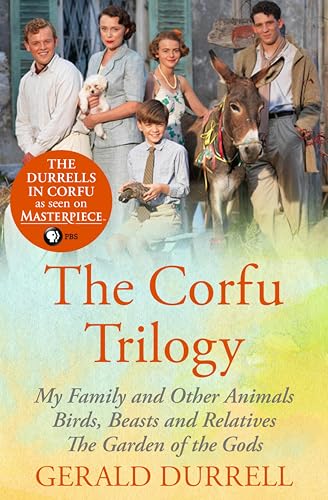
28The Corfu Trilogy (The Corfu Trilogy #1-3)
29All Creatures Great and Small (All Creatures Great and Small, #1)
Delve into the magical, unforgettable world of James Herriot, the world's most beloved veterinarian, and his menagerie of heartwarming, funny, and tragic animal patients.
For over forty years, generations of readers have thrilled to Herriot's marvelous tales, deep love of life, and extraordinary storytelling abilities. For decades, Herriot roamed the remote, beautiful Yorkshire Dales, treating every patient that came his way from smallest to largest, and observing animals and humans alike with his keen, loving eye.
In All Creatures Great and Small, we meet the young Herriot as he takes up his calling and discovers that the realities of veterinary practice in rural Yorkshire are very different from the sterile setting of veterinary school. Some visits are heart-wrenchingly difficult, such as one to an old man in the village whose very ill dog is his only friend and companion, some are lighthearted and fun, such as Herriot's periodic visits to the overfed and pampered Pekinese Tricki Woo who throws parties and has his own stationery, and yet others are inspirational and enlightening, such as Herriot's recollections of poor farmers who will scrape their meager earnings together to be able to get proper care for their working animals. From seeing to his patients in the depths of winter on the remotest homesteads to dealing with uncooperative owners and critically ill animals, Herriot discovers the wondrous variety and never-ending challenges of veterinary practice as his humor, compassion, and love of the animal world shine forth.
James Herriot's memoirs have sold 80 million copies worldwide, and continue to delight and entertain readers of all ages.
30H Is for Hawk
Former USA President
Just like us, the president enjoys a good beach read while relaxing in the sun. In 2016, he released his list of summer vacation books: Barbarian Days: A Surfing Life, William Finnegan H Is for Hawk, Helen Macdonald The Girl on the Train, Paula Hawkins Seveneves, Neal Stephenson The Underground Railroad, Colson Whitehead [source]
H is for Hawk feels like the definitive statement on hawks for the modern times, and I think its success has a lot to do with how well Macdonald tied her inquiry into the life of a hawk with her own personal experience and journey. [source]
31Life on Earth
I don’t think the book has been bettered since, and that’s because it just seems to be the most interesting way to talk about life, through a narrative. [source]
32Zoobiquity: The Astonishing Connection Between Human and Animal Health
A Discover Magazine Best Book of 2012
An O, The Oprah Magazine “Summer Reading” Pick
Finalist, 2013 AAAS/Subaru SB&F Prize for Excellence in Science Books
Do animals overeat? Get breast cancer? Have fainting spells?
Inspired by an eye-opening consultation at the Los Angeles Zoo, which revealed that a monkey experienced the same symptoms of heart failure as her human patients, cardiologist Barbara Natterson-Horowitz embarked upon a project that would reshape how she practiced medicine. Beginning with the above questions, she began informally researching every affliction that she encountered in humans to learn whether it happened with animals, too. And usually, it did: dinosaurs suffered from brain cancer, koalas can catch chlamydia, reindeer seek narcotic escape in hallucinogenic mushrooms, stallions self-mutilate, and gorillas experience clinical depression. Natterson-Horowitz and science writer Kathryn Bowers have dubbed this pan-species approach to medicine zoobiquity. Here, they present a revelatory understanding of what animals can teach us about the human body and mind, exploring how animal and human commonality can be used to diagnose, treat, and heal patients of all species.
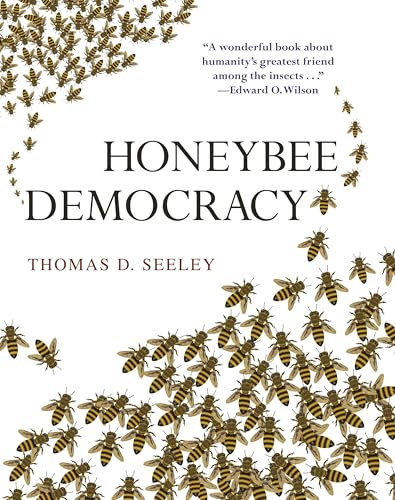
33Honeybee Democracy
In the late spring and early summer, as a bee colony becomes overcrowded, a third of the hive stays behind and rears a new queen, while a swarm of thousands departs with the old queen to produce a daughter colony. Seeley describes how these bees evaluate potential nest sites, advertise their discoveries to one another, engage in open deliberation, choose a final site, and navigate together--as a swirling cloud of bees--to their new home. Seeley investigates how evolution has honed the decision-making methods of honeybees over millions of years, and he considers similarities between the ways that bee swarms and primate brains process information. He concludes that what works well for bees can also work well for people: any decision-making group should consist of individuals with shared interests and mutual respect, a leader's influence should be minimized, debate should be relied upon, diverse solutions should be sought, and the majority should be counted on for a dependable resolution.
An impressive exploration of animal behavior, Honeybee Democracy shows that decision-making groups, whether honeybee or human, can be smarter than even the smartest individuals in them.
34The Tiger: A True Story of Vengeance and Survival
As he re-creates these extraordinary events, John Vaillant gives us an unforgettable portrait of this spectacularly beautiful and mysterious region. We meet the native tribes who for centuries have worshipped and lived alongside tigers, even sharing their kills with them. We witness the arrival of Russian settlers in the nineteenth and early twentieth centuries, soldiers and hunters who greatly diminished the tiger populations. And we come to know their descendants, who, crushed by poverty, have turned to poaching and further upset the natural balance of the region.
This ancient, tenuous relationship between man and predator is at the very heart of this remarkable book. Throughout we encounter surprising theories of how humans and tigers may have evolved to coexist, how we may have developed as scavengers rather than hunters, and how early Homo sapiens may have fit seamlessly into the tiger’s ecosystem. Above all, we come to understand the endangered Siberian tiger, a highly intelligent super-predator that can grow to ten feet long, weigh more than six hundred pounds, and range daily over vast territories of forest and mountain.
Beautifully written and deeply informative, The Tiger circles around three main characters: Vladimir Markov, a poacher killed by the tiger; Yuri Trush, the lead tracker; and the tiger himself. It is an absolutely gripping tale of man and nature that leads inexorably to a final showdown in a clearing deep in the taiga.
Author
Holy shit, this book is good. Just holy shit. Even if it was just the main narrative–the chase to kill a man-eating Tiger in Siberia in post-communist Russia–it would be worth reading, but it is so much more than that. The author explains the Russian psyche, the psyche of man vs predator, the psyches of primitive peoples and animals, in such a masterful way that you’re shocked to find 1) that he knows this, and 2) that he fit it all into this readable and relatively short book. You may have heard about the story on the internet a while back: a tiger starts killing people in Russia and a team is sent to kill it (Russia is so fucked up, they already have a team for this). At one point, the tiger is cornered and leaps to attack the team leader…and in mid-air the soldier’s rifle goes into the tigers open jaws and down his throat all the way to the stock, killing the tiger at the last possible second. The autopsy later revealed that the tiger had been shot something like a dozen times during its life and lived. The story is very similar to that of the Tsavo maneaters, which was turned into the underrated Val Kilmer movie The Ghost and the Darkness. There are all sorts of well-selected threads from evolutionary psychology and biology in this book and it makes the book a self-educator’s dream. You can pick and choose which ones you want to follow next–trusting safely that the author has pointed you in an interesting and valuable direction. But that’s just the meta-stuff that is a bonus with this book, and it’s worth pointing out only because the rest of the book is just so fucking interesting and exciting. [source]
Sometimes nature strikes back, and in this book you really do root for the animal. [source]
35Life of Pi
The protagonist Piscine "Pi" Molitor Patel, an Indian boy from Pondicherry, explores the issues of religion and spirituality from an early age and survives 227 days shipwrecked in the Pacific Ocean.
36Alex & Me: How a Scientist and a Parrot Discovered a Hidden World of Animal Intelligence—and Formed a Deep Bond in the Process
What would normally be a quiet, very private event was, in Alex's case, headline news. Over the thirty years they had worked together, Alex and Irene had become famous - two pioneers who opened an unprecedented window into the hidden yet vast world of animal minds. Alex's brain was the size of a shelled walnut, and when Irene and Alex first met, birds were not believed to possess and potential for language, consciousness, or anything remotely comparable to human intelligence. Yet, over the years, Alex proved many things. He could add. He could sound out words. He understood concepts like bigger, smaller, more, fewer, and none. He was capable of thought and intention. Together, Alex and Irene uncovered a startling reality: We live in a world populated by thinking, conscious creatures.
The fame that resulted was extraordinary. Yet there was a side to their relationship that never made the papers. They were emotionally connected to one another. They shared a deep bond far beyond science. Alex missed Irene when she was away. He was jealous when she paid attention to other parrots, or even people. He liked to show her who was boos. He loved to dance. He sometimes became bored by the repetition of his tests, and played jokes on her. Sometimes they sniped at each other. Yet nearly every day, they each said, "I love you."
Alex and Irene stayed together through thick and thin - despite sneers from experts, extraordinary financial sacrifices, and a nomadic existence from one university to another. The story of their thirty-year adventure is equally a landmark of scientific achievement and of an unforgettable human-animal bond.
National Geographic Field Guide to the Birds of North America
With more than 2.75 million copies in print, this perennial bestseller is the most frequently updated of all North American bird field guides. Filled with hand-painted illustrations from top nature artists (including the ever-popular hummingbird), this latest edition is poised to become an instant must-have for every serious birder in the United States and Canada. The 7th edition includes 37 new species for a total of 1,023 species; 16 new pages allow for 250 fresh illustrations; 80 new maps; and 350 map revisions. With taxonomy revised to reflect the radical new American Ornithological Society taxonomy established in 2016, the addition of standardized banding codes, and text completely vetted by birding experts, this new edition will top of the list of birding field guides for years to come.
Babylon's Ark: The Incredible Wartime Rescue of the Baghdad Zoo
But not all of them. U.S. soldiers had taken the time to help care for the remaining animals, and the zoo's staff had returned to work in spite of the constant firefights. Together the Americans and Iraqis had managed to keep alive the animals that had survived the invasion.
Babylon's Ark chronicles the zoo's transformation from bombed-out rubble to peaceful park. Along the way, Anthony recounts hair-raising efforts to save a pride of the dictator's lions, close a deplorable black-market zoo, and rescue Saddam's Arabian horses. His unique ground-level experience makes Babylon's Ark an uplifting story of both sides working together for the sake of innocent animals caught in the war's crossfire.
39Born Free: A Lioness of Two Worlds (Story of Elsa, #1)
Joy Adamson's story of a lion cub in transition between the captivity in which she is raised and the fearsome wild to which she is returned captures the abilities of both humans and animals to cross the seemingly unbridgeable gap between their radically different worlds. Especially now, at a time when the sanctity of the wild and its inhabitants is increasingly threatened by human development and natural disaster, Adamson's remarkable tale is an idyll, and a model, to return to again and again.
Illustrated with the same beautiful, evocative photographs that first enchanted the world forty years ago and updated with a new introduction by George Page, former host and executive editor of the PBS series Nature and author of Inside the Animal Mind, this anniversary edition introduces to a new generation one of the most heartwarming associations between man and animal.
I want everyone to read about how Elsa the lioness not only returned to her own world, but in that world where she was a lioness she still had room for her human adoptive parents. [source]
40The Snow Leopard
The book stands apart and it remains fresh because of the ways that Matthiessen weaves his exploration of the outer world with his own inner one. [source]
41The Life of Birds
David Attenborough has been watching and learning all his life. His new book, with its accompanying series of films for BBC TV, is a brilliant introduction to bird behaviours around the world: what they do and why they do it. He looks at each step in birds' lives and the problems they have to solve: learning to fly; finding food; communicating; mating and caring for nests, eggs and young; migrating; facing dangers and surviving harsh conditions.
Sir David has no equal in helping others to learn and making it exciting. His curiosity and enjoyment are infectious. He shows the lifelong pleasure that birds around us offer, and how much we miss if unaware of them.
42Wesley the Owl: The Remarkable Love Story of an Owl and His Girl
On Valentine's Day 1985, biologist Stacey O'Brien first met a four-day-old baby barn owl -- a fateful encounter that would turn into an astonishing 19-year saga. With nerve damage in one wing, the owlet's ability to fly was forever compromised, and he had no hope of surviving on his own in the wild. O'Brien, a young assistant in the owl laboratory at Caltech, was immediately smitten, promising to care for the helpless owlet and give him a permanent home. Wesley the Owl is the funny, poignant story of their dramatic two decades together.
With both a tender heart and a scientist's eye, O'Brien studied Wesley's strange habits intensively and first-hand -- and provided a mice-only diet that required her to buy the rodents in bulk (28,000 over the owl's lifetime). As Wesley grew, she snapped photos of him at every stage like any proud parent, recording his life from a helpless ball of fuzz to a playful, clumsy adolescent to a gorgeous, gold-and-white, macho adult owl with a heart-shaped face and an outsize personality that belied his 18-inch stature. Stacey and Wesley's bond deepened as she discovered Wesley's individual personality, subtle emotions, and playful nature that could also turn fiercely loyal and protective -- though she could have done without Wesley's driving away her would-be human suitors!
O'Brien also brings us inside the prestigious research community, a kind of scientific Hogwarts where resident owls sometimes flew freely from office to office and eccentric, brilliant scientists were extraordinarily committed to studying and helping animals; all of them were changed by the animal they loved. As O'Brien gets close to Wesley, she makes important discoveries about owl behavior, intelligence, and communication, coining the term "The Way of the Owl" to describe his inclinations: he did not tolerate lies, held her to her promises, and provided unconditional love, though he was not beyond an occasional sulk. When O'Brien develops her own life-threatening illness, the biologist who saved the life of a helpless baby bird is herself rescued from death by the insistent love and courage of this wild animal.
Enhanced by wonderful photos, Wesley the Owl is a thoroughly engaging, heartwarming, often funny story of a complex, emotional, non-human being capable of reason, play, and, most important, love and loyalty. It is sure to be cherished by animal lovers everywhere.
43Beneath the Surface: Killer Whales, SeaWorld, and the Truth Beyond Blackfish
Over the course of two decades, John Hargrove worked with 20 different whales on two continents and at two of SeaWorld's U.S. facilities. For Hargrove, becoming an orca trainer fulfilled a childhood dream. However, as his experience with the whales deepened, Hargrove came to doubt that their needs could ever be met in captivity. When two fellow trainers were killed by orcas in marine parks, Hargrove decided that SeaWorld's wildly popular programs were both detrimental to the whales and ultimately unsafe for trainers.
After leaving SeaWorld, Hargrove became one of the stars of the controversial documentary Blackfish. The outcry over the treatment of SeaWorld's orca has now expanded beyond the outlines sketched by the award-winning documentary, with Hargrove contributing his expertise to an advocacy movement that is convincing both federal and state governments to act.
In Beneath the Surface, Hargrove paints a compelling portrait of these highly intelligent and social creatures, including his favorite whales Takara and her mother Kasatka, two of the most dominant orcas in SeaWorld. And he includes vibrant descriptions of the lives of orcas in the wild, contrasting their freedom in the ocean with their lives in SeaWorld.
Hargrove's journey is one that humanity has just begun to take-toward the realization that the relationship between the human and animal worlds must be radically rethought.
44Animalium
45Zoo Story: Life in the Garden of Captives
Zoo Story crackles with issues of global urgency: the shadow of extinction, humanity's role in the destruction or survival of other species. More than anything else, though, it's a dramatic and moving true story of seduction and betrayal, exile and loss, and the limits of freedom on an overcrowded planet-all framed inside one zoo reinventing itself for the twenty-first century.
Thomas French, a Pulitzer Prize-winning reporter, chronicles the action with vivid power: Wild elephants soaring above the Atlantic on their way to captivity. Predators circling each other in a lethal mating dance. Primates plotting the overthrow of their king. The sweeping narrative takes the reader from the African savannah to the forests of Panama and deep into the inner workings of a place some describe as a sanctuary and others condemn as a prison. All of it comes to life in the book's four-legged characters. Even animal lovers will be startled by the emotional charge of these creatures' histories, which read as though they were co-written by Dickens and Darwin.
Zoo Story shows us how these remarkable individuals live, how some die, and what their experiences reveal about the human desire to both exalt and control nature.
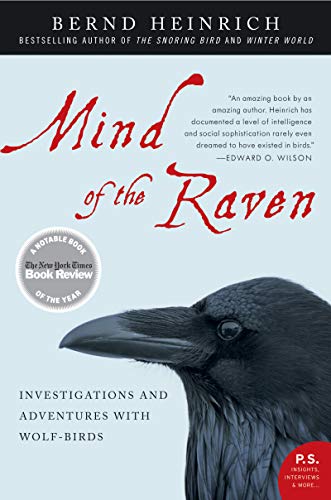
46Mind of the Raven: Investigations and Adventures with Wolf-Birds
Much like a sleuth, Heinrich involves us in his quest, letting one clue lead to the next. But as animals can only be spied on by getting quite close Heinrich adopts ravens, thereby becoming a "raven father," as well as observing them in their natural habitat, studying their daily routines, and in the process painting a vivid picture of the world as lived by the ravens. At the heart of this book are Heinrich's love and respect for these complex and engaging creatures, and through his keen observation andanalysis, we become their intimates too.
Throughout history there has existed an extraordinary relationship between humans and ravens. Ravens, like early humans, are scavengers on the kills of great carnivores. As scavengers, ravens were associated with hunters they found in the north: wolves and, later, men. The trinity of wolf, man, and raven in the hunt is an extremely ancient one. In considering the appeal of the raven, Bernd Heinrich suspects that a meeting of the minds might reside in that hunting trinity.
Heinrich's passion for ravens has led him around the world in his research. Mind of the Raven takes you on an exotic journey--from New England to Germany, Montana to Baffin Island in the high Arctic--offering dazzling accounts of how science works in the field, filtered through the eyes of a passionate observer of nature.
Heinrich has a true gift; through his stories, his beautiful writing, illustrations, and photography, the ravens come alive. Each new discovery and insight into their behavior is thrilling to read. just as the title promises, the reader is given a rare glimpse into the mind of these wonderful creatures.Following the dictum of Leonardo da Vinci--"It is not enough to believe what you see. YOU Must also understand what you see"--Bernd Heinrich enables us to see the natural world through the eyes of a scientist. At once lyrical and scientific, Mind of the Raven is bound to be a modern classic.
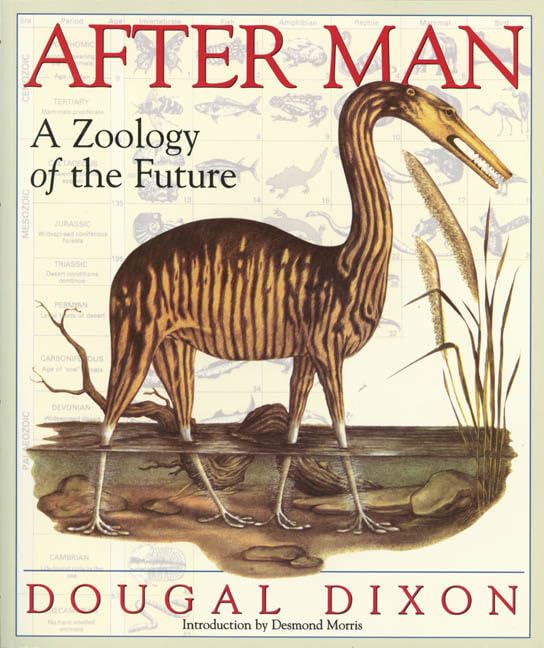
47After Man: A Zoology of the Future
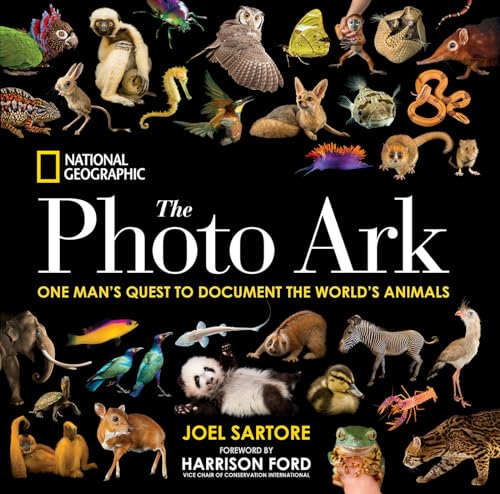
48The Photo Ark: One Man's Quest to Document the World's Animals
Sartore intends to photograph every animal in captivity in the world. He is circling the globe, visiting zoos and wildlife rescue centers to create studio portraits of 12,000 species, with an emphasis on those facing extinction. He has photographed more than 6,000 already and now, thanks to a multi-year partnership with National Geographic, he may reach his goal. This book showcases his animal portraits: from tiny to mammoth, from the Florida grasshopper sparrow to the greater one-horned rhinoceros. Paired with the eloquent prose of veteran wildlife writer Douglas Chadwick, this book presents a thought-provoking argument for saving all the species of our planet.
49Voyage of the Turtle: In Pursuit of the Earth's Last Dinosaur
Though nature is indifferent to the struggles of her creatures, the human effect on them is often premeditated. The distressing decline of sea turtles in Pacific waters and their surprising recovery in the Atlantic illuminate what can go both wrong and right from our interventions, and teach us the lessons that can be applied to restore health to the world's oceans and its creatures. As Carl Safina's compelling natural history adventure makes clear, the fate of the astonishing leatherback turtle, whose ancestry can be traced back 125 million years, is in our hands.
Writing with verve and color, Safina describes how he and his colleagues track giant pelagic turtles across the world's oceans and onto remote beaches of every continent. As scientists apply lessons learned in the Atlantic and Caribbean to other endangered seas, Safina follows leatherback migrations, including a thrilling journey from Monterey, California, to nesting grounds on the most remote beaches of Papua, New Guinea. The only surviving species of its genus, family, and suborder, the leatherback is an evolutionary marvel: a "reptile" that behaves like a warm-blooded dinosaur, an ocean animal able to withstand colder water than most fishes and dive deeper than any whale.
In his peerless prose, Safina captures the delicate interaction between these gentle giants and the humans who are finally playing a significant role in their survival.
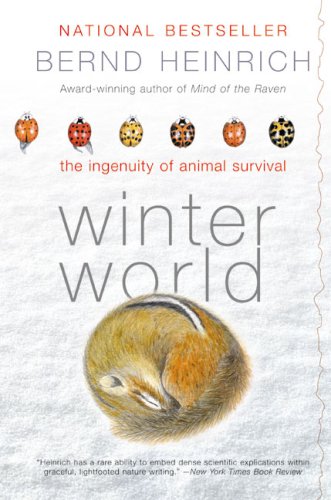
50Winter World: The Ingenuity of Animal Survival
From flying squirrels to grizzly bears, torpid turtles to insects with antifreeze, the animal kingdom relies on some staggering evolutionary innovations to survive winter. Unlike their human counterparts, who must alter their environment to accommodate our physical limitations, animals are adaptable to an amazing range of conditions--i.e., radical changes in a creature's physiology take place to match the demands of the environment. Winter provides an especially remarkable situation, because of how drastically it affects the most elemental component of all life: water.
Examining everything from food sources in the extremely barren winter landscape to the chemical composition that allows certain creatures to survive, Heinrich's Winter World awakens the largely undiscovered mysteries by which nature sustains herself through the harsh, cruel exigencies of winters
51Biological Exuberance: Animal Homosexuality and Natural Diversity
One of the New York Public Library's "25 Books to Remember" for 1999
Homosexuality in its myriad forms has been scientifically documented in more than 450 species of mammals, birds, reptiles, insects, and other animals worldwide. Biological Exuberance is the first comprehensive account of the subject, bringing together accurate, accessible, and nonsensationalized information. Drawing upon a rich body of zoological research spanning more than two centuries, Bruce Bagemihl shows that animals engage in all types of nonreproductive sexual behavior. Sexual and gender expression in the animal world displays exuberant variety, including same-sex courtship, pair-bonding, sex, and co-parenting--even instances of lifelong homosexual bonding in species that do not have lifelong heterosexual bonding.
Part 1, "A Polysexual, Polygendered World," begins with a survey of homosexuality, transgender, and nonreproductive heterosexuality in animals and then delves into the broader implications of these findings, including a valuable perspective on human diversity. Bagemihl also examines the hidden assumptions behind the way biologists look at natural systems and suggests a fresh perspective based on the synthesis of contemporary scientific insights with traditional knowledge from indigenous cultures.
Part 2, "A Wondrous Bestiary," profiles more than 190 species in which scientific observers have noted homosexual or transgender behavior. Each profile is a verbal and visual "snapshot" of one or more closely related bird or mammal species, containing all the documentation required to support the author's often controversial conclusions.
Lavishly illustrated and meticulously researched, filled with fascinating facts and astonishing descriptions of animal behavior, Biological Exuberance is a landmark book that will change forever how we look at nature.
It’s called Biological Exuberance. It’s an enormous study of homosexual behaviour amongst every kind of insect and animal. The evidence in this book is overwhelming that there is a huge amount of same-sex behaviour in the natural world. Most of the sexual behaviour amongst giraffes is same-sex, but also amongst dolphins and whales, and especially penguins. The book was introduced to us by Marthinus Basson who worked with us on Tall Horse a play about a giraffe. It is not a book that one reads from beginning to end, but it is a book that we refer to when people say about being gay that it’s not natural. We quote from it when the Watchtower people come around. [source]
The Sibley Field Guide to Birds of Eastern North America: Second Edition
Now completely revised and updated--the indispensable resource for all birders seeking an authoritative guide to the birds of the East in a portable format they will want to carry into the field.
Compact and comprehensive, this guide features 650 bird species, plus regional populations, found east of the Rocky Mountains. Entries include stunningly accurate illustrations--more than 4,601 in total--with descriptive captions pointing out the most important field marks. Each entry has been updated to include the most current information concerning frequency, nesting, behavior, food and feeding, voice description, and key identification features. Here too are more than 601 updated maps drawn from information contributed by 110 regional experts across the continent, and showing winter, summer, year-round, migration, and rare ranges.
NEW AND IMPROVED:
• Updated habitat, description, behavior, and conservation text for each species account and all family pages (drawn from the second edition of The Sibley Guide to Birds and tailored for the specific region).
• All illustrations, including new and revised illustrations of species and regional forms, are taken from the rescanned and meticulously color-corrected second printing of the second edition of the Sibley Guide.
• New design reflects the layout of The Sibley Guide to Birds, Second Edition. All species accounts are now presented in columns, rather than stacked, allowing for better comparison and more illustrations and text for each species.
• Current taxonomic order and up-to-date common names.
• All maps revised to reflect the most current range information.
• More species and rarities included.
53Voyage of the Beagle
When the Beagle sailed out of Devonport on 27 December 1831, Charles Darwin was twenty-two and setting off on the voyage of a lifetime.
It was to last five years and transform him from an amiable and somewhat aimless young man into a scientific celebrity. Even more vitally, it was to set in motion the intellectual currents that culminated in the arrival of The Origin of Species in Victorian drawing-rooms in 1859. His journal, reprinted here in a shortened version, is vivid and immediate, showing us a naturalist making patient observations, above all in geology. As well as a profusion of natural history detail, it records many other things that caught Darwin’s eye, from civil war in Argentina to the new colonial settlements of Australia. The editors have provided an excellent introduction and notes for this Penguin Classics edition, which also contains maps and appendices, including an essay on scientific geology and the Bible by Robert FitzRoy, Darwin’s friend and captain of the Beagle.
54Mama's Last Hug: Animal Emotions and What They Tell Us about Ourselves
Frans de Waal has spent four decades at the forefront of animal research. Following up on the best-selling Are We Smart Enough to Know How Smart Animals Are?, which investigated animal intelligence, Mama’s Last Hug delivers a fascinating exploration of the rich emotional lives of animals.
Mama’s Last Hug begins with the death of Mama, a chimpanzee matriarch who formed a deep bond with biologist Jan van Hooff. When Mama was dying, van Hooff took the unusual step of visiting her in her night cage for a last hug. Their goodbyes were filmed and went viral. Millions of people were deeply moved by the way Mama embraced the professor, welcoming him with a big smile while reassuring him by patting his neck, in a gesture often considered typically human but that is in fact common to all primates. This story and others like it form the core of de Waal’s argument, showing that humans are not the only species with the capacity for love, hate, fear, shame, guilt, joy, disgust, and empathy.
De Waal discusses facial expressions, the emotions behind human politics, the illusion of free will, animal sentience, and, of course, Mama’s life and death. The message is one of continuity between us and other species, such as the radical proposal that emotions are like organs: we don’t have a single organ that other animals don’t have, and the same is true for our emotions. Mama’s Last Hug opens our hearts and minds to the many ways in which humans and other animals are connected, transforming how we view the living world around us.
Historian
A captivating and big-hearted book, full of compassion and brimming with insights about the lives of animals, including human ones. [source]
55Animals: A Visual Encyclopedia
Structured by animal group with separate entries for every notable type of animal, from ants and aardvarks to wasps and wallabies Fact files provide key information on behavior, distribution, diet, and conservation issues Action photography reveals wild animals interacting in their native habitats and puts natural behavior in context Highlights animals most likely to fire the imagination of young minds: the deadliest, the largest, the friendliest, the fastest, and the downright strangest Supports the Common Core State Standards.
56The Rhino with Glue-On Shoes: And Other Surprising True Stories of Zoo Vets and their Patients
From a root canal on a three-thousand pound hippo to one doctor’s heartbreaking effort to save a critically ill lemur, here are acts of rescue, kindness, and cross-disciplinary cooperation between zoo vets and other top scientists. We meet highly trained specialists racing against time and circumstance to save the lives of some of the most exotic animals in the world. Shoes designed for racehorses help a rhinoceros with a debilitating foot disease. A kangaroo survives spinal surgery performed by a leading human doctor. These unforgettable stories capture the bonds that develop between vets and their animal patients, the ingenious measures many vets have tried, and the remarkable new insights modern medical technology is giving us into the physiology and behaviors of wild animals.
At once heart-quickening and clinically fascinating, the stories in this remarkable collection represent some of the most moving and unusual cases ever taken on by zoological vets. A chronicle of discovery, compassion, and cutting-edge medicine, The Rhino with Glue-on Shoes is must reading for animal lovers, science buffs, and anyone who loves a well-told tale.
57American Wolf
The enthralling story of the rise and reign of O-Six, the celebrated Yellowstone wolf, and the people who loved or feared her
Before men ruled the earth, there were wolves. Once abundant in North America, these majestic creatures were hunted to near extinction in the lower 48 states by the 1920s. But in recent decades, conservationists have brought wolves back to the Rockies, igniting a battle over the very soul of the West.
With novelistic detail, Nate Blakeslee tells the gripping story of one of these wolves, O-Six, a charismatic alpha female named for the year of her birth. Uncommonly powerful, with gray fur and faint black ovals around each eye, O-Six is a kind and merciful leader, a fiercely intelligent fighter, and a doting mother. She is beloved by wolf watchers, particularly renowned naturalist Rick McIntyre, and becomes something of a social media star, with followers around the world.
But as she raises her pups and protects her pack, O-Six is challenged on all fronts: by hunters, who compete with wolves for the elk they both prize; by cattle ranchers who are losing livestock and have the ear of politicians; and by other Yellowstone wolves who are vying for control of the park’s stunningly beautiful Lamar Valley.
These forces collide in American Wolf, a riveting multigenerational saga of hardship and triumph that tells a larger story about the ongoing cultural clash in the West—between those fighting for a vanishing way of life and those committed to restoring one of the country’s most iconic landscapes.
58Of Wolves and Men
Humankind's relationship with the wolf is the sum of a spectrum of responses ranging from fear to admiration and affection. Lopez’s classic, careful study has won praise from a wide range of reviewers and improved the way books on wild animals are written. Of Wolves and Men explores the uneasy interaction between wolves and civilization over the centuries, and the wolf's prominence in our thoughts about wild creatures. Drawing upon an impressive array of literature, history, science, and mythology as well as extensive personal experience with captive and free-ranging wolves, Lopez argues for the wolf's preservation and immerses the reader in its sensory world, creating a compelling portrait of the wolf both as a real animal and as imagined by different kinds of men. A scientist might perceive the wolf as defined by research data, while an Eskimo hunter sees a family provider much like himself. For many Native Americans the wolf is also a spiritual symbol, a respected animal that can strengthen the individual and the community. With irresistible charm and elegance, Of Wolves and Men celebrates careful scientific fieldwork, dispels folklore that has enabled the Western mind to demonize wolves, explains myths, and honors indigenous traditions, allowing us to understand how this remarkable animal has become so prominent for so long in the human heart.
Offers fascinating insights into the depths of understanding which civilised peoples have lost and what, if we were wise, we might attempt to regain. [source]
59Never Cry Wolf: The Amazing True Story of Life Among Arctic Wolves
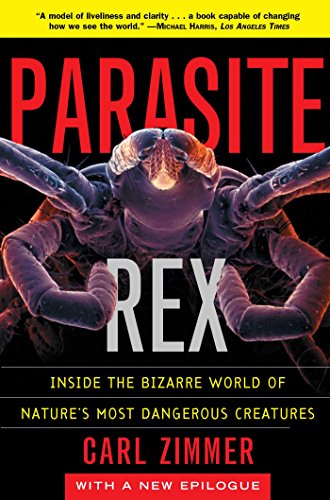
60Parasite Rex: Inside the Bizarre World of Nature's Most Dangerous Creatures
For centuries, parasites have lived in nightmares, horror stories, and in the darkest shadows of science. Now award-winning writer Carl Zimmer takes us on a fantastic voyage into the secret parasite universe we actually live in but haven't recognized. He reveals not only that parasites are the most successful life-forms on Earth, but that they triggered the development of sex, shape ecosystems, and have driven the engine of evolution.
In mapping the parasite universe, Zimmer makes the astonishing observation that most species are parasites, and that almost every animal, including humans, will at one time or another become the home of a parasite. Zimmer shows how highly evolved parasites are and describes the frightening and amazing ingenuity these commando invaders use to devour their hosts from the inside and control their behavior. The sinister Sacculina carcini makes its home in an unlucky crab and proceeds to eat everything but what the crab needs to put food in its mouth, which Sacculina then consumes. When Sacculina finally reproduces, it places its young precisely where the crab would nurture its own progeny, and then has the crab nurture the foster family members. Single-celled Toxoplasma gondi has an even more insidious role, for it can invade the human brain. There it makes men distrustful and less willing to submit to social mores. Women become more outgoing and warm-hearted. Why would a parasite cause these particular personality changes? It seems Toxoplasma wants its host to be less afraid, to be more prone to danger and a violent end -- so that, in the carnage, it will be able to move on to another host.
From the steamy jungles of Costa Rica to the fetid parasite heaven of rebel-held southern Sudan, Zimmer tracks the genius of parasitic life and its impact on humanity. We hosts have developed remarkable defenses against the indomitable parasite: our mighty immune system, our culturally enforced habit of keeping clean, and, perhaps most intriguingly, sex. But this is not merely a book about the evil power of parasitism and how we must defend against it. On the contrary, Zimmer concludes that humankind itself is a new kind of parasite, one that preys on the entire Earth. If we are to achieve the sophistication of the parasites on display here in vivid detail, if we are to promote the flourishing of life in all its diversity as they do, we must learn the ways nature lives with itself, the laws of Parasite Rex.
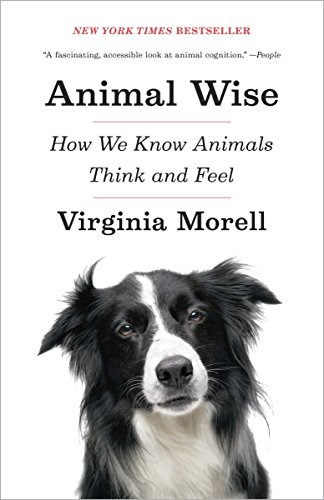
61Animal Wise: The Thoughts and Emotions of Our Fellow Creatures
Noted science writer Virginia Morell explores the frontiers of research on animal cognition and emotion, offering a surprising and moving exploration into the hearts and minds of wild and domesticated animals.
Animal Wise takes us on a dazzling odyssey into the inner world of animals, from ants to elephants to wolves, and from sharp-shooting archerfish to pods of dolphins that rumble like rival street gangs. Morell probes the moral and ethical dilemmas of recognizing that even “lesser animals” have cognitive abilities such as memory, feelings, personality, and self-awareness--traits that many in the twentieth century felt were unique to human beings.
By standing behaviorism on its head, Morell brings the world of nature brilliantly alive in a nuanced, deeply felt appreciation of the human-animal bond, and she shares her admiration for the men and women who have simultaneously chipped away at what we think makes us distinctive while offering a glimpse of where our own abilities come from.
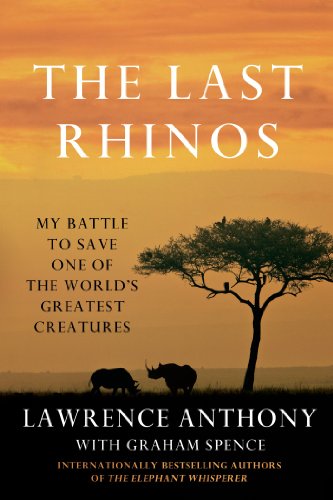
62The Last Rhinos: My Battle to Save One of the World's Greatest Creatures
The demand for rhino horns in the Far East has turned poaching into a dangerous black market that threatens the lives of not just these rare beasts, but also the rangers who protect them.
The northern white rhino's last refuge was in an area controlled by the infamous Lord's Resistance Army, one of the most vicious rebel groups in the world. In the face of unmoving government bureaucracy, Anthony made a perilous journey deep into the jungle to try to find and convince them to help save the rhino.
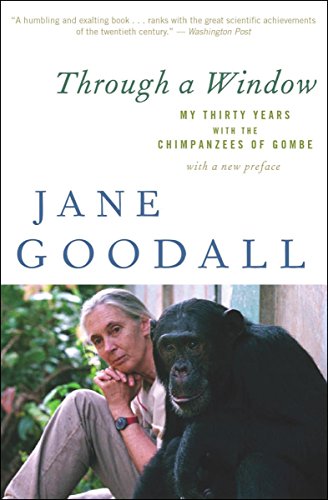
63Through a Window: My Thirty Years with the Chimpanzees of Gombe
THROUGH A WINDOW is the dramatic saga of thirty years in the life of a community, of birth and death, sex and love, power and war. It reads like a novel, but it is one of the most important scientific works ever published. The community is Gombe, on the shores of Lake Tangganyika, where the principal residents are chimpanzees and one extraordinary woman who is their student, protector, and historian. In her classic In the Shadow of Man, Jane Goodall wrote of her first ten years at Gombe. In Through a Window she brings the story up to the present, painting a much more complete and vivid portrait of our closest relative. We see the community split in two and a brutal war break out. We watch young Figan's relentless rise to power and old Mike's crushing defeat. We learn how one mother rears her children to succeed and another dooms them to failure. We witness horrifying murders, touching moments of affection, joyous births, and wrenching deaths. In short, we see every emotion known to humans stripped to its essence. In the mirror of chimpanzee life, we see ourselves reflected. Perhaps the best book ever written about animal behavior, Through a Window is also essential reading for anyone seeking a better grasp of human behavior.
64The Thing with Feathers: The Surprising Lives of Birds and What They Reveal about Being Human
Birds are highly intelligent animals, yet their intelligence is dramatically different from our own and has been little understood. As we learn more about the secrets of bird life, we are unlocking fascinating insights into memory, relationships, game theory, and the nature of intelligence itself.
The Thing with Feathers explores the astonishing homing abilities of pigeons, the good deeds of fairy-wrens, the influential flocking abilities of starlings, the deft artistry of bowerbirds, the extraordinary memories of nutcrackers, the lifelong loves of albatrosses, and other mysteries—revealing why birds do what they do, and offering a glimpse into our own nature.
Drawing deep from personal experience, cutting-edge science, and colorful history, Noah Strycker spins captivating stories about the birds in our midst and shares the startlingly intimate coexistence of birds and humans. With humor, style, and grace, he shows how our view of the world is often, and remarkably, through the experience of birds. You’ve never read a book about birds like this one.
65The Secret Lives of Bats: My Adventures with the World's Most Misunderstood Mammals
From menacing moonshiners and armed bandits to charging elephants and man-eating tigers, Merlin Tuttle has stopped at nothing to find and protect bats on every continent they inhabit. Enamored of bats ever since discovering a colony in a cave as a boy, Tuttle saw how effective photography could be in persuading people not to fear bats, and he has spent his career traveling the world to document them.
Few people realize how sophisticated and intelligent bats are. Tuttle shares research showing that frog-eating bats can identify frogs by their calls, that vampire bats have a social order similar to that of primates, and that bats have remarkable memories. Bats also provide enormous benefits by eating crop pests, pollinating plants, and carrying seeds needed for reforestation. They save farmers billions of dollars annually and are essential to a healthy planet.
Sharing highlights from a lifetime of adventure and discovery, Tuttle takes us to the frontiers of bat research and conservation and forever changes the way we see these poorly understood yet fascinating creatures.
66Death at SeaWorld: Shamu and the Dark Side of Killer Whales in Captivity
Death at SeaWorld centers on the battle with the multimillion-dollar marine park industry over the controversial and even lethal ramifications of keeping killer whales in captivity. Following the story of marine biologist and animal advocate at the Humane Society of the US, Naomi Rose, Kirby tells the gripping story of the two-decade fight against PR-savvy SeaWorld, which came to a head with the tragic death of trainer Dawn Brancheau in 2010. Kirby puts that horrific animal-on-human attack in context. Brancheau’s death was the most publicized among several brutal attacks that have occurred at Sea World and other marine mammal theme parks.
Death at SeaWorld introduces real people taking part in this debate, from former trainers turned animal rights activists to the men and women that champion SeaWorld and the captivity of whales. In section two the orcas act out. And as the story progresses and orca attacks on trainers become increasingly violent, the warnings of Naomi Rose and other scientists fall on deaf ears, only to be realized with the death of Dawn Brancheau. Finally he covers the media backlash, the eyewitnesses who come forward to challenge SeaWorld’s glossy image, and the groundbreaking OSHA case that challenges the very idea of keeping killer whales in captivity and may spell the end of having trainers in the water with the ocean’s top predators.
67Adventures of a Young Naturalist: The Zoo Quest Expeditions
Now 'the greatest living advocate of the global ecosystem' this is the story of the voyages that started it all. Staying with local tribes while trekking in search of giant anteaters in Guyana, Komodo dragons in Indonesia and armadillos in Paraguay, he and the rest of the team battled with cannibal fish, aggressive tree porcupines and escape-artist wild pigs, as well as treacherous terrain and unpredictable weather, to record the incredible beauty and biodiversity of these regions. The methods may be outdated now, but the fascination and respect for the wildlife, the people and the environment - and the importance of protecting these wild places - is not.
Written with his trademark wit and charm, Adventures of a Young Naturalist is not just the story of a remarkable adventure, but of the man who made us fall in love with the natural world, and who is still doing so today.
The Sibley Field Guide to Birds of Western North America: Second Edition
Now completely revised and updated--the indispensable resource for all birders seeking an authoritative guide to the birds of the West in a portable format they will want to carry into the field.
Compact and comprehensive, this guide features 715 bird species, plus regional populations, found west of the Rocky Mountains. Entries include stunningly accurate illustrations--more than 5,046 in total--with descriptive captions pointing out the most important field marks. Each entry has been updated to include the most current information concerning frequency, nesting, behavior, food and feeding, voice description, and key identification features. Here too are more than 652 updated maps drawn from information contributed by 110 regional experts across the continent, and showing winter, summer, year-round, migration, and rare ranges.
NEW AND IMPROVED:
• Updated habitat, description, behavior, and conservation text for each species account and all family pages (drawn from the second edition of The Sibley Guide to Birds and tailored for the specific region).
• All illustrations, including new and revised illustrations of species and regional forms, are taken from the rescanned and meticulously color-corrected second printing of the second edition of the Sibley Guide.
• New design reflects the layout of The Sibley Guide to Birds, Second Edition. All species accounts are now presented in columns, rather than stacked, allowing for better comparison and more illustrations and text for each species.
• Current taxonomic order and up-to-date common names.
• All maps revised to reflect the most current range information.
• More species and rarities included.
69The Ancestor's Tale: A Pilgrimage to the Dawn of Evolution
Dawkins's brilliant, inventive approach allows us to view the connections between ourselves and all other life in a bracingly novel way. It also lets him shed bright new light on the most compelling aspects of evolutionary history and theory: sexual selection, speciation, convergent evolution, extinction, genetics, plate tectonics, geographical dispersal, and more. The Ancestor's Tale is at once a far-reaching survey of the latest, best thinking on biology and a fascinating history of life on Earth. Here Dawkins shows us how remarkable we are, how astonishing our history, and how intimate our relationship with the rest of the living world.
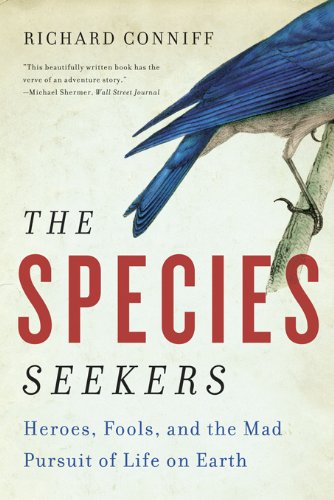
70The Species Seekers: Heroes, Fools, and the Mad Pursuit of Life on Earth
Beginning with Linnaeus, a colorful band of explorers made it their mission to travel to the most perilous corners of the planet and bring back astonishing new life forms. They attracted followers ranging from Thomas Jefferson, who laid out mastodon bones on the White House floor, to twentieth-century doctors who used their knowledge of new species to conquer epidemic diseases. Acclaimed science writer Richard Conniff brings these daredevil "species seekers" to vivid life. Alongside their globe-spanning tales of adventure, he recounts some of the most dramatic shifts in the history of human thought. At the start, everyone accepted that the Earth had been created for our benefit. We weren't sure where vegetable ended and animal began, we couldn't classify species, and we didn't understand the causes of disease. But all that changed as the species seekers introduced us to the pantheon of life on Earth—and our place within it.
Cry of the Kalahari
Carrying little more than a change of clothes and a pair of binoculars, two young Americans, Mark and Delia Owens, caught a plane to Africa, bought a thirdhand Land Rover, and drove deep into the Kalahari Desert. There they lived for seven years, in an unexplored area with no roads, no people, and no source of water for thousands of square miles. In this vast wilderness the Owenses began their zoology research, working along animals that had never before been exposed to humans.
An international bestseller, Cry of the Kalahari is the story of the Owenses’s life with lions, brown hyenas, jackals, giraffes, and the many other creatures they came to know. It is also a gripping account of how they survived the dangers of living in one of the last and largest pristine areas on Earth.
72Birds, Beasts and Relatives (Corfu Trilogy #2)
73Actual Size
National Geographic Animal Encyclopedia: 2,500 Animals with Photos, Maps, and More!
Animals are organized by taxonomy within each section (mammals, birds, reptiles, amphibians, fish, and invertebrates), accompanied by common and scientific name, fact boxes (featuring lifespan, habitat, and size) and text describing diet, special features, and any other pertinent information. Symbols representing conservation and habitat status highlight a high-interest topic for kids, while color-coding on each section provides for ease of navigation. Backmatter will include a listing of animal species along with basic information including name (scientific and common), lifespan, diet, size, and habitat. A comprehensive glossary, index, and "find out more" section round out this must-have resource.
Releases simultaneously in Reinforced Library Binding: 978-1-4263-1023-2 , $33.90/$39.00 Can
75Where the Wild Things Were: Life, Death, and Ecological Wreckage in a Land of Vanishing Predators
It wasn't so long ago that wolves and great cats, monstrous fish and flying raptors ruled the peak of nature's food pyramid. Not so anymore. All but exterminated, these predators of the not-too-distant past have been reduced to minor players of the modern era. And what of it? Wildlife journalist William Stolzenburg follows in the wake of nature's topmost carnivores, and finds chaos in their absence. From the brazen mobs of deer and marauding raccoons of backyard America to streamsides of Yellowstone National Park crushed by massive herds of elk; from urchin-scoured reefs in the North Pacific to ant-devoured islands in Venezuela, Stolzenburg leads a startling tour through bizarre, impoverished landscapes of pest and plague. For anyone who has seldom given thought to the meat-eating beasts so recently missing from the web of life, here is a world of reason to think again.
76Some We Love, Some We Hate, Some We Eat: Why It's So Hard to Think Straight About Animals
Does living with a pet really make people happier and healthier? What can we learn from biomedical research with mice? Who enjoyed a better quality of life—the chicken on a dinner plate or the rooster who died in a Saturday-night cockfight? Why is it wrong to eat the family dog? Drawing on more than two decades of research in the emerging field of anthrozoology, the science of human–animal relations, Hal Herzog offers surprising answers to these and other questions related to the moral conundrums we face day in and day out regarding the creatures with whom we share our world.
Some We Love, Some We Hate, Some We Eat is a highly entertaining and illuminating journey through the full spectrum of human–animal relations, based on Dr. Herzog’s groundbreaking research on animal rights activists, cockfighters, professional dog-show handlers, veterinary students, and biomedical researchers. Blending anthropology, behavioral economics, evolutionary psychology, and philosophy, Herzog carefully crafts a seamless narrative enriched with real-life anecdotes, scientific research, and his own sense of moral ambivalence.
Alternately poignant, challenging, and laugh-out-loud funny, this enlightening and provocative book will forever change the way we look at our relationships with other creatures and, ultimately, how we see ourselves.
77Bonobo: The Forgotten Ape
In the first book to combine and compare data from captivity and the field, Frans de Waal, a world-renowned primatologist, and Frans Lanting, an internationally acclaimed wildlife photographer, present the most up-to-date perspective available on the bonobo. Focusing on social organization, de Waal compares the bonobo with its better-known relative, the chimpanzee. The bonobo's relatively nonviolent behavior and the tendency for females to dominate males confront the evolutionary models derived from observing the chimpanzee's male power politics, cooperative hunting, and intergroup warfare. Further, the bonobo's frequent, imaginative sexual contacts, along with its low reproduction rate, belie any notion that the sole natural purpose of sex is procreation. Humans share over 98 percent of their genetic material with the bonobo and the chimpanzee. Is it possible that the peaceable bonobo has retained traits of our common ancestor that we find hard to recognize in ourselves?
Eight superb full-color photo essays offer a rare view of the bonobo in its native habitat in the rain forests of Zaire as well as in zoos and research facilities. Additional photographs and highlighted interviews with leading bonobo experts complement the text. This book points the way to viable alternatives to male-based models of human evolution and will add considerably to debates on the origin of our species. Anyone interested in primates, gender issues, evolutionary psychology, and exceptional wildlife photography will find a fascinating companion in Bonobo: The Forgotten Ape.
78Voices in the Ocean: A Journey into the Wild and Haunting World of Dolphins
Yet there is a dark side to our relationship with dolphins. They are the stars of a global multibillion-dollar captivity industry, whose money has fueled a sinister and lucrative trade in which dolphins are captured violently, then shipped and kept in brutal conditions. Casey’s investigation into this cruel underground takes her to the harrowing epicenter of the trade in the Solomon Islands, and to the Japanese town of Taiji, made famous by the Oscar-winning documentary The Cove, where she chronicles the annual slaughter and sale of dolphins in its narrow bay.
Casey ends her narrative on the island of Crete, where millennia-old frescoes and artwork document the great Minoan civilization, a culture which lived in harmony with dolphins, and whose example shows the way to a more enlightened coexistence with the natural world.
79How to Be a Good Creature: A Memoir in Thirteen Animals
Understanding someone who belongs to another species can be transformative. No one knows this better than author, naturalist, and adventurer Sy Montgomery. To research her books, Sy has traveled the world and encountered some of the planet's rarest and most beautiful animals. From tarantulas to tigers, Sy's life continually intersects with and is informed by the creatures she meets.
This restorative memoir reflects on the personalities and quirks of thirteen animals--Sy's friends--and the truths revealed by their grace. It also explores vast themes: the otherness and sameness of people and animals; the various ways we learn to love and become empathetic; how we find our passion; how we create our families; coping with loss and despair; gratitude; forgiveness; and most of all, how to be a good creature in the world.
The 1 #book you MUST read to understand how to build a powerful personal #brand on the web today > https://t.co/uLzyBw429W #makeyourownlane https://t.co/s6qUc1gvUT [source]
80Wild Cats of the World
Wild Cats of the World explores the spectacular Cat Family in unprecedented depth. Drawing on thousands of scientific papers and direct observations in the field, each species is profiled at length, covering all aspects of felid behaviour and ecology. The book is profusely illustrated with colour plates, black-and-white sketches showing important aspects of cat life, and accurate images of every species' skull. Over 400 spectacular photographs are included, many of them showing extremely rare and little-known cats published here for the first time. Each profile includes an up-to-date range map and explains the most current science on how cats are classified and related to each other, including some very recent, surprising discoveries.
Despite their great evolutionary success, the challenges facing felids in the modern world are profound. Only one, the ubiquitous domestic cat, does not require dedicated conservation action to ensure survival for the next century. The book also explores the current conservation issues facing wild cats, the increasingly perilous status of many species, and how they can be saved.
81The Zoology Coloring Book
Hope for Animals and Their World: How Endangered Species Are Being Rescued from the Brink
With the insatiable curiosity and conversational prose that have made her a bestselling author, Goodall - along with Cincinnati Zoo Director Thane Maynard - shares fascinating survival stories about the American Crocodile, the California Condor, the Black-Footed Ferret, and more; all formerly endangered species and species once on the verge of extinction whose populations are now being regenerated.
Interweaving her own first-hand experiences in the field with the compelling research of premier scientists, Goodall illuminates the heroic efforts of dedicated environmentalists and the truly critical need to protect the habitats of these beloved species. At once a celebration of the animal kingdom and a passionate call to arms, Hope For Animals Their World presents an uplifting, hopeful message for the future of animal-human coexistence.
Praise for Hope For Animals Their World
"Goodall's intimate writing style and sense of wonder pull the reader into each account...The mix of personal and scientific makes for a compelling read."-Booklist
"These accounts of conservation success are inspirational."-Publishers Weekly
83Of Orcas and Men: What Killer Whales Can Teach Us
In Of Orcas and Men, a marvelously compelling mix of cultural history, environmental reporting, and scientific research, David Neiwert explores an extraordinary species and its occasionally fraught relationship with human beings. Beginning with their role in myth and contemporary popular culture, Neiwert shows how killer whales came to capture our imaginations, and brings to life the often catastrophic environmental consequences of that appeal.
In the tradition of Barry Lopez’s classic Of Wolves and Men, David Neiwert’s book is a triumph of reporting, observation, and research, and a powerful tribute to one of the animal kingdom’s most remarkable members.
84Bird Sense: What It's Like to Be a Bird
Tracing the history of how our knowledge about birds has grown, particularly through advances in technology over the past fifty years, Bird Sense tells captivating stories about how birds interact with one another and their environment. More advanced testing methods have debunked previously held beliefs, such as female starlings selecting mates based on how symmetrical the male's plumage markings are. (Whereas females can discern the difference between symmetrical and asymmetrical markings, they are not very good at detecting small differences among symmetrically marked males!)
Never before has there been a popular book about how intricately bird behavior is shaped by birds' senses. A lifetime spent studying birds has provided Tim Birkhead with a wealth of fieldwork experiences, insights, and a unique understanding of birds, all firmly grounded in science. No one who reads Bird Sense can fail to be dazzled by it.
The Stokes Field Guide to the Birds of North America
The guide features 853 North American bird species and more than 3,400 stunning color photographs. And yet it's portable enough to fit in your pocket!
The photographs cover all significant plumages, including male, female, summer, winter, immature, morphs, important subspecies, and birds in flight.
Also included:
The newest scientific and common names and phylogenetic order Special help for identifying birds in flight through important clues of behavior, plumage, and shape Detailed descriptions of songs and calls Important behavioral information Key habitat preferences of each species The newest range maps, detailing species' winter, summer, year-round ranges, and migration routes
A special downloadable CD with more than 600 bird sounds (from Lang Elliott and Kevin Colver) and 150 photographs of common North American species.
86King Solomon's Ring
87The Garden of the Gods (Corfu Trilogy #3)
88Stokes Beginner's Guide to Birds: Eastern Region
Is that butterfly outside your window a Monarch or a Giant Swallowtail? What's the best kind of feeder for attracting birds to your backyard? This pocket-size, brilliantly colorful, simple-to-use guide is an ideal introduction to the birds of the Eastern United States. It contains dozens of full-color photographs that enable readers of all ages to identify the most common species; range maps; tips on attracting and observing birds; information on habitat needs, life cycle, food preferences; and much more.
Special features include:
Coverage of 100 speices
Unique organization by birds' plumage colors
User-friendly color tab index for quick reference
Brilliant full-color photographs of each species, plus separate images of male and female when plumage differs
Useful tips for attracting birds
Information on voice, habitat, nest, eggs, incubation time, population trends, behavior, birdhouse and feeder preferences, and much more
Bird Brains: The Intelligence of Crows, Ravens, Magpies, and Jays
The ancients who regarded these remarkable birds as oracles, bringers of wisdom, or agents of vengeance were on the right track, for corvids appear to have powers of abstraction, memory, and creativity that put them on a par with many mammals, even higher primates. Bird Brains presents these bright, brassy, and surprisingly colorful birds in a remarkable collection of full-color, close-up photographs by some two dozen of the world’s best wildlife photographers.
Savage’s lively, authoritative text describes the life and behavior of sixteen representative corvid species that inhabit North America and Europe. Drawing on recent research, she describes birds that recognize each other as individuals, call one another by “name,” remember and relocate thousands of hidden food caches, engage in true teamwork and purposeful play, and generally exhibit an extraordinary degree of sophistication.
90Spying on Whales: The Past, Present, and Future of Earth's Most Awesome Creatures
Whales are among the largest, most intelligent, deepest diving species to have ever lived on our planet. They evolved from land-roaming, dog-like creatures into animals that move like fish, breathe like us, can grow to 300,000 pounds, live 200 years and roam entire ocean basins. Whales fill us with terror, awe, and affection--yet we know hardly anything about them, and they only enter our awareness when they die, struck by a ship or stranded in the surf. Why did it take whales over 50 million years to evolve to such big sizes, and how do they eat enough to stay that big? How did their ancestors return from land to the sea? Why do they beach themselves? What do their lives tell us about our oceans, and evolution as a whole? Importantly, in the sweepstakes of human-driven habitat and climate change, will whales survive?
Nick Pyenson's research has given us the answers to some of our biggest questions about whales. Nick's rich storytelling takes us to the cool halls deep inside the Smithsonian's priceless fossil collection, to the frigid fishing decks on Antarctic whaling stations, and to the blazing hot desert of Chile where scientists race against time to document the largest fossil whalebone site on earth. Spying on Whales is science writing at its best: an author who is an incredible, passionate writer, at the forefront of his field, on a topic that invokes deep fascination.
Review science book mailbag: The Penguin Book of Outer Space Exploration - Ed. by John Logsdon Fwd. by Bill Nye Spying On Whales: the Past, Present, and Future of earth's Most awesome Creatures by Nick Pyenson [source]
Check out this new book on Amazon: Spying on Whales: The Past, Present, and Future of Earth's Most Awesome Creatures, by Nick Pyenson https://t.co/6ROYo8GH1N via @amazon [source]
91How to Swallow a Pig: Step-by-Step Advice from the Animal Kingdom
92Horseshoe Crabs and Velvet Worms: The Story of the Animals and Plants That Time Has Left Behind
Scattered across the globe, these remarkable plants and animals continue to mark seminal events in geological time. From a moonlit beach in Delaware, where the hardy horseshoe crab shuffles its way to a frenzy of mass mating just as it did 450 million years ago, to the dense rainforests of New Zealand, where the elusive, unprepossessing velvet worm has burrowed deep into rotting timber since before the breakup of the ancient supercontinent, to a stretch of Australian coastline with stromatolite formations that bear witness to the Precambrian dawn, the existence of these survivors offers us a tantalizing glimpse of pivotal points in evolutionary history. These are not “living fossils” but rather a handful of tenacious creatures of days long gone.
Written in buoyant, sparkling prose, Horseshoe Crabs and Velvet Worms is a marvelously captivating exploration of the world’s old-timers combining the very best of science writing with an explorer’s sense of adventure and wonder.
93The Trials of Life: A Natural History of Animal Behavior
The Trials of Life surveys the last and most dramatic of these. Every animal, whether rat or rattlesnake, lobster or llama or a human being, must during the course of its life face a series of problems - growing up and collecting food, finding its way around and defending itself against enemies, getting along with its fellows and finding a mate. But though the problems may be the same, the solutions are astoundingly varied. Ants in the Sahara find their way across the featureless sand by taking repeated observations on the sun, fireflies attract their mates by flashing signals like Morse code, and teams of chimpanzees hunt down monkeys in west African forests, collaborating in the most complex way yet observed in the animal world." -- David Attenborough, January 1992
94Poached: Inside the Dark World of Wildlife Trafficking
Journalist Rachel Nuwer plunges the reader into the underground of global wildlife trafficking, a topic she has been investigating for nearly a decade. Our insatiable demand for animals--for jewelry, pets, medicine, meat, trophies, and fur--is driving a worldwide poaching epidemic, threatening the continued existence of countless species. Illegal wildlife trade now ranks among the largest contraband industries in the world, yet compared to drug, arms, or human trafficking, the wildlife crisis has received scant attention and support, leaving it up to passionate individuals fighting on the ground to try to ensure that elephants, tigers, rhinos, and more are still around for future generations.
As Reefer Madness (Schlosser) took us into the drug market, or Susan Orlean descended into the swampy obsessions of TheOrchid Thief, Nuwer--an award-winning science journalist with a background in ecology--takes readers on a narrative journey to the front lines of the trade: to killing fields in Africa, traditional medicine black markets in China, and wild meat restaurants in Vietnam. Through exhaustive first-hand reporting that took her to ten countries, Nuwer explores the forces currently driving demand for animals and their parts; the toll that demand is extracting on species across the planet; and the conservationists, rangers, and activists who believe it is not too late to stop the impending extinctions. More than a depressing list of statistics, Poached is the story of the people who believe this is a battle that can be won, that our animals are not beyond salvation.
@RachelNuwer’s new book is truly incredible. I was lucky to read it before it even hit the shelves! It is a must read for anyone that cares about the future of our planet’s wildlife. It's out today! https://t.co/flo9FQnvFA https://t.co/EmLImXLeqd [source]
95At the Water's Edge: Fish with Fingers, Whales with Legs, and How Life Came Ashore but Then Went Back to Sea
At the Water's Edge will change the way you think about your place in the world. The awesome journey of life's transformation from the first microbes 4 billion years ago to Homo sapiens today is an epic that we are only now beginning to grasp. Magnificent and bizarre, it is the story of how we got here, what we left behind, and what we brought with us.
We all know about evolution, but it still seems absurd that our ancestors were fish. Darwin's idea of natural selection was the key to solving generation-to-generation evolution -- microevolution -- but it could only point us toward a complete explanation, still to come, of the engines of macroevolution, the transformation of body shapes across millions of years. Now, drawing on the latest fossil discoveries and breakthrough scientific analysis, Carl Zimmer reveals how macroevolution works. Escorting us along the trail of discovery up to the current dramatic research in paleontology, ecology, genetics, and embryology, Zimmer shows how scientists today are unveiling the secrets of life that biologists struggled with two centuries ago.
In this book, you will find a dazzling, brash literary talent and a rigorous scientific sensibility gracefully brought together. Carl Zimmer provides a comprehensive, lucid, and authoritative answer to the mystery of how nature actually made itself.
96The Earth Moved: On the Remarkable Achievements of Earthworms
In The Earth Moved, Amy Stewart takes us on a journey through the underground world and introduces us to one of its most amazing denizens. The earthworm may be small, spineless, and blind, but its impact on the ecosystem is profound. It ploughs the soil, fights plant diseases, cleans up pollution, and turns ordinary dirt into fertile land. Who knew?
In her witty, offbeat style, Stewart shows that much depends on the actions of the lowly worm. Charles Darwin devoted his last years to the meticulous study of these creatures, praising their remarkable abilities. With the august scientist as her inspiration, Stewart investigates the worm's subterranean realm, talks to oligochaetologists—the unsung heroes of earthworm science—who have devoted their lives to unearthing the complex life beneath our feet, and observes the thousands of worms in her own garden. From the legendary giant Australian worm that stretches to ten feet in length to the modest nightcrawler that wormed its way into the heart of Darwin's last book to the energetic red wigglers in Stewart's compost bin, The Earth Moved gives worms their due and exposes their hidden and extraordinary universe. This book is for all of us who appreciate Mother Nature's creatures, no matter how humble.
Vanishing: The World's Most Vulnerable Animals
Joel Sartore's quest to photograph all the animal species under human care celebrates its 15th year with this collection of photographs. The animals featured in these pages are either destined for extinction or already extinct in the wild but still alive today, thanks to dedication of a heroic group committed to their continued survival. From the majestic Sumatran rhinoceros to the tiny Salt Creek tiger beetle.
Sartore singles out the species most likely to disappear in the next decades, as well as some that have already been lost. Alongside these images are the words of scientists and conservationists who are working to protect and restore populations of endangered species.
98The Life of Mammals
This came largely from hair and milk. Insulation and central heating made them adaptable to any surroundings. Care of the young led to learning and bigger brains. Otters, camels, lions, foxes and sheep, moles underground, whales at sea, bats in the air, polar bears, antelope, squirrels, mice, monkeys and man have exploited every habitat and every food source - the basis of this new narrative.
David Attenborough has also evolved. In his 50 years of planning, writing and making television programmes of the first quality, he has constantly deepened his and our understanding of life on earth. This new book and its accompanying series of remarkable films in many ways crown his work. Vision, enthusiasm and the ability to share knowledge in an enthralling way - the gifts of an outstanding teacher.
99Elephant Company: The Inspiring Story of an Unlikely Hero and the Animals Who Helped Him Save Lives in World War II
The remarkable story of James Howard “Billy” Williams, whose uncanny rapport with the world’s largest land animals transformed him from a carefree young man into the charismatic war hero known as Elephant Bill
Billy Williams came to colonial Burma in 1920, fresh from service in World War I, to a job as a “forest man” for a British teak company. Mesmerized by the intelligence, character, and even humor of the great animals who hauled logs through the remote jungles, he became a gifted “elephant wallah.” Increasingly skilled at treating their illnesses and injuries, he also championed more humane treatment for them, even establishing an elephant “school” and “hospital.” In return, he said, the elephants made him a better man. The friendship of one magnificent tusker in particular, Bandoola, would be revelatory. In Elephant Company, Vicki Constantine Croke chronicles Williams’s growing love for elephants as the animals provide him lessons in courage, trust, and gratitude.
But Elephant Company is also a tale of war and daring. When Imperial Japanese forces invaded Burma in 1942, Williams joined the elite Force 136, the British dirty tricks department, operating behind enemy lines. His war elephants would carry supplies, build bridges, and transport the sick and elderly over treacherous mountain terrain. Now well versed in the ways of the jungle, an older, wiser Williams even added to his stable by smuggling more elephants out of Japanese-held territory. As the occupying authorities put a price on his head, Williams and his elephants faced his most perilous test. In a Hollywood-worthy climax, Elephant Company, cornered by the enemy, attempted a desperate escape: a risky trek over the mountainous border to India, with a bedraggled group of refugees in tow. Elephant Bill’s exploits would earn him top military honors and the praise of famed Field Marshal Sir William Slim.
Part biography, part war epic, and part wildlife adventure, Elephant Company is an inspirational narrative that illuminates a little-known chapter in the annals of wartime heroism.
Praise for Elephant Company
“This book is about far more than just the war, or even elephants. This is the story of friendship, loyalty and breathtaking bravery that transcends species. . . . Elephant Company is nothing less than a sweeping tale, masterfully written.”—Sara Gruen, The New York Times Book Review
“Splendid . . . Blending biography, history, and wildlife biology, [Vicki Constantine] Croke’s story is an often moving account of [Billy] Williams, who earned the sobriquet ‘Elephant Bill,’ and his unusual bond with the largest land mammals on earth.” —The Boston Globe
“Some of the biggest heroes of World War II were even bigger than you thought. . . . You may never call the lion the king of the jungle again.” —New York Post
“Elephant Company is as powerful and big-hearted as the animals of its title. Billy Williams is an extraordinary character, a real-life reverse Tarzan raised in civilization who finds wisdom and his true self living among jungle beasts. Vicki Constantine Croke delivers an exciting tale of this elephant whisperer–cum–war hero, while beautifully reminding us of the enduring bonds between animals and humans.”—Mitchell Zuckoff, author of Lost in Shangri-La and Frozen in Time
100