1100 Best Wrestling Books of All Time
We've ranked the best wrestling books using expert recommendations, sales data, and millions of reader ratings. At Shortform, we know books. Our book guides are the best in the world. Learn why.
1
2Hitman: My Real Life in the Cartoon World of Wrestling
'Bret Hart still makes me believe that wrestling is good' Hulk Hogan
'Packed with drugs, sex, vicious family in-fighting and tales of life on the road ... Hart names names and lays it all bare in his own words' Globe and Mail
A story of death, sex, betrayal and revenge; sweat, steroids and duplicity - wrestler Bret Hart lifts the lid on the wacky, mythic, secretive word of pro wrestling in this epic tell-all.
3Undisputed: How to Become the World Champion in 1,372 Easy Steps
In this insightful, riveting book, Jericho takes us into WWE wrestling arenas around the world as he details his classic rivalries with The Rock, Steve Austin, HHH, Shawn Michaels, and John Cena, along with all the politics and backstage machinations he faced outside the ring. Chris recounts his hilarious escapades of breaking in with the Hollywood elite via doomed auditions, short-lived reality shows, made-for-television movies, and red-carpet interviewing fiascos.
Jam packed with CJ's trademark self-effacing humor, one-of-a-kind writing style, and ridiculous random encounters with everyone from Arnold Schwarzenegger, Axl Rose, and Wayne Gretzky to Paul McCartney, and Howard Stern, Undisputed is one of a rare breed-a sequel that might be better than the original.
4Have a Nice Day!: A Tale of Blood and Sweatsocks
5The Death of WCW
In 1997, World Championship Wrestling was on top. It was the number-one pro wrestling company in the world, and the highest-rated show on cable television. Each week, fans tuned in to Monday Nitro, flocked to sold-out arenas, and carried home truckloads of WCW merchandise. Sting, Bill Goldberg, and the New World Order were household names. Superstars like Dennis Rodman and KISS jumped on the WCW bandwagon. It seemed the company could do no wrong.
But by 2001, however, everything had bottomed out. The company -- having lost a whopping 95% of its audience -- was sold for next to nothing to Vince McMahon and World Wrestling Entertainment. WCW was laid to rest.
How could the company lose its audience so quickly? Who was responsible for shows so horrible that fans fled in horror? What the hell happened to cause the death of one of the largest wrestling companies in the world? The Death of World Championship Wrestling is the first book to take readers through a detailed dissection of WCW's downfall.
6Foley is Good: And the Real World is Faker Than Wrestling
7Ric Flair: To Be the Man (WWE)
To wrestling fans, the Nature Boy is a platinum-blond deity, a sixteen-time world champion who accurately boasted that he could have a five-star match with a broom. No matter how limited the opponent, Flair had the skill and determination to bounce all over the mat, transforming his rival into a star. When the camera light went on, "Slick Ric" could convince viewers that, if they missed an upcoming match, a momentous life experience would pass them by. Flair's opponents were challenged with this simple taunt: "To be the man, you have to beat the man."
Away from the arena, Richard Morgan Fliehr spent years struggling with his own concept of what it meant to be a man. He suffered periods of crushing self-doubt, marital strife and—in a profession where there was room for only one Ric Flair—broken friendships.
Ric Flair: To Be the Man, cowritten with Keith Elliot Greenberg, chronicles the anguish and exhilaration of Flair's life and career—in painfully honest detail. In addition to his own words, Flair's story is enriched by anecdotes from ring greats like Superstar Billy Graham, Ricky "The Dragon" Steamboat, Harley Race, Sgt. Slaughter, David Crockett, Arn Anderson, Bobby "The Brain" Heenan, "Mean" Gene Okerlund, Shawn Michaels, Triple H, Undertaker and Brock Lesnar.
To Be the Man traces the rise of one of wrestling's most enduring superstars to the pinnacle of the sports entertainment universe, and is a must-read for every wrestling fan.
8The Best in the World: At What I Have No Idea
World Wrestling Entertainment has named Chris Jericho as one of the top ten wrestlers—and one of the top five talkers—of all time. Certainly, the past six years have been spectacular for Jericho. After a sluggish return from his 2005 sabbatical, Jericho found new inspiration in watching No Country for Old Men and completely reinvented his character—ultimately going on to capture three world WWE titles.
The Best in the World chronicles some of the incredible and often preposterous highlights of Jericho’s recent career, including:
How Mickey Rourke challenged Jericho to a match, then backed out
Jericho’s award-winning feud with Shawn Michaels, which culminated in Jericho knocking out Michael’s wife in the ring . . . for real
His escape from the 2010 Icelandic volcanoes in a broken-down, European rental-car shuttle
His encounters with Bob Barker, Ozzy Osbourne, Metallica, Al Sharpton, and Mike Tyson; and his on-again-off-again relationship with WWE chief Vince McMahon
Jericho has a one-of-a-kind comedic voice and a knack for getting himself into screwball situations—both in and out of the ring. See for yourself why he is the best in the world.
9Slobberknocker: My Life in Wrestling
There are few people who have been in the wrestling business longer than Jim Ross. And those who have made it as long as he has (half a century to be exact) probably made enemies or burned bridges. But that’s just not JR. He’s recognized as the man who built and nurtured a once-in-a-generation talent roster that took the WWE to new heights, including “Stone Cold” Steve Austin, Brock Lesnar, and The Rock to name a few. Readers will finally get the opportunity to hear never-before-told stories about the politics, wackiness, and personalities of all the biggest stars.
Jim opens up about his life as an only child on a working farm, who became obsessed with professional wrestling having first saw it on his grandparent’s TV. Even though the wrestling business was notoriously secretive and wary of “outsiders,” he somehow got a foot in the door to start a historic career, one where he held almost every job in the business—from putting up the ring to calling matches, from driving his blind, drunk boss towards revenge, to consoling two naked 600 pound brothers in the shower room after a rough match.
This isn’t just a wrestling story. It’s a story about overcoming adversity and achieving your dreams, as success did not come without significant costs and unforeseen challenges to JR, including multiple bouts of severe facial paralysis called Bell’s Palsy.
Currently the host of the podcast The Ross Report, any fan of wrestling—from the territory days to today—will be enthralled by stories from the road and behind the scenes. Slobberknocker is the first time Ross tells his story—and you don’t want to miss it!
10Cheating Death, Stealing Life: The Eddie Guerrero Story
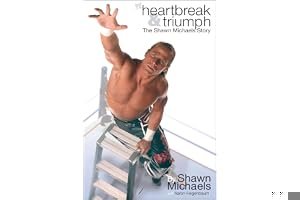
11Heartbreak Triumph: The Shawn Michaels Story
Winning and losing. Heels and babyfaces. Kliqs and Curtain Calls. Tearing down house shows and tearing up hotel rooms. Ladders and cages. Vacated titles and unwarranted suspensions. Works and screwjobs. Heartaches and backbreaks. Forced retirements and redemption. Rock 'n' roll and Graceland. There are two sides to every story; for Shawn Michaels, there is Heartbreak & Triumph.
World Wrestling Entertainment fans think they know "The Heartbreak Kid." He's "The Showstopper" who pushes his high-flying abilities to the limit. He's the company's first "Grand Slam" champion. And of course, he's forever the guy who conspired with WWE Chairman Vince McMahon to screw Bret "Hitman" Hart out of the WWE Championship.
Heartbreak & Triumph introduces us to Michael Shawn Hickenbottom, the youngest of four children whose "really conservative upbringing" made him shy and "afraid that people wouldn't like me if I showed who I really was." But upon discovering Southwest Championship Wrestling (SWCW) one night, Hickenbottom realized instantly what he wanted to become. From there, Hickenbottom fully recounts "Shawn Michaels's" tutelage under Mexican wrestler Jose Lothario; working matches at Mid-South Wrestling; flying high with Marty Jannetty as "The Midnight Rockers" in the American Wrestling Association (AWA); and how a barroom confrontation almost prevented the tandem from ever joining the World Wrestling Federation. "The Rockers" would climb to the top of World Wrestling Entertainment's tag-team division in the late 1980s.
Heartbreak & Triumph tells what dissolved Michaels's partnership with Jannetty and started his transformation into "The Heartbreak Kid." You'll learn firsthand of the "unfair" allegation that brought about HBK's classic Ladder match with Razor Ramon at WrestleMania X; the incident in Syracuse that set the stage for Shawn's unbelievable "comeback" victories at Royal Rumble 1996, and in the Iron Man WWE Championship match with Bret Hart at WrestleMania XII; and how his escalating backstage feud with Hart inadvertently built toward the formation of "D-Generation X," as well as the first-ever "Hell in a Cell" contest against Undertaker.
Beyond the squared circle, Michaels clears the air about his days running with "The Kliq" -- Kevin Nash ("Diesel"), Scott Hall ("Razor Ramon"), Paul Levesque ("Triple H"), and Sean Waltman ("The 1-2-3 Kid") -- their contributions to WWE's wildly successful "Attitude" era, and the consequences of their uncharacteristic Madison Square Garden "Curtain Call" in May 1996. And for the first time anywhere, Michaels shoots completely straight about his role in "the biggest scandal in wrestling history," the infamous "Montreal screwjob" at Survivor Series 1997.
While reliving the crippling back injury that forced him to retire in his prime following his WWE Championship loss at WrestleMania XIV, Michaels credits the new loves in his life -- his second wife Rebecca, his children, and his newfound faith -- with giving him the strength to kick his habit, recover physically, and make a jubilant return to the ring at SummerSlam 2002. Now back on top and doing what he enjoys most, the WWE Superstar regards Heartbreak & Triumph as the perfect means "to review my life, and attempt to figure out how I became the person I am."
12Yes: My Improbable Journey to the Main Event of Wrestlemania
This is Bryan's behind-the-scenes story told for the first time ever by the "YES!" Man himself---from his beginnings as a child wanting to wrestle to his ten years circling the globe on the independent circuit and his remarkable climb to the upper ranks of WWE.
As the biggest week of his life unfolds, Aberdeen, Washington's bearded son reflects in full detail on his incredible path to the top and gives his take on the events that have shaped him. With his Bryan-ized blend of modesty and surprising candor, Daniel pulls no punches (or martial arts kicks) as he reveals his true thoughts on his evolution as a performer, his various roles in WWE versus the independent years, life on the road, at home, and much more.
And of course, get the untold story surrounding the "YES!" chant that evolved to full-fledged movement, skyrocketing his career. This book chronicles all the hard work, values, influences, unique life choices, and more, leading to his watershed week at WrestleMania 30. You won't want to miss it. Yes! We're sure about this.
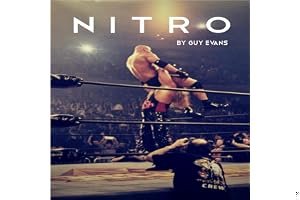
13NITRO: The Incredible Rise and Inevitable Collapse of Ted Turner's WCW
As a consequence of the heated ratings competition between World Championship Wrestling (WCW) and the World Wrestling Federation (WWF), the spectacle had taken over Monday nights on prime-time cable television. But in a departure from the family-friendly programming produced by the last industry boom - the 1980s wave, which made household names of Hulk Hogan, 'Rowdy' Roddy Piper and Andre the Giant - the new era of wrestling combined stunning athleticism with a raunchy sex appeal, engrossing story lines and novel production techniques that reflected a changing society and its shifting values.
Once again, wrestling was a ubiquitous phenomenon - only this time, it seemed as though the fad would never end. With both WCW and WWF expanding into other forms of entertainment - movies, video games, music and the like - the potential for growth appeared to be limitless.
But with uncertainty surrounding its corporate future, and increasingly uninspired programming eroding its audience, WCW stood on the verge of collapse. Three years into a five-year plan devised by its charismatic leader - a former Blue Ribbon Foods salesman named Eric Bischoff - the company whose unexpected ascension initiated the entire boom was operating on borrowed time.
For by the end of the five-year plan, WCW ceased to exist.
But NITRO is a story about much more than WCW and the Monday Night Wars. It is a story of an era, a time in which the media and cultural landscape precipitated - and later supported - pro wrestling's mainstream popularity. It is a story of how a company made in the image of an intuitively brilliant risk-taker betrayed its original promise. It is a story of how a handful of men, each struggling with their own limitations, facilitated a public obsession that changed television forever.
And so, with the inside knowledge of a journalist, the perspective of a historian, and the passion of a fan, author Guy Evans provides a fresh look at an unfortunate inevitability - the downfall of World Championship Wrestling. Bolstered by exclusive interviews with over 120 former TBS and WCW employees, NITRO is the definitive picture of the last wrestling boom.
Featuring exclusive interviews and comments from:
Eric Bischoff, fmr. President of World Championship Wrestling;
Harvey Schiller, fmr. President of Turner Sports;
Jamie Kellner, fmr. CEO of Turner Broadcasting System;
Bill Burke, fmr. President of TBS network;
Joe Uva, fmr. President of Turner Entertainment Sales and Marketing;
Scot Safon, fmr. SVP of Marketing for TNT network;
Kevin Nash, WWE Hall of Famer and 5-time WCW world champion;
Diamond Dallas Page, WWE Hall of Famer and 3-time WCW world champion;
Vince Russo, fmr. WCW writer;
Marcus 'Buff' Bagwell, fmr. WCW superstar and 5-time world tag team champion;
Kevin Sullivan, fmr. WCW superstar and head booker;
Hugh Morrus, fmr. WCW superstar;
Neal Pruitt, fmr. WCW Feature Producer and voice of the nWo;
David Crockett, fmr. WCW Vice President of Production;
Dick Cheatham, fmr. Group Controller for TBS;
Alan Sharp, fmr. WCW Director of Public Relations;
Mike Weber, fmr. WCW Director of Marketing;
Rob Garner, fmr. WCW Vice President of TV Programming and Sales
Jerry Jarrett, legendary wrestling promoter and booker...
And many, many, many more!
14The Stone Cold Truth
15Sex, Lies, and Headlocks: The Real Story of Vince McMahon and the World Wrestling Federation
At the heart of the story is Vince McMahon, the mercurial owner of the World Wrestling Federation. The authors trace his beginnings as the forgotten son of a second-generation wrestling czar who left rural North Carolina to stake his own claim to the family business. They detail his early, ruthless genius in declaring war on the old territory czars who had grown fat and lazy. And they show how his first brush with fame in the 1980s with Hulk Hogan and Cyndi Lauper sowed the seeds for the drug and sex scandals that nearly toppled his empire in the 1990s. They also tell us the inside story of McMahon’s blood feud with Ted Turner, adding some surprising details about the two men’s quests to ruin each other.
Throughout the book, the authors examine the appeal of the industry’s biggest stars—including Ed “Strangler” Lewis, Gorgeous George, Bruno Sammartino, Ric Flair, and, most recently, Stone Cold Steve Austin and The Rock. In doing so, they show us that while WWF stock is traded to the public on Wall Street, wrestling remains a shadowy world guided by a century-old code that stresses secrecy and loyalty.
Sex, Lies, and Headlocks is the ultimate behind-the-scenes look at the history, personalities, back-stabbing, scandals, and high-stakes gambles that have made Vince McMahon the king of the ring and wrestling an enduring television phenomenon.
@davidbix @shaunassael @ByMikeMooneyham That book was great. [source]
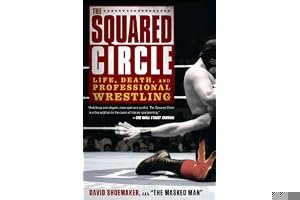
16The Squared Circle: Life, Death, and Professional Wrestling
The Squared Circle grows out of David Shoemaker’s writing for Deadspin, where he started the column “Dead Wrestler of the Week” (which boasts over 1 million page views) -- a feature on the many wrestling superstars who died too young because of the abuse they subject their bodies to -- and his writing for Grantland, where he covers the pro wrestling world, and its place in the pop culture mainstream. Shoemaker’s sportswriting has since struck a nerve with generations of wrestling fans who—like him—grew up worshipping a sport often derided as “fake” in the wider culture. To them, these professional wrestling superstars are not just heroes but an emotional outlet and the lens through which they learned to see the world.
Starting in the early 1900s and exploring the path of pro wrestling in America through the present day, The Squared Circle is the first book to acknowledge both the sport’s broader significance and wrestling fans’ keen intellect and sense of irony. Divided into eras, each section offers a snapshot of the wrestling world, profiles some of the period’s preeminent wrestlers, and the sport’s influence on our broader culture. Through the brawling, bombast, and bloodletting, Shoemaker argues that pro wrestling can teach us about the nature of performance, audience, and, yes, art.
Full of unknown history, humor, and self-deprecating reminiscence—but also offering a compelling look at the sport’s rightful place in pop culture—The Squared Circle is the book that legions of wrestling fans have been waiting for. In it, Shoemaker teaches us to look past the spandex and body slams to see an art form that can explain the world.
17Adam Copeland on Edge
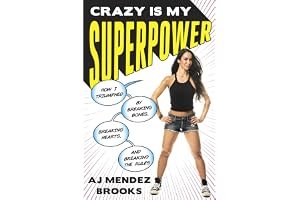
18Crazy Is My Superpower: How I Triumphed by Breaking Bones, Breaking Hearts, and Breaking the Rules
19Death of the Territories: Expansion, Betrayal and the War that Changed Pro Wrestling Forever
Dozens of territories flourished between the 1950s and late ’70s. But by the early 1980s, the growth of cable television had put new outside pressures on promoters. An enterprising third-generation entrepreneur who believed cable was his opportunity to take his promotion national soon capitalized on the situation.
A host of novel ideas and the will to take chances gave Vincent Kennedy McMahon an incredible advantage. McMahon waged war on the territories and raided the NWA and AWA of their top talent. By creating WrestleMania, jumping into the pay-per-view field, and expanding across North America, McMahon changed professional wrestling forever.
Providing never-before-revealed information, Death of the Territories is a must-read for fans yearning to understand how McMahon outlasted his rivals and established the industry’s first national promotion. At the same time, it offers a comprehensive look at the promoters who opposed McMahon, focusing on their noteworthy power plays and embarrassing mistakes.
20The Hardcore Truth: The Bob Holly Story
21Controversy Creates Cash
Beginning with his days as a salesman for the American Wrestling Association, Bischoff exposes the industry's inner workings, from the real numbers behind WCW's red ink to the devastating impact of the corporate mergers. Among his revelations: How WCW became a national brand and revolutionized the industry. How Hulk Hogan, Jesse Ventura, and Steve Austin shaped WCW, and how corporate politics killed it. And how he found his inner heel and learned to love being the guy everyone loves to despise.
Reflecting on his childhood, his family, and the pressures of notoriety, Bischoff tells how he found contentment after being unceremoniously "sent home." Love him or hate him, readers will never look at pro wrestling the same way again after reading Eric Bischoff's story in Controversy Creates Cash.
22The Hardcore Diaries
23The Rock Says
In this action-packed, revealing and outrageously funny memoir, World Wrestling Federation Superstar The Rock recounts his life in and out of the ring with unapologetic honesty and inimitable style. From his boyhood days traveling around the world with his father (professional wrestler Rocky Johnson) to his years as a football player at the University of Miami to his meteoric rise through the ranks of the Federation, The Rock Says... chronicles in vivid detail the life story of one of sports-entertainment's most innovative and best-loved personalities.
The Rock will take fans on a guided tour of big-time professional wrestling, a highly competitive business in which a handful of gifted and lucky performers dominate, and all others dream of a moment in the spotlight. He provides a breathtaking, minute-by-minute account of Wrestle Mania, the Super Bowl of pro wrestling, including an intimate backstage look at rehearsals with his opponent, Stone Cold Steve Austin. And he discusses in heartfelt detail the loss of his friend and co-worker, Owen Hart.
Filled with genuinely touching stories of love and strife, hilarious anecdotes, inside accounts of an industry whose machinations have long been shrouded in secrecy and dozens of previously unpublished photographs from The Rock's personal collection, The Rock Says... is--as The Rock himself might put it--"the coolest thing since the other side of the pillow if you smell what The Rock is cookin'."
24Under the Black Hat: My Life in the WWE and Beyond
Jim Ross has been the beloved voice of the WWE—and now All-Elite Wrestling—for decades, but there is so much more to the man than fans know. In this follow-up to his 2017 memoir Slobberknocker, Ross shares the story of professional wrestling’s rise from a quirky sideshow to a multi-billion-dollar industry in the 1990s and 2000s.
Under the Black Hat is packed with stories from the height of WWE madness, including Ross’s nurturing of global talents like Dwayne “The Rock” Johnson, Stone Cold Steve Austin, and John Cena. It traces the fracture of Ross’s relationship with Vince McMahon, his triumphant return to Wrestlemania 32, and the heartbreaking challenges he suffered behind the scenes, include multiple debilitating bouts of facial paralysis and the sudden, tragic death of his wife, Jan.
For all its larger-than life characters, Ross’s story is endearingly human in scale, turning a gruff but gentle eye to themes of professional ennui, ageism, disability and grief. Told with heart, humor, and unfailing honesty, Under the Black Hat is a gift not only for his many lifelong fans, but the new ones he’s sure to find.
25Walking a Golden Mile
Chapter One: A Wrestler, a Comic or a Clown
I'm not as old as you might think. It's just that I've been wrestling a long time. There's very few on the current World Wrestling Entertainment talent roster with more experience on the job than I have. The fact is I was born Darren Matthews on May 10, 1968 in a little village in the middle of England -- Codsall Wood in Staffordshire. Not a lot goes on in Codsall Wood. My dad Don Matthews is a builder and he built the house I was born in, just fifty yards from my grandfather's house, where my dad himself was born.
Wrestling is one of my earliest memories. Whenever I could, I'd watch it on TV. I also loved that old show The Comedians, all those old gag-a-minute northern stand-up comics, and I loved Slade too, the glam rock band. Wrestling, comedy and showbusiness -- they were always going to play a big part in my life.
I was seven when my mum Paula left us. Mum and Dad had a massive row and my dad took me out in the car to see some of the houses he was building. He said to me: "What would you think if you got home and your mum wasn't there?" I don't remember being too bothered. I'd always looked up to my dad and he was the one I wanted to be around. But it must have affected me, because I took my frustrations out on other kids. They'd tease me in the playground, shouting, "Where's your mum?" For the only time in my life, I turned into a bully. There's nothing I hate worse now than a bully. That or a liberty-taker. I've no time for bullies -- and I met plenty of them when I became a wrestler. I try to live my life without having regrets, but the fact that I bullied other kids all those years ago is something that troubled me for a long time.
I used to be a right naughty lad. But then when I was about fifteen I woke up one day and the thought struck me: "This is not the way to be." I couldn't carry on the way I had been. That was it. Simple as that. I've prided myself on my politeness from that day.
I hated every single minute of school. It's a terrible thing to admit when I know so many kids watch me on TV every week, but it's true. I detested it. My first school was a Catholic school, St Joseph's Convent, even though I'm not a Catholic. Mum leaving when I was so young didn't help matters, but I would never have been able to handle being preached at by those nuns in any case. I never liked being told that I'd go to hell if I didn't do what some nun told me to.
Just about the only highlight I remember from school was being taken on a trip to Chester Zoo when I was eight. My best friend was a lad called Andrew who had this curly thick white hair. He began pulling faces at a gorilla who retaliated by throwing a big pile of shite at him, hitting him square in the face. All you could see of Andrew were his eyes, peering through this steaming mask. The nuns were running around, shouting and screaming. It was like a Tom and Jerry cartoon. If that was the only thing I can remember from school, you can imagine how mind-numbing I found the place.
Then when I was nine I went to the middle school -- and was soon faced with another confusing situation. My mum had run off with this bloke and my dad ended up marrying his wife. It got pretty complicated. I've a half-brother who's my mum and step-dad's kid, and a step-sister.
My dad had custody of me and I'd go to stay with my mum in the school holidays, but I didn't like going. She lived in Bristol, a hundred miles away. When I was there I never saw much of my brother, who was always out with his friends. I didn't really know him, though we do keep in touch today. He's nice enough. But most of the time I didn't want to be there because I wanted to stay at home with my dad, granddad and the close family who lived nearby: my uncles, aunties and cousins -- especially my cousin Graham. He's older than me, but we spent so much time together growing up that he's more like a brother to me than anything else.
But my dad was always the one I looked up to. To this day he's the nicest man I've ever met -- and I'm not just saying that because he is my dad. He is the kindest person. I've never heard him swear or even say a bad word about anybody. He's a real hard worker, too. You never saw my dad without a pair of overalls on. He would come home covered in cement and has always worked hard for his living.
He doesn't need to work these days but he still does. He still gets up early every morning and never stops all day. If he didn't work he wouldn't know what to do with himself. Lately he has had problems both with his leg and with his arm but nothing stops him. I've seen him shovelling stuff with one hand. If he gave it up now he'd have no financial worries but that is who he is -- a grafter. But what it meant for me when I was growing up was that dad was often out at work. That meant I spent a lot of time with his father, my granddad.
Granddad's name was William Matthews, known as Bill, and he was probably the biggest influence in my life. In his younger days he was a bit of a rogue, well known for fighting and drinking. He'd do a bit of wrestling, a bit of boxing, a bit of running -- anything to make a few quid. He'd tell me stories about how he used to wrestle at a place called the Pear Tree pub. Back in the 1920s and 1930s they had a ring up in the beer garden where he used to do his stuff. He packed it in back in 1933, aged just thirty-two, because he came down with pleurisy and pneumonia. He also worked in Blackpool for a while. He was a navvy and there had been a lot of work going there when he was younger, on the sea walls and the like.
He used to tell me all these stories about him fighting when he was younger. He was a big, powerful fellow, over six feet tall, and he was a great character. He used to joke around and would teach me all these dirty stories and poems. He'd tell me all these things and whenever I repeated any of them to my mum, I'd get a thick ear for it. I've still got a picture of him in a suit and the older I get, the more I look like him.
He died in 1990, when he was eighty-nine. He loved it when I started wrestling and travelling around the world. Even when I'd moved to Blackpool, I'd come back to see him more than I would most people. Whenever I was passing through the Midlands on the wrestling trips that would take me all over the country, I'd stop over with him.
He drank all his life and smoked a pipe. He'd had every disease you care to name but in the end, the only reason he died was because he had got fed up with living. My gran had died a few years before and he used to tell me there was nothing on TV he wanted to watch any more, nothing he wanted to do. The last time I saw him, he told me: "I'm going to die, son."
"Don't be so soft," I said. I told him I was due to go to South Africa two weeks later to wrestle.
"Don't stay," he said. "Get yourself gone."
He died soon after. I did what he'd told me and went to South Africa. That was the way it was between him and me.
When I got to Codsall High School I had the same trouble as before. It bored the life out of me. Things that I liked, I did okay at, such as woodwork. But something I didn't like -- French for example -- was another matter. I got thrown out of French for being a disruptive little git.
If there is anything I want to learn about I'll do it on my own. I read constantly these days, and have always tried to educate myself. But when they tried to teach me a load of old cobblers it drove me up the wall. I was one of the lads sitting at the back of the class, being sarcastic and messing around all the time. Because I never thought I'd need any of it. I'd always known what I was going to do. I was going to be a wrestler.
I remember one of my last days at Codsall High, when I was sent to see the careers officer. "What are you going to do?" he asked me. "Are you going to get a trade?"
"No," I said. "I'm going to be a wrestler."
He threw me out of the office and told me to come back when I wanted to talk some sense. I expect he's still there today.
Now mine is not a rags to riches tale. I didn't become a wrestler because I wanted to be rich and famous. We weren't badly off. My dad owned his own business and we lived in a lovely village, in a beautiful home, because my dad had built it. I was fortunate. We'd go on good holidays -- Jersey, Guernsey, Spain, Tunisia. We never went without.
But when I became a wrestler, I made myself poor. Some of my friends and family were almost as surprised as the careers officer had been. Everyone expected me to take over the family business from my dad, but I knew I could never work a regular job. Even when I helped my dad out at weekends, I knew I couldn't hack that life. I'm not decrying anyone who can -- good luck to them. My dad's a grafter, and my mum too - she's a nurse. But it wasn't for me.
One reason was the way I saw people treat my dad. He'd do jobs for them and then they wouldn't want to pay him. It used to drive me wild. I was going to be a wrestler and that's all there was to it. A wrestler or a clown or a comedian. I've ended up becoming a mixture of all three.
My dad used to take his young, wrestling-mad son to Wolverhampton Civic Hall every two weeks to see Dale Martin's shows. It was great. I watched all the stars of the day, people who affected me and whose inspiration I still use in my own act now. There was Giant Haystacks, Big Daddy, Kendo Nagasaki, The Royal Brothers, Mick McManus and Cyanide Sid Cooper -- I was always a huge fan of his and use a lot of his material today.
On my eighth birthday I was taken to see Mick McManus at Wolverhampton Civic Hall and it must be the greatest birthday present anyone has ever given me. Around 1975 I saw Dynamite Kid there when he was just sixteen and he was awesome. He was only a little kid and he wasn't flying around like he did later in his career, but you could already tell how good he was going to be. He was full of energy, moved like a sparkplug.
One night he wrestled another guy I liked a lot, Tally Ho Kaye, in a street fight. Tally Ho did a foxhunting gimmick and the idea was for the two of them to fight in their street clothes. Tally Ho had a really posh outfit on, all polished boots and brass buttons, and Dynamite turned up in a sports jacket, tie, jeans and a pair of Doc Martens. Tally Ho used Dynamite's tie to strangle him - it was brilliant stuff. I was intrigued by all this drama and theatre. I didn't care about all those people who said it was bent. I was hooked.
I used to run round collecting autographs from all the wrestlers. That's why I always give autographs now, as long as I have the time -- I can remember when I was the excited kid with the pen and the notebook. I can't always oblige. If I'm rushing for a plane it can be difficult, but I'll always apologize if I can't. I always used to sign for everyone who asked but these days it is less likely to be a handful and more likely to be hundreds or thousands. Sometimes, if I see 250 kids and I know I'll only be able to do two or three, I'd rather not do any at all and let them think I'm a bit of a dick. I would feel badly for all the people I couldn't do.
My being such a starstruck wrestling fan wasn't so unusual back then. All of Britain was hooked on it. They say that in the 1960s, a couple of matches between Mick McManus and Jackie Pallo, which were put on before the FA Cup final, the biggest sporting event of the British year, drew more viewers than the football -- eleven or twelve million. That's more than one fifth of the population. Even the Queen and Prince Philip were fans. Everyone went to the wrestling at their local town hall or swimming baths; it was a British tradition. And I loved it more than anybody.
When I turned fifteen I started taking the bus into Wolverhampton on my own to go to the wrestling. By this time I had new heroes: Dave "Fit" Finlay and Mark "Rollerball" Rocco. But what I liked most were the villains. It was the way they could control people. It was only natural that I'd end up playing a villain myself. In life as well as wrestling, I've always admired the rogues.
Soon my wrestling education expanded as I travelled further afield to watch my heroes. I'd go to Rhyl town hall in North Wales, where the promoter Oric Williams used to put on shows. Here were all these other guys, ones you never used to see on TV. The independent scene, I suppose you'd call it now -- shows put on by Oric and Brian Dixon.
Oric used to have all these monsters. One guy was called the Wild Man of Borneo. He was a Sikh who used to come out with all his long hair down and hair all over his body. You'd see people like Crusher Mason and Adrian Street, very different from the guys you saw on TV. Giants like Klondyke Bill and Klondyke Jake. And after I'd seen a few of these shows I was even more enthralled. I loved all the over-the-top stuff. The crazy gimmicks and the face-pulling.
It wasn't long before I realized there was a great deal more to this wrestling caper than what you saw on Saturday afternoons on World of Sport. Some were just entertainers. Others were very skilled wrestlers. But the ones who were both, who had the whole package, were the ones to emulate. I began to watch the wrestlers who made me believe that what they were doing in the ring was real. As far as that goes, England has the best wrestlers in the world -- or did in those days, at any rate. I was determined to learn that really serious style. I wanted to be a wrestler whose matches were completely believable.
Looking back, I was lucky to be trying to break in when I did. In the late 1970s and early 1980s there were so many amazing guys in Britain to watch and learn from. There was Rocco, Finlay and Marty Jones - someone who became a big influence in my career later on. There was Satoru Sayama who wrestled as Sammy Lee and later became the original Tiger Mask in Japan, and sometimes the Dynamite Kid.
These people revolutionized the wrestling business in England. They had a style that no one else could do. They wrestled really well. They did flying moves but it was all part of a believable, hard-hitting style -- my favourite. I recently watched a video of Marty Jones wrestling Rocco in 1977 and it still stands up today. It was the first time they ever wrestled each other on TV and you wouldn't know it wasn't a modern match -- in fact, it was better than a lot of what you see today. Incredible wrestling.
But wrestling isn't the easiest thing in the world to get into. You can't just look in the Situations Vacant column and answer the ad that says "Wrestlers wanted". There weren't any textbooks telling you how to get into the business. You had to work it out for yourself.
My uncle Eddie provided my way in. He used to drink in a pub in Wolverhampton with a guy who did a lot of wrestling. He did local shows, carnivals, that kind of thing. So I met this fellow and started putting up the ring with him -- the traditional first job for anyone starting out in the business.
On Tuesday afternoons I would go to Wolverhampton Civic Hall and hang around. I'd watch while they put up the ring and after a while I began to meet a few people involved in the shows. I hung around with them and whenever there was an opportunity, I'd get in the ring and I'd try out different things. I'd done a little bit of judo when I was younger, just enough to know how to fall properly. I didn't know anything else, so I started to figure things out for myself.
There weren't any wrestling clubs in Wolverhampton, so I went to a boxing club to get fit. As a schoolboy I was a fat kid -- when I was ten I weighed ten-and-a-half stone (147 pounds). But I started getting into shape at the boxing club, and all because I wanted to make it as a wrestler. I was determined to find a way in somehow.
Watching these guys in Wolverhampton, I'd figured out all these falls. So I started practising them at home in my dad's back garden. I made a frame of two-by-two wood, put two eight-by-four sheets of plywood on top and a blanket on top of that to make my own improvised ring and I used to throw myself around on that all the time, trying to teach myself how to fall. I'd backdrop myself off walls onto the grass and fly all over the place.
All of this was with just one goal in mind. My dad would encourage me, but I'm sure he thought it was just a passing phase, not something to which I'd stay committed.
Soon I started to get quite tall. Most people today don't realize I'm 6 feet 4 inches. As a villain, I crouch down to look smaller than I am. I want the fans to think they can beat me themselves because they'll hate me all the more when I get away with some in-ring villainy. It's one of the tricks I've picked up along the way.
So I was tall enough to be a wrestler, but there was a problem: I had no athletic ability whatsoever. I'd never done any sports, watched any or cared about them, for that matter. At school I'd get out of them any way I could. So pretty early on I recognized I couldn't be a high-flying wrestler, even if it was my favourite style to watch. I just didn't have the ability for it. When I tried to fly I looked like a very sad sack indeed. I'd never be a performer like Rocco in the past or Eddie Guerrero and Chris Benoit today.
That's why I decided I had to concentrate on mat wrestling and entertaining. Making my matches look more believable and fluid became my obsession.
Before we go any further I think I should explain a few things. I have a tremendous respect for the wrestling business. It has given me every material possession that I own, allowed me to feed my family and taken me around the world. But I owe it to you to tell the truth and that means telling you things about my chosen occupation that I wouldn't have told you ten years ago.
When I started in the wrestling business it was part of our job to defend the legitimacy of our sport. Nowadays it's very different. In the 1990s, World Wrestling Federation acknowledged that wrestling was entertainment. Nothing that most people didn't already know or at least suspect. Today, people watch wrestling and enjoy it for what it is. They don't feel as though they are having their intelligence insulted. But I personally do not like to overexpose the business -- more on that later.
Throughout this book I will write honestly about my life and the business I am in. I will be explaining certain aspects of what goes on behind the scenes. So I will start by telling you this -- yes, a professional wrestling match is "fixed". But it is not fake. It's fixed because the participants know what the outcome of the match is going to be when they start. It is not fake because the action you see is genuine -- it really does hurt. We are skilful but we are not magicians. No matter what you do, when a man weighing 300 pounds lands on you from a great height, it is going to hurt.
People say we know how to fall, meaning we can fall in a controlled way. Yes we can -- but in a wrestling match, with so many things going on at the same time and so many switches of momentum, too many things are outside your control. You can't help but fall in an uncontrolled way. That's why there will be so many injuries discussed in this book.
Not only was I dead set on becoming a wrestler, I was dead set on being a wrestler in Blackpool. It wasn't that far away from Staffordshire and when I was a little kid we used to go there for days out. Even then I used to say I would live there one day, because it was like wonderland to me.
Blackpool is the biggest holiday resort in Europe and, I believe, the second most-visited destination after the Vatican. There's nothing cultural about the place. It promises cheap and cheerful entertainment for the masses. It boasts a giant amusement park, known as the Pleasure Beach -- one of the biggest in the world.
It's got three big piers, an enormous sandy beach and non-stop entertainment. There's a huge stretch called the Golden Mile -- actually seven miles long -- which is lit up in the winter by the famous Blackpool Illuminations. There's so much to do there -- everything a kid would want. Circuses, amusement parks, arcades full of games and machines. It was a magical place for me when I first set eyes on it and it still is. A lot of people say it's past its heyday now but I don't see that. When I go back there, I still see it as a fairytale place.
Unsurprisingly, one of my first memories of Blackpool revolves around wrestling. We went to the Pleasure Beach one day when I was nine or ten. We walked round the corner of the beautiful old White Tower building there to be confronted by this row of wrestlers. They looked like monsters to a little lad like me. There was a Red Indian, a Viking, a few masked men and some women. They were throwing out challenges to the crowd, daring them to step in the ring.
Years later I'd get to know the truth behind some of these people. Radnor the Viking, for example, was a fellow called Dave from Ellesmere Port in Cheshire. I wrestled him later on. But as a youngster, this was the most impressive sight I'd ever experienced. Scary too. When they were challenging the crowd to a fight, I was convinced they were challenging my dad. As far as I was concerned, my dad was the biggest, strongest fellow in the world; but Radnor the Viking was enormous and had a big axe!
The moment we went in to watch their show, I was hooked. I looked at those men in that ring, with the crowd in the palms of their hands and thought: "I'm going to work here one day. I'm going to be a wrestler at Blackpool Pleasure Beach."
And a few years later, I was.
I remembered that first view of Radnor the Viking when I was fifteen and went back to the Pleasure Beach to see the wrestlers again. Again, the same experience -- I walked round the corner, saw the wrestlers and knew more than ever this was what I wanted to do. So I started out like many people do in the wrestling business -- from then on, while I was still at school, I went to the Pleasure Beach every weekend and hung around. The promoter, Bobby Baron, was a lovely man who really looked after me. After a few weeks of hanging around, I plucked up the courage to tell Bobby what was on my mind.
I went up to him and blurted it out: "I want to be a wrestler."Bobby took out the pipe that was permanently clenched in his teeth and said:
"Eee," which was how he started all of his sentences. "Eee, I bet you do, kid."
"No, I really do," I insisted.
And that led to my first ever match. My opponent was a man called Shaun who later became Colonel Brody. At the time though, he wrestled as a gay character called Magnificent Maurice. He was 6 feet 6 inches, with an impressive handlebar moustache and a big, bald head. Already, in the short time I'd been hanging around the wrestlers, I'd seen him knock several people out. And there was me, a little fifteen-year-old.
Still, I got in the ring with him. "I know what this wrestling's all about," I thought. All that training in the back garden would stand me in good stead now. I started by throwing some weak, fake punches at him. He just glared at me. Then, BAM! He whacked me on the back of my head and I went down. He picked me up and proceeded to throw me all over the ring. Soon after -- though the match felt plenty long enough to me at the time -- he got me in a single-leg Boston crab and I tapped out. Either he'd thought I was just another wannabe from the crowd or Bobby had told him to slap me around a bit to get rid of me. But throughout the beating, there was skill there too. He could have hurt me badly, but he didn't. He humiliated me instead.
I wasn't going to give up after just one match. I went back the next weekend and I kept going back. Within a few weeks, they took pity on me and took me in. They had a lot of guys who never became real wrestlers but just worked as plants in the crowd, and they thought I could be one of them. When I got the chance to, I'd jump in the ring and roll about, teaching myself some moves.
The way it worked was this. The wrestlers lined up outside - just as they had when I'd seen them as a nine-year-old -- while Steve Foster from Wigan, the man on the microphone, would get everyone going. Punters were challenged to get in the ring with the wrestlers. The matches were of three three-minute rounds. Challengers would get £10 for every round they lasted, and £100 if they lasted all three or knocked the wrestler out.
Steve would get on the mic and use the same spiel he always used. "What we're looking for are fighting men. Anybody who can have a fight. We want boxers, wrestlers, judo men, karate men, poofs, queers, perverts, Len Faircloughs, anybody who can fight."
Now Blackpool's a tough place. There'd be gangs of lads who would have been roaming around, drinking all day, and they'd be up for it. First a smaller guy, one of our plants, would step up to accept the challenge. That would get the crowd going. Then Steve would ask: "Is there anybody else?" and a bigger guy would step in. Now the crowd would be on the hook. They'd ooh and aah, thinking the big guy was bound to have a great chance. Then everyone would file in and pay their money to see the matches.
Sometimes the wrestlers would have to go out and do this routine two or three times to fill the place up before the show started. It was a great place to learn about crowd psychology. When the big fellow got in to have a go, you could tell everyone was thinking: "Now here's someone who can win."
The wrestlers who took the challenges usually wore masks. There were a couple of reasons for that. Firstly, it made you look more like a monster when you were standing outside and Steve was getting people in. Secondly, if trouble really kicked off in the shows -- which it did -- or if you had to give someone a really good hiding, you could bugger off when the police came because no one knew what you looked like. The crowds used to be so programmed by TV that they'd shout at the challengers to tear the wrestler's masks off. No good advice, like "Punch his head in!" or "Kick him in the balls!" Just, "Tear his mask off!" That always used to make me laugh.
At the end of that summer season, I had to go back to Codsall to finish my last year in school. Now I had had a taste of this intoxicating new world, school managed the impossible and became even drearier than it had been before. I still went to Wolverhampton when I could to hang around and talk to some of the wrestlers. But I was fixated on getting to the Pleasure Beach. And I wasn't going to stay in school one second longer than I had to.
When I finally took my exams, I just did them and left. Never even looked at the results. My dad has probably got the certificates somewhere but I've never looked at them. It was May 18, 1984. I was a few days past my sixteenth birthday and about to become a professional wrestler.
Copyright & © 2005 by World Wrestlin Entertainment, Inc.

26No Is a Four-Letter Word: How I Failed Spelling but Succeeded in Life
Chris Jericho has known what he wanted out of life since he was a teenager: to be a pro wrestler and to be in a rock 'n' roll band. Most of his high school friends felt that he lacked the tools necessary to get into either, but Chris believed in himself. With the wise words of Master Yoda echoing through his head ("Do or do not. There is no try."), he made it happen. As a result, Chris has spent a lifetime doing instead of merely trying, managing to achieve his dreams while learning dozens of invaluable lessons along the way.
No Is a Four-Letter Word distills more than two decades of showbiz wisdom and advice into twenty easy-to-carry chapters, including:
Developing a strong work ethic thanks to WWE chairman Vince McMahon,
Remembering to always look like a star from Gene Simmons of KISS,
Learning to let it go when the America's Funniest Home Videos hosting gig goes to his rival,
Adopting a sense of perpetual reinvention from the late David Bowie,
Making sure to sell himself like his NHL-legend father Ted Irvine taught him, and
Going the extra mile to meet Keith Richards (with an assist from Jimmy Fallon).
Now, in the hopes that those same principles might help and inspire his legions of fans, Chris has decided to share them while recounting the fantastic and hilarious stories that led to the birth of these rules. The result is a fun, entertaining, practical, and inspiring book from the man with many scarves but only one drive: to be the best. After reading No Is a Four-Letter Word, you'll discover that you might have what it takes to succeed as well...you just need to get out there and do it. That's what Jericho would do.
27Pure Dynamite: The Price You Pay for Wrestling Stardom
28The Comic Book Story of Professional Wrestling: A Hardcore, High-Flying, No-Holds-Barred History of the One True Sport
As a pop culture phenomenon, professional wrestling--with its heroic babyfaces and villainous heels performing suplexes and powerbombs in pursuit of championship gold--has conquered audiences in the United States and around the world. Now, writer/podcaster Aubrey Sitterson and illustrator Chris Moreno form a graphic novel tag team to present wrestling's complete illustrated history. Featuring legendary wrestlers like Bruno Sammartino, Hulk Hogan, and The Rock, and modern-day favorites like John Cena, Kenny Omega, and Sasha Banks, the book covers wrestling's progress from the carnival days of the Gold Dust Trio to the dominance of the WWF/WWE to today's diverse independent wrestling scene, and it spotlights wrestling's reach into Mexico/Puerto Rico (lucha libre), the U.K. (all-in), and Japan (puroresu).
29Pain and Passion: The History of Stampede Wrestling
30Wrestling for My Life: The Legend, the Reality, and the Faith of a WWE Superstar
With millions of fans, Michaels had adulation and all the attention he could ask for, but he discovered there was something more. When he became a committed Christian during his years in the WWE it had to affect everything. Michaels reveals what it is like to be a man of faith in this unusual world and shares insights for all of us.
31The Rise Fall of ECW: Extreme Championship Wrestling
Heyman dared to break with tradition. Rather than relying on local talent and down-and-out veterans, he created new characters and story lines that would appeal to hardcore wrestling fans. Paul knew you had to offer the fans more than the match. Heyman encouraged wrestlers to speak from their hearts. ECW became known for the interview, the shoot. As for the matches: tables, ladders, chairs, barbed wire, and even frying pans were used with abandon. Wrestlers not wanting to be topped put their bodies on the line, taking ever greater risks, daring to jump, leap, and fall from places never tried before.
ECW matches became the stuff of legend.
For nearly a decade, ECW redefined professional wrestling with a reckless, brutal, death-defying, and often bloody style that became synonymous with ³hardcore.² Through extensive interviews with Paul Heyman, Mick Foley, Tazz, Tommy Dreamer, Rob Van Dam, and many more, The Rise & Fall of ECW reveals what made this upstart company from Philadelphia great.
32Bobby the Brain: Wrestling's Bad Boy Tells All
33The Road Warriors: Danger, Death, and the Rush of Wrestling
34Listen, You Pencil Neck Geeks
At seventeen, Freddie made his wrestling debut in a carnival. Unhappy with his choice of occupation, his family persuaded him to get a "real" job, and for a while he worked as a meatcutter. But after serving in the Navy in World War II, Freddie returned to wrestling. Here he picked up his catch phrase: "pencil neck geek."
Early in his career, Blassie wrestled for Jess McMahon, and would later work for both his son, Vincent James McMahon, and his grandson, Vincent Kennedy McMahon, the current owner of World Wrestling Entertainment. ™ When his days in the ring ended, "Classy" Freddie Blassie became the manager of heels, transferring to a whole new generation of wrestlers the style, moves, and ring knowledge that had made him a legend of wrestling.
Released just prior to his death, Legends of Wrestling: "Classy" Freddie Blassie contains vibrant tales of his days in wrestling with the likes of Hulk Hogan, Killer Kowalski, and the Iron Sheik. He frankly chronicles his dealings with the wrestling fraternity and the promoters, even recounting the infamous "boxer vs. wrestler" match with Muhammad Ali, who was managed by Blassie.
His out-of-the-ring stories are equally compelling. Freddie details his countless sexual exploits, and his three marriages. He reflects on the cult status that he gained after his song "Pencil Neck Geek" rocketed to the top of the Dr. Demento Show play list. He recounts his touching relationship with comedian Andy Kaufman, who cast him in Breakfast with Blassie -- an underground classic in which Blassie uttered: "What the hell ever happened to the human race?"
Added to this edition is an epilogue, recounting Freddie's last days and his unforgettable funeral.
35Andre the Giant: Life and Legend
Box Brown brings his great talents as a cartoonist and biographer to this phenomenal new graphic novel. Drawing from historical records about Andre's life as well as a wealth of anecdotes from his colleagues in the wrestling world, including Hulk Hogan, and his film co-stars (Billy Crystal, Robin Wright, Mandy Patinkin, etc), Brown has created in Andre the Giant, the first substantive biography of one of the twentieth century's most recognizable figures.
36Broken Harts: The Life and Death of Owen Hart
37Batista Unleashed (Wwe)
38It's Good to Be the King...Sometimes
39The Hardy Boyz: Exist 2 Inspire
The Hardy Boyz: Exist 2 Inspire tells the story of Matt and Jeff Hardy's journey to WWE superstardom. Whether taking beatings from Razor Ramon and Nikolai Volkoff during their first WWE matches or winning the WWE Tag Team Championships against the Acolytes, the Hardy Boyz have experienced all the pains and pleasures that sports-entertainment has to offer. Their fast-moving, high-flying ring style has raised the bar for anyone who aims to follow in their footsteps.
From receiving a standing ovation for their 1999 No Mercy ladder match against Edge and Christian to winning singles championships, Matt and Jeff have succeeded both as a team and as individuals. Still in their mid-twenties, the Hardyz have long careers ahead of them. The Hardy Boyz is the inspirational true story of two small-town North Carolina boys who clawed their way to the top of the magical world of professional wrestling and achieved their childhood dreams.
40Hollywood Hulk Hogan
41Countdown to Lockdown: A Hardcore Journal
Raw, dynamic, and unabashedly honest, COUNTDOWN TO LOCKDOWN charts Foley's wrestling rebirth, and rise to heights that his fans thought he would never see again.
"Publisher's Note: 100% of the advance for this book has been donated to Child Fund International and RAINN. "
42Rowdy: The Roddy Piper Story
Already an accomplished wrestler before Wrestlemania in 1985, Roddy Piper could infuriate a crowd like no "heel" before him. The principal antagonist to all-American champion Hulk Hogan, Piper used his quick wit, explosive ring style and fearless baiting of audiences to push pro wrestling to unprecedented success. Wrestling was suddenly pop culture's main event. An actor with over 50 screen credits, including the lead in John Carpenter's #1 cult classic, "They Live," Piper knew how to keep fans hungry, just as he'd kept them wishing for a complete portrait of his most unusual life. He wanted to write this book for his family; now they have written it for him."
43Lita: A Less Traveled R.O.A.D.--The Reality of Amy Dumas
Amy found people who saw her determination and her heart, and agreed to train her. She met a number of wrestlers who would prove influential in her career. Among them were two North Carolina stars who had just signed with World Wrestling Entertainment -- Matt and Jeff Hardy. Amy formed an instant bond with the brothers; their high-flying bravado inspired her own ring style.
It wasn't long before Amy -- now christened Lita -- joined WWE. She proved to be a pioneer in women's wrestling. It took a broken neck suffered on the set of a television series to stop her...but only temporarily. "Lita: A Less Traveled R.O.A.D -- The Reality of Amy Dumas" is the stirring tale of one young woman's amazing journey to the top of WWE.
44In The Pit With Piper
45Wrestlecrap: The Very Worst of Pro Wrestling
46My Life Outside the Ring
Hulk Hogan, born Terry Bollea, burst onto the professional wrestling scene in the late seventies and went on to become a world wrestling champion many times over. From humble beginnings, this giant of a man escaped a pre-ordained life of dock and construction work in Port Tampa, Florida, to become one of the most recognizable celebrities on the planet. He did it through sheer will, grit, determination, and a drive to always go over the top and do more than what others thought possible. From the outside, his story was one of a charmed life—he was at the top of his career, had a wonderful and loving family, and a lifelong fan base who worshipped him. Of course he had his up and downs—including hints of steroid abuse and his falling out with WWE and Vince McMahon—but it’s been the last two years that have tested Hogan more than any other in his lifetime.
In 2007, while riding the massive success of his VH1 reality show, Hogan Knows Best, his son Nick was involved in a tragic car accident that left his best friend in critical condition. Then Linda, his wife, left him after 23 years of marriage, his beloved daughter Brooke blamed
him for the breakup and his son went to jail. The tabloid media had a field day. When unflattering jailhouse conversations between him and his son were released to the press the tabloids were in a frenzy. The sudden turmoil and tragedy surrounding Hogan took its toll. He fell into a deep depression, seeing no way out, until one fate ful phone call.
In My Life Outside the Ring, Hogan will unabash edly recount these events, revealing how his new found clarity steadied him during the most difficult match of his life—and how he emerged from the battle feeling stronger than ever before.
I was right there leaning on the side of the car with my hands when I finally saw Nick—my only son—folded up like an accordion with his head down by the gas pedal. “Nick!” I yelled. I could see he was alive. He turned his head, he stuck his hand out, and gave me a thumbs-up. For a second I was relieved. Then the chaos set in. The noise of engines. Sirens. A saw. Para - medics pulling John from the passenger seat. So much blood. I can’t even describe to you how panicked I was. The police and firefighters surrounding us seemed panicked, too. The firefighters started cutting the side of the car open to try to get Nick out, and I’m still standing right there when I hear my boy screaming, “No, no, no, stop! Stop! You’re gonna cut my legs off. Dad! Just unbuckle the seatbelt. I can get out!” So I reach in and I push the button on his seat belt, and Nick just crawls right out. His wrist was broken. His ribs were cracked. None of that mattered. He was gonna be okay. But not John. John wasn’t moving.
—from MY LIFE OUTSIDE THE RING
47WWE Encyclopedia
48Crazy Like A Fox: The Definitive Chronicle of Brian Pillman 20 Years Later
49National Wrestling Alliance: The Untold Story of the Monopoly That Strangled Pro Wrestling
50Titan Sinking: The decline of the WWF in 1995
51It's True! It's True!
He was just getting started. Angle soon joined the ranks of the World Wrestling Federation and quickly became a main event performer, taunting the crowds with his trademark "three I's": Integrity, Intelligence, and Intensity. These are all qualities that he really possesses, but his character does not always display them in the ring. Through his high-profile matches with some of the biggest names in the business, Angle is now one of the most infamous "heels" in the World Wrestling Federation -- and he loves every minute of it. He has won -- and lost -- the Intercontinental belt and the World title, and he continues to rile crowds and accelerate heart rates every time he steps into the ring. Kurt Angle is living proof that with hard work and determination anyone can fulfill their dreams.
52Terry Funk: More Than Just Hardcore
53Brody: The Triumph and Tragedy of Wrestling's Rebel
54Accepted: How the First Gay Superstar Changed WWE
When Pat Patterson was 17 years old, he was asked to leave his home after telling his parents he was in love . . . with a man. Moving from Montreal to the United States in the 1960s, barely knowing a word of English, he was determined to succeed in the squared circle. Back when homophobia was widespread, Pat lived in the super-macho world of pro wrestling.
In this fascinating and revealing memoir of revolutionary talent, pioneer, and creative savant Patterson recalls the trials and tribulations of climbing to the upper ranks of sports-entertainment — as a performer and, later, as a backstage creative force.
Many in the WWE Universe know Pat Patterson as a ring legend, the prestigious first holder of WWE’s Intercontinental Championship, a WWE Hall of Famer, and one of Vince McMahon’s “stooges” during the Attitude Era. But Patterson is no stooge. He has long been one of Vince McMahon’s trusted advisors. Still active in WWE today, Pat delivers his no-holds-barred story of going from unknown to WWE luminary.
Check out this never-before-seen documentary, “I Did it My Way: The Pat Patterson Story” now available on YouTube: https://www.youtube.com/watch?v=lp03s...
55Death Clutch: My Story of Determination, Domination, and Survival
56A Wrestling Life: The Inspiring Stories of Dan Gable
Whether we are athletes or not, we all dream of extreme success and are all looking to make our future the best it can be, but along the way we will undoubtedly need time to recover and rejuvenate. Let these stories inspire you to find your path to strength and achievement along whatever path you take.
57Best Seat in the House: Your Backstage Pass Through My WWE Journey
In addition to announcing the top wrestlers in sports entertainment from "Nature Boy" Ric Flair, "Rowdy" Roddy Piper, Sgt. Slaughter, King Kong Bundy and the Iron Sheik to Dwayne "the Rock" Johnson, "Stone Cold" Steve Austin, John Cena, Brock Lesnar, CM Punk, Chris Jericho and the Undertaker, Roberts also relives entertaining and candid moments with his real-life superhero co-workers, workplace politics, grueling travel schedules, harsh requirements of WWE talent, and the overall merciless treatment from the higher-ups whose decisions can affect nearly the entire wrestling industry.
This book is the all-access backstage pass for those who have always wondered what it would be like to work at WWE under the infamous Vince McMahon and travel all over the world in cars, buses and planes with the biggest stars of professional wrestling.
Justin Roberts pulls no punches and gives you an uncensored, raw look at the journey of a young man chasing, catching and living his dream.
58Sisterhood of the Squared Circle: The History and Rise of Women's Wrestling
Sisterhood of the Squared Circle presents the fascinating history of women’s wrestling, from the carnival circuit of the late 1800s to today’s hugely popular matches. With more than 100 wrestler profiles, find out how the backstage politics, real-life grudges, and incredible personalities shaped the business. The careers of many well-known trailblazers, including Mildred Burke, the Fabulous Moolah, Mae Young, Penny Banner, Wendi Richter, Trish Stratus, Chyna, and Lita, are celebrated alongside today’s stars, like Charlotte, Natalya, and Paige.
With rare photographs, and an exploration of women’s wrestling worldwide — including chapters on Japan, Mexico, England, and Australia — Sisterhood of the Squared Circle is a priceless contribution to the history of professional wrestling.
59Backlund: From All-American Boy to Professional Wrestling's World Champion
It was in North Dakota that Bob Backlund had the first of several chance encounters that would shape his destiny. While working out at the YMCA gymnasium in Fargo, North Dakota, where he wrestled for North Dakota State, Backlund met a well-known professional wrestler, “Superstar” Billy Graham. The men talked, and at Graham’s suggestion, Backlund was inspired to pursue a career in professional wrestling.
Less than five years from that day, on February 20, 1978, Backlund would find himself halfway across the country, standing in the middle of the ring at Madison Square Garden with his hand raised in victory as the newly crowned World Wide Wrestling Federation Heavyweight Champion. The man Backlund pinned for the championship that night was none other than Superstar Billy Graham.
Featuring contributions from Bruno Sammartino, Harley Race, Terry Funk, Pat Patterson, Ken Patera, Sergeant Slaughter, The Magnificent Muraco, George “The Animal” Steele, “Mr. USA” Tony Atlas, The Iron Sheik, and many others, this book tells the incredible story of the life and nearly forty-year career of one of the most famous men to ever grace the squared circle.
Skyhorse Publishing, as well as our Sports Publishing imprint, is proud to publish a broad range of books for readers interested in sports—books about baseball, pro football, college football, pro and college basketball, hockey, or soccer, we have a book about your sport or your team.
In addition to books on popular team sports, we also publish books for a wide variety of athletes and sports enthusiasts, including books on running, cycling, horseback riding, swimming, tennis, martial arts, golf, camping, hiking, aviation, boating, and so much more. While not every title we publish becomes a New York Times bestseller or a national bestseller, we are committed to publishing books on subjects that are sometimes overlooked by other publishers and to authors whose work might not otherwise find a home.
60If They Only Knew
She has battled her entire life: against a controlling mother; against a scheming father; and against a world with a predetermined view of what beauty and success should be. She has battled and won her entire life.
If they only knew offers a rare glimpse behind the scenes of the World Wrestling Federation, and a rarer glimpse of what it takes just to get there -- the hurdles that must be overcome... and the broken hearts and broken body parts that are suffered along the way.
Chyna -- a.k.a. Joanie Laurer -- lets us in what it's like to live your dream and overcome your nightmares. Complete with insights from other WWF Superstars, this is a must read for any fan of the WWF and for anyone who wants to see how a real-life hero overcame adversity.
61Grappler: Memoirs of a Masked Madman
62Superstar Billy Graham: Tangled Ropes
At his core, Graham is still Wayne Coleman, the artistic, curious boy who escaped the wrath of his disabled father in post-war Phoenix through painting, sports, and bodybuilding.
When his photo appeared in a bodybuilding magazine, the young man caught the attention of a family in Texas who began praying for his soul. Soon, Wayne found religion at a revival meeting, then mortified his parents as he left home to bend steel, rip phone books in half, and preach the Gospel on the back roads of America.
Because of his natural athleticism, Wayne held a series of jobs -- from bouncer to boxer, from repo man to football player. However, it was under the training of the "Mentor of Mayhem," Stu Hart, that the wrestler was revealed. Then the fading headliner Dr. Jerry Graham bleached Wayne's hair blond and transformed him into an in-ring "brother." Still reverent of men of faith, Coleman became "Billy Graham," after the preacher. Graham completed the package with his golden tan and enormous "pythons," a succession of color-coordinated outfits and jive-talking -- a persona imitated by countless wrestlers, including Hulk Hogan and Jesse "The Body" Ventura.
The Superstar's greatest wrestling achievement came in 1977, when he took the World Wide Wrestling Federation Championship from Bruno Sammartino. He held the prize for nearly a year -- the first wrestling villain to do so. But after he lost the title to wholesome Bob Backlund, Graham fell into a deep depression. He disappeared from the business, squandering his money and losing himself in a haze of drugs.
In "Tangled Ropes" -- co-written with Keith Elliot Greenberg -- Superstar Billy Graham tells a story that transcends his life in the wrestling profession, offering candor, nostalgia, inspiration, and humor. Graham's narrative is supplemented by anecdotes from personalities like Vince McMahon, Jesse Ventura, Ivan Koloff, Ric Flair, Dusty Rhodes, and California governor Arnold Schwarzenegger.
63The World According to Garp
----"Nothing in contemporary fiction matches it," said critic Terrence Des Pres. "Irving's blend of gravity and play is unique, audacious, almost blasphemous. . . . Friendship, marriage and family are his primary themes, but at that blundering level of life where mishap and folly--something close to joyful malice--perpetually intrude and disrupt, often fatally. Life, in Irving's fiction, is always under siege." Time magazine commented: "Irving's popularity is not hard to understand. His world is really the world according to nearly everyone."
----This Modern Library edition includes a new Introduction by the author.
The Modern Library has played a significant role in American cultural life for the better part of a century. The series was founded in 1917 by the publishers Boni and Liveright and eight years later acquired by Bennett Cerf and Donald Klopfer. It provided the foundation for their next publishing venture, Random House. The Modern Library has been a staple of the American book trade, providing readers with affordable hardbound editons of impor-tant works of literature and thought. For the Modern Library's seventy-fifth anniversary, Random House redesigned the series, restoringas its emblem the running torchbearer created by Lucian Bernhard in 1925 and refurbishing jackets, bindings, and type, as well as inaugurating a new program of selecting titles. The Modern Library continues to provide the world's best books, at the best prices.
This was given to me by a schoolfriend who told me that the character, Garp, really reminded her of me. I wasn’t quite sure what to make of that once I’d read it, but I could relate to this guy. I’d like to think I have an easy-going outlook on life – you don’t have to agree – and I was brought up by a single mum and I think John Irving is very much on the side of women. He takes a strong look at feminism in this book and its pros and cons, at how when it gets to extreme levels of hating men it creates its own problems, but he looks also at how women become victims. He marries his childhood sweetheart and they endure a lot, infidelity, the loss of a child, terrible things. Garp is a strong character and it’s even funny the way he was conceived. His mother was a nurse and she notices that this airman on his deathbed has got a huge erection, so she decides to get on and have a ride and have a child because she wants a child and not a husband. But really it’s about Garp meeting and marrying his wife and how their love survives trials and difficulties, how love can persist and be strong through tough times. Again this was made into a film with Robin Williams playing Garp and there’s a wonderful moment showing how quirky Garp can be – Garp and his wife are looking at this beautiful house and an aircraft crashes into it, and Garp says: ‘We have to buy it! It’s been pre-disastered!’ [source]
64Self Help: Life Lessons from the Bizarre Wrestling Career of Al Snow
In the late 90s, wrestling journeyman Al Snow looked in the mirror and saw a man who needed help. A man whose reputation within the wrestling industry was excellent but whose career was going nowhere. Channeling his frustration into the gimmick for which he would become best known, Al began talking to (and through) a mannequin head. With Extreme Championship Wrestling, Al reinvented himself as an unhinged neurotic and became one of the hottest acts in the most cutting-edge promotion in America when wrestling's popularity was at its peak. This led to a journey back to the industry's main stage, World Wrestling Entertainment, during the wildly popular Attitude Era, and in the central role as a trainer and father figure on the MTV reality show, Tough Enough.
Now, after 35 years in the industry, Al Snow tells the stories of the unbelievable yet true events that formed his career, from his in-ring recollections to out-of-ring escapades, including drunken midnight journeys with a vanfull of little people, overuse of Tasers at autograph signings, and continual attempts on his life by assorted members of the animal kingdom. Self Help is Al Snow at his best, delivering what everybody wants and needs.
65Hardcore History: The Extremely Unauthorized Story of the ECW
66Are We There Yet?: Tales from the Never-Ending Travels of WWE Superstars
Your favorite WWE Superstars have more road trip stories to tell than they have frequent flier miles. Travel more than a million miles with The Big Show, Triple H, Lita, Stone Cold, and the rest of the WWE roster. Read all about their crazy and hilarious misadventures—Big Show being too large to fit into the shower, Triple H’s hilarious run-in with over-enthusiastic fans, and many more.
Also telling their stories are John Cena, Mark Henry, Teddy Long, Shannon Moore, Matt Hardy, The Hurricane, Dr. Tom Prichard, Molly Holly, Dave Hebner, Rico, Brooklyn Brawler, Kane, Jim “J.R.” Ross, Ivory, Victoria, Goldberg, Tommy Dreamer, Al Snow, Steve Richards, Ric Flair, A-Train, Dean Malenko, Sgt. Slaughter, Chris Jericho, Edge, Chavo Guerrero, Coach, Rey Mysterio, D-Von Dudley, and Jackie Gayda.
67Hooker: An Authentic Wrestler's Adventures Inside the Bizarre World of Professional Wrestling
The debate is a real one among those who seriously study the history of this American pop-culture creation. Like the arguments over any effort to crown "the greatest," "the best," or "the worst," that answer is unlikely to ever be resolved to everyone's satisfaction. One fact is indisputable, though. For those who watched wrestling before it became "sports entertainment," there is only one answer — Lou Thesz.
The son of European immigrants, Thesz discovered his love of amateur wrestling as a shy eight-year-old, scuffling with his father at night on the linoleum floor of the family's kitchen in south St. Louis. He was a natural at the sport, blessed with lightning-fast reflexes and a determination to succeed. He was obsessive about conditioning and hungry to learn, and those qualities eventually led him, as a teenager, into the closed and secretive world of pro wrestling, the only place where he could continue to compete on the mat.
This is Thesz' story — an adventure that took him to the heights of his chosen profession at a very young age and eventually into rings throughout the world. A devoted fan of pro wrestling, he won the respect and friendship of many of the legends. In the 1940s, when television demanded more action and a flashier style of wrestling, he became the transitional figure, the link to the past. Thesz decried the rise of "gimmick" performers like Gorgeous George and Buddy Rogers, who diminished the importance of the authentic style of wrestling he loved and practiced, but he adjusted because the bottom line of pro wrestling, as with any pro endeavor, was making money, and he could see where the future lay.
In the late 1940s and well into the 1950s, he was the world heavyweight champion of the National Wrestling Alliance, its standard-bearer, and he carried those colors with dignity and class. "My gimmick was wrestling," he said, and it was evident to anyone who ever bought a ticket to see Lou Thesz that he was the real thing.
"Hooker" was something of a sensation among wrestling fans when it was first published in the 1990s because it was among the first accounts ever published by a major wrestling star that discussed the business with candor from the inside. Academics praised the book, too, for its clear depiction of an era and the rise of a cultural phenomenon.
This is a book for everyone with an interest in professional wrestling. This new edition published by Crowbar Press contains pages and pages of new material — stories and anecdotes — none of which has been published in any previous edition and all in the voice of one of the legendary figures of the game. Every sentence has been thoroughly combed over and vetted in order to answer any questions previously asked by readers, or to correct and/or re-order the "facts" as Lou recalled them, and each chapter now has detailed endnotes to further supplement the text. Combine all those ingredients with all-new, spellbinding forewords by Charlie Thesz and Kit Bauman (comprising 26 pages), an extensive 32-page "addendum" in Lou's own words, and a comprehensive name-and-subject index, and you have the definitive tome devoted to wrestling's golden era.
This is "no holds barred" material — far more open and truthful than anything ever written about professional wrestling.
68Cross Rhodes: Goldust, Out of the Darkness
What is it like to be the son of a wrestling icon and follow him into the same profession? In this no-holds-barred account, Dustin Rhodes speaks frankly and openly about his journey. He talks about being a young boy who desperately missed his dad. A young man who only wanted to follow in his father’s footsteps and threw aside a football scholarship to eke out a meager existence in regional wrestling. A green wrestler struggling to prove to his peers that his work, not his name, had gotten him to where he was. Rhodes describes how, in the midst of a painful five-year estrangement with his father, he finally made a name for himself as Goldust and then let it all go, tumbling into a descent of self-medication that led him away from a red-hot career as a WWE Superstar and nearly cost him his life.
When he finally hit bottom, Rhodes knew where to look for help from the family he always had: his father and World Wrestling Entertainment. When he got clean and sober and was offered the chance to wrestle for WWE, he snapped up the offer. The everyday existence of life on the road, working with and watching the new Superstars— like his brother Cody Rhodes—has reminded Rhodes of why he loves being a wrestler.
Cross Rhodes is an intimate portrait of one man’s road to redemption and a unique glimpse into one of the most famous families in WWE.
69Lion's Pride: The Turbulent History of New Japan Pro Wrestling
70Niño Wrestles the World
Fwap! Slish! Bloop! Krunch! He takes down his competition in a single move!
No opponent is too big a challenge for the cunning skills of Niño—popsicle eater, toy lover, somersault expert, and world champion lucha libre competitor!
A Neal Porter Book
71Titan Screwed: Lost Smiles, Stunners and Screwjobs
Titan Screwed provides a look at the WWF from January 1997 through WrestleMania XIV, covering every major element of the WWF's evolution into the Attitude Era.
Stories detailed include the rise of Steve Austin, Shawn Michaels losing his smile, the heel turn of Bret Hart, WWF vs. ECW with Jerry Lawler pulling the strings, the death of Brian Pillman, Austin vs. Tyson, the seedy story elements that overtook WWF programming, the birth of the nefarious Mr. McMahon, and of course, Montreal: the build-up, the secret plotting, the match, the moment, and the aftermath in all of its incredible details.
Exclusive author-conducted interviews for Titan Screwed include Ken Shamrock, Rob Van Dam, Jim Cornette, "The Patriot" Del Wilkes, Dr. Tom Prichard, Danny Doring, former ECW owner Tod Gordon, and many more.
*Includes foreword from WrestleCrap's RD Reynolds*
72Wrestling with the Devil: The True Story of a World Champion Professional Wrestler--His Reign, Ruin, and Redemption
73Second Nature: The Legacy of Ric Flair and the Rise of Charlotte
For the first time ever, WWE's illustrious father-daughter duo "Nature Boy" Ric Flair and Charlotte come together to tell their legendary story.
Ric Flair is a 16-time World Champion and two-time WWE Hall of Fame Inductee. His four-decades long career is recognized as one of the greatest of all time, but with success comes a price. Despite his effortless brilliance in front of the cameras, his life away from the cameras includes personal struggles, controversy and family tragedy. Through his bond with Charlotte, he's becoming the father he needs to be while rediscovering the legend he has always been.
Charlotte grew up in the shadow of her famous father, "the dirtiest player in the game," but now she is poised to take the Flair name to new heights. As the inaugural WWE Women's Champion, Charlotte has had an impressive career, and she's just getting started. With the (dare we say it) flair of the "Nature Boy" running through her blood, Charlotte is destined for greatness. Find out how she embraced her heritage and battled her own challenges through her rise to the top of WWE.
For these two Champions, sports entertainment is simply SECOND NATURE.
74Wrestling at the Chase: The Inside Story of Sam Muchnick and the Legends of Professional Wrestling
75The Three Count: My Life in Stripes as a WWE Referee
76Is Wrestling Fixed? I Didn't Know It Was Broken: From Photo Shoots and Sensational Stories to the WWE Network, Bill Apter's Incredible Pro Wrestling Journey
77WWE 50
Learn the Real Story Behind Key Events in WWE History: The split from the National Wrestling Alliance. Controversial figures and events from all eras. National expansion and the perilous risk involved. The legal and financial strife that nearly devastated WWE. Triumph in the Monday Night Wars. Innovations of WrestleMania, Raw, SmackDown, Survivor Series, and more!
With Stunning Visuals and Insider Commentary.
Only in "WWE 50" receive an exclusive Topps Collectible Trading Card.
78King of the Ring: The Harley Race Story
79Ring of Hell: The Story of Chris Benoit and the Fall of the Pro Wrestling Industry
80NXT: The Future Is Now
NXT: The Future Is Now follows the rise of WWE’s popular NXT brand from its conception to the brink of taking over WWE with its own rabid following. For decades, sports-entertainment had no centralized system for recruiting and training talent. Recognizing this need, Paul Levesque — better known as 14-time World Champion Triple H — convinced Vince McMahon that WWE must reinvent itself. This book delivers the revealing story of Levesque’s vision and the revolutionary impact it has already had on the WWE landscape, cultivating such world-renowned stars as Seth Rollins, Kevin Owens, Charlotte, Finn Bálor, Sami Zayn, Sasha Banks, and so many more.
Learn about WWE’s groundbreaking approach to talent development and take a look inside the state-of-the-art WWE Performance Center as exciting performers hone their wrestling skills, characters, personalities, and so much more under Triple H’s watchful eye. With new, insightful interviews from Triple H, NXT trainers, Superstars, and other personalities, discover how WWE’s future is now!
81Wrestling Reality: The Life and Mind of Chris Kanyon, Wrestling's Gay Superstar
82Ted DiBiase: The Million Dollar Man
Everyone's got to pay.
'Cause the Million Dollar Man always gets his way.
After proving his point, Ted DiBiase would laugh and fan out his large roll of hundreds, worsening the degradation of whoever had been foolish enough to accept his challenge or get in his way. Defeated opponents -- put to sleep with his Million Dollar Dream -- would have the added humiliation of awakening to discover that the Million Dollar Man had been stuffing bills down their throats. Winning match after match, yet no closer to the championship, DiBiase wanted the title, but he couldn't seem to win it. His solution: pay Andre the Giant to win the title, make sure the referee was also "taken care of," and then have Andre hand the championship title over to him.
True to his taunt, the Million Dollar Man had gotten his way, and Ted DiBiase became the most hated person in sports entertainment.
Making his way to the top of the profession that he had loved since he was a child, Ted DiBiase never did anything by half measures. He couldn't, because the men he respected and worked side by side with expected that "Iron" Mike's kid would give his all. And each day while on the road learning what it was to be a wrestler, Ted remembered how his father had taught him to give his all every time. It was how his father lived -- and how he lost his life, dying during a wrestling match while Ted was still a boy.
From the dusty roads of Texas to the bayous of Louisiana, Ted moved from one wrestling promotion to another -- sometimes a babyface, other times a heel. He learned how to tell a story and how to draw the fans in, both inside and outside the ring. In 1987, Vince McMahon had an idea for a new character, the Million Dollar Man, and one person came to mind: Ted DiBiase. For nearly a decade, fans waited to see just how Ted could prove his adage that "Everyone's got a price." When he was sidelined by a neck injury, DiBiase started a second wrestling career, as a manager. He managed some of the biggest stars: Bam Bam Bigelow, King Kong Bundy, and a very green wrestler, the Ringmaster (who would later be known as Stone Cold Steve Austin).
Ted DiBiase, the Million Dollar Man, is fondly remembered by wrestling fans for his style and his command of the ring. This is the inside glimpse of three decades inside and outside the squared circle.
83Life Is Short and So Am I: My Life in and Out of the Wrestling Ring
Life Is Short & So Am I is the story of a boy who fell in love with wrestling before he was able to walk. Born with achondroplasia, a condition that causes disproportionate dwarfism, Dylan Postl had endured multiple surgeries by the age of 12. And yet, he held on to the dream that he would one day become a professional wrestler. Ignoring the naysayers and against doctors' recommendations, Dylan began training in his teens, and he soon began appearing on local independent shows. Before he turned 20, he was signed by the world leader in sports-entertainment, WWE, to play the role of Irish grappler Finlay's feisty sidekick, Hornswoggle, and remained a firm fixture in the company for a full decade.
While most of Dylan's adult life has been spent in the wild world of the wrestling industry, Life Is Short is more than a story of a little person's journey through a world of giants; it's a memoir of elation and anguish, triumph and disappointment, and of how an endlessly positive outlook combined with the unwavering support of family and friends helped him become a success in his industry and a loving, responsible father. It's a story about a man who still loves wrestling -- but loves his family above all else.
84Titan Shattered: Wrestling with Confidence and Paranoia
85The Queen of the Ring: Sex, Muscles, Diamonds, and the Making of an American Legend
86Mind Gym: An Athlete's Guide to Inner Excellence
Drawing on his work with some of the top teams in professional sports, noted sport psychology consultant Gary Mack shares with you the same techniques and exercises he uses to help elite athletes build mental "muscle." These 40 accessible lessons and inspirational anecdotes will help you gain the "head edge" over the competition.
One of the books I often give away is Mind Gym by Gary Mack. It’s a very mechanical, easy, lots-of-white-space-on-the-page book. And it’s one of my favourites, a very applied synopsis of mental skills from a sport and performance psychology standpoint. [source]
87The Unauthorized History of DX
"I laughed; I cried; I ran out and bought copies for all friends and family -- the must-read book of the century!" SHAWN MICHAELS
"A complex tale of redemption featuring a pair of modern American heroes embarking on a Homeric journey of self-discovery through an Orwellian dystopia. Oh, and male cheerleaders, too." PAUL LEVESQUE
"If you believe in the magic of Harry Potter -- well, D-X could make his wand disappear by shoving it up his...[rest of quote is censored]!" THE HEARTBREAK KID
"With the diet secrets contained in this book, I managed to lose 250 pounds." BIG SHOW
"Pretty good -- but my dad says I'm just as cool as D-Generation X." SHANE McMAHON
"Truly, D-Generation X is the best there is, the best there was, and the best there ever will be!" ANONYMOUS CANADIAN WRESTLING LEGEND
88The Learning Hours (How to Date a Douchebag, #3)
MY FRIENDS WANT ME TO GET LAID.
So much so that they plastered my ugly mug all over campus, in bold printed letters:
Are you the lucky lady who's going to break our roommate's cherry?
Him: socially awkward man with average-sized penis looking for willing sexual partner. You: must have a pulse. He will reciprakate with oral. Text him at: 555-254-5551
The morons can't even spell. And the texts I've been receiving are what wet dreams are made of. But I'm not like these douchebags, no matter how hard they try to turn me into one.
THIS ISN'T THE KIND OF ATTENTION I WANT.
One text stands out from hundreds. One number I can't bring myself to block. She seems different. Hotter, even in black and white.
However, after seeing her in person, I know she's not the girl for me. But my friends won't let up--they just don't get it. Douchebags or not, there's one thing they'll never understand: GIRLS DON'T WANT ME.
Especially her.
89There's No Such Thing as a Bad Kid: How I Went from Stereotype to Prototype
One conversation from one caring person can change the course of a child's life -- Thaddeus Bullard knows that first-hand. Growing up, he was repeatedly confronted with negative words and actions. By the time he was a teenager, he figured that he was the bad kid everyone said he was -- until an adult looked him in the eye and said, "There is no such thing as a bad kid." Unfortunately, like young Thaddeus, many children across North America are labeled "bad." They may have short attention spans, unstable home environments, inattentive parents, or learning difficulties; they may get into trouble at school, get bullied, or bully others. Often, these young people are diagnosed with an emotional or behavioral disorder and placed in special education classes. They internalize these labels, and the imposed limitations affect their ability to learn, behave, and fit in with others.
There's No Such Thing as a Bad Kid chronicles Thaddeus's turbulent childhood years as he encountered those who helped him to shed the label and realize his unique greatness and his value and potential. Thaddeus's remarkable story will provide hope and inspiration to children in similar circumstances and will help guide well-meaning adults in how to pay forward their successes to a generation of disadvantaged children.
Congratulations to @TitusONeilWWE on the release of this great book. It’s inspirationa, educational and enjoyable. I have been reading it each night....note the reading light! https://t.co/GNHTATDy0D [source]
90Sabu: Scars, Silence, & Superglue
91The Pro Wrestling Hall of Fame: The Heels
92Chair Shots and Other Obstacles: Winning Life's Wrestling Matches
93My Life In Wrestling
Have a Nice Day
Tony and Emmy Award winner Billy Crystal leads an all-star cast including Oscar winner Kevin Kline (President David Murray) and four-time Oscar nominee Annette Bening (First Lady Katherine Murray) in a performance of this hilarious and poignant story about a man desperately scrambling to put his affairs in order: to save his presidency, his marriage, his relationship with his daughter—and possibly his life.
President David Murray starts the day in crisis. He’s lost control of Congress, has to decide whether to run for a second term, and his wife and teenage daughter are barely talking to him. What’s more, the Angel of Death has sent a rather inept “repo man” who is at the foot of his bed, giving him only one more day to live.
Cast members include Justin Bartha, Irene Bedard, Annette Bening, Chris Cafero, Dick Cavett, Auli'i Cravalho, Billy Crystal, Rachel Dratch, Darrell Hammond, Christopher Jackson, Robert King, Kevin Kline, and Robin Thede.
©2018 Audible Originals, LLC (P)2018 Audible Originals, LLC
95The WWE Championship: A Look Back at the Rich History of the WWE Championship
Suddenly it’s over, and in the center of the ring, one man is victorious. The referee raises his hand, and from somewhere (you’re not quite sure where because you’re still cheering), the shining symbol of this momentous win appears. With the crowd still roaring, the winner stands alone in the ring and raises the championship belt high over his head. The lights shine off the WWE Championship title belt, and in that instant, the winner’s life will be changed forever.
For over half a century, Superstars have battled to win the WWE Championship. While the name may have changed, the prestige attached to the championship has exploded. That is due in no small part to the immortals of wrestling who have held this coveted title—Bruno Sammartino taking the title from the first holder, Buddy Rogers...the totally unexpected win of “Superstar” Billy Graham...Hulk Hogan’s win over the Iron Sheik, who had refused a payoff to injure Hogan...Andre the Giant’s surrender of the title to Ted DiBiase...the newcomer win of the Undertaker...the commanding wrestling abilities of Bret Hart...Shawn Michaels’s win in Montreal...the stunning victories of Stone Cold Steve Austin...the triumph of the People’s Champion, The Rock...Triple H playing the game...the never-surrender attitude of John Cena.
This is the chronicle of how the title that is now known as the WWE Championship became sports-entertainment’s most coveted prize.
96Eggshells: Pro Wrestling In The Tokyo Dome
97Booker T: From Prison to Promise
Booker T: From Prison to Promise details Huffman’s struggles from his youngest years. Losing his father at only ten months and his mother at only thirteen years old, Booker was forced along with his seven siblings to navigate life alone. Wrestling with hunger, poverty, and criminal influences, he struggled to survive in urban Houston and soon spiraled out of control, gravitating toward gang life and ultimately landing in prison.
Finally confronting himself while incarcerated, Booker made a promise to rise above crime and hopelessness to accomplish greater things and become an agent of change in his community. From anonymity to stardom, from rags to riches, Booker T takes us on his journey From Prison to Promise . . . Now can you dig that, SUCKA?
98Kayfabe: Stories You're Not Supposed to Hear From a Pro Wrestling Production Company Owner
-Justin Barrasso, Sports Illustrated
"'Kayfabe' brings to life a world that once had its own version of ‘omerta’ in a fascinating, well written book that will intrigue long time fans, new fans, and just those who are hoping to take a peek behind the curtain of this unlikely cultural phenomenon."
-Eric Bischoff, WCW President
"I worked in a business full of liars, cheaters, workers, con artists and of course...politicians. I can name maybe 3 people over the years that I 100% trusted, or even believed for that matter. Sean Oliver is one of those men. In reading 'Kayfabe,' you can believe that 100% of this masterpiece is accurate–yes, even the parts about me. The most stand-up guy perhaps ever associated with the business of Pro Wrestling. You want truth–you'll find it right here."
-Vince Russo, Former WWE/WCW Head Writer
If you thought the world of pro wrestling was wild, imagine what you haven’t seen on TV and in the ring. Add to that the backdrop of building a renegade production company, negotiating with impossible wrestling talent, and hosting groundbreaking, shoot-style programming, and you have the story of Sean Oliver.
Sean has seen industry-wide accolades for the company he co-founded and for which he serves as frontman. But there are also the threats, stories of abuse, and moments of downright hilarity that you haven’t known...until now.
Watch the unpredictable and unconventional story through Sean’s eyes.
99Wrestling Observer's Tributes: Remembering Some of the World's Greatest Wrestlers
100Jim Cornette Presents: Behind the Curtain - Real Pro Wrestling Stories
An anthology of true stories, these insider tales will show the lengths that wrestlers went to uphold kayfabe--the old carny term for keeping secret the illusions of a rigged game, fight, or situation--as well as the noteworthy cultural, racial, and economic effects these events and characters have had on society. This is the graphic novel that old-school wrestling fans have been waiting for: a no-holds-barred representation of the moments that wrestling insiders couldn't talk about for years!
Behind the Curtain - Real Pro Wrestling Stories presents three chapters of tales, personally curated by Jim Cornette and adapted by Brandon Easton and Denis Medri, the team behind the critically acclaimed Andre the Giant: Closer to Heaven.
Featuring stories about Ric Flair, Jerry Lawler, Andy Kaufman, Sputnik Monroe, The Sheik, Junkyard Dog, the Fabulous Freebirds, the Midnight Express, Bret Hart, Shawn Michaels, and more. Also includes Jim's colorful Glossary of Pro Wrestling Terms, as well as photos and newspaper clippings from his personal archives!