We've ranked the best vedas books using expert recommendations, sales data, and millions of reader ratings. At Shortform, we know books. Our book guides are the best in the world. Learn why.
I read The Bhagavad Gita, which is something I wasn’t ready for before, but glad to finally understand. [source]
Bernard Tan
The “Tao Te King” by Lao Tzu probably resonated with me the strongest, but others like the “Art of War” by Sun Tzu, “Bhagavad Gita” or Zen Buddhist scriptures were also real eye-openers, even for a non-religious person like myself. [source]
Bill Liao
The human world occurs in language so best get good at it! [source]
Autobiography of a Yogi is one of the best-selling spiritual biographies of all time. The book is not merely read it is treasured and cherished by millions of spiritual seekers throughout the world.
Recommended by Steve Jobs, Marc Benioff, Dan Engle, and 2 others.
One book in particular stayed with Jobs his entire life, and Isaacson noted that it was the only book Jobs had downloaded on his iPad 2: “Autobiography of a Yogi,” “the guide to meditation and spirituality that he had first read as a teenager,” Isaacson writes, “then re-read in India and had read once a year ever since.” [source]
Marc Benioff
CEO/Salesforce
If you haven't read it, and if you want to understand Steve Jobs, it's a goood idea to dip into this book. [source]
Dan Engle
One of the more impactful books for me when I was living down in the jungle and experiencing more of the deeper reflections through the medicine space. [source]
Cover unavailable
3
The Upanishads
Eknath Easwara
4.6
The Upanishads, the earliest of which were composed in Sanskrit between 800 and 400 bce by sages and poets, form part of the Vedas - the sacred and ancient scriptures that are the basis of the Hindu religion. Each Upanishad, or lesson, takes up a theme ranging from the attainment of spiritual bliss to karma and rebirth, and collectively they are meditations on life, death and immortality. The essence of their teachings is that truth can by reached by faith rather than by thought, and that the spirit of God is within each of us - we need not fear death as we carry within us the promise of eternal life.
"Emotional Intelligence 2.0 succinctly explains how to deal with emotions creatively and employ our intelligence in a beneficial way." --THE DALAI LAMA
For the first time ever in a book, TalentSmart's revolutionary program helps people identify their EQ skills, build these skills into strengths, and enjoy consistent performance in the pursuit of important life objectives. The book contains proven strategies from a decade-long effort to accurately measure and increase emotional intelligence. Trusted by upper-echelon leaders inside companies worldwide, these strategies will enable you to capitalize on the skills responsible for 58% of performance in all types of jobs.
Includes a passcode for online access to the world's bestselling emotional intelligence test, the Emotional Intelligence Appraisal®, which will show you where your EQ stands today and what you can do to begin maximizing it immediately.
Rooted in sound research involving more than 500,000 responses, this new edition of the test will:
--Pinpoint which of the book's 66 emotional intelligence strategies will increase your EQ the most.
--Reveal the specific behaviors responsible for your EQ scores.
--Allow you to test yourself a second time to measure how much your EQ has increased from your efforts.
The book's smooth narrative style turns rigorous research into memorable stories and practical strategies that anyone can use to his or her advantage.
With 90% of top performers high in EQ, and EQ twice as important as IQ in getting where you want to go in life, who can afford to ignore it?
What people are saying about it:
"Emotional Intelligence 2.0 is a fast read with compelling anecdotes and good context in which to understand and improve your score." --Newsweek
"Surveys of 500,000 people on the role of emotions in daily life have enabled the authors to hone EQ assessment to a 28-question online survey that can be completed in seven minutes." --The Washington Post
"Read worthy strategies for improving emotional intelligence skills make this our how-to book of the week. It's nice to know that average IQ doesn't limit a person to average performance. And who can resist an online quiz with instant feedback?" --Newsday
"Gives abundant, practical findings and insights with emphasis on how to develop EQ. Research shows convincingly that EQ is more important than IQ." --Stephen R. Covey, author, The 7 Habits of Highly Effective People
"This book can drastically change the way you think about success...read it twice." --Patrick Lencioni, author, The Five Dysfunctions of a Team
"At last a book that gives how to's rather than just what to's. We need no more convincing that emotional intelligence is at the core of life success. What we need are practical ways of improving it. Bradberry and Greaves brilliant new book is a godsend. It will change your life." --Joseph Grenny, New York Times bestselling coauthor of Crucial Conversations
"Emotional intelligence is an extremely important skill for personal and professional success. This book is excellent and the learning included in the free online test is cutting-edge. I strongly recommend it." --Ken Blanchard, bestselling business book author of all time; coauthor The One Minute Manager®
"I distributed the book to my entire team. We found it very helpful in our dealings with each other and our internal customers. With all the new buzzwords over the past few years, the heart and soul of a company's culture is how they support and promote emotional intelligence. Those with foresight see that emotional intelligence will separate the good companies from the great ones. This book is a wonderful tool for a grass roots approach. If your desire is to be a truly resonate leader that people will trust and follow, this is an opportunity that cannot only change your professional career, but also your personal relationships." --Regina Sacha, vice president, human resources, FedEx Custom Critical
"In the fast lane of business life today, people spend more time on computer keyboards, blackberries and conference calls than they do in face-to-face communication. We're expected to piece together broken conversations, cryptic voicemails, and abbreviated text messages to figure out how to proceed. In this increasingly complex web, emotional intelligence is more important than ever before. This book is filled with invaluable insights and information that no one can afford to ignore." --Rajeev Peshawaria, executive director, Goldman Sachs International
Gives abundant, practical findings and insights with emphasis on how to develop EQ. Research shows convincingly that EQ is more important than IQ. [source]
Deke Bridges
Current read... fascinating IQ vs EQ. Worthy book. #books #education #growth #LifeLessons @LeadersBest https://t.co/j0fjFstOWb [source]
Cover unavailable
5
Tao Te Ching: By Lao Tzu - Illustrated
Lao Tse
4.5
A lucid translation of the well-known Taoist classic by a leading scholar-now in a Shambhala Pocket Library edition. Written more than two thousand years ago, the Tao Teh Ching, or -The Classic of the Way and Its Virtue, - is one of the true classics of the world of spiritual literature. Traditionally attributed to the legendary -Old Master, - Lao Tzu, the Tao Teh Ching teaches that the qualities of the enlightened sage or ideal ruler are identical with those of the perfected individual. Today, Lao Tzu's words are as useful in mastering the arts of leadership in business and politics as they are in developing a sense of balance and harmony in everyday life. To follow the Tao or Way of all things and realize their true nature is to embody humility, spontaneity, and generosity. John C. H. Wu has done a remarkable job of rendering this subtle text into English while retaining the freshness and depth of the original. A jurist and scholar, Dr. Wu was a recognized authority on Taoism and the translator of several Taoist and Zen texts and of Chinese poetry. This book is part of the Shambhala Pocket Library series. The Shambhala Pocket Library is a collection of short, portable teachings from notable figures across religious traditions and classic texts. The covers in this series are rendered by Colorado artist Robert Spellman. The books in this collection distill the wisdom and heart of the work Shambhala Publications has published over 50 years into a compact format that is collectible, reader-friendly, and applicable to everyday life.
Q: What are the books that had a major influence on you? Or simply the ones you like the most. : Tao te Ching, score takes care of itself, between the world and me, the four agreements, the old man and the sea...I love reading! [source]
According to a Yibada interview with Chen Wei, who wrote Ma’s 2014 authorized biography, the Alibaba founder and executive chairman always carries the Tao Te Ching, the foundational text of Taoist philosophy, religion and ethics composed by Lao Tzu in the sixth century B.C. [source]
In the philosophy side, I’ve been rereading the Tao Te Ching. [source]
Cover unavailable
6
The Rig Veda
Anonymous
4.5
The earliest of the four Hindu religious scriptures known as the Vedas, and the first extensive composition to survive in any Indo-European language, the Rig Veda is a collection of over 1000 individual Sanskrit hymns. A work of intricate beauty, it provides a unique insight into early Indian mythology, religion and culture. This selection of 18 of the hymns, chosen for their eloquence and wisdom, focuses on the enduring themes of creation, sacrifice, death, women, the sacred plant soma and the gods. Inspirational and profound, it provides a fascinating introduction to one of the founding texts of Hindu scripture, an awesome and venerable ancient work of Vedic ritual, prayer, philosophy, legend and faith.
…
Cover unavailable
7
The Mahabharata
Anonymous, John D. Smith
4.5
Originally published in the year 1951, the huge popularity of the book has resulted in the book being re-printed several times. Centuries ago, it was proclaimed of the Mahabharata: "What is not in it, is nowhere." But even now, we can use the same words about it. He who knows it not, knows not the heights and depths of the soul; he misses the trials and tragedy and the beauty and grandeur of life. The Mahabharata is not a mere epic; it is a romance telling the tale of heroic men and women, and of some who were divine. It is a whole literature in itself, containing a code of life, a philosophy of social and ethical relations, and speculative thought on human problems that is hard to rival.
It’s one of the world’s great myths, an epic poem. It’s eight times the length of the Bible, one of the great works of literature of mankind. I came to it via the Peter Brook film, and read the script subsequently, and it is every bit as good as it’s made out to be. A very rare thing. It has a sort of Shakespearian ambiguity; you feel as much for the baddies as for the goodies. No one is pure. The bad guys aren’t entirely bad, the good guys aren’t entirely good. It’s brilliantly done, and the most gripping story ever told. [source]
Cover unavailable
8
The Vedas: The Samhitas of the Rig, Yajur, Sama, and Atharva
Anonymous, Jon W Fergus, et al.
4.5
The present volume is an unabridged compilation of all four Vedas (Rig, White and Black Yajur, Sama and Atharva). Four of the translations are from Ralph Griffith, with the remaining (black yajur) from Arthur Keith. The texts have been proofed and all Sanskrit terms updated and synced between versions.
An Index-Dictionary of Sanskrit terms has been published as a second volume: ISBN: 978-1541304079.
The Vedas (from the root vid, "to know," or "divine knowledge") are the most ancient of all the Hindu scriptures. There were originally three Vedas-the Laws of Manu always speaks of the three, as do the oldest (Mukhya) Upanishads-but a later work called the Atharvaveda has been added to these, to now constitute the fourth. The name Rigveda signifies "Veda of verses," from rig, a spoken stanza; Samaveda, the "Veda of chants," from saman, a song or chant; Yajurveda, the "Veda of sacrificial formulas," from yajus, a sacrificial text. The Atharvaveda derives its name from the sage Atharvan, who is represented as a Prajapati, the edlest son of Brahma, and who is said to have been the first to institute the fire-sacrifices. The complex nature of the Vedas and the array of texts associated with them may be briefly outlined as follows:
"The Rig-Veda is the original work, the Yajur-Veda and Sama-Veda in their mantric portions are different arrangements of its hymns for special purposes. The Vedas are divided into two parts, the Mantra and Brahmana. The Mantra part is composed of suktas (hymns in verse); the Brahmana part consists of liturgical, ritualistic, exegetical, and mystic treatises in prose. The Mantra or verse portion is considered more ancient than the prose works; and the books in which the hymns are collected are called samhitas (collections). More or less closely connected with the Brahmanans (and in a few exceptional cases with the Mantra part) are two classes of treatises in prose and verse called Aranyaka and Upanishad. The Vedic writings are again divided into two great divisions, exoteric and esoteric, the former called the karma-kanda (the section of works) and the latter the jnana-kanda (section of wisdom)." (Encyclopedic Theosophical Glossary)
The great antiquity of the Vedas is sufficiently proven by the fact that they are written in such an ancient form of Sanskrit, so different from the Sanskrit now used, that there is no other work like them in the literature of this "eldest sister" of all the known languages, as Prof. Max Muller calls it. Only the most learned of the Brahman Pundits can read the Vedas in their original. Furthermore, the Vedas cannot be viewed as singular works by singular authors, but rather as compilations, assembled over a great and unknown period of time. "Almost every hymn or division of a Veda is ascribed to various authors. It is generally believed that these subdivisions were revealed orally to the rishis or sages whose respective names they bear; hence the body of the Veda is known as sruti (what was heard) or divine revelation. The very names of these Vedic sages, such as Vasishtha, Visvamitra, and Narada, all of which belong to men born in far distant ages, shows that millennia must have elapsed between the different dates of their composition." (Encyclopedic Theosophical Glossary)
It is generally agreed that the Vedas were finally arranged and compiled around fourteen centuries before our era; but this interferes in no way with their great antiquity, as they are acknowledged to have been long taught and passed down orally, perhaps for thousands of years, perhaps for far longer, before being finally compiled and recorded (the latter is traditionally said to have occurred on the shores of Lake Manasarovara, beyond the Himalayas).
…
Cover unavailable
9
Bhagavad-Gita As It Is
A C Bhaktivedanta Swami Prabhupada
4.4
This translation and commentary are guided by scholarship, and devotion in spirituality, in the line of the greatest Gaudiya Vaishnavas such as Srila Bhaktisiddhanta Saraswati Maharaja, the spiritual master of the author, which is directly descending from Sri Chaitanya Mahaprabhu, which make His comments upon the Gita legitimate.
Cover unavailable
10
The Holy Vedas
Pandit Satyakam Vidyalankar
4.4
, 546 pages, 448 pages with index in English followed by Hyms in Hindi, colour and black and white illustrations
Cover unavailable
11
The Dhammapada
Gil Fronsdal and Jack Kornfield
4.3
The Dhammapada (Pāli; Prakrit: धम्मपद Dhammapada; Sanskrit: धर्मपद Dharmapada) is a collection of sayings of the Buddha in verse form and one of the most widely read and best known Buddhist scriptures. The original version of the Dhammapada is in the Khuddaka Nikaya, a division of the Pali Canon of Theravada Buddhism. The Buddhist scholar and commentator Buddhaghosa explains that each saying recorded in the collection was made on a different occasion in response to a unique situation that had arisen in the life of the Buddha and his monastic community. His commentary, the Dhammapada Atthakatha, presents the details of these events and is a rich source of legend for the life and times of the Buddha.
The Dhammapada is one of the greatest psychological works ever written, and certainly one of the greatest before 1900. It is masterful in its understanding of the nature of consciousness, and in particular the way we are always striving and never satisfied. You can turn to it – and people have turned to it throughout the ages – at times of trouble, at times of disappointment, at times of loss, and it takes you out of yourself. It shows you that your problems, your feelings, are just timeless manifestations of the human condition. It also gives specific recommendations for how to deal with those problems, which is to let go, to accept, and to work on yourself. So I think this is a kind of tonic that we ambitious Westerners often need to hear. [source]
The Buddhist collection of sayings. And it begins with, basically, the idea that we create the world with our minds. [source]
Cover unavailable
12
Secret of the Veda
Sri Aurobindo
4.3
Sri Aurobindo breaks new ground in interpreting the ancient Vedas. His deeper insight into this came from his own spiritual practices for which he found vivid allegorical descriptions in the Vedas. Sri Aurobindo was able to uncover the mystery of the double meanings, the inner psychological and yogic significance and practices and the consistent, clear sense brought by this psychological view of the Vedic hymns. Finally, the true inner meaning of the Veda and its relevance to the seekking after self-realization and enlightenment is revealed.
…
Cover unavailable
13
Commentaries on the Vedas, the Upanishads and the Bhagavad Gita: The Three Branches of India's Life-Tree
Sri Chinmoy
4.3
This book brings together in one volume Sri Chinmoy's commentaries on the Vedas, the Upanishads and the Bhagavad Gita, three ancient Indian scriptures which are the foundations of the Hindu spiritual tradition. His approach is clear and practical and at the same time profound and richly poetic. In a style unmistakably his own, Sri Chinmoy establishes direct and personal contact with the reader, who joins him on a journey through the wisdom of these celebrated classics. This book is both an excellent introduction for readers who are coming to the subject for the first time, and a series of illumining meditations for those who know it well.
Only Sri Chinmoy could have written this book. On the strength of his own inner realisation, he is able to enter into these ancient Indian treasure houses of spirituality, and also into the needs and aspirations of seekers of today. He achieves the communication to our present lives of truths first taught thousands of years ago, so that they can be understood, appreciated and used. He is fresh and powerful in expression, but also lyrical and soulful as only a spiritual Master who is also a poet can be.
…
Cover unavailable
14
The Tibetan Book of the Dead
Padmasambhava
4.2
The first complete translation of a classic Buddhist text on the journey through living and dying. Graced with opening words by His Holiness The Dalai Lama, the Penguin Deluxe Edition of The Tibetan Book of the Dead is "immaculately rendered in an English both graceful and precise." Translated with the close support of leading contemporary masters and hailed as “a tremendous accomplishment,” this book faithfully presents the insights and intentions of the original work. It includes one of the most detailed and compelling descriptions of the after-death state in world literature, practices that can transform our experience of daily life, guidance on helping those who are dying, and an inspirational perspective on coping with bereavement.
…
Cover unavailable
15
Be As You Are
Sri Ramana Maharshi, David Godman
4.2
Cover unavailable
16
The Bhagavad Gita: Royal Science of God-Realization
Paramahansa Yogananda
4.2
States that the words of Lord Krishna to Arjuna in the "Bhagavad Gita" are at once a profound scripture the science of Yoga, union with God, and a textbook for everyday living.
Cover unavailable
17
A Million Thoughts
Om Swam
4.2
Cover unavailable
18
Hatha Yoga Pradipika
Swami Muktibodhananda
4.2
This affordable, definitive edition of the Hatha Yoga Pradipika contains the original Sanskrit, a new English translation, and full-page photographs of all the asanas. The chakras, kundalini, mudras, shakti, nadis, bandhas, and many other topics are explained. This is the first edition of the classic manual on Hatha Yoga to meet high academic, literary, and production standards. It’s for people who practice Yoga, and for anyone with an interest in heath and fitness, philosophy, religion, spirituality, mysticism, or meditation.
From the Introduction: Over the last half millennium, one book has established itself as the classic work on Hatha Yoga—the book you are holding in your hands. An Indian yogi named Svatmarama wrote the Hatha Yoga Pradipika in the fifteenth century C.E. Drawing on his own experience and older works now lost, he wrote this book for the student of Yoga. He wrote this book for you.
Sample Verses: Yoga succeeds by these six: enthusiasm, openness, courage, knowledge of the truth, determination, and solitude.
Success is achieved neither by wearing the right clothes nor by talking about it. Practice alone brings success. This is the truth, without a doubt.
When the breath is unsteady, the mind is unsteady. When the breath is steady, the mind is steady, and the yogi becomes steady. Therefore one should restrain the breath.
As salt and water become one when mixed, so the unity of self and mind is called samadhi.
He who binds the breath, binds the mind. He who binds the mind, binds the breath.
Center the self in space and space in the self. Make everything space, then don’t think of anything.
Empty within, empty without, empty like a pot in space. Full within, full without, full like a pot in the ocean.
Don’t think of external things and don’t think of internal things. Abandon all thoughts, then don’t think of anything.
“Accurate and accompanied by clear pictures, this translation of an informative Sanskrit text is a very useful addition to the growing literature on Yoga in Western languages.” —Ashok Aklujkar, University of British Columbia
“Written over five-hundred years ago, the text is considered by many a seminal work on the practice of Hatha Yoga.” —Chris Meehan, Kalamazoo Gazette
“His style is straightforward, clear, and elegant. . . . the people at YogaVidya.com are to be complimented for bringing this text to the general public and for doing so in a most attractive manner. This is the book you want after you have finished with the popular texts.” —Dennis Littrell, Amazon
“There is a certain magic at work here—it is as if an Indian yogi named Svatmarama has projected himself through time, expressing himself through Akers. . . . Part of the charm of Akers’s translation is that he breathes life into the ancient text by retaining its esoteric barriers and anachronisms, while at the same time clearly and simply presenting useful postures for students of Yoga. The book is well illustrated with photographs that depict a model demonstrating the postures. The Hatha Yoga Pradipika is a must for serious students of Yoga, and for those of us not so serious, it is informative and entertainingly readable.” —Michael Perkins, Woodstock Times
“Ably translated into English by Brian Dana Akers, The Hatha Yoga Pradipika is the classic source book on Hatha Yoga. . . . This faithful reproduction of the crucial text features the original Sanskrit side-by-side with the exacting English translation. . . . an impressive and highly recommended reference for students and devoted practitioners of Hatha Yoga.” —Midwest Book Review
“One of the key texts that we recommend to all of our students and graduates.” —Train Yoga Instructor Courses
“Your introduction and translation of the text is a delight to read. I’m eager to teach it.” —Christian Lee Novetzke, University of Washington
“One of the key texts of Yoga - I love this translation - it’s so readable and simple.” —Sarah Raspin, Oak Tree Yoga
“A new, crisp, no-nonsense translation of this great classic on the practice of Hatha Yoga. . . . If one, like me, holds that the work of the translator is to be as discreet as possible, then this very faithful translation is probably the best available. . . . The publisher, YogaVidya.com, also produces a version of the Gheranda Samhita, and, I am told, is working on the Shiva Samhita. Serious Yoga students watch out—these are serious translations of serious classics.” —Christophe Mouze, Online Yoga Magazine
Table of Contents: Introduction Asanas Pranayama Mudras Samadhi
…
Cover unavailable
19
Gospel of Sri Ramakrishna
Swami Nikhilananda, Aldous Huxley
4.2
The Gospel of Sri Ramakrishna is published by The Ramakrishna-Vivekananda Center of New York which bases it teachings on the principles of Vedanta, or Hinduism. Hinduism teaches that every soul is potentially divine, and that its divinity may be manifested through worship, contemplation, unselfish work, and philosophical discrimination. According to Hinduism, Truth is universal and all humankind and all existence are one. It preaches the unity of the Godhead, or ultimate Reality, and accepts every faith as a valid means for its own followers to realize the Truth. For more information about the Ramakrishna-Vivekananda Center of New York.
…
Cover unavailable
20
A Systematic Course In The Ancient Tantric Techniques Of Yoga And Kriya
Swami Satyananda Saraswati
4.2
Cover unavailable
21
Prepped: Coming of Age in Black and White America: A Memoir
Dr. Veda Pendleton Ph.D.
4.2
Cover unavailable
22
Ashtavakra Gita
Sri Sri Ravi Shankar
4.2
Transcript of discourses recorded in 1991 at Art of Living International Centre, Bangalore, India.
Cover unavailable
23
Pranayama: The Breath of Yoga
Gregor Maehl
4.2
In his third book Gregor Maehle aims at bringing about a renaissance of pranayama, the yogic school of breathing. For millennia pranayama was considered to be the quintessential yogic limb, yoga’s main motor for spiritual evolution. To show pranayama’s importance, Maehle supports his findings at every turn with hundreds of quotations from yogic scripture.With unprecedented detail, the author shows how pranayama is used to connect posture practice to yogic meditation and why it will accelerate progress in both. Also covered are: • how pranayama creates health and its use in therapeutic applications • mental and spiritual benefits of pranayama • the function of prana and the effects of pranayama • the effect of pranayama on brain hemisphericity and balance of the nervous system • the purpose of breath retentions and their precise technical application • in-depth guidelines for the practice of pranayama • illustrations of the major pranayama and kriya techniques • the use of mantra and digital counting during pranayama • the appropriate diet and postures for pranayama • the importance and use of bandhas and kriyas before and during pranayama • how to set free your breathing pattern through exercising breath waves • descriptions of the classical pranayamas such as Nadi Shodhana, Bhastrika and Surya Bhedana with detail never seen before • how pranayama relates to raising Kundalini • a workable order in which techniques are to be learned and put into sequence with other yogic limbs • pranayama as it relates to the stages of life. Gregor Maehle has been practising and researching all aspects of yoga since 1982. He lived for several years in India studying with a variety of yogic masters and sadhus. He has previously published Ashtanga Yoga: Practice and Philosophy and Ashtanga Yoga: The Intermediate Series, which have been translated into several languages.
…
Cover unavailable
24
Jaya: An Illustrated Retelling of the Mahabharata
Devdutt Pattanaik
4.2
High above the sky stands Swarga, paradise, abode of the gods. Still above is Vaikuntha, heaven, abode of God.
The doorkeepers of Vaikuntha are the twins, Jaya and Vijaya, both whose names mean 'victory'. One keeps you in Swarga; the other raises you into Vaikuntha.
In Vaikuntha there is bliss forever, in Swarga there is pleasure for only as long as you deserve. What is the difference between Jaya and Vijaya? Solve this puzzle and you will solve the mystery of the Mahabharata.
In this enthralling retelling of India's greatest epic, the Mahabharata originally known as Jaya, Devdutt Pattanaik seamlessly weaves into a single narrative plots from the Sanskrit classic as well as its many folk and regional variants, including the Pandavani of Chhattisgarh, Gondhal of Maharashtra, Terukkuttu of Tamil Nadu and Yakshagana of Karnataka.
Richly illustrated with over 250 line drawings by the author, the 108 chapters abound with little-known details such as the names of the hundred Kauravas, the worship of Draupadi as a goddess in Tamil Nadu, the stories of Astika, Madhavi, Jaimini, Aravan and Barbareek, the Mahabharata version of the Shakuntalam and the Ramayana, and the dating of the war based on astronomical data.
With clarity and simplicity, the tales in this elegant volume reveal the eternal relevance of the Mahabharata, the complex and disturbing meditation on the human condition that has shaped Indian thought for over 3000 years.
…
Cover unavailable
25
Arctic Home in the Vedas An Ignored Historical Classic
Balgangadhar Tilak
4.2
The Arctic Home in the Vedas is a seminal work on the origin of Aryans presented by Lokmanya Bal Gangadhar Tilak, a mathematician turned astronomer, historian, journalist, philosopher and political leader of India during 1880 to 1920. It propounded the theory that North Pole was the original home of Aryans during pre-glacial period which they had to leave due to the ice deluge around 8000 B.C. and had to migrate to the Northern parts of Europe and Asia in search of lands for new settlements. In support to his theory Tilak has presented certain Vedic hymns, Avestic passages, Vedic chronology and Vedic calendars with interpretations of the contents in detail. The book was written at the end of 1898 but was first published in March 1903 in Pune.
The book has about 500 pages containing a Preface by the Author and thirteen chapters viz 1. ‘Prehistoric Times’ 2. The Glacial Period 3. The Arctic Regions 4. The Night of the Gods 5.The Vedic Dawns 6. Long Day and Long Night 7. Months and Seasons 8. The Cow’s Walk 9. Vedic Myths – The Captive Waters 10. Vedic Myths – The Matutinal Deities 11. The Avestic Evidence 12. Comparative Mythology. 13. The Bearing of our Results on the History of Primitive Aryan Culture and Religion. At the end, a General Index and Index of Vedic and Avestic Passages are given.
…
Cover unavailable
26
Raja-Yoga
Swami Vivekananda
4.2
Cover unavailable
27
Tantra: The Supreme Understanding
Osho
4.2
In this all-time best seller, Osho discusses the mystical insights found in the ancient Tantric writings, and the many significant Tantric meditation techniques that are as relevant to the modern-day seeker as they were to those in earlier times.As always, Osho brings his own unique blend of wisdom, humor, and thought-provoking inspiration to even this complex subject, making it accessible to the widest possible audience.
…
Cover unavailable
28
Essence of the Upanishads: A Key to Indian Spirituality
Eknath Easwaran
4.2
Through his interpretation of one important Upanishad, an ancient wisdom text, Eknath Easwaran shows how the timeless Indian tradition offers guidance on how to live today. Lyrical, dramatic, and inspiring, the Katha Upanishad presents the core ideas of Indian mysticism in a mythic story all can relate to — the adventure of a young hero, Nachiketa, who passes into the kingdom of Death in search of immortality. The King of Death tests his resolve, but the teenager stands firm, demanding answers to the age-old questions, "What is the purpose of life? What happens to me when I die?" Death emerges as the perfect spiritual guide — direct, uncompromising, and challenging. Easwaran’s approach to the Katha is both practical and universal. He explains key Sanskrit terms like karma and prana, illustrating them through everyday anecdotes and entertaining analogies while placing Indian spirituality into the broader context of world mysticism.
…
Cover unavailable
29
Mahabharata: The Greatest Spiritual Epic of All Time
Krishna Dharma
4.2
Cover unavailable
30
The Holy Vedas: Rig Veda,Yajur Veda Sama Veda and Atharva Veda
Dipavali Debroy
4.2
The Vedas are ancient texts that are sacred in India and renowned the world over. The world veda literally means Knowledge. The root is vid, ‘to Know’ The Vedas are thus texts that provide Knowledge.
There are four Vedas, known as the Rig Veda, the Yajur Veda, the Sama Veda and the Atharva Veda. Many years ago, the Vedas were referred to as trayi or three. There must have been some point of time when there were only three Vedas. These are acknowledged to have been the Rig Vedas, the yajur Veda and the Sama Veda. The Atharva Veda is believed to have a later addition to the sacred canon.
The world trayi is also interpreted in a different sense. Although the interpretation does seem to be slightly artificial, it is following. The three paths to salvation are believed to be those of jnana (Knowledge), bhakti (devotion) and karma (action). Since the Vedas teach these three paths to salvation, they are referred to as trayi. The Rig Veda is identified with the path of knowledge, the yajur Veda with the path of action, and the Sama Veda with the path of devotion.
Each of the Vedas has two parts, a samhita and the brahmanas. The samhita part consists of mantras or incantations. These were hymns that were used in sacrifies. But these mantras are difficult to interpret without commentaries. This is what the brahmanas set out to do. They explain the hymns and indicate how these are to be used in sacrifices. The brahmanas also have detailed descriptions of sacrifices and how they are to be conducted. The samhita and the brahmanas are often known as karma kanda, that is, the part of the Vedas that deals with rituals.
In addition Vedic literature also includes jnana kanda. This is the part that deals with supreme knowledge. Included in jnana kanda are the aranyakas and the Upanishads. These are identified with various Vedas.
We can therefore have a narrow definition of a Veda as well as a broad one. The narrow definition would take the word Veda to mean the samhita alone. The broad definition would include, in addition associated brahmanas, aranyakas and Upanishads. By the word Veda, we will mean the samhita alone.
When were the Vedas composed and who composed them? Strictly speaking, there is no answer to these questions. The Vedas were revealed; they were shrutis. They were not written down or composed. They were communicated by the supreme godhead or the divine essence (brahman) to the ancient seers (rishis). These rishis did not compose the Vedas; they merely obtained this divine knowledge through their extraordinary powers. In this sense, the Vedas are apourusheya, that is, not the handiwork of men. Their authorship cannot be ascribed to any human author.
In the Hindu conception of time, time is divided into four eras. These are known as satya yuga, treat yuga, dvapara yuga and kali yuga. As one moves from satya yuga towards kali yuga, the power of righteousness diminishes and evil starts to rear its ugly head. To bring men back to the righteous path, the sacred knowledge that is in the Vedas must be disseminated amongst them. But the Vedas are abstract and esoteric, often difficult for ordinary mortals to comprehend. To make the dissemination and assimilation easier, the Vedas must be conveniently partitioned and divided into various groups. A person who thus divides (vyasa) the Vedas has the title of Vedavyasa or Vyasadeva conferred on him.
In every dvapara yuga, such a Vedavyasa is born to perform this sacred task, The Vedavyasa born in the dvapara yuga tha immediately preceded the present kali, yuga, was Krishna Dvaipayana Vedavyasa. It is he who is credited with having divided the original unified Vedas into the four segments of the Rig Veda, the yajur Veda, the Sama Veda and the Atharva Veda. Krishna Dvaipayana Vedavyasa did not compose the Vedas, he merely recapitulated what was already known. Incidentally, Krishna Dvaipayana Vedavyasa is also credited with the composition of the great epic, the Mahabharata.
Just as it is impossible to determine who composed the Vedas, it is also impossible to determine when they were composed. Widely different dates have been suggested by scholars. Tilak suggested a date of around 6000 B.C., while Jacobi’s date was around 4500 B.C. Most scholars would agree that the Vedas were compiled some time between 4000 B.C. and 1000 B. C. and that it is impossible to narrow down the range further. The earliest of the Vedas is clearly the Rig Veda. This reached a stage of final compilation between 1000 B. C. and 900 B. C.
…
Cover unavailable
31
Ayurveda
Sahara Rose Ketabi and Deepak Chopra MD
4.2
Ayurveda (Sanskrit for -science of life-), a consciousness-based system of healing, is stepping up to close the gaps between thinking, knowing, feeling, and doing. Idiot's Guides: Ayurveda focuses on the mind-body connection and explain that our experiences--including perceptions and lifestyle choices--are metabolized into molecules in our bodies and will help you make the most life-affirming choices for your optimal health and well-being.
The book includes:
- Ways to achieve and maintain long-term mental and physical wellness based on a unique combination of fundamental energies. - Suggestions for daytime and nighttime routines and rituals for optimum balance to achieve harmony and to ward off disease. - Tips to keep you ayurvedically-balanced as you age, including how to care for your body inside and out. - A thorough description of the doshas, their characteristics, how they differ, and a questionnaire to aid readers into determining their dosha.
…
Cover unavailable
32
Self-Knowledge: Sankara's "Atmabodha"
Swami Nikhilananda
4.2
From the author of The Complete Commentary by Sankara on the Yoga Sutras, this book deals with the karma-yoga meditation practice and the realization of the supreme self as described in the Bhagava Gita yoga.
Cover unavailable
33
Der Yoga der Bhagavad Gita
Paramahansa Yogananda
4.1
The Yoga of the Gita, along with its companion volume The Yoga of Jesus, provides a groundbreaking treatise on the deeper meaning of Yoga the science of God-realization that is the birthright of all individuals. In this compact book, a compilation of excerpts from his monumental translation of and commentary on the Bhagavad Gita, God Talks with Arjuna (Self-Realization Fellowship, 1995), Paramahansa Yogananda presents an illuminating explanation of Lord Krishna's sublime Yoga message that he preached to the world the way of right activity and meditation for divine communion. With penetrating insight and clarity, Yogananda delves into the deeper meaning of the Gita's symbology, and explains how Yoga works and its goal of God-realization.
…
Cover unavailable
34
From the Vedas to Vinyasa: An Introduction to the History and Philosophy of Yoga
Amy Vaughn
4.1
Love yoga? Want to learn everything you can about it? In this accessible and engaging book, Amy Vaughn applies her decades of education and research to telling the story of yoga. From shamanism to Shakti, from the Vedas to vinyasa, you'll learn about the history and philosophy of yoga while enjoying Amy's straightforward and lighthearted style. This book is perfect for anyone looking to deepen their understanding of the yoga tradition.
…
Cover unavailable
35
Ashtanga Yoga: Practice and Philosophy
Gregor Maehle
4.1
Ashtanga Yoga: Practice and Philosophy is the first book of its kind, presenting a comprehensive guide to all eight limbs of Ashtanga Vinyasa Yoga. Join author Gregor Maehle, a seasoned yogi and compassionate teacher, as he guides you through the history and lineage of yoga; the fundamentals of breath, bandhas (energy locks within the body), drishti (the focal point of the gaze), and vinyasa (sequential movement); a detailed breakdown of the asanas of the Ashtanga Primary Series, following the traditional vinyasa count; a lively and authentic rendering of the complete Yoga Sutra of Patanjali, yoga's ancient sacred text; and a glossary of yoga terminology.
In the asana section, Maehle describes each posture with clear, meticulous instructions, photographs, anatomical illustrations, and practical tips. Information on the mythological background and yogic context of specific postures brings further insight to the practice. In the philosophy section, Maehle illuminates the Yoga Sutra using the major ancient commentaries as well as his own insights.
This volume makes the entire path of Ashtanga Yoga accessible to modern practitioners. Both practical guide and spiritual treatise, Ashtanga Yoga is an excellent introduction to the eight limbs of yoga and an invaluable resource for any yoga teacher or practitioner.
…
Cover unavailable
36
The Book of Dharma: Making Enlightened Choices
Simon Haas
4.1
Cover unavailable
37
The Ultimate Medicine: Dialogues with a Realized Master
Nisargadatta Maharaj
4.1
The Ultimate Medicine is not for those who like their spirituality watered down, but for serious students searching for awareness. Sri Nisargadatta Maharaj (1897-1981) lived and taught in a small apartment in the slums of Bombay. A realized master of the Tantric Nath lineage, he supported himself and his family by selling cheap goods in a small booth on the streets outside his tenement for many years. His life exemplified the concept of absolute nonduality of being. In this volume, Maharaj shares the highest truth of nonduality in his own unique way. His teaching style is abrupt, provocative, and immensely profound, cutting to the core and wasting little effort on inessentials. His terse but potent sayings are known for their ability to trigger shifts in consciousness, just by hearing or reading them."The point is that man freed from his fetters is morality personified. Such a man therefore does not need any moralistic injunctions in order to live righteously. Free a man from his bondage and thereafter everything else will take care of itself. On the other hand, man in his unredeemed state cannot possibly live morally, no matter what moral teaching he is given. It is an intrinsic impossibility, for his very foundation is immorality. That is, he lives a lie, a basic contradiction: functioning in all his relationships as the separate entity he believes himself to be, whereas in reality no such separation exists. His every action therefore does violence to other 'selves' and other 'creatures,' which are only manifestations of the unitary consciousness. So Society had to invent some restraints in order to protect itself from its own worst excesses and thereby maintain some kind of status quo. The resulting arbitrary rules, which vary with place and time and therefore are purely relative, it calls 'morality,' and by upholding this man-invented 'idea' as the highest good–oftentimes sanctioned by religious 'revelation' and scriptures–society has provided man with one more excuse to disregard the quest for liberation or relegate it to a fairly low priority in his scheme of things."
…
Cover unavailable
38
Yoga Makaranda
Yogacarya T Krishnamacharya, Kausthub Desikachar, et al
4.1
The Yoga Makaranda was written by Krishnamacharya in 1934 at the behest of the maharaja of Mysore, when Krishnamacharya was running the yoga school there. Krishnamacharya’s wife once mentioned that her husband wrote the entire book in three nights! Despite that, the Yoga Makaranda is a very interesting and informative text on hatha yoga. If there was anyone who could write with authority on this subject, it was Krishnamacharya. In the introduction to the Yoga Makaranda, he lists twenty-seven yoga texts–apart from his own personal study and experience–as references. Some of the listed texts are standard works on yoga, like the Hatha Yoga Pradipika, Gheranda Samhita, and the Yoga Upanishads. A few are no longer in common knowledge; they are perhaps lost or exist only in manuscript somewhere.
The Yoga Makaranda applauds the virtues of yoga, embellishes its benefits, and enjoins all to practice it. When I read this text many years after it was written, I was reminded of how Krishnamacharya had striven hard for som many decades to disseminate the teachings of yoga and of the difficulties he faced. His teachings were to benefit millions, yet the book is one more example of how he struggled to spread these teachings. He was a visionary with a message that was yet to see its time.
The Yoga Makaranda covers the nadis, chakras, prana, mudras, and bandhas. It also explains all the kriyas, or cleansing techniques, though Krishnamacharya did not instruct his students to practice them. The eight limbs of yoga are listed, summarized, and then taken up for discussion in the order of the Yoga Sutras, starting from the yamas and niyamas. Approximately a third of the book consists of asanas. Forty-two asanas are described–with instructions on their method of practice, with breathing and vinyasa–and accompanied by photographs.
The detailed explanation of the eight limbs ends with the third limb, asana. The 1934 Yoga Makaranda is only the first part of the work; the second part has not been published.
…
Cover unavailable
39
Essentials of Jyotisa: Foundations and Frameworks of Indian Astrology - Volume 1
Aswin Subramanyan
4.1
The question is not what happens, but what makes such knowing possible.Most works on Jyotiṣa list what the planets, houses, and Nakṣatras signify. This one asks why, and does not move forward until the answer is found.Returning to the philosophical and cosmological roots of the tradition, Essentials of Jyotiṣa draws from the Ṛgveda through the Upaniṣads alongside classical astrological literature, engaging with a depth rarely attempted in modern Vedic astrological texts. The sidereal zodiac is approached through its ontological basis, Nakṣatras through their Vedic deities, planetary significations through their archetypal origins, and dṛṣṭi (aspects) not as geometry alone, but as a way of seeing informed by Indian epistemology. Much of what is usually taken for granted is here asked to justify itself.By returning to Satya and Ṛta. eternal truth and cosmic order, the book shows the ground from which predictive methods draw their meaning, their value, and their reliability. The tradition needs no replacement. It needs to be read.
…
Cover unavailable
40
The Vedas
Sri Chandrasekharendra Saraswati/Sankaracharya of Kanchi Kamakoti Peetham
4.1
The Vedas are the ancient scriptures or revelation (Shruti) of the Hindu teachings. They manifest the Divine Word in human speech. They reflect into human language the language of the Gods, the Divine powers that have created us and which rule over us. There are four Vedas, each consisting of four parts. The primary portion is the mantra or hymn section (samhita). To this are appended ritualistic teachings (brahmana) and theological sections (aranyaka). Finally philosophical sections (upanishads) are included. The hymn sections are the oldest. The others were added at a later date and each explains some aspect of the hymns or follows one line of interpreting them. The Vedas were compiled around the time of Krishna (c. 3500 B.C.), and even at that time were hardly understood. Hence they are very ancient and only in recent times has their spiritual import, like that of the other mystery teachings of the ancient world, begun to be rediscovered or appreciated even in India. Like the Egyptian teachings they are veiled, symbolic and subtle and require a special vision to understand and use properly. This book contains selected discourses of the Paramcharya rendered into English from Tamil by the late N.S.S.Rajan.Originally published in the year 1988 it has run into seven editions till date.
…
Cover unavailable
41
Swara Yoga: The Tantric Science of Brain Breathing
Swami Mukti Bodhananda
4.1
Cover unavailable
42
The Complete Book of Ayurvedic Home Remedies
Vasant Lad
4.1
Based on the ancient healing tradition from India that dates back thousands of years, The Complete Book of Ayurvedic Home Remedies offers natural alternatives to conventional medicines and treatments with practical advice and easy-to-follow instructions. A leading authority in this field, Dr. Vasant Lad first explains the principles behind the science of Ayurveda, exploring the physical and psychological characteristics of each of the three doshas, or mind-body types--vata, pitta, and kapha. Once you have determined which type or combination of types you are, Dr. Lad helps you to begin your journey to the ultimate "state of balance" and well-being.
The Complete Book of Ayurvedic Home Remedies is an invaluable guide to treating common ailments and chronic problems with strategies tailored to your personal needs based on your dosha. Dr. Lad explains why certain imbalances often result in illness and shows you how to restore your body to natural order. You'll learn which traditional Ayurvedic remedies--herbal teas and formulas, essential oils, meditation, yoga--offer relief from a variety of conditions, such as cold and flu symptoms, headaches, toothaches, sore throats, high cholesterol, vision problems, anxiety, and depression. Dr. Lad also shows you how to use diet and specific Ayurvedic techniques to prevent future illness and to promote body consciousness and healthy living.
The Complete Book of Ayurvedic Home Remedies enables us all to experience the benefits of Ayurveda's healing properties that have been refined over thousands of years. All of the herbs, foods, and oils Dr. Lad recommends can be found in local health food stores or through mail-order catalogs. Complete with an extensive glossary and resource list, this is the definitive guide to natural, safe, and effective remedies, everyday keys to a lifetime of vitality and well-being.
…
Cover unavailable
43
Ashtanga Yoga - The Intermediate Series: Mythology, Anatomy, and Practice
Gregor Maehle
4.1
In this much-anticipated follow-up to his first book, Ashtanga Yoga: Practice and Philosophy, Gregor Maehle offers a detailed and multifaceted guide to Ashtanga Yoga’s Intermediate Series. An expert yogi and teacher, Maehle will guide you to your next level with an unprecedented depth of anatomical explanation and unparalleled attention to the practice’s philosophical and mythological heritage. You will learn: The background and applications of each of the three forms of yoga: Karma, Bhakti, and Jnana
How to use Indian myth and cosmology to deepen your practice
The importance of the Sanskrit language to the yogic tradition
The mythology behind the names of the Intermediate Series postures
The functions and limitations of body parts integral to the Intermediate Series, including the spine, the sacroiliac joint, the shoulder joint, and the hip joint
How to reap the full benefits of practicing the Intermediate Series Maehle meticulously explores all twenty-seven postures of the Intermediate Series through photos, anatomical line drawings, and practical, informative sidebars. He also discusses the philosophical and spiritual background of Ashtanga Yoga and places the practice within the context of Indian cultural history. With passionate erudition, Maehle will prepare you to reap physical, spiritual, and mental fulfillment from your evolving practice.
…
Cover unavailable
44
Human Physiology: Expression Of Veda And Vedic Literature: Modern Science And Ancient Vedic Science Discover The Fabrics Of Immortality In Human Physiology
Tony Nader
4.1
Cover unavailable
45
Hindu Dharma: The Universal Way of Life
Chandrasekharendra Saraswati
4.1
Cover unavailable
46
Art of Vinyasa: Awakening Body and Mind Through the Practice of Ashtanga Yoga
Richard Freeman, Mary Taylor
4.1
Cover unavailable
47
The Book of Vedavyaasa the Master (Krishnavatara #6)
The Yoga Sutras of Patanjali distills the essence of yogic thought into 196 powerful aphorisms that explore consciousness, discipline, and self-realization. These ancient teachings form the philosophical foundation of classical yoga, presenting a step-by-step path (Ashtanga Yoga) that leads from ethical living and mental clarity to inner peace and spiritual liberation.Clear, concise, and deeply profound, the sutras continue to guide modern seekers on the timeless journey inward. Patanjali’s insights on mind control, detachment, and self-awareness remain as relevant today as they were over two millennia ago.Timeless wisdom for the journey within.Explore the foundational text of classical yoga philosophy.Delve into 196 sutras that guide the path to self-realization.Discover practical wisdom on mind control, detachment, and inner peace.Reflect on timeless teachings that remain relevant in the modern world.Ideal for yoga practitioners, spiritual seekers, and mindfulness enthusiasts.Offers insights into Ashtanga Yoga―the eightfold path to liberation.A valuable companion for meditation, study, and inner growth.Themes:Self-Discipline and Mental ClarityMindfulness and MeditationSpiritual AwakeningYogic Ethics and LifestyleDetachment and Inner PeaceConsciousness and LiberationInner Strength and Self-Mastery
…
Cover unavailable
50
Embracing Bliss: 108 Daily Meditations
Jeff Kober
4.1
Cover unavailable
51
Samadhi The Great Freedom
Gregor Maehle
4.1
In his fifth book, Gregor Maehle shows how all yogic techniques and methods collaborate to bring about its pinnacle - the state of samadhi. The book culminates in a detailed description of the eight classical samadhis as listed in the Yoga Sutra, both from the practical view of content and experience and from the techniques to access them. The author also shows the importance that these states have for a new enchantment with our world, nature, and all beings. On the way to that climax, Maehle dissolves misconceptions about samadhi, shows the importance of both objectless and the much-neglected objective samadhi, what exactly stands in the way of their arising, how obstacles are removed and dissolved, the role of the teacher, and the role of grace and devotion. He also shows how many other yogic techniques contribute to samadhi. Also covered are: - The future possible spiritual evolution of humanity - The difference between yoga/mysticism and religion - The one underlying truth and essence in all sacred traditions - Integration of the mystical state - Samadhi, enlightenment, situationism, and developing the center - Why ecstasy is important - Whether it is possible to experience the world as it truly is? - Conditioning and its historical aspect - The process of deconditioning - Converting mind into intelligence - Types of karma - Asking, guidance, and consecration - The Divine in the Yoga Sutra - Withdrawing the guru projection - A new way of looking at the teacher - The two inner sheaths and their states - Wrong objectless samadhis: videha and prakrtilaya - Samadhi and the breathless state - Samadhi and chakras - Samadhi and mudras
…
Cover unavailable
52
The Intentional Parenting Plan: Tipp
Veda Pendleton McClain
4.1
Don't you want to be a better parent? The Intentional Parenting Plan (TIPP) challenges parents to think and plan for their child's life. Covering eight areas of parenting, parents are asked to respond to questions that help them clarify what they want for the child. The purpose of completing the plan is for parents to be able to visualize the image that they want for the child. Through examining their thoughts about character, image, health and wellness, home life, education, finances, and the world, parents are asked to develop a written plan (included in the book) for the child. This plan will guide parents in the growth and development of the child. Most parents spend more time planning a child's first birthday party than they do in planning for any area of the child's life, including spiritual training and education. Many of us take for granted that there will always be enough time and enough information available to us in order for us to make sound on-the-spot decisions. Many vital decisions in child-rearing are left open to chance; a chance that we will make the right decision; a chance that our child will grow up and become the person we desire that they become; a chance that others will interact in positive and meaningful ways with our child; and a chance that our child will learn to plan her/his own life. We take these chances, not because we do not care enough to plan our child-rearing practices, but because no one has ever really challenged us to pause long enough to think about and to think through what it means to parent intentionally with a specific purpose in mind. TIPP is designed to assist parents in putting on paper deliberate and planned actions that will help them in successful child-rearing.
…
Cover unavailable
53
Llewellyn's Complete Book of Ayurveda: A Comprehensive Resource for the Understanding & Practice of Traditional Indian Medicine
Hans H. Rhyner
4.1
A comprehensive resource by one of the world's most respected Ayurveda experts
Ayurveda is the art of good life and gentle healing. It is a holistic system of medicine that includes prevention, psychology, diet, and treatment. Join Hans H. Rhyner, a leading authority on Ayurveda, as he explores the principles, therapies, and collected knowledge of this powerful approach to health and wellbeing, including:
Anatomical Aspects (Rachana Sharira) Evolutionary Physiology (Kriya Sharira) Constitution (Prakruti) Pathology (Samprapti) Diagnostics (Nidana) Pharmacology (Dravya Guna) Treatment Strategies (Chikitsa) Nutritional Sciences (Annavijnana) Preventative Medicine (Swasthavritta) Quintet of Therapeutics (Panchakarma) Clinical Applications Filled with natural treatment suggestions and herbal remedies for dozens of conditions, Llewellyn's Complete Book of Ayurveda provides detailed explanations of the most important topics in the field, such as:
The Legend of Ayurveda Creation and Evolution (Sankhya) Logic and Analysis (Nyaya-Vaisheshika) Yoga The Channel System (Srota) Vital Points (Marma) Seven Basic Tissues (Sapta Dhatus) Biological Fire (Agni) Toxic Wastes (Ama) Somatic Constitution Psychic Constitution Causes of Disease (Nidana) Six Stages of Pathogenesis (Kriya Kala) Observation and Examination Principles of Treatment Acupuncture and Moxibustion Eight Considerations on Food Diet for Your Constitution Kitchen Pharmacy Daily Healthy Habits (Dinacarya) Rules for Different Seasons (Rutacarya) Ethical Life (Sadvritta) Purificatory Treatments (Pradhanakarma) Dietetics (Pascat Karma) Ethics Spirituality in Psychotherapy (Vedanta) Ayurveda Surgery Ayurveda Psychiatry Vastu-Vedic Geomancy Medical Astrology And Much More
…
Cover unavailable
54
Living Love, The Yoga of Yama & Niyama: Timeless Teachings for Transformation and Awakening (How to Live a Spiritual Life Series)
Maetreyii Ma
4.1
Living Love: The Yoga of Yama & Niyama is a practical and spiritually rich guide to the ethical foundations of yoga and their power to transform daily life. Drawing on the ancient teachings of Yama and Niyama, Maetreyii Ma Nolan brings together yoga philosophy, psychological insight, meditation, and compassionate self-reflection to help readers live with greater clarity, integrity, and love.In clear and accessible language, this book explores the ten core practices of yogic living, including non-harm, truthfulness, simplicity, contentment, self-study, selfless service, and surrender to the Divine. Rather than treating these teachings as rigid rules, Living Love presents them as living practices that support emotional healing, spiritual growth, and a deeper connection to the sacred in everyday life.Readers will discover guidance for:Applying Yama and Niyama in relationships and daily decisions.Working with anger, conflict, fear, and self-judgment.Cultivating compassion, forgiveness, gratitude, and self-love.Integrating yoga philosophy with meditation and inner healing'Bringing spiritual values off the mat and into real life.Grounded in the wisdom of Patanjali’s eight-limbed path and enriched by the author’s background in psychology and the yogic tradition, Living Love offers both spiritual depth and practical support for those seeking a more authentic, peaceful, and awakened way of being. This is a book for yoga students, teachers, spiritual seekers, and anyone longing to live with greater truth, love, and inner freedom."Written with love and supported by a lifetime of knowledge and personal experience, Living Love, The Yoga of Yama and Niyama is one of those special books that will stay with you, occasionally nudging your mind and behavior in certain ways, and bringing you inevitably closer to lightness and joy if you're willing to take the journey." -Self-Publishing Review"Kind, wise, and reflective of timeless truths, this yoga manual merits careful reading and rereading." -Kirkus Reviews
…
Cover unavailable
55
The Principal Upanishads
S. Radhakrishnan
4.1
Believed to hold the secrets of unseen reality, The Upanishads are the most ancient of the Hindu texts. They hold the secrets of the divine and have inspired generations of devotees by their vision and inexhaustible spiritual powers. Now everyone, from serious scholars to spiritual seekers, can glimpse into the texts that have shaped a vital spiritual history.
Cover unavailable
56
The Upanishads: A New Translation by Vernon Katz and Thomas Egenes (Tarcher Cornerstone Editions)
Vernon Katz
4.1
This new translation of The Upanishads is at once delightfully simple and rigorously learned, providing today’s readers with an accurate, accessible rendering of the core work of ancient Indian philosophy.
The Upanishads are often considered the most important literature from ancient India. Yet many academic translators fail to capture the work’s philosophical and spiritual subtlety, while others convey its poetry at the cost of literal meaning.
This new translation by Vernon Katz and Thomas Egenes fills the need for an Upanishads that is clear, simple, and insightful – yet remains faithful to the original Sanskrit.
As Western Sanskrit scholars who have spent their lives immersed in meditative practice, Katz and Egenes offer a unique perspective in penetrating the depths of Eastern wisdom and expressing these insights in modern yet poetic language.
Their historical introduction is suited to newcomers and experienced readers alike, providing the perfect entry to this unparalleled work.
From the Trade Paperback edition.
…
Cover unavailable
57
Ka: Stories of the Mind and Gods of India
Roberto Calasso
4.1
With the same narrative fecundity and imaginative sympathy he brought to his acclaimed retelling of the Greek myths, Roberto Calasso plunges Western readers into the mind of ancient India. He begins with a mystery: Why is the most important god in the Rg Veda, the oldest of India's sacred texts, known by a secret name--"Ka," or Who?
What ensues is not an explanation, but an unveiling. Here are the stories of the creation of mind and matter; of the origin of Death, of the first sexual union and the first parricide. We learn why Siva must carry his father's skull, why snakes have forked tongues, and why, as part of a certain sacrifice, the king's wife must copulate with a dead horse. A tour de force of scholarship and seduction, Ka is irresistible.
…
Cover unavailable
58
Sundarakanda: The Fifth-Ascent of Tulsi Ramayana
Goswami Tulsidas
4.1
This is the Fifth Canto of the Tulsi Ramayana composed by the medieval saint Tulsidas. Contains the Original Devnagari Text, Transliteration, and English Translation. Also contains a list of Samput-Mantras popular amongst devotees during recitation
Cover unavailable
59
Bhagavad Gita (in English): The Authentic English Translation for Accurate and Unbiased Understanding (The Bhagavad Gita Series)
Hari Chetan
4.1
Cover unavailable
60
Sri Ramcharitmanas
(Sri Goswami Tulsidas), Hanuman Prasad Poddar
4.1
Rāmcharitmānas literally means the "Lake of the Deeds of Rām".Tulsidas compared the seven kānds (literally 'books', cognate of cantos) of the epic to seven steps leading into the holy waters of a Himalayan lake (or mānas, as in Lake Mansarovar or Manasbal Lake) which "which purifies the body and the soul at once." The core of the work is a poetic retelling of the events of the Sanskrit epic Ramayana, centered on the narrative of Rām, the crown prince of Ayodhya. The great poem is also called Tulsi-krit Ramayan (literally, 'Tulsi-created Ramayan' or, more loosely, 'The Ramayan of Tulsidas'. Tulsidas (who is also sometimes called Tulsidas-ji or simply Tulsi) began writing the scripture in Vikram Samvat 1631 (1574 CE) in Avadhpuri, Ayodhya. The exact date is stated within the poem as being the ninth day of the month of Chaitra, which was the birthday of Lord Ram, Ram Navami. A large portion of the poem was composed at Varanasi, where the poet spent most of his later life. Today, it is considered one of the greatest works of Hindu literature. Its composition marks the first time the story of Ramayana was made available to the common man for song and performance. Thus, the text is associated with the beginning of the storied tradition of Ramlila, the dramatic enactment of the text.
…
Cover unavailable
61
The Rāmāyaṇa Of Vālmīki: An Epic Of Ancient India
Robert P. Goldman, Sally Sutherland Goldman, Barend A. van Nooten
4.1
The sixth book of the Ramayana of Valmiki, the Yuddhakanda, recounts the final dramatic war between the forces of good led by the exiled prince Rama, and the forces of evil commanded by the arch demon Ravana. The hero Rama's primary purpose in the battle is to rescue the abducted princess Sita and destroy the demon king. However, the confrontation also marks the turning point for the divine mission of the Ramavatara, the incarnation of Lord Visnu as a human prince, who will restore righteousness to a world on the brink of chaos. The book ends with the gods' revelation to Rama of his true divine nature, his emotional reunion with his beloved wife, his long-delayed consecration as king of Kosala, and his restoration of a utopian age. The Yuddhakanda contains some of the most extraordinary events and larger-than-life characters to be found anywhere in world literature.
This sixth volume in the critical edition and translation of the Valmiki Ramayana includes an extensive introduction, exhaustive notes, and a comprehensive bibliography.
…
Cover unavailable
62
The Vedas
Anonymous, Ralph T.H. Griffth, et al.
4.1
This book is a detailed overview of The Vedas, the holy book of the Hindus. The most important Hymns are quoted in full; extracts are also included from the Brahmanas, the part of the Rig Veda that that guides the Brahmans, the highest class of priests, in Vedic ceremonies. This is one of the oldest and most important of the world's holy books. It is primarily composed of hymns, poems, incantations and rituals from ancient India. Not only is this the "bible" of the Hindu religion, it also offers a unique snapshot of normal, everyday life in India as it occurred over four thousand years ago.
…
Cover unavailable
63
The Bhagavad-Gita: Krishna's Counsel in Time of War
Barbara Stoler Miller
4.1
The Bhagavad-Gita" has been an essential text of Hindu culture in India since the time of its composition in the first century A.D. One of the great classics of world literature, it has inspired such diverse thinkers as Henry David Thoreau, Mahatma Gandhi, and T.S. Eliot; most recently, it formed the core of Peter Brook's celebrated production of the "Mahabharata.
Cover unavailable
64
Gods, Sages and Kings
David Frawley
4.1
An expert on Eastern philosophy and Eastern medicine, the author presents a spiritual vision of who we are and where we come from. In so doing, he seeks to fill a void in our understanding of human history, revealing secrets of Vedic and ancient civilization.
Cover unavailable
65
The Science of the Rishis: The Spiritual and Material Discoveries of the Ancient Sages of India
Vanamali
4.1
A complete introduction to Sanatana Dharma, the spiritual science of the Hindu sages
• Examines how many core concepts of Hinduism, including Brahman, Atman, bhakti, karma, and reincarnation, relate to modern science
• Explores the scientific discoveries of the rishis, ancient Vedic sages, and how they have only recently been rediscovered by Western scientists
• Reveals the concepts of quantum physics hidden within the Vedas, the Bhagavad Gita, the Upanishads, and the Puranas
Called “the scientists of Hinduism,” the rishis of ancient India were the scribes of the Vedas. They developed the spiritual science of Hinduism, Sanatana Dharma, as their way of ensuring the constant renewal and progress of India’s spiritual tradition and culture. Sanatana Dharma permeates every aspect of Hindu culture, from religion to the arts to the sciences. Woven within its Vedic texts lie all of the essential concepts of quantum physics and other modern scientific discoveries.
Providing a complete introduction to the science of Sanatana Dharma, Vanamali reveals how the core concepts of Hinduism, including Brahman, Atman, bhakti, karma, and reincarnation, relate to modern science and how the scientific discoveries of the ancient rishis have been recently rediscovered by the West. She examines the scientific principles within the classic stories and texts of India, including the Vedas, the Bhagavad Gita, the Upanishads, and the Puranas. Within the teachings of the ancient Puranic sages and saints such as Valmiki and Vyasa and legendary physicians and mathematician-philosophers such as Aryabhatta and Varahamihir, the author reveals great scientific truths--not those believed by the ancient world, but truths still upheld by modern science, particularly quantum physics. She explores Desha and Kaala (Space and Time), Shankara and his philosophy of Advaita Vedanta, and the Hindu sciences of mathematics, astronomy, and Vedic astrology.
In illustrating the scientific basis of Hinduism and the discoveries of its sages, Vanamali provides a window into the depths of this most ancient spiritual way of life.
…
Cover unavailable
66
Kundalini Exposed: Disclosing the Cosmic Mystery of Kundalini. The Ultimate Guide to Kundalini Yoga & Kundalini Awakening (Real Yoga Book 3)
SantataGamana
4.1
Cover unavailable
67
Beyond Theology: The Art of Godmanship
Alan Watts
4.1
Cover unavailable
68
Finding Real Yoga
Daren Black
4.1
Cover unavailable
69
The Yoga Sutra of Patanjali: A Biography
David Gordon White and Freelance Designer Daren Magee
4.0
Cover unavailable
70
Roots of Yoga
James Mallinson and Mark Singleto
4.0
'Yoga is to be known through yoga. Yoga arises from yoga. One who is vigilant by means of yoga delights in yoga for a long time'
Yoga is hugely popular around the world today, yet until now little has been known of its roots. This book collects, for the first time, core teachings of yoga in their original form, translated and edited by two of the world's foremost scholars of the subject. It includes a wide range of texts from different schools of yoga, languages and eras: among others, key passages from the early Upanisads and the Mahabharata, and from the Tantric, Buddhist and Jaina traditions, with many pieces in scholarly translation for the first time. Covering yoga's varying definitions across systems, models of the esoteric and physical bodies, and its most important practices, such as posture, breath control, sensory withdrawal and meditation, Roots of Yoga is a unique and essential source of knowledge.
Translated and edited with an introduction by James Mallinson and Mark Singleton
…
Cover unavailable
71
The Dhammapada (Penguin Classics)
Penguin Classics
4.0
Cover unavailable
72
Yoga Meditation: Through Mantra, Chakras and Kundalini to Spiritual Freedom
Gregor Maehle
4.0
This book will not only give a precise step-by-step description of the meditation technique at the heart of yoga but also put it into context with all other yogic techniques and how they contribute to the breakthrough to spiritual freedom. Yogic meditation derives its power from the fact that it systematically suspends the entire processing capacity of the subconscious mind and diverts it towards meditation. The processing power of the subconscious mind is a multiple of that of the conscious mind. Simply watching breath or watching awareness involves only your conscious mind. For quick and effective concentration the entire power of the subconscious mind has to be harnessed. This is the secret of yogic meditation. You will also find information on the importance of Kundalini as support for meditation and the factors that make it rise, such as chakra and Sushumna visualization, mantra and breath. The text then explains how the chakras represent evolutionary stages of brain and mind development. Chakra meditation, if done in a sophisticated, high-powered way, will propel the evolution of the brain and mind of the practitioner and the awakening of higher intelligence.
…
Cover unavailable
73
The Vedas: Index-Dictionary for the Samhitas of the Rig, Yajur, Sama, and Atharva
Jon W Fergus and Monier Williams
4.0
The present Index of Sanskrit Terms applies to the single-volume unabridged edition (978-1541294714) of the Vedas (Rig, White and Black Yajur, Sama and Atharva). Dictionary definitions are drawn from "A Sanskrit-English Dictionary" by M. Monier-Williams (1899). Four of the translations in the main volume are from Ralph Griffith, with the remaining (black yajur) from Arthur Keith. The texts have been proofed and all Sanskrit terms updated and synced between versions.
The Vedas (from the root vid, "to know," or "divine knowledge") are the most ancient of all the Hindu scriptures. There were originally three Vedas-the Laws of Manu always speaks of the three, as do the oldest (Mukhya) Upanishads-but a later work called the Atharvaveda has been added to these, to now constitute the fourth. The name Rigveda signifies "Veda of verses," from rig, a spoken stanza; Samaveda, the "Veda of chants," from saman, a song or chant; Yajurveda, the "Veda of sacrificial formulas," from yajus, a sacrificial text. The Atharvaveda derives its name from the sage Atharvan, who is represented as a Prajapati, the edlest son of Brahma, and who is said to have been the first to institute the fire-sacrifices. The complex nature of the Vedas and the array of texts associated with them may be briefly outlined as follows:
"The Rig-Veda is the original work, the Yajur-Veda and Sama-Veda in their mantric portions are different arrangements of its hymns for special purposes. The Vedas are divided into two parts, the Mantra and Brahmana. The Mantra part is composed of suktas (hymns in verse); the Brahmana part consists of liturgical, ritualistic, exegetical, and mystic treatises in prose. The Mantra or verse portion is considered more ancient than the prose works; and the books in which the hymns are collected are called samhitas (collections). More or less closely connected with the Brahmanans (and in a few exceptional cases with the Mantra part) are two classes of treatises in prose and verse called Aranyaka and Upanishad. The Vedic writings are again divided into two great divisions, exoteric and esoteric, the former called the karma-kanda (the section of works) and the latter the jnana-kanda (section of wisdom)." (Encyclopedic Theosophical Glossary)
The great antiquity of the Vedas is sufficiently proven by the fact that they are written in such an ancient form of Sanskrit, so different from the Sanskrit now used, that there is no other work like them in the literature of this "eldest sister" of all the known languages, as Prof. Max Muller calls it. Only the most learned of the Brahman Pundits can read the Vedas in their original. Furthermore, the Vedas cannot be viewed as singular works by singular authors, but rather as compilations, assembled over a great and unknown period of time. "Almost every hymn or division of a Veda is ascribed to various authors. It is generally believed that these subdivisions were revealed orally to the rishis or sages whose respective names they bear; hence the body of the Veda is known as sruti (what was heard) or divine revelation. The very names of these Vedic sages, such as Vasishtha, Visvamitra, and Narada, all of which belong to men born in far distant ages, shows that millennia must have elapsed between the different dates of their composition." (Encyclopedic Theosophical Glossary)
It is generally agreed that the Vedas were finally arranged and compiled around fourteen centuries before our era; but this interferes in no way with their great antiquity, as they are acknowledged to have been long taught and passed down orally, perhaps for thousands of years, perhaps for far longer, before being finally compiled and recorded (the latter is traditionally said to have occurred on the shores of Lake Manasarovara, beyond the Himalayas).
…
Cover unavailable
74
Hinduism For Dummies
Amrutur V. Srinivasan
4.0
Discover one of the world's most popular belief systemsHinduism is a fascinating and widespread religion with a diverse array of traditions, practices, scriptures, and deities. In Hinduism For Dummies, 2nd Edition, you'll get a clear view into this widely-practiced and ancient creed. The book contains an easy-to-follow introduction to Hinduism, including its four different sects―Vaishnavism, Shaivism, Shaktism, and Smartism―it's major rituals, and its most sacred teachings. You'll understand how to recognize the different major gods and goddesses in the Hindu pantheon and the differences that give each of the four sects their distinct culture and theology. You'll also explore the history of what some consider to be the world's oldest religion that's still widely practiced today. Inside, you'll:Understand core beliefs and valuesDiscover Hindu wisdom and teachings (including life-cycle rites)Discover how to worship inside and outside of your homeKnow the Hindu concept of realityAn interesting and unbiased read, Hinduism For Dummies, 2nd Edition is the go-to guide for everyone who wants to learn more about Hinduism and its most fundamental tenets.
…
Cover unavailable
75
Vijnanabhairava or Divine Consciousness: A Treasury of 112 Types of Yoga
Jaideva Singh
4.0
This book offers 112 dharanas -- 112 meditations or techniques -- for experiencing the extraordinary and paradoxical reality of unbounded consciousness called Bhairava. In her initial question to Bhairava, the Goddess asks him to reveal his own essential nature to her. Bhairava praises her question as pertaining to the very essence of the Tantra, and he praises the transcendent aspect of the Supreme. The Goddess then beseeches Bhairava to teach her the method by which she may gain an understanding of this blissful, nondual reality. The methods offered here hint at a profound secret: only a subtle shift of attention is required in order to bring this astonishing reality into view. The shift will open a chink in the apparently impregnable smoothness of the ordinary world. Here are 112 secret gestures of attention that will reveal infinity. True to its tantric provenance, the Vijnana-bhairava discovers Supreme Reality in unexpected and bizarre places. As one scans the great variety of methods it offers, one is struck by the contrast in tone between this text and the classical expositions of Yoga. While equally serious, the Vijnana-bhairava has a playful approach anchored in the confidence that one can really never stray from the reality of Shiva. Because it is grounded in the tantric realization, the text has a freedom to explore meditational domains puritanically disdained by classical Yoga. All things, all experiences, all moments are bathed in the unassailable purity of the absolute consciousness. Only a shift of attention, a subtle refocusing, is required for that extraordinary reality to come into view The Vijnana-bhairava contains no sustained philosophical position. Rather, it is an instructional guide that continuously invites the practitioner to look more deeply and more subtly at her own experience. The blissful and shattering realizations that she will undergo as a result of its method serves as the only form of proof or justification. This is an initiatory manual that instructs in the intricacies of the advanced sport of Shiva.
…
Cover unavailable
76
Lord of Mathura (Krishna Coriolis, #4)
Ashok K. Banker
4.0
Cover unavailable
77
The Science of Self-Realization
A. C. Bhaktivedanta Swami Prabhupada
4.0
Cover unavailable
78
Holy Vedas: The First Hinduism Philosophical Guide
Avadhoot Sastry, T.H. Griffith, and Max Muller
4.0
Cover unavailable
79
The Shiva Samhita: A Critical Edition and an English Translation
James Mallinson
4.0
This affordable, authoritative edition of the Shiva Samhita contains a new introduction, the original Sanskrit, a new English translation, nine full-page photographs, and an index. It includes beautiful teachings found nowhere else. This is the first edition of this classic Yoga text to meet both high academic and literary standards, the first to be based on a truly critical study of the Sanskrit manuscripts. It's for people who practice Yoga, and for anyone with an interest in health and fitness, philosophy, religion, spirituality, mysticism, or meditation.
From the Introduction Composed over five centuries ago, the Shiva Samhita is one of the most celebrated root texts of Hatha Yoga. It includes beautiful teachings found nowhere else. This edition contains the original Sanskrit, properly edited and printed for the first time, and a new, accurate translation thereof. It also features photographs of the asanas and mudras described therein.
Excerpt The Lord said, "There is one eternal true knowledge, without beginning or end. No other real entity exists. The diversity which is found in this world appears through the imposition of the senses on knowledge and for no other reason.
Affectionate toward his devotees, the Lord, having cast aside opinions born of the ignorance of sophists, shall now pronounce a Yoga teaching that bestows liberation on the selves of all beings, so that beings whose minds are set on no other destiny may have knowledge of their selves.
Some praise truth and others asceticism and purity. Some praise patience and others equanimity and honesty.
Some praise charity and others ancestor worship. Some praise action and some absolute indifference.
Some wise men praise the rites of the householder and some say that rites such as the fire sacrifice are the best.
Some praise Mantra Yoga and pilgrimage. In this way, many means to liberation are taught.
…
Cover unavailable
80
365 Days of Ayurveda for Lifelong Radiant Health: Daily Wisdom & Simple Tips for Physical, Emotional, & Spiritual Well-Being
Dr. Rhonda K Egidio
4.0
Cover unavailable
81
The Higher Taste: A Guide to Gourmet Vegetarian Cooking and a Karma-Free Diet
A. C. Bhaktivedanta Swami Prabhupada et al.
4.0
Cover unavailable
82
Ardor
Roberto Calasso
4.0
In a meditation on the wisdom of the Vedas, Roberto Calasso brings ritual and sacrifice to bear on the modern world
In this revelatory volume, Roberto Calasso, whom The Paris Review has called "a literary institution," explores the ancient texts known as the Vedas. Little is known about the Vedic people, who lived more than three thousand years ago in northern India: They left behind almost no objects, images, or ruins. They created no empires. Even the soma, the likely hallucinogenic plant that appears at the center of some of their rituals, has not been identified with any certainty. Only a "Parthenon of words" remains: verses and formulations suggesting a daring understanding of life.
"If the Vedic people had been asked why they did not build cities," writes Calasso, "they could have replied: we did not seek power, but rapture." This is the ardor of the Vedic world, a burning intensity that is always present, both in the mind and in the cosmos.
With his signature erudition and profound sense of the past, Calasso explores the enigmatic web of ritual and myth that defines the Vedas. Often at odds with modern thought, these texts illuminate the nature of consciousness more vividly than anything else has managed to till now. Following the "hundred paths" of the Satapatha Brahmana, an impressive exegesis of Vedic ritual, Ardor indicates that it may be possible to reach what is closest by passing through that which is most remote, as "the whole of Vedic India was an attempt to think further."
…
Cover unavailable
83
The Serpent Power: The Secrets of Tantric and Shaktic Yoga
Arthur Avalon
4.0
Two works on Laya-yoga, translated from the Sanskrit, with introduction & commentary. Written by a leading authority on Shaktic & Tantric thought, this book is considered the prime document for study & application of Kundalini yoga. It probes the philosophical & mythological nature of Kundalini, the esoteric anatomy associated with it, the study of mantras, the chakras, or psychic centers in the human body, etc. Sir John George Woodroffe (1865–1936), aka Arthur Avalon, was a British Orientalist whose work helped to unleash in the West an interest in Hindu philosophy & Yogic practices. His The Serpent Power is a source for many modern Western adaptations of Kundalini yoga practice. It's a philosophically sophisticated commentary on, & translation of, the Satcakra-nirupana ("Description of & Investigation into the Six Bodily Centres") of Purnananda (dated c.AD 1550) & the Paduka-Pancaka ("Five-fold Footstool of the Guru"). The term "Serpent Power" refers to the kundalini, an energy said to be released within an individual by meditation techniques.
…
Cover unavailable
84
How to Become a Human Calculator?: With the Magic of Vedic Maths
Singhal, Aditi
4.0
Step-by-step Approach Towards Mathematical Calculation, Simple And Easy Language to Facilitate Understanding, Important Points highlighted by use of Different Colours and Tabular Presentation, General Guidelines after Each Techniques. More than 500 solved Examples to make concepter very clear. Exhautive Exercises for Each topic.
Cover unavailable
85
The Mahabharata Of Krishna Dwaipayana Vyasa
Kisari Mohan Ganguli
4.0
This scarce antiquarian book is a facsimile reprint of the original. Due to its age, it may contain imperfections such as marks, notations, marginalia and flawed pages. Because we believe this work is culturally important, we have made it available as part of our commitment for protecting, preserving, and promoting the world's literature in affordable, high quality, modern editions that are true to the original work.
…
Cover unavailable
86
The Ten Divine Articles of Sri Durga: Insights and Meditations (Sword of the Goddess)
Babaji Bob Kindler
4.0
Cover unavailable
87
Bhagavad Gita, The Holy Book of Hindus: Original Sanskrit Text with English Translation & Transliteration [ A Classic of Indian Spirituality ]
Sushma
4.0
Cover unavailable
88
The Gheranda Samhita: The Original Sanskrit and an English Translation
James Mallinson
4.0
This affordable, definitive edition of the Gheranda Samhita contains a new introduction, the original Sanskrit, a new English translation, and 39 full-page photographs. It's the most encyclopedic of the classic Yoga texts and teaches a unique sevenfold path to perfection of the person. This is the first edition to meet high academic, literary, and production standards. It's for people who practice Yoga and for anyone with an interest in health and fitness, philosophy, religion, spirituality, mysticism, or meditation.
From the Introduction The book you are about to read, a manual of Yoga taught by Gheranda to Chanda, is the most encyclopedic of all the root texts of Hatha Yoga. At the beginning of the book, Chanda asks Gheranda to tell him about the Yoga of the body, which is the cause of knowledge of the Ultimate Reality. Gheranda assents and the book is thus called the Gheranda Samhita, or "The Collection [of Verses] of Gheranda."
It sets itself apart from other books on Hatha Yoga in two notable ways. Firstly, it calls its Yoga "ghata Yoga" or "ghatastha Yoga" and not Hatha Yoga. The usual meaning of ghata is "pot," but here it refers to the body, or rather the person, since the techniques taught by Gheranda work on both the body and the mind. Secondly, it is unique in teaching a sevenfold path to perfection of the person.
Excerpt The yogi should visualize a sublime ocean of nectar in his heart, with an island of jewels in its middle whose sand is made of gemstones. In every direction there are kadamba trees with abundant flowers. Bees and cuckoos buzz and call there. He should steady himself and visualize a great jeweled pavilion . . .
…
Cover unavailable
89
Vedic Mathematics
Bharati Krsna Tirthaji, V. S. Agrawala
4.0
This epoch-making and monumental work on Vedic Mathematics unfolds a new method of approach. It relates to the truth of numbers and magnitudes equally to all sciences and arts. The book brings to light how great and true knowledge is born of intuition, quite different from modern Western method. The ancient Indian method and its secret techniques are examined and shown to be capable of solving various problems of mathematics.
…
Cover unavailable
90
The Egyptian Book of the Dead
Wallace Budge and John Romer
4.0
A unique collection of funerary texts from a wide variety of sources, dating from the 15th to the 4th century BC
Consisting of spells, prayers and incantations, each section contains the words of power to overcome obstacles in the afterlife. The papyruses were often left in sarcophagi for the dead to use as passports on their journey from burial, and were full of advice about the ferrymen, gods and kings they would meet on the way. Offering valuable insights into ancient Egypt, The Book of the Dead has also inspired fascination with the occult and the afterlife in recent years.
For more than seventy years, Penguin has been the leading publisher of classic literature in the English-speaking world. With more than 1,700 titles, Penguin Classics represents a global bookshelf of the best works throughout history and across genres and disciplines. Readers trust the series to provide authoritative texts enhanced by introductions and notes by distinguished scholars and contemporary authors, as well as up-to-date translations by award-winning translators.
…
Cover unavailable
91
The Yoga Matrix: The Body as a Gateway to Freedom
Richard Freeman
4.0
Within the Yoga Sutra, an ancient text about the practice of yoga, only two verses mention asanas, or the postures we commonly associate with yoga in the West. Patanjali, the legendary sage and author of this 2,250-year-old work, was concerned not solely with physical development, or even mental development. In fact, the original purpose of yoga was—and remains—to function as a complete spiritual path where the body serves as a gateway to enlightenment.
On The Yoga Matrix, the renowned instructor Richard Freeman immerses us in the rich teachings and sutras that inform the many schools of yoga, and reveals how the body can serve as the ultimate laboratory, temple, and place of pilgrimage for spiritual inquiry. Looking back 5,000 years, Freeman uncovers the living roots of yoga philosophy, and observes how they have grown into many schools, techniques, and philosophies that are united by a vast, interpenetrating matrix that holds the key to understanding yoga's full depth and greater purpose.
Freeman first traveled to India in 1968, where he began a lifetime of study with the living masters of yoga and its mysteries. Now he teaches these authentic lessons and their original subtleties, with the questions and concerns of the serious Western student in mind. What is the yogic view of reality? Why was yoga first developed? How is progress traditionally measured? What are the principles of working with the body's subtle energy? Where do I start?
From profound concepts at the center of this ancient cosmic philosophy, to the cherished teaching stories and chants that enrich its daily practice, here is a complete audio curriculum with the power to catalyze your daily yoga practice.
Highlights:
Yoga, nondualism, and the present moment • How the major schools of yoga relate to one another • The Jeweled Net of Indra, and the metapattern of the yoga matrix • Your body—its surprising place in the yoga matrix • Asanas: containers for meditation practice • Nadis—the body's rivers of energy • Kundalini energy and how it awakens • Five Element Theory—its application to yoga • The Sankhya System—from solid earth to transparent mind • The nectar of Tantra • The nine obstacles to yoga practice, and how to overcome them • Yamas and Niyamas—yoga's core moral precepts • The ultimate guru • More than seven hours of chants, divine lore, and advanced yoga teachings
…
Cover unavailable
92
Philosophies of India
Heinrich Robert Zimmer
4.0
The volume is divided into four sections: The introduction places the position of the Buddhist Tantras within Mahayana Buddhism and recalls their early literary history, especially the Guhyasamahatantra; the section also covers Buddhist Genesis and the Tantric tradition. The foundations of the Buddhist Tantras are discussed and the Tantric presentation of divinity; the preparation of disciples and the meaning of initiation; symbolism of the mandala-palace Tantric ritual and the twilight language. This section explores the Tantric teachings of the inner Zodiac and the fivefold ritual symbolism of passion. The bibliographical research contains an analysis of the Tantric section of the Kanjur exegesis and a selected Western Bibliography of the Buddhist Tantras with comments.
…
Cover unavailable
93
Yoga Philosophy of Patanjali: Containing His Yoga Aphorisms with Vyasa's Commentary in Sanskrit and a Translation with Annotations Including Many Suggestions for the Practice of Yoga
Swami Hariharananda Aranya, P. N. Mukherji, Swami Gopalananda
4.0
The Yoga Sutras of Patanjali are universally acknowledged as the fundamental text on yoga and meditation in the Indian classical tradition. This English translation of Yoga Philosophy of Patanjali is widely regarded as the most authoritative and authentic that has been available in recent times. It is a serious and clear presentation of Patanjali's sutras and Vyasa's Bhasya, providing these basic texts both in the original Sanskrit and in readable and accurate English. These classical works are augmented by the commentary of Swami Hariharananda Aranya, a scholar and yogi of great repute, who, in his lifetime, was the foremost exponent in India of the Samkhya Yoga system of which the Yoga Aphorisms of Patanjali are the principal work.
…
Cover unavailable
94
Getting India Back on Track: An Action Agenda for Reform
Ashley J. Tellis, Bibek Debroy, Reece Trevor
4.0
India has fallen far and fast from the runaway growth rates it enjoyed in the first decade of the twenty-first century. In order to reverse this trend, New Delhi must seriously reflect on its policy choices across a wide range of issue areas.
Getting India Back on Track broadly coincides with the 2014 Indian elections to spur a public debate about the program that the next government should pursue in order to return the country to a path of high growth. It convenes some of India's most accomplished analysts to recommend policies in every major sector of the Indian economy. Taken together, these seventeen focused and concise memoranda offer policymakers and the general public alike a clear blueprint for India's future.
Contents
Foreword
Ratan N. Tata (Chairman, Tata Trusts)
Introduction
Ashley J. Tellis and Reece Trevor (Carnegie Endowment for International Peace)
1. Maintaining Macroeconomic Stability
Ila Patnaik (National Institute of Public Finance and Policy)
2. Dismantling the Welfare State
Surjit Bhalla (Oxus Investments)
3. Revamping Agriculture and the Public Distribution System
Ashok Gulati (Commission for Agriculture Costs and Prices)
4. Revisiting Manufacturing Policy
Rajiv Kumar (Centre for Policy Research)
5. Generating Employment
Omkar Goswami (Corporate and Economic Research Group)
6. Expanding Education and Skills
Laveesh Bhandari (Indicus Analytics)
7. Confronting Health Challenges
A. K. Shiva Kumar (National Advisory Council)
8. Accelerating Infrastructure Modernization
Rajiv Lall and Ritu Anand (IDFC Limited)
9. Managing Urbanization
Somik Lall and Tara Vishwanath (World Bank)
10. Renovating Land Management
Barun S. Mitra (Liberty Institute) and Madhumita D. Mitra (consultant)
11. Addressing Water Management
Tushaar Shah (International Water Management Institute) and Shilp Verma (independent researcher)
12. Reforming Energy Policy and Pricing
Sunjoy Joshi (Observer Research Foundation)
13. Managing the Environment
Ligia Noronha (Energy and Resources Institute)
14. Strengthening Rule of Law
Devesh Kapur (University of Pennsylvania) and Milan Vaishnav (Carnegie Endowment for International Peace)
15. Correcting the Administrative Deficit
Bibek Debroy (Centre for Policy Research)
16. Building Advanced Technology Capacity for Competitive Arms Acquisition
Ravinder Pal Singh (Stockholm International Peace Research Institute)
17. Rejuvenating Foreign Policy
C. Raja Mohan (Observer Research Foundation and Carnegie Endowment for International Peace
…
Cover unavailable
95
Yoga Yajnavalkya
A. G. Mohan, Ganesh Mohan
4.0
The Yoga Yajnavalkya was considered by the great yogi Sri T. Krishnamacharya to be the most important and authentic classical text on yoga after the Yogasutras of Patanjali. Many other yoga texts, including the Hatha Yoga Pradipika and Gheranda Samhita have borrowed verses from this text. The Yoga Yajnavalkya takes the form of a conversation between the sage Yajnavalkya and his wife Gargi. The book is a well-structured presentation, following the eight limbs of yoga. An important feature of this text is the in-depth discussion of the kundalini and sound pranayama practices.
…
Cover unavailable
96
Divine Vedas: Analysis of various sets of allegations on Vedas
Sanjeev Newar
4.0
Cover unavailable
97
Vedic View of the Earth
S. R. N. Murthy
4.0
Cover unavailable
98
Vedas
Subramanium
4.0
Cover unavailable
99
The Holy Vedas: A Guide to the Philosophies of Hinduism
Rupa Publications
4.0
Rig Veda: Yajur Veda: : Sama Veda: Atharva Veda The Vedas ancient Hindu scriptures dating back to around 1500 BCE encapsulate profound and timeless wisdom. These English renditions faithfully capture the original hymns offering a deep dive into an enduring spiritual legacy that bridges diverse eras and civilizations.
Cover unavailable
100
30 Days to Understanding the Bhagavad Gita: A Complete, Simple, and Step-by-Step Guide to the Million-Year-Old Confidential K


 1
1

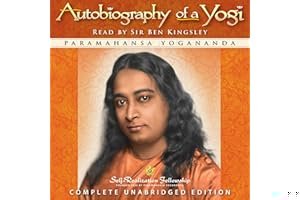








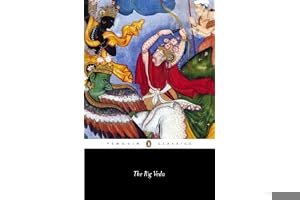
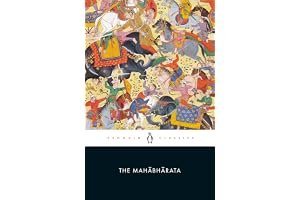

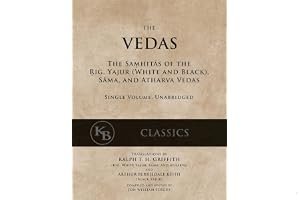
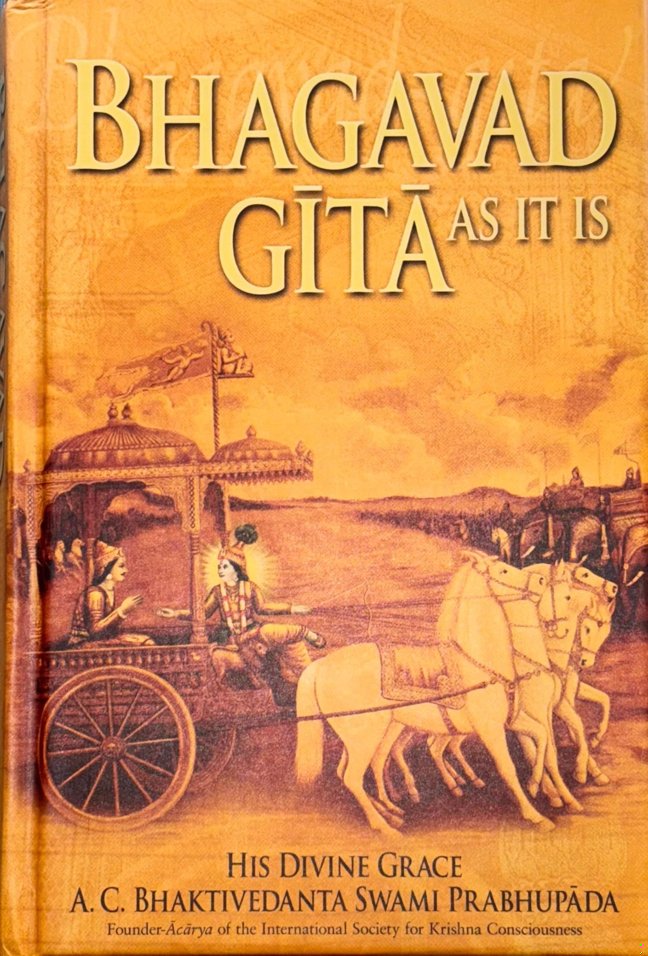



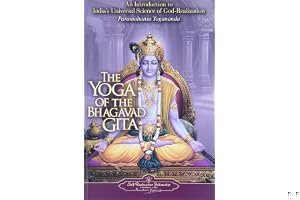
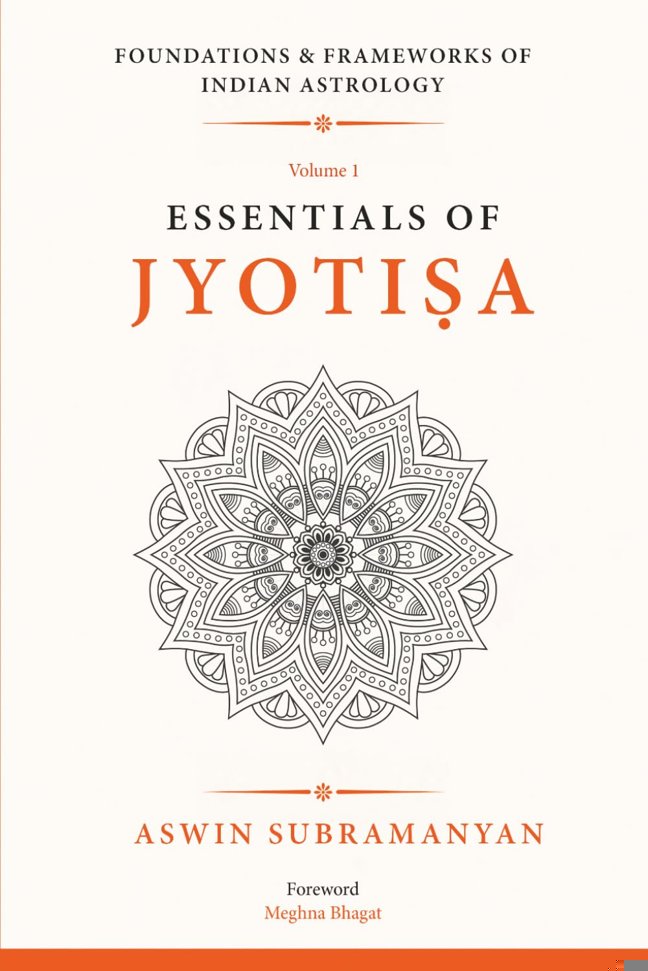
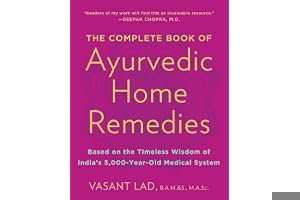
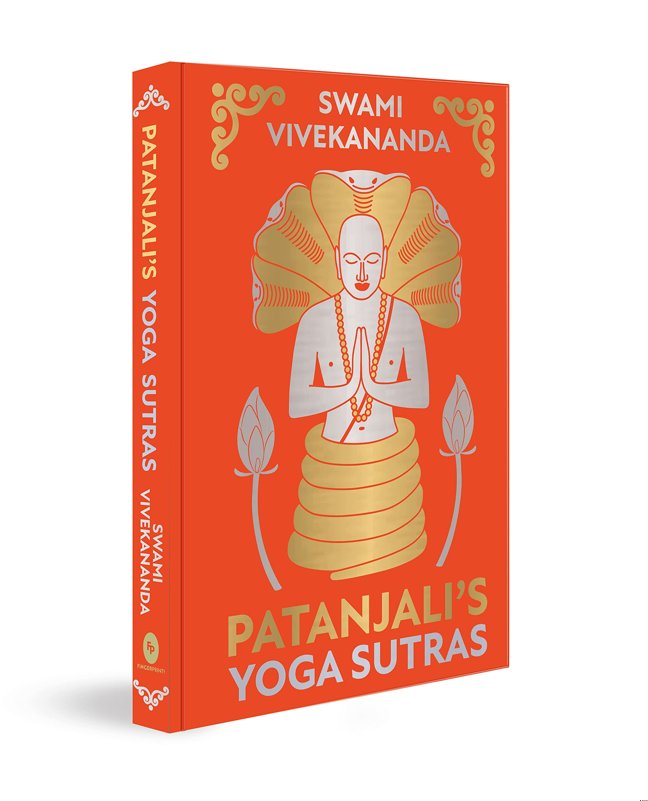


![Bhagavad Gita, The Holy Book of Hindus: Original Sanskrit Text with English Translation & Transliteration [ A Classic of Indian Spirituality ] book cover](https://media.shortform.com/best-books/covers/1c152ddb343c3aa3ab950a94abd160f10950d52184b8f8262b4a62e82d90d4f5.jpg)