We've ranked the best utilitarianism books using expert recommendations, sales data, and millions of reader ratings. At Shortform, we know books. Our book guides are the best in the world. Learn why.
One measure, perhaps, of a book's worth, is its intergenerational pliancy: do new readers acquire it and interpret it afresh down through the ages? The Meditations of Marcus Aurelius, translated and introduced by Gregory Hays, by that standard, is very worthwhile, indeed. Hays suggests that its most recent incarnation--as a self-help book--is not only valid, but may be close to the author's intent. The book, which Hays calls, fondly, a "haphazard set of notes," is indicative of the role of philosophy among the ancients in that it is "expected to provide a 'design for living.'" And it does, both aphoristically ("Think of yourself as dead. You have lived your life. Now take what's left and live it properly.") and rhetorically ("What is it in ourselves that we should prize?"). Whether these, and other entries ("Enough of this wretched, whining monkey life.") sound life-changing or like entries in a teenager's diary is up to the individual reader, as it should be. Hays's introduction, which sketches the life of Marcus Aurelius (emperor of Rome A.D. 161-180) as well as the basic tenets of stoicism, is accessible and jaunty. --H. O'Billovich
…
Recommended by Arianna Huffington, Naval Ravikant, Chip Conley, and 12 others.
Arianna Huffington
Founder/The Huffington Post
I find this book so inspirational and instructive, it lives on my nightstand. [source]
Chip Conley
I have given this book away to a number of people. [source]
Marvin Liao
Partner/500 Startups
My list would be (besides the ones I mentioned in answer to the previous question) both business & Fiction/Sci-Fi and ones I personally found helpful to myself. The business books explain just exactly how business, work & investing are in reality & how to think properly & differentiate yourself. On the non-business side, a mix of History & classic fiction to understand people, philosophy to make sense of life and Science fiction to picture what the future could be like (not always utopian). [source]
Cover unavailable
2
On Liberty
John Stuart Mill
4.7
Alternate cover edition of ISBN 9780140432077
Published in 1859, John Stuart Mill's On Liberty presented one of the most eloquent defenses of individual freedom in nineteenth-century social and political philosophy and is today perhaps the most widely-read liberal argument in support of the value of liberty. Mill's passionate advocacy of spontaneity, individuality, and diversity, along with his contempt for compulsory uniformity and the despotism of popular opinion, has attracted both admiration and condemnation.
…
Recommended by A C Grayling, Anne Heller, Brink Lindsey, and 8 others.
On Liberty is a very important document, and one which, because of the clarity with which one can read it and its brevity, is slightly passed over. [source]
Anne Heller
Imagine how John Stuart Mill would feel if he were made to wear a seatbelt because the federal government tells him so. [source]
Brink Lindsey
I think liberals, of both a libertarian, classical, liberal stripe and a more modern egalitarian stripe, see John Stuart Mill as a common ancestor. [source]
Cover unavailable
3
Utilitarianism
John Stuart Mill and George Sher
4.6
This expanded edition of John Stuart Mill's Utilitarianism includes the text of his 1868 speech to the British House of Commons defending the use of capital punishment in cases of aggravated murder. The speech is significant both because its topic remains timely and because its arguments illustrate the applicability of the principle of utility to questions of large-scale social policy.
Cover unavailable
4
Watchmen
Alan Moore, Dave Gibbons
4.5
This Hugo Award-winning graphic novel chronicles the fall from grace of a group of super-heroes plagued by all-too-human failings. Along the way, the concept of the super-hero is dissected as the heroes are stalked by an unknown assassin.
One of the most influential graphic novels of all time and a perennial bestseller, WATCHMEN has been studied on college campuses across the nation and is considered a gateway title, leading readers to other graphic novels such as V FOR VENDETTA, BATMAN: THE DARK KNIGHT RETURNS and THE SANDMAN series.
Watchmen was originally released in 12 parts, one a month, over a year from 1985 to 1986. There was a film made of it in 2009. And now a controversial prequel series is coming out, done by new writers and artists, which goes back to earlier in the characters’ stories and which has been disavowed by Alan Moore, who created the original. [source]
Superintelligence asks the questions: what happens when machines surpass humans in general intelligence? Will artificial agents save or destroy us? Nick Bostrom lays the foundation for understanding the future of humanity and intelligent life.
The human brain has some capabilities that the brains of other animals lack. It is to these distinctive capabilities that our species owes its dominant position. If machine brains surpassed human brains in general intelligence, then this new superintelligence could become extremely powerful--possibly beyond our control. As the fate of the gorillas now depends more on humans than on the species itself, so would the fate of humankind depend on the actions of the machine superintelligence.
But we have one advantage: we get to make the first move. Will it be possible to construct a seed Artificial Intelligence, to engineer initial conditions so as to make an intelligence explosion survivable? How could one achieve a controlled detonation?
…
Recommended by Elon Musk, Maria Ramos, and Will MacAskill.
Worth reading Superintelligence by Bostrom. We need to be super careful with AI. Potentially more dangerous than nukes. [source]
Maria Ramos
CEO/Barclays Africa
Ramos will take the summer to examine some of the questions weighing more heavily on humankind as we contemplate our collective future: what happens when we can write our own genetic codes, and what happens when we create technology that is meaningfully more intelligent than us. The Gene: An Intimate History—Siddhartha Mukherjee Superintelligence: Paths, Dangers, Strategies—Nick Bostrom The Ministry of Utmost Happiness—Arundhati Roy [source]
Will MacAskill
I picked this book because the possibility of us developing human-level artificial intelligence, and from there superintelligence—an artificial agent that is considerably more intelligent than we are—is at least a contender for the most important issue in the next two centuries. Bostrom’s book has been very influential in effective altruism, lots of people work on artificial intelligence in order to ensure that it is developed safely. I don’t agree with the entire contents of the book, but there are many compelling arguments in it. It would be extremely overconfident to dismiss this book as too speculative. In fact, I think there should be a lot more work that tries to understand the biggest challenges for the next two hundred years, and what we could do to try to overcome them. [source]
Cover unavailable
6
Practical Ethics
Peter Singer
4.4
For thirty years, Peter Singer's Practical Ethics has been the classic introduction to applied ethics. For this third edition, the author has revised and updated all the chapters, and added a new chapter addressing climate change, one of the most important ethical challenges of our generation. Some of the questions discussed in this book concern our daily lives. Is it ethical to buy luxuries when others do not have enough to eat? Should we buy meat from intensively reared animals? Am I doing something wrong if my carbon footprint is above the global average? Other questions confront us as concerned citizens: equality and discrimination on the grounds of race or sex; abortion, the use of embryos for research, and euthanasia; political violence and terrorism; and the preservation of our planet's environment. This book's lucid style and provocative arguments make it an ideal text for university courses and for anyone willing to think about how she or he ought to live.
…
Recommended by Daniël Lakens, David Edmonds, and Will MacAskill.
Daniël Lakens
@CJFerguson1111 I think you'd like Singer's Practical Ethics - if nothing else it is a great book to disagree with. It nicely goes through all these arguments. Maybe other people can recommend alternative viewpoints to read - but I found this book enlightening. [source]
David Edmonds
Practical Ethics came out in 1979, just before I began studying philosophy. I loved its rigour, and I found Peter Singer almost impossible to argue with. I agreed with almost every position he took on every issue. There were chapters on abortion, on animal rights, on how much money we can give to the poor. It’s really the blueprint for everything he’s written subsequently. He is prolific, but if you want to know what Singer believes on a given topic, you may as well go back to Practical Ethics. [source]
Will MacAskill
When I read it, I had already decided to study philosophy as an undergraduate, but when I read I just was so compelled by the thought that philosophical reasoning is of huge importance and can really change the world. [source]
Cover unavailable
7
Utilitarianism: A Very Short Introduction
Katarzyna de Lazari-Radek, Peter Singer
4.4
Utilitarianism may well be the most influential secular ethical theory in the world today. It is also one of the most controversial. It clashes, or is widely thought to clash, with many conventional moral views, and with human rights when they are seen as inviolable. Would it, for example, be right to torture a suspected terrorist in order to prevent an attack that could kill and injure a large number of innocent people?
In this Very Short Introduction Peter Singer and Katarzyna de Lazari-Radek provide an authoritative account of the nature of utilitarianism, from its nineteenth-century origins, to its justification and its varieties. Considering how utilitarians can respond to objections that are often regarded as devastating, they explore the utilitarian answer to the question of whether torture can ever be justified. They also discuss what it is that utilitarians should seek to maximize, paying special attention to the classical utilitarian view that only pleasure or happiness is of intrinsic value.
Singer and de Lazari-Radek conclude by analyzing the continuing importance of utilitarianism in the world, indicating how it is a force for new thinking on contemporary moral challenges like global poverty, the treatment of animals, climate change, reducing the risk of human extinction, end-of-life decisions for terminally-ill patients, and the shift towards assessing the success of government policies in terms of their impact on happiness.
It covers what you would cover in a university undergraduate course on utilitarianism, but you can read and take it in in four or five hours or so. [source]
Cover unavailable
8
Utilitarianism: For and Against
J. J. C. Smart
4.4
A serious and controversial work in which the authors contribute essays from opposite points of view on utilitarian assumptions, arguments and ideals.
Recommended by David Edmonds.
David Edmonds
This is a book of two halves. The first half is written by a very eminent Australian philosopher and I can’t remember a word of it, but the second half was important to me. I was a pretty pure utilitarian until I read it, and it countered a lot of the influence of Peter Singer. Williams is a critic of utilitarianism – he thinks it is a deeply simplistic way to view the moral world. He gives a couple of famous examples which illustrate why, and which show the aspects of morality which utilitarianism can’t capture. [source]
Cover unavailable
9
Seeing Like a State: How Certain Schemes to Improve the Human Condition Have Failed
James C. Scott
4.4
Compulsory ujamaa villages in Tanzania, collectivization in Russia, Le Corbusier's urban planning theory realized in Brasilia, the Great Leap Forward in China, agricultural modernization in the Tropics - the 20th century has been racked by grand utopian schemes that have inadvertently brought death and disruption to millions. Why do well-intentioned plans for improving the human condition go tragically awry?
…
Recommended by Marvin Liao, Clare Lockhart, Dan Sullivan, and 2 others.
Marvin Liao
Partner/500 Startups
I tend to jump from book to book and may switch if I am interested in some new topic. This is a pleasure for me (which I also do benefit work wise from too). It’s quite a random list because I have eclectic interests (or just scatterbrained most likely) on tech business, AI, general global economy, geopolitics, rising Biotech economy & history. I'm basically 15% to 50% into all these books. [source]
Clare Lockhart
Seeing Like A State. He’s quite similar to Dewey in a way. He also sees the state as only a mechanism. But he thinks that the way that the state chooses to count, or the way it chooses to see, will inform how it behaves and what kind of animal it becomes. Scott explains, for example, how in France, in early modern times, the state decided to count two things. It decided to count how much salt there was and how many able-bodied men there were, because it wanted to tax the salt and send the able-bodied men off to war. Now perhaps the state decides to count other things, how many healthy people there are, how many well-educated people they are… So that what the state chooses to count determines the parameters of what the state chooses to do. [source]
Roger Pielke Jr
A good lesson for people thinking about climate change, whether to create a global policy for carbon dioxide emissions. [source]
Cover unavailable
10
American Cop: Upholding the Constitution and Defending Your Right to Bear Arms
Loren Culp and Ted Nugent
4.3
Cover unavailable
11
On Liberty, Utilitarianism and Other Essays
John Stuart Mill
4.3
'it is only the cultivation of individuality which produces, or can produce, well developed human beings'
Mill's four essays, On Liberty, Utilitarianism, Considerations on Representative Government and The Subjection of Women examine the most central issues that face liberal democratic regimes - whether in the nineteenth century or the twenty-first. They have formed the basis for many of the political institutions of the West since the late nineteenth century, tackling as they do the appropriate grounds for protecting individual liberty, the basic principles of ethics, the benefits and the costs of representative institutions, and the central importance of gender equality in society.
These essays are central to the liberal tradition, but their interpretation and how we should understand their connection with each other are both contentious. In their introduction Mark Philp and Frederick Rosen set the essays in the context of Mill's other works, and argue that his conviction in the importance of the development of human character in its full diversity provides the core to his liberalism and to any defensible account of the value of liberalism to the modern world.
ABOUT THE SERIES: For over 100 years Oxford World's Classics has made available the widest range of literature from around the globe. Each affordable volume reflects Oxford's commitment to scholarship, providing the most accurate text plus a wealth of other valuable features, including expert introductions by leading authorities, helpful notes to clarify the text, up-to-date bibliographies for further study, and much more.
…
Cover unavailable
12
Reasons and Persons
Derek Parfit
4.3
Challenging, with several powerful arguments, some of our deepest beliefs about rationality, morality, and personal identity, Derek Parfit claims that we have a false view about our own nature. It is often rational to act against our own best interests, he argues, and most of us have moral views that are self-defeating. We often act wrongly, although we know there will be no one with serious grounds for complaint, and when we consider future generations it is very hard to avoid conclusions that most of us will find very disturbing.
…
Recommended by David Edmonds and Will MacAskill.
David Edmonds
Reasons and Persons was written in 1984, and Derek Parfit was one of my postgraduate supervisors. One of the blurbs on the back of book says “Reasons and Persons is a work of genius”, and I think it is. It’s an incredibly important book, and one written in a tradition completely different to Bernard Williams, even though the two were friends. Bernard Williams is an essayist and he looks at the big picture, like Nagel. Parfit, more like Singer, is in the tradition of the 19th century philosopher Henry Sidgwick – he is a detailed, rigorous, almost mathematical philosopher, who worked from premises slowly to conclusions. There’s nothing pretentious about it – it’s beautifully written, incredibly thoughtful and well-argued, with fantastically imaginative thought experiments. [source]
Will MacAskill
I would say that Derek Parfit was the most brilliant philosopher of the 20th century. His book Reasons and Persons, especially, has over 10,000 citations. [source]
Cover unavailable
13
The Life You Can Save: How To Play Your Part In Ending World Poverty
Singer Peter
4.3
Offering a seven-point plan that combines personal philanthropy, local activism and global awareness, Peter Singer argues that we need to change our views on what is involved in living an ethical life if we are to put a stop to poverty throughout the world.
Because it’s a really inspiring read. And it’s very nicely set out in terms of having clear arguments and picking up on things that are often said but not thought about. Peter Singer starts with a simple story – if you are walking past a pond and you see a child floundering and it looks likely that the child will drown, despite the fact that your new shoes may be ruined, you will automatically go into the mud to save the child. So he argues that if we all agree on this, why do we do then buy new shoes and luxury goods that we don’t really need, when putting that money into an aid programme can save a life. [source]
I think the central question in philosophy is, How should we live? And that’s a question about which Peter Singer has a lot to say. [source]
Cover unavailable
14
Cognitive Behavioural Therapy: 7 Ways to Freedom from Anxiety, Depression, and Intrusive Thoughts
Lawrence Wallace
4.3
A Practical Guide to Mental and Emotional Freedom! Feeling lost about how to effectively treat disturbing intrusive thoughts? You’re not alone!
This book contains the best advice from a former sufferer of anxiety, depression, and intrusive thoughts. Inspired by compassion, this book is a gift to fellow casualties of negative thought patterns, destructive behaviours, self-loathers, and those wishing freedom from persistent demons. Only by meeting our demons face-to-face can we hope to prevail and achieve inner peace.
Happiness is a trainable, attainable skill! The most proven method for successfully treating mental suffering is CBT. However, there are also complimentary practices coming from Buddhist and Stoic philosophy. This book is aimed at equipping you with the best and most effective techniques for overcoming depression, anxiety, and intrusive thoughts. These are long-term solutions that have stood the test of time and scientific rigour.
Self-compassion is at the heart CBT. Take a chance on this book today!
Exactly What You Will Learn… How To… Understand the Obstacles in Your LifeEmbrace Your Fate in a Loving WayTurn Tragedy into TriumphOpen to Change, Discover Wisdom, and Let GoWise Discernment: Good or Bad Advice?Perform Experiments in the Mind’s Laboratory(P.S. This is the best chapter – feel free to skip ahead!)Being the Mountain for Family, Friends, Community, and Humanity One-Click for a Healthier, Happier Mind!
The Art of Occultism: The Secrets of High Occultism & Inner Exploration (The Sacred Mystery)
Gabriyell Sarom
4.3
Cover unavailable
16
Utilitarianism and the Ethics of War
William H. Shaw
4.3
This book offers a detailed utilitarian analysis of the ethical issues involved in war.
Utilitarianism and the Ethics of War addresses the two basic ethical questions posed by war: when, if ever, are we morally justified in waging war, and if recourse to arms is warranted, how are we permitted to fight the wars we wage? In addition, it deals with the challenge that realism and relativism raise for the ethical discussion of war, and with the duties of military personnel and the moral challenges they can face. In tackling these matters, the book covers a wide range of topics-from pacifism to armed humanitarian intervention, from the right of national defense to pre-emptive or preventive war, from civilian immunity to the tenets of just war theory and the moral underpinnings of the rules of war. But, what is distinctive about this book is that it provides a consistent and thorough-going utilitarian or consequentialist treatment of the fundamental normative issues that war occasions. Although it goes against the tide of recent work in the field, a utilitarian approach to the ethics of war illuminates old questions in new ways by showing how a concern for well-being and the consequences of our actions and policies shape the moral constraints to which states and other actors must adhere.
This book will be of much interest to students of the ethics of war, just war theory, moral philosophy, war and conflict studies and IR.
…
Cover unavailable
17
Hard Times
Charles Dickens, Jeff Nunokawa, et al.
4.3
"My satire is against those who see figures and averages, and nothing else," proclaimed Charles Dickens in explaining the theme of this classic novel. Published in 1854, the story concerns one Thomas Gradgrind, a "fanatic of the demonstrable fact," who raises his children, Tom and Louisa, in a stifling and arid atmosphere of grim practicality.
Without a moral compass to guide them, the children sink into lives of desperation and despair, played out against the grim background of Coketown, a wretched community shadowed by an industrial behemoth. Louisa falls into a loveless marriage with Josiah Bouderby, a vulgar banker, while the unscrupulous Tom, totally lacking in principle, becomes a thief who frames an innocent man for his crime. Witnessing the degradation and downfall of his children, Gradgrind realizes that his own misguided principles have ruined their lives.
Considered Dickens' harshest indictment of mid-19th-century industrial practices and their dehumanizing effects, this novel offers a fascinating tapestry of Victorian life, filled with the richness of detail, brilliant characterization, and passionate social concern that typify the novelist's finest creations.
Of Dickens' work, the eminent Victorian critic John Ruskin had this to say: "He is entirely right in his main drift and purpose in every book he has written; and all of them, but especially Hard Times, should be studied with close and earnest care by persons interested in social questions."
…
Cover unavailable
18
Zinn & the Art of Road Bike Maintenance: The World's Best-Selling Bicycle Repair and Maintenance Guide
Lennard Zinn
4.3
"Zinn & the Art of Road Bike Maintenance" is the world's best-selling guide to bicycle repair and maintenance. From basic repairs like how to fix a flat tire to advanced overhauls of drivetrains and brakes, Lennard Zinn's clearly illustrated guide makes every bicycle repair and maintenance job easy for everyone.
Lennard Zinn is the world's leading expert on bike maintenance and repair. His friendly step-by-step guide explains the tools you'll need and how to know you've done the job right. The book's two-color interior is easy to read even in a dimly-lit garage or workshop. Hundreds of hand-drawn illustrations and exploded parts diagrams show just the right level of detail to lead you through every bicycle repair task.
This smartly organized guide shows how to repair new and old bicycles from top to bottom. In over 500 pages, Zinn's guide includes simple instructions for hundreds of bike maintenance and repair jobs: Basics: How to fix a flat tire, lube a bicycle chain, adjust the brakesEmergency repairs: How to fix a broken chain, tighten loose spokes, repair a bent derailleurEasy shifting: How to adjust shifters, derailleurs, and cables for clean and smooth shiftingWheels: How to true a wheel, install a new tire, change a cassette, replace broken spokes, build your own wheelsOverhauls: How to service and replace pedals, chains and chainrings, saddles, handlebars, stems, headsets, forks, bottom bracketsNew tech: How to maintain 11-speed systems, electronic and wireless shifters, disc brakesCyclocross: How to set up a 'cross bike for racing, select the right components, and make quick repairsTroubleshooting: How to figure out what's wrong with any bike and fix it
"Zinn & the Art of Road Bike Maintenance" makes bicycle repair and maintenance easy, quick, affordable, and fun. With Zinn at your side, you'll know how to keep your bicycling running smoothly for years.
What's New in "Zinn & the Art of Road Bike Maintenance, 5th Ed." More than 700 comprehensive illustrations and exploded views. New chapter on electronic shifting covers maintenance, service, repair, and troubleshooting of all Shimano, SRAM, and Campagnolo electronic shifting groups. New chapter on disc brakes covers maintenance, service, and repair of all hydraulic and mechanical systems. New tech covered in depth: through-axle forks, SRAM eTap wireless shifting, second generation Shimano and Campagnolo electronic shifting, direct-mount sidepull brakes, SRAM X-Sync 1x11 cyclocross systems, tubular tire gluing tapes. New troubleshooting chartsNew master guide to press-fit bottom bracketsAlso covered in the 5th edition: All derailleur shifting systems (5-speed through 11-speed); all bottom bracket systems (cone-and-cup through press-fit); all brake systems (including caliper, V-brake, cantilever, and disc); all headset, stem, handlebar and fork systems; wheelbuilding for all bikes including cyclocross and disc-brake wheels; special sections on cyclocross throughout including troubleshooting, maintenance, service, repair, and equipment selection; updated and expanded torque tables; complete illustration index and complete subject index."
…
Cover unavailable
19
The Essential Writings of Ralph Waldo Emerson
Ralph Waldo Emerson
4.3
Introduction by Mary Oliver Commentary by Henry James, Robert Frost, Matthew Arnold, Oliver Wendell Holmes, and Henry David Thoreau
The definitive collection of Emerson’s major speeches, essays, and poetry, The Essential Writings of Ralph Waldo Emerson chronicles the life’s work of a true “American Scholar.” As one of the architects of the transcendentalist movement, Emerson embraced a philosophy that championed the individual, emphasized independent thought, and prized “the splendid labyrinth of one’s own perceptions.” More than any writer of his time, he forged a style distinct from his European predecessors and embodied and defined what it meant to be an American. Matthew Arnold called Emerson’s essays “the most important work done in prose.”
INCLUDES A MODERN LIBRARY READING GROUP GUIDE
…
Cover unavailable
20
On Liberty & Utilitarianism
John Stuart Mill
4.3
John Stuart Mill (1806–1873) is the most important of Britain’s nineteenth-century philosophers. His writings and activities were many and varied. The works reprinted in this volume were first published during a particularly prolific ten-year span, from 1859 to 1869. "On Liberty "(1859), "Considerations on Representative Government" (1861), "Utilitarianism" (1863), and "The Subjection of Women" (1869) are four of his most famous works; they are central pillars on which Mill’s high reputation rests. Also included for the light they shed on Mill and his times are two of his lesser-known works – ‘The Contest in America’ (1862), written in the context of the American Civil War; and his erudite but accessible "Inaugural Address Delivered to the University of St Andrews" (1867). Mill contributed to several contemporary debates, including ones about where to draw the proper boundaries between the ‘liberty of the individual’ on one hand and the ‘security of the state’ on the other. Living as we do in a world where those boundaries continue to be tested and contested, Mill’s timeless writings are of no less value to us today than they were to those who read them when they were first published.
…
Cover unavailable
21
Selected Political Writings: On Liberty, Utilitarianism, The Subjection of Women
John Stuart Mill
4.2
In one volume, three of John Stuart Mill's most significant works of political philosophy. Included in this edition:On LibertyUtilitarianismThe Subjection of WomenJohn Stuart Mill (1806-1873) was a British philosopher, political economist, and civil servant. He was one of the most influential figures of the 19th century, and his ideas had a profound impact on the development of liberalism and socialism. Mill's writings on liberty, democracy, and utilitarianism remain a cornerstone of political thought. Mill was born in London and educated at the University of Edinburgh and the University of London. After completing his education, he began a successful career in the civil service, serving as an examiner in the East India Company's office. During his time in the service, Mill developed a strong interest in economics and political philosophy, and he soon became a leading thinker in the field. Mill's most famous work, On Liberty, explores the relationship between the individual and society and argues for the importance of personal freedom. He also wrote extensively on utilitarianism, advocating the idea that individuals should act in the interest of the greatest good for the greatest number of people. Mill's writings on representative democracy and women's rights helped to shape the modern conception of democracy and gender equality. His advocacy for free trade and free markets had a profound impact on economic policy around the world. Mill's legacy can be seen today in his influence on political and economic thought, as well as in his advocacy for civil liberties. His ideas continue to shape debates on liberty, democracy, and utilitarianism, and his work remains a cornerstone of modern political thought.
…
Cover unavailable
22
The Metaphysical Club: A Story of Ideas in America
Louis Menand
4.2
Winner of the 2002 Pulitzer Prize for History
A riveting, original book about the creation of modern American thought.
The Metaphysical Club was an informal group that met in Cambridge, Massachusetts, in 1872, to talk about ideas. Its members included Oliver Well Holmes, Jr., future associate justice of the United States Supreme Court; William James, the father of modern American psychology; and Charles Sanders Peirce, logician, scientist, and the founder of semiotics. The Club was probably in existence for about nine months. No records were kept. The one thing we know that came out of it was an idea -- an idea about ideas. This book is the story of that idea.
Holmes, James, and Peirce all believed that ideas are not things "out there" waiting to be discovered but are tools people invent -- like knives and forks and microchips -- to make their way in the world. They thought that ideas are produced not by individuals, but by groups of individuals -- that ideas are social. They do not develop according to some inner logic of their own but are entirely depent -- like germs -- on their human carriers and environment. And they thought that the survival of any idea deps not on its immutability but on its adaptability.
The Metaphysical Club is written in the spirit of this idea about ideas. It is not a history of philosophy but an absorbing narrative about personalities and social history, a story about America. It begins with the Civil War and s in 1919 with Justice Holmes's dissenting opinion in the case of U.S. v. Abrams-the basis for the constitutional law of free speech. The first four sections of the book focus on Holmes, James, Peirce, and their intellectual heir, John Dewey. The last section discusses some of the fundamental twentieth-century ideas they are associated with. This is a book about a way of thinking that changed American life."
…
Recommended by Franklin Foer.
Franklin Foer
It’s a beautifully crafted group biography about the birth of the first American school of philosophy – pragmatism. Pragmatism is an idea about ideas. The gist is to assess theories based on their efficacy. Menand describes ideas as being like microchips or screwdrivers, tools that help us achieve results. That concept sprung from this generation. So, the four figures it tells this birth story through are Oliver Wendell Holmes, who became the legal embodiment of pragmatism, William James, who is the philosopher of pragmatism, Charles Pierce, who was James’s mentor, and John Dewey, who made James’s ideas more coherent and more part of popular conversation. [source]
Cover unavailable
23
Animal Liberation
Peter Singer
4.2
The Book That Started A Revolution
Since its original publication in 1975, this groundbreaking work has awakened millions of concerned men and women to the shocking abuse of animals everywhere -- inspiring a worldwide movement to eliminate much of the cruel and unnecessary laboratory animal experimentation of years past.
In this newly revised and expanded edition, author Peter Singer exposes the chilling realities of today's "factory forms" and product-testing procedures -- offering sound, humane solutions to what has become a profound environmental and social as well as moral issue. An important and persuasive appeal to conscience, fairness, decency and justice, Animal Liberation is essential reading for the supporter and the skeptic alike.
…
Cover unavailable
24
Crime and Punishment (Annotated)
Fyodor Dostoyevsky
4.2
Cover unavailable
25
Groundwork of the Metaphysics of Morals
Immanuel Kant, Mary Gregor, et al.
4.2
Immanuel Kant's Groundwork of the Metaphysics of Morals ranks alongside Plato's Republic and Aristotle's Nicomachean Ethics as one of the most profound and influential works in moral philosophy ever written. In Kant's own words its aim is to search for and establish the supreme principle of morality, the categorical imperative. This edition presents the acclaimed translation of the text by Mary Gregor, together with an introduction by Christine M. Korsgaard that examines and explains Kant's argument.
…
Recommended by Adrian Moore.
Adrian Moore
No one could claim that it is an easy read, but it lays out the fundamental principles of Kant’s moral philosophy [source]
Cover unavailable
26
The 88 Laws of Inner-Power: A Manual for Emotional Mastery, Self-Belief, and Greatness (The 88 Laws Series)
Alexander Matters
4.2
88 emotions. 88 choices. 88 inner battles.🔥 What if the voice you ignore is the one trying to save you?🛡️ What if the enemy you’re fighting is yourself?🌒 What if you’re not healing—you’re hiding?🧘 What if self-control is your only real power?This is not a book of answers.It is a book of confrontations. ⚔️You will not be guided. You will be challenged.You will not be coddled. You will be carved.Inside these pages, you will not find comfort.You will find contrast—between the one who sharpens the soul and the one who sells it.Between the one who rises in silence and the one who drowns in noise. 🌌Between the Celestials—those who live by discipline, truth, courage, and stillness......and the Fallen—those ruled by comfort, chaos, ego, and fear. 🌓You will see both forces within yourself:The weak voice. The strong one.The quitter. The builder.One must rise. The other must fall. ⬆️⬇️Each entry is a blade—meant to cut through illusion.A mirror—meant to expose what is false.A ritual—meant to call you back to your becoming. 🔥📖 The 88 Laws of Inner-Power will help you:• Master your emotions 🎯• Rebuild your self-belief• Transform pain into purpose• Navigate anger, fear, and doubt 🌪️• Choose meaning over noise• Remain loyal to your path• Achieve greatness 🏔️The world does not need more voices.It needs more vows.More discipline.More stillness.More warriors of the unseen. 🥷More Inner Power. ⚡Carry this book in your soul.In your actions.In your decisions.In your silence.And when the darkness returns—because it always will—light this fire again. 🔥Not for show. Not for praise.Not for applause, titles, or validation.Not to be seen. Not to be liked.Not to be followed.But because you must.Because the world is quieter without you fully awake. 🌑Because your silence leaves others in the dark.Because what lives in you was never meant to stay hidden.Because the fight is not over.The mission is not done. 🎯Step inside. Stand up.Sharpen the blade. 🗡️Return to the path. 🛤️🚫 Stop asking for permission.⚠️ Don’t scroll past your turning point.🕳️ Don’t let your potential die in silence.🔥 Take your copy of The 88 Laws of Inner Power today—and answer the only question that matters: Who am I?✨ For the presentation video of this bookand the complete book collection,please visit www.umat7er.com (Books section).🌿 You can also download free resources for growth—gifts from the UMAT7ER (R)evolution.Find them in the “Free Resources” section.
…
Cover unavailable
27
The Point of View of the Universe: Sidgwick and Contemporary Ethics
Katarzyna de Lazari-Radek, Peter Singer
4.2
What does the idea of taking 'the point of view of the universe' tell us about ethics? The great nineteenth-century utilitarian Henry Sidgwick used this metaphor to present what he took to be a self-evident moral truth: the good of one individual is of no more importance than the good of any other. Ethical judgments, he held, are objective truths that we can know by reason. The ethical axioms he took to be self-evident provide a foundation for utilitarianism. He supplements this foundation with an argument that nothing except states of consciousness have ultimate value, which led him to hold that pleasure is the only thing that is intrinsically good.
Are these claims defensible? Katarzyna de Lazari-Radek and Peter Singer test them against a variety of views held by contemporary writers in ethics, and conclude that they are. This book is therefore a defence of objectivism in ethics, and of hedonistic utilitarianism. The authors also explore, and in most cases support, Sidgwick's views on many other key questions in ethics: how to justify an ethical theory, the significance of an evolutionary explanation of our moral judgments, the choice between preference-utilitarianism and hedonistic utilitarianism, the conflict between self-interest and universal benevolence, whether something that it would be wrong to do openly can be right if kept secret, how demanding utilitarianism is, whether we should discount the future, or favor those who are worse off, the moral status of animals, and what is an optimum population.
…
Cover unavailable
28
Happiness: A Guide to Developing Life's Most Important Skill
Matthieu Ricard, Daniel Goleman
4.2
In this groundbreaking book, Matthieu Ricard makes a passionate case for happiness as a goal that deserves as least as much energy as any other in our lives.
Wealth? Fitness? Career success? How can we possibly place these above true and lasting well-being? Drawing from works of fiction and poetry, Western philosophy, Buddhist beliefs, scientific research, and personal experience, Ricard weaves an inspirational and forward-looking account of how we can begin to rethink our realities in a fast-moving modern world. With its revelatory lessons and exercises, Happiness is an eloquent and stimulating guide to a happier life.
Today is World Book Day, a wonderful opportunity to address this #ChallengeRichard sent in by Mike Gonzalez of New Jersey: Make a list of your top 65 books to read in a lifetime. [source]
Joel Gascoigne
The author of this book has sometimes been called the "happiest man in the world". He is a French Biochemist turned Buddhist monk and has been in a unique position to merge science with mindfulness and meditation. The underlying theme of the book is that happiness is indeed within our control, and is much more a skill than something that simply happens to us. One of the biggest revelations for me in this book was the way that it linked happiness with altruism, asserting that there is an undeniable correlation and that helping others can provide a much more lasting satisfaction and happiness than pleasure activities such as watching a movie or enjoying a banana split. This was something I had intuitively when I got into helping early stage founders, and reading it in this book made me recommit to helping others as a way of life, which in turn makes me very happy. [source]
Cover unavailable
29
The Autobiography of John Stuart Mill (Illustrated)
John Stuart Mill
4.2
It seems proper that I should prefix to the following biographical sketch some mention of the reasons which have made me think it desirable that I should leave behind me such a memorial of so uneventful a life as mine. I do not for a moment imagine that any part of what I have to relate can be interesting to the public as a narrative or as being connected with myself. But I have thought that in an age in which education and its improvement are the subject of more, if not of profounder, study than at any former period of English history, it may be useful that there should be some record of an education which was unusual and remarkable, and which, whatever else it may have done, has proved how much more than is commonly supposed may be taught, and well taught, in those early years which, in the common modes of what is called instruction, are little better than wasted. It has also seemed to me that in an age of transition in opinions, there may be somewhat both of interest and of benefit in noting the successive phases of any mind which was always pressing forward, equally ready to learn and to unlearn either from its own thoughts or from those of others. But a motive which weighs more with me than either of these, is a desire to make acknowledgment of the debts which my intellectual and moral development owes to other persons; some of them of recognised eminence, others less known than they deserve to be, and the one to whom most of all is due, one whom the world had no opportunity of knowing. The reader whom these things do not interest, has only himself to blame if he reads farther, and I do not desire any other indulgence from him than that of bearing in mind that for him these pages were not written...
…
Cover unavailable
30
The Philosophy Book: Big Ideas Simply Explained
DK
4.2
Now in paperback, "The Philosophy Book" explores the history and concepts of philosophy, and demystifies what can often be daunting subject matter.
Are the ideas of Rene Descartes, Mary Wollstonecraft, John Locke, and Thomas Hobbes still relevant today? "The Philosophy Book" unpacks the writings and ideas of more than 100 of history's biggest thinkers, taking you on a journey from Ancient Greece to modern day. Explore feminism, rationalism, idealism, existentialism, and other influential movements in the world of philosophy.
From Socrates to Confucius to Julia Kristeva, "The Philosophy Book" breaks down difficult concepts using innovating graphics that pop off the page alongside creative typography. Cutting through the haze of academia and untangling complicated theories to show how our social, political, and ethical ideas are formed, "The Philosophy Book" contextualizes the information around time periods, innovative thinkers, method, and philosophical approach.
With graphics, clear writing, a philosopher directory, and a vocabulary glossary, "The Philosophy Book" is a perfect and comprehensive introduction to a complicated and fascinating subject.
Series Overview: Big Ideas Simply Explained series uses creative design and innovative graphics, along with straightforward and engaging writing, to make complex subjects easier to understand. These award-winning books provide just the information needed for students, families, or anyone interested in concise, thought-provoking refreshers on a single subject."
…
Cover unavailable
31
The New Normal: A Spiritual, Metaphysical, and Common-Sense Take on the 2020 Coronavirus Emergency and Its Aftereffects
James Goi Jr.
4.2
Cover unavailable
32
Qualitative Utilitarianism
Daniel Holbrook
4.2
This text offers an interpretation of John Stuart Mill's ethical theory, Qualitatively-Hedonistic Utilitarianism, as well as a discussion, analysis and solution of problems that have arisen in the theory since the initial publication of Utilitarianism in 1861. Topics discussed include Consequentialism, the Desire Theory of Pleasure, the alleged inconsistency of Qualitative Hedonism, and the relation of Qualitatively-Hedonistic Utilitarianism to Libertarianism.
…
Cover unavailable
33
The Third High: Experience Shiva Within: A Practical Guide to Non-Dual Awakening
Dosho
4.2
In a world drowning in illusion and spiritual crisis, unlock the ultimate high: awakening Shiva within - the eternal dance of pure awareness.The Third High: Experience Shiva Within is your 21st-century Upanishad, demystifying ancient yogic science for self-realization. Blending timeless Sanatan wisdom with modern revelation, it shatters ego's veils, ending suffering through direct experience. You are not the fleeting wave of temporary joys - you are the unchanging ocean: Sat-Chit-Ananda (Truth, Consciousness, Bliss).No more outer chaos or sectarian divides; enter your inner sanctuary, embrace the cosmic play, and end all seeking.
…
Cover unavailable
34
Delphi Complete Works of John Singer Sargent (Illustrated) (Masters of Art Book 18)
John Stuart Mill
4.2
The American artist John Singer Sargent, widely considered the leading portrait painter of his generation, is celebrated for his paintings of Edwardian era luxury, landscape paintings and Impressionistic masterpieces. Delphi’s Masters of Art Series presents the world’s first digital e-Art books, allowing digital readers to explore the works of great artists in comprehensive detail. This volume presents Sargent’s complete paintings in beautiful detail, with concise introductions, hundreds of high quality images and the usual Delphi bonus material. (Version 1)
* The complete oil paintings of John Singer Sargent — over 900 paintings, fully indexed and arranged in chronological and alphabetical order * Includes reproductions of rare works * Features a special ‘Highlights’ section, with concise introductions to the masterpieces, giving valuable contextual information * Enlarged ‘Detail’ images, allowing you to explore Sargent’s celebrated works in detail, as featured in traditional art books * Hundreds of images in stunning colour – highly recommended for viewing on tablets and smart phones or as a valuable reference tool on more conventional eReaders * Special chronological and alphabetical contents tables for the complete paintings * Easily locate the paintings you want to view * Includes a sample of Sargent’s drawings * Features a bonus biography - discover Sargent's artistic and personal life * Scholarly ordering of plates into chronological order
Please visit www.delphiclassics.com to browse through our range of exciting e-Art books
CONTENTS:
The Highlights FANNY WATTS ROSINA THE DAUGHTERS OF EDWARD DARLEY BOIT EL JALEO STREET IN VENICE MADAME X CLAUDE MONET PAINTING BY THE EDGE OF A WOOD CARNATION, LILY, LILY, ROSE ROBERT LOUIS STEVENSON AND HIS WIFE ELLEN TERRY AS LADY MACBETH PAUL HELLEU SKETCHING WITH HIS WIFE LADY AGNEW OF LOCHNAW MRS. FISKE WARREN AND HER DAUGHTER RACHEL FRANK SWETTENHAM, 8TH KING OF ARMS OF THE ORDER OF ST. MICHAEL AND ST. GEORGE NONCHALOIR HENRY JAMES GASSED
The Paintings THE COMPLETE PAINTINGS ALPHABETICAL LIST OF PAINTINGS
The Drawings LIST OF DRAWINGS
The Biography SARGENT by T. Martin Wood
Please visit www.delphiclassics.com to browse through our range of exciting titles
…
Cover unavailable
35
The Classical Utilitarians, Bentham and Mill
John Troyer
4.2
This volume includes the complete texts of two of John Stuart Mill's most important works, Utilitarianism and On Liberty, and selections from his other writings, including the complete text of his Remarks on Bentham's Philosophy. The selection from Mill's A System of Logic is of special relevance to the debate between those who read Mill as an Act-Utilitarian and those who interpret him as a Rule-Utilitarian.
Also included are selections from the writings of Jeremy Bentham, founder of modern Utilitarianism and mentor (together with James Mill) of John Stuart Mill. Bentham's Principles of Morals and Legislation had important effects on political and legal reform in his own time and continues to provide insights for political theorists and philosophers of law. Seven chapters of Bentham's Principles are here in their entirety, together with a number of shorter selections, including one in which Bentham repudiates the slogan often used to characterize his philosophy: The Greatest Happiness of the Greatest Number.
John Troyer's Introduction presents the central themes and arguments of Bentham and Mill and assesses their relevance to current discussions of Utilitarianism. The volume also provides indexes, a glossary, and notes.
…
Cover unavailable
36
On Liberty (AmazonClassics Edition)
John Stuart Mill
4.2
Cover unavailable
37
Cyreniacs Handbook: Handbook of Source Material for Cyrenaic Philosophy
Cicero
4.2
Cover unavailable
38
365 Days of Philosophy: A Year of Daily Lessons from the World’s Greatest Thinkers, from Socrates to Sartre — 130+ Philosophe
Dae Lee and Airplane Mode
4.2
Cover unavailable
39
Utilitarianism and Other Essays
John Stuart Mill, Jeremy Bentham, et al.
4.2
Clear, eloquent and profound, Mill's Utilitarianism has had an enormous influence on moral philosophy and is the idea introduction to ethics.
Jeremy Bentham (1748-1832) was a reformer who applied the test of utility to the law and politics of his day. Legislators must aim at 'the greatest happiness of the greatest number,' and Bentham explained in minute detail how they might achieve it. John Stuart Mill (1806-73), whose education at the hands of a Benthamite father had ended in emotional collapse, thought Bentham's ideal of human happiness too narrow and set out to reconcile his utilitarian inheritance with his own passionate commitment to freedom, spontaneity and imagination. In his essays on Bentham and Coleridge, and above all in Utilitarianism, Mill balanced the claims of reason and the imagination, justice and expediency, individuality and social well-being in a system of ethics that is as relevant to today's intellectua and moral dilemmas it was to the nineteenth century's.
…
Cover unavailable
40
Ethics in the Real World: 82 Brief Essays on Things That Matter
Peter Singer
4.2
Peter Singer is often described as the world's most influential philosopher. He is also one of its most controversial. The author of important books such as "Animal Liberation," "Practical Ethics," "Rethinking Life and Death," and "The Life You Can Save," he helped launch the animal rights and effective altruism movements and contributed to the development of bioethics. Now, in "Ethics in the Real World," Singer shows that he is also a master at dissecting important current events in a few hundred words.
In this book of brief essays, he applies his controversial ways of thinking to issues like climate change, extreme poverty, animals, abortion, euthanasia, human genetic selection, sports doping, the sale of kidneys, the ethics of high-priced art, and ways of increasing happiness. Singer asks whether chimpanzees are people, smoking should be outlawed, or consensual sex between adult siblings should be decriminalized, and he reiterates his case against the idea that all human life is sacred, applying his arguments to some recent cases in the news. In addition, he explores, in an easily accessible form, some of the deepest philosophical questions, such as whether anything really matters and what is the value of the pale blue dot that is our planet. The collection also includes some more personal reflections, like Singer's thoughts on one of his favorite activities, surfing, and an unusual suggestion for starting a family conversation over a holiday feast.
Provocative and original, these essays will challenge--and possibly change--your beliefs about a wide range of real-world ethical questions.
He manages, in these essays, to address really deep questions in just two or three pages, often saying more than other people say in a whole book. [source]
Cover unavailable
41
La pedagogía Montessori: Una introducción al método que revolucionó la enseñanza (Educación que Aprende)
Charlotte Poussin
4.2
Cover unavailable
42
Anti-Natalism: Rejectionist Philosophy from Buddhism to Benatar
Ken Coate
4.2
The last few decades seem to have begun what has been called 'the childless revolution'. In developed countries, increasingly people are choosing not to have children. The causes of this 'revolution' are many including the belief that to create a new life is to subject someone unnecessarily, and without their consent, to life's many sufferings including death. This belief and its underlying philosophy is known as anti-natalism. There has been a recent resurgence of this philosophy, with David Benatar's book Better Never To Have Been (2006) as a major catalyst. Anti-natalism can be seen as part of a broader philosophy, described here as Rejectionism, which finds existence -directly or indirectly, i.e. as procreation - as deeply problematic and unacceptable. The book traces the development of this philosophy from its ancient religious roots in Hinduism (Moksha) and Buddhism (Nirvana) to its most modern articulation by the South African philosopher David Benatar. It examines the contribution to rejectionist thought by Schopenhauer and von Hartmann in the 19th century and Zapffe, a little known Norwegian thinker, in the 20th century, and most recently by Benatar. Benatar and Zapffe represent this approach most clearly as anti-natalism. The book also devotes a chapter to the literary expression of rejectionist philosophy in the works of Samuel Beckett and J.P.Sartre. In sum, far from being an esoteric doctrine rejectionism has been a major presence in human history straddling all three major cultural forms - religious, philosophical and literary. The book argues that anti-natal philosophy and its practice owe a great deal to three major developments: secularization, liberalization of social attitudes, and technological advances (contraception). Anti-natal attitudes and practice should therefore be seen as a part of 'progress' in that these developments are widening our choice of lifestyles and attitudes to existence. In sum, The book argues that anti-natalism needs to be taken seriously and considered as a legitimate view of a modern, secular civilization. Secondly, the book seeks to situate current anti-natalist thought in its historical and philosophical perspective. Finally, it argues that in order to develop anti-natalism further it needs to be institutionalized as a form rational 'philosophy of life', and more attention needs to be paid to the problems and prospect of putting this philosophy into practice. Author Bio: The author is a social scientist. After receiving a Ph.D degree from the University of London he has been a university professor. This book is a result of his long-standing interest in issues of existence and existential philosophy. Keywords: Anti-Natalism, Existence, Moksha, Nirvana, Rejectionism, Suffering, Schopenhauer, Zapffe, Benatar, Beckett.
…
Cover unavailable
43
Utilitarianism and Empire
Bart Schultz and Georgios Varouxakis
4.2
The classical utilitarian legacy of Jeremy Bentham, J. S. Mill, James Mill, and Henry Sidgwick has often been charged with both theoretical and practical complicity in the growth of British imperialism and the emerging racialist discourse of the nineteenth century. But there has been little scholarly work devoted to bringing together the conflicting interpretive perspectives on this legacy and its complex evolution with respect to orientalism and imperialism. This volume, with contributions by leading scholars in the field, represents the first attempt to survey the full range of current scholarly controversy on how the classical utilitarians conceived of 'race' and the part it played in their ethical and political programs, particularly with respect to such issues as slavery and the governance of India. The book both advances our understanding of the history of utilitarianism and imperialism and promotes the scholarly debate, clarifying the major points at issue between those sympathetic to the utilitarian legacy and those critical of it.
…
Cover unavailable
44
What's the Use?: On the Uses of Use
Sara Ahmed
4.2
In What’s the Use? Sara Ahmed continues the work she began in The Promise of Happiness and Willful Subjects by taking up a single word—in this case, use—and following it around. She shows how use became associated with life and strength in nineteenth-century biological and social thought and considers how utilitarianism offered a set of educational techniques for shaping individuals by directing them toward useful ends. Ahmed also explores how spaces become restricted to some uses and users, with specific reference to universities. She notes, however, the potential for queer use: how things can be used in ways that were not intended or by those for whom they were not intended. Ahmed posits queer use as a way of reanimating the project of diversity work as the ordinary and painstaking task of opening up institutions to those who have historically been excluded.
…
Cover unavailable
45
Normative Ethics (Dimensions of Philosophy)
Shelly Kagan
4.2
Providing a thorough introduction to current philosophical views on morality, Normative Ethics examines an act's rightness or wrongness in light of such factors as consequences, harm, and consent. Shelly Kagan offers a division between moral factors and theoretical foundations that reflects the actual working practices of contemporary moral philosophers.The first half of the book presents a systematic survey of the basic normative factors, focusing on controversial questions concerning the precise content of each factor, its scope and significance, and its relationship to other factors. The second half of the book then examines the competing theories about the foundations of normative ethics, theories that attempt to explain why the basic normative factors have the moral significance that they do.Intended for upper-level or graduate students of philosophy, this book should also appeal to the general reader looking for a clearly written overview of the basic principles of moral philosophy.
…
Cover unavailable
46
The Tradition of Political Hedonism from Hobbes to J. S. Mill
Frederick Vaughan
4.2
Cover unavailable
47
The Stoic Book of Quotes: Over 500 Philosophical Quotations for Inspiration, Achieving Inner Peace, Resilience, and Growth in
Michael Whiteclear
4.2
Cover unavailable
48
What We Owe the Future
William MacAskill
4.2
An Instant New York Times Bestseller “This book will change your sense of how grand the sweep of human history could be, where you fit into it, and how much you could do to change it for the better. It's as simple, and as ambitious, as that.”—Ezra KleinAn Oxford philosopher makes the case for “longtermism” — that positively influencing the long-term future is a key moral priority of our time. The fate of the world is in our hands. Humanity’s written history spans only five thousand years. Our yet-unwritten future could last for millions more — or it could end tomorrow. Astonishing numbers of people could lead lives of great happiness or unimaginable suffering, or never live at all, depending on what we choose to do today. In What We Owe The Future, philosopher William MacAskill argues for longtermism, that idea that positively influencing the distant future is a key moral priority of our time. From this perspective, it’s not enough to reverse climate change or avert the next pandemic. We must ensure that civilization would rebound if it collapsed; counter the end of moral progress; and prepare for a planet where the smartest beings are digital, not human. If we make wise choices today, our grandchildren’s grandchildren will thrive, knowing we did everything we could to give them a world full of justice, hope and beauty.
…
Cover unavailable
49
A Treatise of Human Nature
David Hume
4.2
A Treatise of Human Nature (1739-40), David Hume's comprehensive attempt to base philosophy on a new, observationally grounded study of human nature, is one of the most important texts in Western philosophy. It is also the focal point of current attempts to understand 18th-century philosophy. The Treatise first explains how we form such concepts as cause and effect, external existence, and personal identity, and to form compelling but unconfirmable beliefs in the entities represented by these concepts. It then offers a novel account of the passions, explains freedom and necessity as they apply to human choices and actions, and concludes with detailed explanations of how we distinguish between virtue and vice and of the different kinds of virtue. Hume's Abstract of the Treatise, also included in the volume, outlines his 'chief argument' regarding our conception of, and belief in, cause and effect. The texts printed in this volume are those of the critical edition of Hume's philosophical works now being published by the Clarendon Press. The volume includes a substantial introduction explaining the aims of the Treatise as a whole and of each of its ten parts, extensive annotations, a glossary of terms, a comprehensive index, and suggestions for further reading.
…
Cover unavailable
50
The Cambridge Companion to Utilitarianism
Ben Eggleston
4.2
Utilitarianism, the approach to ethics based on the maximization of overall well-being, continues to have great traction in moral philosophy and political thought. This Companion offers a systematic exploration of its history, themes and applications. First it traces the origins and development of utilitarianism via the work of Jeremy Bentham, John Stuart Mill, Henry Sidgwick, and others. The volume then explores issues in the formulation of utilitarianism, including act versus rule utilitarianism, actual versus expected consequences, and objective versus subjective theories of well-being. Next, utilitarianism is positioned in relation to Kantianism and virtue ethics, and the possibility of conflict between utilitarianism and fairness is considered. Finally, the volume explores the modern relevance of utilitarianism by considering its practical implications for contemporary controversies such as military conflict and global warming. The volume will be an important resource for all those studying moral philosophy, political philosophy, political theory and history of ideas.
…
Cover unavailable
51
On Liberty and Other Essays
John Stuart Mill and John Gray
4.2
Collected here in a single volume for the first time are John Stuart Mill's On Liberty, Utilitarianism, Considerations on Representative Government, and The Subjection of Women. These essays show Mill applying his liberal utilitarian philosophy to a range of issues that remain vital today--the nature of ethics, the scope and limits of individual liberty, the merits of and costs of democratic government, and the place of women in society. In his Introduction John Gray describes these essays as applications of Mill's doctrine of the Art of Life, as set out in A System of Logic. Using the resources of recent scholarship, he shows Mill's work to be far richer and subtler than traditional interpretations allow. About the Series: For over 100 years Oxford World's Classics has made available the broadest spectrum of literature from around the globe. Each affordable volume reflects Oxford's commitment to scholarship, providing the most accurate text plus a wealth of other valuable features, including expert introductions by leading authorities, voluminous notes to clarify the text, up-to-date bibliographies for further study, and much more.
…
Cover unavailable
52
After Dinner Conversation - Season One: After Dinner Conversation Short Story Series
Kolby Granville (Editor)
4.2
Cover unavailable
53
Sci-Phi: Science Fiction as Philosophy (Great Courses)
The Great Courses and Professor David K. Johnson PhD University of Oklahom
4.2
This series of lectures explores philosophy idea as demonstrated in the genre of Science Fiction in popular literature and cinema.
The origins of science fiction are most often thought to trace to Mary Shelley’s novel Frankenstein,a story born from a night of spooky tale-telling by the fireside that explores scientific, moral, and ethical questions that were of great concern in the 19th century—and that continue to resonate today. And, although novels and short stories built the foundations of science fiction, film and television have emerged as equally powerful, experimental, and enjoyable ways to experience the genre. Even as far back as the silent era, films like Fritz Lang’s Metropolis have used science fiction to tell stories that explore many facets of human experience.
In Sci-Phi: Science Fiction as Philosophy, Professor of Philosophy David Kyle Johnson of King’s College takes you on a 24-lecture exploration of the final frontiers of philosophy across several decades of science fiction in film and television. From big-budget blockbusters to television series featuring aliens in rubber masks, Professor Johnson finds food for philosophical thought in a wide range of stories. By looking at serious questions through astonishing tales and astounding technologies, you will see how science fiction allows us to consider immense, vital—and sometimes controversial—ideas with a rare combination of engagement and critical distance.
The Future Is Now
Science fiction is often concerned with the future, being used not only as a tool of prediction—humans are notoriously bad at accurately predicting the future—but also as one of extrapolation and interrogation. Rather than simply asking what the future will look like, the futuristic visions of sci-fi TV, like Star Trek, Firefly, and even the animated comedy Futurama, offer compelling statements about humanity’s hopes, dreams, and fears. We can, therefore, use fictionalized futures to better understand today’s world.
Setting a story in the future—or in an alternate reality, or on a faraway planet—also allows sci-fi creators to open up the realm of possibility beyond what our current world offers, while also looking at very real scientific possibilities. As you look at sci-fi films like Arrival and Interstellar, Professor Johnson highlights the kinds of issues worth considering if contact with extraterrestrial life or time travel became part of our real-life experience. And even if these experiences remain in the realm of fiction, considering them still provides insight into important philosophical questions. Indeed, throughout the lectures of Sci-Phi, you will ponder many questions that have concerned philosophers for centuries, including:
Do humans truly have free will? Could machines one day be conscious? Or be sentient? Could we actually be living in a simulated world? How will humanity confront a future of diminished resources and advancing technology? Are science and religion compatible? When, if ever, is war justified? How do we know what information to trust and what to dismiss? Exploring Reality through Fiction
Staples of science fiction like time travel, alternate universes, and extraterrestrial life are endlessly fascinating ideas to explore. Yet, despite the insights they can give us, they may not seem very relevant to everyday life. Even our conception of reality—what is real and what isn’t—can have little bearing on the more mundane aspects of living from day to day. But science fiction, for all its futurism and outlandish flourishes, is not limited to these theoretical concepts; it is also a window into crucial discussions about the here and now, questions concerning ethics, power, religion, tolerance, social justice, politics, and the many practical dimensions of living in a world that is constantly changing and forever presenting humans with fresh new dilemmas to solve. And by removing us from reality, sci-fi can also remove our biases and make us see such issues anew.
Indeed, as Professor Johnson makes clear, stories of simulated worlds and artificial intelligence can seem far-fetched, but they actually offer valuable insights into social and ethical issues that may be more immediate and relevant than they first appear. By looking at them through fiction, we can take a step back and get a clearer picture of the larger implications. For instance, by looking at characters like Commander Data in Star Trek: The Next Generation or the Cylons in Battlestar Galactica, we are forced to wonder: If we create artificial intelligence that achieves true sentience, how will we treat these man-made beings? Will we repeat the sins of the past by enslaving them or will we embrace them as our equals? If we are ever able to re-create a convincing version of the world via computers, as films like The Matrix and The Thirteenth Floor suggest, do the lives lived in those simulations mean less than those in the “real” world? The answers to these questions—and many others—speak volumes about human values and, given our ever-evolving technology, may require answers sooner rather than later.
You may be surprised to see how often a science fiction story can “trick” you into thinking about questions and concepts you may have never considered. Shows like The Twilight Zone and Black Mirror overtly present questions and issues for audiences to ponder. However, while other films and television shows may seem to focus more on the adventure and entertainment value of science fiction, they still often have deep philosophical dimensions. Consider the long-running British TV series Doctor Who. A beloved icon of science fiction, the show has always been framed as simply the exciting weekly adventures of a time-traveling alien; yet, throughout its decades on television, it has explored issues of autonomy, sentience, pacifism, colonialism, racism, grief, morality, and much more.
A Unique View of Philosophy
While each lecture of Sci-Phi focuses on a few key films or television episodes, you will also explore dozens of other movies and TV episodes along the way. Likewise, each philosophical concept you explore opens the door to further discovery. Throughout the lectures, you will be introduced to the ideas of great thinkers like Descartes, Hobbes, Locke, Marx, Nietzsche, Sartre, Turing, Baudrillard, and many others; and through these ideas, you will better understand the different ways philosophy examines the big questions, from metaphysics and epistemology to existentialism and ethics.
Fans of the genre will find their experience of sci-fi stories enriched by layers of philosophical inquiry that reveal each story to be much more than just entertainment. Similarly, those who are looking for a thrilling and accessible introduction to philosophy will be equally rewarded by Professor Johnson’s breadth of knowledge, as well as his deep and abiding love for both science fiction storytelling and philosophical exploration. As you engage with philosophy by way of sci-fi stories for screens both large and small, it is important to keep in mind that Professor Johnson will not shy away from revealing key plot points in many of the stories he explores throughout the lectures; so, although it is not required, watching the films and TV episodes at the heart of each lecture is recommended. Presented as a one-on-one conversation and enlivened by fun visual references to many of the stories you will encounter, Sci-Phi: Science Fiction as Philosophy is a philosophy course unlike any other.
Whether telling stories of far-flung futures or investigating the here and now, science fiction is an invaluable source of intellectual and imaginative exploration. From the genre-defining classics like Star Wars, Doctor Who, 2001: A Space Odyssey, and The Twilight Zone to a new wave of speculative tales like Transcendence, Snowpiercer, Westworld, and The Hunger Games, sci-fi stories offer a uniquely engaging and incisive way to ask serious questions about the world we live in, even when those stories are set in a galaxy far, far away. Philosophy is the search for truth. Sometimes that truth is best revealed through fiction.
…
Cover unavailable
54
Bushido: The Soul of Japan
Israel Bouseman, Inazo Nitobe, Diana Gardiner, and AudioLearn
4.1
What shaped the moral code of the samurai? In Bushido, The Soul of Japan, Inazo Nitobe explores the ethical system that influenced Japanese culture for centuries. Writing for a Western audience, Nitobe explains the values of honor, loyalty, courage, discipline, and self-sacrifice that defined the samurai way of life.Rather than focusing only on martial skills, the book highlights Bushido as a moral philosophy—one that shaped education, politics, and social conduct in Japan. Nitobe draws thoughtful comparisons with Western chivalry and religious traditions, making the ideas accessible and relatable.Elegant and reflective, this classic offers readers a window into Japan’s cultural and ethical foundations. Whether you’re interested in history, philosophy, or Japanese culture, this book provides meaningful insight into a code that still echoes in modern society.
…
Cover unavailable
55
The Most Good You Can Do: How Effective Altruism Is Changing Ideas About Living Ethically
Peter Singer
4.1
From the ethicist the New Yorker calls “the most influential living philosopher,” a new way of thinking about living ethically
Peter Singer’s books and ideas have been disturbing our complacency ever since the appearance of Animal Liberation. Now he directs our attention to a new movement in which his own ideas have played a crucial role: effective altruism. Effective altruism is built upon the simple but profound idea that living a fully ethical life involves doing the "most good you can do." Such a life requires an unsentimental view of charitable giving: to be a worthy recipient of our support, an organization must be able to demonstrate that it will do more good with our money or our time than other options open to us. Singer introduces us to an array of remarkable people who are restructuring their lives in accordance with these ideas, and shows how living altruistically often leads to greater personal fulfillment than living for oneself.
The Most Good You Can Do develops the challenges Singer has made, in the New York Times and Washington Post, to those who donate to the arts, and to charities focused on helping our fellow citizens, rather than those for whom we can do the most good. Effective altruists are extending our knowledge of the possibilities of living less selfishly, and of allowing reason, rather than emotion, to determine how we live. The Most Good You Can Do offers new hope for our ability to tackle the world’s most pressing problems.
…
Cover unavailable
56
Machinery of Freedom: Guide to a Radical Capitalism
David D. Friedman
4.1
This book argues the case for a society organized by private property, individual rights, and voluntary co-operation, with little or no government. David Friedman's standpoint, known as 'anarcho-capitalism', has attracted a growing following as a desirable social ideal since the first edition of The Machinery of Freedom appeared in 1971. This new edition is thoroughly revised and includes much new material, exploring fresh applications of the author's libertarian principles. Among topics covered: how the U.S. would benefit from unrestricted immigration; why prohibition of drugs is inconsistent with a free society; why the welfare state mainly takes from the poor to help the not-so-poor; how police protection, law courts, and new laws could all be provided privately; what life was really like under the anarchist legal system of medieval Iceland; why non-intervention is the best foreign policy; why no simple moral rules can generate acceptable social policies -- and why these policies must be derived in part from the new discipline of economic analysis of law.
…
Cover unavailable
57
The Virtues of Captain America
Mark D. White
4.1
The first look at the philosophy behind the "Captain America" comics and movies, publishing in advance of the movie release of "Captain America: The Winter Solider" in April 2014.
In "The Virtues of Captain America," philosopher and long-time comics fan Mark D. White argues that the core principles, compassion, and judgment exhibited by the 1940's comic book character Captain America remain relevant to the modern world. Simply put, "Cap" embodies many of the classical virtues that have been important to us since the days of the ancient Greeks: honesty, courage, loyalty, perseverance, and, perhaps most importantly, honor. Full of entertaining examples from more than 50 years of comic books, White offers some serious philosophical discussions of everyone's favorite patriot in a light-hearted and accessible way.Presents serious arguments on the virtues of Captain America while being written in a light-hearted and often humorous toneIntroduces basic concepts in moral and political philosophy to the general readerUtilizes examples from 50 years of comics featuring Captain America, the Avengers, and other Marvel superheroesAffirms the value of "old-fashioned" virtues for the modern world without indulging in nostalgia for times long passedReveals the importance of the sound principles that America was founded uponPublishing in advance of "Captain America: The Winter Soldier "out in April 2014.
…
Cover unavailable
58
Utilitarianism
John Stuart Mill
4.1
John Stuart Mill's Utilitarianism is a classic work of modern ethical theory, widely regarded as the most important articulation and defense of utilitarianism. The book explores the concept of 'utility' (or the 'greatest happiness principle') as the foundation of morals, and attempts to show that actions should be judged based on the extent to which they promote overall happiness. Mill argues that pleasure and happiness are the only intrinsic goods, and that maximizing them should be the ultimate end of human action. This work is essential reading for anyone interested in the history of ethical thought or the foundations of utilitarianism.John Stuart Mill (1806-1873) was a British philosopher, political economist, and civil servant. He was one of the most influential figures of the 19th century, and his ideas had a profound impact on the development of liberalism and socialism. Mill's writings on liberty, democracy, and utilitarianism remain a cornerstone of political thought. Mill was born in London and educated at the University of Edinburgh and the University of London. After completing his education, he began a successful career in the civil service, serving as an examiner in the East India Company's office. During his time in the service, Mill developed a strong interest in economics and political philosophy, and he soon became a leading thinker in the field. Mill's most famous work, On Liberty, explores the relationship between the individual and society and argues for the importance of personal freedom. He also wrote extensively on utilitarianism, advocating the idea that individuals should act in the interest of the greatest good for the greatest number of people. Mill's writings on representative democracy and women's rights helped to shape the modern conception of democracy and gender equality. His advocacy for free trade and free markets had a profound impact on economic policy around the world. Mill's legacy can be seen today in his influence on political and economic thought, as well as in his advocacy for civil liberties. His ideas continue to shape debates on liberty, democracy, and utilitarianism, and his work remains a cornerstone of modern political thought.
…
Cover unavailable
59
Understanding Utilitarianism
Tim Mulgan
4.1
Utilitarianism - a philosophy based on the principle of the greatest happiness for the greatest number of people - has been hugely influential over the past two centuries. Beyond ethics or morality, utilitarian assumptions and arguments abound in modern economic and political life, especially in public policy. An understanding of utilitarianism is indeed essential to any understanding of contemporary society. Understanding Utilitarianism presents utilitarianism very much as a living tradition. The book begins with a summary of the classical utilitarianism of the eighteenth and nineteenth centuries. Subsequent chapters trace the development of the central themes of utilitarian thought over the twentieth century, covering such questions as: What is happiness? Is happiness the only valuable thing? Is utilitarianism about acts or rules or institutions? Is utilitarianism unjust, or implausibly demanding, or impractical? and Where might utilitarianism go in the future?
…
Cover unavailable
60
Utilitarianism and Other Essays (Classics)
Jeremy Bentham
4.1
Cover unavailable
61
On Christian Doctrine
D. W. Robertson
4.1
"There are certain rules for the interpretation of Scripture which I think might with great advantage be taught to earnest students of the word, that they may profit not only from reading the works of others who have laid open the secrets of the sacred writings, but also from themselves opening such secrets to others. These rules I propose to teach to those who are able and willing to learn." With these words Saint Augustine (354-430 AD) began one of the finest theological treatments ever written on reading and interpreting Holy Scripture. Pastors, monks, and educated laypersons cherished De Doctrina Christiana from the time Augustine wrote it through the Middle Ages. Today, if this wonderful little book is less well-known, it nevertheless remains as insightful as ever.
…
Cover unavailable
62
A Brief History of Western Philosophy: Unraveling the Secrets of Time, the Mind, and Existence
Dominic Haynes
4.1
Meet the most important thinkers, questions, and movements in Western philosophy—all in a short, easy-to-read book.Where did we come from? Why are we here? Do we really have free will? How can we truly know anything?If you’ve ever wondered about these or other big questions—such as the meaning of life, the nature of truth, or the existence of good and evil—you’re not alone. People have been asking these questions for millennia. And in searching for the answers, they built our modern world.Though Western philosophy is thousands of years old, its legacy influences just about every aspect of our life today. But most people don’t know where that legacy comes from, how it evolved over time, and who had a hand in shaping it.This book gives a concise, easy-to-read overview of the great people, questions, and ideas that shaped Western thought, including:The ancient Greeks who lived before Socrates and paved the way for the birth of philosophyThe most famous philosophers like Socrates, Plato, and AristotleThe major religions like Judaism, Christianity, and Islam that influenced Western thoughtThe Catholic nuns and monks, like Hildegard Von Bingen, who contributed to medieval philosophyThe bold Renaissance thinkers, like Machiavelli and Montaigne, who refused to conform with the Vatican’s attempts to dictate thoughtThe 19th-century German philosophers like Hegel, Kierkegaard, and Nietzche who introduced concepts like liberalism, existentialism, and nihilismThe old ideas that carried over into modern Europe and North America, and how they changed in the processAnd much more!Whether you’re completely new to Western philosophy or already familiar with certain thinkers and movements, this book will give you a clearer picture of the major players who shaped Western thought as we know it today. Unbiased and easy to read, it’s a great introduction to the history of Western philosophy, the questions humanity has grappled with in every age, and the way these questions have impacted our modern world.Reading this book will help you:Understand the forces behind Western societyBecome familiar with history’s most prominent thinkersEngage with some of the biggest questions of all timeGain a solid knowledge base to take your study of philosophy deeperReady to take your place in the pantheon of Western thought? Want to meet and engage with the world’s most famous philosophers? Scroll up and click the “Add to Cart” button to begin your journey
…
Cover unavailable
63
Technology and Justice
George Grant
4.1
Originally published in 1986, the six essays that comprise Technology and Justice offer absorbing reflections on the extent to which technology has shaped the way we live now. George Grant, one of Canada’s most influential philosophers, explores the fate of traditional values in modern education, social behaviour, and religion, and offers his insights into some of the most contentious ethical deliberations of the past half-century.
In essays ranging in content from classical philosophy to the morals of euthanasia, Technology and Justice showcases Grant’s stimulating commentary on the meaning of the North American experience.
…
Cover unavailable
64
Utilitarianism, Liberty & Representative Government
John Stuart Mill
4.1
John Stuart Mill (1806-1873) was a British philosopher, political economist, civil servant, and Member of Parliament. An advocate of utilitarianism, he was one of the most influential liberal thinkers of the 19th century.
Cover unavailable
65
Law, Liberty, and Morality
H. L. A. Hart
4.1
"The three lectures collected in this slim but important volume resume a controversy that has been one of the recurrent themes of legal philosophy: is it the function of law to enforce the moral convictions of a community, or is the function of law a more limited one..." W. Friedmann, Natural Law Forum
Cover unavailable
66
Mysticism: A Study in the Nature and Development of Spiritual Consciousness
Evelyn Underhill
4.1
Mysticism is Evelyn Underhill's seminal work on the subject. The book is divided into two parts, "The Mystic Fact" and "The Mystic Way." In the first part Underhill explores the theological, psychological, and philosophical underpinnings of mysticism from a historical perspective. In the second part Underhill examines the application of mysticism in one's life as a means for spiritual growth. Evelyn Underhill's Mysticism is both a fantastic introduction to the search for spirituality through mysticism and an almost encyclopedic examination of the subject.
…
Cover unavailable
67
The Blackwell Guide to Mill's Utilitarianism
Henry West
4.1
The Blackwell Guide to Mill's Utilitarianism volume is an ideal commentary for students on Mill's classic essay.
Contains the complete text of Utilitarianism and twelve related essays. Essays cover the background to Mill's classic essay, analyses of the arguments, and contemporary debates within the utilitarian tradition. Also includes a case study demonstrating the application of utilitarian theory to military or non-violent responses to terrorism. Each contribution is an original essay written by a specialist at the cutting edge of philosophical scholarship.
…
Cover unavailable
68
Hidden Unknown Truth: A Guide to Consciousness, Spiritual Awakening, and the Joy of Living
Edward Scott
4.1
Trade fear for courage on the journey toward stillness and your true self.
The Hidden Unknown Truth is intended to show you how to live your life connected to your own inner power. It is a spiritual how-to guide designed to lead you to awareness and acceptance of thoughts and actions that create fear and anxiety, which cuts you off from your true inner voice.
Learn exactly how to forgive others and cultivate a grateful perspective to awaken your spirit. The meditation practice will calm your body and mind, allowing a deeper inspiration and guiding power to flow through you. Awaken to your Hidden Unknown Truth and live a balanced, fulfilling, and joyful life.
…
Cover unavailable
69
Collective Choice and Social Welfare
Amartya Kumar Sen
4.1
Hardbound. This book is concerned with the study of collective preference, in particular with the relationship between the objectives of social action and the preferences and aspirations of society's members. Professor Sen's approach is based on the assumption that the problem of collective choice cannot be satisfactorily discussed within the confines of economics. While collective choice forms a crucial aspect of economics, the subject pertains also to political science, the theory of the state, and to the theory of decision procedures. The author has therefore used material from these disciplines, plus philosophical aspects from ethics and the theory of justice.
…
Cover unavailable
70
Rethinking Life and Death: The Collapse of Our Traditional Ethics
Peter Singer
4.1
The new commandments according to Rethinking Life and Death. --If you must take human life, take responsibility for the consequences of your decisions. --All human life is not of equal worth; treat beings in accordance to the ethical situation at hand. --Respect a person's desire to live or die. A profound and provocative work, Rethinking Life and Death, in the tradition of Aldous Huxley's Brave New World, examines the ethical dilemmas that confront us as we near the twenty-first century.
…
Cover unavailable
71
Utilitarianism and on Liberty: Including Mill's 'Essay on Bentham' and Selections from the Writings of Jeremy Bentham and John Austin
John Stuart Mill and Mary Warnock
4.1
Cover unavailable
72
Marx: A Very Short Introduction
Peter Singer
4.1
Karl Marx is one of the most influential philosophers of all time, whose theories have shaped and directed political, economic, and social thought for 150 years. Considering Marx's life and impact, renowned philosopher Peter Singer identifies the central vision that unifies Marx's thought, enabling us to grasp Marx's views as a whole. Presenting Marx as a philosopher primarily concerned with human freedom, rather than as an economist or a social scientist, Singer explains Marx's key ideas on alienation, historical materialism, and the economic theory of Capital, in plain English.
In this new edition, Singer explores whether Marx remains relevant to the twenty-first century, and if so, how. Does the fact that eight billionaires now own as much as the bottom half of the world's population give support to Marxist thinking? Does the ease with which conservative politicians can win over working class voters by appealing to nationalism undermines Marx's view of class struggle and the inevitability of victory for the proletariat? Singer ponders key questions such as these, and also discusses the place of the internet as a "productive force" when analyzed in Marxist theory. He concludes with an assessment of Marx's legacy, asking if there is any realistic prospect of replacing capitalism with a better system of production and distribution in the twenty-first century.
ABOUT THE SERIES: The Very Short Introductions series from Oxford University Press contains hundreds of titles in almost every subject area. These pocket-sized books are the perfect way to get ahead in a new subject quickly. Our expert authors combine facts, analysis, perspective, new ideas, and enthusiasm to make interesting and challenging topics highly readable.
…
Cover unavailable
73
Better Never to Have Been: The Harm of Coming into Existence
David Benatar
4.1
Better Never to Have Been argues for a number of related, highly provocative, views: (1) Coming into existence is always a serious harm. (2) It is always wrong to have children. (3) It is wrong not to abort fetuses at the earlier stages of gestation. (4) It would be better if, as a result of there being no new people, humanity became extinct. These views may sound unbelievable--but anyone who reads Benatar will be obliged to take them seriously.
…
Cover unavailable
74
The Hedonistic Imperative
David Pearc
4.1
Cover unavailable
75
The Broken Wings
Kahlil Gibran
4.1
This is the exquisitely tender story of love that beats desperately against the taboos of Oriental tradition. With great sensitivity, Gibran describes his passion as a youth for Selma Karamy, the girl of Beirut who first unfolded to him the secrets of love. But it is a love that is doomed by a social convention which forces Selma into marriage with another man. Portraying the happiness and infinite sorrow of his relationship with Selma, Gibran at the same time probes the spiritual meaning of human existence with profound compassion. **Lightning Print On Demand Title
…
Recommended by Kaci Lambe Kai.
Kaci Lambe Kai
The Broken Wings by Kahlil Gibran shook me someplace deep. [source]
Cover unavailable
76
Mill on Utilitarianism (Routledge Philosophy Guidebooks)
Roger Crisp
4.1
Mill was one of the most important British philosophers of the nineteenth century; his Utilitarianism is a pivotal work in ethical thought. This book, written specifically for students coming to Mill - and perhaps philosophy - for the first time, will be an ideal guide. Mill on Utilitarianism introduces and assesses: * Mill's life and the background of Utilitarianism * the ideas and text of Utilitarianism * the continuing importance of Mill's work to philosophy This is the first book dedicated to Utilitarianism itself. Concisely written and engaging, it is perfect reading for those studying Mill or moral philosophy.
…
Cover unavailable
77
Utilitarianism and Beyond
Sen/Williams
4.1
A volume of studies of utilitarianism considered both as a theory of personal morality and a theory of public choice. All but two of the papers have been commissioned especially for the volume, and between them they represent not only a wide range of arguments for and against utilitarianism but also a first-class selection of the most interesting and influential work in this very active area. There is also a substantial introduction by the two editors. The volume will constitute an important stimulus and point of reference for a wide range of philosophers, economists and social theorists.
…
Cover unavailable
78
50 Philosophy Classics: Thinking, Being, Acting Seeing - Profound Insights and Powerful Thinking from Fifty Key Books (50 Classics)
Tom Butler-Bowdon
4.1
For over 2000 years, philosophy has been our best guide to the experience of being human, and the true nature of reality. From Aristotle, Plato, Epicurus, Confucius, Cicero and Heraclitus in ancient times to 17th century rationalists Descartes, Leibniz and Spinoza, from 20th-century greats Jean-Paul Sartre, Jean Baudrillard and Simone de Beauvoir to contemporary thinkers Michael Sandel, Peter Singer and Slavoj Zizek, 50 PHILOSOPHY CLASSICS explores key writings that have shaped the discipline and had an impact on the real world. Philosophy can no longer be confined to academia, and 50 Philosophy Classics shows how powerful it can be as a tool for opening our minds and helping us think. Whether you are fascinated or daunted by the big questions of how to think, how to be, how to act and how to see, this is the perfect introduction to some of humanity's greatest minds and their landmark books.
…
Cover unavailable
79
The Principles of Morals and Legislation
Jeremy Bentham
4.1
Jeremy Bentham's work on The Principles of Morals and Legislation emerges from its historic roots in hedonism and teleology as a scientific attempt to assess the moral content of human action by focusing on its results or consequences. Proceeding from the assumption that human beings desire pleasure (and avoid pain), Bentham's unique perspective, known as utilitarianism, is used to construct a fascinating calculus for determining which action to perform when confronted with situations requiring moral decision-makingthe goal of which is to arrive at the "greatest happiness of the greatest number." Toward this end, he endeavors to delineate the sources and kinds of pleasure and pain and how they can be measured when assessing one's moral options. Bentham supports his arguments with discussions of intentionality, consciousness, motives, and dispositions.
Bentham concludes this groundbreaking work with an analysis of punishment: its purpose and the proper role that law and jurisprudence should play in its determination and implementation. Here we find Bentham as social reformer seeking to resolve the tension that inevitably exists when the concerns of the many conflict with individual freedom.
The Principles of Morals and Legislation offers readers the rare opportunity to experience one of the great works of moral philosophy, a volume that has influenced the course of ethical theory for over a century.
…
Cover unavailable
80
Suffering and Moral Responsibility
Jamie Mayerfeld
4.1
In this original study, Jamie Mayerfeld undertakes a careful inquiry into the meaning and moral significance of suffering. Understanding suffering in hedonistic terms as an affliction of feeling, he addresses difficulties associated with its identification and measurement. He then turns to an examination of the duty to relieve suffering: its content, its weight relative to other moral considerations, and the role it should play in our lives.
Among the claims defended in the book are that suffering needs to be distinguished from both physical pain and the frustration of desire, that interpersonal comparisons of the intensity of happiness and suffering are possible, that several psychological processes hinder our awareness of other people's suffering, and that the prevention of suffering should often be pursued indirectly. Mayerfeld concludes his discussion by arguing that the reduction of suffering is morally more important than the promotion of happiness, and that most of us greatly underestimate the force of the duty to prevent suffering.
As the first systematic book-length inquiry into the moral significance of suffering, Suffering and Moral Responsibility makes an important contribution to moral philosophy and political theory, and will interest specialists in each of these areas.
…
Cover unavailable
81
Why I am Not a Conservative
Jonathan Bowde
4.1
Cover unavailable
82
A Treatise of Human Nature, Book 3: Of Morals (With Active Table of Contents)
David Hume
4.0
ABOUT THE AUTHOR: David Hume was a Scottish philosopher, historian, economist, and essayist, known especially for his philosophical empiricism and skepticism. He is regarded as one of the most important figures in the history of Western philosophy and the Scottish Enlightenment. Hume is often grouped with John Locke, George Berkeley, and a handful of others as a British Empiricist. Beginning with his A Treatise of Human Nature (1739), Hume strove to create a total naturalistic "science of man" that examined the psychological basis of human nature. In stark opposition to the rationalists who preceded him, most notably Descartes, he concluded that desire rather than reason governed human behaviour, saying: "Reason is, and ought only to be the slave of the passions." A prominent figure in the skeptical philosophical tradition and a strong empiricist, he argued against the existence of innate ideas, concluding instead that humans have knowledge only of things they directly experience. Thus he divides perceptions between strong and lively "impressions" or direct sensations and fainter "ideas," which are copied from impressions. He developed the position that mental behaviour is governed by "custom"; our use of induction, for example, is justified only by our idea of the "constant conjunction" of causes and effects. Without direct impressions of a metaphysical "self," he concluded that humans have no actual conception of the self, only of a bundle of sensations associated with the self. Hume advocated a compatibilist theory of free will that proved extremely influential on subsequent moral philosophy. He was also a sentimentalist who held that ethics are based on feelings rather than abstract moral principles. Hume also examined the normative is–ought problem. He held notoriously ambiguous views of Christianity, but famously challenged the argument from design in his Dialogues Concerning Natural Religion (1779). Kant credited Hume with waking him up from his "dogmatic slumbers" and Hume has proved extremely influential on subsequent philosophy, especially on utilitarianism, logical positivism, William James, philosophy of science, early analytic philosophy, cognitive philosophy, and other movements and thinkers. The philosopher Jerry Fodor proclaimed Hume's Treatise "the founding document of cognitive science." Also famous as a prose stylist, Hume pioneered the essay as a literary genre and engaged with contemporary intellectual luminaries such as Jean-Jacques Rousseau, Adam Smith (who acknowledged Hume's influence on his economics and political philosophy), James Boswell, Joseph Butler, and Thomas Reid.
…
Cover unavailable
83
The Principal Upanishads
Swami Nikhilananda
4.0
"His translation is faithful and economical and it is embedded in notes and explanations which clarify the meaning, wherever it might be ambiguous for a western reader." — The Times (London) Literary Supplement. "The translation is both faithful and graceful, and the exposition is authentic, instructive, and attractive; they often shed new light on old concepts and bring out their significance in the perspective of modern Western thought." — S. J. Chatterjee, Philosophy East and West. Generations of seekers have turned to the Upanishads as a source of timeless wisdom and inspiration. Handed down orally from teacher to disciple, they are regarded by Hindus as eternal, without beginning or human authorship, and as possessing the universal truth common to all religions and faiths. Their twofold structure encompasses advice on the conduct by which to attain material prosperity in life and happiness after death, as well as guidance along the path by which one is liberated from ignorance and enabled to realize the highest good. This volume comprises the major Upanishads, regarded as the basis of the Vedanta philosophy and the outstanding contribution of Hindu thinkers to the philosophical thought of the world. A comprehensive glossary addresses the Sanskrit terms contained in this volume: prepared as a sort of Upanishadic dictionary, it provides a variety of meanings for each word, italicizing those especially pertinent to the Upanishadic texts. This abridged edition will be particularly useful for students in universities and theological seminaries where the Upanishads are studied in connection with comparative religion or world literature.
…
Cover unavailable
84
The Art of Creation: Essays on the Self and Its Powers (Classic Reprint)
Edward Carpenter
4.0
Related Motion seems to be, as suggested by the words Attraction and Repulsion, Gravitation, Chemical Affinity, and so forth, the ground-fact of inorganic Nature. And it seems also to be the ground and foundation of Life. The protoplasmic jelly moves towards or away from substances in its neighborhood, and this appears to be its fundamental property. The most primitive cellular organisms act in the same way. Some seek light, others flee from it. Paramecium is drawn towards slightly acid substances, and flies from alkalies. Actynophrys is attracted by starch; and so on.1 There appears to be a kind of ' choice' or elective affinity; and the learned are divided on the subject into two schools-those who, like Binet, see in these movements of protozoa the germinal characteristics of human intelligence, and those who class them as " merely chemical" and automatic reactions.
Table of Contents
Preface vii; I Preliminary i; II The Art of Creation io; III Matter and Consciousness , , , -35; Note on Matter 45; IV The Three Stages of Consciousness 54 V The Self and its Affiliations 71; VI The Self and its Affiliations (continued) 92; Note on the Great Sympathetic 113 VII Platonic Ideas and Heredity 118 VIII The Gods as Apparitions of the Race-Life 135 IX The Gods as Dwelling in the Physiological; Centres 154; X The Devils and the Idols 174; XI Beauty and Duty192; XII Creation , 208; XIII, Transformation 223; APPENDIX; 1 The May-Fly: a Study in Transformation 237; 2 Health a Conquest 255; 3 Evening in Spring ; a Meditation 263
About the Publisher
Forgotten Books is a publisher of historical writings, such as: Philosophy, Classics, Science, Religion, History, Folklore and Mythology.
Forgotten Books' Classic Reprint Series utilizes the latest technology to regenerate facsimiles of historically important writings. Careful attention has been made to
…
Cover unavailable
85
The Methods of Ethics
Henry Sidgwick, John Rawls
4.0
This Hackett edition, first published in 1981, is an unabridged and unaltered republication of the seventh (1907) edition as published by Macmillan and Company, Limited.
From the forward by John Rawls:
In the utilitarian tradition Henry Sidgwick (1838-1900) has an important place. His fundamental work, The Methods of Ethics (first edition 1874, seventh and last edition 1907, here reprinted), is the clearest and most accessible formulation of what we may call 'the classical utilitarian doctorine.' This classical doctrine holds that the ultimate moral end of social and individual action is the greatest net sum of the happiness of all sentient beings. Happinesss is specified (as positive or negative) by the net balance of pleasure over pain, or, as Sidgwick preferred to say, as the net balance of agreeable over disagreeable consciousness. . . .
I said, in my review of Derek Parfit’s On What Matters for the Times Literary Supplement, that it was the most significant work on ethics written since The Methods of Ethics. That’s consistent with The Methods of Ethics being the greatest work. Parfit himself said that The Methods of Ethics contains more true statements about ethics than any other work: it builds on the work of other great scholars, but it contains more truth than other works. I do think it is a wonderful work, and if it is not the best book written on ethics, I’d like to know what is. Parfit’s works come close, Reason and Persons as well as On What Matters. [source]
Cover unavailable
86
Why Read Mill Today?
Skorupski John
4.0
John Stuart Mill is one of the greatest thinkers of the nineteenth century. But does he have anything to teach us today? His deep concern for freedom of the individual is thought by some to be outdated and inadequate to the cultural and religious complexities of twenty first century life. In this succinct and shrewd book, John Skorupski argues that Mill is a profound and inspiring social and political thinker from whom we still have much to learn. He reflects on Mill's central arguments in his most famous works, including "Utilitarianism" and "On Liberty", and traces their implications for democratic politics. With the use of topical and controversial examples, including privacy, religious intolerance, and freedom of speech, he makes Mill's concerns our own at a time when what liberalism means, and why it matters, is once again in dispute. He concludes that Mill's place in the pantheon of 'great thinkers' rests not only on his specific political and social doctrines, but above all on his steadfastly generous and liberal vision of human beings, their relations to one another, and what makes life worth living.
…
Cover unavailable
87
The Self-Empowering Sleep Book: Solutions Gained From Experience - A Decisive Method for Insomnia Relief and Sleep Disorders. Uncover How and Why We Can Sleep Better, Smarter
Delbert Curtis
4.0
Cover unavailable
88
Can We Be Happier?: Evidence and Ethics (Pelican Books)
Richard Layard
4.0
Most people now realise that economic growth, however desirable, will not solve all our problems. Instead, we need a philosophy and a science which encompasses a much fuller range of human need and experience.
This book argues that the goal for a society must be the greatest possible all round happiness, and shows how each of us can become more effective creators of happiness, both as citizens and in our own organisations.
Written with Richard Layard's characteristic clarity, it provides hard evidence that increasing happiness is the right aim, and that it can be achieved. Its language is simple, its evidence impressive, its effect inspiring.
…
Cover unavailable
89
Meditation: Meditation For Beginners How To Relieve Stress, Anxiety And Depression, Find Inner Peace And Happiness (FREE Bonus Inside!, Mindfulness, Yoga, ... depression, Happiness Book 1)
Daniel D'apollonio
4.0
Cover unavailable
90
Personhood, Ethics, and Animal Cognition: Situating Animals in Hare's Two Level Utilitarianism
Gary E. Varner
4.0
R.M. Hare was one of the most important ethical theorists of the 20th century, and one of his graduate students, Peter Singer, became famous for his writings on animals and personhood. Singer now says that he endorses Hare's "two-level utilitarianism," and he has invoked the theory's distinction between "critical thinking" and thinking in terms of "intuitive level rules" in response to certain objections to his conclusions on several issues. Hare, however, never published a systematic treatment of how his theory applies to issues in animal ethics, and he avoided the concept of "personhood."
Gary Varner here fills this gap by defending the moral legitimacy of distinguishing among "persons," "near-persons," and "the merely sentient" within Harean two-level utilitarianism. He explores the implications of this distinction by applying the resulting ethical system to our treatment of animals, and shows how the results contrast with the more abolitionist conclusions reached by Singer on the same issues. In the process, he presents a new philosophical defense of two-level utilitarianism and its metaethical foundation (universal prescriptivism), and he significantly expands Hare's account of how "intuitive level rules" function in moral thinking, based on recent empirical research. The book also draws heavily on empirical research on consciousness and cognition in non-human animals as a way of approaching the question of which animals, if any, are "persons," or at least "near-persons."
Philosophers, including those interested in utilitarianism in general or Hare in particular, as well as others interested in animal ethics or the debate over personhood, will find Varner's argument of great interest.
"Professor Varner's earlier work, In Nature's Interests, is a very fine book. It has achieved a high level of respect from those working in the field, and is often seen as having set a new standard of debate in environmental ethics. That means that a new book by Professor Varner will be received with considerable interest. Varner draws on extensive recent empirical research regarding the degree to which animals are self-conscious and uses this information as the basis for the most serious discussion I have yet seen of whether any nonhuman animals can be considered 'persons'. There is, to my knowledge, no other book that goes into these issues anywhere near as deeply, in the context of assessing their significance for the normative issues of the wrongness of taking life, or other issues relating to ethical decision-making regarding our treatment of animals and some humans. I have no doubt that this book will, like In Nature's Interests, be seen as making an important contribution to the topics it covers." - Peter Singer, University Center for Human Values, Princeton University
…
Cover unavailable
91
Will to Power: The Philosophy of Friedrich Nietzsche
Robert Solomon, Kathleen Higgins
4.0
Also see: Alternate Cover Editions for this ISBN [ACE] ACE #1
Will to Power: The Philosophy of Friedrich Nietzsche is 24 lectures, 30 minutes each lecture on 12 audio cds. Course No. 415 is taught by Kathleen M. Higgins and Robert Solomon.
Part 1 (6 CDs with 54 page booklet) and Part 2 (6 CDs with 48 page booklet)
Cover unavailable
92
The Basic Writings: On Liberty/The Subjection of Women/Utilitarianism
John Stuart Mill, J.B. Schneewind, et al.
4.0
The writings of John Stuart Mill have become the cornerstone of political liberalism. Collected for the first time in this volume are Mill's three seminal and most widely read works: "On Liberty, The Subjection of Women, and Utilitarianism," A brilliant defense of individual rights versus the power of the state, "On Liberty" is essential reading for anyone interested in political thought and theory. As Bertrand Russell reflected, "On Liberty remains a classic . . . the present world would be better than it is, if Mill's] principles were more respected." This Modern Library Paperback Classics edition includes newly commissioned endnotes and commentary by Dale E. Miller, and an index.
…
Cover unavailable
93
Pornography, the Theory: What Utilitarianism Did to Action
Frances Ferguson
4.0
Pornography first developed in western Europe during the late eighteenth century in tandem with the rise of utilitarianism, the philosophical position that stresses the importance of something's usefulness over its essence. Through incisive readings of Sade, Flaubert, Lawrence, and Bret Easton Ellis, Frances Ferguson here shows how pornography—like utilitarian social structures—diverts our attention from individual identities to actions and renders more clearly the social value of such actions through concrete literary representations.
…
Cover unavailable
94
Anscombe's Intention: A Guide
John Schwenkler
4.0
Written against the background of her controversial opposition to the University of Oxford's awarding of an honorary degree to Harry S. Truman, Elizabeth Anscombe's Intention laid the groundwork she thought necessary for a proper ethical evaluation of actions like the bombing of Hiroshima and Nagasaki. The devoutly Catholic Anscombe thought that these actions made Truman a murderer, and thus unworthy of the university's honor-but that this verdict depended on an understanding of intentional action that had been widely rejected in contemporary moral philosophy. Intention was her attempt to work out that understanding and argue for its superiority over a conception of intention as an inner mental state.
Though recognized universally as one of the definitive works in analytic philosophy of action, Anscombe's book is often dismissed as unsystematic or obscure, and usually read through the lens of philosophical concerns very far from her own. Schwenkler's Guide offers a careful and critical presentation of Anscombe's main lines of argument at a level appropriate to advanced undergraduates but also capable of benefiting specialists in action theory, moral philosophy, and the history of analytic philosophy. Further, it situates Intention in a context that emphasizes Anscombe's debts to Aristotle, Aquinas, and Wittgenstein, and her engagement with the work of contemporaries like Gilbert Ryle and R.M. Hare, inviting new avenues of engagement with the ideas of historically important philosophers.
…
Cover unavailable
95
The Subjection of Women
John Stuart Mill
4.0
..".John Mill disagrees with the argument that women are naturally less good at some things than men, and should therefore be discouraged or forbidden from doing them. Mill Thought that men simply don't know what women are capable of, because we have never let them try - nobody can not make a statement without evidence. We can't stop women from trying things because they might not be able to do them. An argument based on speculative physiology is just that, speculation..."
…
Cover unavailable
96
The Lesser Evil: Political Ethics in an Age of Terror
Michael Ignatieff
4.0
Must we fight terrorism with terror, match assassination with assassination, and torture with torture? Must we sacrifice civil liberty to protect public safety?
In the age of terrorism, the temptations of ruthlessness can be overwhelming. But we are pulled in the other direction too by the anxiety that a violent response to violence makes us morally indistinguishable from our enemies. There is perhaps no greater political challenge today than trying to win the war against terror without losing our democratic souls. Michael Ignatieff confronts this challenge head-on, with the combination of hard-headed idealism, historical sensitivity, and political judgment that has made him one of the most influential voices in international affairs today.
Ignatieff argues that we must not shrink from the use of violence--that far from undermining liberal democracy, force can be necessary for its survival. But its use must be measured, not a program of torture and revenge. And we must not fool ourselves that whatever we do in the name of freedom and democracy is good. We may need to kill to fight the greater evil of terrorism, but we must never pretend that doing so is anything better than a lesser evil.
In making this case, Ignatieff traces the modern history of terrorism and counter-terrorism, from the nihilists of Czarist Russia and the militias of Weimar Germany to the IRA and the unprecedented menace of Al Qaeda, with its suicidal agents bent on mass destruction. He shows how the most potent response to terror has been force, decisive and direct, but--just as important--restrained. The public scrutiny and political ethics that motivate restraint also give democracy its strongest weapon: the moral power to endure when the furies of vengeance and hatred are spent.
The book is based on the Gifford Lectures delivered at the University of Edinburgh in 2003.
…
Cover unavailable
97
Chart: Student's Guide to the Basic Principles of Philosophy for Introductory Courses
Inc. BarCharts
4.0
This guide outlines concepts and principles of philosophy in an easy-to-understand format.
Topics covered include: - metaphysics, parts I & II - mind-body problems - theoretical divisions - language games - common-sense realisms - causal theories - and much more...
Cover unavailable
98
A Philosopher Reads...Marvel Comics' Civil War: Exploring the Moral Judgment of Captain America, Iron Man, and Spider-Man
Mark Whit
4.0
We love to see superheroes fight, whether to protect innocent people from supervillains or to save the world. But superheroes also fight each other, and if we can look past the energy blasts and earth-shattering punches, we can find serious disagreements over principles and ethics. This was certainly the case when Captain America and Iron Man went head-to-head over liberty and security in Marvel Comics’ epic Civil War storyline, a fictional allegory to post-9/11 America (as well as the basis for the third Captain America film).
In his latest book, Mark D. White, author of The Virtues of Captain America and editor of Iron Man and Philosophy, carefully leads you through the ethical thinking of the three characters on the front lines of the Civil War: Iron Man, Captain America and Spider-Man
In his characteristically light and humorous tone, White lays out the basic ethical foundations of each hero’s thinking and highlights the moral judgment each must use to put his ethics into action. But also how conflicting principles such as liberty and security must be balanced in the real world, lest both be lost.
Written in a style that will be easily accessible to everyone, A Philosopher Reads… Marvel Comics’ Civil War will be a fascinating read for diehard comic fans and philosophy buffs, as well as those looking for a simple introduction to philosophical ethics.
…
Cover unavailable
99
Who Controls America?
Mark Mullen
4.0
While Congress wrestles with possible Russian interference in the 2016 Presidential election, a far more dangerous group of American citizens go unnoticed as they whittle away middle class liberties and freedoms. No, it’s not the much-maligned super wealthy, the top one-tenth of one percent money earners. The ultra-rich, like Gates, Buffett, and Zuckerberg are relatively open and vocal about their agenda’s. But those who actually control America trade in deceit and sleight of hand. When they do speak, they use the language of Patriots. But their actions reveal a hideous hidden agenda designed to impoverish most Americans.
What we think, what we are taught, what we are paid for our work, when and where we go to war, and who wins political office have all been staged by men and women we have never heard of. Who Controls America unearths the secret games of exploitation and illuminates how banks and private institutions create situations that bring about economic depression, war, and poverty. American politics, the economy, educational system, and foreign policies are controlled by small groups, and they don’t work for the interests of the everyday citizen.
Find out how the masses can gain control of America.
…
Cover unavailable
100
The Collected Works of John Stuart Mill: Utilitarianism, The Subjection of Women, On Liberty, Principles of Political Economy, A System of Logic, Ratiocinative and Inductive, Memoirs…
John Stuart Mill
4.0
This carefully edited collection is formatted for your eReader with a functional and detailed table of contents. John Stuart Mill (1806-1873) was an English philosopher, political economist and civil servant. John Stuart Mill is considered to be one of the most influential thinkers in the history of liberalism and feminism, who contributed greatly to social theory, political theory and political economy. Contents: The Autobiography Utilitarianism The Subjection of Women On Liberty Principles of Political Economy A System Of Logic, Ratiocinative And Inductive Auguste Comte and Positivism Three Essays on Religion Considerations on Representative Government England and Ireland Essays on Some Unsettled Questions of Political Economy Inaugural Address Delivered to the University of St. Andrews Memorandum of the Improvements in the Administration of India During the Last Thirty Years Remarks on Bentham's Philosophy Socialism Speech In Favor of Capital Punishment The Contest in America The Slave Power Thoughts on Parliamentary Reform A Few Words on Non-Intervention


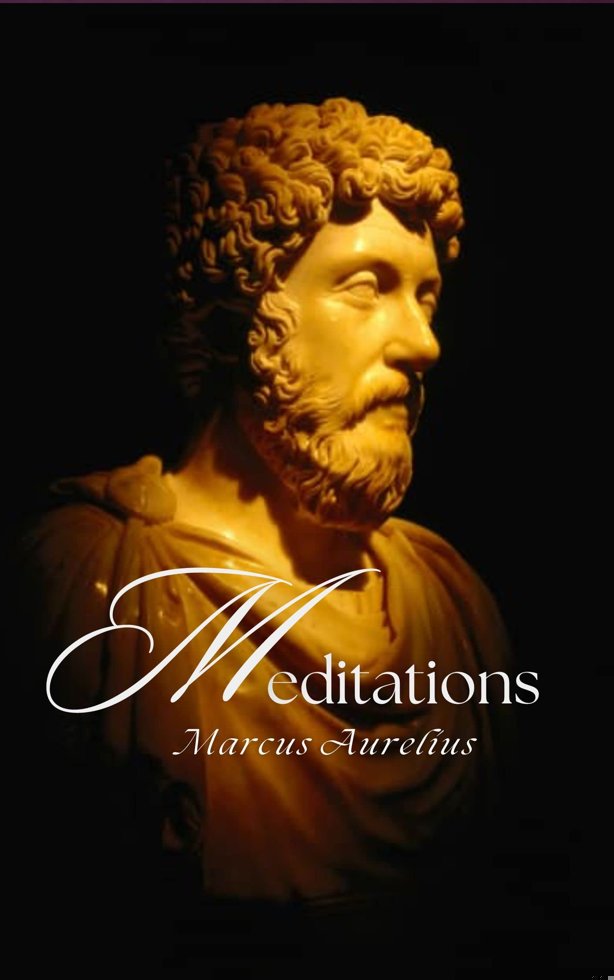 1
1