We've ranked the best mexico books using expert recommendations, sales data, and millions of reader ratings. At Shortform, we know books. Our book guides are the best in the world. Learn why.
Cover unavailable
1
Like Water for Chocolate
Laura Esquivel, Carol Christensen, Thomas Christensen
5.0
Earthy, magical, and utterly charming, this tale of family life in turn-of-the-century Mexico became a best-selling phenomenon with its winning blend of poignant romance and bittersweet wit.
The number one bestseller in Mexico and America for almost two years, and subsequently a bestseller around the world, Like Water For Chocolate is a romantic, poignant tale, touched with moments of magic, graphic earthiness, bittersweet wit - and recipes.
A sumptuous feast of a novel, it relates the bizarre history of the all-female De La Garza family. Tita, the youngest daughter of the house, has been forbidden to marry, condemned by Mexican tradition to look after her mother until she dies. But Tita falls in love with Pedro, and he is seduced by the magical food she cooks. In desperation, Pedro marries her sister Rosaura so that he can stay close to her, so that Tita and Pedro are forced to circle each other in unconsummated passion. Only a freakish chain of tragedies, bad luck and fate finally reunite them against all the odds.
…
Cover unavailable
2
Born to Run: A Hidden Tribe, Superathletes, and the Greatest Race the World Has Never Seen
Christopher McDougall
4.9
Full of incredible characters, amazing athletic achievements, cutting-edge science, and, most of all, pure inspiration, Born to Run is an epic adventure that began with one simple question: Why does my foot hurt? In search of an answer, Christopher McDougall sets off to find a tribe of the world’s greatest distance runners and learn their secrets, and in the process shows us that everything we thought we knew about running is wrong.
Isolated by the most savage terrain in North America, the reclusive Tarahumara Indians of Mexico’s deadly Copper Canyons are custodians of a lost art. For centuries they have practiced techniques that allow them to run hundreds of miles without rest and chase down anything from a deer to an Olympic marathoner while enjoying every mile of it. Their superhuman talent is matched by uncanny health and serenity, leaving the Tarahumara immune to the diseases and strife that plague modern existence. With the help of Caballo Blanco, a mysterious loner who lives among the tribe, the author was able not only to uncover the secrets of the Tarahumara but also to find his own inner ultra-athlete, as he trained for the challenge of a lifetime: a fifty-mile race through the heart of Tarahumara country pitting the tribe against an odd band of Americans, including a star ultramarathoner, a beautiful young surfer, and a barefoot wonder.
With a sharp wit and wild exuberance, McDougall takes us from the high-tech science labs at Harvard to the sun-baked valleys and freezing peaks across North America, where ever-growing numbers of ultrarunners are pushing their bodies to the limit, and, finally, to the climactic race in the Copper Canyons. Born to Run is that rare book that will not only engage your mind but inspire your body when you realize that the secret to happiness is right at your feet, and that you, indeed all of us, were born to run.
…
Recommended by Ed Stafford and Turia Pitt.
Ed Stafford
An honour to be asked to do an impromptu little talk tonight after #christophermcdougall. Great to see the big man in the flesh in the UK. #BornToRun was a book that definitely changed the path of my life. #legend @vivobarefoot #barefootrunning https://t.co/3QgVKZ0OQ4 [source]
Turia Pitt
If people are interested in running, I give them this book. [source]
Cover unavailable
3
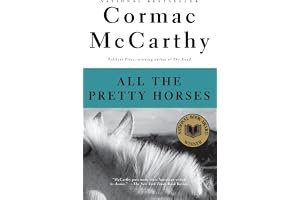
All the Pretty Horses (The Border Trilogy, #1)
Cormac McCarthy
4.8
All the Pretty Horses tells of young John Grady Cole, the last of a long line of Texas ranchers. Across the border Mexico beckons—beautiful and desolate, rugged and cruelly civilized. With two companions, he sets off on an idyllic, sometimes comic adventure, to a place where dreams are paid for in blood.
Recommended by Daniel Buttner, Devon Sawa, Meg Rosoff, and 1 others.
Daniel Buttner
Cormac McCarthy is one of my favorite authors, specifically The Border Trilogy. [source]
Devon Sawa
This is the best book I’ve ever read. https://t.co/AUJLuRAadm [source]
Meg Rosoff
A book that explores that whole subject of finding out where you belong in the world, which is not a search that starts and ends between 18 and 21. [source]
Cover unavailable
4
American Dirt
Jeanine Cummins
4.8
También de este lado hay sueños. On this side, too, there are dreams.
Lydia Quixano Pérez lives in the Mexican city of Acapulco. She runs a bookstore. She has a son, Luca, the love of her life, and a wonderful husband who is a journalist. And while there are cracks beginning to show in Acapulco because of the drug cartels, her life is, by and large, fairly comfortable.
Even though she knows they’ll never sell, Lydia stocks some of her all-time favorite books in her store. And then one day a man enters the shop to browse and comes up to the register with a few books he would like to buy—two of them her favorites. Javier is erudite. He is charming. And, unbeknownst to Lydia, he is the jefe of the newest drug cartel that has gruesomely taken over the city. When Lydia’s husband’s tell-all profile of Javier is published, none of their lives will ever be the same.
Forced to flee, Lydia and eight-year-old Luca soon find themselves miles and worlds away from their comfortable middle-class existence. Instantly transformed into migrants, Lydia and Luca ride la bestia—trains that make their way north toward the United States, which is the only place Javier’s reach doesn’t extend. As they join the countless people trying to reach el norte, Lydia soon sees that everyone is running from something. But what exactly are they running to?
Everyone must read this book by @jeaninecummins. I cannot stop talking about it. I want to immediately start reading it all over again. Utterly magnificent. https://t.co/f3HHqddskD [source]
Think this the best (non Curtis Brown) book I read last year. https://t.co/NjKExF5dZ8 [source]
Cover unavailable
5
Pedro Páramo
Juan Rulfo, Margaret Sayers Peden, Susan Sontag
4.7
A classic of Mexican modern literature about a haunted village.
As one enters Juan Rulfo's legendary novel, one follows a dusty road to a town of death. Time shifts from one consciousness to another in a hypnotic flow of dreams, desires, and memories, a world of ghosts dominated by the figure of Pedro Páramo - lover, overlord, murderer.
Rulfo's extraordinary mix of sensory images, violent passions, and unfathomable mysteries has been a profound influence on a whole generation of Latin American writers, including Carlos Fuentes, Mario Vargas Llosa, and Gabriel García Márquez. To read Pedro Páramo today is as overwhelming an experience as when it was first published in Mexico back in 1955.
…
Cover unavailable
6
The Hummingbird's Daughter
Luis Alberto Urrea
4.7
The prizewinning writer Luis Alberto Urrea's long-awaited novel is an epic mystical drama of a young woman's sudden sainthood in late 19th-century Mexico.
It is 1889, and the civil war is brewing in Mexico. Sixteen year old Teresita, illegitimate but beloved daughter of the wealthy and powerful rancher Don Tomas Urrea, wakes from the strangest dream - a dream that she has died. Only it was not a dream. This passionate and rebellious young woman has arisen from the dead with the power to heal - but it will take all her faith to endure the trials that await her and her family now that she has become the Saint of Cabora.
The Hummingbird's Daughter is a vast, hugely satisfying novel of love and loss, joy and pain. Two decades in the writing, this is the masterpiece that Luis Alberto Urrea has been building up to.
…
Recommended by Rupert Isaacson.
Rupert Isaacson
Some things, particularly neuro-psychiatric stuff, is better addressed through shamanism. We can contain it with drugs but we certainly don’t have a way of making it a positive thing. [source]
Cover unavailable
7
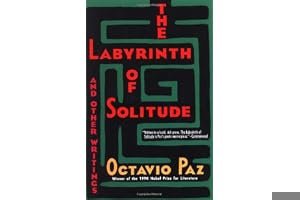
The Labyrinth of Solitude and Other Writings
Octavio Paz
4.7
Octavio Paz has long been acknowledged as Mexico's foremost writer and critic. In this international classic, Paz has written one of the most enduring and powerful works ever created on Mexico and its people, character, and culture. Compared to Ortega y Gasset's The Revolt of the Masses for its trenchant analysis, this collection contains his most famous work, "The Labyrinth of Solitude," a beautifully written and deeply felt discourse on Mexico's quest for identity that gives us an unequalled look at the country hidden behind "the mask." Also included are "The Other Mexico," "Return to the Labyrinth of Solitude," "Mexico and the United States," and "The Philanthropic Ogre," all of which develop the themes of the title essay and extend his penetrating commentary to the United States and Latin America.
…
Cover unavailable
8
The Lacuna
Barbara Kingsolver
4.7
In her most accomplished novel, Barbara Kingsolver takes us on an epic journey from the Mexico City of artists Diego Rivera and Frida Kahlo to the America of Pearl Harbor, FDR, and J. Edgar Hoover. The Lacuna is a poignant story of a man pulled between two nations as they invent their modern identities.
Born in the United States, reared in a series of provisional households in Mexico—from a coastal island jungle to 1930s Mexico City—Harrison Shepherd finds precarious shelter but no sense of home on his thrilling odyssey. Life is whatever he learns from housekeepers who put him to work in the kitchen, errands he runs in the streets, and one fateful day, by mixing plaster for famed Mexican muralist Diego Rivera. He discovers a passion for Aztec history and meets the exotic, imperious artist Frida Kahlo, who will become his lifelong friend. When he goes to work for Lev Trotsky, an exiled political leader fighting for his life, Shepherd inadvertently casts his lot with art and revolution, newspaper headlines and howling gossip, and a risk of terrible violence.
Meanwhile, to the north, the United States will soon be caught up in the internationalist goodwill of World War II. There in the land of his birth, Shepherd believes he might remake himself in America's hopeful image and claim a voice of his own. He finds support from an unlikely kindred soul, his stenographer, Mrs. Brown, who will be far more valuable to her employer than he could ever know. Through darkening years, political winds continue to toss him between north and south in a plot that turns many times on the unspeakable breach—the lacuna—between truth and public presumption.
With deeply compelling characters, a vivid sense of place, and a clear grasp of how history and public opinion can shape a life, Barbara Kingsolver has created an unforgettable portrait of the artist—and of art itself. The Lacuna is a rich and daring work of literature, establishing its author as one of the most provocative and important of her time.
…
Cover unavailable
9
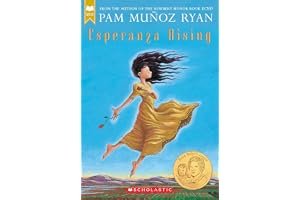
Esperanza Rising
Pam Muñoz Ryan
4.6
Esperanza thought she'd always live with her family on their ranch in Mexico--she'd always have fancy dresses, a beautiful home, and servants. But a sudden tragedy forces Esperanza and Mama to flee to California during the Great Depression, and to settle in a camp for Mexican farm workers. Esperanza isn't ready for the hard labor, financial struggles, or lack of acceptance she now faces. When their new life is threatened, Esperanza must find a way to rise above her difficult circumstances--Mama's life, and her own, depend on it.
…
Cover unavailable
10
Signs Preceding the End of the World
Yuri Herrera, Lisa Dillman
4.6
Winner of the 2016 Best Translated Book Award for Fiction
Signs Preceding the End of the World is one of the most arresting novels to be published in Spanish in the last ten years. Yuri Herrera does not simply write about the border between Mexico and the United States and those who cross it. He explores the crossings and translations people make in their minds and language as they move from one country to another, especially when there’s no going back.
Traversing this lonely territory is Makina, a young woman who knows only too well how to survive in a violent, macho world. Leaving behind her life in Mexico to search for her brother, she is smuggled into the USA carrying a pair of secret messages – one from her mother and one from the Mexican underworld.
…
Cover unavailable
11
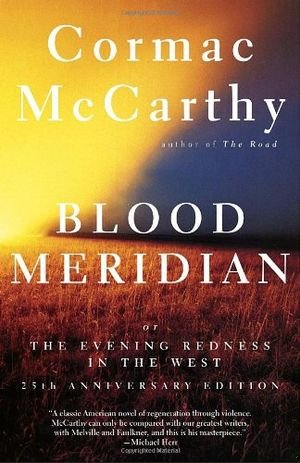
Blood Meridian: Or the Evening Redness in the West
Cormac McCarthy
4.5
An epic novel of the violence and depravity that attended America's westward expansion, Blood Meridian brilliantly subverts the conventions of the Western novel and the mythology of the "wild west." Based on historical events that took place on the Texas-Mexico border in the 1850s, it traces the fortunes of the Kid, a fourteen-year-old Tennesseean who stumbles into the nightmarish world where Indians are being murdered and the market for their scalps is thriving.
Publisher's Note: The 25th Anniversary Edition has been reset, causing the text to reflow. Page references based on earlier editions will no longer apply, so Vintage Books has compiled the following chart as a conversion aid. Download the chart by copying and pasting the following link into your browser: http://knopfdoubleday.com/marketing/B...
So here are my three must read books. I've been reading a lot of great books like: Outsmart Your Instincts, The Culture Code, and Antonio Damasio’s The Strange Order, and sometimes when you read a lot of nonfiction it’s very enriching, sometimes you need a novel. I really believe you should take a minute and read something beautiful. Listen, listen to Lolita by Nabokov. But also listen to Blood Meridian by Cormac McCarthy and listen to Richard Poe narrate that. Those are two of the greatest feats of the english language that I can think of. Then there’s Fortress of Solitude, an amazing book, Extremely Loud and Incredibly Close, these are great novels. Cold Mountain is a beautiful novel, Snow Falling On Cedars, I mean they’ve been around for a while. But goddamnit, get those under your belt. Those are the novels I think you should read. You know Love In The Time Of Cholera it just makes you ache. Kind of like a Hemingway thing, where Hemingway “ahh!”, it’s the same thing, you know. So I don’t know, I’m a fan of all those books. Those are my 3 slash 20 books. [source]
Cover unavailable
12
The Pearl
John Steinbeck
4.5
Like his father and grandfather before him, Kino is a poor diver, gathering pearls from the gulf beds that once brought great wealth to the kings of Spain and now provide Kino, Juana, and their infant son with meager subsistence. Then, on a day like any other, Kino emerges from the sea with a pearl as large as a sea gull’s egg, as “perfect as the moon.” With the pearl comes hope, the promise of comfort and of security…
A story of classic simplicity, based on a Mexican folk tale, The Pearl explores the secrets of man’s nature, greed, the darkest depths of evil, and the luminous possibilities of love.
…
Cover unavailable
13
Gods of Jade and Shadow
Silvia Moreno-Garcia
4.5
The Mayan God of Death sends a young woman on a harrowing, life-changing journey in this dark fairy tale inspired by Mexican folklore, for readers of The Song of Achilles and Uprooted.
Here we shall begin to tell a story: a tale of a throne lost, of monsters and magic. A tale of gods and of the shadow realm. But this, our story, it begins in our world, in the land of mortals.
It begins with a woman. For this story, it is her story. It begins with her.
The Jazz Age is in full swing, but Casiopea Tun is too busy cleaning the floors of her wealthy grandfather's house to listen to any fast tunes. Nevertheless, she dreams of a life far from her dusty, small town in southern Mexico. A life she can call her own.
Yet this new life seems as distant as the stars, until the day she finds a curious wooden box in her grandfather's room. She opens it--and accidentally frees the spirit of the Mayan God of Death, who requests her help in recovering his throne from his treacherous brother. Failure will mean Casiopea's demise, but success could make her dreams come true.
In the company of the strangely alluring god and armed with her wits, Casiopea begins an adventure that will take her on a cross-country odyssey, from the jungles of Yucatán to the bright lights of Mexico City--and deep into the darkness of the Mayan underworld.
Mixing the excitement of the Roaring Twenties with Prehispanic mythology, Gods of Jade and Shadow is a vivid, wildly imaginative historical fantasy.
…
Cover unavailable
14
The Power of the Dog
Don Winslow
4.5
An explosive novel of the drug trade, The Power of the Dog takes you deep inside a world riddled with corruption, betrayal, and bloody revenge.
Art Keller is an obsessive DEA agent. The Barrera brothers are heirs to a drug empire. Nora Hayden is a jaded teenager who becomes a high-class hooker. Father Parada is a powerful and incorruptible Catholic priest. Callan is an Irish kid from Hell’s kitchen who grows up to be a merciless hitman. And they are all trapped in the world of the Mexican drug Federación. From the streets of New York City to Mexico City and Tiajuana to the jungles of Central America, this is the war on drugs like you’ve never seen it.
From the Trade Paperback edition.
…
Recommended by Devon Sawa.
Devon Sawa
“Savages” has knocked out “Power Of The Dog” for my new favorite @donwinslow book. It’s so damn good. Haven’t read “Frankie Machine” yet,though. Like I did with king’s “STAND”, I’m waiting, cause once I’ve read it, I’ve read it and it’s gone. Saving it for the beaches of Vietnam. [source]
Cover unavailable
15
Power and the Glory (Reprint)
Graham Greene
4.5
In a poor, remote section of southern Mexico, the Red Shirts have taken control. God has been outlawed, and the priests have been systematically hunted down and killed. Now, the last priest strives to overcome physical and moral cowardice in order to find redemption. Introduction by John Updike
According to the president’s Facebook page and a 2008 interview with the New York Times, these titles are among his most influential forever favorites: Moby Dick, Herman Melville Self-Reliance, Ralph Waldo Emerson Song Of Solomon, Toni Morrison Parting The Waters, Taylor Branch Gilead, Marylinne Robinson Best and the Brightest, David Halberstam The Federalist, Alexander Hamilton Souls of Black Folk, W.E.B. Du Bois The Power and the Glory, Graham Greene The Quiet American, Graham Greene Cancer Ward, Aleksandr Solzhenitsyn Gandhi’s autobiography Working, Studs Terkel Wealth of Nations, Adam Smith Theory of Moral Sentiments, Adam Smith All the King’s Men, Robert Penn Warren [source]
Cover unavailable
16
Las batallas en el desierto
Jose Emilio Pacheco
4.5
Historia de un amor imposible, narración de un terror cotidiano que los protagonistas preferirían creer que se trata de algo fantasmagórico, Las batallas en el desierto es una magistral novela breve que involucra otros aspectos como la corrupción social y política, el inicio del México moderno y la desaparición del país tradicional, el testimonio de las transformaciones de nuestras vidas y nuestra historia, y el rescate de las memorias individuales y colectivas de una ciudad a la que José Emilio Pacheco ama profundamente, pero recrea sin nostalgia y denuncia de manera implacable. Desde su aparición esta novela corta, traducida al inglés, francés, alemán, italiano, ruso, japonés y griego, y publicada en otras partes del mundo hispano, asombró por su aparente sencillez y la estructura compleja que tiende lazos para una variedad de lecturas múltiples y diferentes y para una complicidad que hermana para siempre al lector con el autor.
…
Cover unavailable
17
Under the Volcano
Malcolm Lowry
4.5
"Lowry's masterpiece...has a claim to being regarded as one of the ten most consequential works of fiction produced in [the twentieth] century." — Los Angeles Times
Geoffrey Firmin, a former British consul, has come to Quauhnahuac, Mexico. His debilitating malaise is drinking, an activity that has overshadowed his life. On the most fateful day of the consul's life—the Day of the Dead—his wife, Yvonne, arrives in Quauhnahuac, inspired by a vision of life together away from Mexico and the circumstances that have driven their relationship to the brink of collapse. She is determined to rescue Firmin and their failing marriage, but her mission is further complicated by the presence of Hugh, the consul's half brother, and Jacques, a childhood friend. The events of this one significant day unfold against an unforgettable backdrop of a Mexico at once magical and diabolical.
Under the Volcano remains one of literature's most powerful and lyrical statements on the human condition, and a brilliant portrayal of one man's constant struggle against the elemental forces that threaten to destroy him.
…
Recommended by Hugh Thomson, Robin Robertson, Robin Robertson, and 1 others.
Hugh Thomson
There was a syndrome in the 1920s and 30s of British writers writing about Mexico – Lawrence, Waugh, Huxley, Greene. But Malcolm Lowry was one of the few English writers who actually spent quite a lot of time in the country. Graham Greene was only there for five weeks or so before writing his novel, but Lowry got under the skin of Mexico in a way that few of his contemporaries did. [source]
'The Burning Plain and Other Stories consists of fifteen pieces ranging from brief anecdotes, casual incidents that remind one of 'happenings' in pop art to short stories. Many, indeed, are short-short stories in deceptively elemental language and narrative technique; yet all have a sharp impact on the reader.... With a few bare phrases the author conveys a feeling for the bleak, harsh surroundings in which his people live.'
…
Cover unavailable
19
2666 (2666 #1-5)
Roberto Bolaño, Natasha Wimmer
4.5
Three academics on the trail of a reclusive German author; a New York reporter on his first Mexican assignment; a widowed philosopher; a police detective in love with an elusive older woman—these are among the searchers drawn to the border city of Santa Teresa, where over the course of a decade hundreds of women have disappeared.
I have read this once and I keep dipping back into it because it is endlessly fascinating. Roberto Bolaño is a writer who has found a really important way of dealing with the horrors that the 1970s and subsequent decades have inflicted on Latin America. If you look at Borges, García Márquez and Vargas Llosa, in a sense they grew up in times of optimism, of high modernism, with the hope, at least initially, that change might be possible. Whereas someone like Bolaño was a young man at the time of the Chilean coup in 1973. He drifted around and went into exile in Mexico and then moved to Spain, a witness to the end of the dream. [source]
Cover unavailable
20
The Death of Artemio Cruz
Carlos Fuentes, Alfred MacAdam
4.4
Hailed as a masterpiece since its publication in 1962, The Death of Artemio Cruz is Carlos Fuentes's haunting voyage into the soul of modern Mexico. Its acknowledged place in Latin American fiction and its appeal to a fresh generation of readers have warranted this new translation by Alfred Mac Adam, translator (with the author) of Fuentes's Christopher Unborn.
As in all his fiction, but perhaps most powerfully in this book, Fuentes is a passionate guide to the ironies of Mexican history, the burden of its past, and the anguish of its present.
…
Cover unavailable
21
The Savage Detectives
Roberto Bolano, Eddie Lopez, Armando Duran
4.4
The late Chilean writer Roberto Bolano has been called the Garcia Marquez of his generation. In this dazzling novel, the book that established his international reputation, Bolano tells the story of two modern-day Quixotes--the last survivors of an underground literary movement, perhaps of literature itself--on a tragicomic quest through a darkening, entropic universe. Brilliantly rendered into English by Natasha Wimmer, the acclaimed translator of Bolano's other great masterwork, 2666, The Savage Detectives is an exuberant, wildly inventive and ambitious novel from one of the greatest Latin American authors of our age.
…
Cover unavailable
22
The Devil's Highway: A True Story
Luis Alberto Urrea
4.4
The author of "Across the Wire" offers brilliant investigative reporting of what went wrong when, in May 2001, a group of 26 men attempted to cross the Mexican border into the desert of southern Arizona. Only 12 men came back out.
Cover unavailable
23
The Murmur of Bees
Sofía Segovia
4.4
From a beguiling voice in Mexican fiction comes an astonishing novel—her first to be translated into English—about a mysterious child with the power to change a family’s history in a country on the verge of revolution.
From the day that old Nana Reja found a baby abandoned under a bridge, the life of a small Mexican town forever changed. Disfigured and covered in a blanket of bees, little Simonopio is for some locals the stuff of superstition, a child kissed by the devil. But he is welcomed by landowners Francisco and Beatriz Morales, who adopt him and care for him as if he were their own. As he grows up, Simonopio becomes a cause for wonder to the Morales family, because when the uncannily gifted child closes his eyes, he can see what no one else can—visions of all that’s yet to come, both beautiful and dangerous. Followed by his protective swarm of bees and living to deliver his adoptive family from threats—both human and those of nature—Simonopio’s purpose in Linares will, in time, be divined.
Set against the backdrop of the Mexican Revolution and the devastating influenza of 1918, The Murmur of Bees captures both the fate of a country in flux and the destiny of one family that has put their love, faith, and future in the unbelievable.
…
Cover unavailable
24
Temporada de huracanes
Fernanda Melchor
4.4
Con un ritmo y un lenguaje magistrales, Fernanda Melchor, autora de Falsa liebre explora en esta obra las sinrazones que subyacen a los actos más desesperados de barbarie pasional.
Una novela cruda y desgarradora en la que el lector quedará envuelto, atrapado por las palabras y la atmósfera de terrible, aunque gozosa, fatalidad.
Un grupo de niños encuentra un cadáver flotando en las aguas turbias de un canal de riego cercano a la ranchería de La Matosa. El cuerpo resulta ser de la Bruja, una mujer que heredó dicho oficio de su madre fallecida, y a quienes los pobladores de esa zona rural respetaban y temían.
Tras el macabro hallazgo, las sospechas y habladurías recaerán sobre un grupo de muchachos del pueblo, a quienes días antes una vecina vio mientras huían de casa de la hechicera, cargando lo que parecía ser un cuerpo inerte.
A partir de ahí, los personajes involucrados en el crimen nos contarán su historia mientras los lectores nos sumergimos en la vida de este lugar acosado por la miseria y el abandono, y donde convergen la violencia del erotismo más oscuro y las sórdidas relaciones de poder.
Otros autores han opinado:
"Un viaje nocturno a las profundidades del alma humana con el estilo más radical de su generación." -Martín Solares-
"Fernanda Melchor no sólo escribe con la potencia rabiosa que le reclaman los temas que ha decidido investigar, sino que en cada página muestra un oído y una agudeza pocas veces vista en nuestra literatura." -Yuri Herrera-
…
Cover unavailable
25
Rain of Gold
Villasenor
4.4
In Rain of Gold, Victor Villasenor weaves the parallel stories of two families and two countries…bringing us the timeless romance between the volatile bootlegger who would become his father and the beautiful Lupe, his mother–men and women in whose lives the real and the fantastical exist side by side…and in whose hearts the spirit to survive is fueled by a family’s unconditional love.
Recommended by Cecile Richards.
Cecile Richards
This has been a favourite of mine for a while, but it’s definitely off the radar of most people so I also want to highlight it for people who don’t know about it. I think it’s a great book. It’s kind of a semi-autobiographical novel but it’s basically about the migration of Mexican families to the US, families that get to California. [source]
Cover unavailable
26
The Line Becomes A River: Dispatches from the Border
Francisco Cantú
4.3
For Francisco Cantú, the border is in the blood: his mother, a park ranger and daughter of a Mexican immigrant, raised him in the scrublands of the Southwest. Haunted by the landscape of his youth, Cantú joins the Border Patrol. He and his partners are posted to remote regions crisscrossed by drug routes and smuggling corridors, where they learn to track other humans under blistering sun and through frigid nights. They haul in the dead and deliver to detention those they find alive.
Cantú tries not to think where the stories go from there. Plagued by nightmares, he abandons the Patrol for civilian life. But when an immigrant friend travels to Mexico to visit his dying mother and does not return, Cantú discovers that the border has migrated with him, and now he must know the whole story. Searing and unforgettable, The Line Becomes a River makes urgent and personal the violence our border wreaks on both sides of the line.
…
Cover unavailable
27
Into the Beautiful North
Luis Alberto Urrea
4.3
Nineteen-year-old Nayeli works at a taco shop in her Mexican village and dreams about her father, who journeyed to the United States to find work. Recently, it has dawned on her that he isn't the only man who has left town. In fact, there are almost no men in the village--they've all gone north. While watching The Magnificent Seven, Nayeli decides to go north herself and recruit seven men--her own "Siete Magníficos"--to repopulate her hometown and protect it from the bandidos who plan on taking it over.
Filled with unforgettable characters and prose as radiant as the Sinaloan sun, Into the Beautiful North is the story of an irresistible young woman's quest to find herself on both sides of the fence.
…
Cover unavailable
28
The Underdogs
Mariano Azuela, Sergio Waisman, Carlos Fuentes
4.3
The greatest novel of the Mexican Revolution, in a brilliant new translation by an award-winning translator
The Underdogs is the first great novel about the first great revolution of the twentieth century. Demetrio Macias, a poor, illiterate Indian, must join the rebels to save his family. Courageous and charismatic, he earns a generalship in Pancho Villa's army, only to become discouraged with the cause after it becomes hopelessly factionalized. At once a spare, moving depiction of the limits of political idealism, an authentic representation of Mexico's peasant life, and a timeless portrait of revolution, The Underdogs is an iconic novel of the Latin American experience and a powerful novel about the disillusionment of war.
…
Recommended by Hugh Thomson.
Hugh Thomson
I first read this when I was 16 or 17 and it made a strong impression on me. It’s a tough, picaresque novel of the Mexican revolution and of what it was like for the soldiers in the north. It’s a good account of how anarchic that revolution must have been and it still has a lot of verve and power, with images of troops spilling out of the trains, the Dorados, the ‘golden ones’, Pancho Villa’s cavalry. Pancho Villa 1878-1923 was the colourful bandit-hero of the Mexican revolution. [source]
Cover unavailable
29
I Am Not Your Perfect Mexican Daughter
Erika L. Sánchez
4.3
Perfect Mexican daughters do not go away to college. And they do not move out of their parents’ house after high school graduation. Perfect Mexican daughters never abandon their family.
But Julia is not your perfect Mexican daughter. That was Olga’s role.
Then a tragic accident on the busiest street in Chicago leaves Olga dead and Julia left behind to reassemble the shattered pieces of her family. And no one seems to acknowledge that Julia is broken, too. Instead, her mother seems to channel her grief into pointing out every possible way Julia has failed.
But it’s not long before Julia discovers that Olga might not have been as perfect as everyone thought. With the help of her best friend Lorena, and her first kiss, first love, first everything boyfriend Connor, Julia is determined to find out. Was Olga really what she seemed? Or was there more to her sister’s story? And either way, how can Julia even attempt to live up to a seemingly impossible ideal?
…
Cover unavailable
30
Aztec (Aztec, #1)
Gary Jennings
4.3
Aztec is the extraordinary story of the last and greatest native civilization of North America. Told in the words of one of the most robust and memorable characters in modern fiction, Mixtli-Dark Cloud, Aztec reveals the very depths of Aztec civilization from the peak and feather-banner splendor of the Aztec Capital of Tenochtitlan to the arrival of Hernán Cortes and his conquistadores, and their destruction of the Aztec empire. The story of Mixtli is the story of the Aztecs themselves---a compelling, epic tale of heroic dignity and a colossal civilization's rise and fall.
…
Cover unavailable
31
The House of Broken Angels
Luis Alberto Urrea
4.3
The definitive Mexican-American immigrant story, a sprawling and deeply felt portrait of a Mexican-American family occasioned by the impending loss of its patriarch, from one of the country's most beloved authors.
Prizewinning and bestselling writer Luis Urrea has written his Mexican coming-to-America story and his masterpiece. Destined to sit alongside other classic immigrant novels, The House of Broken Angels is a sprawling and epic family saga helmed by patriarch Big Angel. The novel gathers together the entire De La Cruz clan, as they meet for the final birthday party Big Angel is throwing for himself, at home in San Diego, as he nears the end of his struggle with cancer and reflects on his long and full life.
But when Big Angel's mother, Mama America, approaching one hundred, dies herself as the party nears, he must plan her funeral as well. There will be two family affairs in one weekend: a farewell double-header. Among the attendants is his half-brother and namesake, Little Angel, who comes face to face with the siblings with whom he shared a father but not, as the weekend proceeds to remind him, a life.
This story of the De La Cruzes is the story of what it means to be a Mexican in America, to have lived two lives across one border. It is a tale of the ravaging power of death to shore up the bits of life you have forgotten, whether by choice or not. Above all, this finely wrought portrait of a deeply complex family and the America they have come to call home is Urrea at his purest and best. Teeming with brilliance and humor, authentic at every turn, The House of Broken Angels cements his reputation as a storyteller of the first rank.
…
Cover unavailable
32
The Cartel (Power of the Dog #2)
Don Winslow
4.3
From the internationally best-selling author of the acclaimed novel The Power of the Dog comes The Cartel, a gripping, true-to-life, ripped-from-the-headlines epic story of power, corruption, revenge, and justice spanning the past decade of the Mexican-American drug wars.
It’s 2004. DEA agent Art Keller has been fighting the war on drugs for thirty years in a blood feud against Adán Barrera, the head of El Federación, the world’s most powerful cartel, and the man who brutally murdered Keller’s partner. Finally putting Barrera away cost Keller dearly—the woman he loves, the beliefs he cherishes, the life he wants to lead.
Then Barrera gets out, determined to rebuild the empire that Keller shattered. Unwilling to live in a world with Barrera in it, Keller goes on a ten-year odyssey to take him down. His obsession with justice—or is it revenge?—becomes a ruthless struggle that stretches from the cities, mountains, and deserts of Mexico to Washington’s corridors of power to the streets of Berlin and Barcelona.
Keller fights his personal battle against the devastated backdrop of Mexico’s drug war, a conflict of unprecedented scale and viciousness, as cartels vie for power and he comes to the final reckoning with Barrera—and himself—that he always knew must happen.
The Cartel is a story of revenge, honor, and sacrifice, as one man tries to face down the devil without losing his soul. It is the story of the war on drugs and the men—and women—who wage it.
…
Cover unavailable
33
Aura
Carlos Fuentes
4.3
Felipe Montero is employed in the house of an aged widow to edit her deceased husband's memoirs. There Felipe meets her beautiful green-eyed niece, Aura. His passion for Aura and his gradual discovery of the true relationship between the young woman and her aunt propel the story to its extraordinary conclusion.
Recommended by Oscar Hijuelos.
Oscar Hijuelos
This book is an über-homage to Edgar Allan Poe and Jorge Luis Borges. It is a gothic piece. It’s a horror, a mystery, a Borgesian sleight of hand. Once you have read it, the effect changes and you become admiring of its technique. But on first reading it is a wonderfully surprising story, with a denouement which in retrospect is predictable but is enchanting. [source]
Cover unavailable
34
Caramelo
Sandra Cisneros
4.3
Every year, Ceyala "Lala" Reyes' family--aunts, uncles, mothers, fathers, and Lala's six older brothers--packs up three cars and, in a wild ride, drive from Chicago to the Little Grandfather and Awful Grandmother's house in Mexico City for the summer. Struggling to find a voice above the boom of her brothers and to understand her place on this side of the border and that, Lala is a shrewd observer of family life. But when she starts telling the Awful Grandmother's life story, seeking clues to how she got to be so awful, grandmother accuses Lala of exaggerating. Soon, a multigenerational family narrative turns into a whirlwind exploration of storytelling, lies, and life. Like the cherished rebozo, or shawl, that has been passed down through generations of Reyes women, Caramelo is alive with the vibrations of history, family, and love.
…
Cover unavailable
35
Prayers for the Stolen
Jennifer Clement
4.3
A haunting story of love and survival that introduces an unforgettable literary heroine
Ladydi Garcia Martínez is fierce, funny and smart. She was born into a world where being a girl is a dangerous thing. In the mountains of Guerrero, Mexico, women must fend for themselves, as their men have left to seek opportunities elsewhere. Here in the shadow of the drug war, bodies turn up on the outskirts of the village to be taken back to the earth by scorpions and snakes. School is held sporadically, when a volunteer can be coerced away from the big city for a semester. In Guerrero the drug lords are kings, and mothers disguise their daughters as sons, or when that fails they “make them ugly” – cropping their hair, blackening their teeth- anything to protect them from the rapacious grasp of the cartels. And when the black SUVs roll through town, Ladydi and her friends burrow into holes in their backyards like animals, tucked safely out of sight.
While her mother waits in vain for her husband’s return, Ladydi and her friends dream of a future that holds more promise than mere survival, finding humor, solidarity and fun in the face of so much tragedy. When Ladydi is offered work as a nanny for a wealthy family in Acapulco, she seizes the chance, and finds her first taste of love with a young caretaker there. But when a local murder tied to the cartel implicates a friend, Ladydi’s future takes a dark turn. Despite the odds against her, this spirited heroine’s resilience and resolve bring hope to otherwise heartbreaking conditions.
An illuminating and affecting portrait of women in rural Mexico, and a stunning exploration of the hidden consequences of an unjust war, PRAYERS FOR THE STOLEN is an unforgettable story of friendship, family, and determination.
…
Cover unavailable
36
The Teachings of Don Juan: A Yaqui Way of Knowledge
Carlos Castaneda
4.3
Decades ago the University of California Press published a remarkable manuscript by an anthropology student named Carlos Castaneda. The Teachings of Don Juan initiated a generation of seekers dissatisfied with the limitations of the Western worldview. Castaneda's now classic book remains controversial for the alternative way of seeing that it presents & the revolution in cognition it demands. In a series of fascinating dialogs, Castaneda sets forth his partial initiation with don Juan Matus, a Yaqui Indian shaman from the state of Sonora, Mexico. He describes Don Juan's perception & mastery of the "non-ordinary reality" & how peyote & other plants sacred to the Mexican Indians were used as gateways to the mysteries of "dread," "clarity" & "power".
"Through her art, Herrera writes, Kahlo made of herself both performer and icon. Through this long overdue biography, Kahlo has also, finally, been made fully human." — San Francisco Chronicle
Hailed by readers and critics across the country, this engrossing biography of Mexican painter Frida Kahlo reveals a woman of extreme magnetism and originality, an artist whose sensual vibrancy came straight from her own experiences: her childhood near Mexico City during the Mexican Revolution; a devastating accident at age eighteen that left her crippled and unable to bear children; her tempestuous marriage to muralist Diego Rivera and intermittent love affairs with men as diverse as Isamu Noguchi and Leon Trotsky; her association with the Communist Party; her absorption in Mexican folklore and culture; and her dramatic love of spectacle.
Here is the tumultuous life of an extraordinary twentieth-century woman -- with illustrations as rich and haunting as her legend.
…
Cover unavailable
38
The Story of My Teeth
Valeria Luiselli
4.3
I was born in Pachuca, the Beautiful Windy City, with four premature teeth and my body completely covered in a very fine coat of fuzz. But I'm grateful for that inauspicious start because ugliness, as my other uncle, Eurípides López Sánchez, was given to saying, is character forming.
Highway is a late-in-life world traveler, yarn spinner, collector, and legendary auctioneer. His most precious possessions are the teeth of the "notorious infamous" like Plato, Petrarch, and Virginia Woolf. Written in collaboration with the workers at a Jumex juice factory, Teeth is an elegant, witty, exhilarating romp through the industrial suburbs of Mexico City and Luiselli's own literary influences.
…
Cover unavailable
39
The House of the Scorpion (Matteo Alacran, #1)
Nancy Farmer
4.3
With undertones of vampires, Frankenstein, dragons' hoards, and killing fields, Matt's story turns out to be an inspiring tale of friendship, survival, hope, and transcendence. A must-read for teenage fantasy fans.
At his coming-of-age party, Matteo Alacrán asks El Patrón's bodyguard, "How old am I?...I know I don't have a birthday like humans, but I was born."
"You were harvested," Tam Lin reminds him. "You were grown in that poor cow for nine months and then you were cut out of her."
To most people around him, Matt is not a boy, but a beast. A room full of chicken litter with roaches for friends and old chicken bones for toys is considered good enough for him. But for El Patrón, lord of a country called Opium—a strip of poppy fields lying between the U.S. and what was once called Mexico—Matt is a guarantee of eternal life. El Patrón loves Matt as he loves himself for Matt is himself. They share identical DNA.
…
Cover unavailable
40
The Broken Spears: The Aztec Account of the Conquest of Mexico
Miguel Leon-Portilla, Lysander Kemp, et al.
4.2
Until 1959, when this book was published for the first time, the only organized testimony about the Conquest was the victorious chronicle of the Spaniards themselves. Miguel León-Portilla had the incomparable success of organizing texts translated from Nahuatl by Ángel María Garibay Kintana to give us the The Aztec Account of the Conquest of Mexico: Indigenous people of Tenochtitlán, Tlatelolco, Texcoco, Chalco and Tlaxcala were formed about the struggle against the conquerors and the final ruin of the Aztec world.
An account of the omens that announced the disaster, a description of Cortes' progress, a chronicle of the heroic battle of the ancient Mexicans in defense of their culture and of their own lives, a civilization that was lost forever, a great epic poem of the origins of Mexican nationality, The Aztec Account of the Conquest of Mexico is already a classic book and an indispensable reading work.
…
Cover unavailable
41
1491: New Revelations of the Americas Before Columbus
Charles C. Mann
4.2
In this groundbreaking work of science, history, and archaeology, Charles C. Mann radically alters our understanding of the Americas before the arrival of Columbus in 1492.
Contrary to what so many Americans learn in school, the pre-Columbian Indians were not sparsely settled in a pristine wilderness; rather, there were huge numbers of Indians who actively molded and influenced the land around them. The astonishing Aztec capital of Tenochtitlan had running water and immaculately clean streets, and was larger than any contemporary European city. Mexican cultures created corn in a specialized breeding process that it has been called man’s first feat of genetic engineering. Indeed, Indians were not living lightly on the land but were landscaping and manipulating their world in ways that we are only now beginning to understand. Challenging and surprising, this a transformative new look at a rich and fascinating world we only thought we knew.
…
Recommended by Adam Conover, Colin Calloway, and Scott Keyes.
@TheBaltimoreSon @CharlesCMann Sure it! A total revolution in my understanding of history, all in one book. Amazing stuff. [source]
Colin Calloway
The book provides a huge hemispheric overview. [source]
Scott Keyes
It’s one of those books that takes everything you thought you knew about the history of European colonialists and indigenous groups in the Americas and turns it on its head. Just a fascinating deep-dive into early American history that questions a lot of dogma we were taught in school. [source]
Cover unavailable
42
Tell Me How It Ends: An Essay in Forty Questions
Valeria Luiselli
4.2
Structured around the forty questions Luiselli translates and asks undocumented Latin-American children facing deportation, Tell Me How It Ends (an expansion of her 2016 Freeman's essay of the same name) humanizes these young migrants and highlights the contradiction of the idea of America as a fiction for immigrants with the reality of racism and fear both here and back home."
Cover unavailable
43
Mexico
James A. Michener and Steve Berry
4.2
Pulitzer Prize–winning author James A. Michener, whose novels hurtle from the far reaches of history to the dark corners of the world, paints an intoxicating portrait of a land whose past and present are as turbulent, fascinating, and colorful as any other on Earth. When an American journalist travels to report on the upcoming duel between two great matadors, he is ultimately swept up in the dramatic story of his own Mexican ancestry—from the brilliance and brutality of the ancients, to the iron fist of the invading Spaniards, to modern Mexico, fighting through dust and bloodshed to build a nation upon the ashes of revolution. Architectural splendors, frenzied bullfights, horrific human sacrifice: Michener weaves them all into an epic human story that ranks with the best of his beloved bestselling novels.
Praise for Mexico “Michener the storyteller at his finest . . . There are splendid and authentic scenes in the plaza de toros that are as dramatic as any written by Ernest Hemingway or Barnaby Conrad.”—The New York Times Book Review “Astounding . . . fast-moving, intriguing . . . Michener is back in huge, familiar form with Mexico.”—Los Angeles Daily News “An enthralling story . . . Michener artfully combines the history of Mexico with the art of bullfighting, teaching the reader about both and telling a grand story at the same time.”—St. Louis Post-Dispatch “A novel of epic proportions, abounding in visual and historical detail.”—Richmond Times-Dispatch
From the Paperback edition.
…
Cover unavailable
44
Los ingrávidos
Valeria Luiselli
4.2
¿Cuántas vidas y cuántas muertes son posibles en la existencia de una misma persona? Los ingrávidos es una novela sobre existencias fantasmales; una evocación, a la vez melancólica y llena de humor, sobre la imposibilidad del encuentro amoroso y el carácter irrevocable de la perdida. Se lee con la emoción trepidante que genera una escritura ágil, aguda, a ratos francamente iluminada, pero que no renuncia nunca al cuidadoso cuestionamiento y disección de los valores del mundo contemporáneo.
Dos voces componen esta novela. La narradora, una mujer del México contemporáneo, relata sus años de juventud como editora en Nueva York, en los que el fantasma del poeta Gilberto Owen la perseguía por el metro. El narrador, un Owen al borde de la muerte, recuerda su juventud durante el Renacimiento de Harlem a finales de los años veinte, donde participaba –a veces a regañadientes, otras con alegre socarronería– de la vida literaria neoyorquina, al lado de escritores como Louis Zukofsky o Federico García Lorca. Ambos narradores se buscan en el espacio insondable de los trenes subterráneos, donde viajaban en sus respectivos pasados.
…
Cover unavailable
45
The Distance Between Us
Reyna Grande
4.2
From an award-winning novelist and sought-after public speaker, an eye-opening memoir about life before and after illegally emigrating from Mexico to the United States.
Mago pointed to a spot on the dirt floor and reminded me that my umbilical cord was buried there. “That way,” Mami told the midwife, “no matter where life takes her, she won’t ever forget where she came from.”
Then Mago touched my belly button . . . She said that my umbilical cord was like a ribbon that connected me to Mami. She said, “It doesn’t matter that there’s a distance btween us now. That cord is there forever.”
When Reyna Grande’s father leaves his wife and three children behind in a village in Mexico to make the dangerous trek across the border to the United States, he promises he will soon return from “El Otro Lado” (The Other Side) with enough money to build them a dream house where they can all live together. His promises become harder to believe as months turn into years. When he summons his wife to join him, Reyna and her siblings are deposited in the already overburdened household of their stern, unsmiling grandmother.
The three siblings are forced to look out for themselves; in childish games they find a way to forget the pain of abandonment and learn to solve very adult problems. When their mother at last returns, the reunion sets the stage for a dramatic new chapter in Reyna’s young life: her own journey to “El Otro Lado” to live with the man who has haunted her imagination for years, her long-absent father.
In this extraordinary memoir, award-winning writer Reyna Grande vividly brings to life her tumultuous early years, capturing all the confusion and contradictions of childhood, especially one spent torn between two parents and two countries. Elated when she feels the glow of her father’s love and approval, Reyna knows that at any moment he might turn angry or violent. Only in books and music and her rich imaginary life does she find solace, a momentary refuge from a world in which every place feels like “El Otro Lado.”
The Distance Between Us captures one girl’s passage from childhood to adolescence and beyond. A funny, heartbreaking, lyrical story, it reminds us that the joys and sorrows of childhood are always with us, invisible to the eye but imprinted on the heart, forever calling out to us of those places we first called home.
…
Cover unavailable
46
Balún Canán
Rosario Castellanos
4.2
Cover unavailable
47
Lost Children Archive
Valeria Luiselli
4.2
From the two-time NBCC Finalist, an emotionally resonant, fiercely imaginative new novel about a family whose road trip across America collides with an immigration crisis at the southwestern border--an indelible journey told with breathtaking imagery, spare lyricism, and profound humanity.
A mother and father set out with their two children, a boy and a girl, driving from New York to Arizona in the heat of summer. Their destination: Apacheria, the place the Apaches once called home.
Why Apaches? asks the ten-year-old son. Because they were the last of something, answers his father.
In their car, they play games and sing along to music. But on the radio, there is news about an "immigration crisis": thousands of kids trying to cross the southwestern border into the United States, but getting detained--or lost in the desert along the way.
As the family drives--through Virginia to Tennessee, across Oklahoma and Texas--we sense they are on the brink of a crisis of their own. A fissure is growing between the parents, one the children can almost feel beneath their feet. They are led, inexorably, to a grand, harrowing adventure--both in the desert landscape and within the chambers of their own imaginations.
Told through several compelling voices, blending texts, sounds, and images, Lost Children Archive is an astonishing feat of literary virtuosity. It is a richly engaging story of how we document our experiences, and how we remember the things that matter to us the most. With urgency and empathy, it takes us deep into the lives of one remarkable family as it probes the nature of justice and equality today.
LOST CHILDREN ARCHIVE by @ValeriaLuiselli “is a beautiful, heartbreaking book, one which is determined not to let these children be robbed of their innocence or their humanity, by a cruel bureaucracy laboring to make them feel unwelcome.” https://t.co/z2OHFL2KZu [source]
Cover unavailable
48
The Sound of Gravel
Ruth Wariner
4.2
A riveting, deeply affecting true story of one girl’s coming-of-age in a polygamist family.
RUTH WARINER was the thirty-ninth of her father’s forty-two children. Growing up on a farm in rural Mexico, where authorities turn a blind eye to the practices of her community, Ruth lives in a ramshackle house without indoor plumbing or electricity. At church, preachers teach that God will punish the wicked by destroying the world and that women can only ascend to Heaven by entering into polygamous marriages and giving birth to as many children as possible. After Ruth’s father—the man who had been the founding prophet of the colony—is brutally murdered by his brother in a bid for church power, her mother remarries, becoming the second wife of another faithful congregant.
In need of government assistance and supplemental income, Ruth and her siblings are carted back and forth between Mexico and the United States, where Ruth’s mother collects welfare and her stepfather works a variety of odd jobs. Ruth comes to love the time she spends in the States, realizing that perhaps the community into which she was born is not the right one for her. As she begins to doubt her family’s beliefs and question her mother’s choices, she struggles to balance her fierce love for her siblings with her determination to forge a better life for herself.
Recounted from the innocent and hopeful perspective of a child, The Sound of Gravel is the remarkable memoir of one girl’s fight for peace and love. This is an intimate, gripping tale of triumph, courage, and resilience.
…
Cover unavailable
49
On the Plain of Snakes: A Mexican Journey
Paul Theroux
4.2
Legendary travel writer Paul Theroux drives the entire length of the US–Mexico border, then goes deep into the hinterland, on the back roads of Chiapas and Oaxaca, to uncover the rich, layered world behind today’s brutal headlines.
Paul Theroux has spent his life crisscrossing the globe in search of the histories and peoples that give life to the places they call home. Now, as immigration debates boil around the world, Theroux has set out to explore a country key to understanding our current discourse: Mexico. Just south of the Arizona border, in the desert region of Sonora, he finds a place brimming with vitality, yet visibly marked by both the US Border Patrol looming to the north and mounting discord from within. With the same humanizing sensibility he employed in Deep South, Theroux stops to talk with residents, visits Zapotec mill workers in the highlands, and attends a Zapatista party meeting, communing with people of all stripes who remain south of the border even as their families brave the journey north.
From the writer praised for his “curiosity and affection for humanity in all its forms” (New York Times Book Review), On the Plain of Snakes is an exploration of a region in conflict.
…
Cover unavailable
50
Noticias del Imperio
Fernando del Paso
4.2
Han pasado 60 años de la muerte del emperador Maximiliano de Habsburgo. Recluida en el Castillo de Bouchot y envuelta en la locura, Carlota rinde testimonio del tragico y efímero segundo Imperio Mexicano, del amor por su esposo fusilado y de un tiempo que no volverá. La voz de la emperatriz, desenfrenada, lucida y delirante, es reflejo de un mundo que desaparece y del que ella es el ultimo testigo.
A dos decadas de su aparicion, la fuerza y el poder evocativo de este libro se mantienen intactos. Fernando del Paso urde una novela coral donde, atraves del testimonio de una multitud de personajes anonimos y celebres, asistimos a uno de los momentos mas fascinantes en la historia de Mexico. Esta obra monumental, donde la ficcion y la historia se descubren indescirnibles, es primordial en la narrativa hispanoamericana y clave para entender el siglo XIX.
…
Cover unavailable
51
Fiesta en la madriguera
Juan Pablo Villalobo
4.2
A Tochtli le gustan los sombreros, los diccionarios, los samuráis, las guillotinas y los franceses. Pero Tochtli es un niño y ahora lo que quiere es un nuevo animal para su zoológico privado: un hipopótamo enano de Liberia. Su padre, Yolcaut, un narcotraficante en la cúspide del poder, está dispuesto a cumplir todos sus caprichos. No importa que se trate de un animal exótico en peligro de extinción. Porque Yolcaut siempre puede. Tochtli vive en un palacio. Una madriguera recubierta de oro en la que convive con trece o quizá catorce personas: matones, meretrices, dealers, sirvientes y algún político corrupto. Y además está Mazatzin, su profesor particular, para quien el mundo es un lugar lleno de injusticias donde los imperialistas tienen la culpa de todo.
Fiesta en la madriguera, una excelente y más que prometedora primera novela, es la crónica de un viaje delirante para cumplir un capricho. Cabezas cortadas, ríos de sangre, restos humanos, montañas de cadáveres. La madriguera está en México y ya se sabe: México a veces es un país magnífico y a veces es un país nefasto. Las cosas son así. La vida, al fin y al cabo, es un juego y una fiesta.
…
Cover unavailable
52
The Mexico Reader: History, Culture, Politics
Gilbert M. Joseph and Timothy J. Henderson
4.2
The Mexico Reader is a vivid introduction to muchos Méxicos—the many Mexicos, or the many varied histories and cultures that comprise contemporary Mexico. Unparalleled in scope and written for the traveler, student, and expert alike, the collection offers a comprehensive guide to the history and culture of Mexico—including its difficult, uneven modernization; the ways the country has been profoundly shaped not only by Mexicans but also by those outside its borders; and the extraordinary economic, political, and ideological power of the Roman Catholic Church. The book looks at what underlies the chronic instability, violence, and economic turmoil that have characterized periods of Mexico’s history while it also celebrates the country’s rich cultural heritage.A diverse collection of more than eighty selections, The Mexico Reader brings together poetry, folklore, fiction, polemics, photoessays, songs, political cartoons, memoirs, satire, and scholarly writing. Many pieces are by Mexicans, and a substantial number appear for the first time in English. Works by Octavio Paz and Carlos Fuentes are included along with pieces about such well-known figures as the larger-than-life revolutionary leaders Pancho Villa and Emiliano Zapata; there is also a comminiqué from a more recent rebel, Subcomandante Marcos. At the same time, the book highlights the perspectives of many others—indigenous peoples, women, politicians, patriots, artists, soldiers, rebels, priests, workers, peasants, foreign diplomats, and travelers. The Mexico Reader explores what it means to be Mexican, tracing the history of Mexico from pre-Columbian times through the country’s epic revolution (1910–17) to the present day. The materials relating to the latter half of the twentieth century focus on the contradictions and costs of postrevolutionary modernization, the rise of civil society, and the dynamic cross-cultural zone marked by the two thousand-mile Mexico-U.S. border. The editors have divided the book into several sections organized roughly in chronological order and have provided brief historical contexts for each section. They have also furnished a lengthy list of resources about Mexico, including websites and suggestions for further reading. Lively and insightful, The Mexico Reader will appeal to all interested in learning about Mexico—aficionados, travelers and scholars.
…
Cover unavailable
53
Umami
Raquel Pelzel
4.2
Cover unavailable
54
The Ruins
Scott Smith
4.2
Trapped in the Mexican jungle, a group of friends stumble upon a creeping horror unlike anything they could ever imagine. Two young couples are on a lazy Mexican vacation–sun-drenched days, drunken nights, making friends with fellow tourists. When the brother of one of those friends disappears, they decide to venture into the jungle to look for him. What started out as a fun day-trip slowly spirals into a nightmare when they find an ancient ruins site . . . and the terrifying presence that lurks there.
…
Cover unavailable
55
The Crossing (The Border Trilogy, #2)
Cormac McCarthy
4.2
Following All the Pretty Horses in Cormac McCarthy's Border Trilogy is a novel whose force of language is matched only by its breadth of experience and depth of thought. In the bootheel of New Mexico hard on the frontier, Billy and Boyd Parham are just boys in the years before the Second World War, but on the cusp of unimaginable events. First comes a trespassing Indian and the dream of wolves running wild amongst the cattle lately brought onto the plain by settlers - this when all the wisdom of trappers has disappeared along with the trappers themselves. So Billy sets forth at the age of sixteen on an unwitting journey into the souls of boys, animals and men.
Having trapped a she-wolf he would restore to the mountains of Mexico, he is long gone and returns to find everything he left behind transformed utterly in his absence. Except his kid brother, Boyd, with whom he strikes out yet again to reclaim what is theirs - thus crossing into "that antique gaze from whence there could be no way back forever."
What they find instead, is an extraordinary panoply of fiestas and circuses, dogs, horses and hawks, pilgrims and revolutionaries, grand haciendas and forlorn cantinas, bandits, gypsies and roving tribes, a young girl alone on the road, a mystery in the mountain wilds, and a myth in the making.
And in this wider world they fight a war as rageful as the one neither, in the end, will join up for back home. One brother finds his destiny, while the other arrives only at his fate.
An essential novel by any measure, and the transfixing middle passage of Cormac McCarthy's ongoing trilogy, The Crossing is luminous and appalling, a book that touches, stops,and starts the heart and mind at once.
…
Cover unavailable
56
Oaxaca Journal (Vintage)
Oliver Sacks
4.2
Since childhood, Oliver Sacks has been fascinated by ferns: an ancient class of plants able to survive and adapt in many climates. Along with a delightful group of fellow fern aficionados—mathematicians, poets, artists, and assorted botanists and birders—he embarks on an exploration of Southern Mexico, a region that is also rich in human history and culture. He muses on the origins of chocolate and mescal, pre-Columbian culture and hallucinogens, the vibrant sights and sounds of the marketplace, and the peculiar passions of botanists. What other species would comb ancient Zapotec ruins on their hands and knees, searching for a new type of fern? Combining Sacks's enthusiasm for natural history and the richness of humanity with his sharp and observant eye for detail, Oaxaca Journal is a rare treat.
…
Recommended by Francine Mckenna.
Francine Mckenna
@JasonDewees @moorehn Beautiful photos in your book. Ferns are not palms but you may enjoy this book. I listened to it in one of my last drives from DC to Chicago for the Oaxaca angle. https://t.co/9CIPfU4ahE [source]
Cover unavailable
57
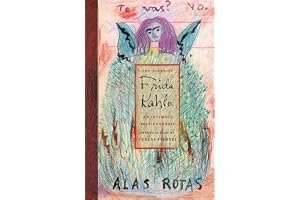
The Diary of Frida Kahlo: An Intimate Self-Portrait
Frida Kahlo
4.1
Published here in its entirety, Frida Kahlo's amazing illustrated journal documents the last ten years of her turbulent life. This passionate, often surprising, intimate record, kept under lock and key for some forty years in Mexico, reveals many new dimensions in the complex persona of this remarkable Mexican artist.
Covering the years 1944-45, the 170-page journal contains Frida's thoughts, poems, and dreams, and reflects her stormy relationship with her husband, Diego Rivera, Mexico's famous artist. The seventy watercolor illustrations in the journal - some lively sketches, several elegant self-portraits, others complete paintings - offer insights into her creative process, and show her frequently using the journal to work out pictorial ideas for her canvases.
The text entries, written in Frida's round, full script in brightly colored inks, add an almost decorative quality, making the journal as captivating to look at as it is to read. Frida's childhood, her political sensibilities, and her obsession with Diego are all illuminated in witty phrases and haunting images.
Although much has been written recently about this extraordinary woman, Frida Kahlo's art and life continue to fascinate the world. This personal document, published in a complete full-color facsimile edition, will add greatly to the understanding of her unique and powerful vision and her enormous courage in the face of more than thirty-five operations to correct injuries she had sustained in an accident at the age of eighteen. The facsimile is accompanied by an introduction by the world-renowned Mexican man of letters Carlos Fuentes and a complete translation of the diary's text. An essay on the place of the diary in Frida's work and in art history at large, as well as commentaries on the images, is provided by Sarah M. Lowe.
…
Cover unavailable
58
Dreamland: The True Tale of America's Opiate Epidemic
Sam Quinones
4.1
In fascinating detail, Sam Quinones chronicles how, over the past 15 years, enterprising sugar cane farmers in a small county on the west coast of Mexico created a unique distribution system that brought black tar heroin—the cheapest, most addictive form of the opiate, 2 to 3 times purer than its white powder cousin—to the veins of people across the United States. Communities where heroin had never been seen before—from Charlotte, NC and Huntington, WVA, to Salt Lake City and Portland, OR—were overrun with it. Local police and residents were stunned. How could heroin, long considered a drug found only in the dense, urban environments along the East Coast, and trafficked into the United States by enormous Colombian drug cartels, be so incredibly ubiquitous in the American heartland? Who was bringing it here, and perhaps more importantly, why were so many townspeople suddenly eager for the comparatively cheap high it offered?
With the same dramatic drive of El Narco and Methland, Sam Quinones weaves together two classic tales of American capitalism: The stories of young men in Mexico, independent of the drug cartels, in search of their own American Dream via the fast and enormous profits of trafficking cheap black-tar heroin to America’s rural and suburban addicts; and that of Purdue Pharma in Stamford, Connecticut, determined to corner the market on pain with its new and expensive miracle drug, Oxycontin; extremely addictive in its own right. Quinones illuminates just how these two stories fit together as cause and effect: hooked on costly Oxycontin, American addicts were lured to much cheaper black tar heroin and its powerful and dangerous long-lasting high. Embroiled alongside the suppliers and buyers are DEA agents, local, small-town sheriffs, and the US attorney from eastern Virginia whose case against Purdue Pharma and Oxycontin made him an enemy of the Bush-era Justice Department, ultimately stalling and destroying his career in public service.
Dreamland is a scathing and incendiary account of drug culture and addiction spreading to every part of the American landscape.
Dreamland: The True Tale of America’s Opiate Epidemic accounts how a few tiny studies on low rates of opium addiction for hospital patients lead to a whole new paradigm for treating pain in the US. From mid 90s to late 2000s, opium pain pills were basically considered non-addictive by much of the medical community. This led to crazy over-prescription, subsequent addiction, and a whole new market for heroin once someone was hooked and couldn’t afford the pills. This heroin market was served in large parts by on-demand delivery services driven by small-town Mexican heroin cells. It’s really an interesting tale of medical hubris, corporate greed, the devastation of whole areas to addiction, and more. It could have used a lot more editing, though. So many phrases, “black-tar heroin delivered like pizza”, just keep repeating over and over again. But it’s a solid recount of how we got to this tragic point that opium overdoses is now a leading cause of death for many demographic groups in the US. More people die from drug overdoses than from car crashes now. Tragic. [source]
Cover unavailable
59
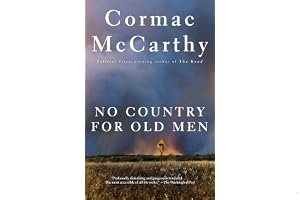
No Country for Old Men
Cormac McCarthy
4.1
In his blistering new novel, Cormac McCarthy returns to the Texas-Mexico border, the setting of his famed Border Trilogy. The time is our own, when rustlers have given way to drug-runners and small towns have become free-fire zones.
One day, Llewellyn Moss finds a pickup truck surrounded by a bodyguard of dead men. A load of heroin and two million dollars in cash are still in the back. When Moss takes the money, he sets off a chain reaction of catastrophic violence that not even the law–in the person of aging, disillusioned Sheriff Bell–can contain.
As Moss tries to evade his pursuers–in particular a mysterious mastermind who flips coins for human lives–McCarthy simultaneously strips down the American crime novel and broadens its concerns to encompass themes as ancient as the Bible and as bloodily contemporary as this morning’s headlines. No Country for Old Men is a triumph.
…
Cover unavailable
60
Mexico Biography of Power
Enrique Krauze
4.1
The concentration of power in the caudillo (leader) is as much a formative element of Mexican culture and politics as the historical legacy of the Aztec emperors, Cortez, the Spanish Crown, the Mother Church and the mixing of the Spanish and Indian population into a mestizo culture. Krauze shows how history becomes biography during the century of caudillos from the insurgent priests in 1810 to Porfirio and the Revolution in 1910. The Revolutionary era, ending in 1940, was dominated by the lives of seven presidents -- Madero, Zapata, Villa, Carranza, Obregon, Calles and Cardenas. Since 1940, the dominant power of the presidency has continued through years of boom and bust and crisis. A major question for the modern state, with today's president Zedillo, is whether that power can be decentralized, to end the cycles of history as biographies of power.
…
Cover unavailable
61
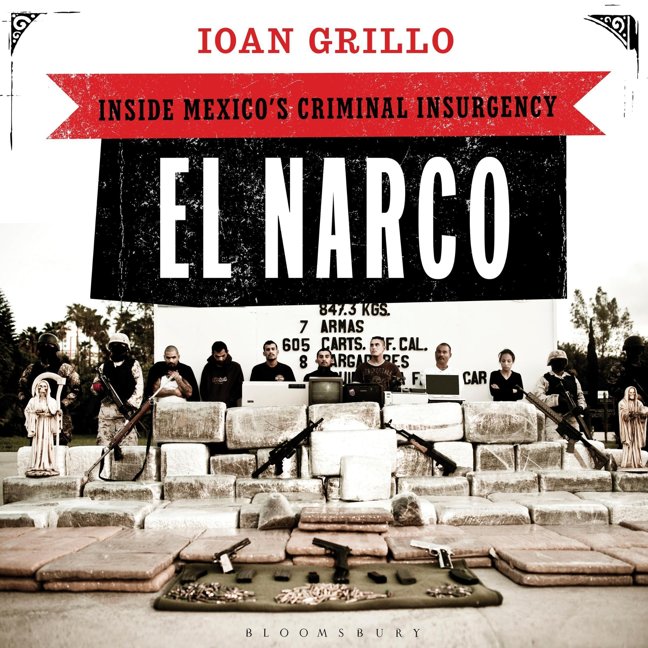
El Narco: Inside Mexico's Criminal Insurgency
Ioan Grillo
4.1
The world has watched stunned at the bloodshed in Mexico. Thirty thousand murdered since 2006; police chiefs shot within hours of taking office; mass graves comparable to those of civil wars; car bombs shattering storefronts; headless corpses heaped in town squares. And it is all because a few Americans are getting high. Or is it? The United States throws Black Hawk helicopters and drug agents at the problem. But in secret, Washington is confused and divided about what to do. Who are these mysterious figures tearing Mexico apart? they wonder. What is El Narco? El Narco draws the first definitive portrait of Mexico's drug cartels and how they have radically transformed in the last decade. El Narco is not a gang; it is a movement and an industry drawing in hundreds of thousands from bullet-ridden barrios to marijuana-growing mountains. And it has created paramilitary death squads with tens of thousands of men-at-arms from Guatemala to the Texas border. Journalist Ioan Grillo has spent a decade in Mexico reporting on the drug wars from the front lines. This piercing book joins testimonies from inside the cartels with firsthand dispatches and unsparing analysis. The devastation may be south of the Rio Grande, El Narco shows, but America is knee-deep in this conflict.
…
Cover unavailable
62
The Unexpected Mrs. Pollifax (Mrs. Pollifax, #1)
Dorothy Gilman
4.1
Mrs. Virgil (Emily) Pollifax of New Brunswick, New Jersey, was a widow with grown children. She was tired of attending her Garden Club meetings. She wanted to do something good for her country. So, naturally, she became a CIA agent. This time, the assignment sounds as tasty as a taco. A quick trip to Mexico City is on her agenda. Unfortunately, something goes wrong, and our dear Mrs. Pollifax finds herself embroiled in quite a hot Cold War—and her country's enemies find themselves entangled with one unbelievably feisty lady.
…
Cover unavailable
63
The Conquest Of Mexico
Hugh Thomas
4.1
Hugh Thomas' account of the collapse of Montezuma's great Aztec empire under the onslaughts of Cortes' conquistadors is one of the great historical works of our times. A thrilling and sweeping narrative, it also bristles with moral and political issues. After setting out from Spain - against explicit instructions - in 1519, some 500 conquistadors destroyed their ships and fought their way towards the capital of the greatest empire of the New World. When they finally reached Tenochtitlan, the huge city on lake Texcoco, they were given a courtly welcome by Montezuma, who believed them to be gods. Their later abduction of the emperor, their withdrawl and the final destruction of the city make the Conquest one of the most enthralling and tragic episodes in world history.
…
Recommended by Hugh Thomson.
Hugh Thomson
This came out just at the time that I was making a film in Mexico and following the Spanish conquistador Hernando Cortes’s route from Veracruz to Mexico City (as it is now – then it was Tenochtitlán, the Aztec capital). Cortes reached Tenochtitlán in 1519. I used this book as my bible for retracing his route. Thomas makes clear what an achievement it was, first to dismantle his boats when he arrived and then to advance into this huge and powerful empire, knowing that the Aztecs practised human sacrifice. I mean, whatever you think of the Spaniards and the Conquest, they were undeniably brave. Thomas is good at using Aztec sources, chronicles and stories to show how it seemed from their side. [source]
Cover unavailable
64
On Mexican Time: A New Life In San Miguel
Tony Cohan
4.1
When Tony Cohan and his wife visited central Mexico in 1985, they fell under the spell of an irresistible place. Recounting his awakening to needs he didn't know he had, Cohan tells how they returned to California, sold their house, and cast off for a new life in San Miguel de Allende.
Cover unavailable
65
Conquistador: Hernan Cortes, King Montezuma, and the Last Stand of the Aztecs
Buddy Levy
4.1
Cover unavailable
66
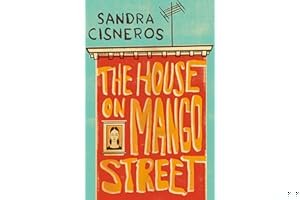
The House on Mango Street
Sandra Cisneros
4.1
Acclaimed by critics, beloved by readers of all ages, taught everywhere from inner-city grade schools to universities across the country, and translated all over the world, The House on Mango Street is the remarkable story of Esperanza Cordero.
Told in a series of vignettes – sometimes heartbreaking, sometimes deeply joyous–it is the story of a young Latina girl growing up in Chicago, inventing for herself who and what she will become. Few other books in our time have touched so many readers.
For those asking, I actually read two books in February. "The House on Mango Street" is one of the most interestingly written books I've ever digested--a beautiful work. And I loved the Shatner book because I love Shatner. #newyearsresolutionstillgoingstrong https://t.co/4TVPbjJAEJ [source]
Cover unavailable
67
Arráncame la vida
Angeles Mastretta
4.1
En el México postrevolucionario de los años treinta y cuarenta todo parece suceder como en un vértigo, y para Catalina, protagonista y narradora, escenas y emociones se consumen en el aire con la radiante velocidad de un fósforo. Ambición, matrimonio, adulterio, sacrificio y venganza; la historia amorosa de la temperamental y apasionada Catalina Ascencio...
Cover unavailable
68
La región más transparente
Fuentes Carlos
4.1
Fue la primera novela de Fuentes, la que le abrió todas las puertas posibles. Inventario de la sociedad mexicana, es también una suerte de versión vanguardista de la Comedia Humana, en la que, a través de un curioso mapa de linajes, se representan mundos y submundos entrelazados. La ciudad de México emerge en su moderna complejidad, y la escritura nos proporciona una cartografía de la red social que este mundo teje. En este texto polifónico y abigarrado, el autor demuestra que la búsqueda de la identidad no está reñida con la crítica más severa. Las técnicas empleadas cambiaron el rumbo de la narrativa mexicana. Por ello muchas veces se la menciona como la primera obra del boom.
…
Cover unavailable
69
The Jakarta Method: Washington's Anticommunist Crusade and the Mass Murder Program that Shaped Our World
Vincent Bevins
4.1
A hidden history of CIA activities in Indonesia and Latin America---no less violent or consequential than other, prominent Cold War disasters, but widely overlooked for one important reason: here the CIA was successful. During the Cold War, the U.S. effort to contain communism resulted in several disgraceful and disastrous conflicts: Vietnam, Cuba, Korea. But other conflicts in Indonesia, Brazil, Chile, and other Latin American countries have arguably had a bigger hand in shaping today's world, yet the very nature of U.S. participation in them has been shrouded for decades. Until now.
In 1965, nearly one million civilians were killed in Indonesia with U.S. assistance. The strategy went as follows: act early, play up the threat of a communist revolution, find the natural anti-communist elements in society, fund them, overthrow the sitting government, give the full backing of Washington to the new authoritarian state, and finally, turn a blind eye to the body count that mounts in its wake. It was a brutally efficient playbook that the CIA then emulated in Latin America in the decade that followed.
In this bold and comprehensive new history, Washington Post reporter Vincent Bevins uses newly unveiled CIA documents and countless hours of interviews to reconstruct this chillingly overlooked chapter in U.S. history and reveal a hidden legacy that spans the globe. For decades, these conflicts have been minimized as a non-violent, "cold" war. But those who suffered its consequences have long known differently.
…
Cover unavailable
70
Becoming Naomi León
Pam Munoz Ryan, Pam Muñoz Ryan
4.1
When Naomi's absent mother resurfaces to claim her, Naomi runs away to Oaxaca, Mexico with her great-grandmother and younger brother in search of her father.
Cover unavailable
71
Queen of the South
Arturo Perez-Reverte
4.1
Alternate cover edition can be found here.
Teresa Mendoza's boyfriend is a drug smuggler who the narcos of Sinaloa, Mexico, call "the king of the short runway," because he can get a plane full of coke off the ground in three hundred yards. But in a ruthless business, life can be short, and Teresa even has a special cell phone that Guero gave her along with a dark warning. If that phone rings, it means he's dead, and she'd better run, because they're coming for her next.
Then the call comes.
In order to survive, she will have to say goodbye to the old Teresa, an innocent girl who once entrusted her life to a pinche narco smuggler. She will have to find inside herself a woman who is tough enough to inhabit a world as ugly and dangerous as that of the narcos-a woman she never before knew existed. Indeed, the woman who emerges will surprise even those who know her legend, that of the Queen of the South.
…
Cover unavailable
72
Cities of the Plain (The Border Trilogy, #3)
Cormac McCarthy
4.1
The concluding volume of the Border trilogy. In this magnificent new novel, the National Book Award-winning author of All the Pretty Horses and The Crossing fashions a darkly beautiful elegy for the American frontier. It is 1952 and John Grady Cole and Billy Parham are working as ranch hands in New Mexico, not far from the proving grounds of Alamogordo and the cities of El Paso and Juarez. Their life is made up of trail drives and horse auctions and stories told by campfire light. They value that life all the more because they know it is about to change forever.
The change comes when John Grady falls in love with a beautiful, ill-starred Mexican prostitute and sets in motion a chain of events as violent as they are unstoppable. Haunting in its beauty, filled with sorrow, humor, and awe, Cities of the Plain is a genuine American epic.
…
Cover unavailable
73
God's Middle Finger: Into the Lawless Heart of the Sierra Madre
Richard Grant
4.1
From the acclaimed author of Dispatches From Pluto and Deepest South of All, a harrowing travelogue into Mexico’s lawless Sierra Madre mountains.
Twenty miles south of the Arizona-Mexico border, the rugged, beautiful Sierra Madre mountains begin their dramatic ascent. Almost 900 miles long, the range climbs to nearly 11,000 feet and boasts several canyons deeper than the Grand Canyon. The rules of law and society have never taken hold in the Sierra Madre, which is home to bandits, drug smugglers, Mormons, cave-dwelling Tarahumara Indians, opium farmers, cowboys, and other assorted outcasts. Outsiders are not welcome; drugs are the primary source of income; murder is all but a regional pastime. The Mexican army occasionally goes in to burn marijuana and opium crops—the modern treasure of the Sierra Madre—but otherwise the government stays away. In its stead are the drug lords, who have made it one of the biggest drug-producing areas in the world.
Fifteen years ago, journalist Richard Grant developed what he calls "an unfortunate fascination" with this lawless place. Locals warned that he would meet his death there, but he didn't believe them—until his last trip. During his travels Grant visited a folk healer for his insomnia and was prescribed rattlesnake pills, attended bizarre religious rituals, consorted with cocaine-snorting policemen, taught English to Guarijio Indians, and dug for buried treasure. On his last visit, his reckless adventure spiraled into his own personal heart of darkness when cocaine-fueled Mexican hillbillies hunted him through the woods all night, bent on killing him for sport.
With gorgeous detail, fascinating insight, and an undercurrent of dark humor, God's Middle Finger brings to vivid life a truly unique and uncharted world.
…
Cover unavailable
74
Funny Bones: Posada and His Day of the Dead Calaveras
Duncan Tonatiuh
4.1
A picture book biography of José Guadalupe (Lupe) Posada (1852–1913). In a country that was not known for freedom of speech, he first drew political cartoons, much to the amusement of the local population but not the politicians. He continued to draw cartoons throughout much of his life, but he is best known today for his calavera drawings. They have become synonymous with Mexico’s Día de los Muertos (Day of the Dead) festival. Juxtaposing his own art with that of Lupe’s, author Duncan Tonatiuh brings to light the remarkable life and work of a man whose art is beloved by many but whose name has remained in obscurity.
…
Cover unavailable
75
The Conquest of New Spain
Bernal Diaz Del Castillo
4.1
Vivid and absorbing, this is a first-person account of one of the most startling military episodes in history: the overthrow of Montezuma’s Aztec empire by the ruthless Hernan Cortes and his band of adventurers. Bernal Díaz del Castillo, himself a soldier under Cortes, presents a fascinatingly detailed description of the Spanish landing in Mexico in 1520, their amazement at the city, the exploitation of the natives for gold and other treasures, the expulsion and flight of the Spaniards, their regrouping and eventual capture of the Aztec capital. The Conquest of New Spain has a compelling immediacy that brings the past to life and offers a unique eyewitness view of the conquest of one of the greatest civilizations in the New World.
J. M. Cohen’s clear, fluent translation is supplemented by an introduction that illuminates the life and memories of Bernal Díaz and explores changing views of the conquest, and there are also maps of the conquered territory.
…
Cover unavailable
76
Dreamers
Yuyi Morales
4.1
Yuyi Morales tells her own immigration story in this picture-book tribute to the transformative power of hope . . . and reading.
In 1994, Yuyi Morales left her home in Xalapa, Mexico and came to the US with her infant son. She left behind nearly everything she owned, but she didn't come empty-handed.
She brought her strength, her work, her passion, her hopes and dreams...and her stories.
Cover unavailable
77
Down and Delirious in Mexico City: The Aztec Metropolis in the Twenty-First Century
Daniel Hernandez
4.0
MEXICO CITY, with some 20 million inhabitants, is the largest city in the Western Hemisphere. Enormous growth, raging crime, and tumultuous politics have also made it one of the most feared and misunderstood. Yet in the past decade, the city has become a hot spot for international business, fashion, and art, and a magnet for thrill-seeking expats from around the world.
In 2002, Daniel Hernandez traveled to Mexico City, searching for his cultural roots. He encountered a city both chaotic and intoxicating, both underdeveloped and hypermodern. In 2007, after quitting a job, he moved back. With vivid, intimate storytelling, Hernandez visits slums populated by ex-punks; glittering, drug-fueled fashion parties; and pseudo-native rituals catering to new-age Mexicans. He takes readers into the world of youth subcultures, in a city where punk and emo stand for a whole way of life—and sometimes lead to rumbles on the streets.
Surrounded by volcanoes, earthquake-prone, and shrouded in smog, the city that Hernandez lovingly chronicles is a place of astounding manifestations of danger, desire, humor, and beauty, a surreal landscape of “cosmic violence.” For those who care about one of the most electrifying cities on the planet, “Down & Delirious in Mexico City is essential reading” (David Lida, author of First Stop in the New World).
…
Cover unavailable
78
El libro de los americanos desconocidos
Cristina Henríquez
4.0
Dos familias cuyas esperanzas chocan con el destino. Y una extraordinaria novela que nos ofrece una poderosa y nueva definición de lo que significa ser americano. Arturo y Alma Rivera han vivido toda la vida en México. Un día, Maribel, la hija a la que tanto quieren, sufre un grave accidente y la probabilidad de que se recupere completamente es poca. Dejando todo atrás, los Rivera emigran a los Estados Unidos con un solo sueño: que en este país de tantos recursos y oportunidades, Maribel se recupere.
Cuando Mayor Toro, cuya familia es de Panamá, ve a Maribel en un Dollar Tree, es amor a primera vista. También es el principio de una amistad entre las familias Rivera y Toro, y de una red de culpa, amor y responsabilidad que es el núcleo de esta novela. Intercalado en sus historias están los testimonios de mujeres y hombres que han llegado a los Estados Unidos de todo Latino América. Sus viajes y voces te inspirarán, y te partirán el corazón.
Intrigante, irónica e inmediata, humana y llena de espíritu, El libro de los americanos desconocidos es una obra rebosante de fuerza y originalidad.
…
Cover unavailable
79
Enrique's Journey
Sonia Nazario
4.0
A true story from award-winning journalist Sonia Nazario recounting the odyssey of a Honduran boy who braves hardship and peril to reach his mother in the United States.
In this astonishing true story, award-winning journalist Sonia Nazario recounts the unforgettable odyssey of a Honduran boy who braves unimaginable hardship and peril to reach his mother in the United States.
When Enrique is five years old, his mother, Lourdes, too poor to feed her children, leaves Honduras to work in the United States. The move allows her to send money back home to Enrique so he can eat better and go to school past the third grade.
Lourdes promises Enrique she will return quickly. But she struggles in America. Years pass. He begs for his mother to come back. Without her, he becomes lonely and troubled. When she calls, Lourdes tells him to be patient. Enrique despairs of ever seeing her again. After eleven years apart, he decides he will go find her.
Enrique sets off alone from Tegucigalpa, with little more than a slip of paper bearing his mother's North Carolina telephone number. Without money, he will make the dangerous and illegal trek up the length of Mexico the only way he can – clinging to the sides and tops of freight trains.
With gritty determination and a deep longing to be by his mother's side, Enrique travels through hostile, unknown worlds. Each step of the way through Mexico, he and other migrants, many of them children, are hunted like animals. Gangsters control the tops of the trains. Bandits rob and kill migrants up and down the tracks. Corrupt cops all along the route are out to fleece and deport them. To evade Mexican police and immigration authorities, they must jump onto and off the moving boxcars they call El Tren de la Muerte- The Train of Death. Enrique pushes forward using his wit, courage, and hope - and the kindness of strangers. It is an epic journey, one thousands of immigrant children make each year to find their mothers in the United States.
Based on the Los Angeles Times newspaper series that won two Pulitzer Prizes, one for feature writing and another for feature photography, Enrique's Journey is the timeless story of families torn apart, the yearning to be together again, and a boy who will risk his life to find the mother he loves.
…
Cover unavailable
80
Los señores del narco
Anabel Hernandez
4.0
Los señores del narco es una descarnada crónica sobre las alarmantes complicidades de los altos círculos políticos, policiacos, militares y empresariales con el crimen organizado. Anabel Hernández tuvo acceso no sólo a una vasta documentación, inédita hasta hoy, sino a testimonios directos de autoridades y expertos en el tema, así como de personas involucradas con los principales cárteles mexicanos de la droga. Esto le ha permitido examinar rigurosamente el origen de la sangrienta lucha por el poder entre los grupos criminales, y cuestionar la "guerra" del gobierno federal contra la delincuencia organizada. Al investigar las intrincadas redes de contubernios, la autora tuvo que remontarse a la década de 1970, cuando se controlaba el tráfico de enervantes haciendo que los narcos prácticamente pagaran impuestos al gobierno. En su inquietante recorrido avanza hacia los años ochenta, cuando los jefes de la organización criminal del Pacífico, auspiciados por la CIA, incursionaron en el jugoso negocio de la cocaína, y nos conduce hasta el surgimiento de poderosos capos como los hermanos Beltrán Leyva, Ismael El Mayo Zambada o Joaquín Guzmán Loera, quienes lograron penetrar las estructuras del Estado y ponerlas a su servicio. Tras echar abajo el mito de la fuga de El Chapo de la prisión de Puente Grande en un carrito de lavandería, este libro narra su ascenso en la jerarquía del crimen y cómo ha llevado hasta sus últimas y terribles consecuencias un "pacto de impunidad" con numerosos funcionarios públicos y hombres de negocios. Este libro, en suma, se presenta como un impactante viaje al interior del mundo del narcotráfico para buscar los poderosos resortes que lo mueven, y los ha descubierto con nombre y apellido.
…
Cover unavailable
81
Los recuerdos del porvenir
Elena Garro
4.0
Los recuerdos del porvenir es la historia coral del pueblo de Ixtepec, en alguna llanura cerca de México. Allí, los habitantes hace años que viven encerrados en un tiempo inmóvil. Ixtepec vivió tiempos mejores, pero con la presencia de los militares y del General Francisco Rosas, sus calles andan estancadas entre el tedio y la sangre. En una de las calles principales del pueblo residen los Moncada. Isabel, Nicolás y Juan son tres hermanos que saben que se hallan destinados a participar en el sombrío destino del pueblo. Pero el General Francisco Rosas no ve más allá de los translúcidos ojos de su querida, Julia, a la mantiene encerrada en el Hotel Jardín y por la que languidece de amor.
…
Cover unavailable
82
The Beast: Riding the Rails and Dodging Narcos on the Migrant Trail
Oscar Martinez, Daniela Maria Ugaz, John Washington, Francisco Goldman
4.0
One day a few years ago, 300 migrants were kidnapped between the remote desert towns of Altar, Mexico, and Sasabe, Arizona. A local priest got 120 released, many with broken ankles and other marks of abuse, but the rest vanished. Óscar Martínez, a young writer from El Salvador, was in Altar soon after the abduction, and his account of the migrant disappearances is only one of the harrowing stories he garnered from two years spent traveling up and down the migrant trail from Central America and across the US border. More than a quarter of a million Central Americans make this increasingly dangerous journey each year, and each year as many as 20,000 of them are kidnapped.
Martínez writes in powerful, unforgettable prose about clinging to the tops of freight trains; finding respite, work and hardship in shelters and brothels; and riding shotgun with the border patrol. Illustrated with stunning full-color photographs, The Beast is the first book to shed light on the harsh new reality of the migrant trail in the age of the narcotraficantes.
…
Cover unavailable
83
Beauty Salon
Mario Bellatin, Kurt Hollander
4.0
"Like much of Mr. Bellatin’s work, Beauty Salon is pithy, allegorical and profoundly disturbing, with a plot that evokes The Plague by Camus or Blindness by José Saramago."--New York Times
"Including a few details that may linger uncomfortably with the reader for a long time, this is contemporary naturalism as disturbing as it gets."--Booklist
A strange plague appears in a large city. Rejected by family and friends, some of the sick have nowhere to finish out their days until a hair stylist decides to offer refuge. He ends up converting his beauty shop, which he’s filled with tanks of exotic fish, into a sort of medieval hospice. As his “guests” continue to arrive and to die, his isolation becomes more and more complete in this dream-hazy parable by one of Mexico’s cutting-edge literary stars.
Mario Bellatin, the author of numerous short novels, was born in Mexico City in 1960. In 2000, Beauty Salon was nominated for the Médicis Prize for best novel translated into French. This is its first translation into English.
…
Cover unavailable
84
Midnight in Mexico: A Reporter's Journey Through a Country's Descent into Darkness
Alfredo Corchado
4.0
In the last six years, more than eighty thousand people have been killed in the Mexican drug war, and drug trafficking there is a multibillion-dollar business. In a country where the powerful are rarely scrutinized, noted Mexican American journalist Alfredo Corchado refuses to shrink from reporting on government corruption, murders in Juarez, or the ruthless drug cartels of Mexico. A paramilitary group spun off from the Gulf cartel, the Zetas, controls key drug routes in the north of the country. In 2007, Corchado received a tip that he could be their next target—and he had twenty four hours to find out if the threat was true.
Rather than leave his country, Corchado went out into the Mexican countryside to trace investigate the threat. As he frantically contacted his sources, Corchado suspected the threat was his punishment for returning to Mexico against his mother’s wishes. His parents had fled north after the death of their young daughter, and raised their children in California where they labored as migrant workers. Corchado returned to Mexico as a journalist in 1994, convinced that Mexico would one day foster political accountability and leave behind the pervasive corruption that has plagued its people for decades.
But in this land of extremes, the gap of inequality—and injustice—remains wide. Even after the 2000 election that put Mexico’s opposition party in power for the first time, the opportunities of democracy did not materialize. The powerful PRI had worked with the cartels, taking a piece of their profit in exchange for a more peaceful, and more controlled, drug trade. But the party’s long-awaited defeat created a vacuum of power in Mexico City, and in the cartel-controlled states that border the United States. The cartels went to war with one another in the mid-2000s, during the war to regain control of the country instituted by President Felipe Calderón, and only the violence flourished. The work Corchado lives for could have killed him, but he wasn't ready to leave Mexico—not then, maybe never. Midnight in Mexico is the story of one man’s quest to report the truth of his country—as he raced to save his own life.
…
Cover unavailable
85
In the Heart of the Sea: The Tragedy of the Whaleship Essex
Nathaniel Philbrick
4.0
"With its huge, scarred head halfway out of the water and its tail beating the ocean into a white-water wake more than forty feet across, the whale approached the ship at twice its original speed - at least six knots. With a tremendous cracking and splintering of oak, it struck the ship just beneath the anchor secured at the cat-head on the port bow..."
In the Heart of the Sea brings to new life the incredible story of the wreck of the whaleship Essex - an event as mythic in its own century as the Titanic disaster in ours, and the inspiration for the climax of Moby-Dick. In a harrowing page-turner, Nathaniel Philbrick restores this epic story to its rightful place in American history.
In 1820, the 240-ton Essex set sail from Nantucket on a routine voyage for whales. Fifteen months later, in the farthest reaches of the South Pacific, it was repeatedly rammed and sunk by an eighty-ton bull sperm whale. Its twenty-man crew, fearing cannibals on the islands to the west, made for the 3,000-mile-distant coast of South America in three tiny boats. During ninety days at sea under horrendous conditions, the survivors clung to life as one by one, they succumbed to hunger, thirst, disease, and fear.
Philbrick interweaves his account of this extraordinary ordeal of ordinary men with a wealth of whale lore and with a brilliantly detailed portrait of the lost, unique community of Nantucket whalers. Impeccably researched and beautifully told, the book delivers the ultimate portrait of man against nature, drawing on a remarkable range of archival and modern sources, including a long-lost account by the ship's cabin boy.
At once a literary companion and a page-turner that speaks to the same issues of class, race, and man's relationship to nature that permeate the works of Melville, In the Heart of the Sea will endure as a vital work of American history.
Today is World Book Day, a wonderful opportunity to address this #ChallengeRichard sent in by Mike Gonzalez of New Jersey: Make a list of your top 65 books to read in a lifetime. [source]
Wow, did you know that Moby Dick was based on a true story? There was a real whaling ship that was broken in half by an angry sperm whale. But it gets even more insane. The members of the crew escaped in three lifeboats, traveling thousands of miles at sea with little food and water until they slowly resorted to cannibalism(!) Besides being an utterly unbelievable story, this book also gives a great history into the whaling industry and the cowboys/entrepreneurs who led it. Definitely recommend and I promise my spoilers did not ruin anything. [source]
Cover unavailable
86
The Great Book of Mexico: Interesting Stories, Mexican History & Random Facts About Mexico (History & Fun Facts)
Bill O'Neill
4.0
Cover unavailable
87
Murder City: Ciudad Juarez and the Global Economy's New Killing Fields
Charles Bowden
4.0
Ciudad Juarez lies just across the Rio Grande from El Paso, Texas. A once-thriving border town, it now resembles a failed state. Infamously known as the place where women disappear, its murder rate exceeds that of Baghdad.
In Murder City, Charles Bowden-one of the few journalists who spent extended periods of time in Juarez-has written an extraordinary account of what happens when a city disintegrates. Interweaving stories of its inhabitants-a beauty queen who was raped, a repentant hitman, a journalist fleeing for his life-with a broader meditation on the town's descent into anarchy, Bowden reveals how Juarez's culture of violence will not only worsen, but inevitably spread north.
Heartbreaking, disturbing, and unforgettable, Murder City was written at the height of his powers and established Bowden as one of America's leading journalists.
It’s a study of Ciudad Juarez, a city in northern Mexico, on the border with the United States. At the time Charles Bowden was there, it was the deadliest city in the world. [source]
Cover unavailable
88
An Illustrated Dictionary of the Gods and Symbols of Ancient Mexico and the Maya
Mary Ellen Miller
4.0
The myths and beliefs of the great Precolumbian civilizations of Mesoamerica have baffled and fascinated outsiders ever since the Spanish Conquest. Yet, until now, no single-volume introduction has existed to act as a guide to this labyrinthine symbolic world. In The Gods and Symbols of Ancient Mexico and the Maya nearly 300 entries, from accession to yoke, describe the main gods and symbols of the Olmecs, Zapotecs, Maya, Teotihuacanos, Mixtecs, Toltecs, and Aztecs. Topics range from jaguar and jester gods to reptile eye and rubber, from creation accounts and sacred places to ritual practices such as bloodletting, confession, dance, and pilgrimage. Two introductory essays provide succinct accounts of Mesoamerican history and religion, while a substantial bibliographical survey directs the reader to original sources and recent discussions. Dictionary entries are illustrated with photographs and specially commissioned line drawings. This authoritative work serves as a standard reference for students, scholars, and travelers.
…
Cover unavailable
89
Here's to You, Jesusa!
Elena Poniatowska
4.0
Jesusa is a tough, fiery character based on a real working-class Mexican woman whose life spanned some of the seminal events of early twentieth-century Mexican history. Having joined a cavalry unit during the Mexican Revolution, she finds herself at the Revolution's end in Mexico City, far from her native Oaxaca, abandoned by her husband and working menial jobs. So begins Jesusa's long history of encounters with the police and struggles against authority. Mystical yet practical, undaunted by hardship, Jesusa faces the obstacles in her path with gritty determination.
Here in its first English translation, Elena Poniatowska's rich, sensitive, and compelling blend of documentary and fiction provides a unique perspective on history and the place of women in twentieth-century Mexico.
…
Cover unavailable
90
Signal to Noise
Silvia Moreno-Garci
4.0
Librarian's note: An alternate cover edition can be found here
A literary fantasy about love, music and sorcery, set against the background of Mexico City.
Mexico City, 1988: Long before iTunes or MP3s, you said “I love you” with a mixtape. Meche, awkward and fifteen, has two equally unhip friends -- Sebastian and Daniela -- and a whole lot of vinyl records to keep her company. When she discovers how to cast spells using music, the future looks brighter for the trio. With help from this newfound magic, the three friends will piece together their broken families, change their status as non-entities, and maybe even find love...
Mexico City, 2009: Two decades after abandoning the metropolis, Meche returns for her estranged father’s funeral. It’s hard enough to cope with her family, but then she runs into Sebastian, and it revives memories from her childhood she thought she buried a long time ago. What really happened back then? What precipitated the bitter falling out with her father? And, is there any magic left?
…
Cover unavailable
91
Stones for Ibarra
Harriet Doerr
4.0
Richard and Sara Everton, just over and just under forty, have come to the small Mexican village of Ibarra to reopen a copper mine abandoned by Richard's grandfather fifty years before. They have mortgaged, sold, borrowed, left friends and country, to settle in this remote spot; their plan is to live out their lives here, connected to the place and to each other. The two Americans, the only foreigners in Ibarra, live among people who both respect and misunderstand them. And gradually the villagers--at first enigmas to the Evertons--come to teach them much about life and the relentless tide of fate.
There is an alternate cover edition of this book with the same ISBN here.
…
Cover unavailable
92
La conquista de México
Sofía Guadarrama
4.0
El 8 de noviembre de 1519 Hernán Cortés entró por primera vez a la ciudad isla de México Tenochtitlan en compañía de 450 europeos y aproximadamente 6,000 soldados tlaxcaltecas, cholultecas, huexotzincas y totonacas.
A 500 años del suceso que cambió por completo la historia del imperio mexica y todo el continente americano, Sofía Guadarrama Collado entrega al lector La Conquista de México, la versión de los mexicas.
Una novela que nos acerca al otro lado de la historia colocando a los conquistadores en un plano muy distante y nos ayuda a comprender a través de los ojos de Moctezuma, Cuitláhuac y Cuauhtémoc lo que ellos mismos ignoraban y lo complejo que fue vivir la inesperada aparición de una raza de hombres, animales, armamento, lengua, costumbres, religión y una monarquía aterradoramente desconocidos.
La presente edición conmemorativa es una recopilación de las tres últimas novelas de la heptalogía Grandes Tlatoanis del Imperio, escrita por Sofía Guadarrama Collado, autora de la trilogía que ha vendido más de 100.000 ejemplares, Enigmas de los dioses de México antiguo.
…
Cover unavailable
93
Persona normal
Benito Taibo
4.0
Una grandiosa e increíble aventura para ser todo... excepto normal.
Tenía un par de padres divertidos y jóvenes, llenos de sueños y de planes. Pero a mis doce años, cinco meses, tres días y dos horas y cuarto, aproximadamente, me quedé sin ellos
Desde que el tío Paco se hizo cargo de él, Sebastián ha vivido aventuras increíbles: tuvo un encuentro inesperado con un enorme felino, conoció a uno de los últimos vampiros que viven en el DF; frente a su casa vio a un mítico personaje saltar de la góndola en la que viajaba, para rescatar a una joven de una inundación; consiguió un mapa estelar para un pobre extraterrestre perdido en la Tierra, sobrevivió el embate de un enorme monstruo marino, peleó al lado de los sioux para defender su territorio de los colonizadores? ¿Qué pasa con Sebastián? ¿Acaso no es una «persona normal»?
…
Cover unavailable
94
Mexico: Travel for kids: The fun way to discover Mexico
Dinobibi Publishing, Belinda Briggs, et al.
4.0
Cover unavailable
95
Te vendo un perro
Juan Pablo Villalobos
4.0
Long before he was the taco seller whose "Gringo Dog" recipe made him famous throughout Mexico City, our hero was an aspiring artist: an artist, that is, till his would-be girlfriend was stolen by Diego Rivera, and his dreams snuffed out by his hypochondriac mother. Now our hero lives in a retirement home, where fending off boredom is far more grueling than making tacos. Plagued by the literary salon that bumps about his building’s lobby and haunted by the self-pitying ghost of a neglected artist, Villalobos’s old man can’t help but misbehave.
He antagonizes his neighbors, tortures American missionaries with passages from Adorno, flirts with the revolutionary greengrocer, and in short does everything that can be done to fend off the boredom of retirement and old age--while still holding a beer.
A delicious take-down of pretensions to cultural posterity, I’ll Sell You a Dog is a comic novel whose absurd inventions, scurrilous antics and oddball characters are vintage Villalobos.
…
Cover unavailable
96
México engañado [Mexico Cheated]
Francisco Martín Moreno
4.0
Cover unavailable
97
A Visit to Don Otavio
Sybille Bedford
4.0
Before returning to the Old World after World War II, Sybille Bedford resolved to see something more of the New. I had a great longing to move, she said, to hear another language, eat new food, to be in a country with a long nasty history in the past and as little present history as possible. And so she set out for Mexico--and, incidentally, to write what Bruce Chatwin called the best travel book of the twentieth century, a book of marvels, to be read again and again and again.
…
Cover unavailable
98
Brown Church: Five Centuries of Latina/O Social Justice, Theology, and Identity
Robert Chao Romero
4.0
Interest in and awareness of the demand for social justice as an outworking of the Christian faith is growing. But it is not new. For five hundred years, the Latina/o culture and identity has been shaped by its challenges to the religious, socio-economic, and political status quo, whether in its opposition to Spanish colonialism, Latin American dictatorships, US imperialism in Central America, the oppression of farmworkers, or the current exploitation of undocumented immigrants. Christianity has played a significant role in that movement at every stage. Robert Chao Romero, the son of a Mexican father and a Chinese immigrant mother, explores the history and theology of what he terms the "Brown Church." Romero considers how this movement has responded to these and other injustices throughout its history by appealing to the belief that God's vision for redemption includes not only heavenly promises but also the transformation of every aspect of our lives and the world. Walking through this history of activism and faith, readers will discover that Latina/o Christians have a heart after God's own.
…
Cover unavailable
99
Las muertas
Ibarguengoitia
4.0
Si al despertarse, Simón Corona se hubiera vuelto a su casa, los crímenes de Las Poquianchis habrían permanecido ocultos. Pero el destino tenía escrita otra historia. El reencuentro con Serafina Baladro, su amante, le costará a Simón Corona cuarenta y ocho balas de calibre reglamentario, y aún así se librará de la muerte. Pero también le valdrá una confesión ante el inspector Teódulo Cueto: una vez ayudó a Serafina y a su hermana Arcángela a trasladar el cadáver exhumado de una mujer. La obra maestra de Jorge Ibargüengoitia es la extraordinaria recreación de un caso real que conmocionó el México de los años sesenta, cuando aparecieron varios cadáveres de prostitutas en distintas propiedades de las dos madame, dueñas de tres burdeles. Las muertas está construida a partir de diversos testimonios, voces que se reúnen para dar forma a un universo literario único.
…
Cover unavailable
100
Jungle of Stone: The Extraordinary Journey of John L. Stephens and Frederick Catherwood, and the Discovery of the Lost Civilization of the Maya
William Carlsen
4.0
New York Times Bestseller (Expeditions)
“Thrilling. … A captivating history of two men who dramatically changed their contemporaries’ view of the past.” — Kirkus (starred review)
"[An] adventure tale that make[s] Indiana Jones seem tame.” — Library Journal
In 1839, rumors of extraordinary yet baffling stone ruins buried within the unmapped jungles of Central America reached two of the world’s most intrepid travelers. Seized by the reports, American diplomat John Lloyd Stephens and British artist Frederick Catherwood—both already celebrated for their adventures in Egypt, the Holy Land, Greece, and Rome—sailed together out of New York Harbor on an expedition into the forbidding rainforests of present-day Honduras, Guatemala, and Mexico. What they found would upend the West’s understanding of human history.
In the tradition of Lost City of Z and In the Kingdom of Ice, former San Francisco Chronicle journalist and Pulitzer Prize finalist William Carlsen reveals the remarkable story of the discovery of the ancient Maya. Enduring disease, war, and the torments of nature and terrain, Stephens and Catherwood meticulously uncovered and documented the remains of an astonishing civilization that had flourished in the Americas at the same time as classic Greece and Rome—and had been its rival in art, architecture, and power. Their masterful book about the experience, written by Stephens and illustrated by Catherwood, became a sensation, hailed by Edgar Allan Poe as “perhaps the most interesting book of travel ever published” and recognized today as the birth of American archaeology. Most important, Stephens and Catherwood were the first to grasp the significance of the Maya remains, understanding that their antiquity and sophistication overturned the West’s assumptions about the development of civilization.
By the time of the flowering of classical Greece (400 b.c.), the Maya were already constructing pyramids and temples around central plazas. Within a few hundred years the structures took on a monumental scale that required millions of man-hours of labor, and technical and organizational expertise. Over the next millennium, dozens of city-states evolved, each governed by powerful lords, some with populations larger than any city in Europe at the time, and connected by road-like causeways of crushed stone. The Maya developed a cohesive, unified cosmology, an array of common gods, a creation story, and a shared artistic and architectural vision. They created stucco and stone monuments and bas reliefs, sculpting figures and hieroglyphs with refined artistic skill. At their peak, an estimated ten million people occupied the Maya’s heartland on the Yucatan Peninsula, a region where only half a million now live. And yet by the time the Spanish reached the “New World,” the Maya had all but disappeared; they would remain a mystery for the next three hundred years.
Today, the tables are turned: the Maya are justly famous, if sometimes misunderstood, while Stephens and Catherwood have been nearly forgotten. Based on Carlsen’s rigorous research and his own 1,500-mile journey throughout the Yucatan and Central America, Jungle of Stone is equally a thrilling adventure narrative and a revelatory work of history that corrects our understanding of Stephens, Catherwood, and the Maya themselves.