We've ranked the best italian history books using expert recommendations, sales data, and millions of reader ratings. At Shortform, we know books. Our book guides are the best in the world. Learn why.
One measure, perhaps, of a book's worth, is its intergenerational pliancy: do new readers acquire it and interpret it afresh down through the ages? The Meditations of Marcus Aurelius, translated and introduced by Gregory Hays, by that standard, is very worthwhile, indeed. Hays suggests that its most recent incarnation--as a self-help book--is not only valid, but may be close to the author's intent. The book, which Hays calls, fondly, a "haphazard set of notes," is indicative of the role of philosophy among the ancients in that it is "expected to provide a 'design for living.'" And it does, both aphoristically ("Think of yourself as dead. You have lived your life. Now take what's left and live it properly.") and rhetorically ("What is it in ourselves that we should prize?"). Whether these, and other entries ("Enough of this wretched, whining monkey life.") sound life-changing or like entries in a teenager's diary is up to the individual reader, as it should be. Hays's introduction, which sketches the life of Marcus Aurelius (emperor of Rome A.D. 161-180) as well as the basic tenets of stoicism, is accessible and jaunty. --H. O'Billovich
…
Recommended by Arianna Huffington, Naval Ravikant, Chip Conley, and 12 others.
Arianna Huffington
Founder/The Huffington Post
I find this book so inspirational and instructive, it lives on my nightstand. [source]
Chip Conley
I have given this book away to a number of people. [source]
Marvin Liao
Partner/500 Startups
My list would be (besides the ones I mentioned in answer to the previous question) both business & Fiction/Sci-Fi and ones I personally found helpful to myself. The business books explain just exactly how business, work & investing are in reality & how to think properly & differentiate yourself. On the non-business side, a mix of History & classic fiction to understand people, philosophy to make sense of life and Science fiction to picture what the future could be like (not always utopian). [source]
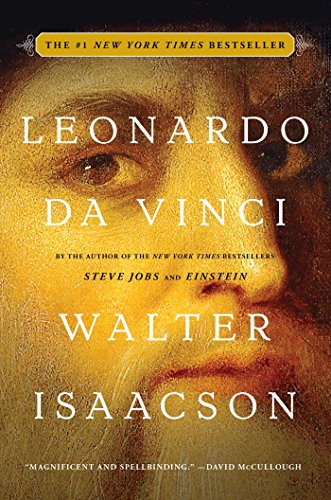
Based on thousands of pages from Leonardo's astonishing notebooks and new discoveries about his life and work, Walter Isaacson weaves a narrative that connects his art to his science. He shows how Leonardo's genius was based on skills we can improve in ourselves, such as passionate curiosity, careful observation, and an imagination so playful that it flirted with fantasy. He produced the two most famous paintings in history, The Last Supper and the Mona Lisa. But in his own mind, he was just as much a man of science and technology. With a passion that sometimes became obsessive, he pursued innovative studies of anatomy, fossils, birds, the heart, flying machines, botany, geology, and weaponry. His ability to stand at the crossroads of the humanities and the sciences, made iconic by his drawing of Vitruvian Man, made him history's most creative genius
I think Leonardo was one of the most fascinating people ever. Although today he’s best known as a painter, Leonardo had an absurdly wide range of interests, from human anatomy to the theater. Isaacson does the best job I’ve seen of pulling together the different strands of Leonardo’s life and explaining what made him so exceptional. A worthy follow-up to Isaacson’s great biographies of Albert Einstein and Steve Jobs. [source]
Microsoft CEO has plunged into what must be an advance copy of Leonardo da Vinci by Walter Isaacson, who has written biographies of Steve Jobs, Albert Einstein and Ben Franklin. Isaacson’s biography is based on the Renaissance master’s personal notebooks, so you know we’re going to be taken into the creative mind of the genius. [source]
Truly excellent book about one of history’s all time greats. [source]
Cover unavailable
3
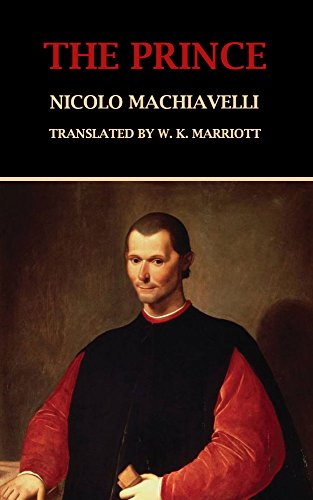
The Prince
Nicollo Machiavelli, Tim Parks
5.0
Niccolo Machiavelli's "The Prince" is intended to be a treatise on ruling and is considered by many to be a classic of political science. In the book Machiavelli offers many bits of practical advice on how to rule and even though the book was written in the early 16th century its ideas are still very relevant today. Where "The Prince" differs from other political literature before it is in its separation of the lofty idealism of morality and ethics from the practical demands of governing. It is this very aspect of Machiavelli's work that has made his name synonymous with an almost immoral opportunism and his book a timeless classic.
Which books should be read by every single intelligent person on planet? … The Prince (Machiavelli) to learn that people not in power will do all they can to acquire it, and people in power will do all they can to keep it. If you read all of the above works you will glean profound insight into most of what has driven the history of the western world. [source]
Of course, this is a must read. Machiavelli is one of those figures and writers who is tragically overrated and underrated at the same time. Unfortunately that means that many people who read him miss the point and other people avoid him and miss out altogether. Take Machiavelli slow, and really read him. Also understand the man behind the book–not just as a masterful writer but a man who withstood heinous torture and exile with barely a whimper. Machiavelli is a glimpse into a time when power was literal and out for public viewing–when he talks about making an example of someone, he doesn’t mean calling them out, he means putting their head on a pike. Don’t let that scare you because we’re not as far from that world as we’d like to think. Deny that at your own peril. [source]
Cover unavailable
4
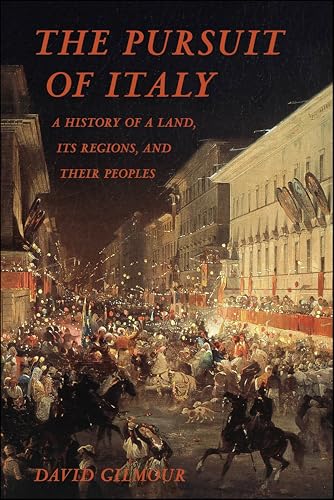
The Pursuit of Italy: A History of a Land, Its Regions, and Their Peoples
David Gilmour
4.6
A provocative, entertaining account of Italy's diverse riches, its hopes and dreams, its past and present
Did Garibaldi do Italy a disservice when he helped its disparate parts achieve unity? Was the goal of political unification a mistake? The question is asked and answered in a number of ways in The Pursuit of Italy, an engaging, original consideration of the many histories that contribute to the brilliance—and weakness—of Italy today.
David Gilmour's wonderfully readable exploration of Italian life over the centuries is filled with provocative anecdotes as well as personal observations, and is peopled by the great figures of the Italian past—from Cicero and Virgil to the controversial politicians of the twentieth century. His wise account of the Risorgimento debunks the nationalistic myths that surround it, though he paints a sympathetic portrait of Giuseppe Verdi, a beloved hero of the era.
Gilmour shows that the glory of Italy has always lain in its regions, with their distinctive art, civic cultures, identities, and cuisines. Italy's inhabitants identified themselves not as Italians but as Tuscans and Venetians, Sicilians and Lombards, Neapolitans and Genoese. Italy's strength and culture still come from its regions rather than from its misconceived, mishandled notion of a unified nation.
…
Cover unavailable
5
Bloodlands: Europe Between Hitler and Stalin
Timothy Snyder
4.6
Americans call the Second World War “The Good War.” But before it even began, America’s wartime ally Josef Stalin had killed millions of his own citizens—and kept killing them during and after the war. Before Hitler was finally defeated, he had murdered six million Jews and nearly as many other Europeans. At war’s end, both the German and the Soviet killing sites fell behind the iron curtain, leaving the history of mass killing in darkness. Bloodlands is a new kind of European history, presenting the mass murders committed by the Nazi and Stalinist regimes as two aspects of a single history, in the time and place where they occurred: between Germany and Russia, when Hitler and Stalin both held power. Assiduously researched, deeply humane, and utterly definitive, Bloodlands will be required reading for anyone seeking to understand the central tragedy of modern history.
From Booklist
If there is an explanation for the political killing perpetrated in eastern Europe in the 1930s and 1940s, historian Snyder roots it in agriculture. Stalin wanted to collectivize farmers; Hitler wanted to eliminate them so Germans could colonize the land. The dictators wielded frightening power to advance such fantasies toward reality, and the despots toted up about 14 million corpses between them, so stupefying a figure that Snyder sets himself three goals here: to break down the number into the various actions of murder that comprise it, from liquidation of the kulaks to the final solution; to restore humanity to the victims via surviving testimony to their fates; and to deny Hitler and Stalin any historical justification for their policies, which at the time had legions of supporters and have some even today. Such scope may render Snyder’s project too imposing to casual readers, but it would engage those exposed to the period’s chronology and major interpretive issues, such as the extent to which the Nazi and Soviet systems may be compared. Solid and judicious scholarship for large WWII collections.
This book is about…the Stalinist repression of the areas known as the borderlands, which Snyder has termed the bloodlands. Snyder is looking at the deliberate mass murder of civilians in a particular zone of Europe between about 1930, at the start of the second Ukraine famine, and 1945. [source]
Edward Lucas
Bloodlands: Europe Between Hitler and Stalin offers the best account of the most important and terrible years of the last century, when Joseph Stalin and Adolf Hitler jointly consigned the territories and people between their two empires to the meat-grinder. [source]
Cover unavailable
6
The Medici: Power, Money, and Ambition in the Italian Renaissance
Paul Strathern
4.6
A dazzling history of the modest family that rose to become one of the most powerful in Europe, The Medici is a remarkably modern story of power, money, and ambition. Against the background of an age that saw the rebirth of ancient and classical learning Paul Strathern explores the intensely dramatic rise and fall of the Medici family in Florence, as well as the Italian Renaissance which they did so much to sponsor and encourage.
Strathern also follows the lives of many of the great Renaissance artists with whom the Medici had dealings, including Leonardo, Michelangelo and Donatello; as well as scientists like Galileo and Pico della Mirandola; and the fortunes of those members of the Medici family who achieved success away from Florence, including the two Medici popes and Catherine de' Médici, who became Queen of France and played a major role in that country through three turbulent reigns.
…
Cover unavailable
7
Being Mortal: Medicine and What Matters in the End
Medicine has triumphed in modern times, transforming the dangers of childbirth, injury, and disease from harrowing to manageable. But when it comes to the inescapable realities of aging and death, what medicine can do often runs counter to what it should.
Through eye-opening research and gripping stories of his own patients and family, Atul Gawande, a practicing surgeon, reveals the suffering this dynamic has produced. Nursing homes, devoted above all to safety, battle with residents over the food they are allowed to eat and the choices they are allowed to make. Doctors, uncomfortable discussing patients' anxieties about death, fall back on false hopes and treatments that are actually shortening lives instead of improving them.
In his bestselling books, Gawande has fearlessly revealed the struggles of his profession. Now he examines its ultimate limitations and failures--in his own practices as well as others'--as life draws to a close. Riveting, honest, and humane, Being Mortal shows how the ultimate goal is not a good death but a good life--all the way to the very end.
President Obama is spending his Hawaiian vacation playing golf, getting together with high school friends and reading a handful of dark novels set in foreign lands, according to a book list released by the White House Wednesday. The presidential reading list includes … two works of non-fiction for the trip: … "Being Mortal: Medicine and What Matters in the End" by Dr. Atul Gawande. [source]
American medicine, Being Mortal reminds us, has prepared itself for life but not for death. This is Atul Gawande's most powerful--and moving--book. [source]
Just finished "Being Mortal" by Atul Gawande. A beautifully written book. Captivating. [source]
Cover unavailable
8
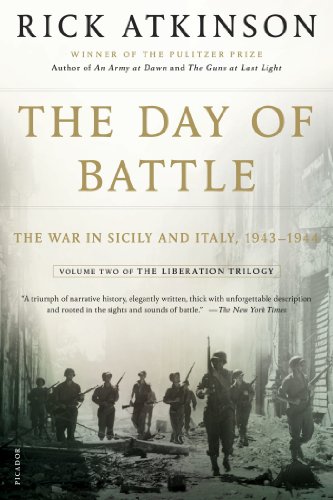
The Day of Battle: The War in Sicily and Italy, 1943-1944 (World War II Liberation Trilogy, #2)
Rick Atkinson
4.5
NEW YORK TIMES BESTSELLER
In the second volume of his epic trilogy about the liberation of Europe in World War II, Pulitzer Prize winner Rick Atkinson tells the harrowing story of the campaigns in Sicily and Italy
In An Army at Dawn—winner of the Pulitzer Prize—Rick Atkinson provided a dramatic and authoritative history of the Allied triumph in North Africa. Now, in The Day of Battle, he follows the strengthening American and British armies as they invade Sicily in July 1943 and then, mile by bloody mile, fight their way north toward Rome.
The Italian campaign’s outcome was never certain; in fact, Roosevelt, Churchill, and their military advisers engaged in heated debate about whether an invasion of the so-called soft underbelly of Europe was even a good idea. But once under way, the commitment to liberate Italy from the Nazis never wavered, despite the agonizingly high price. The battles at Salerno, Anzio, and Monte Cassino were particularly difficult and lethal, yet as the months passed, the Allied forces continued to drive the Germans up the Italian peninsula. Led by Lieutenant General Mark Clark, one of the war’s most complex and controversial commanders, American officers and soldiers became increasingly determined and proficient. And with the liberation of Rome in June 1944, ultimate victory at last began to seem inevitable.
Drawing on a wide array of primary source material, written with great drama and flair, this is narrative history of the first rank. With The Day of Battle, Atkinson has once again given us the definitive account of one of history’s most compelling military campaigns.
…
Cover unavailable
9
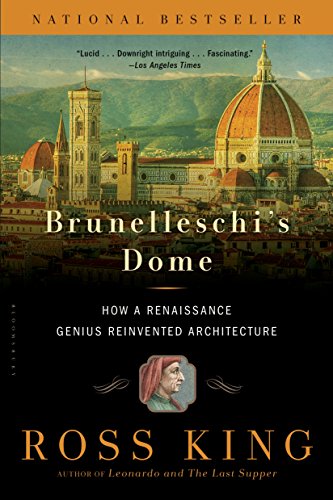
Brunelleschi's Dome: How a Renaissance Genius Reinvented Architecture
Ross King
4.5
Brunelleschi's Dome is the story of how a Renaissance man bent men, materials, and the very forces of nature to build an architectural wonder. Not a master mason or carpenter, Filippo Brunelleschi was a goldsmith and clock maker. Over twenty-eight years, he would dedicate himself to solving puzzles of the dome's construction. In the process, he did nothing less than reinvent the field of architecture. He engineered the perfect placement of brick and stone (some among the most renowned machines of the Renaissance) to carry an estimated seventy million pounds hundreds of feet into the air, and designed the workers' platforms and routines so carefully that only one man died during the decades of construction. This drama was played out amid plagues, wars, political feuds, and the intellectual ferments of Renaissance Florence - events Ross King weaves into a story to great effect. An American Library Association Best Book of the Year Boston Globe: "An absorbing tale." Los Angeles Times: "Ross King has a knack for explaining complicated processes in a manner that is not only lucid but downright intriguing... Fascinating."
…
Cover unavailable
10
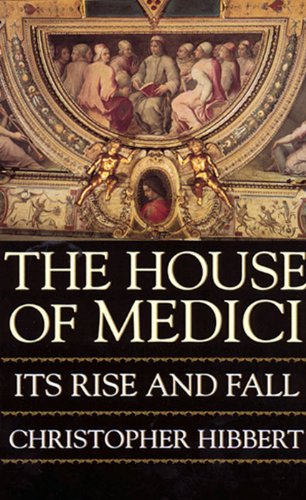
The House of Medici: Its Rise and Fall
Christopher Hibbert
4.4
At its height, Renaissance Florence was a center of enormous wealth, power, and influence. A republican city-state funded by trade and banking, its often bloody political scene was dominated by rich mercantile families, the most famous of which were the Medici. This enthralling book charts the family's huge influence on the political, economic and cultural history of Florence. Beginning in the early 1430s with the rise of the dynasty under the near-legendary Cosimo de Medici, it moves through their golden era as patrons of some of the most remarkable artists and architects of the Renaissance, to the era of the Medici Popes and Grand Dukes, Florence's slide into decay and bankruptcy, and the end, in 1737, of the Medici line.
…
Cover unavailable
11
Cosa Nostra: A History of the Sicilian Mafia
John Dickie
4.4
Hailed in Italy as the best book ever written about the mafia in any language, Cosa Nostra is a fascinating, violent, and darkly comic account that reads like fiction and takes us deep into the inner sanctum of this secret society where few have dared to tread.In this gripping history of the Sicilian mafia, John Dickie uses startling new research to reveal the inner workings of this secret society with a murderous record. He explains how the mafia began, how it responds to threats and challenges, and introduces us to the real-life characters that inspired the American imagination for generations, making the mafia an international, larger than life cultural phenomenon. Dickie's dazzling cast of characters includes Antonio Giammona, the first "boss of bosses''; New York cop Joe Petrosino, who underestimated the Sicilian mafia and paid for it with his life; and Bernard "the Tractor" Provenzano, the current boss of bosses who has been hiding in Sicily since 1963.
…
Cover unavailable
12
The Churchill Factor: How one man made History
B. Johnson
4.4
'He writes with gusto... the result is a book that is never boring, genuinely clever... this book sizzles.' The Times
'The point of the Churchill Factor is that one man can make all the difference.'
Marking the fiftieth anniversary of Winston Churchill's death, Boris Johnson explores what makes up the Churchill Factor - the singular brilliance of one of the most important leaders of the twentieth century. Taking on the myths and misconceptions along with the outsized reality, he portrays - with characteristic wit and passion - a man of multiple contradictions, contagious bravery, breath-taking eloquence, matchless strategizing, and deep humanity. Fearless on the battlefield, Churchill had to be ordered by the King to stay out of action on D-Day; he pioneered aerial bombing, yet hated the destruction of war and scorned politicians who had not experienced its horrors.
He was a celebrated journalist, a great orator and won the Nobel Prize for Literature. He was famous for his ability to combine wining and dining with many late nights of crucial wartime decision-making. His open-mindedness made him a pioneer in health care, education, and social welfare, though he remained incorrigibly politically incorrect. Most of all, as Boris Johnson says, 'Churchill is the resounding human rebuttal to all who think history is the story of vast and impersonal economic forces'.
The Churchill Factor is a book to be enjoyed not only by anyone interested in history: it is essential reading for anyone who wants to know what makes a great leader.
There’s one book that I’ve given that it was just Christmas, that I’ve given away a lot of copies. This is a book about Winston Churchill by Boris Johnson. A very talented guy. [source]
Benedict King
Johnson’s thesis is that Churchill may have had faults and made mistakes, but on all the big issues he called it right and that, as a politician, he had a unique combination of personal qualities – bravery, industry, eloquence and, when necessary, ruthlessness – that put him in a league of his own. The subtext bubbles up from every page: The Churchill Factor: Why I Have it in Spades. [source]
Cover unavailable
13
The Tigress of Forli: Renaissance Italy's Most Courageous and Notorious Countess, Caterina Riario Sforza de' Medici
Elizabeth Lev
4.4
“In this insightful, fascinating portrayal, Elizabeth Lev brings Caterina Sforza and her times very much to life.”—Kathleen Turner, actress and author of Send Yourself Roses
A strategist to match Machiavelli; a warrior who stood toe to toe with the Borgias; a wife whose three marriages would end in bloodshed and heartbreak; and a mother determined to maintain her family’s honor, Caterina Riario Sforza de’ Medici was a true Renaissance celebrity, beloved and vilified in equal measure. In this dazzling biography, Elizabeth Lev illuminates her extraordinary life and accomplishments.
Raised in the court of Milan and wed at age ten to the pope’s corrupt nephew, Caterina was ensnared in Italy’s political intrigues early in life. After turbulent years in Rome’s papal court, she moved to the Romagnol province of Forlì. Following her husband’s assassination, she ruled Italy’s crossroads with iron will, martial strength, political savvy, and an icon’s fashion sense. In finally losing her lands to the Borgia family, she put up a resistance that inspired all of Europe and set the stage for her progeny—including Cosimo de’ Medici—to follow her example to greatness.
A rich evocation of Renaissance life, The Tigress of Forlì reveals Caterina Riario Sforza as a brilliant and fearless ruler, and a tragic but unbowed figure.
“A rich, nuanced portrait of a highly controversial beauty and military leader, and her violent, albeit glittering, Italian Renaissance milieu.”—Publishers Weekly
“Well-written and meticulously researched, The Tigress of Forlì recreates the world of Renaissance Italy in all its grandeur and violence. At the center stands a remarkable woman, Caterina Riario Sforza. Mother, warrior, and icon, Caterina is unforgettable, and so is the exciting story that Elizabeth Lev tells here.”—Barry Strauss, author of Masters of Command: Alexander, Hannibal, Caesar, and the Genius of Leadership
A few of my favorite bios for the new book. #whatimreading [source]
Cover unavailable
14
The Godfather
Mario Puzo, Anthony Puzo, et al
4.3
The Godfather—the epic tale of crime and betrayal that became a global phenomenon.
Almost fifty years ago, a classic was born. A searing portrayal of the Mafia underworld, The Godfather introduced readers to the first family of American crime fiction, the Corleones, and their powerful legacy of tradition, blood, and honor. The seduction of power, the pitfalls of greed, and the allegiance to family—these are the themes that have resonated with millions of readers around the world and made The Godfather the definitive novel of the violent subculture that, steeped in intrigue and controversy, remains indelibly etched in our collective consciousness.
~penguin.com
…
Recommended by Michal Ptacek and Nicky Cullen.
Michal Ptacek
My most favourite book is Godfather by Mario Puzo. I think it is even slightly more interesting and better than a movie which is almost perfect. Total masterpiece :) [source]
Nicky Cullen
That is such a tough question. I'm going to say The Godfather because I couldn't stop until it was finished. [source]
Cover unavailable
15
Postwar: A History of Europe Since 1945
Tony Judt
4.3
Almost a decade in the making, this much-anticipated grand history of postwar Europe from one of the world's most esteemed historians and intellectuals is a singular achievement. Postwar is the first modern history that covers all of Europe, both east and west, drawing on research in six languages to sweep readers through thirty-four nations and sixty years of political and cultural change-all in one integrated, enthralling narrative. Both intellectually ambitious and compelling to read, thrilling in its scope and delightful in its small details, Postwar is a rare joy.
Finalist for the Pulitzer Prize Winner of the Council on Foreign Relations Arthur Ross Book Award One of the New York Times'Ten Best Books of the Year
…
Recommended by David Marquand and Keith Lowe.
David Marquand
This book is all about the way that Europe has managed – not always totally successfully, but managed nevertheless – to come to terms with its bloody and horrible past. [source]
Traces the rise ot empire of this city from its 5th century beginnings all the way through until 1797 when Napolean put an end to the thousand year-old Republic. 32 pages of black and white photos, 4 maps and charts.
Cover unavailable
17
The Periodic Table
Primo Levi
4.3
The Periodic Table by Primo Levi is an impassioned response to the Holocaust: Consisting of 21 short stories, each possessing the name of a chemical element, the collection tells of the author's experiences as a Jewish-Italian chemist before, during, and after Auschwitz in luminous, clear, and unfailingly beautiful prose. It has been named the best science book ever by the Royal Institution of Great Britain, and is considered to be Levi's crowning achievement.
…
Recommended by Tim Radford and William Fiennes.
Tim Radford
It’s a life story by a chemist seen through the prism of an elemental substance. Some of it doesn’t work very well and some of it works very well. There’s a lovely chapter on iron that refers to the arrival of the Fascist era. There’s a much more personal account involving mine tailings and the extraction of precious metals from mine tailing, which he was employed at. That gives him a chance to contemplate the nature of matter itself and why the stuff that’s in the ground is the same as the stuff that actually composes our bodies. And why things that happen in chemistry can be subtly different if you alter the element that’s involved in the process. All of it is illuminating. You read it and you understand the world around you much better for having read even a sentence of Levi. [source]
William Fiennes
They’re a mixture of short stories and autobiographical essays, or essays in autobiography. Levi uses the elements from the periodic table as a way of organising memory. He uses 21 elements, each as a doorway or wormhole into a particular area of his experience, into a particular memory – but leaving out his time in Auschwitz, because he’d already written about that. You get his early interest in chemistry, his early experiments, the friends he studied with, the atmosphere of the laboratories and the characters of the professors who taught him. It’s about his interest in matter, the stuff the world is made of, as counterposed to spirit. He wrote another great book, The Wrench, which is a series of soliloquies from a mechanic called Faussone. Levi is the scribe as Faussone describes all these things he’s built – bridges, oil derricks – and the excitement of putting things together. In The Periodic Table, you also get that fascination with the stuff the world’s made of and we’re made of – the wonder of it. [source]
Cover unavailable
18
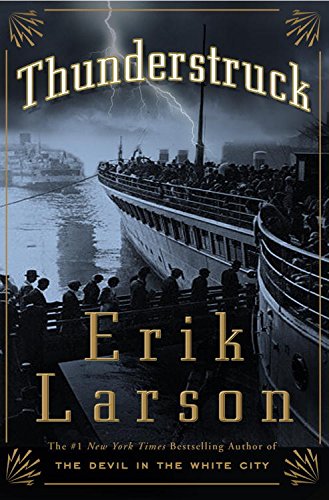
Thunderstruck
Erik Larson
4.3
A true story of love, murder, and the end of the world's "great hush."
In Thunderstruck, Erik Larson tells the interwoven stories of two men--Hawley Crippen, a very unlikely murderer, and Guglielmo Marconi, the obsessive creator of a seemingly supernatural means of communication--whose lives intersect during one of the greatest criminal chases of all time.
Set in Edwardian London and on the stormy coasts of Cornwall, Cape Cod, and Nova Scotia, Thunderstruck evokes the dynamism of those years when great shipping companies competed to build the biggest, fastest ocean liners; scientific advances dazzled the public with visions of a world transformed; and the rich outdid one another with ostentatious displays of wealth. Against this background, Marconi races against incredible odds and relentless skepticism to perfect his invention: the wireless, a prime catalyst for the emergence of the world we know today. Meanwhile, Crippen, "the kindest of men," nearly commits the perfect murder.
With his unparalleled narrative skills, Erik Larson guides us through a relentlessly suspenseful chase over the waters of the North Atlantic. Along the way, he tells of a sad and tragic love affair that was described on the front pages of newspapers around the world, a chief inspector who found himself strangely sympathetic to the killer and his lover, and a driven and compelling inventor who transformed the way we communicate.
…
Recommended by Timothy J. Jorgensen.
Timothy J. Jorgensen
I chose this book because radio waves are a type of radiation. [source]
Cover unavailable
19
The Story of the Lost Child (The Neapolitan Novels, #4)
Elena Ferrante, Ann Goldstein
4.3
Here is the dazzling saga of two women, the brilliant, bookish Elena and the fiery, uncontainable Lila. Both are now adults; life’s great discoveries have been made, its vagaries and losses have been suffered. Through it all, the women’s friendship has remained the gravitational center of their lives.
Both women once fought to escape the neighborhood in which they grew up—a prison of conformity, violence, and inviolable taboos. Elena married, moved to Florence, started a family, and published several well-received books. In this final book, she has returned to Naples. Lila, on the other hand, never succeeded in freeing herself from the city of her birth. She has become a successful entrepreneur, but her success draws her into closer proximity with the nepotism, chauvinism, and criminal violence that infect her neighborhood. Proximity to the world she has always rejected only brings her role as its unacknowledged leader into relief. For Lila is unstoppable, unmanageable, unforgettable!
Against the backdrop of a Naples that is as seductive as it is perilous and a world undergoing epochal change, the story of a lifelong friendship is told with unmatched honesty and brilliance. The four volumes in this series constitute a long remarkable story that readers will return to again and again, and every return will bring with it new revelations.
…
Cover unavailable
20
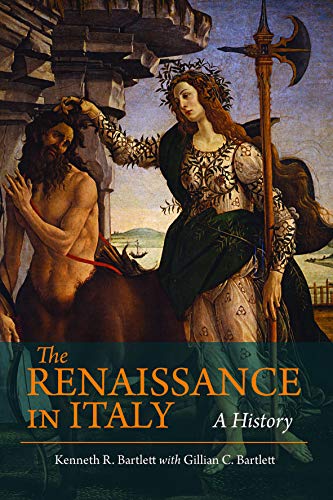
The Renaissance in Italy: A History
Kenneth Bartlett
4.3
The Italian Renaissance has come to occupy an almost mythical place in the popular imagination. The outsized reputations of the best-known figures from the period—Michelangelo, Niccolo Machiavelli, Lorenzo the Magnificent, Pope Julius II, Isabella d'Este, and so many others—engender a kind of wonder. How could so many geniuses or exceptional characters be produced by one small territory near the extreme south of Europe at a moment when much of the rest of the continent still labored under the restrictions of the Middle Ages? How did so many of the driving principles behind Western civilization emerge during this period—and how were they defined and developed? And why is it that geniuses such as Leonardo, Raphael, Petrarch, Brunelleschi, Bramante, and Palladio all sustain their towering authority to this day?
To answer these questions, Kenneth Bartlett delves into the lives and works of the artists, patrons, and intellectuals—the privileged, educated, influential elites—who created a rarefied world of power, money, and sophisticated talent in which individual curiosity and skill were prized above all else. The result is a dynamic, highly readable, copiously illustrated history of the Renaissance in Italy—and of the artists that gave birth to some of the most enduring ideas and artifacts of Western civilization.
…
Cover unavailable
21
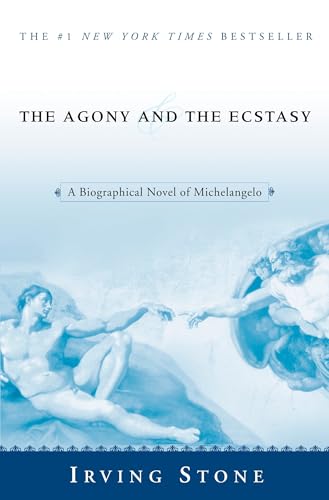
The Agony and the Ecstasy
Irving Stone
4.3
Celebrating the 500th anniversary of Michelangelo’s David, New American Library releases a special edition of Irving Stone’s classic biographical novel—in which both the artist and the man are brought to life in full. A masterpiece in its own right, this novel offers a compelling portrait of Michelangelo’s dangerous, impassioned loves, and the God-driven fury from which he wrested the greatest art the world has ever known.
…
Cover unavailable
22
A Distant Mirror: The Calamitous 14th Century
Barbara W. Tuchman
4.3
The 14th century gives us back two contradictory images: a glittering time of crusades and castles, cathedrals and chivalry, and a dark time of ferocity and spiritual agony, a world plunged into a chaos of war, fear and the Plague. Barbara Tuchman anatomizes the century, revealing both the great rhythms of history and the grain and texture of domestic life as it was lived.
Cover unavailable
23
The Story of a New Name (The Neapolitan Novels, #2)
Elena Ferrante, Ann Goldstein
4.3
In 2012, Elena Ferrante's My Brilliant Friend introduced readers to the unforgettable Elena and Lila, whose lifelong friendship provides the backbone for the Neapolitan Novels. The Story of a New Name is the second book in this series. With these books, which the New Yorker's James Wood described as "large, captivating, amiably peopled ... a beautiful and delicate tale of confluence and reversal," Ferrante proves herself to be one of Italy's most accomplished storytellers. She writes vividly about a specific neighborhood of Naples from the late-1950s through to the current day and about two remarkable young women who are very much the products of that place and time. Yet in doing so she has created a world in which readers will recognize themselves and has drawn a marvelously nuanced portrait of friendship.
In The Story of a New Name, Lila has recently married and made her entrée into the family business; Elena, meanwhile, continues her studies and her exploration of the world beyond the neighborhood that she so often finds stifling. Love, jealousy, family, freedom, commitment, and above all friendship: these are signs under which both women live out this phase in their stories. Marriage appears to have imprisoned Lila, and the pressure to excel is at times too much for Elena. Yet the two young women share a complex and evolving bond that is central to their emotional lives and is a source of strength in the face of life's challenges. In these Neapolitan Novels, Elena Ferrante, the acclaimed author of The Days of Abandonment, gives readers a poignant and universal story about friendship and belonging.
…
Cover unavailable
24
The Liberator: One World War II Soldier's 500-Day Odyssey from the Beaches of Sicily to the Gates of Dachau
Alex Kershaw
4.3
The true story of the bloodiest and most dramatic march to victory of the Second World War: the battlefield odyssey of a maverick U.S. Army officer and his infantry unit as they fought for over five hundred days to liberate Europe - from the invasion of Italy to the gates of Dachau.
From July 10, 1943, the date of the Allied landing in Sicily, to May 8, 1945, when victory in Europe was declared – the entire time it took to liberate Europe – no regiment saw more action, and no single platoon, company, or battalion endured worse, than the ones commanded by Felix Sparks, who had entered the war as a greenhorn second lieutenant of the 157th “Eager for Duty” Infantry Regiment of the 45th “Thunderbird” Division. Sparks and his fellow Thunderbirds fought longest and hardest to defeat Hitler, often against his most fanatical troops, when the odds on the battlefield were even and the fortunes of the Allies hung in the balance – and when the difference between defeat and victory was a matter of character, not tactics or armor.
Drawing on extensive interviews with Sparks and dozens of his men, as well as over five years of research in Europe and in archives across the US, historian Alex Kershaw masterfully recounts one of the most inspiring and heroic journeys in military history. Over the course of four amphibious invasions, Sparks rose from captain to colonel as he battled from the beaches of Sicily through the mountains of Italy and France, ultimately enduring bitter and desperate winter combat against the diehard SS on the Fatherland’s borders. Though he lost all of his company to save the Allied beach-head at Anzio and an entire battalion in the dark forests of the Vosges, Sparks miraculously survived the long bloody march across Europe and was selected to lead a final charge to Bavaria to hunt down Adolf Hitler.
In the dying days of the Third Reich, Sparks and his men crossed the last great barrier in the West, the Rhine, only to experience some of the most intense street fighting and close combat suffered by Americans in WWII. When they finally arrived at the gates of Dachau, Hitler’s first and most notorious concentration camp, the Thunderbirds confronted scenes that robbed the mind of reason. With victory within grasp, Sparks confronted the ultimate test of his humanity: after all he had faced, could he resist the urge to wreak vengeance on the men who had caused untold suffering and misery?
Written with the narrative drive and vivid immediacy of Kershaw’s previous bestselling books about American infantrymen in WWII, The Liberator is a story for the ages, an intensely human and dramatic account of one of history’s greatest warriors and his unheralded role in America’s finest achievement – the defeat of Nazi Germany.
…
Cover unavailable
25
Five Families: The Rise, Decline, and Resurgence of America's Most Powerful Mafia Empires
Selwyn Raab
4.3
For half a century, the American Mafia outwitted, outmaneuvered, and outgunned the FBI and other police agencies, wreaking unparalleled damage on America’s social fabric and business enterprises while emerging as the nation’s most formidable crime empire. The vanguard of this criminal juggernaut is still led by the Mafia’s most potent and largest borgatas: New York’s Five Families.
Five Families is the vivid story of the rise and fall of New York’s premier dons, from Lucky Luciano to Paul Castellano to John Gotti and others. This definitive history brings the reader right up to the possible resurgence of the Mafia as the FBI and local law-enforcement agencies turn their attention to homeland security and away from organized crime. This updated tenth-anniversary edition features a new preface by the author.
…
Cover unavailable
26
Michelangelo and the Pope's Ceiling
Ross King
4.3
In 1508, despite strong advice to the contrary, the powerful Pope Julius II commissioned Michelangelo to paint the ceiling of the newly restored Sistine Chapel. With little experience as a painter (though famed for his sculpture David), Michelangelo was reluctant to begin the massive project.
Michelangelo and the Pope's Ceiling recounts the four extraordinary years Michelangelo spent laboring over the vast ceiling while the power politics and personal rivalries that abounded in Rome swirled around him. Battling against ill health, financial difficulties, domestic problems, the pope's impatience, and a bitter rivalry with the brilliant young painter Raphael, Michelangelo created scenes so beautiful that they are considered one of the greatest masterpieces of all time. A panorama of illustrious figures converged around the creation of this great work-from the great Dutch scholar Desiderius Erasmus to the young Martin Luther-and Ross King skillfully weaves them through his compelling historical narrative, offering uncommon insight into the intersection of art and history.
…
Cover unavailable
27
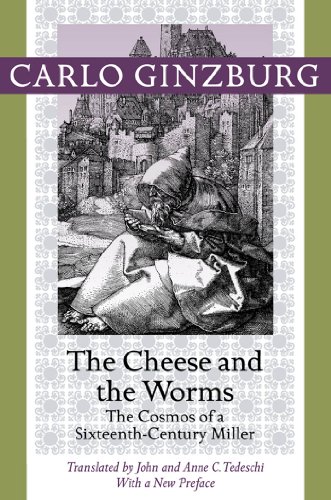
The Cheese and the Worms: The Cosmos of a Sixteenth-Century Miller
Carlo Ginzburg, John Tedeschi, Anne C. Tedeschi
4.3
The Cheese and the Worms is a study of the popular culture in the sixteenth century as seen through the eyes of one man, a miller brought to trial during the Inquisition. Carlo Ginzburg uses the trial records of Domenico Scandella, a miller also known as Menocchio, to show how one person responded to the confusing political and religious conditions of his time.
For a common miller, Menocchio was surprisingly literate. In his trial testimony he made references to more than a dozen books, including the Bible, Boccaccio's Decameron, Mandeville's Travels, and a "mysterious" book that may have been the Koran. And what he read he recast in terms familiar to him, as in his own version of the creation: "All was chaos, that is earth, air, water, and fire were mixed together; and of that bulk a mass formed—just as cheese is made out of milk—and worms appeared in it, and these were the angels."
…
Cover unavailable
28
Those Who Leave and Those Who Stay (The Neapolitan Novels, #3)
Elena Ferrante and Ann Goldstei
4.2
Since the publication of My Brilliant Friend, the first of the Neapolitan novels, Elena Ferrante's fame as one of our most compelling, insightful, and stylish contemporary authors has grown enormously. She has gained admirers among authors--Jhumpa Lahiri, Elizabeth Strout, Claire Messud, to name a few--and critics--James Wood, John Freeman, Eugenia Williamson, for example. But her most resounding success has undoubtedly been with readers, who have discovered in Ferrante a writer who speaks with great power and beauty of the mysteries of belonging, human relationships, love, family, and friendship.
In this third Neapolitan novel, Elena and Lila, the two girls whom readers first met in My Brilliant Friend, have become women. Lila married at sixteen and has a young son; she has left her abusive husband and now works as a common laborer. Elena has left the neighborhood, earned her college degree, and published a successful novel, all of which have opened the doors to a world of learned interlocutors and richly furnished salons. Both women have pushed against the walls of a prison that would have seen them living a life of misery, ignorance, and submission. They are afloat on the great sea of opportunities that opened up during the nineteen-seventies. Yet they are still very much bound to each other by a strong, unbreakable bond.
…
Cover unavailable
29
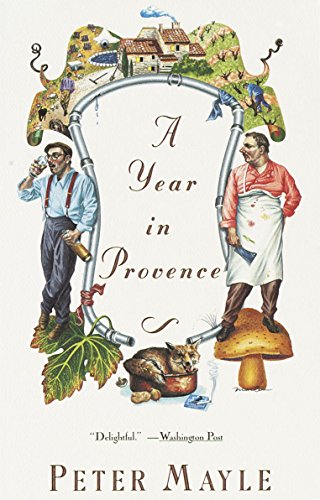
A Year in Provence
Peter Mayle
4.2
National Bestseller
In this witty and warm-hearted account, Peter Mayle tells what it is like to realize a long-cherished dream and actually move into a 200-year-old stone farmhouse in the remote country of the Lubéron with his wife and two large dogs. He endures January's frosty mistral as it comes howling down the Rhône Valley, discovers the secrets of goat racing through the middle of town, and delights in the glorious regional cuisine. A Year in Provence transports us into all the earthy pleasures of Provençal life and lets us live vicariously at a tempo governed by seasons, not by days.
…
Recommended by Fabrice Grinda.
Fabrice Grinda
I have lots of books to recommend, but they are not related to my career path. The only one that is remotely related is Peter Thiel’s Zero to One. That said here are books I would recommend. [source]
Cover unavailable
30
Dominion: How the Christian Revolution Remade the World
Tom Holland
4.2
From the crucifixion of Jesus to the birth of modern morals, this "marvelous" account from an award-winning historian shows how the Christian Revolution forged the Western imagination (The Economist). Crucifixion, the Romans believed, was the worst fate imaginable. It was this that rendered it so suitable a punishment for slaves. How astonishing it was, then, that people should have come to believe that one particular victim of crucifixion-an obscure provincial by the name of Jesus-had been a god. Dominion explores the implications of this shocking conviction as they have reverberated throughout history. Today, the West remains utterly saturated by Christian assumptions. Our morals and ethics are not universal. Instead, they are the fruits of a very distinctive civilization. Concepts such as secularism, liberalism, science, and homosexuality are deeply rooted in a Christian seedbed. From Babylon to the Beatles, Saint Michael to #MeToo, Dominion tells the story of how Christianity transformed the world.
…
Recommended by Dan Snow.
Dan Snow
So proud of my great buddy @holland_tom, his brilliant new book 'Dominion' is published today. To celebrate, last night we visited the limit of the Great Fire, exactly 353 years since it raged across The City. Wild times. https://t.co/iQsNxrceAE [source]
Cover unavailable
31
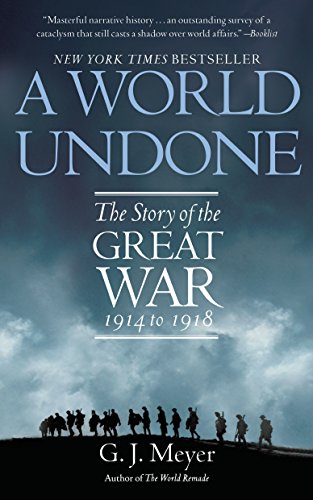
A World Undone: The Story of the Great War, 1914 to 1918
G. J. Meyer
4.2
The First World War is one of history’s greatest tragedies. In this remarkable and intimate account, author G. J. Meyer draws on exhaustive research to bring to life the story of how the Great War reduced Europe’s mightiest empires to rubble, killed twenty million people, and cracked the foundations of the world we live in today.
From the Hardcover edition.
…
Cover unavailable
32
Naples '44: A World War II Diary of Occupied Italy
Norman Lewis
4.2
From the author Graham Greene called "one of our best writers, not of any particular decade but of our century," comes a masterpiece about a war-ravaged city under occupation As a young intelligence officer stationed in Naples following its liberation from Nazi forces, Norman Lewis recorded the lives of a proud and vibrant people forced to survive on prostitution, thievery, and a desperate belief in miracles and cures. The most popular of Lewis's twenty-seven books, Naples '44 is a landmark poetic study of the agony of wartime occupation and its ability to bring out the worst, and often the best, in human nature. In prose both heartrending and comic, Lewis describes an era of disillusionment, escapism, and hysteria in which the Allied occupiers mete out justice unfairly and fail to provide basic necessities to the populace while Neapolitan citizens accuse each other of being Nazi spies, women offer their bodies to the same Allied soldiers whose supplies they steal for sale on the black market, and angry young men organize militias to oppose "temporary" foreign rule. Yet over the chaotic din, Lewis sings intimately of the essential dignity of the Neapolitan people, whose traditions of civility, courage, and generosity of spirit shine through on a daily basis. This essential World War II book is as timely a read as ever. "Norman Lewis is one of the greatest twentieth-century British writers and Naples '44 is his masterpiece. A lyrical, ironic, and detached account of a tempestuous, byzantine, and opaque city in the aftermath of war."--Will Self
…
Recommended by Keith Lowe.
Keith Lowe
Strictly speaking it’s not a book about the postwar period as it’s about Naples in 1944 rather than in 1945 or 1946, but I chose it because it shows what life was like immediately after the liberation of the south of Italy. This was the first area of Europe to be liberated so it was the first sight the Allies had of what they were dealing with, which was pretty chaotic. Naples in 1944 was a city in meltdown. First and foremost, there was no food at all. Children would dig up grass from the roadside to take home to eat. Even the fish at the city’s aquarium mysteriously disappeared one night. People would do anything to get hold of some food – literally anything. Norman Lewis repeatedly had men approach him trying to press the favours of their wives and their daughters upon him in return for a hot meal. So prostitution was rife; the black market was rife; people resorted to banditry; the mafia started running all sorts of black market operations – the whole moral atmosphere in Naples all revolved around the fact that there wasn’t enough food to go round and anybody would do anything to get hold of some. It was like descending into one of Dante’s circles of hell. [source]
Cover unavailable
33
World Cup 1970-2018: Panini Football Collections
Panini
4.2
- The complete collection of Panini stickers albums dedicated to all World Cup championships between 1970 and 2018. All protagonists and all results from the last 48 years Since 1970 a collection of Panini stickers has accompanied each FIFA World Cup, held every four years. Each Panini album is not just a practical guide to the various rounds of the tournament, but it also provides a valuable visual archive of all the teams and their memorable matches. The book tells the story of the World Cup through the faces of its stars. Three thousand champions spanning the last forty years - the famous and the not so famous, the worshipped and the not so worshipped - all of whom have shared a desire to give their very best and bring soccer glory to their own nations. For fans of statistics and trivia, the albums (always brought out before matches are played) have been rounded off with charts and tables of the results of that year. Text in English, Italian, German, French, Spanish and Dutch.
…
Cover unavailable
34
The Divine Comedy
Dante Alighieri
4.2
"Dante and Shakespeare divide the world between them, there is no third." T. S. Eliot
"Ciardi has given us a credible, passionate persona of the poet, stripped of the customary gauds of rhetoric and false decoration, strong and noble in utterance." Dudley Fitts
"A sensitive and perceptive translation;a spectacular achievement." Archibald MacLeish
Belonging in the immortal company of the great works of literature, Dante Alighieri's poetic masterpiece, The Divine Comedy, is a moving human drama, an unforgettable visionary journey through the infinite torment of Hell, up the arduous slopes of Purgatory, and on to the glorious realm of Paradise; the sphere of universal harmony and eternal salvation.
Now, for the first time, John Ciardi's brilliant and authoritative translations of Dante's three soaring canticles The Inferno, The Purgatorio, and The Paradiso have been gathered together in a single volume. Crystallizing the power and beauty inherent in the great poet's immortal conception of the aspiring soul, The Divine Comedy is a dazzling work of sublime truth and mystical intensity.
"I think [Ciardi's] version of Dante will be in many respects the best we have seen." John Crowe Ransom
I don’t think there’s anything in world literature to compare with the last few cantos of the Paradiso as a Christian statement. [source]
Cover unavailable
35
Growing Up Italian-American (Second Edtion): The Memoirs of Ferdinand Visco & the Stories of Two Immigrant Italian Families
Ferdinand J. Visco M.D.
4.2
Preface to the Second Edition: Since its original publication, I have been extremely gratified by the positive reception the book has received not only from the Italian-American Community but also from the general public. In this, its second edition, I have added more stories taken from my parents’ memoirs and new stories about growing up in College Point and living in Italy. With a view to making the book a more complete resource for Americans with an Italian heritage, in this edition I have also further explored Italian-American history, traditions, folklore, and culture.
Book Description "To know who you are, you need to know from whence you came."
The book contains the stories of three generations of Italian-Americans. It represents over one hundred and fifty years of family history. It traces the trials, tribulations, and triumphs of the Baratta family from Padula and the Visco family from Vico Equense, both of whom settled in Manhattan and subsequently moved to Brooklyn, Queens, and Long Island.
The stories, which were taken from family memoirs and transcripts, are told by those who lived them in their own words and are placed in historical context.
The book also includes the memoirs of the author which describe growing up in College Point N.Y. in the 40s,50s, and 60s, going to medical school and living in Italy, finding his roots in his ancestral hometowns, and practicing cardiology in New York City.
Profusely illustrated, with maps and photographs on almost every page, this reader-friendly 434-page book, which was five years in the making, is a celebration of Italian-American culture. It explores Italian-American history, traditions, folklore, customs, music, food, values, and humor. The book also contains Italian proverbs and features recipes from Padula and Vico Equense.
The author hopes that the reader will enjoy and possibly recall the joys of growing up Italian-American in the 40s, 50s,and 60s, try the recipes, and journey with the Viscos and the Barattas as they emigrated from Italy in the early 1900s and made something of themselves and their children in America.
…
Cover unavailable
36
La Storia: Five Centuries of the Italian American Experience
Jerre Mangione
4.2
From the early Italian adventurers who played an important role in the European expansion across the Atlantic to the political and business leaders of the 1990s, this book tells a dramatic story. The heart of the story is the mass migration that took place between 1880 and 1924, when a whole culture left its ancient roots to settle in the cities and towns of America.
Cover unavailable
37
The Guarded Gate: Bigotry, Eugenics and the Law That Kept Two Generations of Jews, Italians, and Other European Immigrants Out of America
Daniel Okrent
4.2
NAMED ONE OF THE “100 NOTABLE BOOKS OF THE YEAR” BY THE NEW YORK TIMES BOOK REVIEW
“An extraordinary book, I can’t recommend it highly enough.” –Whoopi Goldberg, The View
By the widely celebrated New York Times bestselling author of Last Call—the powerful, definitive, and timely account of how the rise of eugenics helped America close the immigration door to “inferiors” in the 1920s.
A forgotten, dark chapter of American history with implications for the current day, The Guarded Gate tells the story of the scientists who argued that certain nationalities were inherently inferior, providing the intellectual justification for the harshest immigration law in American history. Brandished by the upper class Bostonians and New Yorkers—many of them progressives—who led the anti-immigration movement, the eugenic arguments helped keep hundreds of thousands of Jews, Italians, and other unwanted groups out of the US for more than 40 years.
Over five years in the writing, The Guarded Gate tells the complete story from its beginning in 1895, when Henry Cabot Lodge and other Boston Brahmins launched their anti-immigrant campaign. In 1921, Vice President Calvin Coolidge declared that “biological laws” had proven the inferiority of southern and eastern Europeans; the restrictive law was enacted three years later. In his characteristic style, both lively and authoritative, Okrent brings to life the rich cast of characters from this time, including Lodge’s closest friend, Theodore Roosevelt; Charles Darwin’s first cousin, Francis Galton, the idiosyncratic polymath who gave life to eugenics; the fabulously wealthy and profoundly bigoted Madison Grant, founder of the Bronx Zoo, and his best friend, H. Fairfield Osborn, director of the American Museum of Natural History; Margaret Sanger, who saw eugenics as a sensible adjunct to her birth control campaign; and Maxwell Perkins, the celebrated editor of Hemingway and Fitzgerald. A work of history relevant for today, The Guarded Gate is an important, insightful tale that painstakingly connects the American eugenicists to the rise of Nazism, and shows how their beliefs found fertile soil in the minds of citizens and leaders both here and abroad.
…
Recommended by Claire Lehmann.
Claire Lehmann
Fascinating review of an important book. 'The Guarded Gate' thoroughly documents the depth & breadth of American eugenics projects. Like Prohibition it was a movement propelled by elites who were animated by class prejudice https://t.co/4QhC6suxK9 [source]
Cover unavailable
38
Italian Food
Elizabeth David, Child Julia
4.2
In Italian Food, Elizabeth David was the first to help us understand the real country cooking of Italy.
Italian Food was an inspiration to British cooks when it was first published in 1954 - and it remains so to this day. Embracing the variety, richness and vibrancy of Italian cooking, with particularly reference to regional variation, Elizabeth David provides a magnificent and inspiring collection of favourite dishes as well as those more rarely encountered.
With straightforward recipes for meals such as Piedmontese cheese fondue, fettuccine with fresh tomato sauce and chicken breasts with ham and cheese, Elizabeth David brings us the authentic taste of Italian food.
'Elizabeth David's clear and unpretentious directions for the enjoyment of good food have never been surpassed' Daily Mail
'Not only did she transform the way we cooked but she is a delight to read' Express on Sunday
'Britain's most inspirational food writer' Independent
'When you read Elizabeth David, you get perfect pitch. There is an understanding and evocation of flavours, colours, scents and places that lights up the page' Guardian
'Not only did she transform the way we cooked but she is a delight to read' Express on Sunday
Elizabeth David (1913-1992) is the woman who changed the face of British cooking. Having travelled widely during the Second World War, she introduced post-war Britain to the sun-drenched delights of the Mediterranean and her recipes brought new flavours and aromas into kitchens across Britain. After her classic first book Mediterranean Food followed more bestsellers, including French Country Cooking, Summer Cooking, French Provincial Cooking, Italian Food, Elizabeth David's Christmas and At Elizabeth David's Table.
…
Recommended by Ruth Rogers.
Ruth Rogers
The influence Elizabeth David had on cookery is phenomenal. Her books are informed, passionate and inspiring. [source]
Cover unavailable
39
City of Fortune: How Venice Won and Lost a Naval Empire
Roger Crowley
4.2
A magisterial work of gripping history, City of Fortune tells the story of the Venetian ascent from lagoon dwellers to the greatest power in the Mediterranean - an epic five hundred year voyage that encompassed crusade and trade, plague, sea battles and colonial adventure. In Venice, the path to empire unfolded in a series of extraordinary contests - the sacking of Constantinople in 1204, the fight to the finish with Genoa and a desperate defence against the Turks. Under the lion banner of St Mark, she created an empire of ports and naval bases which funnelled the goods of the world through its wharfs. In the process the city became the richest place on earth - a brilliant mosaic fashioned from what it bought, traded, borrowed and stole.Based on first hand accounts of trade and warfare, seafaring and piracy and the places where Venetians sailed and died, City of Fortune is narrative history at its finest. Beginning on Ascension Day in the year 1000 and ending with an explosion off the coast of Greece - and the calamitous news that the Portuguese had pioneered a sea route to India - it will fascinate anyone who loves Venice and the Mediterranean world.
…
Cover unavailable
40
The White War: Life and Death on the Italian Front 1915 - 1919
Mark R. Thompson
4.2
This is the story of the First World War in Italy, a war that gave birth to fascism. Mussolini fought in these trenches, as did most of his collaborators. But so did many of the greatest modernist writers in Italian and German - Ungaretti, Gadda, Musil.
Cover unavailable
41
Easy Italian Phrase Book: Over 1500 Common Phrases For Everyday Use And Travel
Lingo Mastery
4.2
What is the hardest challenge you've faced as a student of the Italian language?
You can work hard on your grammar, vocabulary and pronunciation, but being able to communicate naturally isn't easy.
In fact, the toughest part of learning Italian is knowing how to speak like a native.
Most textbooks are made to teach you the traditional rules and structures of a language and are great for getting around the grammar and spelling questions you may have.
However, how many of them provide you the tools necessary to have a common conversation with a best friend or someone you've just met? Not many at all.
Language learners often complain about this - a lack of material that can help you familiarize yourself with the most common phrases used in everyday conversation and in native surroundings.
For this reason, we at Lingo Mastery have developed Easy Italian Phrase Book: Over 1500 Common Phrases for Everyday Use and Travel for you, our favorite language-learner, so that you may find the best expressions for common usage in Italy and communicate with your Italian friends, colleagues and client without any issue!
In this book:
An introduction with a detailed guide on how to pronounce vowels and consonants (as well as their combinations) in the Italian tongue. A list of over 1,500 common phrases in Italian, with an accurate translation in English for your understanding. A phonetics pronunciation guide of each and every word in the phrases, included after every translation. Finally, a conclusion to make sure you've learned and supply you with a final list of tips. Your days struggling with natural communication with natives is finally over. Our Easy Italian Phrase Book is here.
It's time for you to take your Italian to the next level.
…
Cover unavailable
42
The Fantasy Fiction Formula
Deborah Chester
4.2
There's more to writing a successful fantasy story than building a unique world or inventing new magic. How exactly is a plot put together? How do you know if your idea will support an entire novel? How do you grab reader attention and keep it? How do you create dynamic, multi-dimensional characters? What is viewpoint and do you handle it differently in urban fantasy than in traditional epics? What should you do if you're lost in the middle? How do you make your plot end up where you intend it to go?
From the writing of strong, action-packed scenes to the handling of emotions, let award-winning fantasy author Deborah Chester guide you through the process of putting a book together. Convinced there's no need to shroud the writing process under a veil of mystery, Chester supplies tips that are both practical and proven. They are exactly what she uses in writing her own novels and what she teaches in her writing courses at the University of Oklahoma.
Along with explaining story construction step-by-step, Chester illustrates each technique with examples drawn from both traditional and urban fantasy. The technique chapters include exercises to assist novices in mastering the craft of writing fantasy as well as suggestions for avoiding or solving plot problems. More experienced writers will find tips for taking their work to the next level.
With an introduction by author Jim Butcher, The fantasy fiction formula provides the information you need to gain skill and proficiency in writing fantasy like a pro.
…
Cover unavailable
43
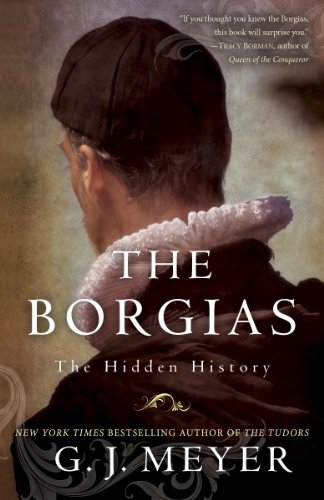
The Borgias: The Hidden History
G.J. Meyer
4.2
Forget everything you think you know about the most infamous family of the Italian Renaissance-here in every colorful detail is the real story of the Borgias and their indelible, tumultuous world, written by the gifted author of the acclaimed A World Undone and The Tudors and timed to coincide with the upcoming new season of the celebrated Showtime series, The Borgias.
Meet Rodrigo Borgia-Pope Alexander VI; Cesare Borgia-the reputed model for Machiavelli's The Prince; Lucrezia; and Juan-the members of one of the most notorious families in European history. Epic in scope and set against the beautifully rendered backdrop of Renaissance Italy, The Borgias is a thrilling new depiction of these celebrated personalities and an era unsurpassed in beauty, terror, and intrigue.
…
Cover unavailable
44
The Renaissance (The Story of Civilization, #5)
Will Durant
4.2
A colorful pageant of princes & kings, painters & philosophers, scientists & architects comes to life in Will Durant's study of the Italian Renaissance, Vol. 5 of The Story of Civilization. He sets the stage in Florence for the opening act of a magnificent cultural flowering spread across Europe & continued thru time. Even more than its artistic awakening, the Renaissance stands as a declaration of mental freedom. It was a great contribution to the progress of humankind. "Dr. Durant has a keen and mordant wit that flashes forth frequently to enliven his pages...he is an artist in words."--Saturday Review
…
Cover unavailable
45
Rick Steves Italy 2020
Rick Steves
4.2
From the Mediterranean to the Alps, from fine art to fine pasta, experience Italy with Rick Steves! Inside Rick Steves Italy 2020 you'll find:
Comprehensive coverage for planning a multi-week trip to Italy
Rick's strategic advice on how to get the most out of your time and money, with rankings of his must-see favorites
Top sights and hidden gems, from the Colosseum and Michelangelo's David to corner trattorias and that perfect scoop of gelato
How to connect with local culture: Walk in Caesar's footsteps through the ruins of the Forum, discover the relaxed rhythms of sunny Cinque Terre, or chat with fans about the latest soccer match (calcio, to locals)
Beat the crowds, skip the lines, and avoid tourist traps with Rick's candid, humorous insight The best places to eat, sleep, and experience la dolce far niente
Self-guided walking tours of lively neighborhoods and museums
Vital trip-planning tools, like how to link destinations, build your itinerary, and get from place to place
Detailed maps, including a fold-out map for exploring on the go
Useful resources including a packing list, Italian phrase book, a historical overview, and recommended reading
Over 1,000 bible-thin pages include everything worth seeing without weighing you down
Annually updated information on Venice, Padua, the Dolomites, Lake Country, Milan, the Italian Riviera, Florence, Pisa, Lucca, Hill Towns of Central Italy, Siena, Tuscany, Rome, Naples, Pompeii, Capri, the Amalfi Coast, and much more Make the most of every day and every dollar with Rick Steves Italy 2020.
Planning a one- to two-week trip? Check out Rick Steves Best of Italy.
…
Cover unavailable
46
The Pope and Mussolini: The Secret History of Pius XI and the Rise of Fascism in Europe
David I. Kertzer
4.2
PULITZER PRIZE WINNER From National Book Award finalist David I. Kertzer comes the gripping story of Pope Pius XI’s secret relations with Italian dictator Benito Mussolini. This groundbreaking work, based on seven years of research in the Vatican and Fascist archives, including reports from Mussolini’s spies inside the highest levels of the Church, will forever change our understanding of the Vatican’s role in the rise of Fascism in Europe. The Pope and Mussolini tells the story of two men who came to power in 1922, and together changed the course of twentieth-century history. In most respects, they could not have been more different. One was scholarly and devout, the other thuggish and profane. Yet Pius XI and “Il Duce” had many things in common. They shared a distrust of democracy and a visceral hatred of Communism. Both were prone to sudden fits of temper and were fiercely protective of the prerogatives of their office. (“We have many interests to protect,” the Pope declared, soon after Mussolini seized control of the government in 1922.) Each relied on the other to consolidate his power and achieve his political goals.
In a challenge to the conventional history of this period, in which a heroic Church does battle with the Fascist regime, Kertzer shows how Pius XI played a crucial role in making Mussolini’s dictatorship possible and keeping him in power. In exchange for Vatican support, Mussolini restored many of the privileges the Church had lost and gave in to the pope’s demands that the police enforce Catholic morality. Yet in the last years of his life—as the Italian dictator grew ever closer to Hitler—the pontiff’s faith in this treacherous bargain started to waver. With his health failing, he began to lash out at the Duce and threatened to denounce Mussolini’s anti-Semitic racial laws before it was too late. Horrified by the threat to the Church-Fascist alliance, the Vatican’s inner circle, including the future Pope Pius XII, struggled to restrain the headstrong pope from destroying a partnership that had served both the Church and the dictator for many years.
The Pope and Mussolini brims with memorable portraits of the men who helped enable the reign of Fascism in Italy: Father Pietro Tacchi Venturi, Pius’s personal emissary to the dictator, a wily anti-Semite known as Mussolini’s Rasputin; Victor Emmanuel III, the king of Italy, an object of widespread derision who lacked the stature—literally and figuratively—to stand up to the domineering Duce; and Cardinal Secretary of State Eugenio Pacelli, whose political skills and ambition made him Mussolini’s most powerful ally inside the Vatican, and positioned him to succeed the pontiff as the controversial Pius XII, whose actions during World War II would be subject for debate for decades to come.
With the recent opening of the Vatican archives covering Pius XI’s papacy, the full story of the Pope’s complex relationship with his Fascist partner can finally be told. Vivid, dramatic, with surprises at every turn, The Pope and Mussolini is history writ large and with the lightning hand of truth.
NAMED ONE OF THE BEST BOOKS OF THE YEAR BY SAN FRANCISCO CHRONICLE
“Kertzer has an eye for a story, an ear for the right word, and an instinct for human tragedy. This is a sophisticated blockbuster.”—Joseph J. Ellis, Pulitzer Prize–winning author of Revolutionary Summer “A fascinating and tragic story.”—The New Yorker
“Revelatory . . . [a] detailed portrait.”—The New York Review of Books
From the Hardcover edition.
…
Cover unavailable
47
Christ Stopped at Eboli
Carlo Levi
4.2
'We're not Christians, Christ stopped short of here, at Eboli.' Exiled to a remote and barren corner of Italy for his opposition to Mussolini, Carlo Levi entered a world cut off from history and the state, hedged in by custom and sorrow, without comfort or solace, where, eternally patient, the peasants lived in an age-old stillness and in the presence of death - for Christ did stop at Eboli.
I chose this book because not many people know it – it’s hardly on every bookshelf. Carlo Levi was an Italian Jew from Florence, banished in the 1930s by the Mussolini government for criticising the war in Ethiopia. He is sent to the ends of the earth, and it happens that the ends of the earth in Italy is southern Italy. [source]
Paula Fredriksen
This is such a beautiful memoir. Levi was in political exile for a year under Mussolini, sent to a very impoverished town in the south of Italy. Levi himself is from Turin – aristocratic, well educated, left-leaning politically, very urban and urbane. This tiny dusty town shocks him, both its poverty and its class structure. [source]
Cover unavailable
48
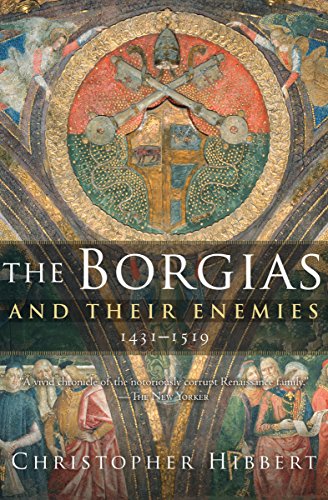
The Borgias and Their Enemies: 1431-1519
Christopher Hibbert
4.2
The first major biography of the Borgias in thirty years, Christopher Hibbert's latest history brings the family and the world they lived in—the glittering Rome of the Italian Renaissance—to life.
The name Borgia is synonymous with the corruption, nepotism, and greed that were rife in Renaissance Italy. The powerful, voracious Rodrigo Borgia, better known to history as Pope Alexander VI, was the central figure of the dynasty. Two of his seven papal offspring also rose to power and fame—Lucrezia Borgia, his daughter, whose husband was famously murdered by her brother, and that brother, Cesare, who served as the model for Niccolò Machiavelli's The Prince. Notorious for seizing power, wealth, land, and titles through bribery, marriage, and murder, the dynasty's dramatic rise from its Spanish roots to its occupation of the highest position in Renaissance society forms a gripping tale.
Erudite, witty, and always insightful, Hibbert removes the layers of myth around the Borgia family and creates a portrait alive with his superb sense of character and place.
…
Cover unavailable
49
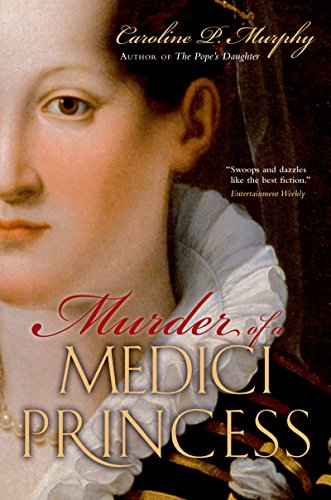
Murder of a Medici Princess
Caroline P. Murphy
4.2
In Murder of a Medici Princess, Caroline Murphy illuminates the brilliant life and tragic death of Isabella de Medici, one of the brightest stars in the dazzling world of Renaissance Italy, the daughter of Duke Cosimo I, ruler of Florence and Tuscany. Murphy is a superb storyteller, and her fast-paced narrative captures the intrigue, the scandal, the romantic affairs, and the violence that were commonplace in the Florentine court. She brings to life an extraordinary woman, fluent in five languages, a free-spirited patron of the arts, a daredevil, a practical joker, and a passionate lover. Isabella, in fact, conducted numerous affairs, including a ten-year relationship with the cousin of her violent and possessive husband. Her permissive lifestyle, however, came to an end upon the death of her father, who was succeeded by her disapproving older brother Francesco. Considering Isabella's ways to be licentious and a disgrace upon the family, he permitted her increasingly enraged husband to murder her in a remote Medici villa. To tell this dramatic story, Murphy draws on a vast trove of newly discovered and unpublished documents, ranging from Isabella's own letters, to the loose-tongued dispatches of ambassadors to Florence, to contemporary descriptions of the opulent parties and balls, salons and hunts in which Isabella and her associates participated. Murphy resurrects the exciting atmosphere of Renaissance Florence, weaving Isabella's beloved city into her story, evoking the intellectual and artistic community that thrived during her time. Palaces and gardens in the city become places of creativity and intrigue, sites of seduction, and grounds for betrayal. Here then is a narrative of compelling and epic proportions, magnificent and alluring, decadent and ultimately tragic.
…
Recommended by Nancy Goldstone.
Nancy Goldstone
This book is about a very strong woman – Isabella, the daughter of Duke Cosimo I de’ Medici, the powerful ruler of 15th century Florence. Isabella was Cosimo’s favourite daughter, but even so she was obliged to marry Paolo Giordano I Orsini, a member of the lesser nobility, for political purposes. The Medici family was very wealthy, and Isabella was used to a luxurious life surrounded by beauty, art and literature. Her husband, on the other hand, owned one shabby castle in the middle of nowhere. She went there for one season, then for the rest of her life she lived in Florence away from him. [source]
Cover unavailable
50
Florence: The Paintings and Frescoes in the City that Invented Art, 1250-1743
Ross King
4.2
This is the most comprehensive book on the paintings and frescoes of Florence ever undertaken, with more than 2,000 beautifully reproduced artworks from the city's great museums and churches-produced in the same manner as BD&L's The Louvre and The Vatican. Every painted work that is on display in the Uffizi Gallery, The Pitti Palace, the Accademia, and the Duomo is included in the book, plus many or most of the works from 28 of the city's other magnificent museums and churches. The research and text are by Ross King (best-selling author), Anja Grebe (author or The Louvre and The Vatican), Cristina Acidini (former Superintendent of the public museums of Florence) and Msgr. Timothy Verdon (Director of the artworks for the Archdiocese of Florence).
…
Cover unavailable
51
The Devil's Queen: A Novel of Catherine de Medici
Jeanne Kalogridis
4.2
From Jeanne Kalogridis, the bestselling author of I, Mona Lisa and The Borgia Bride, comes a new novel that tells the passionate story of a queen who loved not wisely . . . but all too well.
Confidante of Nostradamus, scheming mother-in-law to Mary, Queen of Scots, and architect of the bloody St. Bartholomew’s Day Massacre, Catherine de Medici is one of the most maligned monarchs in history. In her latest historical fiction, Jeanne Kalogridis tells Catherine’s story—that of a tender young girl, destined to be a pawn in Machiavellian games.
Born into one of Florence’s most powerful families, Catherine was soon left a fabulously rich heiress by the early deaths of her parents. Violent conflict rent the city state and she found herself imprisoned and threatened by her family’s enemies before finally being released and married off to the handsome Prince Henry of France.
Overshadowed by her husband’s mistress, the gorgeous, conniving Diane de Poitiers, and unable to bear children, Catherine resorted to the dark arts of sorcery to win Henry’s love and enhance her fertility—for which she would pay a price. Against the lavish and decadent backdrop of the French court, and Catherine’s blood-soaked visions of the future, Kalogridis reveals the great love and desire Catherine bore for her husband, Henry, and her stark determination to keep her sons on the throne.
…
Cover unavailable
52
The Leopard
Giuseppe Tomasi di Lampedusa
4.1
The Leopard is a story of a decadent and dying aristocracy threatened by the forces of revolution and democracy. Set against the political upheavals of Italy in the 1860s, it focuses on Don Fabrizio, a Sicilian prince of immense sensual appetites, wealth, and great personal magnetism. Around this powerful figure swirls a glittering array of characters: a Bourbon king, liberals and pseudo liberals, peasants and millionaires.
…
Recommended by Nick Clegg.
Nick Clegg
This is one of the very few novels that I’ve read twice. [source]
Cover unavailable
53
Mezzogiorno Mistaken: The Top 10 Myths About Southern Italians
John De Luca
4.1
Cover unavailable
54
The Bastard Brigade: The True Story of the Renegade Scientists and Spies Who Sabotaged the Nazi Atomic Bomb
Sam Kean
4.1
From New York Times bestselling author Sam Kean comes the gripping, untold story of a renegade group of scientists and spies determined to keep Adolf Hitler from obtaining the ultimate prize: a nuclear bomb
Scientists have always kept secrets. But rarely have the secrets been as vital as they were during World War II. In the middle of building an atomic bomb, the leaders of the Manhattan Project were alarmed to learn that Nazi Germany was far outpacing the Allies in nuclear weapons research. Hitler, with just a few pounds of uranium, would have the capability to reverse the entire D-Day operation and conquer Europe. So they assembled a rough and motley crew of geniuses - dubbed the Alsos Mission - and sent them careening into Axis territory to spy on, sabotage, and even assassinate members of Nazi Germany's feared Uranium Club.
The details of the mission rival the finest spy thriller, but what makes this story sing is the incredible cast of characters-both heroes and rogues alike-including:
Moe Berg the major league catcher who abandoned the game for a career as a multilingual international spy; the strangest fellow to ever play professional baseball.
Werner Heisenberg the Nobel Prize-winning physicist credited as the discoverer of quantum mechanics; a key contributor to the Nazi's atomic bomb project and the primary target of the Alsos mission.
Colonel Boris Pash a high school science teacher and veteran of the Russian Revolution who fled the Sovit Union with a deep disdain for Communists and who later led the Alsos mission.
Joe Kennedy Jr. the charismatic, thrill-seeking older brother of JFK whose need for adventure led him to volunteer for the most dangerous missions the Navy had to offer.
Samuel Goudsmit a washed-up physics prodigy who spent his life huntinh Nazi scientist-and his parents, who had been swept into a concentration camp-across the globe.
Irène and Frederic Joliot-Curie a physics Nobel-Prize winning power couple who used their unassuming status as scientists to become active members of the resistance.
Thrust into the dark world of international espionage, these scientists and soldiers played a vital and largely untold role in turning back one of the darkest tides in human history.
…
Cover unavailable
55
Galileo's Daughter: A Historical Memoir of Science, Faith, and Love
Dava Sobel
4.1
Inspired by a long fascination with Galileo, and by the remarkable surviving letters of Galileo's daughter, a cloistered nun, Dava Sobel has written a biography unlike any other of the man Albert Einstein called "the father of modern physics- indeed of modern science altogether." Galileo's Daughter also presents a stunning portrait of a person hitherto lost to history, described by her father as "a woman of exquisite mind, singular goodness, and most tenderly attached to me."
The son of a musician, Galileo Galilei (1564-1642) tried at first to enter a monastery before engaging the skills that made him the foremost scientist of his day. Though he never left Italy, his inventions and discoveries were heralded around the world. Most sensationally, his telescopes allowed him to reveal a new reality in the heavens and to reinforce the astounding argument that the Earth moves around the Sun. For this belief, he was brought before the Holy Office of the Inquisition, accused of heresy, and forced to spend his last years under house arrest.
Of Galileo's three illegitimate children, the eldest best mirrored his own brilliance, industry, and sensibility, and by virtue of these qualities became his confidante. Born Virginia in 1600, she was thirteen when Galileo placed her in a convent near him in Florence, where she took the most appropriate name of Suor Maria Celeste. Her loving support, which Galileo repaid in kind, proved to be her father's greatest source of strength throughout his most productive and tumultuous years. Her presence, through letters which Sobel has translated from their original Italian and masterfully woven into the narrative, graces her father's life now as it did then.
Galileo's Daughter dramatically recolors the personality and accomplishment of a mythic figure whose seventeenth-century clash with Catholic doctrine continues to define the schism between science and religion. Moving between Galileo's grand public life and Maria Celeste's sequestered world, Sobel illuminates the Florence of the Medicis and the papal court in Rome during the pivotal era when humanity's perception of its place in the cosmos was about to be overturned. In that same time, while the bubonic plague wreaked its terrible devastation and the Thirty Years' War tipped fortunes across Europe, one man sought to reconcile the Heaven he revered as a good Catholic with the heavens he revealed through his telescope.
With all the human drama and scientific adventure that distinguished Dava Sobel's previous book Longitude, Galileo's Daughter is an unforgettable story.
…
Recommended by Stuart Clark.
Stuart Clark
Dava ostensibly wrote a book about Galileo’s relationship with his daughter but actually it reveals a lot about Galileo and science along the way. [source]
Cover unavailable
56
Venice: A New History
John Davis
4.1
An extraordinary chronicle of Venice, its people, and its grandeur
Thomas Madden’s majestic, sprawling history of Venice is the first full portrait of the city in English in almost thirty years. Using long-buried archival material and a wealth of newly translated documents, Madden has weaves a spellbinding story of a place and its people, tracing an arc from the city’s humble origins as a lagoon refuge to its apex as a vast maritime empire and Renaissance epicenter to its rebirth as a modern tourist hub.
Madden explores all aspects of Venice’s breathtaking achievements: the construction of its unparalleled navy, its role as an economic powerhouse and birthplace of capitalism, its popularization of opera, the stunning architecture of its watery environs, and more. He sets these in the context of the rise and fall of the Byzantine Empire, the endless waves of Crusades to the Holy Land, and the awesome power of Turkish sultans. And perhaps most critically, Madden corrects the stereotype of Shakespeare’s money-lending Shylock that has distorted the Venetian character, uncovering instead a much more complex and fascinating story, peopled by men and women whose ingenuity and deep faith profoundly altered the course of civilization.
…
Cover unavailable
57
Intermediate Italian Short Stories: 10 Captivating Short Stories to Learn Italian & Grow Your Vocabulary the Fun Way!
Lingo Mastery
4.1
Cover unavailable
58
The Fisherman's Tomb: The True Story of the Vatican's Secret Search
John O'Neill
4.1
Cover unavailable
59
The Tuscan Secret: An absolutely gripping, emotional, World War 2 historical novel
Angela Petch
4.1
The tragic consequences of war echo through the generations in this stunning tale, inspired by true events, about how family secrets can haunt us; and how love can guide us through the darkest times. Fans of Kristin Hannah’s The Nightingale and The Letter by Kathryn Hughes will be captivated.
‘Anna, I kept a diary during the war. I have so much to tell you… And now you have this box containing my scribblings. My memory pearls. This diary is my inheritance to you. Your loving Mamma.’
As World War Two shatters Europe,Ines is a young girl caught up in the Italian Resistance. With her brother and best friend sacrificing everything to fight the Nazis, Ines hides deep in the Tuscan mountains, tending the wounds of the fallen fighters – including an escaped British prisoner-of-war who captures her heart.
Forty-five years later, an elderly lady in an English nursing home passes away, dreaming of Italy in her dying hours. To her youngest daughter Anna, she leaves a battered box of letters, their pages yellowed with age, and a promise that the truth about what really happened to her in the war lies within.
Anna’s English father forbade her from learning her mother’s beautiful language. So to translate the handwritten diaries, she resolves to visit Tuscany for herself. As she explores the sun-kissed olive groves and stunning mountain landscapes of the homeland she’s never known, Anna uncovers a shocking secret about her mother’s past that will uproot everything she’s ever believed.
In this small Tuscan community, some wartime secrets were never meant to be uncovered…
Readers have fallen in love with The Tuscan Secret:
‘Fantastic read… I loved this book...I would highly recommend.’ Goodreads reviewer, 5 stars
‘Excellent book!... will grab you and hold onto you long after you put it down.’ Goodreads reviewer, 5 stars
‘A feast of a book… transports you to Tuscany.’ Goodreads reviewer, 5 stars
‘This beautifully woven story had me captivated from the start… I could not help but LOVE the descriptions of Tuscany, the countryside, the people and the food.’ Goodreads reviewer, 5 stars
‘I was gripped… The author weaves a magical tale… There is so much beautiful detail in the author's writing, one could almost taste the food, or feel the beauty of the surroundings.’ Goodreads reviewer, 5 stars
‘The story was beautifully told… a wonderful tale of self-discovery… A great read, with characters who will stay with you long after the book is closed.’ Goodreads reviewer, 5 stars
‘This is a beautifully written book… an ending that took me quite by surprise.’ Goodreads reviewer, 5 stars
This book was previously published as Tuscan Roots.
…
Cover unavailable
60
The Lion and the Rose (The Borgias, #2)
Kate Quinn
4.1
From the national bestselling author of The Serpent and the Pearl comes the continuing saga of the ruthless family that holds all of Rome in its grasp, and the three outsiders thrust into their twisted web of blood and deceit . . .
As the cherished concubine of the Borgia Pope Alexander VI, Giulia Farnese has Rome at her feet. But after narrowly escaping a sinister captor, she realizes that the danger she faces is far from over—and now, it threatens from within. The Holy City of Rome is still under Alexander’s thrall, but enemies of the Borgias are starting to circle. In need of trusted allies, Giulia turns to her sharp-tongued bodyguard, Leonello, and her fiery cook and confidante, Carmelina.
Caught in the deadly world of the Renaissance’s most notorious family, Giulia, Leonello, and Carmelina must decide if they will flee the dangerous dream of power. But as the shadows of murder and corruption rise through the Vatican, they must learn who to trust when every face wears a mask . . .
…
Cover unavailable
61
Europe: A History
Norman Davies
4.1
From the Ice Age to the Cold War, from Reykjavik to the Volga, from Minos to Margaret Thatcher, Norman Davies here tells the entire story of Europe in a single volume. It is the most ambitious history of the continent ever undertaken.
Recommended by Philippe Legrain.
Philippe Legrain
For me, this book was an eye-opener. We’re normally told the history of Europe from a nationalist perspective or from the perspective of the various kings or monarchs. It’s all an inevitable progression to the countries we have now. This tells a completely different history. It’s about a rich tapestry of peoples and regions and different forces which are much more messy and certainly don’t inevitably lead to where we are now. For example, it corrects the misperception that the Hundred Years’ War was a war between England and France because those nations didn’t exist at the time, and so on. So it’s a helpful corrective in terms of understanding our history and therefore understanding Europe today. [source]
Cover unavailable
62
Italian Short Stories for Beginners: 20 Captivating Short Stories to Learn Italian & Grow Your Vocabulary the Fun Way!
Lingo Mastery
4.1
Do you know what the hardest thing for an Italian learner is?
Finding PROPER reading material that they can handle
Cover unavailable
63
Magnifico: The Brilliant Life and Violent Times of Lorenzo de' Medici
Miles Unger
4.1
Magnifico is a vividly colorful portrait of Lorenzo de' Medici, the uncrowned ruler of Florence during its golden age. A true "Renaissance man," Lorenzo dazzled contemporaries with his prodigious talents and magnetic personality. Known to history as Il Magnifico (the Magnificent), Lorenzo was not only the foremost patron of his day but also a renowned poet, equally adept at composing philosophical verses and obscene rhymes to be sung at Carnival. He befriended the greatest artists and writers of the time -- Leonardo, Botticelli, Poliziano, and, especially, Michelangelo, whom he discovered as a young boy and invited to live at his palace -- turning Florence into the cultural capital of Europe. He was the leading statesman of the age, the fulcrum of Italy, but also a cunning and ruthless political operative. Miles Unger's biography of this complex figure draws on primary research in Italian sources and on his intimate knowledge of Florence, where he lived for several years.
Lorenzo's grandfather Cosimo had converted the vast wealth of the family bank into political power, but from his earliest days Lorenzo's position was precarious. Bitter rivalries among the leading Florentine families and competition among the squabbling Italian states meant that Lorenzo's life was under constant threat. Those who plotted his death included a pope, a king, and a duke, but Lorenzo used his legendary charm and diplomatic skill -- as well as occasional acts of violence -- to navigate the murderous labyrinth of Italian politics. Against all odds he managed not only to survive but to preside over one of the great moments in the history of civilization.
Florence in the age of Lorenzo was a city of contrasts, of unparalleled artistic brilliance and unimaginable squalor in the city's crowded tenements; of both pagan excess and the fire-and-brimstone sermons of the Dominican preacher Savonarola. Florence gave birpth to both the otherworldly perfection of Botticelli's Primavera and the gritty realism of Machiavelli's The Prince. Nowhere was this world of contrasts more perfectly embodied than in the life and character of the man who ruled this most fascinating city.
…
Cover unavailable
64
The Autobiography Of Benvenuto Cellini
Benvenuto Cellini, George Bull
4.1
Benvenuto Cellini was a celebrated Renaissance sculptor and goldsmith - a passionate craftsman who was admired and resented by the most powerful political and artistic personalities in sixteenth-century Florence, Rome and Paris. He was also a murderer and a braggart, a shameless adventurer who at different times experienced both papal persecution and imprisonment, and the adulation of the royal court. Inn-keepers and prostitutes, kings and cardinals, artists and soldiers rub shoulders in the pages of his notorious autobiography: a vivid portrait of the manners and morals of both the rulers of the day and of their subjects. Written with supreme powers of invective and an irrepressible sense of humour, this is an unrivalled glimpse into the palaces and prisons of the Italy of Michelangelo and the Medici.
…
Recommended by Kenneth Bartlett.
Kenneth Bartlett
He invented the idea of the artist…as the genius not restricted by law, morality, common practice, or anything. [source]
Cover unavailable
65
The Monster of Florence
Douglas Preston and Mario Spez
4.1
In the nonfiction tradition of John Berendt (Midnight in the Garden of Good and Evil) and Erik Larson (The Devil in the White City), New York Times bestselling author Douglas Preston presents a gripping account of crime and punishment in the lush hills surrounding Florence, Italy.
In 2000, Douglas Preston fulfilled a dream to move his family to Italy. Then he discovered that the olive grove in front of their 14th century farmhouse had been the scene of the most infamous double-murders in Italian history, committed by a serial killer known as the Monster of Florence. Preston, intrigued, meets Italian investigative journalist Mario Spezi to learn more.
This is the true story of their search for—and identification of—the man they believe committed the crimes, and their chilling interview with him. And then, in a strange twist of fate, Preston and Spezi themselves become targets of the police investigation. Preston has his phone tapped, is interrogated, and told to leave the country. Spezi fares worse: he is thrown into Italy's grim Capanne prison, accused of being the Monster of Florence himself. Like one of Preston's thrillers, The Monster of Florence, tells a remarkable and harrowing story involving murder, mutilation, and suicide—and at the center of it, Preston and Spezi, caught in a bizarre prosecutorial vendetta.
…
Cover unavailable
66
La Dolce Vita University: An Unconventional Guide to Italian Culture from A to Z
Carla Gambescia
4.1
La Dolce Vita University (LDVU) is the perfect sampler for anyone curious about (or already in amore with) Italy and its remarkably rich cultural gifts, both past and present. True to its lighthearted name, La Dolce Vita “U” is all about pleasurable learning, or what we prefer to call “edu-tainment.” Its dozens of entertaining yet authoritative mini-essays on a wide assortment of intriguing topics encourage random dipping at the reader’s pleasure. Even the most erudite Italophile will discover fun new facts and fascinating new insights in the pages of La Dolce Vita U.
Mini-essays treat specific topics in one or more of the following subject areas: the Italian character; the visual arts (art, artists, architects); the performing arts (music, theater, cinema); history and antiquity; language and literature; cuisine and agriculture; wine and spirits; traditions and festivals; style and applied arts; unique places. In a wink and nod to the book’s “academic” identity, the 165 mini-essays are arranged alphabetically and accompanied by charming illustrations throughout. A special traveler’s topic index is provided at the end of the book.
…
Cover unavailable
67
Michelangelo, God's Architect: The Story of His Final Years and Greatest Masterpiece
William E. Wallace
4.1
The untold story of Michelangelo's final decades--and his transformation into one of the greatest architects of the Italian Renaissance
As he entered his seventies, the great Italian Renaissance artist Michelangelo despaired that his productive years were past. Anguished by the death of friends and discouraged by the loss of commissions to younger artists, this supreme painter and sculptor began carving his own tomb. It was at this unlikely moment that fate intervened to task Michelangelo with the most ambitious and daunting project of his long creative life.
Michelangelo, God's Architect is the first book to tell the full story of Michelangelo's final two decades, when the peerless artist refashioned himself into the master architect of St. Peter's Basilica and other major buildings. When the Pope handed Michelangelo control of the St. Peter's project in 1546, it was a study in architectural mismanagement, plagued by flawed design and faulty engineering. Assessing the situation with his uncompromising eye and razor-sharp intellect, Michelangelo overcame the furious resistance of Church officials to persuade the Pope that it was time to start over.
In this richly illustrated book, leading Michelangelo expert William Wallace sheds new light on this least familiar part of Michelangelo's biography, revealing a creative genius who was also a skilled engineer and enterprising businessman. The challenge of building St. Peter's deepened Michelangelo's faith, Wallace shows. Fighting the intrigues of Church politics and his own declining health, Michelangelo became convinced that he was destined to build the largest and most magnificent church ever conceived. And he was determined to live long enough that no other architect could alter his design.
…
Cover unavailable
68
Rick Steves' Europe 101: History and Art for the Traveler
Rick Steves and Gene Openshaw
4.1
Now in full-color comes a witty and engaging look at Europe's history and art, from America's European travel expert, Rick Steves.
Rick Steves' Europe 101 helps you make the most of your sightseeing. A fun but informative guide, this "professor in your pocket" features chronologically organized chapters-from the pyramids to Picasso-that explain the forces behind Europe's most important cultural and artistic periods. Other features include handy lists of sights that allow you to link your newly acquired knowledge with the specific paintings, sculptures, and buildings you'll see on your trip, a humorous, readable style that is a joy to read compared with the history textbooks you slept on in school, and timelines, maps, drawings, and photos that illustrate Europe's story and round out your education.
…
Cover unavailable
69
Un anno sull'altipiano
Emilio Lussu
4.1
Scritto nel 1936, apparso per la prima volta in Francia nel '38 e poi da Einaudi nel 1945, questo libro è ancora oggi una delle maggiori opere che la nostra letteratura possegga sulla Grande Guerra. L'Altipiano è quello di Asiago, l'anno dal giugno 1916 al luglio 1917. Un anno di continui assalti a trincee inespugnabili, di battaglie assurde volute da comandanti imbevuti di retorica patriottica e di vanità, di episodi spesso tragici e talvolta grotteschi, attraverso i quali la guerra viene rivelata nella sua dura realtà di «ozio e sangue», di «fango e cognac». Con uno stile asciutto e a tratti ironico Lussu mette in scena una spietata requisitoria contro l'orrore della guerra senza toni polemici, descrivendo con forza e autenticità i sentimenti dei soldati, i loro drammi, gli errori e le disumanità che avrebbero portato alla disfatta di Caporetto.
…
Cover unavailable
70
The Fires of Vesuvius: Pompeii Lost and Found
Mary Beard
4.1
Pompeii is the most famous archaeological site in the world, visited by more than two million people each year. Yet it is also one of the most puzzling, with an intriguing and sometimes violent history, from the sixth century BCE to the present day. Destroyed by Vesuvius in 79 CE, the ruins of Pompeii offer the best evidence we have of life in the Roman Empire. But the eruptions are only part of the story. In The Fires of Vesuvius, acclaimed historian Mary Beard makes sense of the remains. She explores what kind of town it was--more like Calcutta or the Costa del Sol?--and what it can tell us about ordinary life there. From sex to politics, food to religion, slavery to literacy, Beard offers us the big picture even as she takes us close enough to the past to smell the bad breath and see the intestinal tapeworms of the inhabitants of the lost city. She resurrects the Temple of Isis as a testament to ancient multiculturalism. At the Suburban Baths we go from communal bathing to hygiene to erotica. Recently, Pompeii has been a focus of pleasure and loss: from Pink Floyd's memorable rock concert to Primo Levi's elegy on the victims. But Pompeii still does not give up its secrets quite as easily as it may seem. This book shows us how much more and less there is to Pompeii than a city frozen in time as it went about its business on 24 August 79.
…
Cover unavailable
71
Una Storia Segreta: The Secret History of Italian American Evacuation and Internment During World War II
Lawrence DiStasi
4.1
It is a little-known fact that in California during World War II, Italian Americans were subjected to an 8pm to 6am curfew, searches of their homes, seizure of their property, and exclusion from prohibited zones along the coast. In a collection of essays, Una Storia Segreta brings together the voices of the Italian American community and experts in the field, including personal stories by survivors and their children, letters from internment camps, news clips, photographs, and cartoons.
…
Cover unavailable
72
The Lady Queen: The Notorious Reign of Joanna I, Queen of Naples, Jerusalem, and Sicily
Nancy Goldstone
4.0
The riveting history of a beautiful queen, a shocking murder, a papal trial - and a reign as triumphant as any in the Middle Ages.
Italy fourteenth century - Amid intrigue, betrayal, and conspiracy, Joanna I of Sicily became the only female monarch of her day to rule in her own name, and one of the most courageous women in history. Married for political advantage at the age of seven to her six-year-old Hungarian cousin, Joanna saw her brilliant, cultivated world shattered twelve years later by the brutal assassination of her husband. Accused of the murder by her powerful in-laws, Joanna was forced to flee her kingdom and stand trial for her life before the papal court at Avignon on March 15, 1348. The account of how, despite her youth and sex, she triumphed over her enemies, raised an army, and took back her realm makes for one of the most compelling sagas of any age.
Joanna went on to rule for a further thirty years, weathering war, plague, and treason to become one of the most powerful and influential leaders in Italy. Dedicated to the welfare of her subjects and realm, she reduced crime, built hospitals and churches, encouraged the licensing of women physicians, and expertly navigated the dangerous complexity of papal politics. Her elegant court became a window on the century, luring some of the most important writers and artists of the period, including Giovanni Boccaccio, author of the The Decameron, and Francesco Petrarch. Her reign rivaled that of Elizabeth I in power and scope - until the violence and treachery of the medieval world ultimately betrayed her.
As she did in her acclaimed Four Queens, Nancy Goldstone takes us back to the turbulent Middle Ages, and with skill and passion brings fully to life one of history's most remarkable women. Her research is impeccable, her eye for detail unerring. From the pageantry and splendor of the royal court to the ferocity of the battlefield and the intricacy of medieval politics, The Lady Queen paints a captivating portrait of medieval royalty, and reclaims the life of a woman notorious throughout history for a crime she did not commit.
…
Cover unavailable
73
Under the Tuscan Sun
Frances Mayes
4.0
An enchanting and lyrical look at the life, the traditions, and the cuisine of Tuscany, in the spirit of Peter Mayle's A Year in Provence.
Frances Mayes entered a wondrous new world when she began restoring an abandoned villa in the spectacular Tuscan countryside. There were unexpected treasures at every turn: faded frescos beneath the whitewash in her dining room, a vineyard under wildly overgrown brambles in the garden, and, in the nearby hill towns, vibrant markets and delightful people. In Under the Tuscan Sun, she brings the lyrical voice of a poet, the eye of a seasoned traveler, and the discerning palate of a cook and food writer to invite readers to explore the pleasures of Italian life and to feast at her table.
…
Cover unavailable
74
Road to Valor: A True Story of WWII Italy, the Nazis, and the Cyclist Who Inspired a Nation
Aili McConnon and Andres McConnon
4.0
The inspiring, against-the-odds story of Gino Bartali, the cyclist who made the greatestcomeback in Tour de France history and secretly aided the Italian resistance during World War II
Gino Bartali is best known as an Italian cycling legend who not only won the Tour de France twice but also holds the record for the longest time span between victories. In Road to Valor, Aili and Andres McConnon chronicle Bartali’s journey, from an impoverished childhood in rural Tuscany to his first triumph at the 1938 Tour de France. As World War II ravaged Europe, Bartali undertook dangerous activities to help those being targeted in Italy, including sheltering a family of Jews and smuggling counterfeit identity documents in the frame of his bicycle. After the grueling wartime years, the chain-smoking, Chianti-loving, 34-year-old underdog came back to win the 1948 Tour de France, an exhilarating performance that helped unite his fractured homeland. Based on nearly ten years of research, Road to Valor isthe first book ever written about Bartali in English and the only book written in any language to explore the full scope of Bartali’s wartime work. An epic tale of courage, resilience, and redemption, it is the untold story of one of the greatest athletes of the twentieth century.
…
Cover unavailable
75
Rome: A Cultural, Visual, and Personal History
Robert Hughes
4.0
From Robert Hughes, one of the greatest art and cultural critics of our time, comes a sprawling, comprehensive, and deeply personal history of Rome—as city, as empire, and, crucially, as an origin of Western art and civilization, two subjects about which Hughes has spent his life writing and thinking.
Starting on a personal note, Hughes takes us to the Rome he first encountered as a hungry twenty-one-year-old fresh from Australia in 1959. From that exhilarating portrait, he takes us back more than two thousand years to the city's foundation, one mired in mythologies and superstitions that would inform Rome's development for centuries.
From the beginning, Rome was a hotbed of power, overweening ambition, desire, political genius, and corruption. Hughes details the turbulent years that saw the formation of empire and the establishment of the sociopolitical system, along the way providing colorful portraits of all the major figures, both political (Julius Caesar, Marcus Aurelius, Nero, Caligula) and cultural (Cicero, Martial, Virgil), to name just a few. For almost a thousand years, Rome would remain the most politically important, richest, and largest city in the Western world.
From the formation of empire, Hughes moves on to the rise of early Christianity, his own antipathy toward religion providing rich and lively context for the brutality of the early Church, and eventually the Crusades. The brutality had the desired effect—the Church consolidated and outlasted the power of empire, and Rome would be the capital of the Papal States until its annexation into the newly united kingdom of Italy in 1870.
As one would expect, Hughes lavishes plenty of critical attention on the Renaissance, providing a full survey of the architecture, painting, and sculpture that blossomed in Rome over the course of the fourteenth through the sixteenth centuries, and shedding new light on old masters in the process. Having established itself as the artistic and spiritual center of the world, Rome in the seventeenth, eighteenth, and nineteenth centuries saw artists (and, eventually, wealthy tourists) from all over Europe converging on the bustling city, even while it was caught up in the nationalistic turmoils of the Italian independence struggle and war against France.
Hughes keeps the momentum going right into the twentieth century, when Rome witnessed the rise and fall of Italian Fascism and Mussolini, and took on yet another identity in the postwar years as the fashionable city of "La Dolce Vita." This is the Rome Hughes himself first encountered, and it's one he contends, perhaps controversially, has been lost in the half century since, as the cult of mass tourism has slowly ruined the dazzling city he loved so much. Equal parts idolizing, blasphemous, outraged, and awestruck, Rome is a portrait of the Eternal City as only Robert Hughes could paint it.
…
Cover unavailable
76
The First World War
John Keegan
4.0
The First World War created the modern world. A conflict of unprecedented ferocity, it abruptly ended the relative peace and prosperity of the Victorian era, unleashing such demons of the twentieth century as mechanized warfare and mass death. It also helped to usher in the ideas that have shaped our times--modernism in the arts, new approaches to psychology and medicine, radical thoughts about economics and society--and in so doing shattered the faith in rationalism and liberalism that had prevailed in Europe since the Enlightenment. With The First World War, John Keegan, one of our most eminent military historians, fulfills a lifelong ambition to write the definitive account of the Great War for our generation.
Probing the mystery of how a civilization at the height of its achievement could have propelled itself into such a ruinous conflict, Keegan takes us behind the scenes of the negotiations among Europe's crowned heads (all of them related to one another by blood) and ministers, and their doomed efforts to defuse the crisis. He reveals how, by an astonishing failure of diplomacy and communication, a bilateral dispute grew to engulf an entire continent.
But the heart of Keegan's superb narrative is, of course, his analysis of the military conflict. With unequalled authority and insight, he recreates the nightmarish engagements whose names have become legend--Verdun, the Somme and Gallipoli among them--and sheds new light on the strategies and tactics employed, particularly the contributions of geography and technology. No less central to Keegan's account is the human aspect. He acquaints us with the thoughts of the intriguing personalities who oversaw the tragically unnecessary catastrophe--from heads of state like Russia's hapless tsar, Nicholas II, to renowned warmakers such as Haig, Hindenburg and Joffre. But Keegan reserves his most affecting personal sympathy for those whose individual efforts history has not recorded--"the anonymous millions, indistinguishably drab, undifferentially deprived of any scrap of the glories that by tradition made the life of the man-at-arms tolerable."
By the end of the war, three great empires--the Austro-Hungarian, the Russian and the Ottoman--had collapsed. But as Keegan shows, the devastation ex-tended over the entirety of Europe, and still profoundly informs the politics and culture of the continent today. His brilliant, panoramic account of this vast and terrible conflict is destined to take its place among the classics of world history.
With 24 pages of photographs, 2 endpaper maps, and 15 maps in text
…
Cover unavailable
77
Sprezzatura: 50 Ways Italian Genius Shaped the World
Peter D'Epiro and Mary Desmond Pinkowish
4.0
A witty, erudite celebration of fifty great Italian cultural achievements that have significantly influenced Western civilization from the authors of What Are the Seven Wonders of the World?
“Sprezzatura,” or the art of effortless mastery, was coined in 1528 by Baldassare Castiglione in The Book of the Courtier. No one has demonstrated effortless mastery throughout history quite like the Italians. From the Roman calendar and the creator of the modern orchestra (Claudio Monteverdi) to the beginnings of ballet and the creator of modern political science (Niccolò Machiavelli), Sprezzatura highlights fifty great Italian cultural achievements in a series of fifty information-packed essays in chronological order.
…
Cover unavailable
78
Cesare Borgia: His Life and Times
Sarah Bradford
4.0
Accusations of treachery, rape, incest, and murder: almost five centuries have passed since Cesare Borgia's death, and his reputation still casts a sinister shadow. Yet the real man was a mesmerizing figure who inspired Machiavelli's classic The Prince. During the brief space of time when he occupied the stage, he shocked and stunned his contemporaries with his lofty ambitions and daring, becoming the most feared, hated, and envied man of his day. By 31 he was dead: his story assumes the proportions of Greek tragedy.
…
Cover unavailable
79
The Light in the Ruins
Chris Bohjalian
4.0
From the New York Times bestselling author of Midwives and The Sandcastle Girls comes a spellbinding novel of love, despair, and revenge—set in war-ravaged Tuscany.
1943: Tucked away in the idyllic hills south of Florence, the Rosatis, an Italian family of noble lineage, believe that the walls of their ancient villa will keep them safe from the war raging across Europe. Eighteen-year-old Cristina spends her days swimming in the pool, playing with her young niece and nephew, and wandering aimlessly amid the estate’s gardens and olive groves. But when two soldiers, a German and an Italian, arrive at the villa asking to see an ancient Etruscan burial site, the Rosatis’ bucolic tranquility is shattered. A young German lieutenant begins to court Cristina, the Nazis descend upon the estate demanding hospitality, and what was once their sanctuary becomes their prison.
1955: Serafina Bettini, an investigator with the Florence police department, has her own demons. A beautiful woman, Serafina carefully hides her scars along with her haunting memories of the war. But when she is assigned to a gruesome new case—a serial killer targeting the Rosatis, murdering the remnants of the family one-by-one in cold blood—Serafina finds herself digging into a past that involves both the victims and her own tragic history.
Set against an exquisitely rendered Italian countryside, The Light in the Ruins unveils a breathtaking story of moral paradox, human frailty, and the mysterious ways of the heart.
…
Cover unavailable
80
The Force of Destiny: A History of Italy Since 1796
Christopher Duggan
4.0
A sweeping, first-of-its-kind history of the creation of modern Italy
The birth of modern Italy was a messy affair. Inspired by a small group of writers, intellectuals, and politicians, Italy struggled in the first half of the nineteenth century to unite all Italians under one rule, throwing aside a multitude of corrupt old rulers and foreign occupiers. In the midst of this turmoil, Italian politicians felt compelled by a “force of destiny” hideously at odds with Italian reality. After great sacrifice Italy was finally unified -- and turned out to be just as fragile, impoverished, and backward as it had been before. The resentments this created led to Italy’s destructive role in World War I, the subsequent rise of Mussolini and authoritarianism in the 1920s and ’30s, and the nation's humiliating defeat in World War II. This haunting legacy deeply informs the Italy of today.
Christopher Duggan skillfully interweaves Italy's art, music, literature, and architecture with its economic and social realities and political development to tell this extraordinary European story. The first English-language book to cover the full scope of modern Italy, from its origins more than two hundred years ago to the present, The Force of Destiny is a brilliant and comprehensive study -- and a frightening example of how easily nation-building and nationalism can slip toward authoritarianism and war.
…
Cover unavailable
81
Calcio: A History of Italian Football
John Foot
4.0
The first history of Italian football to be written in English, 'Calcio' is a mix of serious analysis and comic storytelling, with vivid descriptions of games, goals, dives, missed penalties, riots and scandals in the richest and toughest league in the world. 'Calcio' tells the story of Italian football from its origins in the 1890's to the present day. It takes us through a history of great players and teams, of style, passion and success, but also of violence, cynicism, catenaccio tactics and corruption. We meet the personalities that have shaped this history -- from the Italian heroes to the foreigners that failed, the model professionals to the mavericks. 'Calcio' evokes the triumphs (the 1982 World Cup victory) and the tragedies (Meroni, the 'Italian George Best', killed by his number one fan), set against a backdrop of paranoia and intrigue, in a country where the referee is seen as corrupt until proven otherwise. Calcio is no longer a game. It is sometimes difficult to define it as a sport. It is certainly big business and a fanatical civic religion. There is no moral code here. Winners are always right, losers always wrong. This history of Italian football reveals all about the richest and toughest league in the world.
…
Cover unavailable
82
Possessing Nature: Museums, Collecting, and Scientific Culture in Early Modern Italy
Paula Findlen
4.0
In 1500 few Europeans regarded nature as a subject worthy of inquiry. Yet fifty years later the first museums of natural history had appeared in Italy, dedicated to the marvels of nature. Italian patricians, their curiosity fueled by new voyages of exploration and the humanist rediscovery of nature, created vast collections as a means of knowing the world and used this knowledge to their greater glory.
Drawing on extensive archives of visitors' books, letters, travel journals, memoirs, and pleas for patronage, Paula Findlen reconstructs the lost social world of Renaissance and Baroque museums. She follows the new study of natural history as it moved out of the universities and into sixteenth- and seventeenth-century scientific societies, religious orders, and princely courts. Findlen argues convincingly that natural history as a discipline blurred the border between the ancients and the moderns, between collecting in order to recover ancient wisdom and the development of new textual and experimental scholarship. Her vivid account reveals how the scientific revolution grew from the constant mediation between the old forms of knowledge and the new.
…
Cover unavailable
83
Christian Slaves, Muslim Masters: White Slavery in the Mediterranean, the Barbary Coast and Italy, 1500-1800
Robert C. Davis Jr.
4.0
This is a study that digs deeply into this "other" slavery, the bondage of Europeans by north-African Muslims that flourished during the same centuries as the heyday of the trans-Atlantic trade from sub-Saharan Africa to the Americas. Here are explored--perhaps for the first time--the actual extent of Barbary Coast slavery, the dynamic relationship between master and slave, and the effects of this slaving on Italy, one of the slave takers' primary targets and victims.
…
Cover unavailable
84
Gomorrah: Italy's Other Mafia
Roberto Saviano
4.0
Roberto Saviano's groundbreaking and utterly compelling book is a major international bestseller, and has to date sold 650,000 copies in Italy alone. Since publishing his searing expose of their criminal activities, the author has received so many death threats from the Camorra that he has been assigned police protection. Known by insiders as 'the System', the Camorra, an organized crime network with a global reach and large stakes in construction, high fashion, illicit drugs and toxic-waste disposal, exerts a malign grip on cities and villages along the Neapolitan coast is the deciding factor in why Campania has the highest murder rate in all of Europe and why cancer levels there have skyrocketed in recent years.In pursuit of his subject, Saviano worked as an assistant at a Chinese textile manufacturer and on a construction site, both controlled by 'the System', and as a waiter at a Camorra wedding. Born in Naples, he recalls seeing his first murder at the age of fourteen, and how his own father, a doctor, suffered a brutal beating for trying to help an eighteen-year-old victim, left for dead in the street. Gomorrah is both a bold and engrossing piece of investigative writing and one heroic young man's impassioned story of a place under the rule of a murderous organization.
…
Recommended by Gavin Knight.
Gavin Knight
It’s true that the numbers killed by the Camorra are so much greater than anything in Britain. Also the way people are killed and disposed of is different and much more brutal. There is also the pervasive influence of the mafia in southern Italy, especially when it comes to the dumping of toxic waste. [source]
Cover unavailable
85
Lucrezia Borgia: Life, Love, and Death in Renaissance Italy
Sarah Bradford
4.0
The very name Lucrezia Borgia conjures up everything that was sinister and corrupt about the Renaissance--incest, political assassination, papal sexual abuse, poisonous intrigue, unscrupulous power grabs. Yet, as bestselling biographer Sarah Bradford reveals in this breathtaking new portrait, the truth is far more fascinating than the myth. Neither a vicious monster nor a seductive pawn, Lucrezia Borgia was a shrewd, determined woman who used her beauty and intelligence to secure a key role in the political struggles of her day.Drawing from a trove of contemporary documents and fascinating firsthand accounts, Bradford brings to life the art, the pageantry, and the dangerous politics of the Renaissance world Lucrezia Borgia helped to create.
…
Cover unavailable
86
Italy: A History
Vincent Cronin
4.0
Cover unavailable
87
Church of Spies: The Pope's Secret War Against Hitler
Mark Riebling
4.0
Pope Pius XII is perhaps the most detested pope in modern history, vilified for allegedly appeasing Hitler and betraying the Jewish people by remaining silent during the Holocaust. But this conventional narrative is not the full story.
In Church of Spies, the intelligence expert Mark Riebling draws on a wealth of recently uncovered documents to argue that, far from being Hitler’s lackey, Pius was an active anti-Nazi spymaster. He directed a vast network of Vatican operatives—priests and laypeople alike—who partnered with the German resistance, tipped the Allies off to Hitler’s invasions of France and Russia, and involved themselves in three separate plots to assassinate Hitler.
A fast-paced and gripping tale of secrecy, danger, and self-sacrifice, Church of Spies takes readers from hidden crypts beneath the Vatican to Nazi bunkers in Germany to chart the true legacy of Pius’s secret war. Although these revelations do not excuse Pius’s public silence during the war, they provide us with a deeper understanding of the man reviled by so many.
…
Cover unavailable
88
My Brilliant Friend (The Neapolitan Novels, #1)
Elena Ferrante and Ann Goldstein
4.0
A modern masterpiece from one of Italy's most acclaimed authors, My Brilliant Friend is a rich, intense and generous hearted story about two friends, Elena and Lila. Ferrante's inimitable style lends itself perfectly to a meticulous portrait of these two women that is also the story of a nation and a touching meditation on the nature of friendship. Through the lives of these two women, Ferrante tells the story of a neighbourhood, a city and a country as it is transformed in ways that, in turn, also transform the relationship between her two protagonists.
…
Recommended by Flora Pringle and Nicole Baldinu.
Flora Pringle
I think Elena Ferrante writes brilliantly about the challenges of motherhood and building something for yourself. In the Neapolitan Novels she talks about her character breaking out of her poor, restrictive, mafia background through reading and learning. She breaks her boundaries and becomes an accomplished writer. In the third book particularly, Elena speaks fluently about the envy we feel of the accomplishments of others, the insecure we feel even in the traits that others so admire about us. The frustrations of motherhood and how it can impinge professional accomplishments whether we want it to or not. A powerful book. [source]
Nicole Baldinu
I didn’t want this book to end. And I’ve gone back and listened to the audio version in Italian too. I’m lucky that my second language is Italian, as I got to enjoy it twice over! This book was wildly successful and for good reasons, it has everything you’d want in a story, love, friendship, history, humor, sadness and tragedy. All in four delicious volumes that, again, you wish would keep going and going. [source]
Cover unavailable
89
Prevail: The Inspiring Story of Ethiopia's Victory over Mussolini's Invasion, 1935-1941
Jeff Pearce
4.0
It was the war that changed everything, and yet it’s been mostly forgotten: in 1935, Italy invaded Ethiopia. It dominated newspaper headlines and newsreels. It inspired mass marches in Harlem, a play on Broadway, and independence movements in Africa. As the British Navy sailed into the Mediterranean for a white-knuckle showdown with Italian ships, riots broke out in major cities all over the United States.
Italian planes dropped poison gas on Ethiopian troops, bombed Red Cross hospitals, and committed atrocities that were never deemed worthy of a war crimes tribunal. But unlike the many other depressing tales of Africa that crowd book shelves, this is a gripping thriller, a rousing tale of real-life heroism in which the Ethiopians come back from near destruction and win.
Tunnelling through archive records, tracking down survivors still alive today, and uncovering never-before-seen photos, Jeff Pearce recreates a remarkable era and reveals astonishing new findings. He shows how the British Foreign Office abandoned the Ethiopians to their fate, while Franklin Roosevelt had an ambitious peace plan that could have changed the course of world history—had Chamberlain not blocked him with his policy on Ethiopia. And Pearce shows how modern propaganda techniques, the post-war African world, and modern peace movements all were influenced by this crucial conflict—a war in Africa that truly changed the world.
…
Cover unavailable
90
Voice Of The Falconer (Star-Cross'd, #2)
David Blixt
4.0
Italy, 1325. Eight years after the tumultuous events of THE MASTER OF VERONA, Pietro Alaghieri is living as an exile in Ravenna, enduring the loss of his famous father while secretly raising the bastard heir to Verona's prince, Cangrande della Scala.
But when word of Cangrande's death reaches him, Pietro must race back to Verona to prevent young Cesco's rivals from usurping his rightful place. With the tentative peace of Italy at stake, not to mention their lives, Pietro must act swiftly to protect them all. But young Cesco is determined not to be anyone's pawn. Willful and brilliant, he defies even the stars. And far behind the scenes is a mastermind pulling the strings, one who stands to lose - or gain - the most.
Born from Shakespeare's Italian plays, in this novel we meet for the first time Romeo, Juliet, Tybalt, the Nurse, as well as revisit Montague and Capulet, Petruchio and Kate, and the money-lending Shylock. From Ravenna to Verona, Mantua to Venice, this novel explores the danger, deceit, and deviltry of early Renaissance Italy, and the terrible choices one must make just to stay alive.
…
Cover unavailable
91
Machiavelli: A Biography
Miles Unger
4.0
He is the most infamous and influential political writer of all time. His name has become synonymous with cynical scheming and the selfish pursuit of power.
Niccolò Machiavelli, Florentine diplomat and civil servant, is the father of political science. His most notorious work, The Prince, is a primer on how to acquire and retain power without regard to scruple or conscience. His other masterpiece,The Discourses, offers a profound analysis of the workings of the civil state and a hardheaded assessment of human nature.
Machiavelli’s philosophy was shaped by the tumultuous age in which he lived, an age of towering geniuses and brutal tyrants. He was on intimate terms with Leonardo and Michelangelo. His first political mission was to spy on the fire-and-brimstone preacher Savonarola. As a diplomat, he matched wits with the corrupt and carnal Pope Alexander VI and his son, the notorious Cesare Borgia, whose violent career served as a model for The Prince. His insights were gleaned by closely studying men like Julius II, the “Warrior Pope,” and his successor, the vacillating Clement VII, as well as two kings of France and the Holy Roman Emperor. Analyzing their successes and failures, Machiavelli developed his revolutionary approach to power politics.
Machiavelli was, above all, a student of human nature. In The Prince he wrote a practical guide to the aspiring politician that is based on the world as it is, not as it should be. He has been called cold and calculating, cynical and immoral. In reality, argues biographer Miles Unger, he was a deeply humane writer whose controversial theories were a response to the violence and corruption he saw around him. He was a psychologist with acute insight into human nature centuries before Freud. A brilliant and witty writer, he was not only a political theorist but also a poet and the author of La Mandragola, the finest comedy of the Italian Renaissance. He has been called the first modern man, unafraid to contemplate a world without God. Rising from modest beginnings on the strength of his own talents, he was able to see through the pious hypocrisy of the age in which he lived.
Miles Unger has relied on original Italian sources as well as his own deep knowledge of Florence in writing this fascinating and authoritative account of a genius whose work remains as relevant today as when he wrote it.
…
Cover unavailable
92
Mistress of the Vatican: The True Story of Olimpia Maidalchini: The Secret Female Pope
Eleanor Herman
4.0
Eleanor Herman, the talented author of the New York Times bestselling Sex with Kings and Sex with the Queen goes behind the sacred doors of the Catholic Church in Mistress of the Vatican, a scintillating biography of a powerful yet little-known woman whose remarkable story is ripe with secrets, sex, passion, and ambition. For almost four centuries this astonishing story of a woman’s absolute power over the Vatican has been successfully buried—until now.
…
Cover unavailable
93
The Decameron
Giovanni Boccaccio, G. H. McWilliam
4.0
The Decameron (c.1351) is an entertaining series of one hundred stories written in the wake of the Black Death. The stories are told in a country villa outside the city of Florence by ten young noble men and women who are seeking to escape the ravages of the plague. Boccaccio's skill as a dramatist is masterfully displayed in these vivid portraits of people from all stations in life, with plots that revel in a bewildering variety of human reactions.
Translated with an Introduction and Notes by G. H. McWilliam
…
Recommended by Jenny Davidson and Marion Turner.
Jenny Davidson
The premise of the book is that a group of young noblemen and -women, people of great privilege who have been able to flee the plague-ridden city, are telling each other stories to while away their time together in the luxurious villa to which they’ve retreated. The description of the plague in the frame narrative is very vivid and quite horrifying; it sets a dark tone. [source]
Marion Turner
The Decameron specifically is a story about ten people who decide to escape the plague by going to a lovely country house with their servants. They tell stories there: ten stories a day for ten days, so there are 100 stories. The stories tend to be very, very funny. A lot of them are very rude. [source]
Cover unavailable
94
The Birth of Venus
Sarah Dunant
4.0
Alessandra Cecchi is not quite fifteen when her father, a prosperous cloth merchant, brings a young painter back from northern Europe to decorate the chapel walls in the family’s Florentine palazzo. A child of the Renaissance, with a precocious mind and a talent for drawing, Alessandra is intoxicated by the painter’s abilities.
But their burgeoning relationship is interrupted when Alessandra’s parents arrange her marriage to a wealthy, much older man. Meanwhile, Florence is changing, increasingly subject to the growing suppression imposed by the fundamentalist monk Savonarola, who is seizing religious and political control. Alessandra and her native city are caught between the Medici state, with its love of luxury, learning, and dazzling art, and the hellfire preaching and increasing violence of Savonarola’s reactionary followers. Played out against this turbulent backdrop, Alessandra’s married life is a misery, except for the surprising freedom it allows her to pursue her powerful attraction to the young painter and his art.
The Birth of Venus is a tour de force, the first historical novel from one of Britain’s most innovative writers of literary suspense. It brings alive the history of Florence at its most dramatic period, telling a compulsively absorbing story of love, art, religion, and power through the passionate voice of Alessandra, a heroine with the same vibrancy of spirit as her beloved city.
…
Cover unavailable
95
The Vatican Princess: A Novel of Lucrezia Borgia
C. W. Gortner
4.0
For fans of Philippa Gregory and Alison Weir, a gripping novel that follows the extraordinary life of young Lucrezia Borgia, the legendary Renaissance Pope Alexander’s beautiful daughter. Was she the heartless seductress of legend? Or merely an unsuspecting pawn in a familial web, forced to choose between loyalty and her own survival?
Glamorous and predatory, the Borgias became Italy’s most ruthless and powerful family, electrifying and terrorizing their 15th-century Renaissance world.
To this day, Lucrezia Borgia is known as one of history’s most notorious villainesses, accused of incest and luring men to doom with her arsenal of poison.
International bestselling author C.W. Gortner’s new novel delves beyond the myth to depict Lucrezia in her own voice, from her pampered childhood in the palaces of Rome to her ill-fated, scandalous arranged marriages and complex relationship with her adored father and her rival brothers—brutal Juan and enigmatic Cesare.
This is the dramatic, untold story of a papal princess who came of age in an era of savage intrigue and unparalleled splendor, and whose courage led her to overcome the fate imposed on her by her Borgia blood.
…
Cover unavailable
96
Florence: The Biography of a City
Christopher W Hibbert
4.0
This book is as captivating as the city itself. Hibbert's gift is weaving political, social and art history into an elegantly readable and marvellously lively whole. The author's book on Florence will also be at once a history and a guide book and will be enhanced by splendid photographs and illustrations and line drawings which will describe all teh buildings and treasures of the city.
Cover unavailable
97
The Civilization of the Renaissance in Italy
Jacob Burckhardt, Peter Murray, S. G. C. Middlemore, Peter Burke
4.0
For nineteenth-century Swiss historian Jacob Burckhardt, the Italian Renaissance was nothing less than the beginning of the modern world - a world in which flourishing individualism and the competition for fame radically transformed science, the arts, and politics. In this landmark work he depicts the Italian city-states of Florence, Venice and Rome as providing the seeds of a new form of society, and traces the rise of the creative individual, from Dante to Michelangelo. A fascinating description of an era of cultural transition, this nineteenth-century masterpiece was to become the most influential interpretation of the Italian Renaissance, and anticipated ideas such as Nietzsche's concept of the 'Ubermensch' in its portrayal of an age of genius.
…
Cover unavailable
98
The Thirty Years War
C. V. Wedgwood and Anthony Grafton
4.0
Europe in 1618 was divided between Protestants and Catholics, and Bourbon and Hapsburg, as well as empires, kingdoms, and countless independent states. After angry Protestants tossed three representatives of the Holy Roman Empire out the window of the royal castle in Prague, world war spread from Bohemia with similar abandon and relentless persistence, destroying European powers from Spain to Sweden as they marched on the contested soil of Germany. Fanatics, speculators, and ordinary people found themselves trapped in a nightmarish world of famine, disease, and seemingly unstoppable destruction. The Thirty Years War was a turning point in the making of modern Europe and the modern world: out of it came the system of nation-states that remains fundamental to international law. C.V. Wedgwood's magisterial book is the only comprehensive account of the war in English, as well as a triumph of scholarship and literature. Includes maps and charts.
…
Cover unavailable
99
Science in the Kitchen and the Art of Eating Well
Pellegrino Artusi, Murtha Baca, et al.
4.0
First published in 1891, Pellegrino Artusi's La scienza in cucina e l'arte di mangier bene has come to be recognized as the most significant Italian cookbook of modern times. It was reprinted thirteen times and had sold more than 52,000 copies in the years before Artusi's death in 1910, with the number of recipes growing from 475 to 790. And while this figure has not changed, the book has consistently remained in print.
Although Artusi was himself of the upper classes and it was doubtful he had ever touched a kitchen utensil or lit a fire under a pot, he wrote the book not for professional chefs, as was the nineteenth-century custom, but for middle-class family cooks: housewives and their domestic helpers. His tone is that of a friendly advisor - humorous and nonchalant. He indulges in witty anecdotes about many of the recipes, describing his experiences and the historical relevance of particular dishes.
Artusi's masterpiece is not merely a popular cookbook; it is a landmark work in Italian culture. This English edition (first published by Marsilio Publishers in 1997) features a delightful introduction by Luigi Ballerini that traces the fascinating history of the book and explains its importance in the context of Italian history and politics. The illustrations are by the noted Italian artist Giuliano Della Casa.
…
Cover unavailable
100
Catherine de Medici: Renaissance Queen of France
Leonie Frieda
4.0
Poisoner, despot, necromancer -- the dark legend of Catherine de Medici is centuries old. In this critically hailed biography, Leonie Frieda reclaims the story of this unjustly maligned queen to reveal a skilled ruler battling extraordinary political and personal odds -- from a troubled childhood in Florence to her marriage to Henry, son of King Francis I of France; from her transformation of French culture to her fight to protect her throne and her sons' birthright. Based on thousands of private letters, it is a remarkable account of one of the most influential women ever to wear a crown.