We've ranked the best horticulture books using expert recommendations, sales data, and millions of reader ratings. At Shortform, we know books. Our book guides are the best in the world. Learn why.
Cover unavailable
1
The Botany of Desire: A Plant's-Eye View of the World
Michael Pollan
5.0
Every schoolchild learns about the mutually beneficial dance of honeybees and flowers: The bee collects nectar and pollen to make honey and, in the process, spreads the flowers’ genes far and wide. InThe Botany of Desire, Michael Pollan ingeniously demonstrates how people and domesticated plants have formed a similarly reciprocal relationship. He masterfully links four fundamental human desires—sweetness, beauty, intoxication, and control—with the plants that satisfy them: the apple, the tulip, marijuana, and the potato. In telling the stories of four familiar species, Pollan illustrates how the plants have evolved to satisfy humankind’s most basic yearnings. And just as we’ve benefited from these plants, we have also done well by them. So who is really domesticating whom?

…
Recommended by David George Haskell and Kenneth Cox.
David George Haskell
Through the stories of four familiar plant species–apples, tulips, marijuana, and potatoes–he demolishes the erroneous impression that we’re in charge. [source]
Kenneth Cox
You can’t fail to be fascinated by this exposition of the motivations of plants to cuddle up to humans. One of several excellent Michael Pollan books, it’s a fun read. [source]
Cover unavailable
2
Botany for Gardeners
Brian Capon
4.8
“An outstanding and enjoyable introduction to botany, whether the reader is a gardener, or just a garden visitor.” —Bloomsbury Review
What happens inside a seed after it is planted? How are plants structured? How do plants reproduce? The answers to these and other questions about complex plant processes can be found in the bestselling Botany for Gardeners. Written in accessible language, this must-have guide allows gardeners and horticulturists to understand plants from the plant's point of view. Now in its third edition, Botany for Gardeners has now been expanded and updated, and includes an appendix on plant taxonomy, a comprehensive index, and dozens of new photos and illustrations.
…
Cover unavailable
3
The Hidden Life of Trees: What They Feel, How They Communicate – Discoveries from a Secret World
In The Hidden Life of Trees, Peter Wohlleben shares his deep love of woods and forests and explains the amazing processes of life, death, and regeneration he has observed in the woodland and the amazing scientific processes behind the wonders of which we are blissfully unaware. Much like human families, tree parents live together with their children, communicate with them, and support them as they grow, sharing nutrients with those who are sick or struggling and creating an ecosystem that mitigates the impact of extremes of heat and cold for the whole group. As a result of such interactions, trees in a family or community are protected and can live to be very old. In contrast, solitary trees, like street kids, have a tough time of it and in most cases die much earlier than those in a group.
Drawing on groundbreaking new discoveries, Wohlleben presents the science behind the secret and previously unknown life of trees and their communication abilities; he describes how these discoveries have informed his own practices in the forest around him. As he says, a happy forest is a healthy forest, and he believes that eco-friendly practices not only are economically sustainable but also benefit the health of our planet and the mental and physical health of all who live on Earth.
Permaculture is a verbal marriage of "permanent" and "agriculture." Australian Bill Mollison pioneered its development. Key features include:
- use of compatible perennials; - non-invasive planting techniques; - emphasis on biodiversity; - specifically adaptable to local climate, landscape, and soil conditions; - highly productive output of edibles.
Now, picture your backyard as one incredibly lush garden, filled with edible flowers, bursting with fruit and berries, and carpeted with scented herbs and tangy salad greens. The visual impact is of Monet's palette, a wash of color, texture, and hue. But this is no still life. The flowers nurture endangered pollinators. Bright-featured songbirds feed on abundant berries and gather twigs for their nests.
The plants themselves are grouped in natural communities, where each species plays a role in building soil, deterring pests, storing nutrients, and luring beneficial insects. And finally, you—good ol' homo sapiens—are an integral part of the scene. Your garden tools are resting against a nearby tree, and have a slight patina of rust, because this garden requires so little maintenance. You recline into a hammock to admire your work. You have created a garden paradise.
This is no dream, but rather an ecological garden, which takes the principles of permaculture and applies them on a home-scale. There is nothing technical, intrusive, secretive, or expensive about this form of gardening. All that is required is some botanical knowledge (which is in this book) and a mindset that defines a backyard paradise as something other than a carpet of grass fed by MiracleGro.
…
Cover unavailable
5
Wicked Plants: The Weed That Killed Lincoln's Mother and Other Botanical Atrocities
Amy Stewart and Briony Morrow-Cribbs
4.5
Recommended by Asher Wolf.
Asher Wolf
So @Zemmiph0bia loaned me an amazing book https://t.co/vwJmtd8qBA [source]
Cover unavailable
6
Marijuana Horticulture: The Indoor/Outdoor Medical Grower's Bible
Jorge Cervantes
4.5
This is the ultimate guide to all forms of marijuana growing, expanded and completely rewritten to include information on grow rooms, greenhouses and outdoor growing. Over 1100 colour photos illustrate every detail - and numerous simple cultivation solutions make for easy appeal to novice growers.
Cover unavailable
7
Pruning and Training, Revised New Edition: What, When, and How to Prune
DK
4.5
Featuring more than 800 plants and step-by-step instructions to pruning and training hundreds of trees, shrubs, and climbing plants, this comprehensive guide is freshly redesigned to help cultivate your perfect garden.
With chapters on everything from rosebushes to peach trees, Pruning and Training has advice for every garden and gardener. Using a practical A-Z approach, organized by plant type, information is displayed in an easy-to-follow format and annotated illustrations that carefully guides readers on specialized techniques for each plant type, including coppicing and pollarding for trees and pinch pruning for shrubs.
Learn the basic training techniques for climbers and see how to maintain ornamental shrubs in your garden, including grasses for your topiary or hedges and bamboo. Train jasmine to climb a wall, learn where to prune a rose, and increase your fruit tree's yield.
Pruning and Training is the essential guide to pruning and training your garden plants with confidence.
…
Cover unavailable
8
Bringing Nature Home: How Native Plants Sustain Wildlife in Our Gardens
Douglas W. Tallamy
4.4
As development and subsequent habitat destruction accelerate, there are increasing pressures on wildlife populations. But there is an important and simple step toward reversing this alarming trend: Everyone with access to a patch of earth can make a significant contribution toward sustaining biodiversity.
There is an unbreakable link between native plant species and native wildlife—native insects cannot, or will not, eat alien plants. When native plants disappear, the insects disappear, impoverishing the food source for birds and other animals. In many parts of the world, habitat destruction has been so extensive that local wildlife is in crisis and may be headed toward extinction.
Bringing Nature Home has sparked a national conversation about the link between healthy local ecosystems and human well-being, and the new paperback edition—with an expanded resource section and updated photos—will help broaden the movement. By acting on Douglas Tallamy's practical recommendations, everyone can make a difference.
…
Cover unavailable
9
All New Square Foot Gardening
Mel Bartholomew
4.4
Do you know what the best feature is in All New Square Foot Gardening? Sure, there are ten new features in this all-new, updated book. Sure, it's even simpler than it was before. Of course, you don't have to worry about fertilizer or poor soil ever again because you'll be growing above the ground. However, the best feature is that anyone, anywhere can enjoy a square foot garden - children, adults with limited mobility, and even complete novices can achieve spectacular results.
But, let's get back to the ten improvements. You're going to love them:
1. New Location - Move your garden closer to your house by eliminating single-row gardening. Square foot gardens need just 20% of the space of a traditional garden.
2. New Direction - Locate your garden on top of existing soil. Forget about pH soil tests, double-digging (who enjoys that?), or those never-ending soil improvements.
3. New Soil - The new "Mel's Mix" is the perfect growing mix. We give you the recipe, and best of all, you can even buy the different types of compost needed.
4. New Depth - You only need to prepare a SFG box to a depth of 6 inches! It's true - the majority of plants develop just fine when grown at this depth.
5. No Fertilizer - The all new SFG does not need any fertilizer - ever! If you start with the perfect soil mix, then you don't need to add fertilizer.
6. New Boxes - The new method uses bottomless boxes placed above ground. We show you how to build your own (with step-by-step photos).
7. New Aisles - The ideal gardening aisle width is about three to four feet. That makes it even easier to kneel, work, and harvest.
8. New Grids - Prominent and permanent grids added to your SFG box help you visualize your planting squares and properly space them for maximum harvest.
9. New Seed-Saving Idea - The old-fashioned way advocates planting many seeds and then thinning the extras (that means pulling them up). The new method means planting a pinch - literally two or three seeds - per planting hole.
10. Tabletop Gardens - The new boxes are so much smaller and lighter (only 6 inches of soil, remember?), you can add a plywood bottom to make them portable.
Of course, that's not all. We've also included simple, easy-to-follow instructions using lots of photos and illustrations. You're going to love it!
…
Cover unavailable
10
Braiding Sweetgrass: Indigenous Wisdom, Scientific Knowledge, and the Teachings of Plants
As a botanist, Robin Wall Kimmerer has been trained to ask questions of nature with the tools of science. As a member of the Citizen Potawatomi Nation, she embraces the notion that plants and animals are our oldest teachers. In Braiding Sweetgrass, Kimmerer brings these lenses of knowledge together to show that the awakening of a wider ecological consciousness requires the acknowledgment and celebration of our reciprocal relationship with the rest of the living world. For only when we can hear the languages of other beings are we capable of understanding the generosity of the earth, and learning to give our own gifts in return.
…
Recommended by Oliver Sacks Fdn. and Sarah Taber.
Oliver Sacks Fdn.
As a writer, Oliver Sacks found gardens essential to the creative process. Check out our year-end newsletter, devoted to some beautiful books by botanist-writers that would make great gifts for all your plant-loving friends. https://t.co/2U8iEv4L1x https://t.co/IK1cgIMJhE [source]
Sarah Taber
Yeah that's because most of those books are actually just sanctimonious classists pretending they're trying to fix problems. That's why they're depressing If you want a book that's actually about moving forward, "Braiding Sweetgrass" is FANTASTIC. https://t.co/Drr1tmwhSs [source]
Cover unavailable
11
The Vegetable Gardener's Bible
Edward C. Smith
4.4
Smith’s legendary high-yield gardening method emphasizes wide rows, organic methods, raised beds, and deep soil. Succeed with fussy plants, try new and unusual varieties, and learn how to innovatively extend your growing season. With thorough profiles of hundreds of popular varieties, The Vegetable Gardener’s Bible provides expert information and an inspiring roadmap for gardeners of all skill levels to enjoy abundant homegrown vegetables.
…
Cover unavailable
12
Permaculture: A Designers' Manual
Bill Mollison
4.4
Permaculture (permanent agriculture) is the conscious design and maintenance of agriculturally productive ecosystems which have the diversity, stability, and resilience of natural ecosystems. It is the harmonious integration of landscape and people providing their food, energy, shelter, and other material and non-material needs in a sustainable way. Without permanent agriculture there is no possibility of a stable social order. Permaculture design is a system of assembling conceptual, material, and strategic components in a pattern which functions to benefit life in all its forms. The philosophy behind permaculture is one of working with, rather than against, nature; of protracted and thoughtful observation rather than protracted and thoughtless action; of looking at systems in all their functions rather than asking only one yield of them; and of allowing systems to demonstrate their own evolutions.
…
Cover unavailable
13
Plant Identification Terminology: An Illustrated Glossary
James G. Harris and Melinda Woolf Harris
4.3
Cover unavailable
14
The Well-Tended Perennial Garden: Planting Pruning Techniques
Tracy DiSabato-Aust
4.3
With more than 180,000 copies sold since its original publication, The Well-Tended Perennial Garden has proven itself to be one of the most useful tools a gardener can have. Now, in this expanded edition, there's even more to learn from and enjoy.
This is the first, and still the most thorough, book to detail essential practices of perennial care such as deadheading, pinching, cutting back, thinning, disbudding, and deadleafing, all of which are thoroughly explained and illustrated. More than 200 new color photographs have been added to this revised edition, showing perennials in various border situations and providing images for each of the entries in the A-to-Z encyclopedia of important perennial species. In addition, there is a new 32-page journal section, in which you can enter details, notes, and observations about the requirements and performance of perennials in your own garden.
Thousands of readers have commented that The Well-Tended Perennial Garden is one of the most useful and frequently consulted books in their gardening libraries. This new, expanded edition promises to be an even more effective ally in your quest to create a beautiful, healthy, well-maintained perennial garden.
…
Cover unavailable
15
Gathering Moss: A Natural and Cultural History of Mosses
Robin Wall Kimmerer
4.3
Living at the limits of our ordinary perception, mosses are a common but largely unnoticed element of the natural world. Gathering Moss is a beautifully written mix of science and personal reflection that invites readers to explore and learn from the elegantly simple lives of mosses.Robin Wall Kimmerer's book is not an identification guide, nor is it a scientific treatise. Rather, it is a series of linked personal essays that will lead general readers and scientists alike to an understanding of how mosses live and how their lives are intertwined with the lives of countless other beings, from salmon and hummingbirds to redwoods and rednecks. Kimmerer clearly and artfully explains the biology of mosses, while at the same time reflecting on what these fascinating organisms have to teach us.
Drawing on her diverse experiences as a scientist, mother, teacher, and writer of Native American heritage, Kimmerer explains the stories of mosses in scientific terms as well as in the framework of indigenous ways of knowing. In her book, the natural history and cultural relationships of mosses become a powerful metaphor for ways of living in the world.
Gathering Moss will appeal to a wide range of readers, from bryologists to those interested in natural history and the environment, Native Americans, and contemporary nature and science writing.
…
Recommended by Caspar Henderson.
Caspar Henderson
She writes vividly about what it’s like to walk across moss in bare feet and to notice it for the first time and to notice the incredible world within moss and the creatures that live within it. [source]
Cover unavailable
16
Wilding
Isabella Tree, Eric Schlosser
4.3
For many years Isabella Tree and Charlie Burrell struggled to make a go as farmers, doing everything they could to make the heavy clay soils of their farm at Knepp in West Sussex as productive as possible, while rarely succeeding in making a profit. By 2000, facing bankruptcy, the couple decided they would try something new. They would hand their 3,500 acres, farmed for centuries, even millennia, back to nature. They would let it go wild.
This was no simple matter. What form did the land have before it took on the form that human beings have given it? The answer to that question was controversial and required real, and fascinating, research. And then the land had once been open to whole hosts of animals that had since been prevented from running wild, if not killed off or made extinct. These had been a crucial actor in the landscape and its ecology, and how were they, or their likes, to be reintroduced into it? And finally there were the neighbors, often appalled at the sight of once-tidy fields now running riot with what they considered dangerous weeds.
The experiment however, was a success. With minimal human intervention, and with herds of free-roaming animals stimulating new habitats, Knepp is now full of new life. Rare species such as turtle doves, peregrine falcons, and purple emperor butterflies breed there. The fabled English nightingale, heard less and less in modern times, sings again.
The Knepp project has become a leading light for conservation in the UK, demonstrating how letting nature take its course can revive both the land and wildlife, reversing the cataclysmic declines in biodiversity that challenge Britain and the world. The story of rewilding Knepp points the way to a wilder, richer future—a countryside that benefits farming, nature, and us. Wilding is an inspiring story of hope.
Wilding is about an extraordinary experiment at the 3,500-acre Knepp Wildland Project, and an example of what can happen when we learn to do the hardest thing of all: nothing. [source]
Cover unavailable
17
The New Organic Grower: A Master's Manual of Tools and Techniques for the Home and Market Gardener
Eliot Coleman, Sheri Amsel, Molly Cook Field
4.3
With more than 45,000 sold since 1989, The New Organic Grower has become a modern classic. In this newly revised and expanded edition, master grower Eliot Coleman continues to present the simplest and most sustainable ways of growing top-quality organic vegetables. Coleman updates practical information on marketing the harvest, on small-scale equipment, and on farming and gardening for the long-term health of the soil. The new book is thoroughly updated, and includes all-new chapters such as:
Farm-Generated Fertility--how to meet your soil-fertility needs from the resources of your own land, even if manure is not available.
The Moveable Feast--how to construct home-garden and commercial-scale greenhouses that can be easily moved to benefit plants and avoid insect and disease build-up.
The Winter Garden--how to plant, harvest, and sell hardy salad crops all winter long from unheated or minimally heated greenhouses.
Pests--how to find "plant-positive" rather than "pest-negative" solutions by growing healthy, naturally resistant plants.
The Information Resource--how and where to learn what you need to know to grow delicious organic vegetables, no matter where you live.
Written for the serious gardener or small market farmer, The New Organic Grower proves that, in terms of both efficiency and profitability, smaller can be better.
…
Cover unavailable
18
The Backyard Homestead: Produce All the Food You Need on Just a Quarter Acre!
Carleen Madigan
4.3
This comprehensive guide to homesteading provides all the information you need to grow and preserve a sustainable harvest of grains and vegetables; raise animals for meat, eggs, and dairy; and keep honey bees for your sweeter days. With easy-to-follow instructions on canning, drying, and pickling, you’ll enjoy your backyard bounty all winter long.
Also available in this series: The Backyard Homestead Seasonal Planner, The Backyard Homestead Book of Building Projects, The Backyard Homestead Guide to Raising Farm Animals, and The Backyard Homestead Book of Kitchen Know-How.
…
Cover unavailable
19
How Plants Work: The Science Behind the Amazing Things Plants Do
Linda Chalker-Scott
4.3
“Makes the science of plant processes accessible to home gardeners.” —The American Gardener
Why do container plants wilt even when they’ve been regularly watered? Why did the hydrangea that thrived last year never bloom this year? Plant physiology—the study of how living things function—can solve these and most other problems gardeners regularly encounter. In How Plants Work, horticulture expert Linda Chalker-Scott brings the stranger-than-fiction science of the plant world to vivid life. She uncovers the mysteries of how and why plants do the things they do, and arms you with fascinating knowledge that will change the way you garden.
…
Cover unavailable
20
The American Horticultural Society A to Z Encyclopedia of Garden Plants
Christopher Brickell
4.3
With over 15,000 entries and updated from the original "A-Z Encyclopedia of Garden Plants"Qwhich sold over 190,000 copiesQthis is undoubtedly the most complete and authoritative garden plant guide ever published. Includes hundreds of new plants and photos. 0-7566-0616-0$80.00 / DK Publishing, Inc.
Cover unavailable
21
Western Garden Book: More than 8,000 Plants - The Right Plants for Your Climate - Tips from Western Garden Experts
Editors of Sunset Books and Kathleen Norris Brenzel
4.3
Gardeners throughout the region will be welcoming a thoroughly updated and fresh-looking 8th edition of the "bible of Western gardening." With a new, easy-to-read design, more plant photography, larger illustrations, and more than 8,000 plant listings--500 of them new--it's THE essential book for gardeners in the Western states. What plants to grow, how to nurture them, and where they do the very best--it's all here. You'll also find updated information on the Western climate zones, 30 Plant Selection Guides, plus a Practical Guide to Gardening with basic advice on plant care and essential gardening techniques. New plant lists reflect current trends, such as Mediterranean gardening and easy-care plants for beginners. For more than 70 years, Sunset has been the source for no-nonsense gardening advice, easy-to-follow diagrams, and encyclopedic knowledge of plant varieties. In this edition, we introduce an exciting new feature: gardening tips from well-known plant experts throughout the West. The Western Garden Book has never been better! Features:
8th Edition of this perennial bestseller
More than 8,000 plant listings, 500 new, keyed to climate zones
30 Plant Selection Guides to find the perfect plant for every situation
Special contributions from 40 eminent Western garden experts
Introduction by Sunset garden editor Kathleen N. Brenzel, with a photographic tour of gardens that are truly the `Best of the West' gardens
…
Cover unavailable
22
American Horticultural Society Plant Propagation: The Definitive Practical Guide to Culmination, Propagation, and Display
Alan Toogood
4.3
AHS Plant Propagation is a comprehensive, essential guide to increasing the numbers of a huge range of plants. An extensive introduction explains the botany and plant physiology behind the science of propagation, and the encyclopedic A - Z section presents all the appropriate techniques for more than 1,000 different kinds of plants. Specialized groups such as orchids, ferns, palms, grasses, and roses are given extensive feature treatment.
…
Cover unavailable
23
Dirr's Hardy Trees and Shrubs: An Illustrated Encyclopedia
Michael A. Dirr
4.3
This bestselling encyclopedia, illustrated with brilliant photographs, describes the best woody plants adapted to cooler climates, showing both habit and details of more than 500 species, and including some 700 additional cultivars and varieties. Brief cultural information is supplied for each plant, as well as Dirr's perceptive comments and opinions.
Cover unavailable
24
The Market Gardener: A Handbook for Successful Small-Scale Organic Farming
Jean-Martin Fortier
4.3
Les Jardins de la Grelinette is a micro-farm located in eastern Quebec, just north of the American border. Growing on just 1.5 acres, owners Jean-Martin and Maude-Helène feed more than two hundred families through their thriving CSA and seasonal market stands and supply their signature mesclun salad mix to dozens of local establishments. The secret of their success is the low-tech, high-yield production methods they’ve developed by focusing on growing better rather than growing bigger, making their operation more lucrative and viable in the process.
The Market Gardener is a compendium of la Grelinette’s proven horticultural techniques and innovative growing methods. This complete guide is packed with practical information on:
Setting-up a micro-farm by designing biologically intensive cropping systems, all with negligible capital outlay Farming without a tractor and minimizing fossil fuel inputs through the use of the best hand tools, appropriate machinery, and minimum tillage practices Growing mixed vegetables systematically with attention to weed and pest management, crop yields, harvest periods, and pricing approaches Inspired by the French intensive tradition of maraichage and by iconic American vegetable grower Eliot Coleman, author and farmer Jean-Martin shows by example how to start a market garden and make it both very productive and profitable. Making a living wage farming without big capital outlay or acreages may be closer than you think.
Jean-Martin Fortier is a passionate advocate of strong local food systems and founder of Les Jardins de la Grelinette, an internationally recognized model for successful biointensive micro-farming.
Rachel Carson’s Silent Spring was first published in three serialized excerpts in the New Yorker in June of 1962. The book appeared in September of that year and the outcry that followed its publication forced the banning of DDT and spurred revolutionary changes in the laws affecting our air, land, and water. Carson’s passionate concern for the future of our planet reverberated powerfully throughout the world, and her eloquent book was instrumental in launching the environmental movement. It is without question one of the landmark books of the twentieth century.
I’d start with Silent Spring by Rachel Carson, which looked at how pesticide use was harming, and in some cases killing, animals and humans, and really was the first book of its kind to illustrate this environmental destruction. I’ve been so involved in the environment for years and years and that has been a great guideline – it was really the awakening, if you will, to the environmental movement and to the progress we’ve made over the last quarter century or more. [source]

Cover unavailable
26
Four-Season Harvest: Organic Vegetables from Your Home Garden All Year Long
Eliot Coleman, Kathy Bray, Barbara Damrosch
4.2
If you love the joys of eating home-garden vegetables but always thought those joys had to stop at the end of summer, this book is for you. Eliot Coleman introduces the surprising fact that most of the United States has more winter sunshine than the south of France. He shows how North American gardeners can successfully use that sun to raise a wide variety of traditional winter vegetables in backyard cold frames and plastic covered tunnel greenhouses without supplementary heat. Coleman expands upon his own experiences with new ideas learned on a winter-vegetable pilgrimage across the ocean to the acknowledged kingdom of vegetable cuisine, the southern part of France, which lies on the 44th parallel, the same latitude as his farm in Maine.
This story of sunshine, weather patterns, old limitations and expectations, and new realities is delightfully innovative in the best gardening tradition. Four-Season Harvest will have you feasting on fresh produce from your garden all through the winter.
To learn more about the possibility of a four-season farm, please visit Coleman's website www.fourseasonfarm.com.
…
Cover unavailable
27
Rodale's Illustrated Encyclopedia of Herbs
Rodale Press, Claire Kowalchik, William H. Hylton, Anna Carr
4.2
Rodale's Illustrated Encyclopedia of Herbs is a virtually endless source of useful information and herbal know-how. Presented in A-to-Z format, supplemented with easy-to-use charts and lists, beautifully illustrated with drawings and color photographs, it is the only book on herbs you ever need to buy.
Cover unavailable
28
The One-Straw Revolution
Masanobu Fukuoka
4.2
Fukuoka demonstrates how the way we look at farming influences the way we look at health, the school, nature, nutrition, spiritual health and life itself. He joins the healing of the land to the process of purifying the human spirit and proposes a way of life and a way of farming in which such healing can take place.
Cover unavailable
29
The Drunken Botanist: The Plants That Create the World's Great Drinks
Amy Stewart
4.2
Every great drink starts with a plant. Sake began with a grain of rice. Scotch emerged from barley. Gin was born from a conifer shrub when a Dutch physician added oil of juniper to a clear spirit, believing that juniper berries would cure kidney disorders. "The Drunken Botanist" uncovers the enlightening botanical history and the fascinating science and chemistry of over 150 plants, flowers, trees, and fruits (and even one fungus).
Some of the most extraordinary and obscure plants have been fermented and distilled, and they each represent a unique cultural contribution to our global drinking traditions and our history. Molasses was an essential ingredient in American independence: when the British forced the colonies to buy British (not French) molasses for their New World rum-making, the settlers outrage kindled the American Revolution. Rye, which turns up in countless spirits, is vulnerable to ergot, which contains a precursor to LSD, and some historians have speculated that the Salem witch trials occurred because girls poisoned by ergot had seizures that made townspeople think they d been bewitched. Then there's the tale of the thirty-year court battle that took place over the trademarking of Angostura bitters, which may or may not actually contain bark from the Angostura tree.
With a delightful two-color vintage-style interior, over fifty drink recipes, growing tips for gardeners, and advice that carries Stewart's trademark wit, this is the perfect gift for gardeners and cocktail aficionados alike.
…
Cover unavailable
30
Second Nature: A Gardener's Education
Michael Pollan
4.2
This is an account of one man's experience in his garden. The book invites an exploration of unexamined feelings about nature and the place of society in the landscape, and what gardening has to teach about the troubled borders between nature and culture.
Cover unavailable
31
Blue Dahlia (In the Garden, #1)
Nora Roberts
4.2
Recently widowed Stella Rothschild has found a new love in Logan Kitridge. But there is someone who isn't happy about Stella's growing feelings for Logan: the Harper Bride, an unidentified woman whose grief and rage have kept her spirit alive long past the death of her body.
Cover unavailable
32
The Brother Gardeners: Botany, Empire and the Birth of an Obsession
Andrea Wulf
4.2
One January morning in 1734, cloth merchant Peter Collinson hurried down to the docks at London’s Custom House to collect cargo just arrived from John Bartram, his new contact in the American colonies. But it was not reels of wool or bales of cotton that awaited him, but plants and seeds…
Over the next forty years, Bartram would send hundreds of American species to England, where Collinson was one of a handful of men who would foster a national obsession and change the gardens of Britain forever, introducing lustrous evergreens, fiery autumn foliage and colourful shrubs. They were men of wealth and taste but also of knowledge and experience like Philip Miller, author of the bestselling Gardeners Dictionary, and theSwede Carl Linnaeus, whose standardised botanical nomenclature popularised botany as a genteel pastime for the middle-classes; and the botanist-adventurer Joseph Banks and his colleague Daniel Solander who both explored the strange flora of Tahiti and Australia on the greatest voyage of discovery of modern times, Captain Cook’s Endeavour.
Thisis the story of these men – friends, rivals, enemies, united by a passion for plants – whose correspondence, collaborations and squabbles make for a riveting human tale which is set against the backdrop of the emerging empire, the uncharted world beyond and London as the capital of science. From the scent of the exotic blooms in Tahiti and Botany Bay to the gardens at Chelsea and Kew, and from the sounds and colours of the streets of the City to the staggering vistas of the Appalachian mountains, The Brother Gardenerstells the story of how Britain became a nation of gardeners.
…
Cover unavailable
33
Seed to Seed: Seed Saving and Growing Techniques for Vegetable Gardeners
Suzanne Ashworth, David Cavagnaro, Kent Whealy
4.2
Seed to Seed is a complete seed-saving guide that describes specific techniques for saving the seeds of 160 different vegetables. This book contains detailed information about each vegetable, including its botanical classification, flower structure and means of pollination, required population size, isolation distance, techniques for caging or hand-pollination, and also the proper methods for harvesting, drying, cleaning, and storing the seeds.
Seed to Seed is widely acknowledged as the best guide available for home gardeners to learn effective ways to produce and store seeds on a small scale. The author has grown seed crops of every vegetable featured in the book, and has thoroughly researched and tested all of the techniques she recommends for the home garden.
This newly updated and greatly expanded Second Edition includes additional information about how to start each vegetable from seed, which has turned the book into a complete growing guide. Local knowledge about seed starting techniques for each vegetable has been shared by expert gardeners from seven regions of the United States-Northeast, Mid-Atlantic, Southeast/Gulf Coast, Midwest, Southwest, Central West Coast, and Northwest.
…
Cover unavailable
34
Teaming with Microbes: A Gardener's Guide to the Soil Food Web
Jeff Lowenfels, Wayne Lewis
4.2
Smart gardeners know that soil is anything but an inert substance. Healthy soil is teeming with life — not just earthworms and insects, but a staggering multitude of bacteria, fungi, and other microorganisms. When we use chemical fertilizers, we injure the microbial life that sustains healthy plants, and thus become increasingly dependent on an arsenal of artificial substances, many of them toxic to humans as well as other forms of life. But there is an alternative to this vicious circle: to garden in a way that strengthens, rather than destroys, the soil food web — the complex world of soil-dwelling organisms whose interactions create a nurturing environment for plants. By eschewing jargon and overly technical language, the authors make the benefits of cultivating the soil food web available to a wide audience, from devotees of organic gardening techniques to weekend gardeners who simply want to grow healthy, vigorous plants without resorting to chemicals.
…
Cover unavailable
35
McGee & Stuckey's Bountiful Container: A Container Garden of Vegetables, Herbs, Fruits and Edible Flowers
Maggie Stuckey, Rose Marie Nichols McGee
4.2
With few exceptions-such as corn and pumpkins-everything edible that's grown in a traditional garden can be raised in a container. And with only one exception-watering-container gardening is a whole lot easier. Beginning with the down-to-earth basics of soil, sun and water, fertilizer, seeds and propagation, The Bountiful Container is an extraordinarily complete, plant-by-plant guide.
Written by two seasoned container gardeners and writers, The Bountiful Container covers Vegetables-not just tomatoes (17 varieties) and peppers (19 varieties), butharicots verts, fava beans, Thumbelina carrots, Chioggia beets, and sugarsnap peas. Herbs, from basil to thyme, and including bay leaves, fennel, and saffron crocus. Edible Flowers, such as begonias, calendula, pansies, violets, and roses. And perhaps most surprising, Fruits, including apples, peaches, Meyer lemons, blueberries, currants, and figs-yes, even in the colder parts of the country. (Another benefit of container gardening: You can bring the less hardy perennials in over the winter.) There are theme gardens (an Italian cook's garden, a Four Seasons garden), lists of sources, and dozens of sidebars on everything from how to be a human honeybee to seeds that are All America Selections.
…
Cover unavailable
36
Red Lily (In the Garden, #3)
Nora Roberts
4.2
A Harper has always lived at Harper House, the centuries-old mansion just outside of Memphis. And for as long as anyone alive remembers, the ghostly Harper Bride has walked the halls, singing lullabies at night...
Hayley Phillips came to Memphis hoping for a new start, for herself and her unborn child. She wasn't looking for a handout from her distant cousin Roz, just a job at her thriving In the Garden nursery.
What she found was a home surrounded by beauty and the best friends she's ever had — including Roz's son Harper. To Hayley's delight, her new daughter Lily has really taken to him. But to Hayley's chagrin, she has begun to dream about Harper — as much more than a friend.
If Hayley gives in to her desire, she's afraid the foundation she's built with Harper will come tumbling down. Especially since she's begun to suspect that her feelings are no longer completely her own.
Flashes of the past and erratic behavior make Hayley believe that the Harper Bride has found a way inside of her mind and body. It's time to put the Bride to rest once and for all, so Hayley can know her own heart again — and whether she's willing to risk it...
…
Cover unavailable
37
Mycelium Running: How Mushrooms Can Help Save the World
Paul Stamets
4.2
Mycelium Running is a manual for the mycological rescue of the planet. That’s right: growing more mushrooms may be the best thing we can do to save the environment, and in this groundbreaking text from mushroom expert Paul Stamets, you’ll find out how.
The basic science goes like this: Microscopic cells called “mycelium”--the fruit of which are mushrooms--recycle carbon, nitrogen, and other essential elements as they break down plant and animal debris in the creation of rich new soil. What Stamets has discovered is that we can capitalize on mycelium’s digestive power and target it to decompose toxic wastes and pollutants (mycoremediation), catch and reduce silt from streambeds and pathogens from agricultural watersheds (mycofiltration), control insect populations (mycopesticides), and generally enhance the health of our forests and gardens (mycoforestry and myco-gardening).
In this comprehensive guide, you’ll find chapters detailing each of these four exciting branches of what Stamets has coined “mycorestoration,” as well as chapters on the medicinal and nutritional properties of mushrooms, inoculation methods, log and stump culture, and species selection for various environmental purposes. Heavily referenced and beautifully illustrated, this book is destined to be a classic reference for bemushroomed generations to come.
…
Cover unavailable
38
Botanicum (Welcome to the Museum)
Author
4.2
The 2016 offering from Big Picture Press's Welcome to the Museum series, Botanicum is a stunningly curated guide to plant life. With artwork from Katie Scott of Animalium fame, Botanicum gives readers the experience of a fascinating exhibition from the pages of a beautiful book. From perennials to bulbs to tropical exotica, Botanicum is a wonderful feast of botanical knowledge complete with superb cross sections of how plants work.
…
Cover unavailable
39
The Well-Tempered Garden
Christopher Lloyd, Charles Elliott
4.2
Wisdom and advice from a legendary gardener.
Recommended by Kenneth Cox and Penelope Hobhouse.
Kenneth Cox
The title of his book is slightly ironic, I think because he was rather more interested in making bold and daring statements. [source]
Penelope Hobhouse
He was ahead of a lot of people in doing things – to take just one example, he experimented with wild gardening in grass. [source]
Cover unavailable
40
The Self-Sufficient Life and How to Live It: The Complete Back-To-Basics Guide
John Seymour
4.2
The only book that teaches all the skills needed to live independently in harmony with the land, from harnessing natural forms of energy to raising crops and keeping livestock to basketry, carpentry, and much more. Author John Seymour, the father of the back-to-basics movement, shares his singular vision to transform lives and create communities. More relevant than ever in our hi-tech world, The Self Sufficient Life and How to Live It is the ultimate practical guide for realists and dreamers alike.
…
Cover unavailable
41
Edible Forest Gardens, Volume 1: Ecological Vision and Theory for Temperate Climate Permaculture
Dave Jacke, Eric Toensmeier
4.2
Edible Forest Gardens is a groundbreaking two-volume work that spells out and explores the key concepts of forest ecology and applies them to the needs of natural gardeners in temperate climates. Volume I lays out the vision of the forest garden and explains the basic ecological principles that make it work. In Volume II, Dave Jacke and Eric Toensmeier move on to practical considerations: concrete ways to design, establish, and maintain your own forest garden. Along the way they present case studies and examples, as well as tables, illustrations, and a uniquely valuable -plant matrix- that lists hundreds of the best edible and useful species.
Taken together, the two volumes of Edible Forest Gardens offer an advanced course in ecological gardening--one that will forever change the way you look at plants and your environment.
…
Cover unavailable
42
Classic Roses: The Revised And Expanded Edition
Peter Beales
4.2
Updated, expanded and illustrated with more than 600 new full-colour photographs, "Classic Roses" is the authoritative history and essential manual for all serious gardeners and rose lovers. It identifies and describes all the species, cultivars and varieties that have stood the test of time, including the ancient Chinese teas, the York and Lancaster roses, the Provence and Bourbons and the humble and hardy rugosas. This definitive work is a grower's guide to the buying, propagation, feeding and pruning of old roses and important hybrids, shrub roses and climbers. There are new and improved height and colour charts (which make the selection of roses for specific locations easier), as well as up-to-date information on breeding new cultivars, classification and nomenclature, sources of supply, rose societies and outstanding gardens, country by country. Special contributions from United States rose experts include: William Grant on the phenomenon of rose-rustling (finding and conserving old roses) in California, Texas and elsewhere, Malcolm M. Manners on mosaic virus, and Malcolm Lowe on North American pests and diseases.
Peter Beales knows everything there is to know about roses. He has forgotten far more about roses than I will ever know. [source]

Cover unavailable
43
The Orchid Thief: A True Story of Beauty and Obsession
Susan Orlean
4.2
The Orchid Thief is Susan Orlean’s tale of an amazing obsession. Determined to clone an endangered flower—the rare ghost orchid Polyrrhiza lindenii—a deeply eccentric and oddly attractive man named John Laroche leads Orlean on an unforgettable tour of America’s strange flower-selling subculture, through Florida’s swamps and beyond, along with the Seminoles who help him and the forces of justice who fight him. In the end, Orlean—and the reader—will have more respect for underdog determination and a powerful new definition of passion.
In this new edition, coming fifteen years after its initial publication and twenty years after she first met the “orchid thief,” Orlean revisits this unforgettable world, and the route by which it was brought to the screen in the film Adaptation, in a new retrospective essay.
…
Recommended by Catherine Manegold.
Catherine Manegold
Yes, this is such a fun book, all about obsession, history and botany. To a limited extent it also engages with the author’s internal experience as she acknowledges the envy she feels for people graced with this level of attachment to the world. To do this, she looks back in history – tracing the earliest orchid hunters to their roots, if you will – and then drifts among contemporary collectors who are certainly an odd and often fanatical bunch. In terms of content, this book falls almost perfectly between the first and second. It has a ton of factual material and is hugely instructive, like Ship of Gold, but also manages to focus deeply on less tangible aspects of human experience, as Griffin does. [source]
Cover unavailable
44
Creating a Forest Garden: Working with Nature to Grow Edible Crops
Martin Crawford
4.2
Offering inspiration for all gardeners, this book features beautiful color photographs and illustrations throughout, and is divided into two parts. Part One looks at why and how to grow particular crops and how to look after them for maximum health. Part Two features more than 100 perennial edibles in detail, both common and unusual, from rhubarb to skirret and Jerusalem artichoke to nodding onions. This book also provides plenty of cooking tips.
…
Cover unavailable
45
Edible Forest Gardens, Volume 2: Ecological Design and Practice for Temperate Climate Permaculture
Dave Jacke, Eric Toensmeier
4.2
"Edible Forest Gardens" is a groundbreaking two-volume work that spells out and explores the key concepts of forest ecology and applies them to the needs of natural gardeners in temperate climates. Volume I lays out the vision of the forest garden and explains the basic ecological principles that make it work. In Volume II, Dave Jacke and Eric Toensmeier move on to practical considerations: concrete ways to design, establish, and maintain your own forest garden. Along the way they present case studies and examples, as well as tables, illustrations, and a uniquely valuable "plant matrix" that lists hundreds of the best edible and useful species.Taken together, the two volumes of "Edible Forest Gardens" offer an advanced course in ecological gardening--one that will forever change the way you look at plants and your environment.
…
Cover unavailable
46
Planting: A New Perspective
Piet Oudolf, Noel Kingsbury
4.1
Cover unavailable
47
The Savage Garden: Cultivating Carnivorous Plants
Peter D'Amato
4.1
Just about everyone's familiar with the Venus flytrap...but did you know that there are pitcher plants that can-and do!-digest an entire rat? Or that there are several hundred species of carnivorous plants on our planet? Full-color photographs of the plants at work and play, plus everything you need to know to successfully grow your own Little Shop of Horrors.Awards1999 American Horticultural Society Book Award Winner ReviewsHow to get kids interested in gardening? The San Francisco Chronicle recommends The Savage Garden, "because there's nothing children like better than catching insects and feeding them to their houseplants."
…
Cover unavailable
48
Animal, Vegetable, Miracle: A Year of Food Life
Barbara Kingsolver
4.1
Author Barbara Kingsolver and her family abandoned the industrial-food pipeline to live a rural life—vowing that, for one year, they'd only buy food raised in their own neighborhood, grow it themselves, or learn to live without it. Part memoir, part journalistic investigation, Animal, Vegetable, Miracle is an enthralling narrative that will open your eyes in a hundred new ways to an old truth: You are what you eat.
…
Cover unavailable
49
The Winter Harvest Handbook: Four Season Vegetable Production Using Deep-Organic Techniques and Unheated Greenhouses
Eliot Coleman, Barbara Damrosch
4.1
Choosing locally grown organic food is a sustainable living trend that's taken hold throughout North America. Celebrated farming expert Eliot Coleman helped start this movement with "The New Organic Grower" published 20 years ago. He continues to lead the way, pushing the limits of the harvest season while working his world-renowned organic farm in Harborside, Maine.
Now, with his long-awaited new book, "The Winter Harvest Handbook," anyone can have access to his hard-won experience. Gardeners and farmers can use the innovative, highly successful methods Coleman describes in this comprehensive handbook to raise crops throughout the coldest of winters.
Building on the techniques that hundreds of thousands of farmers and gardeners adopted from "The New Organic Grower" and "Four-Season Harvest," this new book focuses on growing produce of unparalleled freshness and quality in customized unheated or, in some cases, minimally heated, movable plastic greenhouses.
Coleman offers clear, concise details on greenhouse construction and maintenance, planting schedules, crop management, harvesting practices, and even marketing methods in this complete, meticulous, and illustrated guide. Readers have access to all the techniques that have proven to produce higher-quality crops on Coleman's own farm.
His painstaking research and experimentation with more than 30 different crops will be valuable to small farmers, homesteaders, and experienced home gardeners who seek to expand their production seasons.
A passionate advocate for the revival of small-scale sustainable farming, Coleman provides a practical model for supplying fresh, locally grown produce during the winter season, even in climates where conventional wisdom says it "just can't be done."
…
Cover unavailable
50
The Secret Life of Plants: A Fascinating Account of the Physical, Emotional and Spiritual Relations Between Plants and Man
Peter Tompkins, Christopher Bird
4.1
Exploring the world of plants and its relation to mankind as revealed by the latest discoveries of scientists, The Secret Life of Plants includes remarkable information about plants as lie detectors and plants as ecological sentinels; it describes their ability to adapt to human wishes, their response to music, their curative powers, and their ability to communicate with man. Authors Peter Tompkins and Christopher Bird suggest that the most far-reaching revolution of the 20th century — one that could save or destroy the planet — may come from the bottom of your garden.
"Almost incredible ... bristles with plenty of hard facts and astounding scientific and practical lore." —S. K. Oberbeck, Newsweek
“This fascinating book roams ... over that marvelous no man's land of mystical glimmerings into the nature of science and life itself." —Henry Mitchell, Washington Post Book World
“If I can't ‘get inside a plant’ or ‘feel emanations’ from a plant and don't know anyone else who can. that doesn't detract one whit from the possibility that some people can and do. . . . According to The Secret Life of Plants, plants and men do inter-relate, with plants exhibiting empathetic and spiritual relationships and showing reactions interpreted as demonstrating physical-force connections with men. As my students say, ‘hey, wow!’" —Richard M. Klein, Professor of Botany, University of Vermont (in Smithsonian)
…
Recommended by Bill Liao.
Bill Liao
The human world occurs in language so best get good at it! [source]
Cover unavailable
51
A-Z Encyclopedia of Garden Plants (RHS)
Christopher Brickell
4.1
The ultimate gardening reference: two volumes covering everything you need to know to keep your garden flourishing, from the experts at the RHS
Choose the plants you want for your garden and learn to position and care for them properly with the new edition of this perennial favourite. Detailed profiles of 15,500 garden plants: from new and exotic varieties to garden favourites, provide all the guidance you need.
Draw on authoritative, expert advice from Britain’s leading horticulturists on cultivation, beating pests and diseases and creating outstanding displays. Includes a special section on how to use colour and in-depth features on the most popular plants such as lilies and hostas.
…
Cover unavailable
52
Cut Flower Garden
Erin Benzakein
4.1
Cover unavailable
53
Native Texas Plants: Landscaping Region by Region
Sally Wasowski and Andy Wasowski
4.1
In this indispensable guide, you'll find landscape designs for every type of terrain found in Texas--from the Gulf Coast to the Panhandle, and from East Texas to West of the Pecos. This book also includes 21 landscaping design plans that are sure to inspire even the most traditional homeowner to go native.
Cover unavailable
54
The Invention of Nature: Alexander von Humboldt's New World
Andrea Wulf
4.1
The acclaimed author of Founding Gardeners reveals the forgotten life of Alexander von Humboldt, the visionary German naturalist whose ideas changed the way we see the natural world—and in the process created modern environmentalism.
Alexander von Humboldt (1769 – 1859) was an intrepid explorer and the most famous scientist of his age. In North America, his name still graces four counties, thirteen towns, a river, parks, bays, lakes, and mountains. His restless life was packed with adventure and discovery, whether he was climbing the highest volcanoes in the world or racing through anthrax-infected Siberia or translating his research into bestselling publications that changed science and thinking. Among Humboldt’s most revolutionary ideas was a radical vision of nature, that it is a complex and interconnected global force that does not exist for the use of humankind alone.
Now Andrea Wulf brings the man and his achievements back into focus: his daring expeditions and investigation of wild environments around the world and his discoveries of similarities between climate and vegetation zones on different continents. She also discusses his prediction of human-induced climate change, his remarkable ability to fashion poetic narrative out of scientific observation, and his relationships with iconic figures such as Simón Bolívar and Thomas Jefferson. Wulf examines how Humboldt’s writings inspired other naturalists and poets such as Darwin, Wordsworth, and Goethe, and she makes the compelling case that it was Humboldt’s influence that led John Muir to his ideas of natural preservation and that shaped Thoreau’s Walden.
With this brilliantly researched and compellingly written book, Andrea Wulf shows the myriad fundamental ways in which Humboldt created our understanding of the natural world, and she champions a renewed interest in this vital and lost player in environmental history and science.
…
Cover unavailable
55
What a Plant Knows: A Field Guide to the Senses: Revised Edition
Daniel Chamovitz
4.1
Plants can hear—and taste things, too!
Thoroughly updated from root to leaf, this revised edition of the groundbreaking What a Plant Knows includes new revelations for lovers of all that is vegetal and verdant. The renowned biologist Daniel Chamovitz builds on the original edition to present an intriguing look at how plants themselves experience the world—from the colors they see to the schedules they keep, and now, what they do in fact hear and how they are able to taste. A rare inside look at what life is really like for the grass we walk on, the flowers we sniff, and the trees we climb, What a Plant Knows offers a greater understanding of their place in nature.
…
Cover unavailable
56
The Man Who Planted Trees
Jean Giono
4.1
Jean Giono's beautiful allegorical tale is legendary. Written in the 1950's, its message was ahead of its time, inspiring readers to rediscoverthe harmonies of the countryside and prevent its willful destruction. The narrator, journeying by foot across the barren plains of the lower Alps, has his thirst assuaged by the well water drawn by the shepherd Elzeaerd Bouffier. Here begins the subtle parable which Giono weaves of the life-giving shepherd who chooses to live alone and carry out the work of God. Over forty years the desolate hills and lifeless villages which sooppressed the traveler are transformed by the dedication of one man. All with the help of a few acorns.
Giono's hope was to set in motion a worldwide reforestation program that would rejuvenate the earth. "The Man Who Planted Trees" is a hymn to creation and a purveyor of confidence in man's ability to change his-indeed the world's-lot.
Organic Mushroom Farming and Mycoremediation: Simple to Advanced and Experimental Techniques for Indoor and Outdoor Cultivation
Tradd Cotter
4.1
What would it take to grow mushrooms in space? How can mushroom cultivation help us manage, or at least make use of, invasive species such as kudzu and water hyacinth and thereby reduce dependence on herbicides? Is it possible to develop a low-cost and easy-to-implement mushroom-growing kit that would provide high-quality edible protein and bioremediation in the wake of a natural disaster? How can we advance our understanding of morel cultivation so that growers stand a better chance of success?
For more than twenty years, mycology expert Tradd Cotter has been pondering these questions and conducting trials in search of the answers. In Organic Mushroom Farming and Mycoremediation, Cotter not only offers readers an in-depth exploration of best organic mushroom cultivation practices; he shares the results of his groundbreaking research and offers myriad ways to apply your cultivation skills and further incorporate mushrooms into your life--whether your goal is to help your community clean up industrial pollution or simply to settle down at the end of the day with a cold Reishi-infused homebrew ale.
The book first guides readers through an in-depth exploration of indoor and outdoor cultivation. Covered skills range from integrating wood-chip beds spawned with king stropharia into your garden and building a "trenched raft" of hardwood logs plugged with shiitake spawn to producing oysters indoors on spent coffee grounds in a 4�4 space or on pasteurized sawdust in vertical plastic columns. For those who aspire to the self-sufficiency gained by generating and expanding spawn rather than purchasing it, Cotter offers in-depth coverage of lab techniques, including low-cost alternatives that make use of existing infrastructure and materials.
Cotter also reports his groundbreaking research cultivating morels both indoors and out, "training" mycelium to respond to specific contaminants, and perpetuating spawn on cardboard without the use of electricity. Readers will discover information on making tinctures, powders, and mushroom-infused honey; making an antibacterial mushroom cutting board; and growing mushrooms on your old denim jeans.
Geared toward readers who want to grow mushrooms without the use of pesticides, Cotter takes "organic" one step further by introducing an entirely new way of thinking--one that looks at the potential to grow mushrooms on just about anything, just about anywhere, and by anyone.
…
Cover unavailable
58
The Language of Flowers
Vanessa Diffenbaugh
4.1
A mesmerizing, moving, and elegantly written debut novel, The Language of Flowers beautifully weaves past and present, creating a vivid portrait of an unforgettable woman whose gift for flowers helps her change the lives of others even as she struggles to overcome her own troubled past.
The Victorian language of flowers was used to convey romantic expressions: honeysuckle for devotion, asters for patience, and red roses for love. But for Victoria Jones, it's been more useful in communicating grief, mistrust, and solitude. After a childhood spent in the foster-care system, she is unable to get close to anybody, and her only connection to the world is through flowers and their meanings.
Now eighteen and emancipated from the system, Victoria has nowhere to go and sleeps in a public park, where she plants a small garden of her own. Soon a local florist discovers her talents, and Victoria realizes she has a gift for helping others through the flowers she chooses for them. But a mysterious vendor at the flower market has her questioning what's been missing in her life, and when she's forced to confront a painful secret from her past, she must decide whether it's worth risking everything for a second chance at happiness.
…
Cover unavailable
59
The Cannabis Encyclopedia: The Definitive Guide to Cultivation & Consumption of Medical Marijuana
Jorge Cervantes, Foreword by Vicente Fox Quesada, et al.
4.1
A definitive guide to medical marijuana cultivation and consumption & explains all the essential techniques to grow cannabis. 2,000+ beautiful color images illustrate this book. Medical cannabis history, cannabinoid measurement & medical varieties provide a background for medical patients & caregivers. The Medicinal Concentrates & Cooking with Medicinal Cannabis chapters feature different methods to concentrate & consume cannabis. Each stage of plant growth is detailed and graphically explained -- seed, seedling, vegetative growth, clones & mother plants & flowering. Harvest, drying & curing information aims to preserve cannabinoids. Garden room & greenhouse design, construction, maintenance & care. Each aspect of cannabis cultivation is examined in detail with a focus on organic practices, preserving the sanctuary, meters, air, light, lamps & electricity, soil, containers, water, nutrients, additives, container culture & hydroponics, diseases, pests & breeding.
…
Cover unavailable
60
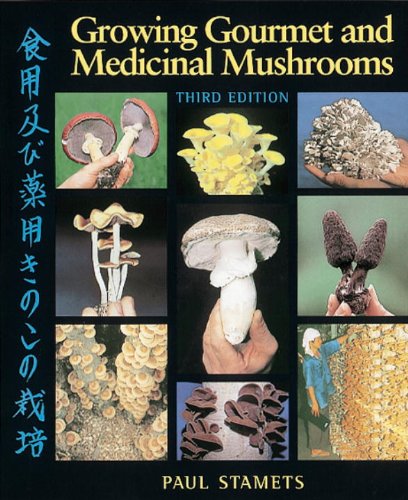
Growing Gourmet and Medicinal Mushrooms
Paul Stamets
4.1
After years of living in awe of the mysterious fungi known as mushrooms-chefs, health enthusiasts, and home cooks alike can't get enough of these rich, delicate morsels. With updated production techniques for home and commercial cultivation, detailed growth parameters for 31 mushroom species, a trouble-shooting guide, and handy gardening tips, this revised and updated handbook will make your mycological landscapes the envy of the neighborhood.
…
Cover unavailable
61
Worms Eat My Garbage: How to Set Up and Maintain a Worm Composting System
Mary Appelhof, Joanne Olszewski, Amy Stewart
4.1
For more than three decades, this best-selling guide to the practice of vermicomposting has taught people how to use worms to recycle food waste into nutrient-rich fertilizer for houseplants or gardens. Small-scale, self-contained worm bins can be kept indoors, in a basement or even under the kitchen sink in an apartment — making vermicomposting a great option for city dwellers and anyone who doesn’t want or can’t have an outdoor compost pile. The fully revised 35th anniversary edition features the original’s same friendly tone, with up-to-date information on the entire process, from building or purchasing a bin (readily available at garden supply stores), maintaining the worms, and harvesting the finished compost.
…
Cover unavailable
62
Last Child in the Woods: Saving Our Children from Nature-Deficit Disorder
Richard Louv
4.1
"I like to play indoors better 'cause that's where all the electrical outlets are," reports a fourth-grader. Never before in history have children been so plugged in—and so out of touch with the natural world. In this groundbreaking new work, child advocacy expert Richard Louv directly links the lack of nature in the lives of today's wired generation—he calls it nature deficit—to some of the most disturbing childhood trends, such as rises in obesity, Attention Deficit Disorder (ADD), and depression.
Some startling facts: By the 1990s the radius around the home where children were allowed to roam on their own had shrunk to a ninth of what it had been in 1970. Today, average eight-year-olds are better able to identify cartoon characters than native species, such as beetles and oak trees, in their own community. The rate at which doctors prescribe antidepressants to children has doubled in the last five years, and recent studies show that too much computer use spells trouble for the developing mind.
Nature-deficit disorder is not a medical condition; it is a description of the human costs of alienation from nature. This alienation damages children and shapes adults, families, and communities. There are solutions, though, and they're right in our own backyards. Last child in the Woods is the first book to bring together cutting-edge research showing that direct exposure to nature is essential for healthy childhood development—physical, emotional, and spiritual. What's more, nature is a potent therapy for depression, obesity, and ADD. Environment-based education dramatically improves standardized test scores and grade point averages and develops skills in problem solving, critical thinking, and decision making. Even creativity is stimulated by childhood experiences in nature.
Yet sending kids outside to play is increasingly difficult. Computers, television, and video games compete for their time, of course, but it's also our fears of traffic, strangers, even virus-carrying mosquitoes—fears the media exploit—that keep children indoors. Meanwhile, schools assign more and more homework, and there is less and less access to natural areas.
Parents have the power to ensure that their daughter or son will not be the "last child in the woods," and this book is the first step toward that nature-child reunion.
…
Recommended by Genevieve Von Lob.
Genevieve Von Lob
Louv coined the term ‘Nature Deficit Disorder’ because he was so concerned about the alienation of young people from nature. [source]
Cover unavailable
63
Meetings with Remarkable Trees
Thomas Pakenham
4.1
Thomas Pakenham's bestselling book of tree portraits. With this astonishing collection of tree portraits, Thomas Pakenham produced a new kind of tree book. The arrangement owed little to conventional botany. The sixty trees were grouped according to their own strong personalities: Natives, Travellers, Shrines, Fantasies and Survivors. From the ancient native trees, many of which are huge and immeasurably old, to the exotic newcomers from Europe, the East and North America, MEETINGS WITH REMARKABLE TREES captures the history and beauty of these entrancing living structures. Common to all these trees is their power to inspire awe and wonder. This is a lovingly researched book, beautifully illustrated with colour photographs, engravings and maps - a moving testimonial to the Earth's largest and oldest living structures.
…
Cover unavailable
64
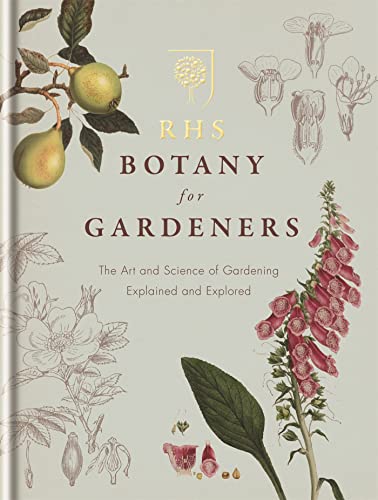
RHS Botany for Gardeners: The Art and Science of Gardening Explained & Explored
Howard Hughes
4.1
RHS Botany for Gardeners is more than just a useful reference book on the science of botany and the language of horticulture - it is a practical, hands-on guide that will help gardeners understand how plants grow, how this affects how they perform in the garden and so help them get better results.
Illustrated throughout with beautiful botanical prints and simple technical diagrams, RHS Botany for Gardeners provides easy-to-understand explanations of over 3,000 botanical words and terms, and shows how these can be applied to everyday gardening practice. For easy navigation, the book is divided into thematic changes - covering everything from Plant Parts to Plant Pests - and further subdivided into useful headings, such as 'Seed Sowing' and 'Pruning'. In addition, feature spreads profile the remarkable individuals who have collected, studied and illustrated the plants that we grow today, and 'Botany in Action' boxes provide instantly accessible practical tips and advice.
Aided by this book, every gardener - and every garden - will benefit from unlocking the wealth of information that lies within the intriguing world of botanical science.
…
Cover unavailable
65
Paradise Lot: Two Plant Geeks, One-Tenth of an Acre, and the Making of an Edible Garden Oasis in the City
Eric Toensmeier, Jonathan Bates
4.1
When Eric Toensmeier and Jonathan Bates moved into a duplex in a run-down part of Holyoke, Massachusetts, the tenth-of-an-acre lot was barren ground and bad soil, peppered with broken pieces of concrete, asphalt, and brick. The two friends got to work designing what would become not just another urban farm, but a "permaculture paradise" replete with perennial broccoli, paw paws, bananas, and moringa--all told, more than two hundred low-maintenance edible plants in an innovative food forest on a small city lot. The garden--intended to function like a natural ecosystem with the plants themselves providing most of the garden's needs for fertility, pest control, and weed suppression--also features an edible water garden, a year-round unheated greenhouse, tropical crops, urban poultry, and even silkworms.
In telling the story of Paradise Lot, Toensmeier explains the principles and practices of permaculture, the choice of exotic and unusual food plants, the techniques of design and cultivation, and, of course, the adventures, mistakes, and do-overs in the process. Packed full of detailed, useful information about designing a highly productive permaculture garden, Paradise Lot is also a funny and charming story of two single guys, both plant nerds, with a wild plan: to realize the garden of their dreams and meet women to share it with. Amazingly, on both counts, they succeed.
…
Cover unavailable
66
Carrots Love Tomatoes: Secrets of Companion Planting for Successful Gardening
Louise Riotte
4.1
If you want to know whether it is kosher to plant onions between cabbage plants, this is the place to look. -- Oklahoma Today
First published in 1975, this classic companion planting guide has taught a generation of gardeners how to use plants' natural partnerships to produce bigger and better harvests. Over 500,000 in Print!
Cover unavailable
67
Mini Farming: Self-Sufficiency on 1/4 Acre
Brett L. Markham
4.1
Mini Farming describes a holistic approach to small-area farming that will show you how to produce 85 percent of an average family’s food on just a quarter acre—and earn $10,000 in cash annually while spending less than half the time that an ordinary job would require. Even if you have never been a farmer or a gardener, this book covers everything you need to know to get started: buying and saving seeds, starting seedlings, establishing raised beds, soil fertility practices, composting, dealing with pest and disease problems, crop rotation, farm planning, and much more. Because self-suf?ciency is the objective, subjects such as raising backyard chickens and home canning are also covered along with numerous methods for keeping costs down and production high. Materials, tools, and techniques are detailed with photographs, tables, diagrams, and illustrations.
…
Cover unavailable
68
Plant Families: A Guide for Gardeners and Botanists
Ross Bayton
4.1
Most of us lump plants together in one big family, and when pressed can only explain their grouping by what they’re not—not an animal, not a mineral, and so just a plant. In reality, there are hundreds of different plant families, each grouped logically by a unique family history and genealogy. This brings sense and order to the more than a quarter of a million different plant species covering a diverse spectrum that includes soaring sequoias (Cupressaceae), squat prickly pear (Cactaceae), and luxuriant roses (Rosaceae).
Plant Families is an easy-to-use, beautifully illustrated guide to the more than one hundred core plant families every horticulturist, gardener, or budding botanist needs to know. It introduces the basics of plant genealogy and teaches readers how to identify and understand the different structures of flowers, trees, herbs, shrubs, and bulbs. It then walks through each family, explaining its origins and range, and describing characteristics such as size, flowers, and seeds. Each family is accompanied by full-color botanical illustrations and diagrams. “Uses For” boxes planted throughout the book provide practical gardening tips related to each family.
We have much to gain by learning about the relationships between plant families. By understanding how botanists create these groupings, we can become more apt at spotting the unique characteristics of a plant and identify them faster and more accurately. Understanding plant families also helps us to make sense of—and better appreciate—the enormous biological diversity of the plant kingdom.
…
Cover unavailable
69
Sepp Holzer's Permaculture: A Practical Guide to Small-Scale, Integrative Farming and Gardening
Sepp Holzer
4.1
Sepp Holzer farms steep mountainsides in Austria 1,500 meters above sea level. His farm is an intricate network of terraces, raised beds, ponds, waterways and tracks, well covered with productive fruit trees and other vegetation, with the farmhouse neatly nestling amongst them. This is in dramatic contrast to his neighbors' spruce monocultures.In this book, Holzer shares the skill and knowledge acquired over his lifetime. He covers every aspect of his farming methods, not just how to create a holistic system on the farm itself, but how to make a living from it. Holzer writes about everything from the overall concepts, down to the practical details.In Sepp Holzer's Permaculturereaders will learn:
How he sets up a permaculture system
The fruit varieties he has found best for permaculture growing
How to construct terraces, ponds, and waterways
How to build shelters for animals and how to work with them on the land
How to cultivate edible mushrooms in the garden and on the farm
and much more!
Holzer offers a wealth of information for the gardener, smallholder or alternative farmer yet the book's greatest value is the attitudes it teaches. He reveals the thinking processes based on principles found in nature that create his productive systems. These can be applied anywhere.
…
Cover unavailable
70
Encyclopedia of Herbal Medicine
Andrew Chevallier
4.1
Helpful to enthusiasts and professionals alike, these volumes provide extensive coverage of hundreds of conditions and their remedies, including their sources and symptoms. Up-to-date research and in-depth explanations of today's most popular alternative therapies are enhanced by step-by-step photos of typical treatments, as well as symptoms charts and remedy ratings.
Cover unavailable
71
Scentual Garden: Exploring the World of Botanical Fragrance
Ken Druse
4.1
A complete illustrated survey of fragrance in the garden by America’s leading garden writer
Popular garden writer Ken Druse offers a complete survey of fragrance in the garden, in a major work filled with new knowledge. He arranges both familiar and unusual garden plants, shrubs, and trees into 12 categories, giving gardeners a vastly expanded palate of scents to explore and enjoy, and he also provides examples of garden designs that offer harmonious scentual delights. Ellen Hoverkamp contributes her artful botanical images of flowers and plants discussed in the text. These are accompanied by Druse’s award-winning garden photographs, to create a book that is as beautiful to look at as it is informative and evocative to read.
…
Cover unavailable
72
The Earth Moved: On the Remarkable Achievements of Earthworms
Amy Stewart
4.1
"You know a book is good when you actually welcome one of those howling days of wind and sleet that makes going out next to impossible." —The New York Times
In The Earth Moved, Amy Stewart takes us on a journey through the underground world and introduces us to one of its most amazing denizens. The earthworm may be small, spineless, and blind, but its impact on the ecosystem is profound. It ploughs the soil, fights plant diseases, cleans up pollution, and turns ordinary dirt into fertile land. Who knew?
In her witty, offbeat style, Stewart shows that much depends on the actions of the lowly worm. Charles Darwin devoted his last years to the meticulous study of these creatures, praising their remarkable abilities. With the august scientist as her inspiration, Stewart investigates the worm's subterranean realm, talks to oligochaetologists—the unsung heroes of earthworm science—who have devoted their lives to unearthing the complex life beneath our feet, and observes the thousands of worms in her own garden. From the legendary giant Australian worm that stretches to ten feet in length to the modest nightcrawler that wormed its way into the heart of Darwin's last book to the energetic red wigglers in Stewart's compost bin, The Earth Moved gives worms their due and exposes their hidden and extraordinary universe. This book is for all of us who appreciate Mother Nature's creatures, no matter how humble.
…
Cover unavailable
73
Marijuana Grower's Handbook: Your Complete Guide for Medical and Personal Marijuana Cultivation
Ed Rosenthal
4.1
Cover unavailable
74
The Living Landscape: Designing for Beauty and Biodiversity in the Home Garden
Rick Darke, Douglas W. Tallamy
4.1
“This thoughtful, intelligent book is all about connectivity, addressing a natural world in which we are the primary influence.” —The New York Times Books Review
Many gardeners today want a home landscape that nourishes and fosters wildlife, but they also want beauty, a space for the kids to play, privacy, and maybe even a vegetable patch. Sure, it’s a tall order, but The Living Landscape shows you how to do it. You’ll learn the strategies for making and maintaining a diverse, layered landscape—one that offers beauty on many levels, provides outdoor rooms and turf areas for children and pets, incorporates fragrance and edible plants, and provides cover, shelter, and sustenance for wildlife. Richly illustrated and informed by both a keen eye for design and an understanding of how healthy ecologies work, The Living Landscape will enable you to create a garden that fulfills both human needs and the needs of wildlife communities.
…
Cover unavailable
75
Lasagna Gardening: A New Layering System for Bountiful Gardens: No Digging, No Tilling, No Weeding, No Kidding!
Patricia Lanza, Jane D. Ramsey, Douglas Schneider, Elayne Sears
4.0
Cover unavailable
76
Grow a Little Fruit Tree: Simple Pruning Techniques for Small-Space, Easy-Harvest Fruit Trees
Ann Ralph
4.0
Grow your own apples, plums, cherries, and peaches in even the smallest backyard! Expert pruner Ann Ralph reveals a simple yet revolutionary secret that keeps an ordinary fruit tree much smaller than normal. These great little trees take up less space, require less care, offer easy harvest, and make a fruitful addition to any home landscape.
Cover unavailable
77
Lab Girl
Hope Jahren
4.0
Acclaimed scientist Hope Jahren has built three laboratories in which she’s studied trees, flowers, seeds, and soil. Her first book is a revelatory treatise on plant life—but it is also so much more. Lab Girl is a book about work, love, and the mountains that can be moved when those two things come together. It is told through Jahren’s stories: about her childhood in rural Minnesota with an uncompromising mother and a father who encouraged hours of play in his classroom’s labs; about how she found a sanctuary in science, and learned to perform lab work done “with both the heart and the hands”; and about the inevitable disappointments, but also the triumphs and exhilarating discoveries, of scientific work.
Yet at the core of this book is the story of a relationship Jahren forged with a brilliant, wounded man named Bill, who becomes her lab partner and best friend. Their sometimes rogue adventures in science take them from the Midwest across the United States and back again, over the Atlantic to the ever-light skies of the North Pole and to tropical Hawaii, where she and her lab currently make their home.
…
Recommended by Gail Kelly.
Cover unavailable
78
Permaculture Two: Practical Design for Town and Country in Permanent Agriculture
Bill Mollison
4.0
Permaculture Two delves deeper into the concept of "consciously designed agricultural systems." Author, Bill Mollison, describes new approaches and solutions that have evolved around the world. Ways in which plants can modify climate and many forms of pollution are discussed. Highly productive, low-energy systems, are made clear, in this fascinating book that offers some concrete solutions for saving Mother Earth.
"...If there is a single claim, that I could make, in order to distinguish Permaculture from other systems of agriculture, with the notable exception of keyline concepts, it is that Permaculture is primarily a consciously designed agricultural system ... a system that combines landscape design with perennial plants and animals to make a safe and sustainable resource for town and country. A truly appropriate technology giving high yields for low energy inputs, and using only human skill and intellect to achieve a stable resource of great complexity and stability."
"Permaculture Two is about design, not gardening or livestock per se but as elements in a system intended to serve man, and the ends of good ecology ... Good teachers have nothing to give but enthusiasm to learn; they cannot with the best will in the world, give their students knowledge. Thus it is ‘how’ to design, rather than designing your site which I am attempting here ..."
"... both individual and competitive enterprise, and ‘free’ energy have faiIed us. Society is in a mess; obesity in the west is balanced by famine in the third world. Petrol is running out yet freeways are still being built. Against such universal insanity the only response is to gather together a few friends and commence to build the alternative on a philosophy of individual responsibility for community survival.”
Contents Design in Landscape Soil Improvement Broadscale Techniques Design for Difficult Climates Structures Waterworks Free Range Poultry Design Permaculture and Community
…
Cover unavailable
79
The Organic Medicinal Herb Farmer: The Ultimate Guide to Producing High-Quality Herbs on a Market Scale
Jeff Carpenter
4.0
Both a business guide and a farming manual, The Organic Medicinal Herb Farmer will teach readers how to successfully grow and market organic medicinal Western herbs.
Whether you’re trying to farm medicinal plants, culinary herbs, or at-risk native herbs exclusively or simply add herbal crops to what you’re already growing, successful small-scale herb farmers Jeff and Melanie Carpenter will guide you through the entire process—from cultivation to creating value-added products.
Using their Zack Woods Herb Farm in Vermont as a backdrop, the Carpenters cover all the basic practical information farmers need to know to get an organic herb farm up and running, including:
• Size and scale considerations; • Layout and design of the farm and facilities; • Growing and cultivation information, including types of tools; • Field and bed prep; • Plant propagation; • Weed control, and pests and diseases; • Harvesting, as well as wild harvesting and the concept of geo-authentic botanicals; • Postharvest processing; and, • Value-added products and marketing.
The authors also provide fifty detailed plant profiles, going deeper into the herbs every farmer should consider growing. In an easy-to-understand, practical, and comprehensive manner, readers will learn how to focus on quality over quantity, and keep costs down by innovating with existing equipment, rather than expensive technology. Market farmers who have never before considered growing medicinal herbs will learn why it’s more important to produce these herbs domestically.
The Organic Medicinal Herb Farmer makes a convincing case that producing organic medicinal herbs can be a viable, profitable, farming enterprise. The Carpenters also make the case for incorporating medicinal herbs into existing operations, as it can help increase revenue in the form of value-added products, not to mention improve the ecological health of farmland by encouraging biodiversity as a path toward greater soil health.
…
Cover unavailable
80
Nature's Best Hope: A New Approach to Conservation that Starts in Your Yard
Douglas W. Tallamy
4.0
Douglas W. Tallamy’s first book, Bringing Nature Home, sparked a national conversation about the link between healthy local ecosystems and human well-being. In Nature's Best Hope, he takes the next step and outlines his vision for a grassroots, home-grown approach to conservation.
Nature's Best Hope advocates for homeowners everywhere to turn their yards into conservation corridors that provide wildlife habitats. This home-based approach doesn’t rely on the federal government and protects the environment from the whims of politics. It is also easy to do, and readers will walk away with specific suggestions they can incorporate into their own yards.
Nature's Best Hope is nature writing at its best—rooted in history, progressive in its advocacy, and above all, actionable and hopeful. By proposing practical measures that ordinary people can easily do, Tallamy gives us reason to believe that the planet can be preserved for future generations.
…
Cover unavailable
81
The Year-Round Vegetable Gardener: How to Grow Your Own Food 365 Days a Year, No Matter Where You Live
Niki Jabbour, Joseph De Sciose
4.0
Even in winter’s coldest months you can harvest fresh, delicious produce. Drawing on insights gained from years of growing vegetables in Nova Scotia, Niki Jabbour shares her simple techniques for gardening throughout the year. Learn how to select the best varieties for each season, the art of succession planting, and how to build inexpensive structures to protect your crops from the elements. No matter where you live, you’ll soon enjoy a thriving vegetable garden year-round.
…
Cover unavailable
82
Making More Plants: The Science, Art, and Joy of Propagation
Ken Druse
4.0
For people who love gardens, propagation is gardening itself, the practice of growing whatever you want, whenever you want. Whether you crave healthy, vigorous plants, wish to grow new ones to share with friends, or hope to produce scores of them to fill your own beds and borders -- for free -- Making More Plants will help fulfill your most vivid garden dreams. Ken Druse, one of America's foremost gardening authorities, an award-winning photographer, and the author of the best-selling Natural Garden series, presents innovative, practical techniques for expanding any plant collection, with more than 500 full-color photographs.
Based on years of personal research, Making More Plants is a practical manual as well as a beautiful garden book, presenting procedures Ken Druse has tested and adapted, as well as photographed step by step. In clear, nspirational language Ken takes the mystery out of seemingly complex practices such as seed conditioning, bulb division, leaf and stem cutting, grafting, and more. Whether focusing on techniques as easy as creating multiple plants from a single perennial using a common kitchen knife or on more complicated practices such as air layering, Ken's advice will inspire both novice and experienced gardeners to turn their homes and gardens into personal nurseries.
Supplementing the text and photographs is a comprehensive appendix charting methods for propagating more than 700 different plants, listed by both common and Latin names, an invaluable resource unmatched by even the most thorough of propagation manuals.
Straightforward advice, gorgeous photographs, and Ken's own engaging voice all combine to make Making More Plants an indispensable guide for every passionate gardener and plant lover.
…
Cover unavailable
83
Gardening at Longmeadow
Monty Don
4.0
Monty Don made a triumphant return to our screens as presenter of Gardeners' World. A firm favourite with viewers, Monty's infectious enthusiasm for plants, attention to the finer details of gardening technique and easy charm have seen the ratings soar. Here Monty invites us into the garden at Longmeadow, to show us how he created this beautiful garden, and how we can do the same in our own.
Following the cycle of the seasons, Gardening at Longmeadow will introduce readers to the garden from the earliest snowdrops of January through the first splashes of colour in the Spring Garden, the electric summer displays of the Jewel Garden, the autumn harvest in the orchard, and on to a Christmas feast sourced from the vegetable gardens.
Describing the magic of each area at different times of the year, Monty will explain the basics of what to do when and how to get the most from each plant. He'll talk through the essential techniques and more complex processes, accompanied by easy-to-follow, step-by-step photography.
Longmeadow is a gardeners' garden, but this will be a book for gardening enthusiasts of all skill levels who have been inspired by what they've seen, and who would like to achieve something similar for themselves.
…
Cover unavailable
84
Plants are Terrible People
Luke Ruggenberg
4.0
The garden is a strange place. Any gardener who's been around the hedge and back could tell you that. But never has it been more absurd than within these pages. From the addled mind that brought you "Twenty Reasons Not To Garden (And Why I Ignore Them All)", comes a new volume of hilarious and heartfelt dispatches from the strangest garden in the land. Get ready for a mad dash through the weeds with this collection of essays, what-ifs, and uproarious nonsense. Along the way, you'll dodge undead conifers, Serious Gardeners in the wild, and one doozy of a water bill. Stick around, and you might just meet an extraordinary rutabaga named Kevin. Hold on for dear life with humorist and professional Plant Guy, Luke Ruggenberg, as he guides readers through a gauntlet of horticultural mischief, provoking laughter, commiseration, and rumination in turn. Make it through, and you'll never look at the garden the same way again.
…
Cover unavailable
85
The Way of Herbs
Michael Tierra
4.0
Fully updated with the latest developments in herbal science, this practical and useful guide offers comprehensive descriptions of herbal treatments for cancer, arthritis, colds, and influenza. It shows how to gain and maintain health through a holistic approach, with information on simple herb remedies, and descriptions of more than 140 Western herbs and 31 Chinese herbs.
The Way of Herbs is an essential manual for gaining and maintaining good health through a holistic approach, a natural path to well-being and is “the one book that should be in everyone’s library” (William McGarey, MD).
Discover: *The three functions of herbs *Eight traditional methods of herbal therapy *The benefits of a balanced diet *Herbal treatments for cancer, herpes, acne, arthritis, back pain, weight problems, colds, and flu *Detailed descriptions, use, and dosage for more than 140 Western herbs and 31 important Chinese herbs *How to purchase, grow, and store herbs *A new, extensive directory of herbal health-care stores
“The first herb book that effectively blends Eastern, European, and American Indian healing traditions” (Steven Foster, director of the American Center for Herb Study).
…
Cover unavailable
86
The Tree Lady: The True Story of How One Tree-Loving Woman Changed a City Forever
H. Joseph Hopkins, Jill McElmurry
4.0
Unearth the true story of green-thumbed pioneer and activist Kate Sessions, who helped San Diego grow from a dry desert town into a lush, leafy city known for its gorgeous parks and gardens.
Katherine Olivia Sessions never thought she’d live in a place without trees. After all, Kate grew up among the towering pines and redwoods of Northern California. But after becoming the first woman to graduate from the University of California with a degree in science, she took a job as a teacher far south in the dry desert town of San Diego. Where there were almost no trees.
Kate decided that San Diego needed trees more than anything else. So this trailblazing young woman singlehandedly started a massive movement that transformed the town into the green, garden-filled oasis it is today. Now, more than 100 years after Kate first arrived in San Diego, her gorgeous gardens and parks can be found all over the city.
Part fascinating biography, part inspirational story, this moving picture book about following your dreams, using your talents, and staying strong in the face of adversity is sure to resonate with readers young and old.
…
Cover unavailable
87
Founding Gardeners: The Revolutionary Generation, Nature, and the Shaping of the American Nation
Andrea Wulf
4.0
From the author of the acclaimed The Brother Gardeners, a fascinating look at the founding fathers from the unique and intimate perspective of their lives as gardeners, plantsmen, and farmers. For the founding fathers, gardening, agriculture, and botany were elemental passions, as deeply ingrained in their characters as their belief in liberty for the nation they were creating. Andrea Wulf reveals for the first time this aspect of the revolutionary generation. She describes how, even as British ships gathered off Staten Island, George Washington wrote his estate manager about the garden at Mount Vernon; how a tour of English gardens renewed Thomas Jefferson’s and John Adams’s faith in their fledgling nation; how a trip to the great botanist John Bartram’s garden helped the delegates of the Constitutional Congress break their deadlock; and why James Madison is the forgotten father of American environmentalism. These and other stories reveal a guiding but previously overlooked ideology of the American Revolution. Founding Gardeners adds depth and nuance to our understanding of the American experiment and provides us with a portrait of the founding fathers as they’ve never before been seen.
…
Cover unavailable
88
The Year-Round Solar Greenhouse: How to Design and Build a Net-Zero Energy Greenhouse
Lindsey Schiller
4.0
Fresh, local nutrient-dense fruits vegetables are hard to find in winter in cold climates. Growing warm-weather crops like tomatoes, bananas, avocados, and other perennials is nearly impossible using conventional structures. The solution for millions of backyard and small-scale commercial growers is self-heating solar greenhouses.
The Year-round Solar Greenhouse is the one-stop guide to designing and building greenhouses that harness and store energy from the sun to create naturally heated, lush growing environments even in the depths of winter, covering principles of solar greenhouse design and siting, glazing material properties and selection, controlling heat loss, ventilation, and construction methods. Additionally, an in-depth section covers sustainable ways of heating the greenhouse without fossil fuels, including using thermal mass and storing heat underground with a ground to air heat exchanger.
Variations include attached solar greenhouses, earth sheltered greenhouses, plus integrating hydroponics and aquaponics. More than a dozen case studies from across North America provide inspiration and demonstrate specific challenges and solutions for growing year-round in any climate.
Grow your own food, anytime, anywhere using the power of the sun!
Lindsey Schiller is a greenhouse designer and with co-author Marc Plinke, co-owner of Ceres Greenhouse Solutions. Lindsey has designed, toured and helped build hundreds of energy-efficient greenhouses spanning small residential structures to acre-size commercial facilities.
Marc Plinke is an inventor-innovator with a PhD in engineering who has focused his engineering mindset on building innovative, energy-efficient and smarter greenhouses, with the intention of enabling people to grow their own food sustainably and year-round.
…
Cover unavailable
89
RHS Propagating Plants
Alan R. Toogood
4.0
From trees and shrubs to culinary herbs, this unequalled practical guide from the RHS offers invaluable advice on the successful propagation of all garden plants. Detailed A-Z listings on over 1,500 plants, together with specially commissioned photographs and colour illustrations show you every technique you will need. With unique tips from expert propagators, as well as general methodology, this book is a must-have for amateur and professional gardeners alike.
…
Cover unavailable
90
Plant-Driven Design: Creating Gardens That Honor Plants, Place, and Spirit
Scott Ogden, Lauren Springer Ogden
4.0
For too long, garden design has given pride of place to architecture, artifice, and arbitrary principles. The results? Soulless landscapes where plants play subordinate roles.
With passion and eloquence, Scott Ogden and Lauren Springer Ogden argue that only when plants are given the respect they deserve does a garden become emotionally resonant. Plant-Driven Design shows designers how to work more confidently with plants, and gives gardeners more confidence to design. The Ogdens boldly challenge design orthodoxy and current trends by examining how to marry plantsmanship and design without sacrificing one to the other.
Supported by extensive lists of plants adapted to specific purposes and sites, Plant-Driven Design explores how plants interact with place. In addition, the authors' experience gardening and designing in a wide variety of climates gives their perspective a unique depth. In ideas, scope, and detail, this book both embraces and transcends regionality. By reclaiming gardens as a home to plants, this groundbreaking work will restore life-affirming vitality to garden design and profoundly affect how we understand and experience gardens.
…
Cover unavailable
91
The American Woodland Garden: Capturing the Spirit of the Deciduous Forest
Rick Darke
4.0
North America's eastern half, roughly from the Midwest to the Atlantic, was once a great deciduous forest. Although centuries of human intervention have cleared much of the land, the timeless forest remains in the spirit of the place. Today, even the shortest period of human neglect allows for the resurgence of the process of forest creation. The greatest gardens — and happiest gardeners — in this area will be those that take into account the nature of the land.
In his unique, and often thought-provoking new book, award-winning author Darke promotes and stunningly illustrates a garden aesthetic based on the strengths and opportunities of the woodland, including play of light, sound, and scent; seasonal drama; and the architectural interest of woody plants.
While written from a compelling and fresh perspective, The American Woodland Garden never strays from the realistic concerns of the everyday gardener. Information on planting, soils, and maintenance provides a firm foundation for horticultural accomplishment. An alphabetical list of woodland plants offers useful advice for every garden, emphasizing native trees, shrubs, vines, ferns, grasses, sedges, and flowering perennials that fit the forest aesthetic. More than 700 of the author's stunning photographs show both the natural palette of plants in the wild and the effects that can be achieved with them in garden settings. Many of the most striking photos in the book were taken at classic gardens that are paragons of an ecological style.
The American Woodland Garden is a clarion call to a new awareness of our relationship to the natural world. This book will take its rightful place among the classic works that have influenced our concept of the American landscape.
…
Cover unavailable
92
The Herb Book: The Most Complete Catalog of Herbs Ever Published
John Lust
4.0
"I have an old copy of this book that I've had for years and would never let go of, no matter how many times I moved and thinned out my books. This is a re-release and I'm really happy to see it back in print. Part two of the book is the real treasure. It is an alphabetical list of herbs that gives detailed information about their properties, including any cautions required." — Lora's Rants & Reviews Also known as "The Natural Remedy Bible," The Herb Book provides a comprehensive resource for building a livelier, healthier, happier life. More than 2,000 listings offer remedies for ragged nerves, nightmares, and coughing fits as well as suggestions for adding spice to recipes, coloring fabrics, freshening breath, and a host of other benefits. Complete and concise descriptions of herbs, illustrated by more than 275 line drawings, offer the most comprehensive catalog of "miracle plants" ever published. Written by an expert and pioneer in the field, this easy-to-use reference features three parts. The first presents introductory historical information and background for using the rest of the book. The second part features individual numbered listings of medicinal plants with their botanical descriptions and uses. The third part emphasizes the variety of uses for the plants listed in Part 2, including mixtures for medicinal treatments, nutritious and culinary plants, cosmetic and aromatic purposes, plant dyes, and other applications. The book concludes with a captivating look at plant-related astrology, lore, and legends.
…
Cover unavailable
93
The Humane Gardener: Nurturing a Backyard Habitat for Wildlife
Nancy Lawson
4.0
In this eloquent plea for compassion and respect for all species, journalist and gardener Nancy Lawson describes why and how to welcome wildlife to our backyards. Through engaging anecdotes and inspired advice, profiles of home gardeners throughout the country, and interviews with scientists and horticulturalists, Lawson applies the broader lessons of ecology to our own outdoor spaces.
Detailed chapters address planting for wildlife by choosing native species; providing habitats that shelter baby animals, as well as birds, bees, and butterflies; creating safe zones in the garden; cohabiting with creatures often regarded as pests; letting nature be your garden designer; and encouraging natural processes and evolution in the garden. The Humane Gardener fills a unique niche in describing simple principles for both attracting wildlife and peacefully resolving conflicts with all the creatures that share our world.
…
Cover unavailable
94
The Undaunted Garden: Planting for Weather-Resilient Beauty
Lauren Springer Ogden
4.0
From bulb lawns to the never summer garden, from perennials with fortitude to annuals that span the seasons, Lauren Springer delivers us the stalwart garden. With infectious enthusiasm, she offers down-to-earth advice and recommendations for sturdy, effortless, and beautiful plants and how to compose them with style.
Cover unavailable
95
Down the Garden Path
Beverley Nichols
4.0
Down the Garden Path has stood the test of time as one of the world’s best-loved and most-quoted gardening books. From a disaster building a rock garden, to further adventures with greenhouses, woodland gardens, not to mention cats and treacle, Nichols has left us a true gardening classic.
Cover unavailable
96
The Garden Jungle: or Gardening to Save the Planet
Dave Goulson
4.0
SUNDAY TIMES BESTSELLER
The Garden Jungle is a wonderful introduction to the hundreds of small creatures with whom we live cheek-by-jowl and of the myriad ways that we can encourage them to thrive.
The Garden Jungle is about the wildlife that lives right under our noses, in our gardens and parks, between the gaps in the pavement, and in the soil beneath our feet. Wherever you are right now, the chances are that there are worms, woodlice, centipedes, flies, silverfish, wasps, beetles, mice, shrews and much, much more, quietly living within just a few paces of you.
Dave Goulson gives us an insight into the fascinating and sometimes weird lives of these creatures, taking us burrowing into the compost heap, digging under the lawn and diving into the garden pond. He explains how our lives and ultimately the fate of humankind are inextricably intertwined with that of earwigs, bees, lacewings and hoverflies, unappreciated heroes of the natural world.
The Garden Jungle is at times an immensely serious book, exploring the environmental harm inadvertently done by gardeners who buy intensively reared plants in disposable plastic pots, sprayed with pesticides and grown in peat cut from the ground. Goulson argues that gardens could become places where we can reconnect with nature and rediscover where food comes from. With just a few small changes, our gardens could become a vast network of tiny nature reserves, where humans and wildlife can thrive together in harmony rather than conflict.
For anyone who has a garden, and cares about our planet, this book is essential reading.
…
Cover unavailable
97
The Cannabis Grow Bible: The Definitive Guide to Growing Marijuana for Recreational and Medicinal Use
Greg Green
4.0
The most comprehensive guide to marijuana gardening ever written is back with all new information and updated advice for cannabis enthusiasts. Over 200 additional pages of all new information are included in this book, from all new lighting equipment and techniques, to highly advanced cannabinoid extraction techniques and detailed, step-by-step gardening guides for novice and professional growers alike.
This book contains over 700 pages, with all new photos and step-by-step guides to every aspect of marijuana horticulture, plant breeding, and hash production. Featuring a handy quick start guide at the beginning to allow growers to get started right away, and hone their techniques as they read the later chapters in more detail. The biggest, most comprehensive, and straightforward guide to marijuana horticulture ever published.
…
Cover unavailable
98
Practical Botany for Gardeners: Over 3,000 Botanical Terms Explained and Explored
Geoff Hodge
4.0
Gardening can be frustratingly shrouded in secrecy. Fickle plants make seemingly spontaneous decisions to bloom or bust, seeds sprout magically in the blink of an eye, and deep-rooted mysteries unfold underground and out of sight. Understanding basic botany is like unlocking a horticultural code; fortunately learning a little science can reveal the secrets of the botanical universe and shed some light on what’s really going on in your garden.
Practical Botany for Gardeners provides an elegant and accessible introduction to the world of botany. It presents the essentials that every gardener needs to know, connecting explanations of scientific facts with useful gardening tips. Flip to the roots section and you’ll not only learn how different types of roots support a plant but also find that adding fungi to soil aids growth. The pruning section both defines “lateral buds” and explains how far back on a shoot to cut in order to propagate them.
The book breaks down key areas and terminology with easy-to-navigate chapters arranged by theme, such as plant types, plant parts, inner workings, and external factors. “Great Botanists” and “Botany in Action” boxes delve deeper into the fascinating byways of plant science. This multifaceted book also includes two hundred botanical illustrations and basic diagrams that hearken to the classic roots of botany.
Part handbook, part reference, Practical Botany for Gardeners is a beautifully captivating read. It’s a must for garden lovers and backyard botanists who want to grow and nurture their own plant knowledge.
…
Cover unavailable
99
A New Look at Houseplants
Janet Marinelli
4.0
Cover unavailable
100
Old Roses and English Roses
David Austin
4.0
Covers all the most worthwhile of the Old Roses and carries this on to their natural successors, the English Roses. This text provides valuable information on rose cultivation. Written by the proprietor of one of this country's leading rose nurseries, it contains over 140 superb colour photographs.