We've ranked the best genealogy books using expert recommendations, sales data, and millions of reader ratings. At Shortform, we know books. Our book guides are the best in the world. Learn why.
Cover unavailable
1
The Family Tree Guide to DNA Testing and Genetic Genealogy
Blaine T. Bettinger
5.0
Unlock the family secrets in your DNA!
Discover the answers to your family history mysteries using the most cutting edge tool available. This plain-English guide (newly updated and expanded to include th latest DNA developments) will teach you what DNA tests are available; the pros and cons of the major testing companies; and how to choose the right test to answer your specific genealogy questions. And once you've taken a DNA test, this guide will help you use your often-overwhelming results, with tips for understanding ethnicity estimates, navigating suggested cousin matches, and using third-party tools like GEDmatch to further analyze your data.
The book features:
- Colorful diagrams and expert definitions that explain key DNA terms and concepts such as haplogroups and DNA inheritance patterns - Detailed guides to each of the major kinds of DNA tests and tips for selecting the DNA test that can best help you solve your family mysteries, with case studies showing how each can be useful - Information about third-party tools you can use to more thoroughly analyze your test results once you've received them - Test comparison guides and research forms to help you select the most appropriate DNA test and organize your results - Insights into how adoptees and others who know little about their ancestry can benefit from DNA testing
Whether you've just heard of DNA testing or you've tested at all three major companies, this guide will give you the tools you need to unpuzzle your DNA and discover what it can tell you about your family tree.
…
Cover unavailable
2
The Family Tree Problem Solver: Tried-And-True Tactics for Tracing Elusive Ancestors
Marsha Hoffman Rising
4.8
Has your family history research hit a brick wall? Marsha Hoffman Rising's newly updated bestselling book The Family Tree Problem Solver has the solutions to help you find the answers you seek. Here, you'll find answers to genealogy's toughest problems.
Inside, you'll find: Work-arounds for lost or destroyed records Techniques for finding ancestors with common names Strategies for analyzing your problem and creating a successful research plan Ideas on how to find vital records before civil registration Troubleshooting advice for interpreting your DNA results Tips for finding "missing" ancestors in censuses Instructions for investigating collateral kin to further your family tree Methods for finding ancestors who lived before 1850 Case studies that show you how to apply these strategies to real-life research problems
…
Cover unavailable
3
Evidence! Citation & Analysis for the Family Historian
Elizabeth Shown Mills, Elizabeth S. Mills
4.7
Cover unavailable
4
Professional Genealogy: A Manual for Researchers, Writers, Editors, Lecturers, and Librarians
Elizabeth Shown Mills
4.7
Professional Genealogy is a manual by professionals for everyone serious about genealogy. For family historians who want to do their own study, reliably, it describes the standards. For hobbyists, attorneys, and medical scientists who seek professional researchers, it's a consumer guide that defines quality and facilitates choices. For academics as they increasingly cross over into genealogy - as well as librarians who struggle to help a whole new class of patrons - it provides a bridge to the methods, sources, and minutiae of "history, up-close and personal." For established genealogical professionals, it offers benchmarks by which they can advance their skills and place their businesses on sounder footing. For all those who dream of turning a fascinating hobby into a successful career, Professional Genealogy details the preparation and the processes.
…
Cover unavailable
5
The BCG Genealogical Standards Manual
Board for Certification of Genealogists
4.7
Family historians depend upon thousands of people unknown to them. They exchange research with others; copy information from books and databases; and write libraries, societies, and government offices. At times they even hire professionals to do legwork in distant areas and trust strangers to solve important problems. But how can a researcher be assured that he or she is producing or receiving reliable results? This official manual from the Board of Certification for Genealogists provides a standard by which all genealogists can pattern their work.
…
Cover unavailable
6
Mastering Genealogical Proof
Thomas W. Jone
4.7
Mastering Genealogical Proof aims to help researchers, students, and new family historians reconstruct relationships and lives of people they cannot see. It presents content in digestible chunks. Each chapter concludes with problems providing practice for proficiently applying the chapter’s concepts. Those problems, like examples throughout the book, use real records, real research, and real issues. Answers are at the back of the book along with a glossary of technical terms and an extensive resource list.
…
Cover unavailable
7
The Researcher's Guide to American Genealogy
Val D Greenwood
4.6
When it was originally published in 1973, The Researcher’s Guide to American Genealogy, by Val Greenwood, revolutionized its field. It was the first true textbook ever published about American genealogy. Combining how-to guidance, case study examples, and an extremely detailed discussion of genealogical records, The Researcher’s Guide was both an instant success and the go-to source for its users during each stage of their research. Following the publication of Alex Haley’s Roots and the TV miniseries that book spawned, sales of Mr. Greenwood’s book soared, assuring its reputation as the best book in American genealogy ever published.
Between 1973 and 2000, two additional editions of The Researcher’s Guide were released, primarily in response to the use of the personal computer for compiling, organizing, and publishing genealogical information. By 2000, the early stages of digitizing genealogy data, mostly on CD-ROM , were also in evidence.
Since the publication of the 3rd Edition of The Researcher’s Guide in 2000, the genealogy landscape has changed dramatically. Almost everyone now uses a computer for research. Thanks to the Internet, with a click of the mouse, genealogists have access to more data they could ever dream of studying; data they would have had to travel far and wide to come by in the past. Much of this information is free, or moderately priced through commercial subion services. To cite one crucial example, the entire U.S. federal census, from 1790 through 1940, is available online and completely indexed, from several providers. DNA has also become an important tool in genealogy in recent years. Whether or not they know where their immigrant ancestors came from, with a mere sputum sample, Americans can discover their ethnic origins in just a matter of weeks. This technology can help fill gaps in the family tree by, among other things, putting one in touch with others possessing a similar genetic make-up.
The 4th Edition of The Researcher’s Guide to American Genealogy both embraces the changes of the last seventeen years and yet transcends them. Mr. Greenwood has re-written every chapter and added two chapters about technology as it relates to family history research--one dealing with significant concepts and definitions and the other with specific resources and applications, including major family history websites and Internet resources. In addition, virtually every chapter provides information on Internet websites pertinent to the subject discussed in that chapter. Greenwood covers all the major changes in the field, including DNA research. The final result is a 4th Edition that is 25% longer than its predecessor. Given the unprecedented amount of information on the Internet, today’s researcher is able to reach beyond the vital statistics to a new world of understanding, both of his ancestors and of himself. Accordingly the author shows the reader how to build a family history about actual people, not just names and dates, from the myriad available sources. Mr. Greenwood also recognizes that not all sources researchers are seeking can be found online today—some never will be—that much information on the web is faulty or unsourced, and that researchers invariably enter dead ends or hit brick walls. Good instructional guidance, consequently, is critical to the success of family history research, and this is where The Researcher's Guide is unsurpassed. It is both a textbook and an all-purpose reference book, designed to help the present generation of family history researchers better understand the methods and principles of family history research, and learn how to utilize all available resources. In short, this new 4th edition provides a clear, comprehensive, and up-to-date account of American genealogy—no sound genealogical project is complete without it.
"Recommended as the most comprehensive how-to book on American genealogical and local history research."—Library Journal
…
Cover unavailable
8
Evidence Explained: Citing History Sources from Artifacts to Cyberspace
Elizabeth Shown Mills
4.6
No further information has been provided for this title.
Cover unavailable
9
Inheritance: A Memoir of Genealogy, Paternity, and Love
Dani Shapiro
4.6
The author of Hourglass now gives us a new memoir about identity, paternity, and family secrets—a real-time In the spring of 2016, through a genealogy website to which she had whimsically submitted her DNA for analysis, Dani Shapiro received the stunning news that her father was not her biological father. She woke up one morning and her entire history—the life she had lived—crumbled beneath her.
Inheritance is a book about secrets—secrets within families, kept out of shame or self-protectiveness; secrets we keep from one another in the name of love. It is the story of a woman’s urgent quest to unlock the story of her own identity, a story that has been scrupulously hidden from her for more than fifty years, years she had spent writing brilliantly, and compulsively, on themes of identity and family history. It is a book about the extraordinary moment we live in—a moment in which science and technology have outpaced not only medical ethics but also the capacities of the human heart to contend with the consequences of what we discover.
When Dani Shapiro discovers, purely by accident, that the father who raised her was not her biological father, she embarks upon a profound journey of understanding. What is ancestry? What is identity? Inheritance is a compulsively-readable investigation into selfhood that burrows to the heart of what it means to accept, to love, and to belong. [source]
Cover unavailable
10
How to Do Everything: Genealogy,
George Morgan
4.5
Discover your genealogy using the latest methods Thoroughly revised to cover new tools, techniques, and data, How to Do Everything: Genealogy, Fourth Edition uniquely addresses all the major genealogical record types and explains traditional and digital research strategies. Genealogy expert George G. Morgan shows you how to research your family history using the most current websites, mobile apps, social networking sites, record archives, census data, digital records, DNA research, and more. Discover your family's past with help from the new edition of this bestselling guide.
Start an effective, well-organized genealogical research project Work with traditional, electronic, and genetic research Analyze and organize your family information Locate and access genealogy records in the U.S., U.K., Ireland, Canada, and Australia Place your ancestors in geographical and historical context Learn successful Internet search techniques Locate vital, civil registration, census, and church records Track down military, property, and immigration and naturalization records Access libraries, archives, and other repositories online Research and verify your ancestors using genetic genealogy (DNA) Get past brick walls and dead ends Incorporate social networking into your research
…
Cover unavailable
11
Courthouse Research for Family Historians: Your Guide to Genealogical Treasures
Christine Rose
4.5
Cover unavailable
12
Organize Your Genealogy: Strategies and Solutions for Every Researcher
Drew Smith
4.5
Get Your Research in Order!
Stop struggling to manage all your genealogy facts, files, and data--make a plan of attack to maximize your progress. Organize Your Genealogy will show you how to use tried-and-true methods and the latest tech tools and genealogy software to organize your research plan, workspace, and family-history finds. In this book, you'll learn how to organize your time and resources, including how to set goals and objectives, determine workable research questions, sort paper and digital documents, keep track of physical and online correspondence, prepare for a research trip, and follow a skill-building plan. With this comprehensive guide, you'll make the most of your research time and energy and put yourself on a road to genealogy success.
Organize Your Genealogy features:
- Secrets to developing organized habits that will maximize your research time and progress - Hints for setting up the right physical and online workspaces - Proven, useful systems for organizing paper and electronic documents - Tips for managing genealogy projects and goals - The best tools for organizing every aspect of your ancestry research - Easy-to-use checklists and worksheets to apply the book's strategies Whether you're a newbie seeking best practices to get started or a seasoned researcher looking for new and better ways of getting organized, this guide will help you manage every facet of your ancestry research.
…
Cover unavailable
13
Advanced Genealogy Research Techniques
George Morgan and Drew Smith
4.5
Break through brick walls in your genealogical research "Easy to read, provides clear explanations, examples and is well-illustrated, thus definitely meeting the needs of libraries and individuals seeking a book to guide family historians who are beyond the basics and need help solving problems."--FORUM magazine
Learn how to use innovative methods to unearth hard-to-find ancestors. Advanced Genealogy Research Techniques shows you, step by step, how to uncover elusive details by taking advantage of specialized tools and software programs and using proven best practices for breaking through the brick walls that have hindered your progress.
You'll get professional advice on formulating a research strategy, understanding the details you discover, keeping careful track of your data, analyzing the evidence, and developing hypotheses. Real-world case studies demonstrate how you can apply the systematic procedures presented in this practical guide to your own research--and achieve success!
Examine the brick wall in detail to find potential weak spots that can be exploited into a breakthrough Use brute force techniques that leave no stone unturned Obtain exact copies of original records rather than derivative sources Research the family, associates, and neighbors (FANs) of your brick wall ancestor Consult with your family, friends, and colleagues to get a fresh perspective on your research Use crowdsourcing--genealogy societies, online forums, social media, blogs, wikis, and podcasts Apply technological solutions, including DNA testing and specialized genealogical software Get tips on hiring a professional genealogical researcher with the appropriate credentials and references Revisit your brick wall problem after honing your research skills Review your evidence, develop a research strategy, and keep a meticulous research log
…
Cover unavailable
14
Hey, America, Your Roots Are Showing
Megan Smolenyak
4.5
Hit shows like "Who Do You Think You Are?" and "History Detectives" demonstrate that people are fascinated by family origins. Here, America's top genealogist reveals how she's made headlines solving genealogical puzzles with entertaining, revealing, and controversial candor.
Cover unavailable
15
In the Blood (Jefferson Tayte Genealogical Mystery, #1)
Steve Robinson
4.5
Two hundred years ago a loyalist family fled to England to escape the American War of Independence and seemingly vanished into thin air. American genealogist Jefferson Tayte is hired to find out what happened, but it soon becomes apparent that a calculated killer is out to stop him.
In the Blood combines a centuries-old mystery with a present-day thriller that brings two people from opposite sides of the Atlantic together to uncover a series of carefully hidden crimes. Tayte's research centres around the tragic life of a young Cornish girl, a writing box, and the discovery of a dark secret that he believes will lead him to the family he is looking for. Trouble is, someone else is looking for the same answers and will stop at nothing to find them.
In the Blood is the first in the Jefferson Tayte mystery series.
…
Cover unavailable
16
Who Do You Think You Are?: The Essential Guide to Tracing Your Family History
Megan Smolenyak, Wall to Wall Media
4.5
The companion how-to guide to the hit TV series-with advice for anyone starting their own genealogical search.
In the groundbreaking NBC series Who Do You Think You Are? seven celebrities-Sarah Jessica Parker, Emmitt Smith, Lisa Kudrow, Matthew Broderick, Brooke Shields, Susan Sarandon, and Spike Lee-went on an emotional journey to trace their family history and discover who they really are, and millions of viewers caught the genealogy bug. With the official companion guide, anyone can learn how to chart their family's unique path. Featuring step-by-step instructions from Megan Smolenyak2, one of America's top genealogical researchers, this book offers everything readers need to know to start the journey into their past, from digging through old photos, to finding the best online resources.
…
Cover unavailable
17
Genealogy Standards
Board for Certification of Genealogists
4.5
Cover unavailable
18
Research Like a Pro: A Genealogist's Guide
Diana Elder and Nicole Dyer
4.5
Are you stuck in your genealogical research? Wondering how to make progress on your brick wall problems? Discover the process that a professional genealogist uses to solve difficult cases. Diana Elder shares her step-by-step method using real world examples, easily understood by any level of genealogist; written for the researcher ready to take their skills to the next level. Learn how to form an objective, review your research by creating a timeline analysis, construct a locality guide to direct your research, create a plan, style source citations, set up a research log to organize and track your searches, and write a report detailing your findings and ideas for future research. Work samples and templates are included.
…
Cover unavailable
19
It's All Relative: Adventures Up and Down the World's Family Tree
A. J. Jacobs
4.5
New York Times bestselling author of The Know-It-All and The Year of Living Biblically, A.J. Jacobs undergoes a hilarious, heartfelt quest to understand what constitutes family—where it begins and how far it goes—and attempts to untangle the true meaning of the “Family of Humankind.”
A.J. Jacobs has received some strange emails over the years, but this note was perhaps the strangest: “You don’t know me, but I’m your eighth cousin. And we have over 80,000 relatives of yours in our database.”
That’s enough family members to fill Madison Square Garden four times over. Who are these people, A.J. wondered, and how do I find them? So began Jacobs’s three-year adventure to help build the biggest family tree in history.
Jacobs’s journey would take him to all seven continents. He drank beer with a US president, found himself singing with the Mormon Tabernacle Choir, and unearthed genetic links to Hollywood actresses and real-life scoundrels. After all, we can choose our friends, but not our family.
“Whether he’s posing as a celebrity, outsourcing his chores, or adhering strictly to the Bible, we love reading about the wacky lifestyle experiments of author A.J. Jacobs” (Entertainment Weekly). Now Jacobs upends, in ways both meaningful and hilarious, our understanding of genetics and genealogy, tradition and tribalism, identity and connection. It’s All Relative is a fascinating look at the bonds that connect us all.
…
Cover unavailable
20
The Source: A Guidebook of American Genealogy
Loretto Dennis Szucs, Sandra Hargreaves Luebking
4.5
Genealogists and other historical researchers have valued the first two editions of this work, often referred to as the genealogist's bible."" The new edition continues that tradition. Intended as a handbook and a guide to selecting, locating, and using appropriate primary and secondary resources, The Source also functions as an instructional tool for novice genealogists and a refresher course for experienced researchers. More than 30 experts in this field--genealogists, historians, librarians, and archivists--prepared the 20 signed chapters, which are well written, easy to read, and include many helpful hints for getting the most out of whatever information is acquired. Each chapter ends with an extensive bibliography and is further enriched by tables, black-and-white illustrations, and examples of documents. Eight appendixes include the expected contact information for groups and institutions that persons studying genealogy and history need to find.
…
Cover unavailable
21
Finding Family: My Search for Roots and the Secrets in My DNA
Richard Hill
4.4
Finding Family: My Search for Roots and the Secrets in My DNA is the highly suspenseful account of an adoptee trying to reclaim the biological family denied him by sealed birth records. This fascinating quest, including the author's landmark use of DNA testing, takes readers on an exhilarating roller-coaster ride and concludes with a twist that rivals anything Hollywood has to offer.
In the vein of a classic mystery, Hill gathers the seemingly scant evidence surrounding the circumstances of his birth. As his resolve shores up, the author also avails of new friends, genealogists, the Internet, and the latest DNA tests in the new field of genetic genealogy. As he closes in on the truth of his ancestry, he is able to construct a living, breathing portrait of the young woman who was faced with the decision to forsake her rights to her child, and ultimately the man whose identity had remained hidden for decades.
Finding Family offers guidance, insight, and motivation for anyone engaged in a similar mission, from ways to obtain information to the many networks that can facilitate adoption searches. The book includes a detailed guide to DNA and genetic genealogy and how they can produce irrefutable results in determining genetic connections and help adoptees bypass sealed records and similar stumbling blocks.
…
Cover unavailable
22
They Came in Ships: A Guide to Finding Your Immigrant Ancestor's Arrival Record
John Philip Colletta
4.4
Chances are excellent that your ancestors came to America from somewhere-England, Spain, Germany, China, Africa. Can you imagine how they felt as they left their homes, what they left behind? Do you want to know? Would you know where to even start looking for the details? Author and genealogist John P. Colletta prepares you to undertake the search. He tells you not only what fundamental facts you need to know about your immigrant ancestor before beginning, but suggests where you may find that information as well.
…
Cover unavailable
23
Shaking the Family Tree: Blue Bloods, Black Sheep, and Other Obsessions of an Accidental Genealogist
Buzzy Jackson
4.4
“WHO ARE YOU AND WHERE DO YOU COME FROM? ”
As a historian, Buzzy Jackson thought she knew the answers to these simple questions—that is, until she took a look at her scrawny family tree. With a name like Jackson (the twentieth most common American surname), she knew she must have more relatives and more family history out there, somewhere. Her first visit to the Boulder Genealogy Society brought her more questions than answers . . . but it also gave her a tantalizing peek into the fascinating (and enormous) community of family-tree huggers and after-hours Alex Haleys.
In Shaking the Family Tree, Jackson dives headfirst into her family gene pool: flying cross-country to locate an ancient family graveyard, embarking on a weeklong genealogy Caribbean cruise, and even submitting her DNA for testing to try to find her Jacksons. And in the process of researching her own family lore (Who was Bullwhip Jackson?) she meets legions of other genealogy buffs who are as interesting as they are driven—from the boy who saved his allowance so he could order his great-grandfather’s death certificate to the woman who spends her free time documenting the cemeteries of Colorado ghost towns.
Through Jackson’s research she connects with distant relatives, traces her roots back more than 250 years and in the process comes to discover—genetically, historically, and emotionally—the true meaning of “family” for herself.
…
Cover unavailable
24
The Seven Daughters of Eve: The Science That Reveals Our Genetic Ancestry
Bryan Sykes
4.4
One of the most dramatic stories of genetic discovery since James Watson's The Double Helix—a work whose scientific and cultural reverberations will be discussed for years to come.
In 1994 Professor Bryan Sykes, a leading world authority on DNA and human evolution, was called in to examine the frozen remains of a man trapped in glacial ice in northern Italy. News of both the Ice Man's discovery and his age, which was put at over five thousand years, fascinated scientists and newspapers throughout the world. But what made Sykes's story particularly revelatory was his successful identification of a genetic descendant of the Ice Man, a woman living in Great Britain today. How was Sykes able to locate a living relative of a man who died thousands of years ago?
In The Seven Daughters of Eve, he gives us a firsthand account of his research into a remarkable gene, which passes undiluted from generation to generation through the maternal line. After plotting thousands of DNA sequences from all over the world, Sykes found that they clustered around a handful of distinct groups. Among Europeans and North American Caucasians, there are, in fact, only seven. This conclusion was staggering: almost everyone of native European descent, wherever they may live throughout the world, can trace their ancestry back to one of seven women, the Seven Daughters of Eve.
Naming them Ursula, Xenia, Helena, Velda, Tara, Katrine, and Jasmine, Sykes has created portraits of their disparate worlds by mapping the migratory patterns followed by millions of their ancestors. In reading the stories of these seven women, we learn exactly how our origins can be traced, how and where our ancient genetic ancestors lived, and how we are each living proof of the almost indestructible strands of DNA, which have survived over so many thousands of years. Indeed, The Seven Daughters of Eve is filled with dramatic stories: from Sykes's identification, using DNA samples from two living relatives, of the remains of Tsar Nicholas and Tsaress Alexandra, to the Caribbean woman whose family had been sold into slavery centuries before and whose ancestry Sykes was able to trace back to the Eastern coast of central Africa. Ultimately, Sykes's investigation reveals that, as a race, what humans have in common is more deeply embedded than what separates us.
…
Cover unavailable
25
Ancestry's Red Book: American State, County and Town Sources
Alice Eichholz
4.4
No scholarly reference library is complete without a copy of Ancestry's Red Book. In it, you will find both general and specific information essential to researchers of American records. This revised 3rd edition provides updated county and town listings within the same overall state-by-state organization. Whether you are looking for your ancestors in the northeastern states, the South, the West, or somewhere in the middle, "Ancestry's Red Book has information on records and holdings for every county in the United States, as well as excellent maps from renowned mapmaker William Dollarhide. In short, the "Red Book is simply the book that no genealogist can afford not to have. The availability of census records such as federal, state, and territorial census reports is covered in detail. Unlike the federal census, state and territorial census were taken at different times and different questions were asked. Vital records are also discussed, including when and where they were kept and how"
…
Cover unavailable
26
Roots: The Saga of an American Family
Alex Haley
4.4
When he was a boy in Henning, Tennessee, Alex Haley's grandmother used to tell him stories about their family—stories that went back to her grandparents, and their grandparents, down through the generations all the way to a man she called "the African." She said he had lived across the ocean near what he called the "Kamby Bolongo" and had been out in the forest one day chopping wood to make a drum when he was set upon by four men, beaten, chained and dragged aboard a slave ship bound for Colonial America.
Still vividly remembering the stories after he grew up and became a writer, Haley began to search for documentation that might authenticate the narrative. It took ten years and a half a million miles of travel across three continents to find it, but finally, in an astonishing feat of genealogical detective work, he discovered not only the name of "the African"—Kunta Kinte—but the precise location of Juffure, the very village in The Gambia, West Africa, from which he was abducted in 1767 at the age of sixteen and taken on the Lord Ligonier to Maryland and sold to a Virginia planter.
Haley has talked in Juffure with his own African sixth cousins. On September 29, 1967, he stood on the dock in Annapolis where his great-great-great-great-grandfather was taken ashore on September 29, 1767. Now he has written the monumental two-century drama of Kunta Kinte and the six generations who came after him—slaves and freedmen, farmers and blacksmiths, lumber mill workers and Pullman porters, lawyers and architects—and one author.
But Haley has done more than recapture the history of his own family. As the first black American writer to trace his origins back to their roots, he has told the story of 25,000,000 Americans of African descent. He has rediscovered for an entire people a rich cultural heritage that slavery took away from them, along with their names and their identities. But Roots speaks, finally, not just to blacks, or to whites, but to all people and all races everywhere, for the story it tells is one of the most eloquent testimonials ever written to the indomitability of the human spirit.
…
Cover unavailable
27
To the Grave (Jefferson Tayte Genealogical Mystery, #2)
Steve Robinson
4.3
A curiously dated child’s suitcase arrives, unannounced and unexplained, in a modern-day Washington suburb. A week later, American genealogist Jefferson Tayte is sitting in an English hotel room, staring at the wrong end of a loaded gun.
In his latest journey into the past, Tayte lands in wartime Leicestershire, England. The genealogist had hoped simply to reunite his client with the birth mother she had never met, having no idea she had been adopted. Instead, he uncovers the tale of a young girl and an American serviceman from the US 82nd Airborne, and a stolen wartime love affair that went tragically wrong.
With To the Grave, Steve Robinson confirms his status as a master of the taut and delicately constructed historical thriller.
This is the second book in the Jefferson Tayte mystery series, which begins with In the Blood but can be enjoyed as a stand-alone story.
…
Cover unavailable
28
Hiding the Past (The Forensic Genealogist #1)
Nathan Dylan Goodwin
4.3
Peter Coldrick had no past; that was the conclusion drawn by years of personal and professional research. Then he employed the services of one Morton Farrier, Forensic Genealogist – a stubborn, determined man who uses whatever means necessary to uncover the past. With the Coldrick Case, Morton faces his toughest and most dangerous assignment yet, where all of his investigative and genealogical skills are put to the test. But others are also interested in the Coldrick family, people who will stop at nothing, including murder, to hide the past. As Morton begins to unearth his client’s mysterious past, he is forced to confront his own family’s dark history, a history which he knows little about.
…
Cover unavailable
29
The Stranger in My Genes: A Memoir
Bill Griffeth
4.3
Bill Griffeth, longtime genealogy buff, takes a DNA test that has an unexpected outcome: "If the results were correct, it meant that the family tree I had spent years documenting was not my own." Bill undertakes a quest to solve the mystery of his origins, which shakes his sense of identity. As he takes us on his journey, we learn about choices made by his ancestors, parents, and others, and we see Bill measure and weigh his own difficult choices as he confronts the past.
…
Cover unavailable
30
A Brief History of Everyone Who Ever Lived: The Stories in Our Genes
Adam Rutherford
4.3
This is a story about you. It is the history of who you are and how you came to be. It is unique to you, as it is to each of the 100 billion modern humans who have ever drawn breath. But it is also our collective story, because in every one of our genomes we each carry the history of our species births, deaths, disease, war, famine, migration, and a lot of sex.
Since scientists first read the human genome in 2001, it has been subject to all sorts of claims, counterclaims, and myths. In fact, as Adam Rutherford explains, our genomes should be read not as instruction manuals, but as epic poems. DNA determines far less than we have been led to believe about us as individuals, but vastly more about us as a species.
In this captivating journey through the expanding landscape of genetics, Adam Rutherford reveals what our genes now tell us about history, and what history tells us about our genes. From Neanderthals to murder, from redheads to race, dead kings to plague, evolution to epigenetics, this is a demystifying and illuminating new portrait of who we are and how we came to be."
Rutherford tells the story of our genetic makeup, how it has shaped human history and what history can now tell us about our genes. It’s a hugely illuminating and fresh take on who we are and how we came to be. [source]
Cover unavailable
31
Genetic Genealogy in Practice
Blaine T. Bettinger and Debbie Parker Wayne
4.3
Genetic Genealogy in Practice, the first workbook on genetic genealogy, the book provides family historians and genealogists who have just begun to explore genetic genealogy practical, easy to understand information that they can apply to their research. Readers learn the basic concepts of genetic genealogy. They then build on that knowledge as they study the testing, analysis, and application of Y-DNA, X-DNA, mitochondrial DNA (mtDNA), and autosomal DNA (atDNA) to reach and support genealogical conclusions. Each chapter includes exercises with answer keys for hands-on practice.
…
Cover unavailable
32
Your Guide to Cemetery Research
Sharon DeBartolo Carmack
4.3
Your Guide to Cemetery Research is a comprehensive, in-depth resource that's perfect for genealogists, researchers and historians. It covers everything from cemetery and death-related terminology to clues offered by headstone art, and cemeteries' role in our culture and history.
This guide also examines the funeral customs of various ethnic groups and includes a social history of death that reveals both the usual and unusual ways in which readers' ancestors coped with and celebrated death.
…
Cover unavailable
33
Unpuzzling Your Past: The Best-Selling Basic Guide to Genealogy
Emily Croom
4.3
The new and expanded fourth edition of this best-selling guide (over 150,000 copies sold!) to genealogy provides readers with the tools and information they need to jump into this great American hobby. Unpuzzling Your Past, 4th edition focuses on fundamental strategies for success, questions to ask, places for research, and interesting examples of each step along the way. Throughout, readers will find techniques and suggestions for: Taping family documents, oral tradition and memories; Exploring the vast array of U.S. public records, from newspapers and tombstones to censuses and land records; Getting the most from names, dates and handwriting of the past; Developing a first-rate and meaningful family history; Well-organized, well-written and comprehensive, this guide offers readers charts, illustrations, reference sidebars, bibliographies, a glossary, and useful, reproducible forms. Each chapter is capped with a list of Things to Do Now to encourage readers or students to apply what they have learned.
…
Cover unavailable
34
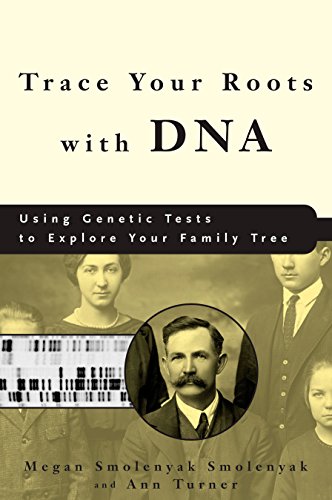
Trace Your Roots with DNA: Using Genetic Tests to Explore Your Family Tree
Megan Smolenyak Smolenyak, Ann Turner
4.3
Written by two of the country's top genealogists, Trace Your Roots with DNA is the first book to explain how new and groundbreaking genetic testing can help you research your ancestry
According to American Demographics, 113 million Americans have begun to trace their roots, making genealogy the second most popular hobby in the country (after gardening). Enthusiasts clamor for new information from dozens of subscription-based websites, email newsletters, and magazines devoted to the subject. For these eager roots-seekers looking to take their searches to the next level, DNA testing is the answer.
After a brief introduction to genealogy and genetics fundamentals, the authors explain the types of available testing, what kind of information the tests can provide, how to interpret the results, and how the tests work (it doesn't involve digging up your dead relatives). It's in expensive, easy to do, and the results are accurate: It's as simple as swabbing the inside of your cheek and popping a sample in the mail.
Family lore has it that a branch of our family emigrated to Argentina and now I've found some people there with our name. Can testing tell us whether we're from the same family?
My mother was adopted and doesn't know her ethnicity. Are there any tests available to help her learn about her heritage? I just discovered someone else with my highly unusual surname. How can we find out if we have a common ancestor? These are just a few of the types of genealogical scenarios readers can pursue. The authors reveal exactly what is possible-and what is not possible-with genetic testing. They include case studies of both famous historial mysteries and examples of ordinary folks whose exploration of genetic genealogy has enabled them to trace their roots.
…
Cover unavailable
35
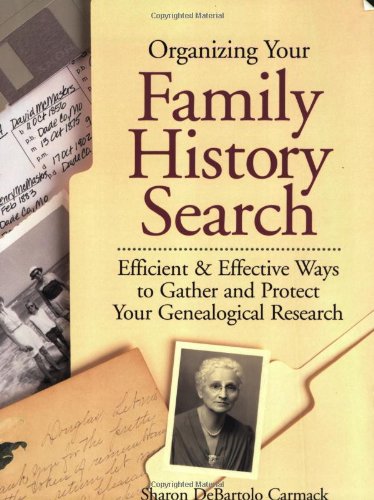
Organizing Your Family History Search: Efficient & Effective Ways to Gather and Protect Your Genealogical Research
Sharon Carmack
4.3
As genealogists everywhere will testify, few hobbies generate more paper work than genealogy. This guide successfully tackles the process of organising family research, from filing piles of paper to streamlining the process as a whole.'
Cover unavailable
36
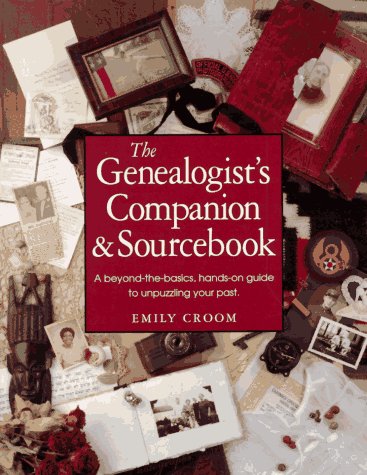
The Genealogist's Companion & Sourcebook
Emily Croom
4.3
You've enjoyed some success in tracing your family's history. But now the trail's gone cold and you're stopped in your tracks. Or are you?
No, you're not, Emily Croom answers, and in a resounding way. In "The Genealogist's Companion and Sourcebook" - a follow-up to her highly regarded "Unpuzzling Your Past: A Basic Guide to Genealogy" - she helps you find new paths to your desired destination: in formation about your ancestors, where they lived and how they lived.
This book alerts you to promising types of primary and secondary sources. It shows you how to get past the kinds of obstacles - public records lost to fire or flood, for example - that often frustrate family searchers. It shows you how to use cluster genealogy effectively.
In these pages, you'll learn about such wellsprings of information as church and funeral home records, government documents, court records, newspapers and maps.
"The Genealogist's Companion and Sourcebook" offers you solid, step-by-step guidance from a searcher who's been where you are now. You'll find bibliographies. Case studies. Appendices with census forms, a family group sheet, and information on major archives, libraries, lending libraries and publishers.
…
Cover unavailable
37
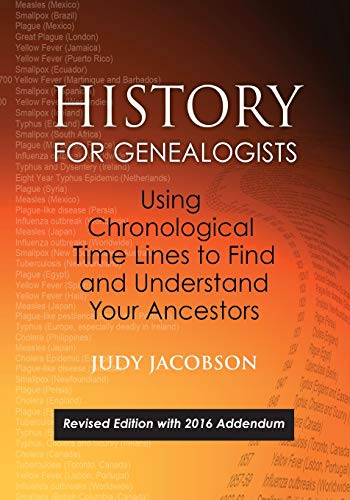
History for Genealogists, Using Chronological Time Lines to Find and Understand Your Ancestors. Revised Edition, with 2016 Addendum Incorporating Editorial Corrections to the 2009 Edition, by Denise Larson
Judy Jacobson
4.3
Cover unavailable
38
How to Archive Family Keepsakes: Learn How to Preserve Family Photos, Memorabilia & Genealogy Records
Denise May Levenick
4.3
Organize your family photos, heirlooms, and genealogy records
In every family someone ends up with Mom's and Dad's "stuff"--a lifetime's worth of old family photos, papers, and memorabilia packed into boxes, trunks, and suitcases. This inheritance can be as much a burden as it is a blessing. How do you organize your loved one's estate in a way that honors your loved one, keeps the peace in your family and doesn't take over your home or life? How to Archive Family Keepsakes gives you step-by-step advice for how to organize, distribute and preserve family heirlooms.
You'll learn how to:
- Organize the boxes of your parents' stuff that you inherited - Decide which family heirlooms to keep - Donate items to museums, societies, and charities - Protect and pass on keepsakes - Create a catalog of family heirlooms - Organize genealogy files and paperwork - Digitize family history records - Organize computer files to improve your research
Whether you have boxes filled with treasures or are helping a parent or relative downsize to a smaller home, this book will help you organize your family archive and preserve your family history for future generations.
…
Cover unavailable
39
Reading Early American Handwriting
Kip Sperry
4.3
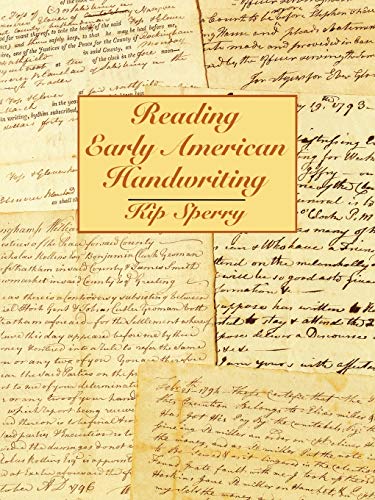
This book is designed to teach you how to read and understand the handwriting found in documents commonly used in genealogical research. It explains techniques for reading early American documents; provides samples of alphabets and letter forms; defines terms and abbreviations commonly used in early American documents such as wills, deeds, and church records; and, furthermore, presents numerous examples of early American records for the reader to work with. Each document--nearly 100 of them at various stages of complexity--appears with the author's transcription on a facing page, enabling the reader to check his own transcription. Also covered in the work, with particular emphasis on handwriting, are numbers and roman numerals, dates and the change from the Julian Calendar to the Gregorian Calendar, abbreviations and contractions, and standard terms found in early American records.
…
Cover unavailable
40
How to Use Evernote for Genealogy: A Step-By-Step Guide to Organize Your Research and Boost Your Genealogy Productivity
Kerry Scott
4.3
Maximize Your Research Progress!
Harness the powerful, timesaving organization features of Evernote's free software and mobile apps to manage your genealogy research. This comprehensive user guide explains how to organize all kinds of genealogy clues--from notes and e-mails to vital records and audio files--so the information is easily searchable, accessible on any device, and automatically backed up in the cloud. Step-by-step instructions show you how to file research materials, analyze research clues, collaborate with cousins, and share your family history.
In this book, you'll find
Evernote tips and strategies specifically for genealogy researchers, with real-life examples Step-by-step instructions for managing different types of genealogy information, from research notes to document images to web clippings Tricks for using Evernote to speed up research tasks, including transcription and research logs Suggestions to search-optimize your Evernote data so your information is easy to find Ideas for enhancing Evernote with external apps Tips to protect your data and troubleshoot common issues Worksheets to help you organize your notebooks and stacks Whether you're an Evernote newbie or dedicated user, How to Use Evernote for Genealogy will change your research life by showing you how this free tool can make you a better, more efficient genealogist.
…
Cover unavailable
41
The Everything Guide to Online Genealogy: Trace Your Roots, Share Your History, and Create Your Family Tree (Everything®)
Kimberly Powell
4.3
Cover unavailable
42
Mastering Genealogical Documentation (NGS Special Topics Series Book 122)
Thomas W. Jones
4.3
Cover unavailable
43
The Last Queen of England (Jefferson Tayte Genealogical Mystery, #3)
Steve Robinson
4.3
While on a visit to London, American genealogist Jefferson Tayte’s old friend and colleague dies in his arms. Before long, Tayte and a truth-seeking historian, Professor Jean Summer, find themselves following a corpse-ridden trail that takes them to the Royal Society of London, circa 1708.
What to make of the story of five men of science, colleagues of Isaac Newton and Christopher Wren, who were mysteriously hanged for high treason?
As they edge closer to the truth, Tayte and the professor find that death is once again in season. A new killer, bent on restoring what he sees as the true, royal bloodline, is on the loose...as is a Machiavellian heir-hunter who senses that the latest round of murder, kidnapping, and scandal represents an unmissable business opportunity.
The Last Queen of England is a racing thriller with a heart-stopping conclusion. It follows on from In the Blood and To the Grave but can be enjoyed as a stand-alone novel.
…
Cover unavailable
44
Ancestral Trails: The Complete Guide to British Genealogy and Family History
Mark D. Herber
4.3
Originally published: Thrupp, Stroud, Gloucestershire: Sutton Pub. Ltd.; London: Society of Genealogists, 1997. 2nd ed. published in Great Britain in 2004.
Cover unavailable
45
Bringing Your Family History to Life Through Social History
Katherine Scott Sturdevant
4.3
This first-ever guide shows researchers how to weave historical details into their genealogies to form a unique family history narrative.
Cover unavailable
46
Tracing Your Irish Ancestors
John Grenham
4.3
Professional Irish genealogist John Grenham has written a book that combines all the best features of a textbook and a reference book, a book that carefully explains the elements of Irish research while at the same time providing an indispensable body of source materials for immediate use. Thus in Part l the most basic genealogical sources are gathered together and discussed in light of a research project, while in Part 2 sources which have a more advanced application are examined. And in Part 3 there is a reference guide to a comprehensive range of materials including county source lists, printed family histories, and church records.
Here are some of the highlights of Tracing Your Irish Ancestors: Maps of all Catholic parishes, checklist of sources for wills and testamentary records, list of manuscripts in the Genealogical Office in Dublin, itemization of passenger and emigration lists, various county by county source lists, complete listing of family histories in the National Library of Ireland, complete listing of all Church of Ireland parish registers, and a listing of Irish research services, societies, and repositories.
The tremendous growth of interest in Irish family history since the publication of the first edition of Tracing Your Irish Ancestors has brought to light many new sources and has radically changed the way in which some familiar sources can be used. These developments--along with a need for updates and revisions to the existing text--are the primary reason for publishing a new edition, which includes an expanded account of Northern Ireland repositories and a more comprehensive description of the holdings of the Family History Library of The Church of Jesus Christ of Latter-day Saints.
But the most significant advance in this 2nd edition is the inclusion of a list of Roman Catholic parish records--a 150-page list of copies of all known Roman Catholic records that can be found in the National Library of Ireland, the Public Record Office of Northern Ireland, the LDS Family History Library, and in local Irish Heritage Centers. County by county and church by church, this list gives the dates, locations, and formats of all existing copies of baptism, marriage, and burial records. Keyed to parish and county maps, it is perhaps the single most important finding aid available to the genealogist.
…
Cover unavailable
47
The Lost Ancestor (The Forensic Genealogist #2)
Nathan Dylan Goodwi
4.3
From acclaimed author, Nathan Dylan Goodwin comes this exciting new genealogical crime mystery, featuring the redoubtable forensic genealogist, Morton Farrier.
When Morton is called upon by Ray Mercer to investigate the 1911 disappearance of his great aunt, a housemaid working in a large Edwardian country house, he has no idea of the perilous journey into the past that he is about to make. Morton must use his not inconsiderable genealogical skills to solve the mystery of Mary Mercer’s disappearance, in the face of the dangers posed by those others who are determined to end his investigation at any cost.
This is the second book in the Morton Farrier genealogical crime mystery series, although it can be enjoyed as a stand-alone story.
For updates on Nathan Dylan Goodwin's releases: Website: www.nathandylangoodwin.com Twitter: @nathangoodwin76
…
Cover unavailable
48
Map Guide to the U.S. Federal Censuses, 1790-1920
William Thorndale;William Dollarhide
4.3
Cover unavailable
49
Genealogical Proof Standard: Building a Solid Case
Christine Rose
4.2
Cover unavailable
50
Albion's Seed: Four British Folkways in America (America: A Cultural History, Vol. I)
David Hackett Fischer
4.2
This book is the first volume in a cultural history of the United States, from the earliest English settlements to our own time. It is a history of American folkways as they have changed through time, and it argues a thesis about the importance for the United States of having been British in its cultural origins.
From 1629 to 1775, North America was settled by four great waves of English-speaking immigrants. The first was an exodus of Puritans from the east of England to Massachusetts (1629-1640). The second was the movement of a Royalist elite and indentured servants from the south of England to Virginia (ca. 1649-75). The third was the "Friends' migration,"--the Quakers--from the North Midlands and Wales to the Delaware Valley (ca. 1675-1725). The fourth was a great flight from the borderlands of North Britain and northern Ireland to the American backcountry (ca. 1717-75).
These four groups differed in many ways--in religion, rank, generation and place of origin. They brought to America different folkways which became the basis of regional cultures in the United States. They spoke distinctive English dialects and built their houses in diverse ways. They had different ideas of family, marriage and gender; different practices of child-naming and child-raising; different attitudes toward sex, age and death; different rituals of worship and magic; different forms of work and play; different customs of food and dress; different traditions of education and literacy; different modes of settlement and association. They also had profoundly different ideas of comity, order, power and freedom which derived from British folk-traditions. Albion's Seed describes those differences in detail, and discusses the continuing importance of their transference to America.
Today most people in the United States (more than 80 percent) have no British ancestors at all. These many other groups, even while preserving their own ethnic cultures, have also assimilated regional folkways which were transplanted from Britain to America. In that sense, nearly all Americans today are "Albion's Seed," no matter what their ethnic origins may be; but they are so in their different regional ways.
The concluding section of Albion's Seed explores the ways that regional cultures have continued to dominate national politics from 1789 to 1988, and still control attitudes toward education, government, gender, and violence, on which differences between American regions are greater than between European nations.
Albion's Seed also argues that the four British folkways created an expansive cultural pluralism that has proved to the more libertarian than any single culture alone could be. Together they became the determinants of a voluntary society in the United States.
…
Cover unavailable
51
Becoming an Accredited Genealogist: Plus 100 Tips to Ensure Your Success (Revised)
Karen Clifford
4.2
Do you need help in completing all of your personal family history research? Are you curious about how a professional genealogical researcher makes a living? Do you want to understand the steps and procedures involved in attaining the status of Accredited Genealogist? If you answered yes to any of these questions, Becoming an Accredited Genealogist is the resource book for you! Many professionals have established their personal reputation, in part, through the process of accreditation. Author Karen Clifford presents a clear understanding of what should be expected from the efforts of a professional family historian. Anyone can collect money for genealogical research and be called a paid researcher, but the knowledge, training, integrity, and efficiency of genealogists with credentials set them apart. Becoming an Accredited Genealogist will help you through the process of earning your credentials. This revised edition outlines the benefits of being an accredited genealogist and describes the knowledge and basic research skills expected of a professional. It also examines the experience, testing procedures, and application processes required to apply and ultimately pass the test for credentials. Even if your lifetime goal is not to become a professional genealogist, this scholarly work will teach you what to expect whenever you hire a professional to assist your personal family history research challenges!
…
Cover unavailable
52
Saxons, Vikings, and Celts: The Genetic Roots of Britain and Ireland
Bryan Sykes
4.2
One of the world's leading geneticists, Bryan Sykes has helped thousands find their ancestry in the British Isles. Saxons, Vikings, and Celts, which resulted from a systematic ten-year DNA survey of more than 10,000 volunteers, traces the true genetic makeup of the British Isles and its descendants, taking readers from the Pontnewydd cave in North Wales to the resting place of "The Red Lady" of Paviland and the tomb of King Arthur. Genealogy has become a popular pastime of Americans interested in their heritage, and this is the perfect work for anyone interested in finding their heritage in England, Scotland, or Ireland.
…
Cover unavailable
53
Family Photo Detective: Learn How to Find Genealogy Clues in Old Photos and Solve Family Photo Mysteries
Maureen A. A. Taylor
4.2
Unlock the Secrets of Your Old Family Photos!
Historical family photos are cherished heirlooms that offer a glimpse into the lives of our ancestors. But the images, and the stories behind them, often fade away as decades pass - the who, when, where and why behind the photos are lost. In this book, photo identification expert and genealogist Maureen A. Taylor shows you how to study the clues in your old family photos to put names to faces and recapture their lost stories.
Inside, you'll learn how to:
Determine the type of image you have - from common paper prints to stereographs to historical daguerreotypes, ambrotypes, and tintypes Use clothing, accessories, and hairstyles to date the image in the correct decade Research photographer's imprints to narrow down when and where the photo was taken Compare facial features in multiple photos to confirm identity and family resemblance Interview family members to gather more information about the image Identify props in the photo to create context for the image Each chapter includes dozens of historical photos to illustrate key points and provide clear examples. Charts, timelines and resource lists make it easy to find the exact information you need. Dozens of case studies show you how to apply the techniques in the book to real-life photo research projects. The answers to your family photo questions are closer than you think. Let this book help you start finding them today.
…
Cover unavailable
54
Land & Property Research in the United States
E. Wade Hone
4.2
When early settlers left their homelands to start a new life in America, they had dreams of owning their own land a prospering from their own efforts. They were suspicious of all forms of government and did their best, in many cases, to be invisible to a variety of record keepers. But when it came to ensuring that their precious land was, without doubt, their own, they were careful to provide all of the information requested of them by the various government agencies. It is this care in reporting that makes this reference as valuable as the most comprehensive and useful review of land and property research for genealogists.
…
Cover unavailable
55
A Genealogist's Guide to Discovering Your Female Ancestors: Special Strategies for Uncovering Hard-To-Find Information about Your Female Lineage
Sharon Debartolo Carmack
4.2
Explains how to use different sources to trace one's lineage.
Cover unavailable
56
Annie's Ghosts: A Journey Into a Family Secret
Steve Luxenberg
4.2
"A gripping detective story and haunting memoir. It will leave you breathless." --Walter Isaacson, author of Leonardo da Vinci, Steve Jobs, and other bestselling biographies.
The Great Michigan Read for 2013-14. A Washington Post Best Book, 2009. A 2010 Michigan Notable Book.
Beth Luxenberg was an only child, or so her son Steve believed. But secrets have a way of working free of their keepers, as this true story reveals.
Approaching her 80th birthday, Steve's mother told a doctor that she had a disabled sister, without saying that she had always pretended that she was an only child. When Steve learned of his mother's slip, he was mystified. If his mom had a sibling, why had her existence been resolutely concealed for decades?
Following the trail took Steve to Depression-era Detroit and tsarist Russia, the Holocaust in Ukraine and the Philippine war zone. Fascinating human interest; a real-life whodunit.
Beautifully complex, raw and revealing.” -- Kirkus Reviews (starred review)
A wise, affecting new memoir of family secrets and posthumous absolution. . . a poignant investigative exercise, full of empathy and sorrowful truth." -- The Washington Post
…
Cover unavailable
57
The Genealogy Do-Over Workbook
Thomas MacEntee
4.2
Cover unavailable
58
German Genealogy Guide: How to Trace Your Family Tree to German-Speaking Areas of Europe
James M. Beidler
4.2
Cover unavailable
59
The Sleuth Book for Genealogists: Strategies for More Successful Family History Research
Emily Croom
4.2
Comparing genealogical research to the work of famous literary sleuths, the author outlines methods for solving frustrating research problems by developing a plan, documenting evidence, and examing clues in the records.
Cover unavailable
60
Forensic Genealogy
Colleen Fitzpatrick
4.2
Revised edition of book originally published in 2005.
From the author's website:
[The] genetic genealogy world has experienced a revolution in the availability and affordability of DNA testing. Both genealogical and DNA databases have grown considerably since 2005, making it easier to discover and connect with long lost cousins. In this revised edition of Forensic Genealogy, the chapter The DNA Detective has been updated to include much information to reflect these changes.
…
Cover unavailable
61
Quicksheet Citing Online Historical Resources
Elizabeth Shown Mills
4.2
Cover unavailable
62
Kindred (Jefferson Tayte Genealogical Mystery #5)
Steve Robinson
4.2
Cover unavailable
63
Advanced Genetic Genealogy: Techniques and Case Studies
Debbie Parker Wayne
4.2
Advanced Genetic Genealogy: Techniques and Case Studies helps intermediate researchers move up to the next level and advanced researchers apply the new DNA standards and write about DNA. This new book offers an in-home course in advanced genetic genealogy. Case studies demonstrate analyzing the DNA test results, correlating with documentary evidence, and writing about the findings, all incorporating the updated standards for using DNA. Full-color illustrations help the genealogist incorporate these techniques into personal or client research projects. Each of the fourteen chapters was written by a professional genealogist with DNA experience.
Eight chapters study real families (some using anonymized identities), including methods, tools, and techniques. Jim Bartlett covers how to triangulate a genome (mapping DNA segments to ancestors). Blaine T. Bettinger demonstrates the methodology for visual phasing (mapping DNA segments to the grandparents who passed down the segment to descendants, even when the grandparents cannot be tested). Kathryn J. Johnston shows how to use X-DNA to identify and confirm ancestral lines. James M. Owston describes findings of the Owston Y-DNA project. Melissa A. Johnson covers adoption and misattributed parentage research. Kimberly T. Powell provides guidance when researching families with endogamy and pedigree collapse. Debbie Parker Wayne combines atDNA and Y-DNA in a Parker family study. Ann Turner describes the raw DNA data and lab processes.
Three middle chapters cover genealogy standards as they relate to DNA and documentary evidence. Karen Stanbary applies the Genealogical Proof Standard to genetic genealogy in a hypothetical unknown parentage case illustrating start-to-finish analysis. Patricia Lee Hobbs uses atDNA to identify an unknown ancestor and that ancestor's maiden name, moving back and forth between documentary and DNA evidence. Thomas W. Jones describes best practices for genealogical writing and publishing when incorporating DNA evidence.
Three concluding chapters deal with ethics, emotions, and the future. Judy G. Russell covers ethical considerations. Michael D. Lacopo describes the effect on relationships when family secrets are uncovered, surfacing issues for all concerned. Debbie Kennett covers the current limitations and future promise of using DNA for genealogy. An extensive glossary, list of recommended resources, and index are included.
…
Cover unavailable
64
The Lost Empress (Jefferson Tayte Genealogical Mystery #4)
Steve Robinson
4.1
From acclaimed author Steve Robinson comes a bold new Jefferson Tayte mystery. On a foggy night in 1914, the ocean liner Empress of Ireland sank en route to England and now lies at the bottom of Canada’s St Lawrence River. The disaster saw a loss of life comparable to the Titanic and the Lusitania, and yet her tragedy has been forgotten.
When genealogist Jefferson Tayte is shown a locket belonging to one of the Empress’s victims, a British admiral’s daughter named Alice Stilwell, he must travel to England to understand the course of events that led to her death. Tayte is expert in tracking killers across centuries. In 'The Lost Empress,' his unique talents draw him to one of the greatest tragedies in maritime history as he unravels the truth behind Alice’s death amidst a backdrop of pre-WWI espionage. This is the fourth book in the Jefferson Tayte mystery series but can be enjoyed as a stand-alone story.
…
Cover unavailable
65
The Orange Lilies: A Morton Farrier novella
Nathan Dylan Goodwin
4.1
Morton Farrier has spent his entire career as a forensic genealogist solving other people's family history secrets, all the while knowing so little of his very own family's mysterious past. However, this poignant Christmastime novella sees Morton's skills put to use much closer to home, as he must confront his own past, present and future through events both present-day and one hundred years ago. It seems that not every soldier saw a truce on the Western Front that 1914 Christmas... This Morton Farrier novella follows on from book two in the series - The Lost Ancestor.
…
Cover unavailable
66
The Family Tree Toolkit: A Comprehensive Guide to Uncovering Your Ancestry and Researching Genealogy
Kenyatta D. Berry
4.1
The popularity of studying our family history has been fueled by popular TV shows like Genealogy Roadshow, Finding Your Roots, and Who Do You Think You Are? The ability to access records online has opened up the one time hobby for genealogy enthusiasts to the mainstream.
Companies like Ancestry.com, Familysearch.org, Findmypast.com, and MyHeritage have spent millions of dollars making records available around the world. DNA technology continues to evolve and provides the instant gratification that we have become use to as a society. But then the question remains, what does that really mean?
Knowing your ancestry is more than just ethnic percentages it’s about creating and building a story about your family history. The Family Tree Toolkit is designed to help you navigate the sometimes overwhelming and sometimes treacherous waters of finding your ancestors.
Here is a roadmap to help you on this journey of discovery, whether you are looking for your African Asian, European, or Jewish ancestry. The Family Tree Toolkit guides you on how and where to begin, what records are available both online and in repositories, what to do once you find the information, how to share your story and of course DNA discoveries.
…
Cover unavailable
67
Mayflower: A Story of Courage, Community, and War
Nathaniel Philbrick
4.1
HOW DID AMERICA BEGIN?
This simple question launches acclaimed author Nathaniel Philbrick on an extraordinary journey to understand the truth behind our most sacred national myth: the voyage of the Mayflower and the settlement of Plymouth Colony. As Philbrick reveals in this electrifying new book, the story of the Pilgrims does not end with the First Thanksgiving; instead, it is a fifty-five-year epic that is at once tragic and heroic, and still carries meaning for us today.
…
Recommended by Catherine Manegold.
Catherine Manegold
This is a straight history but – and this is key – the emphasis is on the story. In this book Nathaniel Philbrick takes an event every American schoolchild knows about – the sailing of the Mayflower to North America in 1620 – and turns the comfortable mythology about that moment on its head. [source]
Cover unavailable
68
Reunion: A Search for Ancestors
Ryan Littrell
4.1
Where do I come from? That question leads Ryan Littrell to country graveyards, to faded names in old books, and then to a DNA shock. And as one hint follows the next, he uncovers the story of his Scottish ancestors--a story of heartbreak, betrayal, and unfailing strength.
"Reunion" explores how our ancestors are still a part of us, and how a place across the ocean can almost feel like home.
Cover unavailable
69
Guide to DNA Testing: How to Identify Ancestors, Confirm Relationships, and Measure Ethnic Ancestry through DNA Testing
Richard Hill
4.1
The price of some powerful new genetic genealogy tests has dropped below $100. Genealogists and adoptees are using them and other DNA tests to identify ancestors, confirm relationships, and measure their ethnicity.
Unfortunately, there are many similar sounding tests and some of them have different testing levels. So it’s easy to order the wrong test or pay too much.
This Guide to DNA Testing provides an easy-to-understand introduction to the different test types, their strengths and limitations.
Author and adoptee, Richard Hill, shared his personal success story in his book, "Finding Family: My Search for Roots and the Secrets in My DNA.”
Now he boils down the basics of genetic genealogy into this concise summary. Learn which tests are right for you. Hyperlinks to specific tests and resources are included.
…
Cover unavailable
70
Unofficial Guide to Ancestry.com: How to Find Your Family History on the No. 1 Genealogy Website
Nancy Hendrickson
4.1
Master the world's #1 genealogy website and discover the secrets to Ancestry.com success! This book, updated in 2016 to include the most recent changes to the site, will help you get the most out of your Ancestry.com subscription by showing you how to take advantage of all the world's biggest genealogy website has to offer--and how to find answers to your family tree questions within its 14 billion records, 60 million family tree and 32,000 databases.
What you'll learn: Step-by-step strategies for structuring your searches to find what you're looking for faster How to drill down to specific records, time periods and topics using the card catalog Details on each of Ancestry.com's historical record collections, including what you can expect to find in them--and when you need to look elsewhere Tips for creating and managing your family tree on Ancestry.com, as well as connecting your tree to others on the site Timesaving tricks to maximize your Ancestry.com Hints (the "shaky leaf"), Tree Sync with Family Tree Maker, and the Ancestry.com mobile app Each chapter includes step-by-step examples with illustrations to show you exactly how to apply the techniques to your genealogy.
Whether you've just begun dabbling in family history or you're a longtime Ancestry.com subscriber, this book will turn you into an Ancestry.com power user!
…
Cover unavailable
71
The Complete Idiot's Guide to Genealogy
Christine Rose, Kay Germain Ingalls
4.1
Cover unavailable
72
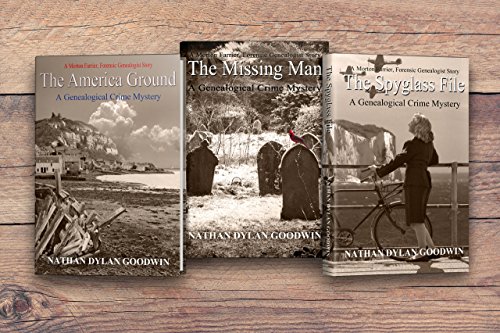
The Missing Man (The Forensic Genealogist #6)
Nathan Dylan Goodwi
4.1
It was to be the most important case of Morton Farrier’s career in forensic genealogy so far. A case that had eluded him for many years: finding his own father. Harley ‘Jack’ Jacklin disappeared just six days after a fatal fire at his Cape Cod home on Christmas Eve in 1976, leaving no trace behind. Now his son, Morton must travel to the East Coast of America to unravel the family’s dark secrets in order to discover what happened to him.
…
Cover unavailable
73
You Can Write Your Family History
Sharon Debartolo Carmack
4.1
This title enables readers to chronicle the lives of near or distant relatives. It provides methods for: conducting historical and thematic research; organizing materials; outlining and plotting a story; illustrating with pictures and charts; and making money writing the history of other families.
Cover unavailable
74
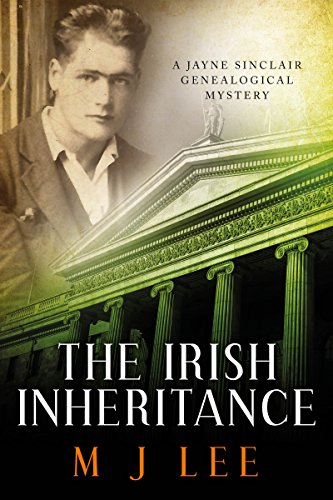
The Irish Inheritance (Jayne Sinclair Genealogical Mystery, #1)
M J Le
4.1
June 8, 1921. Ireland. A British Officer is shot dead on a remote hillside south of Dublin. November 22, 2015. United Kingdom. Former police detective, Jayne Sinclair, now working as a genealogical investigator, receives a phone call from an adopted American billionaire asking her to discover the identity of his real father. How are the two events linked? Jayne Sinclair has only three clues to help her: a photocopied birth certificate, a stolen book and an old photograph. And it soon becomes apparent somebody else is on the trail of the mystery. A killer who will stop at nothing to prevent Jayne discovering the secret hidden in the past The Irish Inheritance takes us through the Easter Rising of 1916 and the Irish War of Independence, combining a search for the truth of the past with all the tension of a modern-day thriller. It is the first in a series of novels featuring Jayne Sinclair, genealogical detective.
…
Cover unavailable
75
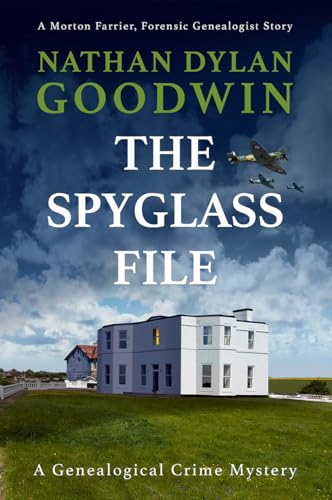
The Spyglass File (The Forensic Genealogist #5)
Nathan Dylan Goodwi
4.1
Morton Farrier was no longer at the top of his game. His forensic genealogy career was faltering and he was refusing to accept any new cases, preferring instead to concentrate on locating his own elusive biological father. Yet, when a particular case presents itself, that of finding the family of a woman abandoned in the midst of the Battle of Britain, Morton is compelled to help her to unravel her past. Using all of his genealogical skills, he soon discovers that the case is connected to The Spyglass File—a secretive document which throws up links which threaten to disturb the wrongdoings of others, who would rather its contents, as well as their actions, remain hidden forever. This is the fourth book in the Morton Farrier genealogical crime mystery series, although it can be enjoyed as a stand-alone story.
…
Cover unavailable
76
The America Ground (The Forensic Genealogist #4)
Nathan Dylan Goodwin and Robert John Bristo
4.1
Morton Farrier, the esteemed English forensic genealogist, had cleared a space in his busy schedule to track down his own elusive father finally. But he is then presented with a case that challenges his research skills in his quest to find the killer of a woman murdered more than one hundred and eighty years ago.
Thoughts of his own family history are quickly and violently pushed to one side as Morton rushes to complete his investigation before other sinister elements succeed in derailing the case.
This is the third book in the Morton Farrier genealogical crime mystery series, although it can be enjoyed as a stand-alone story.
For updates on Nathan Dylan Goodwin's releases: Website: www.nathandylangoodwin.com Twitter: @nathangoodwin76 Facebook: www.facebook.com/nathandylangoodwin Pinterest: www.pinterest.com/dylan0470/ Blog: theforensicgenealogist.blogspot.co.uk
…
Cover unavailable
77
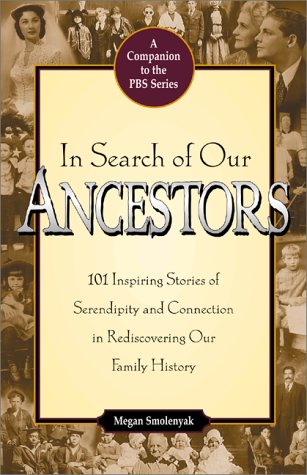
In Search Of Our Ancestors
Megan Smolenyak
4.1
In this companion to a new PBS series beginning in April, "In Search of Our Ancestors" features over 100 true stories of the amazing luck, unexpected kindnesses, and unusual serendipity encountered by researchers as they track down their family's records.
Cover unavailable
78
Slaves in the Family
Edward Ball
4.1
Journalist Ball confronts the legacy of his family's slave-owning past, uncovering the story of the people, both black and white, who lived and worked on the Balls' South Carolina plantations. It is an unprecedented family record that reveals how the painful legacy of slavery continues to endure in America's collective memory and experience. Ball, a descendant of one of the largest slave-owning families in the South, discovered that his ancestors owned 25 plantations, worked by nearly 4,000 slaves.
Through meticulous research and by interviewing scattered relatives, Ball contacted some 100,000 African-Americans who are all descendants of Ball slaves. In intimate conversations with them, he garnered information, hard words, and devastating family stories of precisely what it means to be enslaved. He found that the family plantation owners were far from benevolent patriarchs; instead there is a dark history of exploitation, interbreeding, and extreme violence.
…
Cover unavailable
79
Britain's Royal Families: The Complete Genealogy
Alison Weir
4.1
Fascinating and authoritative of Britain's royal families from Henry VIII to Elizabeth I to Queen Victoria, by leading popular historian Alison Weir
'George III is alleged to have married secretly, on 17th April, 1759, a Quakeress called Hannah Lightfoot. If George III did make such a marriage…then his subsequent marriage to Queen Charlotte was bigamous, and every monarch of Britain since has been a usurper, the rightful heirs of George III being his children by Hannah Lightfoot...' Britain's Royal Families provides in one volume, complete genealogical details of all members of the royal houses of England, Scotland and Great Britain - from 800AD to the present. Drawing on countless authorities, both ancient and modern, Alison Weir explores the crown and royal family tree in unprecedented depth and provides a comprehensive guide to the heritage of today's royal family – with fascinating insight and often scandalous secrets.
'Staggeringly useful... combines solid information with tantalising appetisers.’ Mail on Sunday
…
Cover unavailable
80
The Genealogy of Morals (Translated by Horace B. Samuel with an Introduction by Willard Huntington Wright)
Friedrich Nietzsche, Horace B. Samuel, Willard Huntington Wright
4.1
German philosopher, Friedrich Nietzsche was one the most controversial figures of the 19th century. His evocative writings on religion, morality, culture, philosophy, and science were often polemic attacks against the established views of his time. First published in 1887, "The Genealogy of Morals," is a work which follows and expands upon the principles of his previous works, "Thus Spoke Zarathustra" and "Beyond Good and Evil." In a preface and three interrelated essays, Nietzsche outlines his theories on the origins of our moral prejudices. "The Genealogy of Morals," was written partly in response to his friend Paul R�e's book "The Origin of the Moral Sensations," whose genealogical hypothesis of morality he found unsatisfactory. Nietzsche begins by reiterating in his first essay the historical conflict between socio-economic classes that has given rise to the varying definitions of good and evil. In the second essay, Nietzsche discusses the origins of the institution of punishment, asserting that it arises from a straightforward relationship between creditors and debtors. Lastly, in the third essay, the philosopher considers the meaning of ascetic ideals. A classic work of moral philosophy, "The Genealogy of Morals" is considered by many as one of Nietzsche's finest. This edition is printed on premium acid-free paper, follows the translation of Horace B. Samuel, and includes an introduction by Willard Huntington Wright.
I don’t know I would single it out as the masterpiece, but it’s a fascinating book which follows on many of the themes of Beyond Good and Evil. It’s unusual because it’s less aphoristic, but rather three essays. The essays have more structure and extended argumentation than is typical in most of Nietzsche’s works. [source]
Of course, I read Nietzsche. On the Genealogy of Morality, etc, where the truths and the truisms are really cut and dried in a lot of ways. It's the equivalent of, I guess, intellectual red meat. [source]
Cover unavailable
81
Unofficial Guide to Ancestry.com: How to Find Your Family History on the #1 Genealogy Website
Nancy Hendrickson
4.1
Master the world's #1 Genealogy Website
Discover the secrets to Ancestry.com success! This book, newly revised and expanded, will help you get the most out of your Ancestry.com subscription. Inside, you'll discover how to take advantage of what the world's biggest genealogy website has to offer--and how to find answers to your genealogy questions within its billions of records and millions of AncestryDNA profiles. Each chapter includes step-by-step examples with illustrations to show you exactly how to apply search techniques to your genealogy. A new section on AncestryDNA will also help you understand and analyze your DNA test results.
What you'll learn: * Timesaving tips for uncovering specific records, time periods and topics using Ancestry.com's search forms and Card Catalog * Details on Ancestry.com's historical record collections, including what you can expect to find in them * Step-by-step guides for creating and managing your family tree on Ancestry.com, plus how to connect with other users and utilize the site's powerful Hint system * Plain-language strategies for using your AncestryDNA results, including guides to your ethnicity report and DNA matches
Whether you've just begun dabbling in family history or you're a longtime Ancestry.com subscriber, this book will turn you into an Ancestry.com power user!
…
Cover unavailable
82
The Family Tree Cemetery Field Guide: How to Find, Record, and Preserve Your Ancestors' Graves
Joy Neighbors
4.1
Not all research can be done from home--sometimes you have to head into the field. Cemeteries are crucial for any genealogist's search, and this book will show you how to search for and analyze your ancestors' graves. Discover tools for locating tombstones, tips for traipsing through cemeteries, an at-a-glance guide to frequently used gravestone icons, and practical strategies for on-the-ground research. And once you've returned home, learn how to incorporate gravestone information into your research, as well as how to upload grave locations to BillionGraves and record your findings in memorial pages on Find A Grave.
- Detailed step-by-step guides to finding ancestors' cemeteries using websites like Find A Grave, plus how to record and preserve death and burial information - Tips and strategies for navigating cemeteries and finding individual tombstones in the field, plus an at-a-glance guide to tombstone symbols and iconography - Resources and techniques for discovering other death records and incorporating information from cemeteries into genealogical research
…
Cover unavailable
83
The Genealogy Sourcebook
Sharon DeBartolo Carmack, Marsha Hoffmann Rising
4.1
A detailed family history is a legacy that generations can enjoy. Those who start looking into their backgrounds find that the more they dig, the more the want to know about their lineage. Beyond the family bible, where can more information be found? The Genealogy Sourcebook is a complete guide to the fascinating world of tracing ancestry with information on where to start the search, what kinds of resources are available, and how to utilize them. Readers will also get information on how to organize and present their research so that generations to come can enjoy and learn from it.
…
Cover unavailable
84
Dying Games (Jefferson Tayte Genealogical Mystery, #6)
Steve Robinson
4.0
Washington, DC: Twin brothers are found drowned in a Perspex box, one gagged and strapped to a chair. It’s the latest in a series of cruel and elaborate murders with two things in common: the killer has left a family history chart at each crime scene, and the victims all have a connection to genealogical sleuth Jefferson Tayte.
Hoping his insight and expertise will help solve the case, the FBI summon Tayte back to the capital. But as he struggles to crack the clues, the killer strikes again—and again. Tayte is known as the best in the business, but this time he’s up against a genealogical mastermind who always seems to be one step ahead.
With the clock ticking and the body count rising, Tayte finds himself racked with guilt, his reputation and career in tatters. The killer is running rings around him; is it only a matter of time before he comes for the ultimate target?
This is the sixth book in the Jefferson Tayte Genealogical Mystery series but can be enjoyed as a stand-alone story.
…
Cover unavailable
85
Map Guide to American Migration Routes, 1735-1815
William Dollarhide
4.0
Cover unavailable
86
The Blood Detective (Blood Detective, #1)
Dan Waddell
4.0
Cover unavailable
87
Stories in Stone: A Field Guide to Cemetery Symbolism and Iconography
Douglas Keister
4.0
A practical field guide, Stories in Stone explains the symbolism of stone relics and their details.
Cover unavailable
88
Managing a Genealogical Project. a Complete Manual for the Management and Organization of Genealogical Materials. Updated Edition
William Dollarhide
4.0
"Includes master forms for making unlimited photocopies"--Cover.
Cover unavailable
89
Walking with Your Ancestors: A Genealogist's Guide to Using Maps and Geography
Melinda Kashuba
4.0
Maps are common tools in tracing family history. This book expands the reader's awareness of how maps and other geographic resources, such as atlases, gazetteers and global positioning systems, will help them find their elusive ancestors.
Cover unavailable
90
The Wicked Trade (The Forensic Genealogist #7)
Nathan Dylan Goodwi
4.0
Cover unavailable
91
Anne of Green Gables (Anne of Green Gables, #1)
L. M. Montgomery, Jennifer Lee Carroll
4.0
As soon as Anne Shirley arrives at the snug white farmhouse called Green Gables, she is sure she wants to stay forever . . . but will the Cuthberts send her back to to the orphanage? Anne knows she's not what they expected—a skinny girl with fiery red hair and a temper to match. If only she can convince them to let her stay, she'll try very hard not to keep rushing headlong into scrapes and blurting out the first thing that comes to her mind. Anne is not like anyone else, the Cuthberts agree; she is special—a girl with an enormous imagination. This orphan girl dreams of the day when she can call herself Anne of Green Gables.
…
Cover unavailable
92
The Organized Family Historian: How to File, Manage, and Protect Your Genealogical Research and Heirlooms (National Genealogical Society Guides)
Ann Carter Fleming
4.0
Cover unavailable
93
Uncovering Your Ancestry Through Family Photographs
Maureen Taylor
4.0
In this visually stunning book of historic family photographs, renowned family history researcher and photography expert Maureen A. Taylor shows you how to cherish old photographs and what clues they can provide to your ancestors' lives. You will learn how to:
Identify and verify people in family photographs. Tell the story of identified photographs using the clues in the images. Locate additional family photographs. Create worksheets for each image to expand your knowledge about your ancestors. Discover the history of photography and learn when specific costumes, hairstyles, architecture, interior design trends, and more were popular. This improved revised edition, full of color photographs, is sure to be instructive and inviting to genealogists, scrapbookers, and history enthusiasts alike. Find out more about this fascinating medium and your ancestors' place in it today!
…
Cover unavailable
94
Your Guide to the Federal Census: For Genealogists, Researchers, and Family Historians
Kathleen Hinckley
4.0
Census research is one of the first steps in constructing a family tree, however, deciphering census data is not always easy. This guide to the Federal Census acts as a research assistant, offering step-by-step instructions. It also features case studies, a glossary, and extraction forms.
Cover unavailable
95
How to Archive Family Photos: A Step-By-Step Guide to Organize Your Digital Photos, Digitize Your Picture Collection and Share Your Family's Memories
Denise May Levenick
4.0
Cover unavailable
96
The Genealogist's U.S. History Pocket Reference: Quick Facts & Timelines of American History to Help Understand Your Ancestors
Nancy Hendrickson
4.0
Unlock new records in your family history research by understanding the historic events of your ancestors' eras. This quick and convenient guide outlines the major political, military and social events in the United States from the colonial era through 1940. It also includes immigration trends and census dates to help you narrow your research focus and find genealogy records faster.
Use The Genealogist's U.S. History Pocket Reference to find:
Timelines, charts, quick lists and maps of major events. Popular foods, songs and books of each era. Timelines of wars and other military events. Dates for federal, state and special censuses. Immigration data including major ports and countries of origin. ...and so much more! Stash this indispensable book in your computer case, tote bag or, yes, your pocket, and take it with you wherever you research.
…
Cover unavailable
97
Google Your Family Tree: unlocking the hidden power of Google
Daniel M. Lynch
4.0
Unlock the Hidden Power of Google for Your Genealogy Research! Google is the most powerful tool available worldwide for online research! With over 20 billion pages in Google's index of the Web, it's likely that some of them contain clues about your ancestors. Finding these pages, however, requires an understanding of filtering and other techniques that have never been explained to many computer users until now! This book shows you how to tap the full potential of the Internet's most powerful free online service! Simple Tips & Techniques Powerful Proven Results! Begin finding dozens of highly relevant results vs. millions of unrelated listings Learn to quickly read and interpret the information-packed search results pages Discover the usefullness of Google Books, News Archive, Language Tools & more... Save important queries so Google can search every night while you sleep!
…
Cover unavailable
98
Scottish Genealogy: Tracing Your Ancestors
Bruce Durie
4.0
Scotland has possibly the most complete and best-kept set of vital records and other documents on the planet. Given both this and the extraordinary worldwide Scottish diaspora (approximately 28 million people can claim Scottish ancestry), the lack of a really thorough guide to Scottish genealogy is a significant gap. Bruce Durie's book bridges that gap with authority and provides a lively sense of the excitement of the historical chase. Scottish Genealogy covers not only sources and records (physical and electronic) but is also firmly based on established genealogical practice, with worked examples, templates, and methods which will enable family historians everywhere to exploit the rich resources in Scotland. Bruce Durie strives to disabuse the reader of the many canards which have accompanied the recent upsurge in interest in family history—notably that it's "all on the internet," that there is such a thing as a "family coat of arms," and that everything written down must be true.
…
Cover unavailable
99
The Troubleshooter's Guide to Do-It-Yourself Genealogy
W. Daniel Quillen
4.0
The essential follow-on guide from the author of our classic "Secrets of Tracing Your Ancestors," this book shows advanced do-it-yourselfers how to tackle common research problems!
Leading genealogy author W. Daniel Quillen picks up where he left off in "Secrets of Tracing Your Ancestors" in this newly revised second edition. He shows do-it yourself genealogists who have progressed past his beginning steps exactly how to find their ancestors with more advanced methods of researching those hard-to-find ancestors. Quillen tells readers how to overcome those difficult roadblocks that frequently crop up. Investigative techniques, research insights and new websites are highlighted to assit with more advanced genealogical research. Areas covered include in-depth census research; mortality schedules; extensive section on military records; US region-by-region research assistance; global research tips; and when to engage the services of a professional genealogist and what you can expect. Family Chronicle magazine praised Quillen's work as displaying "passion and a touch of humor."
…
Cover unavailable
100
The Unpuzzling Your Past Workbook
Emily Croom
4.0
Genealogists - whether beginning or experien ced - will add to their success with this time-saver/researc h-planner/organizer. '