We've ranked the best fish books using expert recommendations, sales data, and millions of reader ratings. At Shortform, we know books. Our book guides are the best in the world. Learn why.
Cover unavailable
1
The Rainbow Fish
Marcus Pfister
5.0
The Rainbow Fish is an international bestseller and a modern classic. Eye-catching foilstamping, glittering on every page, offers instant child-appeal, but it is the universal message at the heart of this simple story about a beautiful fish, who learns to make friends by sharing his most prized possessions, that gives the book its lasting value.
Cover unavailable
2
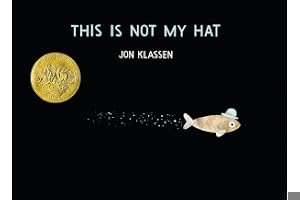
This Is Not My Hat
Jon Klassen
5.0
A sneaky fish learns a lesson in crime and punishment in the bestselling, multiple award-winning sequel to I Want My Hat Back.
In the first and only title to win both the prestigious Kate Greenaway and Caldecott Medal, and by the illustrator of the bestselling I Want My Hat Back and Sam and Dave Dig a Hole, a tiny fish proudly wears a blue top hat. It fits him perfectly. Problem is, trouble could be following close behind... So it's a good thing that the enormous fish he took it from won't wake up. And even if he does, it's not as though he'll ever know what happened, right? With so many emotions conveyed in just the glint of an eye, visual humour swims to the fore in this thrillingly original, perfectly-paced cautionary tale.
…
Recommended by Elys Dolan.
Elys Dolan
Low-key but subversively funny adventure involving a fish and a stolen hat. [source]
Cover unavailable
3
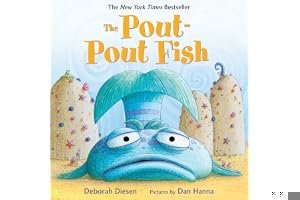
The Pout-Pout Fish
Deborah Diesen
5.0
A NEW YORK TIMES BEST SELLER
Deep in the water, Mr. Fish swims about With his fish face stuck In a permanent pout.
Can his pals cheer him up? Will his pout ever end? Is there something he can learn From an unexpected friend?
Swim along with the pout-pout fish as he discovers that being glum and spreading "dreary wearies" isn't really his destiny. Bright ocean colors and playful rhyme come together in this fun fish story that's sure to turn even the poutiest of frowns upside down.The Pout-Pout Fish is a 2009 Bank Street - Best Children's Book of the Year.
…
Cover unavailable
4
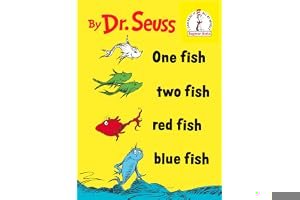
One Fish, Two Fish, Red Fish, Blue Fish
Dr. Seuss
4.8
One Fish Two Fish Red Fish Blue Fish is a 1960 children's book by Dr. Seuss (Theodor Seuss Geisel). A simple rhyming book for learner readers, it is a book with a freewheeling plot about a boy and a girl, and the many amazing creatures they have for friends and pets. One Fish Two Fish Red Fish Blue Fish was part of the Beginner Book Video series which included Oh, the Thinks You Can Think! and The Foot Book.
…
Cover unavailable
5
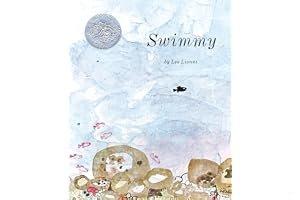
Swimmy
Leo Lionni
4.8
Deep in the sea there lives a happy school of little fish. Their watery world is full of wonders, but there is also danger, and the little fish are afraid to come out of hiding . . . until Swimmy comes along. Swimmy shows his friends how—with ingenuity and team work—they can overcome any danger. With its graceful text and stunning artwork, this Caldecott Honor Book deserves a place on every child’s shelf.
…
Cover unavailable
6
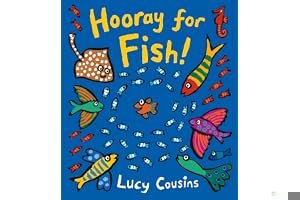
Hooray for Fish!
Lucy Cousins
4.7
A deep-sea Lucy Cousins classic makes a splash with a mesmerizing new cover. Swim along with Little Fish and meet his many fishy friends in this splashy, splashy riot of color and rhyme under the sea. This eye-popping read-aloud is sure to have buoyant little ones shouting, "Hooray for fish!"
Cover unavailable
7
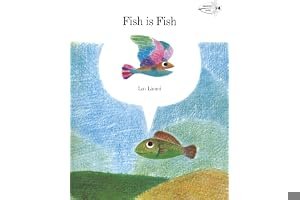
Fish Is Fish
Leo Lionni
4.7
Two best friends, a minnow and a tadpole, are practically inseparable until the tadpole grows legs and decides to explore the world beyond the pond. When the tadpole, now a frog, returns to tell his friend of the extraordinary things he’s seen, the minnow, now a fish, tries to follow in his footsteps, but quickly finds that land is not what he expected. Friendship truly saves the day in this imaginative tale of a fish out of water.
…
Recommended by Maggie Koerthbaker.
Maggie Koerthbaker
@daniellerch It's a great book. I also just love this image for its evolutionary implications. Little fish dreaming of being a land mammal. [source]
Cover unavailable
8
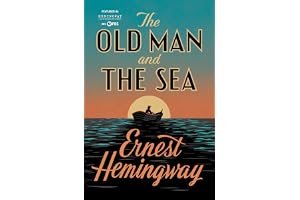
The Old Man and the Sea
Ernest Hemingway
4.6
The Old Man and the Sea, an apparently simple fable, represents the mature Hemingway at his best. He was awarded the Nobel Prize for Literature soon after its publication, and half a century later it is still one of his most read books.
I keep coming back to it. I love the straightforwardness, the tightness, and the poetry. I think it shows a common struggle that is repeated over and over in so many narratives both fictional and nonfictional. [source]
The Old Man and the Sea by Ernest Hemingway https://t.co/7dJE4Pfn56, a book from my great books list https://t.co/AxBNX3QpMb [source]
May Witwit
I taught this book to my students in Iraq during the economic sanctions. And I feel like it gave me some kind of strength to continue. [source]
Cover unavailable
9
The Pout-Pout Fish in the Big-Big Dark
Deborah Diesen
4.5
The funny follow up to the New York Times bestselling The Pout-Pout Fish from Deborah Diesen and Dan Hanna
Mr. Fish wants to help his friend Ms. Clam when she loses her pearl, but though he's fast as a sailfish, as smart as dolphin, and as strong as a shark, Mr. Fish has a secret: he's scared of the dark!
Very young children will swim along with Mr. Fish as he journeys deep into the ocean to new and mysterious places. They will discover, as Mr. Fish does, the power of friendship to light the way through the big-big dark.
…
Cover unavailable
10
Memoirs of a Goldfish
Devin Scillian, Tim Bowers
4.5
With his bowl to himself, Goldfish loves his life...until one day... A personal account from a goldfish on life in his bowl as other intruders crowd him.
Cover unavailable
11
Cod: A Biography of the Fish that Changed the World
Mark Kurlansky
4.5
The Cod. Wars have been fought over it, revolutions have been triggered by it, national diets have been based on it, economies and livelihoods have depended on it. To the millions it has sustained, it has been a treasure more precious that gold. This book spans 1,000 years and four continents. From the Vikings to Clarence Birdseye, Mark Kurlansky introduces the explorers, merchants, writers, chefs and fisherman, whose lives have been interwoven with this prolific fish. He chronicles the cod wars of the 16th and 20th centuries. He blends in recipes and lore from the Middle Ages to the present. In a story that brings world history and human passions into captivating focus, he shows how the most profitable fish in history is today faced with extinction.
…
Recommended by Denise Russell.
Denise Russell
Fascinating small book, immensely interesting and traces human acquaintance with this fish back for a thousand years. [source]
Cover unavailable
12
Four Fish: The Future of the Last Wild Food
Paul Greenberg
4.5
In Four Fish, award-winning writer and lifelong fisherman Paul Greenberg takes us on a culinary journey, exploring the history of the fish that dominate our menus — salmon, sea bass, cod, and tuna — and investigating where each stands at this critical moment in time.
He visits Norwegian megafarms that use genetic techniques once pioneered on sheep to grow millions of pounds of salmon a year. He travels to the ancestral river of the Yupik Eskimos to see the only Fair Trade–certified fishing company in the world. He makes clear how PCBs and mercury find their way into seafood; discovers how Mediterranean sea bass went global; challenges the author of Cod to taste the difference between a farmed and a wild cod; and almost sinks to the bottom of the South Pacific while searching for an alternative to endangered bluefin tuna.
Fish, Greenberg reveals, are the last truly wild food — for now. By examining the forces that get fish to our dinner tables, he shows how we can start to heal the oceans and fight for a world where healthy and sustainable seafood is the rule rather than the exception.
…
Recommended by Barry Estabrook and Helen Scales.
Barry Estabrook
This book is totally unbiased and very serious at looking for solutions to the global fisheries problem. He picks four iconic fish to use as examples to serve for the whole spectrum. So there is tuna, salmon, cod and sea bass. He doesn’t condemn fish farming outright but he explores ways to do it so that we continue to fish in what is the last wild place where we get our food. [source]
Helen Scales
Greenberg brings Roberts’s story bang up to date. He answers questions about what we eat today and how that is affecting the ocean. He picks four fish, which in the western world at least are the main species we eat. Those are tuna, salmon, cod and sea bass. It is a fascinating story about how we got hooked on those four species, which he tells from his perspective as an avid angler. [source]
Cover unavailable
13
A Fish Out of Water
Helen Palmer
4.5
Illus. in color. "Comic pictures show how the fish rapidly outgrows its bowl, a vase, a cook pot, a bathtub."--The New York Times.
Cover unavailable
14
I'm the Biggest Thing in the Ocean!
Kevin Sherry
4.5
When a giant squid takes inventory of all of the creatures in the ocean, he realizes that he's way bigger than most of them! Of course, there are bigger things lurking around . . . but maybe this giant squid with a giant touch of hubris doesn't really care? First-time author-illustrator Kevin Sherry is sure to garner fans of all sizes for his perfect-for-preschool read-aloud with simple text, bold and delightful collage art, and a lovable squid whose spirit just cannot be crushed.
Choking Hazard - Small parts. Not for children under 3 years.
…
Cover unavailable
15
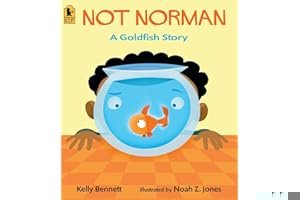
Not Norman: A Goldfish Story
Kelly Bennett, Noah Z. Jones
4.4
"A sweet story that could be used as a springboard to discussion of the pitfalls of making snap judgments about pets — or people." — SCHOOL LIBRARY JOURNAL
Norman the goldfish isn’t what this little boy had in mind. He wanted a different kind of pet — one that could run and catch, or chase string and climb trees, a soft furry pet to sleep on his bed at night. Definitely not Norman. But when he tries to trade Norman for a "good pet," things don’t go as he planned. Could it be that Norman is a better pet than he thought? With wry humor and lighthearted affection, author Kelly Bennett and illustrator Noah Z. Jones tell an unexpected — and positively fishy — tale about finding the good in something you didn’t know you wanted.
…
Cover unavailable
16
Nugget and Fang: Friends Forever--or Snack Time?
Tammi Sauer, Michael Slack
4.4
Friends forever--or snack time?
In the deep ocean, tiny Nugget and big, toothy Fang get along swimmingly—until Nugget’s first day of minnow school. There Nugget learns that minnows are supposed to be afraid of sharks! To regain Nugget’s trust, Fang takes desperate (and hilarious) measures. But it’s not until his big sharp teeth save the entire school that minnows learn this shark is no foe. Fantastically stylized artwork adds even more humor to this undersea story of unlikely friendship.
…
Cover unavailable
17
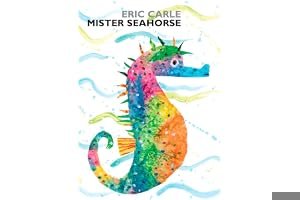
Mister Seahorse: board book
Eric Carle
4.4
When Mrs. Seahorse lays her eggs, she does it on Mr. Seahorse's belly! She knows he will take good care of them. While he swims waiting for the eggs to hatch, he meets other underwater fathers caring for their babies. Now Eric Carle's heart-warming New York Times bestseller is finally available in a board book edition, complete with the clear "peek-a-boo" pages that made the original such a hit. Brimming with bright, colorful sea life, this new board book will be irresistable to young children everywhere.
…
Cover unavailable
18
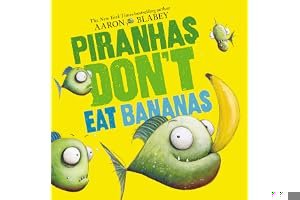
Piranhas Don't Eat Bananas
Aaron Blabey
4.4
Find out what piranhas eat -- and don't eat! -- in this new, irresistibly funny picture book from Aaron Blabey, the bestselling creator of Pig the Pug! Everyone knows that piranhas don't eat bananas -- except for Brian. This little fish loves to munch not only on bananas, but on fruit of all kinds! Brian's piranha friends think he's crazy. Piranhas don't eat bananas -- their sharp teeth are for eating meat! And there's a scrumptious pair of feet dangling in the water nearby...
Rich with author-illustrator Aaron Blabey's hysterical text and unforgettably wacky illustrations, Piranhas Don't Eat Bananas is a hilarious story about trying new things -- no matter how strange they seem!
…
Cover unavailable
19
Fish!: A Remarkable Way to Boost Morale and Improve Results
Stephen C. Lundin, Harry Paul, John Christensen, Ken Blanchard
4.4
Here's another management parable that draws its lesson from an unlikely source--this time it's the fun-loving fishmongers at Seattle's Pike Place Market. In Fish! the heroine, Mary Jane Ramirez, recently widowed and mother of two, is asked to engineer a turnaround of her company's troubled operations department, a group that authors Stephen Lundin, Harry Paul, and John Christensen describe as a "toxic energy dump." Most reasonable heads would cut their losses and move on. Why bother with this bunch of losers? But the authors don't make it so easy for Mary Jane. Instead, she's left to sort out this mess with the help of head fishmonger Lonnie. Based on a bestselling corporate education video, Fish! aims to help employees find their way to a fun and happy workplace. While some may find the story line and prescriptions--such as "Choose Your Attitude," "Make Their Day," and "Be Present"--downright corny, others will find a good dose of worthwhile motivational management techniques. If you loved Who Moved My Cheese? then you'll find much to like here. And don't worry about Mary Jane and kids. Fish! has a happy ending for everyone. --Harry C. Edwards
Why do we look the way we do? What does the human hand have in common with the wing of a fly? Are breasts, sweat glands, and scales connected in some way? To better understand the inner workings of our bodies and to trace the origins of many of today's most common diseases, we have to turn to unexpected sources: worms, flies, and even fish.
Neil Shubin, a leading paleontologist and professor of anatomy who discovered Tiktaalik-the "missing link" that made headlines around the world in April 2006-tells the story of evolution by tracing the organs of the human body back millions of years, long before the first creatures walked the earth. By examining fossils and DNA, Shubin shows us that our hands actually resemble fish fins, our head is organized like that of a long-extinct jawless fish, and major parts of our genome look and function like those of worms and bacteria.
Shubin makes us see ourselves and our world in a completely new light. Your Inner Fish is science writing at its finest-enlightening, accessible, and told with irresistible enthusiasm.
…
Cover unavailable
21
Ten Little Fish
Audrey Wood, Bruce Wood
4.4
Bestselling author Audrey Wood and artist son Bruce create an undersea counting book that's full of the same vivid imagery and fun story elements that have made their alphabet books so successful! It's an undersea countdown in the newest book by bestselling author Audrey Wood and her dynamic, digital-artist son, Bruce. Follow ten little fish as they swim along a beautiful ocean reef, one by one departing from the school for different reasons, eventually leaving one fellow all alone. What will he do? Along comes another, and that makes two! Soon he becomes a father and she becomes a mother--with ten little children of their own. The rhyming text helps readers go from one to ten and back again, and each illustration pops with all the color and depth of an underwater playground.
…
Cover unavailable
22
Paul Meets Bernadette
Rosy Lamb
4.4
Visual humor sweetens an artful tale about a fish who suddenly sees everything a new way — thanks to a charismatic companion.
Paul is a fish who used to go around in circles. He made big circles and little circles. He circled from left to right and from right to left. He circled from top to bottom and from bottom to top. What else was there to do? Until one day Bernadette drops in and shows Paul that there is a whole world out there, right outside his bowl, with so many things to see. A banana-shaped boat! A blue elephant with a spoutlike trunk (be quiet when she’s feeding her babies)! A lovely lunetta butterfly, with tortoise-shell rims! Simple saturated paintings play off this charming ode to an active imagination — and the way that life changes when a bewitching creature opens your eyes.
…
Cover unavailable
23
Flotsam
David Wiesner
4.4
Winner of the 2007 Caldecott Medal
A bright, science-minded boy goes to the beach equipped to collect and examine flotsam--anything floating that has been washed ashore. Bottles, lost toys, small objects of every description are among his usual finds. But there's no way he could have prepared for one particular discovery: a barnacle-encrusted underwater camera, with its own secrets to share . . . and to keep.
Each of David Wiesner's amazing picture books has revealed the magical possibilities of some ordinary thing or happening--a frog on a lily pad, a trip to the Empire State Building, a well-known nursery tale. In this Caldecott Medal winner, a day at the beach is the springboard into a wildly imaginative exploration of the mysteries of the deep, and of the qualities that enable us to witness these wonders and delight in them.
…
Cover unavailable
24
The Pout-Pout Fish Goes to School
Deborah Diesen, Dan Hanna
4.3
Turn little pouts into big smiles!
Mr. Fish is nervously awaiting his first day of school, and he frets about not knowing how to write his name, how to draw shapes, and how to do math—until he’s reassured that school is the perfect place to learn how to master all of these new skills, in this new Pout-Pout Fish book from Deborah Diesen and Dan Hanna.
Cover unavailable
25
Big Al
Andrew Clements, Yoshi
4.3
Poor Big Al! He just wants to make friends. And in the whole wide blue sea you can't find a nicer fish. But because Big Al is large and scary-looking, the little fish are afraid to get to know him. What can he do? He tries everything he can think of -- from disguising himself with seaweed to burrowing under the ocean floor so he'll look smaller. But something always goes wrong, and lonely Big Al wonders if he'll ever have a single friend. Then one frightening day, when a fishing net captures the other fish, Big Al gets the chance to prove what a wonderful friend he can be!
…
Cover unavailable
26
Gilbert Goldfish Wants a Pet
Kelly DiPucchio, Bob Shea
4.3
Gilbert has almost everything his fishy heart could desire: a castle, a chest filled with treasure, and food that falls from the sky. But there's one BIG thing missing from his life: a pet. And so begins Gilbert's harrowing search for the perfect fishbowl companion - a search filled with loud barking, quiet buzzing, and one giant whiskered surprise!
With snappy, rhythmic text and the most irresistible goldfish in picture book history, this tale of fish woe and triumph will make readers long for a pet as lovable as Gilbert.
…
Cover unavailable
27
Swim! Swim!
Lerch
4.3
A snazzy story about friendship and true love! Lerch is one sassy, snazzy fish who seems to have it all: good looks, charm, a great sense of humor, and a perfect smile. But he's lonely (the bubbles and the pebbles ain't talkin'!) and wants to find a friend. But where? Then, with the help of an unexpected "admirer," Lerch meets Dinah, and it's true love from first glance.
Cover unavailable
28
The Cat in the Hat
Dr. Seuss
4.3
Poor Sally and her brother. It's cold and wet and they're stuck in the house with nothing to do . . . until a giant cat in a hat shows up, transforming the dull day into a madcap adventure and almost wrecking the place in the process! Written by Dr. Seuss in 1957 in response to the concern that "pallid primers [with] abnormally courteous, unnaturally clean boys and girls' were leading to growing illiteracy among children, The Cat in the Hat (the first Random House Beginner Book) changed the way our children learn how to read.
Book Details: Format: Hardcover Publication Date: 3/12/1957 Pages: 72 Reading Level: Age 3 and Up
…
Recommended by Kate Milner.
Kate Milner
The exuberance and the sheer energy of it is just fantastic. The rhyme and the repetition give it even more momentum and energy. [source]
Cover unavailable
29
Happy
Mies Van Hout
4.3
Clear, strong lines and radiant colors that seem to smile at the reader characterize Mies van Hout’s drawings. In Happy, Mies shows all the emotions a young child encounters. Each double page spread is devoted to one fish, showing a particular emotion with its name in lettering that expresses the same feeling. Swim into Happy where the dazzling fish sparkle against the dark background and let the images spark laughter and empathy.
…
Cover unavailable
30
The Three Little Fish And The Big Bad Shark
Will Grace
4.3
A hilarious retelling of THE THREE LITTLE PIGS, with foil on the cover!
"Little fish, little fish, let me come in." "Not by the skin of my finny fin fin!" "Then I'll munch, and I'll crunch, and I'll smash your house in!"
Mama tells her three little fish that it's time to make their own homes. Jim builds his house of seaweed, but the big bad shark munches it up. Tim builds his house of sand, but the shark crunches it up. It's smart Kim who sets up house in an old sunken ship!
Children will delight in this silly story with funny, eye-popping illustrations. And there's foil on the cover!
…
Cover unavailable
31
What a Fish Knows: The Inner Lives of Our Underwater Cousins
Jonathan Balcombe
4.3
A New York Times Bestseller
Do fishes think? Do they really have three-second memories? And can they recognize the humans who peer back at them from above the surface of the water? In What a Fish Knows, the myth-busting ethologist Jonathan Balcombe addresses these questions and more, taking us under the sea, through streams and estuaries, and to the other side of the aquarium glass to reveal the surprising capabilities of fishes. Although there are more than thirty thousand species of fish—more than all mammals, birds, reptiles, and amphibians combined—we rarely consider how individual fishes think, feel, and behave. Balcombe upends our assumptions about fishes, portraying them not as unfeeling, dead-eyed feeding machines but as sentient, aware, social, and even Machiavellian—in other words, much like us. What a Fish Knows draws on the latest science to present a fresh look at these remarkable creatures in all their breathtaking diversity and beauty. Fishes conduct elaborate courtship rituals and develop lifelong bonds with shoalmates. They also plan, hunt cooperatively, use tools, curry favor, deceive one another, and punish wrongdoers. We may imagine that fishes lead simple, fleeting lives—a mode of existence that boils down to a place on the food chain, rote spawning, and lots of aimless swimming. But, as Balcombe demonstrates, the truth is far richer and more complex, worthy of the grandest social novel. Highlighting breakthrough discoveries from fish enthusiasts and scientists around the world and pondering his own encounters with fishes, Balcombe examines the fascinating means by which fishes gain knowledge of the places they inhabit, from shallow tide pools to the deepest reaches of the ocean. Teeming with insights and exciting discoveries, What a Fish Knows offers a thoughtful appraisal of our relationships with fishes and inspires us to take a more enlightened view of the planet’s increasingly imperiled marine life. What a Fish Knows will forever change how we see our aquatic cousins—the pet goldfish included.
…
Cover unavailable
32
The Deeper the Water the Uglier the Fish
Kara LaReau
4.3
It’s 16-year-old Edie who finds their mother Marianne dangling in the living room from an old jump rope, puddle of urine on the floor, barely alive. Upstairs, 14-year-old Mae had fallen into one of her trances, often a result of feeling too closely attuned to her mother’s dark moods. After Marianne is unwillingly admitted to a mental hospital, Edie and Mae are forced to move from their childhood home in Louisiana to New York to live with their estranged father, Dennis, a former civil rights activist and literary figure on the other side of success.
The girls, grieving and homesick, are at first wary of their father’s affection, but soon Mae and Edie’s close relationship begins to fall apart—Edie remains fiercely loyal to Marianne, convinced that Dennis is responsible for her mother’s downfall, while Mae, suffocated by her striking resemblances to her mother, feels pulled toward their father. The girls move in increasingly opposing and destructive directions as they struggle to cope with outsized pain, and as the history of Dennis and Marianne’s romantic past clicks into focus, the family fractures further.
Moving through a selection of first-person accounts and written with a sinister sense of humor, The Deeper the Water the Uglier the Fish powerfully captures the quiet torment of two sisters craving the attention of a parent they can’t, and shouldn’t, have to themselves. In this captivating debut, Katya Apekina disquietingly crooks the lines between fact and fantasy, between escape and freedom, and between love and obsession.
…
Cover unavailable
33
The Story of Fish and Snail
Deborah Freedman
4.3
Every day, Snail waits for Fish to come home with a new story.
Today, Fish's story (about pirates!) is too grand to simply be told: Fish wants to show Snail. But that would mean leaving the familiar world of their book—a scary prospect for Snail, who would rather stay safely at home and pretend to be kittens. Fish scoffs that cats are boring; Snail snaps back. Is this book too small for the two feuding friends? Could this be THE END of The Story of Fish and Snail?
Deborah Freedman, author of Blue Chicken, has created a sweet and playful story about friendship that truly jumps off the page.
★"Right from the title page, Freedman's latest makes a splash... This marvelous metabook shines in both concept and beauty." -- Kirkus Reviews, starred review
"The theme of books as doorways into rich new adventures couldn't be more vividly conveyed, and the resolution of the conflict between two sweet friends provides encouragement for other "snails" to try new things." -- Publishers Weekly
…
Cover unavailable
34
Fish Eyes: A Book You Can Count On
Lois Ehlert
4.3
Brightly colored fish introduce young children to counting and basic addition in this fun and simple concept book. “A visual treat from start to finish.”--Booklist
Cover unavailable
35
Jangles: A Big Fish Story
David Shannon
4.3
Bestselling storyteller David Shannon instantly hooks readers with this stunning, highly entertaining tour-de-force--his best book ever!
Breathtaking oil paintings bursting with energy pull readers along into Big Lake, the home of Jangles, the biggest fish anyone has seen. Fishing alone at dusk, a boy feels a tug on his line and comes face-to-face with the gigantic trout--whose enormous jaw is covered with so many lures and fish hooks that he jingles and jangles when he swims. Terrified by the sight, the boy is shocked when Jangles befriends him and takes him on an adventure to the bottom of the lake. A surprise ending will leave readers laughing and shaking their heads. Here is Shannon at his very best-in a wild and witty story that begs repeated reading.
…
Cover unavailable
36
Barry the Fish with Fingers
Sue Hendra
4.3
Life under the sea can be as dull as dishwater, until Barry arrives, that is. See, Barry is no ordinary fish--he's a fish with "fingers"! And fingers mean finger puppets, finger painting, knitting, counting to ten, tickling, and all sorts of fun things. It isn't long before all of the other fish want fingers, too. Life under the sea will never be the same again. . . . Sue Hendra's hilarious text and bright, bold, colorful art will have youngsters begging to read this story again and again.
"From the Hardcover edition."
…
Cover unavailable
37
Rainbow Fish and the Big Blue Whale
Marcus Pfister, J Alison James
4.3
It’s a whale of a tale in which a terrible misunderstanding escalates, putting Rainbow Fish and his friends in great danger, and Rainbow Fish must try to make peace with a big blue whale to save them all from disaster. When a big blue whale comes to live near their reef, there is a misunderstanding between him and Rainbow Fish and his friends that leaves everyone very unhappy and hungry.
Cover unavailable
38
The Unnatural History of the Sea
Callum Roberts
4.3
Humanity can make short work of the oceans’ creatures. In 1741, hungry explorers discovered herds of Steller’s sea cow in the Bering Strait, and in less than thirty years, the amiable beast had been harpooned into extinction. It’s a classic story, but a key fact is often omitted. Bering Island was the last redoubt of a species that had been decimated by hunting and habitat loss years before the explorers set sail.
As Callum M. Roberts reveals in The Unnatural History of the Sea, the oceans’ bounty didn’t disappear overnight. While today’s fishing industry is ruthlessly efficient, intense exploitation began not in the modern era, or even with the dawn of industrialization, but in the eleventh century in medieval Europe. Roberts explores this long and colorful history of commercial fishing, taking readers around the world and through the centuries to witness the transformation of the seas.
Drawing on firsthand accounts of early explorers, pirates, merchants, fishers, and travelers, the book recreates the oceans of the past: waters teeming with whales, sea lions, sea otters, turtles, and giant fish. The abundance of marine life described by fifteenth century seafarers is almost unimaginable today, but Roberts both brings it alive and artfully traces its depletion. Collapsing fisheries, he shows, are simply the latest chapter in a long history of unfettered commercialization of the seas.
The story does not end with an empty ocean. Instead, Roberts describes how we might restore the splendor and prosperity of the seas through smarter management of our resources and some simple restraint. From the coasts of Florida to New Zealand, marine reserves have fostered spectacular recovery of plants and animals to levels not seen in a century. They prove that history need not repeat itself: we can leave the oceans richer than we found them.
…
Recommended by Denise Russell and Helen Scales.
Denise Russell
Now we know that all the major commercial fish populations are in trouble, we’ve probably got until about 2050 to be harvesting wild fish. [source]
Helen Scales
This book goes through the sequence of events that led us to today’s depleted ocean. It takes you back to a time when people believed the oceans were essentially inexhaustible. [source]
Cover unavailable
39
Swallow the Leader
Danna Smith, Kevin Sherry
4.2
An expressive group of cheerful fish play follow the leader in their ocean habitat, unaware that a shark lurks in the background. Count the fish from one to ten as each joins the game, then count back down to one when the leader snacks on a sea spider and sets off an unfortunate chain reaction (swallow the leader!). Luckily for everyone, fish number ten—the shark—gulps down his prey too quickly, and burrrrrrrp! they all swim out again. Lively rhymed text and energetic artwork combine in this exuberant counting book that’s sure to delight little ones learning their numbers.
…
Cover unavailable
40
Goldfish on Vacation
Sally Lloyd-Jones, Leo Espinosa
4.2
H, Little O, and Baby Em are stuck in the city for the summer with only their pet goldfish--Barracuda, Patch, and Fiss--for company. It's looking like it might be a pretty boring vacation, but one day, something exciting happens. Someone starts fixing up the old fountain down the street--the one Grandpa says horses used to drink from before everyone had cars--and a sign appears: "Calling All Goldfish Looking for a Summer Home." H, Little O, and Baby Em can't wait to send their goldfish on vacation, and the fish, well, they seem pretty excited too. Based on the true story of Hamilton Fountain in New York City.
…
Cover unavailable
41
Rain Fish
Lois Ehlert
4.2
Get to know the “rain fish” that come to life during rainstorms in this gorgeous exploration of nature with vibrant collage artwork from the Caldecott Honor–winning illustrator of Chicka Chicka Boom Boom.
When blue sky turns gray and it rains all day, sometimes rain fish come out and play. They swim among discards and debris. Do you see them, too? Or is it just me?
Through lyrical text and her incomparable mixed-media collage illustrations, Lois Ehlert introduces readers to “rain fish”—the varied, colorful, and unique little collections of materials that float along on streams of rain water during storms. From a scrap of newspaper with a seashell eye and feather smile to a piece of cardboard with an orange peel eye and a leaf for a fin, Ehlert’s rain fish come in all shapes and sizes.
Complete with an author’s note explaining how Ehlert collected the found materials she used to make the book over the course of a year, Rain Fish is a spirited celebration of imagination, creativity, and observing the world in your own way—and it invites you to discover your own rain fish.
…
Cover unavailable
42
One Lonely Fish
Andy Mansfield, Thomas Flintham
4.2
One lonely fish swims through the ocean. But he won't be alone for long . . . Count from one to ten, as each fish chomps up the next. Just be careful--this book might bite!
The fun, offbeat humor, appealing artwork, and interactive die-cuts with a counting theme will have young readers gobbling up this title again and again.
Cover unavailable
43
Henny, Penny, Lenny, Denny, and Mike
Cynthia Rylant, Mike Austin
4.2
Henny, Penny, Lenny, Denny and Mike are five fish friends who love everything about life in the fish tank—except for clean-the-tank day and the snail that lives with them, who they mostly ignore. But one day, when they get an enchanting new fairy-tale castle, disaster strikes! Who can help?!
Cover unavailable
44
Fidgety Fish
Ruth Galloway
4.2
Cover unavailable
45
Dear Fish
Chris Gall
4.2
Peter Alan wants to have some fish over for a visit, but what happens when the creatures of the sea take him up on his offer? Something fishy, of course! At first, their visit is all fun and games, but then, things really start to get out of hand? Watch out for a bucking bull shark at the rodeo, the invasion of a slimy school of fish, and many other playful pictorial puns hidden in these striking, surrealistic illustrations. An endpaper identifying over 30 species of fish appearing in the book is an educational bonus. Here is a fantastic flight of fancy that every child will savor, with a subtle message: Be careful what you wish for!
…
Cover unavailable
46
Rainbow Fish to the Rescue!
Marcus Pfister, J Alison James
4.2
In this exciting new adventure, Rainbow Fish is torn between his newfound friends and a lonely striped fish who is not allowed to join the group because he lacks a shiny scale. When a dangerous and hungry shark suddenly appears, Rainbow Fish must decide: Should he risk losing his new friends - maybe even his life - for the little stranger?
Cover unavailable
47
A Different Pond
Bao Phi, Thi Bui
4.2
As a young boy, Bao Phi awoke early, hours before his father's long workday began, to fish on the shores of a small pond in Minneapolis. Unlike many other anglers, Bao and his father fished for food, not recreation. A successful catch meant a fed family. Between hope-filled casts, Bao's father told him about a different pond in their homeland of Vietnam.
Cover unavailable
48
Barnacle Is Bored
Jonathan Fenske
4.2
Barnacle is stuck on the underside of a pier, wishing he had something to do. Every day is exactly the same. The tide comes in and Barnacle gets wet. The tide goes out and Barnacle dries off. Boring! Barnacle wants something EXCITING to happen. Then a colorful fish swims by. Barnacle bets the fish doesn't have a boring life. In the end, it turns out exciting isn't always better. . . This picture book is an irreverent and playful answer to any child's declaration of boredom!
…
Cover unavailable
49
A Fish Caught in Time: The Search for the Coelacanth
Samantha Weinberg
4.2
Just before Christmas in 1938, the young woman curator of a small South African museum spotted a strange-looking fish on a trawler's deck. It was five feet long, with steel-blue scales, luminescent eyes and remarkable limb-like fins, unlike those of any fish she had ever seen. Determined to preserve her unusual find, she searched for days for a way to save it, but ended up with only the skin and a few bones.
A charismatic amateur ichthyologist, J.L.B. Smith, saw a thumbnail sketch of the fish and was thunderstruck. He recognized it as a coelacanth (pronounced see-la-kanth), a creature known from fossils dating back 400 million years and thought to have died out with the dinosaurs. With its extraordinary limbs, the coelacanth was believed to be the first fish to crawl from the sea and evolve into reptiles, mammals and eventually mankind. The discovery was immediately dubbed the "greatest scientific find of the century."
Smith devoted his life to the search for a complete specimen, a fourteen-year odyssey that culminated in a dramatic act of international piracy. As the fame of the coelacanth spread, so did rumors and obsessions. Nations fought over it, multimillion-dollar expeditions were launched, and submarines hand-built to find it. In 1998, the rumors and the truth came together in a gripping climax, which brought the coelacanth back into the international limelight.
A Fish Caught in Time is the entrancing story of the most rare and precious fish in the world--our own great uncle forty million times removed.
…
Cover unavailable
50
Tiddler
Julia Donaldson
4.2
Every day Tiddler is late for school, and every day he has another tall tale for his teacher. But did he really ride a seahorse? Did he really meet a mermaid? And who will believe him when he really does get captured in a net? All children will identify with this little fish with a very big imagination!
Bibliographical note: There is a strap-line on the cover, 'The story -telling fish', but this is not carried through to the title page so the book is catalogued by just its title, 'Tiddler'.
…
Cover unavailable
51
Poor Little Guy
Elanna Allen
4.2
With the cheeky twist of Jon Klassen’s This Is Not My Hat and the graphic appeal of Mo Willems, Poor Little Guy will leave kids giggling…and begging for rereads!
What do you do when you're so tiny that the bigger ocean creatures think you might even taste adorable?
An itsy-bitsy, glasses-wearing fish is minding his own business when a playful (and hungry) octopus snatches him right up. Luckily, this poor little guy is not quite as innocent as he seems…and he has a BIG surprise up his sleeve!
Told with wit, a wink, and a delightfully dark sense of humor, Poor Little Guy celebrates the very smallest...and all of their giant victories. Hand this cute but mighty book to fans of Bob Shea and Dan Krall.
…
Cover unavailable
52
The Not Very Merry Pout-Pout Fish (A Pout-Pout Fish Adventure)
Deborah Diesen
4.2
"A gift should be big, And a gift should be bright. And a gift should be perfect- Guaranteed to bring delight. And a gift should have meaning Plus a bit of bling-zing, So I'll shop till I drop For each just-right thing!"
Will Mr. Fish find perfect gifts for everyone on his list? Will he finish his shopping in time?
Swim along with Mr. Fish on his holiday shopping quest. He might just discover that the best gifts of all come straight from the heart.
…
Cover unavailable
53
Julián Is a Mermaid
Jessica Love
4.2
In an exuberant picture book, a glimpse of costumed mermaids leaves one boy flooded with wonder and ready to dazzle the world.
While riding the subway home from the pool with his abuela one day, Julián notices three women spectacularly dressed up. Their hair billows in brilliant hues, their dresses end in fishtails, and their joy fills the train car. When Julián gets home, daydreaming of the magic he's seen, all he can think about is dressing up just like the ladies in his own fabulous mermaid costume: a periwinkle curtain for his tail, the fronds of a potted fern for his headdress. But what will Abuela think about the mess he makes—and even more importantly, what will she think about how Julián sees himself? Mesmerizing and full of heart, Jessica Love's author-illustrator debut is a jubilant picture of self-love and a radiant celebration of individuality.
…
Recommended by Joseph Coelho.
Joseph Coelho
This book celebrates the importance of allowing people to be themselves without judgment, without fear. Especially across generations. [source]
Cover unavailable
54
Sophie's Fish
A. E. Cannon, Lee White
4.1
What naptime story would you read to a fish? When Sophie asks Jake to take care of her pet fish while she's on vacation, he says sure - how hard can it be to babysit a fish? But the minute he agrees, Jake starts imagining every possible fish-related crisis. What does a fish eat for dinner? How do you give him a bath? What kind of stories does he like? Pitch-perfect humor and wonderfully detailed, quirky illustrations make this a refreshingly funny and imaginative picture book.
…
Cover unavailable
55
McElligot's Pool
Dr. Seuss
4.1
Who knows what fantastic fish might swim in McElligot's Pool!
In this colorful picture book, a boy named Marco goes fishing in a small pond called McElligot's Pool. As he sits waiting for a bite, a farmer calls him a fool and says "You'll never catch fish in McElligot's Pool!" Marco, however, refuses to be discouraged and spends the rest of the story describing all the fish that could be coming to McElligot's Pool from the ocean. The story ends with Marco still fishing and the farmer scratching his beard and looking confused. The use of color and illustrations blur the line between fantasy and reality during Marco's story, creating one of the most interesting aspects of the book. The text is made up of catchy rhymes and intriguing fish descriptions. The pictures complement the text and make the fish descriptions seem real. Interestingly, Seuss illustrates every other page in black and white. At the beginning of the story when Marco sits by the pond, the black and white emphasizes the concrete reality of the Marco talking to the farmer. After page one, every other page is in color. The color magnifies Marco's fantasy about all of the fish, making them seem beautiful and real. At the same time, the black and white pages make Marco's fish descriptions seem realistic. Seuss's use of the black-and-white pictures during Marco's whimsical descriptions in the text could be his way of toning down the fantasy and bringing it into the context of every day life. The use of color to blend reality and fantasy also emphasizes optimism in the story. The farmer was probably right in telling Marco that he will "never catch fish in McElligot's Pool." With the clever use of color and illustrations, however, Dr. Seuss undermines the fisherman's certainty and makesMarco's claim that there might be fish in McElligot's Pool believable. McElligot's Pool sends the message that life is not always as it seems, that it is not as simple as b
…
Cover unavailable
56
I'm a Shark
Bob Shea
4.1
Shark's not afraid of anything.
The dark?
Nah.
A big mean bear?
Don't make him laugh!
But there is one thing that even Shark fears. . . . Can you guess what it is?
Cover unavailable
57
The Pout-Pout Fish and the Bully-Bully Shark
Deborah Diesen
4.1
Mr. Fish and all his friends Love to play down at the park. But that ends when they're bullied By a misbehaving shark!
Mr. Fish wants to help. He knows bullying is wrong! But he's just one fish-- Is he really that strong?
In this board book conversion of the jacketed hardcover, the New York Times-bestselling Pout-Pout Fish teaches a bully shark about kindness and being a friend. Swim along as he discovers the strength of his community, and the power of his own voice.
…
Cover unavailable
58
DogFish
Gillian Shields, Dan Taylor
4.1
Everyone has a dog. Except for one little boy. He has a goldfish.
He needs a dog.
Mom says, "Why do you need a dog when you have such a nice goldfish?"
But goldfish can't catch sticks or go for walks or wag their tails.... Can they?
Maybe they can...
Cover unavailable
59
Peterson Field Guide to Freshwater Fishes of North America and Mexico (2nd Edition)
Lawrence M. Page, Brooks M. Burr, et al.
4.1
There are nearly 1,000 species of freshwater fishes in North America alone, and identifying them can sometimes be a daunting task. In fact, in just the twenty years since publication of the first edition of the Peterson Field Guide to Freshwater Fishes, the number of species has risen by almost 150, including 19 marine invaders and 16 newly established nonnative species. This second edition incorporates all of these new species, plus all-new maps and a collection of new and revised plates. Some of the species can be told apart only by minute differences in coloration or shape, and these beautifully illustrated plates reveal exactly how to distinguish each species.
The guide includes detailed maps and information showing where to locate each species of fish—whether that species can be found in miles-long stretches of river or small pools that cover only dozens of square feet. The ichthyologic world of the twenty-first century is not the same as it was in the twentieth, and this brand-new edition of the definitive field guide to freshwater fishes reflects these many changes.
…
Cover unavailable
60
Commotion in the Ocean
Giles Andreae
4.1
This delightful collection of poems includes fun rhymes about the creatures who live in and around the ocean. Children will delight in the snappy poems and colorful illustrations about whales, walruses, penguins, polar bears, stingrays, and sharks.
Cover unavailable
61
My Big Fat Zombie Goldfish / The Seaquel / Fins of Fury (My Big Fat Zombie Goldfish #1-3)
Mo O'Hara
4.1
This must-have paperback boxed set includes the first three books in the winning and wacky My Big Fat Zombie Goldfish illustrated chapter book series, from New York Times–bestselling author Mo O'Hara.
Zapping Frankie the goldfish back to life with a battery was the best thing Tom's ever done. A BIG FAT ZOMBIE GOLDFISH with incredible hypnotic powers is a great pet to have on your side when your big brother is an evil scientist whose plans regularly need to be thwarted. Join Tom and Frankie as they go on incredible adventures involving revenge plots, evil scientist older brothers, a Super Electric Zombie Eel and other paranormal pets!
The boxed set includes My Big Fat Zombie Goldfish, The SeaQuel, and Fins of Fury
Praise for My Big Fat Zombie Goldfish:
A New York Times bestseller!
"The book is packed with bonkers humour. . . . Anyone who likes books by Dav Pilkey would seriously love this book." —Biteso, for The Guardian.com
Praise for The SeaQuel: My Big Fat Zombie Goldfish:
"My Big Fat Zombie Goldfish had everything a boy could want. When your first book is absolutely perfect, children do expect you to carry on the same vein. Thankfully, Mo has pulled it off again with a sequel just as good as the original." —The Bookbag
Praise for Fins of Fury: My Big Fat Zombie Goldfish:
"Mo O'Hara writes stories that children can imagine themselves taking part in—and that is a large part of the magic." —The Bookbag
…
Cover unavailable
62
The Day I Swapped My Dad For Two Goldfish
NeilF Gaiman
4.1
When a boy swaps his Dad for two goldfish he does not really think through the consequences. After all, he is not the only person who can swap stuff. When the boy is told by his mother that he has to get his father back it is not so easily done. It seems that the father has a pretty high value.
Recommended by Kate Milner.
Kate Milner
It’s essentially a story about how the dad of the title remains completely unconcerned as he’s swapped and moved and replaced. He doesn’t notice! You never see his face. It’s always behind a newspaper. Essentially that is the joke. [source]
Cover unavailable
63
Way Down Deep in the Deep Blue Sea
Jan Peck
4.1
Way down deep in the deep blue sea, there's a lot to find. I guarantee! Come on! Be brave! Just follow me! And let's explore the deep blue sea!
Cover unavailable
64
Over in the Ocean: In a Coral Reef
Marianne Berkes, Jeanette Canyon
4.1
This coral reef is a marine nursery, teeming with mamas and babies! In the ageold way of kids and fish, children will count and clap to the rhythm of "Over in the Meadow" while puffer fish "puff," gruntfish "grunt" and seahorses "flutter." The colorful art is fresh and fun constructed entirely from claylike material and invites young fingers to fashion fishy forms.
Cover unavailable
65
Reef Fish Identification: Florida Caribbean Bahamas
Paul Humann and Ned DeLoach
4.1
The 4th edition is packed with amazing marine life photographs of 683 species and enough information to keep fish watchers busy for years. It includes 89 new fish species and more than 150 new photos, representing a significant update to the 2002 3rd edition. The book includes the latest information on what is known about the taxonomy and distribution of Caribbean reef fishes. The easy-to-use, quick reference format makes it a snap to identify the hundreds of fishes sighted on the reefs, sand flats, grass beds, surf zones and walls of Florida, the Caribbean and Bahamas.
…
Cover unavailable
66
The Only Fish in the Sea
Philip C. Stead, Matthew Cordell
4.1
Did you hear about little Amy Scott? She got a goldfish for her birthday and then just threw it in the ocean! That doesn't seem right.
I guess Sherman and Sadie will have to go save little Ellsworth (every fish deserves a proper name) on their own. They'll need:
A boat Fishing gear Twenty-one pink balloons A bucket of paint And Appropriate headwear in case of weather--good or bad
Don't worry. Ellsworth is in good hands now, but what ever happened to little Amy Scott?
Join Sadie (Special Delivery) on another adventure.
…
Cover unavailable
67
Only One You
Linda Kranz
4.1
There's only one you in this great big world. Make it a better place. Adri's mama and papa share some of the wisdom they have gained through the years with their eager son. Their words, simple and powerful, are meant to comfort and guide him as he goes about exploring the world. This exquisitely illustrated book explodes with color and honest insights. Kranz's uniquely painted "rockfish," set against vibrant blue seas, make an unforgettable and truly special impression. Only One You will inspire parents and children of all ages as they swim through the sea of life.
…
Cover unavailable
68
Swim Fish!: Explore the Coral Reef (National Geographic Readers)
Susan B. Neuman
4.1
Hooray! We're going to the beach! Do you know what kind of animals live in the ocean? You'll see fish swim, dolphins leap, and jellyfish float by. Told in simple yet lively text built with sight words and using picture icons to aid reading, National Geographic Pre-readers will enchant kids just beginning their journey with books.
Cover unavailable
69
Fish in a Tree
Lynda Mullaly Hunt
4.1
“Everybody is smart in different ways. But if you judge a fish by its ability to climb a tree, it will live its life believing it is stupid.”
Ally has been smart enough to fool a lot of smart people. Every time she lands in a new school, she is able to hide her inability to read by creating clever yet disruptive distractions. She is afraid to ask for help; after all, how can you cure dumb? However, her newest teacher Mr. Daniels sees the bright, creative kid underneath the trouble maker. With his help, Ally learns not to be so hard on herself and that dyslexia is nothing to be ashamed of. As her confidence grows, Ally feels free to be herself and the world starts opening up with possibilities. She discovers that there’s a lot more to her—and to everyone—than a label, and that great minds don’t always think alike.
…
Cover unavailable
70
We Don't Eat Our Classmates
Ryan T. Higgins
4.1
Penelope the dinosaur starts school, but it’s hard to make friends when her classmates are so delicious!
It’s the first day of school for Penelope Rex, and she can’t wait to meet her classmates. But it’s hard to make human friends when they’re so darn delicious! That is, until Penelope gets a taste of her own medicine and finds she may not be at the top of the food chain after all... Readers will gobble up this hilarious new story from award-winning author-illustrator Ryan T. Higgins.
…
Cover unavailable
71
The Perfect Storm: A True Story of Men Against the Sea
Sebastian Junger
4.1
"Takes readers into the maelstrom and shows nature's splendid and dangerous havoc at its utmost".
October 1991. It was "the perfect storm"--a tempest that may happen only once in a century--a nor'easter created by so rare a combination of factors that it could not possibly have been worse. Creating waves ten stories high and winds of 120 miles an hour, the storm whipped the sea to inconceivable levels few people on Earth have ever witnessed. Few, except the six-man crew of the Andrea Gail, a commercial fishing boat tragically headed towards its hellish center.
…
Cover unavailable
72
Goldfish Ghost
Lemony Snicket, Lisa Brown
4.1
Goldfish Ghost was born on the surface of the water in the bowl on a dresser in a boy's room. The boy's room was pleasant and familiar, but Goldfish Ghost wanted company, so he set out to find a friend.
He floats over the neighborhood, past the pier, and let the breeze carry him into town where he discovers that not many people pay attention to goldfish ghosts.
Off he floats, searching for the perfect home and the perfect friend...
and then he hears a voice...
…
Cover unavailable
73
The End of the Line: How Overfishing Is Changing the World and What We Eat
Charles Clover
4.1
Ninety percent of the large fish in the world's oceans have disappeared in the past half century, causing the collapse of fisheries along with numerous fish species. In this hard-hitting, provocative exposé, Charles Clover reveals the dark underbelly and hidden costs of putting food on the table at home and in restaurants. From the Tsukiji fish market in Tokyo to a seafood restaurant on the North Sea and a trawler off the coast of Spain, Clover pursues the sobering truth about the plight of fish. Along with the ecological impact wrought by industrial fishing, he reports on the implications for our diet, particularly our need for omega-3 fatty acids. This intelligent, readable, and balanced account serves as a timely warning to the general public as well as to scientists, regulators, legislators--and all fishing enthusiasts.
…
Recommended by David Shukman.
David Shukman
I know Charles and he is a very sober, solid journalist – you’d never accuse him of sensationalism. He has researched this issue for years, and the book is a journey of his around all manner of places: the Tokyo fish market, the Grand Banks off Newfoundland, English fishing ports… And there’s a simmering, developing anger. it’s different from the anger of an environmental campaigner, demanding action on something. It’s this sense of building outrage, never losing the plot, never going over the top, but always very well-founded on fact and his own research. It’s a slow build, as he travels around and sees the staggering rape of the oceans. He’s got a description of some of the largest fishing nets – which are big enough to catch half a dozen Boeing 747s if they were flying formation. Images like that are incredibly powerful and in terms of awareness-raising, it’s absolutely staggering. [source]
Cover unavailable
74
Poor Doreen: A Fishy Tale
Sally Lloyd-Jones, Alexandra Boiger
4.1
An Ample Roundy Fish called Mrs. Doreen Randolph-Potts is on a mission: to visit her second cousin twice removed who's just welcomed 157 babies. But when she spies what she thinks is a yummy dragonfly—and is actually bait—poor Doreen is lifted out of the water on a fishing pole. Luckily, Doreen is, shall we say, a wee bit clueless about the dire situation. Kids will love being in on the joke as our oblivious heroine arrives, in a roundabout way, at her final destination. Sally Lloyd-Jones, author of the New York Times bestseller How to Be A Baby, and acclaimed illustrator Alexandra Boiger bring the world of a fish to vibrant, funny life.
…
Cover unavailable
75
Aquarium: (Aquarium Books for Kids, Picture Book about Marine Animals, Nature Books)
Cynthia Alonso
4.1
A girl ventures to the water's edge, dreaming of a new friend. And, just like that, a beguiling red fish leaps into her life. But is friendship a sea these two can navigate together? From debut Argentinian author-illustrator Cynthia Alonso comes a wordless picture book about the timeless beauty of nature, the transcendent power of connection, and the importance of letting go.
Cover unavailable
76
The Pout-Pout Fish Cleans Up the Ocean
Deborah Diesen
4.1
Mr. Fish and his friends have noticed something strange in their ocean--a big, big MESS! How did it get there? What can they do about it? The closer they look, the more they see where the mess came from . . . and they'll have to work together to get rid of it. This jacketed hardcover in the New York Times-bestselling Pout-Pout Fish series from Deborah Diesen and illustrator Dan Hanna, The Pout-Pout Fish Cleans Up the Ocean, will teach little guppies how to take responsibility for their actions and for the environment.
…
Cover unavailable
77
Jane Grigson's Fish Book
Jane Grigson
4.1
Jane Grigson's book on fish cookery takes the reader through the alphabet from anchovies to zander giving recipes and historical, geographical and culinary information. The text also gives advice about the preparation and cooking of fish.
Recommended by Jila Dana-Haeri and Shahrzad Ghorashian.
Jila Dana-Haeri and Shahrzad Ghorashian
A simple and practical guide to cooking fish well. [source]
Cover unavailable
78
World Without Fish
Mark Kurlansky, Frank Stockton
4.1
Mark Kurlansky, beloved award-winning and bestselling author, offers a riveting, uniquely illustrated, narrative nonfiction account for kids about what’s happening to fish, the oceans, and our environment, and what kids can do about it.
World Without Fish has been praised as “urgent” (Publishers Weekly) and “a wonderfully fast-paced and engaging primer on the key questions surrounding fish and the sea” (Paul Greenberg, author of Four Fish). It has also been included in the New York State Expeditionary Learning English Language Arts Curriculum.
Written by a master storyteller, World Without Fish connects all the dots—biology, economics, evolution, politics, climate, history, culture, food, and nutrition—in a way that kids can really understand. It describes how the fish we most commonly eat, including tuna, salmon, cod, and swordfish, could disappear within 50 years, and the domino effect it would have—oceans teeming with jellyfish and turning pinkish orange from algal blooms; seabirds disappearing, then reptiles, then mammals. It describes the back-and-forth dynamic of fishermen and scientists. It covers the effects of industrialized fishing, and how bottom-dragging nets are turning the ocean floor into a desert.
The answer? Support sustainable fishing. World Without Fish tells kids exactly what they can do: Find out where those fish sticks come from. Tell your parents what’s good to buy, and what’s not. Ask the waiter if the fish on the menu is line-caught And follow simple rules: Use less plastic, and never eat endangered fish like bluefin tuna.
Interwoven with the book is a graphic novel. Each beautifully illustrated chapter opener links to form a larger fictional story that complements the text. Hand in hand, they create a Silent Spring for a new generation.
…
Cover unavailable
79
Sweet Dreams, Pout-Pout Fish
Deborah Diesen
4.0
Cover unavailable
80
Fabulous Fishes
Susan Stockdale
4.0
Dive into an underwater world with amazing fish and their habitats on every page! From the spiky lionfish and the brightly colored clownfish to lanternfishes and hatchetfishes that flash lights so they can find each other in the deepest, darkest parts of the ocean, children will be fascinated by the breadth of sea life depicted. With a simple, rhyming text and richly textured illustrations, author-illustrator Susan Stockdale introduces young readers to different kinds of fish and the underwater world they call home. An afterword offers fascinating facts and a closer look at each fish.
…
Cover unavailable
81
Samson: The Piranha Who Went to Dinner
Tadgh Bentley
4.0
A charming and funny story of friendship, fine dining, and being true to yourself, from Tadgh Bentley, the author/illustrator of Little Penguin Gets the Hiccups—perfect for fans of Love Monster and I Don’t Want to Be a Frog!
Samson wasn’t like other piranhas. While other piranhas stayed close to home He wanted to explore the world. And while they stuck to the same old routine, swimming and chomping and scaring, Samson liked to try new things Most of all, Samson dreamed of eating fine foods at fancy restaurants.
So when not one but THREE new restaurants come to his corner of the sea, Samson can’t wait to try them all. There’s only one problem: With their big teeth and scary smiles, piranhas aren’t really welcome anywhere, let alone in fancy restaurants. Can Samson make his dream come true—and still be himself?
…
Cover unavailable
82
The River Why
David James Duncan
4.0
Cover unavailable
83
The Seventh Wish
Kate Messner
4.0
Charlie feels like she's always coming in last. From her Mom's new job to her sister's life at college, everything seems more important than Charlie. Then one day while ice fishing, Charlie makes a discovery that will change everything . . . in the form of a floppy fish offering to grant a wish in exchange for freedom. Charlie can't believe her luck but soon realizes that this fish has a very odd way of granting wishes as even her best intentions go awry. But when her family faces a challenge bigger than any they've ever experienced, Charlie wonders if some things might be too important to risk on a wish fish.
…
Cover unavailable
84
What's It Like to Be a Fish?
Wendy Pfeffer and Holly Keller
4.0
You can't breathe underwater, but a fish can. You can't eat underwater, but a fish does it every day. Named a Best Children's Science Book of the Year by Science Books & Films, this Level 1 Let's-Read-and-Find-Out picture book explains how a fish's body is perfectly designed for life in water. This nonfiction picture book is an excellent choice to share during homeschooling, in particular for children ages 4 to 6. It’s a fun way to learn to read and as a supplement for activity books for children.
Now rebranded with a new cover look, this classic picture book features graceful text that invites young readers to imagine what it's like to have gills, fins, and scales. Simple, fun diagrams help explain concepts like how fish use their gills to breathe underwater. This book also includes an additional activity for kids to set up their very own goldfish bowl.
Both text and artwork were vetted for accuracy by Dr. Valerie Chase, formerly of the National Aquarium in Baltimore, and Raymond Klinger and Ernest Tresselt of Huntington Creek Fisheries.
This is a Level 1 Let's-Read-and-Find-Out, which means the book explores introductory concepts perfect for children in the primary grades and supports the Common Core Learning Standards and Next Generation Science Standards. Let's-Read-and-Find-Out is the winner of the American Association for the Advancement of Science/Subaru Science Books & Films Prize for Outstanding Science Series.
…
Cover unavailable
85
The Longest Silence: A Life In Fishing
Thomas McGuane
4.0
Thomas McGuane's obsession with fish has taken him from the river in his backyard to the holiest waters of the fly-fisher's world. As he travels the fish take him to many and various subjects ripe for random speculation: rods and reels, the classification of anglers according to the flies they prefer, family and memory - right down to why fishermen lie.
The Longest Silence sets the heart pounding for a glimpse of moving water, and demonstrates what a life dedicated to sport reveals about life.
…
Cover unavailable
86
Blue Sea
Robert Kalan, Donald Crews
4.0
"On a deep-blue background, the words 'blue sea' appear...and then the first of Crews's eye-filling paintings....The author and illustrator of Rain have invented another winner."--Publishers Weekly.
Cover unavailable
87
Prince and Pirate
Charlotte Gunnufson, Mike Lowery
4.0
When two little fish with big personalities have to share the same tank, there are rough seas ahead!
Prince and Pirate are proud masters of their very own fishbowls, and life goes along swimmingly--until they're scooped up and plopped into shared waters. Prince is horrified to find this cheeky cod trespassing in his kingdom. Pirate is sure this scurvy sea slug has come to plunder his treasure. Thus, a battle of regal sneers, seaworthy stink-eyes, and off-the-hook insults begins. Prince and Pirate's hilarious duel for territory will elicit gales of giggles, hearty guffaws, and heartfelt smiles. Just when it seems their struggle might end in a silly stalemate, a little surprise convinces them to find a way to get along--swimmingly.
…
Cover unavailable
88
Breathe
Scott Magoo
4.0
“Richly composed and sweetly appealing—just right for baby storytimes as well as one-to-one sharing.” —Kirkus Reviews (starred review)
“Perfectly suitable as a read-aloud.” —School Library Journal
Take a deep breath and dive into a day in the life of a baby whale, told with luminous illustrations and spare text, with a fresh twist on a timeless message.
Swim! Play all day. Breathe.
This simply told story follows a young whale on a journey of discovery as he experiences his first day at sea on his own! He swims, explores, and makes friends in his marine habitat. After a day of independence, this little whale delights in returning home to his mother. Young readers will be drawn to Scott Magoon’s reassuring story of adventure.
…
Cover unavailable
89
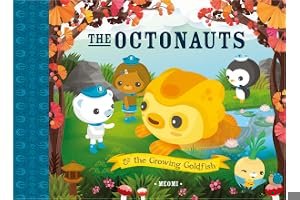
The Octonauts and The Growing Goldfish
Meomi
4.0
Join global sensations, the Octonauts, in an exciting new title in the classic picture book series that inspired the phenomenally successful animated TV show, broadcast around the world.
The Octonauts are a crew of cute animals who love to explore the big blue ocean. From their underwater base, the Octopod, the eight intrepid friends are always ready for fun and excitement!
It was a sunny day under the South Pacific Ocean when… ALERT! ALERT! ALERT!
The Octonauts meet Dunkie, a goldfish who can’t stop growing. Finding an ocean big enough for him seems to be an impossible mission for the intrepid crew… until they discover a prehistoric, deep sea world. Is Dunkie really a goldfish after all?
An action-packed underwater adventure to delight Octonauts fans!
The Ugly Duckling meets Journey to the Centre of the Earth in this hugely exciting nautical adventure!
…
Cover unavailable
90
The Zen of Fish: The Story of Sushi, from Samurai to Supermarket
Trevor Corson
4.0
Everything you never knew about sushi—its surprising origins, the colorful lives of its chefs, the bizarre behavior of the creatures that compose it—is revealed in this entertaining documentary account by the author of the highly acclaimed The Secret Life of Lobsters.
When a twenty-year-old woman arrives at America's first sushi-chef training academy in Los Angeles, she is unprepared for the challenges ahead: knives like swords, instructors like samurai, prejudice against female chefs, demanding Hollywood customers—and that's just the first two weeks.
In this richly reported story, journalist Trevor Corson shadows several American sushi novices and a master Japanese chef, taking the reader behind the scenes as the students strive to master the elusive art of cooking without cooking. With the same eye for drama and humor that Corson brings to the exploits of the chefs, he delves into the biology and natural history of the creatures of the sea. He illuminates sushi's beginnings as an Indo-Chinese meal akin to cheese, describes its reinvention in bustling nineteenth-century Tokyo as a cheap fast food, and tells the story of the pioneers who brought it to America. He shows how this unlikely meal is now exploding into the American heartland just as the long-term future of sushi may be unraveling.
The Zen of Fish is a compelling tale of human determination as well as a delectable smorgasbord of surprising food science, intrepid reporting, and provocative cultural history.
…
Cover unavailable
91
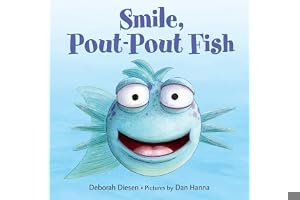
Smile, Pout-Pout Fish
Deborah Diesen
4.0
No need to be worried! No need to be sad! Toddlers will love swimming along with the Pout-Pout Fish as he turns little frowns into big smiles.
Debbie Diesen and Dan Hanna's much loved Pout-Pout Fish comes flippering and swishing into the hearts and minds of very young children with this compact and comic new tale sure to delight.
Cover unavailable
92
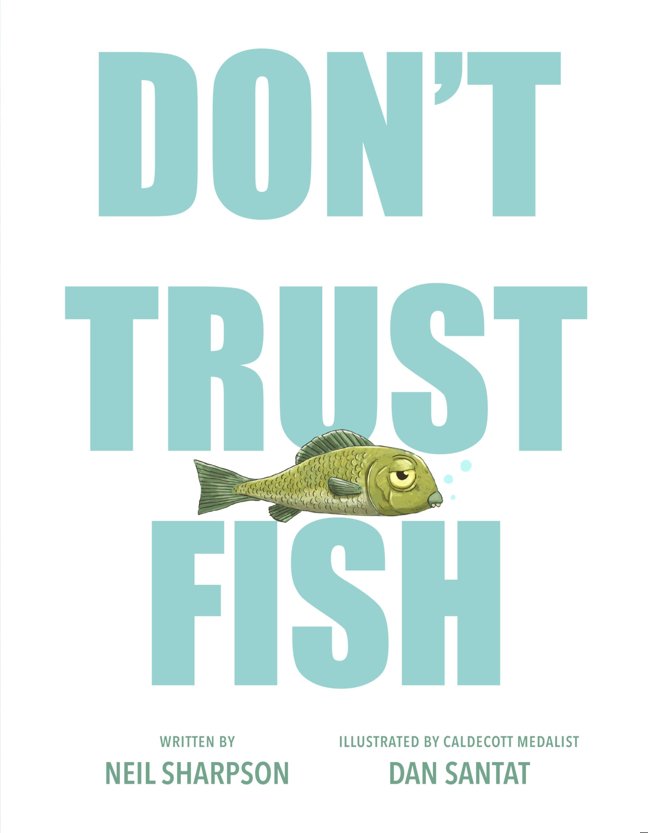
Don't Trust Fish
Neil Sharpson
4.0
NEW YORK TIMES BESTSELLER • An absurdly laugh-out-loud funny picture book about the villainy of fish, illustrated by National Book Award-winning creator Dan Santat"A ribald and uproarious warning to those unschooled in fishy goings-on." —Kirkus, starred reviewONE OF SLATE'S 25 GREATEST PICTURE BOOKS OF THE PAST 25 YEARSONE OF BOOKPAGE'S TEN BEST BOOKS OF THE YEARA BEST BOOK OF THE YEAR: New York Magazine, NPR, Chicago Public Library, Smithsonian Magazine, Libby, Kirkus, Publishers Weekly, Publishers Lunch, BookPage, Booklist, School Library Journal, Book Riot, BCCB, Imagination Soup, Parent Map, The Children's Book Review, EBSCO NoveListWhy, dear reader, must you NEVER EVER trust fish?1) They spend all their time in the water where we can’t see them.2) Some are as big as a bus—that is not okay.3) We don't know what they're teaching in their "schools."4) They are likely plotting our doom.This nature-guide-gone-wrong is a hilarious, off-the-rails exploration of the seemingly innocent animals that live in the water.
…
Cover unavailable
93
American Catch: The Fight for Our Local Seafood
Paul Greenberg
4.0
INVESTIGATIVE REPORTERS & EDITORS Book Award, Finalist 2014
In American Catch, award-winning author Paul Greenberg takes the same skills that won him acclaim in Four Fish to uncover the tragic unraveling of the nation’s seafood supply—telling the surprising story of why Americans stopped eating from their own waters.
In 2005, the United States imported five billion pounds of seafood, nearly double what we imported twenty years earlier. Bizarrely, during that same period, our seafood exports quadrupled. American Catch examines New York oysters, Gulf shrimp, and Alaskan salmon to reveal how it came to be that 91 percent of the seafood Americans eat is foreign.
In the 1920s, the average New Yorker ate six hundred local oysters a year. Today, the only edible oysters lie outside city limits. Following the trail of environmental desecration, Greenberg comes to view the New York City oyster as a reminder of what is lost when local waters are not valued as a food source.
Farther south, a different catastrophe threatens another seafood-rich environment. When Greenberg visits the Gulf of Mexico, he arrives expecting to learn of the Deepwater Horizon oil spill’s lingering effects on shrimpers, but instead finds that the more immediate threat to business comes from overseas. Asian-farmed shrimp—cheap, abundant, and a perfect vehicle for the frying and sauces Americans love—have flooded the American market.
Finally, Greenberg visits Bristol Bay, Alaska, home to the biggest wild sockeye salmon run left in the world. A pristine, productive fishery, Bristol Bay is now at great risk: The proposed Pebble Mine project could under¬mine the very spawning grounds that make this great run possible. In his search to discover why this pre¬cious renewable resource isn’t better protected, Green¬berg encounters a shocking truth: the great majority of Alaskan salmon is sent out of the country, much of it to Asia. Sockeye salmon is one of the most nutritionally dense animal proteins on the planet, yet Americans are shipping it abroad.
Despite the challenges, hope abounds. In New York, Greenberg connects an oyster restoration project with a vision for how the bivalves might save the city from rising tides. In the Gulf, shrimpers band together to offer local catch direct to consumers. And in Bristol Bay, fishermen, environmentalists, and local Alaskans gather to roadblock Pebble Mine. With American Catch, Paul Greenberg proposes a way to break the current destructive patterns of consumption and return American catch back to American eaters.
The Washington Post: "Americans need to eat more American seafood. It’s a point [Greenberg] makes compellingly clear in his new book, American Catch: The Fight for our Local Seafood...Greenberg had at least one convert: me.”
Jane Brody, New York Times “Excellent.”
The Los Angeles Times “If this makes it sound like American Catch is another of those dry, haranguing issue-driven books that you read mostly out of obligation, you needn’t worry. While Greenberg has a firm grasp of the facts, he also has a storyteller’s knack for framing them in an entertaining way.”
The Guardian (UK) “A wonderful new book”
Tom Colicchio: "This is on the top of my summer reading list. A Fast Food Nation for fish.”
…
Cover unavailable
94
Sharks And Other Sea Monsters
Robert Sabuda
4.0
Cover unavailable
95
Fish Jam
Kylie Howarth
4.0
A clever, light-hearted story about a scat-singing, bebopping fish!
Meet one little scat-singing, bebopping fish who can’t seem to make friends—everyone thinks he’s too noisy! All he wants to do is sing, but the other animals in the ocean keep telling him to be quiet. One day, a whale comes along and eats him, and to his surprise he finds a full jazz band in its belly! He’ll never have to scat alone again.
…
Cover unavailable
96
Under the Sea - Silicone Touch and Feel Board Book - Sensory Board Book (Touch & Feel Sensory Board Books for Baby & Toddler Time)
Little Hippo Books
4.0
Guess the sea creature in this "Who Am I?" touch and feel book with silicone elements on each spread, as well as the cover. Little ones will learn fun facts about their favorite fish, reptiles, mammals and other animals that live under the sea while trying to guess who they are. Who has a blowhole? Who has a hard shell and webbed-like feet? Who is shaped like a bell and has tentacles? Fun, bright illustrations and rhyming text will keep young minds interested. Introduce little ones to popular sea creatures such as a turtle, jellyfish, whale, starfish and octopusEducational question and answer element includedFeatures a different size, shape and color of silicone touch and feel elements on the cover and each spreadInteractive fun and tactile learning in this children's book will engage young readers Toddlers will enjoy the different touch and feel elementsBright, colorful, original illustrations are included in this toddler bookAdd a new baby book to a child's library today! These fun children's books are perfect for reading anytime or to give as gifts for special occasions such as, birthday gifts, baby shower wishing well gifts or for holidays such as Christmas, Easter or Valentine's Day. Look for our other touch and feel board books, children's padded board books, novelty books and more at amazon.com/littlehippobooks. Whether you're looking for well-known tales, tender or funny animal stories, or educational books for toddlers, Little Hippo® Books will become bedtime, or anytime, reading favorites! Board Book with silicone touch and feel elements10 pages6.25 inches x 8.25 inchesAges Baby to 6
…
Cover unavailable
97
Fish: The Complete Guide to Buying and Cooking
Mark Bittman
4.0
Fish: The Complete Guide to Buying and Cooking is a book that simplifies, once and for all, the process of preparing fish. Organized in an easy-reference, A-Z format, Fish gives you the culinary lowdown on seventy kinds of fish and shellfish commonly found in American supermarkets and fish stores. Each entry describes how the fish is sold (fillets, steaks, whole, salted), other names it goes by, how the fish should look, and buying tips. Fish begins with general guidelines on how to store, prepare, and cook fish, whether sauteing, frying, grilling, or smoking, and you will find easy-to-follow illustrations of such important basics as how to gut and fillet a fish. Fish also includes up-to-the-minute information on the health benefits of fish in our diet. In addition, there are more than five hundred recipes and variations, all of which use low-fat, high-flavor ingredients to accent the intrinsic natures of the individual fish rather than mask them. And the vast majority of the recipes are ready in less than thirty minutes.
…
Cover unavailable
98
A House for Hermit Crab
Eric Carle
4.0
Poor Hermit Crab! He's outgrown his snug little shell, so he finds himself a larger one -- and many new friends to decorate and protect his new house. But what will happen when he outgrows this shell and has to say good-bye to all the sea creatures who have made Hermit Crab's house a home? Children facing change in their own lives will relate to Hermit Crab's story -- and learn a lot about the fascinating world of marine life along the way. https://openlibrary.org/books/OL81969... https://openlibrary.org/books/OL24238...
…
Cover unavailable
99
Hear Bear Roar
Editors of Phoenix International…
4.0
Cover unavailable
100
Codzilla
David Zeltser, Jared Chapman
4.0
In time for blockbuster film Godzilla: King of the Monsters comes something perfect for smaller Godzilla fans. Bertie—a giant codfish—is tired of being bullied about his size, but when the other fish at school start calling him Codzilla, it really hurts. Being big isn’t easy, but when a shark comes around with his mouth wide open, Bertie becomes everyone’s hero. For fans of Nugget & Fang, Friends Don’t Eat Friends, Clark the Shark, and SpongeBob SquarePants.
Bertie is the biggest codfish in school. He loves reading about sharks more than anything, but he’s teased about his size by the fish in his school. When they start calling him Codzilla, he gets fed up and starts living up to the name. But when danger strikes from the deep in the form of a shark, Bertie uses his shark knowledge and his size to save his friends.
From David Zeltser (Ninja Baby) and Jared Chapman (Vegetables in Underwear) comes a heartfelt and clever tale about bullies, fast thinking, and the power of knowing your shark facts.


 1