152 Best Extranet Books of All Time
We've ranked the best extranet books using expert recommendations, sales data, and millions of reader ratings. At Shortform, we know books. Our book guides are the best in the world. Learn why.
1
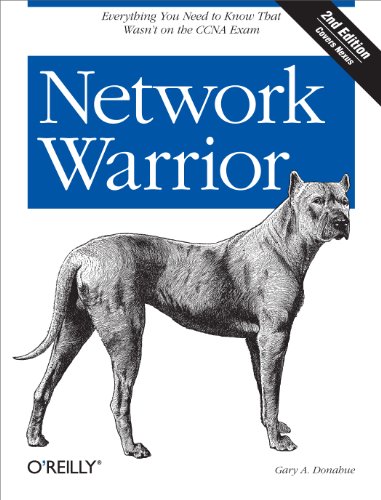
2Network Warrior
Topics include:
An in-depth view of routers and routing
Switching, using Cisco Catalyst and Nexus switches as examples
SOHO VoIP and SOHO wireless access point design and configuration
Introduction to IPv6 with configuration examples
Telecom technologies in the data-networking world, including T1, DS3, frame relay, and MPLS
Security, firewall theory, and configuration, as well as ACL and authentication
Quality of Service (QoS), with an emphasis on low-latency queuing (LLQ)
IP address allocation, Network Time Protocol (NTP), and device failures
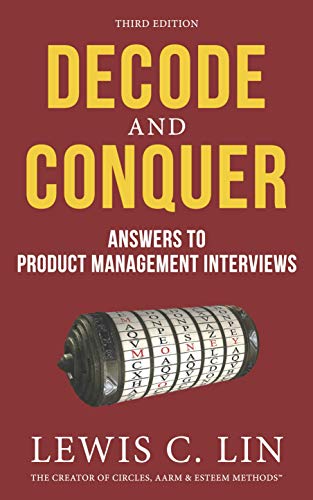
3Decode and Conquer: Answers to Product Management Interviews
Frameworks for tackling product design and metrics questions, including the CIRCLES Method™, AARM Method™, and DIGS Method™
Biggest mistakes PM candidates make at the interview
Decode what interviewers are looking for, why they're looking for it, and how to deliver it
Answers to the most important PM interview questions
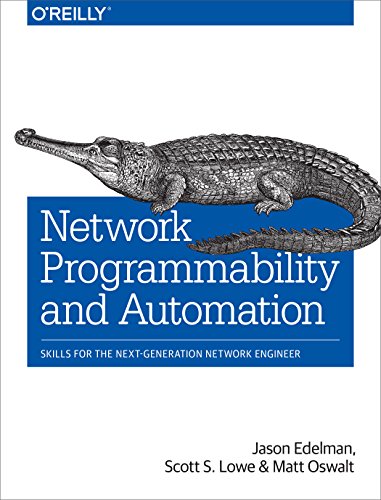
4Network Programmability and Automation: Skills for the Next-Generation Network Engineer
Network programming and automation will help you simplify tasks involved in configuring, managing, and operating network equipment, topologies, services, and connectivity. Through the course of the book, you'll learn the basic skills and tools you need to make this critical transition.
This book covers:
Python programming basics: data types, conditionals, loops, functions, classes, and modules
Linux fundamentals to provide the foundation you need on your network automation journey
Data formats and models: JSON, XML, YAML, and YANG for networking
Jinja templating and its applicability for creating network device configurations
The role of application programming interfaces (APIs) in network automation
Source control with Git to manage code changes during the automation process
How Ansible, Salt, and StackStorm open source automation tools can be used to automate network devices
Key tools and technologies required for a Continuous Integration (CI) pipeline in network operations
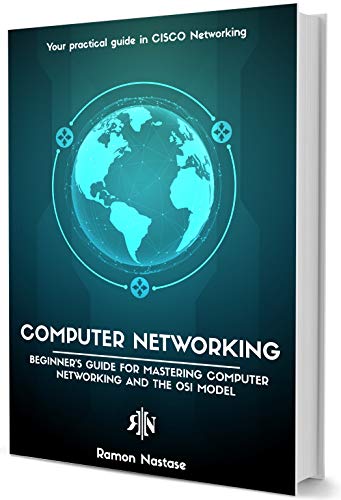
5Computer Networking for Beginners: Your Guide for Mastering Computer Networking, Cisco IOS and the OSI Model (Computer Networking Series)
6Due Considerations: Essays and Criticism
In between, many books are considered, some in introductions—to such classics as Walden, The Portrait of a Lady, and The Mabinogion—and many more in reviews, usually for The New Yorker. Ralph Waldo Emerson and the five Biblical books of Moses come in for appraisal, along with Uncle Tom’s Cabin and The Wizard of Oz. Contemporary American and English writers—Colson Whitehead, E. L. Doctorow, Don DeLillo, Norman Rush, William Trevor, A. S. Byatt, Muriel Spark, Ian McEwan—receive attentive and appreciative reviews, as do Rohinton Mistry, Salman Rushdie, Peter Carey, Margaret Atwood, Gabriel García Márquez, Haruki Murakami, Günter Grass, and Orhan Pamuk. In factual waters, Mr. Updike ponders the sinking of the Lusitania and the “unsinkable career” of Coco Chanel, the adventures of Lord Byron and Iris Murdoch, the sexual revolution and the advent of female Biblical scholars, and biographies of Robert Frost, Sinclair Lewis, Marcel Proust, and Søren Kierkegaard.
Reading Due Considerations is like taking a cruise that calls at many ports with a witty, sensitive, and articulate guide aboard—a voyage not to be missed.
7Silence on the Wire: A Field Guide to Passive Reconnaissance and Indirect Attacks
Silence on the Wire dissects several unique and fascinating security and privacy problems associated with the technologies and protocols used in everyday computing, and shows how to use this knowledge to learn more about others or to better defend systems. By taking an indepth look at modern computing, from hardware on up, the book helps the system administrator to better understand security issues, and to approach networking from a new, more creative perspective. The sys admin can apply this knowledge to network monitoring, policy enforcement, evidence analysis, IDS, honeypots, firewalls, and forensics.
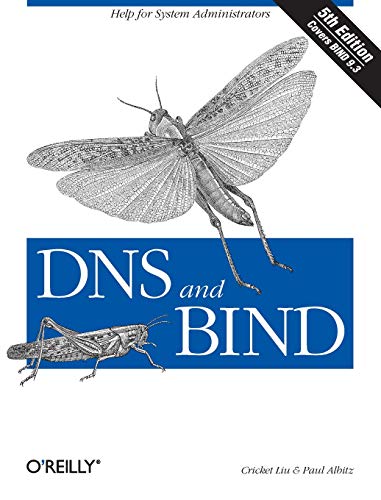
8DNS and BIND
The fifth edition covers BIND 9.3.2, the most recent release of the BIND 9 series, as well as BIND 8.4.7. BIND 9.3.2 contains further improvements in security and IPv6 support, and important new features such as internationalized domain names, ENUM (electronic numbering), and SPF (the Sender Policy Framework).
Whether you're an administrator involved with DNS on a daily basis or a user who wants to be more informed about the Internet and how it works, you'll find that this book is essential reading.
Topics include:
What DNS does, how it works, and when you need to use it How to find your own place in the Internet's namespace Setting up name servers Using MX records to route mail Configuring hosts to use DNS name servers Subdividing domains (parenting) Securing your name server: restricting who can query your server, preventing unauthorized zone transfers, avoiding bogus servers, etc. The DNS Security Extensions (DNSSEC) and Transaction Signatures (TSIG) Mapping one name to several servers for load sharing Dynamic updates, asynchronous notification of change to a zone, and incremental zone transfers Troubleshooting: using nslookup and dig, reading debugging output, common problems DNS programming using the resolver library and Perl's Net::DNS module
9Learn Ethical Hacking from Scratch: Your stepping stone to penetration testing
10Big Little Book On EIGRP: EIGRP Refresh In Minutes
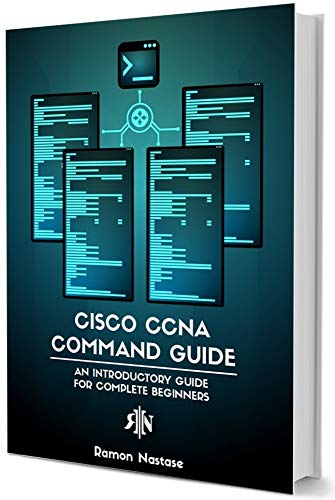
11Cisco CCNA Command Guide: An Introductory Guide for CCNA & Computer Networking Beginners
A guide that will cover everything in Cisco Routing and Switching Command, including Subnetting, vlsm and Supernetting. You will be able pass your CCNA (Cisco Certified Networking Associate) exam and become a Cisco technology specialist sooner than you expected.
The book is structured on 4 modules, which are exactly the ones you need for CCNA. Every command you have to know is presented and explained here. After you'll read this book, you'll be able to:
How to manage and configure Cisco devices (Routers, Switches)
How to troubleshoot with key commands
How can you apply this knowledge in a practical scenario
Written for simplicity so that you can learn Cisco IOS quickly and effectively.
You'll learn computer networking while executing commands.
The book includes configuration scenarios such as:
Basic configurations on Routers and Switches
Routing Protocols (OSPF, EIGRP, eBGP, RIP)
Switching (VLANs, STPs, VTPs)
Redundancy (HSRP, EtherChannel)
Security (ACL, Security Switching, VPN), etc.
Becoming a professional networking engineer is now easier than ever. If you get this book NOW, you'll shortly see that Cisco Routing and Command are something anyone can understand with a little bit of practice.
Tags: CCNA Command Guide, Cisco Commands, CCNA Commands, Cisco IOS Cheat Sheet, CCNA Cheat Sheet, Computer Networks, Cisco CCNA Command Guide, Cisco CCNA Commands, Cisco
Evil by Design: Interaction Design to Lead Us Into Temptation
Learn how companies make us feel good about doing what they want. Approaching persuasive design from the dark side, this book melds psychology, marketing, and design concepts to show why we're susceptible to certain persuasive techniques. Packed with examples from every nook and cranny of the web, it provides easily digestible and applicable patterns for putting these design techniques to work. Organized by the seven deadly sins, it includes:
Pride -- use social proof to position your product in line with your visitors' values Sloth -- build a path of least resistance that leads users where you want them to go Gluttony -- escalate customers' commitment and use loss aversion to keep them there Anger -- understand the power of metaphysical arguments and anonymity Envy -- create a culture of status around your product and feed aspirational desires Lust -- turn desire into commitment by using emotion to defeat rational behavior Greed -- keep customers engaged by reinforcing the behaviors you desire Now you too can leverage human fallibility to create powerful persuasive interfaces that people will love to use -- but will you use your new knowledge for good or evil? Learn more on the companion website, evilbydesign.info.
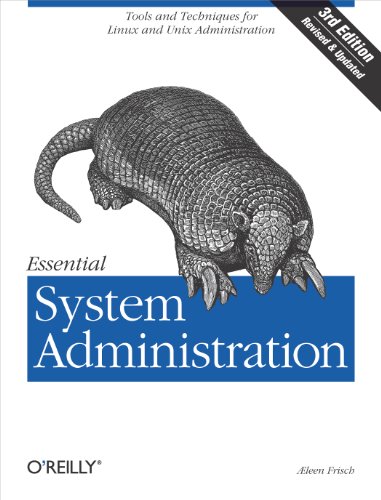
13Essential System Administration: Tools and Techniques for Linux and Unix Administration
The new edition of this indispensable reference has been fully updated for all the latest operating systems. Even more importantly, it has been extensively revised and expanded to consider the current system administrative topics that administrators need most. Essential System Administration,3rd Edition covers: DHCP, USB devices, the latest automation tools, SNMP and network management, LDAP, PAM, and recent security tools and techniques.
Essential System Administration is comprehensive. But what has made this book the guide system administrators turn to over and over again is not just the sheer volume of valuable information it provides, but the clear, useful way the information is presented. It discusses the underlying higher-level concepts, but it also provides the details of the procedures needed to carry them out. It is not organized around the features of the Unix operating system, but around the various facets of a system administrator's job. It describes all the usual administrative tools that Unix provides, but it also shows how to use them intelligently and efficiently.
Whether you use a standalone Unix system, routinely provide administrative support for a larger shared system, or just want an understanding of basic administrative functions, Essential System Administration is for you. This comprehensive and invaluable book combines the author's years of practical experience with technical expertise to help you manage Unix systems as productively and painlessly as possible.
14Network Security Assessment
Network Security Assessment demonstrates how a determined attacker scours Internet-based networks in search of vulnerable components, from the network to the application level. This new edition is up-to-date on the latest hacking techniques, but rather than focus on individual issues, it looks at the bigger picture by grouping and analyzing threats at a high-level. By grouping threats in this way, you learn to create defensive strategies against entire attack categories, providing protection now and into the future.
Network Security Assessment helps you assess:
Web services, including Microsoft IIS, Apache, Tomcat, and subsystems such as OpenSSL, Microsoft FrontPage, and Outlook Web Access (OWA)
Web application technologies, including ASP, JSP, PHP, middleware, and backend databases such as MySQL, Oracle, and Microsoft SQL Server
Microsoft Windows networking components, including RPC, NetBIOS, and CIFS services
SMTP, POP3, and IMAP email services
IP services that provide secure inbound network access, including IPsec, Microsoft PPTP, and SSL VPNs
Unix RPC services on Linux, Solaris, IRIX, and other platforms
Various types of application-level vulnerabilities that hacker tools and scripts exploit
Assessment is the first step any organization should take to start managing information risks correctly. With techniques to identify and assess risks in line with CESG CHECK and NSA IAM government standards, Network Security Assessment gives you a precise method to do just that.
15TCP/IP Network Administration
Included are discussions on advanced routing protocols (RIPv2, OSPF, and BGP) and the gated software package that implements them, a tutorial on configuring important network services -- including DNS, Apache, sendmail, Samba, PPP, and DHCP -- as well as expanded chapters on troubleshooting and security. TCP/IP Network Administration is also a command and syntax reference for important packages such as gated, pppd, named, dhcpd, and sendmail.
With coverage that includes Linux, Solaris, BSD, and System V TCP/IP implementations, the third edition contains:
Overview of TCP/IP Delivering the data Network services Getting startedM Basic configuration Configuring the interface Configuring routing Configuring DNS Configuring network servers Configuring sendmail Configuring Apache Network security Troubleshooting Appendices include dip, ppd, and chat reference, a gated reference, a dhcpd reference, and a sendmail reference This new edition includes ways of configuring Samba to provide file and print sharing on networks that integrate Unix and Windows, and a new chapter is dedicated to the important task of configuring the Apache web server. Coverage of network security now includes details on OpenSSH, stunnel, gpg, iptables, and the access control mechanism in xinetd. Plus, the book offers updated information about DNS, including details on BIND 8 and BIND 9, the role of classless IP addressing and network prefixes, and the changing role of registrars.
Without a doubt, TCP/IP Network Administration, 3rd Edition is a must-have for all network administrators and anyone who deals with a network that transmits data over the Internet.
16MIS
17Computer Networking: An Introductory Guide for Complete Beginners
18Linux Server Hacks, Volume Two: Tips & Tools for Connecting, Monitoring, and Troubleshooting
Which is why we created Linux Server Hacks, Volume Two, a second collection of incredibly useful tips and tricks for finding and using dozens of open source tools you can apply to solve your sys admin problems. The power and flexibility of Linux and Open Source means that there is an astounding amount of great software out there waiting to be applied to your sys admin problems -- if only you knew about it and had enough information to get started. Hence, Linux Server Hacks, Volume Two.
This handy reference offers 100 completely new server management tips and techniques designed to improve your productivity and sharpen your administrative skills. Each hack represents a clever way to accomplish a specific task, saving you countless hours of searching for the right answer. No more sifting through man pages, HOWTO websites, or source code comments -- the only resource you need is right here. And you don't have to be a system administrator with hundreds of boxen to get something useful from this book as many of the hacks apply equally well to a single system or a home network.
Compiled by experts, these hacks not only give you the step-by-step instructions necessary to implement the software, but they also provide the context to truly enable you to learn the technology. Topics include:
Authentication
Remote GUI connectivity
Storage management
File sharing and synchronizing resources
Security/lockdown instruction
Log files and monitoring
Troubleshooting
System rescue, recovery, and repair
Whether they help you recover lost data, collect information from distributed clients, or synchronize administrative environments, the solutions found in Linux Server Hacks, Volume Two will simplify your life as a system administrator.
19People I Want to Punch in the Face: Best Gag Gift, Notebook, Journal, Diary, Doodle Book (110 Pages, Blank, 6 x 9) (Awesome Notebooks)
20Handwriting Practice Paper: ABC Kids, Notebook with Dotted Lined Sheets for K-3 Students, 100 Pages, 8.5x11 Inches
Features:
100 pages, white paper Glossy paperback cover Large 8.5x11 inches to make it easier for young children to practice writing
21From Gutenberg to Google: The History of Our Future
In an era of seemingly instant change, it's easy to think that today's revolutions--in communications, business, and many areas of daily life--are unprecedented. Today's changes may be new and may be happening faster than ever before. But our ancestors at times were just as bewildered by rapid upheavals in what we now call "networks"--the physical links that bind any society together.
In this fascinating book, former FCC chairman Tom Wheeler brings to life the two great network revolutions of the past and uses them to help put in perspective the confusion, uncertainty, and even excitement most people face today. The first big network revolution was the invention of movable-type printing in the fifteenth century. This book, its millions of predecessors, and even such broad trends as the Reformation, the Renaissance, and the multiple scientific revolutions of the past 500 years would not have been possible without that one invention. The second revolution came with the invention of the telegraph early in the nineteenth century. Never before had people been able to communicate over long distances faster than a horse could travel. Along with the development of the world's first high-speed network--the railroad--the telegraph upended centuries of stability and literally redrew the map of the world.
Wheeler puts these past revolutions into the perspective of today, when rapid-fire changes in networking are upending the nature of work, personal privacy, education, the media, and nearly every other aspect of modern life. But he doesn't leave it there. Outlining "What's Next," he describes how artificial intelligence, virtual reality, blockchain, and the need for cybersecurity are laying the foundation for a third network revolution.
22BGP for Cisco Networks: A CCIE v5 guide to the Border Gateway Protocol (Cisco CCIE Routing and Switching v5.0)
23MPLS for Cisco Networks (Cisco CCIE Routing and Switching v5.0 Book 2)
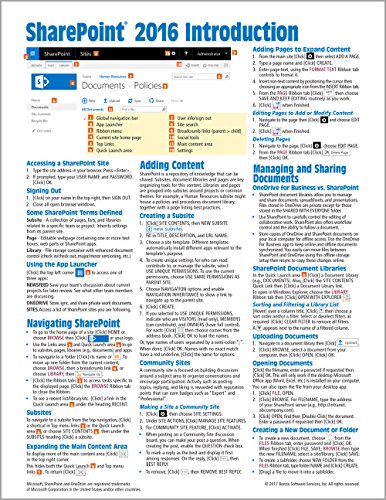
24Microsoft SharePoint 2016 Introduction Quick Reference Guide - Windows Version (Cheat Sheet of Instructions & Tips - Laminated Card)
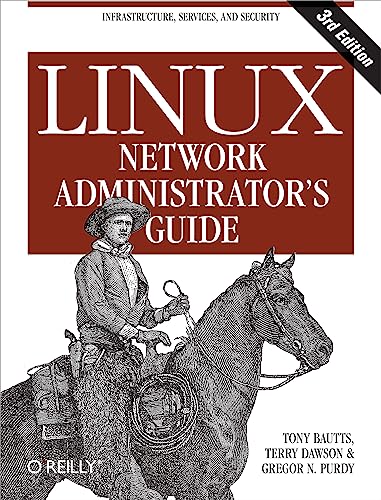
25Linux Network Administrator's Guide
But as the follow-up to a classic, the third edition of the Linux Network Administrator's Guide does more than just spruce up the basics. It also provides the very latest information on the following cutting-edge services:
Wireless hubs
OpenLDAP
FreeS/WAN
IMAP
Spam filtering
OpenSSH
BIND
IPv6
Featuring a litany of insider tips and techniques, the Linux Network Administrator's Guide, Third Edition is an invaluable companion for any network administrator interested in integrating Linux into their Windows environment Authored by Terry Dawson, Tony Bautts, and Gregor N. Purdy, the Linux Network Administrator's Guide, Third Edition emerged from the Linux Documentation Project (LDP). The LDP's goal is to centralize all of the issues of Linux documentation, ranging from online documentation topics such as installing, using, and running Linux.
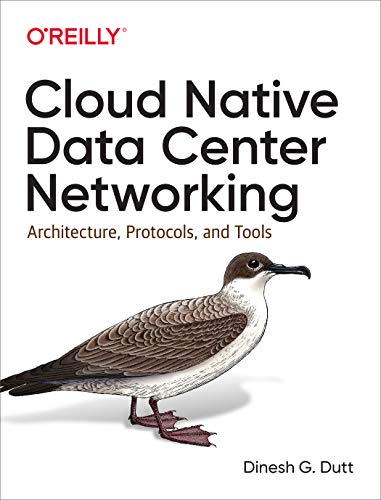
26Cloud Native Data Center Networking: Architecture, Protocols, and Tools
Ideal for network architects, data center operators, and network and containerized application developers, this book mixes theory with practice to guide you through the architecture and protocols you need to create and operate a robust, scalable network infrastructure. The book offers a vendor-neutral way to look at network design. For those interested in open networking, this book is chock-full of examples using open source software, from FRR to Ansible.
In the context of a cloud native data center, you'll examine:
Clos topology
Network disaggregation
Network operating system choices
Routing protocol choices
Container networking
Network virtualization and EVPN
Network automation
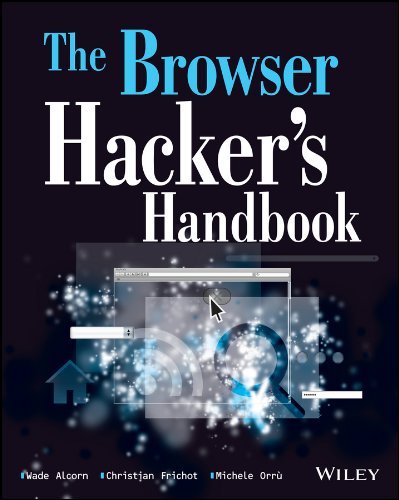
27The Browser Hacker's Handbook
The web browser has become the most popular and widely used computer "program" in the world. As the gateway to the Internet, it is part of the storefront to any business that operates online, but it is also one of the most vulnerable entry points of any system. With attacks on the rise, companies are increasingly employing browser-hardening techniques to protect the unique vulnerabilities inherent in all currently used browsers. The Browser Hacker's Handbook thoroughly covers complex security issues and explores relevant topics such as:
Bypassing the Same Origin Policy ARP spoofing, social engineering, and phishing to access browsers DNS tunneling, attacking web applications, and proxying--all from the browser Exploiting the browser and its ecosystem (plugins and extensions) Cross-origin attacks, including Inter-protocol Communication and Exploitation The Browser Hacker's Handbook is written with a professional security engagement in mind. Leveraging browsers as pivot points into a target's network should form an integral component into any social engineering or red-team security assessment. This handbook provides a complete methodology to understand and structure your next browser penetration test.
28Microsoft SharePoint 2013 Step by Step
Experience learning made easy—and quickly teach yourself how to boost team collaboration with SharePoint 2013. With Step by Step, you set the pace—building and practicing the skills you need, just when you need them!
Customize your team site’s layout, features, and apps
Manage and share ideas, documents, and data
Capture and organize content into lists and libraries
Automate business processes with built-in workflows
Use social features to communicate and collaborate
Publish content using enhanced web content management
29JUNOS Cookbook (Cookbooks (O'Reilly))
The Juniper Networks routing platforms are becoming the go-to solution for core, edge, metro and remote office networks, and JUNOS software is behind it all. The operating system is so full of industrial-strength routing protocols and IP innovations that those treading into the world of JUNOS will need clarification, explanation, and a showcase example or two. Look no further. This JUNOS Cookbook provides it all and more.
Yes, you can mine through the 5,000 pages of documentation or take a two-thousand-dollar training course, but JUNOS's interprocess sophistication can be baffling unless you know the shortcuts and tricks, as well as those rays of illuminating comprehension that can come only from those who live with it. JUNOS Cookbook is the first comprehensive book about JUNOS software and it provides over 200 time-saving step-by-step techniques including discussions about the processes and alternative ways to perform the same task. It's been tested and tech-reviewed by field engineers who know how to take JUNOS out for a spin and it's applicable to the entire line of M-, T-, and J-series routers. JUNOS Cookbook will not only pay for itself the first few times you use it, it will make your network easier to manage and update.
"Aviva Garrett has done a tremendous job of distilling the features of JUNOS software in a form that will be useful for a wide audience-students, field engineers, network architects, and other networking professionals alike will benefit from this book. For many people, this is the only book on JUNOS they will need." Pradeep Sindhu, CTO and Founder, Juniper Networks
"This cookbook is superb. Aviva Garrett has masterfully assembled a complete set of practical real-world examples with step-by-step instructions. Security, management, routing: it's all here!" Stephen Gill, Research Fellow, Team Cymru
"A technical time-saver for any NOC or SOC working with JUNOS. It's clear, concise, and informative recipes are are an invaluable resource. " Scott A. McIntyre, Security Officer, XS4ALL Internet B.V

30Learn Cisco Network Administration in a Month of Lunches
Learn Cisco Network Administration in a Month of Lunches is a tutorial designed for beginners who want to learn how to administer Cisco switches and routers. Just set aside one hour a day (lunchtime would be perfect) for a month, and you'll start learning practical Cisco Network administration skills faster than you ever thought possible.
Purchase of the print book includes a free eBook in PDF, Kindle, and ePub formats from Manning Publications.
About the Technology
Cisco's ultrareliable routers and switches are the backbone of millions of networks, but "set and forget" is not an acceptable attitude. Fortunately, you don't have to be an old-time administrator to set up and maintain a Cisco-based network. With a handful of techniques, a little practice, and this book, you can keep your system in top shape.
About the Book
Learn Cisco Network Administration in a Month of Lunches is designed for occasional and full-time network administrators using Cisco hardware. In 22 bite-sized lessons, you'll learn practical techniques for setting up a Cisco network and making sure that it never fails. Real-world labs start with configuring your first switch and guide you through essential commands, protocols, dynamic routing tricks, and more.
What's Inside
Understand your Cisco network, including the difference between routers and switches
Configure VLANs and VLAN trunks
Secure your network
Connect and configure routers and switches
Establish good maintenance habits
About the Reader
This book is written for readers with no previous experience with Cisco networking.
About the Author
Ben Piper is an IT consultant who holds numerous Cisco, Citrix, and Microsoft certifications including the Cisco CCNA and CCNP. He has created many video courses on networking, Cisco CCNP certification, Puppet, and Windows Server Administration.
Table of Contents
Before you begin
What is a Cisco network?
A crash course on Cisco's Internetwork Operating System
Managing switch ports
Securing ports by using the Port Security feature
Managing virtual LANs (VLANs)
Breaking the VLAN barrier by using switched virtual interfaces
IP address assignment by using Dynamic Host Configuration Protocol
Securing the network by using IP access control lists
Connecting switches using trunk links
Automatically configuring VLANs using the VLAN Trunking Protocol
Protecting against bridging loops by using the Spanning Tree Protocol
Optimizing network performance by using port channels
Making the network scalable by connecting routers and switches together
Manually directing traffic using the IP routing table
A dynamic routing protocols crash course
Tracking down devices
Securing Cisco devices
Facilitating troubleshooting using logging and debugging
Recovering from disaster
Performance and health checklist
Next steps
31Sharepoint 2016 for Dummies
SharePoint is truly one of Microsoft's crown jewels. Launched in 2001, it offers organizations a secure place to store, organize, share, and access information under the Microsoft Office system umbrella--all in a single portal. Whether you're new to SharePoint 2016 or new to SharePoint altogether, SharePoint 2016 For Dummies is the fast and painless way to get a site up and running, branded, and populated with content. Plus, this new edition adds the need-to-know information for administrators, techsumers, and page admins who want to leverage the cloud-based features online, either as a standalone product or in conjunction with an existing SharePoint infrastructure.
Get up to speed with SharePoint 2016 and take advantage of new features Set up and effectively manage your SharePoint site Use SharePoint 2016 in the Cloud with SharePoint Online Leverage SharePoint 2016 capabilities to drive business value If you want to learn SharePoint from the ground up, get your site going, and start collaborating, SharePoint 2016 For Dummies will be the dog-eared reference you'll turn to again and again.
32The Collaborative Organization: A Strategic Guide to Solving Your Internal Business Challenges Using Emerging Social and Collaborative Tools
While there are few guarantees in business these days, there is one simple truth we can all agree upon: Companies that embrace social and collaborative technologies and strategies stand the best chances of succeeding; those who don't will fail.
Still, the question remains: How do you get the most out of these world-changing tools and how do you develop strategies to succeed?
Jacob Morgan, the cofounder of Chess Media Group, says that you have to start where it all begins--with your employees--and in "The Collaborative Organization," he shows how to do it.
In this nuts-and-bolts guide, Morgan provides the information, insight, and strategic framework you need to use emergent collaborative software behind your company's firewall to solve business problems, unearth new opportunities, and drive innovation.
"The Collaborative Organization" takes you from the starting gate to the finish line of creating and executing a profit-driving, growthfocused strategy that leverages the power of social and collaborative technologies and strategies in your company. Learn all there is to know about: Using collaborative technology to transform your business Avoiding risks that come with making social technology part of your organizational DNA Choosing the right software and technologies for your specific needs Getting every employee on board Assessing your organization's collaborative readiness Building teams to lead collaboration Motivating employees to make social technologies part of their everyday routine Measuring and sustaining the success of your strategy
Dozens of case studies and contributions from companies from around the world, such as the Children's Hospital, the U.S. Department of State, UPS, Vanguard, and Pabst Brewing Co., clearly illustrate what works, what doesn't, and why.
Whether your company has 100 employees or 100,000, "The Collaborative Organization" gives you what you need to get everyone on board to foster lasting success and growth in today's uncertain but exciting business landscape.
33Amazon Web Services in Action
"Amazon Web Services in Action" introduces you to computing, storing, and networking in the AWS cloud. The book will teach you about the most important services on AWS. You will also learn about best practices regarding automation, security, high availability, and scalability.
Purchase of the print book includes a free eBook in PDF, Kindle, and ePub formats from Manning Publications.
About the Technology
Physical data centers require lots of equipment and take time and resources to manage. If you need a data center, but don't want to build your own, Amazon Web Services may be your solution. Whether you're analyzing real-time data, building software as a service, or running an e-commerce site, AWS offers you a reliable cloud-based platform with services that scale. All services are controllable via an API which allows you to automate your infrastructure.
About the Book
"Amazon Web Services in Action" introduces you to computing, storing, and networking in the AWS cloud. The book will teach you about the most important services on AWS. You will also learn about best practices regarding security, high availability and scalability.You'll start with a broad overview of cloud computing and AWS and learn how to spin-up servers manually and from the command line. You'll learn how to automate your infrastructure by programmatically calling the AWS API to control every part of AWS. You will be introduced to the concept of Infrastructure as Code with the help of AWS CloudFormation.You will learn about different approaches to deploy applications on AWS. You'll also learn how to secure your infrastructure by isolating networks, controlling traffic and managing access to AWS resources. Next, you'll learn options and techniques for storing your data. You will experience how to integrate AWS services into your own applications by the use of SDKs. Finally, this book teaches you how to design for high availability, fault tolerance, and scalability.
What's InsideOverview of cloud concepts and patternsManage servers on EC2 for cost-effectivenessInfrastructure automation with Infrastructure as Code (AWS CloudFormation)Deploy applications on AWSStore data on AWS: SQL, NoSQL, object storage and block storageIntegrate Amazon's pre-built servicesArchitect highly available and fault tolerant systems
About the Reader
Written for developers and DevOps engineers moving distributed applications to the AWS platform.
About the Authors
Andreas Wittig and Michael Wittig are software engineers and consultants focused on AWS and web development.
Table of ContentsPART 1 GETTING STARTEDWhat is Amazon Web Services?A simple example: WordPress in five minutesPART 2 BUILDING VIRTUAL INFRASTRUCTURE WITH SERVERS AND NETWORKINGUsing virtual servers: EC2Programming your infrastructure: the command line, SDKs, and CloudFormationAutomating deployment: CloudFormation, Elastic Beanstalk, and OpsWorksSecuring your system: IAM, security groups, and VPCPART 3 STORING DATA IN THE CLOUDStoring your objects: S3 and GlacierStoring your data on hard drives: EBS and instance storeUsing a relational database service: RDSProgramming for the NoSQL database service: DynamoDBPART 4 ARCHITECTING ON AWSAchieving high availability: availability zones, auto-scaling, and CloudWatchDecoupling your infrastructure: ELB and SQSDesigning for fault-toleranceScaling up and down: auto-scaling and CloudWatch
34Designing Intranets: Creating Sites that Work
35Networking: A Beginner's Guide
36Microsoft SharePoint 2013 Plain & Simple
Here's WHAT you'll learn:
Create libraries for all kinds of media
Share information in one location
Organize people and processes
Connect SharePoint to Microsoft Office with no fuss
Find things fast with the Search Center
Expand your community with social networking
Here's HOW you'll learn it:
Jump in wherever you need answers
Follow easy STEPS and SCREENSHOTS to see exactly what to do
Get handy TIPS for new techniques and shortcuts
Use TRY THIS! exercises to apply what you learn right away
37Microsoft SharePoint 2013 Developer Reference
Develop your business collaboration solutions quickly and effectively with the rich set of tools, classes, libraries, and controls available in Microsoft SharePoint 2013. With this practical reference, enterprise-development expert Paolo Pialorsi shows you how to extend and customize the SharePoint environment—and helps you sharpen your development skills. Ideal for ASP.NET developers with Microsoft .NET and C# knowledge.
Discover how to:
Create custom SharePoint apps and publish them in the Office Store
Orchestrate your workflows with the new Workflow Manager 1.0
Access and manage your SharePoint data with the REST APIs
Federate SharePoint with Windows Azure Access Control Services
Customize your SharePoint 2013 UI for a better user experience
Gain a thorough understanding of authentication and authorization
38SSH, The Secure Shell: The Definitive Guide
SSH: The Secure Shell: The Definitive Guide covers the Secure Shell in detail for both system administrators and end users. It demystifies the SSH man pages and includes thorough coverage of:
SSH1, SSH2, OpenSSH, and F-Secure SSH for Unix, plus Windows and Macintosh products: the basics, the internals, and complex applications.
Configuring SSH servers and clients, both system-wide and per user, with recommended settings to maximize security.
Advanced key management using agents, agent forwarding, and forced commands.
Forwarding (tunneling) of TCP and X11 applications in depth, even in the presence of firewalls and network address translation (NAT).
Undocumented behaviors of popular SSH implementations.
Installing and maintaining SSH systems.
Whether you're communicating on a small LAN or across the Internet, SSH can ship your data from "here" to "there" efficiently and securely. So throw away those insecure .rhosts and hosts.equiv files, move up to SSH, and make your network a safe place to live and work.
39LDAP System Administration
System administrators often spend a great deal of time managing configuration information located on many different machines: usernames, passwords, printer configurations, email client configurations, and network filesystem configurations, to name a few. LDAPv3 provides tools for centralizing all of the configuration information and placing it under your control. Rather than maintaining several administrative databases (NIS, Active Directory, Samba, and NFS configuration files), you can make changes in only one place and have all your systems immediately "see" the updated information.
Practically platform independent, this book uses the widely available, open source OpenLDAP 2 directory server as a premise for examples, showing you how to use it to help you manage your configuration information effectively and securely. OpenLDAP 2 ships with most Linux(R) distributions and Mac OS(R) X, and can be easily downloaded for most Unix-based systems. After introducing the workings of a directory service and the LDAP protocol, all aspects of building and installing OpenLDAP, plus key ancillary packages like SASL and OpenSSL, this book discusses:
Configuration and access control Distributed directories; replication and referral Using OpenLDAP to replace NIS Using OpenLDAP to manage email configurations Using LDAP for abstraction with FTP and HTTP servers, Samba, and Radius Interoperating with different LDAP servers, including Active Directory Programming using Net:: LDAP If you want to be a master of your domain, LDAP System Administration will help you get up and running quickly regardless of which LDAP version you use. After reading this book, even with no previous LDAP experience, you'll be able to integrate a directory server into essential network services such as mail, DNS, HTTP, and SMB/CIFS.
40SharePoint in Practice: Proven methods to engage your team & build your company portal.
41Juniper SRX Series
While their earlier book, Junos Security, covered the SRX platform, this book focuses on the SRX Series devices themselves. You'll learn how to use SRX gateways to address an array of network requirements—including IP routing, intrusion detection, attack mitigation, unified threat management, and WAN acceleration. Along with case studies and troubleshooting tips, each chapter provides study questions and lots of useful illustrations.
Explore SRX components, platforms, and various deployment scenarios
Learn best practices for configuring SRX’s core networking features
Leverage SRX system services to attain the best operational state
Deploy SRX in transparent mode to act as a Layer 2 bridge
Configure, troubleshoot, and deploy SRX in a highly available manner
Design and configure an effective security policy in your network
Implement and configure network address translation (NAT) types
Provide security against deep threats with AppSecure, intrusion protection services, and unified threat management tools
42Computer Networking: Fundamentals for Absolute Beginners
Below is a preview of what you'll learn:
The fundamentals of computer networks
Network architecture
The OSI Model (Application Layer, Presentation Layer, Session Layer, Transport Layer, Network Layer, Data Link Layer, Physical Layer)
Wireless and cellular networks
Networks and multimedia
Integrating and transporting multimedia using networks
Fundamentals of network security
Managing networks
Network administration
Infrastructure management
And much more!
Learn the fundamentals of computer networking today by clicking the BUY NOW button at the top of the page!
43Microsoft Sharepoint 2013 for Dummies
SharePoint Portal Server is an essential part of the enterprise infrastructure for many businesses. Building on the success of previous versions of "SharePoint For Dummies," this new edition covers all the latest features of SharePoint 2013 and provides you with an easy-to-understand resource for making the most of all that this version has to offer. You'll learn how to get a site up and running, branded, and populated with content, workflow, and management. In addition, this new edition includes essential need-to-know information for administrators, techsumers, and page admins who want to leverage the cloud-hosted features online, either as a standalone product or in conjunction with an existing SharePoint infrastructure. Walks you through getting a SharePoint site up and running effectively and efficiently Explains ongoing site management and offers plenty of advice for administrators who want to leverage SharePoint and Office 365 in various ways Shows how to use SharePoint to leverage data centers and collaborate with both internal and external customers, including partners and clients
"SharePoint 2013 For Dummies" is essential reading if you want to make the most of this technology.
44Big Little Book on Wi-Fi
45Wolves, Sheep, and Sheepdogs: A Leader's Guide to Information Security
46Microsoft SharePoint 2013 Quick Reference Guide: Introduction (Cheat Sheet of Instructions, Tips & Shortcuts - Laminated Card)
47Sharepoint for Dummies
SharePoint is an enterprise portal server living under the Microsoft Office umbrella. It can be used as a local installation (on-premises) or an online service. The SharePoint Online service comes bundled with Office 365. You can use SharePoint to aggregate sites, information, data, and applications into a single portal. SharePoint 2019 contains highly integrated features that allow you to work with it directly from other Office products such as Teams, Word, Excel, PowerPoint, and many others.
SharePoint For Dummies provides a thorough update on how to make the most of all the new SharePoint and Office features--while still building on the great and well-reviewed content in the prior editions. The book shows those new to SharePoint or new to SharePoint 2019 how to get up and running so that you and your team can become productive with this powerful tool.
Find high-level, need-to-know information for "techsumers", administrators, and admins Learn how SharePoint Online can get you started in minutes without the hassle and frustration of building out your own servers Find everything you need to know about the latest release of SharePoint Online and SharePoint Server Get your hands on the best guide on the market for SharePoint!
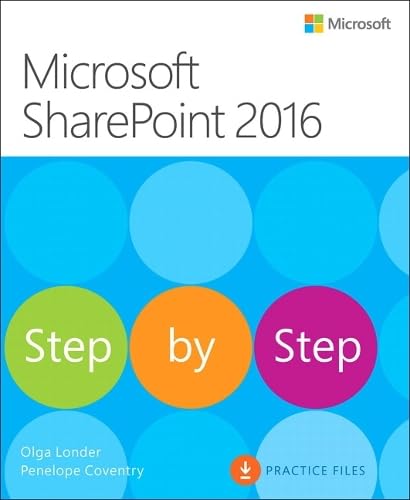
48Microsoft Sharepoint 2016 Step by Step
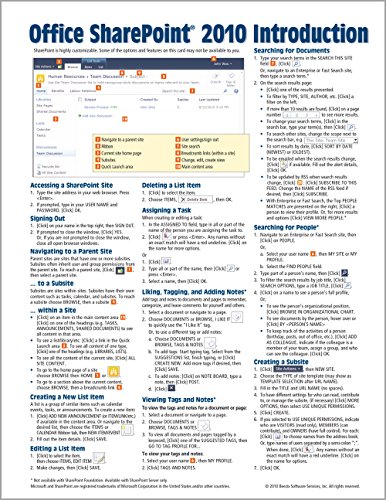
49Microsoft SharePoint 2010 Quick Reference Guide: Introduction (Cheat Sheet of Instructions, Tips & Shortcuts - Laminated Card)
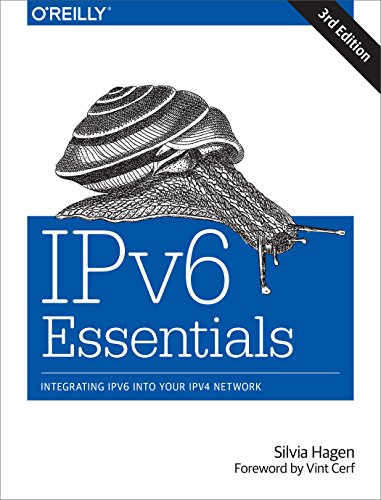
50IPv6 Essentials
Beginning with a short history of IPv6, author Silvia Hagen provides an overview of new functionality and discusses why we need IPv6. Hagen also shares exhaustive discussions of the new IPv6 header format and Extension Headers, IPv6 address and ICMPv6 message format, Security, QoS, Mobility and, last but not least, offers a Quick Start Guide for different operating systems. IPv6 Essentials, Second Edition also covers:
In-depth technical guide to IPv6 Mechanisms and Case Studies that show how to integrate IPv6 into your network without interruption of IPv4 services Routing protocols and upper layer protocols Security in IPv6: concepts and requirements. Includes the IPSEC framework and security elements available for authentication and encryption Quality of Service: covers the elements available for QoS in IPv6 and how they can be implemented Detailed discussion of DHCPv6 and Mobile IPv6 Discussion of migration cost and business case Getting started on different operating systems: Sun Solaris, Linux, BSD, Windows XP, and Cisco routers
Whether you're ready to start implementing IPv6 today or are planning your strategy for the future, IPv6 Essentials, Second Edition will provide the solid foundation you need to get started.
"Silvia's look at IPv6 is always refreshing as she translates complex technology features into business drivers and genuine end-user benefits to enable building new business concepts based on end to end models." Latif Ladid, President IPv6 Forum, Chair EU IPv6 Task Force
51PostgreSQL Administration Essentials
52