We've ranked the best dalai lama books using expert recommendations, sales data, and millions of reader ratings. At Shortform, we know books. Our book guides are the best in the world. Learn why.
Nearly every time you see him, he's laughing, or at least smiling. And he makes everyone else around him feel like smiling. He's the Dalai Lama, the spiritual and temporal leader of Tibet, a Nobel Prize winner, and an increasingly popular speaker and statesman. What's more, he'll tell you that happiness is the purpose of life, and that "the very motion of our life is towards happiness." How to get there has always been the question. He's tried to answer it before, but he's never had the help of a psychiatrist to get the message across in a context we can easily understand. Through conversations, stories, and meditations, the Dalai Lama shows us how to defeat day-to-day anxiety, insecurity, anger, and discouragement. Together with Dr. Cutler, he explores many facets of everyday life, including relationships, loss, and the pursuit of wealth, to illustrate how to ride through life's obstacles on a deep and abiding source of inner peace.
…
Cover unavailable
2
The Book of Joy: Lasting Happiness in a Changing World
Two great spiritual masters share their own hard-won wisdom about living with joy even in the face of adversity. The occasion was a big birthday. And it inspired two close friends to get together in Dharamsala for a talk about something very important to them. The friends were His Holiness the Dalai Lama and Archbishop Desmond Tutu. The subject was joy. Both winners of the Nobel Prize, both great spiritual masters and moral leaders of our time, they are also known for being among the most infectiously happy people on the planet.
From the beginning the book was envisioned as a three-layer birthday cake: their own stories and teachings about joy, the most recent findings in the science of deep happiness, and the daily practices that anchor their own emotional and spiritual lives. Both the Dalai Lama and Archbishop Tutu have been tested by great personal and national adversity, and here they share their personal stories of struggle and renewal. Now that they are both in their eighties, they especially want to spread the core message that to have joy yourself, you must bring joy to others.
Most of all, during that landmark week in Dharamsala, they demonstrated by their own exuberance, compassion, and humor how joy can be transformed from a fleeting emotion into an enduring way of life.
…
Recommended by Bogdan Lucaciu and Chelsea Frank.
Bogdan Lucaciu
I recently read “The Book of Joy”. It’s a series of dialogues between Dalai Lama and Archbishop Tutu (beautifully narrated in the audio version). They share their view on living a happy life in the face of adversity. The book brought profound clarity on topics like compassion, gratitude, generosity, and it deeply resonated with my worldview. If there’s one book you end up reading from my list, I hope it’s this one. [source]
Chelsea Frank
I read everything with an open mind, often challenging myself by choosing books with an odd perspective or religious/spiritual views. These books do not reflect my personal feelings but are books that helped shape my perspective on life, love, and happiness. [source]
Cover unavailable
3
Ethics for the New Millennium
Dalai Lama
4.6
In a difficult, uncertain time, it takes a person of great courage, such as the Dalai Lama, to give us hope. Regardless of the violence and cynicism we see on television and read about in the news, there is an argument to be made for basic human goodness. The number of people who spend their lives engaged in violence and dishonesty is tiny compared to the vast majority who would wish others only well. According to the Dalai Lama, our survival has depended and will continue to depend on our basic goodness. Ethics for the New Millennium presents a moral system based on universal rather than religious principles. Its ultimate goal is happiness for every individual, irrespective of religious beliefs. Though he himself a practicing Buddhist, the Dalai Lama's teachings and the moral compass that guides him can lead each and every one of us—Muslim, Christian, Jew, Buddhist, or atheist—to a happier, more fulfilling life.
His Holiness the Dalai Lama's newest book, The Wisdom of Compassion, is now available from Riverhead Books.
Yes, I think it is probably right to start with the new millennium of which we have now completed the first decade. A lot of the writing that I am talking about is focused on the idea that we need to do something new in our new millennium and our new century. The Millennium Development Goals are the most specific manifestation of that idea, the objective of really reaching a new level and a new understanding. The Dalai Lama wrote this book not specifically about the Millennium Development Goals but very much in the spirit of the need to create a new global understanding and global ethic, and to make what is now a global society work. [source]
Cover unavailable
4
How to Practice: The Way to a Meaningful Life
Dalai Lama, Jeffrey Hopkins
4.6
As human beings, we all share the desire for happiness and meaning in our lives. According to His Holiness the Dalai Lama, the ability to find true fulfillment lies within each of us. In this very special book, the spiritual and temporal leader of Tibet, Nobel Prize winner, and bestselling author helps readers embark upon the path to enlightenment with a stunning illumination of the timeless wisdom and an easy-access reference for daily practice. Divided into a series of distinct steps that will lead spiritual seekers toward enlightenment, How to Practice is a constant companion in the quest to practice morality, meditation, and wisdom. This accessible book will guide you toward opening your heart, refraining from doing harm, and maintiaining mentaltranquility as the Dalai Lama shows you how to overcome everyday obstacles, from feelings of anger and mistrust to jealousy, insecurity, and counterproductive thinking. Imbued with His Holiness' vivacious spirit and sense of playfulness, How to Practice offers sage and practical insight into the human psyche and into the deepest aspirations that bind us all together.
…
Cover unavailable
5
The Universe in a Single Atom: The Convergence of Science and Spirituality
Dalai Lama
4.5
Galileo, Copernicus, Newton, Niels Bohr, Einstein. Their insights shook our perception of who we are and where we stand in the world, and in their wake have left an uneasy coexistence: science vs. religion, faith vs. empirical inquiry. Which is the keeper of truth? Which is the true path to understanding reality?
After forty years of study with some of the greatest scientific minds, as well as a lifetime of meditative, spiritual, and philosophic study, the Dalai Lama presents a brilliant analysis of why all avenues of inquiry—scientific as well as spiritual—must be pursued in order to arrive at a complete picture of the truth. Through an examination of Darwinism and karma, quantum mechanics and philosophical insight into the nature of reality, neurobiology and the study of consciousness, the Dalai Lama draws significant parallels between contemplative and scientific examinations of reality.
This breathtakingly personal examination is a tribute to the Dalai Lama’s teachers—both of science and spirituality. The legacy of this book is a vision of the world in which our different approaches to understanding ourselves, our universe, and one another can be brought together in the service of humanity.
…
Cover unavailable
6
Beyond Religion: Ethics for a Whole World
Dalai Lama
4.5
An unprecedented event: a beloved world religious leader proposes a way to lead an ethical, happy, and spiritual life beyond religion and offers a program of mental training for cultivating key human values
Ten years ago, in his best-selling Ethics for a New Millennium, His Holiness the Dalai Lama first proposed an approach to ethics based on universal rather than religious principles. Now, in Beyond Religion, the Dalai Lama, at his most compassionate and outspoken, elaborates and deepens his vision for the nonreligious way.
Transcending the mere “religion wars,” he outlines a system of ethics for our shared world, one that gives full respect to religion. With the highest level of spiritual and intellectual authority, the Dalai Lama makes a stirring appeal for what he calls a “third way,” a path to an ethical and happy life and to a global human community based on understanding and mutual respect.
Beyond Religion is an essential statement from the Dalai Lama, a blueprint for all those who may choose not to identify with a religious tradition, yet still yearn for a life of spiritual fulfillment as they work for a better world.
…
Cover unavailable
7
Conocete a ti mismo tal y como realmente eres
Dalai Lama
4.5
Claves para conocerse uno mismo tal y como uno es realmente y poder conseguir así, la felicidad pura.
El Dalai Lama, el líder budista más conocido y respetado, y Premio Nobel de la Paz, enseña en este audiolibro a reconocer las nociones equivocadas que tenemos de nosotros mismos para abordar la realidad desde una perspectiva más certera y humana. Como las dos alas de un pájaro, el amor y el conocimiento interior trabajan juntos para llevarnos a la iluminación.
Con anécdotas personales, el Dalai Lama muestra en este audiolibro las claves que ofrece la tradición budista para el conocimiento personal y el despertar espiritual. Una obra inspiradora, indispensable para todas aquellas personas que necesitan encontrar en su interior las respuestas a los grandes interrogantes de su ser en el mundo.
…
Cover unavailable
8
The Road Less Traveled: A New Psychology of Love, Traditional Values and Spiritual Growth
The Road Less Traveled: A New Psychology of Love, Traditional Values and Spiritual Growth 316 pp. "Psychotherapy is all things to all people in this mega-selling pop-psychology watershed, which features a new introduction by the author in this 25th anniversary edition. His agenda in this tome, which was first published in 1978 but didn't become a bestseller until 1983, is to reconcile the psychoanalytic tradition with the conflicting cultural currents roiling the 70s. In the spirit of Me-Decade individualism and libertinism, he celebrates self-actualization as life's highest purpose and flirts with the notions of open marriage and therapeutic sex between patient and analyst. But because he is attuned to the nascent conservative backlash against the therapeutic worldview, Peck also cites Gospel passages, recruits psychotherapy to the cause of traditional religion (he even convinces a patient to sign up for divinity school) and insists that problems must be overcome through suffering, discipline and hard work (with a therapist.) Often departing from the cerebral and rationalistic bent of Freudian discourse for a mystical, Jungian tone more compatible with New Age spirituality, Peck writes of psychotherapy as an exercise in "love" and "spiritual growth," asserts that "our unconscious is God" and affirms his belief in miracles, reincarnation and telepathy. Peck's synthesis of such clashing elements (he even throws in a little thermodynamics) is held together by a warm and lucid discussion of psychiatric principles and moving accounts of his own patients' struggles and breakthroughs. Harmonizing psychoanalysis and spirituality, Christ and Buddha, Calvinist work ethic and interminable talking cures, this book is a touchstone of our contemporary religio-therapeutic culture." -- Publishers WeeklyKeywords: MIND & BODY PSYCHOLOGY SOCIOLOGY RELIGION
…
Recommended by John C. Maxwell, Iulian Stanciu, and 1 others.
Iulian Stanciu
It helps you take a deeper look and understand why certain things happen in your life. It's an introduction to psychology. It helps you divide a person, just like you would do with a mathematical equation. [source]
Cover unavailable
9
An Open Heart: Practicing Compassion in Everyday Life
Dalai Lama, Nicholas Vreeland, Khyongla Rato, Richard Gere
4.5
How does one actually become a compassionate person? What are the mechanisms by which a selfish heart is transformed into a generous heart? The Dalai Lama's teachings on this essential subject, drawn from talks he delivered during his epochal visit to America in 1999, form the basis of this universally appealing book.
Author Biography: His Holiness the 14th Dalai Lama, Tenzin Gyatso, was recognized at the age of two as the reincarnation of the 13th Dalai Lama. As Tibet's leader-in-exile, he has worked tirelessly not only on behalf of the Tibetan people, but as a voice for human rights worldwide.
…
Cover unavailable
10
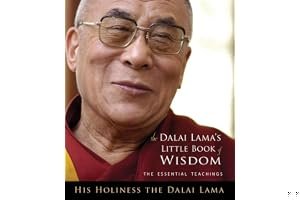
Dalai Lama's Little Book of Wisdom
Dalai Lama
4.5
This gem, the sequel to The Dalai Lama's Little Book of Inner Peace, contains the essence of the Dalai Lama's teachings on life and death. Think of this as the essential guide to both living and dying well from one of the most important spiritual teachers of the 20th and 21st centuries. Among the topics covered are:
• Contentment, Joy and Living Well
• Facing Death and Dying
• Dealing with Anger and Emotion
• Compassion--the Basis for Human Happiness
• Giving and Receiving This charming packaged is designed for the busy person who is always on the go: a small format, flapped paperback that will easily fit in a purse, backpack, or briefcase.
…
Cover unavailable
11
My Spiritual Journey
Dalai Lama
4.4
The world knows the public face of the fourteenth Dalai Lama.
We have read about his near escape from Tibet after the Chinese invasion, his Nobel Peace Prize, and his friendships with world leaders, Hollywood actors, and scientists around the world. But what are his inner, personal thoughts on his own spiritual life? For the first time and in his own words, the Dalai Lama charts his spiritual journey from his boyhood days in rural Tibet to his years as a monk in the capital city of Dharamsala, to his life in exile as a world leader and symbol of peace.
My Spiritual Journey provides a vivid and moving portrait of the Dalai Lama’s life journey that is personal in tone but universal in scope. He explores three phases or commitments of his spiritual life — as a human being, as a Buddhist monk, and as the Dalai Lama — each of which has made him more dedicated to exploring and teaching human values and inner happiness, promoting harmony among all religions, and advocating for the civil rights and well-being of the Tibetan people.
At the age of two, little Tenzin Gyatso was identified as the fourteenth incarnation of the first Dalai Lama. From then on, his life has been a trajectory few can imagine. Some see him as a living Buddha and moral authority, others identify him as a “god-king,” which still others see him in political terms as either a hero or a counterrevolutionary. In My Spiritual Journey, we see the personal struggles, the courage, the laughter, and the compassion that have defined the remarkable life of one of our world’s greatest living legends.
…
Cover unavailable
12
Freedom in Exile: The Autobiography of the Dalai Lama
Dalai Lama
4.4
In this astonishingly frank autobiography, the Dalai Lama reveals the remarkable inner strength that allowed him to master both the mysteries of Tibetan Buddhism and the brutal realities of Chinese Communism.
Cover unavailable
13
The Four Noble Truths
His Holiness the Dalai Lama
4.4
In July 1996, for the first time in the West, His Holiness the Dalai Lama gave two exclusive days of teaching in London on The Four Noble Truths - the heart of the Buddha's teachings.
The Four Noble Truths - the truth of suffering, the truth of the origin of suffering, the truth of the cessation of suffering and the truth of the path leading to this cessation - was the first sermon the Buddha gave after he was enlightened. As well as elucidating these teachings, His Holiness the Dalai Lama also explains the relationship between relative and absolute compassion.
"Whenever I have been given the opportunity to introduce Buddhism I always make it a point to explain Buddhism in terms of two principles. One is the development of a philosophical viewpoint based on the understanding of the interdependent nature of reality. And the second principle is that of non-violence which is the actual action of a Buddhist practitioner and which derives from that view of the interdependent nature of reality." - His Holiness the Dalai Lama
…
Cover unavailable
14
The Dalai Lama's Cat (The Dalai Lama's Cat, #1)
David Michie
4.3
“‘Oh! How adorable! I didn’t know you had a cat!’ she exclaimed.
I am always surprised how many people make this observation. Why should His Holiness not have a cat?
‘If only she could speak,’ continued the actress. ‘I’m sure she’d have such wisdom to share.’
And so the seed was planted . . .
I began to think that perhaps the time had come for me to write a book of my own—a book that would convey some of the wisdom I’ve learned sitting not at the feet of the Dalai Lama but even closer, on his lap. A book that would tell my own tale . . . how I was rescued from a fate too grisly to contemplate to become the constant companion of a man who is not only one of the world’s greatest spiritual leaders and a Nobel Peace Prize Laureate but also a dab hand with a can opener.”
Starving and pitiful, a mud-smeared kitten is rescued from the slums of New Delhi and transported to a life she could have never imagined. In a beautiful sanctuary overlooking the snow-capped Himalayas, she begins her new life as the Dalai Lama’s cat.
Warmhearted, irreverent, and wise, this cat of many names opens a window to the inner sanctum of life in Dharamsala. A tiny spy observing the constant flow of private meetings between His Holiness and everyone from Hollywood celebrities to philanthropists to self-help authors, the Dalai Lama’s cat provides us with insights on how to find happiness and meaning in a busy, materialistic world. Her story will put a smile on the face of anyone who has been blessed by the kneading paws and bountiful purring of a cat.
…
Cover unavailable
15
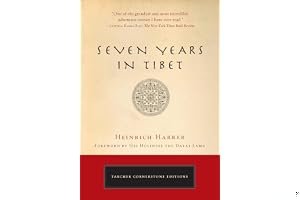
Seven Years in Tibet
Heinrich Harrer, Richard Graves, Peter Fleming, His Holiness The Dalai Lama
4.3
Recounts how the author, an Austrian, escaped from an English internment camp in India in 1943 and spent the next seven years in Tibet, observing its social practices, religion, politics, and people.
Cover unavailable
16
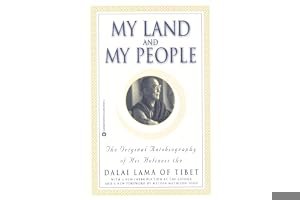
My Land and My People: The Original Autobiography of His Holiness the Dalai Lama of Tibet
The Dalai Lama
4.3
Schooled behind ancient palace walls to become the leader of Tibet, the Dalai Lama has become a spiritual leader to the world and a leading civil rights advocate. My Land and My People tells the story of his life.
Cover unavailable
17
The Art of Purring (The Dalai Lama's Cat, #2)
David Michie
4.3
What makes you purr? Of all the questions in the world, this is the most important. It is also the great leveler. Because no matter whether you are a playful kitten or a sedentary senior, a scrawny alley Tom or a sleek-coated uptown girl, whatever your circumstances, you just want to be happy. Not the kind of happy that comes and goes like a can of flaked tuna but an enduring happiness. The deep-down happiness that makes you purr from the heart. Before leaving for a teaching tour to America, the Dalai Lama poses a challenge to his beloved feline, HHC (His Holiness’s Cat): to discover the true cause of happiness. Little does she know what adventures this task will bring! A hair-raising chase through the streets of McLeod Ganj leads to an unexpected revelation about the perils of self-obsession. An encounter with the mystical Yogi Tarchen inspires a breakthrough discovery about her past—one with dramatic implications for us all. And overheard conversations between ivy-league psychologists, high-ranking lamas, and famous writers who congregate at the Himalaya Book Café help her explore the convergence between science and Buddhism on the vital subject of happiness. Sparkling with wisdom, warmth, and a touch of mischief, The Dalai Lama’s Cat and the Art of Purring is a charming reminder of why HHC is becoming one of the most-loved cats around the world.So what is the true cause of purring? The Dalai Lama whispers this secret on his return—only for the ears of HHC and those with whom she has a karmic connection . . . that, dear reader, means you!
…
Cover unavailable
18
Healing Anger: The Power of Patience from a Buddhist Perspective
Dalai Lama and Thupten Jinpa
4.3
All the world's major religions emphasize the importance of the practice of love, compassion, and tolerance. This is particularly true in the Buddhist traditions, which unanimously state that compassion and love are the foundation of all paths of practice. To cultivate the potential for compassion and love inherent within us, it is crucial to counteract their opposing forces of anger and hatred.
In this book, the Dalai Lama shows how through the practice of patience and tolerance we can overcome the obstacles of anger and hatred. He bases his discussion on A Guide to the Bodhisattva Way of Life, the classic work on the activities of Bodhisattvas—those who aspire to attain full enlightenment in order to benefit all beings.
…
Cover unavailable
19
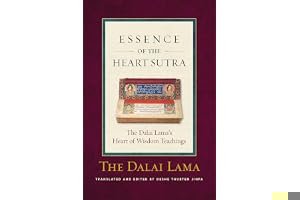
The Essence of the Heart Sutra: The Dalai Lama's Heart of Wisdom Teachings
The Dalai Lama, Thupten Jinpa
4.3
For more than two thousand years, the Heart Sutra has been part of the daily life of millions of Buddhists. This concise text, so rich and laden with meaning, concentrates the very heart of Buddhism into a powerful and evocative teaching on the interdependence of all reality.
In Essence of the Heart Sutra, the Dalai Lama masterfully unpacks the Heart Sutra so that any reader can benefit from its teachings - teachings meant to help us release ourselves from suffering and live with true compassion. Comprised of his "Heart of Wisdom" talks, originally delivered to thousands of listeners in 2001, the book offers the Dalai Lama's commentary as well as his easy-to-follow overview of Buddhist philosophy that places the sutra within its historical and philosophical context. With additional contributions by scholar and translator Thupten Jinpa, Essence of the Heart Sutra is the authoritative presentation of a text seminal to the world's religious heritage.
…
Cover unavailable
20
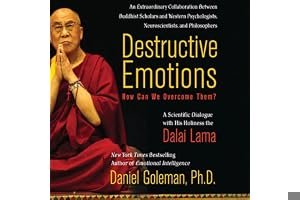
Destructive Emotions: A Scientific Dialogue with the Dalai Lama
Daniel Goleman
4.3
*Why do seemingly rational, intelligent people commit acts of cruelty and violence?
*What are the root causes of destructive behavior?
*How can we control the emotions that drive these impulses?
*Can we learn to live at peace with ourselves and others?
Imagine sitting with the Dalai Lama in his private meeting room with a small group of world-class scientists and philosophers. The talk is lively and fascinating as these leading minds grapple with age-old questions of compelling contemporary urgency. Daniel Goleman, the internationally bestselling author of Emotional Intelligence, provides the illuminating commentary--and reports on the breakthrough research this historic gathering inspired.
Destructive Emotions
Buddhist philosophy tells us that all personal unhappiness and interpersonal conflict lie in the "three poisons" craving, anger, and delusion. It also provides antidotes of astonishing psychological sophistication--which are now being confirmed by modern neuroscience. With new high-tech devices, scientists can peer inside the brain centers that calm the inner storms of rage and fear. They also can demonstrate that awareness-training strategies such as meditation strengthen emotional stability--and greatly enhance our positive moods.
The distinguished panel members report these recent findings and debate an exhilarating range of other topics: What role do destructive emotions play in human evolution? Are they "hardwired" in our bodies? Are they universal, or does culture determine how we feel? How can we nurture the compassion that is also our birthright? We learn how practices that reduce negativity have also been shown to bolster the immune system. Here, too, is an enlightened proposal for a school-based program of social and emotional learning that can help our children increase self-awareness, manage their anger, and become more empathetic.
Throughout, these provocative ideas are brought to life by the play of personalities, by the Dalai Lama's probing questions, and by his surprising sense of humor. Although there are no easy answers, the dialogues, which are part of a series sponsored by the Mind and Life Institute, chart an ultimately hopeful course. They are sure to spark discussion among educators, religious and political leaders, parents--and all people who seek peace for themselves and the world.
The Mind and Life Institute sponsors cross-cultural dialogues that bring together the Dalai Lama and other Buddhist scholars with Western scientists and philosophers. Mind and Life VIII, on which this book is based, took place in Dharamsala, India, in March 2000.
…
Cover unavailable
21
No-Nonsense Buddhism for Beginners: Clear Answers to Burning Questions About Core Buddhist Teachings
Noah Rasheta
4.2
Cover unavailable
22
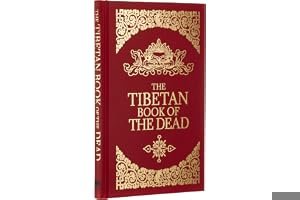
The Tibetan Book of the Dead
Padmasambhava
4.2
The first complete translation of a classic Buddhist text on the journey through living and dying. Graced with opening words by His Holiness The Dalai Lama, the Penguin Deluxe Edition of The Tibetan Book of the Dead is "immaculately rendered in an English both graceful and precise." Translated with the close support of leading contemporary masters and hailed as “a tremendous accomplishment,” this book faithfully presents the insights and intentions of the original work. It includes one of the most detailed and compelling descriptions of the after-death state in world literature, practices that can transform our experience of daily life, guidance on helping those who are dying, and an inspirational perspective on coping with bereavement.
…
Cover unavailable
23
Way of the Peaceful Warrior: A Book That Changes Lives
Dan Millman
4.2
Way of the Peaceful Warrior is based on the story of Dan Millman, a world champion athlete, who journeys into realms of romance and magic, light and darkness, body, mind, and spirit. Guided by a powerful old warrior named Socrates and tempted by an elusive, playful woman named Joy, Dan is led toward a final confrontation that will deliver or destroy him. Readers join Dan as he learns to live as a peaceful warrior. This international bestseller conveys piercing truths and humorous wisdom, speaking directly to the universal quest for happiness.
…
Recommended by Brian MacKenzie and Greg Norman.
Brian MacKenzie
It takes you from a basic 'here’s what’s going on' to 'here’s ultimate potential.' [source]
Greg Norman
Greg Norman said this is one of his most-recommended books. [source]
Cover unavailable
24
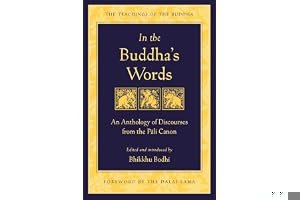
In the Buddha's Words: An Anthology of Discourses from the Pali Canon
Bhikkhu Bodhi and His Holiness the Dalai Lama
4.2
The works of the Buddha can feel vast, and it is sometimes difficult for even longtime students to know where to look, especially since the Buddha never explicitly defined the framework behind his teachings. Designed to provide just such a framework, In the Buddha's Words is an anthology of the Buddha's works that has been specifically compiled by a celebrated scholar and translator. For easy reference, the book is arrayed in ten thematic sections ranging from "The Human Condition" to "Mastering the Mind" to "The Planes of Realization." Each section comes with introductions, notes, and essays to help beginners and experts alike draw greater meaning from the Buddha's words. The book also features a general introduction by the author that fully lays out how and why he has arranged the Buddha's teachings in this volume. This thoughtful compilation is a valuable resource for both teachers and those who want to read the Buddha on their own.
…
Cover unavailable
25
Cent éléphants Sur Un Brin D'herbe
Dalai Lama
4.2
Nearly twenty-five years after its original publication, Kindness, Clarity, and Insight is still widely considered the most readable, yet substantive and wide-ranging, of His Holiness' works. Broad in scope and revealing the depth of his knowledge, these teachings display the range of the Dalai Lama and his message, covering a plethora of topics, including: the need for compassion, the common goals of the world's religions, karma, the four noble truths, the luminous nature of the mind, meditative concentration, selflessness, the two truths, and the fundamental innate mind of clear light that all the various schools of Tibetan Buddhism aim at manifesting. Although others in Tibet have mentioned that all orders of Tibetan Buddhism have the same basic outlook, the Dalai Lama is the first to explain in detail how this is so, his brilliant syncretic exposition being the final chapter in this book.
The book's twenty chapters are deftly arranged in a developmental sequence so that readers easily understand the background needed to appreciate the more complex, later topics. Taken as a whole, the teachings in this book provide an accessible map of Tibetan spiritual culture.
"Though [the Dalai Lama] is one of the most erudite scholars...he has a gift for reducing his doctrine to a core of lucid practicality, crystallized in the title of his book, Kindness, Clarity and Insight." --Time Magazine
…
Recommended by Eric Ripert.
Eric Ripert
It was a revelation for me and started me on my journey to Buddhism. [source]
Cover unavailable
26
The Art of Happiness in a Troubled World
Dalai Lama, Howard Cutler M.D.
4.2
Blending common sense and modern psychiatry, The Art of Happiness in a Troubled World applies Buddhist tradition to twenty-first-century struggles in a relevant way. The result is a wise approach to dealing with human problems that is both optimistic and realistic, even in the most challenging times.
How can we expect to find happiness and meaning in our lives when the modern world seems such an unhappy place?
His Holiness the Dalai Lama has suffered enormously throughout his life, yet he always seems to be smiling and serene. How does he do it? In The Art of Happiness in a Troubled World, Dr. Cutler walks readers through the Dalai Lama's philosophy on how to achieve peace of mind and come to terms with life's inherent suffering. Together, the two examine the roots of many of the problems facing the world and show us how we can approach these calamities in a way that alleviates suffering, and helps us along in our personal quests to be happy. Through stories, meditations, and in-depth conversations, the Dalai Lama teaches readers to identify the cultural influences and ways of thinking that lead to personal unhappiness, making sense of the hardships we face personally, as well as the afflictions suffered by others.
An invaluable collection that brings together the best of the Dalai Lama's writings on all aspects of life
An inspiration to millions of people worldwide, the Dalai Lama has authored more than fifty books. Now, for the first time, The Essential Dalai Lama brings together the best of the Dalai Lama's writings on all aspects of life, from work to meditation. Divided into four sections-The Vision, Buddhist Perspectives, Practice, A World in Harmony-The Essential Dalai Lama contains eloquent applications of the principles of ancient Buddhist thought to contemporary issues, all expressed in the Dalai Lama's uniquely compelling voice. This is the perfect compilation for anyone who wishes to have one source for the Dalai Lama's teachings or who seeks an introduction to the philosophy and practice of Buddhism.
…
Cover unavailable
28
New Seeds of Contemplation
Thomas Merton, Sue Monk Kidd
4.2
New Seeds of Contemplation is one of Thomas Merton's most widely read and best-loved books. Christians and non-Christians alike have joined in praising it as a notable successor in the meditative tradition of St. John of the Cross, The Cloud of Unknowing, and the medieval mystics, while others have compared Merton's reflections with those of Thoreau. New Seeds of Contemplation seeks to awaken the dormant inner depths of the spirit so long neglected by Western man, to nurture a deeply contemplative and mystical dimension in our lives. For Merton, "Every moment and every event of every man's life on earth plants something in his soul. For just as the wind carries thousands of winged seeds, so each moment brings with it germs of spiritual vitality that come to rest imperceptibly in the minds and wills of men. Most of these unnumbered seeds perish and are lost, because men are not prepared to receive them: for such seeds as these cannot spring up anywhere except in the soil of freedom, spontaneity and love."
…
Recommended by Todd Henry.
Todd Henry
My favorite non-business book is New Seeds of Contemplation by Thomas Merton. I re-read it yearly just to savor it. [source]
Cover unavailable
29
A Flash of Lightning in the Dark of Night: A Guide to the Bodhisattva's Way of Life
Dalai Lama, Padmakara Translation Group
4.2
Compassion is the guiding principle of the bodhisattvas, those who vow to attain enlightenment in order to liberate all sentient beings from the suffering and confusion of imperfect existence. To this end, they must renounce all self-centered goals and consider only the well-being of others. The bodhisattvas' enemies are the ego, passion, and hatred; their weapons are generosity, patience, perseverance, and wisdom.
In Tibetan Buddhism, the Dalai Lama is considered to be a living embodiment of this spiritual ideal. His Holiness the Fourteenth Dalai Lama presents here a detailed manual of practical philosophy, based on The Way of the Bodhisattva (Bodhicharyavatara), a well-known text of Mahayana Buddhism written by Shantideva. The Dalai Lama explains and amplifies the text, alluding throughout to the experience of daily life and showing how anyone can develop bodhichitta, the wish for perfect enlightenment for the sake of others. This book will surely become a standard manual for all those who wish to make the bodhisattva ideal a living experience.
…
Cover unavailable
30
Anger: Wisdom for Cooling the Flames
Thich Nhat Hanh
4.2
It was under the bodhi tree in India twenty-five centuries ago that Buddha achieved the insight that three states of mind were the source of all our unhappiness: wrong knowing, obsessive desire, and anger. All are difficult, but in one instant of anger—one of the most powerful emotions—lives can be ruined, and health and spiritual development can be destroyed. With exquisite simplicity, Buddhist monk and Vietnam refugee Thich Nhat Hanh gives tools and advice for transforming relationships, focusing energy, and rejuvenating those parts of ourselves that have been laid waste by anger. His extraordinary wisdom can transform your life and the lives of the people you love, and in the words of Thich Nhat Hanh, can give each reader the power to "change everything."
…
Cover unavailable
31
The Wisdom of Forgiveness
Dalai Lama, Victor Chan
4.2
This is the extraordinary documentation of the evolving friendship between the Dalai Lama and the man who followed him across Ireland and Eastern Europe, on a pilgrimage to India's holy sites, and through the Dalai Lama's near fatal illness. On this remarkable journey Victor Chan was awarded an insight into His Holiness-his life, his fears, his faith, his compassion, his day-to-day practice-that no one has reported before. We've heard the public voice of His Holiness--now we are invited to listen in on his personal explorations, and to take instruction on the Tibetan art of living.
…
Cover unavailable
32
The Sunflower: On the Possibilities and Limits of Forgiveness
Simon Wiesenthal
4.2
While imprisoned in a Nazi concentration camp, Wiesenthal was taken one day from his work detail to the bedside of a dying SS man. Haunted by the crimes in which he'd participated, the soldier wanted to confess to--& obtain absolution from--a Jew. Faced with the choice between compassion & justice, silence & truth, Wiesenthal said nothing. But even years after the war had ended, he wondered: Had he done the right thing? What would you have done in his place?
In this important book, 53 distinguished men & women respond to Wiesenthal's questions. They are theologians, political leaders, writers, jurists, psychiatrists, human rights activists, Holocaust survivors & victims of attempted genocides in Bosnia, Cambodia, China & Tibet. Their responses, as varied as their experiences of the world, remind us that Wiesenthal's questions are not limited to events of the past. Often surprising, always thought provoking, The Sunflower will challenge you to define your beliefs about justice, compassion & responsibility.
…
Cover unavailable
33
The World of Tibetan Buddhism: An Overview of Its Philosophy and Practice
His Holiness the Dalai Lama, Thupten Jinpa Ph.D. Ph.D., Richard Gere
4.2
With characteristic humility, His Holiness the Dalai Lama begins this landmark survey of the entire Buddhist path by saying, "I think an overview of Tibetan Buddhism for the purpose of providing a comprehensive framework of the path may prove helpful in deepening your understanding and practice." In this book, the Dalai Lama delivers a presentation that is both concise and profound, accessible and engaging. As readers explore Tibetan Buddhism more fully than ever before, they will find in His Holiness a great friend and authority.
…
Cover unavailable
34
The Zen Monkey and the Lotus Flower: 52 Stories to Relieve Stress, Stop Negative Thoughts, Find Happiness, and Live Your Best Life
Tenpa Yeshe
4.2
Cover unavailable
35
Stages of Meditation
Dalai Lama, Kamalashila, Geshe Lobsang Jordhen, Losang Choephel Ganchenpa, Jeremy Russell
4.2
The Dalai Lama explains the principles of meditation in a practice-oriented format especially suited to Westerners. Based upon the middle section of the Bhavanakrama by Kamalashila, a translation of which is included, this is the most extensive commentary given by the Dalai Lama on this concise but important meditation handbook. It is a favorite text of the Dalai Lama, and he often takes the opportunity to give teachings on it to audiences throughout the world. In his words, "This text can be like a key that opens the door to all other major Buddhist scriptures." Topics include the nature of mind, how to develop compassion and loving-kindness, calm abiding wisdom, and how to establish a union of calm abiding and special insight.
…
Cover unavailable
36
The Good Heart: A Buddhist Perspective on the Teachings of Jesus
His Holiness the Dalai Lama, Robert Kiely, et al.
4.2
This landmark of interfaith dialogue will inspire readers of all faiths.
In The Good Heart, The Dalai Lama provides an extraordinary Buddhist perspective on the teachings of Jesus. His Holiness comments on well-known passages from the four Christian Gospels, including the Sermon on the Mount, the parable of the mustard seed, the Resurrection, and others. Drawing parallels between Jesus and the Buddha — and the rich traditions from which they hail — the Dalai Lama delivers a profound affirmation of the sacred in all religions. Readers will be uplifted by the exploration of each tradition’s endless merits and the common humanity they share.
…
Cover unavailable
37
Dzogchen: The Heart Essence of the Great Perfection
Dalai Lama, Sogyal Rinpoche
4.2
This is the most informative and thorough book on Dzogchen available. These teachings are on Dzogchen, the heart essence of the ancient Nyingma tradition of Tibetan Buddhism. Exploring this esoteric subject in print for the first time, His Holiness offers the reader insights into one of Buddhism's most profound systems of meditation. He discusses both the philosophic foundations and the practices of this system—taking into account the approaches of various schools and teachers.
Paying tribute to the uniqueness of Dzogchen, His Holiness sets it within the wider spectrum of Tibetan Buddhism as a whole. He explains the essence of Dzogchen practice and addresses questions such as why Dzogchen is called "the pinnacle of all vehicles," what are its special features, and what are the crucial principles of the other Buddhist paths which a Dzogchen practitioner should know.
…
Cover unavailable
38
Following in the Buddha's Footsteps
His Holiness the Dalai Lama
4.2
The newest volume in the bestselling series from the Dalai Lama.
Delve into the substance of spiritual practice in this fourth volume of the Dalai Lama’s definitive series on the path to awakening, Following in the Buddha’s Footsteps. You’ll first hear His Holiness’s explanation of the Buddha, Dharma, and Sangha, why they are reliable guides on the path, and how to relate to them. His Holiness then describes the three essential trainings common to all Buddhist traditions: the higher trainings in ethical conduct, concentration, and wisdom. These chapters show us how to live a life free of harm to self or others and give us detailed instructions on how to develop single-pointed concentration as well as the higher states of concentration available to an earnest practitioner. In addition, the chapters on wisdom contain in-depth teachings on the noble eightfold path and the four establishments of mindfulness for developing greater awareness and understanding of our body, feelings, mind, and other phenomena. Together, these topics form the core of Buddhist practice.
This is a book to treasure and refer to repeatedly as you begin the path, progress on it, and near the final goal of nirvana.
…
Cover unavailable
39
Buddhism Plain and Simple
Steve Hagen
4.2
This book offers a clear, straightforward approach to Buddhism in general and awareness in particular. It is about being awake and in touch with what is going on here and now. When the Buddha was asked to sum up his teaching in a single word, he said, "Awareness." The Buddha taught how to see directly into the nature of experience. His observations and insights are plain, practical, and down-to-earth, and they deal exclusively with the present. In Buddhism Plain and Simple, Steve Hagen presents these uncluttered, original teachings in everyday, accessible language unencumbered by religious ritual, tradition, or belief.
…
Cover unavailable
40
The Art of Happiness at Work
Dalai Lama and Howard C Cutler
4.2
From the authors who brought you the million-copy bestseller The Art of Happiness comes an exploration of job, career, and finding the ultimate happiness at work.
It spent nearly two years on the New York Times bestseller list and has sold well over a million copies in hardcover. It remains, five years later, in its original hardcover edition. It was the book by the Dalai Lama that broke new ground, that made him accessible to a larger audience, spreading his words of daily wisdom and message of inner peace that captured the imagination of America. His Holiness the Dalai Lama, for the first time since that revolutionary book, has once again teamed up with psychiatrist Howard Cutler to resume the discussion about what makes life meaningful begun in The Art of Happiness.
Over the past several years, Howard Cutler has continued his conversations with the Dalai Lama, asking him the questions we all want answered about how to find happiness in the place we spend most of our time. Work-whether it's in the home or at an office-is what mostly runs our lives. We depend on it to eat, to clothe and shelter ourselves, and to take care of our families. Once again, Dr. Cutler brings forward seminal studies and asks the Dalai Lama to respond. Beginning with a direct correlation between productivity and happiness, Dr. Cutler questions His Holiness about the nature of work. In psychiatry and according to the Dalai Lama, our motivation for working determines our level of satisfaction. The book explores these three levels of focus:
Survival: focus on salary, stability, food and clothing Career: focus on advancement Calling: focus on work as a higher purpose
Cutler probes the Dalai Lama's wisdom by posing these questions: How does the relationship between our personal values and those of our employers affect happiness? What is the relationship between self-awareness and work? What are the main sources of dissatisfaction and how can we cope with them? How do we deal with conflicts with coworkers and bosses? How do we deal with jealousy, anger, or hostility at work? How does the lack of freedom affect our levels of happiness? How do we deal with boredom or lack of challenge? Unfair criticism? Overly demanding or taxing situations? Job change and unemployment?
Once again, Cutler walks us through the Dalai Lama's reasoning so that we know how to apply the wisdom to daily life. This practical application of Buddhist ideas is an invaluable source of strength and peace for anyone who earns a living.
The Dalai Lama's most recent book, The Wisdom of Compassion, is now available from Riverhead Books.
…
Cover unavailable
41
The Path to Tranquility: Daily Wisdom
Renuka Singh, Dalai Lama
4.2
The Dalai Lama serves as a living symbol of holiness and selfless triumph over tribulation for people of all religious traditions-as well as those with no religious affiliation at all. This collection of daily quotations drawn from His Holiness's own writings, teachings, and interviews offers words of guidance, compassion, and peace that are as down to earth as they are rich in spirit. Suffused with endearing informality, warmth, and practicality, they cover almost every aspect of human life, secular and religious--from loneliness, suffering, anger, and everyday insecurities to happiness, intimacy, and responsibility to others. With a special foreword by His Holiness on the power of meditation and personal responsibility, The Path to Tranquility is a fresh and accessible spiritual treasure to return to day after day, year after year.
…
Cover unavailable
42
David Michie The Dalai Lamas Cat 3 Books Bundle Collection (The Dalai Lama's Cat, The Art of Purring, The Power of Meow)
David Michie
4.1
Cover unavailable
43
How to Expand Love: Widening the Circle of Loving Relationships
His Holiness the Dalai Lama, Jeffrey Hopkins Ph.D.
4.1
Love and compassion are beneficial both for you and for others.
Through your kindness toward others, your mind and heart will open to peace.
Expanding peace to the larger community around you will bring unity, harmony, and cooperation.
Expanding peace further still to nations and then to the world will bring mutual trust, mutual respect, sincere communication, and finally successful joint efforts to solve the world's problems.
All this is possible once you learn
HOW TO EXPAND LOVE
With this illuminating and instructive handbook, His Holiness the Dalai Lama, winner of the Nobel Peace Prize, offers sensible, everyday guidelines for transforming self-centered energy into outwardly directed compassion. Drawing on exercises and techniques established in Tibetan monasteries more than a thousand years ago, the Dalai Lama describes a seven-step, self-directed program to help us open our hearts and minds to the experience of unlimited love, transforming every relationship in our lives -- and guiding us ever closer to wisdom and enlightenment.
…
Cover unavailable
44
Man of Peace: The Illustrated Life Story of the Dalai Lama of Tibet
William Meyers, Robert A.F. Thurman, et al.
4.1
This beautiful tradepaper graphic novel tells the story of one man taking on an empire, calling for truth, peace, and justice for his Tibetan people. Here, in full color for the first time, people can come to know the whole drama of his lifelong struggle. Since the age of 15, the Dalai Lama has defended his people against one of the last great empires, the People’s Republic of China. Under its “dictatorship of the proletariat,” China began to invade Tibet in 1950, decimating and then continually oppressing its people. Since colonialism cannot be practiced in our era of self-determined nations, China always maintains that the Tibetans are a type of Chinese, using propaganda and military power to crush Tibet’s unique culture and identity. Yet the Dalai Lama resists by using only the weapon of truth—along with resolute nonviolence—even worrying some of his own people by seeking dialogue and reconciliation based on his more realistic vision.
The great 14th Dalai Lama of Tibet has become the first global Dalai Lama, a prominent transnational leader of all who want to make the dramatic changes actually necessary for life on earth to thrive for centuries to come. Considered the incarnation of the Buddhist savior Chenrezig or Avalokiteshvara—archangel of universal compassion—he is believed to appear in many forms, at many different times, whenever and wherever beings suffer. Representing the plight of his beloved Tibetan people to the world, he has also engaged with all people who suffer oppression and injustice, as recognized in 1989 by his being awarded the Nobel Peace Prize. Most importantly, the Dalai Lama walks his talk throughout these pages, as he has throughout his life, and he radiates a powerful hope that we can and will prevail.
Man of Peace presents the inside story of his amazing life and vision, in the high tension of the military occupation of Tibet and the ongoing genocide of its people—a moving work of political and historical nonfiction brought to life in the graphic novel form—here for all to see.
…
Cover unavailable
45
Transforming the Mind: Teachings on Generating Compassion
Dalai Lama
4.1
Based on three days of teaching in London in May 1999, this text is an edited version of the Dalai Lama's discourse on one of the most profound and sacred texts in the Tibetan Buddhist tradition. The Eight Verses on Generating Compassion are known in Tibetan as lojong - literally, transforming your mind. In this commentary on these teachings, the Dalai Lama shows us how to transform difficult situations into opportunities for spiritual growth. He also offers practical methods as to how to develop positive ways of thinking and compassion.
…
Cover unavailable
46
The Book of Joy. The Sunday Times Bestseller
Dalai Lama
4.1
Cover unavailable
47
In Praise of Great Compassion
His Holiness the Dalai Lama
4.1
The fifth volume of the Dalai Lama’s definitive Library of Wisdom and Compassion series, which has sold nearly 15,000 copies to date.
In Praise of Great Compassion, the fifth volume of the Library of Wisdom and Compassion, continues the Dalai Lama’s teachings on the path to awakening. While previous volumes focused on our present situation and taking responsibility for creating the causes for the happiness we seek, this volume is about opening our hearts to others and generating the compassion, joy, and fortitude to make our lives meaningful by benefiting them.
We are embedded in a universe with other beings, all of whom have been kind to us in one way or another. More than any other time in human history, we depend on one another to stay alive and flourish. We are sometimes oblivious to their kindness, or take it for granted, which leads to feelings of discontent. But when we look closely, it becomes apparent that we have been the recipient of great kindness and naturally we want to repay it.
To do this, we begin by cultivating a positive attitude toward others by contemplating the four immeasurables—immeasurable love, compassion, empathic joy, and equanimity—and the altruistic intention of bodhicitta. We learn to challenge the deluded logic of the self-centered attitude that leads to misery and replace it with a more realistic perspective that helps us to remain balanced when we experience either happiness or suffering. This enables us to make all circumstances favorable to the path to awakening.
…
Cover unavailable
48
Approaching the Buddhist Path (The Library of Wisdom and Compassion Book 1)
Dalai Lama
4.1
The first volume in a multi-volume collection presenting the Dalai Lama’s comprehensive explanation of the Buddhist path.
His Holiness the Dalai Lama has been publicly teaching Buddhism for decades. This series collects his presentations of every step of the path to enlightenment, compiled and coauthored by one of his chief Western disciples, the American nun Thubten Chodron.
The Buddha wanted his students to investigate, to see for themselves whether what he said were true. As a student of the Buddha, the Dalai Lama promotes the same spirit of investigation, and as the rich tradition of the Buddha makes its way into new lands and cultures, His Holiness has recognized that new approaches are needed to allow seekers in the West to experience the relevance of the liberating message in their own lives. Such an approach cannot assume listeners are free from doubt and already have faith in Buddhism’s basic tenets. The Library of Wisdom and Compassion series, therefore, starts from the universal human wish for happiness and presents the dynamic nature of the mind. This first volume also provides a wealth of reflections on Buddhist history and fundamentals, contemporary issues, and the Dalai Lama’s own personal experiences. It stands alone as an introduction to Buddhism, but it also provides a foundation for the systematic illumination of the path in the volumes to come.
The Library of Wisdom and Compassion collects the Dalai Lama’s decades of presentations of every step of the path to enlightenment. It has been compiled and coauthored by one of his chief Western disciples, the American nun Thubten Chodron.
…
Cover unavailable
49
Stages of Meditation: The Buddhist Classic on Training the Mind (Core Teachings of Dalai Lama Book 5)
The Dalai Lama, Kamalashila, et al.
4.1
A translation of the ancient classic Stages of Meditation, by Kamalashila, with commentary from everyone's favorite Buddhist teacher, the Dalai Lama.
The Dalai Lama explains the principles of meditation in a practice-oriented format especially suited to Westerners. Based upon the middle section of the Bhavanakrama by Kamalashila--a translation of which is included--this is the most extensive commentary given by the Dalai Lama on this concise but important meditation handbook. It is a favorite text of the Dalai Lama, and he often takes the opportunity to give teachings on it to audiences throughout the world. In his words, "This text can be like a key that opens the door to all other major Buddhist scriptures." Topics include the nature of mind, how to develop compassion and loving-kindness, calm abiding wisdom, and how to establish a union of calm abiding and special insight.
…
Cover unavailable
50
A Force for Good: The Dalai Lama's Vision for Our World
Daniel Goleman, Dalai Lama
4.1
For more than half a century, in such books as The Art of Happiness and The Dalai Lama’s Little Book of Inner Peace, the Dalai Lama has guided us along the path to compassion and taught us how to improve our inner lives. In A Force for Good, with the help of his longtime friend Daniel Goleman, the New York Times bestselling author of Emotional Intelligence, the Dalai Lama explains how to turn our compassionate energy outward. This revelatory and inspiring work provides a singular vision for transforming the world in practical and positive ways.
Much more than just the most prominent exponent of Tibetan Buddhism, the Fourteenth Dalai Lama is also a futurist who possesses a profound understanding of current events and a remarkable canniness for modern social issues. When he takes the stage worldwide, people listen. A Force for Good combines the central concepts of the Dalai Lama, empirical evidence that supports them, and true stories of people who are putting his ideas into action—showing how harnessing positive energies and directing them outward has lasting and meaningful effects. Goleman details the science of compassion and how this singular guiding motivation has the power to
• break such destructive social forces as corruption, collusion, and bias • heal the planet by refocusing our concerns toward our impact on the systems that support all life • reverse the tendency toward systemic inequity through transparency and accountability • replace violence with dialogue • counter us-and-them thinking by recognizing human oneness • create new economic systems that work for everyone, not just the powerful and rich • design schooling that teaches empathy, self-mastery, and ethics
Millions of people have turned to the Dalai Lama for his unparalleled insight into living happier, more purposeful lives. Now, when the world needs his guidance more than ever, he shows how every compassion-driven human act—no matter how small—is integral for a more peaceful, harmonious world, building a force for a better future.
Revelatory, motivating, and highly persuasive, A Force for Good is arguably the most important work from one of the world’s most influential spiritual and political figures.
…
Cover unavailable
51
Emotional Awareness: Overcoming the Obstacles to Psychological Balance and Compassion
Dalai Lama, Paul Ekman Ph.D.
4.1
Two leading thinkers engage in a landmark conversation about human emotions and the pursuit of psychological fulfillment
At their first meeting, a remarkable bond was sparked between His Holiness the Dalai Lama, one of the world's most revered spiritual leaders, and the psychologist Paul Ekman, whose groundbreaking work helped to define the science of emotions. Now these two luminaries share their thinking about science and spirituality, the bonds between East and West, and the nature and quality of our emotional lives.
In this unparalleled series of conversations, the Dalai Lama and Ekman prod and push toward answers to the central questions of emotional experience. What are the sources of hate and compassion? Should a person extend her compassion to a torturer—and would that even be biologically possible? What does science reveal about the benefits of Buddhist meditation, and can Buddhism improve through engagement with the scientific method? As they come to grips with these issues, they invite us to join them in an unfiltered view of two great traditions and two great minds.
Accompanied by commentaries on the findings of emotion research and the teachings of Buddhism, their interplay—amusing, challenging, eye-opening, and moving—guides us on a transformative journey in the understanding of emotions.
…
Cover unavailable
52
Standing at the Edge: Finding Freedom Where Fear and Courage Meet
Halifax
4.1
"Joan Halifax is a clearheaded and fearless traveler and in this book...she offers us a map of how to travel courageously and fruitfully, for our own benefit and the benefit of all beings." --From the foreword by Rebecca Solnit
Standing at the Edge is an evocative examination of how we can respond to suffering, live our fullest lives, and remain open to the full spectrum of our human experience.
Joan Halifax has enriched thousands of lives around the world through her work as a humanitarian, a social activist, an anthropologist, and as a Buddhist teacher. Over many decades, she has also collaborated with neuroscientists, clinicians, and psychologists to understand how contemplative practice can be a vehicle for social transformation. Through her unusual background, she developed an understanding of how our greatest challenges can become the most valuable source of our wisdom--and how we can transform our experience of suffering into the power of compassion for the benefit of others.
Halifax has identified five psychological territories she calls Edge States--altruism, empathy, integrity, respect, and engagement--that epitomize strength of character. Yet each of these states can also be the cause of personal and social suffering. In this way, these five psychological experiences form edges, and it is only when we stand at these edges that we become open to the full range of our human experience and discover who we really are.
Recounting the experiences of caregivers, activists, humanitarians, politicians, parents, and teachers, incorporating the wisdom of Zen traditions and mindfulness practices, and rooted in Halifax's groundbreaking research on compassion, Standing at the Edge is destined to become a contemporary classic. A powerful guide on how to find the freedom we seek for others and ourselves, it is a book that will serve us all.
…
Cover unavailable
53
The Art of Happiness 10th Anniversary, The Book of Joy , The Little Book of Buddhism, The Little Book of Wisdom 4 Books Collection Set
Howard C. Cutler and Dalai Lama XIV and Desmond Tutu
4.1
Cover unavailable
54
Becoming Wise: An Inquiry into the Mystery and Art of Living
Krista Tippett
4.1
“I’m a person who listens for a living. I listen for wisdom, and beauty, and for voices not shouting to be heard. This book chronicles some of what I’ve learned in what has become a conversation across time and generations, across disciplines and denominations.”
Peabody Award-winning broadcaster and National Humanities Medalist Krista Tippett has interviewed the most extraordinary voices examining the great questions of meaning for our time. The heart of her work on her national public radio program and podcast, On Being, has been to shine a light on people whose insights kindle in us a sense of wonder and courage. Scientists in a variety of fields; theologians from an array of faiths; poets, activists, and many others have all opened themselves up to Tippett's compassionate yet searching conversation.
In Becoming Wise, Tippett distills the insights she has gleaned from this luminous conversation in its many dimensions into a coherent narrative journey, over time and from mind to mind. The book is a master class in living, curated by Tippett and accompanied by a delightfully ecumenical dream team of teaching faculty.
The open questions and challenges of our time are intimate and civilizational all at once, Tippett says – definitions of when life begins and when death happens, of the meaning of community and family and identity, of our relationships to technology and through technology. The wisdom we seek emerges through the raw materials of the everyday. And the enduring question of what it means to be human has now become inextricable from the question of who we are to each other.
This book offers a grounded and fiercely hopeful vision of humanity for this century – of personal growth but also renewed public life and human spiritual evolution. It insists on the possibility of a common life for this century marked by resilience and redemption, with beauty as a core moral value and civility and love as muscular practice. Krista Tippett's great gift, in her work and in Becoming Wise, is to avoid reductive simplifications but still find the golden threads that weave people and ideas together into a shimmering braid.
One powerful common denominator of the lessons imparted to Tippett is the gift of presence, of the exhilaration of engagement with life for its own sake, not as a means to an end. But presence does not mean passivity or acceptance of the status quo. Indeed Tippett and her teachers are people whose work meets, and often drives, powerful forces of change alive in the world today. In the end, perhaps the greatest blessing conveyed by the lessons of spiritual genius Tippett harvests in Becoming Wise is the strength to meet the world where it really is, and then to make it better.
We need Krista Tippett’s voice and wisdom now more than ever. She has elevated the art of listening and the practice of being present in a way that is both accessible and soulful. Becoming Wise is what I’ve been waiting for from Krista - the opportunity to learn from her and her experiences. This is brilliant thinking, beautiful storytelling, and practical insight. You won’t forget what you read here. [source]
I am a great admirer of Krista Tippett, who has spent years using her mind as a gentle but probing research tool into the beautiful, perilous, mysterious realm of the human soul. With this book, she has gathered all her years of learning and listening to create a masterpiece of philosophical and spiritual reflection. About halfway through the book, I stopped flagging pages and highlighting passages when I realized I was highlighting nearly every word. This entire book is filled with things I never want to forget. The only remedy will be to keep it near me, always. [source]
Cover unavailable
55
Beyond the Sky and the Earth: A Journey Into Bhutan
Jamie Zeppa
4.1
At age 24 Jamie Zeppa, a Canadian who had never been outside of North America, said goodbye to her fiancé and her plans for graduate school and moved to Bhutan, a remote Buddhist kingdom in the Himalayas.
Beyond the Sky and the Earth is an autobiographical work that details her experiences and transformations after spending three years in Bhutan. It is as much a book about Zeppa's day-to-day life in Bhutan as it is about the personal awakenings and realizations that she had while living there.
Visitors to Bhutan, an increasingly hot tourist destination, are still few and far between, largely because of tight government restrictions on entry, visa requirements, and a law requiring tourists to spend at least $200 a day there. There aren't many books on Bhutan, and even fewer first-hand accounts of life there. Beyond the Sky and the Earth stands out as both an informative introduction to the people and culture of Bhutan and as a beautiful piece of travel literature set against the backdrop of one of the most remote and unspoiled places on earth.
Zeppa recounts her experiences living abroad, such as learning to live without electricity and carrying on a forbidden affair with one of her students, in such a compelling way that even someone who has never left home will become entranced by her story and captivated by her unique experiences.
Naturally, Zeppa experienced culture shock when she arrived in Bhutan. The hardships she encountered seemed insurmountable, and at first she thought she couldn't bear it and fantasized about returning to Canada. She had to learn a new language in order to communicate with her students, she had to learn to live on her own, and she had to learn to deal with homesickness. Perhaps her biggest challenge was learning how to reconcile her growing love for Bhutan with her nostalgia for her life in Canada, her family, and her fiancé. But after living among Bhutan's Himalayan peaks, lush valleys, colorful villages, and friendly people, and after gaining an appreciation for life in a place frozen in time, Zeppa realizes that she feels at home in Bhutan and wants to stay.
Although to Zeppa Bhutan is a magical land, she cautions herself and the reader not to deem it "the last Shangri-La," as is often done by the lucky travelers who make their way through the red tape required for entry into the kingdom. Bhutan is not without its problems: it is an underdeveloped country plagued by the problems that affect many places cut off from modernity. There is infant mortality, illness, and poverty. There are also domestic and international tensions that stem from the government's stringent regulations intended to preserve the national culture. Among them are the prohibition of foreign television and a requirement that people wear the national dress, a kira for women and a gho for men.
Few of us will ever get to see the place that was Zeppa's home. But her narrative is so clear and insightful that you easily feel as though you are sharing this portion of her life with her. Even if you haven't had the experience of living abroad, or if the prospect of a trip to the furthest reaches of Asia is not in your cards, Zeppa's book is a worthy read on many levels.
From her powerful use of language to describe the superb beauty of Bhutan's landscape to her passionate description of her spellbinding relationship with her future husband, Beyond the Sky and the Earth draws readers in and takes them on her rocky ride to self-realization.
When trying to explain to a friend what she finds appealing about Bhutan, Zeppa writes: "It takes a long time to find the true words, to put them in order, to tell the whole story. It is not just this or that, the mountains, the people, it is me and the way I can be here, the freedom to walk unafraid into the great dark night. It is a hundred thousand things and I could never trace or tell all the connections and reflections, the shadows and echoes and secret relations between them."
But, in fact, Zeppa does tell the reader about these connections and reflections in a lyrical way. After reading the book, you will have a deep understanding, appreciation, and respect for Zeppa's strength of character and for the wonders of Bhutan.
Beyond the Sky and the Earth is a delight to read in every way. Zeppa's beautiful prose, peppered alternately with funny observations and profound soul-searching, is a truly special and unique work that will leave you craving an adventure of your own.
…
Cover unavailable
56
Illuminating the Path to Enlightenment
The Dalai Lama Tenzin Gyatso
4.1
About one thousand years ago, the great Indian pandit and yogi, Dipamkara Shrijnana (Atisha), was invited to Tibet to re-establish the Buddhadharma, which had been suppressed and corrupted for almost two centuries. One of Atisha's main accomplishments in Tibet was his writing of the seminal text, A Lamp for the Path to Enlightenment, in which he extracted the essence of all 84,000 teachings of the Buddha and organized them into a clear, step-like arrangement that makes it easy for any individual practitioner to understand and practice the Dharma. This genre of teachings is known as lam-rim, or steps of the path, and forms an essential part of every school of Tibetan Buddhism.
In this book, His Holiness the Dalai Lama gives a commentary to not only Atisha's revolutionary work but also to Lines of Experience, a short text written by Lama Tsong Khapa, who was perhaps the greatest of all Tibetan lam-rim authors. In bringing together Atisha, Lama Tsong Khapa and His Holiness the Dalai Lama, this book offers readers one of the clearest and most authoritative expositions of the Tibetan Buddhist path ever published, and it is recommended for those at the beginning of the path, the middle and the end.
…
Cover unavailable
57
Buddhism For Dummies, 2nd Edition
Jonathan Landaw, Stephan Bodian, et al.
4.1
Your hands-on guide to this widely practiced and ancient religion
Buddhism, one of the world's most widely practiced religions, is a fascinating yet complex eastern religion that is rapidly spreading throughout western civilization. What does it mean to be a Buddhist? What are the fundamental beliefs and history behind this religion? Buddhism For Dummies explores these questions and more in this updated guide to Buddhist culture. You'll gain an understanding of the origins of this ancient practice and how they're currently applied to everyday life.
Whether you're a searcher of truth, a student of religions, or just curious about what makes Buddhism such a widely practiced religion, this guide is for you. In plain English, it defines the important terms, explains the key concepts, and explores in-depth a wide range of fascinating topics.
New and expanded coverage on all the schools of Buddhism, including Theravada, Tibetan, and Mahayana The continuing relevance of the Dalai Lama Updated coverage on daily observances, celebrations, styles, practices, meditation, and more Continuing the Dummies tradition of making the world's religions engaging and accessible to everyone, Buddhism For Dummies is your essential guide to this fascinating religion.
Buddhism For Dummies (9781119643265) was previously published as Buddhism For Dummies (9781118023792). While this version features a new Dummies cover and design, the content is the same as the prior release and should not be considered a new or updated product.
…
Cover unavailable
58
The Essence of Tsongkhapa's Teachings: The Dalai Lama on the Three Principal Aspects of the Path
His Holiness the Dalai Lama, Jeremy Russell, et al.
4.1
Learn from the Dalai Lama how to put into practice your understanding of renunciation, the awakening mind, and emptiness.
His Holiness the Dalai Lama’s commentary on Tsongkhapa’s Three Principal Aspects of the Path helps us integrate the full Buddhist path into our own practice. His Holiness offers a beautiful elucidation of the three aspects of the path: true renunciation and the wish for freedom, the altruistic awakening mind (bodhichitta), and the correct view of emptiness. These three aspects of the path are the foundation of all the sutric and tantric practices, and encapsulate Tsongkhapa’s vision of the Buddhist path in its entirety.
Practitioners will find The Three Principal Aspects of the Path invaluable as a manual for daily meditation. The universal and timeless insights of this text speak to contemporary spiritual aspirants, East and West. The root verses are presented in both Tibetan and fluid English translation to accompany these profound teachings.
…
Cover unavailable
59
Fragrant Palm Leaves: Journals, 1962-1966
Thich Nhat Hanh
4.1
Best known for his Buddhist teachings, Thich Nhat Hanh has lived in exile from his native Vietnam since 1966. These remarkable early journals reveal not only an exquisite portrait of the Zen master as a young man, but the emergence of a great poet and literary voice of Vietnam. From his years as a student and teaching assistant at Princeton and Columbia, to his efforts to negotiate peace and a better life for the Vietnamese, Fragrant Palm Leaves offers an elegant and profound glimpse into the heart and mind of one of the world's most beloved spiritual teachers.
…
Cover unavailable
60
The Mystic Heart: Discovering a Universal Spirituality in the World's Religions
Wayne Teasdale, The Dalai Lama
4.1
Drawing on experience as an interreligious monk, Brother Wayne Teasdale reveals the power of spirituality and its practical elements. He combines a profound Christian faith with an intimate understanding of ancient religious traditions.
Cover unavailable
61
The Dalai Lama: with a Foreword by His Holiness The Dalai Lama
Demi
4.1
Included is a foreword written by The Dalai Lama.
When the thirteenth Dalai Lama died in 1933, the highest holy men in Tibet searched throughout the land for his successor. They were spiritually guided to the humble dwelling of a loving family high in the Himalayas. When the search party greeted the youngest son, the child told them, "Now I am going home!" At last the fourteenth Dalai Lama had been found, and at the age of two, the young boy was taken to the capital city, Lhasa, where he began his training to become the spiritual leader of Tibet.
The work of the Dalai Lama and the fate of Tibet are topics of evergrowing international focus. In simple language and glorious art, Demi pays tribute to the fourteenth Dalai Lama's remarkable life. She captures the beauty of Tibetan culture, as well as the charm, talent, and vision of one of the world's best-known spiritual figures.
…
Cover unavailable
62
A Step Away from Paradise: The True Story of a Tibetan Lama's Journey to a Land of Immortality
Thomas K. Shor and Jetsunma Tenzin Palmo
4.1
WHAT WOULD HAVE HAPPENED... If Lewis Carroll had proclaimed the reality of Alice's Wonderland? What if he had gathered a following & launched an expedition?
THE TRUE STORY OF A JOURNEY TO A FANTASTIC LAND
IT WAS THE EARLY 1960s. The place, a far-off corner of the Himalayas long fabled in Tibetan tradition to be hiding a valley of immortality among its peaks and glaciers--a real-life Shangri-La. They waited generations for the prophesied lama to come, the one with the secret knowledge of how to 'open' the Hidden Land. Then, one day, he came. His name was Tulshuk Lingpa.
THIS BOOK TELLS THE TRUE STORY of this charismatic visionary lama and his remarkable expedition. Against the wishes of the kings of both Sikkim and Nepal, he and over three hundred followers ventured up the snowy slopes of the third highest mountain of the planet. Their aim: to open a crack in the very fabric of reality and go to a land we would all wish to inhabit if it were only there--a land of peace and concord.
FORTY YEARS LATER, the author spends over five years tracking down the surviving members of this extraordinary expedition. He deftly weaves their stories together with humor, wisdom, and scholarly research into Tibetan traditions of Hidden Lands, all the while reflecting on what this means for the rest of us.
"LIKE NO OTHER BOOK I have ever read...a riveting tale of adventure...honest to the real spirit of Tibet...both unique and intriguing...an engrossing read. Highly recommended." JETSUNMA TENZIN PALMO, from the Foreword
From Tulshuk Lingpa's Guidebook to the Hidden Land: "DON'T LISTEN TO ANYBODY. Decide by yourself and practise madness. Develop courage for the benefit of all sentient beings. Then you will automatically be free from the knot of attachment. Then you will continually have the confidence of fearlessness and you can then try to open the Great Door of the Hidden Place."
FIRST PUBLISHED BY PENGUIN 2011 CITY LION PRESS EDITION 2017
THIS EDITION IS NOT FOR SALE IN SOUTH ASIA, MALAYSIA, OR SINGAPORE
…
Cover unavailable
63
Tsongkhapa: A Buddha in the Land of Snows (Lives of the Masters)
Thupten Jinpa
4.1
Cover unavailable
64
A Simple Path: Basic Buddhist Teachings by His Holiness the Dalai Lama
His Holiness the Dalai Lama
4.1
A four-colour, fully illustrated book by His Holiness the Dalai Lama, author of two recent well-received books. It offers an introduction to Buddhism and to the landscape and culture of Tibet. The text, based on lectures on the four noble truths given in London, lays out the fundamentals of the Buddhist path, showing us how we can develop our compassion and find happiness in any situation. The photographs show the context in which this profound teaching developed, from the landscapes and Tibetan people, to scenes of monastery life, prayer wheels and artwork.
…
Cover unavailable
65
The Complete Foundation: The Systematic Approach to Training the Mind
The Dalai Lama
4.1
His Holiness the Dalai Lama provides intimate details on advanced mind-training practices using visualization, reason, and contemplation.
Clear, eloquent, simple, and profound, His Holiness's teachings are easily accessible to beginning practitioners yet richly nourishing to those more advanced in practice. In The Complete Foundation, the Dalai Lama shows how visualization, reason, and contemplation can be systematically crafted to enhance personal development. Beginning with practices designed to create an effective mental outlook, His Holiness skillfully guides the student to more advanced techniques for developing the mind's deepest potential and happiness. With impeccable attention to detail and a seamless balance between technical guidance and a delightful sense of playfulness, this book exemplifies the sophistication and elegance of Tibetan Buddhist methods for spiritual development.
This book was previously published under the title The Path to Bliss.
…
Cover unavailable
66
Perfecting Patience: Buddhist Techniques to Overcome Anger
The Dalai Lama and Thupten Jinpa
4.1
In the days of extremism and severely divisive belief systems, learning patience and compassion practices (from the modern master of patience and compassion) is more valuable than ever.
All of the world's major religions emphasize the importance of love, compassion, and tolerance. This is particularly true in the Buddhist traditions, which unanimously state that compassion and love are the foundation of all paths of practice. To cultivate the potential for compassion and love inherent within us, it is crucial to counteract their opposing forces of anger and hatred. In Perfecting Patience, the Dalai Lama shows how, through the practice of patience and tolerance, we can overcome the obstacles of anger and hatred. He bases his discussion on A Guide to the Bodhisattva Way of Life, the classic work on the activities of bodhisattvas--those who aspire to attain full enlightenment in order to benefit all beings.
This book was previously published under the title Healing Anger.
…
Cover unavailable
67
Samsara, Nirvana, and Buddha Nature
His Holiness the Dalai Lama
4.1
“The material in this volume is invaluable for those who sincerely wish to understand the Buddhist path and begin to follow it.” —Venerable Sangye Khadro, author of How to Meditate
In this new book from the Dalai Lama, the reader will discover the mind’s infinitely vast potential, its buddha nature. Knowledge of buddha nature reveals and reconciles the paradox of how the mind can be the basis for both the duhkha of samsara (the unpurified mind) and the bliss and fulfillment of nirvana (the purified mind). To illustrate this, Samsara, Nirvana, and Buddha Nature first takes readers through Buddhist thought on the self, the four truths, and their sixteen attributes. It then explains afflictions—including how they arise and their antidotes—followed by an examination of karma and cyclic existence, and, finally, a deep and thorough elucidation of buddha nature. Samsara, Nirvana, and Buddha Nature shows us how to purify our minds and cultivate awakened qualities.
This is the third volume in the Dalai Lama’s definitive and comprehensive series on the stages of the Buddhist path, The Library of Wisdom and Compassion. Volume 1, Approaching the Buddhist Path, contains introductory material that sets the context for Buddhist practice. Volume 2, The Foundation of Buddhist Practice, describes the important teachings that help us establish a flourishing Dharma practice. Samsara, Nirvana, and Buddha Nature can be read as the logical next step in this series or enjoyed on its own.
…
Cover unavailable
68
The Wisdom of Compassion: Stories of Remarkable Encounters and Timeless Insights
H. H. Dalai Lama, Victor Chan
4.1
The Wisdom of Compassion offers rare insights into the Dalai Lama’s life and his efforts to translate compassion into action through deeply engaging, behind-the-scene stories about his interactions with remarkable people from all walks of life.
This is the Dalai Lama at his most human, and most humane. We see how he approaches the world with playfulness, optimism, and a profound empathy for the suffering of others. Through his own conduct, he shows us the tangible benefits of practicing kindness, forgiveness and compassion. And he demonstrates that opening our hearts and minds to others is the surest path to true happiness. The Wisdom of Compassion is an intensely personal portrait of the Dalai Lama. It recounts the story of his friendship with a blind Irishman, how they first met and how in later meetings the Dalai Lama comes to call him his one and only hero. It explores the Dalai Lama’s collaboration with a neuroscientist and how it results in significant discoveries about the human brain. It also brings to life poignant accounts of his uncommon encounters with a little beggar girl, a disabled boy in a critical care ward, a man who trains grandmothers to become solar engineers, and many others.
The Dalai Lama’s wisdom principles revolve around the practical application of compassion. Enhanced by his seven decades of practice and elucidated through captivating anecdotes of his own experiences, they will help readers lead more fulfilling lives. As the Dalai Lama has written many years ago: if you want others to be happy, practice compassion; if you want yourself to be happy, practice compassion.
…
Cover unavailable
69
The Open Road: The Global Journey of the Fourteenth Dalai Lama
Pico Iyer
4.1
One of the most acclaimed and perceptive observers of globalism and Buddhism now gives us the first serious consideration--for Buddhist and non-Buddhist alike--of the Fourteenth Dalai Lama's work and ideas as a politician, scientist, and philosopher.
Pico Iyer has been engaged in conversation with the Dalai Lama (a friend of his father's) for the last three decades--an ongoing exploration of his message and its effectiveness. Now, in this insightful, impassioned book, Iyer captures the paradoxes of the Dalai Lama's position: though he has brought the ideas of Tibet to world attention, Tibet itself is being remade as a Chinese province; though he was born in one of the remotest, least developed places on earth, he has become a champion of globalism and technology. He is a religious leader who warns against being needlessly distracted by religion; a Tibetan head of state who suggests that exile from Tibet can be an opportunity; an incarnation of a Tibetan god who stresses his everyday humanity.
Moving from Dharamsala, India--the seat of the Tibetan government-in-exile--to Lhasa, Tibet, to venues in the West, where the Dalai Lama's pragmatism, rigor, and scholarship are sometimes lost on an audience yearning for mystical visions, The Open Road illuminates the hidden life, the transforming ideas, and the daily challenges of a global icon.
…
Cover unavailable
70
Becoming Enlightened
His Holiness the Dalai Lama, Jeffrey Hopkins Ph.D.
4.1
In Becoming Enlightened, His Holiness the Dalai Lama powerfully explores the foundation of Buddhism, laying out an accessible and practical approach to age-old questions: How can we live free from suffering? How can we achieve lasting happiness and peace?
Drawing from traditional Buddhist meditative practices as well as penetrating examples from today's troubled planet, he presents step-by-step exercises designed to expand the reader's capacity for spiritual growth, along with clear milestones to mark the reader's progress. By following the spiritual practices outlined in Becoming Enlightened, we can learn how to replace troublesome feelings with positive attitudes and embark on a path to achieving an exalted state -- within ourselves and within the larger world.
Full of personal anecdotes and intimate accounts of the Dalai Lama's experiences as a lifelong student, thinker, political leader, and Nobel Peace Prize Laureate, Becoming Enlightened gives readers all the wisdom, support, guidance, and inspiration they need to become successful and fulfilled in their spiritual lives.
This is a remarkable and empowering book that can be read and enjoyed by seekers of all faiths. Readers at every stage of their spiritual development will be captivated by His Holiness the Dalai Lama's loving and direct teaching style.
…
Cover unavailable
71
One Dharma: The Emerging Western Buddhism
Joseph Goldstein
4.1
Cover unavailable
72
Essential Teachings His Holiness the Dalai Lama
Bstan-ʼdzin-rgya-mtsho
4.1
This seminal collection of writings contains important spiritual teachings for Eastern and Western readers alike. This book is an indespensible guide for all those seeking the path to spiritual awakening and enlightenment.'
Cover unavailable
73
How to Communicate Like a Buddhist
Cynthia Kane
4.1
An Instruction Manual for Clear Communication
The most well known Buddhist teachers on the planet all have something in common: they are excellent communicators. This is not by accident, as the Buddha taught what are called the four elements of right speech over 2,600 years ago.
In this one-of-a-kind book, certified meditation and mindfulness instructor Cynthia Kane has taken the four elements of right speech and developed them into a modern practice based on mindful listening, mindful speech, and mindful silence.
Beginning with an illuminating self-test to assess your current communication style, this book will take you through the author's own five-step practice that is designed to help you:
Listen to yourself (your internal and external words) Listen to others Speak consciously, concisely, and clearly Regard silence as a part of speech Meditate to enhance your communication skills If you have ever felt misheard, have trouble stating how you feel, or long to have more meaningful and genuine conversations, this book can help. The simple steps outlined in this book will have a huge effect on how you communicate with others and yourself.
Communication is essential to being human, and when you become better at it, your personal truth becomes clearer, your relationships improve, and the result is that you experience more peace and harmony in your life.
Fans of Thich Nhat Hanh will appreciate the simple, clear instructions for how to transform everyday communication into "right speech."
This book will enhance the experience of those who love The Work of Byron Katie, the principles of the Non Violent Communication Movement, and even the popular Buddhist Bootcamp.
This book is not intended to be a comprehensive study of Buddhist thought. Instead, it offers an entry point for modern people who are tired of getting into constant stress because of ineffective communication with family members, co-workers, superiors, and other important relationships.
…
Cover unavailable
74
A Simple Monk: Writings on His Holiness the Dalai Lama
Tom Morgan, Alison Wright, Robert Thurman
4.1
His Holiness the 14th Dalai Lama, Tenzin Gyatso, has captured the world's heart with his extraordinary wisdom and humility in the face of China's brutal decades-long occupation of Tibet. This dynamic collection includes impressionistic essays about the Tibetan leader by Diki Tsering, his mother; China scholar and journalist Orville Schell; and travel writer Pico lyer; as well as an interview with His Holiness by famed monologist Spalding Gray. A Simple Monk is published in cooperation with New York's Tibet House, which will receive a portion of the proceeds.
…
Cover unavailable
75
Where Buddhism Meets Neuroscience: Conversations with the Dalai Lama on the Spiritual and Scientific Views of Our Minds
The Dalai Lama, Zara Houshmand, et al.
4.1
Cover unavailable
76
Wisdom Rising: Journey into the Mandala of the Empowered Feminine
Lama Tsultrim Allione
4.1
Through her own story of loss and spiritual seeking, paired with mandala meditations and rituals, bestselling author of Feeding Your Demons Lama Tsultrium Allione teaches you how to embody the enlightened, fierce power of the sacred feminine—the tantric dakinis.
Ordained as one of the first Western Buddhist nuns and recognized as a reincarnation of a renowned eleventh century Tibetan yogini, Lama Tsultrim nonetheless yearned to become a mother, ultimately renouncing her vows so she could marry and have children. When she subsequently lost a child to SIDS, she found courage again in female Buddhist role models, and discovered a way to transform her pain into a path forward. Through Lama Tsultrim’s story of loss and spiritual seeking, paired with her many years of expertise in mandala meditation, you will learn how to strengthen yourself by following this experiential journey to Tantric Buddhist practice.
The mandala was developed as a tool for spiritual transformation, and as you harness its power, it can serve as a guide to wholeness. With knowledge of the mandala of the five dakinis (female Buddhist deities who embody wisdom), you’ll understand how to embrace the distinct energies of your own nature.
In Wisdom Rising, Lama Tsultrim shares from a deep trove of personal experiences as well as decades of sacred knowledge to invite you to explore an ancient yet accessible path to the ability to shift your emotional challenges into empowerment. Her unique perspective on female strength and enlightenment will guide you as you restore your inner spirit, leading you toward the change you aspire to create in the world.
…
Cover unavailable
77
EL LIBRO TIBETANO DE LOS MUERTOS: Como es popularmente conocido en Occidente y conocido en el Tíbet como El gran libro de la
Padma Sambhava, Robert A. Thurman, and Dalai Lama
4.1
Cover unavailable
78
We're All Doing Time: A Guide to Getting Free
Bo Lozoff
4.1
Cover unavailable
79
Learning True Love: Practicing Buddhism in a Time of War
Sister Chan Khong
4.0
Cover unavailable
80
Practicing Wisdom: The Perfection of Shantideva's Bodhisattva Way
His Holiness the Dalai Lama, Thupten Jinpa Ph.D. Ph.D.
4.0
Like the bestselling A Flash of Lightning in the Dark of the Night, Practicing Wisdom focuses on Shantideva's Way of the Bodhisattva. While the former includes only a brief introduction to Shantideva's complex and crucial ninth chapter on insight, Practicing Wisdom is a full and detailed follow-up commentary, making it an invaluable statement on the fundamental concept behind Buddhist thought and practice.
Shantideva says at the beginning of the final chapter of his Guide to the Bodhisattva Way of Life: "All branches of the Buddha's teachings are taught for the sake of wisdom. If you wish to bring an end to suffering, you must develop wisdom." Shantideva's ninth chapter is revered in Tibetan Buddhist circles as one of the most authoritative expositions of the Buddha's core insight, and all other Buddhist practices are means to support the generation of this wisdom within the practitioner. In Practicing Wisdom, the Dalai Lama reaffirms his reputation as a great scholar, communicator, and embodiment of the Buddha's Way by illuminating Shantideva's verses, drawing on contrasting commentaries from the Nyingma and Gelug lineages, and leading the reader through the stages of insight up to the highest view of emptiness. These teachings, delivered in southern France in 1993, have been masterfully translated, edited, and annotated by Geshe Thupten Jinpa, the Dalai Lama's primary translator and founder of the Institute of Tibetan Classics.
…
Cover unavailable
81
Living Wisdom with His Holiness the Dalai Lama
Don Farber, Dalai Lama XIV
4.0
When you are in the presence of His Holiness the Dalai Lama, you are in the presence of compassion itself. But how many of us will have the opportunity to personally experience the man known as ?The Ocean of Wisdom? Now, Living Wisdom gives you the chance to immerse yourself in the grace of His Holiness, and to receive the transformative power of his teachings in your own home, including: ? 47-minute DVD spanning twenty-five years of Don Farber's photography of His Holiness with more than 400 extraordinary images set to sacred Tibetan music ? 145-page book gleaned from His Holiness's classic lessons on The Six Transcendent Perfections. These are the way of the bodhisattva'the qualities we must cultivate in order to reach enlightenment ? Musicians, monks, and nuns honor His Holiness through time-honored chants and original compositions on CD. Includes traditional chanting by the Dalai Lama
…
Cover unavailable
82
My Spiritual Autobiography
His Holiness Dalai Lama
4.0
This book is a first. There has never been one entirely dedicated to the spiritual life of the Dalai Lama. Yet as one of the world's most recognised, and respected, spiritual leaders there will clearly be great interest in such a work from His Holiness' thousands of friends and followers around the world. The Dalai Lama sees himself first and foremost as a human being, secondly as a monk and thirdly as the political leader of Tibet. In this extraordinary book we read many hitherto unknown stories from his childhood, his formation as a monk and his gradual development as a leader of his people. We are offered a view of his daily spiritual practise, invited to listen in on the dialogue he has been pursuing with other religions, with non-believers and with scientists in his search for ethical and environmental principles, and shown how he brings a sense of goodness and conscience to political life around the globe. In a world that is so profoundly interdependent, the Dalai Lama explains how he transforms himself through spiritual means in order to have a positive effect on the world, and he encourages us to do the same by working on ourselves first of all.
…
Cover unavailable
83
The Middle Way: Faith Grounded in Reason
His Holiness the Dalai Lama, Thupten Jinpa Ph.D. Ph.D.
4.0
The Dalai Lama opens The Middle Way with an elegant argument for the power of compassion in cultivating a happy life. From there, he connects core ideas of Buddhist philosophy to the truths of our shared condition. His Holiness delivers a sparklingly clear teaching on how the Buddhist ideas of emptiness and interdependency relate to personal experience and bring a deeper understanding of the world around us.
In down-to-earth style, this book sets forth a comprehensive explanation of the foundational teachings of the Mahayana tradition based on the works of two of Buddhism's most revered figures. Using Nagarjuna's Middle Way, the Dalai Lama explores Buddhist understandings of selflessness, dependent origination, and the causal processes that lock us in cycles of suffering. He grounds these heady philosophical discussions using Tsongkhapa's Three Principal Aspects of the Path, presenting a brief explanation of how to put ethical discipline, wisdom, and compassion into practice.
Through these beautifully complementary teachings, His Holiness urges us to strive, "with an objective mind, endowed with a curious skepticism, to engage in careful analysis and seek the reasons behind our beliefs."
…
Cover unavailable
84
Secrets of the Baby Whisperer: How to Calm, Connect, and Communicate with Your Baby
Tracy Hogg, Melinda Blau
4.0
“TRACY HOGG HAS GIVEN PARENTS A GREAT GIFT–the ability to develop early insight into their child’s temperament.” –Los Angeles Family
When Tracy Hogg’s Secrets of the Baby Whisperer was first published, it soared onto bestseller lists across the country. Parents everywhere became “whisperers” to their newborns, amazed that they could actually communicate with their baby within weeks of their child’s birth. Tracy gave parents what for some amounted to a miracle: the ability to understand their baby’s every coo and cry so that they could tell immediately if the baby was hungry, tired, in real distress, or just in need of a little TLC. Tracy also dispelled the insidious myth that parents must go sleepless for the first year of a baby’s life–because a happy baby sleeps through the night. Now you too can benefit from Tracy’s more than twenty years’ experience. In this groundbreaking book, she shares simple, accessible programs in which you will learn:
• E.A.S.Y.–how to get baby to eat, play, and sleep on a schedule that will make every member of the household’s life easier and happier. • S.L.O.W.–how to interpret what your baby is trying to tell you (so you don’t try to feed him when he really wants a nap). • How to identify which type of baby yours is–Angel, Textbook, Touchy, Spirited, or Grumpy–and then learn the best way to interact with that type. • Tracy’s Three Day Magic–how to change any and all bad habits (yours and the baby’s) in just three days.
At the heart of Tracy’s simple but profound message: treat the baby as you would like to be treated yourself. Reassuring, down-to-earth, and often flying in the face of conventional wisdom, Secrets of the Baby Whisperer promises parents not only a healthier, happier baby but a more relaxed and happy household as well.
…
Cover unavailable
85
From Here to Enlightenment: Teachings on the Spiritual Path
His Holiness The Dalai Lama, Guy Newland
4.0
When the Dalai Lama was forced to go into exile in 1959, he could take only a few items with him. Among these cherished belongings was his copy of Tsong-kha-pa's classic text "The Great Treatise on the Stages of the Path to Enlightenment." This text distills all of the essential points of Tibetan Buddhism, clearly unfolding the entire Buddhist path to enlightenment. In 2008, celebrating the long-awaited completion of the English-language translation of "The Great Treatise," the Dalai Lama gave a historic six-day teaching at Lehigh University to explain the meaning of this classic text and to underscore its importance. It is the longest teaching that he has ever given to Westerners on just one text, and Westerners have never before had the opportunity to receive such a complete teaching that encompasses the totality of the Buddhist path from the Dalai Lama." From Here to Enlightenment" makes the teachings from this momentous event available for a wider audience.
…
Cover unavailable
86
Sleeping, Dreaming, and Dying: An Exploration of Consciousness
His Holiness the Dalai Lama, Francisco J. Varela Ph.D.
4.0
This is an absorbing account of a dialogue between leading Western scientists and the foremost representative of Buddhism today, the Dalai Lama of Tibet.
For modern science, the transitional states of consciousness lie at the forefront of research in many fields. For a Buddhist practitioner these same states present crucial opportunities to explore and transform consciousness itself. This book is the account of a historic dialogue between leading Western scientists and the Dalai Lama of Tibet. Revolving around three key moments of consciousness--sleep, dreams, and death--the conversations recorded here are both engrossing and highly readable. Whether the topic is lucid dreaming, near-death experiences, or the very structure of consciousness itself, the reader is continually surprised and delighted.
Narrated by Francisco Varela, an internationally recognized neuroscientist, the book begins with insightful remarks on the notion of personal identity by noted philosopher Charles Taylor, author of the acclaimed Sources of Self. This sets the stage for Dr. Jerome Engel, Dr. Joyce MacDougal, and others to engage in extraordinary exchanges with the Dalai Lama on topics ranging from the neurology of sleep to the yoga of dreams.
Remarkable convergences between the Western scientific tradition and the Buddhist contemplative sciences are revealed. Dr. Jayne Gackenbach's discussion of lucid dreaming, for example, prompts a detailed and fascinating response from the Dalai Lama on the manipulation of dreams by Buddhist meditators. The conversations also reveal provocative divergences of opinion, as when the Dalai Lama expresses skepticism about "Near-Death Experiences" as presented by Joan Halifax. The conversations are engrossing and highly readable. Any reader interested in psychology, neuroscience, Buddhism, or the alternative worlds of dreams will surely enjoy Sleeping, Dreaming, and Dying.
…
Cover unavailable
87
A Heart Full of Peace
Joseph Goldstein
4.0
Cover unavailable
88
Holder of the White Lotus: The Lives of the Dalai Lama
Alexander Norman
4.0
The current Dalai Lama is 14th in a lineage whose history is every bit as bloody and intrigue-laden as that of the papacy. 'Holder of the White Lotus' gives a fast-paced and absorbing insight into the real story of Tibetan culture, politics and spirituality.
Cover unavailable
89
The Story of Tibet: Conversations with the Dalai Lama
Thomas Laird
4.0
The Story of Tibet is a work of monumental importance, a fascinating journey through the land and history of Tibet, with His Holiness the Fourteenth Dalai Lama as guide. Over the course of three years, journalist Thomas Laird spent more than sixty hours with His Holiness the Dalai Lama in candid, one-on-one interviews that covered His Holiness’s beliefs on history, science, reincarnation, and his lifelong study of Buddhism. Traveling across great distances to offer vivid descriptions of Tibet’s greatest monasteries, Laird brings his meetings with His Holiness to life in a rich and vibrant historical narrative that outlines the essence of thousands of years of civilization, myth, and spirituality. His Holiness introduces us to Tibet’s greatest yogis and meditation masters, and explains how the institution of the Dalai Lama was founded. Embedded throughout this journey is His Holiness’s lessons on the larger roles religion and spirituality have played in Tibet’s story, reflecting the Dalai Lama’s belief that history should be examined not only conventionally but holistically. The Story of Tibet is His Holiness’s personal look at his country’s past as well as a summation of his life’s work as both spiritual and temporal leader of the Tibetan people.
…
Cover unavailable
90
Buddhism: Living A Life Of Happiness, Mindfulness & Peace (Present Moment, Dalai Lama, Well Being, Stress Free, Inner Peace, Zen Meditation, Buddha, Taoism)
James Huang
4.0
Cover unavailable
91
Buddhism: One Teacher, Many Traditions
His Holiness the Dalai Lama, Thubten Chodron, et al.
4.0
Cover unavailable
92
Ancient Wisdom, Modern World: Ethics for a New Millennium
Dalai Lama XIV Bstan-'Dzin-Rgya-Mtsho
4.0
Cover unavailable
93
Running Toward Mystery: The Adventure of an Unconventional Life
Tenzin Priyadarshi
4.0
"A revered Buddhist monk tells the bracing and beautiful story of a singular life compelled to contemplation, sharing lessons about the power of mentorship and an open mind
“A necessary and captivating narrative of spiritual courage and truth seeking far beyond the veil of our contemporary delusions.”—Sting
Born in India to a prominent Hindu Brahmin family, the Venerable Tenzin Priyadarshi was only six years old when he began having visions of a mysterious mountain peak, and of men with shaved heads wearing robes the color of sunset. “It was as vivid as if I were watching a scene from life,” he writes. And so at the age of ten, he ran away from boarding school to find this place—taking a train to the end of the line and then riding a bus to wherever it went.
Strangely enough, he ended up at a Buddhist monastery that was the place in his dreams. His frantic parents and relatives set out to find him and, after two weeks, located him and brought him home. But he continued to have visions and feel a strong pull to a spiritual life in a tradition that he had never heard of as a child. Today, he is a revered monk and teacher as well as President and CEO of The Dalai Lama Center for Ethics and Transformative Values at the Massachusetts Institute of Technology, where he works to build bridges among communities and religions.
Running Toward Mystery is the Venerable Tenzin Priyadarshi’s profound account of his lifelong journey as a seeker. At its heart is a story of striving for enlightenment, the vital importance of mentors in that search, and of the many remarkable teachers he met along the way, among them the Dalai Lama, Archbishop Desmond Tutu, and Mother Teresa. “Teachers come and go on their own schedule,” Priyadarshi writes. “I clearly wasn’t in charge of the timetable and it wasn’t my place to specify how a teacher should teach.” And arrive they did, at the right time, in the right way, to impart the lessons that shaped a life of seeking, devotion, and deep human connection across all barriers.
Running Toward Mystery is the bracing and beautiful story of a singular life compelled to contemplation, and a riveting narrative of just how exciting that journey can be.
…
Cover unavailable
94
Good Citizens: Creating Enlightened Society
Thich Nhat Hanh
4.0
Good Citizens is Zen Master Thich Nhat Hanh's bold contribution to the creation of a shared global ethic. Thich Nhat Hanh lays out a vision based on the Four Noble Truths that speak to people of all faiths, cultures, and political beliefs. If we understand them closely, can be a guide to help us think, act, and speak in ways that bring more joy and peace to ourselves and others.
Cover unavailable
95
Lotus Girl: My Life at the Crossroads of Buddhism and America
Helen Tworkov
4.0
Cover unavailable
96
The Wisdom of Tibetan Buddhism
Reginald A. Ray
4.0
Short inspirational selections from the great masters of Tibetan Buddhism, past and present-now part of the Shambhala Pocket Library series. Here is a portable collection of inspiring readings from the revered masters of Tibetan Buddhism. The Wisdom of Tibetan Buddhism includes quotations from major lineage figures from the past such as Padmasambhava, Atisha, Sakya Pandita, Marpa, Milarepa, and Tsongkhapa. Also featured are the writings of masters from contemporary times including the Dalai Lama, Dudjom Rinpoche, Khyentse Rinpoche, Sakya Tridzin, Chogyam Trungpa, and others. Topics include cultivating compassion, letting go of ego, learning to become more alert and present in our lives, and developing a clear perception of our own true nature. This book is part of the Shambhala Pocket Library series. The Shambhala Pocket Library is a collection of short, portable teachings from notable figures across religious traditions and classic texts. The covers in this series are rendered by Colorado artist Robert Spellman. The books in this collection distill the wisdom and heart of the work Shambhala Publications has published over 50 years into a compact format that is collectible, reader-friendly, and applicable to everyday life.
…
Cover unavailable
97
Tibet: A History
Sam van Schaik
4.0
Cover unavailable
98
The Zen Book of Life: Wisdom from the Great Masters, Teachers, and Writers of All Time
Mark Zocchi
4.0
Cover unavailable
99
Buddhism for Dummies
Jonathan Landaw, Stephan Bodian
4.0
From the outside, Buddhism seems like a bundle of contradictions wrapped inside a paradox. It is a religion without a god, a belief system without rules, and a faith that encourages its adherents to question everything, including its own teachings. You could spend a lifetime studying Buddhist texts and following its observances and still feel like you've only just barely scratched the surface. Yet, over the past 2500 years, this lovely religion that preaches compassion, generosity, tolerance, selflessness and self-awareness has commanded the fervent devotion of hundreds of millions of people around the world who believe it to be the true path to enlightenment. If you're curious about Buddhism but feel intimidated by all the exotic jargon and strange trappings, this book is for you. Written by two leading American Buddhist teachers and scholars, it offers you a uniquely friendly way to explore the fascinating history of Buddhism and discover:
Who Buddha was and his significance in world history and spirituality How the practice of Buddhism can enrich your everyday life How Buddha's teachings combine to create a path to enlightenment Daily observances and meditation practices How to fulfill your highest potential through Buddhism In plain English, experts Jonathan Landaw and Stephan Bodian define the important terms, explain the key concepts and explore, in-depth a wide range of topics, including:
Buddha's life and teachings and the evolution of the major Buddhist traditions How Buddhism works as a religion, philosophy of life and a practical approach to dealing with life's problems, all rolled into one The idea that the mind is the source of all happiness and suffering How the practices of wisdom and compassion can connect you with your inner spiritual resources Meditation and other core Buddhist practices and how they can affect your everyday life How to apply Buddhist teachings at each stage along the spiritual path Whether you're a searcher of truth, a student of religions, or just curious about what's got Richard Gere and all the rest of those celebrity Buddhists so excited, Buddhism For Dummies is your intro to Buddhism basics.
…
Cover unavailable
100
The Heart of Meditation: Discovering Innermost Awareness
The Dalai Lama and Jeffrey Hopkins
4.0
Now in paperback. His Holiness the Dalai Lama provides intimate details on an advanced meditation practice called Dzogchen using a visionary poem by the 19th-century saint Patrul Rinpoche, author of the Buddhist classic"Words of My Perfect Teacher." The Dalai Lama deftly connects how training the mind in compassion for other beings is directly related to--and in fact a prerequisite for--the very pinnacle of Buddhist meditation. He presents his understanding, confirmed again and again over millennia, that the cultivation of both compassion and wisdom is absolutely critical to progress in meditation and goes into great depth on how this can be accomplished. While accessible to a beginner, he leads the reader in very fine detail on how to identify innermost awareness--who we really are--how to maintain contact with this awareness, and how to release oneself from the endless stream of our thoughts to let this awareness, always present, become consistently apparent."


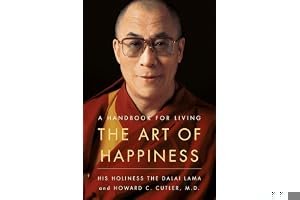 1
1