100 Best Borderline Personality Disorder Books of All Time
We've ranked the best borderline personality disorder books using expert recommendations, sales data, and millions of reader ratings. At Shortform, we know books. Our book guides are the best in the world. Learn why.
Cover unavailable
1
I Hate You – Don't Leave Me: Understanding the Borderline Personality
Jerold J. Kreisman and Hal Straus
5.0
"Am I losing my mind?"
People with borderline personality disorder (BPD) experience such violent and frightening mood swings that they often fear for their sanity. They can be euphoric one moment, despairing and depressed the next. There are an estimated 18 million sufferers of BPD living in America today-each displaying remarkably similar symptoms:
• A shaky sense of identity • Sudden outbursts of anger • Oversensitivity to real or imagined rejection • Brief, turbulent love affairs • Intense feelings of emptiness • Eating disorders, drug abuse, and other self-destructive tendencies • An irrational fear of abandonment and an inability to be alone
For years BPD was difficult to describe, diagnose, and treat. But with this classic guide, Dr. Jerold J. Kreisman and health writer Hal Straus offer much- needed professional advice, helping victims and their families understand and cope with this troubling, shockingly widespread affliction. This completely revised and updated edition includes information on the most up-to-date research that has opened doors to the neurobiological, genetic, and developmental roots of the disorder, as well as the connections between BPD and substance abuse, sexual abuse, post-traumatic stress disorder, ADHD, and eating disorders, making it a vital reference for understanding and living with BPD.

…
Cover unavailable
2
Stop Walking on Eggshells: taking your life back when someone you care about has borderline personality disorder
Paul T. T. Mason MS and Randi Kreger
4.9
Do you feel manipulated, controlled, or lied to? Are you the focus of intense, violent, and irrational rages? Do you feel you are 'walking on eggshells' to avoid the next confrontation?
If the answer is 'yes,' someone you care about may have borderline personality disorder (BPD). Stop Walking on Eggshells has already helped nearly half a million people with friends and family members suffering from BPD understand this destructive disorder, set boundaries, and help their loved ones stop relying on dangerous BPD behaviors. This fully revised edition has been updated with the very latest BPD research and includes coping and communication skills you can use to stabilize your relationship with the BPD sufferer in your life.
This compassionate guide will enable you to: * Make sense out of the chaos * Stand up for yourself and assert your needs * Defuse arguments and conflicts * Protect yourself and others from violent behavior
…
Cover unavailable
3
The Borderline Personality Disorder Workbook: An Integrative Program to Understand and Manage Your BPD
Daniel J. Fox PhD
4.7
Introducing a breakthrough, integrative approach to managing your borderline personality disorder (BPD).
If you’ve been diagnosed with BPD you may feel a number of emotions—including shock, shame, sadness, abandonment, emptiness, or even anger. Even worse, you may be tempted to research your diagnosis online, only to find doomsday scenarios and terrible prognoses everywhere you click. Take a deep breath. You can get through this—and this workbook will help guide you.
Despite what you may have read or been told, BPD is not the worst thing that can happen to you. Like many mental health issues, it manifests on a spectrum, and while some people may encounter extreme symptoms and consequences on one end, others may be less affected on the other. What do you all have in common? You likely experience difficulty balancing your emotions, thoughts, and behaviors. And you may even have trouble seeing yourself clearly—continuously switching from the hero to the villain of the story you’ve written about your life. So, how can you make sense of it all and start on the road to healing?
Rather than utilizing a one-size-fits-all treatment, this groundbreaking and comprehensive workbook meets you where you are on your therapeutic journey, and provides an integrative approach to treating BPD drawing on evidence-based dialectical behavior therapy (DBT), acceptance and commitment therapy (ACT), cognitive behavioral therapy (CBT), and interpersonal therapy. With this compassionate workbook, you’ll gain a greater understanding of your BPD, uncover your own emotional triggers, and discover your own personal motivators for positive change.
Your BPD has determined how you see and live your life, but it doesn’t have to define you forever. With this workbook as your guide, you’ll be ready to face your diagnosis head-on, and take those important first steps toward lasting wellness.
…
Cover unavailable
4
Get Me Out of Here: My Recovery from Borderline Personality Disorder
Rachel Reiland
4.7
With astonishing honesty, this memoir, Get Me Out of Here, reveals what mental illness looks and feels like from the inside, and how healing from borderline personality disorder is possible through intensive therapy and the support of loved ones. A mother, wife, and working professional, Reiland was diagnosed with borderline personality disorder at the age of 29—a diagnosis that finally explained her explosive anger, manipulative behaviors, and self-destructive episodes including bouts of anorexia, substance abuse, and promiscuity. A truly riveting read with a hopeful message.
…
Cover unavailable
5
The Buddha and the Borderline: My Recovery from Borderline Personality Disorder through Dialectical Behavior Therapy, Buddhism, and Online Dating
Kiera Van Gelder
4.7
Kiera Van Gelder's first suicide attempt at the age of twelve marked the onset of her struggles with drug addiction, depression, post-traumatic stress, self-harm, and chaotic romantic relationships-all of which eventually led to doctors' belated diagnosis of borderline personality disorder twenty years later.
The Buddha and the Borderline is a window into this mysterious and debilitating condition, an unblinking portrayal of one woman's fight against the emotional devastation of borderline personality disorder. This haunting, intimate memoir chronicles both the devastating period that led to Kiera's eventual diagnosis and her inspirational recovery through therapy, Buddhist spirituality, and a few online dates gone wrong. Kiera's story sheds light on the private struggle to transform suffering into compassion for herself and others, and is essential reading for all seeking to understand what it truly means to recover and reclaim the desire to live.
…
Cover unavailable
6
Girl, Interrupted
Susanna Kaysen
4.7
In 1967, after a session with a psychiatrist she'd never seen before, eighteen-year-old Susanna Kaysen was put in a taxi and sent to McLean Hospital. She spent most of the next two years on the ward for teenage girls in a psychiatric hospital as renowned for its famous clientele--Sylvia Plath, Robert Lowell, James Taylor, and Ray Charles--as for its progressive methods of treating those who could afford its sanctuary.
Kaysen's memoir encompasses horror and razor-edged perception while providing vivid portraits of her fellow patients and their keepers. It is a brilliant evocation of a "parallel universe" set within the kaleidoscopically shifting landscape of the late sixties. Girl, Interrupted is a clear-sighted, unflinching documnet that gives lasting and specific dimension to our definitions of sane and insane, mental illness and recovery.
…
Recommended by Rae Earl.
Rae Earl
In this book and in her use of language she explores how the brain tumbles [source]
Cover unavailable
7
The Dialectical Behavior Therapy Skills Workbook: Practical DBT Exercises for Learning Mindfulness, Interpersonal Effectiveness, Emotion Regulation, and Distress Tolerance
Matthew McKay PhD
4.6
A clear and effective approach to learning evidence-based DBT skills—now in a fully revised and updated second edition.
Do you have trouble managing your emotions? First developed by Marsha M. Linehan for treating borderline personality disorder, dialectical behavior therapy (DBT) has proven effective as treatment for a range of other mental health problems, and can greatly improve your ability to handle distress without losing control and acting destructively. However, to make use of these techniques, you need to build skills in four key areas: distress tolerance, mindfulness, emotion regulation, and interpersonal effectiveness.
The Dialectical Behavior Therapy Skills Workbook, a collaborative effort from three esteemed authors, offers evidence-based, step-by-step exercises for learning these concepts and putting them to work for real and lasting change. Start by working on the introductory exercises and, after making progress, move on to the advanced-skills chapters. Whether you’re a mental health professional or a general reader, you'll benefit from this clear and practical guide to better managing your emotions.
This fully revised and updated second edition also includes new chapters on cognitive rehearsal, distress tolerance, and self-compassion. Once you’ve completed the exercises in this book and are ready to move on to the next level, check out the authors’ new book, The New Happiness Workbook.
This book has been awarded The Association for Behavioral and Cognitive Therapies Self-Help Seal of Merit — an award bestowed on outstanding self-help books that are consistent with cognitive behavioral therapy (CBT) principles and that incorporate scientifically tested strategies for overcoming mental health difficulties. Used alone or in conjunction with therapy, our books offer powerful tools readers can use to jump-start changes in their lives.
Find more help online at elearning.newharbinger.com. New Harbinger Online Learning offers web-based treatment for borderline personality disorder (BPD) and emotion dysregulation based on the book The Dialectical Behavior Therapy Skills Workbook. Other New Harbinger Online Learning modules offer treatment for stress, anxiety, depression, and anger.
…
Cover unavailable
8
The Drama of the Gifted Child: The Search for the True Self
Alice Miller
4.6
The bestselling book on childhood trauma and the enduring effects of repressed anger and pain
Why are many of the most successful people plagued by feelings of emptiness and alienation? This wise and profound book has provided millions of readers with an answer--and has helped them to apply it to their own lives.
Far too many of us had to learn as children to hide our own feelings, needs, and memories skillfully in order to meet our parents' expectations and win their "love." Alice Miller writes, "When I used the word 'gifted' in the title, I had in mind neither children who receive high grades in school nor children talented in a special way. I simply meant all of us who have survived an abusive childhood thanks to an ability to adapt even to unspeakable cruelty by becoming numb.... Without this 'gift' offered us by nature, we would not have survived." But merely surviving is not enough. The Drama of the Gifted Child helps us to reclaim our life by discovering our own crucial needs and our own truth.
All about the fact that stuff happens to us as children, negative things happen. Then, we adapt to those things by taking on certain defensive ways of being. And then, we live the rest of our lives from those defensive modes. [source]
Cover unavailable
9
DBT Skills Training Handouts and Worksheets
Marsha M. Linehan
4.5
Featuring more than 225 user-friendly handouts and worksheets, this is an essential resource for clients learning dialectical behavior therapy (DBT) skills, and those who treat them. All of the handouts and worksheets discussed in Marsha M. Linehan's DBT Skills Training Manual, Second Edition, are provided, together with brief introductions to each module written expressly for clients. Originally developed to treat borderline personality disorder, DBT has been demonstrated effective in treatment of a wide range of psychological and emotional problems. No single skills training program will include all of the handouts and worksheets in this book; clients get quick, easy access to the tools recommended to meet their particular needs. The 8 1/2" x 11" format and spiral binding facilitate photocopying. Purchasers also get access to a Web page where they can download and print additional copies of the handouts and worksheets.
Mental health professionals, see also the author's DBT Skills Training Manual, Second Edition, which provides complete instructions for teaching the skills. Also available: Cognitive-Behavioral Treatment of Borderline Personality Disorder, the authoritative presentation of DBT, and Linehan's instructive skills training videos for clients--Crisis Survival Skills: Part One, Crisis Survival Skills: Part Two, From Suffering to Freedom, This One Moment, and Opposite Action.
…
Cover unavailable
10
Mindfulness for Borderline Personality Disorder: Relieve Your Suffering Using the Core Skill of Dialectical Behavior Therapy
Blaise Aguirre MD and Gillian Galen PsyD
4.5
If you are like many others living with borderline personality disorder (BPD), you know what it’s like to be overwhelmed by intense and fluctuating emotions; to have difficulty with relationships; and to constantly struggle with troubling thoughts and behaviors. BPD can be especially difficult to treat, though there are ways to gain control over your symptoms and live a happier, healthier life.
Expanding on the core skill of dialectical behavior therapy (DBT), Mindfulness for Borderline Personality Disorder will help you target and successfully manage many of the familiar symptoms of BPD. Inside, you will learn the basics of mindfulness through specific exercises, and will gain powerful insight through real-life stories from people who have BPD. If you are ready to take that first step on the path toward wellness, this book will be your guide.
…
Cover unavailable
11
Sometimes I Act Crazy: Living with Borderline Personality Disorder
Jerold J. Kreisman and Hal Straus
4.5
A source of hope, expert advice, and guidance for people with borderline personality disorder and those who love them
Do you experience frightening, often violent mood swings that make you fear for your sanity? Are you often depressed? Do you engage in self-destructive behaviors such as drug or alcohol abuse, anorexia, compulsive eating, self-cutting, and hair pulling? Do you feel empty inside, or as if you don't know who you are? Do you dread being alone and fear abandonment? Do you have trouble finishing projects, keeping a job, or forming lasting relationships?
If you or someone you love answered yes to the majority of these questions, there's a good chance that you or that person suffers from borderline personality disorder, a commonly misunderstood and misdiagnosed psychological problem afflicting tens of millions of people. Princess Diana was one of the most well-known BPD sufferers.
As a source of hope and practical advice for BPD sufferers and those who love them, this new book by Dr. Jerold J. Kreisman and Hal Straus, bestselling authors of I Hate You, Don't Leave Me, offers proven techniques that help you: • Manage mood swings • Develop lasting relationships • Improve your self-esteem • Keep negative thoughts at bay • Control destructive impulses • Understand your treatment options • Find professional help
…
Cover unavailable
12
Psychopath Free: Recovering from Emotionally Abusive Relationships with Narcissists, Sociopaths, and Other Toxic People
Jackson MacKenzie
4.5
Have you ever been in a relationship with a psychopath? Chances are, even if you did, you would never know it. Psychopaths are cunning charmers and master manipulators, to the point where you start to accept the most extreme behaviors as normal… Even if it hurts you. All around us, every single day, human beings devoid of empathy are wreaking havoc and destroying lives in the coldest, most heartless ways imaginable. In constant pursuit of money, sex, influence, or simple entertainment, psychopaths will do whatever it takes to gain power over others. They hide behind a veil of normalcy, arranging their friends and partners like pawns in a game of chess.
Using false praise and flattery to get what they want, they can lure any unsuspecting target into a relationship. Once hooked, their charming promises spin into mind games and psychological torture. Victims are left devastated and confused, unable to recognize—or even put into words—the nightmare that just took place.
This significantly expanded edition of Psychopath Free contains new chapters, updated content, and real survivor experiences. Written from the heart, it is the first guide for survivors written by a survivor, offering hope for healing and thriving after psychopathic abuse. Say goodbye to the chaos, self-doubt, and victimization. You are free.
…
Cover unavailable
13
Loving Someone with Borderline Personality Disorder: How to Keep Out-of-Control Emotions from Destroying Your Relationship
Shari Y. Manning
4.5
People with borderline personality disorder (BPD) can be intensely caring, warm, smart, and funny—but their behavior often drives away those closest to them. If you're struggling in a tumultuous relationship with someone with BPD, this is the book for you. Dr. Shari Manning helps you understand why your spouse, family member, or friend has such out-of-control emotions—and how to change the way you can respond. Learn to use simple yet powerful strategies that can defuse crises, establish better boundaries, and radically transform your relationship. Empathic, hopeful, and science based, this is the first book for family and friends grounded in dialectical behavior therapy (DBT), the most effective treatment for BPD.
…
Cover unavailable
14
DBT Skills Training: Manual
Marsha M. Linehan
4.5
From Marsha M. Linehan--the developer of dialectical behavior therapy (DBT)--this comprehensive resource provides vital tools for implementing DBT skills training. The reproducible teaching notes, handouts, and worksheets used for over two decades by hundreds of thousands of practitioners have been significantly revised and expanded to reflect important research and clinical advances. The book gives complete instructions for orienting clients to DBT, plus teaching notes for the full range of mindfulness, interpersonal effectiveness, emotion regulation, and distress tolerance skills. Handouts and worksheets are not included in the book; purchasers get access to a Web page where they can download and print all the handouts and worksheets discussed, as well as the teaching notes. The companion volume is available separately: DBT Skills Training Handouts and Worksheets, Second Edition.
New to This Edition *Handouts and worksheets (available online and in the companion volume) have been completely revised and dozens more added--more than 225 in all. *Each module has been expanded with additional skills. *Multiple alternative worksheets to tailor treatment to each client. *More extensive reproducible teaching notes (provided in the book and online), with numerous clinical examples. *Curricula for running skills training groups of different durations and with specific populations, such as adolescents and clients with substance use problems. *Linehan provides a concise overview of "How to Use This Book."
See also DBT Skills Training Handouts and Worksheets, Second Edition, a spiral-bound 8 1/2" x 11" volume containing all of the handouts and worksheets and featuring brief introductions to each module written expressly for clients. Plus, Cognitive-Behavioral Treatment of Borderline Personality Disorder, the authoritative presentation of DBT. Also available: Linehan's instructive skills training videos for clients--Crisis Survival Skills: Part One, Crisis Survival Skills: Part Two, From Suffering to Freedom, This One Moment, and Opposite Action.
…
Cover unavailable
15
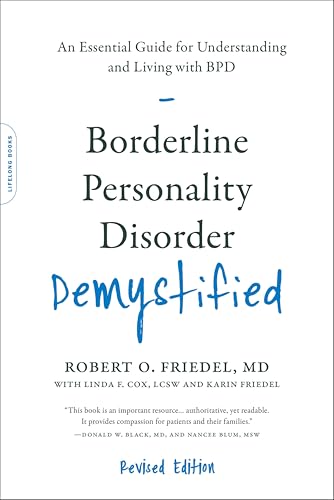
Borderline Personality Disorder Demystified, Revised Edition: An Essential Guide for Understanding and Living with BPD
Robert O. Friedel, Linda F. Cox, et al.
4.5
The authoritative guide to understanding and living with borderline personality disorder, now fully revised and updated Millions of Americans suffer from borderline personality disorder (BPD), a psychiatric condition marked by extreme emotional instability, erratic and self-destructive behavior, and tumultuous relationships. Though it was once thought to be untreatable, today researchers and clinicians know that there is every reason for hope. Dr. Robert Friedel, a leading expert and pioneer in pharmacological treatment for BPD, combines his extensive knowledge and personal experience into this comprehensive guide. Borderline Personality Disorder Demystified shares: The latest findings on the course and causes of the disorder Up-to-date information on diagnosis An accessible overview of cutting-edge treatment options For those who have been diagnosed and those who think they may have the illness, and for the family and friends who love and support them, this book illuminates new information and points the way to an ever more hopeful future.
The revised edition includes new forewords from Donald W. Black, MD, and Nancee S. Blum, MSW, and family educators James and Diane Hall.
…
Cover unavailable
16
Stop Caretaking the Borderline or Narcissist: How to End the Drama and Get on with Life
Margalis Fjelstad
4.5
People with Borderline or Narcissistic Personality Disorders have a serious mental illness that primarily affects their intimate, personal, and family relationships. Often they appear to be normally functioning at work and in public interactions, and Narcissists may even be highly effective, in the short term, in some work or social situations. However, in intimate relationships, they can be emotional, aggressive, demeaning, illogical, paranoid, accusing, and controlling in the extreme. Their ability to function normally or pleasantly can suddenly change in an instant, like flipping a switch. These negative behaviors don t happen once in a while, they happen almost continuously in their intimate relationships and most often, and especially with their Caretaker family member. Here, Margalis Fjelstad describes how people get into a Caretaker role with a Borderline or Narcissist, and how they can get out. Caretakers give up their sense of self to become who and what the Borderline or Narcissist needs them to be. This compromises the Caretaker s self-esteem, distorts their thinking processes, and locks them into a Victim-Persecutor-Rescuer pattern with the Borderline or Narcissist. The book looks at the underlying rules and expectations in these relationships and shows Caretaker s how to move themselves out of these rigid interactions and into a healthier, more productive, and positive lifestyle with or without the Borderline/Narcissistic partner or family member. It describes how to get out of destructive interactions with the Borderline or Narcissist and how to take new, more effective actions to focus on personal wants, needs, and life goals while allowing the Borderline or Narcissist to take care of themselves. It presents a realistic, yet compassionate, attitude toward the self-destructive nature of these relationships, and gives real life examples of how individuals have let go of their Caretaker behaviors with creative and effective solutions."
…
Cover unavailable
17
Will I Ever Be Good Enough?: Healing the Daughters of Narcissistic Mothers
Karyl McBride
4.4
Cover unavailable
18
Healing from Hidden Abuse: A Journey Through the Stages of Recovery from Psychological Abuse
Shannon Thomas LCSW
4.4
Within every community, toxic people can be found hiding in families, couples, companies, and places of worship. The cryptic nature of psychological abuse involves repetitious mind games played by one individual or a group of people.
Psychological abuse leaves no bruises. There are no broken bones. There are no holes in the walls. The bruises, brokenness, and holes are held tightly within the target of the abuse.
…
Cover unavailable
19
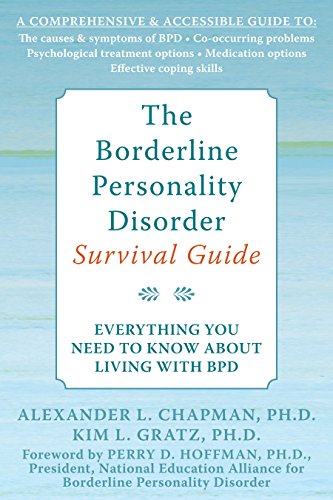
The Borderline Personality Disorder Survival Guide: Everything You Need to Know About Living with BPD
Alex L. Chapman, Kim L. Gratz, et al.
4.4
If you or someone you love is struggling with borderline personality disorder (BPD), you need up-to-date, accurate, and accessible information on the problems you’re facing and where you can turn for help. But where do you look? Much of the professional literature on BPD is too technical and confusing to be of much help. And searching the Internet for accurate information can be treacherous, with some sites providing useful information and others giving dangerous advice and misinformation. If you’re living with BPD, this compassionate book offers what you really need: an easy-to-follow road map to guide you through this disorder and its treatment.
This book provides answers to many of the questions you might have about BPD: What is BPD? How long does it last? What other problems co-occur with BPD? Overviews of what we currently know about BPD make up the first section of the book. Later chapters cover several common treatment approaches to BPD: DBT, mentalization-based treatment (MBT), and medication treatments. In the last sections of the book, you’ll learn a range of useful coping skills that can help you manage your emotions, deal with suicidal thoughts, and cope with some of the most distressing symptoms of BPD.
This book has been awarded The Association for Behavioral and Cognitive Therapies Self-Help Seal of Merit — an award bestowed on outstanding self-help books that are consistent with cognitive behavioral therapy (CBT) principles and that incorporate scientifically tested strategies for overcoming mental health difficulties. Used alone or in conjunction with therapy, our books offer powerful tools readers can use to jump-start changes in their lives.
…
Cover unavailable
20
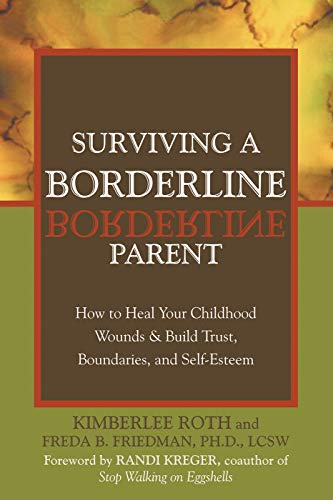
Surviving a Borderline Parent: How to Heal Your Childhood Wounds and Build Trust, Boundaries, and Self-Esteem
Kimberlee Roth, Freda B. Friedman, et al.
4.4
Surviving a Borderline Parent is the first step-by-step guide for adult children of parents with borderline personality disorder.
Between 6 and 10 million people in the US suffer from borderline personality disorder. This book teaches adult children how to overcome the devastating effects of growing up with a parent who suffers from BPD.
Although relatively common, borderline personality disorder (BPD) is often overlooked or misdiagnosed by therapists and clinicians and denied by those who suffer from it.
Symptoms of this problem include unpredictability, violence and uncontrollable anger, deep depression and self-abuse. Parents with BPD are often unable to provide for the basic physical and emotional needs of their children. In an ironic and painful role reversal, BPD parents can actually raise children to be their caretakers. They may burden even very young children with adult responsibilities.
If you were raised by a BPD parent, your childhood was a volatile and painful time. This book, the first written specifically for children of borderline parents, offers step-by-step guidance to understanding and overcoming the lasting effects of being raised by a person suffering from this disorder. Discover specific coping strategies for dealing with issues common to children of borderline parents: low self-esteem, lack of trust, guilt, and hypersensitivity. Make the major decision whether to confront your parent about his or her condition.
…
Cover unavailable
21
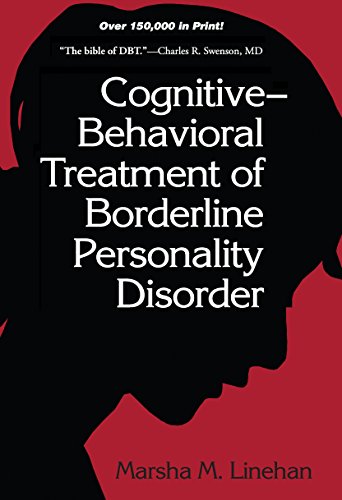
Cognitive-Behavioral Treatment of Borderline Personality Disorder
Marsha Linehan
4.4
For the average clinician, individuals with borderline personality disorder (BPD) often represent the most challenging, seemingly insoluble cases. This volume is the authoritative presentation of dialectical behavior therapy (DBT), Marsha M. Linehan's comprehensive, integrated approach to treating individuals with BPD. DBT was the first psychotherapy shown in controlled trials to be effective with BPD. It has since been adapted and tested for a wide range of other difficult-to-treat disorders involving emotion dysregulation. While focusing on BPD, this book is essential reading for clinicians delivering DBT to any clients with complex, multiple problems.
Companion volumes: The latest developments in DBT skills training, together with essential materials for teaching the full range of mindfulness, interpersonal effectiveness, emotion regulation, and distress tolerance skills, are presented in Linehan's DBT Skills Training Manual, Second Edition, and DBT Skills Training Handouts and Worksheets, Second Edition. Also available: Linehan's instructive skills training videos for clients--Crisis Survival Skills: Part One, Crisis Survival Skills: Part Two, From Suffering to Freedom, This One Moment, and Opposite Action.
…
Cover unavailable
22
Whole Again: Healing Your Heart and Rediscovering Your True Self After Toxic Relationships and Emotional Abuse
Jackson MacKenzie
4.4
From a leading voice on recovering from toxic relationships, a deeply insightful guide to getting back to your "old self" again--in order to truly heal and move on.
Jackson MacKenzie has helped millions of people in their struggle to understand the experience of toxic relationships. His first book, Psychopath Free, explained how to identify and survive the immediate situation. In this highly anticipated new book, he guides readers on what to do next--how to fully heal from abuse in order to find love and acceptance for the self and others.
Through his close work with--and deep connection to--thousands of survivors of abusive relationships Jackson discovered that most survivors have symptoms of trauma long after the relationship is over. These range from feelings of numbness and emptiness to depression, perfectionism, substance abuse, and many more. But he's also found that it is possible to work through these symptoms and find love on the other side, and this book shows how. Through a practice of mindfulness, introspection, and exercises using specific tools, readers learn to identify the protective self they've developed - and uncover the core self, so that they can finally move on to live a full and authentic life--to once again feel light, free, and whole, and ready to love again.
This book addresses and provides crucial guidance on topics and conditions like: complex PTSD, Narcissistic abuse, Avoidant Personality Disorder, Codependency, Core wounding, toxic shame, Borderline Personality Disorder, and so many more. Whole Again offers hope and multiple strategies to anyone who has survived a toxic relationship, as well as anyone suffering the effects of a breakup involving lying, cheating and other forms of abuse--to release old wounds and safely let the love back inside where it belongs.
…
Cover unavailable
23
Understanding the Borderline Mother
Christine Ann Lawson
4.4
The first love in our lives is our mother. Recognizing her face, her voice, the meaning of her moods, and her facial expressions is crucial to survival. Dr. Christine Ann Lawson vividly describes how mothers who suffer from borderline personality disorder produce children who may flounder in life even as adults, futilely struggling to reach the safety of a parental harbor, unable to recognize that their borderline parent lacks a pier, or even a discernible shore. Four character profiles describe different symptom clusters that include the waif mother, the hermit mother, the queen mother, and the witch. Children of borderlines are at risk for developing this complex and devastating personality disorder themselves. Dr. Lawson's recommendations for prevention include empathic understanding of the borderline mother and early intervention with her children to ground them in reality and counteract the often dangerous effects of living with a "make-believe" mother. Some readers may recognize their mothers as well as themselves in this book. They will also find specific suggestions for creating healthier relationships. Addressing the adult children of borderlines and the therapists who work with them, Dr. Lawson shows how to care for the waif without rescuing her, to attend to the hermit without feeding her fear, to love the queen without becoming her subject, and to live with the witch without becoming her victim. A Jason Aronson Book
…
Cover unavailable
24
Power: Surviving and Thriving After Narcissistic Abuse: A Collection of Essays on Malignant Narcissism and Recovery from Emotional Abuse
Pathological mind games. Covert and overt put-downs. Triangulation. Gaslighting. Projection. These are the manipulative tactics survivors of malignant narcissists are unfortunately all too familiar with. As victims of silent crimes where the perpetrators are rarely held accountable, survivors of narcissistic abuse have lived in a war zone of epic proportions, enduring an abuse cycle of love-bombing and devaluation—psychological violence on steroids.
From how to heal our addiction to the narcissist to how to recognize a covert narcissist, Shahida Arabi's articles on narcissistic abuse have gained renown as some of the most accurate and in-depth depictions of this terrifying trauma, resonating with millions of survivors all over the world and receiving endorsements from numerous mental health professionals.
In this essay compilation, readers can enjoy some of her most popular articles as well as new thought pieces on narcissistic abuse: what therapists have to say about malignant narcissists and how children of narcissistic parents can become trapped in the trauma repetition cycle. Survivors are offered new insights on what it means to be both a survivor and a thriver of covert manipulation and trauma.
POWER teaches us that it is important to not only understand the tactics of toxic personalities but also to recognize and combat the effects of narcissistic abuse; it guides the survivor to learning, growing, healing and most importantly of all—owning their agency to rebuild their lives and transform their powerlessness into victory.
…
Cover unavailable
25
The Covert Passive Aggressive Narcissist: Recognizing the Traits and Finding Healing After Hidden Emotional and Psychological Abuse
Debbie Mirza
4.3
Covert narcissistic abuse is the most insidious type of narcissistic abuse. When most people think of a narcissist they think of someone who is grandiose, obviously self-absorbed, sees themself as superior to others, and throws fits of rage when they don’t get their way. But what if the narcissist is one of the nicest people you’ve ever met? What if they are a great listener, seem to care about others, and are a pillar of the community? What if they are the mother that volunteers at the school, the husband that your girlfriends wish they had, the boss that your co-workers feel so lucky to work for? A covert narcissist has the same traits as the well-known overt type. The difference is when they control and manipulate, when they demean and devalue you it is done is such a subtle way you don’t notice it. Many people can have a parent who is a covert narcissist and not realize it until well into their adulthood. Most people who are married to this type can be with this person for decades, not even recognizing the tactics that have been used on them for years. Others have experienced a boss or co-worker that have taken years of their life and drained them of their energy and self-worth, bringing them to a place where they question their own sanity. There are no visible scars with this form of abuse and you are usually the only one that experiences their destructive and psychologically debilitating behavior. The most common description a survivor of this type of abuse will use is crazy making. If you have experienced or are in a relationship with a covert narcissist this book will help you see that you are not crazy. The author thoroughly explains and illustrates through real life stories what the traits of a covert narcissist are and look like. Your feelings and hunches will be validated and you will finally be able to see clearly and know how to heal after years of confusion. Living with a covert narcissist drains your spirit and leaves you questioning your own reality. You have been lied to for years and it is time to finally see the truth of what you have been through, who you really are, and how much you deserve love and happiness.
…
Cover unavailable
26
When Narcissism Comes to Church: Healing Your Community from Emotional and Spiritual Abuse
Chuck DeGroat
4.3
Why does narcissism seem to thrive in our churches? We've seen the news stories and heard the rumors. Maybe we ourselves have been hurt by a narcissistic church leader. It's easy to throw the term around and diagnose others from afar. But what is narcissism, really? And how does it infiltrate the church? Chuck DeGroat has been counseling pastors with Narcissistic Personality Disorder, as well as those wounded by narcissistic leaders and systems, for over twenty years. He knows firsthand the devastation narcissism leaves in its wake and how insidious and painful it is. In When Narcissism Comes to Church, DeGroat takes a close look at narcissism, not only in ministry leaders but also in church systems. He offers compassion and hope for those affected by its destructive power and imparts wise counsel for churches looking to heal from its systemic effects. DeGroat also offers hope for narcissists themselves--not by any shortcut, but by the long, slow road of genuine recovery, possible only through repentance and trust in the humble gospel of Jesus.
…
Cover unavailable
27
The Essential Family Guide to Borderline Personality Disorder: New Tools and Techniques to Stop Walking on Eggshells
Randi Kreger
4.3
Gentle counsel and realistic advice for families contending with one of today's most misunderstood forms of mental illness.
For family members of people with Borderline Personality Disorder (BPD), home life is routinely unpredictable and frequently unbearable. Extreme mood swings, impulsive behaviors, unfair blaming and criticism, and suicidal tendencies common conduct among those who suffer from the disorder leave family members feeling confused, hurt, and helpless.
In Stop Walking on Eggshells, Randi Kreger's pioneering first book which sold more than 340,000 copies, she and co-author Paul T. Mason outlined the fundamental differences in the way that people with BPD relate to the world. Now, with The Essential Family Guide to Borderline Personality Disorder, Kreger takes readers to the next level by offering them five straightforward tools to organize their thinking, learn specific skills, and focus on what they need to do to get off the emotional rollercoaster: Take care of yourself; Uncover what keeps you feeling stuck; Communicate to be heard; Set limits with love; Reinforce the right behaviors.
Together the steps provide a clear-cut system designed to help friends and family reduce stress, improve their relationship with their borderline loved one, improve their problem-solving skills and minimize conflict, and feel more self-assured about setting limits.
…
Cover unavailable
28
Skills Training Manual for Treating Borderline Personality Disorder
Marsha M. Linehan
4.3
This book is a step-by-step guide to teaching clients four sets of skills: interpersonal effectiveness, emotion regulation, distress tolerance, and mindfulness. A vital component in Dr. Linehan’s comprehensive treatment program, the manual details precisely how to implement DBT behavioral skills training procedures. It provides everything the clinician needs to implement the program in skills training groups or with individual clients. Included are lecture notes, discussion questions, exercises, and practical advice on dealing with frequently encountered problems. In a large-size format with lay-flat binding for easy photocopying, the book features over three dozen reproducible client handouts and homework sheets.
See also Linehan's comprehensive presentation of DBT, Cognitive-Behavioral Treatment of Borderline Personality Disorder. Also available: instructive skills training videos for clients--Crisis Survival Skills: Part One, Crisis Survival Skills: Part Two, From Suffering to Freedom, This One Moment, and Opposite Action.
…
Cover unavailable
29
The Big Book on Borderline Personality Disorder
Shehrina Rooney
4.3
Cover unavailable
30
Loud in the House of Myself: Memoir of a Strange Girl
Stacy Pershall
4.3
"An utterly unique journey down some of the mind's more mysterious byways . . . ranges from the shocking to the simply lovely." —Marya Hornbacher
Stacy Pershall grew up depressed and too smart for her own good, a deeply strange girl in Prairie Grove, Arkansas (population 1,000), where the prevailing wisdom was that Jesus healed all. From her days as a thirteen-year-old Jesus freak, through a battle with anorexia and bulimia, her first manic episode at eighteen, and the eventual diagnosis of bipolar disorder and borderline personality disorder, this spirited and at times mordantly funny memoir chronicles Pershall's journey through hell-several breakdowns and suicide attempts—and her struggle with the mental health care system.
After her 2001 suicide attempt, broadcast live on a Webcam, Pershall realized the need to heal her mind and body. She found a revolutionary cure (Dialectical Behavioral Therapy) and a new mood-stabilizing medication. She also met a tattoo artist and discovered the healing power of body modification. By giving over her skin and enduring the physical pain, she learned about the true nature of trust.
…
Cover unavailable
31
Becoming the Narcissist's Nightmare: How to Devalue and Discard the Narcissist While Supplying Yourself
Shahida Arabi
4.3
Although clinical research has been conducted on narcissism as a disorder, less is known about its effects on victims who are in toxic relationships with partners with Narcissistic Personality Disorder. Individuals with this disorder engage in chronic devaluation and manipulation of their partners, a psychological and emotional phenomenon known as "narcissistic abuse." Unfortunately, the full extent of what narcissistic abuse entails is not taught in any psychology class or diagnostic manual. Since pathological narcissists are unlikely to seek treatment for their disorder, it is difficult to pinpoint what exactly makes a narcissistic abuser tick and the manipulative tactics they use, which are likely to differ from those of other types of abusers as they are more covert and underhanded. What is even more baffling is the addiction we form with our narcissistic abusers, created by biochemical bonds and trauma bonds that are also unlike any other relationship we experience. In this book, survivors will learn: -The red flags of narcissistic behavior and covert manipulation tactics, including subtle signs many survivors don't catch in the early stages of dating a narcissist. -The motives behind narcissistic abuse and techniques to resist a narcissist's manipulation. -Why abuse survivors usually stay with a narcissist long after incidents of abuse occur. -How our own brain chemistry locks us into an addiction with a narcissistic or toxic partner, creating cravings for the constant chaos of the abuse cycle. -Traditional and alternative methods to begin to detach and heal from the addiction to the narcissist, including eleven important steps all survivors must take on the road to healing. -Methods to rewrite the narratives that abusers have written for us so we can begin to reconnect with our authentic selves and purpose. -How to rebuild an even more victorious and empowering life after abuse. Narcissistic partners employ numerous stealthy tactics to devalue and manipulate their victims behind closed doors. These partners lack empathy and demonstrate an incredible sense of entitlement and sense of superiority which drives their exploitative behavior in interpersonal relationships. Their tactics can include verbal abuse and emotional invalidation, stonewalling, projection, taking control of every aspect of the victim's life, gaslighting and triangulation. Due to the narcissistic partner's "false self," the charismatic mask he or she projects to society, the victim often feels isolated in this type of abuse and is unlikely to have his or her experiences validated by friends, family and society. Using the latest scientific research as well as thousands of survivor accounts, this book will explore how the emotional manipulation tactics of narcissistic and antisocial partners affect those around them, particularly with regards to its cumulative socioemotional and psychological effects on the victim. It will also address questions such as: What successful techniques, tools and healing modalities (both traditional and alternative) are available to survivors who have been ridiculed, manipulated, verbally abused and subject to psychological warfare? What can survivors do to better engage in self-love and self-care? How can they forge the path to healthier relationships, especially if they've been a victim of narcissistic abuse by multiple people or raised by a narcissist? Most importantly, how can they use their experiences of narcissistic abuse to empower themselves towards personal development? What can their interactions with a narcissistic abuser teach them about themselves, their relationship patterns and the wounds that still need to be healed in order to move forward into the happy relationships and victorious lives they do deserve?
…
Cover unavailable
32
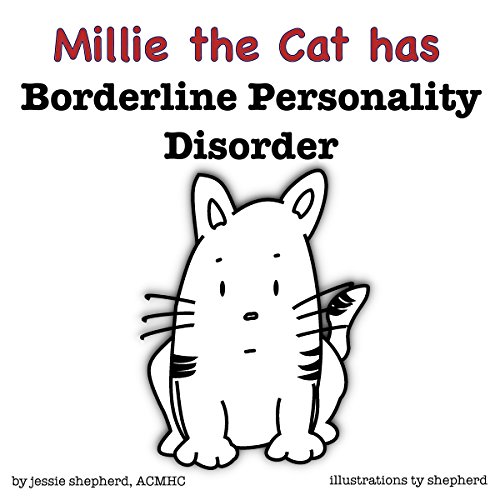
Mille the Cat Has Borderline Personality Disorder
Jessie Shepherd and Ty Shepherd
4.3
Often when people are given a mental health disorder diagnosis the weaknesses are clear and overwhelmingly emphasized, while the strengths are ignored or forgotten. The mental health children's book series 'What Mental Disorder?' challenges the stigma against therapy and diagnosis. It enlists the reader to view the character as a whole being and not as a mental issue. Although there are aspects that the character will have to learn to cope with in order to function successfully in their life, there are also amazing traits that make them unique and remarkably accomplished. Millie the Cat has Borderline Personality Disorder is a picture book that takes a unique look at the positive and negative characteristics of Borderline Personality Disorder. Meeting kind Mille you get to experience how her day to day routine is, the aspects that she will have to cope with, the amazing personality traits that she has, and how she can learn new skills to be the best cat she can be. It is written in such a way that the mental health disorder is explained in a realistic balanced light, while eliciting empathy and understanding from the audience. The book series 'What Mental Disorder?' including Millie the Cat has Borderline Personality Disorder is excellent for therapeutic clinicians, those diagnosed with Borderline Personality Disorder, or those who would like to gain a better understanding of the disorder.
…
Cover unavailable
33
Look Me in the Eye: My Life with Asperger's
John Elder Robison
4.3
NEW YORK TIMES BESTSELLER
“As sweet and funny and sad and true and heartfelt a memoir as one could find.” —from the foreword by Augusten Burroughs
Ever since he was young, John Robison longed to connect with other people, but by the time he was a teenager, his odd habits—an inclination to blurt out non sequiturs, avoid eye contact, dismantle radios, and dig five-foot holes (and stick his younger brother, Augusten Burroughs, in them)—had earned him the label “social deviant.” It was not until he was forty that he was diagnosed with a form of autism called Asperger’s syndrome. That understanding transformed the way he saw himself—and the world. A born storyteller, Robison has written a moving, darkly funny memoir about a life that has taken him from developing exploding guitars for KISS to building a family of his own. It’s a strange, sly, indelible account—sometimes alien yet always deeply human.
…
Cover unavailable
34
Borderline Personality Disorder in Adolescents: What To Do When Your Teen Has BPD: A Complete Guide for Families
Blaise A. Aguirre
4.3
This second edition of Borderline Personality Disorder in Adolescents offers parents, caregivers, and adolescents themselves a complete understanding of this complex and tough-to-treat disorder. It is a comprehensive guide which thoroughly explains what BPD is and what a patient's treatment options are, including an overview of the revolutionary new treatment called dialectic behavior therapy. Author Blaise A. Aguirre, M.D., one of the foremost experts in the field, describes recent advances in treatments and brings into focus what we know, and don't know, about this condition. Revised and updated from the previous edition, readers will learn all about the scientific development of BPD; treatment options (e.g., medication and therapy); myths and misunderstandings; tips and strategies for parents; the prognosis for BPD; and practical techniques for effective communication with those who have BPD. They will also hear from BPD adolescents and parents who have learned how to make the best of the cards they have been dealt. Here's what some experts in the field had to say about the previous edition:
"Families and their children with BPD will find this book a very useful guide as they struggle together toward a more fully realized life." - Mary C. Zanarini, Ed.D., Director, Laboratory for the Study of Adult Development, McLean Hospital and Professor of Psychology, Harvard Medical School
"A must-have book for every parent with a borderline child." - Randi Kreger, Coauthor of Stop Walking on Eggshells: Taking Your Life Back When Someone You Care about Has Borderline Personality Disorder
"Borderline Personality Disorder in Adolescents is a long overdue book that eloquently and expertly addresses the wide-ranging issues surrounding borderline personality disorder in adolescents. This compassionate book is a must for parents with children suffering from borderline personality disorder, as well as clinicians, educators, pediatricians, and clergy trying to understand and help adolescents with this serious, chronic disorder." - Perry D. Hoffman, Ph.D., President, National Education Alliance for Borderline Personality Disorder
…
Cover unavailable
35
ACT Made Simple: An Easy-To-Read Primer on Acceptance and Commitment Therapy
Russ Harris
4.3
Now fully-revised and updated, this second edition of ACT Made Simple includes new information and chapters on self-compassion, flexible perspective taking, working with trauma, and more.
Why is it so hard to be happy? Why is life so difficult? Why do humans suffer so much? And what can we realistically do about it? No matter how rewarding your job, as a mental health professional, you may sometimes feel helpless in the face of these questions. You are also well aware of the challenges and frustrations that can present during therapy.
If you’re looking for ways to optimize your client sessions, consider joining the many thousands of therapists and life coaches worldwide who are learning acceptance and commitment therapy (ACT). With a focus on mindfulness, client values, and a commitment to change, ACT is proven-effective in treating depression, anxiety, stress, addictions, eating disorders, schizophrenia, borderline personality disorder (BPD), and myriad other psychological issues. It’s also a revolutionary new way to view the human condition—packed full of exciting new tools, techniques, and strategies for promoting profound behavioral change.
A practical primer, ideal for ACT newcomers and experienced ACT professionals alike, ACT Made Simple offers clear explanations of the six ACT processes and a set of real-world tips and solutions for rapidly and effectively implementing them in your practice. This book gives you everything you need to start using ACT with your clients for impressive results. Inside, you’ll find: scripts, exercises, metaphors, and worksheets to use with your clients; a session-by-session guide to implementing ACT; transcripts from therapy sessions; guidance for creating your own therapeutic techniques and exercises; and practical tips to overcome “therapy roadblocks.”
This book aims to take the complex theory and practice of ACT and make it accessible and enjoyable for therapists and clients.
…
Cover unavailable
36
"Don't You Know Who I Am?": How to Stay Sane in an Era of Narcissism, Entitlement, and Incivility
Ramani S. Durvasula PhD
4.3
It’s time to take our lives back from a world of narcissism, entitlement, and toxic relationships.
“Don’t You Know Who I Am?” has become the mantra of the famous and infamous, the entitled and the insecure. It’s the tagline of the modern narcissist.
Health and wellness campaigns preach avoidance of unhealthy foods, sedentary lifestyles, tobacco, drugs, and alcohol, but rarely preach avoidance of unhealthy, difficult or toxic people. Yet the health benefits of removing toxic people from your life may have far greater benefits to both physical and psychological health. We need to learn to be better gatekeepers for our minds, bodies, and souls.
Narcissism, entitlement, and incivility have become the new world order, and we are all in trouble. They are not only normalized but also increasingly incentivized. They are manifestations of pathological insecurity—insecurities that are experienced at both the individual and societal level. The paradox is that we value these patterns. We venerate them through social media, mainstream media, and consumerism, and they are endemic in political, corporate, academic, and media leaders.
There are few lives untouched by narcissists. These relationships infect those who are in them with self-doubt, despair, confusion, anxiety, depression, and the chronic feeling of being “not enough,” all of which make it so difficult to step away and set boundaries. The illusion of hope and the fantasy of redemption can result in years of second chances, and despondency when change never comes.
It’s time for a wake-up call. It’s time to stem the tide of narcissism, entitlement, and antagonism, and take our lives back.
…
Cover unavailable
37
Out of the Fog: Moving from Confusion to Clarity After Narcissistic Abuse
Dana Morningstar
4.3
Lying. Cheating. Manipulating.
Will they ever change?
What will it take to get through to them?
They apologized, but will this time be different...or will they just get better at hiding what they are up to?
This book will help you get out of the fog of confusion and into the clarity you are looking for.
FOG is an acronym that stands for "Fear, Obligation, and Guilt." These three emotions are often at the core of manipulation, and are often how narcissists, sociopaths, and other types of emotional manipulators go about controlling their targets.
However, this type of destructive manipulation isn't just limited to narcissists and sociopaths.
There is no shortage of people with well-intended bad advice out there who unintentionally fall into the FOG as well, and push targets of abuse into keeping the relationship going.
The FOG is one of the main reasons that people stay "stuck" in abusive relationships for so long, why they continue to get involved with abusive people, why they feel that they are the problem, and why they tend to feel that the abuse is somehow their fault.
When a person is being manipulated they have a hard time figuring out who has the problem, what is normal, what is problematic, and if their wants, needs, and feelings are valid. The disasterous effects of being lost in the FOG are confusion, crazymaking, people pleasing, and an erosion of boundaries.
What makes this well-intended bad advice so damaging is that, on the surface, it seems like good advice--especially if it's coming from people who seem to have our best interests in mind, such as friends, family, church members, support group members, or a therapist.
Some examples of this well-intended bad advice that comes from other people is:
"Who are you to judge?" "No one is perfect." "You need to forgive them." "She's your mother, you need to have a relationship with her...she's not getting any younger you know." "Commitment is forever."
What can be so crazymaking for targets is that they are often getting two very different messages. On one hand, they are told that they need to work towards a solution, and on the other, they are told that need to leave a partner who lies, cheats, steals, hits, yells, or belittles them.
This book compares and contrasts of these concepts so that targets of any type of manipulation and abuse can make a more empowered decision.
Some of the concepts covered are:
Who are You to Judge vs. Being Discerning No One is Perfect vs. Tolerating Abuse You Need to Forgive Them vs. Keeping Yourself Safe A Parent vs. A Predator Commitment vs. Codependency Self-love vs. Selfishness A Person Acting the Part vs. A Person Actually Changing Gut Instincts vs. Hypervigilance A Friend vs. Someone Being Friendly Caring vs. Caretaking Being in Love With Them vs. Being in Love With Who They Pretended to Be Workable Behavior vs. Deal Breakers Acceptance vs. Allowance Going Through So Much Together vs. Being Put Through So Much By Them Sincerity vs. Intensity Healthy Bonding vs. Trauma Bonding Insincere Remorse vs. Sincere Remorse Reacting vs. Responding
...and many more.
…
Cover unavailable
38
Borderline, Narcissistic, and Schizoid Adaptations: The Pursuit of Love, Admiration, and Safety
Elinor Greenberg PhD
4.3
Borderline, Narcissistic, and Schizoid Adaptations demystifies the diagnosis and treatment of personality disorders. It offers clear and practical advice on how to differentiate and treat clients who have made Borderline, Narcissistic, or Schizoid adaptations. Elinor Greenberg begins with an overview of the topic of personality disorders, reframes these disorders as adaptations, and then explains the treatment interventions that work best for each type of adaptation. Later chapters describe how to do specific interventions that deal with commonly encountered treatment issues such as: such as: "How to undo a Narcissistic shame-based self-hating depression," "How to judge a Schizoid client's sense of interpersonal safety from their dreams," and "How to help Borderline clients reach their goals." Each type of intervention is explained in detail, ample clinical examples are given, as is how and when to utilize the method in the client's treatment. Both beginning therapists and experienced clinicians alike will find this book a useful resource that will expand their understanding and effectiveness with this often challenging group of clients.
…
Cover unavailable
39
Her
Felicia Johnson
4.3
In many ways, Kristen Elliott is a normal, seventeen-year-old girl. Kristen loves her family. She works hard academically, and tries to please her mother. She takes on the additional responsibility of caring for her twin siblings, Nick and Alison. She idealizes her best friend, Lexus, who not only seems to lead the perfect life, but also catches the attention of John, the boy Kristen secretly loves. However, as is the case with many teenagers, Kristen feels frustrated, isolated, and confused.
In other ways, Kristen is not like other kids her age. She knows something is wrong with her. Kristen feels like an utter failure. She is unable to please her abrasive mother, and scared to confront Jack, her abusive stepfather. She is also unable to protect Nick from Jack, making her fell all the more helpless. Adding to her problems, she knows she will never be as beautiful as her best friend Lexus. Kristen finds solace in self-injury, and the company of Mr. Sharp, her imaginary friend who encourages her feelings of self-loathing.
After a failed suicide attempt, Kristen is placed in the Bent Creek mental hospital, where she is diagnosed with Borderline Personality Disorder. While in the hospital, she meets a group of peers suffering with their own mental illnesses, and a compassionate staff of doctors and counselors. From there, Kristen begins her journey to survival. She discovers the circumstances that brought her to this breaking point, struggles to understand her mental illness, and fights to be a survivor against her own worst enemy: her self-blame.
Kristen’s tale of endurance illustrates the complex illness of Borderline Personality Disorder. Readers – including those suffering from BPD and their friends and family – can glean insight into the illness from Kristen’s humanity. Her story is an example of how, if we try to push the past away, we are either doomed to repeat it or let it haunt us to our graves.
…
Cover unavailable
40
Borderline Personality Disorder Toolbox: A Practical Evidence-Based Guide to Regulating Intense Emotions
Jeff Riggenbach
4.3
-Do you feel misunderstood? -Do mood swings hit you quickly and intensely? -Are you susceptible to getting your "buttons pushed" more often than others? -Can you love your partner with all your heart and passionate intensity one moment, and hate them just as much only an hour later? -Do you constantly have a nagging voice in the back of your mind telling you someone you care about is going to leave you, and that you will never be able to make it in life without them?
If the answer to the majority of these questions is "yes," it is likely that you have borderline personality disorder, or BPD.
But there is hope. And good news -- BPD is a highly treatable disorder.
Drawing from a variety of evidence-based approaches, the Borderline Personality Disorder Toolbox is a real-world self-help workbook. Escaping generalizations and stereotypes, this complete guide is filled with practical explanations, along with over 100 worksheets and activities to improve behavior. Highlights include: -Empower yourself so others can't push your buttons -Tips to cope with intense feelings -Retrain your brain to constructively deal with distorted thoughts -Take control of your emotions before they take control of you -Tools to create a happier, healthier and more productive life!
…
Cover unavailable
41
Should I Stay or Should I Go?: Surviving a Relationship with a Narcissist
Ramani Durvasula PhD
4.3
Cover unavailable
42
Handbook of Good Psychiatric Management for Borderline Personality Disorder
John G. Gunderson and M.D.
4.3
The diagnosis and treatment of patients with BPD can be fraught with anxiety, uncertainty, and complexity. How welcome, then, is the Handbook of Good Psychiatric Management for Borderline Personality Disorder, which teaches clinicians what to do and how to do it, as well as what not to do and how to avoid it. The author, a renowned researcher and clinician, has developed a new evidence-based treatment, Good Psychiatric Management (GPM) that comfortably utilizes cognitive, behavioral, and psychodynamic interventions that are practical and simple to implement. Because psychoeducation is an important component of GPM, the book teaches clinicians how to educate their patients about BPD, including the role of genetics and the expected course of the disease. This approach offers advantages both to practitioners, who become more adept at honest communication, and to patients, who are encouraged to have realistic hopes and to focus on strategies for coping with BPD in daily life.
The book is structured for maximum learning, convenience, and utility, with an impressive array of features. - Section I provides background on BPD, including the myths that sometimes discourage clinicians from treating these patients and that hamper the effective treatment of the disorder.- Section II, the GPM Manual, provides a condensed and clear description of the most essential and specific GPM interventions that clinicians can learn from and use in everyday practice.- Section III, the GPM Workbook, offers case vignettes which reference chapters from the manual. Each vignette has a number of "decision points" where alternative interventions are proposed and discussed. - To further facilitate learning, a set of nine interactions is found in a series of online video demonstrations. Here, readers can see in vivo illustrations of the GPM model in practice.- Finally, a set of appendices provides critical information, such as a comparison of GPM with other evidence-based treatments of BPD, scaling risk and response strategies, and family guidelines.
Designed to be a basic case management text for all hospital, outpatient clinic, or office-based psychiatrists or mental health professionals who assume primary responsibility for the treatment of those with BPD, the Handbook of Good Psychiatric Management for Borderline Personality Disorder constitutes a breakthrough in the treatment of these often misunderstood patients.
…
Cover unavailable
43
When Your Mother Has Borderline Personality Disorder: A Guide for Adult Children
Daniel S. Lobel PhD
4.3
Cover unavailable
44
The Minds of Billy Milligan
Daniel Keyes
4.3
Billy Milligan can be anyone he wants to be . . . except himself.
Out of control of his actions, Billy Milligan was a man tormented by twenty-four distinct personalities battling for supremacy over his body—a battle that culminated when he awoke in jail, arrested for the kidnap and rape of three women. In a landmark trial, Billy was acquitted of his crimes by reason of insanity caused by multiple personality—the first such court decision in history—bringing to public light the most remarkable and harrowing case of multiple personality ever recorded.
Twenty-four people live inside Billy Milligan. Philip, a petty criminal; Kevin, who dealt drugs and masterminded a drugstore robbery; April, whose only ambition was to kill Billy's stepfather; Adalana, the shy, lonely, affection-starved lesbian who “used” Billy's body in the rapes that led to his arrest; David, the eight-year-old “keeper of pain”; and all of the others, including men, women, several children, both boys and girls, and the Teacher, the only one who can put them all together. You will meet each in this often shocking true story. And you will be drawn deeply into the mind of this tortured young man and his splintered, terrifying world.
…
Cover unavailable
45
Gaslighting: Recognize Manipulative and Emotionally Abusive People--and Break Free
Stephanie Moulton Sarkis PhD
4.3
A mental health expert sheds light on "gaslighting"--the manipulative technique used by sociopaths, narcissists, and others--offering practical strategies to cope and break free. He's the charmer -- the witty, confident, but overly controlling date. She's the woman on your team who always manages to take credit for your good work. He's the neighbor who swears you've been putting your garbage into his trash cans, the politician who can never admit to a mistake. Gaslighters are master controllers and manipulators, often challenging your very sense of reality. Whether it's a spouse, parent, coworker, or friend, gaslighters distort the truth -- by lying, withholding, triangulation, and more -- making their victims question their own reality and sanity. Dr. Stephanie Sarkis delves into this hidden manipulation technique, covering gaslighting in every life scenario, sharing:
Why gaslighters seem so "normal" at first Warning signs and examples Gaslighter "red flags" on a first date Practical strategies for coping How to coparent with a gaslighter How to protect yourself from a gaslighter at work How to walk away and rebuild your life With clear-eyed wisdom and empathy, Dr. Sarkis not only helps you determine if you are being victimized by a gaslighter -- she gives you the tools to break free and heal.
…
Recommended by Ella Dawson.
Ella Dawson
One of my must-reads of 2019: @StephanieSarkis’s book about gaslighting. https://t.co/mSebfdh5VE [source]
Cover unavailable
46
Splitting: Protecting Yourself While Divorcing Someone with Borderline or Narcissistic Personality Disorder
Bill Eddy
4.3
Protect Yourself from Manipulation, False Accusations, and Abuse
Divorce is difficult under the best of circumstances. When your spouse has borderline personality disorder (BPD), narcissistic personality disorder (NPD), or is manipulative, divorcing can be especially complicated. While people with these tendencies may initially appear convincing and even charming to lawyers and judges, you know better—many of these “persuasive blamers” leverage false accusations, attempt to manipulate others, launch verbal and physical attacks, and do everything they can to get their way.
Splitting is your legal and psychological guide to safely navigating a high-conflict divorce from an unpredictable spouse. Written by Bill Eddy, a family lawyer, therapist, and divorce mediator, and Randi Kreger, coauthor of the BPD classic Stop Walking on Eggshells, this book includes all of the critical information you need to work through the process of divorce in an emotionally balanced, productive way.
Turn to this guide to help you:
Predict what your spouse may do or say in court
Take control of your case with assertiveness and strategic thinking
Choose a lawyer who understands your case
Learn how e-mails and social networking can be used against you
…
Cover unavailable
47
The Borderline Personality: Vision and Healing
Nathan Schwartz-Salant
4.3
This book offers insights into the inner life of the so-called borderline patient that are unparalleled in the psychoanalytic or Jungian literature. Its grasp of the deep anxieties selfhood poses for the deeply wounded person is thoroughly clinical in its relevance to treatment and yet almost religious in its respect for the soul-struggle of the individual caught in this painful syndrome. Dr. Salant's empathy lifts his work into a class entirely by itself, as the text to which most psychotherapists will turn when they want to understand some of their most difficult patients from the inside.
…
Cover unavailable
48
The Sociopath Next Door
Martha Stout
4.3
Who is the devil you know?
Is it your lying, cheating ex-husband? Your sadistic high school gym teacher? Your boss who loves to humiliate people in meetings? The colleague who stole your idea and passed it off as her own?
In the pages of The Sociopath Next Door, you will realize that your ex was not just misunderstood. He’s a sociopath. And your boss, teacher, and colleague? They may be sociopaths too.
We are accustomed to think of sociopaths as violent criminals, but in The Sociopath Next Door, Harvard psychologist Martha Stout reveals that a shocking 4 percent of ordinary people—one in twenty-five—has an often undetected mental disorder, the chief symptom of which is that that person possesses no conscience. He or she has no ability whatsoever to feel shame, guilt, or remorse. One in twenty-five everyday Americans, therefore, is secretly a sociopath. They could be your colleague, your neighbor, even family. And they can do literally anything at all and feel absolutely no guilt.
How do we recognize the remorseless? One of their chief characteristics is a kind of glow or charisma that makes sociopaths more charming or interesting than the other people around them. They’re more spontaneous, more intense, more complex, or even sexier than everyone else, making them tricky to identify and leaving us easily seduced. Fundamentally, sociopaths are different because they cannot love. Sociopaths learn early on to show sham emotion, but underneath they are indifferent to others’ suffering. They live to dominate and thrill to win.
The fact is, we all almost certainly know at least one or more sociopaths already. Part of the urgency in reading The Sociopath Next Door is the moment when we suddenly recognize that someone we know—someone we worked for, or were involved with, or voted for—is a sociopath. But what do we do with that knowledge? To arm us against the sociopath, Dr. Stout teaches us to question authority, suspect flattery, and beware the pity play. Above all, she writes, when a sociopath is beckoning, do not join the game.
It is the ruthless versus the rest of us, and The Sociopath Next Door will show you how to recognize and defeat the devil you know.
…
Cover unavailable
49
The Emotionally Destructive Relationship: Seeing It, Stopping It, Surviving It
Leslie Vernick
4.3
Leslie Vernick, counselor and social worker, has witnessed the devastating effects of emotional abuse. Many, including many in the church, have not addressed this form of destruction in families and relationships because it is difficult to talk about. With godly guidance and practical experience, Vernick offers an empathetic approach to recognizing an emotionally destructive relationship and addresses the symptoms and the damage with biblical tools. Readers will understand how to:
Reveal behaviors that are meant to control, punish, and hurt Confront and speak truth when the timing is right Determine when to keep trying, when to get out Get safe and stay safe Build an identity in Christ This practical and thorough resource will help countless individuals, families, and churches view abuse from God's perspective and understand how vital it is for victims to embrace His freedom from the physical, emotional, spiritual, and generational effects of emotionally destructive relationships.
…
Cover unavailable
50
Lost in the Mirror: An Inside Look at Borderline Personality Disorder
Richard Moskovitz
4.3
Borderline personality disorder accounts for almost 25 percent of psychiatric hospitalizations in this country. "Lost in the Mirror" takes readers behind the erratic behavior of this puzzling disorder, examining its underlying causes and revealing the unimaginable pain and fear beneath its surface.
Cover unavailable
51
The Codependency Workbook: Simple Practices for Developing and Maintaining Your Independence
Krystal Mazzola MEdLMFT
4.3
Cover unavailable
52
The BPD Guided Journal: DBT Activities to Help You Manage Emotions, Heal from Borderline Personality Disorder, and Discover the Wise Woman Within
Debbie Corso BSc, Kathryn C. Holt MSSWLCSW, et al.
4.3
Your story is just beginning. In The Stronger than BPD Journal, influential BPD blogger, advocate, and peer educator Debbie Corso and psychotherapist Kathryn C. Holt offer guided writing activities to help you work through strong emotions, strengthen emotional resiliency, and build lasting relationships.
If you have borderline personality disorder (BPD), you may have trouble managing your intense emotions, navigating day-to-day life, and maintaining healthy relationships. You may also have trouble seeing yourself clearly beyond your diagnosis. But you should know that—while BPD is a part of your life’s story—BPD isn’t the whole story.
This unique journal offers gentle guided exercises based in dialectical behavior therapy (DBT) to help you balance your emotions, take time for self-care and exploration, and put a stop to overly critical self-judgment. You’ll also learn to reduce stress, upsets, and triggers; gain resiliency; and improve communication with others.
Writing can be a vehicle for profound self-reflection, exploration, and healing. This guided journal will help you take control of your emotions, gain insight into your unique mind, and start living the life you deserve.
…
Cover unavailable
53
Overcoming Borderline Personality Disorder: A Family Guide for Healing and Change
Valerie Porr
4.3
Borderline personality disorder (BPD) is characterized by unstable moods, negative self-image, dangerous impulsivity, and tumultuous relationships. Many people with BPD excel in academics and careers while revealing erratic, self-destructive, and sometimes violent behavior only to those with whom they are intimate. Others have trouble simply holding down a job or staying in school.
Overcoming Borderline Personality Disorder is a compassionate and informative guide to understanding this profoundly unsettling--and widely misunderstood--mental illness, believed to affect approximately 6% of the general population. Rather than viewing people with BPD as manipulative opponents in a bitter struggle, or pitying them as emotional invalids, Valerie Porr cites cutting-edge science to show that BPD is a true neurobiological disorder and not, as many come to believe, a character flaw or the result of bad parenting. Porr then clearly and accessibly explains what BPD is, which therapies have proven effective, and how to rise above the weighty stigma associated with the disorder. Offering families and loved ones supportive guidance that both acknowledges the difficulties they face and shows how they can be overcome, Porr teaches empirically-supported and effective coping behaviors and interpersonal skills, such as new ways of talking about emotions, how to be aware of nonverbal communication, and validating difficult experiences. These skills are derived from Dialectical Behavior Therapy and Mentalization-based Therapy, two evidence-based treatments that have proven highly successful in reducing family conflict while increasing trust. Overcoming Borderline Personality Disorder is an empowering and hopeful resource for those who wish to gain better understanding of the BPD experience--and to make use of these insights in day-to-day family interactions.
Winner of the ABCT Self Help Book Seal of Merit Award 2011
…
Cover unavailable
54
Talking to a Loved One with Borderline Personality Disorder: Communication Skills to Manage Intense Emotions, Set Boundaries, and Reduce Conflict
Jerold J. Kreisman MD and Randi Kreger
4.3
In this compassionate guide, Jerold Kreisman—author of I Hate You, Don’t Leave Me—offers a powerful set of tools to help you express yourself, set boundaries, and cultivate healthy communication with a loved one who is diagnosed with borderline personality disorder (BPD).
If you have a loved one with BPD, you need real, proven-effective strategies to help you navigate the intense emotions and conflict that can arise in daily interactions and conversations. People with BPD often feel anger, pain, and hurt from a history of invalidation and disappointment, and their difficulty in regulating emotions can lead to moments of lashing out that can confuse and upset those around them.
Written by a psychiatrist with more than 40 years of experience in treating BPD, Talking to a Loved One with Borderline Personality Disorder offers a breakthrough, compassionate approach to communicating with a loved one who has BPD. The SET (support, empathy, truth) method outlined in this book is a powerful and simple tool that will allow you to honestly address your loved one’s demands, assertions, and feelings while still maintaining appropriate boundaries. Each step builds on the last, helping you build up a consistent and reliable communication process.
In this book, you’ll find a review of BPD and the common communication problems inherent in the disorder. You’ll learn how SET can address these issues. And finally, you’ll find detailed examples of specific scenarios that can arise when talking to a loved one with BPD.
Remember—validation isn’t the same as agreement. You can help your loved one feel validated while still maintaining your own boundaries. This essential guide will show you how.
…
Cover unavailable
55
The Mindfulness Solution for Intense Emotions: Take Control of Borderline Personality Disorder with DBT
Cedar R. Koons MSW LCSW, Marsha M. Linehan PhD ABPP
4.2
The Mindfulness Solution for Intense Emotions offers breakthrough, new mindfulness skills and exercises drawn from dialectical behavior therapy (DBT) to help you move past harmful emotions.
If you suffer from intense emotions, you are not alone. Millions of Americans are diagnosed with emotion regulation disorders, such as borderline personality disorder (BPD) and other comorbid conditions like post-traumatic stress disorder (PTSD), and severe depression. Developed by Marsha Linehan, DBT is a clinically proven, evidence-based treatment for intense emotions that can help you start feeling better right away. This is the first consumer-friendly book to offer Linehan’s new mindfulness skills to help you take control of your emotions, once and for all.
In this book, you’ll learn seven powerful skills that highlight the unique connection between mindfulness and emotion regulation. Each skill is designed to help you find focus in the present moment, reduce impulsive behavior, and increase a sense of connection to your true self, even during times of extreme stress or difficulty.
You can feel calmer, more grounded, and centered. If you’re ready, the mindfulness practices in this book will help you move away from a chaotic, emotion-driven life and cultivate a focused, intentional one.
…
Cover unavailable
56
Borderline Personality Disorder for Dummies
Charles H. Elliott and Laura L. Smith
4.2
Your clear, compassionate guide to managing BPD -- and living well
Looking for straightforward information on Borderline Personality Disorder? This easy-to-understand guide helps those who have BPD develop strategies for breaking the destructive cycle. This book also aids loved ones in accepting the disorder and offering support. Inside you'll find authoritative details on the causes of BPD and proven treatments, as well as advice on working with therapists, managing symptoms, and enjoying a full life.
Review the basics of BPD -- discover the symptoms of BPD and the related emotional problems, as well as the cultural, biological, and psychological causes of the disease
Understand what goes wrong -- explore impulsivity, emotional dysregulation, identity problems, relationship conflicts, black-and-white thinking, and difficulties in perception; and identify the areas where you may need help
Make the choice to change -- find the right care provider, overcome common obstacles to change, set realistic goals, and improve your physical and emotional state
Evaluate treatments for BPD -- learn about the current treatments that really work and develop a plan for addressing the core symptoms of BPD
If someone you love has BPD -- see how to identify triggers, handle emotional upheavals, set clear boundaries, and encourage your loved one to seek therapy
Open the book and find:
The major characteristics of BPD
Who gets BPD -- and why
Recent treatment advances
Illuminating case studies
Strategies for calming emotions and staying in control
A discussion of medication options
Ways to stay healthy during treatment
Tips for explaining BPD to others
Help for parents whose child exhibits symptoms
Treatment options that work and those you should avoid
…
Cover unavailable
57
Cognitive Behavioral Therapy Made Simple: 10 Strategies for Managing Anxiety, Depression, Anger, Panic, and Worry
Seth J. Gillihan PhD
4.2
Cover unavailable
58
The Stop Walking on Eggshells Workbook: Practical Strategies for Living with Someone Who Has Borderline Personality Disorder
Randi Kreger
4.2
The symptoms of borderline personality disorder (BPD) include severe mood shifts, unfounded accusations and wildly inappropriate displays of anger, a range of self-destructive behaviors, and frantic efforts to avoid abandonment. For the friends and families of people with BPD, The Stop Walking on Eggshells Workbook supports and reinforces the ideas in its partner book Stop Walking on Eggshells.
The Stop Walking on Eggshells Workbook can be used by itself, or as an accompaniment to the first book. A practical guide to successfully navigating life with someone with BPD, it’s chock full of worksheets, checklists, and exercises to help them apply what they’ve learned to their own relationship. It includes a form to help to fill in when looking for a clinician, a list of phrases to use, and a glossary of BPD-related terms. The book is easy to read and right to the point.
…
Cover unavailable
59
Helping Teens Who Cut, Second Edition: Using DBT Skills to End Self-Injury
Michael Hollander
4.2
Discovering that your teen “cuts” is every parent's nightmare. Your most urgent question is: "How can I make it stop?" Tens of thousands of worried parents have turned to this authoritative guide for information and practical guidance about the growing problem of teen self-injury. Dr. Michael Hollander is a leading expert on dialectical behavior therapy (DBT), the most effective treatment approach for cutting. Vivid stories illustrate how out-of-control emotions lead some teens to hurt themselves, how DBT can help, and what other approaches can be beneficial. You'll learn practical strategies for talking to teens about self-injury without making it worse, teaching them skills to cope with extreme emotions in a healthier way, finding the right therapist, and helping reduce stress for your whole family. Incorporating the latest research, the second edition offers a deeper understanding of the causes of self-injury and includes new DBT skills.
…
Cover unavailable
60
How to Kill a Narcissist: Debunking the Myth of Narcissism and Recovering from Narcissistic Abuse
J.H. Simon
4.2
Narcissism is an overwhelming and confusing topic. But when you reveal its mask, you see that it is basically a lie, told to those who are vulnerable.
Narcissistic abuse, by nature, is designed to keep you trapped in shame-based vertigo. It doesn’t just go away because you know it exists. Narcissism creates a set of beliefs, behaviours and paradigms in its target which must be changed from the inside.
‘How To Kill A Narcissist’ is a book with two aims:
1. To reveal the rotten core of the narcissistic personality so you can see it clearly 2. To present you with an inside-out strategy for healing, recovery and freedom
Whether you are dealing with narcissistic parents, husbands, wives, friends, bosses or colleagues, the same philosophy will apply. After reading ‘How To Kill A Narcissist’, you will:
- Become aware of the damage narcissistic abuse has done to your psyche and how to heal it - See how the narcissist uses shame as a weapon to fool you into feeling inferior - Understand the playing field which narcissists thrive on and how to stop playing their game - Learn how the narcissist uses mind control to break down and rebuild your identity for the purpose of subjugation - Gain tools for disarming a narcissist i.e. starving them of their narcissistic supply - Have taken a closer look beyond the label of narcissistic personality disorder
‘How To Kill A Narcissist’ takes an enlightening look at the dynamic between a narcissist and their target. It takes you on a deep journey and describes:
- How we unwittingly qualify as targets of narcissists - The shame/grandiosity continuum and how the narcissist uses it to crush your self-esteem - The law of grandiosity and how it influences our relationships with the self-absorbed - The effect that narcissism has on its target including: toxic shame, a dissociated mind and a weakened ego - The obstacles which keep you trapped in a cycle of narcissistic abuse: the psychological cage, love starvation, low shame tolerance, guilt and conditioning to shamelessness
Using an inside-out approach, ‘How To Kill A Narcissist’ presents the seven practices for recovery and healing:
1. Get allies: Boost self-esteem through limbic resonance 2. Give shape to your true self: Uncover disowned parts of the self and restore wholeness 3. Skill up: Empower yourself 4. Flex your muscles: Challenge the psychological cage and come out of hiding 5. Even the scale: Restore balance to your relationships 6. Boundaries: Foster a strong sense of self and firmly protect it 7. Scorched earth: Disengage from those who wish to manipulate you
Each practice is designed to instil you with independence, strength, emotional resilience and awareness while allowing you to cultivate balanced, loving relationships and pursue a life of passion.
This is the art of killing a narcissist.
…
Cover unavailable
61
Building a Life Worth Living: A Memoir
Marsha M. Linehan
4.2
Marsha Linehan tells the story of her journey from suicidal teenager to world-renowned developer of the life-saving behavioral therapy DBT, using her own struggle to develop life skills for others.
"This book is a victory on both sides of the page."--Gloria Steinem
"Are you one of us?" a patient once asked Marsha Linehan, the world-renowned psychologist who developed Dialectical Behavior Therapy. "Because if you were, it would give all of us so much hope."
Over the years, DBT had saved the lives of countless people fighting depression and suicidal thoughts, but Linehan had never revealed that her pioneering work was inspired by her own desperate struggles as a young woman. Only when she received this question did she finally decide to tell her story.
In this remarkable and inspiring memoir, Linehan describes how, when she was eighteen years old, she began an abrupt downward spiral from popular teenager to suicidal young woman. After several miserable years in a psychiatric institute, Linehan made a vow that if she could get out of emotional hell, she would try to find a way to help others get out of hell too, and to build a life worth living. She went on to put herself through night school and college, living at the YWCA and often scraping together spare change to buy food. She went on to get her PhD in psychology, specializing in behavior therapy. In the 1980s, she achieved a breakthrough when she developed Dialectical Behavioral Therapy, a therapeutic approach that combines acceptance of the self and ways to change. Linehan included mindfulness as a key component in therapy treatment, along with original and specific life-skill techniques. She says, "You can't think yourself into new ways of acting; you can only act yourself into new ways of thinking."
Throughout her extraordinary scientific career, Marsha Linehan remained a woman of deep spirituality. Her powerful and moving story is one of faith and perseverance. Linehan shows, in Building a Life Worth Living, how the principles of DBT really work--and how, using her life skills and techniques, people can build lives worth living.
…
Cover unavailable
62
The Rules of Survival
Nancy Werlin
4.2
This National Book Award Finalist is a thought-provoking exploration of emotional abuse, self-reliance and the nature of evil. A heart-wrenching portrait of family crisis, this is perfect for fans of Laurie Halse Anderson’s Speak and Jay Asher’s Thirteen Reasons Why.
For Matt and his sisters, life with their cruel, physically abusive mother is a day-to-day struggle for survival. But then Matt witnesses a man named Murdoch coming to a child’s rescue in a convenience store; and for the first time, he feels a glimmer of hope. Then, amazingly, Murdoch begins dating Matt’s mother. Life is suddenly almost good. But the relief lasts only a short time. When Murdoch inevitable breaks up with their mother, Matt knows that he’ll need to take some action. Can he call upon Murdoch to be his hero? Or will Matt have to take measures into his own hands?
National Book Award Finalist LA Times Book Prize Finalist ALA Best Books of the Year ALA Quick Pick
…
Cover unavailable
63
Master Dealing with Psychopaths, Sociopaths, Narcissists - A Handbook for the Empath
Transcendence
4.2
Cover unavailable
64
When Your Daughter Has BPD: Essential Skills to Help Families Manage Borderline Personality Disorder
Daniel S. Lobel PhD
4.2
In this groundbreaking book, psychologist Daniel Lobel offers essential skills based in dialectical behavior therapy (DBT) and cognitive behavioral therapy (CBT) to help you understand your daughter’s disorder, define appropriate boundaries, put an end to daily emergencies, and rebuild the family’s structure from the ground up.
If you have a daughter with borderline personality disorder (BPD), you may feel frustration, shame, and your family may be at the breaking point dealing with angry outbursts, threats, and constant emergencies. You may even feel guilty for not enjoying spending time with your child—but how can you when her behavior is abusive toward you and the rest of your family? You need solid skills you can use now to help your daughter and hold your family together.
In this important guide, you’ll learn real solutions and strategies based in proven-effective DBT and CBT to help you weather the storm of BPD and restore a sense of normalcy and balance in your life. You’ll find an overview of BPD so you can better understand the driving forces behind your daughter’s difficult behavior. You’ll discover how you can help your daughter get the help she needs while also setting boundaries that foster respect and self-care for you and others in your family. And, most importantly, you’ll learn “emergency parenting techniques” to help you put a stop to abusive patterns and restore peace.
If your daughter has BPD and your family is struggling to make it through each day, this book offers essential skills to help you cope and recover a sense of stability.
…
Cover unavailable
65
Feeling Better: CBT Workbook for Teens: Essential Skills and Activities to Help You Manage Moods, Boost Self-Esteem, and Conquer Anxiety
PhD Rachel Hutt
4.2
Cover unavailable
66
OCD Workbook 3d
Bruce M. Hyman PhD LCSW
4.2
If you have obsessive-compulsive disorder (OCD), chances are that your persistent obsessive thoughts and time-consuming compulsions keep you from enjoying life to the fullest. But when you are in the habit of avoiding the things you fear, the idea of facing them head-on can feel frightening and overwhelming. This book can help.
The OCD Workbook has helped thousands of people with OCD break the bonds of troubling OCD symptoms and regain the hope of a productive life. Endorsed and used in hospitals and clinics the world over, this valuable resource is now fully revised and updated with the latest evidence-based approaches to understanding and managing OCD. It offers day-to-day coping strategies you can start using right away, along with proven-effective self-help techniques that can help you maintain your progress. The book also includes information for family members seeking to understand and support loved ones who suffer from this often baffling and frustrating disorder. Whether you suffer with OCD or a related disorder, such as body dysmorphic disorder or trichotillomania, let this new edition of The OCD Workbook be your guide on the path to recovery.
This new edition will help you: Use self-assessment tools to identify your symptoms and their severity Create and implement a recovery strategy using cognitive behavioral self-help tools and techniques Learn about the most effective medications and medical treatments Find the right professional help and access needed support for your recovery Maintain your progress and prevent future relapse
…
Cover unavailable
67
When Hope Is Not Enough
Bon Dobbs
4.2
Does someone you love have Borderline Personality Disorder? Are you in a relationship with a difficult person? Does this person rage at you for no reason at all? Is everything always YOUR fault? Do you feel lied to and manipulated? Do you believe that there is nowhere to turn? When Hope is Not Enough (WHINE) is here to help. WHINE provides a step-by-step plan for dealing with people with Borderline Personality Disorder (BPD) or BPD traits. WHINE can help rebuild your relationship and help you create a calmer life. Learn how to live with and love someone with BPD.
…
Cover unavailable
68
Why Is It Always About You?: The Seven Deadly Sins of Narcissism
Sandy Hotchkiss
4.2
In this groundbreaking book -- the first popular book on narcissism in more than a decade -- clinical social worker and psychotherapist Sandy Hotchkiss shows you how to cope with controlling, egotistical people who are incapable of the fundamental give-and-take that sustains healthy relationships. Exploring how individuals come to have this shortcoming, why you get drawn into their perilous orbit, and what you can do to break free, Hotchkiss describes the "Seven Deadly Sins of Narcissism" and their origins. You will learn to recognize these hallmarks of unhealthy narcissism -- Shamelessness, Magical Thinking, Arrogance, Envy, Entitlement, Exploitation, Bad Boundaries -- and to understand the roles that parenting and culture play in their creation. Whether the narcissist in question is a coworker, spouse, parent, or child, Why Is It Always About You? provides abundant practical advice for anyone struggling to break narcissism's insidious spread to the next generation, and for anyone who encounters narcissists in everyday life.
…
Cover unavailable
69
The Good Nurse: A True Story of Medicine, Madness, and Murder
Charles Graeber
4.2
After his December 2003 arrest, registered nurse Charlie Cullen was quickly dubbed "The Angel of Death" by the media. But Cullen was no mercy killer, nor was he a simple monster. He was a favorite son, husband, beloved father, best friend, and celebrated caregiver. Implicated in the deaths of as many as 300 patients, he was also perhaps the most prolific serial killer in American history.
Cullen's murderous career in the world's most trusted profession spanned sixteen years and nine hospitals across New Jersey and Pennsylvania. When, in March of 2006, Charles Cullen was marched from his final sentencing in an Allentown, Pennsylvania, courthouse into a waiting police van, it seemed certain that the chilling secrets of his life, career, and capture would disappear with him. Now, in a riveting piece of investigative journalism nearly ten years in the making, journalist Charles Graeber presents the whole story for the first time. Based on hundreds of pages of previously unseen police records, interviews, wire-tap recordings and videotapes, as well as exclusive jailhouse conversations with Cullen himself and the confidential informant who helped bring him down, THE GOOD NURSE weaves an urgent, terrifying tale of murder, friendship, and betrayal.
Graeber's portrait of Cullen depicts a surprisingly intelligent and complicated young man whose promising career was overwhelmed by his compulsion to kill, and whose shy demeanor masked a twisted interior life hidden even to his family and friends. Were it not for the hardboiled, unrelenting work of two former Newark homicide detectives racing to put together the pieces of Cullen's professional past, and a fellow nurse willing to put everything at risk, including her job and the safety of her children, there's no telling how many more lives could have been lost.
In the tradition of In Cold Blood, THE GOOD NURSE does more than chronicle Cullen's deadly career and the breathless efforts to stop him; it paints an incredibly vivid portrait of madness and offers a penetrating look inside America's medical system. Harrowing and irresistibly paced, this book will make you look at medicine, hospitals, and the people who work in them, in an entirely different way.
…
Cover unavailable
70
5 Types of People Who Can Ruin Your Life: Identifying and Dealing with Narcissists, Sociopaths, and Other High-Conflict Personalities
Bill Eddy
4.2
Some difficult people aren't just hard to deal with--they're dangerous.
Do you know someone whose moods swing wildly? Do they act unreasonably suspicious or antagonistic? Do they blame others for their own problems?
When a high-conflict person has one of five common personality disorders--borderline, narcissistic, paranoid, antisocial, or histrionic--they can lash out in risky extremes of emotion and aggression. And once an HCP decides to target you, they're hard to shake.
But there are ways to protect yourself. Using empathy-driven conflict management techniques, Bill Eddy, a lawyer and therapist with extensive mediation experience, will teach you to:
- Spot warning signs of the five high-conflict personalities in others and in yourself. - Manage relationships with HCPs at work and in your private life. - Safely avoid or end dangerous and stressful interactions with HCPs.
Filled with expert advice and real-life anecdotes, 5 Types of People Who Can Ruin Your Life is an essential guide to helping you escape negative relationships, build healthy connections, and safeguard your reputation and personal life in the process. And if you have a high-conflict personality, this book will help you help yourself.
…
Cover unavailable
71
The Bipolar II Disorder Workbook: Managing Recurring Depression, Hypomania, and Anxiety
Stephanie McMurrich Roberts PhD
4.2
Cover unavailable
72
Antisocial, Borderline, Narcissistic and Histrionic Workbook: Treatment Strategies for Cluster B Personality Disorders
Daniel J Fox
4.2
Developed from years of experience working with complex and challenging clients, Daniel J. Fox, PhD has created the ultimate workbook to effectively treat clients with antisocial, histrionic, narcissistic and borderline personality disorders.
Utilize unique worksheets, checklists and other exercises to diagnose, tackle specific issues, reduce problematic symptoms and keep therapy moving forward. Take advantage of concrete methods to:
Reduce self-mutilation and other risky behaviors Improve attachment, collaboration and trust Conquer maladaptive beliefs and diffuse narcissistic resistance Assess transference/countertransference issues Determine narcissistic drives for perfection and excellence Lessen flirtatious behaviors Apply DBT strategies and skills into treatment
…
Cover unavailable
73
Borderline Personality Disorder: The Ultimate Borderline Personality Disorder Survival Guide How To Live With Someone With BPD With Your Sanity Intact
Sylvia Jacob
4.2
Cover unavailable
74
Protecting Yourself from Emotional Predators: Neutralize the Users, Abusers and Manipulators Hidden Among Us
Steven J Wolhandler
4.2
Steven Wolhandler, JD, MA, LPC knows how abusive and manipulative people prey on the emotions of good people - and how good people can protect themselves. He offers a radically different view of these Emotional Predators and provides practical effective solutions. For Emotional Predators, life is a strategy game to dominate and control, and you are either a player to be defeated or a game piece to be used. Without empathy or remorse, they'll ruin your life, and traditional approaches will make things worse. You'll learn 5 essential steps for protecting yourself, valuable guidance for safe relationships and over 30 specific defensive tactics for: • Distinguishing romance from intimacy* Restoring your self-esteem* Removing your emotional triggers* Using gratitude and humor* Playing their games better than they do - without becoming like them* Screening professionals to be sure they can help* Regaining control in family court* Breaking an addiction to an Emotional Predator • Re-balancing power in your favor* Adjusting beliefs that keep you trapped* Responding strategically, instead of reacting emotionally
…
Cover unavailable
75
CBT Workbook for Kids: 40+ Fun Exercises and Activities to Help Children Overcome Anxiety & Face Their Fears at Home, at School, and Out in the World
Heather Davidson Psy.D BCN
4.2
Cover unavailable
76
Bipolar Disorder: A Guide for Patients and Families
Francis Mark Mondimore MD
4.2
Compassionate and comprehensive, Dr. Francis Mondimore's pathbreaking guide has helped thousands of people and their loved ones cope with bipolar disorder. Now in its third edition, Bipolar Disorder has been thoroughly updated with new information about the causes of the disorder, tools for diagnosis, and advances in treatment. Dr. Mondimore surveys new medications for treating bipolar disorder, including asenapine, iloperidone, paliperidone, lurasidone, and oxcarbazepine, exploring the benefits and potential side effects of each. He also reviews the scientific studies that back up claims for recommended nutritional supplements, such as omega-3s and NAC—and tells you which ones to leave on the shelf.
Dr. Mondimore discusses recent changes in the Diagnostic and Statistical Manual of Mental Disorders (DSM-5) and reviews the exciting new findings of the largest multicenter evaluation of best-treatment practices for bipolar disorder ever carried out, the Systematic Treatment Enhancement Program for Bipolar Disorder (STEP-BD). He describes how these findings, gleaned from the treatment experiences of thousands of patients, will improve treatment decisions.
With insight and sensitivity, Dr. Mondimore makes complex medical concepts easy to understand and describes what it is like for people to live with bipolar disorder. He recommends changes to daily routines and lifestyle that will improve the quality of life for patients and offers expert advice on planning for emergencies and identifying when and how to seek help. Throughout the book, Dr. Mondimore focuses on the importance of building a support system for everyone affected by this unpredictable illness.
…
Cover unavailable
77
Algo tan sencillo como tuitear te quiero (Algo tan sencillo, #1)
Robert Leary
4.2
«El primer año en la universidad marca la vida de muchas personas. Te enfrentas a nuevos retos, nuevas ilusiones y a numerosos cambios que, por mucho que tengas previstos no dejan de sorprenderte. Todo esto se multiplica si, además, ese primer año lo pasas en una residencia de estudiantes. Vives veinticuatro horas, los siete días de la semana, con los que terminan convirtiéndose en tus mejores amigos. Abres los ojos de par en par y surge el amor, llegan las decepciones, descubres la pasión, te persiguen las tentaciones, conoces a fondo tus miedos... todo intensificado y a un ritmo que da vértigo. Los chicos de la Benjamin Franklin afrontan esa época repletos de sueños y también de dudas. Las cosas no siempre son lo que parecen ni salen como uno desea. Pero tienes que lanzar la moneda para saber si sale cruz o cara», Blue Jeans
Algo tan sencillo como tuitear te quiero es la nueva y esperada novela de Blue Jeans, el autor de la serie más vendida de literatura juvenil romántica. En esta novela, conoceremos a un grupo de chicos y chicas que afrontan por primera vez la experiencia de vivir y estudiar lejos de la casa familiar. Madrid se convertirá en su ciudad de acogida y la residencia, en su nuevo hogar. Todos ellos tendrán sus propios problemas y deberán enfrentarse a las novatadas, la soledad, las nuevas relaciones que puedan surgir, las tentaciones poco recomendables… A pesar de todo, y por encima de todo, triunfará el amor, la amistad y la lealtad al grupo.
…
Cover unavailable
78
Retrain Your Brain: Cognitive Behavioral Therapy in 7 Weeks, A Workbook for Managing Depression and Anxiety
Seth J. Gillihan
4.2
Masterfully written with relatable examples, Cognitive Behavioral Therapy in 7 Weeks allows the reader to quickly connect and feel understood, and offers hope for those who are looking to regain control over their life. —DR. ROBIN ZASIO, Psy. D., LCSW, director of The Anxiety Treatment Center of Sacramento, featured doctor on the A&E series Hoarders
Cognitive Behavioral Therapy (CBT) has proven to be the tipping point through which many people are finally able to make significant changes and break free of anxiety and depression. Cognitive Behavioral Therapy in 7 Weeks is an interactive workbook that outlines a simple, practical plan that occurs over the course of 7 weeks, and offers real, tangible relief from anxiety and depression. This is a cumulative workbook—the work you do each week builds upon that of the last and, ultimately, creates a lasting CBT “tool kit” that will prepare you to handle future challenges as they come.
In his private practice, licensed psychologist Dr. Seth Gillihan specializes in the use of cognitive-behavioral treatment for anxiety and depression. He concentrates on the specific needs of each patient by using the evidence-based, solution-focused treatment principles of CBT—the fundamentals of which at the core of Cognitive Behavioral Therapy in 7 Weeks.
With Cognitive Behavioral Therapy in 7 Weeks you will:
Become familiar with the basic principles of CBT and understand how it works Define specific goals that you’ll work toward over the course of 7 weeks Learn fundamental CBT skills through guided writing exercises that apply to your current, real-life challenges
Cognitive Behavioral Therapy in 7 Weeks is the most comprehensive yet efficient workbook available for using CBT to address anxiety and depression.
…
Cover unavailable
79
Dangerous Personalities: An FBI Profiler Shows You How to Identify and Protect Yourself from Harmful People
Joe Navarro and Toni Sciarra Poynter
4.2
What makes a narcissist go from self-involved to terrifying? Joe Navarro, a leading FBI profiler, unlocks the secrets to the personality disorders that put us all at risk complete with new foreword in the paperback edition of this national bestseller.
“I should have known.” “How could we have missed the warning signs?” ”I always thought there was something off about him.”
When we wake up to new tragedies in the news every day—shootings, rampages, acts of domestic terrorism—we often blame ourselves for missing the mania lurking inside unsuspecting individuals. But how could we have known that the charismatic leader had the characteristics of a tyrant? And how can ordinary people identify threats from those who are poised to devastate their lives on a daily basis—the crazy coworkers, out-of-control family members, or relentless neighbors?
In Dangerous Personalities, former FBI profiler Joe Navarro has the answers. He shows us how to identify the four most common "dangerous personalities" and how to analyze the potential threat level: the Narcissist, the Predator, the Paranoid, and the Unstable Personality. Along the way, he provides essential tips and tricks to protect ourselves both immediately and in the long-term, as well as how to heal the trauma of being exposed to the destructive egos in our world.
…
Cover unavailable
80
Touched with Fire: Manic-Depressive Illness and the Artistic Temperament
Kay Redfield Jamison
4.1
The definitive work on the profound and surprising links between manic-depression and creativity, from the bestselling psychologist of bipolar disorders who wrote An Unquiet Mind.
One of the foremost psychologists in America, “Kay Jamison is plainly among the few who have a profound understanding of the relationship that exists between art and madness” (William Styron).
The anguished and volatile intensity associated with the artistic temperament was once thought to be a symptom of genius or eccentricity peculiar to artists, writers, and musicians. Her work, based on her study as a clinical psychologist and researcher in mood disorders, reveals that many artists subject to exalted highs and despairing lows were in fact engaged in a struggle with clinically identifiable manic-depressive illness.
Jamison presents proof of the biological foundations of this disease and applies what is known about the illness to the lives and works of some of the world's greatest artists including Lord Byron, Vincent Van Gogh, and Virginia Woolf.
…
Cover unavailable
81
Borderline Personality Disorder and Emdr Therapy
Dolores Mosquera and Anabel Gonzalez
4.1
Borderline Personality Disorder and EMDR proposes a comprehensive framework for working with this complex group of clients. The theoretical background integrates attachment theory, structural dissociation, and the adaptive information processing model. Written in a very practical and clinically oriented style, BPD and EMDR covers different situations such as defensive strategies, unhealthy self-care patterns, rigid core beliefs, emotional dysregulation, self-harming behaviors, and relational problems. Therapists should address these issues in order to prepare clients for effective processing of traumatic memories. Working through the different phases of EMDR is described as a therapeutic alternative for borderline clients.
…
Cover unavailable
82
DBT Skills in Schools: Skills Training for Emotional Problem Solving for Adolescents (DBT STEPS-A)
James J. Mazza
4.1
Dialectical behavior therapy (DBT) skills have been demonstrated to be effective in helping adolescents manage difficult emotional situations, cope with stress, and make better decisions. From leading experts in DBT and school-based interventions, this unique manual offers the first nonclinical application of DBT skills. The book presents an innovative social–emotional learning curriculum designed to be taught at the universal level in grades 6-12. Explicit instructions for teaching the skills--mindfulness, distress tolerance, emotion regulation, and interpersonal effectiveness--are provided in 30 lesson plans, complete with numerous reproducible tools: 99 handouts, a diary card, and three student tests. The large-size format and lay-flat binding facilitate photocopying; purchasers also get access to a Web page where they can download and print the reproducible materials.
This book is in The Guilford Practical Intervention in the Schools Series, edited by T. Chris Riley-Tillman.
…
Cover unavailable
83
The Culture of Narcissism: American Life in An Age of Diminishing Expectations
Christopher Lasch
4.1
When The Culture of Narcissism was first published in 1979, Christopher Lasch was hailed as a “biblical prophet” (Time). Lasch’s identification of narcissism as not only an individual ailment but also a burgeoning social epidemic was groundbreaking. His diagnosis of American culture is even more relevant today, predicting the limitless expansion of the anxious and grasping narcissistic self into every part of American life.
The Culture of Narcissism offers an astute and urgent analysis of what we need to know in these troubled times.
…
Cover unavailable
84
DBT Therapeutic Activity Ideas for Working with Teens: Skills and Exercises for Working with Clients with Borderline Personality Disorder, Depression, Anxiety, and Other Emotional Sensitivities
Carol Lozier
4.1
This fun and engaging activity book helps to teach teens to manage emotions and develop relationships by tracking their progress using Dialectical Behaviour Therapy (DBT) techniques. DBT is specifically designed for emotionally sensitive young people, especially those with borderline personality disorder, and the activities in this book will help regulate strong emotional responses which can lead to impulsivity, unstable relationships, low self-image and reactive emotions.
It is a concise and easy-to-read resource, accompanied by vignettes and activity sheets. It presents an overview of the four modules of DBT: mindfulness, distress tolerance, emotional regulation, and interpersonal effectiveness. These skills used in these modules can be logged and monitored through the tick lists and diary cards provided. These practical tools and ideas are reproducible, and will be invaluable for anyone working with teens.
…
Cover unavailable
85
Coping with BPD: DBT and CBT Skills to Soothe the Symptoms of Borderline Personality Disorder
Blaise Aguirre MD, Gillian Galen PsyD, Alec Miller PsyD
4.1
In this much-needed book, two renowned borderline personality disorder (BPD) experts offer simple, easy-to-use skills drawn from dialectical behavior therapy (DBT) and cognitive behavior therapy (CBT) to help you address the most common issues of BPD, such as intense feelings of anger, depression, and anxiety.
For many, having BPD is like living in emotional overdrive. And whether you are feeling depressed, anxious, worried, or angry, you might struggle just to get through each day. So, how can you start balancing your moods and managing your symptoms? This helpful guide addresses over fifty of the most common struggles people with BPD face every day, and offers accessible, evidence-based solutions to help you feel better and get back to living your life.
You'll discover powerful DBT and mindfulness skills to help you set personal limits, manage intense emotions and moods, and address issues like substance abuse and doing harm to yourself and others. In addition, you'll learn how to deal with the inevitable negative self-talk, feelings of paranoia, and self-invalidation.
If you’re ready to take charge of your BPD—instead of letting it take control of you—this book will be your go-to guide. Perfect for everyday use, the practices within will help you manage your symptoms as they arise.
…
Cover unavailable
86
The Human Magnet Syndrome: The Codependent Narcissist Trap
Ross Rosenberg M.Ed.LCPCCADCCSAT
4.1
Cover unavailable
87
Difficult Mothers, Adult Daughters: A Guide For Separation, Liberation & Inspiration
Karen C.L. Anderson
4.1
Cover unavailable
88
The Dialectical Behavior Therapy Skills Card Deck: 52 Practices to Balance Your Emotions Every Day
Matthew McKay PhD
4.1
Based on the best-selling TheDialectical Behavior Therapy Skills Workbook, this powerful and portable card deck presents 52 practices to help you balance your emotions and improve your life!
First developed for treating borderline personality disorder, dialectical behavior therapy (DBT) has proven effective as treatment for a range of other mental health problems, especially for those characterized by overwhelming emotions. Now, you can easily and quickly access this powerful therapy method in bite-sized pieces.
On each card, you'll find:
Highly effective mindfulness strategies to help you stay grounded Tips to help you improve relationships Skills for emotion regulation and distress tolerance Whether you’re a therapist looking for unique client resources, a teacher, a parent, or simply seeking to balance your own emotions, this card deck offers daily wisdom and evidence-based skills for lasting peace, happiness, and well-being.
…
Cover unavailable
89
Borderline Personality Disorder: A Guide for the Newly Diagnosed
Alexander L. Chapman PhDRPsych and Kim L. Gratz PhD
4.1
Two experts on borderline personality disorder (BPD) present the fifth book in the New Harbinger Guides for the Newly Diagnosed Series. This easy-to-read book offers an introduction to BPD for those who have recently been diagnosed, outlines the most common complications of the illness and the most effective treatments available, and provides readers with practical strategies for staying on the path to recovery.
…
Cover unavailable
90
Women Who Hurt Themselves: A Book of Hope and Understanding
Dusty Miller
4.1
Many books have described victims of rape and battering, but scant attention has been paid to another form of harm increasingly common among women. Here at last is a book that provides help for the thousands of women who secretly inflict violence on themselves. Filled with moving stories, this powerful and compassionate book is the first to focus on women who harm themselves through self-mutilation, compulsive cosmetic surgeries, eating disorders, and other forms of chronic injury to the body.
…
Cover unavailable
91
Borderlines
Caroline Kraus
4.1
When Caroline Kraus leaves behind her sheltered, upper-middle-class home in St. Louis for San Francisco following the death of her mother, she is searching for clarity and a fresh perspective to help her escape her mother’s ghost. Instead, in a dreamlike city of beatnik bookstores and coffeehouses, she meets Jane.
Bewitching and free-spirited, Jane offers Caroline the warmth, intuitive understanding, and female companionship she craves, and soon the two women are inseparable. But gradually, Caroline discovers that behind the intensity that makes the friendship so intoxicating lies a dangerous, symbiotic stranglehold. As their lives and psyches become evermore intertwined, Jane begins to reveal some disturbing qualities and pulls Caroline further into her troubled depths. And as her subtle manipulations blossom into emotional blackmail, financial ruin, alarming promiscuity, and ultimately, physical aggression, Caroline must fight to regain her sense of self, and her understanding of where Jane ends and she begins.
Mesmerizing and unforgettable, Borderlines is an extraordinary literary debut that offers an unflinching look at the potent dynamics beneath the surface of any intimate relationship—and at the darker side of friendships between women.
…
Cover unavailable
92
Narcissistic Parents. The Complete Guide for Adult Children, Including 2 Manuscripts: Narcissistic Mothers & Narcissistic Fathers. How to Handle a Narcissistic Parent and Recover from CPTSD
Caroline Foster
4.1
This is the complete healing guide for Adult Children of narcissistic parents.
This book provides a complete picture of narcissistic parenting and gives concrete effective advice to start recovering from CPTSD symptoms, even if professional treatment is required. This book contains also practical tips regarding all different life situations with narcissistic parents.
If you read this book:
You will become aware of all the reasons why your childhood was so traumatic. You will learn how to deal with your narcissistic parent without being their victim any longer. You will find out all the dysfunctional thoughts and behaviors that You have developed over the years. You will start healing from the symptoms of Complex Traumatic Stress Disorder, a typical disorder affecting adult children of narcissistic parents, even if psychotherapy is required.
Book Contents
What is Pathological Narcissism Inside the Mind of a Narcissist Types of Narcissism Narcissistic Strategies of Manipulation How the Narcissist Controls You Pathological Narcissists as Parents Signs of Narcissistic Parenting Enablers (Enabler Fathers and Enabler Mothers) THE NARCISSISTIC MOTHER The Narcissistic Mother and The Roles She Chooses for Her Children Types of Narcissistic Mothers Narcissistic Mothers and Their Sons Narcissistic Mothers and Their Daughters THE NARCISSISTIC FATHER The Narcissistic Father and the Roles He Chooses for His Children Types of Narcissistic Fathers Narcissistic Fathers and Their Sons Narcissistic Fathers and Their Daughters SOLUTIONS Effects of Narcissistic Abuse on Adult Children How to Handle a Narcissistic Parent Protect Yourself from Narcissistic Parents Protect Yourself from Gaslighting How to Outsmart the Narcissistic Double Bind Strategy Taking Back Your Power Move Out from Toxic Environment: Practical Tips Caring for Aging Narcissistic Parent HEALING Complex Post-Traumatic Stress Disorder (CPTSD) Emotional flashbacks Toxic Shame Self-abandonment Inner critic Social anxiety Other Self-healing Tips
Reading this book you will understand that it’s possible to heal after a life of narcissistic abuse. You cannot fix a lifetime of destructive abuse by reading a book, but you can find the right way to recover and make the first step on your healing journey.
So let’s start clicking the "Buy with 1-Click” Button NOW!
…
Cover unavailable
93
Man-Eater: The Terrifying True Story of Cannibal Killer Katherine Knight (True Crime)
Ryan Green
4.1
On 29th February 2000, John Price took out a restraining order against his girlfriend, Katherine Knight. Later that day, he told his co-workers that she had stabbed him and if he were ever to go missing, it was because Knight had killed him.
The next day, Price didn’t show up for work.
A co-worker was sent to check on him. They found a bloody handprint by the front door and they immediately contacted the police. The local police force was not prepared for the chilling scene they were about to encounter.
Price’s body was found in a chair, legs crossed, with a bottle of lemonade under his arm. He’d been decapitated and skinned. The “skin-suit” was hanging from a meat hook in the living room and his head was found in the kitchen, in a pot of vegetables that was still warm. There were two plates on the dining table, each had the name of one of Price's children on it.
She was attempting to serve his body parts to his children.
Man-Eater is a dramatic and gripping account of the first women in Australia to be given a life sentence without parole and a special addendum ‘never to be released’. Ryan Green’s riveting narrative draws the reader into the real-live horror experienced by the victim and has all the elements of a classic thriller.
CAUTION: This book contains descriptive accounts of abuse and violence. If you are especially sensitive to this material, it might be advisable not to read any further
…
Cover unavailable
94
Walking on Eggshells: Navigating the Delicate Relationship Between Adult Children and Parents
Jane Isay
4.0
On giving advice: They Don’t Want It. They Don’t Hear It. They Resent It. Don’t Give It.
We raise our children to be independent and lead fulfilling lives, but when they finally do, staying close becomes more complicated than ever. And for every bewildered mother who wonders why her children don’t call, there is a frustrated son or daughter who just wants to be treated like a grownup. Now, renowned editor Jane Isay delivers the perfect gift to both parents and their adult children—real-life wisdom and advice on how to stay together without falling apart.
Using extensive interviews with people from ages twenty-five to seventy, Isay shows that we’re far from alone in our struggles to make this new, adult relationship work. She offers up groundbreaking insights and deeply moving stories that will inspire those in even the toughest situations. Isay’s warmth and wit shine through on every page as she charts an invaluable course through the confusing, and often painful, interactions parents and children can face. Walking on Eggshells is the much-needed road map that will keep you connected to the people you love most.
…
Cover unavailable
95
The Angry Heart: Overcoming Borderline and Addictive Disorders: An Interactive Self-Help Guide
Joseph Santoro, Ronald Jay Cohen
4.0
The emotional turmoil and impulsive behavior that characterize borderline personality disorder are so often accompanied by alcoholism or drug abuse that some estimates suggest that as many as half of the millions of people with substance abuse problems may have a masked borderline personality disorder. If you have problems with addictive behavior, this self-help guide offers a range of exercises and step-by-step techniques to help you come to terms with the destructive aspects of your lifestyle. Learn how to break out of the dysfunctional cycle of self-defeating thoughts and behavior that addictive behaviors can cause. Angry Heart has practical, clinically sound strategies are supported by the poignant personal experiences of other individuals who have struggled with these problems.
…
Cover unavailable
96
This Is Not the End: Conversations on Borderline Personality Disorder
Tabetha Martin and Paula Tusiani-Eng LMSWM.DIV.
4.0
"I fight because it's not over. It doesn't end here."
In this unique collection, individuals of all ages and stages share their experiences with Borderline Personality Disorder (BPD). Within these pages, you'll find an honest portrait of what it's like to live with BPD, from the perspective of people with BPD and their loved ones--spouses, siblings, and parents, as well as mental health professionals.
By turns heartbreaking and inspiring, this collection of real-life stories, personal essays, and candid interviews explores what a Borderline Personality Disorder diagnosis looks like--from the inside. Also featuring an in-depth overview of BPD and its common treatment methods, this book is a necessary tool for expanding your self-exploration and deepening your understanding of this confusing and often destructive disorder.
Edited by mental health advocate Tabetha Martin and featuring a foreword by Paula Tusiani-Eng, co-author of the classic BPD memoir Remnants of a Life on Paper, This is Not the End: Conversations on Borderline Personality Disorder provides encouragement and support for all who are seeking to heal and recover from BPD.
…
Cover unavailable
97
Borderline Personality Disorder Journal: Beautiful Journal To Track Various Moods and BPD Symptoms, Energy, Therapy, Coping Skills, & Lots Of Lined ... Quotes, Illustrations, Prompts & More!
EmpathyDesigns
4.0
Cover unavailable
98
Beyond Borderline: True Stories of Recovery from Borderline Personality Disorder
John G. Gunderson, Perry D Hoffman, et al.
4.0
“These survivors hit their mark in helping to change the conversation about borderline personality disorder (BPD)." —Jim Payne, former president of the National Alliance on Mental Illness
This provocative book uncovers the truth about a misunderstood and stigmatized disorder, and offers an opportunity for a deeper, more empathetic understanding of BPD from the real experts—the individuals living with it.
BPD affects a significant percentage of the population. It is a disorder of relationships, one whose symptoms occur most in interpersonal contexts—and thus impact any number of interpersonal connections in life. When people have BPD, they may struggle to manage their emotions on a daily basis, and have to deal with fears of abandonment, anger issues, self-injury, and even suicidality—all of which can lead to even more instability in relationships.
In Beyond Borderline, two internationally acclaimed experts on BPD—including Perry Hoffman, cofounder and president of the National Education Alliance for Borderline Personality Disorder (NEA-BPD)—team up to present a rare glimpse into the lives and recovery of people affected by BPD. This powerful compilation of stories reveals the deeply personal, firsthand perspectives of people who suffer with BPD, explores the numerous ways in which this disorder has affected their lives, and outlines the most debilitating and misunderstood symptoms of BPD (the most tragic being suicide). Beyond Borderline delves into the many ways the disorder can present—as well as the many paths to recovery—using evidence-based tools from dialectical behavior therapy (DBT), mindfulness meditation, mentalization-based therapy (MBT), and more.
BPD is a challenging disorder that impacts people’s lives and relationships in countless ways. With this book—full of intimate accounts that reflect the myriad ways BPD presents and how it affects not just those afflicted, but also their loved ones—you’ll gain a deeper understanding of the disorder and learn how to move forward on the path toward healing while dealing with BPD.
…
Cover unavailable
99
Murderous Minds: Exploring the Criminal Psychopathic Brain: Neurological Imaging and the Manifestation of Evil
Dean A Haycock
4.0
How many times have you seen a murder on the news or on a TV show like CSI: Crime Scene Investigation, and said to yourself, "How could someone do something like that?"
Today, neuroscientists are imaging, mapping, testing and dissecting the source of the worst behavior imaginable in the brains of the people who lack a conscience: psychopaths. Neuroscientist Dean Haycock examines the behavior of real life psychopaths and discusses how their actions can be explained in scientific terms, from research that literally looks inside their brains to understanding how psychopaths, without empathy but very goal-oriented, think and act the way they do. Some don’t commit crimes at all, but rather make use of their skills in the boardroom.
But what does this mean for lawyers, judges, psychiatrists, victims and readers--for anyone who has ever wondered how some people can be so bad. Could your nine-year-old be a psychopath? What about your co-worker? The ability to recognize psychopaths using the scientific method has vast implications for society, and yet is still loaded with consequences.
…
Cover unavailable
100
Narcissistic Mothers: How to Handle a Narcissistic Parent and Recover from CPTSD (Adult Children of Narcissists Recovery Book 1)