We've ranked the best autism books using expert recommendations, sales data, and millions of reader ratings. At Shortform, we know books. Our book guides are the best in the world. Learn why.
Cover unavailable
1
The Curious Incident of the Dog in the Night-Time
Mark Haddon
5.0
Christopher John Francis Boone knows all the countries of the world and their capitals and every prime number up to 7,057. He relates well to animals but has no understanding of human emotions. He cannot stand to be touched. And he detests the color yellow.
Although gifted with a superbly logical brain, for fifteen-year-old Christopher everyday interactions and admonishments have little meaning. He lives on patterns, rules, and a diagram kept in his pocket. Then one day, a neighbor's dog, Wellington, is killed and his carefully constructive universe is threatened. Christopher sets out to solve the murder in the style of his favourite (logical) detective, Sherlock Holmes. What follows makes for a novel that is funny, poignant and fascinating in its portrayal of a person whose curse and blessing are a mind that perceives the world entirely literally.
…
Recommended by Ev Williams, Robert Muchamore, Simon Baron-Cohen, and 1 others.
Robert Muchamore
Mark Haddon wrote a spy series for eight- or nine-year-olds and then he suddenly comes out with this rather brilliant novel. Is it an adult book? Is it a kids’ book? So many people can read it and approach it. [source]
Simon Baron-Cohen
In fiction the writer has some licence to deviate from what is real – it’s a work of art, ultimately, for people’s interest and enjoyment, but I think that the character is very recognisable of many people with Asperger syndrome. I think the author has done a very good job. [source]
Vanessa Keng
I've always loved fiction - mainly crime and legal thrillers, but there's something wonderful about reading a completely different style of writing from what I'm used to. I found myself absorbed in the narrative of guilt and love in The Kite Runner, and The Curious Incident told me a story from a completely different perspective. [source]
Cover unavailable
2
The Reason I Jump: The Inner Voice of a Thirteen-Year-Old Boy with Autism
Naoki Higashida
4.9
Written by Naoki Higashida, a very smart, very self-aware, and very charming thirteen-year-old boy with autism, it is a one-of-a-kind memoir that demonstrates how an autistic mind thinks, feels, perceives, and responds in ways few of us can imagine. Parents and family members who never thought they could get inside the head of their autistic loved one, at last, have a way to break through to the curious, subtle, and complex life within.
Using an alphabet grid to painstakingly construct words, sentences, and thoughts that he is unable to speak out loud, Naoki answers even the most delicate questions that people want to know. Questions such as: “Why do people with autism talk so loudly and weirdly?” “Why do you line up your toy cars and blocks?” “Why don’t you make eye contact when you’re talking?” and “What’s the reason you jump?” (Naoki’s answer: “When I’m jumping, it’s as if my feelings are going upward to the sky.”) With disarming honesty and a generous heart, Naoki shares his unique point of view on not only autism but life itself. His insights—into the mystery of words, the wonders of laughter, and the elusiveness of memory—are so startling, so strange, and so powerful that you will never look at the world the same way again.
…
Recommended by Patrick Larkin and Rachel Miner.
Patrick Larkin
@cultofpedagogy Read that last summer. What an amazing book. Such a unique insight into #autism. [source]
Rachel Miner
One the best things in the world is the feeling of having recommended a book to someone which they love. What an amazing thing to have the opportunity to share whole worlds with each other! Loving getting to to share the joy of reading on @goodreads https://t.co/DiKTPiJsfc https://t.co/cvzdlyODJ2 [source]
Cover unavailable
3
NeuroTribes: The Legacy of Autism and How to Think Smarter About People Who Think Differently
Steve Silberman
4.8
NeuroTribes is a sweeping and penetrating history, presented with a rare sympathy and sensitivity. It will change how you think of autism.' - From the foreword by Oliver Sacks
What is autism: a devastating developmental condition, a lifelong disability, or a naturally occurring form of cognitive difference akin to certain forms of genius? In truth, it is all of these things and more - and the future of our society depends on our understanding it.
Following on from his groundbreaking article 'The Geek Syndrome', Wired reporter Steve Silberman unearths the secret history of autism, long suppressed by the same clinicians who became famous for discovering it, and finds surprising answers to the crucial question of why the number of diagnoses has soared in recent years.
Going back to the earliest autism research and chronicling the brave and lonely journey of autistic people and their families through the decades, Silberman provides long-sought solutions to the autism puzzle, while mapping out a path towards a more humane world in which people with learning differences have access to the resources they need to live happier and more meaningful lives.
Along the way, he reveals the untold story of Hans Asperger, the father of Asperger's syndrome, whose 'little professors' were targeted by the darkest social-engineering experiment in human history; exposes the covert campaign by child psychiatrist Leo Kanner to suppress knowledge of the autism spectrum for fifty years; and casts light on the growing movement of 'neurodiversity' activists seeking respect, technological innovation, accommodations in the workplace and education, and the right to self-determination for those with cognitive differences.
Neurotribes lays down the history and the philosophy of our need to respect people with autism. [source]
Cover unavailable
4
Uniquely Human: A Different Way of Seeing Autism
Barry M. Prizant
4.7
Autism is usually portrayed as a checklist of deficits, including difficulties interacting socially, problems in communicating, sensory challenges, and repetitive behavior patterns. This perspective leads to therapies focused on ridding individuals of autistic symptoms. In Uniquely Human, Dr. Barry M. Prizant suggests a major shift in understanding autism: Instead of classifying "autistic" behaviors as signs of pathology, he sees them as strategies to cope with a world that feels chaotic and overwhelming. Rather than curb these behaviors, it's better to enhance abilities, build on strengths, and offer supports that will naturally lead to more desirable behavior and a better quality of life. In fact, argues Dr. Prizant, attempts to eliminate autistic behaviors may actually interfere with important developmental processes.
Including inspiring stories and practical advice drawn from Dr. Prizant's four-decade career working in universities, schools, hospitals, and in private practice, Uniquely Human offers a compassionate and insightful perspective that parents, professionals, and family members will find uplifting and hopeful.
…
Recommended by Steve Silberman.
Steve Silberman
The authors provide helpful strategies for enabling autistic children to build on their natural strengths, instead of dwelling on what they can’t do. [source]
Cover unavailable
5
Thinking in Pictures, Expanded Edition: My Life with Autism
Temple Grandin
4.6
Temple Grandin, Ph.D., is a gifted animal scientist who has designed one third of all the livestock-handling facilities in the United States. She also lectures widely on autism—because Temple Grandin is autistic, a woman who thinks, feels, and experiences the world in ways that are incomprehensible to the rest of us.
In this unprecedented book, Grandin delivers a report from the country of autism. Writing from the dual perspectives of a scientist and an autistic person, she tells us how that country is experienced by its inhabitants and how she managed to breach its boundaries to function in the outside world. What emerges in Thinking in Pictures is the document of an extraordinary human being, one who, in gracefully and lucidly bridging the gulf between her condition and our own, sheds light on the riddle of our common identity.
…
Cover unavailable
6
The Rosie Project (Don Tillman, #1)
Graeme Simsion
4.6
An international sensation, this hilarious, feel-good novel is narrated by an oddly charming and socially challenged genetics professor on an unusual quest: to find out if he is capable of true love.
Don Tillman, professor of genetics, has never been on a second date. He is a man who can count all his friends on the fingers of one hand, whose lifelong difficulty with social rituals has convinced him that he is simply not wired for romance. So when an acquaintance informs him that he would make a “wonderful” husband, his first reaction is shock. Yet he must concede to the statistical probability that there is someone for everyone, and he embarks upon The Wife Project. In the orderly, evidence-based manner with which he approaches all things, Don sets out to find the perfect partner. She will be punctual and logical—most definitely not a barmaid, a smoker, a drinker, or a late-arriver.
Yet Rosie Jarman is all these things. She is also beguiling, fiery, intelligent—and on a quest of her own. She is looking for her biological father, a search that a certain DNA expert might be able to help her with. Don's Wife Project takes a back burner to the Father Project and an unlikely relationship blooms, forcing the scientifically minded geneticist to confront the spontaneous whirlwind that is Rosie—and the realization that love is not always what looks good on paper.
The Rosie Project is a moving and hilarious novel for anyone who has ever tenaciously gone after life or love in the face of overwhelming challenges.
Anyone who occasionally gets overly logical will identify with the hero, a genetics professor with Asperger’s Syndrome who goes looking for a wife. (Melinda thought I would appreciate the parts where he’s a little too obsessed with optimizing his schedule. She was right.) It’s an extraordinarily clever, funny, and moving book about being comfortable with who you are and what you’re good at. I’m sending copies to several friends and hope to re-read it later this year. This is one of the most profound novels I’ve read in a long time. [source]
Cover unavailable
7
The Autistic Brain: Thinking Across the Spectrum
Temple Grandin
4.6
A cutting-edge account of the latest science of autism, from the best-selling author and advocate
When Temple Grandin was born in 1947, autism had only just been named. Today it is more prevalent than ever, with one in 88 children diagnosed on the spectrum. And our thinking about it has undergone a transformation in her lifetime: Autism studies have moved from the realm of psychology to neurology and genetics, and there is far more hope today than ever before thanks to groundbreaking new research into causes and treatments. Now Temple Grandin reports from the forefront of autism science, bringing her singular perspective to a thrilling journey into the heart of the autism revolution.
Weaving her own experience with remarkable new discoveries, Grandin introduces the neuroimaging advances and genetic research that link brain science to behavior, even sharing her own brain scan to show us which anomalies might explain common symptoms. We meet the scientists and self-advocates who are exploring innovative theories of what causes autism and how we can diagnose and best treat it. Grandin also highlights long-ignored sensory problems and the transformative effects we can have by treating autism symptom by symptom, rather than with an umbrella diagnosis. Most exciting, she argues that raising and educating kids on the spectrum isn’t just a matter of focusing on their weaknesses; in the science that reveals their long-overlooked strengths she shows us new ways to foster their unique contributions.
From the “aspies” in Silicon Valley to the five-year-old without language, Grandin understands the true meaning of the word spectrum. The Autistic Brain is essential reading from the most respected and beloved voices in the field.
…
Cover unavailable
8
Ten Things Every Child with Autism Wishes You Knew: 3rd Edition Revised and Updated
Ellen Notbohm
4.6
One of the autism community’s most beloved classics, Ten Things Every Child with Autism Wishes You Knew has informed, delighted, and guided millions of families and professionals the world over since its first edition was published in 2005. A child’s voice leads into each chapter, offering a one-of-a-kind exploration into how ten core characteristics of autism affect our children’s perceptions and reactions to the surrounding physical, sensory and social environments. The third edition sharpens the focus on these basic aspects while expanding on how our own perspectives shape the life of our child and ourselves, today, tomorrow, and for years to come. An all-new section illuminates the surprising breadth of our power of choice and outlines potent strategies for strong decision-making in every situation.
…
Cover unavailable
9
Look Me in the Eye: My Life with Asperger's
John Elder Robison
4.5
NEW YORK TIMES BESTSELLER
“As sweet and funny and sad and true and heartfelt a memoir as one could find.” —from the foreword by Augusten Burroughs
Ever since he was young, John Robison longed to connect with other people, but by the time he was a teenager, his odd habits—an inclination to blurt out non sequiturs, avoid eye contact, dismantle radios, and dig five-foot holes (and stick his younger brother, Augusten Burroughs, in them)—had earned him the label “social deviant.” It was not until he was forty that he was diagnosed with a form of autism called Asperger’s syndrome. That understanding transformed the way he saw himself—and the world. A born storyteller, Robison has written a moving, darkly funny memoir about a life that has taken him from developing exploding guitars for KISS to building a family of his own. It’s a strange, sly, indelible account—sometimes alien yet always deeply human.
…
Cover unavailable
10
Rules
Cynthia Lord
4.5
Twelve-year-old Catherine just wants a normal life. Which is near impossible when you have a brother with autism and a family that revolves around his disability. She's spent years trying to teach David the rules-from "a peach is not a funny-looking apple" to "keep your pants on in public"-in order to stop his embarrassing behaviors. But the summer Catherine meets Jason, a paraplegic boy, and Kristi, the next-door friend she's always wished for, it's her own shocking behavior that turns everything upside down and forces her to ask: What is normal?
…
Cover unavailable
11
House Rules
Jodi Picoult
4.4
When your son can't look you in the eye...does that mean he's guilty?
Jacob Hunt is a teen with Asperger's syndrome. He's hopeless at reading social cues or expressing himself well to others, though he is brilliant in many ways. But he has a special focus on one subject - forensic analysis. A police scanner in his room clues him in to crime scenes, and he's always showing up and telling the cops what to do. And he's usually right.
But when Jacob's small hometown is rocked by a terrible murder, law enforcement comes to him. Jacob's behaviors are hallmark Asperger's, but they look a lot like guilt to the local police. Suddenly the Hunt family, who only want to fit in, are directly in the spotlight. For Jacob's mother, Emma, it's a brutal reminder of the intolerance and misunderstanding that always threaten her family. For his brother, Theo, it's another indication why nothing is normal because of Jacob.
And over this small family, the soul-searing question looms: Did Jacob commit murder?
…
Cover unavailable
12
Born on a Blue Day: Inside the Extraordinary Mind of an Autistic Savant
Daniel Tammet
4.4
One of the world's fifty living autistic savants is the first and only to tell his compelling and inspiring life story - and explain how his incredible mind works.
This unique first-person account offers a window into the mind of a high-functioning, 27-year-old British autistic savant with Asperger's syndrome. Tammet's ability to think abstractly, deviate from routine, and empathize, interact and communicate with others is impaired, yet he's capable of incredible feats of memorization and mental calculation. Besides being able to effortlessly multiply and divide huge sums in his head with the speed and accuracy of a computer, Tammet, the subject of the 2005 documentary Brainman, learned Icelandic in a single week and recited the number pi up to the 22,514th digit, breaking the European record. He also experiences synesthesia, an unusual neurological syndrome that enables him to experience numbers and words as "shapes, colors, textures and motions." Tammet traces his life from a frustrating, withdrawn childhood and adolescence to his adult achievements, which include teaching in Lithuania, achieving financial independence with an educational Web site and sustaining a long-term romantic relationship. As one of only about 50 people living today with synesthesia and autism, Tammet's condition is intriguing to researchers; his ability to express himself clearly and with a surprisingly engaging tone (given his symptoms) makes for an account that will intrigue others as well.
…
Cover unavailable
13
Mockingbird
Kathryn Erskine
4.4
In Caitlin’s world, everything is black or white. Things are good or bad. Anything in between is confusing. That’s the stuff Caitlin’s older brother, Devon, has always explained. But now Devon’s dead and Dad is no help at all. Caitlin wants to get over it, but as an eleven-year-old girl with Asperger’s, she doesn’t know how. When she reads the definition of closure, she realizes that is what she needs. In her search for it, Caitlin discovers that not everything is black and white—the world is full of colors—messy and beautiful.Kathryn Erskine has written a must-read gem, one of the most moving novels of the year.
…
Cover unavailable
14
The Kiss Quotient (The Kiss Quotient, #1)
Helen Hoan
4.4
A heartwarming and refreshing debut novel that proves one thing: there's not enough data in the world to predict what will make your heart tick.
Stella Lane thinks math is the only thing that unites the universe. She comes up with algorithms to predict customer purchases — a job that has given her more money than she knows what to do with, and way less experience in the dating department than the average thirty-year-old.
It doesn't help that Stella has Asperger's and French kissing reminds her of a shark getting its teeth cleaned by pilot fish. Her conclusion: she needs lots of practice — with a professional. Which is why she hires escort Michael Phan. The Vietnamese and Swedish stunner can't afford to turn down Stella's offer, and agrees to help her check off all the boxes on her lesson plan — from foreplay to more-than-missionary position...
Before long, Stella not only learns to appreciate his kisses, but to crave all the other things he's making her feel. Soon, their no-nonsense partnership starts making a strange kind of sense. And the pattern that emerges will convince Stella that love is the best kind of logic...
…
Recommended by Frannie Strober Cassano.
Frannie Strober Cassano
This story is mainstream erotic romance. It could also be considered a romance with erotic elements, if you want to label it. There are scenes where they are really describing what’s happening. And it’s actually perfectly approachable because you’re going through it with Stella. It’s often very light. [source]
Cover unavailable
15
Rain Reign
Ann M. Martin
4.3
Rose Howard has Asperger’s syndrome, and an obsession with homonyms (even her name is a homonym). She gave her dog Rain a name with two homonyms (Reign, Rein), which, according to Rose’s rules of homonyms, is very special. Rain was a lost dog Rose’s father brought home. Rose and Rain are practically inseparable. And they are often home alone, as Rose’s father spends most evenings at a bar, and doesn’t have much patience for his special-needs daughter.
Just as a storm hits town, Rain goes missing. Rose’s father shouldn’t have let Rain out. Now Rose has to find her dog, even if it means leaving her routines and safe places to search. Rose will find Rain, but so will Rain’s original owners.
…
Cover unavailable
16
Animals in Translation: Using the Mysteries of Autism to Decode Animal Behavior
Temple Grandin, Catherine Johnson
4.3
Temple Grandin's "Animals in Translation" speaks in the clear voice of a woman who emerged from the other side of autism, bringing with her an extraordinary message about how animals think and feel.Temple's professional training as an animal scientist and her history as a person with autism have given her a perspective like that of no other expert in the field. Standing at the intersection of autism and animals, she offers unparalleled observations and groundbreaking ideas about both.
Autistic people can often think the way animals think -- in fact, Grandin and co-author Catherine Johnson see autism as a kind of way station on the road from animals to humans -- putting autistic people in the perfect position to translate "animal talk." Temple is a faithful guide into their world, exploring animal pain, fear, aggression, love, friendship, communication, learning, and, yes, even animal genius. Not only are animals much smarter than anyone ever imagined, in some cases animals are out-and-out brilliant.
The sweep of "Animals in Translation" is immense, merging an animal scientist's thirty years of study with her keen perceptions as a person with autism -- Temple sees what others cannot.
Among its provocative ideas, the book:
argues that language is not a requirement for consciousness -- and that animals do have consciousness
applies the autism theory of "hyper-specificity" to animals, showing that animals and autistic people are so sensitive to detail that they "can't see the forest for the trees" -- a talent as well as a "deficit"
explores the "interpreter" in the normal human brain that filters out detail, leaving people blind to much of the reality that surrounds them -- a reality animals and autistic people see, sometimes all too clearly
explains how animals have "superhuman" skills: animals have animal genius
compares animals to autistic savants, declaring that animals may in fact be autistic savants, with special forms of genius that normal people do not possess and sometimes cannot even see
examines how humans and animals use their emotions to think, to decide, and even to predict the future
reveals the remarkable abilities of handicapped people and animals
maintains that the single worst thing you can do to an animal is to make it feel afraid
Temple Grandin is like no other author on the subject of animals because of her training and because of her autism: understanding animals is in her blood and in her bones.
…
Recommended by Simon Baron-Cohen.
Simon Baron-Cohen
I think this book is unusual for lots of reasons. I found it really gripping. First of all, it is written by someone with autism. For me, as a scientist who has been looking at autism from the outside, I felt there is so much we can learn from her because she has actually got the condition, and is able to tell us what the world looks like from her point of view. [source]
Cover unavailable
17
The Complete Guide to Asperger's Syndrome
Tony Attwood
4.3
The Complete Guide to Asperger's Syndrome is the definitive handbook for anyone affected by Asperger's syndrome (AS). Now including a new introduction explaining the impact of DSM-5 on the diagnosis and approach to AS, it brings together a wealth of information on all aspects of the syndrome for children through to adults.
Drawing on case studies and personal accounts from Attwood's extensive clinical experience, and from his correspondence with individuals with AS, this book is both authoritative and extremely accessible. Chapters examine:
* causes and indications of the syndrome * the diagnosis and its effect on the individual * theory of mind • the perception of emotions in self and others * social interaction, including friendships * long-term relationships * teasing, bullying and mental health issues * the effect of AS on language and cognitive abilities, sensory sensitivity, movement and co-ordination skills * career development.
There is also an invaluable frequently asked questions chapter and a section listing useful resources for anyone wishing to find further information on a particular aspect of AS, as well as literature and educational tools.
Essential reading for families and individuals affected by AS as well as teachers, professionals and employers coming in contact with people with AS, this book should be on the bookshelf of anyone who needs to know or is interested in this complex condition.
'I usually say to the child, "Congratulations, you have Asperger's syndrome", and explain that this means he or she is not mad, bad or defective, but has a different way of thinking.' - from The Complete Guide to Asperger's Syndrome.
…
Cover unavailable
18
The Way I See It: A Personal Look at Autism & Asperger's
Temple Grandin, Ruth Sullivan
4.3
Dr. Temple Grandin's voice of experience is back to give parents and teachers specific, practical advice on helping young people on the autism spectrum. This collection of articles, written from 2000-present as an exclusive column in the national award-winning magazine, Autism Aspergers Digest, offers Temples invaluable personal and professional insights, from inside the world of autism, about autism. Temple voices her views on a wide variety of topics ranging from the nonverbal child to social functioning, early intervention to adult issues. The articles have been updated and Temple has added fresh commentary on the topics.
…
Cover unavailable
19
Marcelo in the Real World
Francisco Stork, Francisco X. Stork
4.3
Marcelo Sandoval hears music no one else can hear--part of the autism-like impairment no doctor has been able to identify--and he's always attended a special school where his differences have been protected. But the summer after his junior year, his father demands that Marcelo work in his law firm's mailroom in order to experience "the real world." There Marcelo meets Jasmine, his beautiful and surprising coworker, and Wendell, the son of another partner in the firm.
He learns about competition and jealousy, anger and desire. But it's a picture he finds in a file -- a picture of a girl with half a face -- that truly connects him with the real world: its suffering, its injustice, and what he can do to fight.
Reminiscent of "The Curious Incident of the Dog in the Night-Time" in the intensity and purity of its voice, this extraordinary novel is a love story, a legal drama, and a celebration of the music each of us hears inside.
…
Cover unavailable
20
Al Capone Does My Shirts (Tales from Alcatraz, #1)
Gennifer Choldenko
4.3
Today I moved to a twelve-acre rock covered with cement, topped with bird turd and surrounded by water. I'm not the only kid who lives here. There's my sister, Natalie, except she doesn't count. And there are twenty-three other kids who live on the island because their dads work as guards or cook's or doctors or electricians for the prison, like my dad does. Plus, there are a ton of murderers, rapists, hit men, con men, stickup men, embezzlers, connivers, burglars, kidnappers and maybe even an innocent man or two, though I doubt it. The convicts we have are the kind other prisons don't want. I never knew prisons could be picky, but I guess they can. You get to Alcatraz by being the worst of the worst. Unless you're me. I came here because my mother said I had to.
…
Cover unavailable
21
Anything But Typical
Nora Raleigh Baskin
4.3
Jason Blake is an autistic 12-year-old living in a neurotypical world. Most days it’s just a matter of time before something goes wrong. But Jason finds a glimmer of understanding when he comes across PhoenixBird, who posts stories to the same online site as he does.
Jason can be himself when he writes and he thinks that PhoenixBird — her name is Rebecca — could be his first real friend. But as desperate as Jason is to meet her, he’s terrified that if they do meet, Rebecca will only see his autism and not who Jason really is.
By acclaimed writer Nora Raleigh Baskin, this is the breathtaking depiction of an autistic boy’s struggles—and a story for anyone who has ever worried about fitting in.
…
Cover unavailable
22
Emergence: Labeled Autistic
Temple Grandin, Margaret M. Scariano
4.3
An inspiring firsthand account of a courageous and determined autistic woman who makes a remarkable discovery that eventually helps her control her condition and virtually cure her disorder captures the isolation and fears suffered by autistic children.
Cover unavailable
23
Love Anthony
Lisa Genova
4.3
The story of an accidental friendship that gives a grieving mother a priceless gift: the ability to understand the thoughts of her eight-year-old autistic son and make sense of his brief life.
Two women, each cast adrift by unforseen events in their lives, meet by accident on a Nantucket beach and are drawn into a friendship. Olivia is a young mother whose eight-year-old severely autistic son has recently died. Her marriage badly frayed by years of stress, she comes to the island in a trial separation to try and make sense of the tragedy of her Anthony’s short life.
Beth, a stay-at-home mother of three, is also recently separated after discovering her husband’s long-term infidelity. In an attempt to recapture a sense of her pre-married life, she rekindles her passion for writing, determined to find her own voice again. But surprisingly, as she does so, Beth also find herself channeling the voice of an unknown boy, exuberant in his perceptions of the world around him if autistic in his expression—a voice she can share with Olivia—(is it Anthony?)—that brings comfort and meaning to them both.
…
Cover unavailable
24
Nerdy, Shy, and Socially Inappropriate: A User Guide to an Asperger Life
Cynthia Kim
4.3
Cynthia Kim explores all the quirkyness of living with Asperger Syndrome (ASD) in this accessible, witty and honest guide looking from an insider perspective at some of the most challenging and intractable aspects of being autistic. Her own life presents many rich examples. From being labelled nerdy and shy as an undiagnosed child to redefining herself when diagnosed with Asperger Syndrome as an adult, she describes how her perspective shifted to understanding a previously confusing world and combines this with the results of extensive research to explore the 'why' of ASD traits. She explains how they impact on everything from self-care to holding down a job and offers typically practical and creative strategies to help manage them, including a section on the vestibular, sensory and social benefits of martial arts for people with autism.
Well known in the autism community and beyond for her popular blog, Musings of an Aspie, Cynthia Kim's book is rich with personal anecdotes and useful advice. This intelligent insider guide will help adults with ASDs and their partners, family members, friends, and colleagues, but it also provides a fresh and witty window onto a different worldview.
…
Recommended by Steve Silberman.
Steve Silberman
A warm, encouraging and deeply honest book by a woman who didn’t know she was autistic until she was in her 40s. [source]
Cover unavailable
25
Carly's Voice: Breaking Through Autism
Arthur Fleischmann
4.3
At the age of two, Carly Fleischmann was diagnosed with severe autism and an oral motor condition that prevented her from speaking. Doctors predicted that she would never intellectually develop beyond the abilities of a small child. Although she made some progress after years of intensive behavioral and communication therapy, Carly remained largely unreachable. Then, at the age of ten, she had a breakthrough.
While working with her devoted therapists Howie and Barb, Carly reached over to their laptop and typed in "HELP TEETH HURT," much to everyone's astonishment.
This was the beginning of Carly's journey toward self-realization. Although Carly still struggles with all the symptoms of autism, which she describes with uncanny accuracy and detail, she now has regular, witty, and profound conversations on the computer with her family, her therapists, and the many thousands of people who follow her via her blog, Facebook, and Twitter.
In Carly's Voice, her father, Arthur Fleischmann, blends Carly's own words with his story of getting to know his remarkable daughter. One of the first books to explore firsthand the challenges of living with autism, it brings readers inside a once-secret world and in the company of an inspiring young woman who has found her voice and her mission.
…
Cover unavailable
26
All Cats Have Asperger Syndrome
Kathy Hoopmann
4.3
All Cats Have Asperger Syndrome takes a playful look at Asperger Syndrome (AS), drawing inspiration from the feline world in a way that will strike a chord with all those who are familiar with AS.
Delightful colour photographs of cats bring to life familiar characteristics such as sensitive hearing, scampering at the first sign of being stroked, and particular eating habits.
Touching, humorous and insightful, this book evokes the difficulties and joys of raising a child who is different and leaves the reader with a sense of the dignity, individuality, and potential of people with AS.
This engaging book is an ideal, gentle introduction to the world of AS.
`There is a great deal of truth in humour. If you have only just begun to discover why someone with Asperger's syndrome is different, this book will inform and entertain you. The descriptions provide an accurate balance between the qualities and difficulties associated with Asperger's syndrome, while the photographs will make the journey of discovery enjoyable and remarkable.' - Tony Attwood, author of Asperger's Syndrome and The Complete Guide to Asperger's Syndrome
…
Cover unavailable
27
The Man Who Mistook His Wife for a Hat and Other Clinical Tales
If a man has lost a leg or an eye, he knows he has lost a leg or an eye; but if he has lost a self—himself—he cannot know it, because he is no longer there to know it. Dr. Oliver Sacks recounts the stories of patients struggling to adapt to often bizarre worlds of neurological disorder. Here are people who can no longer recognize everyday objects or those they love; who are stricken with violent tics or shout involuntary obscenities; who have been dismissed as autistic or retarded, yet are gifted with uncanny artistic or mathematical talents. If inconceivably strange, these brilliant tales illuminate what it means to be human.
…
Recommended by Bradley Voytek, Suzanne O'Sullivan, and Tanya Byron.
Bradley Voytek
I can’t imagine one day waking up and not knowing who my wife is, or seeing my wife and thinking that she was replaced by some sort of clone or robot. But that could happen to any of us. [source]
Suzanne O'Sullivan
I didn’t choose neurology because of it but the way Oliver Sacks writes about neurology is very compelling. [source]
Tanya Byron
This is a seminal book that anyone who wants to work in mental health should read. It is a charming and gentle and also an honest exposé of what can happen to us when our mental health is compromised for whatever reason. [source]
Cover unavailable
28
Aspergirls: Empowering Females with Asperger Syndrome
Rudy Simone
4.2
Girls with Asperger's Syndrome are less frequently diagnosed than boys, & even once symptoms have been recognized, help is often not readily available. The image of coping well presented by AS females can often mask difficulties, deficits, challenges, & loneliness.
Cover unavailable
29
The Spark: A Mother's Story of Nurturing, Genius, and Autism
Kristine Barnett
4.2
Kristine Barnett’s son Jacob has an IQ higher than Einstein’s, a photographic memory, and he taught himself calculus in two weeks. At nine he started working on an original theory in astrophysics that experts believe may someday put him in line for a Nobel Prize, and at age twelve he became a paid researcher in quantum physics. But the story of Kristine’s journey with Jake is all the more remarkable because his extraordinary mind was almost lost to autism. At age two, when Jake was diagnosed, Kristine was told he might never be able to tie his own shoes. The Spark is a remarkable memoir of mother and son. Surrounded by “experts” at home and in special ed who tried to focus on Jake’s most basic skills and curtail his distracting interests—moving shadows on the wall, stars, plaid patterns on sofa fabric—Jake made no progress, withdrew more and more into his own world, and eventually stopped talking completely. Kristine knew in her heart that she had to make a change. Against the advice of her husband, Michael, and the developmental specialists, Kristine followed her instincts, pulled Jake out of special ed, and began preparing him for mainstream kindergarten on her own.
Relying on the insights she developed at the daycare center she runs out of the garage in her home, Kristine resolved to follow Jacob’s “spark”—his passionate interests. Why concentrate on what he couldn’t do? Why not focus on what he could? This basic philosophy, along with her belief in the power of ordinary childhood experiences (softball, picnics, s’mores around the campfire) and the importance of play, helped Kristine overcome huge odds.
The Barnetts were not wealthy people, and in addition to financial hardship, Kristine herself faced serious health issues. But through hard work and determination on behalf of Jake and his two younger brothers, as well as an undying faith in their community, friends, and family, Kristine and Michael prevailed. The results were beyond anything anyone could have imagined.
Dramatic, inspiring, and transformative, The Spark is about the power of love and courage in the face of overwhelming obstacles, and the dazzling possibilities that can occur when we learn how to tap the true potential that lies within every child, and in all of us.
Praise for The Spark “[An] amazing memoir . . . compulsive reading.”—The Washington Post “The Spark is about the transformative power of unconditional love. If you have a child who’s ‘different’—and who doesn’t?—you won’t be able to put it down.”—Sylvia Nasar, author of A Beautiful Mind
“Love, illness, faith, tragedy and triumph—it’s all here. . . . Jake Barnett’s story contains wisdom for every parent.”—Newsday “This eloquent memoir about an extraordinary boy and a resilient and remarkable mother will be of interest to every parent and/or educator hoping to nurture a child’s authentic ‘spark.’”—Publishers Weekly “Compelling . . . Jake is unusual, but so is his superhuman mom.”—Booklist
“The Spark describes in glowing terms the profound intensity with which a mother can love her child.”—Andrew Solomon, author of The Noonday Demon and Far from the Tree
“Every parent and teacher should read this fabulous book!”—Temple Grandin, author of Thinking in Pictures and co-author of The Autistic Brain
From the Hardcover edition.
…
Cover unavailable
30
Unmasking Autism: Discovering the New Faces of Neurodiversity
In the near future, disease will be a condition of the past. Most genetic defects will be removed at birth; the remaining during infancy. Unfortunately, there will be a generation left behind. For members of that missed generation, small advances will be made. Through various programs, they will be taught to get along in the world despite their differences. They will be made active and contributing members of society. But they will never be normal.
Lou Arrendale is a member of that lost generation, born at the wrong time to reap the awards of medical science. Part of a small group of high-functioning autistic adults, he has a steady job with a pharmaceutical company, a car, friends, and a passion for fencing. Aside from his annual visits to his counselor, he lives a low-key, independent life. He has learned to shake hands and make eye contact. He has taught himself to use “please” and “thank you” and other conventions of conversation because he knows it makes others comfortable. He does his best to be as normal as possible and not to draw attention to himself.
But then his quiet life comes under attack. It starts with an experimental treatment that will reverse the effects of autism in adults. With this treatment Lou would think and act and be just like everyone else. But if he was suddenly free of autism, would he still be himself? Would he still love the same classical music–with its complications and resolutions? Would he still see the same colors and patterns in the world–shades and hues that others cannot see? Most importantly, would he still love Marjory, a woman who may never be able to reciprocate his feelings? Would it be easier for her to return the love of a “normal”?
There are intense pressures coming from the world around him–including an angry supervisor who wants to cut costs by sacrificing the supports necessary to employ autistic workers. Perhaps even more disturbing are the barrage of questions within himself. For Lou must decide if he should submit to a surgery that might completely change the way he views the world . . . and the very essence of who he is.
Thoughtful, provocative, poignant, unforgettable, The Speed of Dark is a gripping exploration into the mind of an autistic person as he struggles with profound questions of humanity and matters of the heart.
From the Hardcover edition.
…
Cover unavailable
32
In a Different Key: The Story of Autism
John Donvan, Caren Zucker
4.2
Nearly seventy-five years ago, Donald Triplett of Forest, Mississippi became the first child diagnosed with autism. Beginning with his family’s odyssey, In a Different Key tells the extraordinary story of this often misunderstood condition, and of the civil rights battles waged by the families of those who have it. Unfolding over decades, it is a beautifully rendered history of ordinary people determined to secure a place in the world for those with autism—by liberating children from dank institutions, campaigning for their right to go to school, challenging expert opinion on what it means to have autism, and persuading society to accept those who are different.
It is the story of women like Ruth Sullivan, who rebelled against a medical establishment that blamed cold and rejecting “refrigerator mothers” for causing autism; and of fathers who pushed scientists to dig harder for treatments. Many others played starring roles too: doctors like Leo Kanner, who pioneered our understanding of autism; lawyers like Tom Gilhool, who took the families’ battle for education to the courtroom; scientists who sparred over how to treat autism; and those with autism, like Temple Grandin, Alex Plank, and Ari Ne’eman, who explained their inner worlds and championed the philosophy of neurodiversity.
This is also a story of fierce controversies—from the question of whether there is truly an autism “epidemic,” and whether vaccines played a part in it; to scandals involving “facilitated communication,” one of many treatments that have proved to be blind alleys; to stark disagreements about whether scientists should pursue a cure for autism. There are dark turns too: we learn about experimenters feeding LSD to children with autism, or shocking them with electricity to change their behavior; and the authors reveal compelling evidence that Hans Asperger, discoverer of the syndrome named after him, participated in the Nazi program that consigned disabled children to death.
By turns intimate and panoramic, In a Different Key takes us on a journey from an era when families were shamed and children were condemned to institutions to one in which a cadre of people with autism push not simply for inclusion, but for a new understanding of autism: as difference rather than disability.
…
Cover unavailable
33
The Out-of-Sync Child: Recognizing and Coping with Sensory Processing Disorder
Carol Kranowitz, Lucy Jane Miller
4.2
The Out-of-Sync Child broke new ground by identifying Sensory Processing Disorder, a common but frequently misdiagnosed problem in which the central nervous system misinterprets messages from the senses. This newly revised edition features additional information from recent research on vision and hearing deficits, motor skill problems, nutrition and picky eaters, ADHA, autism, and other related disorders.
…
Cover unavailable
34
Loud Hands: Autistic People, Speaking
Autistic Self Advocacy Network and Julia Basco
4.2
The Loud Hands Project, a project of the Autistic Self Advocacy Network, was funded through IndieGoGo to create an anthology titled Loud Hands: Autistic People, Speaking. Loud Hands: Autistic People, Speaking is a collection of essays written by and for Autistic people. Spanning from the dawn of the Neurodiversity movement to the blog posts of today, Loud Hands: Autistic People, Speaking catalogues the experiences and ethos of the Autistic community and preserves both diverse personal experiences and the community’s foundational documents together side by side. -from ASAN
…
Cover unavailable
35
Nobody Nowhere: The Extraordinary Autobiography of an Autistic Girl
Donna Williams
4.2
A young Australian woman once trapped inside autism's nightmarish prison takes readers into this little-understood world in her searing, lyrical autobiography. Donna Williams offers unique insight into the workings of an autistic mind and sheds new light on what autism is--and is not. Photographs.
Cover unavailable
36
The Bride Test (The Kiss Quotient, #2)
Helen Hoang
4.2
Khai Diep has no feelings. Well, he feels irritation when people move his things or contentment when ledgers balance down to the penny, but not big, important emotions—like grief. And love. He thinks he’s defective. His family knows better—that his autism means he just processes emotions differently. When he steadfastly avoids relationships, his mother takes matters into her own hands and returns to Vietnam to find him the perfect bride.
As a mixed-race girl living in the slums of Ho Chi Minh City, Esme Tran has always felt out of place. When the opportunity arises to come to America and meet a potential husband, she can’t turn it down, thinking this could be the break her family needs. Seducing Khai, however, doesn’t go as planned. Esme’s lessons in love seem to be working…but only on herself. She’s hopelessly smitten with a man who’s convinced he can never return her affection.
With Esme’s time in the United States dwindling, Khai is forced to understand he’s been wrong all along. And there’s more than one way to love.
…
Cover unavailable
37
1001 Great Ideas for Teaching and Raising Children with Autism or Asperger's
Veronica Zysk and Ellen Notbohm
4.2
In a snappy, can-do format, 1001 Great Ideas for Teaching and Raising Children with Autism Spectrum Disorders offers page after page of try-it-now solutions that have worked for thousands of children grappling with social, sensory, behavioral, and self-care issues, plus many more.
Cover unavailable
38
The London Eye Mystery
Siobhan Dowd
4.2
11.32am. Ted and his sister Kat watch their cousin Salim get on board the London Eye. The pod rises from the ground, high above the city.
12.02am. The pod lands and the doors open. Everyone exits - everyone but Salim.
Has he spontaneously combusted? (Ted's theory.) Has he been kidnapped? (Aunt Gloria's theory.) Is he even still alive? (The family's unspoken fear.)
Even the police are baffled - so it's up to Ted, whose brain runs on its own unique operating system, to solve this mystery and find Salim. Teaming up with Kat, Ted follows a trail of clues across London - while time ticks dangerously by...
Now featuring a new introduction from bestselling author Robin Stevens.
…
Recommended by Robin Stevens.
Robin Stevens
In The London Eye Mystery, if you read it again and again – and I have – you’ll start seeing that there literally isn’t a word out of place. [source]
Cover unavailable
39
Let Me Hear Your Voice: A Family's Triumph over Autism
Catherine Maurice
4.2
She was a beautiful doelike child, with an intense, graceful fragility. In her first year, she picked up words, smiled and laughed, and learned to walk. But then Anne-Marie began to turn inward. And when her little girl lost some of the words she had acquired, cried inconsolably, and showed no interest in anyone around her, Catherine Maurice took her to doctors who gave her a devastating diagnosis: autism. In their desperate struggle to save their daughter, the Maurices plunged into a medical nightmare of false hopes, "miracle cures," and infuriating suggestions that Anne-Marie's autism was somehow their fault. Finally, Anne-Marie was saved by an intensive behavioral therapy. Let Me Hear Your Voice is a mother's illuminating account of how one family triumphed over autism. It is an absolutely unforgettable book, as beautifully written as it is informative.
…
Cover unavailable
40
Be Different: Adventures of a Free-Range Aspergian
John Elder Robison
4.2
“I believe those of us with Asperger’s are here for a reason, and we have much to offer. This book will help you bring out those gifts.”
In his bestselling memoir, Look Me in the Eye, John Elder Robison described growing up with Asperger’s syndrome at a time when the diagnosis didn’t exist. He was intelligent but socially isolated; his talents won him jobs with toy makers and rock bands but did little to endear him to authority figures and classmates, who were put off by his inclination to blurt out non sequiturs and avoid eye contact.
By the time he was diagnosed at age forty, John had already developed a myriad of coping strategies that helped him achieve a seemingly normal, even highly successful, life. In Be Different, Robison shares a new batch of endearing stories about his childhood, adolescence, and young adult years, giving the reader a rare window into the Aspergian mind.
In each story, he offers practical advice—for Aspergians and indeed for anyone who feels “different”—on how to improve the weak communication and social skills that keep so many people from taking full advantage of their often remarkable gifts. With his trademark honesty and unapologetic eccentricity, Robison addresses questions like:
• How to read others and follow their behaviors when in uncertain social situations • Why manners matter • How to harness your powers of concentration to master difficult skills • How to deal with bullies • When to make an effort to fit in, and when to embrace eccentricity • How to identify special gifts and use them to your advantage
Every person, Aspergian or not, has something unique to offer the world, and every person has the capacity to create strong, loving bonds with their friends and family. Be Different will help readers and those they love find their path to success.
…
Cover unavailable
41
The Journal of Best Practices: A Memoir of Marriage, Asperger Syndrome, and One Man's Quest to Be a Better Husband
David Finch
4.2
At some point in nearly every marriage, a wife finds herself asking, What is wrong with my husband?! In David Finch's case, this turns out to be an apt question. Five years after he married Kristen, the love of his life, they learn that he has Asperger syndrome. The diagnosis explains David’s ever-growing list of quirks and compulsions, his lifelong propensity to quack and otherwise melt down in social exchanges, and his clinical-strength inflexibility. But it doesn’t make him any easier to live with.
Determined to change, David sets out to understand Asperger syndrome and learn to be a better husband—no easy task for a guy whose inability to express himself rivals his two-year-old daughter's, who thinks his responsibility for laundry extends no further than throwing things in (or at) the hamper, and whose autism-spectrum condition makes seeing his wife's point of view a near impossibility.
Nevertheless, David devotes himself to improving his marriage with an endearing yet hilarious zeal that involves excessive note-taking, performance reviews, and most of all, the Journal of Best Practices: a collection of hundreds of maxims and hard-won epiphanies that result from self-reflection both comic and painful. They include "Don’t change the radio station when she's singing along," "Apologies do not count when you shout them," and "Be her friend, first and always." Guided by the Journal of Best Practices, David transforms himself over the course of two years from the world’s most trying husband to the husband who tries the hardest, the husband he’d always meant to be.
Filled with humor and surprising wisdom, The Journal of Best Practices is a candid story of ruthless self-improvement, a unique window into living with an autism-spectrum condition, and proof that a true heart can conquer all.
…
Cover unavailable
42
Following Ezra: What One Father Learned About Gumby, Otters, Autism, and Love From His Extraordinary Son
Tom Fields-Meyer
4.2
A heartwarming, intimate and amusing memoir of a father's experience raising his autistic son.
When Tom Fields-Meyer's son Ezra was three and showing early signs of autism, a therapist suggested that the father needed to grieve. "For what?" he asked. The answer: "For the child he didn't turn out to be."
That moment helped strengthen the author's resolve to do just the opposite: to love the child Ezra was, a quirky boy with a fascinating and complex mind. Full of tender moments and unexpected humor, Following Ezra is the story of a father and son on a ten-year journey from Ezra's diagnosis to the dawn of his adolescence. It celebrates his growth from a remote toddler to an extraordinary young man, connected in his own remarkable ways to the world around him.
Unlike so many books that parents have written over the years, Tom did not see having a child with autism as something that was an absolute crisis and totally devastating. [source]
Cover unavailable
43
Pretending to Be Normal: Living with Asperger's Syndrome
Liane Holliday Willey, Tony Attwood
4.2
Pretending to be Normal tells the story of a woman who, after years of self-doubt and self-denial, learned to embrace her Asperger's syndrome traits with thanksgiving and joy. Chronicling her life from her earliest memories through her life as a university lecturer, writer, wife and mother, Liane Holliday Willey shares, with insight and warmth, the daily struggles and challenges that face many of those who have Asperger's Syndrome. Pretending to be Normal invites its readers to welcome the Asperger community with open acceptance, for it makes it clear that, more often than not, they are capable, viable, interesting and kind people who simply find unique ways to exhibit those qualities.
The last part of the book consists of a series of substantial appendices which provide helpful coping strategies and guidance, based on the author's own experience, for a range of situations. This positive and humane book will provide not only insight into the Asperger world which will prove invaluable for the professionals who work with people with Asperger's Syndrome, but also hope and encouragement for other people with Asperger's Syndrome, their families, and their friends.
…
Cover unavailable
44
Memoirs of an Imaginary Friend
Matthew Dicks
4.2
Imaginary friend Budo narrates this heartwarming story of love, loyalty, and the power of the imagination—the perfect read for anyone who has ever had a friend . . . real or otherwise.
Budo is lucky as imaginary friends go. He's been alive for more than five years, which is positively ancient in the world of imaginary friends. But Budo feels his age, and thinks constantly of the day when eight-year-old Max Delaney will stop believing in him. When that happens, Budo will disappear.
Max is different from other children. Some people say that he has Asperger's Syndrome, but most just say he's "on the spectrum." None of this matters to Budo, who loves Max and is charged with protecting him from the class bully, from awkward situations in the cafeteria, and even in the bathroom stalls. But he can't protect Max from Mrs. Patterson, the woman who works with Max in the Learning Center and who believes that she alone is qualified to care for this young boy.
…
Cover unavailable
45
Temple Grandin: How the Girl Who Loved Cows Embraced Autism and Changed the World
Sy Montgomery, Temple Grandin
4.2
When Temple Grandin was born, her parents knew that she was different. Years later she was diagnosed with autism. While Temple’s doctor recommended a hospital, her mother believed in her. Temple went to school instead. Today, Dr. Temple Grandin is a scientist and professor of animal science at Colorado State University. Her world-changing career revolutionized the livestock industry. As an advocate for autism, Temple uses her experience as an example of the unique contributions that autistic people can make. This compelling biography complete with Temple’s personal photos takes us inside her extraordinary mind and opens the door to a broader understanding of autism.
…
Cover unavailable
46
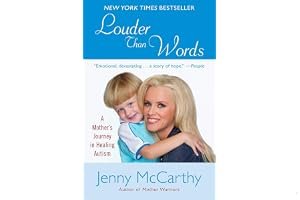
Louder Than Words: A Mother's Journey in Healing Autism
Jenny McCarthy
4.2
One morning Jenny McCarthy was having a cup of coffee when she sensed something was wrong. She ran into her two-year-old son Evan's room and found him having a seizure. Doctor after doctor misdiagnosed Evan until after many harrowing, life-threatening episodes one good doctor discovered that Evan is autistic.
With a foreword from Dr. David Feinberg, medical director of the Resnick Neuro-psychiatric Hospital at UCLA, and an introduction by Jerry J. Kartzinel, a top pediatric autism specialist, Louder Than Words follows Jenny as she discovered an intense combination of behavioral therapy, diet, and supplements that became the key to saving Evan from autism. Her story sheds much-needed light on autism through her own heartbreak, struggle, and ultimately hopeful example of how a parent can shape a child's life and happiness.
…
Cover unavailable
47
Ginny Moon
Benjamin Ludwig
4.2
Meet Ginny. She’s fourteen, autistic, and has a heart-breaking secret…
Ginny Moon is trying to make sense of a world that just doesn’t seem to add up….
After years in foster care, Ginny is in her fourth forever family, finally with parents who will love her.
Everyone tells her that she should feel happy, but she has never stopped crafting her Big Secret Plan of Escape.
Because something happened, a long time ago – something that only Ginny knows – and nothing will stop her going back to put it right…
A fiercely poignant and inspirational story a lost girl searching for a place to call home. Ginny Moon will change everyone who spends time with her.
…
Cover unavailable
48
Not Even Wrong: Adventures in Autism
Paul Collins
4.2
When Paul Collins's son Morgan was two years old, he could read, spell, and perform multiplication tables in his head...but not answer to his own name. A casual conversation-or any social interaction that the rest of us take for granted-will, for Morgan, always be a cryptogram that must be painstakingly decoded. He lives in a world of his own: an autistic world.
In "Not Even Wrong," Paul Collins melds a memoir of his son's autism with a journey into this realm of permanent outsiders. Examining forgotten geniuses and obscure medical archives, Collins's travels take him from an English churchyard to the Seattle labs of Microsoft, and from a Wisconsin prison cell block to the streets of Vienna. It is a story that reaches from a lonely clearing in the Black Forest into the London palace of King George I, from Defoe and Swift to the discovery of evolution; from the modern dawn of the computer revolution to, in the end, the author's own household.
"Not Even Wrong" is a haunting journey into the borderlands of neurology - a meditation on what "normal" is, and how human genius comes to us in strange and wondrous forms.
…
Cover unavailable
49
Life, Animated: A Story of Sidekicks, Heroes, and Autism
Ron Suskind and Recorded Book
4.1
What if you were trapped in a Disney movie? In all of them, actually – from Dumbo to Peter Pan to The Lion King -- and had to learn about life and love mostly from what could be gleaned from animated characters, dancing across a screen of color? Asking this question opens a doorway to the most extraordinary of stories. It is the saga of Owen Suskind, who happens to be the son of one of America's most noted writers, the Pulitzer Prize-winning journalist and author Ron Suskind. He's also autistic. The twisting, 20-year journey of this boy and his family will change that way you see autism, old Disney movies, and the power of imagination to heal a shattered, upside-down world.
…
Cover unavailable
50
A Boy Called Bat (A Boy Called Bat, #1)
Elana K. Arnold, Charles Santoso
4.1
For Bixby Alexander Tam (nicknamed Bat), life tends to be full of surprises — some of them good, some not so good. Today, though, is a good-surprise day. Bat’s mom, a veterinarian, has brought home a baby skunk, which she needs to take care of until she can hand him over to a wild-animal shelter.
But the minute Bat meets the kit, he knows they belong together. And he’s got one month to show his mom that a baby skunk might just make a pretty terrific pet.
…
Cover unavailable
51
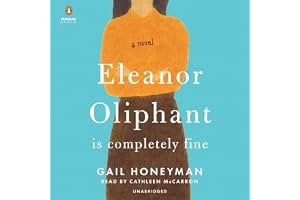
Eleanor Oliphant Is Completely Fine
Gail Honeyman
4.1
No one’s ever told Eleanor that life should be better than fine
Meet Eleanor Oliphant: she struggles with appropriate social skills and tends to say exactly what she’s thinking. Nothing is missing in her carefully timetabled life of avoiding unnecessary human contact, where weekends are punctuated by frozen pizza, vodka, and phone chats with Mummy.
But everything changes when Eleanor meets Raymond, the bumbling and deeply unhygienic IT guy from her office. When she and Raymond together save Sammy, an elderly gentleman who has fallen, the three rescue one another from the lives of isolation that they had been living. Ultimately, it is Raymond’s big heart that will help Eleanor find the way to repair her own profoundly damaged one. If she does, she'll learn that she, too, is capable of finding friendship—and even love—after all.
Smart, warm, uplifting, Eleanor Oliphant Is Completely Fine is the story of an out-of-the-ordinary heroine whose deadpan weirdness and unconscious wit make for an irresistible journey as she realizes. . .
the only way to survive is to open your heart.
…
Recommended by Twinkle Khanna.
Twinkle Khanna
Eleanor is awkward, funny, an alcoholic and clearly not fine. A great book for someone who wants to get over a reading slump. Loved it! #mustread #eleanoroliphantiscompletelyfine #TweakIt https://t.co/fVQu4sYhSi [source]
Cover unavailable
52
Songs of the Gorilla Nation: My Journey Through Autism
Dawn Prince-Hughes Ph.D.
4.1
“This is a book about autism. Specifically, it is about my autism, which is both like and unlike other people’s autism. But just as much, it is a story about how I emerged from the darkness of it into the beauty of it.”
In this elegant and thought-provoking memoir, Dawn Prince-Hughes traces her personal growth from undiagnosed autism to the moment when, as a young woman, she entered the Seattle Zoo and immediately became fascinated with the gorillas.
Having suffered from a lifelong inability to relate to people in a meaningful way, Dawn was surprised to find herself irresistibly drawn to these great primates. By observing them and, later, working with them, she was finally able to emerge from her solitude and connect to living beings in a way she had never previously experienced.
Songs of the Gorilla Nation is more than a story of autism, it is a paean to all that is important in life. Dawn Prince-Hughes’s evocative story will undoubtedly have a lasting impact, forcing us, like the author herself, to rediscover and assess our own understanding of human emotion.
…
Cover unavailable
53
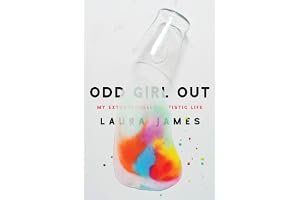
Odd Girl Out: An Autistic Woman in a Neurotypical World
Laura James
4.1
From early childhood, Laura James knew she was different, but it wasn't until her mid-forties that she found out why. A successful journalist and mother to four children, she had spent her whole life feeling as if she were running a different operating system to those around her. This book charts a year in her life and offers a unique insight into the autistic mind and the journey from diagnosis to acceptance. Drawing on personal experience, research and conversations with experts, she learns how 'different' doesn't need to mean 'less' and how it's never too late for any of us to find our place in the world. Laura explores how and why female autism is so under-diagnosed and very different to that seen in men and boys and explores difficulties and benefits neurodiversity can bring.
…
Cover unavailable
54
The Explosive Child: A New Approach for Understanding and Parenting Easily Frustrated, Chronically Inflexible Children
Screaming, swearing, crying, hitting, kicking, spitting, biting...these are some of the challenging behaviors we see in kids who are having difficulty meeting our expectations. These behaviors often leave parents feeling frustrated, angry, overwhelmed, and desperate for answers. In this fully revised and updated book, Dr. Ross Greene helps you understand why and when your child does these things and how to respond in ways that are nonpunitive, nonadversarial, humane, and effective.
Dr. Greene describes how best to:
Understand the factors that contribute to challenging episodes. Identify the specific situations in which challenging episodes are likely to occur. Reduce or eliminate challenging episodes by solving the problems that cause them. Solve problems collaboratively (rather than unilaterally) and proactively (rather than reactively). Help your child develop the skills to be more flexible, solve problems, and handle frustration more adaptively. Reduce hostility and antagonism between you and your child. With Dr. Greene's practical, expert guidance, you and your child will forge a new relationship based on communication and mutual respect.
…
Cover unavailable
55
Unstrange Minds: Remapping the World of Autism
Roy Richard Grinker
4.1
Unstrange Minds documents Grinker's quest to find out why autism is so much more common today, and to uncover the implications of the increase. His search took him to Africa, India, and East Asia, to the National Institutes of Mental Health, and to the mountains of Appalachia. What he discovered is both surprising and controversial: There is no true increase in autism. Grinker shows that the identification and treatment of autism depends on culture just as much as on science. As more and more cases of autism are documented, doctors are describing the disorder better, school systems are coding it better--and children are benefiting. Filled with moving stories and informed by the latest science, Unstrange Minds is unlike any other book on autism. It is a powerful testament to a father's quest for the truth, and is urgently relevant to anyone whose life is touched by one of history's most puzzling disorders.
…
Cover unavailable
56
Autism Spectrum Disorders (revised): The Complete Guide to Understanding Autism, Asperger's Syndrome, Pervasive Developmental Disorder, and Other ASDs
Chantal Sicile-Kira
4.1
Newly revised and updated, this award-winning guide covers every aspect of understanding and living with autism today
Comprehensive and authoritative, Autism Spectrum Disorders explains all aspects of the condition, and is written for parents, educators, caregivers, and others looking for accurate information and expert insight. Newly updated to reflect the latest research, treatment methods, and DSM-V criteria, this invaluable book covers:
• The causes of autism spectrum disorders • Getting an accurate diagnosis • Treatments based on behavioral, psychological, and biomedical interventions • Coping strategies for families and education needs and programs • Living and working conditions for adults with ASD • Community interaction and teaching strategies and resources for educators and other professionals
…
Cover unavailable
57
Funny, You Don't Look Autistic: A Comedian's Guide to Life on the Spectrum
Michael McCreary
4.1
Slaying autism stereotypes with stand-up, one joke at a time. Like many others on the autism spectrum, 20-something stand-up comic Michael McCreary has been told by more than a few well-meaning folks that he doesn't "look" autistic. But, as he's quick to point out in this memoir, autism "looks" different for just about everyone with Autism Spectrum Disorder (ASD). Diagnosed with ASD at age five, McCreary got hit with the performance bug not much later. During a difficult time in junior high, he started journaling, eventually turning his pain e into something empowering--and funny. He scored his first stand-up gig at age 14, and hasn't looked back. An #OwnVoices memoir breaks down what it's like to live with autism for readers on and off the spectrum.
…
Cover unavailable
58
A Friend Like Henry
Nuala Gardner
4.1
Cover unavailable
59
An Early Start for Your Child with Autism: Using Everyday Activities to Help Kids Connect, Communicate, and Learn
Sally J. Rogers, Geraldine Dawson, et al.
4.1
Cutting-edge research reveals that parents can play a huge role in helping toddlers and preschoolers with autism spectrum disorder (ASD) connect with others and live up to their potential. This encouraging guide from the developers of a groundbreaking early intervention program provides doable, practical strategies you can use every day. Nearly all young kids—including those with ASD—have an amazing capacity to learn. Drs. Sally Rogers, Geraldine Dawson, and Laurie Vismara make it surprisingly simple to turn daily routines like breakfast or bath time into fun and rewarding learning experiences that target crucial developmental skills. Vivid examples illustrate proven techniques for promoting play, language, and engagement. Get an early start—and give your child the tools to explore and enjoy the world.
Winner--American Journal of Nursing Book of the Year Award
Mental health professionals, see also the authors' related intervention manual, Early Start Denver Model for Young Children with Autism, as well as the Early Start Denver Model Curriculum Checklist for Young Children with Autism (sold in sets of 15).
…
Cover unavailable
60
Counting by 7s
Holly Goldberg Sloan
4.1
Willow Chance is a twelve-year-old genius, obsessed with nature and diagnosing medical conditions, who finds it comforting to count by 7s. It has never been easy for her to connect with anyone other than her adoptive parents, but that hasn’t kept her from leading a quietly happy life...until now.
Suddenly Willow’s world is tragically changed when her parents both die in a car crash, leaving her alone in a baffling world. The triumph of this book is that it is not a tragedy. This extraordinarily odd, but extraordinarily endearing, girl manages to push through her grief. Her journey to find a fascinatingly diverse and fully believable surrogate family is a joy and a revelation to read.
…
Cover unavailable
61
Unwritten Rules of Social Relationships: Decoding Social Mysteries Through Autism's Unique Perspectives
Temple Grandin Ph.D., Veronica Zysk, et al
4.1
Born with autism, both Temple Grandin and Sean Barron now live famously successful social lives. However, their paths were quite different. Temple's logical mind controlled her social behavior. She interacted with many adults and other children, experiencing varied social situations. Logic informed her decision to obey social rules and avoid unpleasant consequences. Sean's emotions controlled his social behavior. Baffled by social rules, isolated and friendless, he made up his own and applied them to others. When they inevitably broke his rules, he felt worthless and unloved.
Both Temple and Sean ultimately came to terms with the social world and found their places in it. Whether you are a person with autism, a caregiver in the autism community, or just someone interested in an outsider view of society, their powerful stories will enthrall and enlighten you.
…
Cover unavailable
62
The Asperkid's (Secret) Book of Social Rules: The Handbook of Not-So-Obvious Social Guidelines for Tweens and Teens with Asperger Syndrome
Jennifer Cook O'Toole
4.1
Being a teen or tween isn't easy for anyone but it can be especially tough for Asperkids. Jennifer O'Toole knows; she was one! This book is a top secret guide to all of the hidden social rules in life that often seem strange and confusing to young people with Asperger syndrome.
The Asperkid's (Secret) Book of Social Rules offers witty and wise insights into baffling social codes such as making and keeping friends, blending in versus standing out from the crowd, and common conversation pitfalls. Chock full of illustrations, logical explanations, and comic strip practice sessions, this is the handbook that every adult Aspie wishes they'd had growing up.
Ideal for all 10-17 year olds with Asperger syndrome, this book provides inside information on over thirty social rules in bite-sized chunks that older children will enjoy, understand, and most importantly use daily to navigate the mysterious world around them.
…
Cover unavailable
63
My Brother Charlie
Holly Robinson Peete, Ryan Elizabeth Peete, Shane Evans
4.1
Callie is very proud of her brother Charlie. He's good at so many things — swimming, playing the piano, running fast. And Charlie has a special way with animals, especially their dog, Harriett. But sometimes Charlie gets very quiet. His words get locked inside him, and he seems far away. Then, when Callie and Charlie start to play, Charlie is back to laughing, holding hands, having fun. Charlie is like any other boy — except he has autism.
In this story, told from a sister's point of view, we meet a family whose oldest son teaches them important lessons about togetherness, hope, tolerance, and love.
…
Cover unavailable
64
The Horse Boy: A Father's Quest to Heal His Son
Rupert Isaacson
4.1
When his son Rowan was diagnosed with autism, Rupert Isaacson was devastated, afraid he might never be able to communicate with his child. But when Isaacson, a lifelong horseman, rode their neighbor's horse with Rowan, Rowan improved immeasurably. He was struck with a crazy idea: why not take Rowan to Mongolia, the one place in the world where horses and shamanic healing intersected? THE HORSE BOY is the dramatic and heartwarming story of that impossible adventure. In Mongolia, the family found undreamed of landscapes and people, unbearable setbacks, and advances beyond their wildest dreams. This is a deeply moving, truly one-of-a-kind story--of a family willing to go to the ends of the earth to help their son, and of a boy learning to connect with the world for the first time.
…
Cover unavailable
65
Fall Down 7 Times Get Up 8: A Young Man's Voice from the Silence of Autism
Naoki Higashida, KA Yoshida, David Mitchell
4.1
Naoki Higashida was only thirteen when he wrote The Reason I Jump, a revelatory account of autism from the inside by a nonverbal Japanese child, which became an international success.
Now he shares his thoughts and experiences as a twenty-four-year-old man living each day with severe autism. In short, powerful chapters, Higashida explores school memories, family relationships, the exhilaration of travel, and the difficulties of speech. He also allows readers to experience profound moments we take for granted, like the thought-steps necessary for him to register that it's raining outside. Acutely aware of how strange his behavior can appear to others, he aims throughout to foster a better understanding of autism and to encourage society to see people with disabilities as people, not as problems.
With an introduction by bestselling novelist David Mitchell, Fall Down 7 Times Get Up 8 also includes a dreamlike short story Higashida wrote especially for this edition. Both moving and of practical use, this book opens a window into the mind of an inspiring young man who meets every challenge with tenacity and good humor. However often he falls down, he always gets back up.
…
Cover unavailable
66
Freaks, Geeks and Asperger Syndrome: A User Guide to Adolescence
Luke Jackson
4.1
Cover unavailable
67
The Rosie Effect (Don Tillman, #2)
Graeme Simsion
4.1
Don Tillman and Rosie Jarman are back. The Wife Project is complete, and Don and Rosie are happily married and living in New York. But they're about to face a new challenge because - surprise - Rosie is pregnant.
Don sets about learning the protocols of becoming a father, but his unusual research style gets him into trouble with the law. Fortunately his best friend Gene is on hand to offer advice: he's left Claudia and moved in with Don and Rosie.
As Don tries to schedule time for pregnancy research, getting Gene and Claudia to reconcile, servicing the industrial refrigeration unit that occupies half his apartment, helping Dave the Baseball Fan save his business, and staying on the right side of Lydia the social worker, he almost misses the biggest problem of all: he might lose Rosie when she needs him the most.
The hilarious follow-up to The Rosie Project, one of the best novels I’ve read in ages. There’s no sophomore slump here. Simsion brings back some of the best characters and gags from the first novel while also bringing in enough new elements to keep it fresh. It’s a funny novel that also made me think about relationships: what makes them work and how we have to keep investing time and energy to make them better. A sweet, entertaining, and thought-provoking book. [source]
Cover unavailable
68
On the Edge of Gone
Corinne Duyvis
4.1
January 29, 2035.
That’s the day the comet is scheduled to hit—the big one. Denise and her mother and sister, Iris, have been assigned to a temporary shelter near their hometown of Amsterdam to wait out the blast, but Iris is nowhere to be found, and at the rate Denise’s drug-addicted mother is going, they’ll never reach the shelter in time.
Then a last-minute encounter leads them to something better than a temporary shelter: a generation ship that’s scheduled to leave Earth behind and colonize new worlds after the comet hits. But each passenger must have a practical skill to contribute. Denise is autistic and fears that she’ll never be allowed to stay. Can she obtain a spot before the ship takes flight? What about her mother and sister?
When the future of the human race is at stake, whose lives matter most?
…
Cover unavailable
69
Women and Girls with Autism Spectrum Disorder: Understanding Life Experiences from Early Childhood to Old Age
Sarah Hendrickx
4.1
Cover unavailable
70
Engaging Autism: Helping Children Relate, Communicate and Think with the DIR Floortime Approach (A Merloyd Lawrence Book)
Stanley I. Greenspan
4.1
Cover unavailable
71
How to End the Autism Epidemic
J.B. Handley
4.1
In How to End the Autism Epidemic, Generation Rescue's co-founder J.B. Handley offers a compelling, science-based explanation of what's causing the autism epidemic, the lies that enable its perpetuation, and the steps we must take as parents and as a society in order to end it.
While many parents have heard the rhetoric that vaccines are safe and effective and that the science is settled about the relationship between vaccines and autism, few realize that in the 1960s, American children received three vaccines compared to the thirty-eight they receive today. Or that when parents are told that the odds of an adverse reaction are "one in a million," the odds are actually one in fifty. Or that in the 1980s, the rate of autism was one in ten thousand children. Today it's one in thirty-six.
Parents, educators, and social service professionals around the country are sounding an alarm that we are in the midst of a devastating public health crisis--one that corresponds in lockstep with an ever-growing vaccine schedule. Why do our public health officials refuse to investigate this properly--or even acknowledge it?
In How to End the Autism Epidemic, Handley confronts and dismantles the most common lies about vaccines and autism. He then lays out, in detail, what the truth actually is: new published science links the aluminium adjuvant used in vaccines to immune activation events in the brains of infants, triggering autism; and there is a clear legal basis for the statement that vaccines cause autism, including previously undisclosed depositions of prominent autism scientists under oath.
While Handley's argument is unsparing, his position is ultimately moderate and constructive: we must continue to investigate the safety of vaccines, we must adopt a position of informed consent, and every individual vaccine must be considered on its own merits. This issue is far from settled. By refusing to engage with parents and other stakeholders in a meaningful way, our public health officials destroy the public trust and enable the suffering of countless children and families.
…
Cover unavailable
72
A Parent's Guide to High-Functioning Autism Spectrum Disorder: How to Meet the Challenges and Help Your Child Thrive
Sally Ozonoff, Geraldine Dawson, et al.
4.0
Many tens of thousands of parents have found the facts they need about high-functioning autism spectrum disorder (ASD), including Asperger syndrome, in this indispensable guide. Leading experts show how you can work with your child's unique impairments--and harness his or her capabilities. Vivid stories and real-world examples illustrate ways to help kids with ASD relate more comfortably to peers, learn the rules of appropriate behavior, and succeed in school. You'll learn how ASD is diagnosed and what treatments and educational supports really work. Updated with the latest research and resources, the second edition clearly explains the implications of the DSM-5 diagnostic changes.
…
Cover unavailable
73
Far from the Tree: Parents, Children, and the Search for Identity
Andrew Solomon and Simon & Schuster Audi
4.0
Andrew Solomon’s startling proposition in Far from the Tree is that being exceptional is at the core of the human condition—that difference is what unites us. He writes about families coping with deafness, dwarfism, Down's syndrome, autism, schizophrenia, or multiple severe disabilities; with children who are prodigies, who are conceived in rape, who become criminals, who are transgender. While each of these characteristics is potentially isolating, the experience of difference within families is universal, and Solomon documents triumphs of love over prejudice in every chapter.
All parenting turns on a crucial question: to what extent should parents accept their children for who they are, and to what extent they should help them become their best selves. Drawing on ten years of research and interviews with more than three hundred families, Solomon mines the eloquence of ordinary people facing extreme challenges.
Elegantly reported by a spectacularly original and compassionate thinker, Far from the Tree explores how people who love each other must struggle to accept each other—a theme in every family’s life.
…
Recommended by Chelsea Frank.
Chelsea Frank
I’m reading “Far From The Tree: Parents, Children and the Search for Identity” By: Andrew Solomon and have nearly finished it. It is quite long at nearly 40 hours, and a little depressing at times, but very insightful. When children are born that do not share the same identities with their parents and are considered “different” by being deaf, autistic, transgender, or genius, parents often struggle to relate, connect, and support their child appropriately. On the other hand, perhaps diversity is what unites us. Hundreds of stories of parent-child relationships are presented over his 10 years extensively researching for this book and over 200 pages of citations support his work. [source]
Cover unavailable
74
Population: One: Autism, Adversity and the Will to Succeed
Tyler McNamer and Tyler Tichelaar
4.0
Welcome to the world of Tyler McNamer, author of Population: One: Autism, Adversity and the Will to Succeed. Tyler named his book Population: One because he lives in his own world where his is the only resident. Yet, he knows that when individuals come together and learn from each other, they can form entire galaxies. Tyler's autism provides him with a unique perspective when viewing the world. He hopes his readers will "switch eyes" with him for a short time because only by seeing things from another's perspective can we come to understand and care about each other.
…
Cover unavailable
75
Navigating Early
Clare Vanderpool
4.0
At the end of World War II, Jack Baker, a landlocked Kansas boy, is suddenly uprooted after his mother’s death and placed in a boy’s boarding school in Maine. There, Jack encounters Early Auden, the strangest of boys, who reads the number pi as a story and collects clippings about the sightings of a great black bear in the nearby mountains.
Newcomer Jack feels lost yet can’t help being drawn to Early, who won’t believe what everyone accepts to be the truth about the Great Appalachian Bear, Timber Rattlesnakes, and the legendary school hero known as The Fish, who never returned from the war. When the boys find themselves unexpectedly alone at school, they embark on a quest on the Appalachian Trail in search of the great black bear.
But what they are searching for is sometimes different from what they find. They will meet truly strange characters, each of whom figures into the pi story Early weaves as they travel, while discovering things they never realized about themselves and others in their lives.
…
Cover unavailable
76
Extremely Loud & Incredibly Close
Jonathan Safran Foer
4.0
Nine-year-old Oskar Schell is an inventor, amateur entomologist, Francophile, letter writer, pacifist, natural historian, percussionist, romantic, Great Explorer, jeweller, detective, vegan, and collector of butterflies. When his father is killed in the September 11th attacks on the World Trade Centre, Oskar sets out to solve the mystery of a key he discovers in his father's closet. It is a search which leads him into the lives of strangers, through the five boroughs of New York, into history, to the bombings of Dresden and Hiroshima, and on an inward journey which brings him ever closer to some kind of peace.
So here are my three must read books. I've been reading a lot of great books like: Outsmart Your Instincts, The Culture Code, and Antonio Damasio’s The Strange Order, and sometimes when you read a lot of nonfiction it’s very enriching, sometimes you need a novel. I really believe you should take a minute and read something beautiful. Listen, listen to Lolita by Nabokov. But also listen to Blood Meridian by Cormac McCarthy and listen to Richard Poe narrate that. Those are two of the greatest feats of the english language that I can think of. Then there’s Fortress of Solitude, an amazing book, Extremely Loud and Incredibly Close, these are great novels. Cold Mountain is a beautiful novel, Snow Falling On Cedars, I mean they’ve been around for a while. But goddamnit, get those under your belt. Those are the novels I think you should read. You know Love In The Time Of Cholera it just makes you ache. Kind of like a Hemingway thing, where Hemingway “ahh!”, it’s the same thing, you know. So I don’t know, I’m a fan of all those books. Those are my 3 slash 20 books. [source]
Cover unavailable
77
Al Capone Shines My Shoes (tales from Alcatraz, #2)
Gennifer Choldenko
4.0
Moose and the cons are about to get a lot closer in this much-anticipated sequel. It's 1935. Moose Flanagan lives on Alcatraz with his family, the other families of the guards, and a few hundred no-name hit men, con men, mad dog murderers and a handful of bank robbers too. And one of those cons has just done him a big favor.
You see, Moose has never met Al Capone, but a few weeks ago Moose wrote a letter to him asking him to use his influence to get his sister, Natalie, into a school she desperately needs in San Francisco. After Natalie got accepted, a note appeared in Moose?s freshly laundered shirt that said: Done.
As this book begins, Moose discovers a new note. This one says: Your turn. Is it really from Capone? What does it mean? Moose can?t risk anything that might get his dad fired. But how can he ignore Al Capone?
…
Cover unavailable
78
Autism's False Prophets: Bad Science, Risky Medicine, and the Search for a Cure
Paul A. Offit
4.0
A London researcher was the first to assert that the combination measles-mumps-rubella vaccine known as MMR caused autism in children. Following this "discovery," a handful of parents declared that a mercury-containing preservative in several vaccines was responsible for the disease. If mercury caused autism, they reasoned, eliminating it from a child's system should treat the disorder. Consequently, a number of untested alternative therapies arose, and, most tragically, in one such treatment, a doctor injected a five-year-old autistic boy with a chemical in an effort to cleanse him of mercury, which stopped his heart instead.
Children with autism have been placed on stringent diets, subjected to high-temperature saunas, bathed in magnetic clay, asked to swallow digestive enzymes and activated charcoal, and injected with various combinations of vitamins, minerals, and acids. Instead of helping, these therapies can hurt those who are most vulnerable, and particularly in the case of autism, they undermine childhood vaccination programs that have saved millions of lives. An overwhelming body of scientific evidence clearly shows that childhood vaccines are safe and does not cause autism. Yet widespread fear of vaccines on the part of parents persists.
In this book, Paul A. Offit, a national expert on vaccines, challenges the modern-day false prophets who have so egregiously misled the public and exposes the opportunism of the lawyers, journalists, celebrities, and politicians who support them. Offit recounts the history of autism research and the exploitation of this tragic condition by advocates and zealots. He considers the manipulation of science in the popular media and the courtroom, and he explores why society is susceptible to the bad science and risky therapies put forward by many antivaccination activists.
…
Cover unavailable
79
An Anthropologist on Mars: Seven Paradoxical Tales
Oliver Sacks
4.0
Paradoxical portraits of seven neurological patients, including a surgeon consumed by the compulsive tics of Tourette's syndrome unless he is operating; an artist who loses all sense of color in a car accident, but finds new creative power in black & white; & others.
Recommended by Alexandra Horowitz.
Alexandra Horowitz
Sacks’s books are an inspiration to me in bringing together scientific and philosophical reflections on various human conditions. [source]
Cover unavailable
80
What to Say Next
Julie Buxbaum
4.0
Two struggling teenagers find an unexpected connection just when they need it most.
Sometimes a new perspective is all that is needed to make sense of the world.
KIT:I don’t know why I decide not to sit with Annie and Violet at lunch. It feels like no one here gets what I’m going through. How could they? I don’t even understand.
DAVID:In the 622 days I’ve attended Mapleview High, Kit Lowell is the first person to sit at my lunch table. I mean, I’ve never once sat with someone until now. “So your dad is dead,” I say to Kit, because this is a fact I’ve recently learned about her.
When an unlikely friendship is sparked between relatively popular Kit Lowell and socially isolated David Drucker, everyone is surprised, most of all Kit and David. Kit appreciates David’s blunt honesty—in fact, she finds it bizarrely refreshing. David welcomes Kit’s attention and her inquisitive nature. When she asks for his help figuring out the how and why of her dad’s tragic car accident, David is all in. But neither of them can predict what they’ll find. Can their friendship survive the truth?
…
Cover unavailable
81
The Out-of-Sync Child Has Fun: Activities for Kids with Sensory Processing Disorder
Carol Kranowitz
4.0
Cover unavailable
82
Different . . . Not Less: Inspiring Stories of Achievement and Successful Employment from Adults with Autism, Asperger's, and ADHD
Temple Grandin
4.0
Temple Grandin offers the world yet another great work, an inspiring and informative book that offers both hope and encouragement!
In these pages, Temple presents the personal success stories of fourteen unique individuals that illustrate the extraordinary potential of those on the autism spectrum.
One of Temple’s primary missions is to help people with autism, Asperger’s syndrome, and ADHD tap into their hidden abilities. Temple chose these contributors, from a wide variety of different skill sets, to show how it can be done. Each individual tells their own story, in their own words, about their lives, relationships, and eventual careers.
The contributors also share how they dealt with issues they confronted while growing up, such as bullying, making eye contact, and honing social skills.
Different...Not Less shows how, with work, each of the contributors: Found invaluable mentors Learned skills necessary for employment when young Became successfully employed Developed self-confidence Faced the challenges of forming and maintaining relationships, and raising families
…
Cover unavailable
83
There's a Boy in Here: Emerging from the Bonds of Autism
Judy Barron, Sean Barron
4.0
This is a view from inside the mind of autism—a dual autobiography written in point-counterpoint style by Judy Barron and her son, Sean Barron. Together, they chronicle Sean’s young life and the effects of autism on him and his family. As a youngster, Sean was confrontational, uncontrollable, “isolated and desperately unhappy.” Baffled about how to interact with others, he felt “like an alien from outer space.” Then, at seventeen, Sean experienced a breakthrough that began his release from autism. Today he’s a public speaker, college student, and reporter—and close to his family. You absolutely must read this book.
…
Cover unavailable
84
Positive Parenting for Autism: Powerful Strategies to Help Your Child Overcome Challenges and Thrive
Victoria Boone MABCBA
4.0
Cover unavailable
85
Twirling Naked in the Streets and No One Noticed: Growing Up With Undiagnosed Autism
Jeannie Davide-Rivera
4.0
Jeannie grew up with autism, but no one around her knew it. Twirling Naked in the Streets will take you on a journey into the mind of a child on the autism spectrum; a child who grows into an adolescent, an adult, and becomes a wife, mother, student, and writer with autism.
This is a gripping memoir of a quirky, weird, but gifted child who grows up never quite finding her niche. It took 38 years to discover that all the issues, problems, and weirdness she experienced were because she had Asperger's Syndrome (AS), a form of high-functioning autism.
The tale begins at age three and takes us all the way through her diagnosis. Along the way she explains autism in a way that will have fellow "Aspies" crying tears of joy at being understood, and "neuro-typical" people really starting to grasp the challenges that autistic people face every moment of every day.
…
Cover unavailable
86
Nathan's Autism Spectrum Superpowers
Lori Leigh Yarborough
4.0
Do you know a child with Autism or Aspergers? - Do you need an EMPOWERING and ENCOURAGING way to explain to your child what is going on with them and why they don't respond to the world like others? Do you need a book to help others like their siblings, friends, grandparents, teachers, or caregivers understand about Austim and Aspergers? - The superhero of this book, Nathan, explains about his Autism Spectrum Superpowers, how they affect him, and ways his friends can help out when his superpowers spiral out of control. - This book is a tool to empower children and their friends, families and caregivers understand kids with superpowers. Each "superpower" includes a Helpful Hints for Friends" section that gives ideas on how to help a child with autism in different situations. - Nathan's superpowers include his Supersonic Hearing, a Super Sniffer, Regular Routine Retention, Actual Factual Literal Powers, and many more. This book also contains a Reaction Regulator scale to help your child regulate emotions and a place where they can list their own Energy Drainers and Energy Builders. - All children need to know they're wanted, loved and special. All children need to know they have superpowers. And all children especially need to know they're wonderfully made.
…
Cover unavailable
87
How Can I Talk If My Lips Don't Move: Inside My Autistic Mind
Tito Rajarshi Mukhopadhyay
4.0
An astounding new work by the author of The Mind Tree that offers a rare insight into the autistic mind and how it thinks, sees, and reacts to the world. When he was three years old, Tito was diagnosed as severely autistic, but his remarkable mother, Soma, determined that he would overcome the problem by teaching him to read and write. The result was that between the ages of eight and eleven he wrote stories and poems of exquisite beauty, which Dr. Oliver Sacks called amazing and shocking. Their eloquence gave lie to all our assumptions about autism.
Here Tito goes even further and writes of how the autistic mind works, how it views the outside world and the normal people he deals with daily, how he tells his stories to the mirror and hears stories back, how sounds become colors, how beauty fills his mind and heart. With this work, Tito whom Portia Iversen, co-founder of Cure Autism Now, has described as a window into autism such as the world has never seen gives the world a beacon of hope. For if he can do it, why can't others?
Brave, bold, and deeply felt, this book shows that much we might have believed about autism can be wrong. Boston Globe
…
Cover unavailable
88
The Survival Guide for Kids with Autism Spectrum Disorders (And Their Parents)
Elizabeth Verdick and Elizabeth Reeve M.D.
4.0
This positive, straightforward book offers kids with autism spectrum disorders (ASD) their own comprehensive resource for both understanding their condition and finding tools to cope with the challenges they face every day.
Some children with ASD are gifted; others struggle academically. Some are more introverted, while others try to be social. Some get “stuck” on things, have limited interests, or experience repeated motor movements like flapping or pacing (“stims”). The Survival Guide for Kids with Autism Spectrum Disorders covers all of these areas, with an emphasis on helping children gain new self-understanding and self-acceptance.
Meant to be read with a parent, the book addresses questions (“What is ASD?” “Why me?”) and provides strategies for communicating, making and keeping friends, and succeeding in school. Body and brain basics highlight symptom management, exercise, diet, hygiene, relaxation, sleep, and toileting. Emphasis is placed on helping kids handle intense emotions and behaviors and get support from family and their team of helpers when needed. The book includes stories from real kids, fact boxes, helpful checklists, and resources. Sections for parents offer additional information.
…
Cover unavailable
89
The Fog Within
Nick Shamhart
4.0
Autism: a word that has so many meanings and variants yet, without a single source to blame, it is also a word which has been used so frequently as of late that it has also become nearly meaningless. Autism is not a meaningless cause or concern for Megan Cooper. She calls it the fog because it is an intangible force that intrudes and affects every moment of her day, from childhood on through adulthood. “The Fog Within” is the story of Megan’s life. It is the story of autism as seen through her eyes – seen through a fog.
…
Cover unavailable
90
The State of Grace
Rachael Lucas
4.0
Sometimes I feel like everyone else was handed a copy of the rules for life and mine got lost.
Grace has Asperger's and her own way of looking at the world. She's got a horse and a best friend who understand her, and that's pretty much all she needs. But when Grace kisses Gabe and things start to change at home, the world doesn't make much sense to her any more.
Suddenly everything threatens to fall apart, and it's up to Grace to fix it on her own.
…
Cover unavailable
91
Send in the Idiots: Stories from the Other Side of Autism
Kamran Nazeer
4.0
A remarkable, elegantly written portrait of four autistic men and women, and what their struggles and triumphs reveal about this baffling condition, and about us all.
In 1982, when he was four years old, Kamran Nazeer was enrolled in a small school in New York City alongside a dozen other children diagnosed with autism. Calling themselves the Idiots, these kids received care that was at the cutting edge of developmental psychology. Twenty-three years later, the school no longer exists.
Send in the Idiots is the always candid, often surprising, and ultimately moving investigation into what happened to those children. Now a policy adviser in England, Kamran decides to visit four of his old classmates to find out the kind of lives that they are living now, how much they've been able to overcome—and what remains missing. A speechwriter unable to make eye contact; a messenger who gets upset if anyone touches his bicycle; a depressive suicide victim; and a computer engineer who communicates difficult emotions through the use of hand puppets: these four classmates reveal an astonishing, thought-provoking spectrum of behavior.
Bringing to life the texture of autistic lives and the pressures and limitations that the condition presents, Kamran also relates the ways in which those can be eased over time, and with the right treatment. Using his own experiences to examine such topics as the difficulties of language, conversation as performance, and the politics of civility, Send in the Idiots is also a rare and provocative exploration of the way that people—all people—learn to think and feel. Written with unmatched insight and striking personal testimony, Kamran Nazeer's account is a stunning, invaluable, and utterly unique contribution to the literature of what makes us human.
…
Cover unavailable
92
Carry the Ocean (The Roosevelt, #1)
Heidi Cullinan
4.0
Normal is just a setting on the dryer.
High school graduate Jeremey Samson is looking forward to burying his head under the covers and sleeping until it’s time to leave for college. Then a tornado named Emmet Washington enters his life. The double major in math and computer science is handsome, forward, wicked smart, interested in dating Jeremey—and he’s autistic.
But Jeremey doesn’t judge him for that. He’s too busy judging himself, as are his parents, who don’t believe in things like clinical depression. When his untreated illness reaches a critical breaking point, Emmet is the white knight who rescues him and brings him along as a roommate to The Roosevelt, a quirky new assisted living facility nearby.
As Jeremey finds his feet at The Roosevelt, Emmet slowly begins to believe he can be loved for the man he is behind the autism. But before he can trust enough to fall head over heels, he must trust his own conviction that friendship is a healing force, and love can overcome any obstacle.
Warning: Contains characters obsessed with trains and counting, positive representations of autism and mental illness, a very dark moment, and Elwood Blues.
…
Cover unavailable
93
I Think I Might Be Autistic: A Guide to Autism Spectrum Disorder Diagnosis and Self-Discovery for Adults
Cynthia Kim
4.0
What if instead of being weird, shy, geeky or introverted, your brain is wired differently? For adults with undiagnosed autism spectrum disorder (ASD), there is often an "aha!" moment--when you realize that ASD just might be the explanation for why you've always felt so different.
"I Think I Might Be Autistic: A Guide to Autism Spectrum Disorder Diagnosis and Self-Discovery for Adults" begins from that "aha!' moment, addressing the many questions that follow. What do the symptoms of ASD look like in adults? Is getting a diagnosis worth it? What does an assessment consist of and how can you prepare for it?
Cynthia Kim shares the information, insights, tips, suggestions and resources she gathered as part of her own journey from "aha!" to finally being diagnosed with Asperger's syndrome in her forties. This concise guide also addresses important aspects of living with ASD as a late-diagnosed adult, including coping with the emotional impact of discovering that you're autistic and deciding who to share your diagnosis with and how.
…
Cover unavailable
94
George and Sam
Charlotte Moore
4.0
For the parents, families, and friends of the 1 in 250 autistic children born annually in the United States, George and Sam provides a unique look into the life of the autistic child.
Charlotte Moore has three children, George, Sam, and Jake. George and Sam are autistic. George and Sam takes the reader from the births of each of the two boys, along the painstaking path to diagnosis, interventions, schooling and more. She writes powerfully about her family and her sons, and allows readers to see the boys behind the label of autism. Their often puzzling behavior, unusual food aversions, and the different ways that autism effects George and Sam lend deeper insight into this confounding disorder.
George and Sam emerge from her narrative as distinct, wonderful, and at times frustrating children who both are autistic through and through. Moore does not feel the need to search for cause or cure, but simply to find the best ways to help her sons. She conveys to readers what autism is and isn't, what therapies have worked and what hasn't been effective, and paints a moving, memorable portrait of life with her boys.
…
Cover unavailable
95
Somebody Somewhere: Breaking Free from the World of Autism
Donna Williams
4.0
In the acclaimed sequel to Nobody Nowhere--in which Donna Williams gives readers a guided tour of life with autism--Williams explores the four years since her diagnosis and her attempts to leave her "world under glass" and live normally. NPR sponsorship.
Cover unavailable
96
The Rosie Result (Don Tillman, #3)
Graeme Simsion
4.0
I was standing on one leg shucking oysters when the problems began…
Don and Rosie are back in Melbourne after a decade in New York, and they’re about to face their most important project.
Their son, Hudson, is having trouble at school: his teachers say he isn’t fitting in with the other kids. Meanwhile, Rosie is battling Judas at work, and Don is in hot water after the Genetics Lecture Outrage. The life-contentment graph, recently at its highest point, is curving downwards.
For Don Tillman, geneticist and World’s Best Problem-Solver, learning to be a good parent as well as a good partner will require the help of friends old and new.
It will mean letting Hudson make his way in the world, and grappling with awkward truths about his own identity.
And opening a cocktail bar.
Hilarious and thought-provoking, with a brilliant cast of characters and an ending that will have readers cheering for joy, The Rosie Result is the triumphant final instalment of the internationally bestselling series that began with The Rosie Project.
…
Cover unavailable
97
Ido in Autismland: Climbing Out of Autism's Silent Prison
Ido Kedar
4.0
Ido in Autismland opens a window into non-verbal autism through dozens of short, autobiographical essays each offering new insights into autism symptoms, effective and ineffective treatments and the inner emotional life of a severely autistic boy. In his pithy essays, author Ido Kedar, a brilliant sixteen year old with autism, challenges what he believes are misconceptions in many theories that dominate autism treatment today while he simultaneously chronicles his personal growth in his struggles to overcome his limitations.
Ido spent the first half of his life locked internally, in silence, trapped in a remedial educational system that presumed he lacked the most basic comprehension, and unable to show the world that he understood everything. But at the age of seven, Ido was finally able to show that he had an intact mind and could understand. This led to the quest to find a system of communication that he could use despite his impaired motor control. Through the use of a letter board, and now an iPad, Ido has triumphed communicatively, enabling him to flourish in a regular high school in all general education classes.
But Ido has a larger goal. He does not want to be seen as an isolated autistic exception with miraculously advanced cognitive and communication abilities. He wants people to see that thousands of other severely autistic individuals have the same capacity, but remain trapped and locked-in, as he was, unable to show their true capacities. These individuals desperately need new theories and new methods to help them break free too. Of importance to neuro-researchers, educators, psychologists, doctors, parents, friends, family and people with autism, Ido in Autismland will change our collective understanding of severe autism.
PRAISE FOR Ido in Autismland"There are doubtless many Idos in this world, unable to speak, yet possessing good intellectual ability and, most certainly, a rich emotional life. And yet, precisely because they cannot communicate, nonverbal individuals with autism are nearly always consigned to the junk heap of mental deficiency, branded as incapable of understanding language or even having feelings... We need to help change things for this terribly neglected group... Reading Ido's book is a good beginning." - Portia Iversen, Co-founder, Cure Autism Now and the Autism Genetic Resource Exchange Gene Bank. Author of Strange Son
"Ido is a brilliant communicator. His words bring us inside the world of autism. His gift of writing enlightens, inspires, educates. Every person who loves or works with someone with autism - educator, therapist, karent, grandparent, neighbor - should read Ido in Autismland." - Elaine Hall, Author of Now I See the Moon, co-author of Seven Keys to Unlock Autism. Featured in Autism: The Musical
"Ido's book touches any heart, not only because it is well written, but because it reveals a mind that has learned how to speak to the world through spelling every word on a letter board and keyboard. His book is indeed a great gift to the world. Thank you, Ido." - Soma Mukhopadhyay, Executive Director of Education, HALO, Author of Understanding Autism through Rapid Prompting Method
…
Cover unavailable
98
Autism Breakthrough: The Groundbreaking Method That Has Helped Families All Over the World
Raun K. Kaufman
4.0
As a boy, Raun Kaufman was diagnosed by multiple experts as severely autistic, with an IQ below 30, and destined to spend his life in an institution. Years later, Raun graduated with a degree in Biomedical Ethics from Brown University and has become a passionate and articulate autism expert and educator with no trace of his former condition. So what happened?
Thanks to The Son-Rise Program, a revolutionary method created by his parents, Raun experienced a full recovery from autism. (His story was recounted in the best-selling book Son-Rise: The Miracle Continues and in the award-winning NBC television movie Son-Rise: A Miracle of Love.) In Autism Breakthrough, Raun presents the ground-breaking principles behind the program that helped him and thousands of other families with special children. Autism, he explains, is frequently misunderstood as a behavioral disorder when, in fact, it is a social relational disorder. Raun explains what it feels like to be autistic and shows how and why The Son-Rise Program works. A step-by-step guide with clear, practical strategies that readers can apply immediately—in some cases, parents see changes in their children in as little as one day—Autism Breakthrough makes it possible for these special children to defy their original often-very-limited prognoses. Parents and educators learn how to enable their children to create meaningful, caring relationships, vastly expand their communications, and to participate successfully in the world. An important work of hope, science, and progress, Autism Breakthrough presents the powerful ideas and practical applications that have already changed the lives of families all over the world.
…
Cover unavailable
99
The Girl He Used to Know
Tracey Garvis Graves
4.0
What if you had a second chance at first love?
Annika Rose likes being alone. She feels lost in social situations, saying the wrong thing or acting the wrong way. She just can't read people. She prefers the quiet solitude of books or playing chess to being around others. Apart from Jonathan. She liked being around him, but she hasn't seen him for ten years. Until now that is. And she's not sure he'll want to see her again after what happened all those years ago.
Annika Rose likes being alone. Except that, actually, she doesn't like being alone at all.
The Girl He Used to Know is an uplifting novel full of surprising revelations that keep you turning the page. Perfect for fans of Jojo Moyes, Gail Honeyman, Jill Santopolo and Sliding Doors.
…
Cover unavailable
100
Dear John
Nicholas Sparks
4.0
An angry rebel, John dropped out of school and enlisted in the Army, not knowing what else to do with his life--until he meets the girl of his dreams, Savannah. Their mutual attraction quickly grows into the kind of love that leaves Savannah waiting for John to finish his tour of duty, and John wanting to settle down with the woman who has captured his heart.
But 9/11 changes everything. John feels it is his duty to re-enlist. And sadly, the long separation finds Savannah falling in love with someone else.
Dear John, the letter read... and with those two words, a heart was broken and two lives were changed forever. Returning home, John must come to grips with the fact that Savannah, now married, is still his true love—and face the hardest decision of his life.



 Recommended by Ev Williams, Robert Muchamore, Simon Baron-Cohen, and 1 others.