


The Great Mental Models Volume 3
Rhiannon Beaubien and Rosie Leizrowice
1-Page Summary1-Page Book Summary of The Great Mental Models Volume 3
The Great Mental Models Volume 3 is the third in a series of books designed to improve your thinking by giving you a set of models that you can use to better understand the world. The premise of the series is that the world operates according to specific rules and patterns (“models”) that occur again and again in many different contexts. The authors suggest that by internalizing these models, you can build your understanding and improve your decision-making since you’ll have a starting point every time you encounter a new situation. Volume 3 draws its models from systems science and mathematics—fields rich in concepts that help explain human behavior and give us a more objective and accurate perspective on life.
The Great Mental Models book series builds on a...
Want to learn the ideas in The Great Mental Models Volume 3 better than ever?
Unlock the full book summary of The Great Mental Models Volume 3 by signing up for Shortform.
Shortform summaries help you learn 10x better by:
- Being 100% clear and logical: you learn complicated ideas, explained simply
- Adding original insights and analysis, expanding on the book
- Interactive exercises: apply the book's ideas to your own life with our educators' guidance.
Here's a preview of the rest of Shortform's The Great Mental Models Volume 3 summary:
The Great Mental Models Volume 3 Summary Part 1: Understanding Behavior
A lot of the ideas in The Great Mental Models Volume 3 are concerned with understanding behavior. In fact, when the authors talk about systems, they are most interested in how systems explain behavior. In this section, we’ll look at how systems shape our behaviors and explore some factors to keep in mind if your goal is behavior change.
(Shortform note: Beaubien and Leizrowice never define what they mean by “systems.” They seem to be using the term as it’s used in systems science. In this context, a system is a group of individual components that interact with each other in defined ways. A system can be anything from a computer to an ecosystem to a government. Thinking about systems means thinking about interactions, interdependencies, contexts, and so on. Beaubien and Leizrowice are mostly interested in human systems, including individual behaviors, group interactions, and the functioning of organizations like businesses and governments.)
Feedback Loops
According to Beaubien and Leizrowice, many human behaviors are based on feedback loops—effects that occur whenever **a...
The Great Mental Models Volume 3 Summary Part 2: Group Dynamics
We’ve seen how feedback loops and algorithms help explain both individual and group behavior. But one of the interesting things about systems is that groups tend to develop behaviors and qualities that aren’t present in any of the individuals that make up the group. In this section, we’ll look at several models of group dynamics that help us understand how groups create value based on their size, how social change works, and how turnover can both help and hurt a system.
Network Effects
One way that groups create meaning or value that isn’t present in the individual is through what’s called network effects. The authors explain that network effects happen when something increases in value or utility the more people have it or use it.
For example, a social networking app is only valuable if it has a reasonably large user base. If there are few people on a given app and you don’t know any of them, you’ll have less reason to join than if everyone you know is already on there. Similarly, a job search website is only useful if it has a reasonable number of both employers and job seekers. Without enough of either, the site doesn’t function.
(Shortform note: Network...
What Our Readers Say
This is the best summary of How to Win Friends and Influence People I've ever read. The way you explained the ideas and connected them to other books was amazing.
The Great Mental Models Volume 3 Summary Part 3: Growth and Efficiency
Now that we’ve seen the kinds of behaviors that emerge as systems grow, let’s look at some models for understanding how systems grow in the first place as well as how and why they break down. The fundamental idea in this section is that systems are nonlinear, which means there’s not always a 1:1 correlation between changes in input and changes in output. Throughout this section, we’ll explain why that is and what you can do about it in order to maximize a system’s efficiency.
Bottlenecks
The authors point out that one of the difficulties in growing a system is that growth inevitably creates bottlenecks, which are the slowest parts of the system. A bottleneck can be:
- A physical limitation or choke point. If you’re preparing a large, complex meal for a crowd, you’ll hit a bottleneck when you run out of burners on your stove.
- An inefficiency in your methods. When you’re preparing the meal, it’s more efficient to gather all of your ingredients before you start cooking. If you keep stopping your prep work to root around in the pantry or the refrigerator, that behavior creates a bottleneck.
- A resource shortage. If you run out of onions, you...
The Great Mental Models Volume 3 Summary Part 4: Long-Term Thinking
As we’ve seen, if you’re looking to maintain or grow a system, it pays to plan ahead. To help you do so, this section focuses on several models that encourage effective long-term thinking. The central theme of this section is that being open-minded and broadening your knowledge can lead to big gains down the road. These gains might be material or they might come in the form of enhanced creativity or greater preparedness for the unknown.
Compounding
One major reason to think long term is that doing so lets you capitalize on the effects of compounding. The authors explain that investments of money, knowledge, and effort compound over time, leading to exponential (rather than linear) gains.
The model of compounding comes from finance and economics, where it refers to compound interest—the process of adding interest earnings back to an initial investment in order to earn more interest next time. If you put $100 in an account with a 10% daily interest rate, the next day your account will have $110—you earned $10 in interest. If you leave that money alone, then on the third day you’ll have $121—this time, you earned $11 in interest.
Beaubien and Leizrowice argue...
Why people love using Shortform
"I LOVE Shortform as these are the BEST summaries I’ve ever seen...and I’ve looked at lots of similar sites. The 1-page summary and then the longer, complete version are so useful. I read Shortform nearly every day."
 Jerry McPhee
The Great Mental Models Volume 3 Summary Part 5: Looking at the Big Picture
As you work through any of the models we’ve discussed so far, you’ll stand the best chance of success if you have an accurate view of the world. Unfortunately, because each of us has a limited perspective, sometimes it’s hard to see the big picture—and easy to misinterpret some situations as a result. This final section introduces several models drawn from mathematics that can help us see the big picture more clearly. The basic theme of this section is that by thinking statistically, you’ll have a clearer context for the things you encounter.
Distributions
Beaubien and Leizrowice argue that in order to have accurate contexts for information, you need to understand probability distributions. In statistics, a distribution describes how likely different results are in a given data set. The best known distribution is probably the bell curve—in technical terms, it’s called a normal distribution.
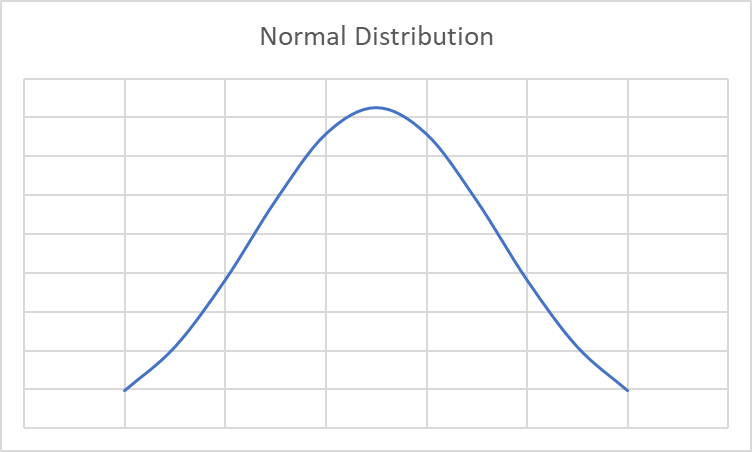
In a normal distribution, most of the values are somewhere near the middle with values becoming less common the more they deviate from the average. Often, student grades work this way, with Cs...
Shortform Exercise: Change Your Behavior
Many of the mental models in this book are concerned with behavior—how it works and how to change it. Let’s look at how you might put these models to work to modify your own behaviors.
Think of a behavior you want to change or a new habit you’d like to adopt. What feedback loops and/or algorithms drive your current behavior?
What Our Readers Say
This is the best summary of How to Win Friends and Influence People I've ever read. The way you explained the ideas and connected them to other books was amazing.
Shortform Exercise: Improve Your Efficiency
Another set of models in this book have to do with efficiency—why it falters and how to improve it. Let’s explore how these models can help you be more efficient in your daily life.
Think of a time when you were slowed or limited by a bottleneck. What was the situation and what was the bottleneck?


