

Peterson Admits He Got This Wrong
In this episode of The Jordan B. Peterson Podcast, Peterson examines how biblical narratives provide practical wisdom for navigating life's challenges and finding meaning through sacrifice and transformation. He explores stories like Abraham's call to adventure and the sacrifice of Isaac, arguing that these ancient tales persist because they reveal timeless truths about human growth, moral development, and the necessity of embracing uncertainty.
Peterson extends his analysis to modern life, discussing how sacrifice—whether through delayed gratification, self-examination, or commitment to family—forms the foundation for meaningful existence. He addresses the role of religious community, tradition, and marriage in fostering well-being, and admits his regret about not bringing his own children to church. Throughout, Peterson argues that traditional structures like faith, family, and democratic values offer the most reliable pathways to fulfillment, while abandoning these practices leads to immaturity and social instability.
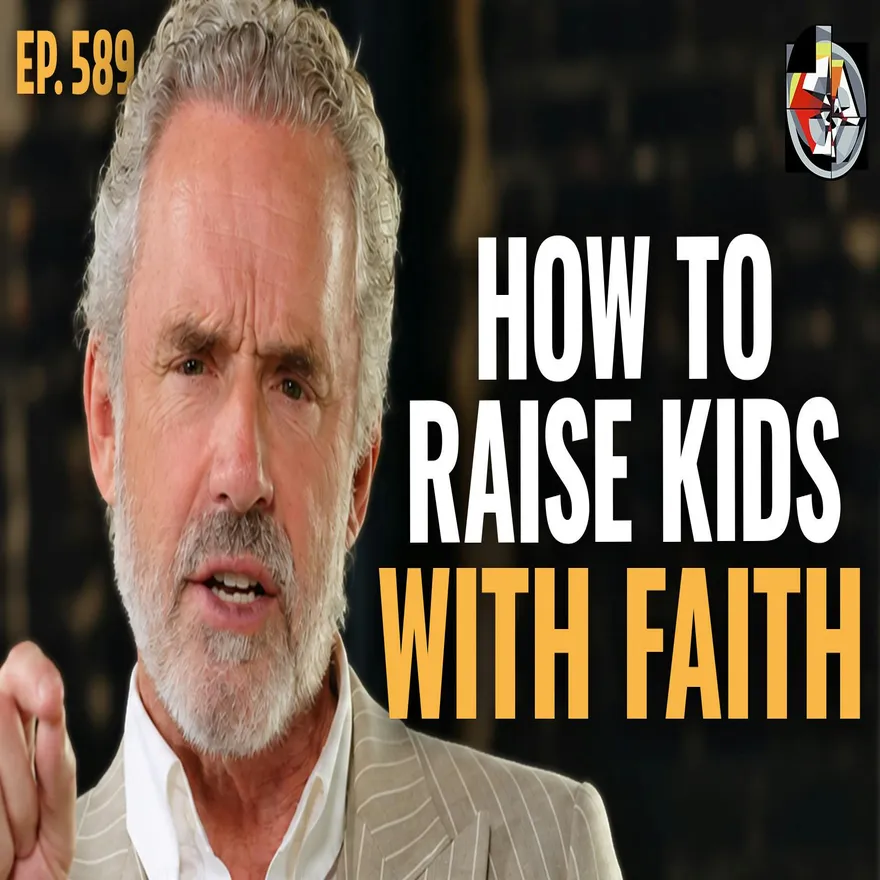

This is a preview of the Shortform summary of the Oct 11, 2026 episode of the The Jordan B. Peterson Podcast
Sign up for Shortform to access the whole episode summary along with additional materials like counterarguments and context.
1-Page Summary
Biblical Narratives as Guides to Meaning and Transformation
Jordan Peterson explores how biblical stories have persisted across millennia because they contain practical wisdom for meaning, resilience, and moral transformation. These ancient narratives answer fundamental human needs rather than serving as mere myths.
Ancient Tales Reveal Timeless Truths About Humanity
Peterson observes that stories like Adam and Eve or Noah have "lodged themselves in our collective memory immovably" because they provide guidance for navigating life's challenges. He argues that engaging with these stories brings revelation: they clarify relationships, enhance resilience, and transform suffering into meaning. Peterson cautions against separating scientific and religious knowledge, arguing that valid interpretations must harmonize with scientific discoveries, moral intuitions, and inherited wisdom.
Abraham's Story Shows the Call to Adventure as the Divine Voice
The story of Abraham illustrates the divine call as a summons to leave comfort and embrace challenge. After seventy-five years in his father's tent, Abraham hears God's call to venture into uncertainty. Peterson identifies this divine voice with the call to adventure and meaning, beckoning people beyond comfort zones. God's covenant promises that if Abraham courageously departs from comfort, he will become the father of nations. This demonstrates that embracing challenge leads to expanding opportunity and generational flourishing, though it requires repeated sacrifice at every step into the unknown.
Sacrificing All, Even Precious Possessions, Shows Commitment to the Highest
Abraham's ultimate test—being called to sacrifice his son Isaac—reveals that nothing should be held above truth and transcendence. When an angel provides a substitute ram, this establishes substitutionary sacrifice: rather than destroying what we love, we sacrifice what is worst in ourselves. Peterson connects this to everyday life, explaining that each forward step demands sacrifice of security, identity, and attachments. This "baptism by fire" purifies us, shedding weakness and immaturity. In parenting, true love means preparing children for the world rather than protecting them from every harm.
Sacrifice as the Pathway to Growth and Redemption
Peterson explores how sacrifice—forgoing immediate desires for future fulfillment—serves as the foundation for growth, community, and meaningful life.
Sacrifice: Forgoing Now For Future Stability, Opportunity, and Community Wellbeing
Peterson defines sacrifice as giving up something now to invest in something better for the future. This pattern pervades responsible living: saving money, resisting immediate gratification, and committing to actions that stabilize one's future and support others. Communities are founded on individuals sacrificing personal desires for collective good. The world of work further exemplifies this principle, as people often sacrifice comfort to maintain roles that provide stability.
From Ancient Rituals to Modern Self-Criticism
Historically, humans expressed sacrifice through burning their best animals or crops. In modern times, sacrifice becomes internalized through confession, self-examination, and shedding harmful habits. Constructive criticism is another form, wherein bad ideas are discarded while the person remains intact. This "baptism by fire" purifies individuals for future growth.
Sacrifice: A Requirement, a Reward, and a Path to Greater Possibilities
Peterson uses the story of Cain and Abel to show how refusing genuine sacrifice leads to bitterness and ruin. Conversely, those who face life bravely and endure sacrifice experience ongoing growth. Peterson likens this to Jacob's ladder—a never-ending upward spiral toward ever-deepening meaning and redemption.
Divine Adventure and Vision Essential for a Meaningful Life
Peterson argues that meaningful life requires pursuing growth, embracing the unknown, and formulating compelling personal vision, drawing on developmental observations and biblical tradition.
Instinct For Growth: Attraction to Challenge and Expanding Capability
From childhood, humans demonstrate an innate drive to develop. Peterson emphasizes conscience as an internal divine guide—a "secondary voice of God"—available to everyone, calling individuals forward and underpinning free will.
Courageously Enter Uncertainty With Incomplete Information
Every significant life step requires entering the unknown with incomplete information. Peterson argues faith becomes essential—not naïve belief, but existential courage to act despite limitation. He equates this journey with the biblical "pearl of great price": a life of deep meaning worth every sacrifice. The biblical guidance promises that seeking will lead to finding and knocking will open doors.
Personal Vision: Turning Desires and Goals Into Direction
Peterson insists on inhabiting a robust vision of the world—a defined destination to strive toward. This involves clarifying true desires and articulating what would justify effort. Relationship conflicts can be resolved by each partner clarifying what they want. Peterson notes that effective visioning often begins imperfectly, but aiming and missing is better than wandering aimlessly. The etymology of "sin" means to "miss the mark"—one misses by failing to specify a target. Daily life is shaped by repeated practices, and optimizing small recurring experiences gradually orders life according to vision.
Ritual, Community, and Tradition as Keys to Well-Being
Peterson explores how communal religious practices, tradition, and disciplined morality foster individual and social well-being, offering benefits beyond private spirituality.
Functions of Communal Religious Practice Beyond Individual Spirituality
Acting out communal dedication through regular church attendance acknowledges what is highest, even if congregants are imperfect. Engaging collectively with religious stories provides wisdom about leadership and moral authority that surpasses private study. Peterson warns that abandoning religious ritual leaves a dangerous vacuum, making society vulnerable to confused substitute rituals.
Religious Education Offers Children Foundational Narratives and Moral Frameworks
Peterson confesses not bringing his own children to church was a mistake, depriving them of foundational stories and communal rituals. He urges parents to attend church with children, exposing them to ancestral wisdom through music, art, and tradition. Teaching children religious morality strengthens marriage, deepens familial bonds, and instills virtue.
Intimacy and Sexual Satisfaction Follow Disciplined Religious Commitment
Peterson argues that cultural narratives linking sexual liberation with pleasure are empirically contradicted. Despite vast sexual options and pornography, overall sexual activity is declining. Evidence indicates religiously married individuals report the most sexual satisfaction and frequency. Religious ritual and sacrifice provide groundwork for deep, enduring intimacy. Peterson contrasts this with short-term mating strategies, which correlate with psychopathic and narcissistic traits.
Traditional Structures: Pathways to Fulfillment and Satisfaction
Peterson argues that traditional structures—democracy, marriage, family, and faith—provide the most reliable pathways toward personal fulfillment and livable societies.
Western Democracy Shows Responsible Free Individuals Create Livable Societies
Peterson praises the American dream as belief in individual opportunity, noting that Americans celebrate the courage to pursue it. He asserts the U.S. demonstrates that individuals can enrich themselves in ways benefiting others, rather than through zero-sum means. America's prosperity arises from "productive and generous entrepreneurs" whose responsible freedom enables mutual advancement. Peterson distinguishes true wealth—generated through morally beneficial activity—from exploitation. He invokes the Abrahamic archetype, asserting that courage and sacrifice for community benefit is the true engine of Western success.
Traditional Marriage, Family, and Faith Best Foster Individual Flourishing
Human flourishing and virtuous generational transmission depend on traditional commitments. Peterson emphasizes organizing life around responsibility and vision—romance, friendships, family, education, self-care, community. Good parenting fosters independence and character rather than indulgence, making children "brave and competent." Parenthood is essentially self-sacrifice, especially for mothers who may delay careers for generational flourishing. Peterson likens this to the Pietà, emphasizing that letting children go into the world, despite pain, is pivotal for their growth.
Rejecting Traditional Paths Leads To Collective Catastrophe
Peterson warns that abandoning tradition for unlimited autonomy or short-term gratification leads to prolonged failure to mature, resulting in "nihilistic desperation of the eternally juvenile," bitterness, and vengefulness. He critiques modern anxieties over motherhood, noting women decide not to have children reasoning the world is too dangerous, when "the world is now better and easier than it's ever been." Peterson concludes that faith in sacrificial practices of tradition—marriage, raising children, serving community—yields rewards greater than material wealth.
1-Page Summary
Additional Materials
Counterarguments
- Many scholars argue that biblical stories persist not because of inherent practical wisdom, but due to historical, cultural, and institutional reinforcement, including their central role in education, law, and governance in the West.
- The claim that ancient narratives provide universal guidance is contested; critics note that these stories reflect the values and social structures of their time, which may not align with modern ethical standards or diverse cultural contexts.
- Some philosophers and scientists maintain that scientific and religious knowledge are fundamentally different in method and purpose, and that attempts to harmonize them can lead to confusion or undermine scientific rigor.
- The interpretation of Abraham’s story as a positive model of embracing uncertainty and sacrifice is disputed by those who view the willingness to sacrifice one’s child as morally problematic or psychologically damaging.
- The principle of substitutionary sacrifice is not universally accepted; some traditions and thinkers argue that self-improvement and ethical behavior do not require ritualized sacrifice or suffering.
- Critics of the emphasis on sacrifice argue that it can promote unhealthy self-denial, guilt, or enable exploitation, especially when applied to parenting or social roles.
- The assertion that religiously married individuals report the most sexual satisfaction is debated; some studies suggest that relationship satisfaction is influenced by multiple factors, including communication, compatibility, and mutual respect, regardless of religious affiliation.
- The idea that abandoning religious ritual leads to societal decline is challenged by evidence from secular societies that maintain high levels of social trust, well-being, and moral behavior without strong religious observance.
- The claim that traditional structures like marriage, family, and faith are the only or best pathways to fulfillment is contested by those who point to diverse family forms, secular communities, and alternative lifestyles that also foster well-being and flourishing.
- Critics argue that idealizing traditional gender roles, such as mothers delaying careers for child-rearing, can limit individual freedom and reinforce outdated stereotypes.
- The notion that modern anxieties over motherhood are unfounded is disputed by those who point to real economic, environmental, and social challenges facing parents today.
- Some argue that the focus on sacrifice and tradition can discourage necessary social change and adaptation to new circumstances.
Actionables
- you can create a weekly “sacrifice swap” by identifying one comfort or habit you rely on and intentionally replacing it with a small, meaningful act that benefits someone else, such as skipping a favorite treat and using the saved money to anonymously help a neighbor or coworker in need; this builds the habit of forgoing immediate gratification for the good of others and your community.
- a practical way to clarify your personal vision and direction is to write a “future letter” to yourself describing the kind of person you want to be in five years, then list three daily actions that would move you toward that vision, such as initiating honest conversations, volunteering for a challenging task, or practicing a new skill.
- you can strengthen family and community bonds by starting a monthly “wisdom night” where each person shares a story from their life or ancestry that taught them resilience or moral insight, encouraging intergenerational learning and reinforcing shared values without formal rituals.
Get access to the context and additional materials
Biblical Narratives as Guides to Meaning and Transformation
The enduring popularity of biblical stories and their persistent relevance suggest they contain vital truths for human life. Their continued presence across cultures and millennia implies that they serve a practical, formative purpose beyond mere myth, offering guidance for meaning, resilience, and moral transformation.
Ancient Tales Reveal Timeless Truths About Humanity
The narratives found in the Bible and other ancient stories—such as Adam and Eve or Noah—have survived because of their eternal utility. Jordan Peterson observes that these stories have “lodged themselves in our collective memory immovably,” not because humanity is inherently corrupt, but because such stories answer fundamental human needs and questions.
According to Peterson, engaging with these stories brings constant revelation; understanding them straightens one’s path, clarifies relationships, enhances resilience during adversity, and transforms suffering into meaning. Such benefits, experienced through decades of deep analysis, are not coincidental but emerge from the practical wisdom embedded in the stories.
Peterson cautions against the artificial division between scientific and religious ways of knowing. For interpretations of these narratives to be valid, he argues they must harmonize with scientific discoveries (like neuropsychology and evolutionary biology), align with our deepest moral intuitions, and be reconcilable with the wisdom inherited from tradition and politics—much like the harmonious structure in music where every element finds its place.
Abraham's Story Shows the Call to Adventure as the Divine Voice
The story of Abraham, the patriarch of the Abrahamic religions, provides a vivid illustration of the call to adventure as the call of the divine. Abraham spends seventy-five years ensconced in comfort in his father’s tent, living with all needs met but lacking purpose and challenge. This security is portrayed as “infantile,” suggesting that human flourishing requires more than comfort: one must seek challenge and transformation at the edge of one’s comfort zone.
God’s call to Abraham is a summons out of comfort and familiarity toward the uncertainty and challenges of life’s greatest adventure. The divine voice in this context is identified with the voice of adventure and meaning, beckoning each person to step beyond what is known and secure.
The contract, or covenant, between God and Abraham promises that if Abraham has the courage to depart from comfort, he will become the father of nations, passing down not only children but a victorious and meaningful way of living to his descendants. This narrative demonstrates that willingly embracing challenge, rather than remaining in passive comfort, leads to expanding opportunity and generational flourishing.
Peterson underscores that the call to adventure is perpetually repeated: "every time you step out of your zone of comfort and move forward into a new adventure you'll have to sacrifice something." Courage is thus required at every step into the unknown, and comfort is repeatedly exchanged for the possibility of growth and greater fulfillment.
Sacrificing All, Even Precious Possessions, Shows Commitment to the Highest and Transforms Them
In Abraham’s story, the concept of sacrifice evolves from external ritual to an internal, psychological process. Abraham is called not only to leave his home but, ultimately, to sacrifice his beloved son Isaac. This climactic moment shows the principle that nothing, not even what we care for most, should be held above truth and transcendence. The willingness to offer even one's own child is a metaphor for the depth of commitment required in pursuit of the highest good.
At the crucial moment, an angel prevents Abraham from sacrificin ...
Here’s what you’ll find in our full summary
Biblical Narratives as Guides to Meaning and Transformation
Additional Materials
Counterarguments
- The enduring presence of biblical stories may be due to historical, cultural, and institutional factors (such as religious authority and tradition) rather than their inherent practical wisdom or universal truth.
- Many cultures have foundational narratives that serve similar purposes; the Bible’s prominence in Western societies does not necessarily indicate unique or superior insight compared to other ancient texts.
- The claim that biblical stories provide “timeless truths” can be challenged by pointing to elements within these narratives that reflect the specific historical and cultural contexts of their origin, some of which may be outdated or problematic by modern ethical standards.
- Not all individuals or cultures find meaning, resilience, or moral transformation in biblical stories; for some, other philosophical, literary, or religious traditions serve these functions equally or more effectively.
- The assertion that comfort is “infantile” and that growth always requires sacrifice and challenge may overlook the value of stability, rest, and security in human flourishing.
- The idea that interpretations of biblical stories must harmonize with scientific discoveries is contested; some argue that religious and scientific worldviews are fundamentally different and not always reconcilable.
- The narrative of Abraham’s willingness to sacrifice Isaac has been criticized for promoting obedience over moral autonomy and for potentially justifying har ...
Actionables
- you can create a weekly “comfort audit” by listing your current routines and possessions, then choosing one small comfort to intentionally forgo for a week to practice stepping beyond your comfort zone and observe how it affects your resilience and sense of meaning (for example, skip your favorite snack, take a new route to work, or pause a habitual entertainment source).
- a practical way to harmonize your personal growth with scientific and moral insights is to keep a “sacrifice and growth” journal where, after making a difficult decision or letting go of an unhelpful habit, you briefly note how your choice aligns with both your moral values and any relevant scientific understanding about well-being or behav ...
Get access to the context and additional materials
Sacrifice as the Pathway to Growth and Redemption
Sacrifice, in its deepest form, represents the willingness to forgo immediate desires and comforts for future stability, fulfillment, and the wellbeing of others. Jordan Peterson explores how sacrifice, both individually and collectively, serves as the foundation for growth, community, and the very structure of a meaningful life.
Sacrifice: Forgoing now For Future Stability, Opportunity, and Community Wellbeing
To change is always to give something up; thus, sacrifice is an intrinsic requirement for transformation. Peterson defines sacrifice as giving up something now in hopes of investing in something better for the future. The act of saving money in a bank instead of spending it recklessly illustrates this principle: when you set money aside, you forgo short-term pleasures so you can guarantee security and stability later on.
This pattern permeates responsible living and community participation. Individuals learn to resist immediate gratification—following whims for their own sake—and instead commit to actions that stabilize their own future and support the people around them. Saving for oneself serves not only personal security but also benefits family and community, ensuring harmony and sustainability over time.
Communities are thus founded on individuals sacrificing their own desires for the collective good. Children who cannot yield to others or insist on having their way isolate themselves from these communal benefits. Learning to play by the rules and participate harmoniously means sacrificing spontaneous whims for the shared goal of a fruitful, ongoing game. In short, for lasting social stability and psychological opportunity, sacrifice is essential.
The world of work further exemplifies this: people often sacrifice personal preference, comfort, or even soul-satisfaction at times to maintain roles that provide financial and communal stability. The central question becomes what kinds of work and sacrifice suffice to build solid foundations for oneself and others.
From Ancient Rituals to Modern Self-Criticism: The Evolution of Psychological Sacrifice and Moral Development
Historically, humans expressed sacrifice through concrete rituals, often burning the best of their animals or crops to appease and communicate with the divine. Without complex language, these sacrifices dramatized the gesture of giving up the best they had to signal respect and commitment to the highest values.
In modern times, the process of sacrifice becomes internalized and psychological. Confession, critical self-examination, and the willingness to shed what is base or harmful within oneself are forms of everyday sacrifice. This process requires acknowledging one's shortcomings, admitting defeat where necessary, and releasing inferior habits, thoughts, or resentments. Through psychological sacrifice, people undergo a "baptism by fire" that purifies their spirit for future growth.
Constructive criticism is another form of this sacrifice, wherein bad ideas are discarded but the person remains intact. This enables both individuals and communities to adapt, refine, and improve their prospects. Climbing the metaphorical holy mountain—ascending in moral or psychological stature—demands a continuous shedding of what is imperfect, a willingness to offer up one's weaknesses as the price for transformation.
Sacrifice: A Requirement, a Reward, and a Path to Greater Possibilities
Sacrifice is both necessary and rewarding, opening the pathway to adventure, opportunity, and ...
Here’s what you’ll find in our full summary
Sacrifice as the Pathway to Growth and Redemption
Additional Materials
Clarifications
- Jordan Peterson is a Canadian clinical psychologist and professor known for his work on psychology, philosophy, and cultural criticism. His views on sacrifice are significant because he connects ancient traditions and modern psychology to explain personal growth and societal stability. Peterson emphasizes responsibility and meaning through sacrifice as essential for individual and collective wellbeing. His ideas have influenced many in understanding how personal discipline shapes life outcomes.
- The story of Cain and Abel is a biblical tale where Cain's offering was rejected because it lacked genuine sacrifice, leading to jealousy and violence. It symbolizes the consequences of failing to commit sincerely to sacrifice and moral responsibility. Cain's downfall illustrates how avoiding true sacrifice breeds bitterness and destruction. This story underscores the necessity of wholehearted sacrifice for personal and communal wellbeing.
- Jacob's ladder is a biblical symbol from the Book of Genesis, where Jacob dreams of a ladder reaching from earth to heaven. It represents a connection between the human and divine realms, symbolizing spiritual ascent and progress. The ladder signifies continuous growth, struggle, and the pursuit of higher states of being. In this context, it illustrates the ongoing journey of self-improvement and moral elevation through sacrifice.
- "Baptism by fire" originally refers to a trial by intense hardship or challenge that tests and purifies a person. Psychologically, it means undergoing difficult experiences that strip away falsehoods and weaknesses. This process strengthens character and fosters genuine growth. The metaphor highlights transformation through enduring and overcoming adversity.
- The phrase "covenant with the highest good" refers to a solemn, committed agreement to live according to the highest moral and ethical principles. It implies dedicating oneself to values that transcend personal desires, aiming for the well-being of others and the community. This covenant is not a one-time act but an ongoing commitment to growth and improvement through sacrifice. It frames sacrifice as a sacred, purposeful act aligned with ultimate meaning and virtue.
- Ancient ritual sacrifice involved physically offering valuable items or animals to deities as a symbolic act of devotion and communication with the divine. Modern psychological sacrifice is an internal process where individuals give up harmful habits, thoughts, or desires to grow morally and emotionally. This shift reflects the development of complex self-awareness and abstract thinking in humans. Psychological sacrifice replaces external rituals with introspection and self-improvement as a form of personal and communal commitment.
- "Telling the truth" in this context means living authentically and facing reality honestly, not just avoiding lies. It involves acknowledging difficult facts about oneself and the world to act responsibly. This principle supports personal growth by preventing self-deception and fostering trust. Philosophically, it is a commitment to align on ...
Counterarguments
- The emphasis on sacrifice as universally beneficial may overlook situations where self-sacrifice leads to exploitation, burnout, or the enabling of unhealthy systems, rather than personal or communal growth.
- Not all forms of sacrifice are inherently virtuous; some sacrifices may reinforce harmful traditions, perpetuate injustice, or suppress individual well-being without resulting in greater good.
- The idea that resisting immediate gratification is always preferable can ignore the value of present-moment enjoyment, spontaneity, and self-care, which are also important for psychological health.
- The narrative that communities are founded on individual sacrifice for the collective good may underplay the importance of balancing individual rights, autonomy, and diversity within a community.
- The portrayal of children who do not sacrifice their whims as isolated from communal benefits may not account for neurodiversity or different developmental needs.
- The assertion that work should involve sacrificing personal preference or soul-satisfaction for stability may reinforce acceptance of unfulfilling or exploitative labor conditions, rather than encouraging meaningful reform or pursuit of fulfilling work.
- The historical focus on ritual sacrifice as a foundation for moral development may not be universally applicable across all cultures or belief s ...
Get access to the context and additional materials
Divine Adventure and Vision Essential for a Meaningful Life
Jordan Peterson argues that a meaningful life is rooted in the instinctive pursuit of growth, a courageous embrace of the unknown, and the formulation of a compelling personal vision. He draws on developmental observations, biblical tradition, and practical psychological strategy to expound how people can transform their ordinary existence into a divine adventure.
Instinct For Growth: Attraction to Challenge and Expanding Capability
Peterson explains that from childhood, humans demonstrate an innate drive to develop. Children play out their dreams and inhabit a dream-like realm, formulating explicit conceptions through imagination. Their pleasure in accomplishing tasks is evidence of developmental progress, revealing that the instinct to grow is as fundamental as the instinct to live.
This instinct is sustained throughout life by visions of one’s potential self and the ongoing drive to achieve. Peterson describes that following the "pathway of challenge" to the place of maximal development clears the way forward, forming a person capable of "bearing the catastrophe of your own existence voluntarily and gratefully and joyfully," ultimately becoming a blessing to others.
Peterson emphasizes conscience as an internal divine guide—a "secondary voice of God." This voice, he claims, is available to everyone, calling individuals out on their inadequacies and inviting them to move forward. Consulting one’s conscience leads to the discovery of one’s best self when one dares to follow its urging; this capacity for self-summons and self-correction, Peterson asserts, underpins free will.
Courageously Enter Uncertainty With Incomplete Information
Peterson observes that every significant step forward in life—such as marriage or pursuing a new calling—requires stepping into the unknown with incomplete information. No one can fully predict the outcome of major decisions, not even with exhaustive preparation. Often, individuals act from ignorance, even believing they understand themselves or their situations more fully than they truly do.
In this uncertainty, Peterson argues, faith becomes essential—not a naïve belief in unexamined claims, but an existential courage to act despite one’s ignorance and limitation. He draws parallels to the biblical tradition, describing faith as the courage to heed the spirit of adventure that calls each person to become who they might be. This calling aligns the individual with the spirit of reality itself, promising a life that exceeds the wildest dreams and demands sacrifices yet provides a reward greater than security or material wealth.
Peterson equates this journey with the biblical "pearl of great price"—a life of deep, unfolding meaning worth every other sacrifice. If one commits to truth and to answering the call of growth, the promise is a life of ever-expanding opportunity and increasing capability. The biblical guidance is clear: "knock and the door will open, ask and the question will reveal itself, seek and you'll find." Thus, following calling and conscience transforms existence into a personal adventure with enormous meaning.
Personal Vision: Turning Desires and Goals Into Direction
Peterson insists that to live meaningfully, one must inhabit a robust vision of the world—a defined destination to strive towards. This process involves clarifying what is truly desired, imagining an ideal life, and articulating what would justify effort and discipline.
He draws on both everyday life and his own clinical work: relationship conflicts, for example, can be resolved not by defeating the other but by each partner clarifying what they actually want fr ...
Here’s what you’ll find in our full summary
Divine Adventure and Vision Essential for a Meaningful Life
Additional Materials
Clarifications
- The "secondary voice of God" refers to conscience as an internal moral guide distinct from external commands. It functions as an inner sense that critiques actions and urges improvement, reflecting a divine-like authority within. This internal voice enables self-awareness and self-regulation, allowing individuals to choose actions freely rather than acting on impulse. Thus, free will arises from the capacity to listen to and act upon this conscience.
- "Bearing the catastrophe of your own existence" refers to accepting life's inherent suffering and challenges. Doing so voluntarily means choosing to face these difficulties rather than avoiding them. Gratefully and joyfully implies embracing this responsibility with a positive, courageous attitude. This acceptance is seen as a path to personal growth and meaningful living.
- The "pearl of great price" is a parable from the Bible (Matthew 13:45-46) symbolizing something of immense value worth sacrificing everything to obtain. "Knock and the door will open" comes from Matthew 7:7, encouraging persistent seeking and faith that efforts will be rewarded. Abraham is called "a fool" in this context to highlight his initial uncertainty and boldness in following a divine call without full knowledge, reflecting the idea that starting with imperfect plans is part of growth. These references emphasize faith, courage, and commitment in pursuing a meaningful life despite uncertainty.
- The English word "sin" comes from the Old English "synn," but its deeper roots trace to the Greek word "hamartia," which means "to miss the mark" in archery. This metaphor implies failing to meet a moral or ethical standard, like an archer missing a target. The concept highlights that sin is not just wrongdoing but a failure to aim correctly in life. This etymology underscores the importance of having clear goals or values to avoid "missing the mark."
- Faith as existential courage means choosing to act despite uncertainty and lack of complete knowledge. It involves embracing risk and the unknown, not blind acceptance of claims without evidence. This form of faith requires personal strength to move forward when outcomes are unpredictable. It contrasts with naïve belief, which accepts ideas without questioning or challenge.
- Jordan Peterson’s ideas draw on developmental psychology, which studies how people grow cognitively and emotionally from childhood through adulthood. He also references existential psychology, focusing on how individuals find meaning and confront uncertainty in life. His use of conscience as a "secondary voice of God" aligns with theories about internal moral regulation and self-awareness. Additionally, his emphasis on vision and goal-setting reflects motivational psychology, which explores how clear aims drive behavior and personal growth.
- The "pathway of challenge" refers to deliberately facing difficult situations that push one beyond current limits. This process stimulates growth by requiring new skills, resilience, and adaptation. Overcoming challenges builds competence and confidence, enabling greater personal development. It contrasts with avoiding difficulty, which leads to stagnation.
- Consulting one’s conscience means actively reflecting on one’s values and moral sense to guide decisions. It involves honest self-examination to recognize when actions conflict with one’s deeper principles. This practice helps identify personal shortcomings and motivates corrective behavior. Over time, it strengthens self-discipline and aligns choices with authentic goals.
- Personal vision provides clarity about individual desires and goals, ...
Actionables
- You can set a daily five-minute timer to write down one small thing you’re curious about or want to improve, then take a single action toward it that day, reinforcing your instinct to grow and making progress tangible.
- A practical way to clarify your vision and recalibrate is to record a short voice memo each week describing your current goals, what you learned about yourself, and any course corrections you want to make, then listen back monthly to notice patterns and adjust your direction.
- You can create a shared vision board with a ...
Get access to the context and additional materials
Ritual, Community, and Tradition as Keys to Well-Being
Jordan Peterson explores the essential role of communal religious practices, tradition, and disciplined morality in fostering individual and social well-being, emphasizing how these practices offer benefits far beyond private spirituality or modern secular alternatives.
Functions of Communal Religious Practice Beyond Individual Spirituality
Peterson argues that acting out communal dedication through regular participation in ritual—such as attending church weekly—acknowledges what is highest and superior, even if congregants are imperfect. He recalls his own youthful skepticism, when he dismissed church due to perceived hypocrisy, but notes that even flawed participation is better than a complete lack of upward orientation and reflection.
Attending church and engaging collectively with religious traditions serve functions unattainable through solitary spiritual practice. Peterson emphasizes the importance of participating in religious stories together, such as the narrative of Moses and the Israelites. By engaging with these stories communally, individuals receive wisdom about leadership, restraint, and moral authority—lessons that surpass what can be gleaned from mere private study.
Peterson warns that abandoning religious ritual and tradition in pursuit of modernity leaves a dangerous vacuum. Without traditional structures, society becomes vulnerable to the rise of confused or inferior substitute rituals, failing to offer the grounding and meaning that established traditions provide.
Religious Education and Tradition Offer Children Foundational Narratives, Artistic Heritage, and Moral Frameworks for Healthy Development
Peterson confesses that not bringing his own children to church was a mistake, as it deprived them of exposure to foundational stories and communal rituals. He urges parents to find a church and attend with their children, exposing them to religious stories that are essential for healthy development. By doing so, children learn from ancestral wisdom passed down through music, art, literacy, and enduring traditions.
He argues that enacting rituals, learning traditional music, and embracing religious artistic heritage fortifies children’s sense of identity. Teaching children the morality supported by religious tradition also strengthens marriage, deepens familial bonds, and instills virtue, offering them a coherent moral compass for life.
Intimacy and Sexual Satisfaction Follow Disciplined Religious Commitment in Heterosexual Marriage Over Hedonistic Alternatives
According to Peterson, cultural narratives linking sexual liberation and pleasure with casual encounters are empirically contradicted by reality. He points out that, in modern society, despite a vast range of sexual options and the prevalence ...
Here’s what you’ll find in our full summary
Ritual, Community, and Tradition as Keys to Well-Being
Additional Materials
Clarifications
- "Upward orientation and reflection" refers to directing attention and values toward something greater than oneself, such as a higher power, moral ideal, or transcendent truth. It involves self-examination and contemplation of one's actions and purpose in relation to these higher standards. This process fosters humility, meaning, and ethical growth. It contrasts with a purely self-centered or materialistic focus.
- The story of Moses and the Israelites is a foundational narrative in Judaism, Christianity, and Islam. It recounts how Moses led the Israelites out of slavery in Egypt toward freedom, symbolizing liberation and divine guidance. The story teaches lessons about leadership, faith, obedience, and moral law, including the giving of the Ten Commandments. It serves as a cultural and ethical framework that shapes communal identity and values.
- "Confused or inferior substitute rituals" refer to new social or cultural practices that attempt to fulfill the role of traditional religious rituals but lack their depth, coherence, or communal significance. These substitutes often arise when established traditions decline, leaving people searching for meaning and structure. Unlike time-tested rituals, they may be inconsistent, superficial, or disconnected from shared values. This can lead to weaker social bonds and less psychological stability.
- Religious artistic heritage and traditional music provide shared symbols and narratives that connect individuals to their community’s history and values. These cultural expressions evoke emotional responses that reinforce a sense of belonging and continuity. Engaging with them helps individuals internalize collective identity and moral lessons embedded in the art and music. This process supports psychological stability and a coherent self-concept rooted in communal tradition.
- Short-term mating strategies often involve seeking multiple brief sexual relationships rather than long-term commitment. Psychological traits like psychopathy, Machiavellianism, narcissism, and sadism—collectively called the "Dark Tetrad"—are linked to manipulativeness, lack of empathy, and exploitative behavior. Individuals high in these traits may use charm and deceit to pursue short-term mating without regard for others' feelings. Research suggests these traits can facilitate opportunistic mating but often harm emotional and social well-being.
- Research shows that despite increased sexual freedom and access to casual encounters, overall sexual activity rates have declined in many developed countries. Studies find that individuals in committed, long-term relationships, especially religious marriages, report higher sexual satisfaction and more frequent sex than those engaging in casual sex. Surveys also reveal rising numbers of young adults delaying sexual activity or remaining virgins, challenging assumptions that sexual liberation leads to more sex. Psychological research links casual sexual behavior with traits like impulsivity and emotional instability, which can reduce relationship quality and satisfaction.
- Religious ritual and sacrifice create a shared commitment that fosters trust and emotional safety between partners. This disciplined dedication encourages prioritizing the relationship over individual desires, deepening intimacy. Sacrifice involves giving up short-term pleasures for long-term relational stability and fulfillment. Such practices build a foundation for sustained sexual sati ...
Counterarguments
- Many secular or non-religious communities (such as sports teams, volunteer organizations, or cultural groups) also provide ritual, tradition, and a sense of belonging, demonstrating that well-being and moral development can be fostered outside of religious contexts.
- Psychological research indicates that moral reasoning and ethical behavior can develop independently of religious belief, with secular frameworks (such as humanism or philosophical ethics) offering robust moral guidance.
- Studies show that children raised in non-religious households can exhibit similar levels of empathy, prosocial behavior, and psychological well-being as those raised in religious environments.
- The assertion that abandoning religious ritual leads to a "dangerous vacuum" overlooks the adaptability of human societies, which often create new, meaningful secular rituals and traditions.
- Data on sexual satisfaction and frequency is mixed; some studies suggest that relationship quality, communication, and mutual respect—rather than religious commitment alone—are key predictors of sexual satisfaction.
- The correlation between short-term mating strategies and negative personality traits is not universally supported; many individuals engage in consensual non-monogamy or casual relationships without exhibiting psychopathic or antiso ...

Get access to the context and additional materials
Traditional Structures: Pathways to Fulfillment and Satisfaction
Jordan Peterson argues that traditional structures—democracy, marriage, family, and faith—provide the most reliable pathways toward personal fulfillment and the creation of livable societies. He contends that generational flourishing, responsible freedom, and virtuous sacrifice have made Western democracies, especially the United States, uniquely prosperous and desirable.
Western Democracy Shows For 250 Years That Responsible Free Individuals Create Livable Societies
Peterson praises the American dream as a collective belief in individual opportunity, emphasizing that Americans not only value this dream but also celebrate the courage required to pursue it. He notes, “That’s the American dream… you believe that and you actually celebrate people... who have enough courage to do it and look at what the consequences been.” He asserts that the U.S. is remarkable among all nations for demonstrating that individuals can enrich themselves in ways that benefit others, rather than through zero-sum or predatory means.
U.S. Exemplifies Individuals Enriching Others, Becoming Richest Country Ever
Peterson rejects the notion that personal success must come at others' expense. Rather, he states, the U.S. shows that “your wealth would not only not come at the expense of other people but would simultaneously make other people wealthy as you advanced.” This, he says, is why America is the richest country in history; its prosperity arises from “productive and generous entrepreneur[s]” whose responsible freedom enables mutual advancement.
Wealth Arises From Productive, Beneficial Activity, Not Unsustainable Manipulation and Exploitation
Peterson distinguishes between true wealth—generated through productive, morally beneficial activity—and exploitation, which he labels unsustainable. He says real wealth “is not wealth of the thieves,” but is founded in “productive and thriving” systems, and that such wealth sustains itself across generations.
Western Democracies' Success Stems From Abraham's Archetypal Pattern: Courageous Leadership For Community Benefit
Peterson invokes the Abrahamic archetype, asserting the significance of courage, sacrifice, and aspiration for the benefit of community: “That’s what God tells Abraham: if you move forward and you make the proper sacrifices then the world will lay itself at your feet.” He argues that this principle, enacted in the West, is the true engine of its success and appeal—even for those who acknowledge its faults.
Traditional Structures of Marriage, Family, and Faith Best Foster Individual Flourishing and Virtuous Generational Transmission
Peterson claims that human flourishing and the virtuous transmission of values across generations depend on traditional commitments to marriage, family, and faith. He describes how structuring life around responsibility and vision—romance, friendships, family, education, self-care, community—produces fulfillment and sustainable well-being.
Conducting Life: Organizing Practices, Romance, Friendships, Family, Education, Self-Care, Community According To Vision
He asserts that the greatest prospects for satisfaction come from intentionally organizing life according to meaningful values—balancing work, romance, family, self-care, and community.
Parents Fostering Independence, Adventurousness, and Character Strength Exemplify the Divine Call to Growth Over Comfort
Peterson explains that good parenting is not about indulging children, but fostering independence and character: “What you strive to do is to encourage within them the development of the impetus for independence and the productive adventurousness that goes along with that.” Parents should, he maintains, make their children safe but even more importantly, “brave and competent,” because “there is no security apart from bravery and competence.”
Parental Self-Sacrifice For Child Development Yields Generational and Community Benefits
Parenthood, according to Peterson, is essentially a process of self-sacrifice—especially for mothers who may delay or forgo careers to benefit their children, “playing the long game” for generational flourishing. He draws on archetypal imagery, likening the sacrificial aspect of motherhood to the Pietà: “...willingness to sacrifice in towards the child's better nature regardless in some sense of the cost.” He says letting children go into the world, despite the pain, is pivotal for their growth, and that in doin ...
Here’s what you’ll find in our full summary
Traditional Structures: Pathways to Fulfillment and Satisfaction
Additional Materials
Clarifications
- The "Abrahamic archetype" refers to the biblical figure Abraham, symbolizing faith, courage, and sacrifice for a greater good. It embodies the idea of leading with responsibility and vision to benefit the community, not just oneself. Western democracies draw on this archetype by valuing leaders and citizens who act courageously and selflessly for societal progress. This pattern underpins the cultural and moral foundation that supports democratic success and social cohesion.
- Responsible freedom means exercising personal liberty with awareness of its impact on others and society. It contrasts with absolute freedom, which ignores consequences and can lead to harm or chaos. Responsible freedom requires self-discipline, ethical behavior, and respect for social rules. It balances individual rights with communal well-being.
- "Failure to launch" describes young adults who struggle to become independent, often remaining dependent on parents longer than expected. This can result from economic challenges, lack of life skills, or emotional immaturity. Societally, it may lead to delayed family formation, reduced workforce participation, and increased social frustration. The term highlights concerns about stalled personal development affecting broader community stability.
- The "Pietà" is a famous sculpture by Michelangelo depicting the Virgin Mary holding the dead body of Jesus after his crucifixion. It symbolizes profound maternal grief, compassion, and self-sacrifice. In Peterson's context, it represents the deep, often painful sacrifices mothers make for their children’s well-being. This imagery highlights the noble, sacrificial nature of parenting as a form of love and responsibility.
- The phrase means that allowing children independence fosters their growth into responsible adults who maintain strong bonds with their parents. Psychologically, it reflects secure attachment, where trust and autonomy coexist, promoting lasting relationships. Philosophically, it aligns with the idea that true love involves freedom, not control, enabling mutual flourishing. This approach counters overprotection, which can hinder development and strain family ties.
- Productive and generous entrepreneurship creates value by innovating, providing useful goods or services, and expanding opportunities for others. Zero-sum means one person's gain directly causes another's loss, with no net benefit to society. Predatory means involve exploiting or harming others for personal gain, often through manipulation or unfair practices. The key difference is that productive entrepreneurship benefits both the entrepreneur and the wider community, while zero-sum or predatory actions harm others.
- "Virtuous sacrifice" refers to willingly giving up personal comfort or immediate gain for the long-term benefit of others, especially family and community. It is considered virtuous because it aligns with moral values like responsibility, love, and commitment. Within traditional structures, this sacrifice sustains social bonds and enables generational continuity. It fosters trust and stability, which are essential for individual and collective flourishing.
- The phrase "nihilistic desperation of the eternally juvenile" refers to a state where individuals remain psychologica ...
Counterarguments
- Many societies outside the Western tradition have also achieved high levels of well-being, social cohesion, and prosperity through alternative structures and values, suggesting that traditional Western structures are not the only reliable pathways to fulfillment or livable societies.
- Empirical research shows that personal fulfillment and happiness can be achieved through a variety of life paths, including those that do not involve marriage, parenthood, or religious faith.
- The American dream and the idea of mutual enrichment through entrepreneurship are not universally accessible; systemic inequalities and barriers (such as racism, classism, and lack of social mobility) persist in the U.S., limiting opportunities for many.
- Historical and contemporary evidence indicates that wealth accumulation in the U.S. has often involved exploitation, environmental harm, and zero-sum dynamics, challenging the notion that American prosperity is solely the result of productive and mutually beneficial activity.
- The Abrahamic archetype is not universally resonant; many cultures and individuals find meaning and success through different religious, philosophical, or secular frameworks.
- Studies show that non-traditional family structures (such as single-parent families, child-free individuals, and same-sex couples) can also foster flourishing, resilience, and positive generational outcomes.
- The assertion that abandoning tradition leads to collective catastrophe is not supported by all evidence; many societies have adapted t ...
Get access to the context and additional materials

 1-Page Summary
- Biblical Narratives as Guides to Meaning and Transformation
- Sacrifice as the Pathway to Growth and Redemption
- Divine Adventure and Vision Essential for a Meaningful Life
- Ritual, Community, and Tradition as Keys to Well-Being
- Traditional Structures: Pathways to Fulfillment and Satisfaction
Create Summaries for anything on the web
Download the Shortform Chrome extension for your browser
