

#2579 - Gary Sinise
In this episode of The Joe Rogan Experience, actor and advocate Gary Sinise discusses his work supporting veterans and military families through the Gary Sinise Foundation. He addresses the veteran suicide crisis, explaining how post-9/11 combat veteran suicides far exceed combat deaths, and describes the foundation's efforts to provide mental health support and break down stigma. Sinise draws on lessons from the poor treatment Vietnam veterans received to inform his approach to modern veteran advocacy.
Sinise also shares how his acting career, particularly his role as Lieutenant Dan in Forrest Gump, connected him to military support work. He recounts touring conflict zones in Iraq and Afghanistan, where he witnessed humanitarian efforts that rarely appeared in media coverage. The conversation includes Sinise's personal experience losing his son Mac to a rare cancer, and how that loss deepened his understanding of grief shared by families of fallen service members.
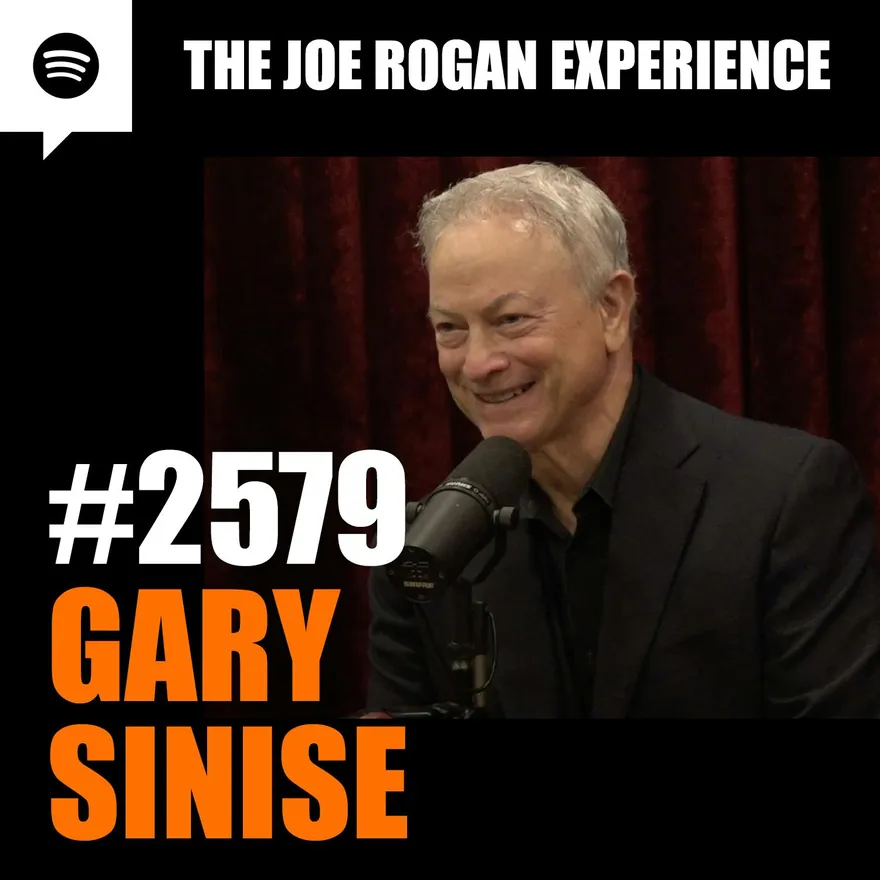

This is a preview of the Shortform summary of the Nov 10, 2026 episode of the The Joe Rogan Experience
Sign up for Shortform to access the whole episode summary along with additional materials like counterarguments and context.
1-Page Summary
Gary Sinise Foundation's Mission and Veteran Mental Health
Supporting Military Families Through Programs and Community
Established in 2011, the Gary Sinise Foundation provides mental wellness support, financial aid, housing, and recreation services to veterans and their families. Its flagship Snowball Express program brings over a thousand children of fallen service members to Disney World annually, creating community among kids who have lost parents to military service or first responder duty.
Addressing the Veteran Suicide Crisis
Post-9/11 combat veteran suicide rates are more than four times higher than combat deaths—over 30,000 suicides compared to 7,000 combat fatalities. The foundation prioritizes mental wellness and peer support, emphasizing that veterans must not endure hardship in isolation. Many veterans view their struggles as weakness and stay silent, preventing intervention even from close family members.
Transition Challenges and Breaking Down Stigma
Veterans leaving military life often struggle with isolation and finding meaningful civilian work, despite available support programs. The foundation proactively reaches out rather than waiting for help requests. By normalizing conversations about mental health through podcasts and public appearances, Sinise and his foundation work to break down stigma and ensure culturally sensitive, accessible support tailored to trauma, grief, and identity crises.
Vietnam Veterans' Treatment Shaped Modern Support Efforts
Learning From Past Failures
Gary Sinise describes how Vietnam veterans in his family faced national rejection, blamed for the war and forced to "hide in the shadows." This stigma motivated him to advocate for service members starting in the 1980s. After 9/11, he observed initial unity supporting troops, but worried political divisions might create similar societal fractures. The Vietnam era's failures inspired thousands of nonprofits after 9/11, all aiming to ensure post-9/11 veterans would return to a grateful nation.
The Incomprehensible Combat-to-Civilian Disconnect
Joe Rogan expresses astonishment at veterans transitioning from daily firefights to mundane office work, creating deep psychological disorientation. He recalls a Vietnam veteran teacher whose intense emotional responses illustrated combat's lasting effects. Both Rogan and Sinise note that most veterans receive minimal counseling, with medication numbing rather than healing them.
Valuing Veterans' Skills
Rogan emphasizes society's need to recognize veterans' discipline, leadership, and commitment. He praises businesses like Black Rifle Coffee for hiring veterans and creating communities where their contributions are honored. Integrating veterans meaningfully into civilian life prevents the abandonment that plagued earlier generations.
Iraq and Afghanistan: Media Narratives Versus Ground Reality
Touring Conflict Zones Revealed Unreported Stories
In 2003, Sinise joined Project Salute, a large entertainment tour featuring Kid Rock, LeAnn Womack, and others visiting troops in Iraq's harsh conditions. He toured Saddam Hussein's palaces—ostentatious structures with golden toilets and enormous thrones contrasting sharply with surrounding poverty. While combat operations continued, soldiers rebuilt schools and distributed supplies, with children rushing to hug them. These positive encounters rarely made the news.
Operation Iraqi Children Demonstrated Small Acts' Impact
Witnessing Iraqi children's needs firsthand, Sinise established Operation Iraqi Children to send supplies like pencils, soccer balls, and stuffed animals for troops to distribute. Service members reported that after receiving supplies, local children warned soldiers of hidden bombs, directly preventing violence. The program expanded to Afghanistan, Haiti, and other zones, demonstrating how military-humanitarian efforts could save lives.
Media Bias Distorted Public Perception
Despite positive operations, American media focused exclusively on violence and controversy. Sinise notes that even when journalists joined humanitarian missions, their footage prioritized violence over compassion. Journalists admitted "bad news sells," creating a public image of the military as predominantly destructive while disregarding positive contributions.
Authoritarian Regimes' Brutality
Sinise saw evidence of Saddam's brutality, including a drained pool with blood-stained walls where people were tortured, and palatial luxury contrasting with nearby farmers lacking basic water. Rogan and Sinise compare Iraq under Saddam to North Korea under the Kim dynasty, noting common threads of authoritarian control and human rights abuses. Saddam's sons, particularly Uday, engaged in extreme cruelty, and absolute power fostered evil within the family.
From Acting Career to Veteran Advocacy
High School Theater Launched Sinise's Path
At 16, Gary Sinise was struggling in school when his drama teacher suggested he audition for West Side Story. Cast in a small part, he discovered a passion for acting that transformed him into a top theater student. During the final performance, carrying his friend playing the deceased Tony offstage, Sinise burst into tears—an emotional breakthrough cementing his dedication to theater. At eighteen, he co-founded Steppenwolf Theater with friends, which grew from performances in a church to an award-winning institution launching many careers.
Lieutenant Dan Connected Sinise to Military Advocacy
His 1990s roles in Forrest Gump, Apollo 13, and The Green Mile elevated his profile. Playing Lieutenant Dan in Forrest Gump tied his public persona to military service themes. In 2003, he contacted USO to join an Iraq tour by introducing himself as Lieutenant Dan—the character was instantly recognized, opening doors to veteran support work.
CSI: New York Provided a Platform for Advocacy
For nine years on CSI: New York, Sinise played Mac Taylor, whom he crafted as a Marine veteran of the 1983 Beirut bombing and a 9/11 widow. The show highlighted military trauma and terrorism's impact on American families, reaching millions who might not otherwise encounter narratives about military sacrifice. The series allowed Sinise to balance production with military tours during hiatuses while maintaining public visibility.
Separating Policy From Personnel
During the politically divisive Iraq War, when many in Hollywood disagreed with Bush administration policies, Sinise chose not to politicize his support for troops. Recalling Vietnam veterans' poor treatment, he resolved to support service members regardless of the policies that sent them into harm's way, modeling civic responsibility and building enduring credibility with the military.
Mac Sinise's Battle and Legacy
Five Years Fighting Chordoma
In 2018, Gary's son Mac was diagnosed with chordoma, an incurable and extremely rare cancer affecting only about 90 people annually in its metastatic form. Despite paralysis from the chest down, Mac showed remarkable grace and courage. In 2023, his final year, he completed "Resurrection and Revival," an album directing all proceeds to the Gary Sinise Foundation to support service members and first responders.
Three Legacy Albums Emerged From Mac's Music
After Mac's death, Gary discovered unfinished music on his son's devices. With Mac's original collaborators, Gary produced "Resurrection and Revival Part Two" and later "Part Three," turning grief into action. The vinyl albums, available through the Foundation, support the causes Mac cared about while preserving his artistic legacy.
Personal Loss Deepened Understanding
Mac's battle and passing brought Gary closer to the realities of parental loss and unfathomable grief. His experiences with families of fallen service members had prepared him somewhat for his own hardship. These insights shaped his book "Graceful Warrior," focusing on hope, courage, and perseverance—not just about cancer, but about universal experiences of challenge and loss.
Graceful Warrior Offers Hope to Others
Released on what would have been Mac's 36th birthday, November 10th, "Graceful Warrior" reflects two years of writing and healing. Gary describes it as a family story of shared strength and managing grief. After sharing Mac's story, Gary received messages from fathers and others who found inspiration to confront their own grief, affirming that storytelling can help both speaker and listener find strength to move forward.
1-Page Summary
Additional Materials
Counterarguments
- While the Gary Sinise Foundation provides valuable support, some critics argue that private charity should not be a substitute for comprehensive government responsibility in caring for veterans.
- Programs like Snowball Express, while meaningful, may offer only temporary relief rather than addressing the long-term systemic needs of children who have lost parents in service.
- The focus on peer support and mental wellness, though important, may not be sufficient without broader reforms in the VA healthcare system and increased access to professional mental health care.
- Despite outreach efforts, some veterans may still fall through the cracks due to barriers such as distrust of institutions, geographic isolation, or lack of awareness about available resources.
- Efforts to normalize mental health conversations may not fully overcome deeply ingrained cultural stigmas within military and veteran communities.
- The narrative that society should recognize veterans' skills and hire them, while positive, may inadvertently place the burden of transition on veterans themselves rather than addressing structural barriers in the civilian workforce.
- Highlighting positive military-humanitarian efforts, such as Operation Iraqi Children, does not negate or fully address the broader controversies and negative consequences of the Iraq and Afghanistan wars.
- Criticism of media coverage for focusing on violence overlooks the journalistic responsibility to report on the realities and consequences of war, which often include violence and controversy.
- Separating support for troops from political opinions about war policies, while well-intentioned, can risk depoliticizing the real impacts of those policies on service members and affected populations.
- The emphasis on individual resilience and storytelling in coping with grief, as seen in "Graceful Warrior," may not resonate with everyone and could unintentionally minimize the need for systemic support for bereaved families.
Actionables
- You can reach out to a veteran or military family you know with a simple, regular check-in message or call, making it clear you’re available to listen without judgment or advice. This helps break isolation and stigma by showing genuine care and normalizing open conversations about struggles, even if you don’t have military experience yourself.
- A practical way to honor veterans’ skills is to ask about their experiences and invite them to share advice on leadership, teamwork, or resilience in everyday situations, like group projects or community volunteering. This recognizes their strengths and helps them feel valued beyond their service.
- You can support children of fallen service members by anonymously sending a small care package, card, or book to a local organization or school that serves military families, focusing on encouragement and community rather than loss. This creates a sense of connection and support for kids who may feel alone in their grief.
Get access to the context and additional materials
Veteran Support, Mental Health, and Gary Sinise Foundation's Mission
Gary Sinise Foundation Supports Military Personnel and Families' Needs
Established in 2011 and now in its 16th year, the Gary Sinise Foundation raises and deploys resources across the country and overseas to support service members, veterans, and their families. A key objective of the foundation is to nurture a new generation of grateful Americans by teaching the value of service and volunteerism. The foundation is dedicated to giving back to those who deserve recognition for their sacrifices and service.
The foundation provides a range of services to veterans and their families, focusing on mental wellness, financial aid, housing, and recreation. One of its hallmark programs is Snowball Express, which annually brings over a thousand children of fallen service members to Disney World at no cost to the families. This program fosters connections and healing for children who have lost a parent due to military service or in the line of duty as first responders. At Snowball Express, children who might otherwise feel alone find community and solidarity with others who share similar losses. Volunteers and corporate sponsors make this large-scale event possible, highlighting the communal spirit and widespread support for these families.
Veteran Suicide Crisis Demands Urgent Intervention
The suicide crisis among veterans has reached alarming proportions. Data shows that suicide rates among post-9/11 combat veterans are more than four times higher than the number of combat deaths, with over 30,000 suicides compared to 7,000 combat fatalities. Many veterans view their struggles as a weakness, often staying silent about their suffering, which prevents timely intervention even by those closest to them, such as family and friends.
Effective prevention requires proactive peer support, with "battle buddies" continuing their role after deployment by checking in regularly. The Gary Sinise Foundation prioritizes mental wellness, peer support, and educational awareness to ensure service members and their families know help is available and they do not have to endure hardship in isolation. The foundation also supports and facilitates numerous mental wellness initiatives, working closely with other organizations to ensure continuous, accessible assistance for those at risk.
Military-To-civilian Transition: Psychological and Social Challenges Require Specialized Support
Veterans who remain in the military often adapt better because of the structured community, camaraderie, and sense of purpose. Those who leave frequently face difficulties adjusting to civilian life, experiencing isolation and struggling to find meaningful work. Despite the existence of essential programs that support veteran employment, education, and integration, many veterans fail to seek these resources and isolate themselves further, intensifying their challenges.
The foundation recognizes these challenges and actively reaches out to veterans, rather than waiting for requests for help. I ...
Here’s what you’ll find in our full summary
Veteran Support, Mental Health, and Gary Sinise Foundation's Mission
Additional Materials
Clarifications
- Gary Sinise is an American actor and humanitarian known for his role in "Forrest Gump" and his strong support for military veterans. He founded the Gary Sinise Foundation to honor and assist U.S. service members, veterans, and their families. The foundation reflects his personal commitment to recognizing military sacrifices through various support programs. Sinise's public profile helps raise awareness and funding for veteran causes.
- Snowball Express is named to symbolize the growing support and positive impact that starts small and expands like a snowball rolling downhill. It honors fallen military and first responder heroes by supporting their children, helping them heal through joyful experiences. The event creates a sense of community and belonging for children facing loss. It also raises awareness about the sacrifices made by service members and their families.
- "Post-9/11 combat veterans" refers to military personnel who served in combat operations after the September 11, 2001 terrorist attacks. This period includes conflicts such as the wars in Afghanistan and Iraq. These veterans often face unique mental health challenges due to the nature and duration of these recent conflicts. The term distinguishes them from veterans of earlier wars.
- "Battle buddies" are pairs of service members assigned to watch out for each other's safety and well-being during military operations. This system fosters trust, accountability, and mutual support in high-stress environments. After deployment, the concept extends to emotional and mental health, where battle buddies check in regularly to help identify signs of distress or isolation. Their ongoing support helps veterans feel connected and encourages early intervention if problems arise.
- Veterans often come from military cultures that emphasize strength, resilience, and self-reliance. Admitting to mental health struggles can feel like admitting failure or vulnerability, conflicting with these values. Fear of stigma or negative career impact also discourages seeking help. This mindset can lead to silence and untreated conditions.
- Veterans often face loss of structured daily routines and clear mission goals, which can cause a sense of aimlessness. They may struggle with finding a new identity outside the military culture and camaraderie. Employment challenges include translating military skills to civilian jobs and overcoming employer biases. Additionally, veterans might experience difficulties accessing healthcare and social services tailored to their unique needs.
- Veterans often experience post-traumatic stress disorder (PTSD) from combat or traumatic events. Grief and loss arise from the death of comrades or separation from military life. Identity crises occur as veterans struggle to redefine their purpose outside the military. These issues can deeply affect emotional stability and daily functioning.
- "Culturally sensitive" mental health services for veterans recognize and respect the unique military culture, values, and experiences that shape their identity. These services adapt communication styles and treatment approaches to align with veterans' backgrounds and reduce stigma around seeking help. They also consider factors like rank, branch, combat exposure, and military community bonds. This tailored approach improves trust, engagement, and effectiveness of mental health support. ...
Counterarguments
- While the Gary Sinise Foundation provides valuable support, its reach may be limited compared to the scale of need among all veterans and their families nationwide.
- The focus on high-profile programs like Snowball Express may overshadow less visible but equally critical needs, such as long-term mental health care or support for veterans with disabilities.
- Relying on volunteerism and corporate sponsorships can lead to inconsistent funding and support, potentially affecting the sustainability of programs.
- Emphasizing gratitude and service may unintentionally place the burden of adjustment on veterans themselves, rather than addressing systemic issues within veteran care and reintegration.
- The foundation’s approach, while proactive, may not address deeper structural barriers such as gaps in government-provided veteran healthcare, housing, or employment services.
- Some veterans may feel uncomfortable with public storytelling or media exposure as a m ...
Get access to the context and additional materials
Challenges Of Reintegrating Veterans Into Civilian Life vs. Vietnam-Era Treatment
Vietnam Veterans Faced National Rejection and Stigma, Shaping Modern Veteran Support Efforts
Gary Sinise describes how interacting with Vietnam veterans in his family and through marriage exposed him to the pain and rejection they faced upon returning home. He recounts that Vietnam veterans encountered a hostile and divided American public, where they were blamed for the war and forced to "crawl into the closet and hide in the shadows." This stigma marked the era as a bad time to serve, driving many veterans to feel abandoned and insulted by the country they had represented in conflict. Sinise highlights how these experiences, including family members being combat medics in Vietnam, motivated him to begin advocating for service members in the 1980s out of compassion and a desire to ensure future veterans would not meet similar neglect.
During and after the September 11 attacks, Sinise observed an initial surge of national unity supporting the troops deploying to Afghanistan and Iraq. However, as political divisions resurfaced, there was a risk that returning service members from these conflicts might face similar societal fractures as Vietnam veterans. Having witnessed the negative consequences Vietnam veterans endured, Sinise felt a personal obligation to support Iraq and Afghanistan veterans, visiting troops, supporting the wounded, and eventually founding the Gary Sinise Foundation. He emphasizes that the failures of the Vietnam era inspired the proliferation of thousands of nonprofits after 9/11, all aiming to ensure that post-9/11 veterans would return to a grateful nation instead of one that abandoned them.
Combat to Civilian Life Transition: An Incomprehensible Disconnect
Joe Rogan expresses astonishment at the abrupt and profound shift many veterans experience transitioning from combat to civilian life. He describes scenarios where returning to mundane office environments—such as working at an insurance company after daily firefights and room breaches—creates deep psychological disorientation. Veterans like these often struggle to process their experiences and adjust to work that now seems trivial or devoid of meaning.
Rogan reflects on his high school experience with a Vietnam veteran teacher who displayed a short temper and moments of intense emotional response, attributing it to his unprocessed combat experiences. These reactions illustrated to students the lasting effect combat can have on individuals, showing the incomprehensible gap veterans must bridge.
Both Sinise and Rogan highlight the lack of guidance and meaningful mental health support available to veterans navigating this transition. Rogan notes that most veterans receive scant counseling, and those offered medication often merely get numbed rather than healed. Discussions about real experiences are rare, further isolating those who served. Sinise remarks that ...
Here’s what you’ll find in our full summary
Challenges Of Reintegrating Veterans Into Civilian Life vs. Vietnam-Era Treatment
Additional Materials
Counterarguments
- While Vietnam veterans did face significant stigma, some communities and organizations did support returning service members, and not all veterans experienced rejection to the same degree.
- The narrative of universal national rejection of Vietnam veterans can overshadow the diversity of individual experiences and the efforts of groups that did advocate for veterans at the time.
- The comparison between Vietnam-era and post-9/11 veteran treatment may overlook the unique challenges faced by each generation, including differences in the nature of the conflicts, public opinion, and available support systems.
- The assertion that peacetime youth lack resilience and discipline compared to veterans may generalize or undervalue the strengths and adaptability of civilians who have not served in the military.
- While nonprofits and businesses supporting veterans are valuable, some critics argue that reliance on private charity can allow the government to abdicate its responsibility to provide comprehensive care and support for veterans. ...
Actionables
- you can write a short, handwritten note of appreciation to a veteran you know or encounter, specifically mentioning a quality like discipline or leadership you admire, to help them feel recognized and valued in civilian life; for example, after a conversation with a veteran coworker, jot down a thank-you card highlighting how their reliability or teamwork has made a difference at work.
- a practical way to foster open conversation is to invite a veteran to share a meal or coffee and ask about their transition to civilian life, focusing on listening without judgment or advice, which can help reduce isolation and encourage honest discussion; for instance, simply saying, “I’d love to hear about your experiences if you ever want to talk,” can o ...
Get access to the context and additional materials
Conflict Zones Observations: Iraq, Afghanistan, Authoritarian Regimes Comparisons
Gary Sinise's Iraq Tours Revealed Conflict Complexities Media Missed
In 2003, Gary Sinise joined two major tours in Iraq, the first being Project Salute—a large entertainment initiative involving celebrities like Kid Rock, LeAnn Womack, Paul Rodriguez, Dallas Cowboys cheerleaders, and athletes, with corporate and nonprofit sponsorship. Northwest Airlines provided transportation, and the participants split into groups to visit numerous locations and uplift service members in harsh, sweltering conditions. A highlight included an impromptu USO show: celebrities like Kid Rock and John Stamos performed for thousands of troops crowded into a hangar at 140 degrees, relying on available equipment and spontaneity to entertain.
Surreal Experiences: Impromptu Troop Shows, Visiting Saddam's Palaces, Military Operations vs. Civil Affairs Contrasts
Sinise describes surreal moments from his stints in Iraq. There were spontaneous troop shows and unique outreach opportunities, mingling with soldiers, signing autographs, and sharing moments of laughter. He toured Saddam Hussein’s palaces in Baghdad, observing ostentatious decorations and gaudy luxury, such as golden toilets and enormous thrones, which sharply contrasted with the surroundings of war and poverty. Sinise noted stark differences between the military’s operational side and civil affairs efforts: while combat operations were ongoing, soldiers were also rebuilding schools and assisting local communities. One memorable moment occurred when Sinise joined a convoy to a recently rebuilt school, where children rushed out in joy to greet the soldiers, hugging them and demonstrating affection. Sinise and fellow entertainers sang “You Are My Sunshine,” bringing laughter to a classroom of children despite the language barrier. These positive encounters went largely unreported by mainstream media.
Sinise consistently observed that local communities responded positively to troops distributing supplies and rebuilding infrastructure—actions rarely captured by the news, which focused mainly on conflict and negativity.
Operation Iraqi Children: Sinise's Observations on Humanitarian Needs and the Impact of Small Acts of Kindness
Seeing firsthand the deep need among Iraqi children, Sinise established Operation Iraqi Children—later Operation International Children—to send essential supplies like pencils, paper, crayons, erasers, stuffed animals, and soccer balls for distribution by U.S. troops. The program was designed to help soldiers build trust in communities that could otherwise be hostile, with convoys typically arousing suspicion until the distribution of humanitarian supplies changed perceptions.
Countless letters from service members attested to the program’s impact, including accounts where local children, after receiving supplies, later warned soldiers of hidden bombs, directly preventing violence. The initiative soon expanded beyond Iraq to Afghanistan, Djibouti, Haiti, and other conflict or disaster zones, demonstrating that military-humanitarian support could be combined and scaled to meet needs globally. Sinise saw the sharing of resources as a means not just to foster goodwill but to tangibly save lives and improve relations between soldiers and civilians.
News Favored Negativity Over Positive Stories in Military Operations Reporting, Distorting Public Perception
Despite these positive operations, Sinise was disheartened by American media’s focus on violence and controversy. He notes that the only coverage was of bombings, convoy attacks, or military mistakes—never the stories of school refurbishments, community engagement, or humanitarian convoys. Even when journalists joined such missions, their footage prioritized scenes of violence over acts of compassion. Sinise relates conversations with journalists who admitted that “bad news sells,” compelling networks to highlight only the darkest aspects of war. This bias, he argues, created a public image of the military as predominantly destructive while disregarding the service members’ positive contributions and the complex, often uplifting realities on the ground.
Saddam Hussein's Palaces Reveal Authoritarianism and Disparity
Sinise describes touring several of Saddam Hussein’s palaces—including the opulent, unfinished “Victory Over America Palace,” which famously featured bombed-out halls, grand ballrooms, and over-the-top decor reminiscent of an exaggerated Las Vegas. French cranes sat idle outside, and remnants of regime propaganda, such as giant Saddam heads and cartoonish missile murals aimed at Israel, were everywhere. Saddam’s infamous “Flintstone Village” for his grandchildren stood across from these palaces, underscoring the dictator’s focus on personal luxury amid national chaos.
Sinise encountered palpable evidence of brutality: he saw a drained swimming pool with blood on its walls, where people had reportedly been tortured and executed, and learned of a soccer stadium used for similar atrocities. The palatial luxury existed in jarring contrast to the suffering endured by most Ir ...
Here’s what you’ll find in our full summary
Conflict Zones Observations: Iraq, Afghanistan, Authoritarian Regimes Comparisons
Additional Materials
Counterarguments
- While Gary Sinise’s experiences highlight positive interactions between U.S. troops and local communities, numerous independent reports and academic studies have documented widespread civilian casualties, displacement, and resentment toward foreign military presence in Iraq and Afghanistan, suggesting that positive encounters were not universal.
- The assertion that mainstream media ignored positive stories may overlook the fact that some outlets did report on humanitarian efforts, but such stories were often overshadowed by the scale and frequency of violence, which was itself newsworthy and had significant impact on local populations.
- Humanitarian initiatives like Operation Iraqi Children, while beneficial, have been critiqued by some humanitarian organizations for potentially blurring the lines between military and aid work, which can endanger aid workers and complicate perceptions of neutrality.
- The claim that distributing supplies changed local perceptions and reduced hostility does not account for instances where such efforts were viewed with suspicion or as attempts at propaganda, and in some cases, did not prevent attacks on troops.
- Comparisons between Iraq under Saddam Hussein and North Korea under the Kim dynasty, while highlighting similarities in authoritarianism, may oversimplify the distinct historical, cultural, and geopolitical contexts of each regime.
- The focus on the brutality and excesses of Saddam Hussein’s regime, while accurate, does not address the complex legacy of foreign intervention, including the destabilization and sectarian viol ...
Actionables
- You can regularly seek out and share lesser-known stories of humanitarian efforts or positive community impact from conflict zones by following independent journalists or local sources on social media, then summarizing and posting these stories in your own words to your personal network to help balance public perception.
- A practical way to understand the realities of authoritarianism and its effects on ordinary people is to read memoirs or firsthand accounts from survivors of such regimes, then reflect by writing a short journal entry or letter to yourself about how unchecked power and propaganda can shape societies and what safeguards you value in your own community.
- You can support t ...
Get access to the context and additional materials
Gary Sinise's Acting Career and Veteran Advocacy
Gary Sinise's West Side Story Role Laid Foundations For Veteran Support
A High School Drama Teacher's Suggestion Changed Sinise's Life Direction
Gary Sinise’s acting journey began when he was a sophomore at Highland Park High School. At 16, he was more interested in his rock band than in academics or theater, and on the verge of being expelled as he struggled in school. His high school drama teacher approached Sinise and his bandmates, suggesting they audition for her production of West Side Story, seeing in them the perfect gang members for the show. Initially dismissive but curious, Sinise attended the audition, partly enticed by the number of girls involved. Despite his inexperience and lack of seriousness, he was cast in a small part—a turning point that would alter the course of his life.
Sinise's Emotional Theater Breakthrough in West Side Story
Sinise describes how joining the cast introduced him to a new circle of supportive friends in the theater department. Rehearsing and performing West Side Story ignited a passion for acting that would define his high school years. During the final performance, Sinise recounts a deeply emotional moment carrying his best friend, who played Tony, offstage after the character’s death. Overcome, Sinise burst into tears, prompting his fellow cast members—aware of his personal transformation during the play—to pull him to the front for a shared bow. This emotional breakthrough cemented his dedication to acting and steered him toward becoming a top theater student.
Sinise Co-founds Steppenwolf Theater at Eighteen
After high school, not interested in college due to continued academic struggles, Sinise forged ahead with his passion. At eighteen, he teamed up with friends, including Jeff Perry and Terry Kinney, to found Steppenwolf Theater in 1976. They began with plays in a church, relying on donations, and grew from a grassroots endeavor into an award-winning institution with a city-block-sized campus in Chicago. Steppenwolf launched the careers of many, including Laurie Metcalf and Joan Allen, and stands as a testament to the ambition and creativity kindled by his early theater experience and supportive mentors.
Sinise's Roles in Forrest Gump and Apollo 13 Bolstered His Acting Credentials and Advocacy Profile
Lieutenant Dan Taylor's Redemption Arc Resonated With Audiences, Linking Sinise to Military Service
The 1990s marked a major leap in Sinise’s film career with roles in iconic movies such as Forrest Gump, Apollo 13, and The Green Mile. His portrayal of Lieutenant Dan Taylor in Forrest Gump was pivotal—not only did the character’s redemption arc resonate deeply with audiences, but it tied Sinise’s public persona to the themes of military service and sacrifice. He notes how, after Forrest Gump, everyone recognized "Lieutenant Dan" even if they didn't know Sinise by name.
Public Recognition Aided Sinise's USO Tours To Iraq
This connection opened doors to veteran and military support. In 2003, Sinise contacted USO to join a tour in Iraq by introducing himself as Lieutenant Dan. While his name was not instantly recognized by staff, the character was, making it easy for him to join his first major morale-boosting tour overseas—a key milestone in his advocacy for veterans.
The television series CSI: New York Gave Sinise a Platform for Nine Years to Reach Millions and Advocate For Military and First Responder Recognition
Sinise’s dedication to veterans aligned perfectly with his television role in CSI: New York, where he played Mac Taylor for nine years. The series provided a broad, weekly platform, allowing Sinise to ramp up his military and veteran support during hiatuses and trips abroad without losing public visibility.
Sinise Crafted Mac Taylor As a Marine Veteran of the 1983 Beirut Bombing and a 9/11 Widow, Highlighting Military Trauma and Terrorism's Impact on American Families
Sinise was deliberate in crafting Mac Taylor as a Marine veteran of the 1983 Beirut barracks bombing and as a man who lost his wife on 9/11. By emphasizing these backstories, the show highlighted both military trauma and the impact of terrorism on American families. Sinise ensured that episodes referenced real events and honored the memory of service members lost in Beirut and the victims of September 11.
Show Aired to Align With Sinise's Military Tours and Veteran Support, Allowing Breaks From Filming to Visit Troops While Maintaining Public Visibility
Throughout his time on the show, Sinise balanced production with military advocacy, often spending hiatuses performing concerts for troops or traveling on USO tours. Sharing these efforts with cast and crew, he maintained a positive environment for supporting his advocacy work while keeping his commitments to the show.
I ...
Here’s what you’ll find in our full summary
Gary Sinise's Acting Career and Veteran Advocacy
Additional Materials
Counterarguments
- While Sinise’s advocacy for veterans is widely praised, some critics argue that celebrity involvement in military causes can sometimes overshadow the voices and needs of actual veterans.
- The portrayal of military characters in popular media, such as Lieutenant Dan in Forrest Gump or Mac Taylor in CSI: New York, may simplify or dramatize the complexities of military service and trauma for entertainment purposes.
- Although Sinise is credited with raising awareness about veterans’ issues, some believe that systemic change requires policy advocacy and government action, which celebrity-driven charity work alone cannot achieve.
- The focus on individual acts of support, such as USO tours or foundation work, may inadvertently shift attention away from broader issues like veteran homelessness, mental health care, and reintegration challenges.
- While Sinise’s approach to separating politics from troop support is seen as a ...
Actionables
- you can reach out to someone in your community who serves (like a veteran, first responder, or military family) and ask if there’s a small way you can support or recognize them, such as sending a thank-you note or offering to help with a simple task, to foster direct, nonpolitical appreciation and connection.
- a practical way to honor service and sacrifice in everyday life is to set a recurring reminder to learn about a real-life story of a service member or first responder, then share what you learned with a friend or family member to help broaden awareness and empathy in your circle.
- you can use your social media or ...

Get access to the context and additional materials
Gary's Journey: From Theater Founding to Son Mac's Death
Mac Sinise, Gary's Son, Was Diagnosed With Incurable Chordoma In 2018, Starting a Five-And-a-Half-Year Battle With Devastating Consequences
In 2018, Gary Sinise’s son Mac was diagnosed with chordoma, an incurable and extremely rare cancer that affects only about 90 people per year in its metastatic form in the United States, and roughly 300 cases annually overall. The cancer’s rarity meant few had even heard of it. Mac, a talented drummer, began experiencing severe pain while on tour after college. Concerned, his family brought him to a spine specialist who discovered a giant tumor on his tailbone with a CT scan in August 2018. By September, Mac underwent surgery to remove the tumor. Despite initial treatment, the cancer returned in May 2019 and began to spread, leading to ongoing, consistent challenges throughout Mac's life.
Despite His Diagnosis, Mac Showed Grace, Courage, and Creativity In His Final Years
Even as chordoma took a severe toll, including paralysis from the chest down, Mac embodied remarkable grace and courage, reminiscent of a relentless protagonist from the film "1917." Refusing to give up, he focused on creativity and legacy. In 2023, the final year of his life, Mac completed “Resurrection and Revival,” an album that began with a piece he’d started in college but had never finished. Mac aspired to have vinyl records made and decided all proceeds should go to the Gary Sinise Foundation, showing his characteristic generosity by supporting service members and first responders through his art. The vinyl album continues to be available at the Gary Sinise Foundation website, keeping his wish alive.
After Mac's Death, Gary Discovered Hidden Music, Leading To Three Legacy Albums
Following Mac’s death, Gary began sorting through his son’s laptop and iPad, discovering a trove of unfinished and unreleased music. Gary felt compelled to fulfill Mac’s artistic vision, gathering the collaborators who had aided Mac on his first album. Together, they produced “Resurrection and Revival Part Two” and, after finding even more music in 2025, “Resurrection and Revival Part Three.” This process became a healing journey for Gary, turning grief into action and ensuring that Mac’s music and spirit would live on. The albums, available as vinyl records through the Foundation, stand as lasting testaments to Mac’s resilience, creativity, and the power of legacy—directly supporting the causes Mac cared for.
Parental Loss Deepened Gary's Empathy for Grieving Military and First Responder Families
Mac’s battle and eventual passing profoundly affected Gary, who already had extensive experience supporting families of fallen or wounded service members. Witnessing his own son’s grace, perseverance, and the family’s mutual support brought Gary closer to the realities of parental loss and deep, unfathomable grief. In processing Mac's illness and passing, Gary drew on inspiration from families whose loved ones endured catastrophic injuries or losses in military service. Their courage and steadfastness had long moved him, and he recognized that in some way, his own experiences prepared him for the hardship his family would face. These insights, together with Mac’s e ...
Here’s what you’ll find in our full summary
Gary's Journey: From Theater Founding to Son Mac's Death
Additional Materials
Counterarguments
- While Mac’s story is inspiring, the focus on legacy and creativity may not resonate with all families facing terminal illness, as not everyone has the resources or support to pursue such projects.
- The narrative centers on a high-profile family with access to medical care, artistic collaborators, and a public platform, which may not reflect the experiences of most families dealing with rare cancers or grief.
- Emphasizing the manageability of grief and the power of storytelling may unintentionally minimize the complexity and individuality of the grieving process for others.
- The connection between Mac’s illness and the experiences of militar ...
Actionables
- you can create a private digital memory box by collecting unfinished projects, voice notes, or creative works from loved ones and organizing them in a secure folder, then invite family members to add their own reflections or creative responses, building a collaborative legacy that can be revisited during times of grief or celebration.
- a practical way to support others facing loss is to write a short, handwritten note or email to someone you know who is grieving, sharing a specific memory or quality you admired about their loved one, which helps them feel seen and keeps the person's spirit alive in a tangible way.
- you can set aside a regular time each month to list ...

Get access to the context and additional materials

 1-Page Summary
- Veteran Support, Mental Health, and Gary Sinise Foundation's Mission
- Challenges Of Reintegrating Veterans Into Civilian Life vs. Vietnam-Era Treatment
- Conflict Zones Observations: Iraq, Afghanistan, Authoritarian Regimes Comparisons
- Gary Sinise's Acting Career and Veteran Advocacy
- Gary's Journey: From Theater Founding to Son Mac's Death
Create Summaries for anything on the web
Download the Shortform Chrome extension for your browser
