

#2572 - Colum Tyrrell
In this episode of The Joe Rogan Experience, Joe Rogan and Irish comedian Colum Tyrrell examine a wide range of topics spanning American politics, wildlife conservation, media consumption, and comedy. They discuss Donald Trump's post-election wealth accumulation through cryptocurrency ventures, raising questions about the intersection of legality and ethics in modern politics. The conversation also covers pharmaceutical industry influence, the decline of traditional news media, and privacy concerns around modern technology.
Beyond politics and media, Rogan and Tyrrell explore the ecological benefits of regulated hunting, the ethics of bow hunting, and personal experiences in nature. Tyrrell shares insights from his comedy career, including the release of his new special and the challenge of keeping material fresh. The episode also touches on Irish history, the Israeli-Palestinian conflict, and U.S. military interventions, weaving together observations about power, culture, and human connection to the natural world.
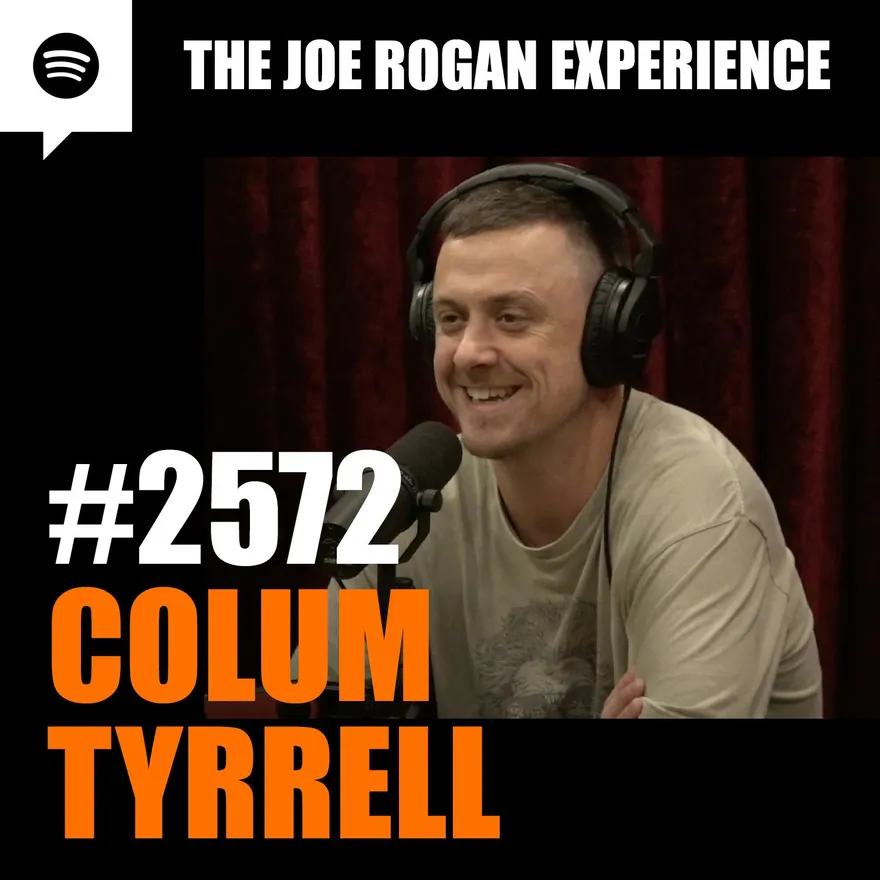

This is a preview of the Shortform summary of the Oct 29, 2026 episode of the The Joe Rogan Experience
Sign up for Shortform to access the whole episode summary along with additional materials like counterarguments and context.
1-Page Summary
Politics, Money, and Power
Joe Rogan, Colum Tyrrell, and Jamie Vernon examine Donald Trump's unprecedented wealth accumulation and controversial public conduct, raising questions about legality, ethics, and the state of American governance.
Trump's Wealth Growth and Cryptocurrency Ventures
Rogan notes that Trump's net worth surged from $2.7 billion to $4.1 billion after the 2024 election, ultimately reaching $6.4 billion through business ventures including cryptocurrency and meme coins. The hosts discuss how Trump's meme coin and crypto investments, while technically legal, raise serious ethical concerns—Tyrrell describes such coins as "essentially dumps," while Rogan calls them Ponzi schemes. Vernon references a federal lawsuit alleging Trump unlawfully profited from UAE-linked deals, including a $500 million purchase of a 49% stake and a $2 billion World Liberty USD stable coin acquisition.
Ethical Failures in American Politics
The conversation highlights how technical legality doesn't equal ethical conduct. Rogan draws parallels to Hunter Biden's art sales, noting that meme coins and art both function as potential money laundering schemes exploiting legal loopholes. The hosts criticize the American political system for tolerating such behavior, observing that unlike other countries, the U.S. enables public officials to accumulate massive wealth while supposedly serving the public interest.
Trump's Public Behavior and Media Feuds
Trump's combative nature emerges in a lengthy Truth Social post attacking Bill Maher after poll criticism. The hosts describe it as reading like a "breakup letter," featuring irregular capitalizations, repeated insults calling Maher a "loser," and false poll claims. They note Trump's departure from traditional presidential decorum, including provocative rhetoric and bringing Nicki Minaj to rallies.
Pharmaceutical Industry Influence
Tyrrell and Rogan discuss how pharmaceutical companies wield power through advertising, effectively buying media protection from scrutiny. They point out that only the U.S. and New Zealand permit direct-to-consumer pharma ads. The Purdue Pharma [restricted term] scandal is cited as proof that predatory pharmaceutical marketing is industry standard, with drugs like [restricted term] escaping similar scrutiny despite causing addiction crises.
Nature, Conservation, and Hunting
Wildlife Management and Conservation Funding
Rogan emphasizes that regulated hunting serves an important ecological role, preventing population collapse from starvation and disease. He highlights the Pittman-Robertson Wildlife Restoration Act, which generates $800 million to $1.2 billion annually for conservation through an excise tax on firearms and ammunition, with 73-74% coming from non-hunters purchasing these items for recreation or home defense.
Bow Hunting Ethics and Practice
Bow hunting requires significantly more skill than rifle hunting, Rogan explains, demanding close proximity within 80 yards and detailed knowledge of animal behavior. Tyrrell compares the pride of eating hunted meat to growing herbs, noting that such deeply involved food sourcing is more ethical than industrial agriculture.
Predator Encounters and Wilderness Dangers
Rogan shares stories of wolf attacks during World War I, when packs killed both soldiers and livestock after habitats were disturbed. He also discusses mountain lions' eerie vocalizations and the particular danger of moose, especially cows with calves, which will fearlessly defend themselves and can overpower humans.
Personal Nature Experiences
Tyrrell describes his transformative trip to Big Bend for stargazing enhanced by LSD, providing profound perspective on his place in the universe. He asserts that hunters often possess stronger environmental values than city dwellers, understanding "leave no trace" ethics through direct wilderness experience. Rogan concludes that such experiences fulfill human needs that cities cannot, relieving anxiety and restoring balance.
Media, Information Consumption, and Society
Decline of Traditional News
Rogan and Tyrrell observe that traditional TV news is losing relevance, especially among young people who find it artificial and embarrassing. Tyrrell highlights the sensationalized production style—flashy graphics, dramatic music—that turns journalism into fear-provoking entertainment. Older generations remain loyal to TV news, however, having been raised to trust it as reliable.
Information Overload Effects
Rogan describes how constant exposure to global catastrophes creates psychological exhaustion. Both hosts discuss how graphic violence and tragedy, once rare, are now normalized online, desensitizing society and altering how people communicate. They note a paradox: ignoring news brings peace but allows dangers to grow, while constant monitoring produces anxiety without empowering action.
Technology Surveillance
Vernon raises concerns about Samsung TVs listening through microphones, with Tyrrell adding that various home devices constantly collect user data. Rogan discusses TikTok's invasive former terms of service, which allowed access to other computers on the same network, reading keystrokes and accessing passwords. A security expert called TikTok "one of the worst pieces of software" ever encountered.
Comedy and Stand-Up Comedy
Colum's Career and New Special
Colum Tyrrell, an Irish comedian who immigrated to America in 2014, releases his special "Bells and Whistles" on YouTube. He describes Ireland's harsh comedy crowds, where audiences directly call out weak material, but also offer deeply rewarding appreciation for success.
Developing Material and Maintaining Freshness
Colum discusses the challenge of avoiding robotic recitation as material becomes familiar. He intentionally varies phrasing and details to keep performances fresh, citing Patrice O'Neal and Bill Burr as examples of comics who never repeat sets verbatim, maintaining spontaneity and authenticity.
Podcast Influence and Comedy Legends
Rogan and Colum trace podcasting's roots to Opie and Anthony, which fostered unstructured conversations stretching hours. This influenced modern podcasts' creative freedom. They revere Patrice O'Neal as a genius whose improvisational skills kept every set unpredictable, with Rogan speculating he would have been a top podcaster had he lived longer.
History and Geopolitics
Irish Historical Trauma
Tyrrell and Rogan discuss how historical trauma, particularly starvation, shaped Irish culture. Between 1845 and 1852, one million Irish died from famine and two million emigrated. Tyrrell emphasizes that British policies—seizing land, forcing reliance on potatoes, and shipping food to Britain during the crisis—made this a "forced famine."
Ireland's Ancient Fauna
Tyrrell notes that Ireland once had bears and wolves, hunted to extinction before documentation. Fishermen occasionally discover Irish elk fossils, the largest deer species with antlers far larger than a moose's. Modern deer hunting thrives, with YouTubers like Cathal Rowan documenting hunts.
Israeli-Palestinian Conflict
Tyrrell claims Irish cultural memory of oppression drives widespread support for Palestinians, though he expresses frustration with the conflict's prolonged nature. He notes a recent Israeli election saw only 16% turnout despite record votes, speculating many Israelis in America don't participate.
Military Interventions
Rogan describes the Gulf of Tonkin incident as a false-flag operation justifying Vietnam War escalation, leading to millions of deaths. He notes Jim Morrison's father was involved, highlighting connections between 1960s counterculture and military-intelligence operations. The hosts discuss persistent pressure on U.S. administrations to bomb Iran, with speculation that strikes may resume after elections.
1-Page Summary
Additional Materials
Clarifications
- The Pittman-Robertson Wildlife Restoration Act, passed in 1937, imposes an excise tax on firearms, ammunition, and archery equipment. Funds collected are distributed to state wildlife agencies for habitat restoration, wildlife management, and hunter education. This federal-state partnership has significantly contributed to the recovery of many endangered species and the expansion of public hunting lands. It is considered a model for conservation funding in the United States.
- Meme coins are cryptocurrencies created mainly as jokes or trends, often lacking real utility or backing. Their value typically spikes due to hype and social media, not fundamental worth. A "dump" occurs when early holders sell large amounts, causing the price to crash and leaving late investors with losses. Ponzi schemes use new investors' money to pay returns to earlier ones, creating unsustainable growth that collapses when recruitment stops.
- Hunter Biden's art sales have been criticized because buyers pay high prices, potentially to gain influence rather than for the art's value. Meme coins are low-value cryptocurrencies often promoted to inflate prices artificially. Both can be exploited to move or disguise illicit money by creating fake transactions. This exploits legal gaps, making it hard to prove wrongdoing despite ethical concerns.
- Direct-to-consumer (DTC) pharmaceutical advertising allows drug companies to market prescription medications directly to patients through TV, internet, and print ads. The U.S. and New Zealand are unique in permitting this practice, which can increase patient demand but may also lead to overprescribing and misinformation. Critics argue DTC ads prioritize profits over patient health by encouraging use of expensive or unnecessary drugs. Supporters claim it raises awareness and prompts patients to seek medical advice.
- Purdue Pharma aggressively marketed [restricted term], downplaying its addiction risks. This led to widespread opioid addiction and overdose deaths in the U.S. The company faced numerous lawsuits and filed for bankruptcy in 2019. The scandal exposed how pharmaceutical marketing can prioritize profits over public health.
- Regulated hunting helps control wildlife populations to prevent overpopulation, which can lead to food shortages and disease outbreaks. Without natural predators or hunting, some species reproduce rapidly, causing ecological imbalance. Hunting also supports habitat conservation by funding wildlife management programs. This balance maintains healthy ecosystems and biodiversity.
- Female moose (cows) with calves are highly protective and can become aggressive if they perceive a threat. They are large and powerful animals, capable of inflicting serious injury with their hooves or antlers. Moose attacks often occur when humans unknowingly come too close, especially during calving season in spring or early summer. Unlike predators, moose defend aggressively rather than flee, making encounters particularly dangerous.
- During World War I, many soldiers fought in forested and rural areas where wolf populations were still present. Habitat disruption from warfare, including deforestation and human displacement, increased encounters between wolves and humans. Starving wolf packs, deprived of natural prey, sometimes attacked soldiers and livestock near the front lines. These attacks added to the hardships faced by troops in already dangerous environments.
- Some Samsung smart TVs have microphones and cameras that can be activated remotely, potentially capturing private conversations without users' knowledge. TikTok's former terms of service reportedly allowed the app to access data beyond its own usage, including other devices on the same network. This raised concerns about unauthorized data collection and privacy violations. Security experts warn such practices can expose sensitive personal information to misuse.
- Opie and Anthony were a popular American radio duo known for their uncensored, free-form style. They pioneered long, unscripted conversations that mixed humor, interviews, and controversial topics. Their approach influenced the casual, conversational format common in modern podcasts. Many podcasters credit them with breaking traditional radio norms and inspiring podcast creativity.
- The Irish famine, also called the Great Hunger, was caused by a potato blight that destroyed the staple crop for most Irish people. British government policies, including inadequate relief efforts and continued food exports, worsened the crisis. The famine led to mass starvation, disease, and a significant population decline through death and emigration. It deeply impacted Irish society, culture, and attitudes toward British rule.
- The Irish Potato Famine (1845-1852) was worsened by British government policies that prioritized economic interests over relief efforts. Landlords continued exporting food from Ireland despite widespread starvation. British authorities enforced strict property laws, evicting starving tenants instead of providing aid. These actions turned a natural crop failure into a man-made disaster, hence the term "forced famine."
- The Gulf of Tonkin incident involved reported attacks on U.S. Navy ships by North Vietnamese forces in 1964. Later evidence showed that the second reported attack likely never happened, suggesting the event was manipulated or exaggerated. This incident was used by the U.S. government to gain congressional approval for increased military involvement in Vietnam. It marked a significant escalation, leading to the deployment of large numbers of American troops.
- Jim Morrison's father, George Stephen Morrison, was a U.S. Navy rear admiral involved in the Gulf of Tonkin incident, which escalated the Vietnam War. The 1960s counterculture opposed this war and broader government actions, fostering distrust of military and intelligence agencies. Some believe intelligence agencies infiltrated or manipulated the counterculture to control dissent. This connection highlights tensions between government power and cultural rebellion during that era.
- Israel's political system is a parliamentary democracy with multiple parties, often leading to coalition governments. Voter turnout can be affected by political fatigue due to frequent elections and complex party dynamics. Some citizens, including those living abroad, may feel disconnected or disillusioned, reducing participation. Low turnout can impact the legitimacy and stability of elected governments.
- The pressure to bomb Iran stems from longstanding tensions over Iran's nuclear program and regional influence. The U.S. and its allies fear Iran developing nuclear weapons and supporting militant groups hostile to Western interests. Diplomatic efforts like the Iran nuclear deal have faced setbacks, increasing calls for military action. Regional conflicts and proxy wars further complicate U.S.-Iran relations, fueling ongoing debate over intervention.
Counterarguments
- While Trump's net worth reportedly increased after the 2024 election, estimates of his wealth vary widely depending on the source, and some financial disclosures and independent analyses have questioned the accuracy of such figures.
- Not all cryptocurrency or meme coin ventures are inherently unethical or Ponzi schemes; many are legitimate projects with transparent operations and investor protections.
- Allegations in lawsuits are not proof of wrongdoing; legal processes must determine the validity of claims regarding Trump's UAE-linked deals.
- The accumulation of wealth by public officials is not unique to the United States; similar patterns have been observed in other countries, though the mechanisms and oversight may differ.
- While meme coins and art sales can be exploited for money laundering, most transactions in these markets are legal and above board, and regulatory agencies are increasingly addressing potential abuses.
- Some argue that Trump's public behavior and use of social media reflect a new, more direct style of political communication that resonates with certain segments of the electorate.
- Bringing entertainers to political rallies is a longstanding practice in American politics and is not unique to Trump.
- Pharmaceutical advertising is regulated by the FDA in the U.S., and direct-to-consumer ads must meet specific standards for accuracy and disclosure.
- Drugs like [restricted term] are subject to regulation and prescription controls, and there is ongoing public and governmental scrutiny of their risks and benefits.
- The majority of Pittman-Robertson Act funds come from excise taxes on firearms and ammunition, but the distinction between hunters and non-hunters as contributors is debated, as many gun owners participate in multiple activities.
- Industrial agriculture also provides affordable food at scale, which is essential for feeding large populations, and some argue that regulated hunting is not feasible or desirable everywhere.
- While wilderness experiences can be beneficial, many people find fulfillment and mental health support through urban activities, community engagement, and other non-nature-based pursuits.
- Traditional TV news still reaches millions of viewers and plays a significant role in informing the public, especially during major events or emergencies.
- Exposure to news and global events can also foster awareness, empathy, and civic engagement, not just anxiety or desensitization.
- Many smart devices, including those from Samsung and other brands, offer privacy controls and transparency about data collection, and users can adjust settings to limit data sharing.
- TikTok has updated its terms of service and privacy policies in response to criticism, and similar data collection practices are found in other major social media platforms.
- Comedy audiences and styles vary widely across cultures, and what is considered harsh or supportive in one country may be perceived differently elsewhere.
- The causes and consequences of the Irish famine are complex and debated among historians, with some emphasizing environmental factors alongside British policies.
- Support for Palestinians in Ireland is not universal, and there are diverse opinions within Irish society regarding the Israeli-Palestinian conflict.
- The Gulf of Tonkin incident's characterization as a "false-flag" is debated among historians; while misrepresentations occurred, the full context is complex.
- Connections between military-intelligence operations and 1960s counterculture figures are the subject of speculation and not universally accepted as fact.
Get access to the context and additional materials
Politics, Money, and Power
The intersection of politics, personal wealth accumulation, and public conduct is sharply illustrated by Donald Trump's actions as president and beyond, raising profound questions about legality, ethics, and the future of American governance. The conversation among Joe Rogan, Colum Tyrrell, and Jamie Vernon highlights how Trump’s activities—especially surrounding cryptocurrency, meme coins, and unpredictable public behavior—underscore broader systemic issues in U.S. politics and business.
Trump's Unprecedented Wealth Accumulation While in Office
Trump's Net Worth Rose From $2.7 Billion to $4.1 Billion Post-2024 Election, Totaling $6.4 Billion Through Business, Including Cryptocurrency and Meme Coins
Trump's time in and out of office has been marked by a substantial increase in personal wealth. Rogan notes that Trump's net worth is reported to have grown from $2.7 billion to $4.1 billion after winning the 2024 election, reaching an estimated $6.4 billion through a combination of business enterprises, including highly publicized ventures into cryptocurrency and meme coins. Tyrrell remarks that, aside from the considerable wealth gains, Trump’s apparent free time for such pursuits suggests he is managing to balance personal business interests with presidential duties.
Trump Meme Coin, Crypto Investments: Controversial, Technically Legal Wealth Generation as President; Conflict of Interest, Bribery Concerns From UAE
Both hosts discuss the Trump coin, a meme coin that, along with other crypto investments, contributed significantly to Trump’s wealth. Rogan describes this surge as "crazy," noting the legal gray area: making money from cryptocurrency as a president is not automatically illegal, though it raises red flags if connected to bribery or prohibited benefits from foreign governments. They highlight the unusual nature of a sitting president being closely involved with volatile financial products like meme coins, which they compare to pump-and-dump or Ponzi schemes. Tyrrell plainly states that such get-rich-quick coins are “essentially dumps,” while Rogan says “everyone’s doing that—it’s a Ponzi scheme,” indicating a normalization of financial schemes at the highest level of American politics.
Lawsuit Claims Trump Unlawfully Profited From UAE-linked Deals, Including a $500 Million Purchase of a 49% Stake and a $2 Billion World Liberty USD Stable Coin Acquisition
Legal challenges have mounted, with Vernon referencing an October 2026 federal lawsuit asserting Trump unlawfully benefited from two United Arab Emirates-linked financial transactions: a $500 million purchase of a 49% stake by an entity backed by UAE national security adviser Sheikh Tahnoun bin Zayed Al Nahyan, and a $2 billion purchase of the World Liberty USD stable coin by an Abu Dhabi investment fund. The lawsuit alleges unconstitutional acceptance of foreign emoluments and seeks disclosure and return of these allegedly unlawful profits.
Blurred Line Between Legal and Ethical Political Conduct
Trump's Billion-Dollar Cryptocurrency Schemes Raise Ethical Concerns
The Trump meme coin and related crypto investments exemplify how technical legality does not equate to ethical conduct. As Rogan notes, the law permits presidents to profit from such ventures if no direct law is broken, but these actions deeply conflict with public expectations for ethical leadership.
Meme Coins and Art Sales as Potential Money Laundering Schemes Similar to Hunter Biden Controversy
Rogan draws parallels to controversies involving others, such as Hunter Biden’s high-priced art sales—another gray area allegedly used for indirect money transfers. Meme coins and art are both described as possible fronts for money laundering or bribes, exploiting legal loopholes that allow the politically powerful to receive enormous sums from shadowy sources. They elaborate on how these schemes work: a country or entity invests in a meme coin or artwork, inflating its price, then cashes out after payouts, thus laundering vast sums without overtly illegal transactions.
System Permits Wealth Accumulation Over Public Service, Allowing a President to Prioritize Personal Gain While Ostensibly Serving Americans' Interests
Rogan and Tyrrell criticize the American political system for tolerating, even facilitating, such behavior. They observe that, unlike many other countries that would disallow or punish public officials accumulating wealth at this scale while in office, the U.S. system enables it. Rogan laments that this undermines the ideal of leaders prioritizing the public good over personal gain. They note that an honest candidate openly refusing to pursue wealth would likely be unsuccessful, as the system and electorate reward cunning and self-interest over integrity.
Trump’s Combative and Erratic Public Behavior
Trump Breaks Up With Bill Maher In a Long Truth Social Post After Poll Criticism, Showing His Tendency to Engage In Petty Media Disputes Instead Of Governing
Trump’s intense focus on personal grievances and media feuds comes through in a long, rambling post directed at Bill Maher after Maher criticized his poll numbers. Rogan and Tyrrell marvel at the time and energy Trump devoted to this screed, noting that it reads like a “breakup letter,” full of personal slights, insults, and defensive claims about his popularity.
Letter Features Capitalization Irregularities, Repeatedly Insults Maher As "Loser," Makes False Poll Claims, Suggesting Impulsive Writing or Deliberate Emphasis
The letter is characterized by irregular capitalizations—emphasizing words like “loser,” “fake news,” and “all caps”—and repetitive mocking of Maher. Trump recounts past meetings, accuses Maher of dishonesty, and touts improbable poll numbers, at one point claiming 98-99% Republican support. The hosts describe Trump writing “as he thinks” and speculate his staff lets him get distracted on social media to minimize his meddling in actual government decisions.
Trump's Provocative Rhetoric and Us ...
Here’s what you’ll find in our full summary
Politics, Money, and Power
Additional Materials
Counterarguments
- While Trump's net worth reportedly increased, estimates of his wealth are often disputed and can fluctuate significantly depending on the source and methodology; some financial analysts question the accuracy of such figures.
- There is no definitive evidence that Trump neglected presidential duties in favor of personal business interests; presidents often delegate and multitask, and no formal findings have proven dereliction of duty.
- The legality of presidents engaging in private business, including cryptocurrency, is governed by existing ethics laws and disclosure requirements; unless a law is broken, such activities remain within legal bounds.
- The normalization of meme coins and speculative investments is not unique to political elites; these trends are widespread in broader financial markets and among the general public.
- Allegations in lawsuits, such as those regarding UAE-linked deals, remain unproven until adjudicated in court; accusations do not equate to guilt or legal wrongdoing.
- Ethical standards for presidential conduct are subjective and can vary widely among the public and across cultures; what some view as unethical, others may see as entrepreneurial or innovative.
- The use of art sales or meme coins as potential money laundering fronts is a concern across many sectors, not just politics, and there are existing financial regulations aimed at detecting and preventing such activities.
- The U.S. political system includes checks and balances, such as financial disclosures and oversight committees, designed to deter and address conflicts of interest and corruption.
- Many voters prioritize policy outcomes, leadership style, or ideological alignment over candidates' personal wealth accumulation, suggesting a more complex relationship between wealth and electoral success.
- Public figures across the political spectrum engage in media disputes and unconventional communication styles; this is not exclusive to Trump or a recent phenomenon.
- Irregular capitalization and rhetorical style in public communications are matters of personal expression and do not necessarily indicate impulsivity or lack of professionalism.
- The inclusion of celebrities or unconventional figure ...
Actionables
- you can track and compare the financial disclosures and business dealings of elected officials using public records, then create a simple spreadsheet to spot patterns or potential conflicts of interest over time; this helps you recognize how personal wealth and political power intersect and lets you make more informed voting or advocacy decisions.
- a practical way to spot manipulative marketing is to keep a personal log of pharmaceutical ads you see on TV or online, noting the claims made and any side effects mentioned, then research independent sources to see if the messaging matches reality; this builds your awareness of how advertising shapes perceptions and helps you make more critical health decisions.
- you can experime ...
Get access to the context and additional materials
Nature, Conservation, and Hunting
Ecological Importance of Regulated Hunting and Wildlife Management
Joe Rogan emphasizes that animals inevitably face fatal threats in nature, whether from predators like wolves, winter starvation, or old age that prevents them from eating. He recounts observing emaciated, suffering wildlife and references a winter in Utah where 70% of the mule deer population died due to severe seasonal conditions. Rogan explains that if regulated hunting doesn’t occur, populations can suffer harsh fates, making humane, managed hunting an important part of wildlife management.
He points out the issue of poaching, drawing attention to the critical role that hunting tags and regulations play in protecting both public and private lands from illegal hunting. Without regulated oversight, poaching becomes rampant, undermining conservation efforts.
Rogan highlights the Pittman-Robertson Wildlife Restoration Act, a 1937 federal law that applies an excise tax of 11% on sporting firearms, ammunition, and archery equipment, and 10% on handguns. This law funds state-level wildlife conservation, habitat restoration, and hunter safety programs, paying for game wardens, biologists, and studies like tracking wolf and deer migrations. The Act now generates between $800 million and $1.2 billion annually for these efforts. Notably, though sportsmen initiated the act, about 73–74% of the revenue comes not from hunters but from non-hunters purchasing firearms and ammunition for recreation, collection, or home defense. Rogan and Jamie Vernon agree this wide base of support ensures critical conservation funding, with no serious opposition.
The Ethics and Practice of Bow Hunting
Bow hunting, for Rogan, is far more challenging than rifle hunting. He explains that while rifles can hit targets from long distances with added stability from tripods, successful bow hunting requires getting within 80 yards, demanding skill, physical fitness, and deep understanding of animal behavior. Rogan describes the detailed process: using a rangefinder to determine distance, then dialing the bow’s multi-pin sight accordingly so the arrow falls accurately at that range. Unlike rifles, bows are held steady without extra support, amplifying the difficulty and requiring constant practice, often daily.
Colum Tyrrell draws a parallel between the pride from growing herbs and eating them and the profound connection hunters experience sourcing their own food. Rogan says that preparing and eating meat from a hunted animal carries a memory of every step: stalking, shooting, quartering, and carrying the animal. The product of such deep involvement, Tyrrell argues, is more ethical than meat from industrial agriculture, commonly consumed by people who may oppose hunting.
Predator Behavior and Human Encounters With Apex Animals
Rogan shares remarkable predator stories, including the World War I incident where German and Russian forces declared a temporary ceasefire to address wolf attacks that killed both livestock and soldiers. Contemporary and historical accounts describe wolves infiltrating war fronts and rural villages after their habitats were disturbed by conflict, attacking animals and, at times, humans. Large wolf packs could overpower patrols, demonstrating the raw reality of apex predators.
He also discusses mountain lions, recalling a real-life sighting in Utah’s mountains during a hunt, and notes their eerie, human-like vocalizations. These sounds often go unnoticed in areas with human activity, but chance sightings reveal their presence.
Moose, especially cows with calves, are singled out as particularly dangerous. Rogan recounts a hunting trip in British Columbia, describing the immense size and strength of moose. They will fearlessly defend themselves and their young, sometimes fatally attacking humans. On land, moose can outrun and overpower people, underscoring the need for respect and distance.
Personal Nature Experiences and Conservation Connection
Colum Tyrrell shares his transformative trip to Big Bend for stargazing—one of the darkest ...
Here’s what you’ll find in our full summary
Nature, Conservation, and Hunting
Additional Materials
Counterarguments
- While animals do face natural threats, regulated hunting introduces additional human-caused mortality, which may not always align with ecological balance, especially if quotas are set incorrectly or enforcement is weak.
- Some ecologists argue that natural population controls (predation, disease, starvation) are part of healthy ecosystem dynamics and that human intervention through hunting can disrupt these processes.
- There is debate over whether regulated hunting is always more humane than natural causes of death, as not all hunting results in quick, clean kills, and wounded animals may suffer.
- Poaching remains a significant problem even in areas with regulated hunting, suggesting that regulation alone may not be sufficient to prevent illegal activity.
- The Pittman-Robertson Act’s reliance on firearm and ammunition sales for conservation funding ties wildlife management to the gun industry, which some critics argue is an unstable or ethically problematic funding source.
- The fact that most Pittman-Robertson revenue comes from non-hunters raises questions about whether hunters should receive disproportionate influence over wildlife management decisions.
- Some animal welfare advocates and environmentalists argue that hunting for sport or recreation is ethically questionable, regardless of its regulatory framework or conservation benefits.
- The assertion that bow hunting is more ethical than consuming industrially farmed meat is contested; some argue that plant-based diets or alternative protein sources are more ethical and sustainable.
- The dangers posed by apex predators are sometimes overstated; attacks on humans are rare, and coexistence strategies ...
Actionables
- You can plan a self-guided night hike in a safe, accessible park or nature reserve to experience natural darkness and stargazing, bringing a simple star map or stargazing app to identify constellations and reflect on your place in the universe. This helps reconnect with the night sky and appreciate the awe that comes from being away from city lights.
- A practical way to support wildlife conservation is to choose recreational shooting ranges or archery clubs that publicly contribute a portion of their proceeds to local habitat restoration or wildlife monitoring projects, ensuring your participation directly benefits conservation efforts regardless of your hunting exp ...
Get access to the context and additional materials
Media, Information Consumption, and Society
Traditional Tv News Decline, Rise of Alternative Media
Joe Rogan and Colum Tyrrell observe that traditional television news like CNN and Fox is rapidly losing relevance, especially among young people. Rogan notes that young people simply "tune out" from mainstream news, finding it artificial and embarrassing rather than informative. Tyrrell points out the sensationalized nature of TV news, highlighting the constant use of flashy graphics, dramatic music, and a production style reminiscent of movie directors. This transformation has turned journalism into entertainment that intends to provoke emotion and fear rather than inform viewers. Rogan describes a typical scene where Anderson Cooper stands before a giant screen with charts and "breaking news," but people often phase out the actual content, absorbing little beyond the repeated headlines.
Older generations, however, remain loyal to television news, trusting outlets like Fox News and CNN because they were raised to see "news is truth." Rogan and Tyrrell discuss how these networks recycle the same talking points, cater to the interests of advertisers—particularly pharmaceutical companies—and exhibit political bias. Despite the prevalent bias and artificiality, older viewers still see TV as the primary source of reliable information.
Information Overload and Mental Health
Rogan highlights the profound societal impact of being "inundated by the bad news of the whole world," which creates an environment of psychological exhaustion. The constant barrage of global catastrophes, suffering, and negativity on social media leads many people to feel hopeless and to disconnect from news and devices altogether in a bid to protect their mental health.
Both Rogan and Tyrrell discuss how the graphic visuals and videos of real violence and tragedy, easily encountered on the internet and social feeds, have desensitized society. Rogan reflects on how, in his youth, rare footage like the VHS series "Faces of Death" or early shock sites like rotten.com were novelties, but today exposure to explicit or violent imagery is normalized for children and teens. Tyrrell recalls seeing explicit material at a young age and emphasizes how internet access has made extreme and inappropriate content almost mundane. The normalization of such material has altered not just individual psychology but also the way people communicate online, contributing to a rise in aggressive and dehumanized interactions.
They also talk about the paradox of information today: ignoring bad news brings a degree of peace but allows societal dangers to grow unchecked, while constant monitoring of news produces anxiety and stress, seldom empowering people to act effectively.
Technology Surveillance and Corporate Data Collection
The conversation shifts to the pervasive surveillance enabled by consumer devices. Jamie Vernon raises concerns that Samsung TVs may use ...
Here’s what you’ll find in our full summary
Media, Information Consumption, and Society
Additional Materials
Clarifications
- Joe Rogan is a well-known podcast host and comedian whose show reaches millions, influencing public opinion on media and culture. Colum Tyrrell is a media analyst and commentator recognized for his critiques of modern journalism and information consumption. Their opinions matter because they offer insights based on extensive experience and research in media trends. Their perspectives reflect broader societal shifts in how people engage with news and technology.
- Anderson Cooper is a prominent American journalist and television personality known for his work on CNN. He is recognized for his calm, authoritative reporting style and coverage of major global events. Cooper often serves as a symbol of mainstream cable news journalism. His presence in the text highlights the traditional news format that some viewers find outdated or performative.
- "Faces of Death" is a controversial series of shockumentary videos from the 1970s and 1980s that showed graphic scenes of death and violence, some staged and some real. Rotten.com was a website launched in the late 1990s that hosted disturbing and explicit images and videos, often related to death and accidents. Both became infamous for exposing viewers, especially young people, to extreme and taboo content that was rarely seen in mainstream media. Their relevance lies in how they represent early examples of graphic media exposure that has since become more common and accessible online.
- Pharmaceutical companies spend heavily on TV news advertising to promote prescription drugs to a broad audience. These ads often target older viewers who watch traditional news and may have health concerns. The revenue from these ads influences news programming, encouraging content that aligns with advertisers' interests. This can lead to biased coverage that avoids criticizing pharmaceutical products or policies.
- Terms of service agreements are legal contracts between users and companies that outline rules and permissions for using a product or service. They often contain complex, lengthy language that can be difficult and time-consuming to understand. Most people skip reading them because they trust the company or want quick access to the service. This leads to uninformed consent, where users unknowingly agree to extensive data collection and other conditions.
- TikTok’s software, like some apps, can request extensive permissions that allow it to access device features beyond basic functions. Network access means the app can communicate with other devices on the same Wi-Fi, potentially scanning or interacting with them. This capability raises privacy risks because it could collect sensitive data or monitor activity on multiple devices, not just the one with the app installed. Such access can turn the app into a tool for widespread surveillance or data harvesting within a home or office network.
- Algorithmic content delivery refers to the use of computer programs that select and show content based on user data and behavior. These algorithms analyze what users click, watch, or like to predict and present content that will keep them engaged longer. This process can create "filter bubbles," limiting exposure to diverse viewpoints and reinforcing existing preferences. As a result, it can influence behavior by shaping opinions, emotions, and time spent on platforms.
- Many modern consumer devices, including smart TVs, have built-in microphones and cameras intended for features like voice commands or video calls. These devices can collect audio, video, and usage data, which may be transmitted to manufacturers or third parties for analysis or advertising. Users often unknowingly ...
Counterarguments
- While traditional TV news viewership has declined among young people, these outlets still reach millions daily and remain influential in shaping public discourse and political agendas.
- Some young people continue to consume mainstream news, especially during major events or crises, often through digital platforms or social media accounts affiliated with traditional outlets.
- Sensationalized production techniques are not unique to TV news; many alternative and online media sources also use clickbait headlines, dramatic visuals, and emotionally charged content to attract attention.
- Older generations' trust in television news may be rooted in a lifetime of experience with journalistic standards and fact-checking processes that are sometimes less rigorous in alternative media.
- While TV news does recycle talking points and cater to advertisers, alternative media can also exhibit bias, promote misinformation, or serve specific ideological or commercial interests.
- Exposure to negative news is not solely a modern phenomenon; newspapers and radio have long reported on global catastrophes, though the speed and volume have increased.
- Not all exposure to graphic or violent content leads to desensitization; some individuals become more empathetic or motivated to take positive action.
- Many platforms and devices offer privacy controls, parental settings, and opt-out options that can limit data collection and exposure to inappropriate content.
- The majority of users do not experience ...
Get access to the context and additional materials
Comedy and Stand-Up Comedy
Colum's Comedy Career Evolution and Special Release
Colum Tyrrell, an Irish comedian, immigrated to America in 2014 after honing his act in Ireland. He started in Ireland’s tight-knit comedy scene, where only a handful of dedicated clubs existed. Most performances took place in improvised spaces like rooms above bars. Irish comedy crowds are noted for being harsh and unforgiving; if a comedian’s material is weak, audience members will directly call it out in real time. Bombing in such an environment feels catastrophic, as people in the crowd are quick to let you know when a joke isn’t funny. However, if you succeed, the experience is deeply rewarding, and the crowd’s appreciation is palpable.
Colum’s comedy career in America has culminated in the release of his special, “Bells and Whistles,” which premieres on YouTube and is filmed in a New York City club. This marks a milestone in his evolution as a stand-up, blending the hard-earned resilience from Irish stages with experiences from American clubs.
Developing New Comedy Material: Process and Challenges
Colum discusses the ongoing challenges of developing new comedy material. He shares an example of his current bit about a caveman couple’s fight. The idea lands strong at the opening, but the middle and end often become inconsistent. Sometimes the premise resolves well, other times it fails, illustrating the unpredictable process of finding where a joke is going.
A significant difficulty in stand-up is avoiding the trap of robotic recitation. As comedians repeat their material night after night, it can become stale and scripted. Colum admits he sometimes finds himself reciting rather than engaging with the audience, so he intentionally varies his phrasing or changes details, even if it weakens the technical precision of a joke. This keeps the performance fresh and signals to the audience that the comedian is present in the room, not just delivering a memorized script. He points to legends like Patrice O’Neal and Bill Burr as examples of comics who never repeat the same set verbatim, maintaining a feeling of spontaneity and authenticity.
The Podcast Medium and Historical Comedy Radio
Joe Rogan and Colum reflect on the evolution of the podcast format, tracing its roots to early comedy radio shows such as Opie and Anthony. This show fostered organic, unstructured conversations, allowing comedians like Patrice O’Neal, Jim Norton, and Bill Burr to engage in long, contemplative discussions. Unlike Howard Stern’s structured interviews, Opie and Anthony supported a relaxed pace—often stretching a single subject over hours—giving space for in-depth exploration and frequent improvisation.
This unstructured, immersive approach influenced modern podcasts, where the absence of rigid format allows conversation and creativity to flourish. Colum recounts his own boost in recognition after appearing on the "Kill Tony" podcast, describing how a single spot generated immediate feedback from friends and family, more so than many other appearances. The instant outreach illustrates the high impact that contemporary podcasts hold for comedians in building their audience and reputation.
Legendary Comedians and Th ...
Here’s what you’ll find in our full summary
Comedy and Stand-Up Comedy
Additional Materials
Counterarguments
- While Irish comedy audiences are described as uniquely harsh and unforgiving, many comedy scenes worldwide (such as in the UK or New York) are also known for their tough crowds, so this may not be exclusive to Ireland.
- The idea that bombing in Ireland feels catastrophic may be subjective; some comedians might find bombing anywhere equally difficult, depending on personal temperament and experience.
- The assertion that varying phrasing and details always keeps performances fresh could be challenged; some audiences may prefer polished, consistent delivery, and too much variation might confuse or alienate them.
- While Patrice O’Neal and Bill Burr are praised for never repeating the same set verbatim, many successful comedians rely on tightly honed, consistent routines to achieve maximum comedic impact.
- The claim that podcasts are inherently superior due to their lack of rigid format could be countered by noting that some listeners prefer structured content for clarity and focus.
- The suggestion that podcasts are the most impactful way for comedians to build an audience may overlook the cont ...
Actionables
- you can practice handling criticism and unpredictability by joining a local group or online community where members give honest, unfiltered feedback on creative work, like writing, jokes, or short videos, so you build resilience and learn to adapt your material in real time; for example, share a short story or meme in a group that values blunt feedback, then tweak your next submission based on their reactions.
- a practical way to keep your presentations, pitches, or even casual stories fresh is to intentionally change small details or phrasing each time you tell them, noticing which variations spark more engagement or laughter from friends or colleagues; for instance, recount a funny incident to different people, each time shifting the setup or punchline, and observe which version lands best.
- you can foster deeper, more spontaneou ...
Get access to the context and additional materials
History and Geopolitics
Irish Cultural Identity and Historical Trauma
Irish Culture's Focus on Misery due to Historical Suffering
Colum Tyrrell and Joe Rogan discuss how historical trauma, particularly the memory of starvation, is embedded in the Irish psyche. They refer to a genetic adaptation in Irish people, theorizing that descendants of those who survived famines are more robust and may have longevity genes that allow their bodies to store calories efficiently. Tyrrell wonders about the intellectual impact of generations deprived of nutrition, joking that it might explain aspects of Irish culture like its enjoyment of drink and dance.
Irish Famine: 1 Million Dead, 2 Million Emigrated (1845-1852)
Between 1845 and 1852, about one million Irish died from starvation and disease, and another two million emigrated in the following decade. Rogan summarizes that the crisis was triggered by a potato blight, but made far worse by poverty, over-reliance on a single crop, and disastrous British government policies. The famine’s terrible toll is central to Irish collective memory.
British Policies During Irish Famine: Land Seizure, Forced Famine, Government Negligence
Tyrrell emphasizes that the British forcibly took food from Ireland, seizing fertile land from Catholics and forcing them onto inferior land where only potatoes would grow. Even during the famine, large quantities of food were shipped to Britain while the Irish starved, prompting Tyrrell to describe it as a “forced famine” or “forced starvation.” Rogan adds that famine suffering was not just a matter of crop failure, but of people being unable to access available food due to government apathy and economic structures.
Irish Historical Fauna and Hunting Traditions
Bears and Wolves in Ireland Hunted To Extinction Before Being Documented
Tyrrell notes that Ireland once had bears and wolves, but both were hunted to extinction before being thoroughly documented. Archaeological finds such as bear bones with cut marks reveal that prehistoric Irish people hunted them. He remarks on efforts to reintroduce wolves and notifies that, as in other countries like Colorado, their presence can become a problem for livestock.
Fishermen Discover Irish Elk, Largest Deer, With Enormous Antlers; Larger Than Moose
Tyrrell and Rogan marvel at the Irish elk, the largest known deer species, with antlers far larger than a moose’s. Fossilized antlers are sometimes discovered by fishermen in lakes. The immense size of Irish elk is a source of fascination, highlighting Ireland’s ancient natural heritage.
Ireland's Deer Hunting Tradition Thrives With Youtubers Like Cathal Rowan
Tyrrell shares that deer hunting is a thriving tradition in modern Ireland. His cousin, Cathal Rowan, is a YouTuber with a channel devoted to deer hunting, gaining a modest following as he documents hunts with family. Tyrrell uses this personal anecdote to illustrate how hunting culture persists, despite changes in Ireland’s fauna and landscape.
The Israeli-Palestinian Conflict and International Politics
Irish Empathy For Underdogs Aligns With Support For Palestinians
Tyrrell claims that Ireland’s cultural memory of oppression underlines widespread Irish support for Palestinians, aligning them with the perceived underdog in global conflicts. He attributes this empathy to generational trauma and a national instinct to side with “the people who are getting genocided.”
Colum Frustrated With Israeli-Palestinian Conflict, Favors Swift Military Resolution Over Prolonged Debate and Media Coverage
Despite this empathy, Tyrrell expresses growing frustration with the drawn-out nature of the Israeli-Palestinian conflict, wishing for a rapid end—even through drastic means—so global attention can move on. He laments the constant cycle of debate and media coverage, critiquing the seemingly endless continuation of violence.
Israeli Election Sees Low 16% Turnout Despite Rec ...
Here’s what you’ll find in our full summary
History and Geopolitics
Additional Materials
Counterarguments
- While historical trauma is a significant aspect of Irish cultural identity, contemporary Irish culture also celebrates resilience, creativity, humor, and global achievements, which are not solely defined by suffering.
- The theory that descendants of famine survivors possess specific genetic adaptations for calorie storage and longevity is still under scientific investigation and remains unproven; environmental and lifestyle factors also play major roles in health outcomes.
- The association between generational malnutrition and cultural traits like enjoyment of drink and dance is speculative and lacks robust scientific evidence.
- Although British policies during the famine were widely criticized, some historians argue that the situation was complex, involving multiple factors such as global economic trends, local landlords, and administrative challenges, not solely deliberate malice.
- The export of food from Ireland during the famine is historically documented, but some scholars note that the scale and impact of these exports are debated, and not all food was forcibly taken.
- The extinction of bears and wolves in Ireland was influenced by a combination of hunting, habitat loss, and changing land use, not solely by human predation.
- Efforts to reintroduce wolves are controversial and face opposition from farmers and rural communities concerned about livestock safety and ecological balance.
- While Irish empathy for Palestinians is widespread, there is also a diversity of opinion within Ireland regarding the Israeli-Palestinian conflict, with some supporting Israel or advocating for a more nuanced approach.
- The claim that a swift military resolution would end the Israeli-Palestinian conflict overlooks the complex historical, political, and humanitarian factors involved, and such actions could lead to further instability and suffering.
- The reported 16% voter turnout in an Israeli election may ...
Actionables
- you can create a personal timeline that maps your family’s migration, hardships, or resilience stories alongside major historical events to better understand how generational trauma or adaptation might shape your own habits and perspectives; for example, note if your ancestors experienced famine, war, or displacement, and reflect on how this might influence your relationship with food, community, or empathy for others.
- a practical way to explore your instinctive empathy for oppressed groups is to keep a journal where you record your emotional reactions to current events involving conflict or injustice, then analyze whether your responses align with your cultural or family history, helping you recognize patterns and make more conscious choices about advocacy or support.
- you ca ...
Get access to the context and additional materials


Create Summaries for anything on the web
Download the Shortform Chrome extension for your browser
