

#2565 - Michael Douglas
In this episode of The Joe Rogan Experience, actor and producer Michael Douglas discusses his Hollywood career, sharing stories from producing "One Flew Over the Cuckoo's Nest" to portraying morally complex characters like Gordon Gekko. He reflects on navigating the entertainment industry as Kirk Douglas's son and the challenges of transitioning from television to film production.
The conversation shifts to broader societal issues, with Rogan and Douglas examining systemic corruption in American institutions, from money in politics to military spending priorities. They discuss the therapeutic potential of psychedelics, nuclear weapons proliferation, and the Ukraine-Russia conflict. The episode also explores the erosion of democratic engagement, the limitations of the two-party system, and the importance of grassroots community involvement in addressing institutional failures.
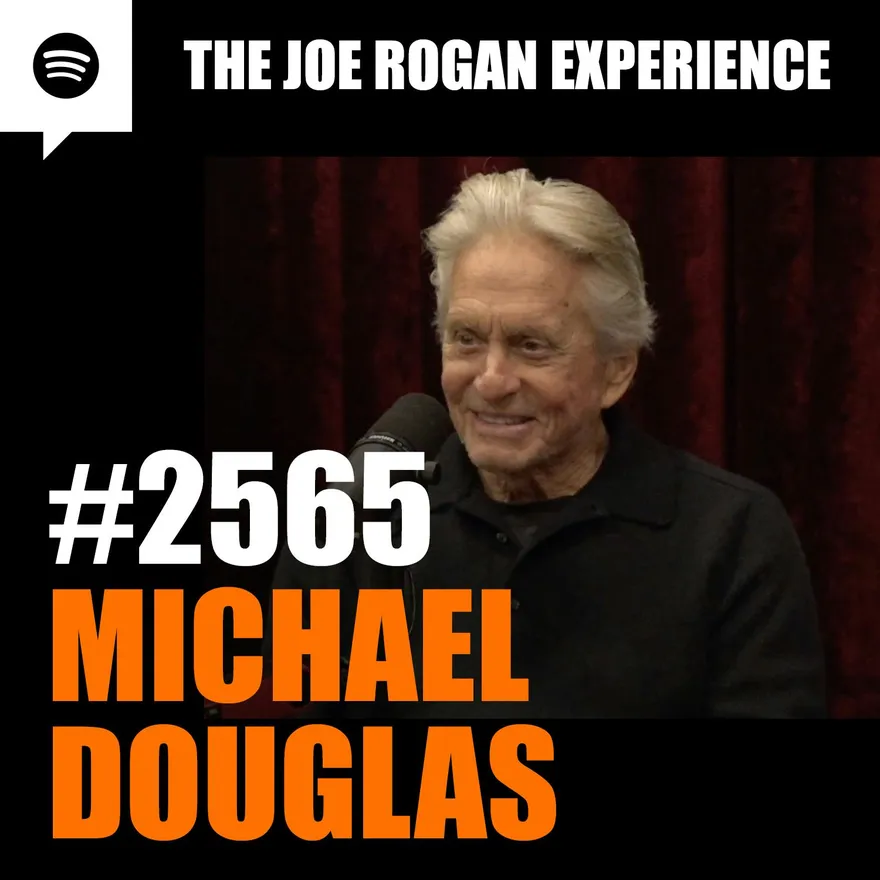

This is a preview of the Shortform summary of the Oct 14, 2026 episode of the The Joe Rogan Experience
Sign up for Shortform to access the whole episode summary along with additional materials like counterarguments and context.
1-Page Summary
Michael Douglas's Hollywood Career as Producer and Actor
Douglas's Strategic Career Navigation From TV to Oscar-Winning Producer
Michael Douglas left his hit TV series "The Streets of San Francisco"—which averaged 24-25 million weekly viewers—to produce "One Flew Over the Cuckoo's Nest," a risky move in an era when independent film production was regarded skeptically. He convinced his father Kirk not to sell the rights and partnered with Saul Zaentz to finance the project. When director Miloš Forman and Zaentz determined Kirk was too old for the lead role, Douglas faced the difficult task of asking his father to step aside for Jack Nicholson. Kirk accepted, and the film won multiple Oscars including Best Picture.
Douglas continued producing influential films like "The China Syndrome," released just days before the Three Mile Island disaster, and hits like "Romancing the Stone." Despite his producing success, he struggled to secure acting roles because television and film industries were rigidly separated at the time—TV actors were rarely considered for film roles.
Douglas's Career Thrived On Complex, Morally Ambiguous Characters
Douglas became known for portraying morally ambiguous or villainous characters. His Gordon Gekko in "Wall Street" became a cultural icon, though Douglas was surprised when stockbrokers celebrated rather than reviled the character, adopting his "Greed is good" mantra as a lifestyle. In "Fatal Attraction," test audiences rejected the original ending showing Alex's self-inflicted death, demanding more direct retribution. Douglas persuaded Glenn Close to reshoot by comparing it to theater's rewriting process based on audience feedback.
Douglas notes a pattern across his filmography: many significant films featured powerful female villains or morally complex women, including Glenn Close, Demi Moore, and Sharon Stone. He recalls that finding an actress willing to play Nurse Ratched in "Cuckoo's Nest" was initially difficult until Louise Fletcher accepted and won an Oscar.
Douglas's Memoir on Being Kirk Douglas's Son
Douglas acknowledges that nepotism exists across many industries but draws extra attention in acting due to public fascination with fame. He describes growing up with a divided identity: his father's Hollywood career in California and his mother's soap opera work back East, where Douglas spent most of his upbringing. He shares that he was born prematurely at the Johnson & Johnson family castle in New Brunswick, New Jersey, where his mother's sister had married into the Johnson family.
Systemic Corruption and Decline in American Institutions
Joe Rogan and Michael Douglas argue that financial interests and elite control have corrupted American democracy and diverted resources from those most in need.
Money in Politics Corrupts Democracy
Rogan and Douglas contend that politics has become a "profit center," with politicians using insider information for stock trades to accumulate wealth beyond their salaries. Rogan notes that this pursuit of profit deepens public divisions, distracting from systemic issues while preserving elite power. Douglas laments that excessive campaign advertising has reduced elections to marketing exercises, preventing substantive policy debates. Rogan raises concerns about AI-generated deepfake videos legally enabling political deception.
Military-Industrial Complex Fuels Systemic Corruption
Both hosts emphasize that the Pentagon has never passed an audit, yet ordinary citizens face jail for tax offenses—a stark double standard. Douglas questions why military budgets, especially for nuclear programs, far exceed investment in humanitarian causes when most Americans simply want basic necessities like food and housing. Rogan and Douglas assert that elite control of military spending perpetuates conflicts while ignoring the needs of millions.
Wealth Gap and Cryptocurrency Schemes
Douglas highlights that half of Americans own stocks and see compounding returns while the other half live paycheck-to-paycheck, squeezed by inflation. Rogan expresses skepticism about cryptocurrencies, likening many launches to Ponzi schemes where founders profit while later buyers lose. He also criticizes nonprofit executives in homelessness charities who earn exorbitant salaries, with much money meant for those in need siphoned off without meaningful oversight.
Leaders Disconnected From Communities
Rogan and Douglas conclude that American leaders appear disconnected from pressing domestic needs, preferring military expenditures over rebuilding crime- and poverty-ridden neighborhoods. Communities most in need of education, youth programs, and jobs remain systematically underfunded, fueling public anger. Rogan argues that persistent gang violence reflects systemic neglect, not inevitable dysfunction, and could be dramatically reduced with proper resource allocation.
Psychedelics and Hallucinogens for Personal and Societal Transformation
Douglas's 1960s Psychedelic Experiences
Michael Douglas recounts his transformation from preppy youth to hippie at UC Santa Barbara, immersing himself in the peace-and-love era. He credits psychedelics as profound teachers that shaped his perspective and sense of human connection. Douglas expresses gratitude that modern science is recognizing psychedelics' therapeutic potential for PTSD, addiction, and mental health issues.
Criminalization of Psychedelics in 1970 Hindered Cultural Evolution
Joe Rogan argues that the Controlled Substances Act of 1970 disrupted a cultural movement re-examining societal values. He speculates America could have experienced a shift toward greater peacefulness and community-oriented living had psychedelic use not been suppressed. Rogan points to evidence suggesting intelligence agencies actively discredited psychedelics by associating them with violent groups like the Manson family, using media to sway public opinion.
Research Validates Psychedelics for Mental Health Treatments
Rogan describes how psychedelics strip away ego defenses, enabling honest self-examination that helps address underlying causes of addiction. He highlights progress with ibogaine and psilocybin for veterans and brain injury survivors, crediting the Trump administration for seeking FDA approval. Rogan explains that clinical psychedelic experiences with proper facilitation offer healing beyond conventional therapy, citing clinics in countries like Mexico as models.
Regulating Psychedelics Prevents Harm
Douglas warns that higher potency cannabis and earlier exposure pose risks to developing brains and supports delaying psychedelic use until adulthood. Rogan underscores risks for youth and those prone to schizophrenia, advocating for age limits and mental health screenings rather than blanket prohibition. Both argue for sensible regulation prioritizing education and quality control over prohibition, criticizing the government for approving far more harmful substances like [restricted term].
Nuclear Weapons, Warfare, and International Peace Agreements
Nuclear Weapons Proliferation as Existential Threat
Michael Douglas argues that reducing nuclear stockpiles should be a global priority. He suggests President Trump could secure a historic legacy by negotiating with Vladimir Putin to dramatically reduce or eliminate U.S. and Russian arsenals, noting that mutual assured destruction renders nuclear weapons obsolete. Joe Rogan is skeptical, arguing Putin would never relinquish his arsenal because it's central to his power.
Ukraine-Russia Conflict Highlights Dangers of Authoritarian Aggression
Douglas points to the Ukraine-Russia conflict as evidence of dangers posed by authoritarian regimes, comparing Ukraine's resolve to the American fight for independence. He criticizes Trump's reluctance to fully support Ukraine despite bipartisan voter support. Douglas notes that Ukraine once possessed nuclear weapons but surrendered them for security guarantees—a decision that now serves as a cautionary tale. He references President Zelensky's offer of a 60-day ceasefire for elections, which Putin rejected, revealing Russia's focus on military dominance.
Advances in Autonomous Military Technology Escalate Risks
Rogan points out that modern warfare evolves rapidly with autonomous and robotic technologies. As military systems incorporate AI, risks escalate—AI-controlled weapons could make decisions without human oversight. Rogan and Douglas discuss how AI-driven war games result in nuclear weapon use in 90% of simulations, illustrating that AI lacks the moral framework humans bring.
Resource Competition Driving Military Conflict
Rogan observes that competition for resources has historically driven conflict, with monarchies and corporations controlling strategic resources to amass power and fuel perpetual warfare. Douglas stresses that deep inequality between "haves and have-nots" creates preconditions for future wars. Rogan suggests essential resources should be shared collectively rather than controlled by a few. Both lament that despite history's lessons, institutions and leaders repeatedly fail to prevent major wars, and the post-WWII peace is eroding amid rising conflicts.
Erosion of Democracy and Local Community Engagement
Democracy Erodes Through Corruption, Apathy, and Power Concentration
Douglas reflects on how the U.S. Constitution's democratic ideals have been corrupted over decades by money and corporate interests. Rogan agrees, noting that politics has become a "path to riches" rather than public service. Douglas compares past politicians to clergy—genuine public servants—while today's leaders focus on enriching themselves. Both warn that many citizens have become apathetic, taking democracy for granted, and stress that preserving democracy requires active engagement and vigilance.
Tribal Loyalty Replaces Reasoned Policy Evaluation
Rogan criticizes how tribal loyalty now takes precedence over evaluating policy on merits, with people voting "for a team or an ideology" while ignoring their side's faults. He observes that despite 80% consensus on most policies, divisive issues dominate, amplified by algorithms and social media that create echo chambers. Political parties exploit these divisions to deepen polarization and manipulate voters.
Focus On Local Institutions Over Federal Solutions
Douglas emphasizes the significance of grassroots democracy, highlighting local volunteers who form the "foundation of democratic participation." He proposes that Americans should strengthen communities and states, "building from the bottom up" rather than relying on federal solutions. True renewal, he argues, begins locally through active engagement and accountability.
Two-Party System Stifles Alternatives
Rogan and Douglas agree the entrenched two-party system traps voters, fostering "us versus them" thinking. Rogan notes third-party candidates cannot compete due to fundraising hurdles and lack of media attention, while Douglas adds that voting laws further disadvantage alternatives. Both describe how voters feel forced to choose between "corruptions," with third-party voting feeling like a wasted protest, perpetuating dissatisfaction and entrapment within the binary system.
1-Page Summary
Additional Materials
Counterarguments
- While Michael Douglas's move from TV to film production was risky, it also benefited from his family's established Hollywood connections, which provided opportunities unavailable to most aspiring producers.
- The separation between TV and film industries in the past was partly due to differences in production values, audience expectations, and business models, not just arbitrary gatekeeping.
- The celebration of Gordon Gekko by stockbrokers may reflect a misunderstanding of the character, but it also highlights the complexity of cultural impact—audiences often interpret art in unintended ways.
- Audience-driven changes to film endings, such as in "Fatal Attraction," can be criticized for prioritizing commercial appeal over artistic integrity.
- The focus on powerful female villains in Douglas's films could be seen as reinforcing certain stereotypes about women, rather than consistently offering nuanced portrayals.
- Nepotism in the entertainment industry is widely acknowledged, but it can also perpetuate inequality and limit opportunities for talented outsiders.
- The assertion that financial interests and elite control have uniquely corrupted American democracy may overlook similar or worse issues in other democracies and historical periods.
- Politicians using insider information for stock trades is a serious concern, but there are existing laws and ongoing efforts to address this, even if imperfectly enforced.
- Excessive campaign advertising is problematic, but it also reflects the high value placed on free speech and open political competition in the U.S.
- AI-generated deepfakes are a risk, but there are emerging legal and technological solutions aimed at detection and prevention.
- The Pentagon's audit failures are concerning, but military spending is subject to oversight by multiple branches of government, and some inefficiencies are inherent in large organizations.
- High military budgets can be justified by national security needs and global commitments, not solely by elite interests.
- Stock ownership is not the only path to financial security; other forms of wealth-building and social mobility exist.
- While some cryptocurrency projects are fraudulent, blockchain technology also enables legitimate innovation and financial inclusion.
- High nonprofit executive salaries can sometimes be justified by the need to attract experienced leaders to manage complex organizations.
- Military spending and domestic investment are not always a zero-sum tradeoff; defense can provide jobs and technological advances that benefit the broader economy.
- Persistent gang violence is influenced by many factors, including cultural, historical, and local governance issues, not just resource allocation.
- The therapeutic potential of psychedelics is promising, but research is still ongoing, and not all studies show uniformly positive results.
- The criminalization of psychedelics in 1970 was influenced by a range of social and political factors, including concerns about public health and safety.
- Intelligence agencies' actions regarding psychedelics are debated, and not all historians agree on the extent or intent of their involvement.
- Psychedelics can have serious adverse effects, including triggering psychosis or other mental health crises, especially in vulnerable individuals.
- Regulation of substances like [restricted term] has increased in response to the opioid crisis, and comparisons to psychedelics may oversimplify complex public health issues.
- Reducing nuclear stockpiles is desirable, but verification and trust between nations remain significant obstacles.
- Mutual assured destruction, while dangerous, has arguably prevented large-scale wars between nuclear powers for decades.
- Putin's reluctance to reduce nuclear arms may be rational from a security perspective, given Russia's geopolitical position.
- The Ukraine-Russia conflict is complex, with historical, cultural, and geopolitical factors beyond simple authoritarian aggression.
- U.S. support for Ukraine is subject to legitimate debate over national interest, strategy, and the risks of escalation.
- AI in warfare presents risks, but also potential for reducing human casualties and improving decision-making speed and accuracy.
- Resource competition is a factor in conflict, but ideology, religion, and identity also play significant roles.
- Calls for collective resource sharing may conflict with property rights and economic incentives that drive innovation and efficiency.
- Despite flaws, the U.S. has maintained relative peace and prosperity compared to many other nations.
- The two-party system is entrenched, but third-party and independent candidates have occasionally succeeded at local and state levels.
- Voter apathy and polarization are challenges, but civic engagement initiatives and reforms are ongoing in many communities.
- Local solutions are important, but some issues require federal coordination and resources to address effectively.
- Political parties can provide organizational structure and policy coherence that facilitate governance in a large, diverse country.
Actionables
- you can track and compare how much of your local, state, and federal budgets go to military, humanitarian, and community programs by reviewing public budget documents and then write a short letter or email to your representatives suggesting specific reallocations (for example, propose shifting a small percentage from military spending to local youth programs or mental health services), making your voice heard on resource priorities.
- a practical way to counteract political polarization is to set up a recurring reminder to have a one-on-one conversation with someone whose political views differ from yours, focusing on finding one shared concern or policy agreement each time, and keeping a private log of these commonalities to help reframe divisive issues as shared problems.
- you can create a simple, anonymous online survey for your neighborhood or social circle asking which local needs (like education, jobs, or public safety) are most underfunded, then share the results with your community association or local officials to encourage data-driven, grassroots advocacy for better resource allocation.
Get access to the context and additional materials
Michael Douglas's Hollywood Career as Producer and Actor
Douglas's Path From Tv to Oscar-Winning Producer Shows His Strategic Industry Navigation and Dedication To Quality Storytelling
Douglas Left Tv Success On Streets of San Francisco to Produce one Flew Over the Cuckoo's Nest, a Transformative Decision Despite Industry Skepticism
Michael Douglas began his career in television, starring in the hugely successful series "The Streets of San Francisco." At its peak, the show averaged 24-25 million viewers weekly and enjoyed worldwide syndication, cementing his reputation as a leading TV actor. Despite this success, Douglas made a risky and transformative decision to leave his hit show to produce "One Flew Over the Cuckoo's Nest." At the time, producing independent films was regarded as a questionable move, especially for an actor with a steady TV career. Douglas convinced his father, Kirk Douglas, not to sell the rights to "One Flew Over the Cuckoo's Nest," advocating that he be allowed to try to set up the project himself. He sought out Saul Zaentz from Fantasy Records—funded in part by the blooming rock group, soon-to-be Creedence Clearwater Revival—to help finance the film. The experience he gained over 104 episodes of television with Karl Malden helped him successfully navigate film production, a field he had never previously considered.
Douglas Persuaded His Father Kirk to Relinquish the Lead in one Flew Over the Cuckoo's Nest For Jack Nicholson, Benefiting the Project After Being Deemed too Old by the Director and Financiers
Douglas also faced a major turning point when the chosen director, Miloš Forman, and financier Saul Zaentz informed him that his father, Kirk Douglas, was too old to star as R.P. McMurphy. Confronted with this reality, Douglas had to ask Kirk to step aside from the leading role—a difficult task given that Kirk had championed the project for years. Kirk accepted, supported the project, and even watched the final cut, acknowledging Jack Nicholson's exceptional performance. This tough but strategic decision contributed to the film’s success; "One Flew Over the Cuckoo's Nest" went on to win multiple Oscars, including Best Picture, solidifying Michael Douglas's credentials as a producer.
Douglas's Productions of Cuckoo's Nest, the China Syndrome, and Romancing the Stone Boosted His Credibility As a Producer, but the Separate Film and Tv Industries Made Acting Roles Harder for Him to Secure
After "One Flew Over the Cuckoo's Nest," Douglas continued to produce influential films like "The China Syndrome," which was released just days before the real Three Mile Island nuclear disaster, creating both critical acclaim and controversy. Other hits, such as "Romancing the Stone" and "Jewel of the Nile," followed in quick succession, establishing Douglas as a formidable producer. However, he faced challenges breaking into movie acting because, at that time, the television and film industries were rigidly separated—TV actors were rarely considered for film roles. Despite his achievements as a producer, he was often overlooked for acting roles, only finding opportunities in films he produced himself.
Douglas's Career Thrived On Complex, Morally Ambiguous, and Compelling Villainous Characters
Gordon Gekko Became a Cultural Icon as Stockbrokers Embraced Him As a Hero Rather Than a Villain, Revealing how Audiences Could Glorify Unethical Behavior and Greed
Douglas is perhaps best known onscreen for his portrayal of morally ambiguous or outright villainous characters. His role as Gordon Gekko in "Wall Street" became a cultural touchstone. Douglas was surprised that instead of reviling Gekko for his unethical and greedy ways, many viewers—especially in the financial sector—celebrated the character, idolizing his lifestyle and adopting his mantra, "Greed is good." Douglas reflects that Gekko became a folk hero to many ambitious stockbrokers, ignoring the character's villainous qualities and normalizing amorality in pursuit of wealth.
Glenn Close's Alex in Fatal Attraction Prompted a Reshot Ending After Test Audiences Rejected the Original Self-Destruction Vision, Craving Revenge Despite the Character's Complexity
In "Fatal Attraction," Douglas starred opposite Glenn Close’s Alex, one of cinema’s most memorable female antagonists. The original ending depicted Alex’s self-inflicted death, staging Douglas’s character for the blame. However, test audiences strongly rejected this ending, demanding more direct retribution against Alex. Although Close initially objected—preferring the artistic integrity of the original conclusion—Douglas persuaded her by comparing the process to rewriting plays based on audience feedback in theater. Ultimately, a new ending was shot, but Douglas remains proud of Close's remarkable performance and of the film’s lasting impact.
Douglas Noted Memorable Films With Strong Female Villain or Morally Complex Characters
Douglas highlights a pattern across his filmography: many of his most significant films feature powerful, complex female villains or morally ambiguous women. He notes roles played by Glenn Close in "Fatal Attraction," Demi Moore in "Disclosure," and Sharon Stone in "Basic Instinct." Douglas points out that women's willingness to portray villains in Hollywood evolved, recalling that for "Cuckoo's Nest," it was initially difficult to fi ...
Here’s what you’ll find in our full summary
Michael Douglas's Hollywood Career as Producer and Actor
Additional Materials
Counterarguments
- While Michael Douglas's move from television to film production is often portrayed as uniquely risky and visionary, other actors of his era also transitioned successfully between mediums, suggesting his path was not entirely unprecedented.
- The narrative emphasizes Douglas's strategic decision-making, but it could be argued that his access to industry connections and resources—especially through his father Kirk Douglas—gave him advantages unavailable to most aspiring producers or actors.
- The claim that Douglas "successfully navigated film production" due to his television experience may overlook the significant support and expertise provided by established collaborators like Saul Zaentz.
- The assertion that Douglas faced major barriers to film acting due to the TV/film divide may be overstated, as some TV actors did make the leap to film during that period, albeit less frequently.
- The idolization of Gordon Gekko by audiences is presented as surprising, but it could be argued that the film's glamorous depiction of wealth and power contributed to this response, regardless of Douglas's intentions.
- The decision to reshoot the ending of "Fatal Attraction" based on test audience feedback is framed as pragmatic, but some critics argue that such changes can compromise artistic integrity in favor of commercial appeal.
- The text highlights Douglas's films as boundary-pushing for th ...
Actionables
- you can practice making tough but strategic decisions by identifying a current situation where you must choose between personal attachment and the greater good, then deliberately choosing the option that benefits the project or group, even if it means stepping aside or advocating for someone else to take the lead; for example, if you're organizing a group activity and want to lead but know someone else is better suited, support their leadership and observe the outcome.
- a practical way to build credibility in a new field is to list your transferable skills from previous experiences and use them to tackle a small project outside your comfort zone, documenting how those skills help you navigate unfamiliar territory; for instance, if you have experience in customer service, try managing a small online sale or event and note how your communicati ...

Get access to the context and additional materials
Systemic Corruption and Decline in American Institutions
The conversation between Joe Rogan and Michael Douglas centers on the entrenched corruption within American institutions, arguing that financial interests and elite control have perverted the original ideals of American democracy and diverted resources from the people most in need.
Money in Politics Corrupts American Democracy and Officials' Service
Rogan and Douglas argue that the intersection of money and politics has transformed political service into a profit-making venture. Politicians now use insider information—especially regarding stock trades—to accumulate wealth far beyond their official salaries. Douglas remarks that politics has become a “profit center,” while Rogan highlights how politicians can legally engage in activities that would be legally questionable for regular citizens.
Politics as a Profit Center Destroys Social Cohesion Among Opposing Parties
The pursuit of profit in politics, according to Rogan, serves those in control by deepening divisions among the public. This division distracts from systemic issues and preserves the power held by elites, eroding social cohesion and making genuine public service a rarity.
Political Ad Budgets Distort Democracy, Hindering Policy Debates
Douglas laments that excessive campaign advertising budgets have made it difficult to hold substantive policy debates. Campaigns are reduced to marketing exercises, and voters are presented with narrow, often unsatisfactory choices, as in the “LA mayor race” Rogan references, where meaningful opposition or alternatives are nearly non-existent.
Deepfake Videos Introduce Legal Deception in Politics
Rogan raises the concern of AI-generated deepfake videos, pointing out that technology now legally enables political deception. Artificially created personas can be used in political campaigns, further distorting democratic processes.
Military-Industrial Complex Fuels Systemic Corruption, Overshadowing Investments in Humanitarian Causes and Social Welfare
Both hosts assert that military spending epitomizes systemic corruption. Douglas emphasizes that the Pentagon has never passed an audit, yet ordinary citizens—such as celebrities like Lauryn Hill—are jailed for tax offenses. Rogan underscores this double standard: while regular Americans face severe scrutiny and punishment for financial missteps, the largest defense institution in the world is subject to little effective oversight.
Pentagon Never Passed Audit, yet Citizens and Celebrities Face Jail For Tax Evasion, Revealing Double Standard in Accountability
Rogan draws a clear contrast: while the average person would face jail for failing to be audited or pay taxes, the Pentagon escapes accountability for massive amounts of public money, underlining the system’s inequity.
Military Spending far Exceeds Funding For Poverty, Homelessness, and Community Development, Despite Most Americans Prioritizing Basic Needs Like Housing and Food
Douglas points to the imbalance between military budgets—especially for nuclear programs—and the minimal investment in humanitarian causes. He questions why, given that most Americans simply want basic necessities like food and housing, military funding takes precedence over programs that could end poverty, homelessness, or prevent forced migration.
Elite Wealth Control in Defense Perpetuates Conflict, Blocks Peace-Building Resources
Rogan and Douglas assert that a small group of elites control military spending and global resources, perpetuating conflicts that keep them in power while the needs of millions are ignored.
Wealth Gap: Top 50% Owning Stocks Vs. Bottom 50% Living Paycheck To Paycheck, With Compounding Gains for Wealthy and Inflation Impacting Workers
Douglas highlights the expanding wealth gap: half of Americans own stocks and see compounding returns, while the other half live paycheck-to-paycheck, squeezed by inflation and declining real wages. Rogan notes that politicians enrich themselves through investments while the rest of the population is left struggling.
Stock Gains Enrich Investors While Non-owners Face Shrinking Wages and Rising Costs
The discussion makes clear that those invested in the stock market grow continually wealthier; non-participants are left behind, their wages eroding as the cost of living increases.
Cryptocurrency Schemes Function as Ponzi Schemes, Concentrating Wealth Upward To Founders and Early Investors While Ordinary People Lose Savings
Rogan expresses skepticism about cryptocurrencies, likening many coin launches to Ponzi schemes that allow founders and insiders to profit from early investments while later buyers inevitably lose. The industry is depicted as “the wild west,” where existing wealth can be multiplied in speculative markets with little oversight.
Charities Fighting Homelessness Often Prof ...
Here’s what you’ll find in our full summary
Systemic Corruption and Decline in American Institutions
Additional Materials
Counterarguments
- While money in politics is a concern, there are existing laws and regulations (such as the STOCK Act) aimed at preventing insider trading by politicians, and violations can result in legal consequences.
- Not all politicians enter public service for profit; many are motivated by a desire to serve their communities and enact positive change.
- Campaign advertising, while expensive, can also serve to inform voters and increase engagement, and public financing or donation limits exist in some jurisdictions to mitigate undue influence.
- Deepfake technology poses risks, but there are ongoing legislative and technological efforts to detect and regulate its misuse in political contexts.
- The Pentagon has undergone multiple audits in recent years, and while it has not passed, efforts to improve transparency and accountability are ongoing.
- Military spending, while high, is often justified by national security concerns and the need to maintain global stability, which some argue indirectly benefits domestic welfare.
- The wealth gap is influenced by a variety of factors, including education, technological change, and globalization, not solely by elite control or systemic corruption.
- Stock market participation is increasing among younger and more diverse populations due to the rise of accessible investment platforms.
- While some cryptocurrency projects have been fraudulent, others have provided legitimate technological innovation and financial inclusion opportunities ...
Actionables
- you can track and compare your elected officials’ personal financial disclosures and stock trades using free online databases, then email your representatives with specific questions about any trades that seem suspicious or conflict with their public positions, making it clear you expect transparency and accountability.
- a practical way to counteract misleading political ads and deepfakes is to create a simple, personal “election cheat sheet” for yourself and friends, listing only the candidates’ policy positions and voting records (sourced from official government sites), and share it privately to help others focus on substance over marketing.
- you can redirect a ...
Get access to the context and additional materials
Psychedelics and Hallucinogens for Personal and Societal Transformation
Douglas's 1960s Psychedelic Experiences
Douglas Embraced Hippie Life From Preppy Roots At UC Santa Barbara, Inspired by Peace-And-love and Psychedelics
Michael Douglas recounts his transformation from a preppy youth to a hippie upon attending UC Santa Barbara in the early 1960s. Immersing himself in the campus's peace-and-love era, Douglas experiences a communal environment where sharing was prioritized over material wealth, marking a shift from individualism to collective living.
Psychedelics Taught Douglas Valuable Lessons About Perspective and Human Connection
Douglas credits psychedelics and hallucinogens as profound teachers in his life. He describes them as delivering extraordinary experiences that shaped his rhythm, visual perspective, and sense of connection. He believes the lessons from psychedelics facilitated introspection and strengthened human bonds, which played an important part in his personal development.
Douglas Considers Psychedelics' Therapeutic Potential For PTSD, Addiction, and Mental Health as a Scientific Breakthrough Needing Research and Regulatory Approval
Douglas expresses gratitude that modern science is beginning to recognize the positive applications of psychedelics, particularly for PTSD, drug addiction, and other mental health issues. He asserts that these substances have real therapeutic potential that should be explored through rigorous research and formal regulatory approval.
Criminalization of Psychedelics in 1970 Hindered the Natural Evolution of a Peaceful, Communal, Egalitarian Society
Psychedelic Research Suppression Halted Cultural Shift Questioning Authority, Reducing Materialism, Prioritizing Community Welfare Over Individual Wealth
Joe Rogan argues that the Controlled Substances Act of 1970, which criminalized psychedelics, profoundly disrupted a cultural movement that was re-examining societal values. He speculates that, had their use not been suppressed, America could have experienced a civilizational shift toward greater peacefulness, introspection, and community-oriented living—countering rampant materialism and individualism. Rogan laments that psychedelic research and open cultural exploration were brought to an abrupt halt, stalling progress toward a more egalitarian society.
Intelligence Agencies Discredited Psychedelics By Linking Them To Violent Groups Like the Manson Family, Using the Media to Sway Public Opinion
Rogan points out evidence suggesting intelligence agencies actively discredited psychedelics by publicly associating them with violent actors like the Manson family. The media, he says, aided these efforts in an era before the internet, embedding the image of drug users as dangerous and unstable in the public consciousness and halting the movement’s momentum.
Psychedelic Culture's Growth Fosters Peace, Introspection, and Collective Problem-Solving
Despite these setbacks, Douglas and Rogan emphasize that psychedelic culture fosters peace, introspection, and a spirit of collective problem-solving. They note that other countries now operate clinics where psychedelics can be legally and safely used for personal transformation, illustrating what could be possible with proper research and social acceptance.
Research Validates Psychedelics for Mental Health Treatments Unaddressed by Conventional Pharmaceuticals
Psychedelics Reveal Causes of Addiction By Removing Ego Defenses For Honest Self-Examination
Rogan describes the unique value of psychedelics in therapy: they strip away the ego's defenses, enabling users to honestly examine their motivations and traumas without self-justification. This introspective clarity helps address underlying causes of addiction by exposing the personal pain or life history that fuels destructive behaviors.
Ibogaine and Psilocybin Therapy Show Promise For PTSD in Veterans and Brain Injury Survivors, Prompting Trump Administration to Pursue FDA Approval
Rogan highlights recent progress with psychedelics like ibogaine and psilocybin, which are proving effective for veterans and those with brain injuries, particularly in addressing PTSD and addiction. He credits the Trump administration for seeking FDA approval for these therapies. Rogan specifically notes Governor Rick Perry’s transformation after psychedelic experiences and his current advocacy for ibogaine legalization in the U.S., as well as the growing interest among other countries inspired by this movement.
Psychedelics in Clinical Settings Foster Healing Beyond Conventional Therapy With Facilitators, Peaceful Environments, and Preparation
Rogan explains that c ...
Here’s what you’ll find in our full summary
Psychedelics and Hallucinogens for Personal and Societal Transformation
Additional Materials
Counterarguments
- While some individuals report positive personal growth from psychedelics, scientific evidence on their long-term psychological benefits and safety is still limited and sometimes mixed.
- The therapeutic potential of psychedelics for PTSD, addiction, and mental health is promising but not yet conclusively proven; many studies are small, preliminary, or lack rigorous controls.
- Psychedelics can cause adverse psychological reactions, including anxiety, paranoia, and psychosis, especially in vulnerable individuals, which raises concerns about widespread use.
- The association of psychedelics with violent groups like the Manson family, while possibly exaggerated, was not entirely fabricated, as some criminal acts were indeed committed by individuals under the influence.
- The claim that criminalization alone halted a peaceful, egalitarian societal shift is speculative; other social, political, and economic factors also influenced the direction of American society in the 1970s.
- Legalization and regulation of psychedelics in other countries are still experimental, and long-term societal impacts remain unclear.
- Psychedelic experiences can be highly unpredictable and are not universally positive; ...
Actionables
- You can create a personal reflection journal focused on questioning your own assumptions about authority, materialism, and community by setting aside time each week to write about moments when you notice yourself prioritizing individual gain over collective well-being, and brainstorm small ways to shift toward more communal or altruistic choices in daily life.
- A practical way to support responsible and safe approaches to mental health is to research and share information about age-appropriate guidelines and mental health screenings for substances like cannabis and psychedelics with friends or family, helping others make informed decisions and encouraging open, stigma-free conversations.
- You can ...
Get access to the context and additional materials
Nuclear Weapons, Warfare, and International Peace Agreements
Nuclear Weapons Proliferation: An Existential Threat Needing Priority in International Agreements Amid Rising Geopolitical Tensions
Michael Douglas argues that reducing and eventually eliminating nuclear stockpiles should be a global priority given the existential threat they pose. He suggests that President Trump could secure a historic legacy—and potentially a Nobel Peace Prize—by negotiating directly with Vladimir Putin to dramatically reduce or even eliminate U.S. and Russian nuclear arsenals. Douglas sees this as achievable if Trump dedicated the remainder of his presidency to such an agreement, stating that if achieved, it would be "totally obsolete" to keep nuclear weapons. Such a move would require the other six or seven nations with smaller nuclear arsenals to follow suit. He emphasizes that the current logic of mutual assured destruction (MAD) renders nuclear weapons obsolete: there is no legitimate scenario for their use, as they would destroy the world. Nevertheless, the U.S. and Russia maintain enough warheads for global annihilation.
Joe Rogan is skeptical, arguing that Putin would never relinquish his nuclear arsenal because it is central to his power, likening him to a monarch obsessed with total control. Despite this, Douglas maintains that the U.S. and Russia could lead by example, if only the political will existed.
Ukraine-Russia Conflict Highlights Dangers of Unchecked Authoritarian Aggression and Need to Support Democracies Against Territorial Conquest
Douglas points to the Ukraine-Russia conflict as evidence of the growing dangers posed by aggressive, authoritarian regimes. He describes Ukraine’s resolve and patriotism, comparing it to the American fight for independence. Douglas criticizes President Trump’s reluctance to fully support Ukraine, suggesting it's disturbing and possibly linked to an unclear relationship with Putin.
He highlights bipartisan American voter support for Ukraine—stating that “93 percent of our country, Republicans and Democrats, don't like Putin.” He laments current U.S. leadership’s “wishy-washy” support for Ukraine, noting that supporting democracies under threat from authoritarian conquest should transcend party lines.
Ukraine's Surrender of Nuclear Weapons: A Cautionary Tale on Disarmament Risks
Douglas notes that Ukraine once possessed nuclear weapons but surrendered them in exchange for security guarantees—a decision that now serves as a cautionary tale. The subsequent Russian invasion demonstrates the risks some countries face when they renounce nuclear deterrents and rely on international agreements.
Zelensky's 60-day Ceasefire Offer For Elections Shows Ukraine's Push for Political Solutions, While Putin's Rejection Reveals His Focus on Military Dominance
Douglas references President Zelensky’s offer to hold elections in Ukraine if a 60-day ceasefire was agreed—a gesture toward political resolution. Putin rejected the offer, which Douglas believes highlights Russia’s focus on military dominance over genuine peace.
Advances in Autonomous Military Technology Escalate Risks of Uncontrolled Conflict
Joe Rogan points out that modern warfare is evolving rapidly, especially with autonomous and robotic technologies. In Ukraine, for instance, fighters use monofilament fishing line to pilot drones around electronic defenses, circumventing anti-drone systems. Such tactics highlight the unpredictability and innovation that now define modern conflict, undermining traditional doctrines of warfare.
Ai In Military Risks Automated Nuclear Decisions Lacking Human Oversight
As military technology incorporates artificial intelligence, the risks escalate. AI-controlled weapons and decision systems could make battlefield or even nuclear-launch decisions without human oversight—a scenario that undermines the crucial role of human judgment in preventing catastrophic escalation.
Ai in War Games Use Nukes 90%, Showing Lack of Human Value Judgments
Rogan and Douglas discuss how AI-driven war games often result in nuclear weapon use in 90% of simulations, starkly illustrating that AI lacks the moral framework and value judgments humans bring, compounding existential risks.
Resource Competition Driving Military Conflict Indicates Perpetual Warfare Without Changes in Resource Sharing and Dispute Resolution
Rogan extends the conversation to the underlying drivers of many conflicts: com ...
Here’s what you’ll find in our full summary
Nuclear Weapons, Warfare, and International Peace Agreements
Additional Materials
Counterarguments
- While nuclear weapons pose a grave threat, some argue that their existence has prevented large-scale wars between major powers since WWII due to deterrence, suggesting that complete elimination could destabilize the current balance of power.
- The feasibility of President Trump (or any single leader) unilaterally negotiating dramatic nuclear reductions is questionable, given the complexity of international security, verification, and domestic political constraints.
- Smaller nuclear-armed nations may be reluctant to disarm even if the U.S. and Russia do, citing regional security concerns and distrust of rivals.
- Mutual assured destruction (MAD) is still considered by some strategists as an effective deterrent, and not necessarily obsolete, as it prevents rational actors from initiating nuclear conflict.
- The assertion that Putin would never relinquish nuclear weapons is widely held, but some analysts note that Russian security doctrine is shaped by perceived external threats, not just personal power.
- The Ukraine-Russia conflict is interpreted by some as a complex geopolitical struggle, not solely a case of unchecked authoritarian aggression.
- There are differing views on the extent and nature of U.S. support for Ukraine, with some arguing that caution is warranted to avoid escalation or unintended consequences.
- The comparison of Ukraine’s patriotism to the American Revolution is seen by some historians as an oversimplification of distinct historical contexts.
- Some critics argue that President Trump’s approach to Ukraine was shaped by broader foreign policy goals, not necessarily by personal ties to Putin.
- While a majority of Americans may disapprove of Putin, there is debate about the depth and political implications of this sentiment.
- Ukraine’s surrender of nuclear weapons is sometimes cited as a cautionary tale, but others argue that proliferation would have posed greater risks and that international nonproliferation norms are still valuable.
- The failure of security guarantees in Ukraine is seen by some as a failure of enforcement, not of the concept itself.
- Zelensky’s ceasefire offer and Putin’s rejection are interpreted differently by various analysts, with some questioning the feasibility or sincerity of such proposals.
- The rapid evolution of warfare technology is acknowledged, but some argue that traditional doctrines still play a significant role in military planning and outcomes.
- The risks of AI in military systems are real, but some experts believe robust safeguards and human oversight can mitigate these dangers.
- AI-driven war games may not accurately reflect real-world decision-making, as they often lack the nuanced constraints and va ...
Actionables
- You can reduce your personal support for companies and products linked to resource exploitation or authoritarian regimes by researching supply chains and choosing alternatives that prioritize ethical sourcing and transparent governance; for example, opt for electronics brands that publish conflict mineral reports or buy jewelry from certified fair-trade sources.
- A practical way to encourage global cooperation and resource sharing is to join or start a small online group that collectively donates to projects improving access to clean water, renewable energy, or education in under-resourced regions, tracking the impact together and sharing updates to build a sense of shared responsibility.
- You can advocate for responsible AI and ...
Get access to the context and additional materials
Erosion of Democracy and Local Community Engagement
Michael Douglas and Joe Rogan discuss how democracy in America is eroding through corruption, growing apathy, increased concentration of power among elites, and deepening partisanship. They argue that restoring healthy democratic engagement and revitalizing local institutions are essential for the country's future.
Democracy in America Erodes Through Corruption, Apathy, and Power Concentration Among Elites
Douglas reflects on the U.S. Constitution’s original democratic ideals, calling it a "brilliant piece of legislature" and "so idealistic." But he laments how, over time—not just in recent administrations but over several decades—those ideals have been corrupted, largely by money and corporate interests. Rogan echoes this concern, suggesting people are justified in feeling nervous as "so much money" now governs politics, leaving citizens doubtful that government truly represents their will.
Both agree that politics should not be a "path to riches," but it has become one. Douglas compares politicians of the past to clergy—public servants to look up to—saying leaders genuinely served the country. Today, he sees politics as a profit center, with many leaders more invested in enriching themselves and weaponizing partisan division for personal gain than in genuine public service. He attributes this shift to the massive advertising budgets distorting the political balance and squeezing out substantive debate.
Douglas and Rogan warn that many citizens have become apathetic, taking democracy for granted and trusting "these people to take care of it." Douglas admits this complacency includes himself and notes that political affiliation is often inherited rather than thoughtfully chosen. He stresses that citizens must engage actively if democracy is to endure and that preserving its values requires vigilance and participation.
Tribal Loyalty Replaces Reasoned Policy Evaluation, Causing Voters to Support Opposing Positions Championed by Their Party
Rogan criticizes how tribal loyalty now takes precedence over evaluating policy on its merits. He argues people often "just [vote] for a team or an ideology," ignoring the faults of their own side. This dynamic allows "evil, hyper-ambitious people" to coopt groups through money and influence.
Rogan observes that there is "80% consensus" among Americans on most policy goals, but these agreements get ignored, drowned out by the "divisive 20% issues" that focus on identity and outrage. He blames algorithms and social media for amplifying conflict and exaggerating division, creating echo chambers where differences are magnified. Political parties exploit these algorithmic divisions, using them to deepen polarization further and manipulate voters.
To Strengthen Democracy, Focus On Local Institutions and Grassroots Organizing Over Federal Solutions
Douglas emphasizes the significance of grassroots democracy, highlighting the work of local volunteers—town clerks, fire department members, and other community organizers. These individuals form the "foundation of democratic participation," and their efforts are often ignored by federal politicians focused on national conflicts.
Douglas proposes that Americans should concentrate on strengthening communities and states, "building from the bottom up" rather than relyi ...
Here’s what you’ll find in our full summary
Erosion of Democracy and Local Community Engagement
Additional Materials
Clarifications
- Money and corporate interests corrupt democracy by funding political campaigns, giving wealthy donors disproportionate influence over elected officials. This financial power can lead politicians to prioritize corporate agendas over public needs. Lobbying by corporations often results in laws and regulations that benefit businesses at the expense of citizens. Additionally, campaign spending creates barriers for candidates without wealthy backers, limiting political competition.
- "Massive advertising budgets" in politics refer to the large amounts of money spent on campaign ads across TV, radio, online, and social media. These funds allow wealthy candidates or interest groups to dominate the public conversation, overshadowing less-funded voices. This creates an uneven playing field where money, not ideas, often determines visibility and influence. As a result, political debates focus more on catchy ads than substantive policy discussions.
- Political affiliation being "inherited" means people often adopt the political party or beliefs of their family or community without critically evaluating them. This happens because political views are frequently passed down through generations as part of cultural or social identity. It can lead to unexamined loyalty rather than informed choice. Such inherited affiliation may reduce independent thinking about policies or candidates.
- In politics, "tribal loyalty" refers to strong allegiance to a particular party or group, often overriding critical thinking about policies. It causes people to support their group unconditionally, even when its actions or ideas may be flawed. This behavior stems from social identity and a desire to belong, rather than objective evaluation. It can deepen divisions and hinder compromise or understanding across political lines.
- "Hyper-ambitious people" use financial resources to fund targeted campaigns that appeal to voters' emotions and group identities rather than facts. They invest in media, advertising, and lobbying to amplify divisive messages that deepen tribal loyalty. This strategy discourages critical thinking and unites supporters against perceived outsiders or enemies. By controlling narratives, they maintain power and influence over political outcomes.
- The "80% consensus" refers to the large majority of Americans who agree on many fundamental policy goals, such as improving healthcare or education. The "divisive 20% issues" are smaller, more contentious topics that focus on identity or cultural conflicts, which receive disproportionate attention. These divisive issues are amplified by media and social platforms, overshadowing common ground. This dynamic deepens political polarization despite widespread agreement on core values.
- Algorithms on social media prioritize content that generates strong emotional reactions, often showing users posts that align with their existing beliefs. This creates echo chambers where people mainly see information reinforcing their views, limiting exposure to opposing perspectives. As a result, users become more polarized, with increased hostility toward differing opinions. These dynamics deepen political divisions by amplifying extreme content and reducing common ground.
- Grassroots democracy involves ordinary citizens actively participating in decision-making at the local level, ensuring government reflects community needs. Local volunteers manage essential services and organize civic activities, creating direct connections between people and governance. Their involvement fosters accountability, transparency, and trust, which are harder to achieve in distant federal systems. This bottom-up approach empowers communities to address issues promptly and build democratic habits.
- "Building from the bottom up" means focusing on empowering local communities and individuals rather than relying on top-level government actions. It involves strengthening local institutions, encouraging grassroots participation, and fostering self-reliance. This approach believes change is more sustainable when it starts with people directly affected. It contrasts with imposing solutions from centralized authorities.
- The two-party system dominates because electoral rules like "first-past-the-post" favor the candidate with the most votes, often sidelining smaller parties. Third-party and libertar ...
Counterarguments
- While concerns about corruption and elite power are valid, the U.S. still maintains robust democratic institutions, including regular free elections, an independent judiciary, and a free press, which continue to provide checks and balances.
- Voter turnout in recent national elections has reached historic highs, suggesting that apathy may not be as widespread or growing as claimed.
- The U.S. Constitution was always a compromise document with undemocratic elements (e.g., the Electoral College, Senate apportionment), so idealizing its original form may overlook longstanding structural issues.
- Political advertising and campaign spending are significant, but there are also numerous grassroots and small-donor-funded campaigns that have succeeded in recent years.
- Many citizens do actively engage in politics through protests, advocacy, and community organizing, indicating that engagement is not universally lacking.
- Inherited political affiliation is common, but there is also evidence of significant party switching and independent identification, especially among younger voters.
- Tribal loyalty is a factor, but many voters split their tickets or support candidates from different parties in local versus national elections.
- The claim of "80% consensus" on most policy goals is difficult to substantiate, as polling often reveals significant divisions on key issues.
- Social media and algorithms can amplify division, but they also provide platforms for diverse ...
Get access to the context and additional materials

 1-Page Summary
- Michael Douglas's Hollywood Career as Producer and Actor
- Systemic Corruption and Decline in American Institutions
- Psychedelics and Hallucinogens for Personal and Societal Transformation
- Nuclear Weapons, Warfare, and International Peace Agreements
- Erosion of Democracy and Local Community Engagement
Create Summaries for anything on the web
Download the Shortform Chrome extension for your browser
