

#2564 - Chuck Lorre
In this episode of The Joe Rogan Experience, sitcom creator Chuck Lorre discusses the rise and fall of American sitcoms, arguing that the genre's decline stems from industry mismanagement rather than audience disinterest. Lorre explains how character-driven storytelling and live studio audiences define the sitcom format, and why these elements create authentic connections with viewers that streaming formats struggle to replicate.
Beyond television craft, Lorre and Rogan explore how fame and success amplify inner emptiness for vulnerable performers, often leading to self-destruction. Lorre shares his personal journey through addiction and recovery, his experience with Scientology, and the spiritual principles that transformed his life. The conversation also covers practical creative philosophy, including the importance of collaboration, the value of admitting uncertainty, and Lorre's approach to managing creative teams and navigating the unpredictable nature of comedy writing.
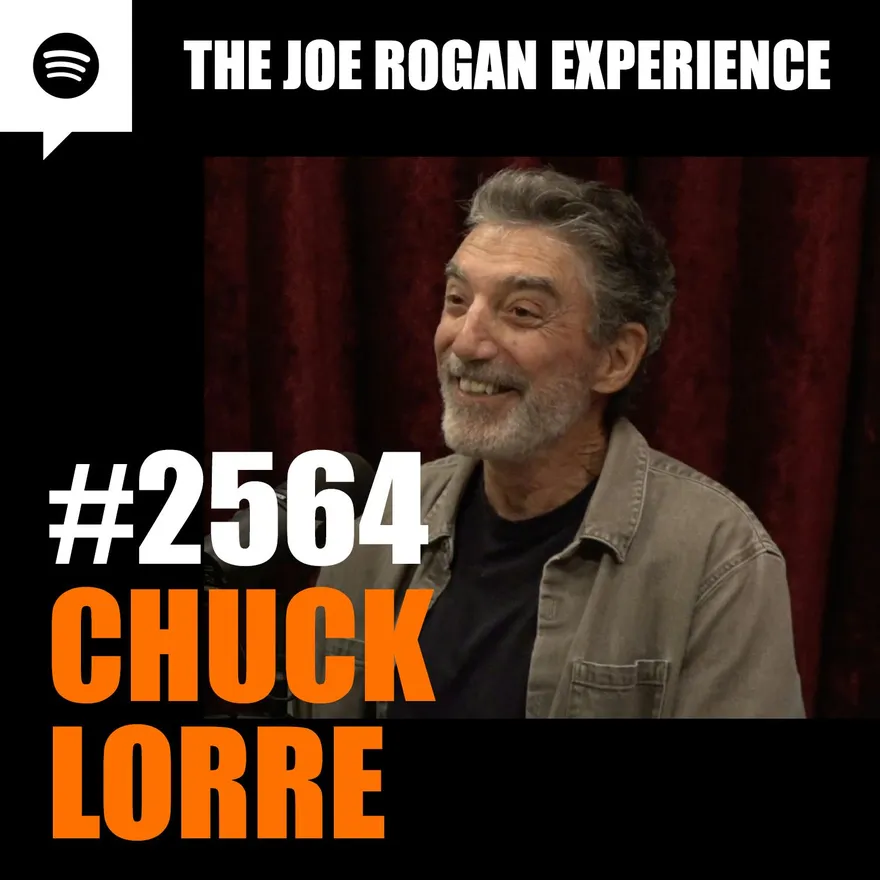

This is a preview of the Shortform summary of the Oct 13, 2026 episode of the The Joe Rogan Experience
Sign up for Shortform to access the whole episode summary along with additional materials like counterarguments and context.
1-Page Summary
American Sitcoms: History, Decline, and Cultural Significance
In a conversation with Joe Rogan, Chuck Lorre discusses the rich history of American sitcoms and their troubling decline, emphasizing that the genre's diminishment stems from industry mismanagement rather than shifting audience preferences.
Character-Driven Storytelling and Live Audiences Define the Genre
Sitcoms evolved from vaudeville and theater, maintaining the immediacy of live performance through the four-camera studio setup. Lorre and Rogan agree that viewers connect with character relationships rather than plots—people want to "hang out with these people," whether at the bar in "Cheers" or with the friends in "Seinfeld." Cast chemistry is irreplaceable, as failed spinoffs like "Joey" demonstrate, though "Young Sheldon" succeeded by building entirely new authentic relationships rather than relying on franchise recognition alone.
The live studio audience provides instant feedback that shapes comedic rhythm and demands excellence. As Lorre notes, "If it stinks in front of the audience, if you put it on TV, it's going to stink forever." This theatrical immediacy distinguishes multi-camera sitcoms from single-camera shows, yet critics persistently mischaracterize authentic audience laughter as "annoying laugh tracks."
Sitcoms Declined Despite Enduring Popularity
Network schedules once featured 50 sitcoms weekly; today fewer than five remain. Lorre attributes this decline to industry executives viewing sitcoms as "inferior" to films, discouraging talented creators from the genre. Reality TV and streaming platforms fragmented audiences, but the demand persists—Rogan points to pandemic binge-watching of classics as evidence. The loss reflects management failure, not audience taste.
Addiction, Fame, and Self-Destruction in Entertainment
Lorre and Rogan explore how success and fame intensify inner emptiness for psychologically vulnerable performers. Lorre observes that "nothing on the outside is going to heal the inside"—the temporary highs from audience validation inevitably return performers to their original emptiness. Rogan notes that "if happiness and success cured you of all your problems, you wouldn't see so many dead rock stars," citing the 27 Club as evidence.
Talented but traumatized individuals in positions of power often become tyrannical, with Roseanne Barr offered as an example of how past trauma can fuel both brilliance and destructive behavior. The entertainment industry tolerates erratic behavior as long as shows remain profitable, as illustrated by Charlie Sheen's decline on "Two and a Half Men." Lorre admits staying in denial because the show's success was intoxicating, even as warning signs mounted.
The system perpetuates exploitation through predatory managers, unfair contracts, and corruption. Lorre describes agents advising, "you gotta let them fuck you a few times so they know they love you," while Rogan recounts the shady circumstances surrounding Jimi Hendrix's manager. This toxic environment amplifies pain rather than fostering recovery.
Spirituality, Sobriety, and Transformation
Lorre shares his personal journey of transformation, describing how 27 and a half years ago he stopped drinking and pursued spiritual growth. He emphasizes that lasting recovery requires pursuing a "God of your understanding"—which could be "the ocean," "a doorknob," or anything chosen. Spirituality is "more a verb" than a noun, an ongoing process of seeking rather than a fixed doctrine.
The key insight is shifting from "gimme, all the time is always gimme" to selflessness and service to others. Lorre explains that the realization "more" is never sufficient represents "the bottom," where true change becomes possible through spiritual seeking that "doesn't hurt others."
Lorre reflects on his decade with Scientology, which exploited human vulnerability to manipulation through promises of community and meaning. Drawn in at a vulnerable point by attractive members and career promises, he eventually invested enormous sums in costly initiations. After ten years of unfulfilled promises, he recognized the emptiness and left, concluding that authentic spiritual paths seek inner fulfillment and service, not exclusion or personal gain.
Collaboration, Humility, and Intuition in Creativity
Rogan and Lorre describe the creative process as a dynamic exchange where ideas are tested and refined collectively. Lorre explains that writing comedy is far more effective in a group, crediting his success to learning from debates and diverse perspectives. The writers' room functions as a crucible where bad ideas are eliminated and good ones strengthened through open critique.
However, authority and reputation can hinder collaboration. Lorre notes that as a successful producer, his presence can accidentally silence others, even when he welcomes input. Norman Lear avoided writing pilots for his own shows to ensure others would still provide feedback. Lorre similarly recognized he "sucked up a lot of oxygen" and stepped back into consulting roles to allow younger writers to take risks.
Admitting uncertainty, Lorre emphasizes, shows strength and fosters collaboration. He says it's freeing to admit "I don't know" rather than pretending to have all the answers. Comedy writing relies on educated guessing—"I think this is funny. I guessed wrong. Right? When it dies. Right. Let's fix it." Aging has given Lorre the freedom to embrace humility over false confidence.
Career Philosophy: Managing Creative Teams
Lorre shares practical wisdom learned from Norman Lear: "Go where the fire's burning brightest." This means prioritizing genuine crises—like missing air dates—over smaller problems that can be delegated or deferred. The key is distinguishing between manageable issues and threats to production success.
With experience, Lorre learned to trust intuition over consensus. He describes a turning point where he confidently pursued his solution despite pushback, knowing that mistakes are survivable and can be fixed. This freed him from always seeking approval and allowed risk-taking in pursuit of excellence. Lorre insists on striving for greatness rather than mediocrity—"shoot for the moon" and "settle for low orbit" at minimum—embracing the unknown and the possibility of failure as part of the creative journey.
1-Page Summary
Additional Materials
Clarifications
- The four-camera studio setup uses four cameras simultaneously to capture different angles of a scene in real time. This method allows scenes to be filmed in front of a live audience without multiple takes, preserving natural reactions. It enables quick editing and maintains the theatrical feel of live performance. This setup contrasts with single-camera productions, which shoot scenes multiple times from different angles.
- Multi-camera sitcoms are filmed on a set with multiple cameras simultaneously capturing different angles, often in front of a live audience. This setup allows for real-time audience reactions and quicker production schedules. Single-camera sitcoms use one camera to shoot scenes more like a movie, allowing for varied locations and cinematic techniques. They typically lack a live audience and use post-production to add laughter or sound effects.
- Live studio audiences provide immediate, genuine reactions that help performers and writers gauge which jokes land effectively. Their laughter and responses create natural pauses and timing cues, shaping the comedic rhythm in real time. This feedback loop allows adjustments to pacing and delivery, enhancing humor impact. Without it, comedic timing can feel forced or unnatural, reducing audience engagement.
- Laugh tracks are prerecorded laughter added to sitcoms to simulate audience reactions when no live audience is present. Genuine audience laughter occurs naturally during live tapings, reflecting real-time responses to humor. Critics often confuse authentic laughter with artificial laugh tracks, dismissing both as intrusive or forced. This mischaracterization overlooks the role of live audience feedback in shaping comedic timing and atmosphere.
- During the 1980s and 1990s, major U.S. broadcast networks aired numerous sitcoms across prime-time and daytime slots, totaling around 50 weekly shows. This volume reflected sitcoms' popularity and their role as reliable, cost-effective programming. Networks relied on sitcoms to attract broad audiences and advertisers consistently. The decline began in the 2000s as cable and streaming diversified viewing options, reducing network dominance.
- Industry executives control funding, scheduling, and marketing decisions that determine which TV genres get produced and promoted. Their preferences and biases can prioritize certain genres over others, influencing creative trends and audience exposure. Executives often favor projects they perceive as more profitable or prestigious, shaping the industry's focus and resource allocation. This gatekeeping power can limit innovation and marginalize genres like sitcoms if deemed less valuable.
- Reality TV offers unscripted, often sensational content that attracts viewers seeking novelty and real-life drama. Streaming platforms provide on-demand access to diverse shows, allowing personalized viewing schedules that reduce appointment TV habits. Both formats fragment audiences by catering to niche interests, diminishing the mass viewership traditional sitcoms once enjoyed. This shift challenges network sitcoms' ability to maintain large, consistent audiences.
- The "27 Club" refers to a group of famous musicians and artists who died at the age of 27, often due to substance abuse or tragic circumstances. It includes iconic figures like Jimi Hendrix, Janis Joplin, Jim Morrison, and Kurt Cobain. The phenomenon highlights the intense pressures and vulnerabilities associated with fame, especially in the entertainment industry. It symbolizes how success does not protect against personal struggles or self-destructive behavior.
- Roseanne Barr is a comedian and actress known for her groundbreaking sitcom "Roseanne," but her career was marred by public controversies and erratic behavior linked to personal struggles and trauma. Charlie Sheen, star of "Two and a Half Men," faced highly publicized issues with substance abuse and outbursts, which led to his dismissal from the show. Both cases highlight how unresolved trauma and addiction can cause destructive actions despite professional success. Their experiences exemplify the entertainment industry's tolerance of problematic behavior when it generates profit.
- Exploitation in entertainment often involves managers or agents who prioritize their own profit over artists' well-being. Unfair contracts may include hidden fees, excessive commission rates, or restrictive clauses limiting creative control. New or vulnerable performers are especially at risk due to lack of industry knowledge or bargaining power. This environment can trap talent in cycles of debt, stress, and limited career growth.
- The phrase "God of your understanding" originates from 12-step recovery programs like Alcoholics Anonymous. It encourages individuals to define a higher power in a way that feels personally meaningful, rather than adhering to a specific religious concept. This flexibility helps people from diverse beliefs find spiritual support in their recovery. The focus is on a guiding force that inspires hope and strength, not on dogma or doctrine.
- Scientology is a religious movement founded in the 1950s by L. Ron Hubbard, centered on self-improvement through auditing and spiritual counseling. Critics argue it exploits members financially by charging high fees for courses and advanced levels. It has faced allegations of manipulation, secrecy, and controlling behavior toward followers. These controversies contribute to its reputation as exploitative in some accounts.
- A writers' room is a collaborative workspace where a team of writers develops scripts for a TV show. It fosters idea exchange, allowing writers to pitch jokes, storylines, and character development collectively. The room's dynamic helps refine content through immediate feedback and group problem-solving. This process accelerates creativity and ensures consistency across episodes.
- Authority and reputation can create power imbalances that discourage open communication and risk-taking. Team members may hesitate to share ideas or critique when a dominant figure is present. This can limit creativity by suppressing diverse perspectives and honest feedback. Effective leaders recognize this and intentionally create space for others to contribute freely.
- The phrase "Go where the fire's burning brightest" means focusing your energy on the most urgent and important problems that directly impact the project's success. In creative projects, this means addressing critical issues like deadlines or major production challenges first, rather than minor or less urgent tasks. This approach prevents wasting time on distractions and ensures resources are used efficiently. It helps leaders prioritize effectively and keep the project on track.
- The metaphor "shoot for the moon" means aiming for the highest possible goal or achievement. "Settle for low orbit" suggests accepting a result that is less than perfect but still significant. It encourages taking bold risks while being prepared for outcomes that may fall short of the ideal. This mindset balances ambition with realistic expectations in creative work.
Counterarguments
- While live studio audiences can enhance comedic timing, some viewers find the laughter distracting or artificial, regardless of its authenticity.
- The decline in sitcoms may also reflect changing audience preferences toward serialized storytelling, darker themes, or different comedic styles, not just industry mismanagement.
- Single-camera sitcoms like "The Office" and "Parks and Recreation" have achieved significant popularity and critical acclaim without live audiences, suggesting that multi-camera formats are not essential for success.
- The rise of streaming platforms has enabled more diverse and experimental forms of comedy that may not fit the traditional sitcom mold, broadening the definition of what audiences consider "sitcoms."
- Some successful spinoffs, such as "Frasier," have thrived by leveraging franchise recognition alongside new character dynamics, indicating that both approaches can work.
- The entertainment industry's issues with exploitation and toxic environments are not unique to sitcoms or even television, but are widespread across many creative industries.
- Not all performers experience fame as intensifying inner emptiness; some find fulfillment and stability through their careers and public recognition.
- The effectiveness of spirituality or a "God of your understanding" in recovery is subjective and may not be necessary or helpful for everyone.
- Authority and reputation can also inspire and mentor less experienced creatives, not just suppress their input.
- Some viewers prefer plot-driven comedies or shows with more complex narratives, challenging the idea that character relationships are always the primary draw.
Get access to the context and additional materials
American Sitcoms: History, Decline, and Cultural Significance
American sitcoms have played a crucial role in shaping television history, becoming surrogate families for millions of viewers and providing a unique blend of comfort, laughter, and character-driven storytelling. Despite their immense popularity and historical significance, the genre faces a steep decline, driven largely by misconceptions and external pressures rather than a genuine shift in audience preferences.
Multi-Camera Sitcoms Connected Emotionally With Audiences Through Character-Driven Rather Than Plot-Driven Narratives
Sitcoms evolved from theater and vaudeville, transitioning through radio plays before reaching television, with the heart of the format lying in the live studio audience experience. Chuck Lorre notes that early sitcoms like “I Love Lucy,” “The Phil Silvers Show,” and “The Burns and Allen Show” all emerged from vaudeville roots and theatrical traditions, maintaining the immediacy and feedback of live performance. The setup of four cameras encircling a stage turns each episode into a theatrical production, where mistakes can be corrected in the moment, and poor material can be cut, ensuring only the best reaches viewers.
Central to sitcoms’ enduring appeal is their focus on character relationships rather than plot. Lorre and Joe Rogan agree that viewers rarely remember individual storylines but are drawn to the chemistry of the cast and the relationships between characters. Whether it’s the camaraderie at the bar in “Cheers,” the quirky friendship group in “Seinfeld,” or the loving (and flawed) surrogate family in “Friends,” these shows resonate because audiences want to “hang out with these people.” Cast chemistry is irreplaceable; failed spinoffs like “Archie’s Place” and “Joey” lack the magic of their predecessors because they cannot recreate the original cast’s unique dynamic.
Yet, “Young Sheldon” demonstrates that a successful spinoff requires building new authentic relationships, not merely relying on franchise recognition. The series became a hit for a new generation, many of whom never watched “The Big Bang Theory.” Its narrative centers around Sheldon's family adjusting to his peculiar genius, creating a completely different emotional core. The only real connection to the original show is Jim Parsons’ narration, underscoring that fresh chemistry and new relationships drive success, not just legacy.
Sitcoms Dwindled From Dozens Weekly To Under Five, Despite Enjoyment and Cultural Relevance
At their peak, network schedules featured as many as 50 sitcoms each week; today, fewer than five remain, with just two filmed in front of an audience. Lorre attributes the decline to industry mismanagement and external pressures such as the rise of reality TV and streaming platforms, which fragmented audiences and siphoned cultural capital away from sitcoms. He argues that television executives' perception of sitcoms as “inferior” compared to films actively discourages talented writers and actors from working in the genre. Both Lorre and Rogan acknowledge the dismissive attitude in Hollywood: creators themselves sometimes felt embarrassment for writing sitcoms, and aspiring actors dreamed of sitcom deals that are now almost extinct.
Despite their popularity and mass appeal, sitcoms’ decline is not due to audience boredom. Rogan insists that people continue to enjoy and find comfort in sitcoms, highlighting the experience of binge-watching classics like “The Big Bang Theory” during the pandemic. In Lorre’s view, the loss of multi-camera sitcoms reflects management failure rather than a shift in viewer taste; Chuck Lorre’s own continued global success proves the demand is still there.
Excellence in sitcoms was always non-negotiable, especially in a live studio setting. Writers and performers worked under immense pressure, knowing instant audience feedback determined a show's fate. “If it stinks in front of the audience, if you put it on TV, it’s going to stink forever,” Lorre insists. This commitment to quality created a k ...
Here’s what you’ll find in our full summary
American Sitcoms: History, Decline, and Cultural Significance
Additional Materials
Clarifications
- Multi-camera sitcoms use multiple cameras filming simultaneously from different angles, capturing scenes in real-time, often in front of a live audience. This method allows for continuous performance, similar to theater, preserving actors' timing and audience reactions. Single-camera sitcoms are shot like films, using one camera to capture scenes out of sequence, allowing more cinematic techniques and varied locations. The multi-camera format emphasizes live interaction and immediacy, while single-camera offers greater visual flexibility and style.
- Vaudeville was a popular form of variety entertainment in the late 19th and early 20th centuries, featuring comedy, music, and skits. Early sitcoms borrowed vaudeville’s emphasis on live performance, timing, and audience interaction. Theater traditions contributed structured storytelling and character-driven humor to sitcom formats. This blend shaped the multi-camera setup and live audience style central to classic sitcoms.
- A live studio audience provides immediate, genuine reactions that help actors and writers gauge comedic timing and effectiveness. Their laughter and silence influence pacing and delivery, allowing real-time adjustments during filming. This interaction creates a dynamic, energetic atmosphere that enhances performance authenticity. It also fosters a communal viewing experience, making the show feel like a shared event.
- Cast chemistry refers to the natural, believable interactions and rapport among actors that make their relationships feel authentic to viewers. It enhances emotional engagement, making audiences care about characters beyond the script. Strong chemistry can elevate humor and drama, creating memorable moments that resonate long-term. Without it, even well-written shows may feel flat or unconvincing.
- Spinoffs often fail because they rely too heavily on the original show's characters and dynamics without creating new, compelling relationships or stories. Audiences seek fresh emotional connections rather than just familiar faces. "Young Sheldon" succeeds by focusing on new characters and a different setting, offering a unique perspective that stands apart from its predecessor. This originality attracts both new viewers and fans of the original series.
- Canned laugh tracks are pre-recorded laughter added to a show during post-production to simulate audience reactions. They differ from live audience laughter, which is genuine and occurs in real-time during filming. Live laughter provides immediate feedback to performers, influencing timing and delivery. Canned tracks can feel artificial because they lack this spontaneous interaction.
- The decline of sitcoms is partly due to TV executives prioritizing cheaper, faster-to-produce reality shows that attract fragmented audiences. Streaming platforms offer vast, diverse content, reducing the dominance of traditional sitcoms on network TV. Industry stigma labels sitcoms as less prestigious, discouraging top talent from creating or acting in them. This combination limits investment and innovation in sitcoms, accelerating their decline despite steady viewer interest.
- Within the entertainment industry, films are often seen as more prestigious due to higher budgets, longer production times, and artistic ambition. Sitcoms, by contrast, are viewed as formulaic, commercially driven, and less artistically challenging. This bias leads to fewer resources and less respect for sitcom creators and actors. Consequently, sitcoms struggle to attract top-tier talent and investment compared to films.
- Producing sitcoms with live audiences requires actors and writers to perform and deliver jokes perfectly in real time, as mistakes are immediately apparen ...
Counterarguments
- While sitcoms have historically been popular, changing audience preferences—such as a growing interest in serialized storytelling, darker themes, or more diverse genres—may genuinely contribute to their decline, not just industry mismanagement.
- The rise of streaming platforms has enabled audiences to access a wider variety of international and niche content, which may naturally reduce the dominance of traditional American sitcoms.
- Single-camera comedies and dramedies (e.g., "The Office," "Parks and Recreation," "Atlanta") have also achieved significant emotional resonance and cultural impact, challenging the notion that only multi-camera sitcoms with live audiences can create strong viewer connections.
- Some viewers find laugh tracks or live audience laughter distracting or artificial, regardless of whether they are authentic, and may prefer the subtler comedic style of single-camera shows.
- The assertion that sitcoms are universally comforting or serve as "surrogate families" may not resonate with all viewers, especially those who prefer other genres or storytelling formats.
- The decline in the number of sitcoms could also reflect market saturation and creative fatigue after decades of similar formats, rather than solely external pressures or misconceptions.
- The prestige associated with film or other television genres may reflect evolving artistic standards and audience expectations, not ...
Get access to the context and additional materials
Addiction, Fame, and Self-Destruction in Entertainment
Success and Fame Can Intensify Inner Emptiness, Especially For Those With Psychological Vulnerabilities Seeking External Solutions
Both Chuck Lorre and Joe Rogan discuss the pitfalls of fame, emphasizing that neither success, wealth, nor recognition can heal deep psychological wounds. Lorre describes a performer who experiences immediate career success but is "very unhappy... day one," illustrating that external validation cannot resolve internal struggles. He reflects that fame, money, or magazine covers do not bring real healing: "Nothing on the outside is going to heal the inside."
The cycle of performance—especially comedic performance—offers only fleeting relief. Lorre observes that making an audience laugh momentarily fills an internal void, but afterward, the performer returns to their original state of emptiness. Rogan expands on this cycle, likening the “bursts” of love and attention from an audience to temporary highs, which are always followed by darkness, leading often to drugs, alcohol, and self-destruction. He asserts that “if happiness and success cured you of all your problems, you wouldn't see so many dead rock stars,” referencing the 27 Club as an infamous outcome of this struggle.
Talented but psychologically damaged individuals in positions of power often become tyrannical, unleashing chaos and cruelty during their shows. Lorre and Rogan reference Roseanne Barr as an example—a high-profile performer whose traumatic past and mental health issues contributed to erratic and sometimes destructive behavior on set. They note that many such stars suffered past traumas or injuries that changed their personalities and fueled both brilliance and instability. Instead of celebration, success sometimes intensified the chaos and cruelty. Rogan points out that when someone “is the head, the big star of those shows,” there are often “nightmare stories,” where the intoxicating power of fame exacerbates damaging behaviors.
The cycle is also illustrated by the tragic legacy of many 1960s rock icons. Rogan and Lorre recall Jim Morrison, Jimi Hendrix, and Janis Joplin, who sought fulfillment and relief in their artistic brilliance and through substances, only to spiral into self-destruction. With references to chaotic performances, sudden deaths, and conspiracy theories regarding predatory managers, they highlight how external adulation could neither calm internal chaos nor prevent tragedy.
Entertainment Industry Promotes Self-Destruction Over Healing and Stability
Lorre remarks, "the perfect murder of an actress who is malicious and destructive is to make her famous," describing how fame can become a weapon that hastens the downfall of the already vulnerable. Celebrity can destroy people with insecurity, as relentless attention and pressure are devastating for those barely managing personal stability.
Charlie Sheen’s decline on "Two and a Half Men" illustrates the industry's tolerance for erratic, even destructive, behavior as long as shows remain profitable. Lorre and Rogan describe years o ...
Here’s what you’ll find in our full summary
Addiction, Fame, and Self-Destruction in Entertainment
Additional Materials
Clarifications
- Chuck Lorre is a prominent television producer and writer known for creating hit sitcoms like "The Big Bang Theory" and "Two and a Half Men," giving him insider experience with fame and industry pressures. Joe Rogan is a comedian, podcast host, and commentator who has interviewed many celebrities, providing broad perspectives on fame and mental health. Both have witnessed the entertainment industry's impact on performers firsthand, lending credibility to their observations. Their combined experiences offer a nuanced understanding of the psychological toll of fame.
- The "27 Club" refers to a group of famous musicians and artists who all died at the age of 27, often due to substance abuse or tragic circumstances. It symbolizes the destructive impact of fame and the pressures faced by young celebrities. The club includes iconic figures like Jimi Hendrix, Janis Joplin, Jim Morrison, Kurt Cobain, and Amy Winehouse. Their deaths highlight how success and public adulation do not protect against personal struggles and self-destruction.
- Roseanne Barr is a comedian and actress best known for her 1980s-90s sitcom "Roseanne," which portrayed a working-class American family. She has faced public controversies due to outspoken behavior and social media posts, leading to professional setbacks. Barr has openly discussed her struggles with mental health and trauma, which have influenced her erratic public image. Her career exemplifies how personal issues can impact fame and behavior in the entertainment industry.
- Many performers have experienced childhood abuse, neglect, or family dysfunction, which deeply affect their emotional development. Some suffered traumatic brain injuries or accidents that altered their behavior and impulse control. Others faced mental health disorders triggered or worsened by these traumas. These factors often contribute to instability despite external success.
- Jim Morrison, Jimi Hendrix, and Janis Joplin were iconic musicians of the 1960s known for their groundbreaking contributions to rock music and counterculture. They symbolized the era's spirit of rebellion, artistic experimentation, and social change. Each struggled with substance abuse and personal demons, leading to their early deaths at age 27, which contributed to the myth of the "27 Club." Their legacies highlight the intense pressures and vulnerabilities faced by influential artists during that turbulent period.
- "Mob-style 'no-show gigs'" refer to fraudulent jobs arranged by organized crime where a person is paid for work they never actually perform. These gigs are used to funnel money illegally or launder funds. In entertainment, such schemes exploit performers or staff, often as part of corrupt contracts or extortion. This practice contributes to the industry's exploitation and financial manipulation.
- The phrase refers to the exploitative expectation that performers must tolerate abuse or unethical demands from powerful industry figures to gain favor or advance their careers. It highlights a culture where manipulation and coercion are normalized as part of business relationships. This reflects systemic abuse of power, especially against vulnerable artists. Such practices contribute to the toxic environment described in the entertainment industry.
- Predatory managers exploit artists by taking excessive control over their careers and finances. They often use manipulative tactics to secure unfair contracts and claim disproportionate profits. This exploitation can trap performers in cycles of dependency and financial loss. Such managers prioritize their own gain over the well-being and creative freedom of the artists.
- In the entertainment industry, managers or record labels sometimes secure contracts giving them ownership or control over an artist's creative works, such as songs or performances. These rights allow them to collect royalties and profits generated by the artist's work, even after the artist dies. This practice can exploit artists, especially if contracts are signed under pressure or without full understanding. Such arrangements prioritize financial gain over the artist's wellbeing or legacy.
- Charlie Sheen was the lead actor on the popular sitcom "Two and a Half Men." His decline involved publicized struggles with substance abuse, erratic behavior, and conflicts with the show's producers. This led to his dismissal from the show in 2011, which was a major media event highlighting the impact of personal issues on professional careers. His case exemplifies how the entertainment industry often tolerates destructive behavior until it disrupts profitability.
- The "intoxicating power of fame" refers to how sudden or intense public attention can overwhelm a person’s sense of self-control. Fame often brings ...
Counterarguments
- While fame and success do not guarantee healing, some individuals report that external achievements provide them with resources and opportunities (such as access to therapy, supportive communities, or creative outlets) that can aid in personal growth and recovery.
- Not all entertainers with psychological vulnerabilities experience intensified chaos; many find stability, fulfillment, and improved mental health through their careers and supportive industry relationships.
- The entertainment industry has made significant strides in recent years to address mental health, with more resources, advocacy, and support systems available for performers.
- Some performers use their platform and success to foster healing, both for themselves and others, by raising awareness about mental health and advocating for industry reforms.
- There are numerous examples of artists who have overcome personal struggles and maintained long, healthy, and stable careers in entertainment.
- The presence of predatory managers and corruption is not unique to the entertainment industry and can be found in many other high-pressure, high-reward fields.
- ...
Get access to the context and additional materials
Spirituality, Sobriety, and Transformation as Solutions to Emptiness
Chuck Lorre's story, as discussed with Joe Rogan, explores how genuine transformation and healing come from spiritual growth, not external accolades or consumption, while also revealing how our social wiring can leave us vulnerable to destructive belief systems like cults.
Lasting Recovery Requires a Spiritual Foundation Beyond External Solutions
Chuck Lorre describes hitting a psychological low—a "dark hole in the soul"—despite achieving career success through relentless dedication. He recalls that after reaching outward for fulfillment through fame, relationships, and possessions, he found these external solutions only masked his inner emptiness, never healing it. This realization marked a transformative turning point in his life: 27 and a half years ago, he stopped drinking, which he calls a profound change. Sobriety was inseparably tied to spirituality—the pursuit of a "connection with God" as Rogan describes it—though Lorre emphasizes the broader value of spiritual seeking rather than committing to one doctrine or tradition.
Lorre highlights the crucial insight of being encouraged to pursue a "God of your understanding," allowing each person flexibility and agency to define, or even not define, a higher power. This higher power, he suggests, doesn’t have to conform to any prescribed religion, tradition, or even a fixed concept: it could be "the ocean," "a doorknob," or "whatever you choose it to be." Lorre reflects that language itself can be limiting; spirituality is less a static noun and more a verb—an ongoing process or action, not an object. The act of seeking, of striving toward meaning and transcendence, provides a kind of salvation in itself.
He notes the key difference between seeking fulfillment through self-serving means and through selflessness and service to others. For someone driven by insatiable wants—“gimme, all the time is always gimme”—there comes an awakening that more external gain will never be enough. The realization that “more” is never sufficient, and that true healing requires inner fulfillment, represents “the bottom.” At this point, Lorre explains, people can truly change by pursuing spirituality not as a ritual or obligation, but as a chosen path toward peace and self-acceptance. He concludes that the real solution to emptiness is “something beyond this world”—a spiritual solution that is both individual and service-minded, and “doesn’t hurt others.”
Community, Connection, and Belief Systems: Their Role in Vulnerability to Cults and Destructive Groups
Lorre and Rogan reflect on how human beings, as inherently social creatures wired for tribal belonging, are deeply vulnerable to manipulation by groups that promise community and meaning. Lorre explains that, throughout history, being excluded from the group meant certain death, so modern humans remain desperate for group inclusion, even if the group’s beliefs are wrong. This need for belonging is what makes people prone to embracing ideologies, religious cults, or destructive belief systems.
Lorre recounts his decade-long involvement with Scientology, which exploited these social needs and yearnings for transcendence. At a vulnerable point in his youth, longing for career advancement and meaning, he was recruited by a fellow bandmate. Drawn in initially by attractive members and a sense of acceptance, he bought into courses like communications training, believing they could help him succeed as a songwriter. Scientology’s environment strategically targeted celebrities, as L. Ron Hubbard understood that celebrity ...
Here’s what you’ll find in our full summary
Spirituality, Sobriety, and Transformation as Solutions to Emptiness
Additional Materials
Counterarguments
- While spirituality and sobriety were transformative for Chuck Lorre, many people achieve lasting recovery and fulfillment through secular means such as therapy, community support, or personal development, without invoking spirituality or a higher power.
- The assertion that external achievements cannot provide true healing may not apply universally; for some individuals, meaningful work, relationships, or creative pursuits can be deeply fulfilling and contribute to psychological well-being.
- The idea that spirituality must be individual and self-defined could be challenged by those who find comfort, structure, and meaning in established religious traditions or communal spiritual practices.
- The emphasis on selflessness and service to others as the only path to healing may overlook the importance of healthy self-care and personal boundaries, which are also essential for well-being.
- The portrayal of humans as inherently vulnerable to cults due to social wiring may understate the role of critical thinking, edu ...
Actionables
- you can create a daily “meaning audit” by jotting down which activities, interactions, or thoughts left you feeling empty versus fulfilled, then gradually shift your schedule to include more of what brings genuine satisfaction and less of what feels hollow; for example, if scrolling social media leaves you drained but helping a neighbor feels uplifting, plan more time for service and less for passive consumption.
- a practical way to nurture selfless connection is to anonymously perform one small act of kindness each week for someone in your community, such as leaving an encouraging note for a coworker or paying for a stranger’s coffee, then reflect on how these actions affect your sense of purpose and belonging.
- you can experiment with a “ ...

Get access to the context and additional materials
Collaboration, Humility, and Intuition in Creativity
The conversation between Joe Rogan and Chuck Lorre underscores how creativity flourishes not through singular vision, but through a process of collective effort, humility, and a willingness to be uncertain.
Creative Projects Thrive On Collaborative Idea-Sharing, Critique, and Refinement, Not one Authoritative Vision
Rogan and Lorre describe the creative process—particularly in comedy writing—as a dynamic exchange of ideas. Rogan likens it to a "wild thunderstorm" where creative people come together, throwing ideas around until they discover what truly works. Each week’s work is tested in a table read, where writers and performers work together to separate genuine laughter from polite reactions, revising material until it resonates.
Collaborative Comedy Yields Better Results Through Diverse Perspectives
Lorre explains that writing comedy is far more effective in a group. He credits much of his success to counting on others in the writers’ room, learning from debates, arguments, and the diverse perspectives that surface. Joe Rogan reflects on the work of Dave Foley and Paul Sims on "NewsRadio," where a lack of ego allowed the best ideas—regardless of their source—to make it onto the show.
The Writer's Room: A Crucible Where Bad Ideas Are Eliminated, Good Ideas Strengthened Through Debate and Testing
Lorre offers an example from his own experience: heated debates in the writers' room inevitably help good jokes survive and improve while weeding out weaker ideas. The writer's room is described as volatile, with writers critiquing each other openly. Lorre notes that even when writing alone, the voices of his long-time collaborators linger in his mind, critiquing and refining his work internally.
Writers Internalize Collaborators' Voices, Carrying Critical Insights and Energy In Solitude
Both Rogan and Lorre agree that the energy and insight gained from collaboration don't disappear when one works alone. Instead, writers internalize their collaborators, who become imagined critics and motivators—even as they work independently.
Authority and Reputation Can Hinder Collaboration and Creativity
Over time, authority and reputation can jeopardize the collaborative process. Lorre explains that, as a successful producer or head writer, his presence can accidentally silence others, even if he welcomes input. Writers may hesitate to challenge or suggest changes, fearing the influence of his reputation. Rogan agrees, noting that people can become intimidated, which stifles creative risk-taking.
Norman Lear Avoided Projects Where His Name Hindered Open Collaboration For Quality Work
Lorre recalls how Norman Lear, a legendary producer, avoided writing pilots for his own shows to ensure others would still critique and improve the material. Lear understood that if his name appeared as the writer, people might withhold valuable notes or feedback.
Chuck Lorre Recognized His Presence "Sucked Up Oxygen," So He Stepped Back Into Consultant Roles to Let Younger Writers and Producers Take Risks and Trust Their Instincts
Lorre admits that at a certain stage in his career, he realized his presence could stultify the creative environment. Recognizing that he "sucked up a lot of oxygen," he began stepping back into consulting roles to allow newer writers and producers the opportunity to take risks and rely on their instincts.
Admitting Uncertainty Shows Strength and Fosters Collaboration
Lorre emphasizes that genuine strength comes from admitting uncertainty and inviting others to participate in finding solutions. Pretending to have all the answers not only exhausts the individual but also prevents authentic collaboration.
Admitting Ignorance and Inviting Others to Collabora ...
Here’s what you’ll find in our full summary
Collaboration, Humility, and Intuition in Creativity
Additional Materials
Clarifications
- A writers' room is a collaborative workspace where a team of writers develops scripts for TV shows or films. It typically includes a head writer or showrunner who guides the creative direction and multiple staff writers who contribute ideas and draft scenes. Writers pitch jokes, storylines, and dialogue, which are then discussed, refined, or discarded through group feedback. The dynamic is often fast-paced and interactive, relying on debate and collective problem-solving to improve the material.
- A table read is a meeting where actors and writers sit together to read a script aloud. It helps identify which jokes or scenes work by hearing them performed for the first time. Writers observe reactions and make notes to improve the material. This process allows early detection of pacing, tone, and comedic timing issues.
- Chuck Lorre is a prolific television producer and writer known for creating popular sitcoms like "The Big Bang Theory" and "Two and a Half Men." Joe Rogan is a comedian, podcast host, and commentator known for his long-form interviews on "The Joe Rogan Experience." Both have extensive experience in comedy and creative collaboration, making their insights on creativity and teamwork highly relevant. Their perspectives illustrate how successful creative projects often rely on collective effort rather than individual genius.
- Norman Lear is a pioneering television producer and writer known for creating groundbreaking sitcoms in the 1970s. His shows, like "All in the Family" and "The Jeffersons," addressed social issues with humor and realism. Lear's influence reshaped TV by blending entertainment with cultural commentary. He is widely respected for his innovative approach and lasting impact on the industry.
- The phrase "sucked up oxygen" metaphorically means dominating attention or resources in a group setting. In creative environments, it refers to a person whose presence or authority unintentionally overshadows others, limiting their participation. This can stifle open dialogue and reduce the diversity of ideas. Stepping back allows others to contribute more freely and take creative risks.
- Authority and reputation create power dynamics that make others hesitant to speak up or challenge ideas. People may fear negative consequences or damaging relationships by disagreeing with a respected figure. This leads to less honest feedback and fewer diverse perspectives. Ultimately, it reduces the quality and innovation of collaborative work.
- Comedy writing involves trying out ide ...
Counterarguments
- While collaboration can enhance creativity, some of the most groundbreaking works in art, literature, and science have emerged from singular visions or individual creators.
- Too much collaboration or groupthink can sometimes dilute bold or unconventional ideas, leading to safer, less innovative outcomes.
- Not all creative personalities thrive in group settings; some writers or artists may produce their best work in solitude without external critique.
- Authority and reputation can sometimes provide necessary direction and cohesion, especially in large or complex projects where a unified vision is required.
- In some cases, a strong, authoritative leader can inspire and elevate a team, rather than stifle creativity.
- Admitting uncertainty is not always practical in high-pressure or fa ...
Get access to the context and additional materials
Career Philosophy: Embrace "I Don't Know" and Manage Creative Teams
Chuck Lorre reflects on career wisdom and practical techniques for managing creative projects, drawing from advice and personal turning points in his work as a showrunner.
Managing Creative Projects Means Prioritizing Urgent Issues Over Solving Every Problem Equally
Lorre describes the management philosophy he learned from Norman Lear: "Go where the fire's burning brightest." This approach involves assessing whether issues are genuine crises that need immediate attention or if they are smaller problems that can be deferred or delegated to trusted team members. Lear would manage multiple shows at once, constantly evaluating which challenges—such as malfunctioning scripts, casting errors, or an ineffective director—demanded his direct intervention.
Identifying threats to production schedules was critical, as missing an air date could be catastrophic and had to be prevented at any cost. By contrast, script revisions or casting adjustments were common and could be handled as part of the usual creative process. The key was to distinguish between manageable issues and those which threatened the success or timely delivery of the production.
Trusting Intuition From Experience Allows Confident, Unjustified Decisions
Lorre explains that after achieving a measure of success, creators begin to trust their instincts more and are less dependent on persuading others by committee. He describes a moment of calm confidence where he knew the solution for a problematic scene and decided to proceed with his idea, despite pushback from the room. He acknowledges that sometimes such decisions might be wrong, but mistakes are survivable; if he was incorrect, the team could always fix it.
This turning point freed him from alwa ...
Here’s what you’ll find in our full summary
Career Philosophy: Embrace "I Don't Know" and Manage Creative Teams
Additional Materials
Counterarguments
- Prioritizing only urgent, production-threatening issues can lead to a reactive management style that neglects long-term planning and systemic improvements.
- Delegating or deferring smaller problems may allow minor issues to accumulate, potentially resulting in larger challenges over time.
- Overreliance on intuition, even when developed from experience, can introduce personal biases and blind spots, potentially overlooking valuable input from less experienced team members.
- Acting without consensus may discourage collaboration and reduce team morale, especially if team members feel their perspectives are consistently dismissed.
- Emphasizing risk-taking and embracing mistakes may not be suitable for all creative environments, particularly those with limited resources or high stakes where repeated failures can have significant consequences ...
Actionables
- you can create a daily decision log where you briefly note each time you face a choice between urgent and non-urgent tasks, then review at the end of the week to spot patterns in how you prioritize and adjust your approach to focus on what truly threatens your progress
- (for example, jot down when you chose to fix a broken tool before answering emails, or when you delayed a minor tweak to finish a time-sensitive task, and reflect on whether your instincts matched the actual impact).
- a practical way to strengthen your confidence in acting on intuition is to set aside a small, low-stakes project each month where you commit to making all key decisions based on gut feeling, then track the outcomes and what you learned about your instincts
- (for instance, choose a hobby project, a home improvement task, or a creative challenge, and intentionally avoid overanalyzing—just act on your first instinct and see how it turns out).
- you can build comfort with risk and the unknown by schedul ...


Get access to the context and additional materials

 1-Page Summary
- American Sitcoms: History, Decline, and Cultural Significance
- Addiction, Fame, and Self-Destruction in Entertainment
- Spirituality, Sobriety, and Transformation as Solutions to Emptiness
- Collaboration, Humility, and Intuition in Creativity
- Career Philosophy: Embrace "I Don't Know" and Manage Creative Teams
Create Summaries for anything on the web
Download the Shortform Chrome extension for your browser
