

#2557 - Yakov Smirnoff
In this episode of The Joe Rogan Experience, comedian Yakov Smirnoff shares his journey from life under Soviet communism to building a successful comedy career in America. He recounts his family's risky emigration, his early struggles learning English while working in the Catskills, and his breakthrough at The Comedy Store under Mitzi Shore's mentorship. Smirnoff also discusses his work with President Reagan during the Cold War and how the Soviet Union's collapse suddenly made his material irrelevant, leading to career reinvention in Branson, Missouri.
Beyond his career trajectory, Smirnoff and Rogan explore the deeper philosophy of comedy and relationships. Smirnoff explains how his divorce led him to pursue graduate degrees in psychology, using his comedy shows as a "laboratory of laughter" to understand relationship dynamics. The conversation covers the Comedy Store's role in launching comedy careers, different styles of contemporary comedy, and the therapeutic value of humor as a unifying force in society.
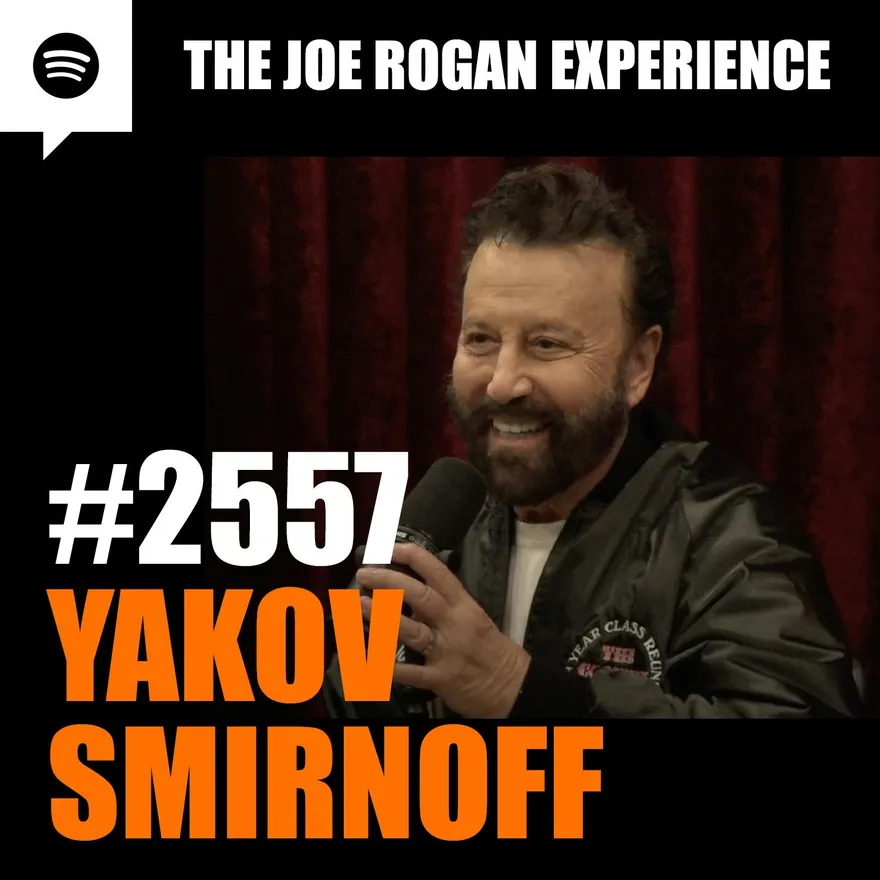

This is a preview of the Shortform summary of the Sep 23, 2026 episode of the The Joe Rogan Experience
Sign up for Shortform to access the whole episode summary along with additional materials like counterarguments and context.
1-Page Summary
Yakov's Journey: Escaping Soviet Union, Building the Dream, Career Collapse, Reinvention in Branson, Return To Touring
Life Under Communism and the Dream of Freedom
Yakov Smirnoff grows up in the Soviet Union under strict Communist control, where only two government-approved comedians dominate media and propaganda speakers in every apartment continuously broadcast official messages. Foreign culture is largely forbidden, with Charlie Chaplin the only Western entertainer Yakov remembers. His father secretly listens to Voice of America broadcasts at night, learning about American freedoms, though the family must be cautious—even young Yakov is discouraged from drawing the Statue of Liberty to avoid suspicion. His father's longing for freedom ultimately convinces the family to take the risky step of emigration.
The Pivotal Moment of Escape and Immigration
When President Jimmy Carter strikes a deal trading American grain for Soviet Jewish emigration, Yakov's family seizes the opportunity. Allowed only $100 per person, they turn to the black market, packing half a suitcase with cheap Soviet condoms that prove expensive in Italy. His mother develops a humorous sales pitch—"If you don't want a kid like this, buy a condom"—that funds their three-month stay until U.S. immigration is approved.
Building a Comedy Career in America From Scratch
Arriving with little English, Yakov works as a bar boy at Grossinger's Hotel in the Catskills, strategically learning the language from comedians and guests. He hosts Simon Says games to test English-language jokes, gauging success by both laughter and tips. Moving to Los Angeles, Yakov faces rejection until Mitzi Shore, owner of The Comedy Store, sees his potential and offers him housing at the legendary Cresthill House alongside aspiring comics like Sam Kinison and Andrew Dice Clay. She mentors him monthly until he becomes a regular, and his career takes off with multiple appearances on The Tonight Show with Johnny Carson and a Miller Lite Super Bowl commercial.
Political Prominence and the Soviet Union's Fall Impact
Yakov's comedic take on U.S.–Soviet relations brings him political prominence. President Ronald Reagan hires him to write jokes and advise on speeches to Mikhail Gorbachev, making Yakov a secret weapon in Cold War diplomacy. However, when the Soviet Union collapses, his material becomes suddenly irrelevant and contracts aren't renewed—ending many opportunities overnight despite his continued talent.
Reinvention and Success in Branson, Missouri
Facing unemployment and unable to pay his mortgage, Yakov lands in Branson, Missouri. His first show draws only 17 people, so he offers breakfast with his mother's recipes to attract audiences. Word spreads, bus tours arrive, and within a year attendance climbs to 400 per show. He eventually buys a 2,000-seat theater and greets over six million visitors, becoming Branson's best-known celebrity while adapting his material from geopolitical jokes to universal themes about relationships.
Return To Comedy Circuit and Legacy Recognition
Yakov experiences a resurgence through arena shows, guest appearances on podcasts like Kill Tony, and performances at the Austin Comedy Festival. Now touring nationally at clubs and festivals across the country, he demonstrates continued relevance and the enduring value of laughter, proving he can still craft fresh material that resonates with new generations.
Comedy Store's Role in Launching Comedians: Stand-Up's Golden Age
Comedy Store as Epicenter of Comedy Development
Joe Rogan describes the Comedy Store, run by Mitzi Shore, as comedy's most important venue—a place where Richard Pryor, Sam Kinison, David Letterman, and Bill Hicks all launched their careers. The club served as a laboratory with nightly shows that fostered a culture of continuous improvement. Mitzi recognized raw talent like Yakov Smirnoff before he was proficient in English, providing housing, employment, and strategic stage placement while encouraging development.
Mitzi Shore's Revolutionary Mentorship Philosophy
Mitzi defied industry norms by refusing to pass already polished comedians like Jerry Seinfeld as regulars, preferring instead to discover and actively mold raw talent. She created what Rogan and Yakov describe as "the island of broken toys"—a haven for misfits and eccentric artists. Mitzi routinely employed comics as builders and maintenance workers, allowing them to earn income while staying connected to the venue and developing their craft.
Pre-social Media Era's Role In Shaping Comedy Careers
Before social media, The Tonight Show with Johnny Carson commanded 30 million viewers on one of only three major TV channels. Rogan emphasizes how a single Carson appearance could transform a comic's career overnight, leaving comedians reliant on places like the Comedy Store to break through to the mainstream.
Artistic and Cultural Significance of Comedy Store Community
Rogan and Yakov describe the Comedy Store as a "mental health asylum" run by Mitzi, who cultivated an atmosphere welcoming outcasts and "weirdos" with mental health, substance abuse, or social struggles. Eccentric personalities like Kevin Lee Light, who dressed as Jesus, helped solidify the venue's mystique. This unpredictability and Mitzi's unconventional spirit turned the Comedy Store into the birthplace of some of comedy's most influential figures.
Marriage, Psychology, and Comedy: The Growth Connection
Intersection of Divorce, Psychology, and Comedy Development
After his divorce, Yakov became puzzled by why laughter fades in relationships, asking, "Why is there laughter in the beginning of the relationship with men and women? And then when there's divorce, the only people laughing are attorneys." He used his comedy shows as a "laboratory of laughter," polling audiences about humor across relationship stages. Adopting his father's engineering mindset, Yakov sought to reverse-engineer the root causes of relationship deterioration, pursuing a master's degree from the University of Pennsylvania and a doctorate from Pepperdine University while maintaining his Branson comedy schedule, commuting for weekend classes.
Understanding Gendered Needs in Romantic Partnerships
Yakov's research emphasized that men and women have fundamentally different emotional needs. Referencing Dr. Willard Harley's book "His Needs, Her Needs," Yakov outlined that women's dominant needs are affection, conversation, openness and honesty, family commitment, and financial support. He weaves these insights into his stand-up, noting that women's admiration for men often fades after marriage while women seek genuine love for their kindness and intelligence. Rogan adds that men seek "nice and pretty" while women evaluate ambition, status, and commitment in partners.
The Magnet Metaphor For Relationship Dynamics
Yakov uses magnets to visually explain that when partners meet each other's needs they attract, but when needs go unmet they repel. He extends this to comedy: the setup meets an audience's curiosity like meeting a partner's needs, while the punchline delivers payoff like fulfilling an emotional need. This understanding helped Yakov realize he hadn't understood his role in his first marriage, motivating him to become a strong, reliable partner.
Long-Term Personal Development and Second Marriage Success
After spending twenty years single and focused on self-improvement through psychological study and Tony Robbins trainings, Yakov gained confidence to pursue marriage again. At 65, he traveled to Ukraine where he went on 51 dates in two weeks, evaluating women based on their relationship with their father, believing trust in masculine energy indicated relationship success potential. He eventually met Olivia, proposing via hot air balloon, and now at 75 is the devoted father of a one-year-old child, crediting decades of self-growth for his ability to nurture a healthy, loving family.
Comedy Philosophy: Humor as Medicine and Uniting Humanity
Comedy: A Universal Language and Tool For Connection
Yakov sees laughter as essential to human relationships, comparing it to oil in an engine—without it, things stall or break down. He observes that most people remember laughter during the honeymoon stage and few would pursue a second date lacking humor, using his shows as a "laboratory of laughter" where shared laughter can reconnect even disconnected couples. Rogan adds that comedy resonates most deeply when comedians show genuine fascination with their subject.
The Different Forms and Styles of Contemporary Comedy
Rogan points to Nate Bargatze and Brian Regan as masters of clean, family-friendly humor, noting Bargatze's commercial success—selling out stadiums and earning $80 million in a year. Smirnoff credits Bargatze for inspiring him to leave Branson and return to a broader stage. At the other end, comedians like Andrew Dice Clay and Sam Kinison push boundaries with provocative material, which Rogan acknowledges as equally legitimate. He stresses that what matters most is whether material is funny and authentic, not its style or edginess.
Comedy as Therapeutic and Healing Medicine
Both Smirnoff and Rogan believe laughter is genuinely medicinal. Smirnoff describes its mood-lifting and stress-reducing effects, while Rogan emphasizes that watching comedy improves his well-being. Smirnoff shares how his comedy evolved from Soviet political jokes to focusing on relationships and family, maintaining that comedy should heal and unite rather than divide or shock.
The Responsibility of Comedians in Society
Smirnoff draws an analogy between successful comedy and businesses like Apple: both succeed by meeting people's real needs. He recounts Jay Leno viewing comedy as a straightforward transaction—write a joke, deliver it, pick up a check—but Smirnoff believes comedy has a deeper purpose tied to humanity. Rogan shares this view, emphasizing that comedy serves as vital social medicine and a unifying human force when executed sincerely from one's unique perspective.
1-Page Summary
Additional Materials
Counterarguments
- While Yakov’s story highlights the oppressive nature of Soviet censorship, some historians argue that Soviet comedy and satire did exist in underground or semi-official forms, and not all Soviet citizens experienced cultural life as uniformly bleak or humorless.
- The narrative frames American society as a land of pure freedom and opportunity, but immigrants often face significant barriers, discrimination, and economic hardship upon arrival, which the story only briefly acknowledges.
- The portrayal of Mitzi Shore’s mentorship as universally positive overlooks criticisms from some comedians who felt her methods were harsh, arbitrary, or exploitative, particularly regarding unpaid labor and the emotional toll of her management style.
- The idea that The Tonight Show with Johnny Carson was the only or primary path to mainstream comedy success in the pre-social media era overlooks other influential platforms, such as HBO specials, comedy albums, and regional circuits.
- The assertion that men and women have fundamentally different emotional needs, as outlined by Dr. Willard Harley, is contested by many psychologists who argue that individual differences often outweigh gender-based generalizations, and such frameworks can reinforce stereotypes.
- The magnet metaphor for relationship dynamics, while illustrative, may oversimplify the complex and multifaceted nature of human relationships, which are influenced by a wide range of social, cultural, and psychological factors.
- The claim that laughter is essential to all human relationships and functions as “oil in an engine” may not apply universally, as some cultures or individuals place less emphasis on humor in relationships.
- The view that comedy should primarily heal and unite, rather than divide or shock, is debated within the comedy community; many argue that comedy’s role includes challenging norms, provoking thought, and addressing uncomfortable truths, even at the risk of controversy.
- Comparing comedy to a business like Apple, focused on meeting “real human needs,” may understate the artistic, subversive, or purely expressive motivations that drive many comedians, who may not prioritize audience needs in the same way.
- The depiction of The Comedy Store as a “mental health asylum” that was wholly supportive may overlook the negative mental health outcomes and substance abuse issues that some comedians experienced in that environment.
Actionables
- you can strengthen your relationships by setting aside a weekly "laughter hour" with your partner or family, where you each share funny stories from your week or find something amusing together, then reflect on how it changes the mood and connection between you
- This helps you intentionally use humor as a bonding tool, making laughter a regular part of your relationships rather than leaving it to chance.
- a practical way to develop your own sense of humor and adaptability is to keep a "comedy curiosity journal," where you jot down things that fascinate or amuse you each day, then try to explain why they’re funny or interesting to someone else
- This builds your ability to notice humor in everyday life and communicate it, even if you’re not a comedian, and helps you connect with others through shared interests.
- you can experiment with meeting emotional needs in your close relationships by asking each person to list one thing that makes them feel appreciated or cared for, then intentionally doing that action for them during the week and observing the impact
- This approach lets you test how small, thoughtful gestures—like a compliment, a favorite snack, or a supportive message—can act as the "oil" that keeps your relationships running smoothly.
Get access to the context and additional materials
Yakov's Journey: Escaping Soviet Union, Building the Dream, Career Collapse, Reinvention in Branson, Return To Touring
Life Under Communism and the Dream of Freedom
Yakov Smirnoff grows up in the Soviet Union under the strict control of the Communist Party. Only two comedians in the country are government-approved, dominating the radio and television, while others are excluded. The regime’s propaganda operates continuously: each apartment contains a speaker, always on, used to disseminate official messages and brainwash the public. Foreign culture is mostly off-limits, with Charlie Chaplin the only Western entertainer Yakov remembers seeing.
Soviet authorities jam foreign broadcasts, including Voice of America, but Yakov's father finds a way to listen at night when jamming is less frequent. Yakov recalls waking up to find his father quietly tuning in, learning about America and its freedoms—news never shared openly, because his mother fears the consequences. Even as a boy, Yakov is discouraged from drawing the Statue of Liberty, lest it attract suspicion. Yakov's father's longing for freedom and the hope of a new life in America ultimately convince his mother to support the risky plan to emigrate.
Yakov's Start in Comedy
Comedy in the Soviet Union is tightly restricted and not truly accessible, but Yakov’s fascination with jokes and laughter emerges even in these confined circumstances.
The Pivotal Moment of Escape and Immigration
Yakov's family gets the chance to leave the Soviet Union when President Jimmy Carter strikes a deal: American grain for Soviet Jewish emigration. The Smirnoffs are processed for three months in Italy, surviving with just $100 per person that the Soviet authorities allow them to carry. Anticipating hardship, the family turns to the black market. They discover that Soviet condoms, available cheaply at home, are rare and expensive in Italy, and so pack half a suitcase with them. Yakov's parents, initially embarrassed, develop a humorous sales pitch—his mother jokingly tells Italian buyers, "If you don't want a kid like this," pointing at Yakov, "buy a condom." Their resourcefulness turns a potentially dire situation into a minor success, funding their stay until U.S. immigration is cleared.
Building a Comedy Career in America From Scratch
Arriving in America with little English, Yakov’s first job is as a bar boy at Grossinger's Hotel in the Catskills. He strategically chooses this work to learn English from constant interaction with comedians and guests, watching performers like Freddie Roman and Eddie Fisher. Hosting Simon Says games for hotel guests lets him try out English-language jokes—gauging their impact both by laughter and the tips he gets. Yakov also learns English at a New York bartending school, works at Monks Inn dressed as a monk (helpful when he barely speaks the language), and soaks up movies at a Rome cinema during his stay in Italy.
Moving to Los Angeles, Yakov faces further hurdles, as the comedy community initially rejects him. He attends open mics at the Comedy Store, and when a TV executive cancels seeing his set, Yakov performs anyway. Mitzi Shore, owner of The Comedy Store, is in the audience and sees his potential, offering him a room at the legendary Cresthill House and mentorship. Yakov lives among other aspiring comics, including Andrew Dice Clay, Sam Kinison, and Tom Wilson, learning about not just comedy, but American life.
Mitzi supports Yakov, encouraging him to perform monthly, and eventually passes him as a regular at the Comedy Store. Yakov develops his style and begins to gain national attention, most prominently through multiple appearances on The Tonight Show with Johnny Carson—a career-defining moment after years of rejection from the show's producer. A Miller Lite Super Bowl commercial increases his visibility and leads to Carson inviting him on. Yakov’s appearances become regular, solidifying his status as a beloved comic.
Political Prominence and the Soviet Union's Fall Impact
Yakov's comedic take on U.S.–Soviet relations brings him political prominence. President Ronald Reagan hires Yakov to write jokes for speeches delivered to Mikhail Gorbachev and asks for his advice on striking a respectful tone in crucial addresses to Soviet leaders. Yakov influences Reagan’s Moscow speech, ensuring it encourages equality instead of condescension. Yakov becomes known as a secret weapon in U.S.–Soviet diplomacy.
However, the collapse of the Soviet Union proves disastrous for his career. With his material suddenly irrelevant, his c ...
Here’s what you’ll find in our full summary
Yakov's Journey: Escaping Soviet Union, Building the Dream, Career Collapse, Reinvention in Branson, Return To Touring
Additional Materials
Counterarguments
- The depiction of Soviet life, while accurate for many, may overemphasize the uniformity of repression and understate the diversity of experiences among Soviet citizens, some of whom found ways to enjoy aspects of culture and humor despite restrictions.
- The narrative frames American society as a land of pure freedom and opportunity, but immigrants like Yakov often face significant barriers, discrimination, and hardship that are not fully addressed in the summary.
- While Yakov’s career decline is attributed to the collapse of the Soviet Union making his material obsolete, it could also be argued that all comedians must adapt to changing times and audiences, and career fluctuations are common in entertainment regardless of political context.
- The summary highlights Yakov’s resourcefulness and success in Branson, but does not mention that Branson’s entertainment market is niche and may not carry the same cultural influence or prestige as major cities like New York or Los Angeles.
- The account focuses on Yakov’s positive influence on U.S.–Soviet relations, but the actual impact of a comedian’s advice on high-level diplomacy may be limited ...
Actionables
- you can build resilience and adaptability by setting a weekly challenge to learn something new from a culture or environment different from your own, such as trying a recipe, watching a film, or reading a news article in translation, then reflecting on what surprised you and how you adapted to the unfamiliar
- (for example, cook a dish from a country you know little about, or watch a stand-up comedy set in another language with subtitles, and note how humor or daily life differs from your expectations)
- a practical way to foster resourcefulness is to give yourself a small, fixed budget for a weekend and brainstorm creative ways to enjoy yourself or solve a minor problem using only what you have at home or can trade with friends
- (for example, organize a swap with neighbors for books or games, or invent a new use for an everyday item, like turning old jars into planters or storage)
- you can strengthen your commu ...

Get access to the context and additional materials
Comedy Store's Role in Launching Comedians: Stand-Up's Golden Age
Comedy Store as Epicenter of Comedy Development
The Comedy Store, founded and run by Mitzi Shore, stands as the most important venue in comedy history. Joe Rogan recounts how comedians described the Store as Mecca—a place where iconic stand-ups like Richard Pryor, Sam Kinison, David Letterman, and Bill Hicks all began their careers. The club served as a laboratory, with shows running nightly into the early hours, fostering a culture where comics sharpened their skills and developed their acts together.
Mitzi Shore’s approach extended to those for whom English was not their native language, such as Yakov Smirnoff. Mitzi recognized Yakov’s potential even before he was proficient in English, giving him housing, employment, and strategic placement on stage while encouraging him to develop. Rogan recalls Mitzi’s uncanny ability to spot raw talent and invest in their growth, which set the Comedy Store apart from every other club.
Mitzi Shore's Revolutionary Mentorship Philosophy
Mitzi Shore defied industry norms with her unique philosophy on mentorship. She famously refused to pass already polished comedians like Jerry Seinfeld as regulars, believing he was fully developed. Instead, she preferred to discover raw talent and actively mold it according to her vision, reveling in the transformation of unconventional, undiscovered comics.
The Comedy Store became a refuge for misfits, often referred to as “the island of broken toys.” Rogan and Yakov describe it as a haven for eccentric, damaged, or troubled artists—a place where people who didn’t fit in elsewhere could thrive. Mitzi extended her nurturing beyond the stage, routinely employing comics as builders, carpenters, and maintenance workers. For instance, she hired Yakov to do odd jobs like installing doorknobs at her house and building booths in the Belly Room. This system allowed comics to earn income, foster community, and stay connected to the venue while developing their craft.
Pre-social Media Era's Role In Shaping Comedy Careers
Before social media, the Tonight Show with Johnny Carson was the gateway to a national comedy career, commanding an audience of 30 million viewers on one of only three major TV channels. Rogan emphasizes how a single Carson appearance could transform a comic’s career overnight, with clubs across the country advertising performers as "seen on The Tonight Show." The scarcity of similar national platforms left comedians reliant on places like the Comedy Store to hone their act and break th ...
Here’s what you’ll find in our full summary
Comedy Store's Role in Launching Comedians: Stand-Up's Golden Age
Additional Materials
Counterarguments
- While the Comedy Store was highly influential, other venues such as The Improv in New York and Los Angeles, and Catch a Rising Star, also played significant roles in launching the careers of major comedians.
- Some legendary comedians, including Jerry Seinfeld and Jay Leno, found their primary early opportunities elsewhere and did not consider the Comedy Store their main launching pad.
- The focus on nurturing "raw" or "damaged" talent could be seen as romanticizing or enabling unhealthy behaviors, rather than addressing underlying issues.
- Mitzi Shore’s refusal to pass already polished comedians could be interpreted as exclusionary or as a missed opportunity to showcase a broader range of comedic styles.
- The Comedy Store’s reputation for being a haven for “misfits” may have also contributed to a sometimes toxic or competitive environment, as reporte ...
Actionables
- you can create a rotating “talent swap” night with friends or coworkers where everyone tries out a new skill or hobby in front of each other, encouraging raw, unpolished attempts and celebrating unconventional approaches, which helps foster a supportive environment for growth and experimentation.
- a practical way to nurture unconventional personalities in your social circle is to invite someone who seems eccentric or overlooked to join a group activity, making space for their unique contributions and encouraging others to appreciate different perspectives.
- you can offe ...
Get access to the context and additional materials
Marriage, Psychology, and Comedy: The Growth Connection
Intersection of Divorce, Psychology, and Comedy Development
Post-Divorce, Yakov Explored why Laughter Fades in Relationships, Studying Humor's Role in Human Bonding
After his divorce, Yakov Smirnoff was left searching for direction both personally and professionally. Having contributed humor to global diplomacy during the Cold War, he turned his attention inward, puzzled by why laughter, so present at the start of relationships, disappears as marriages unravel. He noted, “Why is there laughter in the beginning of the relationship with men and women? And then when there’s divorce, the only people laughing are attorneys.” This question became central to his stand-up; through live comedy shows, he polled audiences about humor on first dates and during honeymoons versus later years, using their responses as a “laboratory of laughter” to test and observe relationship dynamics.
Yakov, influenced by his father’s background as an engineer and inventor, adopted a kind of reverse engineering mindset, seeking the root causes of why laughter and warmth erode in relationships. Comedy became not just entertainment, but a real-time experiment, as he correlated relationship satisfaction and laughter from the stage.
Yakov Pursued Higher Education: A Master's in Psychology From the University of Pennsylvania and a Doctorate From Pepperdine University, While Maintaining a Comedy Schedule In Branson, Commuting To Classes On Weekends
Driven by his personal search and professional insight, Yakov pursued formal education in psychology. He earned a master’s degree from the University of Pennsylvania and a doctorate from Pepperdine University, all while continuing his busy stand-up schedule in Branson. He adjusted his calendar to travel for weekend classes, demonstrating intense commitment to understanding human connection and humor through both academic and lived experiences.
Understanding Gendered Needs in Romantic Partnerships
Dr. Willard Harley's Research: Men & Women Have Different Emotional Needs
Yakov’s research and dissertation emphasized the importance of understanding that men and women often have fundamentally different emotional needs in romantic relationships. Referencing Dr. Willard Harley’s book, "His Needs, Her Needs," Yakov outlined that Harley, after surveying couples going through divorce, identified ten emotional needs. The top five for men and women typically did not overlap. For women, the dominant emotional needs were affection, conversation, openness and honesty, family commitment, and financial support.
Women's Emotional Needs in Relationships: Affection, Conversation, Openness, Honesty, Family Commitment, Financial Support
Yakov internalized in his second marriage the importance of awareness and anticipation of a partner’s needs, describing that couples thrive when those needs are met. He highlighted that if both partners understand and try to fulfill each other's needs, love and laughter continue to live in the relationship; otherwise, disagreements arise.
Yakov's Comedy: Women's Admiration Fades in Marriage, Seeking Genuine Love
Within his stand-up routines, Yakov weaves these insights, particularly noting the fading of women’s admiration for men after marriage. He often asks male audience members if they would appreciate being thanked by their wives for their contributions—a question that elicits both laughter and recognition. He observes, “Admiration is huge…that’s what that attraction was. The man needed that.” For women, he says, genuine love—for their kindness, intelligence, and selflessness—is key. This, in turn, creates laughter and recognition among his audience, bridging insight with entertainment.
Joe Rogan supplements with observations on how men and women evaluate partner qualities. He notes that men seek “nice and pretty,” largely unconcerned with a woman’s profession, while women evaluate ambition and status in men, seeking commitment and stability.
The Magnet Metaphor For Relationship Dynamics
Yakov Used Magnets as a Teaching Tool to Explain Attraction and Repulsion in Relationships
Yakov visually explains relationship dynamics using magnets, showing his children that when partners meet each other's needs, they attract, but when needs go unmet, they repel—mirroring the emotional push and pull within relationships and the foundation of his comedic insights.
Magnet Metaphor: Meeting Needs Attracts, Failing Repels; Parallels Comedy Where Setup Sparks Interest, Punchline Delivers Payoff
He expands this into a comedic metaphor: the setup of a joke is about meeting an audience’s curiosity, just as meeting a partner’s needs maintains attraction. A punchline, like fulfilling an emotional need, delivers payoff and generates positive response; when needs are unmet, both humor and relationships fall flat. He applies this understanding to his past and present, explaining how failing to recognize or support a partner’s accomplishments can lead to emotional repulsion, just like reversed magnets.
Yakov's Comedic and Psychological Insights Helped Him Understand His Failed Marriage and Motivated Him to Beco ...
Here’s what you’ll find in our full summary
Marriage, Psychology, and Comedy: The Growth Connection
Additional Materials
Counterarguments
- The assertion that men and women have fundamentally different emotional needs, as outlined by Dr. Willard Harley and emphasized by Yakov, is based on survey data and popular psychology, but many psychologists argue that emotional needs are highly individual and shaped by culture, personality, and life experience rather than strictly by gender.
- The idea that women’s admiration for men fades after marriage and that men universally need admiration may reinforce traditional gender roles and may not reflect the diversity of modern relationships or same-sex partnerships.
- The focus on a woman’s relationship with her father as a predictor of trust in masculine energy and relationship success is a contested viewpoint; many relationship experts caution against overgeneralizing from family-of-origin dynamics, as individuals can and do form healthy relationships regardless of parental relationships.
- The magnet metaphor, while useful as a teaching tool, may oversimplify the complex and multifaceted nature of human attraction and relationship dynamics.
- The claim that men prioritize physical attractiveness and niceness while women prioritize ambition and status is ...
Actionables
- you can set up a weekly “laughter log” with your partner to track and share moments when you both genuinely laughed together, then discuss what triggered those moments to intentionally recreate similar experiences and keep humor alive in your relationship
- (for example, jot down funny exchanges, inside jokes, or shared observations, and review them together to identify patterns and plan future activities that spark mutual laughter)
- a practical way to strengthen emotional connection is to create a rotating “needs check-in” where each partner writes down their top two emotional needs for the week and swaps lists, then spends the week focusing on small, specific actions to meet those needs
- (for example, if your partner lists “more conversation” and “affection,” you might plan a daily walk to talk and add a morning hug routine)
- you can use a “relationship magnets” visual board at home, where you and your partner each ...

Get access to the context and additional materials
Comedy Philosophy: Humor as Medicine and Uniting Humanity
Yakov Smirnoff and Joe Rogan explore the profound social and emotional roles of comedy, treating humor as a universal language that connects people, heals divisions, and offers real medicine for the soul.
Comedy: A Universal Language and Tool For Connection
Yakov Smirnoff sees laughter as an essential part of human relationships, comparing it to oil in an engine—without it, things stall or break down. He illustrates this with audience interactions: most people fondly remember laughter during the “honeymoon stage” of relationships, and few would pursue a second date if the first lacked humor. Smirnoff describes this process as his “laboratory of laughter,” observing how shared laughter can reconnect even disconnected couples during his shows, sometimes resulting in subtle but telling physical gestures of closeness. His approach to comedy focuses on universal human experiences such as relationships and connection, using humor to unite diverse audiences through shared emotional understanding.
Rogan adds that comedy resonates most deeply when comedians show genuine fascination with their subject, regardless of its nature. If a comedian is truly invested and authentic, audiences sense and appreciate it, more so than with mechanically delivered jokes.
The Different Forms and Styles of Contemporary Comedy
Contemporary comedy is richly varied, with valid expressions spanning the spectrum from clean to provocative. Joe Rogan points to Nate Bargatze and Brian Regan as masters of clean, family-friendly humor that appeals to every age group, from children to grandparents. Bargatze’s commercial success—selling out stadiums, earning $80 million in a year—demonstrates a robust demand for non-explicit comedy. Smirnoff credits Bargatze for inspiring him to leave Branson and return to a broader stage, highlighting the value and wide appeal of family-friendly comedy.
At the other end, comedians like Andrew Dice Clay and Sam Kinison are known for provocative, boundary-pushing material, which Rogan acknowledges as equally legitimate. He observes that comedy clubs feature a mix of styles, from “death metal comedy” to “southern clean humor” like Leanne Morgan’s, and stresses that what matters most is whether the material is funny, not its style or edginess. For Rogan and Smirnoff, authenticity and a comedian’s real interest in their material are what produce engagement and satisfaction, both for the audience and the performer.
Comedy as Therapeutic and Healing Medicine
Both Smirnoff and Rogan subscribe to the belief that laughter is genuinely medicinal. Smirnoff describes the mood-lifting and stress-reducing effects of laughter, as well as its capacity to foster human connection, especially vital in relationships and groups. Rogan emphasizes that watching comedy improves his well-being, reinforcing the idea that there is a fundamental human need for humor as an antidote to life’s challenges.
Smirnoff shares how his comedy evolved from Soviet political jokes—“a one note tune”—to focusing on relation ...
Here’s what you’ll find in our full summary
Comedy Philosophy: Humor as Medicine and Uniting Humanity
Additional Materials
Counterarguments
- Not all cultures or individuals view laughter or comedy as essential to relationships; some prioritize other forms of connection or communication.
- Shared laughter does not universally guarantee reconnection or physical closeness; for some, humor may be irrelevant or even a source of conflict in relationships.
- Comedy based on universal experiences may still exclude or alienate individuals whose experiences differ from the mainstream, limiting its unifying potential.
- Some audiences appreciate well-crafted jokes regardless of the comedian’s personal investment or authenticity.
- The legitimacy or value of provocative comedy is debated; some argue that certain forms of boundary-pushing humor can perpetuate harm or reinforce negative stereotypes.
- Clean comedy’s commercial success does not necessarily indicate its superiority or universal appeal; some audiences prefer edgier or more niche humor.
- The assertion that the primary criterion for comedy’s value is funniness and authenticity overlooks the importance of context, intent, and potential social impact.
- Laughter’s therapeutic effects are not universally experienced; for some, comedy may have little or no positive impact on mood or well-being.
- Comedy does not always fulfill a ...
Actionables
- You can set aside a weekly time with a friend, partner, or family member to swap stories about everyday mishaps or awkward moments, aiming to find the humor in them together and strengthen your bond through shared laughter; for example, recounting a minor kitchen disaster or a funny misunderstanding at work.
- A practical way to foster authentic connection in group settings is to introduce a lighthearted “comedy moment” at the start of gatherings, where each person shares something that made them genuinely laugh recently, encouraging openness and helping everyone feel more at ease.
- You can keep ...
Get access to the context and additional materials

 1-Page Summary
- Yakov's Journey: Escaping Soviet Union, Building the Dream, Career Collapse, Reinvention in Branson, Return To Touring
- Comedy Store's Role in Launching Comedians: Stand-Up's Golden Age
- Marriage, Psychology, and Comedy: The Growth Connection
- Comedy Philosophy: Humor as Medicine and Uniting Humanity
Create Summaries for anything on the web
Download the Shortform Chrome extension for your browser
