

#2547 - Daniel Everett
In this episode of The Joe Rogan Experience, linguist Daniel Everett discusses his decades-long study of the Pirahã people of the Amazon and how his findings challenge fundamental assumptions in linguistics. Everett's claim that the Pirahã language lacks recursion—a feature Noam Chomsky asserts is universal to all human languages—sparked significant controversy and professional attacks. Beyond linguistic theory, Everett shares how living among the Pirahã transformed his personal beliefs, leading him from his initial role as a Christian missionary to atheism.
The conversation covers the unique aspects of Pirahã culture, including their language structure, their remarkable contentment and social cohesion without religion, and their deep environmental knowledge. Everett also addresses the serious threats facing the Pirahã today, as dam construction, modernization, and outside contact have disrupted their traditional way of life and food security. The episode explores the rigorous methodology required for linguistic fieldwork and the challenges of documenting endangered languages and cultures.
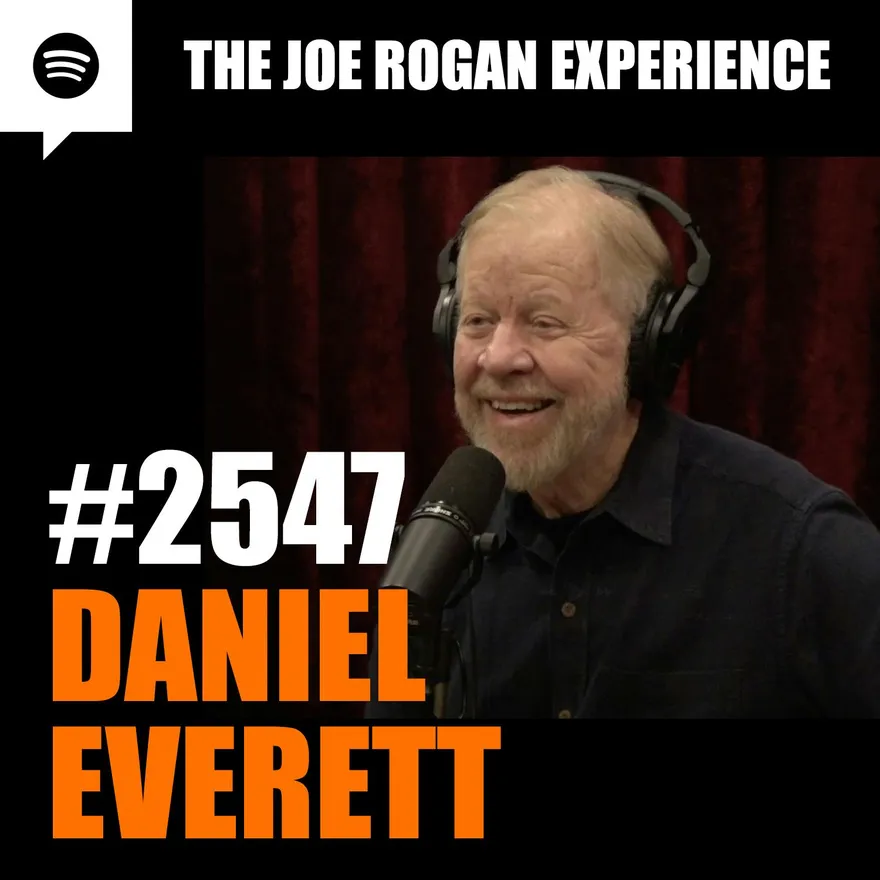

This is a preview of the Shortform summary of the Aug 27, 2026 episode of the The Joe Rogan Experience
Sign up for Shortform to access the whole episode summary along with additional materials like counterarguments and context.
1-Page Summary
Pirahã Language's Challenge to Chomsky's Universal Theory
Daniel Everett's extensive study of the Pirahã language poses a significant challenge to Noam Chomsky's Universal Grammar theory, which claims that recursion—the ability to nest linguistic units of the same kind within each other—is a universal feature of all human languages. When Everett presented evidence that Pirahã lacked recursion, a claim now known to apply to other languages as well, he faced severe personal attacks. Critics labeled him a liar, publicity-seeker, and racist, while Chomsky openly called him a charlatan in interviews and writing.
The Pirahã language differs fundamentally from familiar linguistic paradigms in multiple ways. The language has no words for numbers, instead using relative terms like "a lot" or "a little." It also lacks words for colors and doesn't use relative directions like left or right. Instead, the Pirahã use absolute spatial terms relating to their environment, such as "upriver" or "into the jungle"—a system that proves highly effective for navigation.
Everett's claims are based on extraordinary fieldwork: he lived with the Pirahã for eight years and has studied their language for forty. He argues that fluency in such a language typically requires at least a year of immersion, and many researchers who claim expertise after brief visits cannot reliably distinguish subtle meanings. Everett critiques the insufficient field time that often results in unreliable dissertations and misunderstandings.
When Everett first mentioned the absence of recursion in Pirahã to Chomsky in 1984, Chomsky responded with curiosity. However, after formalizing his claim that recursion is universal, Chomsky's attitude hardened. He dismissed Everett's evidence and refused invitations to visit the Pirahã, stating bluntly that he does not do fieldwork. This episode illustrates the deep divide between theoretical linguistics and empirical field research.
Daniel Everett's Faith Journey From Missionary to Atheist
Everett's journey from fervent Christian missionary to atheist was shaped by his transformative experience among the Pirahã. As a 17-year-old in 1968, Everett met a missionary outside a Jimi Hendrix concert while trying to sell LSD. Intrigued by the adventurous idea of living in the Amazon, he converted to Christianity, stunning his father who had expected legal troubles from his son's drug use. Everett embraced Christianity fully, earning a degree in Bible and theology, becoming ordained as a Wesleyan minister, and departing for the Amazon with Wycliffe Bible Translators in 1977.
Living among the Pirahã fundamentally challenged Everett's faith. When he attempted to share Christianity, the Pirahã demanded higher standards of evidence, asking whether Everett had ever seen Jesus or knew anyone who had. When he admitted he hadn't, they dismissed his message. More profoundly, Everett observed that the Pirahã embodied peace, contentment, and moral wellbeing far beyond most Christians he knew—they were "like the ultimate Zen masters." This realization troubled him: the Pirahã naturally demonstrated the transformative qualities Christianity claimed were necessary for human flourishing, yet they did so without supernatural beliefs or religious structures.
Everett began doubting around 1982-1983, after five years with the Pirahã, but hesitated to announce his disbelief until 2001 due to concerns about income and social standing. He struggled with the disconnect between Christian moral claims and reality—Christians he knew didn't live more morally than non-Christians despite claiming the Holy Spirit's power. When Everett finally confessed his disbelief, his wife immediately left, resulting in divorce and the loss of his missionary career. Despite the upheaval, Everett's extensive biblical training—he graduated first in his Bible school class—now fortified his atheism and made him resistant to reconversion efforts.
Pirahã Culture, Lifestyle, and Happiness Without Religion
The Pirahã people lead lives deeply connected to their riverine environment, thriving without religion, rigid hierarchy, or material wealth. Their diet consists of roughly 70% river fish, supplemented with jungle nuts and game, though they rarely store food. Adult Pirahã men typically weigh about 155 pounds with 25-26 inch waists and around 4% body fat. Obesity, diabetes, and cardiovascular disease are unknown among them.
The Pirahã spend only 15-20 hours weekly hunting or gathering, with extensive time devoted to relaxing, storytelling, and playing with children. They have no concept of worship or supernatural deities, and when discussing death, their responses are direct: death is simply the end, accepted without anxiety. Hardships like houses destroyed by storms are met with laughter and cheerful rebuilding. Researchers repeatedly note that the Pirahã smile and laugh more than people in developed societies, embodying remarkable peace and happiness.
The Pirahã culture emphasizes anger management above all else. Raising one's voice or hitting others in anger is their gravest social violation. In one example, when a drunken man killed his brother's dog, the bereaved brother refused retaliation, saying he loved his brother more. Despite being highly skilled hunters capable of violence, the Pirahã deliberately avoid conflict, understanding the deadly consequences and valuing social cohesion.
Resilience is instilled from childhood. The Pirahã sometimes purposefully endure hunger or sleep deprivation to build toughness, and injuries are met with stoic indifference. However, contact with outsiders has introduced serious health problems. The arrival of sugarcane caused widespread cavities where none existed before. Government-supplied rice resulted in obesity within a short time, and access to soda—"sweet water"—led to further health deterioration.
Rigorous Methodology and Sacrifices Required For Linguistic Fieldwork
Linguistic fieldwork requires years of immersion and close relationships with speakers. Everett describes his initial method of pointing at objects and writing down Pirahã words, using phonetics to document sounds and observing context changes to uncover meaning. He set a goal to learn ten new words daily, carrying a notebook to jot down terms and practicing sentences each evening.
Everett's early translation of the Gospel of Mark failed due to grammatical mismatches and lack of full fluency. He asserts that it takes about a year of intense study before one can ask nuanced questions about grammar and structure, and that refining linguistic analysis is humbling—speakers often understand researchers' intent better than researchers understand their own questions.
Everett critiques academic dissertations on Amazonian languages, noting that most researchers spend only one or two years in the field—insufficient for fluency or accurate analysis. Many who publish on these languages cannot speak them fluently, and their preconceptions hinder genuine descriptive work. While Everett can perform quick demonstrations analyzing unknown languages, he emphasizes that these sessions disguise decades of training and experience, and that effective fieldwork demands talent, commitment, and resilience to intellectual frustration.
Funding agencies like the National Science Foundation typically limit support to a single year—far too short for reliable claims about undocumented languages. Historically, missionary sponsorship allowed linguists to spend multiple years in remote communities, facilitating deeper documentation. However, today's academic positions favor quick publication over extensive fieldwork, making it difficult for young linguists to justify years-long research immersion.
Impact of Modernization, Dams, and External Factors on Amazonian Indigenous Societies
The Pirahã have experienced dramatic changes due to modernization and dam construction. For centuries, they relied on the Maici River, which historically provided abundant fish for 700-800 people. However, dam construction on upstream rivers altered seasonal water cycles about a decade ago. The Maici now drops so low in the dry season that people can walk across, and fish have virtually disappeared. After 300 years of relative self-sufficiency, the Pirahã now struggle to feed themselves, risking starvation.
The food crisis has forced extraordinary responses. Some desperate Pirahã men have killed settlers while stealing from farms. Others have migrated toward larger rivers where food is more plentiful, drawing them closer to Brazilian towns and dramatically altering their way of life. Everett notes rapid adoption of new customs and abandonment of ancient linguistic and cultural heritage, with recent images showing Pirahã dressed in modern clothing and speaking Portuguese.
Contact with outsiders has introduced products for which traditional life provides no regulation. Traders exchanged alcohol like whiskey or cachaça for local resources, spreading alcoholism and causing new health problems. When exposed to sugar, the Pirahã eagerly consume all they are given, lacking evolutionary mechanisms to signal satiety with these unfamiliar foods.
A profound consequence of this contact is the threat to environmental knowledge and cultural memory. The Pirahã language encodes detailed knowledge about their ecosystem—every person can name every plant and animal species, with classifications based on behavior rather than anatomy. As Pirahã children switch to Portuguese, this intricate, untranslatable knowledge is in danger of being lost forever. The story of the Pirahã demonstrates the devastating effects modernization, dam-building, and external contact can have on Indigenous autonomy, food security, health, and irreplaceable cultural heritage.
1-Page Summary
Additional Materials
Counterarguments
- Some linguists argue that the absence of recursion in Pirahã is still debated, with alternative analyses suggesting that recursion may exist in subtler forms or that methodological limitations affected Everett's conclusions.
- Critics note that claims about the lack of number words, color terms, or relative directions in Pirahã may be overstated or based on limited data, as subsequent fieldwork by other researchers has sometimes identified such concepts expressed differently.
- The assertion that brief field visits lead to unreliable linguistic analysis is challenged by some linguists who have produced valuable work with shorter immersion periods, especially when collaborating with native speakers or using modern recording and analysis tools.
- Chomsky and his supporters maintain that Universal Grammar is a theoretical construct not necessarily falsified by a single language, and that exceptions may reflect performance factors or cultural constraints rather than the absence of underlying cognitive structures.
- Some anthropologists and linguists caution against romanticizing the Pirahã as uniquely peaceful or content, noting that all societies experience conflict and that outsider observations may be influenced by selective reporting or cultural misunderstandings.
- The claim that the Pirahã's lack of religion leads to greater happiness or moral wellbeing is contested by scholars who point out that well-being and morality are complex and influenced by many factors beyond religious belief.
- While Everett's personal loss of faith is significant, it does not constitute evidence against Christianity or religion in general, as individual experiences vary widely.
- The idea that missionary sponsorship is preferable for linguistic fieldwork is disputed by those who argue that academic funding, despite its limitations, avoids the ethical complications of religious proselytization.
- Some researchers argue that modernization and contact with outsiders, while disruptive, can also bring benefits such as access to healthcare, education, and new economic opportunities for Indigenous communities.
- The risk of language and cultural loss among the Pirahã is real, but some linguists and educators are working on documentation and revitalization efforts, and language shift is a complex process influenced by community choices as well as external pressures.
Actionables
- you can challenge your own assumptions about language and communication by spending a day avoiding relative terms like left, right, or behind, and instead describing locations and directions using only absolute references tied to your environment (such as north, river-side, uphill, or toward the big tree), which helps you notice how your surroundings shape your thinking and speech.
- a practical way to build resilience and contentment is to set aside a short period each week where you intentionally do without a modern convenience (like processed snacks, digital entertainment, or hot water), using the time for simple activities like storytelling, relaxing, or playing with others, to experience satisfaction and peace from non-material sources.
- you can strengthen your ability to evaluate claims by making it a habit to ask for concrete, observable evidence before accepting new ideas or beliefs, whether in conversations, media, or advertising, and reflecting on how this approach affects your confidence in what you hear and your openness to changing your mind.


Get access to the context and additional materials
Pirahã Language's Challenge to Chomsky's Universal Theory
The Pirahã language, studied extensively by Daniel Everett, poses a significant challenge to Noam Chomsky’s Universal Grammar theory, which claims that recursion is a central, universal feature of all human languages. Everett’s work among the Pirahã people is met with both scientific and personal controversy, highlighting major debates in linguistics.
Pirahã Language Lacks Recursion, a Feature Chomsky Claimed Was Universal
Recursion Is Embedding a Linguistic Unit Inside Another of the Same Type
Recursion, as described by Everett, is the ability to nest units of the same kind within each other in language. In English, recursion is found everywhere: for example, combining nouns (truck + driver forms truck driver) or embedding entire sentences within others (“John spoke” versus “John said that Bill spoke,” with one sentence inside another).
Chomsky's Controversial Claim: Pirahã Lacks Required Recursion in all Languages
Everett Claimed Pirahã Lacked Recursion; Faced Personal Attacks as Liar, Publicity-Seeker, Racist
Chomsky claimed that all languages are built on recursion, and structured his entire theory of Universal Grammar around this principle, relying mostly on familiar languages and not widespread field data. According to Everett, when he presented evidence that Pirahã lacked recursion—an assertion now known to apply to other languages as well—it was perceived as a direct challenge to a foundational linguistic dogma.
As a result, Everett faced significant hostility, being labeled by critics as a liar, publicity-seeker, and even a racist. He describes receiving harsh emails and public denunciations, with Chomsky openly calling him a charlatan in interviews and writing. Nonetheless, Everett stands by his claim, citing his decades-long, hands-on linguistic research.
Pirahã Lacks Words For Numbers, Colors, or Directions
Pirahã Use "a Lot" or "a Little" Instead of Numbers
The Pirahã language fundamentally differs from familiar linguistic paradigms. As Everett documents, the Pirahã have no words for numbers. Instead of counting, they use relative terms such as “a lot” or “a little,” with no concept or linguistic marker for cardinal numbers.
Language Lacks Universal Terms, Challenging the Assumption of Spectrum Categorization
Pirahã also lacks words for colors. This defies the presumed linguistic universality of basic color terms and the idea that all human languages must label colors within a shared spectrum or hierarchy.
Pirahã Use Absolute Directions for Effective Navigation
The Pirahã do not use relative directions like left or right, nor universal locators like north or south. Instead, they use absolute spatial terms that relate to their environment, such as “upriver,” “downriver,” “into the jungle,” or “away from the jungle.” This strategy is highly effective for navigation: Everett tells of a Pirahã man who, after being taken to a distant town, immediately oriented himself by finding the river and then navigated 30 miles home unassisted. The Pirahã always know the direction of the river’s flow, and thus can specify and comprehend directions in complex, real-world settings better than many speakers of “universal” languages.
Decades of Fieldwork Were Necessary to Describe the Pirahã Language, Requiring Everett's Fluency Rather Than Superficial Knowledge
Everett Lived With the Pirahã For Eight Years, Studying Their Language For Forty Years to Make Accurate Claims
Field Time Insufficient for Fluency in Indigenous Language Research
Everett Retranslated Mark's Gospel After His Initial English-Based Translation Confused the Pirahã
Everett’s linguistic claims are based on an extraordinary depth of fieldwork. He lived with the Pirahã people for eight years and has studied their language for forty, enduring the physical hardships of Amazonian life and repeated illness. He argues that fluency in such a language typically takes at least a year of immersion; many researchers who claim expertise after brief visits cannot reliably distinguish subtle meanings.
Everett critiques those who conduct short-term studies, noting that insufficient field time and language mastery often result in ...
Here’s what you’ll find in our full summary
Pirahã Language's Challenge to Chomsky's Universal Theory
Additional Materials
Clarifications
- Recursion in linguistics allows sentences to be infinitely extended by embedding clauses within clauses, enabling complex expression. It is considered central to Universal Grammar because it provides a structural mechanism that underlies all human languages, supporting creativity and generativity in speech. Noam Chomsky argued that this recursive ability is innate and universal, forming the core of human linguistic capacity. This idea shapes much of modern linguistic theory by explaining how humans produce and understand an unlimited number of sentences.
- Noam Chomsky’s Universal Grammar (UG) theory proposes that all human languages share an innate, biological foundation in the brain. UG suggests that humans are born with a set of grammatical principles common to every language, enabling rapid language acquisition. This theory revolutionized linguistics by shifting focus from learned language patterns to inherent cognitive structures. It remains influential in understanding how language develops and functions across cultures.
- Daniel Everett is a linguist and anthropologist known for his extensive fieldwork with the Pirahã people in the Amazon rainforest. He lived among them for years, learning their language and culture firsthand. His research challenged established linguistic theories, especially Noam Chomsky's ideas about universal grammar. Everett's work is significant because it is based on deep immersion rather than theoretical assumptions.
- Fieldwork in linguistics involves immersive, long-term study of a language within its native community to capture authentic usage and cultural context. It is crucial for documenting languages that lack written records or formal study, ensuring accurate understanding of grammar, vocabulary, and meaning. Fieldwork helps uncover subtle linguistic features that short visits or secondhand data often miss. This method contrasts with theoretical approaches that rely mainly on existing texts or familiar languages.
- Everett was accused of lying because his findings contradicted the widely accepted linguistic theory of Universal Grammar, challenging established academic authority. Some critics labeled him a racist due to misunderstandings about his portrayal of the Pirahã culture and language, interpreting his critiques as cultural insensitivity. The controversy was fueled by the clash between theoretical linguists and field researchers, with personal and professional stakes high on both sides. This led to harsh public and private attacks aimed at discrediting Everett rather than engaging with his evidence.
- Languages typically reflect how their speakers perceive and categorize the world, so lacking words for numbers, colors, or directions suggests a different cognitive framework. This challenges the idea that all humans universally segment reality in the same way through language. It also impacts how speakers think about quantity, visual perception, and spatial orientation. Such differences provide insight into the relationship between language, thought, and culture.
- Relative spatial directions depend on the speaker's current position or orientation, like left, right, front, and back. Absolute spatial directions use fixed references independent of the speaker, such as cardinal points (north, south) or environmental landmarks (upriver, downhill). Absolute directions remain constant regardless of where or how a person is facing. This system requires constant awareness of the environment to communicate location accurately.
- Recursion is considered a core feature that enables infinite expression in human language, forming the basis of Noam Chomsky's Universal Grammar theory. If a language like Pirahã truly lacks recursion, it suggests that not all languages share this fundamental property. This challenges the idea that all human languages ar ...
Counterarguments
- Some linguists argue that recursion may exist in Pirahã in more subtle or non-syntactic forms, such as in discourse structure or through parataxis, rather than in overt sentence embedding.
- Subsequent fieldwork by other researchers has produced data suggesting that Pirahã speakers can, in certain contexts, produce recursive-like constructions, though these may be rare or pragmatically constrained.
- The claim that Pirahã lacks words for numbers, colors, or directions has been questioned by some anthropologists and linguists, who suggest that the Pirahã may use context, gesture, or other communicative strategies to convey these concepts.
- Universal Grammar theory has evolved over time, and some proponents argue that recursion is not the only or most central universal, but rather one of several possible features of human language.
- Chomsky and others have pointed out that the absence of a feature in one language does not necessarily falsify the existence of universal cognitive principles underlying language, as surface variation can mask deeper universals.
- Some critics note that Everett’s interpretations may be influenced by his own theoretical commitments or by the challenges of cross-cultural ...
Get access to the context and additional materials
Daniel Everett's Faith Journey From Missionary to Atheist
Daniel Everett’s journey from fervent Christian missionary to outspoken atheist is shaped by profound personal transformation and the challenging, eye-opening experience of living among the Pirahã people in the Amazon.
Everett Converted To Christianity, Rebelling Against Atheism, and Pursued Amazon Missionary Work
17-year-Old Everett Met a Missionary At Hendrix Concert While Selling Lsd
In 1968, as a 17-year-old, Everett was standing outside a Jimi Hendrix concert, trying to sell LSD to get in. There, he encountered a high school acquaintance and her sister—her being a missionary who had grown up in Brazil. Intrigued by her lifestyle and by the adventurous idea of living in the Amazon, his curiosity was piqued, motivating him to pursue Christianity.
Everett's Father, Expecting Legal Woes, Was Shocked by His Son's Religious Conversion
Everett’s conversion stunned his father, a heavy-drinking construction worker. His father, once worried about Everett getting arrested for drug use, suddenly found his son going to church every Sunday—something he found as unexpected as it was unwelcome, considering a more reckless youth part of manhood.
Everett Studied Bible, Theology, and Received Linguistic and Jungle Survival Training. Ordained As a Wesleyan Minister, He Departed For the Amazon In 1977
Embracing Christianity fully, Everett became a “genuine, strong, believing Christian.” He attended Bible school, earning an undergraduate degree in Bible and theology, and was ordained as a Wesleyan minister. He also received linguistic training and jungle survival skills, then in 1977 departed for the Amazon with Wycliffe Bible Translators. Choosing Brazil over Mexico and New Guinea, he bravely accepted the challenge of ministering to the Pirahã people—a group whose language was unlike any known and which had stymied previous missionary teams.
Living With the Pirahã Challenged Everett's Faith and Christianity
Everett’s experience among the Pirahã radically undermined his Christian worldview.
Pirahã Demand Higher Standards of Evidence From Everett
Upon arrival, Everett aimed to translate the Bible, plant a church, and convert the Pirahã. However, the Pirahã insisted on a high standard of evidence for his claims. They pressed Everett with questions: What did Jesus look like? Was he brown like the Pirahã or white like Everett? Had Everett ever actually seen Jesus, or knew anyone who had? When Everett admitted he had never seen Jesus, nor had anyone he knew, the Pirahã bluntly responded they had no interest in hearing more about him. Their skepticism forced Everett to scrutinize the credibility and origins of his beliefs.
Filmstrips of Jesus Led the Pirahã to Reject Christianity
Despite Everett’s best efforts—showing filmstrips and sharing stories of Jesus—the Pirahã remained unconvinced, always returning to their demand for first-hand evidence. Their questions and dismissals, rooted in rational inquiry, led Everett to acknowledge the reasonableness of their objections and the lack of reasonable answers in his Christian arsenal.
Pirahã's Spiritual Quality Surpasses Devout Christians
Everett was deeply affected by the contrast in spiritual and emotional wellbeing between the Pirahã and Christians he knew. The Pirahã’s self-awareness, satisfaction, and contentment with life impressed Everett: “They were like the ultimate Zen masters.” He observed that the Pirahã embodied virtues, peace, and practical intelligence in ways few Christians did. He confided he had never known anyone of Christian faith as well-adjusted or content as the Pirahã, realizing they naturally demonstrated the transformative qualities that Jesus was meant to bring, without religious dogma.
Everett Doubted For Nineteen Years, Realizing the Pirahã Had Superior Moral and Emotional Wellbeing Without the Supernatural Beliefs and Religious Structures Christianity Deemed Necessary For Human Flourishing
Everett Doubted His Faith Around 1982-1983, Five Years With the Pirahã, but Hesitated to Announce His Disbelief Until 2001 Due to Income and Social Standing Concerns
The process of doubt began around 1982–1983, after five years with the Pirahã. Though troubled by the limits of religious explanations, Everett hesitated to publicly discard his faith. His disbelief became official only in 2001, influenced in part by disillusionment with Christian support for the Iraq war and personal discomfort with church teachings. Concerned about the loss of his role as a missionary and its accompanying income and social standing, he delayed his admission for years.
Disconnect Between Christian Claims and Reality: Christians Everett Knew Didn't Live More Morally Than Non-christians, Despite Claiming the Holy Spirit
Everett grappled with the inconsistency between Christian moral claims and observable behavior. He recalled working in construction with a Christian contra ...
Here’s what you’ll find in our full summary
Daniel Everett's Faith Journey From Missionary to Atheist
Additional Materials
Counterarguments
- The Pirahã’s demand for firsthand evidence as a basis for belief, while rational within their cultural context, is not the only valid epistemological standard; many philosophical and religious traditions accept indirect evidence, testimony, or historical reasoning as legitimate.
- Everett’s observation that the Pirahã exhibit superior spiritual qualities is subjective and may reflect his personal values or experiences rather than an objective measure of wellbeing or morality.
- The claim that Christians do not live more morally than non-Christians is based on Everett’s personal experiences and may not be representative of broader populations or account for the diversity within Christian communities.
- The insularity Everett observed in Christian communities can also be found in many social, academic, or ideological groups, and is not unique to religious contexts.
- The negati ...
Actionables
- you can test the strength of your beliefs by asking yourself what direct evidence would change your mind, then seek out or create situations where you might encounter that evidence, such as reading opposing viewpoints or talking to people with firsthand experience.
- a practical way to evaluate the impact of your worldview is to keep a daily log comparing your actions and decisions to the values you claim to hold, then review after a month to see if your behavior aligns with your stated beliefs.
- you can identify areas of your life where you ...
Get access to the context and additional materials
Pirahã Culture, Lifestyle, and Happiness Without Religion
The Pirahã people of the Brazilian Amazon lead lives deeply connected to their riverine environment, thriving without reliance on religion, rigid hierarchy, or material wealth. Researchers and observers note the remarkable health, happiness, and resilience that emerge from this lifestyle, even as outside influences introduce new challenges.
Pirahã: Subsistence Lifestyle With Ample Leisure Time
The Pirahã do not preserve food for themselves, although they know techniques like drying or smoking meat and may use them for trade with Brazilians. Among themselves, any game or fish caught is cooked and shared immediately. Their home on the Maici River provides reliable fish and wildlife, supporting their subsistence existence.
Pirahã Diet: 70% River Fish, Supplemented With Jungle Nuts and Game, Rarely Store Food
Roughly 70% of the Pirahã diet historically comes from river fish. The remainder includes jungle nuts, fruits, and hunted game. If hunting or fishing is unsuccessful on any given day, they simply go without, fully accepting hunger as an occasional part of life. This forager-oriented diet is healthier than agricultural diets, and the Pirahã rarely suffer from food scarcity thanks to the abundance provided by their environment.
Pirahã Man's 155-pound Weight, 4% Body Fat, and 25-26 Inch Waist Show Fitness Without Obesity, Diabetes, or Cardiovascular Disease
Adult Pirahã men typically weigh about 155 pounds, with waists of 25 to 26 inches and around 4% body fat. Obesity, diabetes, and cardiovascular disease are unknown among them.
Lack of Formal Schedule Lets Pirahã Focus On Conversation, Bonding, Play
Pirahã adults spend only 15–20 hours a week hunting or gathering when conditions are good. When the catch is poor, they work more; otherwise, extensive time is spent relaxing, telling stories, joking, and playing with children. The men in particular are deeply involved with their children. The absence of a formal schedule promotes strong family bonds and a relaxed pace of life.
Pirahã Exhibit Contentment and Resilience Without Anxiety Over Supernatural Judgment, Afterlife, Possessions, or Social Status
The Pirahã have no concept of worship or supernatural deities. The community is central, and an individual’s contribution to group well-being defines their purpose in life. They live in the present, seeing no need for philosophical lessons or imposed meaning beyond participation in the group.
Pirahã Accept Death Naturally, Without Anxiety or Elaborate Beliefs
When discussing death, Pirahã responses are direct: when someone or something dies, that's simply the end. There is no speculation about an afterlife. They don’t fear death; it is an accepted part of existence. They express no anxiety about the unknown.
Pirahã Use Humor to Cope With Hardship, Laughing and Rebuilding Without Complaint When Storms Destroy Homes
Hardship, such as houses destroyed by Amazonian storms, is met with laughter rather than distress. Losing a home to the elements prompts jokes, communal sleeping in surviving shelters, and cheerful rebuilding the next day. Their responses to adversity are calm and often humorous; stress is rare.
Researchers Find Amazon's Pirahã Are Happier, Smiling and Laughing More Than in Developed Societies
Researchers, including visiting PhDs, repeatedly note that Pirahã smile and laugh more than people in developed societies. Their lifestyle prioritizes gathering food, community participation, and leisure, bringing a sense of peace, happiness, and meaning not found in modern, schedule-driven urban life. Even outsiders who live among them for a time become noticeably more relaxed and happier.
Pirahã Culture Emphasizes Anger Management, Conflict Avoidance, and Non-violent Dispute Resolution Through Kinship, Making Them Peaceful Despite Lethal Hunting Skills
Among the Pirahã, anger is the gravest social violation. Raising one's voice or hitting others in anger is seen as a form of sin. Conflict is rare and managed without violence.
Pirahã Concept of Sin Centers on Anger and Raising One's Voice, a Grave Social Violation
The community discourages displays of anger. Being loud or striking someone in anger is unacceptable and disrupts social harmony.
Man Forgives Drunk Brother For Killing Dog, Valuing Family Over Grievance
In one example, a drunken man shoots his brother's dog. The bereaved brother, despite his grief, refuses to retaliate, saying, “I love my dog, but I love my brother. I’m not going to hurt my brother.” This demonstrates an ethic that prioritizes maintaining peaceful family bonds even after serious grievances.
Pirahã Combat Skills Surpass Modern People; They Shoot Arrows Accurately At Fifty Yards, but Avoid Violence Due to Social Cohesion and Awareness of Lethal Conflict
Pirahã men are highly skilled hunters. Boys use bows from age two, resulting in near-unmatched archery skills by their teenage years. They are expert makers of bows and arrows, with the crafting process involving essential contributions from both men and women—a symbol of mutual cooperation. The Pirahã are fully capable of violence but deliberately avoid it, understanding the deadly consequences and valuing social cohesion.
Pirahã's Resilience Develops Through Childhood Hardship Training, Allowing Them to Endure Pain and Adversity Without Complaint
Resilience is instilled from childhood. The Pirahã have a saying: “He wants to be hard.” Children and adults alike sometimes purposefully endure hunger or sleep de ...
Here’s what you’ll find in our full summary
Pirahã Culture, Lifestyle, and Happiness Without Religion
Additional Materials
Counterarguments
- While the Pirahã are described as healthy and resilient, their life expectancy is relatively low compared to developed societies, partly due to high rates of infant and child mortality, infectious diseases, and lack of access to modern medicine.
- The absence of food preservation and storage makes the Pirahã vulnerable to environmental fluctuations, such as droughts or changes in wildlife populations, which could threaten food security.
- The claim that the Pirahã rarely suffer from food scarcity is based on observations during periods of environmental abundance; there is limited long-term data on how they fare during ecological downturns.
- The assertion that the Pirahã are happier than people in developed societies is based on subjective observations by researchers and may not account for cultural differences in expressing emotions or reporting well-being.
- The lack of hierarchy and material wealth may limit opportunities for technological advancement, infrastructure development, and access to resources that could improve quality of life in other ways.
- The Pirahã’s avoidance of religion and supernatural beliefs is unusual among human societies, but it is not clear that this is a direct cause of their happiness or resilience; many other non-Pirahã societies with religious beliefs also report high levels of well-being.
- The Pirahã’s peacefulness and conflict avoidance are notable, but there are documented instances of viol ...
Actionables
- You can set aside one day a week to eat only fresh, unprocessed foods you gather or buy that day, sharing meals immediately with family or friends to foster connection and reduce reliance on food storage and processed goods; for example, buy fresh produce and fish in the morning, prepare and eat together, and give away leftovers rather than refrigerating them.
- A practical way to strengthen family bonds and reduce conflict is to create a household rule where any argument or raised voice is followed by a shared, lighthearted activity (like a walk, game, or storytelling), making laughter and togetherness the default response to tension.
- You can build resilience and c ...


Get access to the context and additional materials
Rigorous Methodology and Sacrifices Required For Linguistic Fieldwork
Linguistic fieldwork, especially when learning and documenting undocumented languages, requires years of immersion, close relationships with speakers, and a continual process of self-correction and humility. Daniel Everett’s experience with the Pirahã people highlights the intense dedication, methodology, and institutional barriers that define effective language documentation.
Fluency in an Undocumented Language Requires Years of Immersion and Observation, Plus Relationships With Speakers Who Become Teachers and Informants
Initial Method: Point, Write Pirahã Words, Observe Context Changes
Everett describes his first hours with the Pirahã as a process of pointing at objects and writing down the words his informants provided. He used his knowledge of phonetics to document the sounds. By pointing at an object like a stick and saying the English word, he would wait for the Pirahã response—“eh” for “stick”—and note any context change when the stick was dropped, resulting in more complex phrases. He emphasized strict observation and context-testing to uncover meaning, since asking "what is this?" in the language wasn’t initially possible.
Daily, Everett Learned ten New Words Using a Notebook and Memorized and Used Them In Sentences in the Evenings
Everett set a goal to learn ten new words each day, carrying a notebook clipped to his belt buckle to jot down terms as he moved about. Each evening, he memorized these words and practiced integrating them into simple sentences, testing his usage the next day. This process included making mistakes and learning from the reactions of native speakers, such as laughter at incorrect usage.
Language Teachers Often Teach Taboo Words For Amusement, Requiring Friendships and Cultural Understanding For Basic Vocabulary
As relationships deepened, Everett found that speakers sometimes enjoyed teaching him taboo or amusing words, such as those for genitalia, which were not directly explained at first and changed with age and gender distinctions among the Pirahã. Learning such vocabulary required not just technical inquiry but close, trusting relationships that transcended superficial interactions.
Translation Relies On Revisiting Native Language-Based Initial Attempts
Everett's Gospel of Mark Translation Failed For Pirahã Due to Grammar Issues
Everett initially attempted to translate the Gospel of Mark into Pirahã but found his efforts flawed due to grammatical mismatches and lack of full fluency. Early translations based on his native language’s structure proved inadequate because of Pirahã grammar’s distinctive features.
Fluent Language Learning Needs one Year of Study to Ask Nuanced Questions About Grammar and Meaning
Everett asserts that it takes about a year of intense study before one can ask nuanced, meaningful questions about the language’s grammar and structure. Early misunderstandings often stem not from uncooperative informants but from the researcher’s lack of linguistic sophistication—something that only deep immersion corrects.
Refining Linguistic Analysis Is Humbling; Pirahã Speakers Often Grasp Intent Better Than Researchers Do Their Questions
Through fieldwork, Everett realized that speakers frequently understood what he needed better than he understood his own questions. This humility—acknowledging that speakers are often better attuned to the research process—was a critical and humbling lesson in field linguistics.
Linguists' Analyses Flawed By Lack of Fluency
Dissertations on Amazonian Languages Often Represent Insufficient Fieldwork For Fluency Needed For Accurate Grammatical Analysis
Everett critiques academic dissertations on Amazonian languages, noting that most researchers only spend one or two years in the field. This duration is usually insufficient for achieving true fluency or for accurate grammatical descriptions.
Linguists Claim Fluency Lacking Conversational Sustenance or Subtle Meaning Distinction
Many who publish on these languages cannot speak them fluently, often failing in actual conversation or in distinguishing subtle meaning differences. As a result, their analyses lack the depth and accuracy that only conversational fluency provides.
Linguists' Preconceptions Hinder Genuine Descriptive Analysis
Everett observes that graduate students often approach fieldwork with theoretical biases, aiming to validate academic models learned in school. This confirmation bias undermines the possibility for open-ended, descriptive research, obscuring the actual structure and logic of the studied language.
Everett's Quick Analysis Showcases Linguistic Fieldwork Focus
Demonstrations Exhaust Everett, Causing Headaches From Intense Concentration Needed to Identify Patterns, Test Hypotheses, and Communicate Findings
Everett performs demonstrations—sometimes in front of hundreds of linguists—where he analyzes unknown languages or switches to Pirahã to illustrate quick analytic methods. While these sessions seem almost magical to onlookers, Everett explains that such work is intensely demanding, giving him head ...
Here’s what you’ll find in our full summary
Rigorous Methodology and Sacrifices Required For Linguistic Fieldwork
Additional Materials
Counterarguments
- While extended immersion can enhance fluency, some linguists have produced valuable and accurate documentation with shorter fieldwork periods, especially when using collaborative methods or working with bilingual speakers.
- Technological advances, such as audio/video recording and remote collaboration tools, can supplement in-person immersion and help document languages more efficiently than in the past.
- Structured elicitation techniques and linguistic questionnaires can yield reliable grammatical data even before full conversational fluency is achieved.
- Not all linguistic analyses require native-like fluency; certain aspects of phonology, morphology, or syntax can be described accurately through targeted elicitation and analysis.
- Some communities may prefer shorter-term fieldwork or have ethical concerns about long-term outsider presence, making extended immersion impractical or undesirable.
- Theoretical frameworks, when applied critically, can guide productive inquiry and help reveal patterns that might otherwise be overlooked, rather than always introducing bias.
- Funding lim ...
Actionables
- You can create a personal observation log by spending a few minutes each day silently watching and listening to people interact in a language you’re learning, jotting down gestures, tone, and context before looking up or asking about the words or phrases you notice. This helps you build meaning from real-life context and trains you to notice subtle cues, even if you’re not immersed in the community.
- A practical way to build humility and self-correction into your language learning is to keep a “misunderstanding diary” where you record moments when you realize you misunderstood something or made an error, then reflect on what led to the mistake and how you might approach it differently next time. This encourages ongoing self-awareness and resilience.
- You can set up a weekly “language curiosity challe ...

Get access to the context and additional materials
Impact of Modernization, Dams, and External Factors on Amazonian Indigenous Societies
The Pirahã, an Indigenous group living along the Maici River in Brazil, have experienced dramatic changes to their traditional lifestyle due to modernization, dam construction, and external contact. These forces threaten their autonomy, health, and cultural heritage.
Brazilian Dams Threaten Pirahã Subsistence By Reducing Fish Populations, Causing Starvation
For centuries, the Pirahã relied on the Maici River, which historically held steady water levels and abundant fish that supplied the protein needs of 700-800 people. The river, two hundred yards wide and up to 100 feet deep in the rainy season, previously guaranteed a rich, reliable catch. However, dam construction on upstream rivers (not directly on the Maici but affecting it) has fundamentally changed the environment. About a decade ago, a dam induced major flooding and altered the seasonal water cycles, resulting in the Maici dropping so low in the dry season that it becomes possible to walk across. Fish have all but disappeared, making it impossible for the Pirahã to maintain their traditional protein-rich diet.
Hunting, once a supplemental activity, has become essential, but it’s less productive as wildlife also diminishes when river levels fall. Hunters must now travel many miles into the jungle for little return. After 300 years of relative self-sufficiency, the Pirahã now struggle to feed themselves, risking starvation.
Pirahã's Response to Ecological Collapse: Conflict With Settlers, Cultural Integration, Disintegration of Traditional Life and Cohesion
The acute food crisis has forced extraordinary responses. Some Pirahã men, desperate for food after failing to secure sufficient protein through hunting and fishing, have killed settlers while stealing from their farms. Others have chosen to migrate, moving out of their ancestral areas toward larger rivers where food is more plentiful—but this draws them closer to Brazilian towns and dramatically alters their way of life.
The collapse of the food system is fracturing Pirahã communities. More Pirahã are adapting to Brazilian society, making efforts to learn Portuguese and integrating practices alien to their traditional culture. Daniel Everett, an anthropologist familiar with their society, notes rapid adoption of new customs and abandonment of ancient linguistic and cultural heritage. Images from his former wife in the region show Pirahã people now dressed in modern clothing and speaking some Portuguese—a striking transformation after centuries of cultural resilience.
Modern Goods Introduction Spurs Addiction and Health Issues in Pirahã Society
Contact with outsiders has introduced the Pirahã to products for which their traditional way of life provides no instinctive regulation. Historically, the Pirahã diet did not include high-calorie, sugary, or addictive substances. However, traders arriving by river exchanged manufactured goods for local resources like rubber or Brazil nuts, often supplying alcohol such as whiskey or cachaça in return. Alcohol was initially a rare luxury, but as it became continually available, alcoholism spread, causing new health problems.
Similarly, when exposed to sugar and sweets, the Pirahã eagerly consume all they are given, lacking the evolutionary mechanisms to signal satiety with these unfamiliar foods. The community struggles with these health impacts, unable to con ...
Here’s what you’ll find in our full summary
Impact of Modernization, Dams, and External Factors on Amazonian Indigenous Societies
Additional Materials
Counterarguments
- While dam construction and modernization have negatively impacted the Pirahã, some argue that increased contact with broader Brazilian society can provide access to healthcare, education, and legal protections that may improve quality of life in certain respects.
- The adoption of Portuguese and integration into Brazilian society, while leading to cultural loss, can also offer the Pirahã greater agency in political and economic systems that affect their territory and rights.
- The introduction of manufactured goods, though associated with health risks, can also bring practical benefits such as improved tools, clothing, and medicines.
- Not all Pirahã may view cultural change or integration as ent ...
Actionables
- you can document and share the names, uses, and behaviors of local plants and animals in your area with friends or family, preserving and passing on ecological knowledge that might otherwise be lost as environments change; for example, keep a simple notebook or digital log where you record what you observe on walks, ask elders or neighbors about traditional uses, and teach children or peers what you learn.
- a practical way to support Indigenous autonomy and cultural preservation is to choose products and foods that are certified as benefiting Indigenous communities or that avoid contributing to environmental harm, such as seeking out fair trade or sustainably sourced goods and avoiding those linked to deforestation or river disruptio ...
Get access to the context and additional materials

 1-Page Summary
- Pirahã Language's Challenge to Chomsky's Universal Theory
- Daniel Everett's Faith Journey From Missionary to Atheist
- Pirahã Culture, Lifestyle, and Happiness Without Religion
- Rigorous Methodology and Sacrifices Required For Linguistic Fieldwork
- Impact of Modernization, Dams, and External Factors on Amazonian Indigenous Societies
Create Summaries for anything on the web
Download the Shortform Chrome extension for your browser
