

#2538 - Joe DeRosa
In this episode of The Joe Rogan Experience, Joe Rogan and comedian Joe DeRosa discuss a wide range of topics spanning food quality, business ethics, and the entertainment industry. They examine deceptive practices in the food industry, from misleading ingredient labeling to packaging tactics, and contrast mass-market products with premium alternatives. The conversation extends to systemic issues in modern capitalism, including health insurance claim denials, shareholder pressure on public companies, and the challenges facing small businesses under excessive regulation.
Rogan and DeRosa also explore Austin's emerging comedy scene as a meritocratic alternative to traditional entertainment gatekeepers, highlighting how stand-up and podcasting allow creators to build direct audience connections. Additionally, they discuss personal health and fitness, emphasizing the mental health benefits of consistent exercise while acknowledging the serious neurological risks of combat sports. Throughout the episode, they contrast authentic, independent platforms with traditional entertainment structures that demand costly PR campaigns and industry connections for success.
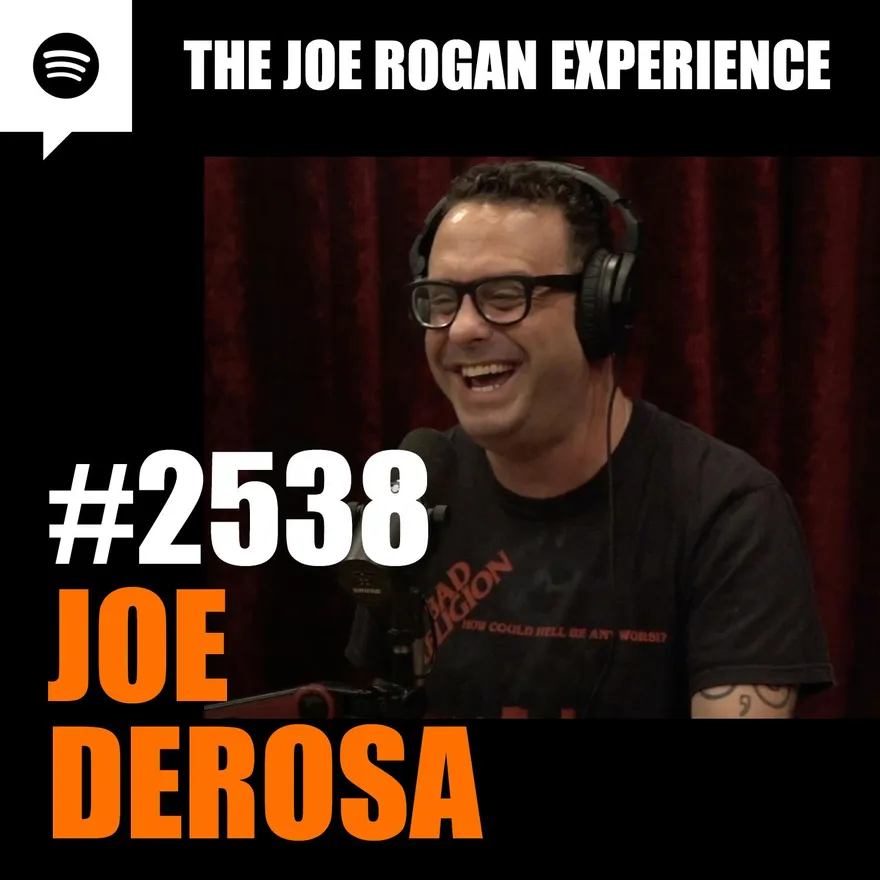

This is a preview of the Shortform summary of the Aug 12, 2026 episode of the The Joe Rogan Experience
Sign up for Shortform to access the whole episode summary along with additional materials like counterarguments and context.
1-Page Summary
Coffee, Food Quality, and Consumer Exploitation
Joe Rogan and Joe DeRosa explore coffee brewing methods, food industry deception, and the differences between mass-market and premium products.
Brewing Methods Vary In Quality and Convenience For Coffee Consumption
Rogan praises the AeroPress for its simplicity and minimal plastic, using it daily to produce quick, pure single cups of coffee. He also extols the French press as optimal for flavor and purity, noting that all-metal versions avoid plastic entirely and maintain bean oils for superior taste. DeRosa points out the slight inconvenience of brewing one cup at a time, but Rogan counters that preset temperature kettles make the process quick and consistent. In contrast, DeRosa's experience with Italian espresso machines has been disappointing—they contain excessive plastic, break frequently, and require inconvenient repairs.
Food Industry Exploits Consumers Through Deception and Ingredient Substitution
Rogan highlights corporate deception in the food industry, citing companies that market products as containing healthy avocado oil but substitute cheaper oils instead. DeRosa complains about packaging strategies like half-empty chip bags, which companies falsely justify as protecting the product. Both note that genuinely high-quality food products must often be purchased online, as quality-focused brands frequently get bought out by large corporations, leading to ingredient downgrades and price increases.
Premium Foods Prove Consumers Value Quality Ingredients Over Excess Packaging
Rogan highlights Vandy chips, cooked in beef tallow, as demonstrating that when food is made from real ingredients, consumers naturally moderate their intake and feel satisfied. Similarly, high-quality jarred pasta sauces like Rao's command strong market loyalty. Ultimately, Rogan and DeRosa conclude that real food's natural satisfaction prevents overconsumption, supporting the preference for honest, premium foods over the deceptive practices of mainstream food manufacturing.
Capitalism, Business Ethics, and Systemic Corruption
Rogan and DeRosa examine unethical practices within modern capitalism, focusing on health insurance, corporate profit motives, government overreach, and ethical versus extractive business management.
Insurance Companies Deny Legitimate Claims Regardless of Patient Need
Rogan criticizes health insurance companies for systematically denying claims to maximize profits, likening the industry to selling a feeling of safety while betraying customers when they need help most. He highlights how these denials bankrupt families and lead to deaths, driving some victims toward extreme reactions. This systemic injustice has become widely recognized and resented, with public sympathy occasionally extending to those who take drastic action against insurance providers.
Shareholder Pressure Hinders Ethical Operations in Public Companies
Rogan and DeRosa describe how public companies are driven by relentless shareholder expectations, forcing leaders to extract more value from customers through cost-cutting and deceptive practices. Boards oust executives who don't consistently grow profits, making it impossible for public companies to prioritize long-term sustainability or ethics. In contrast, Rogan points out that private companies have more flexibility to allocate profits to employees, product quality, or community causes without being punished by external investors.
Over-Regulation Stifles Economic Activity and Drains Resources Without Benefits
Rogan argues that some governments have responded to economic downturns by expanding bureaucracy rather than solving underlying issues. Both he and DeRosa point out that excessive regulations make it hard for small businesses to survive, as compliance becomes costly and complicated. Rogan suggests that agencies tend to focus on expanding their own power rather than resolving the issues they were created to address.
Ethical Businesses Prioritize Employee Welfare and Community Over Profit
Rogan uses his own comedy club as an example of how businesses can thrive by prioritizing paying performers well and creating vibrant environments rather than maximizing profit. DeRosa recounts leaving his sandwich shop because economic pressures made it impossible to maintain high standards, emphasizing that many small owners exit not because their models are unsound, but because larger systemic pressures make survival impossible. Both agree that when businesses focus on paying staff well and ensuring happy environments, the result is superior service and widespread satisfaction.
Comedy as an Alternative Entertainment Path
Austin's comedy scene is emerging as a powerful alternative to traditional entertainment, propelled by meritocracy and authentic stage experiences.
Stand-Up As a Meritocratic Alternative to Gatekept Entertainment Hierarchies
DeRosa emphasizes that Austin is currently the best city for young comedians, as affordable living allows them to fully pursue comedy. Rogan highlights the benefits of having many venues in close proximity, giving performers abundant opportunities to work on their craft. Talent coordinators watch open mics, provide advice, and ensure promising comedians work all over town. Both agree that surrounding oneself with other driven comics elevates individual performance.
Unpolished Comedy Like Kill Tony Draws Audiences Without Industry Support
The "Kill Tony" show's one-minute format forces comedians to get straight to the punchline, creating what Rogan describes as a "true meritocracy"—comedy is judged purely on funniness, not appearance or background. Some comedians who were literally homeless jumpstarted their careers by performing on the show. DeRosa notes the historic moment when Kill Tony sold out Madison Square Garden for two consecutive nights, underscoring how authentic, merit-driven comedy can outperform traditional entertainment.
Austin's Comedy Scene: Merging Professional Infrastructure With Young Talent for Sustainable Growth
Rogan's Mothership Comedy Club prioritizes performers' earnings sustainably. The club occupies a historic building nearly 100 years old, steeped in cultural history. Extensive renovations created a space tailored specifically for live comedy, with design input from several prominent comedians shaping practical features that enhance intimacy and connection between audiences and performers.
Personal Health, Fitness, and Mental Wellness
Intense Exercise Boosts Mental Health, Mood, Anxiety, and Resilience
Rogan emphasizes that intense exercise is crucial for his mental well-being, explaining that engaging in voluntary adversity makes the rest of life's challenges seem easier by comparison. When he skips exercise, he experiences increased anxiety and irritability. He asserts that tackling physically difficult challenges voluntarily builds resilience and makes everyday stressors more manageable.
Training Focuses On Gradual Progression Over Physical Failure
Rogan advocates a gradual approach for new exercisers, stressing the importance of starting slow and increasing difficulty carefully. He draws on the methodology of Pavel Tatsoulin, who treats strength as a skill, focusing on controlled repetitions with good technique rather than training to exhaustion. Rogan also draws a parallel to how farmers build strength—through accumulated volume and consistency rather than single maximal efforts.
Frequent Moderate Sessions Yield Better Long-Term Results Than Sporadic High-Intensity Efforts
Both Rogan and DeRosa stress that moderate, manageable workout sessions performed frequently are more effective for long-term results than rare, all-out efforts. Rogan notes that the most important ingredient for building strength and fitness is volume and consistency. Daily activity, even at moderate intensity, builds better and more lasting adaptation than periodic, exhausting efforts.
Combat Sports and Head Trauma Lead to Lasting Personality Changes, Including Impulsivity and Risk Attraction
Rogan addresses the grave downside of high-impact combat sports, recounting his own experience with kickboxing and jiu-jitsu and admitting to definite brain damage from repeated blows to the head. He acknowledges changes like increased impulsivity and risk-seeking behaviors, which he attributes to this trauma. He describes witnessing cognitive decline and personality changes in fellow athletes, emphasizing that recognizing the serious neurological risks should motivate athletes to consider leaving the sport before sustaining irreversible damage.
Entertainment Industry Authenticity and Accessibility
Entertainment Industries Demand Costly PR, Connections, and Ideological Alignment For Success
Rogan and DeRosa discuss how success in traditional entertainment relies on much more than talent. DeRosa highlights that awards like the Oscars involve expensive PR campaigns rather than pure merit. They point out that even immensely talented individuals can remain on the sidelines without the right connections or willingness to comply with industry norms, making studio compliance more important than acting ability.
Podcasting and Stand-Up Bypass Gatekeepers, Fostering Direct Creator-Audience Connections
In contrast to the old entertainment model, Rogan and DeRosa praise stand-up comedy and podcasting for eliminating traditional gatekeepers. Rogan emphasizes that comedy allows anyone to take the stage at open mic nights, and performers can build direct relationships without studio support. Podcasting has created accessible platforms where performers can produce content, post it directly to YouTube, and monetize it via ticket sales, tying income directly to audience satisfaction.
Genuine Content Attracts Bigger Audiences Than Polished Entertainment
Rogan points out that unscripted conversation podcasts often outperform heavily curated entertainment because audiences gravitate toward authenticity and genuine connection. Independent comics and podcasts now routinely reach further than mainstream entertainment despite lacking traditional support systems. Rogan firmly believes this exists because it is real and not curated—this is "what people want." DeRosa adds that if Hollywood could destroy YouTube, they would, acknowledging the threat that authentic, independent platforms pose to traditional gatekeepers.
1-Page Summary
Additional Materials
Counterarguments
- While the AeroPress and French press are praised for purity and flavor, some coffee enthusiasts argue that other methods (such as pour-over or high-quality espresso machines) can produce equally or more nuanced flavors, depending on bean quality and technique.
- The inconvenience of single-cup brewing may be a significant drawback for households or workplaces where multiple people want coffee simultaneously, making batch brewing methods more practical.
- Not all Italian espresso machines are unreliable or overly plastic; many high-end models are durable, repairable, and made with quality materials.
- Ingredient substitution and misleading packaging are regulated in many countries, and some brands maintain transparency and integrity even after acquisition by larger corporations.
- Premium foods are not always accessible or affordable for all consumers, potentially making the preference for "real" ingredients an issue of privilege rather than universal consumer behavior.
- Some people may overconsume premium foods just as easily as processed ones, as satisfaction and moderation are influenced by individual habits and psychological factors, not just ingredient quality.
- Health insurance claim denials can sometimes result from administrative errors or ambiguous policy language, not solely profit motives.
- Public companies can and do implement ethical practices and long-term sustainability initiatives, often in response to consumer demand, regulation, or leadership vision.
- Government regulation can protect consumers, workers, and the environment, and some regulations are necessary to prevent abuses and ensure fair competition.
- Some small businesses thrive under regulatory frameworks by innovating or finding niche markets, and not all exit due to systemic pressures.
- The meritocracy of Austin's comedy scene may be overstated, as factors like networking, timing, and personal connections still play a role in career advancement.
- "Kill Tony" and similar shows may favor certain comedic styles or personalities, potentially limiting the diversity of voices that succeed.
- The risks of combat sports are well-documented, but many athletes accept these risks knowingly and find meaning, community, and opportunity through participation.
- Gradual progression and moderate exercise are effective for many, but some individuals may benefit from or prefer high-intensity or varied training approaches.
- Success in traditional entertainment sometimes does result from pure talent, and industry connections or PR campaigns do not always override audience preferences.
- Some audiences prefer polished, scripted entertainment, and mainstream media continues to attract large viewerships despite the rise of independent platforms.
- Traditional entertainment gatekeepers have also embraced digital platforms and new talent, adapting to changing audience preferences rather than solely seeking to suppress competition.
Actionables
- you can create a personal food authenticity checklist to use when shopping, listing specific ingredient swaps and packaging tricks to watch for, so you consistently avoid misleading products and prioritize real, premium foods that help you feel satisfied and avoid overconsumption
- (for example, note to check for oils used in snacks, look for full ingredient transparency, and compare online-only brands with store options to spot quality downgrades)
- a practical way to protect yourself from insurance claim denials is to keep a simple, organized log of all communications and documents related to your health insurance, including dates, names, and summaries, so you have clear evidence and a timeline if you need to appeal a denial or escalate a claim
- (for example, use a notebook or digital folder to record every phone call, email, and letter, and set calendar reminders to follow up on unresolved issues)
- you can build a weekly routine that combines moderate, consistent strength training with short, intense cardio bursts, tracking your mood and anxiety levels before and after each session to find the exercise pattern that best stabilizes your mental health and resilience
- (for example, alternate three days of controlled strength exercises with two days of brisk walks or sprints, and jot down a quick mood rating after each workout to spot trends and adjust your plan)
Get access to the context and additional materials
Coffee, Food Quality, and Consumer Exploitation
Joe Rogan and Joe DeRosa discuss the intricacies of coffee brewing, food industry deception, and the difference in consumer satisfaction between mass-market and premium food products.
Brewing Methods Vary In Quality and Convenience For Coffee Consumption
Joe Rogan praises the AeroPress, which he uses daily because of its simplicity and minimal plastic. His routine involves boiling water, grinding beans, and pressing hot water through a filter in a glass tube, resulting in a quick, pure, single cup of coffee. He highlights that AeroPress requires only a tube, filter, and ground coffee, avoiding unnecessary plastic and complicated parts.
Rogan also extols the French press, describing it as the optimal choice for those seeking flavor and purity. He points out that the French press maintains all the bean oils, delivering a superior taste compared to machines that filter out some of the flavor. He strongly prefers all-metal French presses, which avoid plastic entirely and have no moving parts that break. Joe DeRosa notes the slight inconvenience of the French press, as it brews only one cup at a time and needs to be prepared fresh for each serving. Rogan counters that making coffee with these devices is straightforward and quick, especially with good equipment.
Preset temperature kettles are another convenience Rogan recommends. He uses an electric steel kettle with programmable settings, including one specifically for French press coffee. This kettle eliminates the hassle of stovetop boiling, ensures water reaches the optimal brewing temperature, and beeps when ready, making manual coffee brewing even easier and more consistent.
In contrast, DeRosa shares that he has splurged on Italian commercial espresso machines, which grind beans for each cup. However, these machines are impractical for home use because they contain excessive plastic, often break within a year, and require inconvenient repairs. Rogan criticizes the prevalence of hot plastic in home coffee machines and expresses interest in an all-steel machine, though he hasn’t yet tried one.
Food Industry Exploits Consumers Through Deception and Ingredient Substitution
Rogan brings attention to corporate deception in the food industry, citing the ongoing scandal where companies market products as containing healthy avocado oil but substitute cheaper seed, safflower, or rapeseed oils. Labels present products as premium, tricking health-conscious consumers.
Packaging strategies also come under fire. DeRosa complains about bags of potato chips that are half air—explained away by companies as “protecting the chips” rather than honestly admitting it’s a cost-cutting measure that shortchanges consumers.
Due to these practices, Rogan and DeRosa note that genuinely high-quality food products must often be purchased online, as grocery stores rarely carry truly authentic options. They explain that quality-focused brands may reach stores, but frequently get bought out by large corporations like Pepsi or Kellogg’s, leading to ingredient downgrades and price increases. DeRosa and Rogan use Ra ...
Here’s what you’ll find in our full summary
Coffee, Food Quality, and Consumer Exploitation
Additional Materials
Counterarguments
- The convenience and speed of single-cup brewing methods like AeroPress and French press may not suit households or workplaces where multiple servings are needed quickly, making drip machines or larger-capacity brewers more practical for some users.
- While all-metal French presses avoid plastic, they can be heavier, more expensive, and may retain heat less efficiently than some insulated plastic or glass models.
- The claim that French press coffee is always superior in flavor is subjective; some consumers prefer the cleaner taste and reduced sediment of filtered or drip coffee.
- Preset temperature kettles add convenience but are not essential for good coffee; many people achieve satisfactory results with basic stovetop kettles.
- The assertion that commercial espresso machines are impractical for home use overlooks the fact that many coffee enthusiasts successfully use and maintain home espresso machines, including models with minimal plastic.
- Concerns about hot plastic in coffee machines are valid for some, but many machines use food-safe, heat-resistant plastics that have not been shown to pose significant health risks in normal use.
- The idea that high-quality food is rarely available in grocery stores may not reflect the increasing availability of premium and specialty products in many supermarkets.
- Not all corporate buyouts result in ingredient downgrades or price increases; some brands maintain quality standards post-acquisiti ...
Actionables
- You can create a personal ingredient audit by checking the labels of your favorite packaged foods and making a list of any unfamiliar or suspicious ingredients, then researching what they are and deciding if you want to keep those products in your pantry. This helps you become more aware of hidden oils or additives and encourages you to seek out simpler, more honest foods.
- A practical way to avoid plastic in your coffee routine is to set up a dedicated coffee station using only glass, ceramic, or stainless steel tools and containers, and store your beans in airtight glass jars to keep them fresh and plastic-free.
- You can test yo ...
Get access to the context and additional materials
Capitalism, Business Ethics, and Systemic Corruption
The discussion between Joe Rogan and Joe DeRosa examines the unethical practices within modern capitalism, especially focusing on health insurance, corporate profit motives, government overreach, and the contrast between extractive versus ethical business management.
Insurance Companies Deny Legitimate Claims Regardless of Patient Need
Insurance Firms Prioritize Profits By Denying Patients Entitled Services
Joe Rogan criticizes health insurance companies for systematically denying claims, even when those claims are clearly justified. He argues that these firms are primarily in the business of maximizing profits under the pretense of providing medical security. The real business model is not to care for patients, but to make as much money as possible by rejecting as many claims as possible—regardless of patient need.
Business Model Sells Safety but Extracts Wealth
Rogan likens health insurance to selling a feeling of safety, only to betray customers when they need help the most. Customers contribute regularly, believing they're building a safety net, but when a crisis—like a broken ankle or a serious disease—arises, claims are often denied. This extraction of wealth, while withholding promised services, leaves customers feeling cheated and vulnerable.
Healthcare Denial Bankrupts Families Believing In Medical Security
Rogan highlights the severe impact on families who pay significant sums for years expecting security, only to be bankrupted or lose loved ones when claims are denied. He details how these betrayals of trust stir intense anger and despair in victims.
Systemic Injustice in Insurance Fuels Extreme Reactions From Victims of Denied Claims
There are widespread stories of families being denied life-saving treatments, leading to bankruptcies and even deaths. Rogan mentions that this deep systemic injustice drives some victims toward extreme, sometimes violent thoughts, and public sympathy occasionally extends to individuals who take drastic action against insurance providers—an indicator of how widely recognized and resented the system's corruption has become.
Shareholder Pressure Hinders Ethical Operations in Public Companies
Boards Oust Executives Keeping Profits Stable, Pressuring Leaders to Extract More Customer Value
Rogan and DeRosa describe how public companies are driven by relentless shareholder expectations. Boards will oust CEOs who don't consistently grow profits, forcing leaders to find additional ways to extract value from customers, even if it means cutting corners.
Maximizing Shareholder Returns Incentivizes Cutting Corners: Cheaper Ingredients, Reduced Staff, Deceptive Marketing
The pressure to maximize quarterly profits leads to cost-cutting—using less ingredient in a product (like selling underweight sugar packages), reducing staff, or deploying deceptive marketing tactics. Rogan notes these are not accidental errors, but calculated methods to increase margins.
Public Companies Can't Prioritize Sustainability or Ethics Because Investors Replace Underperforming Leaders
If public company leaders refuse to cut costs or boost quarterly returns for the sake of sustainability or ethical operations, they're quickly replaced by the board. This cycle makes it impossible for public companies to prioritize long-term well-being or values above immediate profits.
Private Firms Balance Profit With Values, Prioritizing Founders' Profit Distribution Over Shareholders' Demands
Rogan points out that private companies have more flexibility, since they're not answerable to external shareholders demanding ever-higher returns. Private owners can choose to allocate profits as they wish—to employees, product quality, or community causes—without being punished by external investors.
Over-Regulation Stifles Economic Activity and Drains Resources Without Benefits
California's Government Expansion During Economic Downturn Prioritizes Job Creation Over Problem-Solving
Rogan argues that some governments, like California’s, have responded to economic downturns by dramatically expanding bureaucracy, creating jobs within government rather than actually solving underlying issues. He describes this as growing a business of government jobs funded by taxpayer money without tangible improvements for the public, as seen in persistent problems like homelessness and underfunded schools.
Excessive Regulation Raises Costs and Complicates Compliance for Small Businesses
Both he and DeRosa point out that excessive regulations make it hard for small business ...
Here’s what you’ll find in our full summary
Capitalism, Business Ethics, and Systemic Corruption
Additional Materials
Clarifications
- Health insurance companies deny legitimate claims through tactics like requiring excessive documentation, disputing medical necessity, or coding errors. They may use pre-authorization denials to block treatments before they occur. Claims can be delayed or rejected due to administrative errors or narrow policy language. These practices reduce payouts and increase insurer profits.
- Extractive business management focuses on maximizing profits by taking as much value as possible from customers, employees, or resources, often disregarding ethical considerations or long-term impacts. Ethical business management prioritizes fairness, transparency, and sustainability, balancing profit with social responsibility and stakeholder well-being. Extractive models often lead to exploitation and harm, while ethical models aim to create shared value and trust. The distinction lies in whether a business seeks short-term gain at others' expense or long-term mutual benefit.
- Shareholders invest capital expecting financial returns, often measured quarterly. Executives face pressure to meet or exceed these short-term profit targets to maintain stock prices and avoid losing investor confidence. Failure to deliver can lead to board intervention, including replacing leadership. This dynamic encourages decisions favoring immediate gains over long-term strategy or ethical considerations.
- Public companies sell shares to the general public and are owned by many shareholders who expect regular profits and stock value growth. Their management must prioritize short-term financial performance to satisfy these shareholders and avoid being replaced. Private companies are owned by a smaller group, often founders or private investors, allowing more control over decisions without pressure for immediate profit increases. This enables private firms to focus on long-term goals, values, or reinvestment rather than quarterly returns.
- During economic downturns, governments often increase bureaucracy to create public sector jobs and stimulate the economy. This expansion can divert funds from direct problem-solving to administrative overhead. Larger bureaucracies may slow decision-making and reduce efficiency in addressing issues. Over time, agencies may prioritize maintaining or growing their budgets over their original missions.
- Excessive regulation imposes fixed compliance costs that are relatively higher for small businesses with limited resources. Larger companies can spread these costs over greater revenue and often have dedicated legal or compliance teams. Small businesses may struggle with complex paperwork, fees, and legal requirements that consume time and money. This creates a competitive disadvantage, making it harder for small businesses to survive or grow.
- Government agencies often seek to secure their budgets and justify their existence by expanding their scope and influence. This expansion can lead to increased staffing and resources, which benefits the agency internally. Political incentives also encourage agencies to show growth and activity rather than simply resolving issues. Additionally, complex problems may require ongoing management, making perm ...
Counterarguments
- While some health insurance companies have denied legitimate claims, many claims are approved, and regulatory oversight exists to penalize systematic bad faith denials.
- Health insurance provides financial protection for millions of people each year, covering costly treatments that would otherwise be unaffordable.
- Not all families experience bankruptcy or loss due to denied claims; many benefit from insurance coverage during medical crises.
- Extreme reactions to insurance denials are rare and not representative of the general population’s response.
- Public companies can and do invest in sustainability and ethics, as evidenced by the rise of ESG (Environmental, Social, and Governance) initiatives and socially responsible investing.
- Shareholder pressure can also drive companies to improve efficiency, innovate, and lower prices for consumers.
- Private companies are not immune to unethical practices or profit-driven decisions; lack of external oversight can sometimes lead to worse outcomes for employees or customers.
- Government expansion during downturns can provide necessary social safety nets and stabilize the economy through job creation.
- Regulations are often implemented to protect consumers, workers, and the environment, and can level the playing field for small businesses by setting minimum standards.
- Some government agencies have successfully addresse ...
Get access to the context and additional materials
Comedy as an Alternative Entertainment Path
Austin’s comedy scene is emerging as a powerful alternative to traditional entertainment, propelled by meritocracy and authentic stage experiences rather than industry gatekeeping.
Stand-Up As a Meritocratic Alternative to Gatekept Entertainment Hierarchies
Austin's Affordable Living Allows Young Comedians to Thrive
Joe DeRosa emphasizes that Austin is currently the best city for young comedians, as affordable living allows them to fully pursue comedy. Unlike New York and LA, which have become unaffordable, emerging talents in Austin can "live like a human being and pursue their dream."
Nearby Comedy Venues Offer Frequent Gigs For Performers to Develop Craft Through Audience Feedback
Joe Rogan highlights the benefits of having many venues in close proximity, giving performers abundant opportunities to work on their craft. With five clubs located on the same street, comedians can get sets, receive direct feedback, and perform frequently.
Open Mic Coordinators Boost Stage Time and Venue Quality For Promising Performers Based On Ability
Austin’s clubs have integrated talent development systems. According to Rogan, talent coordinators like Adam carefully watch open mics, provide advice, grant showcase opportunities, and ensure that promising comedians work all over town. This hands-on mentorship and feedback environment accelerates growth for those with ability.
Comedians Excel When Performing With Emerging Talent
Rogan and DeRosa agree that surrounding oneself with other driven comics elevates individual performance. Being among peers who are “swinging for the fences” pushes everyone to bring their best material, regardless of status or television credits. Rogan notes, “It's so important to be around other great comics...you really need other people doing it around you."
Unpolished Comedy Like Kill Tony Draws Audiences Without Industry Support
One-minute Format Prioritizes Jokes Over Virtue Signaling
The rough and direct format of the "Kill Tony" show forces comedians to get straight to the punchline. In a single minute with no room for virtue signaling or audience approval for opinions, only the quality of jokes counts.
Comedians' Success Depends On Jokes, Not Demographics or Privilege
Rogan describes Kill Tony’s environment as a "true meritocracy"—comedy on the show is judged purely on funniness, not appearance, background, or social privilege. The roster is diverse, including trans people, disabled individuals, and those from various walks of life.
Unstable Housing Individuals Launched Comedy Careers Via Kill Tony, Meritocracy Rewards Talent
Some comedians who were literally homeless—sleeping in cars—jumpstarted their careers by performing on Kill Tony. The show’s meritocratic structure rewards those capable of delivering strong material, regardless of their circumstances.
Madison Square Garden Sellouts: Authentic Comedy Outperforms Traditional Entertainment
Kill Tony’s unconventional, joke-centered approach has resonated far beyond club stages. Joe DeRosa notes the historic moment when Kill Tony sold out Madison Square Garden for two consecutive nights, underscoring how authentic, merit-driven comedy can outperform and outdraw traditional, industry-backed entertainment.
Austin's Comedy Scene: Merging Professional Infrastructure With Young Talent for Sustainable Growth
Mothership Comedy Club Prioritizes Performer Earnings Sustainably
Joe Rogan’s Mothership Comedy Club stands out for prioritizing performers’ earnings, designing the business ...
Here’s what you’ll find in our full summary
Comedy as an Alternative Entertainment Path
Additional Materials
Clarifications
- "Kill Tony" is a live comedy podcast and show where comedians perform one-minute sets judged immediately by hosts and a panel. Its format emphasizes quick, punchy jokes, creating a high-pressure environment that tests comedic skill. The show is known for discovering new talent and providing instant feedback, fostering rapid improvement. It has gained a cult following for its raw, unfiltered approach to stand-up comedy.
- Joe DeRosa is a well-known stand-up comedian and writer recognized for his sharp, observational humor and contributions to comedy podcasts and television. Joe Rogan is a prominent comedian, podcast host, and UFC commentator, influential for his large audience and role in promoting comedy through his platform. Both have significant experience and credibility in the comedy world, making their insights on Austin’s scene particularly valuable. Their involvement highlights Austin as a rising hub for authentic, merit-based comedy development.
- Virtue signaling refers to expressing opinions or behaviors mainly to show moral correctness or social awareness rather than genuine belief. In comedy, it can mean making jokes that prioritize appearing politically or socially "woke" over being genuinely funny. This often leads to humor that feels forced or insincere. The "Kill Tony" format avoids this by focusing solely on joke quality.
- Open mic coordinators organize and manage open mic events, selecting performers and scheduling their stage time. They observe comedians' performances to identify talent and provide constructive feedback. Coordinators often connect promising comedians with paid gigs and showcases. Their role helps develop local comedy scenes by nurturing emerging artists.
- Madison Square Garden (MSG) is a world-famous arena in New York City known for hosting major concerts, sports events, and performances. Selling out MSG means filling all available seats, demonstrating massive audience demand and popularity. It is a prestigious achievement that signifies mainstream success and wide recognition. For a comedy show, selling out MSG highlights its exceptional appeal beyond typical club venues.
- The original Alamo building in Austin is a historic site with nearly a century of cultural use. It has hosted diverse events, including punk concerts and movie screenings, contributing to the city's artistic heritage. Renowned musicians like Willie Nelson and the Red Hot Chili Peppers have performed there, enhancing its cultural cachet. This legacy makes it a meaningful venue for contemporary performances.
- In comedy, "meritocracy" means that success depends solely on a comedian's talent and ability to make people laugh, not on their background, connections, or appearance. It emphasizes fair opportunities where performers advance based on skill and audience response. This contrasts with traditional entertainment industries that often rely on gatekeepers or social status. Meritocracy fosters a more diverse and authentic comedy scene.
- Affordable living in Austin reduces financial pressure, allowing comedians to focus on developing their craft rat ...
Counterarguments
- While Austin is more affordable than New York or Los Angeles, rising popularity and demand have led to increasing housing costs, which may eventually limit accessibility for young comedians.
- The claim of pure meritocracy in Austin’s comedy scene may overlook the influence of social networks, personal connections, and subjective preferences of bookers and coordinators.
- The focus on joke quality over "virtue signaling" or opinions may discourage comedians who use comedy as a platform for social commentary or personal storytelling, which are also valid comedic forms.
- Although Kill Tony highlights diversity, the show’s format and environment have been criticized for fostering a harsh or exclusionary atmosphere that may not be welcoming to all performers.
- The success of shows like Kill Tony and the Mothership Comedy Club may be partly attributable to the celebrity status and resources of figures like Joe Rogan, rather than solely to the meritocratic structure or Austin’s environment.
- The rapid growth of Austin’s comedy scene could lead to oversaturation, making it harder for individual comedians to stand out or secure stage time.
- The emphasis on frequent stage time an ...
Get access to the context and additional materials
Personal Health, Fitness, and Mental Wellness
Intense Exercise Boosts Mental Health, Mood, Anxiety, and Resilience
Joe Rogan emphasizes that intense exercise is crucial for his mental well-being, stating that pushing himself through hard physical activities keeps him sane and happy. He explains that engaging in voluntary adversity, such as difficult workouts or cold plunges, makes the rest of life’s challenges seem easier by comparison. Rogan notes that when he skips exercise, he experiences increased anxiety, irritability, and overall life dissatisfaction. He feels uncomfortable and less friendly, while regular, intense workouts make him feel light and happy. For example, Rogan describes performing interval training at simulated high altitudes in a hypoxic environment, including sprints, kettlebell exercises, and sled pushes, which afterwards make everyday challenges feel manageable.
He asserts the psychological benefit of tackling physically difficult challenges voluntarily, as this builds resilience and makes everyday stressors more manageable by contrast.
Training Focuses On Gradual Progression Over Physical Failure
Rogan advocates a gradual approach for new exercisers, stressing the importance of starting slow and increasing difficulty carefully. He recommends getting a knowledgeable trainer who introduces exercise intensity gradually, ensuring beginners leave early sessions feeling energized, not exhausted. This approach involves starting with simple bodyweight or mobility exercises, then slowly building capacity and intensity over time.
He draws on the methodology of Pavel Tatsoulin, an influential strength coach, who treats strength as a skill. This means focusing on controlled repetitions done with good technique, never training to exhaustion. For instance, rather than performing ten repetitions to failure, Rogan recommends doing five, resting adequately (even up to five minutes), and then repeating. This keeps form sharp and minimizes injury risk. Recovery between sets is not only acceptable but encouraged, as long as the total volume of work is sufficient to promote adaptation.
Rogan also draws a parallel to the way farmers and laborers build strength—by performing functional, submaximal movements throughout the day rather than working to complete failure. Their strength results from accumulated volume and consistency, not from single maximal efforts.
Frequent Moderate Sessions Yield Better Long-Term Results Than Sporadic High-Intensity Efforts
Both Rogan and DeRosa stress that moderate, manageable workout sessions performed frequently are more effective for long-term results than rare, all-out efforts. Rogan notes that the most important ingredient for building strength and fitness is volume and consistency, not how much is done in one go. For example, completing 100 push-ups spread across a day is just as effective as doing them all at once. DeRosa confirms that building habits with three sessions per week helped him progress, and even after taking breaks, resuming maintained previous progress rather than starting from scratch.
Daily activity, even at moderate ...
Here’s what you’ll find in our full summary
Personal Health, Fitness, and Mental Wellness
Additional Materials
Counterarguments
- While intense exercise can improve mental health for some, research shows that moderate exercise is often sufficient for significant mental health benefits, and excessive intensity may increase injury risk or stress in certain individuals.
- Not everyone experiences increased anxiety or irritability when skipping intense exercise; some people maintain stable mental health with lower-intensity or alternative activities such as walking, yoga, or meditation.
- The psychological benefits of voluntary adversity may not generalize to all individuals; for some, forced or overly challenging exercise can lead to negative associations with physical activity or exacerbate mental health issues.
- Interval training and high-intensity workouts are not universally suitable; people with certain health conditions or beginners may benefit more from steady-state or low-impact exercise.
- Gradual progression is widely recommended, but some individuals may safely tolerate more rapid increases in intensity, especially if they have prior athletic backgrounds.
- The necessity of a knowledgeable trainer is debated; many people successfully begin and maintain exercise routines independently or with online resources.
- Training to failure is not inherently harmful and can be beneficial for muscle growth and strength in some advanced trainees, provided it is programmed appropriately.
- Long rest periods between sets are not always practical or necessary, especially for those with limited time or different training goals (e.g., endurance, circuit training).
- Functional, submaximal movements are effective, but maximal efforts and varied training modalities can also contribute to strength and fitness, depending on individual goals.
- Some studies suggest that both frequent moderate and occasional high-intensity sessions can be effective, and the optimal approach may depend on personal preference, schedule, and specific fitness objectives.
- The claim that spreading exercise ...
Actionables
- you can create a personal discomfort challenge calendar by scheduling one physically demanding but safe activity each week (like hiking a new trail, carrying groceries up stairs, or doing yard work at a brisk pace) to build resilience and make daily stressors feel less overwhelming; track your mood and stress levels before and after each activity to notice changes over time.
- a practical way to reduce the risk of brain injury while staying active is to swap out high-impact or contact sports for skill-based activities that challenge coordination and focus, such as dance routines, obstacle courses, or balance exercises, which still build mental toughness and physical fitness without the risk of head trauma.
- you can set up a da ...
Get access to the context and additional materials
Entertainment Industry Authenticity and Accessibility
Entertainment Industries Demand Costly PR, Connections, and Ideological Alignment For Success
Joe Rogan and Joe DeRosa discuss how success in the entertainment industry's traditional lanes, such as television and film, relies on much more than talent. Rogan notes that in the 1990s, if a studio found someone appealing for a sitcom, they would pay handsomely, but ultimately it was about a personality that fit what the studio wanted. DeRosa highlights that awards like the Oscars and Emmys are not just about merit; nominees run expensive PR campaigns with billboards and "for your consideration" advertising, which makes the process more about money and industry perception than underdog achievement. He criticizes the "comeback" narrative often presented during awards seasons, noting that those winners also invested millions in PR to secure their place.
They point out that even immensely talented individuals—like Frank Stallone or Charlie Murphy—can remain on the sidelines if they lack the right connections or do not align with industry expectations. Hollywood heavily favors those who conform to its cultural and ideological values. Talented actors without the proper connections or willingness to comply with industry norms may never get cast, making studio compliance more important to success than acting ability or artistic merit. Rogan reflects that acting in sitcoms, for example, wasn't even particularly demanding or artistically valuable, yet access was limited by these gatekeeping factors.
Podcasting and Stand-Up Bypass Gatekeepers, Fostering Direct Creator-Audience Connections
In contrast to the old entertainment model, Rogan and DeRosa praise stand-up comedy and podcasting for eliminating traditional gatekeepers. Comedy allows anyone to take the stage at open mic nights, and peer recommendations—like being invited to open for another comic—drive opportunities rather than industry insiders or PR spending. Rogan emphasizes that "everybody gets a chance" in stand-up: if audiences think you're funny, they'll come see you, and performers can build direct relationships without studio or mainstream support.
Podcasting has also created a bigger, more accessible platform for performers. Performers can produce a podcast or record a stand-up special, post it directly to YouTube, and monetize it via ticket sales and subscriptions, tying their income directly to audience satisfaction. DeRosa gives a personal example: he filmed his special in Phoenixville, put it on YouTube, and then Netflix picked it up, but it remains available directly to fans. This direct route bypasses the need for industry approval or costly campaigns.
Comedy and podcasting thrive on authenticity and peer-to-peer recommendation, providing a ...
Here’s what you’ll find in our full summary
Entertainment Industry Authenticity and Accessibility
Additional Materials
Counterarguments
- While PR and connections play a role in traditional entertainment, there are documented cases of individuals breaking through based on exceptional talent or viral success, even without initial industry backing.
- Awards like the Oscars and Emmys have at times recognized underdog achievements or independent films with minimal PR budgets, suggesting merit can still be rewarded.
- Some actors and creators have succeeded in Hollywood while maintaining distinct or unconventional viewpoints, indicating that ideological conformity is not always a strict requirement.
- The assertion that sitcom acting is not demanding or artistically valuable is subjective; many actors and critics consider comedic timing and performance in sitcoms to require significant skill.
- Stand-up comedy and podcasting, while more accessible, still involve their own forms of gatekeeping, such as club politics, established networks, and platform algorithms that can limit visibility for newcomers.
- Success in independent comedy and podcasting often depends on existing fan bases, technical resources, or marketing savvy, which can create new barriers for entry.
- Not all audiences prefer unscripted or "authentic" c ...
Actionables
- you can start a weekly feedback swap with friends or acquaintances where you share your creative work—like short videos, stories, or jokes—and rate each other solely on how much you genuinely enjoyed it, not on production value or connections, to simulate an audience-driven merit system and discover what resonates most authentically.
- a practical way to test the power of authenticity is to record a short, unscripted video or audio message about a real experience or opinion, share it with a small group, and ask for honest reactions, then compare the engagement to any more polished or curated content you’ve shared before.
- you can track your own media ...
Get access to the context and additional materials


Create Summaries for anything on the web
Download the Shortform Chrome extension for your browser
