

JRE MMA Show #183 with Rico Verhoeven
In this episode of The Joe Rogan Experience, Joe Rogan sits down with kickboxing champion Rico Verhoeven to discuss his recent controversial boxing match against Oleksandr Usyk. They examine the disputed judging, the premature stoppage after the final bell, and the case for a rematch. The conversation also covers the transformative role of promoter Turki Al-Sheikh in combat sports, the importance of fair fighter compensation, and how increased competition between organizations benefits athletes.
Beyond the Usyk fight, Rico shares his approach to conditioning and the technical adjustments required for his six-month transition from kickboxing to boxing. Rogan and Rico explore why kickboxing remains largely invisible in American culture despite its global prominence and technical excellence, particularly in the Netherlands. The episode concludes with Rico's perspective on transitioning from fighting to acting, viewing it as both a creative outlet for processing emotions and a strategic move for building long-term financial security beyond his athletic career.
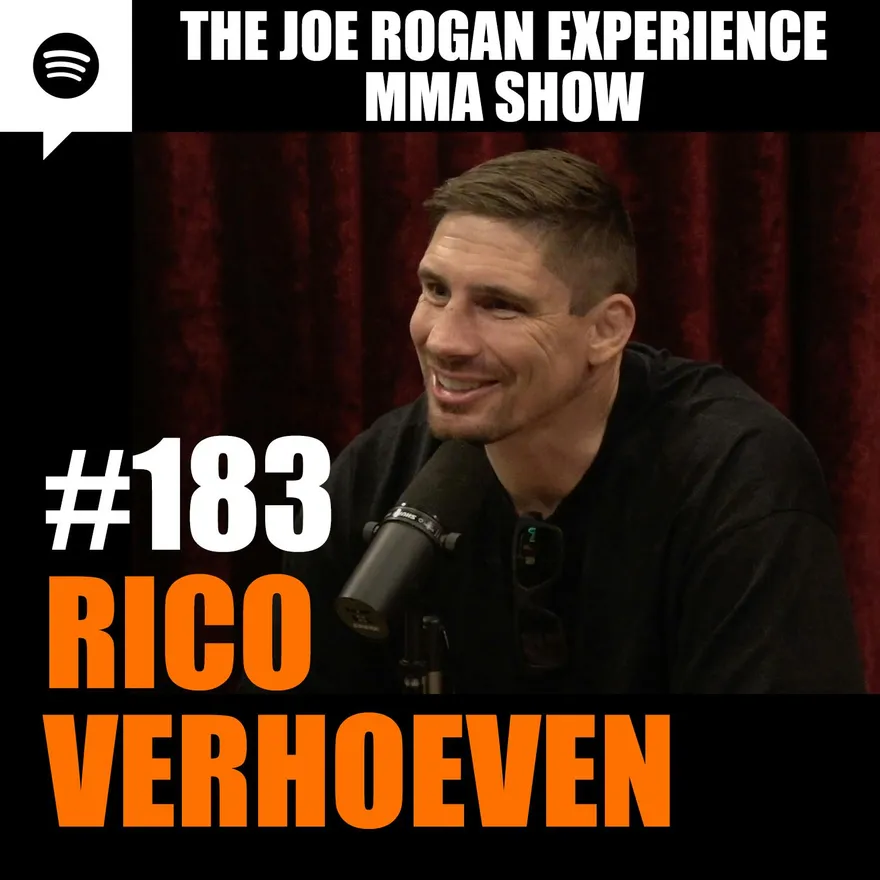

This is a preview of the Shortform summary of the Aug 4, 2026 episode of the The Joe Rogan Experience
Sign up for Shortform to access the whole episode summary along with additional materials like counterarguments and context.
1-Page Summary
Usyk Fight: Judging Controversies and Controversial Stoppage
The recent clash between Rico Verhoeven and Oleksandr Usyk has fueled ongoing debates in boxing due to contentious judging and officiating decisions.
Fight Ends With Controversial Judging and Scoring Disagreement
Joe Rogan asserts that Rico won "10 fucking rounds," expressing disbelief at official scorecards that favored Usyk or resulted in a draw. After eight rounds, Rico's trainer Peter Fury informed him the fight was even on the cards despite Rico feeling in control, prompting him to push more aggressively in later rounds. This scoring discrepancy raises questions about incompetence or corruption within boxing's judging system. Rogan speculates that judges may be swayed by promotional interests and financial incentives to keep Usyk, a heavyweight champion with big-money fights ahead, in a winning position. Both agree the scenario highlights serious problems with current scoring systems and advocate for more judges to improve decision-making.
Referee Stopped Fight Prematurely After Bell Sounded
The fight ended abruptly when the referee stopped it after the twelfth-round bell, violating boxing rules. Rico appealed, and officials agreed the fight was stopped after the bell and that Rico showed no signs of concussion. However, despite validating these arguments, the outcome was not overturned. Rico feels denied the chance to recover and potentially secure a draw or victory, especially given his reputation for finishing strong in later rounds. Rogan notes that if the situation were reversed, there likely would have been no stoppage.
Rematch Is Justified by Decision's Controversial Nature
The controversy makes a rematch both logical and marketable. Rogan insists a second fight is the only right move, emphasizing the Rocky-like narrative of Rico, a kickboxing legend from a different combat sport, nearly defeating one of boxing's all-time greats. Rico reveals that discussions about a rematch began immediately after the match. Both agree that holding it at venues like Madison Square Garden or Las Vegas would add energy, ensure fairer judging, and cement the comeback narrative.
Combat Sports Promotions and Fighter Pay
Turki Al-Sheikh Revolutionizing Combat Sports With Unprecedented Fights
Joe Rogan and Rico Verhoeven emphasize His Excellency Turki Al-Sheikh's influence in revolutionizing boxing. Rogan states he "has set up so many great fights" and is "so important to boxing right now." Al-Sheikh's organization is lauded for innovating crossover fights and unique events, such as staging a heavyweight championship at the Pyramids of Giza. Verhoeven describes receiving a WhatsApp message with a picture of the pyramids as a potential fight location and recalls how his punch triggered special effects that illuminated them.
Their approach pushes boundaries by enabling matchups previously thought impossible, like Francis Ngannou vs. Tyson Fury and proposals for fights in Times Square. Rogan explains Al-Sheikh is "getting guys to fight that didn't want to fight each other" by offering substantial financial incentives. This contrasts with traditional boxing, where marquee matchups like Floyd Mayweather vs. Manny Pacquiao took years to materialize. Rogan suggests if Al-Sheikh had been around earlier, "they probably would have made that happen when they're in their prime."
Fighters Deserve Higher Compensation for Their Risks
Verhoeven and Rogan underscore that combat athletes risk their long-term health within a small window of elite performance. Verhoeven says fighters are "putting our health on the line for entertainment" and compensation "needs to be compensated the right way." Both agree fair and transparent pay is essential for the sport's integrity and athlete welfare. Verhoeven argues fighters "should earn a little bit more" given the danger and sacrifice, noting that athletes must build wealth due to their career's brevity and ongoing health risks.
Competing Organizations Create Options For Fighters
The combat sports landscape is shifting, with more competition drawing praise for benefiting fighters. Rogan emphasizes, "Competition is great and the more competition the better and definitely better for the fighters to have options." This dynamic lets fighters leverage competing organizations' interests rather than facing "take it or leave it" deals under a near-monopoly. Verhoeven agrees, noting that having options is "the best thing ever." More competition drives investment in fighter development, storytelling, and event production, ultimately advancing the entire sport and providing urgency for established promotions to improve compensation and quality.
Rico's Fight Conditioning, Strategy, and Transition
Rico's Endurance-Based Strength Conditioning
Rico Verhoeven builds physical preparation on endurance-based strength conditioning, prioritizing stamina over raw power. He trains with full-body workouts three times weekly, focusing on high repetitions—typically starting at 20 reps per muscle group, increasing as fight night approaches. Each set is followed by brief 30-second rests, creating intense sessions lasting 35-40 minutes. By working with moderate weight but high volume and minimal rest, Rico improves both muscular endurance and cardiovascular fitness while avoiding excessive muscle mass that would increase oxygen demands. This enables him to maintain a relentless pace for a 260-pound heavyweight. Rico also credits mental resilience as equally important, believing that when he feels tired, his opponent is already feeling worse.
Six-Month Kickboxing-To-Boxing Transition Needed Technical Adjustment
Transitioning from kickboxing to boxing demanded significant technical adjustments, especially regarding stance. In kickboxing, fighters stand more square to enable kicking, but this is sub-optimal for boxing where lateral movement and angles are paramount. Rico credits trainer Peter Fury for urging him to adopt a more angled, sideways stance crucial for boxing. Rico emphasizes that the six months he had for preparation were invaluable, as the adjustment required repeated correction before becoming instinctual. Neither instinct nor muscle memory for correct boxing positioning can develop overnight, and the extended transition enabled a smooth and successful adaptation.
Rico Exploited Usyk's Weaknesses With Unconventional Movement
Facing Usyk—a smaller, faster, technical southpaw—required strategic thinking. Rico recognized that shifting right against a southpaw plays into their dominant left hand. Instead, Rico moved left, away from Usyk's strong hand, forcing Usyk to reset and preventing him from establishing rhythm. Rico leveraged his size to smother Usyk in close quarters, applying pressure that neutralized Usyk's movement. His offensive approach maintained a continuous stream of punches, using early shots as distractions and distance-closers, with the intention of landing power on later punches—typically the fifth, sixth, or seventh. This kept Usyk under constant threat and took away the control he typically exerted.
Rico's Sparring Partners Replicated Usyk's Threats
In preparation, Rico selected sparring partners who could mimic Usyk's threat profile. He partnered with Moses Jelly, a large powerful southpaw, and James Branch, a smaller quick southpaw who could throw rapid combinations. Alternating six rounds each with both types over six months, Rico exposed himself to a spectrum of Usyk-like challenges, preparing for both strength and speed, and deepening the technical and tactical flexibility needed for elite heavyweight boxing.
Kickboxing's Limited U.S. Popularity Despite Global Excellence
Kickboxing has achieved remarkable technical evolution globally, especially in the Netherlands, yet remains undervalued in American combat sports culture despite its foundational importance for MMA.
Kickboxing Absent in American Culture Despite Being Leading Stand-Up Combat Sport
Rico Verhoeven and Joe Rogan highlight the paradox: while kickboxing is key in MMA stand-up training and globally recognized for elite athletes, it's virtually invisible in mainstream American culture. In MMA, casual fans prefer stand-up striking and will boo ground work, yet these same fans rarely follow professional kickboxing. Rogan points out "casual fans love stand-up and when fights go to the ground they boo... boxing huge... MMA huge... kickboxing almost non-existent in America." Both suggest that the UFC, with its marketing power, could transform this if it chose to heavily promote kickboxing.
Poor Promotion and Storytelling Hindered Kickboxing's Growth
A central reason for kickboxing's lack of U.S. traction is poor promotion and absent storytelling around fighters. Rico notes that organizations like Glory traditionally "just put a fight," focusing on matchups rather than investing in stories about fighters' backgrounds, families, or personalities. Rogan draws a sharp contrast to the UFC's approach—their "Embedded" series and countdown shows offer behind-the-scenes looks that deepen fan investment. "You see them training, you see them eating, see them in a sauna cutting weight... You get hyped," Rogan says. He emphasizes that "if the UFC did something like that with kickboxing, I think it would be gigantic."
Holland's Kickboxing Dominance Stems From Cultural Factors
Kickboxing's global epicenter is the Netherlands, whose fighters have dominated for decades. Rogan and Verhoeven cite cultural and geographic factors: the small size allows fighters to cross-train easily at numerous gyms, exchanging knowledge and techniques. Dutch kickboxers also absorbed Muay Thai techniques in Thailand, synthesizing this into world-class kickboxing style. This cultural investment made kickboxing the Netherlands' second-most popular sport after soccer. Holland's model—sharing techniques, embracing international talent, and investing in promotion—shows a path that could fuel kickboxing's rise in the U.S.
Transition & Legacy: From Fighting To Acting & Financial Security
Rico Finds Acting Fulfilling For Processing Suppressed Emotions
Rico Verhoeven shares that throughout his fighting career, he coped with loss and trauma by channeling emotional pain into physical intensity rather than processing emotions healthily. He recounts losing his mother during fight preparation and his father before another bout, neither of which he allowed himself time to process. Rico now recognizes this offers short-term drive but isn't healthy long-term. Working with elite actors like Dave Bautista and Jake Gyllenhaal showed him how emotional authenticity enhances performance quality. For Rico, acting offers a necessary outlet for emotional release and psychological growth beyond athletics.
Fighters Face Limited Elite Competition Window
Rogan highlights that most combat athletes peak for about nine years, making Rico's sustained dominance for over a decade extraordinary. Because fighters have a short window to earn at the top level, career planning is crucial. Rico explains he carefully separates training camps from movie roles, negotiating his schedule flexibly now that he's established. As he reaches the "winter" of his fighting career, he views acting as both a passion and strategic move for sustaining income and relevance, ensuring his legacy continues.
Statham's Influence Unlocked Boxing and Entertainment Opportunities
Jason Statham has played a pivotal role in opening opportunities for Rico in both boxing and entertainment. After seeing Statham at the Canelo-Crawford fight, Rico recalls how Statham encouraged him to try boxing, leveraging their friendship and Statham's influence. This led to Rico being approached for major boxing matches, including discussions about Anthony Joshua. Statham's background as a world-class diver and martial artist positions him to understand the athlete-to-actor transition, and he mentors Rico on choosing roles matching his physical and dramatic skills. Statham's endorsement accelerates Rico's transition by lending credibility and securing auditions with industry professionals.
1-Page Summary
Additional Materials
Clarifications
- Oleksandr Usyk is a Ukrainian professional boxer known for his technical skill and success as a heavyweight champion. Rico Verhoeven is a Dutch kickboxer celebrated as one of the best heavyweight kickboxers globally. Usyk's significance lies in his boxing achievements, while Verhoeven is notable for transitioning from kickboxing to boxing. Both are influential figures in their respective combat sports with large fan followings.
- Professional boxing matches are typically scored round-by-round by three judges using a 10-point must system, where the winner of a round receives 10 points and the loser 9 or fewer. Judges evaluate factors like clean punching, effective aggression, ring generalship, and defense. A fight can end by knockout (KO), technical knockout (TKO), or referee stoppage if a fighter cannot safely continue. Stoppages must occur during rounds and not after the bell signaling the round's end.
- Judges in boxing score each round based on criteria like effective striking, defense, and ring control, determining the winner if the fight goes the distance. Referees enforce rules during the fight, ensuring fighter safety by stopping the bout if a competitor is unable to continue or is at risk of serious injury. Referees also control the timing of rounds and intervene in fouls or illegal actions. Both roles are crucial for fairness and safety but can be subjective, leading to controversies.
- A "southpaw" stance means the fighter leads with their right hand and right foot forward, opposite to the more common orthodox stance. This changes the angles of attack and defense, making their left hand the power hand. Moving left against a southpaw typically exposes a fighter to the southpaw's strong left cross, while moving right can help avoid it. Proper foot positioning is crucial to control distance and create offensive opportunities.
- Kickboxing allows punches, kicks, knees, and sometimes elbows, while boxing permits only punches. Kickboxers adopt a more squared stance to enable effective kicking and checking kicks. Boxers use a more angled stance to maximize lateral movement, defensive positioning, and punching angles. This stance difference affects footwork, balance, and the types of attacks each fighter can efficiently execute.
- Joe Rogan is a comedian, podcast host, and former mixed martial arts (MMA) commentator. He gained prominence as a UFC color commentator, providing expert analysis during fights. His podcast, "The Joe Rogan Experience," reaches millions, influencing public opinion on combat sports. Rogan's deep knowledge and insider access make his views highly respected in the fighting community.
- Turki Al-Sheikh is a Saudi Arabian sports and entertainment official known for investing heavily in combat sports. He has used his influence and resources to organize high-profile, innovative fights that blend different combat disciplines. His efforts aim to globalize and modernize combat sports by creating unique events and attracting top fighters. Al-Sheikh's involvement marks a shift toward more commercially ambitious and cross-promotional matchups.
- Crossover fights involve competitors from different combat sports or weight classes facing each other, blending distinct fighting styles. They are innovative because they create unique matchups that traditional boxing or MMA promotions rarely arrange. These fights attract diverse fan bases and generate significant media attention due to their novelty. Historically, such events were uncommon due to promotional, contractual, and stylistic barriers.
- Madison Square Garden and Las Vegas are iconic venues known for hosting high-profile boxing and combat sports events. Their reputation attracts large audiences, media attention, and top fighters, enhancing a fight's prestige and financial success. These locations have a rich history of legendary bouts, contributing to the sport's culture and fan engagement. Holding a fight there often ensures better production quality and stricter officiating standards.
- Francis Ngannou is a former UFC heavyweight champion known for his knockout power in mixed martial arts. Tyson Fury is a British heavyweight boxing champion celebrated for his skill and charisma. Floyd Mayweather and Manny Pacquiao are two of boxing's biggest stars, famous for their undefeated records and a historic, highly lucrative fight in 2015. Anthony Joshua is a British heavyweight boxing champion recognized for his athleticism and multiple world titles.
- Combat sports athletes often have short careers, typically lasting around 8 to 12 years at the elite level due to the intense physical demands. Repeated head trauma and body injuries increase the risk of chronic conditions like brain damage, joint problems, and neurological disorders. Recovery time is limited, and cumulative damage can shorten both career length and post-retirement quality of life. Proper medical care and regulated competition are crucial to managing these risks.
- The UFC's "Embedded" series is a behind-the-scenes video diary that follows fighters' daily lives and preparations leading up to events. Countdown shows are televised programs that build anticipation by showcasing fighter interviews, training footage, and storylines. Both formats deepen fan engagement by revealing personal and emotional aspects of fighters. This storytelling approach creates a stronger connection between fans and athletes, boosting event interest.
- Kickboxing in the Netherlands is deeply embedded in the culture, supported by widespread gym networks and community engagement. Dutch fighters have historically excelled internationally, creating national pride and sustained interest. In contrast, the U.S. lacks a strong kickboxing tradition and mainstream media promotion, limiting public awareness and fanbase growth. Additionally, American combat sports culture prioritizes boxing and MMA, overshadowing kickboxing's visibility.
- Transitioning from kickboxing to boxing requires unlearning habits like a square stance used for kicks, which limits mobility in boxing. Boxers emphasize lateral movement and angles to create openings and avoid punches, unlike kickboxers who rely on a more forward stance. Punching techniques differ, with boxing focusing solely on hand strikes, demanding refined hand speed and combinations. Conditioning also shifts to prioritize sustained punching endurance and footwork over the diverse demands of kickboxing.
- Jason Statham is a British actor known for action films featuring martial arts and intense physical roles. Before acting, he was a competitive diver and trained in martial arts, giving him authentic combat skills. His experience and persona make him a credible figure bridging combat sports and Hollywood. He mentors fighters like Rico Verhoeven in transitioning to acting careers.
- Muscular endurance is the ability of muscles to perform repeated contractions over time without fatigue. Cardiovascular fitness refers to the efficiency of the heart, lungs, and blood vessels in delivering oxygen to the body during sustained physical activity. Mental resilience is the capacity to maintain focus, motivation, and composure under stress or fatigue. Together, these qualities enable athletes to perform consistently and recover quickly during demanding competitions.
- The Pyramids of Giza are iconic ancient monuments in Egypt, symbolizing historical grandeur and attracting global attention. Hosting a fight there creates a unique, visually stunning backdrop that elevates the event's prestige and marketability. Special effects, like lighting the pyramids, enhance the spectacle, blending modern entertainment with historic ambiance. This approach aims to create memorable experiences that draw wider audiences beyond traditional boxing fans.
- Promotional interests refer to the goals of fight promoters who benefit financially from certain fighters winning to maximize future lucrative matchups. Financial incentives can include direct or indirect payments, bonuses, or career opportunities that may bias judges toward favoring popular or marketable fighters. Judges, being human and sometimes under pressure, might consciously or unconsciously score fights to align with these interests. This undermines the fairness and integrity of the sport by prioritizing profit over accurate competition results.
- The "Rocky-like narrative" refers to the story of Rocky Balboa, a fictional underdog boxer who overcomes great odds to challenge a champion. It symbolizes perseverance, grit, and an unexpected rise from obscurity to prominence. This narrative resonates in sports and entertainment as a classic tale of struggle and triumph. Using it here highlights Rico's journey from kickboxing to nearly beating a top boxing legend.
Counterarguments
- While Joe Rogan and Rico Verhoeven believe Rico won the majority of rounds, boxing scoring is inherently subjective, and many experienced judges and analysts may have seen the rounds differently based on criteria like effective aggression, defense, and clean punching.
- Official scorecards are often close in high-level fights, and fighters' perceptions of control can differ from judges' perspectives at ringside.
- Accusations of incompetence or corruption in boxing judging are serious, but without concrete evidence, such claims remain speculative and undermine the professionalism of many officials.
- Promotional interests and financial incentives are present in all major sports, but there is no direct evidence that judges were influenced in this specific fight.
- Increasing the number of judges does not necessarily eliminate controversy, as disagreements can persist even with more officials.
- Referees must make split-second decisions, and while the stoppage after the bell was acknowledged as a mistake, such errors are rare and not always grounds for overturning a result.
- Boxing commissions have established protocols for reviewing and overturning fight outcomes, and not all procedural errors result in reversals if the outcome is deemed fair overall.
- The assertion that a reversed situation would have been handled differently is hypothetical and cannot be proven.
- Rematches are not always guaranteed after controversial decisions; sanctioning bodies and promoters weigh multiple factors, including contractual obligations and market demand.
- While Turki Al-Sheikh has organized high-profile events, some critics argue that the focus on spectacle and crossover fights can overshadow traditional merit-based matchmaking.
- Substantial financial incentives can accelerate fight negotiations, but they may also create mismatches or prioritize entertainment over sporting integrity.
- While fighters deserve fair compensation, pay structures are influenced by market forces, broadcast rights, and organizational revenue, which can limit immediate increases.
- Increased competition among organizations can benefit fighters, but it may also fragment talent pools and make it harder to establish clear champions.
- Endurance-based strength conditioning is one approach, but other elite heavyweights have succeeded with different training philosophies tailored to their own strengths.
- Technical adjustments from kickboxing to boxing are challenging, but not all kickboxers have successfully transitioned, highlighting the difficulty of mastering both sports.
- The strategy of moving left against a southpaw is not universally effective and depends on the opponent's adaptability and skill set.
- Kickboxing's limited popularity in the U.S. may also be due to cultural preferences, broadcast availability, and the dominance of established sports, not just poor promotion.
- The UFC's marketing success is partly due to its unique brand and history, and similar strategies may not guarantee the same results for kickboxing.
- The Netherlands' dominance in kickboxing is notable, but other countries have also produced world-class fighters and contributed to the sport's evolution.
- Channeling emotional pain into athletic performance is common among elite athletes, but it is not the only or necessarily the healthiest coping mechanism.
- Transitioning from fighting to acting is challenging, and not all athletes find the same fulfillment or success in entertainment careers.
- Jason Statham's influence and mentorship are valuable, but individual talent, opportunity, and market demand ultimately determine success in new fields.
Get access to the context and additional materials
Usyk Fight: Judging Controversies, Scoring Issues, and Controversial Stoppage
The recent clash between Rico Verhoeven and Oleksandr Usyk stands out for its dramatic intensity as well as its contentious judging and officiating, fueling ongoing debates in the boxing world.
Fight Ends With Controversial Judging and Scoring Disagreement
Throughout the fight, a significant discrepancy emerges between how experts, trainers, and commentators perceive the action and how the judges officially score it. Joe Rogan asserts that Rico won "10 fucking rounds" and expresses disbelief at the official scorecards, which favored Usyk or resulted in a draw, rather than reflecting Rico's apparent dominance. Even after eight rounds, Rico’s trainer Peter Fury informs him the fight is even on the cards, despite Rico feeling in control and many observers seeing him ahead. This prompts Rico to push even more aggressively in the later rounds, worried that otherwise he could lose in a fight he felt he was clearly winning. Both Rico and Rogan note the confusion and frustration among commentators as they try to reconcile what they are witnessing with the scorecards being delivered.
This discrepancy in scoring raises pointed questions about either profound incompetence or outright corruption within boxing’s judging ranks. Rogan speculates that judges may be swayed by promotional interests and the financial incentives of keeping Usyk, a heavyweight champion with big-money fights ahead, in a winning position. Rico agrees that coming from a different combat sport and threatening to make the biggest upset in boxing history likely impacted how the powers in boxing wanted the result to go. Both agree that the scenario, especially in a career-defining bout, is unjust and raises serious questions about the suitability of current scoring systems, advocating for more judges to mitigate poor decision-making.
Referee Stopped Fight Prematurely After Bell Sounded
Adding fuel to the controversy, the fight is brought to an abrupt and questionable end. The referee stops the bout after the twelfth-round bell, violating boxing rules that clearly state the fight must end with the bell, not on the referee's intervention after it. Rico appeals the stoppage, and officials subsequently agree that the fight was indeed stopped after the bell and that Rico exhibited no signs of concussion or disorientation when assessed by the ringside doctor. However, despite meeting every criterion for a reversal of the decision, and the officials validating the appeal’s arguments, the outcome is not overturned.
This stoppage deeply frustrates Rico, who feels denied the chance to recover, rally in the final round, and potentially secure a draw or victory. He points out that, given his reputation for bouncing back and finishing strong in later rounds—even when behind—it’s unjust for the referee not to have given him the opportunity to continue, especially when so much was on the line. Rogan notes that if the situation were reversed, there would likely have been no stoppage with Usyk in t ...
Here’s what you’ll find in our full summary
Usyk Fight: Judging Controversies, Scoring Issues, and Controversial Stoppage
Additional Materials
Clarifications
- Rico Verhoeven is a Dutch kickboxing champion known for dominating the heavyweight division in Glory Kickboxing. Oleksandr Usyk is a Ukrainian professional boxer, former undisputed cruiserweight champion, and current heavyweight contender. Usyk is highly regarded for his technical skill and has successfully transitioned to heavyweight boxing. Their fight is notable as a crossover event between two elite athletes from different combat sports.
- Boxing is a combat sport focused solely on punches using gloved fists, with strict rules against kicks or strikes with other body parts. Kickboxing combines punches and kicks, allowing fighters to use both hands and legs to strike opponents. Rico's crossover is notable because transitioning from kickboxing to boxing requires adapting to different techniques, strategies, and rules, making his success impressive. Such cross-sport achievements are rare and highlight his exceptional skill and versatility.
- Judges in boxing score each round based on criteria like effective striking, defense, and ring control, determining the winner if the fight goes the distance. Referees enforce rules during the fight, ensuring fighter safety and stopping the bout if a competitor cannot continue. Judges' decisions can be subjective, leading to controversies when scores differ from public perception. Referees must stop fights only when necessary and within the rules, such as not after the bell signaling the round's end.
- Boxing matches are scored round-by-round by three judges using a 10-point must system, where the winner of each round gets 10 points and the loser fewer, typically 9 or less. Judges evaluate factors like clean punches, effective aggression, ring generalship, and defense, which can be subjective and lead to differing opinions. Discrepancies arise when judges' scores do not align with public or expert perception, raising concerns about bias, incompetence, or corruption. Such controversies undermine trust in the sport’s fairness and can affect fighters' careers and legacies.
- In boxing, each round ends when the bell rings, signaling fighters to stop fighting immediately. Referees are not allowed to stop a fight after the bell has sounded, as the round is officially over. Stoppages must occur during the round if a fighter is unable to continue safely. Ending a fight after the bell violates these rules and can unfairly affect the outcome.
- Joe Rogan is a well-known commentator and analyst for major combat sports, including boxing and mixed martial arts. His opinions carry weight because he has extensive experience as a former fighter and long-time broadcaster. Rogan’s commentary reaches a large audience through popular platforms like the UFC and various podcasts. This visibility and expertise make his views influential in shaping public and fan perspectives on fights.
- Madison Square Garden in New York and Las Vegas are iconic boxing venues known for hosting historic, high-profile fights. They symbolize prestige and attract large audiences, media attention, and top fighters. Winning or performing well there can elevate a boxer's legacy and marketability. These locations often add drama and significance to major bouts.
- “Promotional interests” refer to the goals of fight promoters who organize and market boxing matches, often favoring outcomes that maximize future revenue. “Financial incentives” mean the monetary benefits judges or officials might gain indirectly by favoring popular or marketable fighters, ensuring lucrative rematches and big events. This can create pressure to score fights in a way that keeps star fighters winning, regardless of actual performance. Such influences can compromise impartial judging and the sport’s integrity.
- In boxing, appealing a fight decision involves submitting a formal complaint to the sanctioning body or athletic commission overseeing the bout. The ap ...
Counterarguments
- Judging in boxing is inherently subjective, and official judges may have had a different but legitimate interpretation of the rounds based on criteria such as effective aggression, ring generalship, defense, and clean punching.
- The perception of dominance by commentators and trainers does not override the authority or expertise of the official judges, who are trained and appointed for their impartiality.
- Claims of incompetence or corruption require concrete evidence; disagreement with a decision alone does not substantiate such accusations.
- The assertion that promotional interests influenced the judges is speculative and not supported by direct evidence in the text.
- The rules regarding referee stoppages can be complex, and while the stoppage after the bell was acknowledged as an error, officials may have followed established protocols in declining to overturn the result.
- Not all observers or analysts may agree that Rico was clearly winning; opinions on close fights often vary widely.
- The decision not to overturn the result, despite procedural errors, is consistent with boxing precedent, where results are rarely chan ...
Get access to the context and additional materials
Combat Sports Promotions and Fighter Pay: Promoters, Money, and Fair Compensation
Turkey Al-sheikh and Organization Revolutionizing Combat Sports With Unprecedented Fights
Joe Rogan and Rico Verhoeven emphasize the influence of His Excellency, Turkey Al-sheikh, in revolutionizing combat sports, particularly boxing. Rogan states, “He has set up so many great fights. He's so important to boxing right now.” Verhoeven expresses gratitude, remarking, “His Excellency has our first preference because they gave us the opportunity.”
Al-sheikh’s organization is lauded for innovating crossover fights and unique events, such as staging a heavyweight championship at the Pyramids of Giza. Verhoeven describes the surreal experience of receiving a WhatsApp message with a picture of the pyramids as a potential fight location. He details the event’s production, recalling how his punch triggered special effects and illuminated the pyramids, providing a “goose bump moment.” Verhoeven compares the event’s spectacle to the legendary “Rumble in the Jungle,” emphasizing the historic and symbolic significance of the location.
Their approach pushes the boundaries of what's possible in combat sports by enabling matchups previously thought unimaginable, like the Francis Ngannou vs. Tyson Fury fight and proposals for fights in Times Square. Rogan explains, “He's getting guys to fight that didn't want to fight each other…[by asking], how about this amount? Oh, okay.” Verhoeven adds, “He thinks outside of the box…whenever you hear something and you say, nah, that’s not possible. I think that's the right trigger. He'll make it happen.”
This strategy fundamentally contrasts with traditional boxing, where marquee matchups like Floyd Mayweather vs. Manny Pacquiao took years to materialize—often with one athlete past his prime. Rogan says, “If Turkey Al-sheikh had been around back [then]…they probably would have made that happen when they're in their prime. That's what boxing needs. That's what MMA needs.”
Financial offers from Al-sheikh’s team are often so substantial they break traditional barriers, bringing elite fighters to unconventional matchups. Verhoeven discusses fielding significant offers and the resulting ability to remain a free agent: “For me now to be in this position, I'm a free agent. We got offers from the biggest organizations across the world…I'm just taking my time.”
Fighters Deserve Higher Compensation for Their Risks
Verhoeven and Rogan both underscore the crucial point that combat athletes risk their long-term health within a small window of elite performance. Verhoeven says, “We as fighters [are] putting our health on the line for entertainment. We know how dangerous it is. Exactly. And that's why I feel like it has to be fair and it needs to be compensated the right way.”
Both agree that fair and transparent compensation—alongside safety, honest officiating, and judging—is essential for the sport’s integrity and athlete welfare. Verhoeven argues that fighters “should earn a little bit more…everything should be in balance.” He insists that higher pay must match the degree of danger and sacrifice: “Yeah, he's making so much money yet. But he can't do that until he's 65 or whatever.” Athletes must be able to build wealth, given the brevity of their careers and ongoing health risks.
Rogan and Verhoeven state that fair and clear pay not only supports current athletes but also draws elite talent from other sports, raising the quality and popularity of combat sports overall.
Competing Organizations Create Options For Fighters Across Disciplines
The landscape of combat sports is shifting, with mergers such as MVP and PFL drawing praise for injecting competition into the market. Rogan emphasizes ...
Here’s what you’ll find in our full summary
Combat Sports Promotions and Fighter Pay: Promoters, Money, and Fair Compensation
Additional Materials
Clarifications
- The Pyramids of Giza are ancient monuments and one of the Seven Wonders of the Ancient World, symbolizing Egypt's rich history. Hosting a fight there merges modern sports with a globally recognized historic site, creating a visually stunning and culturally significant event. This setting elevates the fight beyond a typical venue, adding symbolic weight and attracting worldwide attention. Such a location is rare and unprecedented in combat sports, enhancing the spectacle and legacy of the event.
- Crossover fights are matches between athletes from different combat sports or disciplines, such as a boxer facing a mixed martial artist. They attract wide attention by blending fan bases and showcasing contrasting fighting styles. These fights often generate unique challenges and excitement due to unfamiliar rules and techniques. Their novelty can boost viewership and revenue, expanding the sport's appeal.
- Joe Rogan is a well-known commentator and podcast host with deep involvement in mixed martial arts (MMA), especially through his long-time role as a UFC commentator. Rico Verhoeven is a top professional kickboxer, often regarded as one of the best heavyweight fighters in the sport. Their perspectives carry weight because Rogan offers expert analysis and Verhoeven provides firsthand experience as an elite athlete. Both are influential voices shaping opinions on combat sports and fighter compensation.
- The "Rumble in the Jungle" was a famous 1974 boxing match between Muhammad Ali and George Foreman held in Kinshasa, Zaire (now the Democratic Republic of Congo). It was notable for its political and cultural symbolism, showcasing African pride and global attention on Africa. The fight is remembered for Ali's strategic "rope-a-dope" technique and his unexpected victory. It remains one of the most iconic and historic events in boxing history.
- Marquee boxing matches often face prolonged negotiations due to competing interests like purse splits, promotional rights, and broadcasting deals. Fighters and promoters must agree on terms that maximize revenue while protecting their brand and legacy. Legal and contractual complexities, along with timing and athlete readiness, further delay agreements. These factors can cause fights to happen late in fighters' careers or not at all.
- A "free agent" fighter is not contractually bound to any single promotion, allowing them to negotiate with multiple organizations. This status gives fighters greater control over their career choices, including selecting opponents, event locations, and pay terms. Being a free agent can increase a fighter's earning potential by leveraging offers from competing promotions. It also provides flexibility to pursue diverse opportunities without long-term commitments.
- Combat athletes face risks like concussions, brain trauma, broken bones, and joint damage. Repeated head injuries can lead to chronic traumatic encephalopathy (CTE), causing long-term cognitive and emotional problems. Their careers are brief because intense physical damage accumulates quickly, reducing peak performance and increasing health risks. Recovery times and injury severity limit how long they can compete safely at an elite level.
- MVP (Most Valuable Promotions) is a newer combat sports organization focusing on innovative event formats and fighter opportunities. PFL (Professional Fighters League) is a major MMA promotion known for its season-based format w ...
Counterarguments
- While Turkey Al-sheikh’s financial incentives have enabled high-profile matchups, some critics argue that such large purses may not be sustainable for the sport in the long term and could create unrealistic expectations for fighter pay across the industry.
- The focus on spectacle and crossover events may overshadow traditional merit-based matchmaking, potentially undermining the sport’s competitive integrity and the development of legitimate contenders.
- Rapidly organizing marquee fights for financial reasons could lead to mismatches or insufficient preparation time for athletes, increasing the risk of injury or diminishing the quality of competition.
- The influx of money and attention to a select group of fighters may widen the pay gap between top stars and undercard athletes, leaving many fighters still undercompensated.
- While increased competition among promotions can benefit fighters, it may also fragment the sport, making it harder for fans to follow champions and storylines across multiple organizations.
- Some observers note that the emphasis on free agency and short-term contracts could reduce organizational loyalty and investment in long-term athlete development. ...
Get access to the context and additional materials
Rico's Fight Conditioning, Strategy, and Transition
Rico's Endurance-Based Strength Conditioning
High-Repetition Training With Short Rest Periods
Rico Verhoeven builds his physical preparation on endurance-based strength conditioning, prioritizing stamina and sustained output over raw power. He trains with full-body workouts three times a week, focusing on high repetitions—typically starting with sets of 20 reps per muscle group, which then increase to 22, 24, or more as fight night approaches. Each set is followed by a brief 30-second rest before moving to a different muscle group, maintaining a rapid pace throughout. This structure creates an intense session that rarely lasts beyond 35 to 40 minutes.
High-Rep, Minimal-Rest Structure Enhances Strength, Cardiovascular Fitness, and Muscular Endurance, Reducing Heart's Oxygen Demand During Exertion
By working with moderate weight but high volume and minimizing rest intervals, Rico improves both muscular endurance and cardiovascular fitness. He deliberately avoids excessive muscle mass, believing that larger muscles would increase his body's oxygen needs and put unnecessary strain on his heart. This approach helps him become stronger and much fitter simultaneously, enabling him to push an unusually high pace for a 260-pound heavyweight. The result is the ability to maintain relentless, fight-changing activity for extended periods.
Mental Toughness Equals Physical Conditioning: Rico Believes Tiredness Affects Opponents More Due To His Superior Conditioning
Rico also credits mental resilience as equally important to physical conditioning. He believes the real fight begins when fatigue sets in. Confident in his superior conditioning and work ethic, Rico feels that when he senses himself getting tired, his opponent is likely already feeling worse. He maintains that he "lives in the gym," making it nearly impossible to lose a fight on the basis of cardio—further cementing his psychological edge over competitors.
Six-month Kickboxing-To-boxing Transition Needs Technical Adjustment
Rico's Boxing Stance too Square for Optimization
Transitioning from kickboxing to boxing demanded significant technical adjustments for Rico, especially with regard to his stance. In kickboxing, fighters stand more square to enable effective kicking and checking kicks defensively. However, this position is sub-optimal for boxing, where lateral movement and angle are paramount.
Trainer Peter Fury Improved Stance and Positioning for Kickboxing Balance
Rico credits his trainer, Peter Fury, for persistently urging him to adopt a more angled, sideways stance—crucial for boxing but difficult to implement in kickboxing due to exposure of the lead leg. Working with Fury for many years, Rico blended extensive boxing training alongside kickboxing, but only with the transition did he truly embrace a boxing-specific posture.
Preparation Time Was Essential For Developing Instincts and Muscle Memory For Boxing Positioning, Which Couldn't Be Rushed or Compromised by a Faster Transition
Rico emphasizes that the six months he had for preparing the boxing transition were invaluable. The adjustment required repeated correction and conscious effort before it became instinctual. He maintained that neither instinct nor muscle memory for correct boxing positioning can develop overnight, and that the allotted time was perfect for ensuring his stance and movement were ingrained before stepping into the ring. The extended transition, with stable training and preparation time, enabled Rico to achieve a smooth and successful adaptation to boxing.
Rico Exploited Usyk's Boxing Weaknesses With Unconventional Movement
Flawed Approach Against Smaller, Faster, Technical Southpaw Usyk
Facing Oleksandr Usyk—a smaller, faster, and highly technical southpaw—required a strategic approach few heavyweights adopt. Conventional strategy would keep fighters moving to their right, but Rico recognized that shifting right against a southpaw plays directly into their dominant left hand. Instead, Rico moved left, away from Usyk’s strong hand, taking away some of Usyk's key offensive pathways.
Rico Shifted Left, Avoiding Usyk's Left, Using Size to Smother and Generate Power
By consistently angling to his left and persistently closing distance, Rico forced Usyk to reset and prevented the Ukrainian from establishing rhythm or control. Rico leveraged his size—massive yet unusually mobile—to smother Usyk in close quarters, pushing and applying pressure that neutralized Usyk's movement. Unlike other large heavyweights who failed to use their physical advantages against Usyk, ...
Here’s what you’ll find in our full summary
Rico's Fight Conditioning, Strategy, and Transition
Additional Materials
Counterarguments
- High-repetition, low-rest training may improve muscular endurance and cardiovascular fitness, but it can limit maximal strength and explosive power development, which are also important in heavyweight boxing.
- Avoiding excessive muscle mass can help with endurance, but some additional muscle mass may provide advantages in clinch situations and absorbing punches.
- Mental toughness is important, but overconfidence in conditioning could lead to underestimating opponents who are equally or better conditioned.
- Transitioning from kickboxing to boxing in six months is relatively short; some experts argue that developing true boxing instincts and muscle memory often takes years, not months.
- Adopting a more angled boxing stance may improve defense and offense in boxing, but it could also make a fighter more vulnerable to body shots or limit certain offensive options.
- Moving left against a southpaw like Usyk can avoid the left hand, but it may also expose a fighter to righ ...
Actionables
- you can design your own stamina-focused circuit by picking five simple bodyweight exercises (like squats, push-ups, lunges, jumping jacks, and planks), performing each for 20 reps with only 30 seconds rest between moves, and gradually increasing reps each week to build both endurance and mental grit; keep the total workout under 40 minutes to maintain intensity and efficiency.
- a practical way to sharpen adaptability and tactical thinking is to alternate your workout environment or routine every session—try exercising in different rooms, outdoors, or with varied music tempos, and switch up the order of exercises to challenge your body and mind to adjust quickly, mirroring the need to recalibrate str ...


Get access to the context and additional materials
Kickboxing's Limited U.S. Popularity Despite Global Excellence
Kickboxing, the world’s premier stand-up combat sport, has achieved remarkable technical evolution and global excellence, especially in countries like the Netherlands. Yet, it remains undervalued and underpromoted in American combat sports culture despite its foundational importance for MMA and abundant global star power.
Kickboxing Absent in American Culture Despite Being Leading Stand-Up Combat Sport
Rico Verhoeven and Joe Rogan highlight the paradox at the heart of U.S. combat sports fandom: while kickboxing is a key element in MMA stand-up training and globally recognized for its elite athletes, it is virtually invisible in mainstream American sports culture. Fans of boxing and MMA tend to back their chosen sports with passion, but even devoted fight fans are often unaware of kickboxing’s biggest names and events. Rico notes that “boxing fans... they’re definitely not into kickboxing,” illustrating how even within combat sports circles, knowledge of kickboxing’s top competitors and history is lacking.
In MMA, most casual fans strongly prefer stand-up striking exchanges over ground work and will frequently boo when fights go to the mat. Rogan points out that “casual fans love stand-up and when fights go to the ground they boo... boxing huge... MMA huge... kickboxing almost non-existent in America.” Yet, these same fans rarely follow professional kickboxing or its major leagues, showing a disconnect likely due to visibility and promotion issues rather than any lack of action or skill in the sport itself.
Despite the key role of kickboxing in preparing fighters for elite MMA, with many trainers bringing in Glory kickboxers for UFC preparation, both agree that American audiences and even MMA fighters often lack awareness of kickboxing’s stars and leagues. Rogan and Verhoeven suggest that the UFC, with its immense marketing power, could transform this if it chose to heavily promote kickboxing or Muay Thai as a stand-up combat sport on par with MMA.
Poor Promotion and Storytelling Hindered Kickboxing's Growth in the US
A central reason for kickboxing’s lack of traction in the U.S. is poor promotion and an absence of compelling storytelling around fighters. Rico Verhoeven notes that organizations like Glory have traditionally “just put a fight,” focusing on matchups rather than investing in stories of the fighters themselves. There’s little attention to backgrounds, families, mental preparation, or the unique personalities that could draw emotional investment from fans. As Rico puts it, “where it lacked on experience [is] the storytelling... where does this guy come from?... you want to get to know the person instead of just like the guy that throws punches and kicks.”
Joe Rogan draws a sharp contrast to the UFC’s approach. The UFC’s “Embedded” series, highly-produced countdown shows, and regular fighter features offer fans a behind-the-scenes look at training camps, family lives, struggles with weight cuts, and the genuine personalities and challenges of athletes. This deepens fan investment and transforms casual viewers into dedicated followers. “You see them training, you see them eating, see them in a sauna cutting weight... You get hyped,” Rogan says, stressing that UFC’s narrative style helps viewers see fighters as relatable humans, not just competitors.
Attempts by Glory and other promotions to expand into the U.S. had moments of promise but fizzled due to this lack of narrative hook and sustained media push. Rogan notes that “if the UFC did something like that with kickboxing, I think it would be gigantic,” emphasizing that storytelling and promotional muscle are key ingredients missing from kickboxing's U.S. growth.
Holland's Kickboxing Dominance Stems From Cultural ...
Here’s what you’ll find in our full summary
Kickboxing's Limited U.S. Popularity Despite Global Excellence
Additional Materials
Clarifications
- Kickboxing is a stand-up combat sport focused on striking with punches and kicks while fighters remain standing. Unlike boxing, kickboxing allows the use of both hands and legs for attacks, increasing the variety of techniques. MMA (Mixed Martial Arts) combines stand-up striking with grappling and ground fighting, making it more complex. Kickboxing emphasizes continuous striking exchanges without ground fighting or submissions.
- Kickboxing teaches fighters effective striking techniques using punches, kicks, knees, and elbows, which are essential for stand-up combat in MMA. It develops timing, distance control, and combinations that help fighters dominate the stand-up phase of MMA fights. Many MMA fighters use kickboxing to improve their striking skills and defend against opponents who prefer to strike. Because MMA includes multiple fighting styles, kickboxing forms a core striking base that complements grappling and ground fighting disciplines.
- Rico Verhoeven is a highly accomplished Dutch kickboxer, often regarded as one of the best in the world, making his insights valuable due to his expertise and experience. Joe Rogan is a well-known American commentator, podcaster, and former MMA fighter who has extensive knowledge of combat sports and a large audience, giving weight to his opinions. Their perspectives matter because they combine firsthand competitive experience with broad exposure to combat sports culture. This makes their views credible and influential in discussions about kickboxing's status and promotion.
- Glory is a leading international kickboxing organization founded in 2012. It hosts professional kickboxing events featuring top fighters worldwide. Glory aims to promote kickboxing globally but has struggled to gain a strong foothold in the U.S. market. It is considered the premier league for professional kickboxing competition.
- In MMA, "stand-up striking exchanges" refer to fighters trading punches, kicks, knees, and elbows while standing. "Ground work" involves fighting techniques used when one or both fighters are on the mat, including grappling, submissions, and ground-and-pound strikes. Stand-up striking emphasizes distance, timing, and striking skill, while ground work focuses on control, leverage, and submission holds. Fans often prefer striking because it is more visually dynamic and easier to follow than grappling on the ground.
- The UFC’s marketing strategy focuses on building personal connections between fighters and fans through storytelling. The “Embedded” series is a documentary-style video series that follows fighters during their training camps, showing behind-the-scenes moments. This approach humanizes athletes by revealing their daily routines, struggles, and personalities. It creates emotional investment, making fans more engaged with the sport and its competitors.
- The Netherlands is densely populated with many gyms close together, enabling frequent cross-training and skill sharing among fighters. Dutch culture values discipline and community in sports, fostering collaboration rather than competition among local gyms. The country’s geographic compactness allows easy travel for fighters to train with diverse partners and coaches. This environment accelerates learning and innovation, creating a strong, unified kickboxing community.
- Muay Thai is a traditional martial art from Thailand known as "the art of eight limbs," using fists, elbows, knees, and shins. It heavily influences kickboxing by contributing techniques and training methods, enhancing striking versatility and power. Dutch kickboxing integrated Muay Thai’s clinch work and strikes, creating a hybrid style with broader technical depth. This fusion helped elevate the skill level and global competitiveness of Dutch kickboxers.
- Ramon Dekkers was a legendary Dutch kickboxer and Muay Thai fighter known for his aggressive style and powerful striking. He was one of the first Western fighters to achieve major success in Thailand, the birthplace of Muay Thai. Dekkers helped popularize Muay Thai and kickboxing in Europe by blending traditional Thai techniques with Dutch training methods. His success inspired a generation of Dutch fighters and elevated the Netherlands as a global kickboxing powerhouse.
- Licensing in sports like kickboxing involves official certification for fighters, trainers, and gyms to ensure safety and skill standards. Professional standards set rules for competition quality, athlete conduct, and event organization. These measures protect participants and enhance the sport’s credibility and public trust. They also help regulate training methods and promote fair competition.
- American combat sports culture favors boxing and M ...
Counterarguments
- The assertion that kickboxing is "the world’s premier stand-up combat sport" is subjective; other stand-up sports like boxing and Muay Thai have larger global followings and deeper historical roots in many regions.
- Kickboxing’s lack of popularity in the U.S. may also be due to market saturation with established sports (boxing, MMA, American football, basketball) rather than solely poor promotion or storytelling.
- The rulesets and scoring systems in kickboxing can be confusing or less appealing to American audiences accustomed to boxing or MMA, which may contribute to its limited traction.
- The claim that the UFC could easily transform kickboxing’s popularity in the U.S. may underestimate the challenges of changing entrenched fan preferences and the business interests of the UFC, which may not want to dilute its MMA brand.
- The Netherlands’ success in kickboxing is partly due to unique cultural and geographic factors that may not be easily replicable in larger, more diverse countries like the U.S.
- While storytelling is important, some sports (e.g., soccer in many countries) thrive with minimal focus on individual athle ...
Get access to the context and additional materials
Transition & Legacy: From Fighting To Acting & Ensuring Financial Security
Rico Finds Acting Fulfilling For Processing Suppressed Emotions
Rico Realized That Channeling Emotional Pain Into Physical Intensity Wasn't Healthy for Him
Rico Verhoeven shares that throughout his fighting career, he has coped with loss and trauma by channeling emotional pain into physical intensity in the ring, rather than processing those emotions in a healthy way. He recounts the loss of his mother during preparation for a fight and the loss of his father before another significant bout, neither of which he allowed himself time to process fully. Instead, Rico admits he turned pain into energy for fighting, continually pushing feelings aside and using them as fuel in the ring. He recognizes now that this method offers short-term drive but is not a healthy long-term way to live or maintain personal relationships. Watching his mother’s funeral back weeks after her passing gave him perspective on the importance of truly experiencing and processing emotions.
Working With Elite Actors Like Dave Bautista and Jake Gyllenhaal Shows how Emotional Authenticity Enhances Performance Quality
Rico discusses the impact of working alongside elite actors such as Jake Gyllenhaal, Dave Bautista, and Aldis Hodge. Conversations with these actors underscored the importance of genuine emotional expression for both acting and personal growth. He notes Bautista’s successful transition from WWE to film and how Bautista’s ability to show different sides of himself on camera comes from a place of real feeling. For Rico, acting offers a new passion and an avenue to use emotional authenticity, transforming personal experiences into compelling performances.
Acting Transition Gives Rico an Emotional Outlet and Supports Psychological Growth Beyond Athletics
For Rico, the transition into acting isn’t just professional—it’s a necessary outlet for emotional release and psychological growth. Acting allows him to process his feelings, rather than continually suppressing them. He describes finding acting deeply fulfilling and emphasizes the excitement and satisfaction it brings as he focuses on this new chapter post-fighting. Acting now plays a vital role in his ongoing journey of self-understanding and growth beyond athletics.
Fighters Face Limited Elite Competition Window, Making Career Planning Essential
Most Combat Athletes Peak for Nine Years, Making Rico's Dominance For Decades an Extraordinary Exception
Joe Rogan highlights that most combat athletes reach their prime and are able to compete at an elite level for only about nine years. This makes Rico's sustained dominance in kickboxing for well over a decade a remarkable and rare achievement in combat sports.
Competitive Window Forces Fighters to Make Strategic Decisions Due to Financial and Competition Stakes
Because fighters have a short window to earn at the top level, career planning and timing are crucial. Rico explains that he carefully separates his training camps from movie roles, never blending the two. He insists on setting aside proper time for each pursuit, negotiating his schedule more flexibly now that he has established himself at the top of his sport. Earlier in his career, Rico notes, he had less control and had to seize opportunities as they came, unable to dictate his terms.
Post-Fighting Income and Legacy Planning Involves Strategic Choices Like Pursuing Acting Opportunities
With fighting careers rarely extending into late adulthood, athletes like Rico must look ahead. As he reaches what he calls the "winter" of his fighting career, he is honored to transition to acting and has found it to be an important part of his legacy and financial planning. Rico describes acting as both a passion and a strategic move for sustaining income and relevance after his fighting years, ensuring his legacy continues in new arenas.
Statham's Influence Unlocked Boxing and En ...
Here’s what you’ll find in our full summary
Transition & Legacy: From Fighting To Acting & Ensuring Financial Security
Additional Materials
Counterarguments
- While channeling emotional pain into physical intensity may not be ideal for long-term well-being, some athletes find it to be an effective coping mechanism during their competitive years, and it can contribute to their success in high-pressure environments.
- The transition from athletics to acting is not universally fulfilling or successful for all athletes; many struggle with the shift and do not find the same level of satisfaction or achievement.
- Emotional authenticity in acting is valuable, but technical skill, training, and experience are also critical components of a successful acting career, and not all athletes possess or develop these skills to a high degree.
- The narrative emphasizes the positive aspects of Rico’s transition but does not address the potential challenges, such as typecasting, limited acting opportunities, or the instability of the entertainment industry.
- While mentorship from established figures like Jason Statham can open doors, it may also create expectations or pressures that are difficult to meet, and not all athletes have access to ...
Actionables
- you can schedule a weekly check-in with yourself to intentionally process recent emotional experiences by writing a short letter to someone you trust (even if you don’t send it), focusing on describing your feelings and what you learned from them, which helps you practice emotional authenticity and reflection.
- a practical way to explore new passions and outlets is to set aside one hour each week to try a creative activity that’s outside your comfort zone—like improvisational storytelling, voice recording, or expressive drawing—then note how expressing real emotions during the activity affects your mood and self-understanding.
- you can identify someone in your ...
Get access to the context and additional materials

 1-Page Summary
- Usyk Fight: Judging Controversies, Scoring Issues, and Controversial Stoppage
- Combat Sports Promotions and Fighter Pay: Promoters, Money, and Fair Compensation
- Rico's Fight Conditioning, Strategy, and Transition
- Kickboxing's Limited U.S. Popularity Despite Global Excellence
- Transition & Legacy: From Fighting To Acting & Ensuring Financial Security
Create Summaries for anything on the web
Download the Shortform Chrome extension for your browser
