

#2524 - Rupert Lowe
In this episode of The Joe Rogan Experience, Joe Rogan and British Member of Parliament Rupert Lowe discuss Britain's contemporary political and social landscape. Lowe presents his views on immigration policy, arguing that multiculturalism and mass migration have been deliberate political strategies that undermined national sovereignty and created cultural integration failures. He describes systemic issues including government waste, judicial changes that he believes have eroded parliamentary supremacy, and what he characterizes as two-tier policing and speech suppression.
The conversation also examines institutional capture by progressive ideology, particularly in education and media, and the role of organizations like the Fabian Society in shaping British politics. Lowe and Rogan discuss lockdown-era government actions, media credibility, and pharmaceutical industry influence on public health reporting. The episode covers Lowe's proposals for constitutional reform and his perspective on how Britain might address what he sees as the erosion of meritocracy, free speech, and national identity.
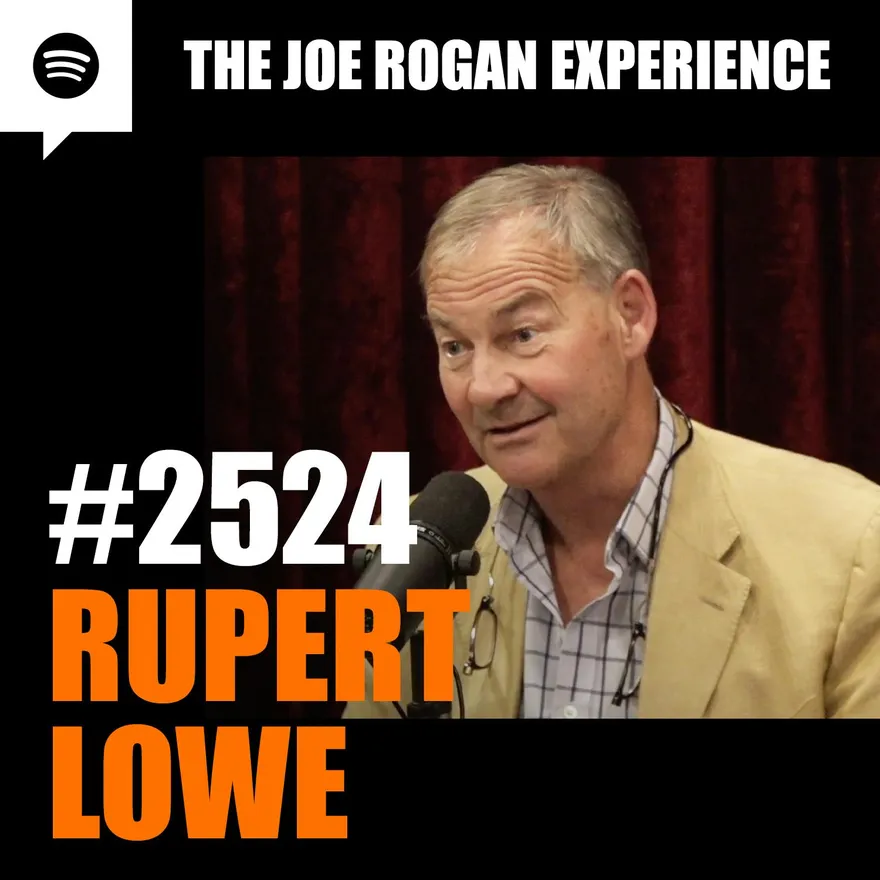

This is a preview of the Shortform summary of the Jul 8, 2026 episode of the The Joe Rogan Experience
Sign up for Shortform to access the whole episode summary along with additional materials like counterarguments and context.
1-Page Summary
Immigration Policy and Cultural Integration Failures
Mass Migration as Deliberate Political Strategy
Rupert Lowe describes Britain's post-World War II political strategy as a calculated effort by elites to weaken the nation-state through multiculturalism and open borders, reducing national sovereignty in favor of deeper European integration. After joining the European Economic Community in 1975, Lowe explains, Britain gradually embraced freedom of movement, with Tony Blair's government accelerating mass migration beginning in 1997 through multicultural policies and legal frameworks like the Human Rights Act and Equalities Act. These laws, Lowe argues, made deportation nearly impossible while prioritizing multiculturalism over native British interests. The government further incentivized migration by offering extensive welfare, housing, and healthcare to illegal migrants while British citizens face long NHS wait times and rising housing costs.
Cultural Incompatibility and Systemic Abuse
Lowe claims that mass immigration from South Asia brought groups with values incompatible with British society, particularly citing Pakistani Muslim rape gangs that have systematically targeted white working-class girls for decades, with an estimated minimum of 250,000 victims. He contends that elements of Islamic teaching facilitate these abuses, with perpetrators viewing non-Muslim women as inferior and their abuse as religiously permitted. The crimes involve extreme violence, forced conversion, and trafficking abroad, linked to organized prostitution and the drug trade.
Parallel Legal Systems and State Tolerance
According to Lowe, the British state tolerates Sharia courts—unrecognized parallel legal systems that enforce Islamic law within settlements that function as separate societies. Lowe asserts that authorities have allowed this to maintain support from the Muslim bloc vote, particularly in inner-city areas where postal voting reinforces Labour Party electoral dominance, routinely ignoring crimes to preserve these political interests.
Failure of Media and Political Accountability
Lowe accuses the BBC of suppressing public awareness of systemic abuse, noting it ignored a crowdfunded, year-long report on rape gangs. He says Labour politicians have historically prioritized protection of the Muslim vote over victim safety, while the lack of data collection on ethnic backgrounds prevents an honest reckoning. Although figures like Tommy Robinson warned of these problems, Lowe claims the establishment dismissed them until undeniable evidence emerged.
Proposed Solutions and Constitutional Reform
Lowe insists that restoring Britain requires full repeal of Blair's multicultural and human rights policies, implementing a "hostile environment" policy that denies welfare to non-contributing immigrants, and comprehensive detention and deportation of illegal migrants. Constitutional reform is essential to remove legal obstacles to immigration enforcement and restore parliamentary sovereignty, along with local government reform to restore accountability.
Government Corruption and Institutional Decay
Systemic Waste and Misallocation of Taxpayer Funds
Rupert Lowe, a member of the Public Accounts Committee, describes alarming levels of waste within the British government, citing examples like the Bibby Stockholm Boat that cost billions despite ongoing fraud and mismanagement. Lowe highlights that public spending and quangos now account for over 50% of UK GDP, compared to 33% under Thatcher, burdening the shrinking private sector with unprecedented tax loads. The conversation shifts to the international level, where USAID and large nonprofits are accused of funneling billions into inefficient initiatives that enrich executives while delivering minimal benefit.
Judicial Corruption and Loss of Parliamentary Supremacy
Lowe blames Tony Blair's creation of the Supreme Court for undermining parliamentary sovereignty, empowering unelected quangos that erode elected representatives' authority. He argues the judiciary now functions as a "woke quango," appointing judges outside parliamentary control who favor illegal migrants and criminals. There are further concerns about proposals to eliminate jury trials, which Lowe sees as consolidating power within an appointable judiciary and removing citizen participation in justice.
Political Betrayal and Entrenched Corruption
Lowe describes a political culture where officials grow wealthy in public office with little transparency, fueling suspicions of embezzlement and bribery. He argues that both Conservative and Labour parties have contributed to decay by copying left-leaning policies and allowing unchecked proliferation of quangos. The establishment has concealed major failings and abuses—hiding rape case transcripts and refusing culpability inquiries—to shield the political class from accountability.
Suppression of Free Speech and Individual Liberty
Criminalization of Speech and Two-tier Policing
Joe Rogan highlights the statistic of 12,000 people arrested annually in the UK for social media posts, exemplified by Lucy Conley's 32-month sentence for a Southport post. Rupert Lowe characterizes this as two-tier policing: while large Palestinian marches are tolerated, critics of immigration face heavy-handed responses. Lowe himself experienced state weaponization when armed police raided his home and seized his firearms due to false, politically motivated accusations, contrasting aggressive action against opponents with perceived inaction against actual criminals.
Covid-Era Government Overreach and Social Control
Lowe found lockdowns profoundly disturbing, describing how the government's "nudge team" manipulated public behavior without consent, using psychological techniques to push people into accepting restrictions. The impact on young people was severe, with students missing crucial educational and social opportunities through forced online schooling and arbitrary rules like banning outdoor tennis. Incentives for reporting neighbors created a surveillance state, eroding trust. Rogan observes that the credibility of health experts and government authorities was shattered, especially among the young, when they were seen propping up pharmaceutical interests through extreme enforcement measures.
Media Complicity and Information Control
Rogan cites direct experiences of media misinformation: after discussing his use of [restricted term], CNN falsely labeled it horse dewormer and altered video to make him appear unwell. He and Lowe contend that television networks' reliance on pharmaceutical advertising creates a blackout of critical vaccine reporting, despite both citing numerous acquaintances who suffered adverse events post-vaccination. Lowe credits Elon Musk's acquisition of Twitter with restoring free speech and allowing real debate to re-emerge, checking ideologically driven censorship.
Ideological Capture of Institutions
Fabian Society Influence and Socialist Agenda
Rupert Lowe argues that the Labour Party is heavily influenced by the Fabian Society, whose emblem is a wolf in sheep's clothing. Most Labour front-benchers, including Keir Starmer and Tony Blair, are members or shaped by this organization founded in the 1880s with disturbing eugenic roots. Lowe claims the Fabian agenda fosters public dependency and central redistribution of wealth, discouraging individual ambition through high taxation and regulation, leading Britain's most talented individuals to leave for business-friendly countries.
DEI and Woke Capture of Education and Media
Joe Rogan argues that progressive ideology dominates Western universities, producing an environment hostile to conservative perspectives and limiting students' exposure to diverse ideas. He suggests young graduates emerge with disdain for their own societies, viewing Western civilization through lenses of guilt rather than achievement. Lowe identifies similar progressive dominance in the UK's public sector and media, particularly the BBC, where DEI policies are prioritized at the expense of merit.
Destruction of Meritocracy and Competitive Spirit
Lowe argues that British schools have shifted away from celebrating competition and achievement, now viewing success itself as morally questionable. He refers to this as embracing a "reverse Darwinian theory" that emphasizes participation over recognizing achievement, reducing resilience in young people. Economic and regulatory policies reinforce this anti-meritocratic ethos by punishing success through high taxes while the welfare state rewards dependency over work and risk-taking.
Attack on National Identity and Historical Achievement
Lowe criticizes British education's current narrative, which focuses overwhelmingly on colonial brutality while omitting achievements like leading the abolition of the slave trade and promoting democracy. He laments that progressive ideology induces collective guilt about British heritage while celebrating other cultures uncritically. This focus on guilt and promotion of multiculturalism, while suppressing expressions of British identity, threatens social cohesion and leaves the country less connected to the traditions that built its success.
1-Page Summary
Additional Materials
Counterarguments
- The claim that British elites deliberately pursued mass migration to weaken the nation-state is a contested interpretation; many historians and political scientists argue that post-war immigration policies were shaped by economic needs, labor shortages, and international obligations rather than a coordinated effort to undermine sovereignty.
- Freedom of movement within the European Economic Community was a reciprocal arrangement that also allowed British citizens to live and work across Europe, benefiting many UK nationals.
- The Human Rights Act and Equalities Act were designed to protect individual rights and prevent discrimination; they apply to all residents, not just immigrants, and have been upheld by UK courts as compatible with democratic values.
- There is no credible evidence that illegal migrants receive more generous welfare, housing, or healthcare than British citizens; access to public services is generally restricted for undocumented migrants.
- The estimated figure of 250,000 victims of "Pakistani Muslim rape gangs" is widely disputed and not supported by official reports or independent inquiries; while serious crimes occurred, attributing them to an entire community or religious group is misleading and risks stigmatizing innocent people.
- Mainstream Islamic teachings do not condone sexual abuse or violence; the vast majority of British Muslims reject such crimes, and community leaders have condemned them.
- Sharia councils in the UK have no legal standing in criminal or family law; their decisions are not enforceable by UK courts, and participation is voluntary.
- Electoral support in inner-city areas is influenced by a range of factors, including socioeconomic issues and party policies, not solely by religious or ethnic bloc voting.
- The BBC and other media outlets have reported extensively on grooming gang scandals and have produced investigative documentaries and news coverage on the issue.
- Data collection on ethnicity in crime statistics is conducted by UK authorities and is publicly available; the Home Office and police forces publish regular reports on crime demographics.
- The assertion that repealing human rights and multicultural policies would restore social cohesion is debated; critics argue that such measures could undermine civil liberties and harm the UK's international reputation.
- Public spending as a percentage of GDP fluctuates due to economic cycles, demographic changes, and policy choices; comparisons to the Thatcher era do not account for changes in population size, aging, and public expectations.
- The creation of the UK Supreme Court was intended to clarify the separation of powers and improve judicial independence, aligning the UK with other advanced democracies.
- There is no evidence that the judiciary systematically favors illegal migrants or criminals; judicial decisions are subject to appeal and oversight.
- Jury trials remain a fundamental part of the UK justice system, and proposals to change their use are subject to parliamentary debate and public consultation.
- Arrests for social media posts are controversial, but UK law distinguishes between hate speech, harassment, and protected free expression; the majority of cases do not result in imprisonment.
- The impact of Covid-19 lockdowns on education and society is acknowledged, but public health measures were implemented in response to a global pandemic and were supported by scientific advice.
- Media organizations, including the BBC, are regulated by independent bodies and are required to adhere to standards of accuracy and impartiality.
- The Fabian Society is one of many think tanks influencing UK politics; its current activities focus on social justice and policy research, and it does not dictate Labour Party policy.
- Diversity, Equity, and Inclusion (DEI) policies are intended to address historic inequalities and promote fair opportunities; there is ongoing debate about their implementation, but they are not universally opposed.
- British education curricula include both critical perspectives on colonial history and recognition of positive contributions, such as the abolition of the slave trade and the development of democracy.
Actionables
- you can track and compare your personal interactions with public services (like healthcare, housing, or law enforcement) to those of recent migrants by keeping a simple log, then use this information to write a letter to your local MP highlighting any disparities and requesting specific policy changes.
- a practical way to reinforce your own sense of national identity is to create a personal archive of British achievements and positive historical moments, then share one fact or story each week with friends or family to counterbalance negative narratives and foster pride in your heritage.
- you can monitor how much of your income goes to taxes and public spending by using a basic spreadsheet, then set a monthly reminder to review government spending reports and send targeted feedback to your representatives about wasteful projects or quangos you want scrutinized.

Get access to the context and additional materials
Immigration Policy and Cultural Integration Failures
Mass Migration as Deliberate Political Strategy
Rupert Lowe describes the post-World War II political strategy in Britain as a calculated effort by elites to weaken the nation-state in favor of deeper political and economic entanglement with Europe, culminating in the creation of the European Union. Lowe argues that European elites, including British leadership, saw the nation-state as the historical source of conflict and adopted multiculturalism and open border policies as a means to dilute patriotism and national identity. This was pursued to lessen national sovereignty and increase dependence on central government structures.
Lowe explains that, after joining the European Economic Community in 1975, Britain embraced freedom of movement, gradually diminishing the importance of national borders while parliament's ability to control immigration eroded. According to Lowe, Tony Blair's government accelerated mass migration beginning in 1997 by embedding multicultural policy and legal frameworks, such as the Human Rights Act and the Equalities Act, into law. This legislative barrage effectively made deportation of illegal migrants nearly impossible and prioritized multiculturalism over the interests of native Britons.
The British government, Lowe argues, further incentivized mass migration by offering extensive welfare, comfortable hotel housing, and even dental care to illegal migrants, while British citizens face long NHS wait times and struggle with rising housing costs. He contends that this system attracts economic migrants who cross multiple safe countries to reach Britain, knowing they will be supported. This, he says, puts an undue burden on taxpayers and is a wasteful and unsustainable use of public funds.
Cultural Incompatibility and Systemic Abuse
Lowe claims that mass immigration from South Asia, facilitated by these policies, brought groups with values fundamentally incompatible with the high-trust, open society in Britain. He asserts that Pakistani Muslim rape gangs have been systematically targeting white working-class girls for decades, with an estimated minimum of 250,000 victims—likely more, given the government's failure to collect and report data on these crimes. These gangs, predominantly from regions like Mirpur in Pakistan, but also including perpetrators from Bangladesh, Somalia, and Eritrea, have been grooming and trafficking girls, subjecting them to violence, sexual servitude, and forced religious conversion. Some victims have reportedly been trafficked abroad, to Saudi Arabia and Pakistan.
Lowe contends that elements of Islamic teaching underpin the attitudes that facilitate these abuses—specifically, that non-Muslim women are viewed as "meat" and their abuse is religiously permitted. He points to hadiths and cultural practices cited in his inquiry report and describes a reality in which Muslim men are taught to see themselves as superior to women and non-Muslims. The abuse is linked to other crimes, such as organized prostitution and the drug trade, and involves extreme violence, including rape filmed as a form of control and degradation. Forced conversion and trafficking of girls further highlight the incompatibility of some imported cultural norms with British law and values.
Parallel Legal Systems and State Tolerance
According to Lowe, the British state tolerates the existence of Sharia courts within its borders—unrecognized parallel legal systems that enforce Islamic law. These settlements function as effectively separate societies, with limited integration and their own rules and loyalties, rejecting British norms. Lowe asserts that state authorities have allowed this situation to persist in part to maintain support from the Muslim bloc vote, especially in inner-city areas where postal voting reinforces Labour Party electoral dominance. The state, he argues, routinely ignored crimes to preserve these political interests, allowing these parallel settlements to grow and function outside the scope of British law.
Failure of Media and Political Accountability
Lowe accuses the BBC, as a state-funded broadcaster, of complicity in suppressing public awareness of systemic abuse, pointing out that it ignored a crowdfunded, year-long report on rape gangs that was compi ...
Here’s what you’ll find in our full summary
Immigration Policy and Cultural Integration Failures
Additional Materials
Counterarguments
- The claim that mass migration and multiculturalism were deliberately pursued by elites to weaken the nation-state is a contested interpretation; many historians and political scientists argue that post-war migration policies were influenced by labor shortages, economic needs, and international obligations rather than a coordinated effort to undermine national identity.
- The assertion that multicultural policies and human rights legislation make deportation of illegal migrants "nearly impossible" is not fully accurate; the UK government has continued to deport individuals found to be in the country illegally, though legal safeguards exist to ensure due process and protection of human rights.
- The idea that welfare and healthcare benefits are a primary pull factor for illegal migration is debated; research suggests that factors such as conflict, persecution, family reunification, and economic opportunity are often more significant motivators.
- The claim of 250,000 victims of grooming gangs is not supported by official data or independent inquiries; while the abuse is a serious and documented issue, available evidence indicates the number of victims is significantly lower.
- The focus on specific ethnic or religious groups as uniquely responsible for grooming gang crimes has been criticized by child protection experts, who note that sexual exploitation occurs across all communities and that overemphasis on ethnicity can obscure broader patterns of abuse.
- The existence of Sharia councils in the UK is acknowledged, but they do not have legal authority to override British law; their decisions are not legally binding and must comply with UK law.
- The suggestion that the state tolerates parallel legal systems for electoral gain is a serious allegation that lacks substantiated evidence; electoral dynamics in inner-city areas are complex and influenced by multiple factors.
- The BBC and other media outlets have reported extensively on ...
Actionables
- you can track and compare how local representatives vote on issues related to national sovereignty, immigration, and multicultural policies, then use this information to inform your voting choices and share concise summaries with friends or family who may not have time to research these topics themselves; for example, create a simple spreadsheet or checklist to see which candidates support restoring parliamentary control or reforming local governance.
- a practical way to encourage transparency is to submit freedom of information requests to your local council or police force about how they handle crimes involving organized abuse or parallel legal systems, then summarize the responses in plain language and share them with your community through neighborhood groups or socia ...

Get access to the context and additional materials
Government Corruption and Institutional Decay
The conversation exposes deep concerns about wasteful government spending, weakening of core institutions, and entrenched political corruption, highlighting the critical challenges facing the UK and other Western democracies.
Systemic Waste and Misallocation of Taxpayer Funds
Government Spending Inefficiency: Bibby Stockholm Boat's £1.5 Billion Cost Highlights Fraud and Mismanagement Through Parliamentary Scrutiny
Rupert Lowe, a member of the Public Accounts Committee, describes alarming levels of waste and inefficiency within the British government. He discusses how, during committee hearings, civil servants are regularly questioned about their use of taxpayer money, but accountability remains minimal. As an example, government initiatives such as the Bibby Stockholm Boat have cost taxpayers billions, yet scrutiny consistently reveals ongoing fraud and mismanagement.
State Accounts For Over 50% of GDP Through Public Spending and Quangos, Unlike 33% Under Thatcher, Burdening Private Sector
Lowe highlights a significant structural shift: public spending and the proliferation of quasi-governmental organizations (quangos) now account for over 50% of UK GDP, compared to only about 33% during Thatcher’s time. He emphasizes that the ever-expanding state is funded by taxing the rapidly shrinking private sector, which is discouraging risk-taking and entrepreneurship. Family farms and small businesses face unprecedented tax burdens, threatening the backbone of the private economy.
USAID, Nonprofits Funnel Billions to Fraud and Woke Initiatives, Enriching Few While Delivering Minimal Benefit Globally
The conversation shifts to the international level, where USAID and large nonprofits are accused of funneling billions into inefficient or ideologically driven initiatives that result in minimal global benefit. Joe Rogan and Rupert Lowe refer to multiple instances in which nonprofit executives have grown enormously wealthy while programs deliver little measurable improvement. They cite the example of Rory Stewart's wife receiving controversial funding and question the accountability and true impact of these organizations, especially with claims that funds support questionable or "woke" causes both in the UK and abroad.
Judicial Corruption and Loss of Parliamentary Supremacy
Tony Blair's Supreme Court Creation Undermines Parliamentary Sovereignty; Woke Bodies Appoint Judges Who Can Override Privilege
Lowe blames Tony Blair’s reforms for undermining the principle of parliamentary supremacy by creating the Supreme Court and empowering a vast network of quangos. These unelected bodies, staffed without parliamentary approval, have developed a life of their own, eroding the authority of elected representatives.
Judiciary Is a "Woke Quango" Favoring Illegal Migrants and Criminals, Opposing British Citizens' Interests and Supporting Unaccountable ICGS Without Parliamentary Privilege
He further argues that the judiciary itself now functions as a "woke quango," appointing judges outside the control of Parliament. Such judges are perceived as more likely to rule in favor of illegal migrants and criminals and are seen as unaccountable to British citizens. Lowe cites how the Independent Complaints and Grievance Scheme (ICGS) exploits parliamentary privilege to evade legal scrutiny, further weakening the checks and balances meant to protect the public interest.
Eliminating Jury Trials Consolidates Power, Removing Citizens' Role In Justice, Making the System Controllable By Appointing Sympathetic Judges
There is further concern about efforts to remove jury trials for many criminal cases. Although not yet implemented, the proposal is seen as a step toward consolidating power within the judiciary. Lowe argues that if jury trials are replaced with judge-only trials, power would concentrate in the hands of those who can appoint ...
Here’s what you’ll find in our full summary
Government Corruption and Institutional Decay
Additional Materials
Counterarguments
- While government spending inefficiencies exist, the Bibby Stockholm Boat's total cost has been widely reported as significantly less than £1.5 billion, and some claims of fraud remain unsubstantiated.
- Parliamentary committees and the National Audit Office have led to increased transparency and some improvements in public sector accountability over recent years.
- The rise in public spending as a percentage of GDP is partly due to increased demand for healthcare, education, and social services, reflecting demographic changes and public expectations rather than solely inefficiency.
- Many small businesses and family farms benefit from government grants, subsidies, and support programs, which can offset some tax burdens.
- USAID and large nonprofits have documented successes in global health, disaster relief, and poverty reduction, with independent evaluations showing positive impacts in many cases.
- The term "woke" is subjective and often used pejoratively; many initiatives labeled as such address recognized social inequalities and have broad public support.
- The creation of the UK Supreme Court was intended to clarify the separation of powers and enhance judicial independence, aligning the UK with other advanced democracies.
- Judicial appointments in the UK involve independent commissions and are subject to rigorous vetting, reducing the risk of political interference.
- There is no systematic evidence that UK judges disproportionately favor illegal migrants or criminals; judicial decisions are based on law and evidence.
- The ICGS was established to address legitimate concerns about workplace misconduct in Parliament and operates with oversight mechanisms.
- Proposals to limit jury trials have been debated primarily in the conte ...
Actionables
- you can track and compare the cost and outcomes of local government or nonprofit projects in your area, then share a simple summary with neighbors or on community forums to highlight inefficiencies and encourage local accountability; for example, keep a spreadsheet of council spending on public amenities versus their actual use or benefit.
- a practical way to encourage transparency is to submit regular, polite freedom of information requests about specific government or quango spending decisions that affect your community, then post the responses in plain language online or on local noticeboards so others can see how public money is used.
- you can su ...
Get access to the context and additional materials
Suppression of Free Speech and Individual Liberty
Joe Rogan and Rupert Lowe discuss the growing suppression of free speech, individual liberty, and the changing societal landscape dominated by government overreach, media misinformation, and institutional complicity.
Criminalization of Speech and Two-tier Policing
Joe Rogan highlights the alarming statistic of 12,000 people arrested annually in the UK for social media posts, questioning how such a high number can be tolerated and what it says about the state of free expression. This crackdown is exemplified by Lucy Conley, who received a 32-month prison sentence for a Southport social media post, revealing a systematic state punishment for unpopular speech.
Rupert Lowe characterizes this as two-tier policing: while large Palestinian marches are tolerated, critics of immigration or figures like Tommy Robinson—who, despite being controversial, warned about grooming gangs long before mainstream acknowledgment—face heavy-handed police responses. Lowe himself, a member of parliament, experienced state weaponization first hand when armed police raided his home and seized his legally held firearms due to false and politically motivated accusations from the Reform party, despite his clean record. He notes that police would not give him the courtesy of a phone call, instead turning up en masse to his home, highlighting the contrast between aggressive state action toward opponents and perceived inaction against actual criminals.
Covid-Era Government Overreach and Social Control
Lowe found the lockdown period profoundly disturbing, describing how the British government’s “nudge team” (Behavioural Insights Team) manipulated public behavior without consent or transparency, pushing people into accepting lockdowns through clever psychological techniques. For him, the loss of previously taken-for-granted liberties revealed the state's capacity for control and the ease with which people were frightened into submission.
The impact on young people was especially severe. Lowe and Rogan agree that students missed crucial educational and social opportunities by being forced into online schooling, unable to meet friends or participate in milestone events like graduations. Lowe describes the arbitrary nature of rules, such as banning outdoor tennis—even in isolated areas with no infection risk—further illustrating the lack of logic and proportionality in the restrictions. Meanwhile, incentives for reporting neighbors led to a surveillance state, with people in both England and the U.S. turning in community members for minor infractions, eroding trust and stoking paranoia. Rogan recounts the atmosphere in California, where tattle-tale culture flourished, even concerning small infractions like a desk not being six feet wide in a recording studio.
These developments permanently altered the population’s trust in authorities. Rogan observes that the health experts and government authorities, once presumed to be focused solely on public health, were seen propping up pharmaceutical interests, enforcing compliance through extreme measures, and thereby shattering the credibility of official institutions, especially among the young.
Media Complicity and Information Control
Rogan cites direct experiences of media misinformation: after he publicly discussed his use of [restricted term] for COVID, CNN repeatedly ran stories falsely labelling the medication as horse dewormer and, even more egregiously, ...
Here’s what you’ll find in our full summary
Suppression of Free Speech and Individual Liberty
Additional Materials
Counterarguments
- The statistic of 12,000 arrests annually in the UK for social media posts includes a wide range of offenses, such as harassment, threats, and hate speech, which are criminalized in many democracies and not solely expressions of unpopular opinion.
- Lucy Conley’s case may involve aggravating factors or legal context not detailed here; sentencing for online offenses often considers intent, harm caused, and prior conduct.
- The claim of two-tier policing is debated; law enforcement agencies state that operational decisions are based on risk assessments and public safety, not political alignment.
- Tommy Robinson’s legal issues have included contempt of court and other offenses unrelated to his speech about grooming gangs.
- Police raids and firearm seizures are conducted according to established protocols when credible threats or accusations are reported, regardless of political affiliation.
- The Behavioural Insights Team’s work is publicly documented, and many governments use behavioral science to inform public health messaging; transparency and consent are ongoing topics of debate.
- Lockdown measures were implemented in response to a global public health emergency, with many countries adopting similar restrictions based on scientific advice.
- The negative impacts of lockdowns on young people are widely acknowledged, but public health authorities argue these measures were necessary to prevent greater harm from uncontrolled viral spread.
- Some lockdown rules, while appearing arbitrary, were designed for clarity and ease of enforcement rather than tailored to every possible scenario.
- Reporting of lockdown breaches was encouraged to protect public health, not to create a surveillance state; similar measures were adopted in many countries during the pandemic.
- Public trust in health authorities has varied, and surveys show that many people continue to trust official guidance, especially in countries with transparent communication.
- The characterization of CNN’s reporting on [restricted term] is contested; the drug is approved for human use in some contexts but was not recommended for COVID-19 by major health authorities.
- Media outlets have editorial standards and are subject to regulatory oversight; accusations of widespre ...
Actionables
- you can keep a private log of your online posts and any interactions with authorities or platforms, noting dates, content, and outcomes, so you have a clear record if you ever need to demonstrate patterns of enforcement or censorship.
- a practical way to strengthen your community’s trust is to set up a simple, anonymous feedback box (physical or digital) for neighbors to share concerns or suggestions without fear of being reported, helping rebuild local relationships and reduce suspicion.
- you can create a personal media comparison habit ...
Get access to the context and additional materials
Ideological Capture of Institutions
Fabian Society Influence and Socialist Agenda
Rupert Lowe argues that the Labour Party is heavily influenced by the Fabian Society, an organization founded in the 1880s whose emblem is a wolf in sheep's clothing. He stresses that most Labour front-benchers, including leaders like Keir Starmer and Tony Blair, are members of or otherwise shaped by the Fabian Society. Joe Rogan and Lowe highlight the symbolism of the Society’s coat of arms—a wolf disguising itself as a sheep—as clear evidence of its intention to mask its real agenda. Lowe notes that early prominent Fabians, like George Bernard Shaw, were connected to eugenic theories, giving the group disturbing historical roots.
Lowe claims the Fabian agenda is designed to foster public dependency and facilitate central redistribution of wealth, empowering the state while discouraging individual ambition and private enterprise. He sees the organization’s philosophy as ultimately damaging to the private sector by promoting high taxation and regulation, leading many of the UK’s most talented and productive individuals to leave for more business-friendly countries. In Lowe's view, this results in a hollowing-out of British innovation, with the nation losing its “rainmakers” while the state sector grows in both cost and power.
Both Lowe and Rogan describe Starmer and Blair as chief implementers of the Fabian vision, which they characterize as collectivist and harmful to individualism and British sovereignty. Lowe criticizes the resulting “dependency culture” and believes this socialist philosophy breaks the backbone of Britain, making society increasingly reliant on state support.
Dei and Woke Capture of Education and Media
Joe Rogan draws attention to how progressive ideology dominates Western universities, producing an environment hostile to conservative perspectives and limiting students’ exposure to diverse ideas. He argues that this lack of ideological diversity inhibits critical thinking and personal growth, undermining the purpose of higher education. Rogan describes professors, especially in the humanities and social sciences, as overwhelmingly left-wing, dismissive of dissent, and influential in shaping young people’s attitudes. Rogan and Lowe both suggest that young graduates often emerge with disdain for their own societies, viewing Western civilization primarily through the lenses of guilt and victimhood rather than progress and achievement.
Lowe identifies a similar progressive dominance in the UK’s public sector and media, particularly institutions like the BBC, where DEI (Diversity, Equity, and Inclusion) policies are prioritized at the expense of merit and excellence. Lowe calls the proliferation of DEI-driven programs an “industry” that discourages personal responsibility and achievement, instead advancing a worldview that centers on grievance and victimization.
Destruction of Meritocracy and Competitive Spirit
Lowe argues that British schools have shifted away from celebrating competition and achievement, now often viewing success itself as morally questionable. In his view, this undermines the character-building that comes from striving, overcoming adversity, and winning fairly. He refers to this shift as embracing a "reverse Darwinian theory," where the emphasis is on participation and equal outcomes rather than recognizing and rewarding achievement. This approach, he contends, reduces resilience and m ...
Here’s what you’ll find in our full summary
Ideological Capture of Institutions
Additional Materials
Counterarguments
- The Fabian Society is a well-documented, open organization whose policy positions and publications are publicly available; its influence on Labour policy is debated among historians and political scientists, with many noting that Labour’s platform is shaped by a broad range of influences, not solely the Fabians.
- The claim that most Labour front-benchers are members of the Fabian Society is not substantiated by membership records; while some have been associated with the Society, many are not formal members, and the Society itself is not a secretive or exclusive group.
- While early Fabians like George Bernard Shaw expressed support for eugenics, these views were not unique to the Fabian Society at the time and were unfortunately common across many political and intellectual circles in the early 20th century; the Society has since repudiated such views.
- Redistribution of wealth, progressive taxation, and regulation are mainstream policies in many developed countries and are not exclusive to socialist or Fabian ideology; these policies are often credited with reducing inequality and funding public goods.
- There is limited empirical evidence that high taxation and regulation alone are the primary drivers of emigration among the UK’s most talented individuals; factors such as global job opportunities, quality of life, and personal reasons also play significant roles.
- The UK remains a global leader in innovation, higher education, and creative industries, suggesting that claims of a wholesale “hollowing-out” may be overstated.
- The Labour Party under Tony Blair and Keir Starmer has often embraced market-friendly policies and public-private partnerships, which some critics argue are at odds with traditional socialist or Fabian principles.
- The concept of a “dependency culture” is contested; many studies show that most welfare recipients use support temporarily and that social safety nets can promote social mobility and economic stability.
- Surveys of UK and US universities indicate that while there is a left-leaning tendency among faculty in some disciplines, universities continue to host a range of viewpoints, and academic freedom is protected by law and institutional policy.
- The assertion that DEI policies undermine merit is debated; many organizations implement DE ...
Actionables
- you can keep a weekly log of your personal achievements and contributions, then reflect on how these actions support your independence and resilience, rather than relying on external validation or support; for example, note when you solve a problem at work, help a neighbor, or learn a new skill, and consider how these moments build your self-reliance and motivation.
- a practical way to reinforce positive aspects of your national or local identity is to research and share stories of historical achievements or acts of progress from your community or country with friends or family, focusing on examples that highlight innovation, integration, or positive change; for instance, you might share a story about a local inventor, a successful integration story, or a civic improvement that benefited many.
- you can set a personal chall ...

Get access to the context and additional materials


Create Summaries for anything on the web
Download the Shortform Chrome extension for your browser
