

#2522 - Tony Hinchcliffe
In this episode of The Joe Rogan Experience, comedian Tony Hinchcliffe joins Joe Rogan for a conversation that spans combat sports, comedy controversies, and media dynamics. The discussion covers the technical foundations of MMA fighting, particularly wrestling's dominance in the sport, before shifting to Hinchcliffe's experiences with roast comedy and the public backlash to controversial jokes. They examine how social media amplifies outrage by stripping context from comedy and how different standards apply to comedians versus traditional media figures.
The conversation also explores broader cultural topics, including the erosion of trust in traditional news outlets, the migration of news consumption to social media platforms, and the challenges of navigating misinformation. Rogan and Hinchcliffe touch on Kanye West's concert production and artistic vision, discussing the technical innovation behind his performances. Throughout, they emphasize the importance of context in evaluating comedy and the impact of engagement-driven media on public discourse and comedians' careers.
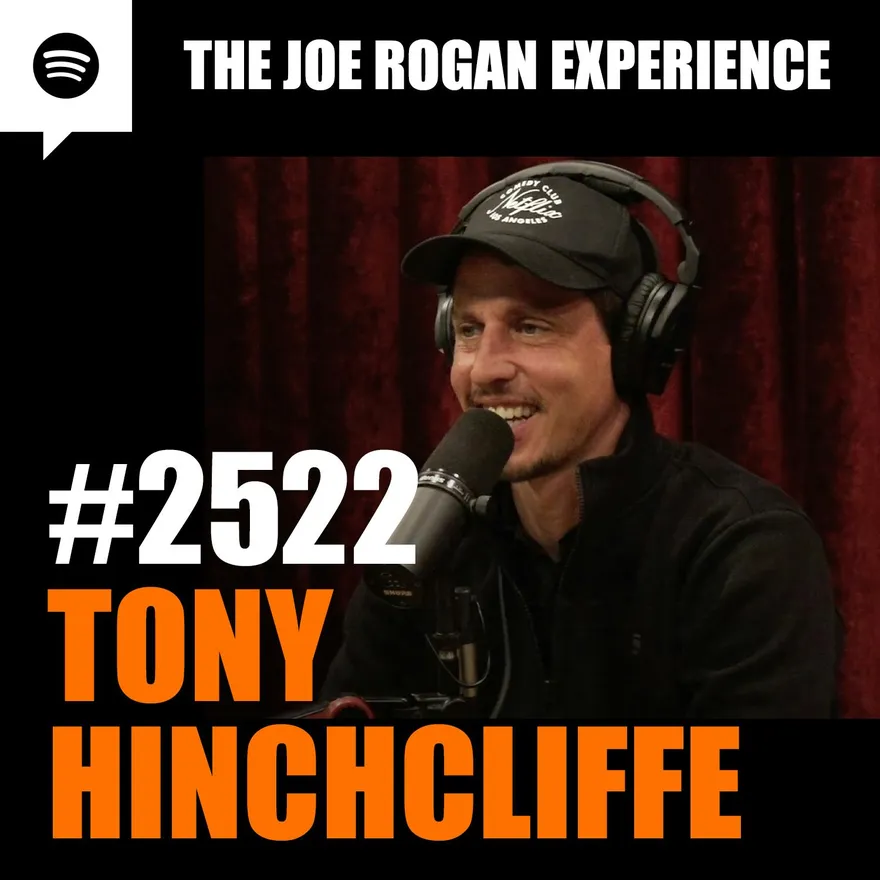

This is a preview of the Shortform summary of the Jul 2, 2026 episode of the The Joe Rogan Experience
Sign up for Shortform to access the whole episode summary along with additional materials like counterarguments and context.
1-Page Summary
Combat Sports and Fighting Techniques
Wrestling As the Foundation of Effective Fighting
Joe Rogan emphasizes that wrestling forms the essential foundation for effective MMA fighting. He cites fighters like Hamzat Chimaev and Murab Dvalishvili, who use wrestling to control and neutralize opponents regardless of their striking abilities. Rogan discusses how early training creates significant advantages—even a single year's head start during formative years can be insurmountable due to the physical and technical development gap. He describes the brutal intensity of wrestling training, including partner rotations that expose younger wrestlers to larger, more experienced athletes.
Khabib Nurmagomedov's dominance is attributed to advanced techniques like leg triangling, which completely immobilizes opponents. Hinchcliffe notes that once Khabib traps an opponent's legs, the fight is essentially over.
Strategic Positioning and Ring Control in MMA
Rogan and Hinchcliffe discuss how ring control and positioning are crucial in MMA. Rogan believes that forced stand-ups by referees undermine the sport by granting unfair advantages to strikers who are otherwise being dominated. He proposes that each round should begin from the position where the previous round ended, maintaining the reward for positional dominance rather than resetting fighters to neutral standing positions.
Modern Boxing and Legacy Performances
The discussion turns to how elite performance is possible even for older fighters, citing Bernard Hopkins boxing at age 43 at the highest level. Heavyweight fighters like Ciryl Gane and Francis Ngannou demonstrate that knockout power and technique enable effective competition despite limited wrestling backgrounds. Aggressive fighters like Marcos Maidana, who challenged Floyd Mayweather with ferocious striking, exemplify the heart and brutality required in elite combat sports.
Semiconductor Manufacturing and Human Achievement
Rogan shifts to discuss semiconductor chip manufacturing as a pinnacle of human achievement, describing the staggeringly complex process of precisely arranging atoms through multi-stage production. High-end chips like Intel's i9 represent only the most perfect selections from each batch, highlighting extraordinary manufacturing standards. The panel emphasizes how this technological progress is only possible through cumulative innovation across generations, contrasting physical achievement in combat sports with intellectual breakthroughs in technology.
Tony Hinchcliffe's Roast Controversies and Outrage Culture
Tony Hinchcliffe and Joe Rogan dissect the controversies surrounding roast comedy, focusing on public perception, social media dynamics, and double standards in media coverage.
The Context and Purpose of Provocative Comedy
Hinchcliffe emphasizes that roast comedy employs sharp, offensive jokes for humor and satire, not as expressions of real views. He notes that at the Kevin Hart roast, there were no offended participants—the atmosphere was celebratory with high fives and laughter. The controversial joke was a "last second filler" he added after being given extra stage time. Rogan had warned him the joke might be controversial, but Hinchcliffe didn't anticipate the reaction. He explains that in roast contexts, particularly for Kevin Hart, no topic is off-limits.
Manufactured Outrage and Social Media Dynamics
Rogan and Hinchcliffe critique how social media removes context and amplifies outrage by circulating isolated comedy clips. Rogan notes that outrage drives social media engagement, with users and outlets focusing on controversy for clicks. Hinchcliffe points out that while the live crowd was unfazed, social media went ablaze—especially after Netflix amplified the situation by clipping and highlighting the joke. He observes that backlash tends to come from those not present, with many comedians creating videos about offense they didn't personally witness. Both agree that outrage is frequently manufactured for engagement.
Double Standards in Media Coverage and Accountability
The discussion turns to how public figures are held accountable differently. Rogan and Hinchcliffe argue that some individuals with questionable pasts face less scrutiny when criticizing comedians than comedians do for provocative jokes. Rogan points out the lack of accountability for outlets that promoted "Russiagate" narratives, noting they maintain credibility despite serious errors, while comedians face intense criticism for jokes in satirical settings. They conclude that there are different standards for media figures' past actions versus present jokes, and this hypocrisy is routinely overlooked.
Media Credibility, Misinformation, and Social Media Dynamics
Erosion of Trust in Traditional News Institutions
Hinchcliffe describes flipping through cable news channels like CNN, Fox News, and MSNBC, noting how each prioritizes one-sided narratives. He finds the experience both crazy and stressful, likening it to staged production rather than genuine news coverage. Rogan argues that cable news now focuses on opinion-based panel shows—what he calls "bad podcasts" interrupted by commercials—instead of informative programming. Both raise concerns about selectively biased news coverage, with Hinchcliffe observing that outlets report only the news "they're approved to tell you."
The Rise of Social Media as News Source
The pair identify a consequence of declining trust in traditional outlets: the migration of news consumption to social media, particularly X (formerly Twitter). Rogan claims "that's why X has become the news... because they can't trust the news." However, he expresses reservations about social media's reliability, describing X as flooded with misinformation, bots, and misleading content. Despite this, both acknowledge the ethical struggle of feeling irresponsible ignoring world events while being exhausted by social media's conflict and confusion.
The Role of Government Agencies in International Activities
Rogan discusses the complex role of agencies like USAID, asserting that while Americans are told these exist for humanitarian reasons, their real objectives are often geopolitical. He notes USAID has funded media and political movements to achieve U.S. foreign policy aims rather than purely charitable objectives. On international aid, he questions where development funds truly go, suggesting much money is consumed by overhead and bureaucratic expenses rather than reaching intended recipients.
Kanye West's Concert Production and Artistic Vision
Revolutionary Stage Design and Technical Innovation
Kanye West's concerts feature an inflatable globe stage as their centerpiece. Hinchcliffe describes Kanye entering through the crowd, waiting for darkness before "the globe turns on." The stage includes a hidden lift accessible only to Kanye, allowing him to rise above the audience while safely tethered. He performs continuously for two-and-a-half hours without breaks, only addressing the audience at the end with a heartfelt message: "It's all about love. I love you guys. Thanks for sticking with me all these years when all these people said this."
Artistic Achievement and Producer Mastery
Hinchcliffe remarks that Kanye has "made every decision and tweaked everything...to the color of everything to when it happens to how it happens." Kanye's catalog features numerous enduring songs that keep audiences engaged. Hinchcliffe, a longtime live music connoisseur, calls Kanye's production "the greatest...I've ever seen," comparing it to legendary acts like Pink Floyd.
Fan Loyalty and Psychological Resonance
Hinchcliffe references an "energy specialist" who analyzed Kanye's shows, noting that those who connect with Kanye's proclamations of greatness tend to possess high self-belief themselves. Kanye's concerts regularly fill stadiums despite a lack of traditional marketing, relying instead on word-of-mouth and social media buzz. He often announces shows only weeks in advance, yet venues are "filled to the top." At the concert's conclusion, he thanks the crowd for their support, leaving fans awestruck by both the personal acknowledgment and overall experience.
Comedy, Expression, and Context of Jokes
The Difference Between Comedy and Literal Statements
Rogan and Hinchcliffe emphasize that comedians use exaggeration, satire, and provocative statements to entertain, not to express genuine beliefs. Rogan explains that comedians often say outrageous things they don't truly mean, comparing jokes to Bob Marley's "I Shot the Sheriff"—the humor is not a confession but an artistic device. He highlights a cultural shift since around 2016, where audiences have begun interpreting comedy as literal statements, not recognizing comedic intent.
The Importance of Full Context in Comedy Evaluation
Rogan articulates how consuming snippets of comedy out of context can make jokes seem far more offensive than they are within a full performance. The hosts point to major comedy events like the Tom Brady roast, where the lack of widespread controversy demonstrates that controversy often arises from selective amplification, not universally offensive content. They note that comedy material evolves for years, and early versions contain context that makes the intention clearer.
The Impact of Engagement-Driven Media on Comedy Reception
The hosts discuss how modern media and social media incentivize outrage for engagement and profit, with coverage often ignoring context to highlight isolated elements of controversy. Rogan notes that "engagement" is driven by hot takes, a cycle that turns comedy into a commodity for outrage. This engagement-driven environment harms comedians' mental health and careers. Rogan observes that comics who focus on online conflict succeed less than those performing live, and he cautions comics against engaging in online battles, warning it is "very bad for your head."
1-Page Summary
Additional Materials
Counterarguments
- While wrestling is a strong foundation for MMA, fighters with elite striking or Brazilian Jiu-Jitsu backgrounds have also achieved significant success, demonstrating that multiple disciplines can serve as effective bases.
- A single year’s head start in wrestling can be significant, but it is not always insurmountable; some athletes have closed skill gaps through intensive cross-training and athleticism.
- The intensity of wrestling training is notable, but other combat sports such as boxing, Muay Thai, and judo also involve rigorous and demanding training regimens.
- Advanced immobilization techniques exist in other grappling arts, such as Brazilian Jiu-Jitsu, which can also end fights decisively.
- Forced stand-ups by referees are intended to prevent stalling and maintain action, which can enhance entertainment value and ensure fighters remain active.
- Starting each MMA round from the previous position could disadvantage fighters who are skilled at escapes or reversals, and may reduce opportunities for comebacks.
- While Bernard Hopkins competed at a high level at age 43, most elite boxers experience significant decline in performance as they age.
- Knockout power and technique can compensate for limited wrestling, but fighters with well-rounded skills generally have more consistent success in MMA.
- Aggressive striking is important, but technical skill, defense, and strategy are equally critical in elite combat sports.
- Semiconductor manufacturing is a major technological achievement, but other fields such as medicine, aerospace, and renewable energy also represent pinnacles of human innovation.
- The selection of high-end chips is rigorous, but even top chips can have flaws, and manufacturing yields are not always perfect.
- Physical and intellectual achievements are both valuable and not necessarily in opposition; many individuals and societies value both.
- Roast comedy may not be offensive to participants, but it can still be hurtful or alienating to some audience members, especially those from marginalized groups.
- The expectation that "no topic is off-limits" in roast comedy is not universally shared; some believe certain subjects should remain off-limits regardless of context.
- Social media can amplify outrage, but it also provides a platform for marginalized voices to express genuine concerns about offensive content.
- Not all backlash is manufactured; some criticism reflects sincere discomfort or disagreement with certain comedic material.
- Double standards in accountability exist, but comedians are public figures whose work is intentionally provocative, which can invite greater scrutiny.
- Media outlets have faced consequences for errors, including retractions, firings, and loss of audience trust.
- Opinion-based programming is prevalent, but many news organizations still produce high-quality investigative journalism and factual reporting.
- Some people continue to trust and rely on traditional news sources for accurate information.
- Social media platforms can spread misinformation, but they also enable rapid dissemination of important news and diverse perspectives.
- Government agencies like USAID have contributed to humanitarian and development successes in many regions, despite criticisms of inefficiency.
- Overhead and bureaucracy are challenges in international aid, but many organizations work to maximize the impact of funds for recipients.
- Kanye West’s concert production is highly regarded by some, but others may prefer different artists or styles of live performance.
- Not all fans resonate with Kanye’s messages or artistic choices, and some may find his self-proclamations off-putting.
- Word-of-mouth and social media are powerful, but traditional marketing still plays a role in concert promotion for many artists.
- Comedians’ intent may be satirical, but the impact of jokes can still be harmful or offensive to some listeners.
- The shift in audience interpretation of comedy may reflect broader cultural changes in sensitivity and awareness, not just a misunderstanding of comedic intent.
- Full context can mitigate perceived offensiveness, but some material may remain objectionable regardless of context.
- Selective amplification can create controversy, but it can also highlight issues that merit public discussion.
- The evolution of comedy material does not guarantee that all jokes will be received positively, even in their final form.
- Media and social media engagement can be problematic, but they also provide opportunities for comedians to reach wider audiences and build careers.
- Some comedians have successfully leveraged online platforms and controversy to grow their fanbase and professional opportunities.
- Engaging in online discourse can be challenging, but it is not universally detrimental to comedians’ mental health or careers.
Actionables
- You can strengthen your ability to recognize context and intent in comedy and news by pausing before reacting to provocative content online, then seeking out the full performance or original source before forming an opinion; for example, if you see a controversial joke or news clip, watch the entire set or read the full article to understand the broader message and tone.
- A practical way to build resilience against outrage-driven media cycles is to set a daily time limit for social media use and replace that time with a calming activity, such as listening to music or taking a walk, to reduce emotional exhaustion and maintain a balanced perspective on current events.
- You can experiment with your own sense of positional advantage and control by playing strategy-based games (like chess or board games) with friends or family, focusing on maintaining advantageous positions rather than just winning quickly, which helps you appreciate the value of incremental progress and strategic patience in competitive situations.
Get access to the context and additional materials
Combat Sports and Fighting Techniques
Wrestling As the Foundation of Effective Fighting
Joe Rogan emphasizes that wrestling is the essential foundation for effective fighting in MMA. Skills honed in wrestling allow fighters, such as Hamzat Chimaev, to control and neutralize opponents through grappling regardless of their striking abilities. Rogan cites how Hamzat systematically broke down an opponent like Dricus Du Plessis, a former world champion, with relentless wrestling, dragging him to the ground at will and achieving dominant positions like the crucifix multiple times. Murab Dvalishvili’s performance against Sean O’Malley is highlighted as another example of wrestling shutting down a superior striker.
Early training yields significant physical and technical benefits. Rogan and Hinchcliffe discuss how even a single year’s head start in wrestling during formative years can create an almost insurmountable advantage due to the strength and experience gap between, for example, a 15-year-old and a 19-year-old competitor. Rogan recalls his own wrestling experiences, noting the vast physical changes between those ages and the advantage older, more developed wrestlers can have.
Training in wrestling is notoriously tough; Rogan describes carrying training partners around the room in fireman’s carries, running stairs, relentless push-ups and sit-ups, and nonstop live wrestling drills. Partner rotations expose younger or lighter wrestlers to larger and more experienced athletes, creating intense combat conditions and contributing to rapid development.
Khabib Nurmagomedov’s dominance in MMA is attributed to advanced wrestling techniques like leg triangling, which immobilizes opponents. Hinchcliffe notes that when Khabib traps an opponent’s legs, the fight is essentially over—they are unable to begin any meaningful escape or counterattack, rendering them completely controlled while Khabib delivers strikes.
Strategic Positioning and Ring Control in MMA
Rogan and Hinchcliffe discuss the importance of ring control and position in MMA. Fighters who secure top control should be allowed to recover energy and dictate the pace. Rogan believes that forced stand-ups by referees undermine the essence of the sport, granting unfair advantages to strikers who are otherwise being dominated. He proposes that each round should begin from the position where the previous round ended, maintaining the reward for positional dominance rather than resetting both fighters to a neutral standing position. This, he argues, would make the fight more realistic and continuous rather than segmented.
The standing reset at the start of rounds gives a clear advantage to strikers and disrupts the momentum that grapplers have earned. Rogan and Hinchcliffe also discuss the psychological impact time pressure has on a fighter’s ability to remain composed and execute their strategy.
Modern Boxing and Legacy Performances
Modern boxing showcases that elite performance is possible even for older fighters. Bernard Hopkins is cited as a world-class boxer who was able to outbox Kelly Pavlik at age 43, competing at the top level against much younger opponents—virtually unheard of at weights around 170 pounds.
Heavyweights in MMA, like Ciryl Gane and Francis Ngannou, demonstrate that knockout power and striking technique enable fighters to effectively compete despite additional weight and limited wrestling backgrounds. Rogan notes that Gane’s ability to move his body skillfully grants him a significant edge over more plodding heavyweights. In one fight, Ngannou relied on grappling—even with a s ...
Here’s what you’ll find in our full summary
Combat Sports and Fighting Techniques
Additional Materials
Counterarguments
- While wrestling is a strong foundation in MMA, fighters with elite striking or Brazilian Jiu-Jitsu backgrounds have also achieved significant success, demonstrating that multiple skill sets can serve as effective foundations.
- Some high-level strikers, such as Israel Adesanya and Anderson Silva, have successfully defended against elite wrestlers, showing that striking and takedown defense can neutralize wrestling-heavy approaches.
- Early specialization in wrestling can lead to burnout or overuse injuries, and some athletes benefit from cross-training in multiple disciplines during their formative years.
- The assertion that forced stand-ups always unfairly benefit strikers overlooks situations where grapplers stall or fail to advance position, which can lead to less engaging fights for spectators.
- Starting each round from the previous position could disadvantage fighters who are skilled at recovering between rounds or who rely on strategic resets, and it is not standard practice in most combat sports.
- Psychological pressure and time constraints affect all fighters, not just grapplers, and some athletes thrive under these conditions.
- While Bernard Hopkins’ late-career success is notable, most boxers experience significant decline in performance with age, and his case is an exception rather than the rule.
- ...
Actionables
- You can build mental and physical resilience by setting up a weekly challenge where you deliberately practice controlling your environment or routine, such as taking cold showers, fasting for a set period, or completing a difficult workout, to simulate the discipline and adaptability required in both combat sports and high-level technical work.
- A practical way to develop focus and perseverance is to pick a complex skill or project (like learning a new language, assembling a detailed model, or mastering a challenging recipe) and commit to working on it daily for a month, tracking your progress and reflecting on how incremental effort leads to breakthroughs.
- You c ...
Get access to the context and additional materials
Tony Hinchcliffe's Roast Controversies and Outrage Culture
Tony Hinchcliffe and Joe Rogan dissect the heightened controversies surrounding roast comedy, focusing on public perception, social media dynamics, and double standards in media coverage and accountability.
The Context and Purpose of Provocative Comedy
Tony Hinchcliffe emphasizes that roast comedy, by design, employs sharp, offensive jokes meant for humor, exaggeration, and satire, rather than as expressions of real views. As a comedian with an edgy, “heel”-like persona, reminiscent of professional wrestling villains, Hinchcliffe acknowledges that his style may make some audience members uncomfortable. He highlights that at the Kevin Hart roast—an event known for its provocative material—comics like Sheryl Underwood and Tiffany Haddish handled the environment well and that “there was nobody that was there that was offended. There was no ruckus there.” He describes the overall atmosphere after his set at Madison Square Garden as celebratory, with high fives and laughter, and insists that the crowd was “thrilled.”
Hinchcliffe recalls that the offending joke during the roast was a “last second filler” he added after being given extra stage time. Joe Rogan notes he had warned Tony the joke might be controversial, but Tony says he did not anticipate the reaction. Jokes about Michelle Obama, George Floyd, and Kyle Rittenhouse were made in the context of the roast format, where “everybody gets it,” regardless of background. Hinchcliffe explains that the outrage typically comes from outside the event: “If you just watch that clip on my dismount, it’s a crazy clip. But if you watch the entire flow of the roast set, it’s just one last departing joke, which that’s my thing, man.” He underscores that in the context of a roast—particularly one for Kevin Hart—no topic is off-limits, and it’s where comedians “go for it.”
Manufactured Outrage and Social Media Dynamics
Joe Rogan and Hinchcliffe critique how social media removes context and amplifies outrage by circulating isolated comedy clips. Rogan notes that social media engagement is driven by outrage, with users and media outlets focusing on controversy for clicks and shares: “outrage is the commodity that everybody wants.” Clips stripped of context appear far more offensive than they do in the full, live performance, and Hinchcliffe observes, “It’s just like everything else where you leave and you go, huh? This thing’s kind of crazily taking off. It seems a lot of people are talking about that one joke at the end. It’s so weird.”
Hinchcliffe points out the difference between in-person reception and online uproar: although the live crowd was unfazed, social media went ablaze, and Netflix amplified the situation by clipping and highlighting the joke on Instagram with a reaction shot of him, which he feels misrepresented his intent and energy. He notes that the backlash tends to come from those not present, saying, “A lot of comedians, a lot of black comedians were like, I’m upset about this. They made their videos, which is just hilarious, because they’re not on the roast. They’re not in attendance at the roast.” Rogan and Hinchcliffe agree that outrage is frequently manufactured for engagement, and that many controversies are bui ...
Here’s what you’ll find in our full summary
Tony Hinchcliffe's Roast Controversies and Outrage Culture
Additional Materials
Clarifications
- Roast comedy is a comedic tradition where a specific individual is humorously insulted and teased by friends and peers in a public event. It originated in the early 20th century and gained popularity through televised roasts, especially by the Friars Club and Comedy Central. The format celebrates the subject by highlighting their flaws and quirks in an exaggerated, affectionate manner. Roasts serve as a social ritual that blends humor, satire, and camaraderie, often pushing boundaries to entertain.
- In professional wrestling, a "heel" is a character who plays the villain, often provoking the audience by breaking rules or insulting others. This persona is designed to generate negative reactions, making the hero's eventual victory more satisfying. Comedians adopting a "heel"-like persona similarly use provocative or offensive humor to challenge audiences and create tension. This style relies on exaggeration and performance rather than genuine hostility.
- The Kevin Hart roast is part of a long-standing comedy tradition where a central figure is humorously insulted by peers. Roasts are known for pushing boundaries with edgy, often controversial jokes to entertain and challenge social norms. Kevin Hart, as a high-profile comedian, attracts significant attention, making the event more prominent. The format encourages comedians to be provocative, as it is understood to be a comedic performance rather than personal attacks.
- Sheryl Underwood is a veteran comedian and television host known for her sharp wit and experience in stand-up and panel shows. Tiffany Haddish is a popular comedian and actress who gained fame for her energetic style and breakout role in the film "Girls Trip." Both are respected figures in comedy, often praised for their ability to handle edgy or provocative material with skill. Their presence at the roast highlights the event's acceptance of bold humor across diverse comedic voices.
- Michelle Obama is a former First Lady of the United States, widely respected and often considered off-limits for jokes due to her public stature. George Floyd was a Black man whose death during a police arrest in 2020 sparked global protests against racial injustice and police brutality. Kyle Rittenhouse is a controversial figure who was involved in a fatal shooting during protests in 2020, polarizing public opinion. Jokes about these figures are sensitive because they touch on race, politics, and recent traumatic events.
- Netflix is a major platform that produces and distributes comedy specials to a global audience. It often promotes content by sharing short clips on social media to attract viewers. These clips are isolated moments taken out of the full performance, which can distort the original context. This practice can amplify reactions, both positive and negative, by focusing attention on specific jokes.
- “Manufactured outrage” refers to deliberately exaggerated or fabricated anger, often created to provoke strong emotional reactions. Social media algorithms prioritize content that generates high engagement, such as anger or shock, causing controversial posts to spread rapidly. This amplification can distort the original message by removing context, making jokes or statements seem more offensive than intended. As a result, public backlash often grows based on incomplete or misleading information.
- "Russiagate" refers to allegations that Russia interfered in the 2016 U.S. presidential election to help Donald Trump win. Major media outlets extensively covered these claims, often presenting them as fact before conclusive evidence was available. Subsequent investigations found some interference but no conclusive proof of collusion by Trump’s campaign. This led to criticism that media outlets damaged their credibility by promoting unverified or exaggerated narratives.
- Jeffrey Epstein was a financier accused of running a sex trafficking ring involving underage girls, leading to widespread scandal and criminal charges before his death in ...
Counterarguments
- While roast comedy is intended to be satirical, the impact of jokes can still cause genuine harm or discomfort, regardless of intent, especially when targeting marginalized groups.
- Audience reactions at live events may not represent the broader public, as attendees are often self-selecting fans who expect and accept edgy humor, whereas wider audiences may have different sensitivities.
- The absence of visible offense at a live event does not mean that no one was hurt or uncomfortable; some individuals may not feel empowered to express their discomfort in the moment.
- The argument that outrage is mostly manufactured online overlooks the legitimate concerns of people who feel that certain jokes perpetuate harmful stereotypes or normalize offensive language.
- The claim that all topics are fair game in a roast does not absolve comedians from responsibility for the social impact of their material, especially when jokes touch on recent traumas or ongoing social issues.
- Social media can amplify outrage, but it also provides a platform for marginalized voices who may not have been heard in traditional media or live events.
- The assertion that only those present at the event can judge the appropriateness of a joke discounts the validity of broader societal standards and the perspectives of tho ...
Get access to the context and additional materials
Media Credibility, Misinformation, and Social Media Dynamics
Joe Rogan and Tony Hinchcliffe discuss the erosion of trust in traditional news, the complexities of social media as a news source, and the often opaque role government agencies play in international affairs.
Erosion of Trust in Traditional News Institutions
Tony Hinchcliffe describes flipping through cable news channels such as CNN, Fox News, and MSNBC, noting how each network prioritizes one-sided narratives. CNN presents collective negativity about issues like the State of the Union, blaming the President for America's failures, while Fox News features counterpoints that often devolve into stressful confrontations. He finds the overall experience both crazy and stressful, likening it to a staged production where stories are pushed according to network biases, rather than genuine news coverage. Rogan argues that cable news now focuses on opinion-based panel shows—what he calls "bad podcasts" interrupted constantly for commercials—instead of documentaries or informative programs like CNN's once-acclaimed Anthony Bourdain series.
Rogan further criticizes the journalistic rigor of major publications, citing New York Times reporters who dismissed Jeffrey Epstein’s intelligence ties. Rogan contends there's abundant evidence overlooked by mainstream outlets, specifically referencing interviews with Mike Benz that detail Epstein’s likely connections. This, he asserts, is symptomatic of a compromised press, whether from limited allowed narratives or journalists who are themselves misinformed.
Both Rogan and Hinchcliffe raise concerns about selectively biased news coverage. They point to ignored stories regarding vaccine safety signals, suppressed information about public officials like Fauci, and controversies such as Russiagate, noting that those who promoted certain narratives continue to appear on TV without facing repercussions. Hinchcliffe observes that cable news outlets report only the news “they’re approved to tell you,” emphasizing a lack of transparency and full disclosure.
The Rise of Social Media as News Source
The pair identify a direct consequence of declining trust in traditional outlets: the migration of news consumption to social media, particularly X (formerly Twitter). Rogan claims, “that’s why X has become the news... because they can’t trust the news.” Hinchcliffe adds that many people feel responsible for staying informed but now turn to X, which he calls the "news," given television's perceived failures.
However, Rogan expresses deep reservations about social media's reliability. He describes X as flooded with misinformation, such as recycled videos from previous years misrepresented as current events. Disinformation, he says, is rampant, with bots and misleading content making it difficult to identify truth. Engaging with these platforms can feel emotionally toxic, leaving users feeling “poisoned.” Despite this, both Rogan and Hinchcliffe acknowledge the ethical struggle, as people feel irresponsible ignoring world events but exhausted by the conflict and confusion generated on social media.
The Role of Government Agencies in International Acti ...
Here’s what you’ll find in our full summary
Media Credibility, Misinformation, and Social Media Dynamics
Additional Materials
Counterarguments
- While cable news channels may exhibit bias, many reputable journalists and organizations strive for balanced reporting and adhere to established journalistic standards.
- Opinion-based panel shows are only one segment of cable news programming; investigative journalism, documentaries, and in-depth reporting still exist on major networks.
- The claim that major outlets like The New York Times ignored Jeffrey Epstein’s intelligence connections is disputed; the Times and other outlets have published extensive investigative reporting on Epstein, though not all claims meet their editorial standards for evidence.
- Accusations of widespread suppression or selective bias in mainstream media are often based on disagreements over editorial judgment rather than clear evidence of intentional censorship.
- Stories about vaccine safety, public officials, and political controversies have been covered by mainstream outlets, though coverage may differ in emphasis or framing.
- The assertion that cable news only reports “approved narratives” overlooks the diversity of viewpoints and investigative work present across different networks and publications.
- Social media platforms like X can amplify misinformation, but they also provide access to a wide range of credible sources, including direct reporting from journalists and experts.
- Many users are able to critically evaluate information on social media, cross-referencing multiple sources to discern accuracy.
- The emotional impact of engaging with news on social media varies by individual, and some users find value in the immediacy and diversity of perspectives available.
- Government agencies such as USAID have a documen ...
Actionables
- you can create a personal news log where you jot down headlines or claims from different sources, then set a weekly reminder to revisit and check for updates, corrections, or missing context, helping you spot patterns in selective reporting or narrative shifts over time.
- a practical way to reduce emotional exhaustion from news is to set a timer for your news consumption and immediately follow it with a calming activity, like a short walk or listening to music, to break the cycle of stress and confusion.
- you can track the stated missions and fina ...
Get access to the context and additional materials
Kanye West's Concert Production and Artistic Vision
Kanye West's concerts are celebrated for their groundbreaking stage design and meticulous attention to artistic detail, creating an unforgettable experience that cements his legacy as a visionary producer and performer.
Revolutionary Stage Design and Technical Innovation
Kanye West’s concerts introduce an inflatable globe stage as a central piece of production. Tony Hinchcliffe describes Kanye entering the venue through the crowd, waiting until darkness before “the globe turns on.” The stage is equipped with a hidden lift accessible only to Kanye, allowing him to rise above the audience while attached to a safety tether, preventing any risk of falling into the balloon. This inflatable stage design makes it impossible for fans to storm the platform, enhancing security and focusing attention solely on Kanye.
Artistic control is evident through Kanye’s strategic use of lighting and timing; he alone decides when the effects begin, even down to waiting for the precise moment of darkness to maximize visual impact. Throughout the concert, Kanye performs continuously without breaks, maintaining intensity for the entire two-and-a-half-hour show. He only addresses the audience at the very end, sharing a heartfelt message: “It’s all about love. I love you guys. Thanks for sticking with me all these years when all these people said this.”
Artistic Achievement and Producer Mastery
Kanye West dominates every musical element during his concerts, establishing himself as the sole mastermind behind every sound, effect, and transition. Tony Hinchcliffe remarks that Kanye has “made every decision and tweaked everything...to the color of everything to when it happens to how it happens." He is repositioned as the central artist, controlling all aspects of the performance and ensuring that even unscripted inspiration becomes seamlessly integrated into the show.
Kanye’s catalog features a multitude of enduring songs—“bangers,” as Joe Rogan notes—which keep live audiences engaged by offering artistic variety and emotional resonance. Hinchcliffe, a longtime connoisseur of live music, calls Kanye’s production “the greatest...I’ve ever seen,” and even compares it to legendary acts like Pink Floyd. He states, “I come from Pink Floyd land where the live show has to be ahead of its time...this was a thousand times my expectations.” The concert embodies a contemporary pinnacle of live performance artistry, merging technical innovation and musical mastery.
Fan Loyalty and Psychological Resonance
Kanye West’s confidence and self-affirming messaging in his performances deeply resonate with his fans. Hinchcliffe references a “psychiatrist or energy specialist” who analyzed Kanye’s shows, noting that those who connect with Kanye’s proclamations of greatness and divinity ...
Here’s what you’ll find in our full summary
Kanye West's Concert Production and Artistic Vision
Additional Materials
Clarifications
- An inflatable globe stage is a large, balloon-like structure that serves as the main platform for a performer. It is made from durable, flexible materials that can be inflated and deflated for transport and setup. This design allows for unique visual effects and dynamic movement, such as rising above the audience. It also enhances security by preventing fans from easily accessing the stage.
- Tony Hinchcliffe is a comedian and writer known for his sharp observational humor. He is also a respected commentator on entertainment and pop culture, often attending and reviewing live performances. His opinions carry weight because of his experience and insight into the entertainment industry. His endorsement suggests a high level of artistic and production quality.
- A "hidden lift" is a concealed mechanical platform that raises the performer above the stage or audience, creating dramatic visual effects. A "safety tether" is a secure harness or cable attached to the performer to prevent falls during elevated movements. Together, they enable dynamic, elevated performances while ensuring the artist's safety. This technology enhances stage presence without compromising security.
- Pink Floyd is a legendary rock band known for pioneering elaborate, immersive live shows with advanced lighting, sound effects, and visual storytelling. Their concerts set a high standard for integrating music and technology to create a unique audience experience. Referencing Pink Floyd highlights Kanye West’s concerts as similarly innovative and ahead of their time. This comparison emphasizes the exceptional quality and creativity of Kanye’s production.
- Joe Rogan is a well-known podcast host and comedian who often discusses music and culture. He has interviewed Kanye West multiple times, providing insights into Kanye's artistic vision. Rogan's commentary carries weight due to his large audience and reputation for in-depth conversations. His mention in the text highlights external validation of Kanye's concert quality.
- The reference to a "psychiatrist or energy specialist" suggests an expert analyzing the emotional and psychological impact of Kanye's performances on his audience. This analysis implies that fans who resonate with Kanye's confident, even grandiose, self-expression tend to have strong self-esteem themselves. Conversely, those who feel uncomfortable may be projecting their own insecurities. This perspective helps explain why Kanye's bold persona deeply connects with certain fans despite controversy.
- "Storming the platform" refers to fans rushing onto the stage during a concert, which can cause safety hazards and disrupt the performance. Preventing this ensures the artist's safety and maintains the show's flow. It also protects equipment and preserves the intended audience experience. Security measures like the inflatable globe stage help control crowd behavior effectively.
- Kanye entering through the crowd breaks the traditional performer-audience barrier, creating intimacy and surprise. Waiting for darkness before starting effects heightens anticipation and maximizes the visual impact of lighting and stage elements. This timing controls the audience's focus, making the moment more dramatic and immersive. It reflects Kanye’s precise artistic control over the concert atmosphere.
- In music slang, "bangers" are songs that are highly energetic, catchy, and popular, often making people want to dance or sing along. They typically have strong beats and memorable hooks that resonate well with audiences. In Kanye West’s catalog, "bangers" refer to his most impactful and crowd-pleasing tracks. These songs help maintain high energy and engagement during live performances.
- Kanye West has faced controversies including outspoken political statements, public outbursts, and provocative social media posts. These incidents often sparked widespread media criticism and divided public opinion. Despite th ...
Counterarguments
- While Kanye West’s stage design is innovative, some critics argue that the focus on spectacle can overshadow the musical performance itself, making the experience more about visuals than music.
- The use of a hidden lift and exclusive stage access may create a sense of separation between Kanye and his audience, potentially reducing the feeling of intimacy or connection during the show.
- Continuous performance without breaks could be physically demanding for both the artist and the audience, possibly leading to fatigue and diminishing engagement over time.
- Full artistic control by Kanye may limit opportunities for collaboration with other creative professionals, potentially narrowing the diversity of ideas and influences in the production.
- The assertion that those who do not resonate with Kanye’s self-affirming messaging are simply insecure is a generalization and may not account for legitimate differences in taste or values.
- Comparisons to legendary acts like Pink Floyd are subjective; some music critics and fans may not agree that Kanye’s productions surpass or equal those of classic rock icons.
- Relying on last-minute show announcements and u ...
Get access to the context and additional materials
Comedy, Expression, and Context of Jokes
The Difference Between Comedy and Literal Statements
Joe Rogan and Tony Hinchcliffe discuss the core of stand-up comedy, emphasizing that comedians use exaggeration, satire, and provocative statements to entertain, not to express genuine beliefs or politics. Hinchcliffe describes a comedian purposefully delivering bad jokes, pretending to bomb, and “trolling” the crowd by being corny and intentionally not funny—demonstrating the comedic device of strategic exaggeration for laughs. Rogan explains that comedians often say outrageous things they don’t truly mean, comparing jokes to Bob Marley’s “I Shot the Sheriff”—the humor is not a confession of literal actions or beliefs, but an artistic device.
Rogan highlights a cultural shift with the rise of social media since around 2016, where audiences have begun interpreting comedy as literal statements, not recognizing comedic intent. What was once widely understood as satire or purposeful provocation has started to be taken at face value, leading to unwarranted outrage. The discussion cites Louis C.K. as an example: though a left-leaning progressive comedian, his intentionally offensive material was always interpreted within the context of comedy—until public sensibilities shifted in the social media age.
The Importance of Full Context in Comedy Evaluation
Rogan articulates how consuming snippets of comedy out of context, especially on social media or in media coverage, can make jokes seem far more offensive than they are within a full performance. For instance, the outrage around a comedian joking at the White House by claiming “Michelle Obama’s a man" is, in Rogan’s view, a clear example of misunderstanding intent and context—he insists such jokes are purposefully provocative and designed for comedic effect, not as sincere belief.
The hosts point to major comedy events like the Tom Brady roast, where the lack of widespread controversy demonstrates that controversy often arises from selective amplification and editorial choices, not from universally offensive content. Rogan and Hinchcliffe note that comedy material evolves for years before making it to major events, and early versions can contain extra context and explanation that make the intention clearer. Stripped of that evolution and nuance, jokes can become unmoored from their original comedic intent.
The Impact of Engag ...
Here’s what you’ll find in our full summary
Comedy, Expression, and Context of Jokes
Additional Materials
Clarifications
- Joe Rogan is a comedian, podcast host, and commentator known for his influential podcast "The Joe Rogan Experience," where he discusses comedy, culture, and current events. Tony Hinchcliffe is a stand-up comedian and writer recognized for his sharp, provocative humor and work in comedy roasts. Both are respected figures in the comedy community, often discussing the craft and culture of stand-up comedy. Their insights carry weight because of their extensive experience and visibility in the comedy world.
- In comedy, “trolling” means deliberately acting awkward or delivering bad jokes to provoke a humorous reaction from the audience. It is a planned performance technique used to create irony or highlight absurdity. Internet trolling, by contrast, usually aims to annoy or upset people without comedic intent. Comedy trolling is about entertainment, while internet trolling often seeks conflict or disruption.
- Bob Marley’s song “I Shot the Sheriff” uses storytelling and metaphor, not a literal confession of crime. It illustrates how artistic expression can present provocative or exaggerated content for effect. Similarly, jokes often use exaggeration or fictional scenarios to entertain, not to state facts or personal beliefs. This analogy helps explain that comedic statements are not meant to be taken literally.
- Louis C.K. is a well-known comedian recognized for blending dark, controversial topics with humor. His work often challenges social norms, making his comedy a prime example of satire and provocation. He faced public backlash after personal misconduct allegations, which shifted how audiences viewed his material. This shift illustrates how social context can change the reception of a comedian’s work.
- Around 2016, social media platforms grew rapidly, increasing public exposure to short, context-free content. This led to more people encountering jokes as isolated clips rather than full performances. The rise of cancel culture and heightened political polarization made audiences more sensitive to perceived offenses. Consequently, many began interpreting comedic exaggerations as literal statements, reducing tolerance for satire.
- The “Michelle Obama’s a man” joke is a provocative, absurd claim used in comedy to shock and elicit laughter through exaggeration. It references a long-standing, baseless conspiracy theory aimed at mocking public figures. The joke’s setting at the White House adds irony, highlighting the comedian’s intent to challenge norms and provoke rather than state facts. Understanding this context helps distinguish the joke as satire, not a serious accusation.
- The Tom Brady roast was a televised comedy event where comedians made humorous, often exaggerated jokes about the football player Tom Brady. Roasts are designed to be lighthearted and involve playful insults, not serious criticism. It is relevant because it shows how comedy can be provocative yet accepted without widespread controversy. This example contrasts with how some jokes become controversial when taken out of context.
- Comedy material evolves over years through repeated live performances where comedians test jokes and adjust timing, wording, and delivery based on audience reactions. This process helps refine the humor, clarify intent, and weed out weaker or misunderstood content. Comedians also develop thematic arcs and callbacks that build context and deepen the comedic impact. By the time material reaches major events, it is polished and well-practiced, often differing significantly from early versions.
- In social media and media coverage, “engagement” refers to how much users interact with content through likes, comments, shares, and clicks. Higher engagement signals popularity and can increase the content’s visibility via algorithms. Media outlets often prioritize content that generates strong reactions to boost engagement and attract advertisers. This focus can incentivize sensationalism and controversy over balanced or nuanced reporting.
- Engagement-driven media prioritizes content that generates strong emotional reactions, ...
Counterarguments
- While comedians may intend their jokes as satire or exaggeration, audiences have the right to interpret and respond to content based on their own values and experiences, especially if jokes reinforce harmful stereotypes or target marginalized groups.
- The distinction between comedic intent and literal belief can be unclear, particularly when jokes are delivered without clear signals of irony or exaggeration, making it reasonable for some listeners to take offense or misunderstand.
- The impact of a joke is not solely determined by the comedian’s intent; the effect on the audience, especially those who feel targeted or harmed, is also a valid consideration.
- Social media has increased access to comedy for wider and more diverse audiences, some of whom may not share the same cultural context or comedic norms as the original intended audience.
- The argument that controversy is only due to selective amplification overlooks that some jokes may genuinely cross ethical or social boundaries, regardless of context.
- Comedians, as public figures, have influence and responsibility; dismissing all criticism as misunderstanding or outrage may ignore legitimate concerns about the social impact of certain jokes.
- The evolution of comedy material does ...
Get access to the context and additional materials


Create Summaries for anything on the web
Download the Shortform Chrome extension for your browser
