

#2519 - Scott Eastwood
In this episode of The Joe Rogan Experience, Joe Rogan and actor Scott Eastwood cover a wide range of topics spanning health optimization, political discourse, consciousness exploration, and institutional transparency. They discuss the importance of food quality and personalized supplementation, the dangers of manufactured political division and groupthink, and the therapeutic potential of psychedelics based on Eastwood's personal experiences with 5-MeO-DMT.
The conversation also delves into the filmmaking process, with Eastwood sharing insights from his acting career and his new World War II film. The episode takes a more serious turn as both hosts examine inconsistencies surrounding a recent assassination attempt, questioning official narratives and discussing historical government programs like MK Ultra. Throughout, Rogan and Eastwood emphasize the importance of critical thinking, individual autonomy, and questioning institutional power structures.
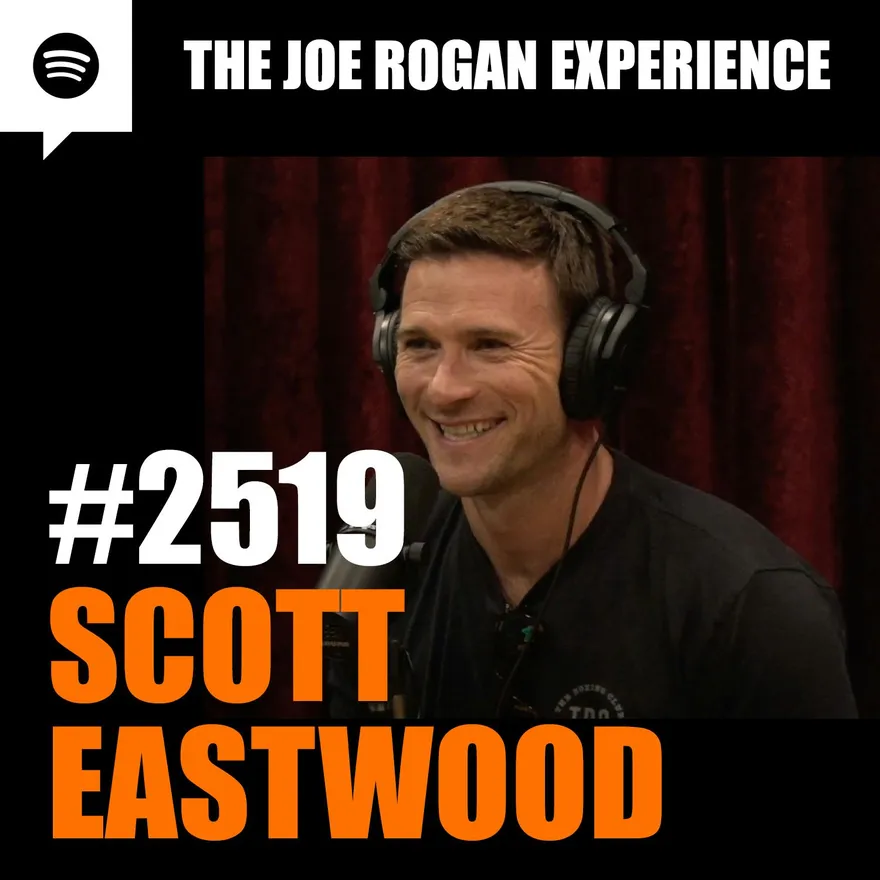

This is a preview of the Shortform summary of the Jun 26, 2026 episode of the The Joe Rogan Experience
Sign up for Shortform to access the whole episode summary along with additional materials like counterarguments and context.
1-Page Summary
Health, Nutrition, and Optimization
Joe Rogan and Scott Eastwood explore the latest trends in supplementation, food quality concerns, personalized wellness, substance use policy, and brain health during youth.
Supplementation and Comprehensive Vitamin Protocols
Eastwood discusses North Performance, a supplement company he developed with Dr. Massey of Stanford, which delivers daily packets containing over 70 vitamins in powder form for athletes and high performers. Rogan, who also uses pre-packaged vitamin packs, notes the convenience of consolidating many nutrients into a single daily dose. Eastwood emphasizes the company's commitment to quality through rigorous third-party testing and premium ingredients sourced globally.
Food Quality and Agricultural Differences Between Nations
Rogan highlights the stark contrast between American and European food standards, noting that U.S. products frequently contain preservatives, dyes, and additives banned in Europe. He critiques the American food system's emphasis on profit over health, asserting that processed, additive-rich foods contribute to poor health outcomes. Eastwood shares experiences of feeling healthier eating in Europe, where traditional production methods make bread and cheese easier to digest. Both agree that eating minimally processed, real food significantly improves health.
Personalized Wellness and Blood Work Analysis
Rogan emphasizes the benefits of using bloodwork analysis to identify micronutrient deficiencies and create custom vitamin regimens tailored to individual needs. He critiques doctors who dismiss advanced nutritional science in favor of generic advice, noting that personalized supplementation can make a significant difference for those seeking optimization.
Substance Use Policy and Legalization Debate
Rogan notes that 88-89% of U.S. adults favor legal access to marijuana in some form, and both hosts discuss how lobbying from alcohol companies and prison industry interests often fuel opposition to legalization. They argue that regulated markets could ensure product safety and undermine cartel profits. Rogan acknowledges the challenges of legalizing more dangerous substances but suggests regulation could yield better outcomes than prohibition.
Developmental Brain Health and Youth Substance Use
Both hosts stress that substance use before age 25, when the frontal cortex fully matures, poses serious developmental risks. Eastwood warns young people not to "screw up your operating system before it has time to develop," while Rogan explains that frequent marijuana and alcohol use can harm adolescent brain development. They emphasize that prevention and education are crucial to safeguarding developmental brain health.
Political Division and Groupthink
Rogan and Eastwood discuss how division and groupthink serve as control mechanisms, warning of consequences for critical thinking and civic health.
Manufactured Polarization as a Control Mechanism
The hosts argue that political division is deliberately manufactured to maintain control over the population. Eastwood asserts that leaders exploit divisions to keep people from collectively challenging power: "If you don't have division, that's when the pitchforks come out." Rogan adds that culture war conflicts distract from pressing systemic problems. They maintain that the two-party system forces complex positions into simplistic camps, hindering nuanced discussion.
Echo Chambers and Tribal Identity
Rogan and Eastwood highlight how echo chambers reinforce existing beliefs and prevent critical evaluation. Eastwood notes that "people aren't really actually thinking critically about each subject," while Rogan warns that groupthink leads people to reject beneficial truths if they contradict their team's allegiance.
Detachment From Ideas and Objective Evaluation
The hosts emphasize separating personal identity from intellectual positions. Rogan states, "You are not your ideas...you should be completely detached from ideas." Eastwood praises fact-checking oneself and admitting error as signs of intellectual strength.
Specific Divisive Issues and Their Manipulation
Rogan and Eastwood argue that political actors exploit hot-button issues for division, masking systemic failures. Eastwood recounts a wealthy friend becoming deeply upset over transgender sports participation, questioning whether the outrage was authentic or manufactured. Rogan discusses how symbolic policies serve as surface-level solutions without addressing root causes, emphasizing the need to resist strict left-right categorization.
Psychedelics and Consciousness Expansion
Personal Transformation Through Psychedelic Experience
Eastwood describes his life-changing experience with 5-MeO-DMT, emphasizing ego-death and feeling total connection with the universe. Rogan elaborates that under the influence, individual identity vanishes and one perceives being part of a boundless "giant soup of energy and vibration." Eastwood shares that after his journey, he wept uncontrollably for 45 minutes and experienced the world with childlike wonder.
Therapeutic Applications and Mental Health Benefits
Both hosts discuss promising therapeutic benefits of psychedelics like psilocybin and MDMA. They cite studies showing MDMA's effectiveness for soldiers with PTSD, noting how the substance fosters empathy and helps users process emotions. Eastwood laments that many who could benefit are unable to access these medicines due to legal restrictions.
Shifting Cultural Perception and Scientific Legitimacy
Eastwood and Rogan agree that respected figures have shifted perception of psychedelics from ridicule to genuine consideration. With credible institutions conducting rigorous research, public discourse is moving toward academic legitimacy, particularly among younger generations.
Limitations and Individual Variability
Eastwood shares that marijuana never agreed with him, provoking anxiety and paranoia, unlike his positive psychedelic experience. Both agree that neurochemical differences influence whether someone will benefit from a particular substance, stressing that psychedelic use is a personal choice based on individual needs and neurobiology.
Acting, Filmmaking, and Storytelling
Career Development and Long-Term Dedication
Eastwood describes how his acting journey required years of relentless work, noting that being Clint Eastwood's son actually made things tougher due to assumptions about nepotism. Rogan emphasizes that sustainable careers take a decade or more to build. Both remark that early fame can stunt personal growth, citing Leonardo DiCaprio and Jodie Foster as exceptional cases who maintained grounded identities.
Directorial Vision and Collaborative Process
Eastwood explains that filmmakers like Guy Ritchie employ highly improvisational processes, requiring actors to stay flexible for spontaneous scene changes. He contrasts this with Clint Eastwood's efficient, deliberate approach, sharing an anecdote about Matt Damon seeking another take. Eastwood stresses that filmmaking extends well beyond shooting, involving extensive script development, pre-production, and post-production editing.
Character Portrayal and Emotional Authenticity
Eastwood describes the emotional toll of portraying dark characters, citing Jim Carrey, Jared Leto, and Shia LaBeouf as examples of actors who struggled after intense roles. He explains that effective character work involves channeling personal emotions for authenticity while compartmentalizing to prevent permanent personality shifts. Eastwood emphasizes approaching acting as a job and maintaining clear boundaries between character and personal identity.
Child Actors and Developmental Protection
The hosts discuss that child actors often struggle because early fame impedes authentic self-development. They agree that parental guidance emphasizing normalcy and boundaries helps young stars like DiCaprio and Foster achieve long-term stability.
World War II Narratives and Historical Responsibility
Speaking about his new film "Lucky Strike," Eastwood reflects on the responsibility filmmakers have in accurately portraying World War II. He recounts meeting Colonel Stern, a 107-year-old WWII veteran, at the Washington archives and feeling honored when Stern affirmed the portrayal's accuracy. Eastwood emphasizes that portraying soldiers' experiences, including concentration camp liberation, requires confronting humanity's capacity for evil and accessing one's own grief and empathy to authentically reflect loss and trauma.
Government Conspiracy and Institutional Control
Eastwood and Rogan discuss a recent high-profile assassination attempt, scrutinizing evidence and the official narrative, revealing concerns about transparency, mind control programs, and institutional power.
Assassination Attempts and Official Explanations
Eastwood notes confusion among "a lot of smart people" about what really happened. Rogan questions the implausibility of the shooter disassembling, carrying, and reassembling a rifle on a roof while maintaining accuracy, noting that reassembling a scoped rifle under stress would require re-sighting. He observes inconsistencies in the wound, the shooter's calm behavior afterward, and the claim that Secret Service couldn't post snipers due to roof slope despite steeper roofs being used nearby. Rogan also notes the shooter's unusually clean background: professionally scrubbed apartment, multiple cell phones at age 20, and almost no digital footprint. Both hosts complain that toxicology and forensic details haven't been released, and that the shooter was cremated within days. Rogan observes that investigators rapidly paved over the crime scene, making further analysis impossible.
Mind Control and Coercion Mechanisms
The hosts reference government programs like MK Ultra as precedent for institutional psychological manipulation. Rogan stresses that vulnerable people can be systematically manipulated with drugs to become different versions of themselves. Both express skepticism about whether such programs truly ended, raising the possibility that someone coaxed the shooter into the attempt under the belief there was an escape plan.
Institutional Coordination and Power Dynamics
Eastwood draws parallels between Hollywood and government institutions, noting both systems depend on gatekeeping and conformity. Rogan mentions metadata connecting a phone from Washington DC to the shooter's home, questioning what connections might exist. Both hosts note the investigative and surveillance power of federal agencies, and possibilities for evidence manipulation beyond public oversight.
Transparency and Public Accountability Gaps
Rogan emphasizes that rapid cremation prevents independent forensic verification. The absence of forensic and toxicology disclosures enables authorities to present narratives without contradiction. Rogan and Eastwood conclude that official resistance to independent investigation—including evidence disposal, record suppression, and closing off investigation paths—suggests either deep institutional caution or deliberate concealment by those in power.
1-Page Summary
Additional Materials
Counterarguments
- The efficacy of taking large daily multivitamin packs for most people is debated; many health organizations suggest that a balanced diet provides sufficient nutrients for the majority, and excess supplementation can sometimes be unnecessary or even harmful.
- Third-party testing and premium ingredients do not guarantee that all supplements are effective or necessary; supplement regulation in the U.S. is less stringent than for pharmaceuticals, and some claims may be overstated.
- While U.S. foods may contain more additives, the health impact of these ingredients is still under scientific review, and not all additives are conclusively linked to poor health outcomes.
- Some people with gluten intolerance or lactose intolerance may still struggle with traditional European bread and cheese, indicating that individual health responses vary.
- Minimally processed foods are generally healthier, but access and affordability can be barriers for many people, making processed foods a practical necessity for some populations.
- Personalized bloodwork and custom supplementation can be expensive and are not always supported by robust evidence for improving health outcomes in the general population.
- Many doctors rely on evidence-based guidelines, which may not always align with emerging or alternative nutritional science, but this approach is intended to protect patients from unproven or potentially risky interventions.
- While a majority of Americans support marijuana legalization, concerns remain about potential increases in use, impaired driving, and long-term health effects, especially among youth.
- Regulated markets can reduce some harms but may also introduce new challenges, such as commercialization, marketing to vulnerable populations, and regulatory capture.
- The relationship between substance use and brain development is complex; some studies suggest moderate use may not have uniform effects, and individual risk factors play a significant role.
- Political division can arise organically from genuine differences in values and priorities, not solely from deliberate manipulation by leaders or institutions.
- The two-party system is not unique to the U.S., and some argue it provides stability and clear choices, even if it simplifies complex issues.
- Echo chambers and groupthink are not exclusive to one side of the political spectrum and can occur in any community, including those critical of mainstream narratives.
- Psychedelic experiences and their therapeutic benefits are promising but not universally effective; some individuals may experience adverse effects or psychological distress.
- Legal restrictions on psychedelics are partly due to concerns about misuse, safety, and the need for more comprehensive research before widespread adoption.
- Not all child actors experience negative outcomes; some report positive experiences and successful transitions to adulthood.
- Filmmakers' responsibility to portray history accurately can conflict with artistic license, audience expectations, or incomplete historical records.
- Official investigations into high-profile incidents may withhold information for legitimate reasons, such as ongoing investigations or national security, rather than deliberate concealment.
- Historical government programs like MK Ultra are well-documented, but there is no public evidence that similar programs are currently active or involved in recent events.
- Surveillance and metadata connections do not necessarily imply wrongdoing or conspiracy; such data can have benign explanations.
- Institutional gatekeeping can also serve to maintain standards, ensure safety, and protect against misinformation or harmful practices.
Actionables
- you can create a weekly food swap with friends or neighbors where everyone brings minimally processed, additive-free foods inspired by traditional European recipes, helping each other discover digestible, real food options and reduce reliance on processed products.
- a practical way to resist groupthink and echo chambers is to set a monthly reminder to write down your current beliefs on major issues, then actively seek out and summarize the strongest opposing arguments, noting any points that challenge your views and updating your beliefs if warranted.
- you can protect your mental health when consuming news about controversial events by keeping a private log where you record inconsistencies, unanswered questions, and your emotional reactions, which helps you spot patterns of manipulation and maintain critical distance from official narratives.
Get access to the context and additional materials
Health, Nutrition, and Optimization
Joe Rogan and Scott Eastwood explore the latest trends in supplementation, concerns about food quality across nations, the role of personalized wellness through bloodwork, the shifting landscape of substance use policy, and the importance of brain health during youth.
Supplementation and Comprehensive Vitamin Protocols
Scott Eastwood discusses North Performance, a new supplement company developed with Dr. Massey of Stanford. This brand delivers daily supplement packets designed for athletes and individuals seeking peak performance, featuring over 70 vitamins sourced from Japan, America, and Switzerland. The system emphasizes convenience: pre-measured powder packets are mixed with water for a single daily dose, streamlining vitamin routines that often require sorting and swallowing many pills. Joe Rogan, who also uses pre-packaged vitamin packs, notes the practicality and substantiality of consolidating so many nutrients in powder form.
Eastwood highlights North Performance's commitment to quality and efficacy, underscoring rigorous third-party testing and sourcing of premium ingredients. The company’s origin is rooted in its founder’s personal pursuit for the best possible supplementation for his own high-level athletic performance, ultimately expanding the product to a wider market with a subscription-based delivery system.
Food Quality and Agricultural Differences Between Nations
Rogan points out a stark contrast between American and European food: U.S. products frequently contain preservatives, dyes, glyphosate, bromine, and other additives that are banned or heavily regulated in Europe and Canada. He notes, using the example of children’s cereal, that companies manufacture safer versions for other markets but, in the U.S., lobby for permission to use potentially harmful ingredients. Rogan critiques the U.S. food system’s emphasis on shelf stability and profit over nutrition and health, asserting that the prevalence of processed, additive-rich foods contributes to the country’s poor health outcomes despite its wealth.
Eastwood shares personal experiences of feeling healthier eating in Europe, where bread and cheese are processed using traditional methods. European bread is produced without shelf-stabilizing additives, making it easier to digest. Rogan and Eastwood discuss how traditional cheesemaking in places like Italy often involves extended processes that reduce lactose content, making dairy more tolerable, compared to the rapid, mass-production methods common in America. Rogan further recounts the nutritional and digestibility benefits of raw milk and cheese, products often illegal in the U.S. but highly prized in parts of Europe for their enzymes and nutrients.
Both agree that eating real, minimally processed food—such as grilled chicken, fresh vegetables, and raw cheeses—contributes significantly to better health, and that the predominance of processed foods in the American diet is detrimental.
Personalized Wellness and Blood Work Analysis
Rogan emphasizes the benefits of working with wellness clinics to analyze bloodwork for micronutrient deficiencies and create custom vitamin regimens. These tests can guide doctors in formulating specialized supplements tailored to an individual’s unique requirements rather than relying solely on generic multivitamins. Eastwood is intrigued by the potential insights such testing provides, including theories that genetic lineage and blood type may influence optimal dietary choices, referencing historical challenges in alcohol metabolism among populations without ancestral exposure.
Rogan critiques the traditional advice from some doctors who maintain that a standard balanced diet suffices for everyone, noting that many overlook advanced nutritional science that can make a significant difference, especially for high-performers or those aiming for optimization. He points out the need for nutrition protocols to be based on current research rather than outdated government minimums, and expresses skepticism toward practitioners who dismiss tailored supplementation despite personal physical evidence to the contrary.
Substance Use Policy and Legalization Debate
Rogan highlights broad American support for marijuana legalization, referencing polls indicating that 88-89% of U.S. adults favor legal access to marijuana in some form. He and Eastwood discuss how efforts to keep marijuana and other substan ...
Here’s what you’ll find in our full summary
Health, Nutrition, and Optimization
Additional Materials
Counterarguments
- The efficacy of comprehensive daily supplement packets, especially those containing over 70 vitamins and nutrients, is debated; many health experts argue that most people can meet their nutritional needs through a balanced diet and that excessive supplementation may be unnecessary or even harmful.
- Third-party testing and premium ingredient sourcing do not guarantee that supplements will provide measurable health benefits for all users, as individual absorption and needs vary widely.
- The presence of certain additives in U.S. foods is regulated by the FDA, and not all additives banned in Europe are conclusively proven to be harmful at the levels used in American products.
- Shelf stability in food production can help reduce food waste and improve food security, especially in regions with less access to fresh foods.
- Traditional European foods are not inherently healthier; portion sizes, overall dietary patterns, and lifestyle factors also play significant roles in health outcomes.
- Raw milk and cheese can pose health risks due to potential bacterial contamination, which is why they are regulated or banned in some countries, including the U.S.
- The benefits of personalized supplementation based on bloodwork are not universally accepted; some medical professionals argue that such testing is often unnecessary for healthy individuals and can lead to overdiagnosis or overtreatment.
- The influence of genetic lineage and blood type on optimal diet is not strongly supported by current scientific consensus; most evidence suggests that general dietary guidelines ...
Actionables
- you can create a personal food label decoder card to carry in your wallet or save on your phone, listing common U.S. additives and preservatives to avoid, so you can quickly check ingredients when shopping and choose products closer to European standards for yourself and your family
- (for example, jot down names like brominated vegetable oil, potassium bromate, or certain food dyes, and use the card as a reference when comparing bread, cheese, or snack options at the store)
- a practical way to improve your nutrition is to set up a weekly “ingredient swap” challenge at home, where you replace one processed food item with a minimally processed or traditionally made alternative, tracking how your digestion and energy levels respond
- (for instance, swap out packaged sandwich bread for a local bakery’s sourdough, or try a simple grilled chicken and fresh vegetable meal instead of a frozen entrée, and note any changes in how you feel)
- you can protect your or you ...
Get access to the context and additional materials
Political Division and Groupthink
Joe Rogan and Scott Eastwood discuss how division and groupthink are used as control mechanisms in society, warning of the consequences for critical thinking, open-mindedness, and civic health. They analyze the manipulation of identity, ideological boundaries, and cultural controversies to distract from deeper systemic issues.
Manufactured Polarization as a Control Mechanism
Rogan and Eastwood argue that political division in America is not organic but is deliberately manufactured to maintain control over the population. Eastwood asserts that leaders and institutions exploit divisions—such as the “red and blue teams”—to keep people from collectively challenging those in power: “If you don't have division, that's when the pitchforks come out. If you don't have the illusion of choice and a team, that's when you're like, well, fuck that. They're taking our money... and we actually don’t have a choice.” Rogan adds that those in power benefit from culture war conflicts, whether it’s “Pride Month” or “Black Lives Matter,” because such issues rile people up and distract them from pressing systemic problems.
Rogan points to historic examples, such as the Clinton scandal and bombing campaigns, to illustrate the use of sudden, divisive events to dominate the news cycle and shift focus from government abuses or incompetence. He and Eastwood note that the two-party system rigidly forces complex personal and political positions into two camps, simplifying citizens’ roles to “good guys and bad guys.” Nuanced discussion and critical thinking are hindered, as everyone is expected to fall in line with a team or risk being lumped in with political extremists.
They both maintain that polarization doesn't just divide the public for electoral advantage; it also benefits media and institutions. As Rogan puts it, “If populations are questioning competence and acting as a unified block, that’s actually much more threatening to established powers.”
Echo Chambers and Tribal Identity
Rogan and Eastwood highlight how echo chambers—both online and in-person—reinforce existing beliefs and further shield individuals from critical evaluation of their own positions. Eastwood says, “People aren't really actually thinking critically about each subject. They're just jumping on to something they've been told or is in their echo chamber or whatever.” Rogan draws attention to the dangers when identity merges with politics so deeply that people irrationally defend ideas based solely on tribal belonging, ignoring facts or logic.
They warn that groupthink leads people to reject even beneficial truths if those points contradict their team’s allegiance. Rogan notes, "It's a problem if there's something that's accurate that the other side is saying and you're rejecting that because it doesn't align with your political ideology. That's bad for everybody." Rogan advocates that open-mindedness, not loyalty to any political tribe, should be our group ethos.
Detachment From Ideas and Objective Evaluation
Rogan and Eastwood emphasize the importance of separating personal identity from intellectual positions. Rogan says, “You are not your ideas…do not connect yourself with them. You are you. If you really want to have a stable you...you should be completely detached from ideas.” Eastwood praises the practice of self-fact-checking and being willing to admit error, saying, "I could be wrong and let's fact-check. Maybe I'm wrong, maybe I'm not wrong, I don't know."
For them, genuine open-mindedness means evaluating issues on their merits—based on evidence, not partisan frameworks or biases. Flexibility in thinking and the willingness to admit error reflect actual intellectual strength and enable individuals and societies to navigate complex issues more wisely.
Specific Divisive Issue ...
Here’s what you’ll find in our full summary
Political Division and Groupthink
Additional Materials
Clarifications
- Manufactured polarization refers to the intentional creation or exaggeration of social and political divisions by those in power to prevent unified opposition. Leaders and institutions use media, rhetoric, and policy to amplify conflicts between groups, making cooperation difficult. This strategy distracts the public from systemic problems by focusing attention on cultural or identity disputes. It maintains control by keeping people aligned with opposing "teams" rather than challenging the status quo.
- "Red and blue teams" refer to the two major political parties in the U.S.: Republicans (red) and Democrats (blue). This color coding became popularized by media during election coverage to visually distinguish party support. The division simplifies complex political views into binary choices, reinforcing partisan loyalty. It often discourages cross-party dialogue and nuanced understanding.
- "Pride Month" is an annual celebration in June honoring LGBTQ+ identities and advocating for their rights, often sparking debate over social values. "Black Lives Matter" is a movement protesting racial injustice and police violence against Black people, which has become a focal point in discussions about systemic racism. Both have been politicized, with opponents framing them as threats to traditional norms, fueling cultural conflicts. These issues are used to mobilize supporters and distract from broader political or economic concerns.
- The "Clinton scandal" often refers to controversies involving President Bill Clinton, such as the Monica Lewinsky affair, which dominated media attention in the late 1990s. "Bombing campaigns" can refer to military actions, like the U.S. bombings in Kosovo or Iraq, which also captured headlines. These events were used to divert public focus from other political or governmental issues. By saturating news coverage, they limited scrutiny of deeper systemic problems.
- The two-party system in the U.S. means only two major political parties dominate elections, limiting voter choices. This system encourages polarization by forcing complex issues into binary positions, reducing nuanced debate. It often marginalizes smaller parties and alternative viewpoints, narrowing public discourse. Consequently, political identity becomes tied to party loyalty rather than individual beliefs or critical evaluation.
- Echo chambers form when people primarily consume information that aligns with their existing beliefs, limiting exposure to differing viewpoints. This selective exposure strengthens confirmation bias, making individuals more confident in their views regardless of accuracy. Social media algorithms often amplify echo chambers by showing content similar to what users engage with. As a result, critical thinking diminishes, and polarization intensifies.
- Groupthink is a psychological phenomenon where the desire for harmony in a group leads to poor decision-making. Members suppress dissenting opinions to avoid conflict, resulting in irrational or dysfunctional outcomes. This causes rejection of accurate information if it contradicts the group's consensus. It limits critical thinking and promotes conformity over truth.
- Separating personal identity from intellectual positions means recognizing that your beliefs do not define your entire self. This allows you to change opinions without feeling personally attacked or losing self-worth. It encourages open-mindedness and reduces emotional defensiveness in discussions. Ultimately, it fosters growth by prioritizing truth over ego.
- Self-fact-checking means actively verifying information you encounter by consulting reliable sources before accepting it as true. Admitting error involves recognizing and openly acknowledging when your beliefs or statements are incorrect. These practices demonstrate intellectual humility, which fosters learning and growth. They help prevent the spread of misinformation and encourage more accurate, thoughtful discussions.
- Symbolic policies are actions taken by authorities that address visible cultural issues without solving underlying problems. In Dearborn, Michigan, restricting pride flags signals opposition to LGBTQ+ visibility, reflecting local conservative or religious values. Such policies often aim to appease certain groups while avoiding deeper social dialogue or change. They can heighten cultural tensions by making ide ...
Counterarguments
- While political division can be exacerbated by leaders and institutions, it also arises organically from genuine differences in values, beliefs, and interests among diverse populations.
- The two-party system, though imperfect, provides a structured way for a large and diverse country to organize political competition and representation.
- Culture war issues often reflect real and deeply held concerns among segments of the population, not just manufactured distractions.
- Media and institutions may benefit from polarization, but they also face significant criticism and scrutiny from the public and watchdog organizations.
- Echo chambers and groupthink are not unique to one side of the political spectrum and can be found in many types of communities, including non-political ones.
- Some divisive events and controversies are the result of unforeseen circumstances or genuine public interest, not always deliberate manipulation.
- Open-mindedness and critical thinking are widely promoted across the political spectrum, not just by those who reject tribalism.
- Symbolic pol ...
Get access to the context and additional materials
Psychedelics and Consciousness Expansion
Personal Transformation Through Psychedelic Experience
Scott Eastwood describes his life-changing experience with 5-MeO-DMT, emphasizing its profound psychological impact. He recounts experiencing ego-death, where one’s sense of self dissolves completely, resulting in a feeling of total connection with the universe. Joe Rogan elaborates, noting that under the influence, all sense of individual identity vanishes, and one perceives being a part of everything simultaneously, existing in a boundless “giant soup of energy and vibration” where there is no separation between anything.
Integration after such a psychedelic experience often involves intense emotional release and significant shifts in worldview. Eastwood shares that after his journey, he wept uncontrollably for 45 minutes, emotionally overwhelmed in his friend’s girlfriend’s arms. He describes the period after the trip as akin to seeing the world for the first time: the grass, the sun, and the wind felt completely novel and wondrous, heightening his appreciation for even the simplest aspects of reality. Those who undergo such experiences often feel fundamentally changed, believing they will never see themselves or reality the same way again.
Therapeutic Applications and Mental Health Benefits
Both Eastwood and Rogan discuss the promising therapeutic benefits of psychedelics like psilocybin and MDMA. They cite studies conducted by MAPS showing the effectiveness of MDMA for soldiers with PTSD, highlighting how the substance fosters empathy and compassion, letting users process emotions and drop burdensome mental barriers. Rogan notes that MDMA has been explored for couples therapy, recognizing its capacity to open users emotionally.
Eastwood notes that psychedelic therapy can help individuals who are rigid in their thinking gain broader perspective and explore alternate interpretations of life and self. Rogan reinforces that a psychedelic experience can reveal to users that there is much beyond their previous understanding, transforming their fundamental worldview after just one session.
Eastwood laments that many who could benefit psychologically from psychedelics—such as those suffering pain or stuck in rigid mindsets—are unable to access these medicines due to societal restrictions, underlining the missed opportunities for psychological healing and the gap between scientific evidence and legal reality.
Shifting Cultural Perception and Scientific Legitimacy
Eastwood and Rogan agree that respected figures such as journalists, scientists, and entrepreneurs have contributed to shifting the perception of psychedelics from ridicule to genuine consideration. With credible instituti ...
Here’s what you’ll find in our full summary
Psychedelics and Consciousness Expansion
Additional Materials
Counterarguments
- The transformative effects of psychedelics, including ego dissolution and heightened appreciation for reality, are subjective and not universally experienced; some individuals report neutral or even negative outcomes.
- The long-term psychological benefits of psychedelics are still under investigation, and some studies indicate that positive changes may not persist for all users.
- While psychedelics show promise in treating PTSD and other mental health conditions, they are not effective or appropriate for everyone, and adverse reactions—including psychosis or exacerbation of mental illness—have been documented.
- The therapeutic use of MDMA and psilocybin is still experimental and not yet approved for widespread clinical use in most countries; claims of efficacy should be tempered by the need for further large-scale, controlled studies.
- The narrative that psychedelics inherently broaden perspective or dissolve rigid thinking may overlook cases where users experience increased confusion, anxiety, or reinforce maladaptive beliefs.
- Societal and legal restrictions on psychedelics are partly based on concerns about safety, potential for abuse, and lack of standardized dosing or quality control, not solely on outdated stigma.
- The shift in public perception toward psychedelics may be influenced by media hype and anecdotal ...
Actionables
- you can keep a daily micro-journal where you jot down moments when you notice your sense of self or boundaries with others shifting, then reflect on how these moments affect your connection to people and the world around you; this helps you notice subtle changes in perspective and deepen your appreciation for everyday experiences.
- a practical way to explore your own neurochemical sensitivities is to track your mood, energy, and emotional responses after consuming common legal substances like caffeine, sugar, or herbal teas, then compare patterns over time to better understand how your unique biology influences your reactions a ...
Get access to the context and additional materials
Acting, Filmmaking, and Storytelling
Career Development and Long-Term Dedication
Scott Eastwood's 20-year Success: Fame Isn't a Shortcut
Scott Eastwood describes how his journey into acting required years of relentless work and dedication. Despite being Clint Eastwood’s son, he found that famous parentage actually made things tougher for him, as many people assumed he would be given roles without merit. Joe Rogan emphasizes that many people don’t realize how long it takes to build a sustainable acting career, noting parallels in comedy where true growth comes after a decade or more of commitment. Eastwood underscores that success in acting, as in any demanding field, relies not just on the number of hours but on the intention and quality of one’s work and preparation. When faced with pressure, Eastwood finds that he excels, which he attributes to personal disposition and the necessity of performing under scrutiny.
Early Career in Restaurants and Service Grounded Perspective of Child Actors
Though not extensively detailed in their conversation, Eastwood alludes to maintaining a pragmatic outlook from his early jobs outside film, contrasting his path with child actors who are thrust into fame before forming an identity outside their careers. Both he and Rogan remark that early fame can stunt personal growth, as young performers often have no chance to establish a sense of self outside their public personas.
Balancing Career Growth and Normalcy Builds Resilience and Perspective
Eastwood and Rogan agree that remaining grounded and not letting fame define one’s identity builds resilience and helps maintain perspective. They cite actors like Leonardo DiCaprio and Jodie Foster as exceptional cases—individuals who survived an early start in the industry without losing their sense of self, supported by solid foundations and disciplined upbringings.
Directorial Vision and Collaborative Process
Guy Ritchie's Filmmaking Involves Reshaping Scenes In Real Time, Requiring Actors to Stay Flexible and Improvise Rather Than Strictly Following Scripts
Eastwood explains that filmmakers like Guy Ritchie employ a highly improvisational and collaborative process. Despite learning a script, actors arriving on Ritchie’s set must be ready for spontaneous scene changes, line rewrites, or new directions based on what Ritchie envisions in the moment. This real-time reshaping requires flexibility and the ability to improvise convincingly.
Directors' Methodologies: Eastwood's Efficiency vs. Ritchie's Spontaneity
He contrasts Guy Ritchie’s spontaneous, malleable style with Clint Eastwood’s efficient, deliberate approach—his father prefers to minimize takes and values sticking to a clear plan. Eastwood shares an anecdote about Matt Damon seeking another take under Clint’s direction. The elder Eastwood, confident in his approach, would only accept doing more if Damon insisted on "wasting everyone’s time," highlighting a director’s control over a set’s energy and workflow.
Filmmaking Involves More Than Acting, Including Script Development, Pre-production, and Post-Production Editing
Eastwood stresses that filmmaking extends well beyond shooting scenes. There is extensive work done in script development, pre-production planning, and post-production editing. While actors are vital, the director ultimately shapes the film across each stage, making the creative process far more complex than many realize.
Character Portrayal and Emotional Authenticity
Playing Complex Characters Poses Psychological Risks
Eastwood describes the emotional toll that can come from portraying complex, dark characters, acknowledging cases where actors have struggled after intense roles. He cites examples like Jim Carrey (as Andy Kaufman), Jared Leto (as the Joker), and Shia LaBeouf, who found it difficult to "crawl out" once immersed in challenging characters.
Effective Character Work Requires Channeling Personal Emotions For Authenticity While Compartmentalizing to Avoid Permanent Personality Shifts
He explains that effective character work involves channeling personal emotions to achieve authenticity. At times, embodying a character’s mindset can be liberating—allowing an actor to access impulses and thoughts they’d normally repress. However, this comes with psychological risks, and Eastwood cautions that actors must compartmentalize, using their emotions as raw material but letting go of the role at day’s end.
Distinguishing Character Work From Personal Identity Prevents Role Immersion From Altering Mental Health
Eastwood is adamant about drawing a clear boundary between work and personal identity. He approaches acting as a job, emphasizing preparation, professionalism, and leaving the character behind when the scene is done. He believes that over-identifying with a role or seeing acting as one’s entire identity can be harmful and lead to extremes.
Child Actors and Developmental Protection
Early Fame Stunts Maturation When Young Performers Can't Develop Identities Separate From Personas
Eastwood and Rogan discuss that child actors often struggle because early fame impedes the ability to develop an authentic self, leaving them perpetually tied to the personas they play.
Parents Prioritizing Childhood Normalcy Over Industry Involvement Boost Lon ...
Here’s what you’ll find in our full summary
Acting, Filmmaking, and Storytelling
Additional Materials
Counterarguments
- While Scott Eastwood claims that famous parentage can make acting careers more difficult, it is also true that having industry connections and name recognition can open doors and provide opportunities that are not available to most aspiring actors.
- The assertion that sustainable growth in acting or comedy typically takes a decade or more may not account for individuals who achieve rapid success due to unique talent, viral exposure, or changing industry dynamics.
- The idea that early jobs outside acting are necessary for a pragmatic outlook overlooks the fact that some child actors successfully develop resilience and perspective through other means, such as strong family support or education.
- While Eastwood and Rogan highlight the risks of early fame, some child actors report positive experiences and personal growth from their early careers, suggesting that negative outcomes are not universal.
- The claim that improvisational directing styles are superior or more demanding than structured approaches is subjective; some actors thrive with clear direction and minimal improvisation.
- Eastwood’s emphasis on compartmentalization as a safeguard against psychological harm may not be effective for all actors, as individual coping mechanisms and vulnerabilities vary.
- The portrayal of WWII in film, while important, is inherently li ...
Actionables
- You can build resilience and maintain perspective in your own career by scheduling regular “normal life” days where you intentionally do everyday activities unrelated to your profession, like running errands, cooking, or volunteering, to ground yourself and prevent your work from becoming your entire identity.
- A practical way to prepare for high-pressure situations is to simulate them at home by setting a timer and giving yourself a challenging but achievable task (like delivering a short speech or solving a puzzle) while recording yourself, then reviewing the footage to identify how you react and where you can improve your composure.
- You can protect your mental health when workin ...
Get access to the context and additional materials
Government Conspiracy and Institutional Control
Scott Eastwood and Joe Rogan discuss a recent high-profile assassination attempt, scrutinizing evidence, the official narrative, and the possibility of government manipulation, revealing deep concerns about transparency, mind control programs, and institutional power.
Assassination Attempts and Official Explanations
Shooting Attempt on Political Figure Riddled With Contradictory Ballistic Evidence, Equipment Logistics, and Suspect Behavior Challenging the Official Narrative
Scott Eastwood notes confusion and speculation among “a lot of smart people” about what really happened, suggesting the full story is not publicly known. Joe Rogan questions details of the shooter’s actions, focusing on the implausibility of carrying a rifle onto a roof, disassembling and reassembling it rapidly, and still making an accurate 140-yard shot with a reattached scope. Rogan asserts that reassembling a scoped rifle under stress would require re-sighting, making such accuracy highly unlikely, particularly for the untrained shooter described. He observes that the wound left by a 30-06 rifle appears inconsistent with expectations, lacking the explosive damage or exit wound such a high-caliber round would typically cause.
Rogan raises further doubts about the shooter’s actions, such as calmly visiting a yogurt shop just 20 minutes afterwards, and questions the logic of carrying both a rifle and bomb-making materials onto the scene. He also highlights an official claim that Secret Service could not post snipers on the same roof due to its slope—despite steeper roofs nearby being used as sniper perches—suggesting possible facilitation for the shooter’s access.
Shooter's Unusually Clean Background: Professionally Scrubbed Digital Presence, Multiple Cell Phones at 20, Lacking Normal Social Media, Suggesting External Coordination or Preparation
Rogan points to the shooter’s “squeaky clean” background as unusual. After the event, the apartment was reportedly “professionally scrubbed”: no silverware, no computers, and all hard drives gone. The shooter had multiple cell phones at the age of 20 and an almost nonexistent digital footprint—rare for anyone his age. Eastwood and Rogan challenge the official residential situation, noting confusion in public reports about whether the shooter lived alone or with parents.
Lack of Transparency in Toxicology, Forensic Evidence, and Investigation Details Hinders Public Understanding and Enables Competing Narratives
Both hosts repeatedly complain that toxicology and forensic details have not been publicly released. Rogan notes that the shooter was cremated within days, eliminating the possibility of a thorough toxicology report. No information has been released about possible psychotropic or mind-altering drugs the suspect might have been under the influence of, or what motivated the shooter. Rogan expresses frustration that key investigative evidence—including wound analysis, ballistics, and personal effects—has not been made public.
Investigation Inconsistencies and Rapid Site Closures Raise Questions About Complete Public Accounting or Deliberate Information Withholding
Rogan observes that bomb squads and federal agents cordoned off the area after the assassination attempt and rapidly searched the house and surrounding streets, finding bomb-making materials. Investigators quickly paved over the crime scene, making further analysis impossible. These rapid actions and site closures, alongside the immediate cremation, lead to speculation of deliberate withholding of information.
Mind Control and Coercion Mechanisms
Evidence of Government Mind Control Programs Like Mk-ultra Demonstrates Institutional Capacity for Psychological Manipulation
Eastwood and Rogan reference government mind control initiatives, such as MK Ultra, as precedent for institutional psychological manipulation. They discuss how these programs demonstrate an established capacity for influencing or brainwashing individuals.
Vulnerable Individuals Can Be Coerced Against Their Nature Through Psychological and Drug Influence
Rogan stresses that vulnerable people can be systematically manipulated, given a sense of purpose, or altered with drugs to become a different version of themselves. He speculates that if investigators found certain drugs in the shooter’s system, such as LSD or psychiatric medications, it would connect to known historical government practices of experimental mind control.
Skepticism Over Similar Programs Reflects Concern About Institutional Track Record
Both hosts express skepticism about discontinuation of such programs, noting that just because MK Ultra was officially halted in the 1960s does not guarantee that such coercive CIA or intelligence experiments have ended. They raise the possibility that someone could have coaxed the shooter into the assassination attempt under the belief that there was an escape plan, further fueling these suspicions.
Institutional Coordination and Power Dynamics
Entertainment Success Hinge ...
Here’s what you’ll find in our full summary
Government Conspiracy and Institutional Control
Additional Materials
Counterarguments
- The lack of immediate public disclosure of forensic or toxicology evidence is standard practice in ongoing criminal investigations to preserve the integrity of the case and prevent compromising future legal proceedings.
- Rapid cremation, while potentially limiting further investigation, can occur for various reasons, including family wishes, religious beliefs, or public health considerations, and does not inherently indicate a cover-up.
- The absence of a digital footprint or social media presence, while unusual for young adults, is not unprecedented and can result from personal choice, privacy concerns, or family influence.
- Conflicting early reports about a suspect’s living situation are common in the aftermath of high-profile incidents due to the fast pace of news gathering and evolving information.
- The use of steep or sloped roofs by security personnel depends on specific tactical assessments and safety considerations, which may not be directly comparable between different locations.
- The presence of multiple cell phones is not uncommon among young people, who may use separate devices for work, personal use, or privacy.
- Theories about mind control programs like MK Ultra are based on historical facts, but there is no verified public evidence that such programs are currently active or invo ...
Actionables
- You can practice verifying official stories by picking a recent local news event and independently collecting details from multiple unrelated sources, then noting any inconsistencies or missing information to sharpen your ability to spot narrative gaps and withheld facts.
- A practical way to test your own susceptibility to influence is to keep a daily log of your opinions on major news stories, then revisit them a week later to see if your views have shifted based on new information or repeated messaging, helping you recognize subtle persuasion and narrative shaping.
- You can create a personal checklist for evaluating the transparency of any institution you in ...
Get access to the context and additional materials


Create Summaries for anything on the web
Download the Shortform Chrome extension for your browser
