

#2517 - Taylor Sheridan
In this episode of The Joe Rogan Experience, filmmaker Taylor Sheridan discusses his approach to television production, explaining how he maintains consistent quality across his shows through efficient production models and research-driven storytelling. Sheridan and Rogan also examine the appeal of ranching life, exploring why educated individuals choose demanding ranch work over urban careers and how shows like Yellowstone resonate with audiences seeking stories about autonomy and meaningful labor.
The conversation shifts to broader critiques of American institutions, covering dysfunction in California's government spending, the nonprofit sector's tendency to perpetuate rather than solve problems, and the prison system's failure to rehabilitate inmates. Sheridan and Rogan also discuss recent military operations involving classified sonic weapons, unexplained disappearances of scientists working in sensitive fields, and speculation about advanced aerospace technology. Throughout, they highlight themes of government surveillance, institutional corruption, and the erosion of public trust across multiple sectors.
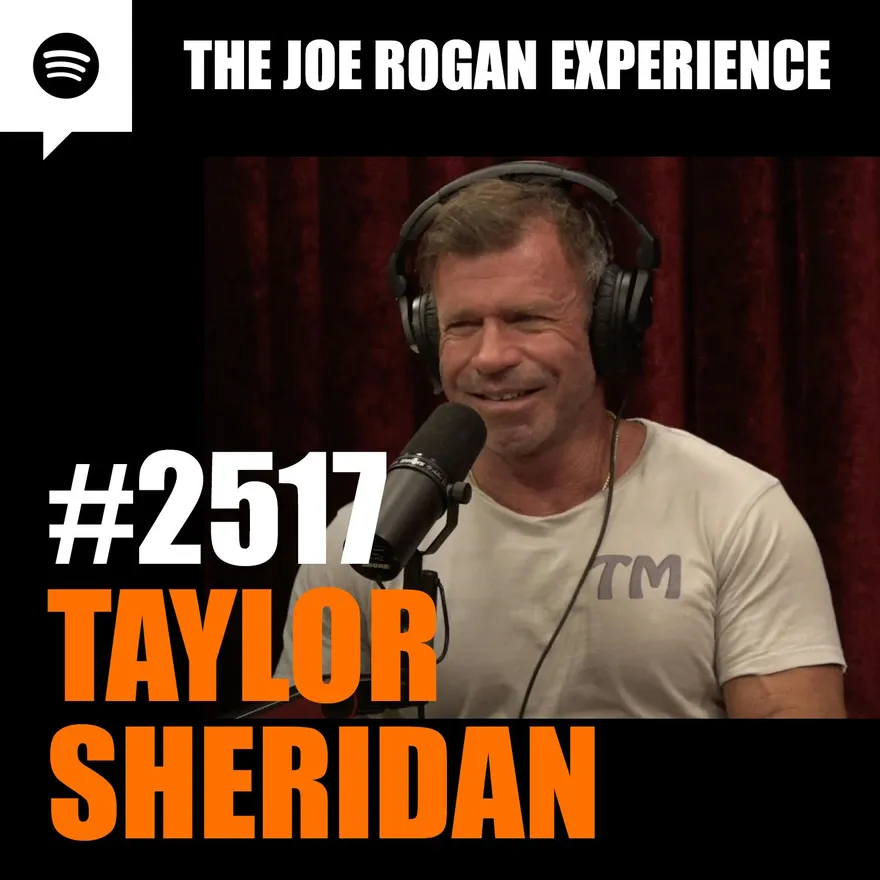

This is a preview of the Shortform summary of the Jun 23, 2026 episode of the The Joe Rogan Experience
Sign up for Shortform to access the whole episode summary along with additional materials like counterarguments and context.
1-Page Summary
Entertainment and Television Production
Taylor Sheridan's Efficient Production Model
Taylor Sheridan builds his production success by maintaining a consistent core crew dating back to Wind River, promoting from within—production assistants become first ADs, camera operators become directors—creating a team deeply aligned with his vision. Sheridan eliminates industry inefficiencies by cutting endless meetings and middle-management bottlenecks, questioning the need for "tone meetings" and prop approvals when reading the script and making quick decisions works better. While most TV productions take twelve weeks for pre-production, Sheridan's approach enables his teams to prep in just four weeks without sacrificing quality, demonstrating that efficient hierarchies and experienced teams speed up filmmaking effectively.
Sheridan's Writing Relies on Research
Sheridan grounds his historical dramas in genuine research, drawing on family journals and settler correspondence for 1883—covering river crossings, disease, bandits, and immigrants' conditions heading westward. Most immigrants were recruited from Europe by travel agencies promising land, then found themselves navigating unfamiliar terrain with only paid guides. For contemporary realism in Yellowstone, Sheridan interviewed Montana Governor Steve Bullock, who offered insights into the operational realities of political leadership. Sheridan admits his research for shows like Lioness—covering military tradecraft, CIA operations, and global hotspots—likely attracts government surveillance.
Sheridan's Shows Consistently Deliver Quality
Rogan points out Sheridan's remarkable record: every show maintains high storytelling standards. Sheridan's skill in political espionage storytelling is evident in Lioness, where his fictional prediction that cartels would be labeled terrorist organizations coincided with real-world legislation. For casting, Sheridan approached Billy Bob Thornton before writing Landman, pitching it as "Bad Santa running an oil company in West Texas," and Thornton immediately agreed.
Institutional Corruption and Government Dysfunction
Joe Rogan and Taylor Sheridan critique widespread dysfunction across multiple sectors, highlighting a system that perpetuates its own survival, enriches insiders, and erodes public trust.
Nonprofit Sector: Self-Perpetuating Industry
Rogan notes the "homeless industry" in California, pointing out over $24 billion spent with no improvement. Attempts at auditing were vetoed by Governor Newsom. Sheridan and Rogan argue many nonprofits are designed not to solve problems but to perpetuate them—if they solved homelessness, their funding would disappear. Rogan highlights that leadership in these programs often makes six-figure salaries, with "the majority of the money going to overhead, and employees," rather than direct aid. Sheridan describes these executives as "performative entrepreneurs" who inflate problems to ensure personal remuneration.
California Government's Mismanagement
Rogan and Sheridan ridicule California's $100 billion high-speed rail project, noting only about a mile has been built after years of spending, contrasting this with successful projects in other countries. They cite over $100 million spent on wildlife bridges as another case of gross overspending, when such bridges are constructed across the West for much less. Rogan laments San Francisco's decline from a vibrant city to one marked by homelessness and addiction. Sheridan says urban areas have prioritized social agendas over governing, causing cities to "run into the ground."
Media Shifts From Objective Reporting to Entertainment
Sheridan recounts how media, particularly CNN, pioneered the 24-hour news cycle, which led to manufacturing news and shifting journalism from information delivery to emotional manipulation. Rogan argues mainstream outlets ignored or downplayed Tulsi Gabbard's press conference on Fauci's alleged involvement in funding gain-of-function research at Wuhan. Sheridan says the COVID-19 pandemic was emblematic: institutions manipulated information, eroding public faith in government, media, and pharmaceuticals.
Feds Favor Politics Over Law
Rogan criticizes the Biden administration for "opening the border," leading to unprecedented illegal immigration and using militarized ICE raids that set a dangerous precedent. Sheridan questions Nancy Pelosi's reported $400 million net worth from IPOs and stock deals potentially linked to legislative actions. Both hosts point out that Congress members earn $175,000 annually while many become millionaires through mechanisms not available to average Americans, yet public apathy allows corruption to persist.
Scientific Mysteries and Advanced Military Technology
Recent discussions have revealed a complex intersection of classified military technology, unexplained phenomena, suspicious deaths of scientists, and pervasive government surveillance.
U.S. Deploys Recently Classified Military Technology
Sheridan and Rogan recount the January 2025 operation to capture Venezuelan President Nicolas Maduro. U.S. Special Forces infiltrate Caracas, neutralize Cuban forces, and exfiltrate with no American casualties. Central to the operation is a classified sonic weapon—"the discombobulator"—that disables combatants and renders air defenses inoperable. Rogan draws comparisons to "Havana syndrome" attacks, describing the Venezuelan weapon as exponentially more powerful. Both hosts speculate that operational use indicates the U.S. possesses even more advanced systems, possibly including exotic propulsion technologies developed in classified facilities.
UAP Likely Advanced American Tech
Rogan is skeptical of official UAP narratives, suspecting these sightings involve advanced American aerospace projects, not extraterrestrial craft. Both hosts argue government secrecy points to special access programs developing novel propulsion—possibly anti-gravity—since at least the 1960s. Rogan references Eric Weinstein's observations about physics departments with suspicious ties to massive financial flows and classified research. While they don't rule out extraterrestrial intelligence, Rogan argues most UAP encounters are "ours."
Scientists in Classified Fields Missing or Deceased
Sheridan and Rogan discuss suspicious disappearances and deaths among scientists working on aerospace and propulsion research, particularly near Los Alamos. They mention a metallurgy expert specializing in burn-resistant alloys who vanished while hiking, her body possibly found weeks later with no sign of struggle. Another victim was a NASA JPL materials processing leader. Other missing scientists include cold fusion researchers and metallurgists, raising suspicions of coordinated suppression or assassinations by foreign entities. Rogan notes these key scientists were left unprotected despite their critical national security roles.
Government Surveillance Exceeds Public Understanding
Sheridan openly acknowledges his research habits likely trigger government surveillance. Both he and Rogan are convinced that anyone influential or involved in sensitive research is subject to persistent monitoring. They agree most Americans remain unaware of how extensively the government surveils its citizens, with privacy protections often sacrificed for national security.
Ranching, Rural Life, and Self-Sufficiency
Taylor Sheridan and Joe Rogan explore how the demands of ranching foster a profound sense of autonomy, satisfaction, and connection to the past.
Cattle Ranching: Optimal Land Use
Ranching is described as the best means of utilizing marginal land unsuitable for farming. Sheridan explains cattle efficiently convert low-protein grasses into high-quality protein, and ranching can't be industrialized because effective land management is necessarily distributed. The Sixes Ranch sprawls across 300,000 acres but relies on only twelve cowboys, each managing 35,000 to 50,000 acres independently. Sheridan also notes that "grass grows better when it is being grazed," and managed landscapes are healthier than untouched land.
Educated Individuals Attracted to Ranching
Sheridan describes how many cowboys are highly educated, often with degrees in ranch management, choosing ranch life not for financial incentives—typically earning about $3,000 a month—but for the satisfaction and autonomy. Working in remote camps, cowboys independently make decisions with minimal supervision. Sheridan and Rogan highlight the intrinsic reward: the direct connection between one's labor and tangible outcomes provides a sense of accomplishment rarely found in modern office jobs.
Television Narratives Resonate
Shows like Yellowstone resonate by portraying ranch workers' devotion to land, freedom, and camaraderie built through demanding labor. Rogan observes audiences are captivated by the romantic notion of hard, honest work where effort, skill, and teamwork are directly tied to wellbeing. Sheridan notes this appeal is rooted in values of independence and personal responsibility—qualities often missing in urban work environments where success can seem disconnected from real effort.
American Settlement: Underestimated Hardship
Sheridan reflects on harsh realities faced by early settlers. River crossings were the most dangerous obstacle because most immigrants couldn't swim, making drowning the leading cause of death. Navigation posed its own perils: without maps or tools, people wandered in circles on the Great Plains. Rogan shares research indicating that, lacking landmarks, most people naturally veer into counterclockwise circles. These insights highlight the remarkable persistence required to establish enduring communities.
Criminal Justice System and Prison Reform
America's Prison System Creates Criminals
Sheridan characterizes the American prison system as fundamentally broken, stating it's not designed for rehabilitation. He observes, "If you weren't a criminal when you went in…you're going to be a fucking criminal when you come out." U.S. prisons serve more to warehouse individuals than restore them, with incarceration expanding inmates' criminal networks and stigmatizing them in ways that block meaningful economic participation after release.
Sheridan cites an estimated recidivism rate of 80-86%, meaning four out of five released prisoners return. He notes, "For a guy to get out of prison and not go back…the odds are fucking four to one against you." This high recidivism is tied directly to the lack of rehabilitation, job training, and genuine opportunities for reintegration. Individuals who avoid returning to prison are rare exceptions rather than evidence of successful systemic outcomes.
Sheridan's "How to Not Die in Prison" Guide
Sheridan describes his collaboration with Tom Nelson on a book structured as a Lonely Planet-style travel guide to prison. The book offers practical breakdown for "someone who ends up in prison and doesn't know how to navigate it," covering processing procedures, yard navigation, food, commissary systems, gang dynamics, disease prevention, riot survival, and employment opportunities. Sheridan explicitly warns readers not to bring the book into prison, stating, "Do not bring this book with you to prison or you'll die on fucking day one."
Sheridan's partnership with Nelson began when Nelson, facing terminal illness and raising a child as a single parent, asked for financial help. Instead of simply loaning money, Sheridan proposed co-authoring the book, which secured a deal and allowed Nelson to work and provide for his child—directly addressing immediate needs rather than creating performative nonprofit interventions.
1-Page Summary
Additional Materials
Counterarguments
- While Taylor Sheridan's streamlined production model is praised for efficiency, some industry professionals argue that eliminating meetings and middle-management can lead to overlooked details, miscommunication, or insufficient creative input from diverse voices.
- The claim that quality is not sacrificed by reducing pre-production time may not be universally applicable; other productions with less experienced teams or more complex requirements might suffer from such compressed schedules.
- Promoting from within can foster loyalty and alignment, but it may also limit the influx of new ideas and diverse perspectives that external hires can bring.
- The assertion that nonprofits are designed to perpetuate problems is a generalization; many nonprofits have demonstrable positive impacts and are subject to oversight and evaluation.
- High overhead costs in nonprofits are sometimes necessary for effective administration, compliance, and service delivery, and not all organizations misallocate funds.
- California's infrastructure projects, such as high-speed rail, face unique regulatory, environmental, and logistical challenges that differ from those in other countries, which can contribute to delays and cost overruns.
- Urban policies prioritizing social agendas may reflect democratic choices and attempts to address complex social issues, not simply mismanagement.
- The shift in media toward entertainment and emotional engagement is also driven by audience demand and changing consumption habits, not solely by institutional manipulation.
- Mainstream media coverage decisions are influenced by editorial judgment, resource constraints, and legal considerations, not always by intent to suppress information.
- Congressional wealth accumulation is legal under current rules, and some members enter office already wealthy or invest successfully without insider trading.
- The existence of advanced military technology is often classified for national security reasons, and public speculation about its nature or use is not always substantiated by available evidence.
- The majority of UAP sightings remain unexplained, and attributing them solely to American technology is not supported by conclusive public data.
- Suspicious deaths or disappearances of scientists may have explanations unrelated to coordinated suppression or foul play.
- Government surveillance is subject to legal frameworks and oversight, and the extent of monitoring is debated among experts.
- Industrial-scale ranching does exist in some regions, and technological advances have enabled more centralized management in certain agricultural sectors.
- The romanticization of ranch life in television narratives may overlook the economic hardships, isolation, and physical risks faced by real ranch workers.
- The high recidivism rate in U.S. prisons is influenced by multiple factors, including broader social, economic, and policy issues beyond the prison system itself.
- Some prison programs and reforms have shown success in reducing recidivism and supporting reintegration, indicating that positive change is possible within the system.
Actionables
- you can streamline your own group projects or family tasks by setting a fixed, small team and rotating leadership roles, which builds trust, speeds up decision-making, and helps everyone align on shared goals—try assigning recurring responsibilities (like meal planning or trip logistics) to the same core people and see how much faster and smoother things run.
- a practical way to spot and avoid inefficiency or self-serving systems in organizations you support is to review their public financial reports and look for high overhead or vague impact statements—then, redirect your donations or volunteer time to groups that clearly show direct results and modest executive pay.
- you can build a deeper understanding of local history or current events by interviewing older relatives, neighbors, or community members about their lived experiences, then compare their stories to official accounts or media coverage to spot gaps, biases, or overlooked details.
Get access to the context and additional materials
Entertainment and Television Production
Taylor Sheridan's Efficient Production Model Contrasts Industry Standards
Sheridan Grows His Core Team Through Promotions, Unifying the Vision Across Projects Like Wind River, Yellowstone, Mayor of Kingstown, 1883, and Lioness
Taylor Sheridan builds his production success by maintaining a consistent core crew dating back to his earliest breakthrough with Wind River. Sheridan recalls shooting in harsh conditions alongside his first assistant director and cinematographer Ben Richardson, with no producers in sight and complete trust in his ability to deliver. This trust and unity underpin his system, carrying the same team through subsequent projects like Yellowstone, Mayor of Kingstown, 1883, 1923, Lioness, and Landman. Sheridan’s commitment to promoting from within has seen production assistants become first ADs, and camera operators advance to directors, cementing a crew deeply aligned with his vision and working methods. By cultivating loyalty and shared experience, he ensures everyone understands and upholds his efficient approach.
Streamlined Decision-Making By Cutting Unnecessary Meetings and Approvals
Sheridan eliminates the industry’s common inefficiencies, specifically endless meetings and middle-management bottlenecks. He criticizes the industry’s habit of holding “tone meetings” and prop approvals, questioning the need to meet about subjects easily resolved by actually reading the script or standardizing props, like using the same Bic lighter across multiple shows. His decision-making is sharply streamlined: “How about I just make the decision?” This refusal to indulge network bureaucracy shapes a fast-moving, accountable environment.
Sheridan's Shows Require Four Weeks of Pre-production Versus the Twelve-Week Industry Standard, Proving Streamlined Hierarchies and Experienced Crews Can Speed Up Filmmaking Without Losing Quality
Where most TV productions take twelve weeks for pre-production, Sheridan’s approach enables his teams to prep in just four weeks. Drawing from his loyal, upwardly mobile core crew and skipping unnecessary procedural steps, his productions move at an accelerated pace without sacrificing quality, demonstrating that efficient hierarchies and experienced teams speed up filmmaking effectively.
Sheridan's Writing Relies on Research and Documentation
Sheridan Used Family and Settler Journals For 1883, Covering River Crossings, Disease, Bandits, and Immigrants' Conditions Heading Westward
Sheridan grounds his historical dramas in genuine research, drawing on his own family’s journals and settler correspondence—like his great-great-grandmother’s accounts moving from Kentucky to Texas in the 1840s—for the series 1883. He pieces together published and unpublished diaries to document the everyday challenges of westward migration: hazardous river crossings (when few immigrants could swim), exposure and disease, the threat of bandits, and the perilous journey for Central Europeans unacquainted with horses, firearms, or the Texan wilderness. Most were recruited from Europe by travel agencies promising land, then found themselves navigating unfamiliar land with only paid guides and pooled resources. These accounts form the show’s core, bringing authentic hardship and uncertain fortune to life.
Sheridan also notes the remarkable writing quality in 19th-century journals and correspondence, which reflects a now-uncommon level of education and eloquence. Women and men treated letter writing as a significant, regular undertaking, which informs the narrative voice and realism of his period scripts.
Sheridan's Interview: Unveiling Governor Bullock's Operational Leadership Challenges
For contemporary realism, as in Yellowstone, Sheridan directly consults with real leaders. While writing, he interviewed Steve Bullock, then Governor of Montana, who offered insights into the realities of political leadership—emphasizing the managerial, infrastructural, business-attraction, and quality-of-life responsibilities of governing a state or city. These conversations ensure Sheridan’s portrayals resonate with the operational, pragmatic demands of public office.
Researching Military Operations and Espionage For Shows Like Lioness Likely Flags Government Surveillance Due to Studying Classified Tradecraft, Geopolitical Situations, and Real-World Intelligence Methods
Sheridan admits his research for shows such as Lioness involves deep dives into sensitive topics—military tradecraft, methods for bomb-making, S&M practices, CIA operations, and global political ho ...
Here’s what you’ll find in our full summary
Entertainment and Television Production
Additional Materials
Counterarguments
- Relying on a consistent core team and promoting from within may limit diversity of thought and prevent the introduction of new creative perspectives that could enhance the projects.
- Working without traditional producer oversight can lead to a lack of checks and balances, potentially increasing the risk of oversight errors or unchecked creative decisions.
- Eliminating meetings and approvals may speed up production but could also result in miscommunication, overlooked details, or insufficient input from key stakeholders.
- Reducing pre-production time to four weeks, while efficient, may not be feasible for all types of projects or teams, and could compromise thorough planning or preparation in more complex productions.
- Heavy reliance on personal or family historical sources, while authentic, may introduce unintentional bias or limit the breadth of perspectives represented in historical dramas.
- Using 19th-century journals as primary sources for narrative voice may not fully capture the diversity of experiences or voices from that era, especially those of marginalized groups whose writings were less likely to be preserved.
- Consulting with a single political leader for contemporary realism may not provide a comprehensive view of political challenges, as experiences and approaches can vary widely among leaders.
- Deep research into sensitive topics for shows like Lioness, while thorough, may raise ethical qu ...
Actionables
- you can build a more loyal and effective team by creating a simple recognition system that highlights team members’ growth and contributions, such as a rotating “growth spotlight” where each week you informally acknowledge someone who’s taken on new responsibilities or solved a problem creatively, encouraging others to step up and fostering a sense of shared purpose.
- a practical way to streamline group projects is to set up a “decision hour” where everyone involved meets briefly at a set time to resolve outstanding choices, bypassing endless email threads and unnecessary meetings, so decisions get made quickly and everyone knows who’s responsible for what.
- you can bring more authent ...

Get access to the context and additional materials
Institutional Corruption and Government Dysfunction
Joe Rogan and Taylor Sheridan critique widespread dysfunction and corruption across multiple sectors—from nonprofits and government in California to the media and federal institutions—highlighting a system that perpetuates its own survival, enriches insiders, and erodes public trust.
Nonprofit Sector: Self-Perpetuating Industry, Not Problem Solver
Spending of Over $24 Billion by LA Nonprofits and NGOs Shows No Homelessness Improvement; Auditing Blocked by Officials Like Gov. Newsom
Rogan notes the "homeless industry" in California, pointing out over $24 billion spent on homeless programs with no tangible improvement. Attempts to account for the spending through an audit were vetoed by Governor Newsom, raising suspicions about financial transparency and intent.
Nonprofit Structure Incentivizes Problem Perpetuation to Justify Funding, Keeping Homeless Populations Visible
Sheridan and Rogan argue that many nonprofits and NGOs are not designed to solve the problems they address. Instead, these organizations become self-sustaining industries: if they solved homelessness, their existence—and thus their funding—would no longer be necessary. As a result, there is an incentive to perpetuate or even exacerbate the issue, ensuring the problem remains visible and lucrative.
Leadership Roles in Homeless Services and Nonprofits Often Garner Six-figure Salaries, With Little Financial Incentive For Success, as Investigations Show Most Donations Fund Overhead and Salaries, Not Direct Aid
Rogan highlights that leadership in homeless programs can make extraordinary, often six-figure, salaries. He states that "the majority of the money is going to overhead, and employees," rather than directly assisting the homeless. Sheridan describes these executives as "performative entrepreneurs" who create or inflate problems, pitch underwhelming solutions to government, and ensure their personal remuneration far outweighs effective aid.
California Government's Mismanagement Shows Incompetence
California's $100b High-Speed Rail: Only one Mile Complete, Lags Behind Cost-Effective Global Projects
Rogan and Sheridan ridicule California’s $100 billion high-speed rail project, noting that after years and massive spending, only about a mile of track has been built. They contrast this with high-speed rail successes in other countries completed more efficiently and cheaply.
Costly California Wildlife Bridges Contrast With Cheaper Western State Projects
They cite the example of over $100 million spent on wildlife bridges in California as another case of gross overspending. Sheridan points out such bridges are constructed across the West for much less and completed in months, but California applies "no logic" and overspends on projects that elsewhere are cheap and efficient.
San Francisco Decays From Thriving City to one With Visible Homelessness, Drug Addiction, and Neglect Due to Misguided Governance Abandoning Basic Functions for Performative Social Agendas
Rogan laments San Francisco’s decline from a vibrant tech city to one marked by widespread homelessness, addiction, and neglect due to government breakdown. Sheridan says urban areas have prioritized social agendas over governing, causing cities like San Francisco to “run into the ground.” They both note the proliferation of drug abuse, including widespread [restricted term] addiction, and the state's policy of handing out free needles, which they argue exacerbates rather than mitigates the problems.
Media Shifts From Objective Reporting to Provocative Entertainment
News Organizations Like CNN Pioneered the 24-hour News Cycle, Creating Artificial Scarcity and Manufacturing Opinions and Divisive Content, Transforming Journalism From Information Delivery to Emotional Manipulation
Sheridan recounts how media, particularly CNN, pioneered the 24-hour news cycle, which he claims led to manufacturing news, stoking anger and fear, and shifting journalism from impartial information delivery to entertainment and emotional manipulation. Sheridan and Rogan both contend that this shift causes viewers to distrust media, increasing political and social division.
News Downplayed Gabbard's Claims on Fauci Funding Wuhan Gain-Of-function Research, Protecting Favored Narratives
Rogan argues that mainstream U.S. outlets ignored or downplayed Tulsi Gabbard’s press conference on Anthony Fauci’s alleged involvement in funding gain-of-function research at the Wuhan lab. He notes that right-leaning media gave it coverage while mainstream outlets described it as unproven and co ...
Here’s what you’ll find in our full summary
Institutional Corruption and Government Dysfunction
Additional Materials
Counterarguments
- While California has spent billions on homelessness, some experts argue that measuring "improvement" is complex due to factors like rising housing costs, population growth, and migration patterns, making it difficult to attribute lack of progress solely to nonprofit inefficiency or corruption.
- Many nonprofits are subject to strict federal and state regulations, annual audits, and public reporting requirements, which provide some level of financial transparency and accountability.
- Not all nonprofit leaders receive high salaries; many organizations operate with modest budgets and staff compensation, and overhead costs can include essential services like case management, outreach, and infrastructure.
- Large infrastructure projects like California's high-speed rail often face unique challenges such as land acquisition, environmental regulations, and legal disputes, which can delay progress and increase costs compared to other countries or states.
- Wildlife bridge costs can vary significantly due to differences in terrain, urban density, environmental requirements, and permitting processes, making direct cost comparisons between states potentially misleading.
- Some public health experts support harm reduction policies like needle distribution as evidence-based strategies to reduce disease transmission and connect users to treatment, rather than exacerbating addiction.
- The 24-hour news cycle and media fragmentation are driven by consumer demand and technological change, not solely by deliberate manipulation or malice by journalists.
- Editorial decisions in mainstream media often reflect standards of evidence and verification, which can lead to less coverage of unsubstantiated claims, rather than intentional narrative protection.
- Accusations of ...
Actionables
- you can track and compare the financial transparency of local nonprofits by reviewing their IRS Form 990 filings online, then create a simple spreadsheet to see which organizations spend the most on direct aid versus overhead, helping you make more informed donation choices and share your findings with friends or family.
- a practical way to spot potential conflicts of interest among elected officials is to set up a recurring calendar reminder to check their latest financial disclosures and stock trades using free government databases, then note any patterns that seem questionable and email your observations to your representatives or local news tip l ...
Get access to the context and additional materials
Scientific Mysteries and Advanced Military Technology
Recent discussions have revealed a complex intersection of classified military technology, unexplained phenomena, suspicious deaths of leading scientists, and pervasive government surveillance, painting a picture of a technological frontier advancing largely outside public scrutiny.
U.S. Deploys Recently Classified Military Technology
Taylor Sheridan and Joe Rogan recount the extraordinary U.S. military operation in January 2025 to capture Venezuelan President Nicolas Maduro. U.S. Special Forces, employing patience, risk, and precise execution, infiltrate a Caracas high-rise, neutralize Cuban special forces, capture Maduro and his wife, and exfiltrate with no American casualties—a result Rogan calls "groundbreaking" for demonstrating the U.S.'s technological superiority.
Central to the operation is a classified sonic weapon, alleged to merge directed energy and low-frequency acoustic technology. Dubbed "the discombobulator" by President Trump, this device disables combatants and renders Russian and Chinese-provided air defenses inoperable. Widely discussed after Trump’s New York Post interview, the weapon inflicts agony on personnel, prevents use of rockets and radar, and neutralizes electronic equipment at the push of a button. Rogan draws comparisons to suspected “Havana syndrome” attacks, describing the Venezuelan weapon as exponentially more powerful, leaving adversaries incapacitated with no known countermeasures.
Sheridan and Rogan both speculate that operational use of such technology indicates that the U.S. possesses even more advanced systems, possibly four generations ahead of publicly acknowledged capabilities. They postulate that ongoing technological advancements in Venezuela could include exotic propulsion systems, developed in classified facilities, which the public has yet to witness.
Uap Likely Advanced American Tech, Not Extraterrestrials
Rogan is highly skeptical of the official narrative regarding UAPs (unidentified aerial phenomena). He suspects these sightings largely involve advanced American aerospace projects, not extraterrestrial craft. Both hosts argue that government secrecy points to the existence of special access programs developing novel propulsion—possibly anti-gravity or other exotic physics technologies—since at least the 1960s. Rogan notes there have been financial connections to research institutions and even hedge funds, with some arrangements potentially larger than the Bernie Madoff scandal, fueling these programs beyond the Department of Defense budget.
Eric Weinstein, referenced by Rogan, points toward physics departments in upstate New York with suspicious ties to massive financial flows and classified research, suggesting a decades-long clandestine effort to create and test such technologies. While they don’t rule out the possibility of extraterrestrial intelligence, Rogan argues most UAP encounters are "ours," a byproduct of American classified projects.
Rogan also suggests that extraterrestrial intelligence—should it exist—may intentionally refrain from intervention, letting humanity face its own evolutionary challenges without interference.
Scientists in Classified Fields Missing or Deceased Under Suspicious Circumstances Suggesting Espionage or Suppression
Sheridan and Rogan delve into the pattern of suspicious disappearances and deaths among scientists working on aerospace, propulsion, and military research, particularly near Los Alamos, a historic hub of secret innovation. Several such professionals have vanished or been killed in ways that raise the specter of espionage or deliberate suppression—potentially by foreign actors or as a result of governmental negligence.
They discuss the metallurgy expert specializing in burn-resistant alloys used in advanced rocketry. She vanishes mysteriously while hiking in the Angeles National Forest with a friend, who loses sight of her for only thirty seconds. Despite exhaustive searches with dogs and rescue teams, her body is only possibly found weeks later, with no clear sign of struggle. Another victim was a leader in NASA’ ...
Here’s what you’ll find in our full summary
Scientific Mysteries and Advanced Military Technology
Additional Materials
Counterarguments
- There is no publicly available, independently verified evidence confirming the existence or operational use of a "discombobulator" sonic weapon as described.
- Claims about U.S. military technology being "four generations ahead" of public knowledge are speculative and not substantiated by open-source defense analysis.
- The assertion that most UAP sightings are advanced American aerospace projects is not supported by declassified government reports, which often state that many UAPs remain unexplained.
- The idea that classified propulsion systems such as anti-gravity have existed since the 1960s lacks credible scientific or documentary evidence.
- Allegations of massive, secret financial flows funding black projects beyond the Department of Defense budget have not been corroborated by independent audits or investigative journalism.
- Suspicious deaths and disappearances of scientists, while tragic, have not been conclusively linked to espionage, sup ...
Actionables
- you can discreetly monitor your own digital footprint by regularly searching for your name and personal details online, using privacy-focused browsers, and setting up alerts for unusual activity to stay aware of potential surveillance or data exposure; for example, set a monthly reminder to check what information about you is publicly accessible and adjust your privacy settings accordingly.
- a practical way to increase your personal security is to use encrypted messaging apps and two-factor authentication for all sensitive accounts, minimizing the risk of unauthorized access or monitoring; for instance, switch your main communication with friends and family to an end-to-end encrypted app and enable two-factor authentication on your email and cloud storage.
- you can track public funding and research affiliations in your local area by fol ...
Get access to the context and additional materials
Ranching, Rural Life, and Self-Sufficiency
Taylor Sheridan and Joe Rogan discuss the unique challenges and enduring appeal of ranching in America, exploring how the demands of the land foster a profound sense of autonomy, satisfaction, and connection to the past.
Cattle Ranching: Optimal Land Use Where Farming Is Impossible
Ranching is described as the best and sometimes only means of utilizing marginal land that would be unsuitable for farming. Sheridan explains that cattle grazing efficiently converts low-protein grasses, which humans can't eat directly, into high-quality protein. He emphasizes that cattle ranching can't be industrialized or centralized because effective land management is necessarily distributed. For example, the Sixes Ranch sprawls across 300,000 acres but relies on only twelve cowboys, each responsible for 35,000 to 50,000 acres. The ranch divides these lands into pastures and camps; a cowboy is sent to a camp, given a string of horses, and expected to independently manage the cattle and the resources with minimal supervisory contact and no bureaucratic meetings.
Sheridan also points out that grazing is essential for grassland health: "Grass grows better when it is being grazed, and the land needs to be eaten by something, otherwise weeds will overtake it." Managed, grazed landscapes are healthier and more productive compared to untouched land or land put to inappropriate agricultural use.
Educated Individuals Attracted To Ranching For Satisfaction and Autonomy Despite Modest Compensation
Sheridan describes how many cowboys are actually highly educated, often obtaining degrees in ranch management before returning to ranch life. The choice is not driven by financial incentives—cowboys typically earn about $3,000 a month—but rather by the satisfaction and autonomy of the work. Working in remote camps, cowboys independently make decisions about animal welfare and property management with minimal instructions and few visits from supervisors. They know every inch of the landscape they ride and are trusted to figure things out without constant oversight.
Sheridan and Rogan highlight the intrinsic reward of ranch work. Tasks are completed through personal effort—from daily responsibilities to weekend bow-hunting excursions requiring extensive preparation and self-reliance. The direct connection between one's labor and tangible outcomes, rather than bureaucratic or arbitrary processes, provides a sense of accomplishment rarely found in modern office jobs.
Television Narratives Resonate By Depicting Values and Life Structures Different From Urban Life
Shows such as "Yellowstone" resonate with viewers by portraying ranch workers' devotion to land, their sense of freedom, and the camaraderie built through shared, demanding labor. Rogan observes that audiences are captivated by the romantic notion of hard, honest work and a simpler lifestyle where effort, skill, and teamwork are directly tied to wellbeing and problem-solving.
Sheridan notes that this appeal is rooted in values of independence, competence, and personal responsibility—qualities often missing or undervalued in modern urban work environments, where success can seem disconnected from real ...
Here’s what you’ll find in our full summary
Ranching, Rural Life, and Self-Sufficiency
Additional Materials
Clarifications
- Marginal land refers to areas with poor soil quality, steep slopes, or limited water, making crop farming difficult or unprofitable. Such land often cannot support the intensive cultivation needed for crops due to low fertility or erosion risks. Ranching works well here because cattle can graze on native grasses that thrive in these conditions without needing soil improvement. Grazing animals convert these grasses into protein, utilizing land that would otherwise remain unproductive for food crops.
- Cattle are ruminants with specialized stomachs that ferment and break down tough plant fibers. Microorganisms in their rumen digest cellulose, releasing nutrients the cattle absorb. This process transforms low-nutrient grasses into amino acids and proteins in the animal's muscle and milk. Humans then consume these animal products as high-quality protein.
- A cowboy managing large acreage operates with significant autonomy, making daily decisions about cattle health, pasture conditions, and resource use. They use a string of horses to cover vast terrain efficiently and rely on deep knowledge of the land and animal behavior. Communication with supervisors is minimal, emphasizing trust and self-reliance. Their role combines physical labor, problem-solving, and environmental stewardship over remote, often isolated areas.
- Grazing animals stimulate grass growth by trimming older, less productive parts, allowing new shoots to flourish. Their hooves help aerate the soil, improving water absorption and nutrient cycling. Grazing also controls invasive weeds by reducing their ability to dominate and spread. Without grazing, dead plant material accumulates, which can smother grasses and reduce biodiversity.
- Ranching depends on managing vast, diverse landscapes that vary in terrain, vegetation, and water sources, making uniform industrial methods impractical. Cattle require constant, localized decisions about grazing patterns to prevent overuse and maintain land health, which cannot be automated or centralized. The scale and remoteness of ranches demand skilled individuals who adapt to changing conditions independently. Unlike crop farming, ranching's success hinges on nuanced, site-specific knowledge and flexible management rather than standardized processes.
- A "string of horses" refers to a group of horses that a cowboy uses for different tasks throughout the day. Cowboys rotate among these horses to prevent any single horse from becoming overworked. Each horse may have specific skills, such as herding or riding rough terrain. Managing a string allows cowboys to work efficiently over large, rugged areas.
- The average monthly income of $3,000 for cowboys is modest compared to many other skilled professions in the U.S., where median wages often exceed this amount. Ranch work is physically demanding, remote, and seasonal, limiting opportunities for higher pay. Additionally, ranching jobs typically lack benefits and job security found in urban or corporate roles. This pay reflects the niche, traditional nature of the work rather than its skill or effort level.
- Intrinsic rewards in ranch work come from tangible results directly linked to one’s effort, such as caring for animals and managing land. This contrasts with many office jobs where outcomes often depend on abstract metrics, bureaucracy, or group decisions. Ranch work offers immediate feedback and a clear sense of accomplishment from physical labor and problem-solving. It also fosters autonomy and personal responsibility, which can be less common in structured office environments.
- Television shows like "Yellowstone" tap into a deep cultural nostalgia for rugged individualism and a connection to nature. They portray ranching as a lifestyl ...
Counterarguments
- While ranching can utilize marginal land, it can also contribute to environmental issues such as overgrazing, soil erosion, and water depletion if not carefully managed.
- The claim that grazing is always essential for grassland health is debated; some ecologists argue that certain grasslands can thrive without grazing, and that overgrazing can harm biodiversity.
- The assertion that ranching cannot be industrialized overlooks the existence of large-scale, industrial feedlots and centralized meatpacking operations that play a significant role in the beef industry.
- The romanticized portrayal of ranching may understate the economic precarity, physical dangers, and mental health challenges faced by ranch workers.
- While some cowboys are highly educated, many ranch laborers in the U.S. and globally are low-wage workers, including migrant laborers, whose experiences may not align with the autonomy and satisfaction described.
- The narrative focuses on the positive aspects of ranching but does not address the significant greenhouse gas emissions associated with cattle production, which are a concern for climate change.
- The depiction of ranching as i ...
Get access to the context and additional materials
Criminal Justice System and Prison Reform
America's Prison System Creates Criminals Instead of Rehabilitating
Taylor Sheridan characterizes the American prison system as fundamentally broken, stating, “The prison system is broken.” He emphasizes that the system is not designed for rehabilitation. Instead, it almost guarantees that individuals will become further involved in criminality during their incarceration. Sheridan observes, “If you weren’t a criminal when you went in…you’re going to be a fucking criminal when you come out.” He underscores that U.S. prisons serve more to warehouse individuals than restore them, with the process of incarceration expanding inmates' criminal networks, institutionalizing them to the point it hinders employment, and stigmatizing them in ways that block meaningful economic participation after release.
High Recidivism in U.S. Prisons due to Lack of Rehabilitation and Job Training
Sheridan cites an estimated recidivism rate of 80-86%, meaning four out of five released prisoners return to prison. He points out that the odds are overwhelmingly against former inmates successfully reintegrating, noting, “For a guy to get out of prison and not go back…the odds are fucking four to one against you. At least.” This high recidivism is tied directly to the lack of rehabilitation, job training, and genuine opportunities for reintegration.
Individuals Avoiding Recidivism Despite Structural Obstacles Like Tom Nelson: Exceptional Cases Not Systemic Outcomes
Sheridan underscores that individuals who manage to avoid returning to prison, such as Tom Nelson, are rare exceptions rather than evidence of successful systemic outcomes. The system does little to support reentry and instead seems structured to ensure recidivism.
Taylor Sheridan's "how to Not Die In Prison" Guides Managing Prison Environment to Deter Crime
Sheridan describes his collaboration with Tom Nelson on a book literally structured as a travel guide to prison. He was inspired by Lonely Planet travel books and provided Nelson with guides to Thailand and Mexico as a model. The resulting book offers an accessible, practical breakdown for the accidental inmate, “someone who ends up in prison and doesn’t know how to navigate it.”
Sheridan and Tom Nelson Structured the Book As a Lonely Planet-Style Travel Guide to Prison, Covering Essentials Like Processing Procedures, Yard Navigation, Food, Commissary Systems, Gang Dynamics, Disease Prevention, Riot Survival, and Employment Opportunities
Sheridan explains that the book is “a travel guide to prison and it walks you through day one, how to navigate the yard, being processed in, the food, the commissary, the gangs, the diseases, prison riots, h ...
Here’s what you’ll find in our full summary
Criminal Justice System and Prison Reform
Additional Materials
Clarifications
- Taylor Sheridan is a well-known American filmmaker and writer, recognized for his work on crime and social issues. Tom Nelson is a former inmate who collaborated with Sheridan to create a practical guide for navigating prison life. Their partnership combines Sheridan's storytelling skills with Nelson's firsthand prison experience. This collaboration aims to provide realistic advice to those facing incarceration.
- Recidivism refers to the tendency of a convicted criminal to reoffend and return to prison after release. It is a key measure of how effective a prison system is at rehabilitating inmates. High recidivism rates indicate that prisons may fail to prepare individuals for successful reintegration into society. Reducing recidivism is crucial for public safety, lowering incarceration costs, and improving social outcomes.
- Institutionalization in prison means inmates become dependent on the structured, controlled environment and lose skills needed for independent living. It can cause difficulty adjusting to life outside, as inmates struggle with decision-making and self-management. This dependence often leads to challenges in finding and keeping jobs or maintaining relationships after release. As a result, institutionalization contributes to high recidivism rates.
- Stigmatization after release means society views former inmates negatively, often as untrustworthy or dangerous. This bias leads employers to hesitate or refuse to hire them, limiting job opportunities. Without stable employment, ex-prisoners struggle to earn income and support themselves legally. This economic exclusion increases the risk of returning to criminal activity.
- Lonely Planet is a well-known publisher of travel guides that provide practical, detailed advice for travelers about destinations worldwide. These guides cover essential information like local customs, navigation, safety tips, and resources to help travelers adapt and thrive in unfamiliar environments. Using this format for a prison guide means presenting complex, intimidating information in an accessible, step-by-step way to help inmates navigate prison life. The approach aims to empower readers with knowledge to reduce fear and increase survival chances inside prison.
- A shiv is a homemade weapon, often a sharp or pointed object fashioned from everyday materials. Making a shiv is dangerous because it is illegal in prison and can lead to violent confrontations or severe disciplinary actions. Possession or use of a shiv increases the risk of harm to both inmates and staff. It symbolizes the harsh and violent environment inmates may face inside prison.
- Bringing the book into prison could be life-threatening because it contains detailed information about prison dynamics and survival tactics that might be seen as threatening or suspicious by inmates or guards. Possessing such knowledge can provoke hostility or violence from gangs or other prisoners who view it as a threat or an attempt to gain power. Prison authorities might also interpret the book as contraband, leading to harsh punishment or isolation. Therefore, having the book inside prison can increase the risk of harm or death on the first day.
- "Performative or bureaucratic nonprofit interventions" refer to efforts by ...
Counterarguments
- While the U.S. prison system faces significant challenges, there are numerous rehabilitation and reentry programs in place across the country, including educational, vocational, and therapeutic initiatives that have shown positive outcomes for some inmates.
- Recidivism rates can vary significantly by state, type of offense, and the specific population studied; some studies report lower rates than the 80-86% cited.
- Some prisons and jurisdictions have implemented successful reforms, such as restorative justice programs, drug courts, and community-based alternatives to incarceration, which have reduced recidivism and improved reintegration outcomes.
- Not all incarcerated individuals become more criminalized during their sentence; some use the time for personal growth, education, and positive change, often aided by support from family, faith groups, or mentors.
- The assertion that the system is "structured to ensure recidivism" may overlook the complexity of factors contributing to reoffending, including socioeconomic conditions, mental health, substance abuse, ...

Get access to the context and additional materials


Create Summaries for anything on the web
Download the Shortform Chrome extension for your browser
