

JRE MMA Show #181 with Justin Gaethje & Trevor Wittman
In this episode of The Joe Rogan Experience, UFC fighter Justin Gaethje and his coach Trevor Wittman discuss Gaethje's historic title win against Ilya Makhachev at the White House. They detail the psychological challenges of competing in such an unprecedented setting, the strategic game planning that countered Makhachev's style, and the mental resilience required to overcome critical moments during the fight.
Beyond fight analysis, the conversation explores Gaethje's personal journey—from overcoming substance abuse in college to developing the mental toughness that defines his career. Wittman and Gaethje discuss their coaching relationship and how Gaethje evolved from being known as "the most exciting fighter" to a strategic champion. The episode also covers Wittman's innovations in combat sports equipment, particularly his glove designs that address fundamental problems with current UFC gloves and the industry resistance to adopting better technology.
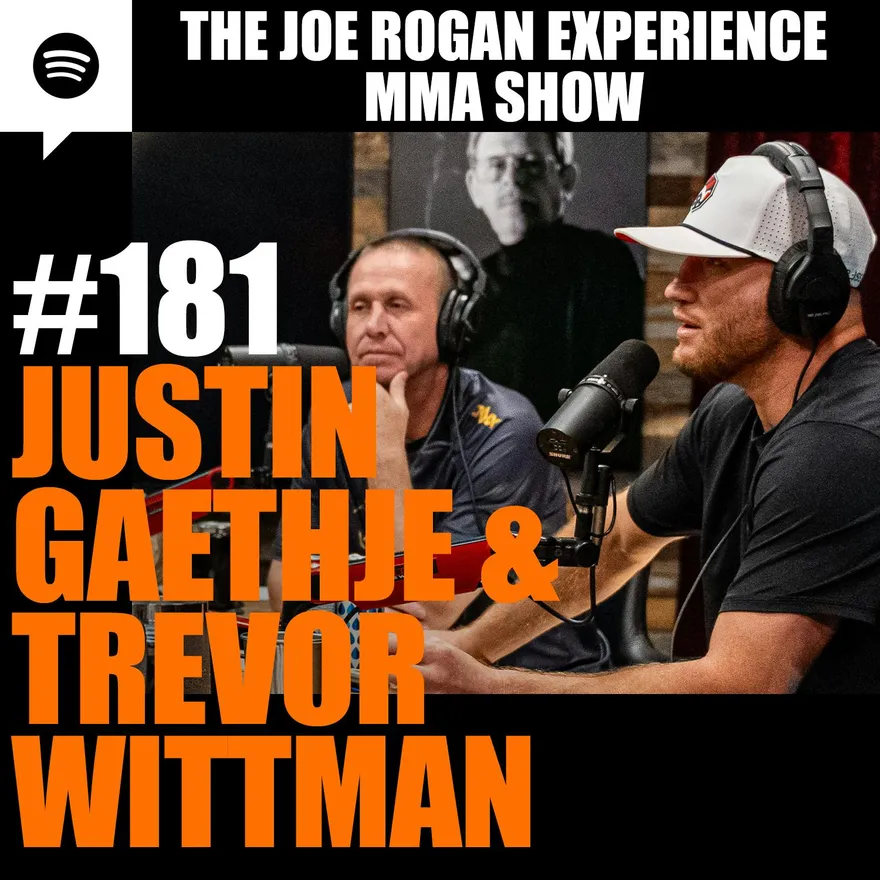

This is a preview of the Shortform summary of the Jun 20, 2026 episode of the The Joe Rogan Experience
Sign up for Shortform to access the whole episode summary along with additional materials like counterarguments and context.
1-Page Summary
Gaethje's Historic White House UFC Title Win
The Unprecedented Setting and Its Psychological Impact
Justin Gaethje's UFC title win at the White House was an unprecedented event in combat sports history. Both Gaethje and his coach Trevor Wittman describe the experience as surreal, with Gaethje not immediately feeling the internal relief he expected from securing the title. Instead, he absorbed the achievement incrementally over days following the fight.
The setting posed unique mental challenges. Wittman recalls hours of waiting in a locker room due to rain, with no established routine to follow. To prepare for the outdoor conditions, Wittman ramped up gym temperatures and incorporated sauna sessions between training rounds, forcing Gaethje to acclimate to intense heat and humidity.
The theatrical elements amplified the pressure. Military personnel lined the walkout path, and over 85,000 attendees created a concert-like atmosphere that went far beyond a typical arena. This historical gravitas added immense psychological weight, especially with Gaethje entering as a 6-to-1 underdog.
Strategic Game Planning Against Ilya Makhachev
Wittman's strategy targeted Makhachev's front-heavy stance and bounce. The core element involved using footwork to force Makhachev off balance, attacking his rear shoulder while positioning Gaethje's lead foot outside Makhachev's. This pressured Makhachev backward, where he was less effective.
Gaethje reveals their team manipulated the pre-fight narrative, showing no sparring footage or mitt work publicly. The coaches designed new punch sequences to destabilize Makhachev's game planning.
A crucial test came on the ground when Makhachev landed severe body shots, including a liver strike that nearly finished Gaethje. Despite this, Gaethje remained composed, smartly defending triangles and armbars while continually readjusting his positioning. Wittman describes these defensive decisions as pivotal to the victory.
Overcoming Critical Moments Through Mental Resilience
Gaethje acknowledges that Makhachev's body shots nearly finished him but insists he never contemplated giving up. Both Wittman and Joe Rogan highlight how Gaethje's history of back-and-forth wars laid a stronger mental foundation than Makhachev had encountered. Gaethje's previous knockout loss to Max Holloway was cited as formative trauma that rendered him virtually unbreakable.
Makhachev exhausted himself trying to capitalize on Gaethje's vulnerability after the body shots. As Rogan and Wittman note, by the third round Makhachev was visibly depleted while Gaethje's composure and tactics prevailed, securing a definitive victory.
Mental Toughness and Character Development
Faith, Family Values, and Moral Foundation
Gaethje credits his parents with instilling accountability and responsibility through religious upbringing. Going to church every Sunday fostered a lasting relationship with God and formed the moral foundation guiding him. His parents led by example, maintaining high moral standards that inspired Justin to honor them through his discipline and decisions.
Overcoming Addiction and Past Struggles
In college, Gaethje experimented with drugs, partly to understand what others were chasing. The turning point came when he woke up in an ambulance after substance abuse—a moment he describes as "pretty sure I died." That experience sparked lasting sobriety, motivated by not wanting to disappoint his parents. Gaethje recognizes these struggles directly contributed to his current success.
Resilience Through Adversity and Past Defeats
Gaethje views significant defeats as opportunities for growth. His loss to Max Holloway forced him to examine his mental preparedness, teaching him about focus and being present. Losses to Dustin Poirier and Eddie Alvarez made him reevaluate his approach after becoming complacent. Each loss became a step toward greater discipline and maturity.
Selflessness and Perspective on Success
When Max Holloway knocked him out, Gaethje's first reaction was genuine happiness for his opponent. This ability to appreciate others' success reflects emotional maturity. His background in human services anchors his selfless outlook, as helping others gives him genuine joy. Gaethje embraces feedback and critiques, striving to be coachable and using every situation for self-improvement.
Evolution From Exciting Fighter to Strategic Champion
Transition From "Most Exciting Fighter" to Championship Focus
Gaethje insists he never set out to be "the most exciting fighter ever"—his ferocious performances simply emerged from his personality. Rogan recalls the anticipation surrounding Gaethje's UFC debut, which perfectly captured his wild, all-action style.
The shift began after losses to Poirier and Alvarez. Gaethje realized he could no longer afford unnecessary damage, acknowledging "I have to not take these shots." Wittman emphasized the requirements for championship success through candid talks about fighting smart.
Wittman compares Gaethje's refined style to controlled sprinting: "Sprint 50 yards, pull back for 100, jog, then sprint again." The goal became blending thrilling energy with deliberate pacing, making aggression selective and sustainable over five rounds.
Strategic Refinement Through Training
Wittman taught Gaethje to become a "spot fighter"—overwhelming opponents in calculated bursts rather than sustained waves. Training emphasized recognizing his "red line"—the exertion threshold that compromises effectiveness in later rounds.
After integrating these lessons, Gaethje dispatched James Vick, Edson Barboza, and Donald Cerrone with refined striking and better timing, proving tactical discipline could pair with his aggression.
Maintaining Natural Competitive Intensity
Despite strategic adaptations, Gaethje's excitement remains inherent to his nature. He admits, "I don't even try to fight excited, but look at me." Wittman sees his coaching challenge as harnessing and timing that intensity rather than suppressing it, crafting a competitor who remains relentless but now fights with intelligence.
Trevor Wittman and Justin Gaethje: Coaching Relationship
Trust and Connection as Foundation
Wittman views his coaching role as similar to a father figure, emphasizing honesty even when sharing hard truths. He believes his responsibility is guiding athletes toward long-term well-being rather than short-term gains.
Gaethje expresses deep trust in Wittman's guidance, crediting the team as critical to his career success. Wittman acknowledges learning from Gaethje as well, particularly regarding the psychology of fighting.
Pre-fight Preparation and Psychological Management
The team takes a detailed approach to pre-fight preparations, with Wittman raising gym temperatures and incorporating sauna sessions to simulate fight-specific conditions. Rogan highlights how Wittman's awareness of Gaethje's performance enables him to tailor the approach depending on Gaethje's needs at any moment.
Supporting Cast and Team Dynamics
Luke Rockhold and Ben Askren serve as training partners and coaches, demonstrating loyalty through tough sparring and challenging training sessions. The camaraderie is accentuated by intense sessions and playful pre-fight jabs, creating a culture where intensity coexists with support and humor. Wittman's philosophy fosters a high-level, accountable team environment ensuring continuous improvement.
Combat Sports Gear: Superior Glove Engineering
Fundamental Problems With Current UFC Glove Design
Gaethje describes the discomfort caused by UFC gloves, noting that making a fist requires full forearm effort and leads to premature fatigue. He says "the strenuous effort it takes to make a fist is fucking stupid." The gloves are built straight rather than curved, forcing a relaxed hand into an open position. Rogan observes this design makes it hard to maintain a natural fist, increasing accidental eye pokes. Poor design also increases hand injuries during fights and training.
Trevor Wittman's Innovative Glove Engineering
Wittman's gloves use an anatomically curved shape maintaining a natural, slightly closed fist even when relaxed. A patented internal strapping system distributes force throughout the hand rather than concentrating it on individual knuckles, minimizing the need for separate hand wraps. Gaethje affirms he hasn't wrapped his hands since 2015 thanks to Wittman's gloves, and routinely hits pads and heavy bags without breaking his hands.
Performance Advantages and Athlete Feedback
Fighters using Wittman's gloves report increased comfort, superior grip strength, and enhanced precision. Gaethje confirms shin guards last three years with no significant breakdown, and Rogan praises the gloves as "fantastic to hit the bag with...my favorite by far." Since adopting Wittman's gloves, Gaethje has avoided broken hands, enabling more intense and frequent training.
Barriers to Implementation and Industry Resistance
Despite UFC efforts to create improved gloves, new iterations failed to solve core problems. Rogan criticizes these attempts, observing "they tried to make new gloves...they didn't fucking try." Both Wittman and Rogan argue that decision-makers lack hands-on experience and understanding of fighting. Financial concerns and organizational inertia contribute to resistance. Rogan calls the continued use of inferior gloves "criminal," while Wittman recognizes that major change in organizations like the UFC is slow and requires sustained advocacy.
1-Page Summary
Additional Materials
Counterarguments
- While Gaethje's White House title win is described as unprecedented, some may argue that the location, while unique, does not fundamentally alter the competitive nature or legitimacy of the fight compared to traditional venues.
- The psychological challenges of the outdoor setting and large crowd, though significant, are not unique to this event; many fighters have competed under extreme conditions and in front of massive audiences, such as stadium events in Brazil or Australia.
- The narrative of Gaethje as a 6-to-1 underdog overcoming immense odds may overlook the fact that betting odds are not always accurate predictors of fight outcomes and can be influenced by public perception rather than objective analysis.
- The strategic focus on Makhachev’s stance and footwork, while effective, is a standard aspect of high-level MMA game planning and not necessarily revolutionary.
- Withholding sparring footage and manipulating pre-fight narratives is a common tactic in combat sports and not unique to Gaethje’s camp.
- Gaethje’s ability to survive body shots and defend submissions, while impressive, could also be attributed to Makhachev’s possible failure to capitalize fully on those opportunities.
- The assertion that Gaethje’s mental resilience is unmatched may discount the mental toughness of other elite fighters who have overcome similar or greater adversity.
- Attributing Gaethje’s success primarily to his religious upbringing and family values may overlook the multifaceted nature of athletic achievement, which often involves a combination of factors including genetics, coaching, and personal drive.
- Overcoming addiction is commendable, but many athletes have overcome personal struggles; Gaethje’s story, while inspiring, is not unique in the world of sports.
- The claim that Gaethje’s emotional maturity is demonstrated by his reaction to defeat could be seen as subjective, as different athletes process losses in various healthy ways.
- The evolution from an “exciting fighter” to a more strategic champion is a common trajectory for many fighters as they gain experience and seek longevity in their careers.
- The coaching relationship described between Wittman and Gaethje, while effective for them, may not be the optimal model for all fighters, as different athletes respond to different coaching styles.
- The criticisms of UFC glove design, while valid, may not account for the logistical, financial, and regulatory complexities involved in changing equipment at a large organizational level.
- While Wittman’s gloves are praised, there is limited large-scale, peer-reviewed data comparing their safety and performance to current UFC gloves across a broad population of fighters.
- The assertion that UFC’s attempts to improve gloves have failed due to lack of effort may not acknowledge ongoing research, prototype testing, and the need to balance multiple stakeholder interests.
- The call for glove reform, while supported by some, is not universally agreed upon within the MMA community, as some fighters and coaches prefer the current design for grappling or other reasons.
Actionables
- you can simulate high-pressure situations in daily life by intentionally adding small, controlled stressors to routine tasks, like setting a timer for chores or practicing presentations in a noisy environment, to build composure and adaptability when things don’t go as planned.
- a practical way to strengthen mental resilience is to keep a “bounce-back” journal where you briefly record setbacks, your immediate reactions, and one thing you learned or did differently afterward, helping you reframe challenges as growth opportunities.
- you can experiment with optimizing your tools for comfort and effectiveness by evaluating everyday items you use (like pens, kitchen utensils, or computer peripherals), noting any discomfort or inefficiency, and making small modifications or swaps to better fit your natural movements and reduce fatigue.
Get access to the context and additional materials
Gaethje's White House Ufc Title Win & Strategy
The Unprecedented Setting and Its Psychological Impact
Justin Gaethje’s UFC title win at the White House was an event unlike any other in combat sports history. For both Gaethje and his team, the experience was surreal and psychologically complex, with a sense of unreality persisting even days after the fight. Gaethje describes being overwhelmed by the moment, not immediately feeling the internal relief he expected from finally securing the title but instead absorbing the magnitude of the achievement incrementally.
The fight’s setting at the White House posed mental and environmental challenges that fighters had never faced. Trevor Wittman, Gaethje’s coach, recalls the unpredictability as a major source of anxiety: the coaches and athletes waited for hours in a locker room due to rain, with no established routine for such an unprecedented event. Both Wittman and Makhachev, Gaethje’s opponent, found it impossible to visualize the arena or scenario in advance, confronting vast unknowns that tested their adaptability.
Specialized training was required to prepare for the outdoor fight conditions, particularly the intense heat and humidity. Wittman describes amping up the temperature in the gym and using saunas to induce heat stress, forcing Gaethje to acclimate physically and mentally. Gaethje details routines of spiking his heart rate, then enduring sauna sessions before returning for multiple rounds of work.
The event’s theatrical elements intensified the atmosphere. Military personnel lined the fighter’s walkout path, and the crowd—estimated at over 85,000—created a concert-like spectacle far beyond a typical arena show. Soldiers, the open air, and the historical gravitas of the White House contributed to a sensation none of those present could practice or replicate, adding immense psychological pressure, especially as Gaethje entered as a 6-to-1 underdog.
Strategic Game Planning and Execution Against Ilya Makhachev
Trevor Wittman’s strategy was precise and deeply tailored to Ilya Makhachev’s fighting tendencies, particularly his front-heavy stance and bounce. The core element was using footwork to subtly force Makhachev off balance and exploit his reset moments. Wittman focused Gaethje on attacking the rear shoulder, extending the jab from outside and positioning Gaethje’s lead foot outside Makhachev’s. This pressured Makhachev backward, where he was less comfortable and effective.
Gaethje reveals that their team manipulated the narrative in the lead-up to mislead Makhachev about his preparation. Not a single sparring session or mitt work from Gaethje was shown publicly before the fight. The coaches designed new, tight punch sequences and altered expectations to further destabilize Makhachev’s game planning.
This strategy was bolstered by Gaethje’s physical abilities, which his coach cites as frequently underestimated—his herky-jerky, explosive athleticism surprised opponents, and his subtle in-cage adjustments maintained an edge throughout.
A crucial test came on the ground. Makhachev hurt Gaethje to the body multiple times, including a severe liver shot and heavy knees. Despite this adversity, Gaethje remained remarkably composed, displaying defensive acumen against submission attempts—smartly defending triangles and armbars and continually readjusting his positioning. Wittman describes these as pivotal decisions; even after absorbing debilitating body shots, Gaethje kept making correct choices under pressure.
Overcoming Critical Moments Through Mental Resilience
Gaethje’s victory was as much ...
Here’s what you’ll find in our full summary
Gaethje's White House Ufc Title Win & Strategy
Additional Materials
Counterarguments
- While the White House setting was unprecedented, the psychological and environmental challenges described are not entirely unique to this event; fighters often face unpredictable conditions, delays, and high-pressure atmospheres in other major venues and international events.
- The narrative emphasizes Gaethje’s mental resilience as decisive, but Makhachev’s own mental toughness and experience are underrepresented, despite his proven track record in high-stakes fights.
- The strategic focus on footwork and misleading the opponent is a common practice in elite MMA camps, not exclusive to Gaethje’s team or this fight.
- The claim that the event’s theatrical elements created unparalleled psychological pressure may overlook the fact that many fighters have competed in similarly intense or even more hostile environments, such as in their opponent’s home country or in front of partisan crowds.
- The assertion that Gaethje’s previous loss to Max Holloway made him “virtually unbreakable” is subjective and may overstate the impact o ...
Actionables
- you can simulate unpredictable environments in your daily routine to build adaptability and mental resilience by occasionally changing your workspace, altering your commute, or introducing small, unexpected challenges (like working without your usual tools or in a noisier setting), then reflecting on how you handle the discomfort and what strategies help you stay focused.
- a practical way to strengthen your composure under pressure is to set up a personal challenge where you deliberately expose yourself to mild stressors—such as timed tasks, public speaking in front of friends, or learning a new skill in front of others—and track your emotional responses, noting which self-talk or breathing techniques help you stay calm and make clear decisions.
- you can practice narrative contro ...
Get access to the context and additional materials
Mental Toughness, Character Development, and Personal Journey
Justin Gaethje’s journey as a fighter is deeply rooted in mental toughness, character development, and personal experiences marked by faith, family, and growth through setbacks.
Faith, Family Values, and Moral Foundation
Faith and family are the cornerstone of Gaethje’s mentality. He credits his parents with instilling a strong sense of accountability and responsibility, shaped by a religious upbringing. Gaethje recalls that going to church every Sunday, as required by his parents, fostered a lasting relationship with God and formed the moral foundation that guides him. His upbringing consistently pushed him away from taking the easy way out, even when faced with temptation. Gaethje’s parents led by example, maintaining high moral standards and treating others well, which inspired Justin to aspire to be a good person and live up to their expectations. This commitment to honor his parents drives his discipline, and their actions continue to serve as a reference point for his decisions and character.
Overcoming Addiction and Past Struggles
Gaethje’s path was not without struggle. In college, he experimented with drugs, partly to understand what others were chasing and partly because it felt good in the moment. He notes that several friends lost their lives to drugs where he grew up, and part of his early interest in human services was to help people come off drugs. Although he went down that path briefly, he always sensed a greater purpose calling him away from addiction. The critical turning point came when he woke up in an ambulance after substance abuse—a moment he describes as “pretty sure I died.” That harrowing experience sparked a lasting commitment to sobriety; he resolved never to touch drugs again, motivated by not wanting to let his parents down. Gaethje recognizes that his struggles and mistakes have shaped his character and directly contributed to his current success.
Resilience Through Adversity and Past Defeats
Learning from adversity is a hallmark of Gaethje’s character. He is candid about how significant defeats served as opportunities for growth rather than sources of bitterness. His loss to Max Holloway was particularly humbling, forcing him to examine his mental preparedness and realize he was not present in the moment during that fight. The defeat made him hungrier and taught him valuable lessons about focus and being mentally present.
Gaethje also draws lessons from his losses to Dustin Poirier and Eddie Alvarez, recognizing that he had become complacent after a string of wins. These setbacks made him reevaluate his approach, pushing him to refine his strategy and maintain his trademark intensity while making necessary tactical adjustments. He learned to accept responsibility for his performance instead of blaming circumstances, considering these m ...
Here’s what you’ll find in our full summary
Mental Toughness, Character Development, and Personal Journey
Additional Materials
Counterarguments
- While Gaethje credits faith and family values for his discipline and moral foundation, many successful athletes develop similar traits through secular or non-religious upbringings, suggesting that religious faith is not the only path to strong character.
- The narrative emphasizes personal responsibility and self-improvement, but it may understate the role of external support systems, professional counseling, or community resources in overcoming addiction and adversity.
- Gaethje’s ability to celebrate others’ successes and maintain emotional maturity is admirable, but not unique; many athletes and individuals in competitive fields demonstrate similar qualities without the same background or experiences.
- The focus on learning from defeat and setbacks is a common theme in sports psychology and personal development, and while ...
Actionables
- you can create a weekly self-check-in where you write down one setback or mistake from the past week, then list what you learned from it and one way you’ll adjust your approach moving forward; this builds a habit of turning losses into growth opportunities and keeps you accountable for your own progress.
- a practical way to strengthen your sense of responsibility and discipline is to set a daily micro-goal that honors a value important to your family or upbringing (like kindness, honesty, or reliability), then track your consistency in a simple notebook or app to reinforce those values in your everyday actions.
- you can practice celebrat ...
Get access to the context and additional materials
Evolution From Exciting Fighter to Strategic Championship Competitor
The career of Justin Gaethje is marked by a transformation from a relentless crowd-pleaser into a mature championship contender, balancing his innate aggression with tactical improvements shaped alongside coach Trevor Wittman.
Transition From "Most Exciting Fighter" to Championship Focus
Gaethje, Famed As the Most Violent and Memorable Fighter, Prioritizes Performance and Entertainment Over Tactical Precision and Outcomes
Gaethje reflects on his origins in the sport, insisting he never set out to be "the most exciting fighter ever," but instead, his ferocious performances simply emerged from his personality: "I was just being me... I don't know why I'm able to perform like that. I think it's just who I am." Joe Rogan recalls the anticipation surrounding Gaethje’s UFC debut against Michael Johnson—a fight that perfectly encapsulated Gaethje's wild, all-action style seen throughout his World Series of Fighting run. Wittman recounts “giggle sessions” of joy while cornering that fight, noting how memorable and electric Gaethje’s violence was, both for spectators and his own team.
Trevor Wittman and Coaching Staff Emphasize Selective Aggression and Strategic Pacing For Success
The shift in Gaethje’s approach began after facing rivals like Dustin Poirier and Eddie Alvarez. Gaethje recounts how these opponents survived his early onslaught and ultimately finished him, making him realize he could no longer afford to take unnecessary damage: “I have to not take these shots. I used to never care about getting hit... but I needed to not get myself in a predicament where they'd have to stop the fight.” Wittman recognized the necessity for evolution, holding candid talks about the requirements for championship success: “Do you want to be a champion? This is how you have to fight: be smart.”
Channeling Excitement: Gaethje Balances Intensity and Energy Management Across Five Rounds
Wittman compares Gaethje’s style to controlled sprinting: “Sprint 50 yards, pull back for 100, jog, then sprint again. Know your red line and don’t cross it.” The goal became to blend Gaethje’s thrilling energy with deliberate pacing, making his aggression more selective and sustainable over championship distance.
Strategic Refinement Through Training and Adaptation
Coaching Taught Gaethje to Execute Explosive Techniques Selectively, Not Maintain Constant Aggression
Trevor Wittman emphasizes the need to become a “spot fighter”—to overwhelm opponents in calculated bursts rather than sustained waves that expose openings. Jailbreaks of violence are now interspersed with moments of rest and defensive responsibility.
Training Taught the Fighter to Recognize His "Red Line" - The Exertion Threshold Compromising Later Round Effectiveness
Wittman continually drills into Gaethje the importance of recognizing and not exceeding his exertion threshold, or “red line,” which, if passed, diminishes his effectiveness in later rounds. This lesson crystalized after mistakes in earlier wars, such as the lazy execution of a low kick against Poirier, which exposed Gaethje to counters.
Gaethje's Streak Against Vic Hurtado, Al Barbosa, and Cowboy Cerrone Showcased Precise Striking and Timing
After integrating these lessons, Gaethje embarked on a three-fight win streak, dispatching James Vick, Edson Barboza, and Donald "Cowboy" Cerrone. These performances featured refined striking, better timing, and a more measured approach—proving that ta ...
Here’s what you’ll find in our full summary
Evolution From Exciting Fighter to Strategic Championship Competitor
Additional Materials
Clarifications
- Justin Gaethje is a professional mixed martial artist known for competing in the UFC's lightweight division. He gained fame for his aggressive fighting style and exciting bouts, earning multiple "Fight of the Night" awards. Before joining the UFC, he was the World Series of Fighting lightweight champion. Gaethje is considered one of the most entertaining and skilled fighters in modern MMA.
- Trevor Wittman is a highly respected MMA coach known for his expertise in striking and fight strategy. He has trained multiple elite fighters and champions across various organizations. Wittman is praised for his ability to tailor training to a fighter’s unique style and improve their tactical approach. His coaching emphasizes discipline, timing, and energy management to maximize performance.
- "Selective aggression" means choosing specific moments to attack intensely rather than attacking constantly. "Strategic pacing" involves managing energy and effort throughout a fight to maintain effectiveness over all rounds. A "spot fighter" focuses on short, powerful bursts of offense instead of continuous pressure. These tactics help conserve stamina and reduce vulnerability to counterattacks.
- Dustin Poirier and Eddie Alvarez are elite fighters who exposed weaknesses in Gaethje’s early aggressive style, prompting his strategic evolution. James Vick, Edson Barboza, and Donald Cerrone are respected veterans whom Gaethje defeated using his refined, more tactical approach. These fights mark key milestones showing Gaethje’s transition from reckless brawler to calculated striker. Each opponent presented unique challenges that tested and validated his improved fight IQ and pacing.
- The "red line" or exertion threshold refers to the maximum level of physical effort a fighter can sustain before their performance deteriorates. Crossing this limit leads to fatigue, slower reactions, and reduced power, increasing vulnerability to opponents. Managing energy to stay below this threshold is crucial for maintaining effectiveness throughout all rounds. Fighters train to recognize signs of nearing this limit to pace themselves strategically.
- Championship MMA fights consist of five rounds, each lasting five minutes, requiring fighters to manage energy carefully. Pacing is crucial to avoid exhaustion, as going all-out early can lead to diminished performance in later rounds. Fighters balance bursts of intense activity with periods of lower intensity to sustain effectiveness throughout the fight. Proper pacing increases the chance of maintaining strength and focus until the final round.
- A low kick targets the opponent’s thigh or calf to reduce their mobility and balance. Poor execution, such as telegraphing the kick or leaving the leg extended too long, allows the opponent to anticipate and counterattack. Counters can include catching the leg, sweeping the standing leg, or striking while the kicker is off-balance. Effective low kicks require speed, precision, and quick retraction to avoid vulnerability.
- Entertainment value in combat sports refers to how exciting and engaging a fight is for the audience, often driven by aggressive, high-risk actions. Tactical precision involves carefully planned techniques and strategies aimed at maximizing effectiveness and minimizing risk. Fighters focused on entertainment may prioritize dramatic exchanges over winning efficiently. Those emphasizing tactical precision aim to control the fight’s pace and exploit opponents’ weaknesses methodically.
- Joe Rogan is a well-known commentator and analyst for UFC events, providing live fight commentary and expert insights. He is also a former martial artist and has deep knowledge of MMA techniques and fighters. His opinions carry weight because he has extensive experience and credibility within the MMA community. Fans and professionals alike respect his analysis and perspectives on fighters and fights.
- "Cornering" refers to the role of a coach or team member who stays in the fighter's corner during a match, providing advice, strategy, and encouragement between rounds. "Jailbreaks of violence" is a metaphor describing sudden, intense bursts of aggressive attacks desig ...
Counterarguments
- While Gaethje’s evolution toward a more tactical style is praised, some critics argue that his attempts at strategic fighting have not always resulted in consistent championship-level success, as evidenced by losses in high-stakes title fights.
- The narrative that Gaethje’s aggression is purely natural may overlook the influence of external factors such as fan expectations, promotional incentives, and the UFC’s emphasis on exciting fights.
- Emphasizing selective aggression and pacing is a common approach among elite fighters, and Gaethje’s adaptation is not unique; many contenders have made similar adjustments with varying degrees of success.
- Despite improvements, Gaethje has still taken significant damage in several recent fights, suggesting that the balance between aggression and defense remains a challenge.
- The focus on Ga ...
Get access to the context and additional materials
Trevor Wittman and Justin Gaethje: Coaching Relationship and Game Planning
Trust and Connection as Foundation For Coaching
Trevor Wittman views his coaching role as similar to that of a father figure, emphasizing the importance of being honest with his fighters, even when it requires sharing hard truths that might be uncomfortable or risk the relationship. He believes his responsibility is to help guide athletes toward their goals, acting as a mentor and advisor focused on their long-term well-being rather than short-term gains or personal ego. Wittman reflects that this level of candor is for the fighter's career and growth, and if it eventually results in a parting of ways, it is akin to a parent letting a child explore on their own but still receiving them with love if they return.
Justin Gaethje, in turn, expresses deep trust in Wittman’s guidance. He credits the team and coaches around him as a critical reason he remains on track in his career, stating that he continues to trust that he belongs at the top level in MMA because of this support. Gaethje highlights that Wittman's investment in his well-being and career is evident, and the foundation of their bond is care and mutual improvement.
Wittman acknowledges learning from Gaethje as well, particularly regarding the psychology of fighting. Despite Wittman's own high standards in refining a fighter's mindset, he credits Gaethje with teaching him new approaches to the mental aspect of the sport, stating that surrounding himself with athletes like Gaethje makes him a better coach and person daily.
Pre-fight Preparation and Psychological Management
The team takes a detailed approach to pre-fight preparations, acclimating Gaethje to fight-specific environmental conditions. Wittman raised the temperature in the gym to simulate hot, humid climates and incorporated sauna sessions between workouts to help Gaethje handle the physiological stresses that might occur during the fight. Gaethje describes this experience as both challenging and essential, acknowledging exhaustion but appreciating the preparation when it came time to compete.
Wittman carefully manages Gaethje's mental state in the lead-up to competition, knowing exactly when to pull him back for rest and when to push him harder. Joe Rogan highlights how Wittman's acute awareness of Gaethje's performance in both fights and training enables him to tailor the approach depending on Gaethje's needs at any moment, providing a substantial advantage during fight camps.
The team collectively monitors Gaethje's nutrition, hydration, weight, and recovery, all aiming for a competitive edge and ensuring Gaethje arrives at fight night prepared in every aspect.
Adaptive Decision-Making During Competition
Wittman remains exceptionally calm during fights, focusing on the crucial judgments that can determine outcomes, such as when and what to communicate between rounds. While this transcript segment does not detail specific adaptive decisions during a particular bout or identify pivotal moments such as Makhachev's errors in pacing strategy, it is consistently clear from their dynamic that trust and real-time communication are pillars of thei ...
Here’s what you’ll find in our full summary
Trevor Wittman and Justin Gaethje: Coaching Relationship and Game Planning
Additional Materials
Clarifications
- Trevor Wittman is a renowned MMA coach known for training elite fighters and developing effective fight strategies. Justin Gaethje is a top-level professional mixed martial artist competing in the lightweight division, recognized for his aggressive fighting style. Wittman coaches Gaethje, guiding his physical and mental preparation for fights. Their partnership is highly respected in the MMA community for producing successful performances.
- A "father figure" role in coaching means providing guidance, support, and discipline like a parent would. It involves being honest and caring, even when delivering tough feedback for long-term growth. This role builds trust and emotional security, helping athletes develop confidence and resilience. It also implies a lasting commitment beyond just professional interaction.
- MMA fighters face intense physical and psychological pressure, requiring focus, resilience, and quick decision-making under stress. Mental challenges include managing fear, pain, and adrenaline while maintaining strategic thinking. Fighters must control emotions to avoid reckless actions and adapt tactics mid-fight. Psychological preparation often involves visualization, stress management, and building confidence to perform optimally.
- Simulating hot, humid conditions and using sauna sessions help fighters adapt their bodies to heat stress, improving endurance and reducing the risk of overheating during a fight. This acclimatization enhances cardiovascular efficiency and sweat response, allowing better temperature regulation. It also conditions the body to maintain performance despite dehydration and fatigue. Overall, it prepares the fighter physically and mentally for challenging environmental factors they may face in competition.
- Training partners like Luke Rockhold and Ben Askren provide realistic sparring that simulates fight conditions, helping the fighter adapt to different styles. They challenge the fighter physically and mentally, improving skills and endurance. Their experience and feedback contribute to strategic adjustments and confidence building. Their presence also fosters a supportive, competitive environment essential for peak performance.
- Proper nutrition fuels a fighter's energy and aids muscle repair, essential for intense training and recovery. Hydration maintains physical performance and prevents cramps or fatigue during fights. Weight management ensures fighters meet their division limits safely without compromising strength or endurance. Recovery practices, like rest and therapy, prevent injury and optimize readiness for training and competition.
- Between rounds in an MMA fight, coaches quickly assess the fighter’s physical and mental state to adjust strategy. They provide concise, clear instructions on tactics, pacing, and weaknesses to exploit. Communication is limited by time, so messages focus on critical, actionable advice. This real-time guidance can shift the fight’s momentum and i ...
Counterarguments
- While Wittman’s father-figure approach emphasizes honesty and care, some athletes may respond better to different coaching styles that are less paternalistic and more collaborative or athlete-led.
- Prioritizing long-term growth over short-term gains may not align with every fighter’s career goals, especially in a sport where opportunities can be fleeting and financial security is uncertain.
- Deep trust in a single coach or team can potentially limit a fighter’s exposure to diverse perspectives and training methods that might benefit their development.
- The strong bond between coach and athlete, while beneficial, could risk creating an echo chamber where critical outside feedback is minimized or overlooked.
- Wittman’s willingness to accept parting ways with athletes may be seen as pragmatic, but some might interpret it as a lack of commitment to resolving conflicts or adapting to changing athlete needs.
- The focus on simulating fight conditions (e.g., heat, humidity) is valuable, but overemphasis on environmental stressors could detract from other technical or tactical aspects of preparation.
- Managing an athlete’s mental state is important, but the subjective nature of knowing when to push or pull back could lead to misjudgments, especially if communication is imperfect.
- Collective monitoring of nutrition, hydration, and recovery is standard in elite sports, so this approach, while thorough, is not unique to Wittman’s team.
- Cal ...
Get access to the context and additional materials
Combat Sports Gear: Superiority of Properly Engineered Gloves
The discussion among Justin Gaethje, Trevor Wittman, and Joe Rogan reveals critical flaws in current UFC glove design, highlights Wittman's innovative engineering solutions, underscores athlete experiences using these gloves, and points to persistent industry resistance to upgrading fighter safety and performance.
Fundamental Problems With Current UFC Glove Design
UFC Gloves Cause Discomfort, Require Excessive Effort to Make a Fist, and Lead To Premature Fatigue
Justin Gaethje repeatedly describes the discomfort and pain caused by UFC gloves: making a fist requires the full effort of the forearm and hand, leading to premature fatigue even before a fight begins. He says, “the strenuous effort it takes to make a fist is fucking stupid,” and notes that after years of fighting, the pressure and pain between his fingers has been excruciating. Wittman adds that fighters constantly adjust their gloves as if pulling on a too-tight hand wrap, which further distracts and tires them.
Glove Stiffness Limits Hand Positioning and Distracts Fighters
The current UFC gloves are built straight, not naturally curved, so they force a relaxed hand into an open position. Rogan observes that “the gloves force your hand,” making it hard to maintain a natural fist and grip. Gaethje explains that this unnatural positioning increases the risk of accidental eye pokes and forces athletes to focus on fighting the equipment instead of their opponent.
Glove Design Compromises Protection, Increasing Injuries
Because of their improper fit and lack of structural support, UFC gloves don't sufficiently protect fighters’ hands from injury. Gaethje says he would often hurt his hand even in training, and Wittman warns, “I don’t want someone to hurt their hand...and now the guy that I wanted to see fight can’t continue because he hurt his hand.” The poor design increases the incidence of broken hands and distracts athletes from optimal performance.
Trevor Wittman's Innovative Approach to Glove Engineering
Wittman's Gloves: Curved Design For Comfort and Focus With Natural Fist Positioning
Trevor Wittman's gloves use an anatomically curved shape that maintains a natural, slightly closed fist even in a relaxed state. Rogan points out that without even putting them on, the gloves promote a proper punching position; on the hand, they’re nearly perfect. Gaethje says, “if my hand can be in this position when I’m relaxed, then I’m okay,” arguing that curved design would also reduce accidental eye pokes and keep athletes focused on fighting—not fighting their gloves.
Internal Strapping in Wittman's Gloves Distributes Force, Offering Superior Protection and Reducing Injury Risk
A patented internal strapping system is a core feature of Wittman's gloves, distributing force throughout the hand rather than concentrating it on individual knuckles. This design not only protects the hand during strikes but minimizes the need for separate hand wraps. Wittman aims for “better fist position where...the wrap doesn’t pull my hand up,” and says the even force distribution substantially reduces hand injuries—Gaethje affirms he hasn't wrapped his hands since 2015 thanks to Wittman’s gloves.
Gaethje Demonstrates Wittman's Gloves Provide Sufficient Protection Without Hand Wraps
Athlete testing supports these claims: Gaethje and others, like Pfeiffer, routinely hit pads and heavy bags without hand wraps and never break their hands. Gaethje says, “I have to switch every, like, six months because I wear the foam out...but I cannot break these.” With Wittman's gloves, athletes train harder and longer without injury concerns.
Performance Advantages and Athlete Feedback
Fighters Report Increased Comfort, Grip Strength, Precision, and Reduced Pain With Well-Designed Gloves
Fighters who use Wittman's gloves universally report increased comfort, superior grip strength, and enhanced precision. Removal of persistent pain and awkwardness allows fighters to focus on technique and tactics. Rogan and Wittman emphasize that better hand position and grip lead to fewer injuries and more confident performance.
Wittman's Gloves' Superior Padding Lasts Longer and Remains Functional After Extended Use Compared To Standard UFC Gloves
Wittman details that even after years of rigorous use, his glove padding retains its protective qualities and fit. Gaethje confirms he’s used shin guards for three years with no significant breakdown and that the gloves “last well over” standard equipment despite sweat and stressful use. Rogan praises the gloves as “fantastic to hit the bag with...my favorite by far,” noting their comfort and durability.
Gaethje Avoids Hand Injurie ...
Here’s what you’ll find in our full summary
Combat Sports Gear: Superiority of Properly Engineered Gloves
Additional Materials
Clarifications
- Justin Gaethje is a professional mixed martial artist known for competing in the UFC's lightweight division. Trevor Wittman is a renowned MMA coach and glove designer, respected for his expertise in fighter training and equipment innovation. Joe Rogan is a UFC commentator and podcast host with deep knowledge of combat sports. Their combined experience gives them authority on fighter safety and gear performance.
- UFC gloves are specialized gloves designed for mixed martial arts (MMA) competition, allowing both striking and grappling. They are lighter and have less padding than boxing gloves to enable better hand dexterity and grip. Unlike boxing gloves, UFC gloves leave fingers exposed for grappling maneuvers. Their design balances protection with the need for versatility in various combat techniques.
- Making a fist is essential in combat sports for delivering powerful, controlled punches while protecting the hand's bones and joints. Proper fist formation aligns the knuckles and wrist to absorb impact safely, reducing injury risk. Glove design affects this by either supporting a natural fist shape or forcing the hand into an unnatural position, which can cause discomfort and weaken punches. Poor glove fit can also increase fatigue by requiring extra effort to maintain a proper fist during a fight.
- Hand wraps are cloth strips wrapped around a fighter’s hands and wrists before putting on gloves. They stabilize the bones and tendons, reducing the risk of fractures and sprains during impact. Wraps also help absorb sweat and provide additional padding under gloves. Proper wrapping improves hand alignment, enhancing punching power and safety.
- Accidental eye pokes occur when a fighter's fingers unintentionally strike an opponent's eye during a match. These injuries can cause pain, temporary vision impairment, or even long-term damage. Eye pokes often lead to fight stoppages or point deductions, affecting the outcome. Proper glove design helps reduce finger exposure, minimizing this risk.
- An "anatomically curved shape" in glove design means the glove is shaped to match the natural, relaxed curve of the human hand. This design reduces strain by allowing the hand to rest in a more comfortable, slightly closed fist position. It improves grip and reduces the effort needed to make a fist, enhancing performance and reducing fatigue. Such shaping also helps prevent injuries by supporting proper hand alignment during strikes.
- Internal strapping systems in gloves use bands or supports inside the glove to hold the hand and fingers securely in a natural position. This reduces movement of bones and joints during impact, lowering the risk of sprains and fractures. By distributing force evenly across the hand, the straps prevent stress concentration on specific areas. This design enhances stability and protection without restricting flexibility.
- Poor glove padding fails to absorb impact effectively, increasing the risk of hand injuries like fractures and bruises. Ill-fitting gloves restrict natural hand movement, causing discomfort and reducing grip strength. This can lead to premature muscle fatigue and decreased punching power. Additionally, improper fit may cause gloves to shift during fights, distracting athletes and increasing injury risk.
- Fighters adjust gloves during fights because poorly fitting gloves can shift, causing discomfort and distraction. This constant adjustment breaks their focus and wastes energy that should be used for fighting. It can also disrupt hand positioning, reducing punching effectiveness and increasing injury risk. Properly engineered gloves minimize the need for such adjustments, enhancing performance and safety.
- Hand wraps are used to stabilize the hand and wrist bones, reducing the risk of fractures and sprains during striking. They also help compress the soft tissues, preventing injuries like bruising and cuts. Training without hand wraps requires gloves that provide sufficient internal support to protect the hand. Properly engineered gloves can eliminate the need for wraps, allowing more comfort and quicker preparation.
- Equipment decision-makers in the UFC are responsible for selecting and approving gear used by fighters. Their experience matters because understanding the physical demands and risks of combat sports is crucial to choosing effective, safe equipment. Without firsthand fighting knowledge, they may prioritize cost or aesthetics over functionality and protection. This gap can lead to poor equipment choices that compromise athlete saf ...
Counterarguments
- While some fighters report discomfort with current UFC gloves, others have adapted to them over years of use and do not publicly express significant issues, suggesting that glove preference can be subjective.
- The UFC gloves’ open-hand design is intended to facilitate grappling and submissions, which are essential elements of MMA, and a more curved glove could potentially hinder these techniques.
- Accidental eye pokes occur in MMA regardless of glove design, and rule enforcement or fighter discipline may play a larger role in their prevention than glove curvature alone.
- The need for hand wraps is a standard practice in many combat sports for added protection, and some athletes may prefer the flexibility to customize their hand wrapping rather than rely solely on glove design.
- The durability and performance of Wittman’s gloves, while praised by some, have not been tested at the same scale or under the same regulatory scrutiny as UFC-standard gloves.
- The UFC must consider regulatory approval, mass production logistics, and cost-effectiveness when evaluating new equipment, which can complicate or delay the adoption of new designs.
- Some res ...
Get access to the context and additional materials

 1-Page Summary
- Gaethje's White House Ufc Title Win & Strategy
- Mental Toughness, Character Development, and Personal Journey
- Evolution From Exciting Fighter to Strategic Championship Competitor
- Trevor Wittman and Justin Gaethje: Coaching Relationship and Game Planning
- Combat Sports Gear: Superiority of Properly Engineered Gloves
Create Summaries for anything on the web
Download the Shortform Chrome extension for your browser
