

#2512 - Joey Diaz
In this episode of The Joe Rogan Experience, Joe Rogan and Joey Diaz explore the development of comedy careers, the unique culture of The Comedy Store, and how authenticity became the key to Diaz's transformation as a performer. They discuss how podcasting expanded opportunities for comedians, the importance of mentorship in strengthening the comedy ecosystem, and why persistence matters more than raw talent in building a successful career.
Beyond comedy, Diaz shares his personal journey from incarceration to success, reflecting on the shame that still haunts him despite his achievements. The conversation also covers Diaz's recent knee replacement surgery and recovery strategies, historical narratives about organized crime's role in Las Vegas and Cuba, and observations about technology's impact on society—from digital addiction and reduced attention spans to how social media platforms incentivize extremism and cruelty through their design.
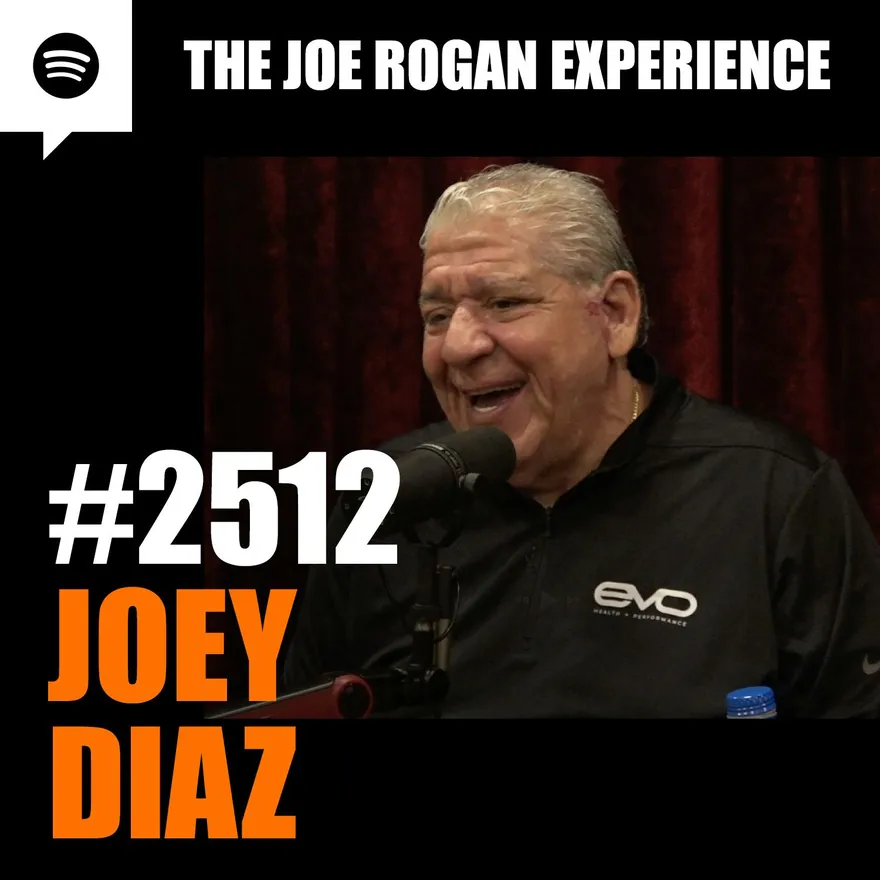

This is a preview of the Shortform summary of the Jun 10, 2026 episode of the The Joe Rogan Experience
Sign up for Shortform to access the whole episode summary along with additional materials like counterarguments and context.
1-Page Summary
Comedy Career Development, Mentorship, and the Comedy Scene
The Comedy Store as Training Ground
The Comedy Store provides comedians with three distinct rooms to refine their craft. The intimate 70-seat Belly Room allows for testing material, while the Original Room (OR) demands authenticity during late-night shows when audiences, already exposed to hours of top-tier comedy, won't accept scripted polish. Rogan describes the OR as a "living room" where comics are "locked in" with their audience, contrasting it with the Main Room's big-show energy. The nightly grind fosters a meritocratic culture where respect is earned through consistent performance.
Joey Diaz's Transformation: From Script to Authenticity
Joey Diaz reflects on how he initially focused too much on memorized jokes, limiting his adaptability. At the Store, especially during late-night sets, material alone wasn't enough—comics needed authenticity. Rogan recalls meeting Diaz in the late 1990s and noticing his focus on delivering set punchlines rather than connecting. Veteran comedian Paul Mooney showed Diaz the importance of relaxing onstage and treating the audience like friends. The turning point came when Diaz brought his genuine parking lot persona—conversational and unfiltered—on stage.
Podcasting Expands Opportunities
Joe Rogan recognized that Diaz's strengths lay in storytelling and depth, making long-form platforms like podcasting ideal. Through podcasts, listeners connected to Diaz's complex stories, extending his marketability beyond the club circuit and boosting demand for his live shows in ways traditional stand-up alone could not.
Mentorship Strengthens the Comedy Ecosystem
Rogan shares how he connected promising comedians to his manager and offered feedback, believing that supporting others strengthens the overall comedy ecosystem. Diaz calls this the "karma business," noting that helping newcomers doesn't diminish their own success but enhances job satisfaction and contributes to the greater good.
Distinct Comedy Club Cultures
Each major Los Angeles club offers its own culture. The Laugh Factory is TV-friendly but sterile, while the Improv provides a welcoming environment without the late-night battlefield atmosphere. The Comedy Store, under gatekeepers like Scott Day, prioritizes artistic growth and rigor over commercial goals.
Persistence Over Talent
Persistence eclipses talent in comedy careers. Rogan and Diaz recount knowing exceptionally funny comics who quit due to personal or commitment issues. Rogan likens comedy development to training for a long-distance run: progress accumulates gradually over a decade-long commitment. Diaz reinforces that many give up "before the miracle happens," while new comedians often have unrealistic expectations of instant fame in the internet age.
Personal History, Life Lessons, and Redemption
Joey Diaz's Journey From Incarceration to Comedy Success
Joey Diaz's transformation is remarkable given his rough beginnings. With "no family, felonies, no GED," Diaz discovered stand-up comedy at 25 after multiple incarcerations. Rogan notes that comedy represented a legitimate outlet where Diaz would be judged by performance rather than his criminal record. Diaz embraced this fresh start, taking any comedy job no matter how small, content with making "four thousand a month"—a fortune compared to his past.
The Burden of Shame Despite Success
Despite his achievements, Diaz remains haunted by shame from his earlier life. He describes his 1980s Boulder crimes: fraudulent returns, extorting local businesses for $200 weekly, and kidnapping charges. Diaz avoids returning to Boulder, feeling he squandered opportunities like graduating college. The burden of guilt compels him to consider booking the Fox Theater for an apology performance and making local donations, though the shame of harming a welcoming community still lingers.
Generational Perspectives on Health and Food
Diaz and Rogan discuss how poverty shaped their youth, noting that ailments like peanut allergies and celiac disease didn't exist in their immigrant families' worldviews. Fresh breads from the 1960s-70s are contrasted with modern processed foods that now trigger immune responses, with speculation that changes in vaccines or food processing might contribute to allergy prevalence.
Success From Humble Origins
Even after years of success, Diaz is sometimes overwhelmed by what comedy enabled him to achieve. He often asks himself, "Who lives here?" unable to fully absorb that his property was paid for through small comedy sets—sometimes earning just $15 or $20 each. Unlike inherited wealth, this cultivates profound gratitude.
The Challenge of Persevering Before Breakthroughs
Both reflect on the obstacle of grinding with no guaranteed result. Rogan remembers digging through loose change for a sandwich, such relentless hardship causing talented people to quit before breakthroughs. In comedy, seeing peers succeed offered visible proof that perseverance works. Diaz describes how a friend's sudden rise from clubs to network TV instilled hope that "it can happen for you too," a sense of possibility often absent in other fields.
Health, Fitness, Recovery, and Supplements
Joey Diaz's Knee Replacement Recovery
Joey Diaz attributes his rapid recovery from knee replacement surgery to thorough preparation and disciplined rehabilitation. Just five days post-surgery, he stopped using a cane. His pre-surgery regimen included supplements like besmarine and exercises to strengthen surrounding muscles. Originally scheduled for a New Jersey facility, his doctor moved the surgery due to sanitation concerns and MRSA reports. Aggressive physical therapy began the day after surgery, with Diaz minimizing pain medication and supplementing recovery with ice, topical creams, and regular walks.
Pain Management Through Nerve Blocks and Epidurals
Nerve blocks provided profound numbness while keeping Diaz conscious during surgery, granting psychological control. The epidural eliminated sensation below the waist entirely. Diaz also experienced an unexpectedly strong reaction to a 20 mg [restricted term] pill, finding himself intoxicated for hours.
Peptides and Supplements Aid Recovery
Diaz credits injectable peptides like BPC-157 and TB-500 for accelerating healing, supporting connective tissue regeneration and reducing inflammation. He takes creatine at 10 mg twice daily, noting marked effects on memory and physical recovery. Rogan adds that creatine monohydrate is one of the best-researched cognitive and muscle-supporting supplements. They discuss other nootropics like beta-alanine for endurance and nootropic drinks for sustained focus without coffee jitters, though individual responses vary and quality control is inconsistent.
Topical Relief and Its Limitations
Diaz uses Voltaren, an over-the-counter NSAID cream, multiple times daily to numb joint pain. Rogan explains it's most effective for chronic conditions like arthritis, not acute injuries. They caution that creams only provide temporary relief and don't address underlying degeneration, warning against over-reliance while stressing the importance of rest and proper rehabilitation.
Hyperbaric Therapy and Blood Oxygen Concerns
Diaz includes hyperbaric chamber therapy twice weekly post-surgery, with sessions increasing oxygen availability to tissues and stimulating new blood vessel growth. Despite debate about effectiveness, both cite anecdotal evidence of improved healing timelines. Diaz also reports persistently low blood oxygen levels—sometimes 88% in mornings—and practices daily breath exercises to improve respiratory function. Both use wearables like Whoop and Garmin to track health metrics, with Diaz noting readings from his ear are more accurate than his tattooed wrist.
Historical Narratives and Cultural Commentary
Las Vegas Rose After Cuba's Casino Closure
Before Castro's 1959 revolution, Havana served as a playground for wealthy Americans with flourishing casinos run by organized crime. Diaz describes Cuba as a "sex heaven" with rampant vice and little oversight. When Castro seized power and closed the casinos, operators and employees quickly relocated to Nevada, bringing capital and expertise that transformed Las Vegas from a desert town into America's gambling hub.
Bugsy Siegel's Fatal Mistake
Bugsy Siegel developed the Flamingo Hotel using mob money from Teamsters loans facilitated by Jimmy Hoffa. As expenses spiraled while Siegel lived lavishly with actress Jane Seymour, the mob suspected embezzlement. He was ultimately murdered in his Los Angeles home as retribution for mismanaging and allegedly stealing from mob investments.
Kennedy's Mob Betrayal
Rogan and Diaz discuss how the Chicago mob aided JFK's 1960 election win, expecting favorable treatment. However, Attorney General Robert Kennedy aggressively prosecuted organized crime, leading Operation Mongoose to overthrow Castro. This betrayal fueled mob resentment and speculation about motivations behind JFK's assassination.
Bay of Pigs Failure Deepened Resentment
The failed Bay of Pigs invasion further aggravated mob frustrations. Kennedy canceled air support at the last minute, leading to the invasion's failure and dashing mob hopes to reclaim Cuban casinos, cementing their loss and fueling resentment toward the Kennedys.
Modern Food Allergies Linked to Environmental Factors
Brett Weinstein suggests modern increases in food allergies and celiac disease may be linked to aluminum in vaccines and foods, changes in wheat cultivation, and food processing practices rather than genetics. Communities of immigrants in the 1950s-70s displayed minimal food allergies, attributed to traditional, unprocessed diets.
Castro's Failed Promise
Castro's communist revolution replaced Batista's corrupt, mob-aligned regime but established a new totalitarian state. Economic mismanagement and centralized planning devastated Cuba's economy, leaving Cubans impoverished. Diaz describes ongoing hardships: "have no power, no electricity," enduring chronic shortages of basic necessities.
Trump Administration's Cuba Pressure
Rogan explains that the Trump administration indicted Cuban President Raul Castro for the 1996 downing of two civilian planes, moves often preceding military intervention. The U.S. cut off Venezuelan oil to Cuba, intensifying pressure, while Cuba reportedly distributed weapons to citizens, preparing for potential invasion.
Atlantic City's Limitations
Unlike Las Vegas, Atlantic City never achieved comparable gambling success. Its proximity to larger markets paradoxically hindered growth, while urban decay, crime, and homelessness created a "blighted and dangerous" environment just blocks from casinos, deterring customers and limiting prospects.
Technology, Social Media, and Internet's Impact on Society
Digital Addiction as Preparation for Technological Integration
Rogan observes near-universal addiction to social media and digital content, with almost everyone constantly interacting with phones. He posits this addiction is preparing humanity for deeper integration with electronics in the future, serving as "the gate"—an early stage conditioning people for constant connectivity. Rogan highlights massive nuclear-powered data centers under construction, questioning their purpose and framing them as evidence society is preparing for total technological integration.
Reduced Attention Spans in Young People
Diaz provides an example of his daughter's inability to watch an entire movie in one sitting, becoming restless after forty minutes. Rogan attributes this to dramatically reduced attention spans from incessant digital stimulation, suggesting frequent, fragmented content consumption reshapes the brain's attention, impulse control, and reward systems, particularly in developing youths.
Online Anonymity Enables Cruelty
Diaz recounts his friend's experience as a female content creator, detailing relentless harassment and crude insults on YouTube that drove her to abandon her cooking show. Rogan and Diaz attribute this cruelty to internet anonymity—many behave with meanness they would never display in person because there are no visible social consequences. Rogan notes many deliberately escalate comments to provoke extreme reactions, turning dialogue into competitive provocation.
Platform Economics Incentivize Extremism
Rogan and Diaz's observations align with critiques of social media platforms whose algorithms prioritize content generating maximum engagement—often at the cost of accuracy and constructiveness. Algorithms amplify sensationalism, conflict, and emotional material because these drive user interaction and profits more than balanced content. This establishes a "race to the bottom" where manipulative, divisive material flourishes while constructive content is sidelined, incentivizing extremism and division as the price for attention and revenue.
1-Page Summary
Additional Materials
Clarifications
- The Belly Room is a small, intimate space ideal for new or experimental material, allowing comedians to gauge audience reactions closely. The Original Room (OR) is a mid-sized venue known for its late-night shows where authenticity and raw performance are crucial, often serving as a proving ground for serious comedians. The Main Room is the largest stage, hosting big shows with high energy and established acts. Each room represents a different level of exposure and challenge, shaping a comedian's development and reputation.
- Paul Mooney was a pioneering African American comedian and writer known for his sharp social commentary and influence on comedy. He wrote for Richard Pryor, shaping groundbreaking, candid humor about race and society. Mooney mentored many comedians by encouraging authenticity and fearless expression onstage. His legacy includes pushing comedy toward more honest, provocative storytelling.
- The "karma business" in comedy mentorship refers to the idea that helping others creates positive energy that eventually returns to the helper. It fosters a supportive community where success is shared rather than competed over. This approach builds lasting relationships and a stronger comedy network. Mentors gain personal fulfillment and indirect career benefits through generosity.
- The Laugh Factory is known for its polished, television-friendly shows that often prioritize broad appeal and commercial success. The Improv offers a more relaxed, welcoming atmosphere, making it accessible for a wide range of comedians and audiences without intense competition. The Comedy Store is regarded as a rigorous, artistically focused venue where comedians face a challenging environment that emphasizes skill development and authenticity. These distinctions shape each club’s reputation and the type of comedians they attract.
- The Fox Theater is a prominent venue in Boulder, Colorado, Joey Diaz's hometown. Booking it for an apology performance symbolizes a public and meaningful gesture to the community he feels he wronged. It represents Diaz's desire to make amends on a large, formal stage rather than privately. This act reflects his ongoing struggle with guilt and his effort to seek redemption.
- BPC-157 and TB-500 are synthetic peptides used to promote healing by enhancing tissue repair and reducing inflammation. BPC-157 is derived from a protein in stomach acid and supports tendon, muscle, and nerve regeneration. TB-500 is a synthetic version of thymosin beta-4, which aids cell migration and new blood vessel formation. Both peptides are popular in alternative medicine but lack extensive clinical trials for safety and efficacy.
- Nerve blocks involve injecting anesthetic near specific nerves to temporarily block pain signals from a targeted area. Epidurals deliver anesthetic into the space around the spinal cord, numbing sensation below the injection site. Both techniques allow patients to remain conscious while minimizing pain during and after surgery. They also reduce the need for general anesthesia and systemic pain medications.
- Hyperbaric oxygen therapy (HBOT) involves breathing pure oxygen in a pressurized chamber, increasing oxygen levels in the blood. This elevated oxygen promotes faster tissue repair, reduces swelling, and fights infection by enhancing white blood cell function. HBOT is clinically proven for specific conditions like decompression sickness and certain wounds but remains experimental for general injury recovery. Its effectiveness varies, and more research is needed to confirm benefits for broader healing applications.
- In the mid-20th century, American organized crime syndicates heavily invested in Cuban casinos, using them for money laundering and profit. After Castro's 1959 revolution shut down these casinos, mob figures relocated their operations to Las Vegas, bringing capital and expertise. This influx helped transform Las Vegas into a major gambling and entertainment center. Key mobsters like Bugsy Siegel played pivotal roles in developing iconic Las Vegas resorts.
- Bugsy Siegel was a notorious mobster who helped develop Las Vegas's casino industry by building the Flamingo Hotel. Jimmy Hoffa was the powerful leader of the Teamsters union, known for his connections to organized crime. Hoffa facilitated mob loans that funded Siegel's casino projects. Both men played key roles in expanding mob influence into legitimate businesses and labor unions.
- Operation Mongoose was a covert CIA program launched in 1961 aimed at overthrowing Fidel Castro's communist government in Cuba. It involved sabotage, propaganda, and assassination attempts to destabilize Cuba without direct military invasion. The operation intensified tensions between the U.S. government and organized crime, which had lost lucrative casino interests in Cuba after Castro's rise. This covert campaign contributed to the strained relationship between the Kennedy administration and the mob, fueling conspiracy theories about JFK's assassination.
- The Bay of Pigs invasion was a failed 1961 U.S.-backed attempt by Cuban exiles to overthrow Fidel Castro's government. The Kennedy administration withdrew promised air support, leading to the mission's collapse and embarrassment for the U.S. This failure deepened mob resentment because they hoped the invasion would help them regain control of Cuban casinos. It also intensified tensions between the U.S. government and organized crime groups.
- Some theories suggest that aluminum compounds used as vaccine adjuvants might affect immune system development, potentially increasing allergy risks. Changes in wheat cultivation, such as breeding for higher gluten content or different protein structures, may alter allergenic properties. Modern food processing techniques can modify proteins, making them more likely to trigger immune responses. These ideas remain controversial and lack definitive scientific consensus.
- After the 1959 revolution, Fidel Castro established a one-party communist state in Cuba, abolishing private property and nationalizing industries. The government centralized economic planning, leading to inefficiencies, shortages, and stagnation. Political dissent was suppressed through censorship, imprisonment, and exile. Cuba relied heavily on Soviet support until the USSR's collapse, which worsened its economic crisis.
- The Trump administration intensified sanctions on Cuba to pressure its government politically and economically. Indicting Raul Castro was part of efforts to hold Cuban leadership accountable for past actions and justify stricter measures. Cutting off Venezuelan oil shipments aimed to weaken Cuba's energy supply, increasing economic strain. These policies sought to isolate Cuba and limit its regional influence.
- Atlantic City's failure compared to Las Vegas stems from its geographic and economic context. Being close to large urban centers limited its ability to attract distant tourists willing to stay longer. Unlike Las Vegas, Atlantic City struggled with urban decay, crime, and inadequate infrastructure. These factors discouraged visitors and hindered sustained casino growth.
- Digital addiction refers to compulsive use of digital devices and platforms, often driven by design features that exploit human psychology. The idea of it as "preparation" suggests that this habitual engagement conditions people to accept and adapt to increasingly immersive and pervasive technologies. This conditioning may ease future transitions to technologies like brain-computer interfaces or augmented reality, where constant connectivity becomes integral. Essentially, digital addiction habituates users to seamless, continuous interaction with technology.
- Social media algorithms analyze user behavior to show content that maximizes engagement, such as likes, shares, and comments. Sensational or emotionally charged posts trigger stronger reactions, increasing time spent on the platform and ad revenue. This creates feedback loops where extreme or divisive content is amplified over balanced information. Consequently, society experiences increased polarization, misinformation, and reduced trust in credible sources.
- Fragmented digital stimulation repeatedly interrupts focus, training the brain to expect constant novelty and reducing its ability to sustain attention on single tasks. This rewiring affects the prefrontal cortex, impairing executive functions like impulse control and working memory. Over time, dopamine-driven reward circuits become conditioned to seek frequent, short bursts of stimulation, weakening patience for prolonged concentration. These neurological changes contribute to shorter attention spans and increased distractibility, especially in developing brains.
- Online anonymity removes immediate social consequences, reducing users' fear of judgment or retaliation. This lack of accountability can lower empathy and increase impulsive, aggressive behavior. Anonymity also enables disinhibition, where people express thoughts they would suppress in face-to-face interactions. Consequently, online spaces often see amplified harassment and cruelty compared to real-world settings.
Counterarguments
- While The Comedy Store's multi-room system is celebrated as a training ground, some comedians have criticized its gatekeeping culture as exclusionary or overly harsh, potentially stifling diverse voices.
- The emphasis on authenticity in the Original Room may undervalue the skill and artistry involved in well-crafted, scripted material, which can also deeply connect with audiences.
- Not all comedians benefit equally from mentorship; some may find the advice or style of veteran comics incompatible with their own comedic voice or goals.
- Podcasting, while expanding reach for some comedians, can also dilute the unique experience of live stand-up and may not suit all comedic styles or personalities.
- The "karma business" model of mentorship may not always yield tangible benefits for mentors, and some argue that the comedy industry remains highly competitive and individualistic despite such ideals.
- The characterization of The Laugh Factory and The Improv as less artistically rigorous than The Comedy Store is subjective and may not reflect the experiences of all performers.
- Persistence is important, but systemic barriers such as lack of access, discrimination, or financial hardship can prevent talented comedians from succeeding, regardless of commitment.
- The narrative of redemption through comedy may overlook the privileges or support systems that enable some individuals to recover from troubled pasts more easily than others.
- The assertion that food allergies and autoimmune diseases were absent in past generations may be inaccurate; such conditions may have been underdiagnosed or less recognized due to limited medical knowledge.
- Attributing modern food allergies primarily to environmental changes is debated; genetics and improved diagnostic practices also play significant roles.
- The idea that earned wealth inherently produces more gratitude than inherited wealth is a generalization and may not apply universally.
- The focus on supplements and alternative therapies for recovery, such as peptides and hyperbaric oxygen, is controversial; many claims lack robust scientific evidence and may not be effective or safe for all individuals.
- The narrative that organized crime was the primary driver of Las Vegas's rise may oversimplify the city's complex economic and social development.
- The suggestion that digital addiction is preparing society for technological integration is speculative and not universally accepted among experts.
- The claim that young people's attention spans have universally decreased due to digital media is contested; some research suggests adaptability rather than decline.
- While internet anonymity can enable cruelty, it also protects vulnerable individuals and whistleblowers, facilitating free expression in oppressive environments.
- Social media algorithms do amplify sensational content, but they also enable the spread of positive, educational, and community-building material.
Get access to the context and additional materials
Comedy Career Development, Mentorship, and the Comedy Scene
Comedy Store: Training Ground For Comedians to Refine Craft
The Comedy Store provides comedians with a dynamic playground to develop their skills, featuring three distinct rooms. The Belly Room offers an intimate 70-seat environment, perfect for testing out material and forging a close connection with the audience. The Original Room (OR) is gritty and challenging, especially during late 11:30 p.m. weekday shows, when audiences, already exposed to hours of top-tier comedy, demand authenticity and realness over scripted polish. Rogan describes the OR as a “living room” where comics are “locked in” with their audience, while the Main Room feels like a big show with a large stage, big crowd, and a different kind of energy. The Comedy Store's nightly grind—the need to prove oneself again and again—fosters a meritocratic culture. Respect is earned through consistent performance, and comics must show up ready to bring something unique every night.
Transition From Struggling Performer To Successful Comedian: Cultivating Genuine Connection Through Personal Storytelling and Relaxed Stage Presence
Joey Diaz reflects on his early career, admitting he was too focused on scripted material and memorized jokes, which limited his adaptability and ability to react to the crowd's energy. Diaz describes how at the Store—especially during late-night sets—material alone wasn't enough to keep crowds engaged; comics needed to bring authenticity and spirit. Rogan recalls first meeting Diaz in the late 1990s and noticing how Diaz initially treated the stage as a place to deliver set punchlines rather than connect. Veteran comedian Paul Mooney served as a role model, showing Diaz and others the importance of relaxing onstage and treating the audience like friends rather than subjects of a lecture. Learning to slow down, treat crowds as equals, and focus on character over words allowed Diaz to transform. The turning point came when Diaz was able to bring his parking lot persona—genuine, conversational, and unfiltered—on stage, cultivating a true bond with the audience.
Podcasting and Long-Form Platforms Offer New Opportunities For Comedians Like Joey Diaz to Showcase Authentic Personalities and Storytelling
Joe Rogan recognized early on that Diaz's strengths lay in storytelling and depth, not just polished joke writing, making long-form platforms like podcasting ideal. Through podcasts, listeners connected to Diaz’s complex stories and genuine style, which extended his marketability and relatability far beyond the comedy club circuit. As Diaz honed his personal narrative voice on podcasts, he grew more comfortable bringing those stories on stage. The success of podcasting boosted demand for Diaz’s live shows and expanded his career in ways traditional stand-up alone could not.
Mentorship and Support in Comedy Fostered Growth and Networks Benefiting all Comedians
Mentorship is vital in comedy. Rogan shares how he connected promising comedians to his manager and offered feedback, believing that supporting others strengthens the overall comedy ecosystem. This act of generosity, or "karma business" as Diaz calls it, cultivates good will and community spirit. Both men agree that helping newcomers doesn’t diminish their own success but rather enhances job satisfaction and contributes to the greater good. Even small gestures outside comedy—making someone’s day through kindness—reflect this ethos of uplift and mutual support.
Distinct Comedy Cultures at Comedy Store, Lau ...
Here’s what you’ll find in our full summary
Comedy Career Development, Mentorship, and the Comedy Scene
Additional Materials
Clarifications
- The Comedy Store's three rooms serve different purposes in a comedian's development. The Belly Room is often used for newer comedians to test material in a small, supportive setting. The Original Room is known for its tough, discerning audiences, making it a critical proving ground. The Main Room hosts larger, more polished shows, offering exposure to bigger crowds and industry professionals.
- Late 11:30 p.m. weekday shows at the Original Room are challenging because the audience has already seen multiple high-quality acts earlier in the evening. These viewers are more critical and less tolerant of weak or unoriginal material. Comics must deliver authentic, spontaneous performances to maintain engagement. This time slot tests a comedian’s ability to connect deeply and improvise under pressure.
- Joe Rogan is a comedian, podcast host, and commentator known for his influential podcast, "The Joe Rogan Experience," which has popularized long-form conversations. Joey Diaz is a Cuban-American stand-up comedian and actor recognized for his raw storytelling and distinctive personality. Both have significant followings and have shaped modern comedy through live performances and podcasting. Their mentorship and collaboration have helped many emerging comedians navigate the industry.
- Paul Mooney was a groundbreaking African American comedian and writer known for his sharp social commentary and influence on comedy's approach to race and culture. He mentored many comedians by encouraging authenticity, boldness, and using personal and cultural truth in their work. Mooney's style emphasized relaxed delivery and connecting with audiences beyond scripted jokes. His mentorship helped comedians develop a unique voice and confidence on stage.
- "Karma business" in comedy refers to the practice of helping others without expecting immediate returns, trusting that goodwill will come back in some form. It fosters a supportive community where comedians share opportunities, advice, and encouragement. This mutual aid strengthens relationships and builds a positive reputation. Over time, such generosity benefits both individuals and the comedy scene as a whole.
- The Comedy Store is known for its intense, artistically rigorous environment where comedians face tough crowds and must prove their skills repeatedly. The Laugh Factory tends to attract performers aiming for television exposure and industry connections, creating a more commercial and polished atmosphere. The Improv offers a more relaxed, supportive setting without the high-pressure late-night shows typical of the Comedy Store. Each club’s unique vibe influences the type of comedians it draws and the audience experience.
- Scott Day is a longtime manager and influential figure at the Comedy Store. As a gatekeeper, he controls which comedians get stage time, shaping the club's talent pool. His role enforces high standards, encouraging comics to focus on artistic growth. This selective process helps maintain the Comedy Store's reputation for quality comedy.
- A "meritocratic culture" means comedians earn respect and opportunities based on their talent and performance, not on connections or favoritism. Success depends on consistently delivering quality material and engaging the audience. This system encourages fairness and motivates comedians to improve continuously. It contrasts with environments where status might be given regardless of skill.
- Podcasting is considered a long-form platform because episodes often last from 30 minutes to several hours, allowing in-depth conversations. This format lets comedians explor ...
Counterarguments
- While the Comedy Store is influential, many successful comedians have developed their craft outside its environment or in other cities, suggesting that its specific rooms and culture are not universally necessary for comedic growth.
- The emphasis on authenticity and realness in the Original Room may undervalue the skill and artistry involved in well-crafted, scripted material, which can also deeply connect with audiences.
- The meritocratic culture described at the Comedy Store may not account for the influence of gatekeepers, personal relationships, or biases that can affect opportunities and advancement.
- Not all comedians benefit equally from mentorship or community support; some may find success through independent paths or alternative networks.
- The portrayal of podcasting as an ideal platform for all comedians overlooks those whose strengths lie in traditional stand-up formats or who may not thrive in long-form, conversational settings.
- The assertion that persistence outweighs talent may underplay the importance of innate comedic ability, timing, and originality, which are also cri ...
Get access to the context and additional materials
Personal History, Life Lessons, and Redemption
Joey Diaz: From Drug Dealer and Cocaine Addict to Successful Comedian Through Effort and Opportunity
Joey Diaz’s transformation is remarkable given his rough beginnings. In his own words, he had “no family, felonies, no GED.” After multiple incarcerations, Diaz seemed destined only for more poverty or the cycle of prison. At 25, after what he describes as a life-altering event, Diaz discovered stand-up comedy. Joe Rogan notes that before comedy, Diaz could have easily ended up cooking or in some dead-end profession. Comedy, however, represented a legitimate outlet for his effort and talent.
The acceptance Diaz received in the comedy community was crucial. He found that, unlike the criminal justice system, the world of stand-up would judge him by performance and dedication rather than his record. Diaz embraced this fresh start with humility, taking any comedy job, no matter how small or poorly paid. For years, he was content with the idea of making “four thousand a month,” which seemed like a fortune compared to his past. This dedication and willingness to work for little pay were key ingredients in his transformation from a societal write-off to a celebrated entertainer and, eventually, a millionaire in comedy.
Shame and Guilt From Past Behaviors Persist After Rehabilitation, Creating Burdens Successful People Must Process and Self-Forgive
Despite his achievements, Diaz remains haunted by the shame and guilt of his earlier life. He reflects on his time in 1980s Boulder, Colorado, describing a series of crimes: theft of receipts for fraudulent returns, exploitation of Toys R Us for “Jeffrey bucks,” and shaking down vulnerable people and local business owners for money. Diaz recounts specific regretful episodes, such as extorting a knick-knack store owner by demanding $200 a week or abusing the trust of a city that didn’t know how to deal with someone like him.
Diaz’s infamy in Boulder, including a kidnapping charge, still weighs on him. He avoids returning to the city, feeling he could have done more with the many opportunities he squandered, such as the chance to graduate college or even become an astronaut, owed in part to the school’s interest in minority students during that era. The constant burden of guilt compels Diaz now, over thirty years later, to consider booking the Fox Theater in Boulder for an apology performance and to make local donations. Though today he is charitable and lives within the law, the shame of his past actions, especially harm done to a community that welcomed him, lingers.
1960s-70s Poverty and Peanut Allergies vs. Today's Environmental and Health Changes
Diaz and Rogan discuss how poverty shaped both diets and health perceptions in their youth. Diaz recalls that ailments like peanut allergies, celiac disease, and gluten sensitivity simply did not exist in the language or worldviews of their immigrant families. If someone back then claimed to have a peanut allergy, parents and grandparents would have dismissed or mocked it.
Food, especially bread, was a central part of life, prepared fresh without the additives and chemicals common in processed foods today. Italian breads from the old neighborhood, made in the 1960s and 70s, are contrasted with modern breads that now trigger immune responses in many people. Diaz and Rogan consider the possibility that changes in vaccines or food processing could contribute to the prevalence of these allergies, though with a sense of generational disbelief ingrained by their upbringings.
Shock At Owning an Expensive House Is Common for Those Who Gained Wealth From Humble Origins
Even after years of success, Diaz is sometimes overwhelmed by what comedy has enabled him to achieve. He often pulls into his driveway and asks himse ...
Here’s what you’ll find in our full summary
Personal History, Life Lessons, and Redemption
Additional Materials
Clarifications
- Joey Diaz is a Cuban-American comedian and actor known for his raw, honest storytelling and distinctive voice. His story is significant because it exemplifies overcoming severe personal and legal challenges through perseverance and talent. Diaz’s journey from a troubled past to mainstream success inspires many facing similar struggles. He is also a popular podcast host, further amplifying his influence.
- A GED (General Educational Development) certificate is an alternative to a high school diploma in the U.S. It demonstrates that a person has high school-level academic skills. Lacking a GED often limits job opportunities and access to higher education. This can make it harder to escape poverty or improve one’s socioeconomic status.
- Joe Rogan is a well-known comedian, podcaster, and commentator who has a close personal and professional relationship with Joey Diaz. Rogan helped introduce Diaz to a wider audience through his popular podcast, where Diaz frequently appears as a guest. Their friendship and mutual respect provide a platform for Diaz to share his story and insights. Rogan’s role is significant because he supports and amplifies Diaz’s career and personal narrative.
- In the 1980s, some colleges and programs actively recruited minority students to promote diversity and provide opportunities in fields like science and engineering. These initiatives aimed to address historical underrepresentation of minorities in high-profile careers, including aerospace. Diaz, as a minority student, might have had access to such programs, which could have supported ambitions like becoming an astronaut. This context highlights missed opportunities due to his earlier life choices.
- In the 1960s-70s, many immigrant families maintained traditional diets based on whole, minimally processed foods from their home countries. Medical knowledge and awareness of food allergies were limited, so symptoms now recognized as allergies were often misunderstood or dismissed. Cultural attitudes emphasized toughness and resilience, leading to skepticism about conditions like peanut allergies. Additionally, processed foods and additives were less common, reducing exposure to potential allergens compared to today.
- Some researchers suggest that changes in vaccines and food processing might alter immune system development, potentially increasing allergy risks. Vaccines can influence immune responses, but extensive studies show they are safe and not a direct cause of allergies. Modern food processing often removes natural components and adds preservatives, which may affect gut health and immune tolerance. These factors, combined with reduced early-life exposure to microbes, might contribute to the rise in allergies.
- The "conveyor belt of o ...
Counterarguments
- While Diaz’s story is inspiring, many individuals with similar backgrounds do not find redemption or success, suggesting that personal transformation is not solely a matter of effort and opportunity but also involves luck, timing, and external support.
- The comedy community, like any industry, can also be exclusionary or judgmental in other ways, and not everyone with a criminal record is given a fair chance.
- Diaz’s ability to make amends and seek redemption is a privilege not always available to those whose crimes had more severe or lasting impacts on victims or communities.
- The narrative may underplay the harm caused to victims of Diaz’s past crimes, focusing more on his personal growth than on restitution or the perspectives of those affected.
- The idea that perseverance alone leads to success in entertainment overlooks systemic barriers, such as discrimination, lack of access, or financial resources, that prevent many talented individuals from advancing.
- Attributing the rise in allergies and sensitivities solely to changes in food processing or vaccines is not supported by scientific consensus; genetic, environmental, and diagnostic factors also play significant roles.
- The ...
Get access to the context and additional materials
Health, Fitness, Recovery, and Supplements
Joey Diaz's Knee Replacement Highlights the Importance of Pre-surgery Preparation and Aggressive Post-Surgery Rehab for Optimal Recovery
Joey Diaz attributes his rapid recovery from knee replacement surgery to thorough pre-surgery preparation and disciplined post-surgery rehabilitation. Diaz emphasizes that following advice, preparing physically, strengthening muscles around the knee, adhering to PT regimens, and taking recommended supplements made a significant difference. He notes that just five days after surgery, he no longer used a cane and began driving after eight days, not from necessity but from impatience with relying on others.
Pre-surgery Regimen Accelerated Diaz's Recovery
Diaz diligently followed all advice and supplements, including besmarine and other nutrients, to optimize his condition before surgery. He performed daily exercises, such as rolling his heel, leg kicks, and using bands or a bull worker at home to build support in surrounding muscles—a crucial step to preventing muscle breakdown from hospital inactivity and insufficient protein.
Knee Surgery Delayed; Diaz Moved Over Sanitation Concerns
Originally scheduled for a New Jersey medical center, his knee surgery was postponed by his doctor due to concerns about the facility's sanitation and reports of MRSA infections. Diaz, though initially frustrated, recognized the wisdom in moving the procedure to a safer environment, possibly preventing severe complications.
Rapid Post-Surgery Recovery
Physical therapy began the day after Diaz returned from surgery. Aggressively participating in rehab, managing pain, and performing simple muscle movements at home played key roles. He minimized use of pain medication, using it only when therapy pain demanded it, supplemented recovery with ice and topical creams, and took regular walks to restore strength.
Nerve Blocks and Epidurals in Knee Surgery Require Mental Preparation but Offer Effective Pain Management
Nerve blocks and epidural injections are key pain management tools in knee surgery. Diaz describes experiencing both: nerve blocks provided profound numbness and allowed for pain-free surgery while keeping him conscious, granting a sense of psychological control. The epidural, injected into the spine, completely eliminated sensation below the waist, even allowing observation of the procedure. Diaz recounts an unsettling shot that radiated sensation to his lower groin, describing it humorously as "not the meat and potatoes, but close to the muffler."
Diaz also shares a strong reaction to a pre-surgery 20 mg [restricted term] pill, given as a precaution against surgical pain. Forgetting he’d taken it, Diaz found himself unexpectedly intoxicated for hours, underscoring the need for vigilance with preoperative medications.
Peptides and Creatine Enhance Post-Surgery Recovery and Muscle Maintenance
Joey Diaz credits injectable peptides like BPC-157 and TB-500 for accelerating healing post-surgery. He followed instructions rigorously, using both alongside physical therapy.
Bpc-157 Injection Enhances Connective Tissue Healing and Speeds Injury Recovery With Physical Therapy
BPC-157 supports connective tissue regeneration, particularly when paired with ongoing rehab. Diaz asserts that sticking to the prescribed regimen helped heal his knee faster.
Tb-500 Injections Enhance Tissue Repair, Regeneration, and Reduce Inflammation for Faster Healing and Restored Movement
TB-500, another peptide in Diaz’s recovery, offers similar tissue repair and anti-inflammatory benefits. Combined, the peptides supported joint movement and reduced downtime.
Creatine At 10 mg Twice Daily Boosts Memory, Physical Performance, and Muscle Energy During Rehabilitation
Diaz and Rogan both highlight creatine’s benefits. Diaz takes 10 mg twice daily, noting marked effects on memory and physical recovery. Rogan adds that creatine monohydrate is one of the best-researched cognitive and muscle-supporting supplements during rehabilitation.
Nootropic Supplements Like Creatine, Beta-Alanine, and Drinks Can Support Cognition and Workout Performance, but Individual Response Varies, and Quality Control Is Inconsistent
Rogan and Diaz discuss the use of nootropics—substances intended to enhance cognitive function or physical performance. Individual responses vary and not all products are equally effective.
Creatine Monohydrate Boosts Memory, Mental Clarity, and Muscular Endurance, Making It a Well-Researched Cognitive Supplement
Creatine is endorsed for its proven role in muscle energy, recovery, mental clarity, and memory enhancement.
Beta-Alanine Improves Endurance and Power, Causes Tingling, Buffers Lactic Acid
Beta-alanine is mentioned for its ability to buffer lactic acid—improving endurance and power output—though some users may experience temporary tingling sensations.
Nootropic Drinks With Caffeine and Brain Vitamins Offer Sustained Focus Without Coffee Jitters
Rogan recommends nootropic drinks containing caffeine and brain-supporting vitamins for sustained focus and productivity, without the jitters common to coffee.
Topical Pain Relief Creams Like Voltaren Numb and Reduce Inflammation for Joint Pain Without Oral Medication or Corticosteroid Injection Risks
Diaz uses Voltaren, an over-the-counter NSAID, to numb joint pain and reduce inflammation multiple times a day. Rogan explains Voltaren penetrates skin to relieve osteoarthritis and muscle aches, but should not be used for acute injuries.
Voltaren Cream: Prescription-Strength Nsaid For Arthritis Pain and Inflammation, Not Acute Injuries
Voltaren is most effective for chronic conditions like arthritis, not acute strains or bruises.
Pain Creams Offer Temporary Relief, Not Addressing Underlying Issues or Preventing Degeneration
While effective at numbing pain and easing inflammatory symptoms, Diaz and Rogan caution that creams only provide temporary relief and do not address or prevent degeneration if underlying joint injuries persist.
Balancing Topical Pain Relief With Rest and Rehabilitation to Avoid Masking Serious Injuries
They warn against over-reliance ...
Here’s what you’ll find in our full summary
Health, Fitness, Recovery, and Supplements
Additional Materials
Counterarguments
- The effectiveness and safety of peptides like BPC-157 and TB-500 for human post-surgical recovery are not well-established in clinical research, and their use is not approved by regulatory agencies such as the FDA.
- Anecdotal reports of rapid recovery may not be generalizable; individual outcomes can vary widely based on age, baseline health, surgical technique, and genetics.
- Creatine is typically dosed in grams, not milligrams; the stated dose of 10 mg twice daily is far below standard recommendations and may not provide the claimed benefits.
- The benefits of hyperbaric oxygen therapy for routine post-surgical recovery remain unproven in large, controlled clinical trials, and its use for this purpose is not universally endorsed by medical guidelines.
- Over-the-counter topical NSAIDs like Voltaren can still carry risks, such as skin irritation or systemic absorption, especially with frequent use.
- While physical therapy and exercise are important, overly aggressive rehabilitation too soon after surgery can increase the risk of complications or injury.
- Nootropic supplements and drinks often lack robust evi ...
Actionables
- you can create a simple pre- and post-surgery checklist that includes questions to ask your medical team about facility sanitation, pain management options, and safe supplement use, so you feel confident and prepared for every stage of your procedure and recovery.
- a practical way to support muscle strength before surgery is to set a daily reminder to perform gentle, low-impact movements (like seated leg lifts or ankle circles) while watching TV or working at your desk, making it easy to build consistency without needing special equipment or a gym.
- you can track your recovery p ...
Get access to the context and additional materials
Historical Narratives and Cultural Commentary
Las Vegas Became America's Gambling Capital After the Cuban Revolution Closed Havana Casinos, Forcing Operators to Relocate To Nevada
Before Castro's 1959 revolution, Havana served as a lavish playground for wealthy Americans, offering gambling, nightlife, and sexual services at prices far lower than those in the United States. These flourishing casinos were run by organized crime families, such as the Luciano organization. The Havana casino industry was so entrenched that Americans could easily travel there, often flying in for the weekend to indulge in the city's excesses. According to Joey Diaz, Cuba was a "sex heaven" for Americans, with rampant vice, cheap pleasures, and little oversight.
When Castro seized power, he closed down the casinos and forced out the American mob operators. This sudden closure was pivotal: operators, employees, and organized crime figures quickly relocated to Nevada, bringing both capital and expertise to Las Vegas. Joey Diaz gives the example of Frank Mirswala's father, a casino dealer in Cuba who moved immediately to Vegas after the shutdown. This transfer of talent and money directly accelerated the transformation of Las Vegas from a dusty desert town into the gambling hub of America, powered by the mob's influence and business acumen.
Bugsy Siegel, Who Developed the Flamingo Hotel in Las Vegas, Was Murdered by Mob Associates When Expenses Spiraled Out of Control and He Appeared to Be Stealing While Living Lavishly With Actress Jane Seymour
Bugsy Siegel played a central role in the rise of Las Vegas by developing the Flamingo Hotel, using mob money, notably from Teamsters loans facilitated by Jimmy Hoffa's union. The cost of building the Flamingo quickly escalated as Siegel lived an extravagant lifestyle alongside actress Jane Seymour, drawing the mob's suspicion. As expenses mounted with little to show in returns, Siegel’s lavish spending and account discrepancies caused the mob to suspect embezzlement. He was ultimately murdered, shot in his Los Angeles home, in what was widely regarded as retribution for mismanaging and allegedly stealing from the mob’s Las Vegas investments.
Kennedy's Contradictory Ties: Mob Aided Campaign, Faced Prosecution Under RFK
Joe Rogan and Joey Diaz discuss how the Chicago mob significantly aided JFK's 1960 election win, hoping for favorable treatment in return. However, after John F. Kennedy took office, his administration, led by Attorney General Robert Kennedy, aggressively prosecuted organized crime. Robert spearheaded Operation Mongoose, a covert project to overthrow Castro and eliminate the mob's lost Cuban revenue streams. This abrupt betrayal led to mob resentment, with speculation that the prosecution and broken promises contributed to motivations behind JFK’s assassination.
Bay of Pigs Failure Partly Due to Kennedy Withdrawing Air Support, Disappointing Organized Crime Investors in Castro's Overthrow and Casino Restoration
The failed Bay of Pigs invasion further aggravated organized crime's frustrations with the Kennedy administration. The CIA and its mob associates had planned a coup against Castro, anticipating U.S. air support as decisive. However, President Kennedy, wary of public backlash against open military involvement, canceled the air support at the last minute. As a result, the invasion failed, leading to the deaths of many Cuban exiles and U.S. advisors, and dashing the mob's hopes to reclaim their lucrative Cuban enterprises. This outcome was devastating for organized crime, cementing their loss of Cuban casino prospects and fueling further resentment towards the Kennedys.
Food Allergies and Celiac Disease Linked To Wheat Cultivation, Vaccine Adjuvants, and Food Processing, Not Genetic Changes
Brett Weinstein suggests that modern increases in food allergies and celiac disease may be linked to environmental and technological factors rather than genetics. He points to the presence of aluminum in vaccines and foods as potential triggers for immune reactions that cause sensitivities. The gluten structure in modern wheat, which differs from heritage varieties, is implicated as a source of immune responses. Additionally, communities of immigrants in the 1950s-70s displayed minimal food allergies, which some attribute to their traditional, unprocessed diets. Thus, the rise in sensitivities is tied more to shifts in wheat cultivation, vaccine adjuvants, and food processing practices rather than genetic mutation.
Communist Revolution Replaced Mob Rule With New Authoritarianism, Leaving Cubans Impoverished
Joey Diaz and Joe Rogan discuss how the Batista regime was a corrupt, authoritarian government aligned with mob interests, which made many Cubans receptive to Castro’s reformist promises. However, after consolidating power, Castro established a communist totalitarian state, redistributing wealth to new elites and implementing centralized economic planning. These policies devas ...
Here’s what you’ll find in our full summary
Historical Narratives and Cultural Commentary
Additional Materials
Counterarguments
- While the Cuban Revolution did force the closure of Havana's casinos, Las Vegas was already developing as a gambling center prior to 1959, with legal gambling established in Nevada since 1931 and significant casino development in the 1940s and 1950s.
- The influence of organized crime in Las Vegas was significant, but the city's growth also depended on legitimate business investment, tourism, and state regulation, not solely on the relocation of mob figures from Cuba.
- The narrative that Bugsy Siegel was murdered solely due to embezzlement and overspending is debated; some historians suggest multiple possible motives and note that the exact reasons for his murder remain unproven.
- The claim that the Chicago mob's support was decisive in JFK's election is contested by historians, with limited direct evidence and many other factors contributing to Kennedy's victory.
- Operation Mongoose was primarily a CIA-led effort against Castro, and while it involved some collaboration with organized crime, its main objective was U.S. foreign policy, not mob interests.
- The theory that the mob's resentment over broken promises directly contributed to JFK's assassination is speculative and not supported by conclusive evidence.
- The Bay of Pigs invasion's failure is attributed by historians to multiple factors, including poor planning, lack of Cuban popular support, and intelligence failures, not just the withdrawal of U.S. air support.
- The assertion that modern food allergies and celiac disease are primarily caused by vaccine adjuvants or food processing is not supported by the consensus of medical research, which identifies a complex interplay of genetic and environmental factors.
- There is no scientific consensus linking aluminum in vaccines to food allergies or celiac disease; major health organizations consider vaccines safe and not a ...
Actionables
- you can research and compare the economic and social impacts of legalized gambling in different cities by tracking local news, crime statistics, and economic reports, then use this information to make informed decisions about where to travel, invest, or even relocate for work or leisure.
- a practical way to reduce your risk of food allergies and sensitivities is to experiment with preparing meals using traditional, minimally processed ingredients and keeping a food journal to track any changes in your health or digestion over several weeks.
- you can build a personal timeline or map that trace ...
Get access to the context and additional materials
Technology, Social Media, and Internet's Impact on Society
Joe Rogan and Joey Diaz discuss the far-reaching consequences of technological integration, social media addiction, and the ways online behavior and platforms shape society’s mental, emotional, and ethical landscape.
Smartphone and Digital Content Addiction May Signal Early Human Integration With Electronics, Preparing For Future Technological Dependence
Rogan notes a near-universal addiction to social media, the internet, and digital content. He observes that almost everyone is constantly interacting with their phone—checking email, watching YouTube, browsing Instagram, and scanning Twitter. This compulsion is a recent phenomenon, emerging in the past two decades. Rogan posits that this addiction is actually preparing humanity for an even deeper integration with electronics in the future. He foresees a shift where people will look back and reminisce about smartphones as primitive, recalling the days when one had to search for information or charge a device. Rogan claims that this addiction serves as "the gate"—an early stage conditioning people for constant connectivity and eventual, complete integration with technology.
Rogan also highlights massive physical and infrastructural developments supporting computational expansion, such as the construction of vast, nuclear-powered data centers. He questions the rationale behind these enormous facilities—some the size of five football fields—built in remote areas and requiring immense resources like water and nuclear reactors. Rogan frames this as evidence that society is preparing to open the door to an era of total technological integration, with the smartphone acting as a transitional device and psychological gateway.
Smartphone and Social Media Access Reduce Young People's Attention Spans
Joey Diaz provides a personal example, describing how his daughter can no longer watch an entire movie in one sitting. After just forty minutes, she becomes restless, leaves, and resumes the movie the next day. Rogan agrees, attributing this to a dramatically reduced attention span among young people, which he blames on incessant digital stimulation and context-switching provided by smartphones and social media.
Diaz and Rogan suggest that frequent, fragmented consumption of digital content reshapes the brain's attention, impulse control, and reward-processing systems, particularly in developing youths. Constant notifications and rapid shifts between content make it difficult for children and teenagers to concentrate on prolonged or complex tasks, suggesting that neurological effects of chronic technology use may lead to lasting behavioral changes.
Anonymity Online Enables Cruelty That Face-To-face Social Consequences Would Prevent
Diaz recounts his friend's experience as a female content creator, detailing the relentless harassment and crude insults she received on YouTube while hosting a cooking show. Comments—ranging from sexual harassment to disparaging her abilities—eventually drove her to abandon her show and focus on content involving her cats, something less likely to invoke online abuse.
Rogan and Diaz attribute this cruelty to the anonymity provided by the internet. Online, many individuals behave with a level of meanness they would never d ...
Here’s what you’ll find in our full summary
Technology, Social Media, and Internet's Impact on Society
Additional Materials
Clarifications
- "Early human integration with electronics" refers to the gradual process where humans increasingly rely on and interact with electronic devices as extensions of their cognitive and physical abilities. This integration can include wearable technology, brain-computer interfaces, and implanted devices that enhance memory, communication, or sensory perception. It suggests a future where technology becomes seamlessly embedded in daily life and even the human body, blurring the line between biological and digital functions. This concept is rooted in fields like cybernetics and transhumanism, which explore enhancing human capabilities through technology.
- Nuclear-powered data centers use energy from nuclear reactors to provide a stable, large-scale power supply. This reduces reliance on fossil fuels and supports continuous operation with minimal carbon emissions. Their remote locations help ensure safety and security while providing necessary cooling for servers. Such infrastructure enables the massive computational capacity needed for modern digital services and future technological integration.
- Smartphone addiction conditions people to expect constant connectivity and instant access to information. This habitual reliance trains the brain to integrate digital tools into daily life seamlessly. It also normalizes continuous interaction with technology, reducing resistance to future, more immersive devices like wearables or implants. Essentially, it builds psychological and behavioral foundations for deeper tech integration.
- Fragmented digital content consumption repeatedly triggers the brain's reward system by delivering frequent, small bursts of dopamine, reinforcing a habit of seeking constant stimulation. This pattern can weaken the brain's ability to sustain focus on longer, less immediately rewarding tasks, reducing attention span. Impulse control may decline as the brain adapts to rapid shifts in stimuli, making it harder to resist distractions. Over time, these changes can alter neural pathways involved in self-regulation and motivation.
- Online anonymity removes accountability, allowing people to act without fear of real-world consequences. This lack of identification reduces empathy and social inhibitions, encouraging harsher behavior. Anonymity also creates a sense of detachment, making it easier to dehumanize others. Additionally, some individuals exploit anonymity to gain attention or power through provocative or harmful actions.
- Social media platforms earn revenue primarily through advertising, which depends on user attention and time spent on the site. Their algorithms prioritize content that keeps users engaged longer, often favoring emotionally charged or sensational posts. This creates incentives for creators to produce provocative material to gain visibility and interaction. As a result, balanced or nuanced content is less likely to be promoted.
- Algorithms on social media analyze user behavior to predict an ...
Counterarguments
- While smartphone and digital content use has increased, not everyone exhibits addiction; many people use these tools in moderation and for productive purposes.
- The claim that digital addiction is preparing humanity for deeper technological integration is speculative and not universally accepted; increased use may simply reflect convenience and utility rather than a deliberate evolutionary step.
- Reduced attention spans among young people are not solely attributable to smartphones or social media; other factors such as educational methods, family environment, and individual differences also play significant roles.
- Some studies suggest that digital media can enhance certain cognitive skills, such as multitasking, information processing, and visual-spatial abilities.
- Online anonymity can also enable positive behaviors, such as whistleblowing, seeking support for sensitive issues, or expressing unpopular opinions without fear of retribution.
- Not all online interactions are negative; many communities foster genuine support, constructive dialogue, and positive social connections.
- Social medi ...
Get access to the context and additional materials


Create Summaries for anything on the web
Download the Shortform Chrome extension for your browser
