

#2511 - Terry Bradshaw
In this episode of The Joe Rogan Experience, Terry Bradshaw discusses the challenges of maintaining genuine friendships, particularly given his busy schedule and tendency to be overly friendly with strangers. He reflects on the importance of reciprocity in relationships and shares insights about his closest connections, including his Fox Sports colleagues. The conversation also covers Bradshaw's health journey, including battles with multiple cancers and rheumatoid arthritis, his approach to managing pain without pharmaceuticals, and his skepticism toward certain medical treatments.
Beyond personal health, Bradshaw and Rogan explore the evolution of professional sports, from dramatic changes in athlete physiques to widespread steroid use across football and baseball. Bradshaw shares stories from his playing days, when injury management and leadership looked vastly different than today. The episode also touches on Bradshaw's bourbon business, his four-decade public speaking career, and his work in television and film.
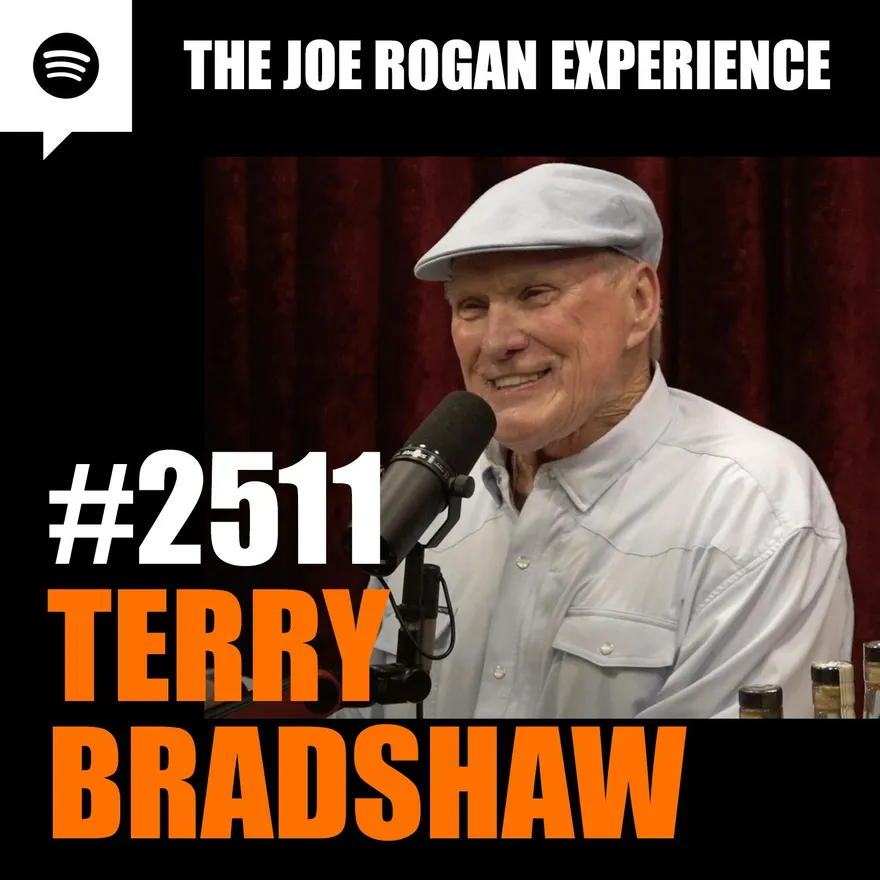

This is a preview of the Shortform summary of the Jun 9, 2026 episode of the The Joe Rogan Experience
Sign up for Shortform to access the whole episode summary along with additional materials like counterarguments and context.
1-Page Summary
Personal Relationships, Friendship, and Life Philosophy
In conversation with Joe Rogan, Terry Bradshaw explores the complexities of maintaining friendships, acknowledging the limitations of social connections, and the challenges arising from his overwhelmingly friendly nature.
Understanding the Limits of Social Connections
Rogan introduces Dunbar's Number, which suggests humans can only maintain about five truly close relationships, despite recognizing up to 1,500 faces. Bradshaw relates to this, admitting that while he calls many people "friends," most are acquaintances. His wife frequently reminds him that having someone's number doesn't constitute a close friendship, especially if they haven't spoken in years. Maintaining deep friendships is particularly challenging given his extensive travel schedule.
Importance of Reciprocity and Genuine Care in Friendships
Bradshaw emphasizes that friendship requires effort from both sides and admits feeling hurt when he's always the one initiating contact. True friendship, to him, involves vulnerability and the courage to apologize when wrong—like when he offered a heartfelt apology to his horse trainer after unintentionally dismissing her work. However, he recognizes that even sincere apologies sometimes don't restore friendships, recounting a best friend who never spoke to him again despite repeated apologies. When friendships end due to unforgiveness, Bradshaw sees that as beyond his control.
Choosing Quality Relationships Over Quantity
Bradshaw's closest relationships center on shared interests, particularly horses, cattle, and his Fox Sports colleagues. He describes the Fox Sports team as a special group where trust and camaraderie create an environment akin to a locker room, filled with laughter and support. He stresses that trust is foundational—knowing boundaries ensures friendships survive, especially in live television's high-pressure context.
The Burden Of Being Overly Friendly
Bradshaw's outgoing nature often leads to over-sharing personal details with strangers, a habit his wife regularly points out. This friendliness sometimes causes disappointment when others don't reciprocate his openness. He continues to value sincerity, shared interests, and forgiveness, accepting that not everyone will reciprocate and making peace with friendships that fade.
Health, Medical Treatments, and Personal Health Experiences
Bradshaw shares his experiences with major health challenges, non-traditional treatment approaches, and skepticism toward certain medical innovations.
Major Health Challenges and Cancer Treatment
Bradshaw has faced multiple cancer diagnoses, including bladder cancer and rare Merkel cell cancer, which affects only 2% of Americans. After initially being told his symptoms were nothing serious, his wife identified a Yale specialist who diagnosed him. Following radiation treatment, he faced a difficult choice: continuing rheumatoid arthritis medication could increase his cancer risk, so he discontinued it three years ago despite increased pain.
Rheumatoid Arthritis Management Without Pharmaceutical Intervention
Bradshaw developed painful rheumatoid arthritis after cancer treatment, particularly in his hands, hip, and ankle. Avoiding pharmaceutical anti-inflammatories, he manages his condition mainly with turmeric and natural supplements, reducing his pain by about eighty percent. Despite Rogan's promotion of stem cell treatments, Bradshaw remains skeptical, believing they provide only temporary relief requiring frequent repeat sessions.
Covid-19 Experience and [restricted term] Use
After contracting Covid-19 at Fox, Bradshaw became seriously ill within days. His doctor prescribed [restricted term], which surprised him as he initially didn't understand it was a legitimate human medication. He followed the prescription and successfully recovered.
Past Athletic Injuries and Treatment Protocols
During his 1970s football career, playing through injuries with cortisone injections was standard practice. Bradshaw recalls being knocked unconscious in a playoff game and returning in the fourth quarter—something that would violate today's strict concussion protocols. He contrasts this with modern NFL and UFC standards that prioritize player safety.
Career, Culture, and Steroid Use in Sports
Bradshaw and Rogan discuss the dramatic changes in athlete physiques, the evolution of steroid use in sports, and reflections on leadership in football's earlier eras.
Evolution of Player Physiques and Nutrition
Modern NFL players are significantly larger than their 1970s counterparts. Bradshaw's offensive line averaged 260 pounds, while today's linemen often weigh 360 to 372 pounds. The panel attributes this to improved nutrition, advanced training, and genetics, noting that even high school teenagers display remarkable size today.
Widespread Steroid Use in Professional Sports
Steroid use has long been widespread in professional sports. Bradshaw admits he was unaware of anabolic steroids during his playing days, mistakenly conflating them with cortisone shots. The conversation notes that once drug testing became randomized, steroid use decreased but wasn't eliminated. Rogan explains that steroids enable rapid muscle growth that tendons and ligaments can't support, leading to increased injury risk.
The Role of Steroids in Baseball's "Steroid Era"
Steroid use dramatically altered baseball during the "Steroid Era." Players like Mark McGwire, Sammy Sosa, and Barry Bonds achieved previously impossible home run totals with obvious physical transformations. Despite their impressive records, many are now barred from the Hall of Fame because of suspected or admitted steroid use.
Quarterback Leadership and Injury Management in the 1970s
Bradshaw reflects on running his huddle democratically, soliciting teammate input to select the best plays. He also describes the expectation that quarterbacks would always play regardless of injury, receiving shots before and during games to manage pain—an attitude that playing through injury was not only expected but required.
Terry Bradshaw's Bourbon Whiskey Business and Entrepreneurship
Bradshaw's bourbon business showcases his entrepreneurial spirit and emphasis on quality over celebrity branding.
The Genesis of the Bourbon Brand
After his father's death, Bradshaw revisited the idea of entering the spirits business. Secretary of State William Cohen encouraged him to pursue a business that could supplement income and reduce his extensive travel schedule. Bradshaw founded a bourbon business specifically emphasizing product quality rather than relying on celebrity status.
The Development and Quality of Bradshaw Bourbon
Bradshaw spent a year and a half developing the bourbon blend, refusing to bottle anything until satisfied. This led to award-winning bourbon, particularly the 12-year variety, which has triumphed at major competitions. The range includes various age variants and proofs, with some single barrel offerings reaching 145 proof.
Business Model and Current Status
Bradshaw Bourbon is available in eleven states and online. Growth is inherently slow due to the aging process required for quality bourbon—unlike vodka or tequila, bourbon requires years of maturation. Bradshaw expresses frustration that selling on quality alone is difficult, as many consumers associate his bourbon with celebrity status rather than its merits, contrasting this with his prizewinning quarter horse operation, which thrives independently of his fame.
Entertainment Career, Public Speaking, and Television Work
The Fox Sports Show and On-air Relationships
Bradshaw describes himself as fortunate to work with cohosts at Fox Sports, emphasizing that their genuine camaraderie translates to an enjoyable viewing experience. He shares a special connection with Howie Long, his best friend on the show, and admires Howie's decision to leave a rising film career to prioritize raising his children.
Public Speaking Career Spanning Four Decades
Bradshaw's speaking career began unexpectedly over forty years ago. After a successful speech in Florida, his then-wife sent the tape to speaker bureaus, leading to increased demand. A pivotal moment came when the Washington Speakers Bureau offered an exclusive contract at rates that eventually reached $10,000 per speech. His speeches revolve around leadership, ambition, failure, success, and treating people well, drawing from about eight hours of material enriched by extensive reading on psychology and leadership.
Speaking Style and Audience Engagement
Bradshaw approaches every speech with a comedian's instinct, tailoring delivery to crowd reactions and improvising freely. This interactive style doesn't always mesh with client expectations—once in Las Vegas, a misunderstanding led to him being escorted off stage after ten minutes. He takes personal responsibility for each event's outcome, experiencing intense emotional investment in his performances.
Television and Film Work
Bradshaw has appeared in five movies but acknowledges audiences see him as Terry Bradshaw rather than any character. He doesn't consider himself a serious actor and expresses deep respect for the intelligence and dedication required for serious acting, pointing to actors like Bradley Cooper and Cillian Murphy as exemplars of the craft.
1-Page Summary
Additional Materials
Counterarguments
- Dunbar's Number is a hypothesis and not universally accepted; some research suggests humans can maintain more or fewer close relationships depending on individual and cultural differences.
- The distinction between "friend" and "acquaintance" can be subjective and culturally variable; some people value broader social networks over a few deep connections.
- Having someone's phone number may still facilitate meaningful reconnection, even after long periods without contact.
- Technology and social media can help maintain deep friendships despite travel or distance.
- Some friendships can thrive with infrequent contact, relying on mutual understanding rather than constant reciprocity.
- Not all friendships require vulnerability or apologies to be meaningful; some are based on shared activities or interests without deep emotional exchange.
- The end of a friendship may sometimes be within one's control if approached differently or with more persistence.
- Trust and boundaries are important, but some high-pressure environments foster strong bonds even without explicit boundaries.
- Over-sharing can sometimes foster deeper connections rather than disappointment, depending on context and personalities involved.
- Natural supplements like turmeric have limited scientific evidence for managing rheumatoid arthritis compared to pharmaceutical treatments.
- Skepticism toward stem cell treatments is valid, but some clinical evidence supports their efficacy for certain conditions.
- [restricted term] is not widely recommended by major health organizations for Covid-19 treatment due to insufficient evidence of efficacy.
- Playing through injuries is now widely recognized as harmful, and past practices are criticized for risking long-term health.
- Improved player size in modern sports is also linked to increased injury rates and health concerns, not just positive advancements.
- Steroid use in sports is still a significant issue despite drug testing, and some argue that testing protocols remain insufficient.
- Some believe that Hall of Fame exclusions for steroid-era players are unfair given the era's widespread use and lack of clear rules at the time.
- Democratic huddle management is not universally effective; some teams and coaches prefer more hierarchical leadership styles.
- Emphasizing product quality over celebrity branding is admirable, but celebrity status can be a legitimate and effective marketing tool.
- The slow growth of bourbon businesses is a known industry challenge, not unique to Bradshaw's brand.
- Public speaking success often depends on adapting to client expectations, and improvisational styles may not suit all audiences.
- Being seen as oneself rather than a character can be an asset in certain entertainment roles, especially in reality or personality-driven media.
Actionables
- you can strengthen your closest relationships by scheduling a recurring, low-effort check-in ritual, like sending a monthly voice memo or photo update to your top five friends, making it easy to maintain meaningful contact even during busy or travel-heavy periods; this keeps bonds active without requiring lengthy conversations and helps both parties feel valued.
- a practical way to avoid disappointment from over-sharing is to set a personal rule to share one meaningful detail at a time with new acquaintances and wait for a reciprocal response before opening up further; this helps you gauge trust and interest, reducing the risk of feeling let down if others don’t match your openness.
- you can build trust and set healthy boundaries in high-pressure environments by creating a simple, private “comfort code” with close colleagues or friends—such as a phrase or emoji you can use to signal when you need support or space—making it easier to navigate stressful situations together without overstepping or misunderstanding each other’s needs.
Get access to the context and additional materials
Personal Relationships, Friendship, and Life Philosophy
Terry Bradshaw, in conversation with Joe Rogan, explores the intricacies of friendship, the limitations of social connections, the importance of reciprocity, and the challenges that arise from his overwhelmingly friendly nature.
Understanding the Limits of Social Connections
Joe Rogan introduces the concept of Dunbar's Number, which posits that humans are evolutionarily limited in the number of genuine social relationships they can maintain. The model explains that while people may recognize up to 1,500 faces, true close connections typically number about five, with broader networks encompassing 15, 50, or 150 people. Terry Bradshaw relates to this idea, acknowledging that although he meets countless people and calls many of them "friends," many are actually acquaintances he simply likes or has met years ago. His wife often points out that possessing someone's number doesn't make them a close friend, especially if they haven't spoken for years.
Terry admits that maintaining deep friendships is challenging, especially as his career keeps him traveling. He notes that even with people he considers friends, it’s common not to speak for years, but the bond can feel present if they reconnect.
Importance of Reciprocity and Genuine Care in Friendships
Terry reflects on how friendship requires effort from both sides. He feels hurt when he notices that he is always the one initiating contact, desiring mutual effort rather than one-sided maintenance. He confesses to feeling a level of insecurity when he pursues reciprocation, wanting others to value him as much as he values them. His wife has shown him that many people are simply friendly, not necessarily friends in the deeper sense.
True friendship, to Terry, involves vulnerability and the courage to apologize when he is in the wrong. He recounts an experience with his horse trainer, whom he unintentionally hurt by seeming to diminish her work with his horse. Realizing his mistake, Terry prayed for the courage to apologize and then offered a heartfelt, face-to-face apology, expressing his regret and reaffirming the trainer's importance as a friend. He notes that genuine care requires saying sorry when necessary and hoping the relationship can move forward.
However, Terry recognizes that sometimes, even heartfelt apologies do not restore a friendship. He mentions having a best friend who never spoke to him again after he apologized repeatedly for a hurtful joke. For Terry, when a friendship ends because the other party won’t forgive or move past conflict, he sees that as their flaw, not something he can control.
Choosing Quality Relationships Over Quantity
Terry emphasizes that his closest relationships are with those who share common interests, particularly horses, cattle, and his colleagues at Fox Sports. These shared interests and values create a strong bond. He describes the Fox Sports team as a special group where teamwork and trust foster both good humor and support. He finds the camaraderie on the show akin to a locker room, ...
Here’s what you’ll find in our full summary
Personal Relationships, Friendship, and Life Philosophy
Additional Materials
Clarifications
- Dunbar's Number is a theory proposed by anthropologist Robin Dunbar, suggesting humans can maintain about 150 stable social relationships. This limit arises from cognitive constraints related to brain size and social processing capacity. The number 150 represents the maximum group size where individuals can know each other well enough to maintain meaningful connections. Smaller circles within this number, like 5 or 15, represent closer, more intimate relationships.
- Acquaintances are people you know casually without deep emotional connection. Friends share mutual trust, regular interaction, and some emotional support. True close friends have strong emotional bonds, high trust, and significant mutual vulnerability. These distinctions reflect increasing levels of intimacy and commitment.
- Reciprocity in friendships means both people invest time, care, and effort equally, creating balance and trust. One-sided effort can lead to feelings of being undervalued or taken for granted, causing emotional insecurity. This imbalance may make someone question the friendship’s authenticity and their own worth. Healthy relationships rely on mutual support to feel secure and meaningful.
- Apologizing in friendships signals accountability and respect, helping to repair trust after conflicts. Social norms expect sincerity and timely apologies to show genuine remorse. Emotional impact includes relief for the apologizer and potential healing for the hurt party, but forgiveness is not guaranteed. Repeated or insincere apologies can strain relationships instead of mending them.
- Friendship requires mutual forgiveness to heal conflicts and maintain trust. When one person refuses to forgive, it blocks reconciliation and can end the relationship. This refusal is seen as a choice that prioritizes holding onto hurt over repairing the bond. Therefore, the fault lies with the unforgiving party, as forgiveness is essential for friendship continuity.
- Shared interests and values create common ground that fosters understanding and connection between people. They provide topics for conversation and activities to enjoy together, strengthening bonds. Shared values align expectations and behaviors, reducing conflicts and building trust. This foundation makes relationships more meaningful and enduring.
- Trust in friendships means believing that others will respect your feelings and keep confidences. Setting boundaries involves clearly communicating what topics or behaviors are acceptable to avoid misunderstandings or hurt feelings. In high-pressure environments like live television, stress and time constraints can strain relationships, making trust and boundaries essential to prevent conflicts. Maintaining these helps ensure cooperation, emotional safety, and smooth teamwork under pressure.
- A workplace team environment fosters friendships by c ...
Counterarguments
- While Dunbar's Number is widely cited, some researchers argue that social capacity is more flexible and context-dependent than the model suggests, especially with digital communication expanding the ways people maintain connections.
- The distinction between acquaintances and friends can be subjective; some cultures or individuals value broader, less intense networks and consider them meaningful.
- Deep friendships can sometimes be maintained with infrequent contact, and the quality of connection may matter more than frequency.
- Reciprocity in friendships is important, but relationships can be asymmetrical at times without indicating a lack of value or care; life circumstances may temporarily affect one’s ability to reciprocate.
- Not all people require or desire vulnerability or apologies to maintain a friendship; some friendships are based on shared activities or mutual benefit rather than emotional intimacy.
- The belief that the fault lies solely with the person who refuses to forgive after an apology may overlook the possibility that the hurt caused was significant or that repeated offenses erode trust.
- Sha ...
Get access to the context and additional materials
Health, Medical Treatments, and Personal Health Experiences
Terry Bradshaw shares his experiences with major health challenges, non-traditional approaches to treatment, and a skeptical outlook on certain medical innovations, all shaped by his personal history and outlook.
Major Health Challenges and Cancer Treatment
Terry Survives Bladder and Merkel Cell Cancer, Affecting 2% of Americans
Terry Bradshaw has faced multiple cancer diagnoses, including bladder cancer and the rare Merkel cell cancer, which affects only 2% of Americans. After initially visiting a doctor in Dallas for blood in his urine and being told it was nothing serious, Bradshaw persisted due to ongoing symptoms. Ultimately, his wife identified a top specialist at Yale. There, after an exploratory biopsy, doctors diagnosed him with bladder cancer.
Radiation Therapy For Cancer Prevented Rheumatoid Arthritis Medication
Following cancer treatment, including radiation, Bradshaw faced a dilemma: continuing rheumatoid arthritis medication could increase his cancer risk. As a result, he discontinued his pharmaceutical regimen for rheumatoid arthritis three years ago, acknowledging increased pain but unwilling to take the risk with his ongoing cancer concerns.
Rheumatoid Arthritis Management Without Pharmaceutical Intervention
Terry Developed Rheumatoid Arthritis After Cancer Treatment, Pain in Knee, Hands, Hip, Ankle
Bradshaw describes developing painful rheumatoid arthritis after his cancer battle, especially in his hands, hip, and ankle. His fingers and thumb have become deformed, with significant morning pain.
He Relies On Turmeric and Natural Supplements Rather Than Pharmaceutical Anti-Inflammatory Medications and Reduces His Pain By Eighty Percent
Avoiding pharmaceutical anti-inflammatories, Bradshaw manages his arthritis mainly with turmeric and natural supplements. He notes that taking these reduces his pain by about eighty percent, especially after experiencing side effects and health risks with more conventional medications.
Declines Stem Cell Treatment For Arthritis, Citing Skepticism Despite Joe's Arguments
Though Joe Rogan promotes the effectiveness of stem cell treatments, Bradshaw remains unconvinced, citing his perception that stem cells provide only temporary relief, requiring frequent repeat sessions. He is skeptical of treatments that involve unfamiliar substances or ongoing, repeated interventions.
Covid-19 Experience and [restricted term] Use
Terry Contracted Covid-19 At Fox, Initially Felt Fine, Became Seriously Ill After Four Days
Bradshaw contracted Covid-19 while at Fox. Though initially asymptomatic, he became quite ill within a few days.
Prescribed [restricted term] By Doctor, Unaware It's a Legitimate Human Medication
On advice and prescription from his doctor, Bradshaw took [restricted term], not understanding at first that it was a legitimate medication for humans rather than just a cattle dewormer. His experience mirrored much public confusion about [restricted term], admitting surprise that it had won a Nobel Prize for its use in treating certain human diseases.
Terry Used Medication and Natural Recovery For Covid
Despite his skepticism and lack of prior knowledge, Bradshaw followed his doctor’s prescription and successfully recovered from Covid, combining his prescribed treatment with his own methods of rest and recovery.
Past Athletic Injuries and Treatment Protocols
Football Career Injections in 1970s Were Standard Practice For Terry's Injuries
During his football career in the 1970s, injections for pain and injury were common practice. Bradshaw recounts playing through significant injuries, receiving shots before and during games to remain on the field.
Playing Through Injury: Enduring an Oblique Tear With Cortisone ...
Here’s what you’ll find in our full summary
Health, Medical Treatments, and Personal Health Experiences
Additional Materials
Counterarguments
- While turmeric and natural supplements may help some individuals manage arthritis symptoms, there is limited high-quality clinical evidence supporting their effectiveness as a primary treatment for rheumatoid arthritis compared to established pharmaceutical therapies.
- Discontinuing pharmaceutical treatment for rheumatoid arthritis can lead to increased joint damage and disability over time, as disease-modifying antirheumatic drugs (DMARDs) are the standard of care for preventing progression.
- Stem cell therapies for arthritis are still under investigation, but some clinical studies suggest potential long-term benefits for certain patients, and dismissing them entirely may overlook emerging evidence.
- [restricted term] is not recommended by major health organizations (such as the FDA, CDC, and WHO) for the treatment of Covid-19 outside of clinical trials, due to insufficient evidence of efficacy and potential safety concerns.
- Playing through serious injuries and concussions, as was common in the 1970s, is now recognized as dangerous and can lead to long-term healt ...
Actionables
- you can create a personal health timeline to track symptoms, treatments, and outcomes over time, helping you spot patterns and make more informed decisions about when to seek specialist advice or adjust your care plan; for example, note when new symptoms appear, what you try for relief, and how your body responds, so you can discuss specifics with your doctor.
- a practical way to evaluate new or unfamiliar treatments is to make a simple pros and cons chart for each option, including your comfort level, potential side effects, and how often you’d need to repeat the treatment; this helps you weigh your willingness to try something new versus sticking with traditional approaches.
- you can set up a recurring reminder to review your med ...
Get access to the context and additional materials
Career, Culture, and Steroid Use in Sports
This discussion between Terry Bradshaw, Joe Rogan, and others covers the dramatic changes in athlete physiques, the evolution and implications of steroid use in sports, and reflections on leadership and toughness in football’s earlier eras.
Evolution of Player Physiques and Nutrition
Bradshaw and Rogan observe that modern NFL players are significantly larger than their counterparts from the 1970s. Whereas Bradshaw’s 1970s offensive line averaged about 260 pounds, today’s linemen often come in around 360 to 372 pounds, with some players even reaching 464 pounds—the heaviest in NFL history. The panel notes that not only are NFL athletes bigger, but even teenagers in high school display remarkable size due to a combination of improved nutrition, advanced training, and improved strength programs. Genetics also play a considerable role, as children today seem physically larger than in past generations.
Widespread Steroid Use in Professional Sports
Steroid use has long been widespread in professional sports. Bradshaw admits he was unaware of what steroids were during his playing days as a quarterback, mistakenly conflating cortisone shots with anabolic steroids. He recounts how, during his era, he noticed some players with extraordinary physiques—like his teammate Larry Brown—but did not question their origins, simply attributing it to hard work in the weight room.
The conversation points out that in the 1970s and 1980s, some athletes openly used steroids. While not all players engaged in drug use, many did, especially in the early days of sports like the UFC and pro wrestling, where testing was either non-existent or easy to circumvent. Once drug testing was instituted and became randomized, steroid use decreased but was not eliminated entirely. Rogan notes that new drug tests revealed the extent of steroid use, fundamentally altering athletes’ physiques when stricter enforcement began.
The Consequences of Steroid Use on Athletic Performance
The group explains that steroids enable muscles to grow much faster and larger than what tendons and ligaments can handle. Since these connective tissues do not receive the same blood supply and strengthen slower than muscles, athletes who use steroids face an increased risk of severe injuries. Rogan points out the many cases in which athletes with massive muscle growth suffered from tendon and ligament injuries, as their joints could not support the new strength and size.
They note that this imbalance is especially evident in sports like bodybuilding and wrestling. Wrestlers and bodybuilders who attain extreme physiques almost certainly do so with the help of steroids, as such bodies are virtually unattainable naturally. Bradshaw points out that pro wrestlers in particular had bodies that were not possible without performance-enhancing drugs, and because testing was lax or non-existent, many exploited that environment to grow as big as possible.
The Role of Steroids in Baseball's "Steroid Era"
Steroid use dramatically altered baseball during the so-called “Steroid Era.” Bradshaw and Rogan recall how players like Mark McGwire, Sammy Sosa, and Barry Bonds hit home run totals previously thought impossible and underwent obvious physical transformations. Barry Bonds, for example, was already a great b ...
Here’s what you’ll find in our full summary
Career, Culture, and Steroid Use in Sports
Additional Materials
Counterarguments
- While modern NFL players are larger, increased size does not always correlate with improved athletic performance or health; some argue that excessive weight can lead to higher rates of chronic injuries and health issues post-career.
- Improved nutrition and training are significant, but socioeconomic factors and access to resources also play a role in athlete development, which can create disparities not addressed in the discussion.
- The prevalence of steroid use in the 1970s and 1980s is difficult to quantify, as much of the evidence is anecdotal and not all athletes used or condoned performance-enhancing drugs.
- Not all extreme physiques in bodybuilding or wrestling are solely the result of steroid use; genetics, training intensity, and legal supplements can also contribute, though steroids are a major factor.
- The assertion that steroid use is necessary for extreme physiques may overlook natural outliers and the role of advanced, legal supplementation and training methods.
- The exclusion of steroid-era baseball players from the Hall of Fame is controversial; some argue that the era’s lack of clear rules and widespread use means these players should not be singled out for punishment.
- The focus on steroid use as the primary reason for increa ...
Actionables
- You can track your own physical changes over time by keeping a simple log of your nutrition, exercise routines, and body measurements to see how different habits affect your strength and size, helping you make informed choices about your health and fitness goals.
- A practical way to understand the risks of performance enhancement is to research and list the potential long-term side effects of various supplements and medications, then compare them to the benefits, so you can make safer decisions about what you put in your body.
- You can practice collaborative deci ...
Get access to the context and additional materials
Terry Bradshaw's Bourbon Whiskey Business and Entrepreneurship
Terry Bradshaw's foray into the bourbon whiskey business showcases both his entrepreneurial spirit and his emphasis on quality and authenticity over celebrity branding. His journey combines personal motivation, business acumen, and a commitment to crafting a respected whiskey product.
The Genesis of the Bourbon Brand
Terry Bradshaw considered entering the spirits business before his father's passing, directly seeking his dad's opinion. His father was firmly against the idea, leading Terry to initially shelve his interest. After his father's death, Terry revisited the idea several years later.
Secretary of State William Cohen played an important advisory role, encouraging Terry to pursue a business that could supplement income and reduce the need for constant travel. Bradshaw, known as a broadcaster and a quarter horse and cattle breeder, traveled up to 250 days a year, and Cohen suggested branding himself to create more stability.
Motivated by both the need for steadier income and a desire to focus on something meaningful, Bradshaw founded a bourbon business. He specifically set out to emphasize product quality rather than relying on his celebrity status.
The Development and Quality of Bradshaw Bourbon
Bradshaw’s dedication to quality is evident in the creation process. He spent a full year and a half developing the bourbon blend, refusing to bottle anything until satisfied with the result. This commitment led to the production of award-winning bourbon, particularly the 12-year variety, which has triumphed at major spirits competitions.
Bradshaw Bourbon offers several age variants and proofs. The original is a two-year-old bourbon, praised for its taste—due in part to a unique yeast that rendered youthfulness into a more mature flavor. The range includes four and six-year variants, as well as the celebrated 12-year bourbon, which now ages into 13 years and has only 15 cases left. The proofs vary, with some single barrel offerings reaching up to 145 proof, while others are diluted down to 103.8 proof.
Business Model and Current Status
Bradshaw Bourbon is currently available in eleven states and online through terrybradshawbourbon.com. The business is still growing, with Terry modestly noting he expects to earn only around $6,000 this year, emphasizing his focus on product quality and long-term brand building ...
Here’s what you’ll find in our full summary
Terry Bradshaw's Bourbon Whiskey Business and Entrepreneurship
Additional Materials
Clarifications
- Terry Bradshaw is a former professional American football quarterback and a well-known sports broadcaster. He gained fame playing for the Pittsburgh Steelers, winning four Super Bowl titles in the 1970s. His celebrity status matters because it can attract initial attention and customers to his bourbon brand. However, Bradshaw emphasizes that the product's quality should stand on its own, beyond his fame.
- William Cohen, as a former Secretary of State and experienced public figure, likely offered strategic advice on personal branding and business stability. His suggestion to create a business to supplement income and reduce travel reflects common entrepreneurial guidance to diversify revenue streams. This advice highlights the importance of leveraging one's reputation to build a sustainable enterprise. It also underscores the value of balancing career demands with personal and financial stability.
- Proof is a measure of the alcohol content in a spirit, expressed as twice the percentage of alcohol by volume (ABV). For example, a bourbon with 50% ABV is 100 proof. Higher proof means higher alcohol concentration and often a stronger flavor. Proof helps consumers understand the strength and potency of the whiskey.
- Bourbon must be aged in new charred oak barrels for a minimum of two years to develop its flavor. During aging, the whiskey interacts with the wood, gaining complexity and smoothness, which cannot be rushed. This maturation ties up inventory and capital, delaying sales and revenue. Therefore, bourbon businesses grow slowly compared to spirits that require little or no aging.
- Yeast is a microorganism that ferments sugars in the mash, producing alcohol and flavor compounds. Different yeast strains create unique esters and phenols, which influence the bourbon's aroma and taste. Yeast also affects the texture and mouthfeel by contributing to the development of congeners during fermentation. Thus, selecting a specific yeast strain is crucial for crafting a distinctive bourbon flavor profile.
- Single barrel bourbon is bottled from an individual aging barrel, giving each bottle a unique flavor profile. Other bourbons are typically blended from multiple barrels to create a consistent taste. This blending smooths out variations found in single barrels. Single barrel offerings often have more distinct and varied flavors compared to blended bourbons.
- A quarter horse is a breed known for its speed and agility over short distances, popular in rodeo and ranch work. Breeding quarter horses and cattle involves selecting animals for desirable traits to improve stock quality. This background shows Bradshaw's experience in managing and developing high-quality livestock businesses. It highlights his understanding of craftsmanship and patience, relevant to his bourbon venture.
- Consumers often associate products with celebrities because famous individuals bring instant recognition and trust. Celebrity endorsements create a strong emotional connection, making people more likely to try the product. Marketing strategies frequently hig ...
Counterarguments
- While Terry Bradshaw emphasizes quality over celebrity branding, the initial market interest and distribution opportunities for Bradshaw Bourbon likely benefited from his fame, making it difficult to separate the product’s success from his celebrity status.
- The claim that Bradshaw Bourbon’s quality stands on its own is challenged by the reality that many consumers may purchase it primarily because of the Bradshaw name, regardless of the product’s intrinsic merits.
- The business’s slow growth and modest earnings suggest that entering the bourbon market is highly competitive and challenging, even for a well-known figure, and that quality alone may not be sufficient for commercial success.
- The use of a two-year-old bourbon as the original product, despite claims of mature flavor, may not appeal to bourbon enthusiasts who typically value longer aging periods for complexity and depth.
- The narrative of aut ...
Get access to the context and additional materials
Entertainment Career, Public Speaking, and Television Work
The Fox Sports Show and On-air Relationships
Terry Bradshaw describes himself as fortunate for working with four, sometimes five, cohosts at Fox Sports, emphasizing that bringing together several big egos in an environment of genuine care and camaraderie is rare and special. He compares the dynamic to a locker room, full of fun and authenticity. This authentic friendship among the hosts translates to an enjoyable viewing experience for audiences, who are drawn to the sense that the group truly likes one another.
Bradshaw highlights the trust that exists among the hosts, explaining that it enables them to joke without causing offense. He stresses the importance of knowing your audience—both on camera with friends and in front of live television viewers—since no one wants to embarrass anyone on live TV. Over time, they’ve developed close personal bonds; Bradshaw shares a special connection with Howie Long, his best friend on the show, despite their different backgrounds. He frequently speaks with Howie, noting that their friendship extends beyond the workplace, including celebrating milestones like Howie’s son Kyle’s recent career move. Bradshaw admires Howie’s decision to prioritize family, even leaving a rising film career to raise his children outside Los Angeles.
Public Speaking Career Spanning Four Decades
Bradshaw’s public speaking career spans over forty years. It began unexpectedly when he gave a speech in Destin, Florida; the event was taped, and he received a then-lucrative payment of $5,000 for his appearance—much higher than the $850 to $1,200 he had received previously. His then-wife recognized the quality and humor in his performance and proactively sent the tape and Bradshaw’s biography to ten major speaker bureaus. Interest grew, and he secured engagements at the $5,000 rate.
A pivotal moment came when the Washington Speakers Bureau contacted him while he was vacationing in Hawaii, offering an exclusive contract: 50 speeches at $7,500 each. Bradshaw was astonished and accepted, with the guarantee that his rate would rise to $10,000 per speech within six months. This exclusive deal marked his transition into a high-demand, well-compensated speaker.
Speaking Content and Delivery Philosophy
Bradshaw’s speeches revolve around themes of leadership, ambition, dreams, goals, coping with failure and success, and the importance of treating people well. He builds each speech according to the needs of his audience and draws from about eight hours of material, incorporating new stories as they emerge. His content is shaped and enriched by constant self-improvement; he reads extensively on psychology, salesmanship, and leadership, applying insights from these fields as well as drawing from his own career experiences. Bradshaw’s speeches blend humor, motivation, and psychology, making each presentation both entertaining and uplifting.
Speaking Style and Audience Engagement
Bradshaw approaches every speech with a comedian’s instinct, tailoring his delivery to the crowd’s reactions. He improvises, adjusts his direction within minutes, and frequently incorporates the audience into his act, aiming for genuine engagement and laughter. This interactive, flexible style doesn’t always mesh with every client’s expectations—as when, in Las Vegas, a misunderstanding of his crowd-warming style led to him being escorted off stage ...
Here’s what you’ll find in our full summary
Entertainment Career, Public Speaking, and Television Work
Additional Materials
Clarifications
- Terry Bradshaw is a former professional American football quarterback who played for the Pittsburgh Steelers in the NFL. He won four Super Bowl championships and was inducted into the Pro Football Hall of Fame. After retiring from football, he became a well-known sports analyst and television personality. His charisma and humor helped him transition successfully into entertainment and public speaking.
- Howie Long is a former professional American football player who played as a defensive end in the NFL, primarily for the Oakland/Los Angeles Raiders. After retiring from football, he became a sports analyst and television personality, notably working with Fox Sports. Long is also known for his acting roles in films and TV shows. He is recognized for balancing his entertainment career with family priorities.
- The Fox Sports Show is a sports talk television program featuring former athletes and sports analysts as cohosts. It combines game analysis, commentary, and casual conversation in a studio setting. The format often includes humor, debates, and personal stories to engage viewers. The show aims to provide both entertainment and insight into sports topics.
- Speaker bureaus are agencies that represent public speakers and connect them with organizations seeking to hire them for events. They handle negotiations, scheduling, and logistics, making it easier for both speakers and clients. The Washington Speakers Bureau is a well-known agency specializing in high-profile and professional speakers. It often offers exclusive contracts to speakers, ensuring steady bookings and higher fees.
- Typical public speaking fees vary widely based on the speaker's fame, expertise, and event type, often ranging from a few hundred to several thousand dollars. Bradshaw’s rates are notable because his initial $5,000 fee was significantly higher than average for a former athlete transitioning to speaking. Securing an exclusive contract guaranteeing $7,500 to $10,000 per speech is exceptional, reflecting high demand and prestige. Such rates place him among top-tier professional speakers.
- A "locker room" atmosphere refers to a casual, relaxed environment where people feel comfortable being themselves. It implies open, honest communication and camaraderie, often with humor and teasing among close friends. In a TV show, this suggests the hosts interact naturally, creating an authentic and engaging experience for viewers. This vibe contrasts with formal or scripted interactions, making the show feel more genuine.
- Live television hosting demands quick thinking and adaptability to handle unexpected events without mistakes. Hosts must maintain a positive, engaging demeanor while managing technical issues, timing, and interactions with cohosts and guests. There is constant pressure to avoid embarrassing errors since broadcasts cannot be edited in real time. Success relies on strong communication skills, teamwork, and the ability to read and respond to the audience instantly.
- Public speaking involves delivering prepared or improvised speeches to inform, motivate, or entertain live audiences. Sports commentary is the real-time narration and analysis of sports events, often broadcast on TV or radio. Acting requires portraying characters in scripted performances for film, television, or theater, involving memorization and emotional expression. Each career demands distinct skills: public speaking focuses on communication and engagement, commentary on quick thinking and knowledge, and acting on transformation and performance.
- Improvisation in public speaking allows the speaker to adapt to the audience’s mood and reactions, making the presentation more relevant and engaging. Audience interaction creates a connection, keeping listeners attentive and involved. This dynamic exchange helps the speaker gauge understanding and adjust content or tone accordingly. Together, these techniques enhance the overall impact and memorability of the speech.
- Howie Long is a former NFL player turned sports analyst and actor. He pursued a film career in Hollywood, which demanded long hours and frequent travel. To prioritize his family, he chose to leave the entertainment industry and relocate away from Los Angeles. This decision allowed him to spend more time raising his children and ...
Counterarguments
- While Bradshaw emphasizes the rarity and authenticity of camaraderie among Fox Sports hosts, some viewers may perceive on-air chemistry as part of a carefully crafted television persona rather than genuine friendship.
- The comparison of the studio environment to a "locker room" may not resonate with all audiences, as some might find such atmospheres exclusionary or unrelatable.
- The claim that authentic friendships among hosts create a better viewing experience is subjective; some viewers may prioritize analysis or sports coverage over host relationships.
- Trust among hosts allowing for jokes without offense may not always translate to the audience, as humor that is acceptable within a group can sometimes be misinterpreted or found inappropriate by viewers.
- Bradshaw’s admiration for Howie Long’s decision to leave Hollywood for family is presented as exemplary, but others may see balancing career and family differently, and not all families have the means or flexibility to make such choices.
- The narrative of Bradshaw’s public speaking career highlights financial success and opportunity, but does not address the role of celebrity status in opening doors that may not be available to less well-known speakers.
- Bradshaw’s approach to customizing speeches and engaging audiences is praised, but some clients or audiences may prefer a more structu ...
Get access to the context and additional materials


Create Summaries for anything on the web
Download the Shortform Chrome extension for your browser
