

JRE MMA Show #180 with Daniel Rodriguez
In this episode of The Joe Rogan Experience, UFC welterweight Daniel Rodriguez shares his story of spending eight months in a Mexican prison after being arrested at the border with an ounce of marijuana. Rodriguez discusses the stark differences between Mexican drug laws for citizens versus tourists, the corruption and cartel control within the prison system, and the violence he witnessed during his incarceration. He describes how he maintained his fighting spirit through makeshift training despite severe malnutrition.
The conversation also covers Rodriguez's rapid physical recovery after release, his preparations for headlining the UFC's first event in Serbia, and the unique mental edge he gained from his street fighting background and prison experience. Rodriguez reflects on his transformation from gang member to UFC contender, explaining how fatherhood and mixed martial arts provided him a path forward and how his ordeal in Mexico fundamentally reshaped his perspective on freedom and opportunity.
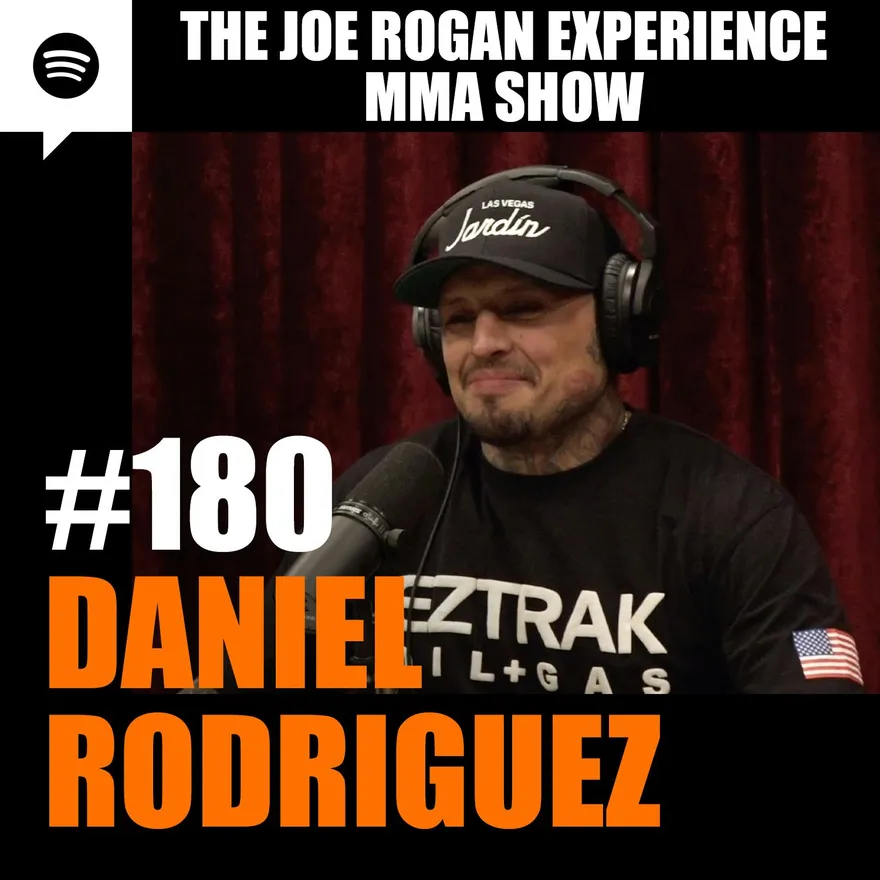

This is a preview of the Shortform summary of the Jun 2, 2026 episode of the The Joe Rogan Experience
Sign up for Shortform to access the whole episode summary along with additional materials like counterarguments and context.
1-Page Summary
Daniel Rodriguez's Marijuana Arrest and Imprisonment in Mexico
Rodriguez's Arrest at Mexico-US Border
Following a victory in San Diego, Daniel Rodriguez drove to Tijuana to celebrate, bringing an ounce of marijuana—assuming cannabis use in Mexico was decriminalized. Mexican authorities discovered the marijuana at the border, and what Rodriguez expected to be a short weekend detention turned into eight months of imprisonment. The situation was complicated by the difference in Mexican drug laws: while residents can possess up to 28 grams with decriminalized penalties, tourists face severe legal consequences for the same amount. Rodriguez's case was further complicated by judicial turnover in Mexico, as new judges refused bribes and insisted on following the law. Authorities initially sought a six-year sentence, despite him carrying only an ounce.
Rodriguez's Path to Citizenship in Release Conditions
Rodriguez's legal team helped him obtain dual citizenship, making him eligible for the lighter penalties available to Mexican citizens under decriminalization statutes. This strategic legal maneuvering proved to be the key to his release, sparing him from years of imprisonment for a crime considered minor for Mexican citizens.
Prison Conditions, Corruption, and Cartels in Mexico's Justice System
The Structure of the Mexican Prison System
Rodriguez was initially placed in a cramped, filthy processing area before being moved to a "VIP section" that functioned dramatically differently. Inmates with money or influence accessed amenities like TVs, PlayStations, and new clothes. Rodriguez describes paying guards directly for better accommodations—initially asked for $7,000, negotiated down to $3,000 by a cartel leader who became his cellmate and protector. This cartel leader, facing charges for impersonating officials during drug raids, offered Rodriguez security and improved living conditions. Under his protection, Rodriguez accessed regular deliveries of groceries, hot plates for cooking, and even pizza orders.
Violence and Crime in Mexican Prisons
Rodriguez observed cartel members controlling prison sections and operating illicit privileges, including arranging conjugal visits through a "menu" system and smuggling drugs. His fellow inmates included convicted murderers and a hitman who claimed to have killed 30 police officers. In eight months, Rodriguez witnessed multiple overdoses, primarily from heroin, despite basic nutritional needs going unmet. Mexico holds the Guinness World Record for missing persons, reflecting broader cartel violence. Rodriguez survived by minding his own business and maintaining a calm demeanor, which earned him respect from dangerous inmates and allowed him to avoid confrontations.
Recovery and Comeback After Incarceration
Rodriguez's Fitness Regimen Despite Nutritional Limitations in Prison
During detention, Rodriguez trained obsessively, doing two or three workouts daily. He negotiated with guards to acquire boxing gloves and mitts, training with his cartel leader cellmate who had boxing experience. Rodriguez improvised equipment—crafting a double-end bag from plastic bags and a sock, and constructing a heavy bag from water gallons wrapped in a mattress mat. He spent his two 90-minute yard sessions per week running laps, inspiring other inmates to join his fitness activities.
Severe Toll of Malnutrition Despite Training Efforts
Despite exceptional training efforts, Rodriguez couldn't overcome the prison's poor nutrition. Meals consisted mainly of tortillas, rice, beans, occasional soup, and junk food, with almost no protein. Rodriguez lost significant muscle mass, dropping from his usual 200-pound walk-around weight to about 180 pounds upon release. He describes looking skeletal with no muscle tone, as if he had just finished a brutal fight cut.
Rodriguez's Struggle and Rapid Recovery After Release
Returning home, Rodriguez faced devastating physical realization—a single mile run left him exhausted, and he was overpowered wrestling with his high school-aged son. Emotionally, he experienced deep discouragement and doubts about his fighting career. However, Rodriguez drew on his resilience, focusing on 1% daily improvement and trusting consistent effort. Within two months, his recovery accelerated dramatically. Rodriguez attributes this rapid comeback to modern supplementation and advanced recovery therapies at the UFC Performance Institute, including hyperbaric chamber sessions, cryotherapy, sauna, massages, and NMN supplements. He now expresses deep appreciation for the ability to rebuild.
UFC Career Prep and Recovery For Serbia Fight
Rodriguez's Main Event Fight Timing and Significance in Serbia
Rodriguez is set to headline the first UFC event in Serbia on August 1st, facing thirteenth-ranked welterweight Yuros Medich. The bout comes roughly two months after Rodriguez's release from incarceration—a timeline he feels provides adequate preparation after initially declining a July fight. Rodriguez sees this transition from federal incarceration to headlining an international UFC event as a powerful comeback story, likening it to a movie.
Rodriguez's Training and Unique Mental Edge
Rodriguez deliberately postponed sparring until three weeks before full preparation, focusing initially on weightlifting, technical skills, and conditioning. He trains at the UFC Performance Institute, Xtreme Couture, and Freestyle MMA in Las Vegas, incorporating hyperbaric chamber sessions, NAD supplements, and PEMF beds for recovery. Rodriguez's edge comes from his background in street fighting and incarceration experiences, which cultivated fear management and composure exceeding what many UFC fighters possess. He describes the cage as a "safe environment" compared to situations he's survived, emphasizing that the presence of a referee makes it controlled. This perspective gives him a psychological advantage, as he feels gratitude rather than fear.
Competing in Front of a Serbian Crowd
Rodriguez has studied Serbian basketball crowds to mentally prepare for the intense, potentially intimidating atmosphere. Serbian fans are known for war drums, chanting, and passionate support for local athletes. The historic nature of the event—the first UFC card in Serbia—increases pressure and raises concerns about partisan judging. Rodriguez anticipates a wild atmosphere but feels mentally prepared, having watched countless videos of Serbian crowds and drawing on his experience overcoming far greater battles outside the cage.
Themes of Resilience, Redemption, and Appreciation For Freedom
Rodriguez: From Gang Member to UFC Contender
Rodriguez grew up in Los Angeles gang life from age 15, cycling in and out of jail until age 23. He estimates he's had about 200 street fights, viewing jail as a badge of honor at the time. Fatherhood became his pivotal motivation to change, though he initially struggled, trying various jobs but sabotaging his progress by falling back into crime. The turning point came when his cousin introduced him to UFC fights—watching fighters like Rampage Jackson and Chuck Liddell inspired Rodriguez to pursue mixed martial arts.
Unique Value of Late-Career Entry
Rodriguez began formal MMA training at age 25, much later than most fighters, and without any structured sports background. He quickly impressed coaches at Tap Out gym in downtown LA and transitioned into competition just six months after his first gym membership. Joe Rogan notes that Rodriguez's street fighting background gives him a unique calm under fire, and his rapid rise to top fifteen UFC welterweight contender is extremely rare, particularly in such a tough division.
Rodriguez's Gratitude and Transformation
Rodriguez's time in a Mexican prison—which he describes as significantly more harrowing than U.S. jails—fundamentally reshaped his attitude. He now speaks often of gratitude: "I'm just happy to be there. I'm lucky to be out here, I'm lucky to have my freedom, I'm lucky to be alive." Whether training or competing, Rodriguez feels joy in the process and values opportunities he never dreamed of having. His story proves that work ethic and resilience matter more than ideal circumstances, and that adversity paired with discipline and gratitude can radically transform a life once headed for tragedy.
1-Page Summary
Additional Materials
Counterarguments
- Rodriguez's assumption that marijuana laws in Mexico were the same for tourists as for residents demonstrates a lack of due diligence and personal responsibility regarding foreign legal systems.
- The narrative emphasizes Rodriguez's resilience and resourcefulness, but it could be argued that his ability to pay for better prison conditions and secure protection reflects broader issues of inequality and corruption, rather than personal merit alone.
- While Rodriguez's rapid recovery is attributed to modern supplementation and advanced therapies, access to such resources is not available to most formerly incarcerated individuals, making his comeback less universally applicable as a model of resilience.
- The portrayal of Rodriguez's transformation and gratitude may overlook the privileges and opportunities he received through his UFC career, which are not accessible to the majority of people with similar backgrounds.
- The story frames Rodriguez's experience as a redemption arc, but it does not address the broader systemic issues that contribute to cycles of incarceration and violence, both in the U.S. and Mexico.
- The focus on Rodriguez's psychological advantage from incarceration could be seen as romanticizing or trivializing the trauma and long-term negative effects that prison experiences often have on individuals.
- The narrative highlights Rodriguez's ability to negotiate and adapt in prison, but this may inadvertently downplay the suffering and lack of agency experienced by less resourceful or connected inmates.
Actionables
- you can create a personal safety checklist for international travel to avoid legal misunderstandings, including researching local laws, customs, and penalties for common activities before crossing borders; for example, make a habit of checking embassy websites and travel forums for up-to-date legal information about medications, substances, or behaviors that might be legal at home but illegal elsewhere.
- a practical way to build resilience and composure in stressful environments is to simulate discomfort at home by intentionally spending short periods in less comfortable settings (like a cold shower, a cluttered room, or skipping a meal) while practicing calm breathing and positive self-talk, then reflecting on how you managed your emotions and what you learned about your coping strategies.
- you can strengthen your gratitude and motivation by keeping a daily log where you write down one freedom or opportunity you have today that you might take for granted, and one small action you’ll take to make the most of it, such as reaching out to a friend, enjoying a walk outside, or dedicating focused time to a personal goal.
Get access to the context and additional materials
Daniel Rodriguez's Marijuana Arrest and Imprisonment in Mexico
Rodriguez's Arrest at Mexico-US Border
After securing a hard-fought victory against Kevin Holland in San Diego, Daniel Rodriguez decided to celebrate by driving to Tijuana. During this celebration, he brought an ounce of marijuana with him, assuming—like many Californians—that cannabis use in Mexico was legal or at least decriminalized. Rodriguez notes that he had crossed the border several times without incident and never expected trouble for marijuana possession, given the more lenient attitudes in California and widely misunderstood Mexican laws. However, at the border inspection, Mexican authorities discovered the marijuana in his backpack.
Initially, Rodriguez thought his detainment would be short, expecting to spend just a weekend in jail before a quick court date. Instead, he was told, "We'll see you in a month," and his detention stretched to eight months. Rodriguez explains that he had previously managed similar situations in Mexico by paying small bribes, but this time, that option was unavailable.
The situation was further complicated by the difference in marijuana possession rules for residents versus tourists. While Mexican residents can possess up to 28 grams (one ounce) of marijuana with decriminalized penalties, tourists cannot legally possess or consume drugs; doing so can result in severe legal consequences. Rodriguez, as a tourist, faced much harsher treatment, despite carrying a technically decriminalized amount.
Corrupt Mexican Judiciary's Impact on Rodriguez's Extended Detention
Rodriguez’s ordeal coincided with a period of change in the Mexican judicial system. He describes how, during his detention, there was an election and a transition to new judges who were not yet accepting bribes and were insisting on following the letter of the law, making it impossible for Rodriguez to expedite his release as others had in the past. The judicial turnover contributed to the unpredictability of his case and prolonged his stay in prison.
Moreover, Rodriguez details the corruption he witnessed: officials and cartel leaders leveraged their influence to extort prisoners for better conditions. He says, “Everybody's trying to get paid... it's very corrupt in there.” Even though he was found with only an ounce of marijuana, authorities initially sought to charge him with a six-year sentence, demonstrating the harsh and inconsistent application of the law for foreigners.
Rodriguez' ...
Here’s what you’ll find in our full summary
Daniel Rodriguez's Marijuana Arrest and Imprisonment in Mexico
Additional Materials
Clarifications
- In Mexico, drug laws differentiate between residents and tourists to control drug use and trafficking. Residents are allowed to possess small amounts of marijuana (up to 28 grams) for personal use without facing criminal charges, reflecting decriminalization policies. Tourists, however, are not granted this leniency and can be prosecuted for any amount of drug possession, as they are not covered by the same legal protections. This distinction aims to discourage drug tourism and maintain stricter control over non-residents.
- In Mexico, the possession of up to 28 grams (one ounce) of marijuana is considered a small amount for personal use and is decriminalized for residents. This means that while it is technically illegal, possession below this limit typically results in a fine or no criminal charges rather than imprisonment. The law aims to reduce penalties for minor drug offenses and focus on larger trafficking crimes. However, this decriminalization applies mainly to Mexican residents, not tourists.
- Decriminalization means that possessing small amounts of a drug is not treated as a criminal offense, often resulting in fines or no penalty, but the drug remains illegal. Legalization means the drug is legally allowed to be bought, sold, and used under regulated conditions. Decriminalization reduces criminal penalties but does not create a legal market. Legalization creates a legal framework for production, sale, and use.
- Corruption in the Mexican judicial and prison systems often involves officials accepting bribes to reduce charges, expedite releases, or improve prison conditions. This practice undermines legal fairness and creates a system where wealth or connections can influence outcomes. Cartels and criminal groups also exploit this corruption to maintain control and extort prisoners. Efforts to reform the system face challenges due to entrenched interests and lack of accountability.
- Obtaining dual Mexican citizenship typically involves proving legal residency in Mexico for a certain period, demonstrating knowledge of Spanish, and showing integration into Mexican culture. Applicants must submit documentation and pass an interview or exam administered by Mexican authorities. Dual citizenship allows individuals to enjoy rights and protections of Mexican nationals, including legal benefits and obligations. It does not require renouncing the original citizenship, enabling legal status in both countries.
- In Mexico, drug laws differentiate between citizens and tourists regarding possession limits and penalties. Citizens benefit from decriminalization thresholds allowing small amounts of marijuana without severe punishment. Tourists lack these protections and face stricter enforcement and harsher sentences. Dual citizenship changes legal status, granting access to citizen protections under the law.
- Mexico underwent judicial reforms starting in the early 2010s to create a more transparent and efficient legal system, including the introduction of oral trials and new judges. During transitions, newly appointed judges often resist corruption to establish credibility and enforce laws strictly. This shift disrupts established bribery networks, making it harder for detainees to secure early release through unofficial payments. Consequently, law enf ...
Counterarguments
- While Rodriguez assumed Mexican marijuana laws were similar to California's, it is the responsibility of travelers to research and comply with the laws of the countries they visit.
- The fact that Rodriguez previously crossed the border without incident does not guarantee immunity from enforcement; inconsistent enforcement does not equate to legality.
- Mexican authorities were acting within their legal rights to detain Rodriguez for drug possession, as the law clearly distinguishes between residents and tourists.
- The existence of corruption or previous opportunities to pay bribes does not justify or excuse illegal behavior or expectations of leniency.
- The stricter enforcement by new judges could be seen as a positive step toward reducing corruption and upholding the rule of law.
- The differentiation in drug laws between citizens and tourists is not unique to Mexico ...


Get access to the context and additional materials
Prison Conditions, Corruption, and Cartels in Mexico's Justice System
Daniel Rodriguez’s experiences provide a window into Mexico’s prisons, where hierarchy, corruption, violence, and cartel influence shape every aspect of daily life.
The Structure of the Mexican Prison System
Prison Tier System: Wealthy Inmates Access Better Amenities
When Rodriguez arrived at the prison, he was placed in the processing area, a cramped and filthy space with 20 men sleeping on the floor or crammed into three-level bunks, plagued by bedbugs or other biting insects. After about ten days, guards escorted him to a different section—the "third floor, second building"—hidden behind a curtain, where life was dramatically different.
This area functioned as a "VIP section" for inmates who had money or influence. There, a cartel leader showed Rodriguez around; his cell was filled with amenities such as TVs, a PlayStation, new clothes (including a Nike tracksuit), and anything else one could wish for. Rodriguez describes needing to pay to access these conditions: guards initially asked him for $7,000 to move to better accommodations. The cartel leader, already well-established in the prison hierarchy, advocated on Rodriguez’s behalf and negotiated the amount down to $3,000 in exchange for Rodriguez becoming his cellmate. This kind of transaction—paying guards directly for accommodations—was the norm; inmates "paid rent" to guards for better treatment and safety.
Rodriguez's Bond With a Cartel Leader Turned Cellmate and Protector
Cartel Leader Charged For Impersonating Officials in Drug Raids Offered Rodriguez Better Prison Conditions and Security
Rodriguez's cellmate was a cartel leader facing serious charges for orchestrating raids on drug houses while posing as government or military officials, alongside 13 other men. He offered Rodriguez not just accommodation but also an improved standard of living and protection. Accepting his offer, Rodriguez felt secure and built a significant bond with his cellmate, which is unusual in jail. This mutual trust made the dangerous environment more manageable, as they “had each other’s backs” and Rodriguez quickly learned to read people in jail to survive.
Cartel Leader Enjoyed Luxuries and Improved Health During Incarceration
Under the cartel leader’s influence, life improved markedly, with access to luxuries like regular deliveries of groceries, hot plates for cooking, pizza orders, and even the hosting of occasional barbecues for their tier. The leader would also arrange for all his people to benefit, using his influence to make time in prison almost comfortable.
Violence and Crime in Mexican Prisons
Rodriguez Witnessed Cartel Operations and Facility Corruption, Observing Members Controlling Prison Sections and Operating Conjugal Visits and Food Delivery
Rodriguez observed cartel members running operations within the prison, controlling whole sections and facilitating illicit privileges. They could arrange for girlfriends or sex workers to visit through a "menu" system, with private rooms available for a fee—sometimes around $1,500. Guards themselves smuggled in drugs; Rodriguez describes buying an ounce of weed directly from a guard. Groceries, food deliveries, and various luxuries were available for those with money, further demonstrating the reach of both corruption and cartel control.
Inmates Included Convicted Murderers and a Hitman Who Claimed Thirty Police Officer Kills
Among Rodriguez’s fellow inmates were convicted murderers and a notorious hitman who boasted of killing 30 police officers. Killing police officers was viewed as just another act in cartel culture, and such admissions were somewhat normalized in conversation.
Rodriguez Saw Multiple Inmate Overdoses In Eight Months, Highlighting Heroin's Presence Despite No Nutritious Food or Protein Supplements
Drug use was rampant and often facilitated by the staff. In just ei ...
Here’s what you’ll find in our full summary
Prison Conditions, Corruption, and Cartels in Mexico's Justice System
Additional Materials
Counterarguments
- While corruption and cartel influence are significant issues in some Mexican prisons, there are facilities and regions where reforms have been implemented and conditions have improved, indicating that the situation is not universally dire across the entire country.
- The portrayal of all guards as corrupt may overlook the presence of honest staff members who attempt to uphold the law and improve prison conditions despite systemic challenges.
- Not all inmates have access to or participate in cartel networks; some prisoners may serve their sentences without involvement in illicit activities or benefiting from corrupt arrangements.
- The normalization of cartel culture and violence among inmates may not reflect the attitudes or behaviors of the entire prison population, as many prisoners may reject or fear such influences.
- The focus on extreme cases of luxury and privilege among cartel leaders could overshadow the experiences of the majority of inmates, who may not have access to such resources or protection.
- While drug use and overdoses are repor ...
Actionables
- you can observe and map out informal hierarchies and unwritten rules in your workplace or social group to better navigate power dynamics and avoid unnecessary conflicts; for example, notice who influences decisions, who mediates disputes, and which behaviors earn respect or create friction, then adjust your interactions to align with these patterns.
- a practical way to protect your personal boundaries and safety in challenging environments is to quietly identify and avoid situations or individuals that regularly cause drama or escalate tensions, focusing instead on neutral activities that keep you occupied and out of the spotlight, such as reading, exercising, or working on solo projects.
- you can exp ...
Get access to the context and additional materials
Recovery and Comeback After Incarceration Malnutrition and Deconditioning
Daniel Rodriguez’s journey after incarceration illuminates the physical and psychological hurdles faced by athletes emerging from deeply malnourished and deconditioned conditions.
Rodriguez's Fitness Regimen Despite Nutritional Limitations in Prison
During his time in detention, Rodriguez relied on ingenuity and persistence to retain his conditioning. He successfully negotiated with guards to acquire boxing gloves and mitts, which allowed him to train with his cellmate—a cartel leader with prior boxing experience. The cellmate not only sparred with Rodriguez, but also knew how to hold pads, giving the sessions a semblance of real training.
Lacking official equipment, Rodriguez constructed his own gear. He crafted a double-end bag by tightly balling up plastic bags and inserting them in a sock, securing it with a bungee cord obtained from the guards. For a heavy bag, he filled gallons of water, wrapped them with a mattress mat, and hung them in a bag, improvising resistance training. The cell also had a pull-up bar that became a cornerstone for his exercise routine.
Rodriguez trained obsessively, committing to two or three rigorous workouts daily. His driven schedule included all available activities: running laps in the yard—his only two 90-minute yard sessions per week were spent entirely in motion—and consistently conditioning his strength. His dedication inspired others in the facility to join him in fitness activities, transforming the atmosphere around him into one of collective self-improvement.
Severe Toll of Malnutrition Despite Training Efforts
Despite his exceptional training efforts, Rodriguez could not overcome the effects of the prison’s poor nutrition. Meals primarily consisted of tortillas, rice, beans, occasional soup made mostly of potatoes and carrots, and junk food—chips, noodles, and soda. Protein was nearly nonexistent, with beans the only modest source. This lack of nutrition led to severe malnourishment; Rodriguez was shredded but progressively lost muscle definition, appearing skeletal with depleted muscle mass.
Upon his release, Rodriguez weighed about 180 pounds—a sharp drop from his usual 200-pound walk-around weight. The absence of protein and nutrients made intense exercise counterproductive, breaking down his muscles rather than building them. He described himself as looking as if he had just finished a brutal fight cut—no muscle tone, weak, and drastically thin. The first meals after release, such as a burrito and tacos, quickly filled him up, revealing just how much his stomach and appetite had shrunk during incarceration.
Rodriguez's Struggle During Recovery After Release
Returning home, Rodriguez faced the devastating realization of how much he had lost physically and emotionally. Attempting to run a mile left him utterly fatigued and discouraged, and wrestling with his high school-aged son further highlighted his lack of fitness—he could manage a single takedown before being overpowered and rag-dolled, a stark contrast to pre-incarceration prowess.
Emotionally, Rodriguez was beset by discouragement and doubts about his future in fighting. He experienced deep frustration and distress, repeatedly questioning whether his fighting career was over for good. He felt “so out of shape,” often overwhelmed by how much endurance and strength he had lost. There were moments he almost quit, unsure if he would ever reclaim his old abilities.
However, Rodriguez drew upon his history of resilience, reminding himself that he had survived worse and could rebuild. He leaned into a mindset of patience and trust in consistent effort. ...
Here’s what you’ll find in our full summary
Recovery and Comeback After Incarceration Malnutrition and Deconditioning
Additional Materials
Counterarguments
- While Rodriguez’s ingenuity and persistence in maintaining fitness during incarceration are commendable, the narrative may overemphasize individual resilience and understate the systemic issues of prison malnutrition and lack of access to proper training resources, which most inmates cannot overcome regardless of effort.
- The rapid recovery described within two months of release may not be typical or achievable for most formerly incarcerated individuals, especially those without access to elite-level resources like the UFC Performance Institute, advanced therapies, and certified supplements.
- The text credits modern supplementation and advanced therapies for Rodriguez’s recovery, but the efficacy of some interventions (such as NMN supplementation) remains debated in the scientific community, with limited large-scale evidence supporting their benefits for athletic recovery.
- The focus on Rodriguez’s personal transformation and resilience could unintentionally minimize the psychological and physiolog ...
Actionables
- you can create a daily challenge to improvise fitness tools using only items found in your immediate environment, which builds resourcefulness and adaptability in your training routine; for example, use a backpack filled with books for weighted squats, or tie together old t-shirts to make resistance bands for stretching and strength work.
- a practical way to foster a supportive fitness environment is to invite a friend or family member to join you in a simple, shared workout routine, encouraging each other’s progress and celebrating small milestones together, such as completing a set number of push-ups or run ...
Get access to the context and additional materials
Ufc Career Prep and Recovery For Serbia Fight
Daniel Rodriguez’s journey to headlining the first UFC event in Serbia is defined by resilience, structured preparation, and mental fortitude, all sharpened by a past marked with adversity. The main event spot against Serbia’s own Yuros Medich represents not just a career milestone, but a powerful comeback story from incarceration to an international stage.
Rodriguez's Main Event Fight Timing and Significance in Serbia
Rodriguez is set to headline the first UFC event ever held in Serbia on August 1st, facing off against the thirteenth-ranked welterweight, Yuros Medich. Rodriguez himself holds the fifteenth rank, and he’s impressed that he maintained his ranking during his struggles. Both fighters are top contenders, and this fight is positioned as a pivotal career opportunity.
The timing of the bout is significant: Rodriguez’s main event is scheduled for about two months after his release from federal incarceration. Initially, there was discussion of him fighting as early as July 11th, possibly against Leon Edwards, but Rodriguez recognized that the July date would not provide adequate time for physical recovery and proper camp preparation after his release. The August date gives him roughly eight and a half to nine weeks to prepare, which he feels is enough to be ready for a high-stakes main event.
Rodriguez reflects on the magnitude of his opportunity—transitioning from federal incarceration to signing a new UFC contract and headlining an international main event. He embraces the uniqueness of his story, likening it to a movie: a fighter going from “fresh out of jail” to the spotlight of a UFC main event in a country hosting its first-ever event. Rodriguez sees this as a chance to inspire, aiming to join the list of athletes who turn life’s adversity into championship success.
Rodriguez's Training and Conditioning Approach for Serbian Fight
Recognizing the risk of overexertion or poor performance after layoff, Rodriguez deliberately postponed sparring until about three weeks before the interview to avoid the demoralizing experience of being outmatched while still deconditioned. His initial approach focused on foundational work: weightlifting, technical skills, and strength and conditioning before introducing full sparring. Rodriguez trained at the UFC Performance Institute (PI), Xtreme Couture, and Freestyle MMA in Las Vegas, finding the city more convenient for focused preparation than Los Angeles. He also trains with Classic Fight Team and at 10th Planet when in California.
To support recovery and adaptation to the rigors of training, Rodriguez highlighted the use of a hyperbaric chamber for enhanced healing and recovery. He also makes use of NAD supplements and additional recovery modalities like PEMF (Pulsed Electromagnetic Field) beds, often napping on these devices to maximize adaptation and rest. While not always fully informed about the science behind each tool, Rodriguez trusts in their role as part of a comprehensive recovery protocol dedicated to hastening his return to peak physical shape.
Rodriguez's Unique Challenge and Edge in High-Stakes Mental Readiness
Rodriguez’s edge ahead of the high-stakes encounter is rooted in a background unlike most UFC fighters. His history of street fighting and experiences in incarceration, particularly in dangerous and high-stress settings, cultivated a level of fear management and composure that exceeds what many with only octagon experience possess. Rodriguez describes MMA as a “safe environment” compared to situations he’s survived in the past, emphasizing that in the cage, the presence of a referee to ...
Here’s what you’ll find in our full summary
Ufc Career Prep and Recovery For Serbia Fight
Additional Materials
Clarifications
- The UFC welterweight division ranks fighters based on their performance, wins, and quality of opponents. Being ranked fifteenth or thirteenth means a fighter is among the top competitors in that weight class worldwide. Higher rankings increase a fighter’s chances for title shots and main event opportunities. Rankings are updated regularly by UFC officials and media panels.
- Federal incarceration means the athlete was imprisoned by the national government for violating federal laws, which can halt or delay their career progress. Time in prison often limits access to training, competition, and sponsorships, impacting physical condition and marketability. Returning to professional sports after incarceration requires rebuilding reputation, regaining physical form, and overcoming stigma. Successful comebacks can inspire others but remain challenging due to lost time and public perception.
- Sparring in MMA is practice fighting where athletes simulate real combat to develop timing, technique, and strategy. It helps fighters adapt to live opponents and improve reaction skills under pressure. Sparring intensity varies to balance skill development with injury prevention. It is essential for preparing mentally and physically for actual fights.
- The UFC Performance Institute is a state-of-the-art training and sports science center designed to optimize fighters' physical and mental performance. It offers services like nutrition, strength and conditioning, injury prevention, and recovery technologies. Xtreme Couture and Freestyle MMA are well-known gyms providing specialized MMA coaching and sparring opportunities. 10th Planet is a gym famous for its unique no-gi Brazilian Jiu-Jitsu style, enhancing grappling skills.
- A hyperbaric chamber is a sealed enclosure where a person breathes pure oxygen at higher-than-normal atmospheric pressure. This increased pressure allows more oxygen to dissolve in the blood, enhancing tissue oxygenation. Improved oxygen delivery accelerates healing of injuries, reduces inflammation, and promotes recovery. It is commonly used for wound healing, reducing muscle fatigue, and speeding up recovery from intense physical exertion.
- NAD (Nicotinamide Adenine Dinucleotide) supplements aim to boost cellular energy production by enhancing mitochondrial function. They support DNA repair and improve metabolic processes, which can aid recovery and reduce fatigue. Athletes use NAD to potentially speed up healing and maintain endurance during intense training. Scientific evidence is still emerging, but NAD is considered a promising tool for physical and cognitive performance.
- PEMF (Pulsed Electromagnetic Field) beds use low-frequency electromagnetic waves to stimulate cells and improve circulation. This stimulation can enhance tissue repair, reduce inflammation, and alleviate pain. Athletes use PEMF therapy to speed up recovery from injuries and intense training. Scientific evidence is still emerging, but many report subjective benefits in healing and relaxation.
- Street fighting is unregulated, spontaneous, and often involves unpredictable, real-world dangers without rules or safety measures. Professional MMA fighting occurs in a controlled environment with referees, weight classes, and standardized rules to protect fighters. MMA fighters train extensively in various martial arts disciplines to compete strategically and safely. Unlike street fights, MMA bouts prioritize sportsmanship, technique, and athlete safety.
- In MMA, the referee monitors the fight closely to ensure fighters' safety by stopping the match if one competitor cannot defend themselves or is at risk of serious injury. They enforce rules against illegal moves and can pause the fight for medical checks. This oversight prevents prolonged harm and dangerous situations. The referee’s presence creates a controlled environment, reducing the risk compared to uncontrolled street fights.
- Serbian sports fans are known for their passion ...
Counterarguments
- While Rodriguez’s story of overcoming adversity is inspiring, some may argue that a short training camp of eight and a half to nine weeks after incarceration may not be sufficient for optimal physical and mental preparation for a high-level UFC main event.
- The use of recovery modalities such as hyperbaric chambers, NAD supplements, and PEMF beds is not universally supported by robust scientific evidence for athletic performance, and their effectiveness may be overstated.
- Rodriguez’s confidence in his mental fortitude due to past hardships may not necessarily translate to a competitive advantage in the octagon, as MMA requires specific psychological and tactical skills that differ from those needed in street fighting or incarceration.
- The risk of partisan judging in inte ...
Get access to the context and additional materials
Themes of Resilience, Redemption, and Appreciation For Freedom
Daniel Rodriguez’s journey from gang member and inmate to top UFC welterweight contender is a testament to resilience, redemption, and a hard-won appreciation for freedom. His story moves through hardship and self-destruction toward a purposeful and grateful pursuit of athletic excellence.
Rodriguez: From Gang Member to UFC Contender
A Gang Lifestyle and Incarceration as Status Symbols
Rodriguez grows up in Los Angeles, entrenched in gang life from age 15, and spends years cycling in and out of jail until he is 23. Fighting becomes a daily ritual for him—he estimates he’s had about 200 street fights, many in juvenile halls and on the streets, challenging anyone who looked tough just for fun and respect. Rodriguez admits that at the time, he views jail as a badge of honor, a mark of being a “badass” in his community.
Turning Point: Fatherhood Motivated Rodriguez to Escape Incarceration and Street Violence
Fatherhood, however, becomes Rodriguez's pivotal motivation. Realizing he must care for and raise his children, he actively searches for ways to build a better life. He tries various jobs, sometimes even good ones, but keeps sabotaging his progress by falling back into crime and returning to jail. The true turning point comes when his cousin invites him over to watch UFC fights. Seeing fighters like Rampage Jackson and Chuck Liddell inspires Rodriguez—he’s drawn to how these men, much like himself, knock people out for a living. Fascinated, he becomes obsessed with mixed martial arts.
Despite Trying Various Jobs, Rodriguez Sabotaged His Progress By Returning To Crime Until His Cousin Introduced Him To Mixed Martial Arts
Despite his efforts to change, Rodriguez struggles to break away from his old environment, cycling through jobs but succumbing to old habits. Everything changes when his cousin brings him into the world of MMA, which captures his imagination and finally gives him a new direction.
Unique Value of Late-Career Entry With Street Fighting Experience
Rodriguez begins formal mixed martial arts training at age 25, much later than most fighters who often start their athletic journey in childhood. Without any structured sports background—though he notes being a passionate boxing fan who sometimes organized informal fights among friends—he brings with him the grit of 200 street fights and an ingrained ability to handle conflict.
Rodriguez enters the Tap Out gym in downtown LA, feeling nervous and raw but also full of power. He quickly impresses coaches, who see his potential and begin to support and push him. Although he sometimes lapses into old “knucklehead” habits like partying and missing sessions, his coaches’ belief keeps pulling him back. Just six months after his first gym membership, and with no prior formal training, he transitions into MMA competition.
His mental fortitude—honed in countless street altercations—proves invaluable. Joe Rogan notes that this background gives Rodriguez a unique calm under fire not easily found in young fighters raised exclusively in the gym. Despite starting late, Rodriguez rapidly climbs the ranks to become a top fifteen UFC welterweight contender—a feat Rogan emphasizes as extremely rare in the sport, particularly in such a tough division.
Rodriguez's Gratitude Following Release From Incarceration
Rodriguez highlights the stark difference in his life now—after release, he’s not overlooked but surrounded by support and rich with opportunity. His time in a Mexican prison, which he describes as a significantly more harrowing ...
Here’s what you’ll find in our full summary
Themes of Resilience, Redemption, and Appreciation For Freedom
Additional Materials
Counterarguments
- While Rodriguez’s story is inspiring, it may unintentionally reinforce the narrative that success after incarceration is primarily a matter of individual willpower, potentially overlooking the structural barriers and lack of support many formerly incarcerated people face.
- The emphasis on street fighting as valuable preparation for MMA could be seen as glamorizing or legitimizing violence outside of sport, which may not be a positive message for all audiences.
- Rodriguez’s rapid rise in MMA is exceptional and not representative of most late starters, which could create unrealistic expectations for others in similar circumstances.
- The narrative focuses heavily on personal transformation but does not address the broader social and economic factors that contribute to cycles of crime and incarceration.
- The story highlights gratitude and redemption but may underplay the ongoing challenges and stigmas that many ex-offenders co ...
Actionables
- you can create a daily gratitude log focused on freedoms and opportunities you might take for granted, such as the ability to move freely, make choices, or pursue new interests, and reflect on how these shape your sense of purpose and motivation.
- a practical way to channel past hardships into personal growth is to identify one challenging experience from your life, write down the specific strengths or skills you gained from it, and brainstorm how to use those strengths in a new, positive pursuit or hobby.
- you can set a weekly challenge to try something compl ...
Get access to the context and additional materials

 1-Page Summary
- Daniel Rodriguez's Marijuana Arrest and Imprisonment in Mexico
- Prison Conditions, Corruption, and Cartels in Mexico's Justice System
- Recovery and Comeback After Incarceration Malnutrition and Deconditioning
- Ufc Career Prep and Recovery For Serbia Fight
- Themes of Resilience, Redemption, and Appreciation For Freedom
Create Summaries for anything on the web
Download the Shortform Chrome extension for your browser
