

#2499 - Marcus King
In this episode of The Joe Rogan Experience, musician Marcus King joins Rogan to discuss mental health, creativity, and navigating the music industry. King shares his personal experiences with depression, SSRI medications, and substance abuse, explaining how alternative approaches like exercise, dietary changes, and psilocybin microdosing have been more effective for his recovery than pharmaceuticals alone. The conversation addresses why artists face disproportionately high rates of mental health struggles and the risks of over-prescription in the creative community.
King and Rogan also explore the evolution of rock music, the importance of live performance, and balancing artistic integrity with commercial pressures. They discuss influential music figures, the role of music theory in collaboration, and maintaining authenticity in an industry that often demands compromise. Throughout the episode, both emphasize the value of gratitude, resilience, and genuine human connection as foundations for sustainable success in both art and life.
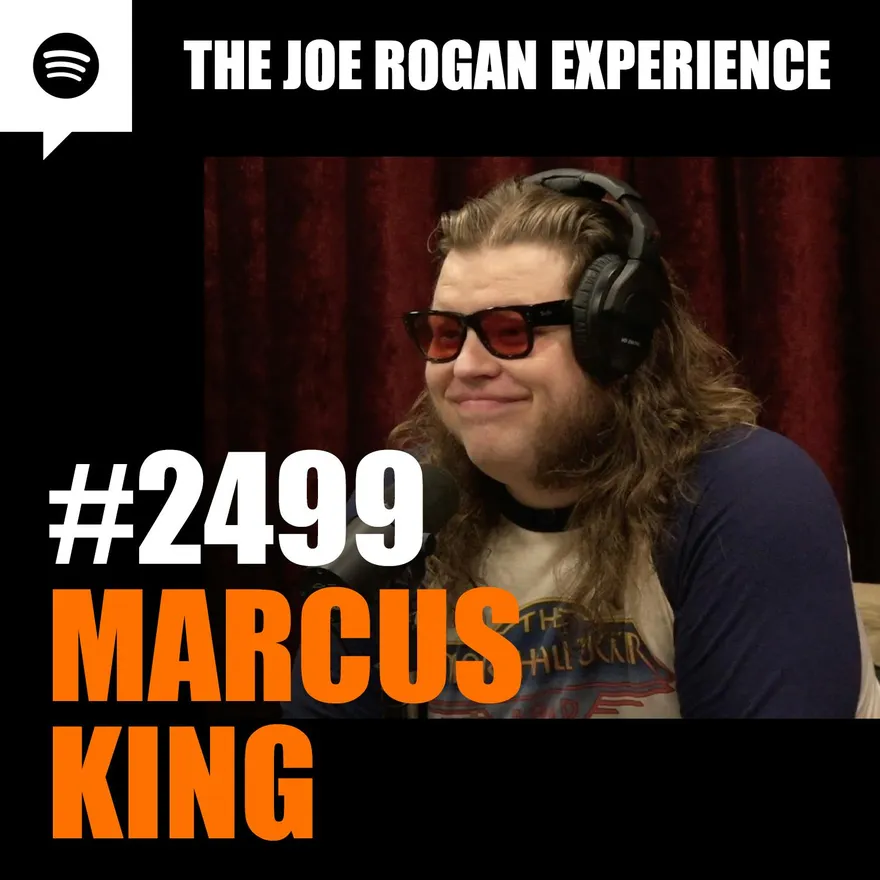

This is a preview of the Shortform summary of the May 14, 2026 episode of the The Joe Rogan Experience
Sign up for Shortform to access the whole episode summary along with additional materials like counterarguments and context.
1-Page Summary
Mental Health, Depression, and Substance Abuse Recovery
SSRI Medication Limitations and Autonomy Complexities
Joe Rogan points out that SSRIs are often prescribed based on the now-discredited "chemical imbalance" theory of depression, yet pharmaceutical companies and physicians continue promoting them as a first-line solution due to financial incentives and institutional habits. Marcus King shares his personal struggles with SSRIs, describing severe side effects including emotional numbness, sexual dysfunction, and intense withdrawal symptoms. He recounts feeling nothing at his grandmother's funeral due to medication-induced numbness—a realization that prompted him to quit. Weeks later, off the medication, he finally experienced the flood of emotion he'd been missing. Rogan adds that some people need over a year to recover from SSRI withdrawal, and the prevailing system prioritizes pharmaceuticals while downplaying their documented negative effects.
Alcohol and Substance Abuse Arise From Deeper Psychological Issues, Needing Commitment to Recovery
King connects his depression struggles with substance abuse, explaining how he used drugs and alcohol to mask emotional pain and avoid vulnerability. After quitting drinking—most recently a year and a half ago—he realized his drinking was self-sabotage rooted in avoiding heartbreak. King credits his wife for holding him accountable after a blackout relapse, forcing him to face consequences and take responsibility. He emphasizes that recovery requires full personal commitment alongside external support, and sobriety means directly facing life without numbing himself.
Exercise, Diet, and Psychedelic Therapy Are More Sustainable for Depression Than Medication Alone
Rogan and King emphasize alternatives to pharmaceutical treatment. King notes that regular exercise—including daily cardio and weight training—has dramatically improved his mental health. He identifies microdosing psilocybin mushrooms as the most impactful intervention for his depression and anxiety, allowing him to recognize anxiety attacks as external to his identity and process them rationally. Nutritionally, adopting a ketogenic diet and avoiding processed foods helped King lose 25 pounds and feel more energized and mentally clear. Both advocate for ketone supplements and ketosis for improved brain function as another benefit for depression management.
Artists Face Higher Mental Health Struggles, Risking Pharmaceutical Over-Prescription
King notes that up to 70% of artists struggle with mental health—far higher than the general U.S. population's 13% antidepressant usage. The unique pressures of the arts, combined with high sensitivity and social media exposure, foster environments ripe for depression and anxiety. Rogan and King criticize doctors for offering artists pharmaceutical solutions over lifestyle changes, noting that many seek quick fixes rather than understanding the complex factors causing unhappiness. For artists, the intersection of creative sensitivity, industry stress, and ready access to medication creates a perfect storm for both mental health struggles and over-prescription.
Music, Inspiration, and Rock Evolution
Music Business vs. Artistic Integrity: Navigating Commercial Pressures and Creative Authenticity
Marcus King acknowledges the music industry's exploitative tendencies and stresses the necessity of protecting creative vision while maintaining healthy boundaries with managers and labels. He shares his goal of achieving a sustainable profit margin to support his family on the road, illustrating the delicate balance between providing for loved ones and staying true to the craft. King meditates daily on gratitude, striving to pursue success for "virtuous causes" rather than wealth accumulation. Both King and Rogan discuss how artists learn from others' exploitation stories, using these lessons to maintain authenticity amidst commercial demands.
Rock Has Evolved Into Southern-Influenced Country-Rock, Though the Industry Has Changed Since the 1950s-60s
King and Rogan agree that "rock and roll is dead" is unfounded, pointing to modern acts like Red Clay Strays and Greta Van Fleet that demonstrate audiences still crave live, guitar-driven performances. Southern rock traditions integrate a jam-band style featuring structured improvisation, with classic anthems like "Freebird" continuing to ignite crowds. The 1960s musical revolution was closely linked to psychedelic drugs and cultural upheaval, though the industry has transformed since then, the appetite for live rock's raw power persists.
Live Performance Fosters Transcendent Connections Between Artist and Audience Unmatched by Recordings
King explains that touring smaller venues like Texas honky tonks strips away commercial artifice so musicians and audiences can share genuine connections through music. Rogan and King highlight how live performances transform the anxiety that initially draws individuals to the stage—eventually, as artists mature, performing evolves from seeking validation to creating joy for both themselves and the audience.
Music Creators Like Rick Rubin and Colonel Bruce Hampton Shape Music With Consumer-Focused Perspectives
Colonel Bruce Hampton, remembered as a mentor to Southeastern musicians, espoused a philosophy of music as entertainment and shaped young musicians through "out-struction" rather than instruction. King likens Hampton to the Southeast's Frank Zappa—a cult legend whose wisdom spread throughout the region. Rick Rubin, known for his intuitive, consumer-centric approach, inspires artists by exposing them to visual and cinematic influences while in the studio. King describes using movies like "Giant" and "Midnight Cowboy" as creative fuel during recording sessions, envisioning their music as film scores.
Music Theory: Vocabulary and Structure For Musicians
A strong grasp of music theory provides musicians with the vocabulary and structure needed for creative collaboration. The Nashville number system allows musicians to quickly communicate chord progressions numerically—essential in fast-paced recording environments. King recalls relying on his ear and intuition during early sessions, later formalizing his understanding by studying jazz theory. He underscores that music theory enables musicians to expand their knowledge, collaborate efficiently, and better express their musical ideas.
Entertainment Technology and Cultural Attitudes
1970s Acceptance of Pornography Reflects Changing Attitudes
Joe Rogan describes how watching pornography in theaters was a common and social activity in the early 1970s. The 1972 release of "Deep Throat" became a major cultural event, drawing celebrities like Johnny Carson, Martin Scorsese, Jack Nicholson, and Frank Sinatra. The film's male star, Harry Reams, later became the first actor arrested by FBI agents and prosecuted for conspiracy to distribute obscenity, though celebrity support helped overturn his conviction. Rogan notes how unusual this openness would seem by today's standards, and how the film itself would now seem tame in the current media landscape.
Society Tolerates Extreme Violence in Entertainment but Remains Uneasy With Explicit Sexuality, Revealing a Troubling Value Hierarchy
Rogan and King observe that American society draws a sharp contrast between its acceptance of violence and discomfort with explicit sexuality. Rogan notes that graphic violence in movies provokes little public outrage, while realistic sex scenes are widely condemned or censored. King points out that while society openly watches porn, admitting to enjoying it remains stigmatized. Rogan argues this reveals a hierarchy of values where society appears more comfortable with violence than consensual sexuality, with the conversation also touching on unequal stigmatization of female versus male porn performers.
Virtual Reality Gaming: An Entertaining Use of Immersive Technology for Social Experiences
Rogan shares his experiences with advanced VR gaming at "sandbox" locations in cities like Austin and Los Angeles, where large warehouse environments are equipped with haptic vests, plastic rifles, and environmental effects. In games like "Deadwood Mansion," players physically move through immersive worlds, fighting zombies as part of a team. This trend demonstrates the commercial success and appeal of premium, physically engaging VR entertainment, though Rogan and King express no personal interest in VR porn, illustrating that even as technology advances, certain forms of entertainment still carry unique social baggage.
Video Games Distract From Meaningful Pursuits Like Music and Creativity
Marcus King explains he never had much interest in video games, preferring to focus on playing guitar. Rogan agrees, suggesting video games can be time-consuming and potentially take away from the dedication needed to master instruments or engage in creative activities. Rogan observes an inverse relationship, noting that most people he knows who excel at guitar aren't good at video games, indicating that excellence in one often corresponds with avoidance of the other.
Personal Philosophy and Life Approach
Gratitude and Perspective Counter Cynicism and Despair in High-Pressure Careers
Rogan praises Jelly Roll as one of the kindest people whose genuine love for others stems from having "been through hell." King likens Jelly Roll's ever-present gratitude to a constant state following an ayahuasca journey, noting its purity and rarity. King shares how personal experiences near tragedy—such as a near-drowning episode—motivate his performances, instilling both gratitude and perspective. Rogan extends this idea by sharing insights from his Alaska trip, where suffering the elements reinforces the need for gratitude to counteract cynicism and despair that can develop in high-pressure careers.
Human Experience Needs Both Negative and Positive Exposure For Meaning, Resilience, and Art
Rogan asserts that good cannot exist without evil, and that suffering is essential to appreciating happiness. He believes those who haven't experienced hardship struggle to become exceptional, lacking the motivation and perspective that adversity provides. King echoes this, explaining that artists need struggles and setbacks to create compelling work. Both emphasize that witnessing industry negativity helps musicians appreciate genuine, kind peers, with Rogan noting that musicians bond over shared trauma, forming deeper connections after escaping negative industry figures.
Integrity and Authenticity Matter More Than Dishonest Success
King manages his own social media, refusing to let handlers post content that feels inauthentic, even if it means engaging less frequently. Rogan and King acknowledge the industry's expectation for musicians to engage with algorithms, but they agree that prioritizing authenticity over manufactured persona is the only sane, sustainable approach to a long-term entertainment career.
Resilience Stems From Healthy Relationships and Integrity, Not Isolation or Cynicism
Musicians often build defenses against harsh industry treatment, but King warns about the risk of becoming closed off or jaded. While many artists limit their circles for self-protection, King emphasizes maintaining perspective to avoid becoming bitter. Rogan suggests giving new acquaintances a "stress test" to discern trustworthiness. Rather than responding to past pain by burning relationships or reverting to destructive behaviors, King and Rogan advocate for resilience rooted in integrity and nurturing connections as the true sources of sustained strength and meaning in both art and life.
1-Page Summary
Additional Materials
Counterarguments
- While the "chemical imbalance" theory is oversimplified, SSRIs have demonstrated efficacy for many patients with depression, and their use is supported by numerous clinical trials and treatment guidelines.
- Not all individuals experience severe side effects from SSRIs; many tolerate them well and benefit significantly.
- SSRI withdrawal symptoms vary widely, and most people do not experience protracted withdrawal lasting over a year.
- The medical system increasingly emphasizes integrated care, including psychotherapy, lifestyle interventions, and patient education, not just pharmaceuticals.
- Exercise, diet, and psychedelic therapy may not be effective or accessible for everyone, and some individuals require medication for adequate depression management.
- The safety and efficacy of microdosing psilocybin are still under investigation, and it is not an approved treatment for depression or anxiety in most countries.
- Ketogenic diets and ketone supplements are not universally beneficial and may have risks or be unsuitable for some individuals, especially those with certain medical conditions.
- The prevalence of mental health struggles among artists may be influenced by self-selection, reporting bias, or cultural factors, and not solely by the pressures of the arts.
- Pharmaceutical treatment can be life-saving for some artists, and lifestyle changes alone may not address severe mental health conditions.
- The assertion that video games inherently distract from meaningful pursuits is subjective; for some, gaming is a creative outlet or a way to build social connections.
- Suffering and adversity are not universally necessary for artistic achievement; many artists create meaningful work without significant trauma.
- Some musicians successfully delegate social media management while maintaining authenticity and career sustainability.
- Resilience can also be developed through individual coping strategies, not only through relationships and integrity.
Actionables
- you can create a personal side effect and withdrawal journal to track any changes in mood, physical sensations, or emotional responses when starting, stopping, or changing medications, then use this record to have more informed conversations with your healthcare provider about alternative approaches or adjustments.
- a practical way to strengthen resilience and authenticity is to set a weekly “integrity check-in” where you reflect on recent decisions and interactions, noting moments when you stayed true to your values or felt pressured to compromise, and brainstorm small adjustments for the coming week to better align actions with your principles.
- you can use a “creative triggers” list by noting specific situations, emotions, or environments that spark your creativity or, conversely, lead to emotional numbness or avoidance, then intentionally schedule more of the positive triggers and limit the negative ones to support both mental health and creative output.
Get access to the context and additional materials
Mental Health, Depression, and Substance Abuse Recovery
Ssri Medication Limitations and Autonomy Complexities
SSRIs are often prescribed based on the now-discredited “chemical imbalance” theory of depression. Joe Rogan points out that there is no convincing evidence for the idea that low serotonin or a measurable imbalance directly causes depression. Instead, he and Marcus King note, pharmaceutical companies and physicians continue promoting SSRIs—often as a first-line solution—because of financial incentives and institutional habits. Doctors sometimes prescribe SSRIs in initial consultations, ignoring lifestyle or psychological alternatives, and patients quickly become reliant, sometimes indefinitely, because these medications are difficult to discontinue.
King discusses his personal experiences with SSRIs, highlighting severe side effects such as emotional numbness and sexual dysfunction, as well as intense withdrawal symptoms if he misses even a single dose. He describes how his current medication leaves him feeling physically ill, with headaches and body tingling, if skipped, making him apprehensive about being “enslaved by a pharmaceutical drug.” King shares a pivotal moment at his grandmother’s funeral, where he felt no emotion due to medication-induced numbness—a realization that prompted him to quit. The emotional impact overwhelmed him weeks later when, off the medication, a song triggered a flood of feeling and he broke down crying at a dinner table.
Joe Rogan adds that some people need over a year to recover after stopping SSRIs, suffering from persistent withdrawal symptoms. The lack of tailored care, the push for long-term prescriptions, and the difficulty of trusting physicians who prioritize medication over patient autonomy have left many feeling discarded and unsupported. King notes everyone’s brain responds differently, but the prevailing system pushes pharmaceuticals and downplays their documented negative effects.
Alcohol and Substance Abuse Arise From Deeper Psychological Issues, Needing Commitment to Recovery
King draws a connection between his struggles with depression and substance abuse. He describes how he once attempted to mask emotional pain with drugs and alcohol, relying on substances to avoid feeling anything. When he quit drinking—first several times, most recently a year and a half ago—he realized that his drinking was a pattern of self-sabotage, rooted in the desire to burn everything down before facing heartbreak or vulnerability. For him, relapse confirmed that he cannot moderate his drinking and must remain abstinent for the long term.
King credits his wife for holding him accountable: after a blackout relapse, she left him stranded, forcing him to experience the consequences and take responsibility for his behavior. This incident made it clear that to recover, he needs to fully commit personally while benefiting from support. He also explains that sobriety meant directly facing social situations and daily life without numbing himself, which led to genuine personal growth through exposure therapy.
Exercise, Diet, and Psychedelic Therapy Are More Sustainable for Depression Than Medication Alone
Rogan and King emphasize alternatives to pharmaceutical treatment, finding that exercise, nutrition, and psychedelic therapy can provide significant and lasting relief from depression and anxiety.
Regular exercise, including 20 minutes of Peloton cardio and daily targeted muscle group training, has improved King’s mental health dramatically. Both agree that weight training helps alleviate anxiety, and King notices clear differences when exercising consistently.
King identifies microdosing psilocybin mushrooms as the most impactful intervention for his depression and anxiety. Microdosing has allowed him to re ...
Here’s what you’ll find in our full summary
Mental Health, Depression, and Substance Abuse Recovery
Additional Materials
Counterarguments
- While the "chemical imbalance" theory is oversimplified, SSRIs have demonstrated efficacy in numerous clinical trials for many patients with depression, suggesting their benefits are not solely based on this theory.
- Not all physicians prescribe SSRIs as a first-line treatment; many follow evidence-based guidelines that recommend psychotherapy and lifestyle interventions, especially for mild to moderate depression.
- Some patients experience significant improvement in quality of life with SSRIs and do not report severe side effects or withdrawal symptoms.
- The process of discontinuing SSRIs can be managed safely under medical supervision, and not all patients experience prolonged withdrawal.
- Emotional blunting is a potential side effect, but for some individuals, SSRIs reduce overwhelming negative emotions and suicidal ideation, which can be life-saving.
- The assertion that pharmaceutical companies and doctors are primarily motivated by financial incentives does not account for the many clinicians who prioritize patient well-being and informed consent.
- Psychedelic therapy and microdosing psilocybin are still under investigation, and their safety and efficacy have not been established to the same degree as SSRIs in large-scale, long-term studies.
- Ketogenic diets and ketone supplements are not universally beneficial and may have risks or be unsuitable for some individuals, especially those with certain medical condit ...
Actionables
- you can create a personal medication and mood timeline by tracking your daily emotional states, physical symptoms, and any medication changes in a simple notebook or spreadsheet, helping you spot patterns and make more informed decisions about your mental health care; for example, note when you feel emotionally numb, experience side effects, or notice withdrawal symptoms, and bring this record to your doctor to advocate for more tailored support.
- a practical way to explore alternatives to medication is to set up a weekly self-check-in where you try one new lifestyle or psychological strategy (like a new hobby, social activity, or mindfulness exercise) and reflect on how it affects your mood and anxiety, allowing you to discover what genuinely helps you feel better without relyin ...


Get access to the context and additional materials
Music, Inspiration, and Rock Evolution
Music Business vs. Artistic Integrity: Navigating Commercial Pressures and Creative Authenticity
The music industry often places tremendous pressure on artists to compromise their vision in favor of commercial success. Marcus King acknowledges the industry’s exploitative tendencies and stresses the necessity of musicians protecting their creative vision while maintaining healthy boundaries with managers and labels. He shares his personal goal of achieving a sustainable profit margin so he can support his family on the road, illustrating the delicate balance artists must strike between providing for loved ones and staying true to their craft. King meditates daily on gratitude, striving to pursue success for “virtuous causes” instead of amassing wealth for its own sake. Both King and Joe Rogan discuss how artists often learn from the stories of others who have been exploited, using these lessons as a guide for maintaining authenticity amidst commercial demands.
Rock Has Evolved Into Southern-Influenced Country-Rock, Though the Industry Has Changed Since the 1950s-60s
Rock music’s evolution has seen its sound morph into Southern-influenced country-rock, particularly as the landscape of the industry has shifted since the 1950s and 1960s. King and Rogan agree that the notion “rock and roll is dead” is unfounded. Modern acts like Red Clay Strays and Greta Van Fleet demonstrate that audiences continue to crave live, guitar-driven performances. Greta Van Fleet, while often compared to Led Zeppelin, is praised for their musicianship and authenticity; King describes a personal connection to the band, underscoring the enduring network and culture among contemporary rockers.
Southern rock traditions, embodied by bands such as Marshall Tucker Band, Lynyrd Skynyrd, and the Allman Brothers, integrate a jam-band style featuring structured improvisation—a method likened to Led Zeppelin’s legendary live shows. King points out that while today’s genre labels can be restrictive, Zeppelin’s concerts reveal the jam-band pedigree still alive in rock. Classic anthems like “Freebird” continue to ignite crowds, supporting the idea that the energy and spirit of classic rock remain vibrant in live settings.
The 1960s musical revolution was closely linked to psychedelic drugs and cultural upheaval, a combination that shocked and frightened government authorities. Although the industry and culture have transformed, the appetite for the raw power of live rock persists among fans.
Live Performance Fosters Transcendent Connections Between Artist and Audience Unmatched by Recordings
King explains that the purpose of touring smaller venues, such as Texas honky tonks, is to strip away commercial artifice so musicians and audiences can share genuine connections through music. These sweaty, intimate rooms become places where music can be experienced simply for its joy, unmediated by marketplace expectations. Rogan and King both highlight how live performances transform the anxiety and need for approval that draw some individuals to the stage—eventually, as the artist matures, performing evolves into sharing love and creating uplifting experiences for everyone present.
Musicians hone their craft by diligently studying the masters of previous generations. King learned guitar by listening to his father’s records, and the quest for excellence is both solitary and communal. Stage fright and performance anxiety, initially a source of struggle, draw certain personalities to the profession. Over time, the motivation shifts from seeking validation to creating joy for both oneself and the audience.
Music Creators Like Rick Rubin and Colonel Bruce Hampton Shape Music With Consumer-Focused Perspectives
Visionary producers like Rick Rubin and Colonel Bruce Hampton play unique roles in shaping the musical landscape. Colonel Hampton, remembered as a mentor to Southeastern musicians like Widespread Panic and Oteil Burbridge, espoused a philosophy of music as entertainment—likening it to pro wrestling with its spectacle and outrageousness. He shaped young musicians not by instruction, but by “out-struction,” fostering creativity and injecting absurdity into the business. King likens Hampton to the Southeast’s Frank Zappa or Sun Ra—a cult legend whose wisdom spread throughout the region.
The documentary “Basically Frightened,” which tells Colonel Bruce H ...
Here’s what you’ll find in our full summary
Music, Inspiration, and Rock Evolution
Additional Materials
Counterarguments
- While the music industry can pressure artists to compromise, many musicians willingly adapt their style to reach broader audiences, seeing commercial success as a form of validation rather than a loss of integrity.
- Maintaining strict boundaries with managers and labels is not always feasible; collaboration with industry professionals can sometimes enhance an artist’s vision and career longevity.
- The dichotomy between providing for family and artistic integrity is not always as stark; many artists find ways to integrate both without significant compromise.
- Accumulating wealth can enable artists to fund future creative projects, support charitable causes, or gain independence from industry pressures, making financial success a legitimate goal.
- Learning from stories of exploitation is valuable, but not all artists face the same risks, and some benefit from positive industry relationships.
- The evolution of rock into Southern-influenced country-rock is only one trajectory; other subgenres like indie rock, punk, and electronic-infused rock have also flourished.
- The claim that "rock and roll is dead" persists partly because mainstream popularity has shifted toward other genres, even if niche audiences remain passionate.
- Modern bands like Greta Van Fleet face criticism for perceived lack of originality, with some listeners viewing their sound as derivative rather than authentic.
- The jam-band tradition is not universally appealing; some audiences prefer more structured, concise performances over extended improvisation.
- The enduring popularity of classic rock anthems like “Freebird” may reflect nostalgia rather than ongoing innovation within the genre.
- The association of the 1960s musical revolution with psychedelic drugs and cultural upheaval overlooks other important influences, such as technological advances and global musical exchanges.
- Smaller venues do not ...
Actionables
- You can create a personal “creative boundaries” checklist before starting any new project to clarify what you’re not willing to compromise, helping you stay true to your vision when facing outside pressures; for example, list three non-negotiable elements of your work, such as lyrical themes or visual style, and refer to this list when making decisions with collaborators.
- A practical way to balance financial needs with creative integrity is to set up a two-column budget: one side for essential living expenses and the other for a “creative fund” that supports passion projects, so you can track how much time and money you dedicate to both providing for yourself and pursuing your craft without sacrificing either.
- Yo ...
Get access to the context and additional materials
Entertainment Technology and Cultural Attitudes
1970s Acceptance of Pornography Reflects Changing Attitudes
In the early 1970s, there was a significant cultural shift in the public's openness to pornography. Joe Rogan describes how watching pornography in theaters was a common and even social activity, with couples attending together. The 1972 release of "Deep Throat" became a major cultural event, drawing in celebrities such as Johnny Carson, Martin Scorsese, Brian De Palma, Truman Capote, Jack Nicholson, Spiro Agnew, Frank Sinatra, and Barbara Walters. News footage from the era shows long lines outside theaters, with well-known public figures openly discussing the film’s impact. Rogan remarks how unusual this would seem by today’s standards, and how the film itself would now seem tame or "softcore" in the current media landscape.
"Deep Throat" also brought notoriety to its male star, Harry Reams, who later faced significant legal trouble. Reams became the first actor ever arrested by FBI agents and prosecuted by the federal government for conspiracy to distribute obscenity for merely appearing in the film. His case was seen as an effort to make an example of someone involved in the production and distribution of pornography across state lines. Ultimately, celebrity support—including from Shirley MacLaine, Warren Beatty, Richard Dreyfuss, Jack Nicholson, Ben Gazzara, and Dick Cavett—helped Reams as his conviction was overturned on appeal in August following the precedent set by Miller v. California.
A few years prior, the 1969 film "Midnight Cowboy" received an X rating (later classified as NC-17) for its depiction of male prostitution and homosexual relationships—subjects rarely addressed in mainstream cinema at the time. The censorship was at least partially motivated by fears of corrupting impressions on young people through the film's explicit content and homosexual themes, according to studio censors who consulted psychologists. Rogan and his guests discuss how the film, which won the Best Picture Oscar, would likely receive a less severe rating today and even be celebrated for its frank portrayal of sex work. Still, moments such as rape scenes in "Midnight Cowboy" or "Deliverance" were broadcast without edits, reflecting the period’s conflicted approach to sexual versus violent content.
Society Tolerates Extreme Violence in Entertainment but Remains Uneasy With Explicit Sexuality, Revealing a Troubling Value Hierarchy
Joe Rogan and Marcus King observe that American society draws a sharp contrast between its acceptance of violence and discomfort with explicit sexuality. Rogan notes that violence in movies, even in graphic forms such as a character’s head being bashed in "Once Upon a Time in Hollywood," provokes little public outrage. In contrast, a realistic sex scene or depictions of real sexual acts—even between consenting adults or married couples—are still widely condemned or censored. Marcus King points out that while society openly watches porn, admitting to enjoying it remains stigmatized.
Rogan argues that the simulation of violence is both common and accepted, but the simulation or portrayal of explicit sex is quickly labeled as smut or inappropriate, regardless of context. This reveals a hierarchy of values where society appears more comfortable with violence than consensual sexuality. The conversation also touches on the unequal stigmatization of female porn performers compared to their male counterparts, highlighting persistent double standards.
Another interesting legacy is that many former porn theaters have become popular venues for live shows—comedians, for example—because they had invested in high-quality audio equipment during their X-rated heyday.
Virtual Reality Gaming: An Entertaining Use of Immersive Technology for Social Experiences
Joe Rogan shares his experiences with advanced virtual reality (VR) gaming, highlighting it as a significant evolution in entertainment technology. He describes "sandbox" VR locations in cities like Austin, Los Angeles, and Atlanta, where large warehouse environments are equipped with haptic vests, plastic rifles, and environmental effects like fans. In games such as "Deadwood Mansion," players physically move through immersive, social game worlds, fighting zombies as part of a team, with the vest vibrating when attacked and blood splattering across their field of view. Rogan notes that mastering elements such as the game's "overpowered" shotgun enabled him to rank num ...
Here’s what you’ll find in our full summary
Entertainment Technology and Cultural Attitudes
Additional Materials
Counterarguments
- The depiction of the 1970s as a period of widespread public openness to pornography may be overstated; many communities and individuals remained strongly opposed, and obscenity laws were still actively enforced in much of the country.
- While "Deep Throat" attracted celebrity attention and media coverage, its popularity was not universal, and many Americans viewed it as scandalous or immoral.
- The prosecution of Harry Reams, while notable, was part of a broader legal and cultural struggle over obscenity that included many other cases and did not single-handedly define the era's legal approach to pornography.
- The overturning of Reams' conviction was influenced by legal precedent, but broader societal attitudes toward pornography remained divided and contentious.
- The X rating for "Midnight Cowboy" reflected not only concerns about youth but also prevailing social norms and discomfort with homosexuality and sex work, which were still widely stigmatized.
- The assertion that "Midnight Cowboy" would be universally praised today overlooks ongoing debates and differing opinions about the portrayal of sex work and explicit content in mainstream cinema.
- The claim that American society is more comfortable with violence than sexuality is a generalization; there are significant segments of the population and advocacy groups that actively campaign against violent media content.
- The idea that graphic violence provokes little public outrage ignores periodic controversies and calls for censorship or regulation of violent movies, video games, and other media.
- The stigma around pornography consumption is not unique to American society and exists in various forms globally, often influenced by cultural, religious, and personal values.
- The double standard in the stigmatization of female versus male porn performers is recognized, but there are also ongoing efforts within and outside the industry to address and challenge these disparities.
- The repurposing of former porn theaters as live venues is a practical business decision and does not necessarily reflect a broader cultural legacy or acceptance of their past use.
- While VR gaming is a significant technological ...
Actionables
- you can track your weekly entertainment choices by keeping a simple log of how much time you spend watching violent versus sexual content, then reflect on your comfort levels and any patterns in your reactions to each type
- Keep a notebook or use your phone to jot down what you watch, noting whether it’s violent, sexual, or both, and how you feel during and after. After a week or two, review your notes to see if you notice any personal biases or discomforts, and consider whether your viewing habits align with your values or if you want to adjust them.
- a practical way to challenge social discomfort around sexuality is to write a private journal entry about your honest feelings and experiences with sexual content, then compare this to how you talk about or react to violent content
- Describe your thoughts and feelings about both types of content, noting any differences in how open or reserved you are. This can help you identify internalized stigmas or double standards and decide if you want to change how you approach conversations about these topics with others.
- you can experiment with balanc ...
Get access to the context and additional materials
Personal Philosophy and Life Approach
Joe Rogan and Marcus King explore how gratitude, resilience, and authenticity form the foundation for navigating careers in the demanding world of music and entertainment, where both negativity and positivity shape meaningful art and relationships.
Gratitude and Perspective Counter Cynicism and Despair in High-Pressure Careers
Joe Rogan praises Jelly Roll as “one of the nicest, sweetest, kindest, warm, affectionate people,” whose genuine love for others stems from having “been through hell.” Marcus King likens Jelly Roll’s ever-present gratitude to a “constant state” following an ayahuasca journey, noting its purity and rarity, especially as most people let that perspective fade over time. Rogan agrees, observing that despite the pressures and criticisms of fame—contracts, negative press—Jelly Roll remains grounded in appreciation for his family, friends, and the privilege of his career.
Marcus King shares how personal experiences near tragedy—such as a near-drowning episode during an adventurous catamaran outing—motivate his performances, instilling both gratitude and perspective. Rogan extends this idea by sharing insights from his Alaska trip, where suffering the elements makes one appreciate life’s comforts and joys, reinforcing the need for gratitude to counteract the cynicism and despair that can develop in high-pressure careers.
Human Experience Needs Both Negative and Positive Exposure For Meaning, Resilience, and Art
Rogan asserts that good cannot exist without evil, and that suffering is essential to appreciating happiness. He believes that those who have not experienced true hardship struggle to become exceptional, lacking the motivation and perspective that adversity provides. Marcus King echoes this, explaining that artists need struggles and setbacks to create compelling work—“you can’t create a Charlie Crockett in a lab.” Rogan uses examples from music history, referencing songs like “Le Chic’s ‘Freak Out,’” which originated from being denied entry to a club and channeled into a hit record.
Both emphasize that witnessing industry negativity helps musicians appreciate genuine, kind peers. Rogan notes musicians bond over shared trauma, forming deeper connections after escaping negative industry figures—“rotten vampire cunts,” as he bluntly puts it. King stresses the importance of meditating on perspective daily, recognizing that the duality of human experience—the coexistence of good and evil—offers necessary context for meaningful art.
Integrity and Authenticity Matter More Than Dishonest Success
For Marcus King, personal integrity is non-negotiable. He manages his own social media, refusing to let handlers post content that feels inauthentic or like “bullshit,” even if it means engaging less frequently and requiring personal time to do so. Rogan and King acknowledge the music ind ...
Here’s what you’ll find in our full summary
Personal Philosophy and Life Approach
Additional Materials
Counterarguments
- While gratitude and resilience are valuable, success in music and entertainment often also depends on factors like luck, networking, and market trends, which are not addressed by personal philosophy alone.
- Not all artists or successful individuals have endured significant hardship; some achieve success through privilege, support, or opportunity rather than adversity.
- The idea that suffering is essential for meaningful art can romanticize trauma and overlook the value of joy, technical skill, and imagination in creativity.
- Maintaining constant gratitude or authenticity may not be feasible for everyone, especially those struggling with mental health issues or systemic barriers.
- Prioritizing authenticity over engagement with industry norms (like social media algorithms) can limit visibility and career opportunities in a highly competitive field.
- Building healthy relationships and resilience is not always possible for individuals facing persistent exploitation, discrimination, or toxic environments within the industry.
- The assertion that good cannot exist without evil is a ph ...
Actionables
- you can create a daily “contrast journal” by briefly noting one challenge or discomfort you faced alongside one comfort or joy you experienced, helping you recognize how hardship and happiness coexist and deepen your appreciation for both
- By pairing a tough moment (like a stressful commute) with a positive one (like a relaxing meal), you’ll train yourself to see how difficulties give context to life’s pleasures, reinforcing gratitude and perspective.
- a practical way to nurture authentic relationships is to set a recurring reminder to check in with someone you trust, sharing one honest struggle and one recent win, and inviting them to do the same
- This simple exchange builds deeper connections through vulnerability and mutual support, helping you stay grounded and resilient while avoiding isolation or cynicism.
- you can test your commitment to personal integrity by setting ...
Get access to the context and additional materials


Create Summaries for anything on the web
Download the Shortform Chrome extension for your browser
