

#2480 - Arsenio Hall
In this episode of The Joe Rogan Experience, Arsenio Hall and Joe Rogan explore the golden age of comedy at the Comedy Store, where Mitzi Shore created a foundation for modern stand-up through rigorous stage time and mentorship. They discuss how comedians like Richard Pryor and Paul Mooney developed material through live performance, and how this environment shaped comedy as an art form built on audience response and creative risk-taking.
The conversation shifts to Hall's impact on late-night television, including his decision to remove the host's desk and feature hip-hop artists and political figures like Bill Clinton, fundamentally changing how campaigns engaged younger audiences. Rogan and Hall also examine the evolution of entertainment from broadcast TV to streaming, critique the two-party political system and money's influence on governance, and reflect on personal philosophy—discussing how simplicity, meaningful work, and authentic relationships contribute more to happiness than the pursuit of excessive wealth.
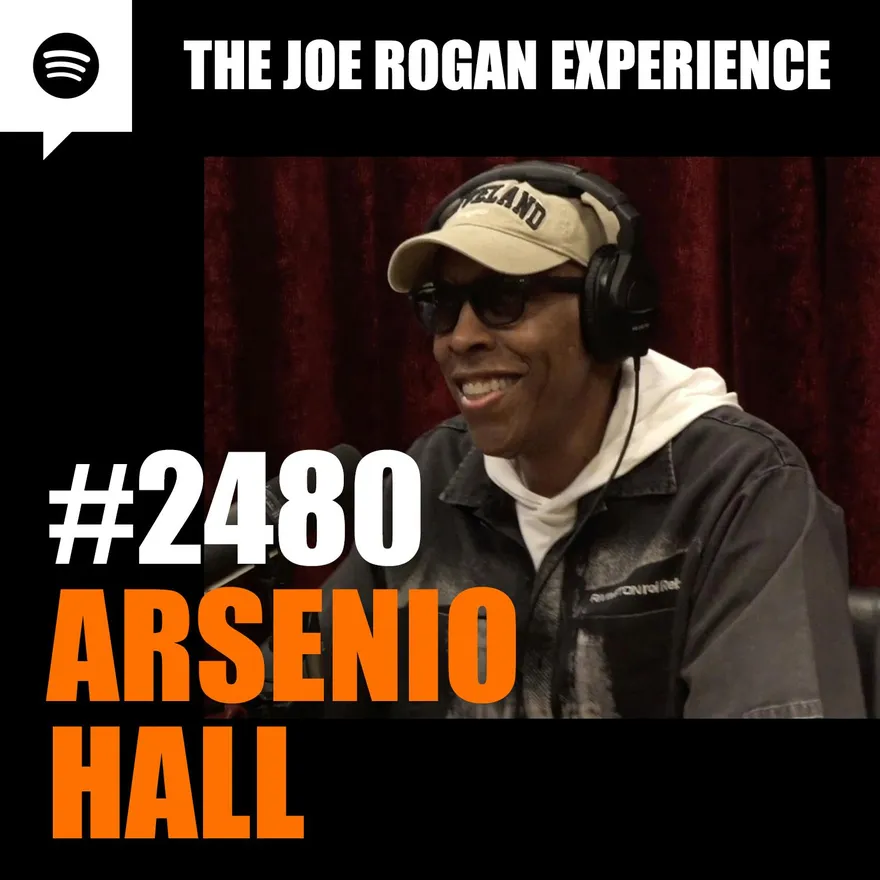

This is a preview of the Shortform summary of the Apr 8, 2026 episode of the The Joe Rogan Experience
Sign up for Shortform to access the whole episode summary along with additional materials like counterarguments and context.
1-Page Summary
Golden Age of Comedy and Comedy Store
The Comedy Store: A Foundation for Modern Stand-Up Through Legendary Training and Mentorship
Arsenio Hall and Joe Rogan reflect on how Mitzi Shore built the Comedy Store into a landmark for nurturing comedic talent through honest feedback and extensive stage time, not nepotism. Even her own son Pauly had to prove himself onstage before earning opportunities. She fostered careers by insisting on hard work and originality, created the Belly Room so women could perform and develop their acts, and considered niche nights to promote inclusion and growth.
Richard Pryor exemplified the Store's ethos, testing material live night after night and building substantial sets from simple premises. His method of laboriously developing routines directly in front of audiences—sometimes for rooms filled with celebrities—set the standard for authenticity in stand-up. Paul Mooney demonstrated flexible genius by creating fresh, relevant comedy on the spot from current events, often coming in with hastily scribbled notes and developing material in real time.
Working Material on Stage Essential For Authentic, Evolving Comedy Through Audience Response
A central characteristic of the Comedy Store was developing material on stage. Comedians like Damon Wayans would take unfinished premises and explore them in front of audiences until something clicked, recording all his sets and reviewing footage for what resonated. Rogan and Hall emphasize that stand-up is the only art form that truly comes alive in front of an audience—the crowd's laughter or silence guides the evolution of the act.
Comedians built resilience by performing at tough music venues, with Hall recalling opening for Lou Rawls and Aretha Franklin, while Rogan recounts opening for Bon Jovi. Surviving these gigs was like "running with weights on"—if you could make those audiences laugh, comedy clubs became much easier. Importantly, clubs allowed experimentation free from social media documentation or cancellation. This freedom, Rogan states, is crucial for creative risk-taking.
Mentorship in Comedy Forged a Legacy of Excellence
Mentorship thrived in the Comedy Store's back rooms. Established legends like Richard Pryor and Paul Mooney would perform while younger comedians watched and studied. Pryor's tradition of "holding court" after a set fostered an atmosphere where newcomers could witness the creative process of the greats. This system removed barriers between established and emerging comedians, encouraging a culture where knowledge was shared organically, motivating younger comics to work harder and refine their art.
Arsenio Hall's Talk Show Innovation and Cultural Impact
Arsenio Hall's talk show revolutionized late-night television by introducing unprecedented freedom, authenticity, and diversity.
Arsenio Hall's Removal of the Desk Made Late-Night TV More Collaborative and Human
Historically, late-night shows featured an elevated host's desk that created an artificial hierarchy over guests. Hall recalls a pivotal conversation with his producer, Marla Kell Brown, who observed a freedom in his stand-up act missing from the show due to the desk barrier. Following her suggestion, Hall removed the desk, bringing host and guest to the same level. This allowed more direct, authentic exchanges—Hall could even hold a nervous guest's hand. Both Rogan and Hall agree this design change fostered intimacy and approachability, making the genre more accessible and reflective of broader shifts toward authenticity.
Arsenio Hall's Show Diversified Late-Night TV With Guests From Hip-Hop, Politics, and Culture
Beyond set design, Hall intentionally featured musical acts, political figures, and social topics absent from other network programs. Despite industry pressure to lose the emphasis on Black performers, he insisted on meaningful moments—flying Boyz II Men from Philadelphia to perform with The Temptations, or booking LL Cool J to perform "I'm Bad." These choices popularized hip-hop and R&B in late-night, lending them legitimacy alongside mainstream entertainment.
Politically, the show became groundbreaking when Bill Clinton appeared and famously played saxophone, breaking political media protocol. Hall notes this moment completely changed presidential campaign strategies by exposing Clinton to younger, entertainment-focused audiences. The show also tackled tough cultural conversations, bringing Ice-T on to discuss "Cop Killer" and giving space for artists like Tupac to speak openly on personal and societal issues.
Show's Influence on Political Campaign Media Strategies and Youth Engagement
Hall's program demonstrated the value of meeting audiences on entertainment platforms. Clinton's appearance prompted politicians to realize they needed to make themselves accessible to younger demographics on venues they frequent—the next day, Clinton appeared on MTV, acknowledging Hall's influence on campaign strategy.
The show was a precursor to viral culture. Hall's catchphrases and the audience's "woof woof woof" barks permeated national culture long before social media existed. By respecting and platforming hip-hop, R&B, and urban culture alongside mainstream celebrities and politicians, Hall legitimized these genres as vital parts of American entertainment, transforming the role of late-night TV in reflecting and shaping culture.
Evolution of Entertainment Technology and Media
Rogan and Hall reflect on how new technology has revolutionized entertainment media, audience habits, and artist careers.
Transition From Broadcast TV to Streaming Alters Audience Consumption
Rogan and Hall recall the era of "must-see TV," when national audiences gathered simultaneously for events like the finale of Cheers. Now, streaming has shifted consumption to on-demand viewing, erasing those shared cultural moments. Rogan observes that only sports remain as collective live TV experiences; most viewers now watch when convenient for them.
Hall explains that traditional late-night shows are costly to produce, with expenses for studios, bands, and large staffs. He describes how his late-night reboot faced network pressure to cut costs and scale down, essentially pushing him toward the inexpensive, conversational podcast format. Rogan points out that the late-night TV model is increasingly irrelevant and unsustainable, with declining viewership and high production costs. Networks stifle creativity with restrictive guidelines, prioritizing ad revenue over genuine expression.
Limitations of Broadcast TV Format vs. Internet Media
Rogan criticizes traditional TV structure, which forces conversations to pause every few minutes for commercials, undermining in-depth discussions. This contrasts with podcasts that can run for hours uninterrupted. Both hosts lament content restrictions on network TV, with Hall remembering being told to change his jokes or language. Rogan emphasizes that because viewers have so many entertainment choices, they are less willing to accept dated, limiting formats.
Tech Enables Content Creation Without Corporate Infrastructure
Hall observes that today, everyone can host a show from their own homes, with makeup tutorials and user-generated content garnering massive followings. The technology has made it possible for anyone to reach an audience without needing a TV studio or corporate backing. Hall and Rogan discuss how the decline of nightclubs and live venues, coupled with the rise of social media, has changed how artists build their presence. Younger generations connect with trends and music through platforms like TikTok, where families dance together at home and young creators develop skills in content production rather than live performance, fundamentally altering the artist-audience relationship.
Political Commentary and Modern Society
Rogan and Hall offer a candid critique of the American political system, focusing on the two-party structure, the impact of money in politics, and resulting effects on governance.
Two-party System Limits Choices, Leading To Disengagement and Cynicism
Rogan and Hall argue that the two-party system fails to represent the diversity of American values. Rogan notes that "there's no fucking way that one side is gonna represent you entirely," describing feeling "politically homeless." Many people choose the "lesser of two evils" when voting, which Rogan calls a painful philosophy for raising children in America. Hall questions why legitimate third parties have never taken hold, and Rogan responds that "they got it locked down and it's with donations and money."
Money is identified as the root of systemic dysfunction. Both hosts condemn the influence of donations from corporations and foreign entities. Rogan highlights that members of Congress, despite salaries around $170,000, routinely amass fortunes worth tens of millions, asserting "It's red and blue… it's across the board... they all have just unexplainable amounts of money. Yeah, it's a dirty fucking business."
Both Hall and Rogan argue that party loyalty rigidly dictates political positions and blocks logical, bipartisan solutions. Hall says true service to "all of America" requires compromise that party pressures inhibit. The system, Rogan insists, is "almost inexorably unfixable" due to entrenched, self-interested incentives.
Polarized Political Discourse Stifles Nuanced Positions
Rogan and Hall lament that the current ideological climate allows no room for nuanced stances. Hall mentions that his bipartisan satire is often met with demands to take a side, joking that comparing Democrats and Republicans is "like asking me who my favorite Menendez brother is." They discuss how party brands have shifted over time—the Democratic Party historically had ties to the KKK, while Abraham Lincoln was a Republican leading the anti-slavery movement. Rogan likens party identification to sports fandom—"It's like the Dolphins versus the Raiders. You pick a fucking team"—suggesting many Americans espouse a team mentality devoid of policy substance.
City Systems Reveal Political Focus On Managing, Not Solving, Marginalization
This dysfunction filters down into urban policy. Rogan notes that Los Angeles authorities created Skid Row by concentrating "all the problem people" downtown, rather than providing real solutions. Hall and Rogan recall the shuttering of mental institutions during the Reagan administration, which Rogan describes as "one of the giant errors of society," noting that many people with severe mental illness were subsequently left to live on the streets. Their conversation suggests that at both national and local levels, America's political system focuses on optics and maintaining the status quo rather than addressing root causes or meaningful reform.
Philosophy On Living Well
Excessive Wealth Pursuit Reduces Life Quality and Peace
Hall recounts an experience with Richard Pryor, who visited Hall's first unfurnished condo. They sat on the floor, drank kavassia, listened to jazz, and Pryor remarked that the bare space reminded him of when he was truly happy. Years later, Hall realized Pryor meant that simplicity brought genuine contentment, while accumulating possessions complicated life. Hall finds that simplifying and reducing staff has improved his own quality of life. Rogan shares similar observations, noting that people with large staffs often experience less peace. Hall reflects that while having money provides comfort, the real joy lies in maintaining life's simple pleasures and having the freedom to be at peace without the burden of unnecessary luxuries.
Resilience and Strength Stem From Overcoming Hardship Independently
Hall describes his upbringing as a latchkey kid, with his mother working two jobs and Hall left to manage himself. This developed his independence and self-sufficiency. Rogan references the argument that latchkey kids tend to be more emotionally resilient than current generations of overprotected children. Hall and Rogan agree that struggle and exposure to real consequences are vital for personal growth, whereas overprotected children may grow up less equipped to handle adversity.
Happiness and Fulfillment Stem From Meaningful Work, Strong Relationships, and Life Engagement
At 70, Hall reflects that he now prefers the peace and simplicity of home life over the intensity of fame and fortune. He expresses satisfaction in being able to relax, enjoying time with his partner. Hall and Rogan discuss how legendary comedians continue performing in clubs out of passion, not for money or recognition. Hall emphasizes that happiness and fulfillment come from meaningful work, strong relationships, and engagement with life in ways that align with personal values. Both agree that peace and contentment are found not in chasing excess, but in surrounding oneself with genuine connections and staying true to one's own path.
1-Page Summary
Additional Materials
Counterarguments
- While Mitzi Shore is credited with fostering merit-based opportunities at the Comedy Store, some comedians have alleged that favoritism and gatekeeping still played a role in who received stage time or advancement.
- The Comedy Store, like many comedy venues of its era, was not immune to accusations of sexism and exclusion, and the creation of the Belly Room, while progressive, also highlighted the need for separate spaces due to ongoing gender disparities in the main rooms.
- Developing material live on stage can sometimes result in insensitive or offensive content being tested on audiences, which may alienate certain groups or perpetuate harmful stereotypes.
- The idea that resilience is best built through hardship and tough venues may overlook the value of supportive environments in nurturing diverse comedic voices, especially those from marginalized backgrounds.
- Mentorship at the Comedy Store was informal and not universally accessible; some comedians have reported feeling excluded from these circles or lacking access to established mentors.
- Arsenio Hall’s removal of the desk, while innovative, was not the sole factor in making late-night TV more collaborative; other hosts and formats have also contributed to evolving the genre.
- While Hall’s show diversified late-night TV, critics have noted that representation of hip-hop and urban culture on mainstream platforms often remained limited or tokenistic in broader network programming.
- The shift from broadcast TV to streaming has fragmented audiences, but it has also made it harder for new artists to achieve the same level of widespread recognition that was possible in the era of shared cultural moments.
- The decline of live venues and rise of social media has provided new opportunities for some artists, but it has also made it more difficult for performers who thrive in live settings or lack digital resources to build an audience.
- The two-party system in the U.S. is often criticized, but some argue that multiparty systems can also lead to instability, coalition gridlock, or the rise of extremist parties.
- While money in politics is widely seen as problematic, campaign finance reform efforts have faced significant legal and constitutional challenges, making solutions complex and contested.
- The assertion that the political system is "almost inexorably unfixable" may be overly pessimistic, as history has shown that significant reforms and shifts are possible over time.
- The emphasis on hardship as a source of resilience may not account for the negative effects of trauma or neglect, and some research suggests that supportive, nurturing environments can also foster strong, capable individuals.
- The pursuit of simplicity and reduction of possessions is not universally fulfilling; for some, ambition and material success are important sources of motivation and satisfaction.
- Continuing to perform out of passion is admirable, but for some legendary comedians, ongoing work may also be driven by financial necessity or lack of alternative opportunities.
Actionables
- you can create a weekly challenge for yourself to try something new or uncomfortable—like speaking up in a group, sharing an idea online, or learning a new skill—to build resilience and adaptability through real-life experience, mirroring how comedians grow by facing tough crowds and unfamiliar situations.
- a practical way to foster authentic connections and meaningful conversations is to set aside a regular time each week to meet with friends or family without distractions (no phones, TV, or background noise), focusing on uninterrupted, in-depth discussions about personal values, current events, or creative ideas.
- you can experiment with simplifying your living space by choosing one area (like your closet or workspace) to declutter, keeping only items that serve a clear purpose or bring genuine joy, and then reflecting on how this impacts your sense of freedom, contentment, and peace.
Get access to the context and additional materials
Golden Age of Comedy and Comedy Store
The Comedy Store: A Foundation for Modern Stand-Up Through Legendary Training and Mentorship
Arsenio Hall and Joe Rogan reflect on how Mitzi Shore, the founder of the Comedy Store and mother of comedian Pauly Shore, built the club into a landmark for nurturing comedic talent. Mitzi ran the club with a unique philosophy: comedians improved through honest feedback and stage time, not nepotism or shortcuts. Even her own son, Pauly, had to work his way up and prove himself onstage before earning opportunities, with Mitzi refusing to let him coast on family connections. She also fostered the careers of countless comics by insisting on hard work and originality, sometimes giving wild advice or assigning odd stage names, like calling Joey Diaz "Fat Baby" on the lineup instead of allowing him his real name.
Mitzi’s vision extended to creating spaces for underrepresented groups. For example, she started the Belly Room so women could perform and develop their acts. She also considered niche nights, such as for Black comedians, highlighting her focus on inclusion and growth, despite sometimes dated or awkward ideas about branding.
Richard Pryor is cited as a master of building substantial sets out of simple premises by testing material live night after night at the Store. Pryor’s sets could grow from five minutes to an hour as he refined his bits, often performing for rooms filled with celebrities who came to witness his process. His method of laboriously developing routines directly in front of audiences set the standard for authenticity and evolution in stand-up.
Paul Mooney is remembered for his flexible genius, able to create fresh, relevant comedy on the spot by drawing from current events or even breaking news. Mooney loved the freedom of the late spot, often coming in with hastily scribbled notes and developing material right there, constantly engaging with the room and pushing boundaries. His commitment to topicality and spontaneity was matched by a reputation for unpredictability, favoring long, loose sets that kept audiences and fellow comics on their toes.
Working Material on Stage Essential For Authentic, Evolving Comedy Through Audience Response
A central characteristic of the Comedy Store and its alumni was the importance of developing material on stage. Comedians like Damon Wayans would take unfinished premises and simply sit with them in front of an audience, exploring and experimenting until something clicked. Wayans in particular would record all his sets, reviewing footage for what resonated and what failed, exemplifying the grueling, iterative process behind great stand-up.
This in-the-moment work benefitted from the live feedback unique to clubs. Joe Rogan and Arsenio Hall emphasize that stand-up is the only art form that truly comes alive in front of an audience—no amount of solo writing replicates the immediate, honest reaction of a crowd. The audience serves as a collaborator, their laughter or silence guiding the evolution of the act.
Comedians also built resilience by performing at music venues, which presented tough crowds uninterested in comedy. Arsenio recalls opening for acts like Lou Rawls, Blood, Sweat & Tears, and Aretha Franklin, while Rogan recounts opening for Bon Jovi, acknowledging the challenge of winning over fans there for music rather than comedy. Both agree that surviving these gigs was like "running with weights on"—if you could make those audiences laugh, performing in comedy clubs became much easier.
Importantly, clubs like the Co ...
Here’s what you’ll find in our full summary
Golden Age of Comedy and Comedy Store
Additional Materials
Counterarguments
- While Mitzi Shore is credited with fostering talent through honest feedback and stage time, some comedians have reported that her methods could be arbitrary or subjective, leading to feelings of favoritism or exclusion despite the stated anti-nepotism philosophy.
- The Comedy Store’s environment, while supportive for some, was also known for being highly competitive and sometimes harsh, which could discourage or alienate certain performers, particularly those not fitting the prevailing comedic styles or sensibilities of the time.
- Although the Belly Room was created to support women, some have argued that segregating women into a separate space rather than integrating them into the main lineup could be seen as marginalizing rather than fully inclusive.
- The focus on live audience feedback as the primary tool for developing material may undervalue the importance of writing, editing, and other forms of preparation that also contribute significantly to stand-up quality.
- The lack of social media documentation in earlier eras allowed for creative risk-taking, but it also meant that problematic or offensive material could go unchecked and unchallenged, potentially perpetuating harmful stereotypes or exclusionary practices.
- The mentorship model at the Comedy Store, while beneficial for many, was informal and could be inac ...
Actionables
- you can set up a personal feedback loop by recording yourself trying out new ideas or skills in any area (like storytelling, presentations, or even cooking), then sharing the recording with a trusted friend or small group and asking for honest, specific feedback to help you improve and evolve your approach.
- a practical way to foster originality and resilience is to intentionally put yourself in mildly challenging or unfamiliar situations (like joining a new club, attending a meetup outside your comfort zone, or volunteering for a task you’ve never done) and reflect afterward on what you learned and how you adapted.
- y ...
Get access to the context and additional materials
Arsenio Hall's Talk Show Innovation and Cultural Impact
Arsenio Hall’s talk show revolutionizes late-night television, introducing an unprecedented sense of freedom, authenticity, and diversity. Both Hall and Joe Rogan reflect on the transformative nature of Hall’s approach, which opened space for more collaborative and human interactions on television and changed how entertainment and politics intersected with American culture.
Arsenio Hall's Removal of the Desk Made Late-Night Tv More Collaborative and Human
Historically, late-night shows feature an elevated host’s desk, creating an artificial hierarchy over guests. Joe Rogan and Arsenio Hall discuss how prior hosts always sat above their guests behind a desk, which implied a power imbalance—Rogan likens it to being lectured in a principal's office. Hall notes that producers adjusted his seat to match the guest’s height, but the desk’s presence always established separation and authority, regardless.
Arsenio Hall recalls a pivotal conversation with his producer, Marla Kell Brown, who observed a freedom in his stand-up act missing from the show due to the desk barrier. Following her suggestion, Hall removed the desk, bringing host and guest to the same level. This adjustment allowed more direct, authentic exchanges, as exemplified when Hall would hold a nervous guest’s hand—something previously impossible with the bulky desk between them. Both Rogan and Hall agree that this design change fostered intimacy, approachability, and conversation, dissolving stiffness for a fun, loose late-night energy that the genre had lacked. Their conversation frames the removal of the desk as not just a set redesign but a cultural signal—making the genre more accessible and reflective of broader shifts toward authenticity in society.
Arsenio Hall's Show Diversified Late-Night Tv With Guests From Hip-hop, Politics, and Culture Not Seen On Network Shows
Beyond set design, Hall intentionally uses his platform to feature musical acts, political figures, and social topics absent from other network programs. Hall recalls industry pressure to lose the emphasis on Black performers, but he insists on meaningful moments—flying Boyz II Men from Philadelphia to perform with The Temptations, or booking LL Cool J to perform “I’m Bad.” These choices popularize new areas of culture in late-night, lending legitimacy and equal respect to hip-hop and R&B alongside mainstream entertainment.
Politically, Hall’s show also becomes a groundbreaking venue. Bill Clinton, at the time Arkansas’s governor, appears and famously plays saxophone, breaking political media protocol. Hall notes this moment completely changes presidential campaign strategies by exposing Clinton to younger, entertainment-focused audiences—forcing politicians to seek nontraditional venues to engage youth culture.
Hall’s program is also a forum for tough and relevant cultural conversations. He brings Ice-T on to discuss the controversy around “Cop Killer” with his metal band Body Count, using the show to provide nuanced explanations that challenge stereotypes. The show similarly highlights voices like Tupac’s, giving space for artists to speak openly on personal and societal issues, such as navigating industry demands around AIDS testing for artists. Hall’s willingness to push the envelope, platform new voices, and invite honest dialogue distinguishes his show from the era’s late-n ...
Here’s what you’ll find in our full summary
Arsenio Hall's Talk Show Innovation and Cultural Impact
Additional Materials
Clarifications
- The traditional elevated host’s desk in late-night TV symbolizes authority and control, creating a formal barrier between host and guest. It reinforces a hierarchical dynamic, making interactions feel scripted and less personal. Removing the desk breaks down this barrier, fostering equality and more genuine conversations. This shift reflects broader cultural moves toward authenticity and relatability in media.
- Joe Rogan is a comedian, podcast host, and former television host known for his long-form interviews on "The Joe Rogan Experience." He is relevant to the discussion as a contemporary figure in media who reflects on and appreciates Arsenio Hall's innovative impact on talk shows. Rogan's own style emphasizes conversational authenticity, similar to Hall's approach. His perspective helps highlight the lasting influence of Hall's changes in late-night television.
- Before Arsenio Hall’s show, late-night TV was dominated by hosts like Johnny Carson and David Letterman, who maintained formal, hierarchical formats with a desk separating host and guests. The genre primarily featured mainstream, often white, entertainers and avoided overt political or cultural diversity. Shows emphasized scripted humor and celebrity interviews within a controlled, polished environment. This created a barrier to authentic, diverse, and spontaneous interactions on late-night television.
- Hip-hop and R&B were often marginalized in mainstream media during that era, limiting their exposure to wider audiences. Featuring these artists on late-night TV helped break racial and cultural barriers by validating their music as significant and influential. This visibility contributed to the genres' commercial success and cultural acceptance nationwide. It also empowered Black artists and communities by providing a prominent platform for their voices and stories.
- Ice-T's song "Cop Killer," performed by his metal band Body Count, sparked controversy in the early 1990s for its graphic depiction of violence against police officers. Critics, including law enforcement groups and politicians, argued the song promoted anti-police sentiment and incited violence. The controversy ignited national debates on freedom of speech, censorship, and artistic expression in music. Ultimately, Ice-T removed the song from the album amid the backlash, highlighting tensions between art and social responsibility.
- Tupac Shakur was a highly influential rapper and actor known for addressing social issues like racial inequality, police brutality, and poverty in his music. He used his platform to speak candidly about the struggles of Black communities, making him a voice for marginalized groups. Tupac's openness about personal and societal challenges helped shift hip-hop from entertainment to a form of cultural and political expression. His impact extended beyond music, influencing conversations on race, identity, and justice in America.
- Before Bill Clinton's saxophone performance, politicians typically appeared on formal news programs or debates, maintaining a serious, controlled image. Playing an instrument on a late-night talk show was unconventional and seen as informal, breaking the norm of polished political presentations. This act humanized Clinton, making him relatable and appealing to younger, entertainment-focused audiences. It shifted campaign strategies toward engaging voters through popular culture rather than traditional political channels.
- Before Arsenio Hall’s show, politicians primarily used formal media like news interviews and debates to reach voters. Engaging youth culture through entertainment venues was novel because it broke traditional political communication norms. This approach made politicians appear more relatable and accessible to younger, entertainment-focused audiences. It paved the way for future campaign strategies that blend politics with popular culture.
- Arsenio Hall’s catchphrase “things that make you go, hmm” became a popular way to highlight surprising or thought-provoking moments, encouraging viewers to reflect humorously on current ev ...
Counterarguments
- While Arsenio Hall’s removal of the desk was innovative, other late-night hosts have also experimented with set design and interview formats, so the change was not entirely unprecedented.
- The claim that Hall’s show alone legitimized hip-hop and R&B in mainstream entertainment overlooks the contributions of other platforms and artists who were simultaneously advancing these genres.
- Although Hall featured diverse guests, some critics argue that the show still operated within the constraints of network television, limiting the depth and frequency of controversial or challenging topics.
- The influence of Bill Clinton’s saxophone performance on campaign strategies is significant, but it was part of a broader trend of politicians seeking nontraditional media exposure, not solely attributable to Hall’s show.
- While Hall’s show provided a forum for cultural conversations, other programs and media outlets were also beginning to ad ...
Get access to the context and additional materials
Evolution of Entertainment Technology and Media
Joe Rogan and Arsenio Hall reflect on how the rise of new technology has revolutionized entertainment media, audience habits, and artist careers.
Transition From Broadcast Tv to Streaming Alters Audience Consumption
Shift From "Must-See Tv" To On-demand Viewing Eliminates Shared Cultural Moments and National Tv Events
Rogan and Hall recall the era of “must-see TV,” when national audiences would gather simultaneously for events like the finale of Cheers. Now, streaming has shifted consumption to on-demand viewing, erasing those shared cultural moments. Rogan observes that only sports and certain live boxing or UFC events remain as collective live TV experiences; most viewers watch when convenient for them. Hall notes that with on-demand streaming, specials like Chris Rock’s are rarely seen live—audiences now watch at their own pace. In the past, if you missed a show, you couldn’t watch it again, creating a sense of urgency and collective experience. Today, the sense of communal appointment television is essentially gone.
Late-Night Talk Shows Unsustainable Due to Studio and Staff Costs and Changing Viewing Habits
Hall explains that traditional late-night shows are costly to produce, with expenses for studios, bands, and large staffs. He describes how his late-night reboot faced network pressure to cut the house band and scale down, essentially pushing him toward the inexpensive, conversational podcast format popularized by creators like Rogan. As Hall reflects, even high-budget shows like Fallon involve expensive stunts, while networks now prefer cheaper, discussion-based models. The proliferation of talk shows means it’s hard to find a guest who doesn’t have a show of their own; anyone can create content from anywhere, even their own bedroom or bed.
Collapse of Late-Night Tv Viewership Shows Outdated Media Model
Rogan points out that the late-night TV model is increasingly irrelevant and unsustainable, with declining viewership and high production costs. The reliance on pre-interviews, heavy PR, and risk-averse corporate oversight is contrasted with the free-form, authentic style of internet content. Networks stifle creativity with restrictive guidelines, prioritizing ad revenue and minimizing controversy over genuine expression. As a result, the corporate late-night format struggles to compete with the immediacy and relatability of independent, digital-first alternatives.
Limitations of Broadcast Tv Format vs. Internet Media
Tv Commercials Disrupt Deep Discussions Possible In Uninterrupted Formats
Rogan criticizes the traditional TV structure, which forces conversations to pause every few minutes for commercials. This fragmentation undermines in-depth discussions and forces everything into a rigid time frame, a stark contrast to podcasts and internet shows that can run for hours uninterrupted, allowing conversations to flow and cover more ground authentically.
Language and Content Limits on Traditional vs. Independent Media
Both hosts lament the content restrictions of network TV. Hall remembers being told by Tonight Show producers to change his jokes or language, and Rogan describes his aversion to “standards and practices,” preferring the freedom of the internet. Jokes or topics once considered acceptable television material are no longer permissible on TV, while independent creators online can push boundaries and respond directly to their audiences without corporate interference.
Multiple Entertainment Options Mean Audiences Won't Tolerate Restrictive Formats
Rogan emphasizes that because viewers have so many entertainment choices, they are less willing to accept dated, limiting formats. People can now seek out exactly the content they want, whenever they want, rendering inflexible old-school TV programming unappealing.
Tech Enables Content Creation Without Corporate Infrastructure
...
Here’s what you’ll find in our full summary
Evolution of Entertainment Technology and Media
Additional Materials
Clarifications
- “Must-see TV” refers to a period, especially in the 1980s and 1990s, when certain TV shows were so popular that large audiences planned their schedules around watching them live. These shows created shared cultural experiences, sparking conversations and social bonding nationwide. The term also implied a collective viewing habit, where missing an episode meant missing out on important cultural moments. This phenomenon declined with the rise of on-demand streaming, which allows individualized viewing times.
- Traditional late-night talk shows require a large studio space equipped with lighting, cameras, and audience seating, which incurs significant rental and maintenance costs. A house band provides live music for transitions and guest entrances, requiring salaries for musicians and equipment upkeep. Production staff includes writers, producers, camera operators, makeup artists, and stagehands, all of whom must be paid regardless of episode success. These combined expenses make traditional talk shows expensive compared to digital formats with minimal overhead.
- Traditional late-night TV shows follow a scripted, time-limited format with multiple segments, including monologues, interviews, and comedy bits, often constrained by network schedules and commercial breaks. Podcasts are typically longer, unscripted, and conversational, allowing for deeper, more spontaneous discussions without strict time limits or interruptions. Podcasts also offer creators more freedom in content and language, as they are not bound by broadcast regulations. This format fosters a more intimate and authentic connection between hosts and audiences.
- “Standards and practices” are internal guidelines used by TV networks to control content for appropriateness, ensuring it meets legal, ethical, and advertiser expectations. They restrict language, themes, and visuals to avoid offending audiences or violating regulations. This often leads to censorship or alteration of material before airing. The impact limits creative freedom and shapes what can be broadcast on traditional TV.
- YouTube and TikTok provide free, accessible platforms where anyone can upload videos and reach global audiences instantly. These platforms use algorithms to recommend content based on viewer preferences, helping creators grow without traditional marketing. Unlike TV studios, they require minimal equipment and no gatekeepers, lowering barriers to entry. This democratization allows diverse voices and niche content to thrive independently.
- Nightclubs and live venues traditionally served as key spaces for artists to perform, experiment, and build direct connections with audiences. Their decline reduces opportunities for artists to develop live performance skills and gain immediate feedback. Social media platforms now replace these venues by allowing artists to showcase content digitally, emphasizing production and online engagement over live presence. This shift changes the nature of artistic growth and career development from in-person interaction to virtual influence.
- Soul Train was a groundbreaking TV show that aired from 1971 to 2006, showcasing African American music, dance, and culture. It played a key role in popularizing new dance styles and R&B, soul, and hip-hop music nationwide. The show created a shared cultural space where artists and audiences connected through live performances and dance segments. Its influence helped shape mainstream music and dance trends before the internet era.
- Social media challenges are viral activities or trends that users replicate and share, creating widespread participation. They spread quickly through platforms like TikTok and Instagram, engaging large, diverse audiences simultaneously. These challenges foster a sense of community by encouraging users to connect through shared content and creativity. Unlike traditional gatherings, they enable global interaction without ...
Counterarguments
- While streaming has reduced some shared cultural moments, major streaming releases (e.g., "Stranger Things," "Game of Thrones" on HBO) can still generate significant collective discussion and online community engagement, albeit in different forms.
- The decline of traditional late-night talk shows does not necessarily mean a loss of quality or creativity; some argue that the podcast and digital formats allow for more diverse voices and innovative content.
- Appointment viewing has not disappeared entirely; live events, reality show finales, and global premieres can still create communal experiences, especially when promoted as such.
- The proliferation of content creators has democratized media, but it can also lead to oversaturation and make it harder for high-quality content to stand out.
- Some viewers appreciate the structure and curation of traditional TV, finding comfort in scheduled programming and the professionalism of established networks.
- Not all audiences reject traditional TV formats; older demographics and certain cultural groups continue to value and watch broadcast television.
- The shift to on-demand and digital content can contribute to fragmented audiences and echo chambers, potentially reducing exposure to diverse perspectives.
- The decline of nightclubs and live venues is influenced by multiple factors, including econ ...
Get access to the context and additional materials
Political Commentary and Modern Society
Joe Rogan and Arsenio Hall offer a candid critique of the American political system, focusing on the two-party structure, the corrosive impact of money in politics, and the resulting effects on governance and social problems.
Two-party System Limits Choices, Often Not Reflecting Values, Leading To Disengagement and Cynicism
Rogan and Hall argue that the two-party system inherently fails to represent the diversity of American values. Rogan notes “there's no fucking way that one side is gonna represent you entirely," suggesting that more parties would provide better representation. He describes feeling “politically homeless,” a sentiment he says is common among Americans confronted with only two viable options.
Hall and Rogan agree that many people choose the “lesser of two evils” when voting, which Rogan calls a painful philosophy for raising children in America. Hall questions why legitimate third, fourth, or fifth parties have never taken hold. Rogan responds that “they got it locked down and it's with donations and money,” illustrating how financial barriers and entrenched interests keep alternative parties from gaining traction.
Money in Politics Distorts Priorities and Stifles Bipartisan Policy
Money is identified as the root of systemic dysfunction. Both hosts condemn the influence of donations from corporations and foreign entities, which dominate the political process. Rogan insists, “money in politics is the real problem,” while Hall points out the absurd contrast between underfunded public employees, like TSA agents, and politicians who always get paid, regardless of government shutdowns.
Congressional Members Gain Unexplainable Wealth From $170,000 Salaries, Indicating Systemic Insider Trading and Grifting
Rogan highlights that members of Congress, despite salaries around $170,000, routinely amass fortunes worth tens of millions, implicating broad, bipartisan participation in insider trading and financial corruption. Rogan asserts, “It's red and blue… it's across the board... they all have just unexplainable amounts of money. Yeah, it's a dirty fucking business.”
Party Loyalty Pressure Blocks Sensible Bipartisan Policies, Leading To Ineffective Governance
Both Hall and Rogan argue that party loyalty rigidly dictates political positions and blocks logical, bipartisan solutions. Rogan describes ideological conformity as a “predetermined pattern of opinions,” and Hall says true service to “all of America” requires compromise that party pressures inhibit. The system, Rogan insists, is “almost inexorably unfixable” due to entrenched, self-interested incentives.
Polarized Political Discourse Stifles Nuanced Positions
Rogan and Hall lament that the current ideological climate allows no room for nuanced stances or criticism of both major parties.
Comedians and Public Figures Critiquing Both Parties Equally Are Pressured to Declare a Side, as if Both Systems Can't Have Significant Flaws
Hall mentions that his bipartisan satire is often met with demands to take a side, highlighting pressure on comedians and public figures to conform. He jokes comparing Democrats and Republicans is "like asking me who my favorite Menendez brother is," illustrating his cynicism about both parties.
The Evolving Nature of Party Ideologies: Democratic Ties to the Kkk and Republican Anti-Slavery Stance
Hall and Rogan discuss how party brands have shifted over time. Hall reminds that the Democratic Party historically had ties to the KKK, while Rogan notes Abraham Lincoln was a Republican leading the anti-slavery movement. This flux exposes why static team loyalties are irrational.
Political Loyalty vs. Sports Fandom Captures Voters' Irrational, Policy-Detached Affiliations
Rogan likens party identification to sports fandom—“It's like the Dolphins versus the Raiders. ...
Here’s what you’ll find in our full summary
Political Commentary and Modern Society
Additional Materials
Clarifications
- The Democratic Party in the 19th and early 20th centuries was dominant in the Southern United States, where it supported segregation and white supremacy. The Ku Klux Klan, a white supremacist group, emerged during Reconstruction and was closely aligned with Southern Democrats who opposed civil rights for Black Americans. Over time, especially after the Civil Rights Movement, many Southern Democrats shifted to the Republican Party, and the parties' platforms on race and civil rights significantly changed. This historical context explains the Democratic Party's early association with the KKK, which contrasts with its modern positions.
- The Republican Party was founded in the 1850s primarily to oppose the expansion of slavery into new U.S. territories. Abraham Lincoln, the first Republican president, led the country during the Civil War and issued the Emancipation Proclamation, which began the process of freeing enslaved people. At that time, the Republican Party was seen as progressive on civil rights, while the Democratic Party included many pro-slavery Southern interests. Over the following century, party ideologies and regional bases shifted significantly.
- "Politically homeless" voters feel disconnected from all major political parties because none fully represent their beliefs or values. This leads to frustration and disengagement from the electoral process. They often struggle to find a political identity or candidate that aligns with their views. The term highlights a gap in representation within a rigid two-party system.
- Money influences political parties and elections primarily through campaign contributions, which fund advertising, staff, and outreach efforts. Donors, including corporations and interest groups, often expect favorable policies or access in return. Political action committees (PACs) and super PACs can spend unlimited amounts independently to support candidates aligned with their interests. This financial dependency can skew priorities toward wealthy contributors rather than the general electorate.
- Members of Congress earn a fixed annual salary of about $170,000, which is publicly disclosed and relatively modest compared to private sector executives. However, many accumulate significant wealth through investments, book deals, speaking fees, and sometimes undisclosed financial activities. Allegations of insider trading arise because lawmakers may use confidential information gained through their positions to make profitable trades. This creates concerns about conflicts of interest and corruption beyond their official salary.
- Insider trading by politicians refers to lawmakers using confidential information gained through their official duties to make stock trades before the information becomes public. This practice can give them unfair financial advantages and is often illegal or ethically questionable. Laws like the STOCK Act aim to prevent such abuses by requiring timely disclosure of trades. Despite regulations, enforcement challenges and loopholes sometimes allow these activities to persist.
- During the 1980s, many mental health institutions were closed due to policy shifts favoring deinstitutionalization. This led to fewer long-term care options for people with severe mental illnesses. Without adequate community support, many individuals ended up homeless. The closures significantly increased the population of mentally ill people living on the streets.
- Skid Row in Los Angeles developed in the early 20th century as an area where transient and homeless populations were concentrated. It became a hub for cheap lodging, social services, and shelters, attracting marginalized individuals. The area's growth was influenced by economic decline, housing shortages, and policies that isolated poverty. Today, Skid Row symbolizes systemic failures in addressing homelessness and mental health.
- Party loyalty resembles sports fandom because people often support a political party based on identity and emotion rather than policies or facts. This tribal mindset leads to unquestioning allegiance, discouraging critical thinking or compromise. It fosters polarization, as individuals prioritize winning for "their team" over collaborative problem-solving. Consequently, political ...
Counterarguments
- The two-party system, while imperfect, has provided stability and clear choices for voters, and third parties have historically struggled in many democracies due to structural and cultural factors, not just financial barriers.
- Many Americans do find their values represented within the broad coalitions of the two major parties, which regularly adapt their platforms in response to shifting public opinion.
- The "lesser of two evils" framing overlooks the significant policy differences between the major parties that can have real-world impacts on citizens' lives.
- Campaign finance reforms and transparency measures have been enacted over time to address concerns about money in politics, and not all political donations result in undue influence.
- Congressional pay is public, and while some members have accumulated wealth, many enter office already wealthy or earn income from legal investments; accusations of widespread insider trading are subject to ongoing legal scrutiny and not universally substantiated.
- Party loyalty can also foster legislative efficiency and policy coherence, helping to pass complex legislation that requires unified support.
- Polarized discourse is not unique to the current era; American politics has experienced intense partisanship and limited space for nuance at various points in history.
- Public figures and comedians are free to critique both parties, and many do so successfully without being forced to declare allegiance.
- Party ideologies evolving over time is a feature of democratic systems, reflecting changing social values and priorities rather than irrationality.
- Sports fandom analogies may oversimplify the motivations behind political affiliation, which can be based on deeply held beliefs and po ...
Get access to the context and additional materials
Philosophy On Living Well
Excessive Wealth Pursuit Reduces Life Quality and Peace
Arsenio Hall recounts an experience with Richard Pryor, who visited Hall's first unfurnished condo. They sat on the floor, drank kavassia, listened to jazz, and Pryor remarked that the bare space reminded him of when he was truly happy. Years later, Hall realized Pryor meant that simplicity brought genuine contentment, while accumulating possessions and wealth complicated life. Hall observed that as people acquire more—larger homes, guest houses, a big staff—their lives fill with new obligations and pressures. Hall finds that simplifying and reducing staff has improved his own quality of life and mental peace, and now enjoys a scaled-down, peaceful existence with just his partner.
Joe Rogan shares similar observations, noting that people with large staffs or constant projects often experience less peace. Rather than increasing life satisfaction, a bigger operation creates new stresses. Rogan and Hall discuss acquaintances who amass great wealth yet anxiously scrutinize every expense, feeling targeted for their money and lacking the freedom and relaxation that should accompany financial success. Hall reflects that while having money provides comfort, the real joy lies in maintaining life’s simple pleasures—such as eating burgers by choice—and having the freedom to be at peace without the burden of maintaining unnecessary luxuries.
Resilience and Strength Stem From Overcoming Hardship Independently, Not From Eliminated Obstacles
Hall describes his upbringing as a latchkey kid, with his mother working two jobs and Hall left to manage himself. He recounts stories of navigating tricky situations on his own, sometimes deceiving his mother about his whereabouts or making do in challenging circumstances. He acknowledges that luck played a role in keeping him safe, but also that the lack of constant adult supervision developed his independence and self-sufficiency.
Joe Rogan references a video argument that latchkey kids—those who grew up in earlier generations with minimal supervision—tend to be more emotionally resilient than current generations of children, who are often overprotected. Without parental intervention, these kids had to solve problems independently and learned essential life skills. Hall and Rogan agree that struggle and exposure to real consequences are vital for personal growth, whereas overprotected children may grow up less equipped to handle adversity, becoming more anxious and fragile adults. Rogan notes that while modern technology allows parents to track their children constantly, this protection sometimes depr ...
Here’s what you’ll find in our full summary
Philosophy On Living Well
Additional Materials
Clarifications
- Kavassia is a traditional fermented beverage, often made from rye or barley, similar to kvass, popular in Eastern European and Slavic cultures. It has a mildly sour, refreshing taste and is low in alcohol. Drinking kavassia can evoke a sense of nostalgia or simplicity, connecting people to humble, authentic experiences. Its mention highlights the theme of finding joy in simple, unpretentious moments.
- "Latchkey kids" refers to children, especially in the mid-20th century, who returned from school to an empty home because their parents were working. The term comes from these children often carrying a house key to let themselves in. This phenomenon increased during World War II and the 1970s due to more working parents and single-parent households. It reflects a time when children had more unsupervised independence compared to today.
- Having a large staff requires managing more people, which involves resolving conflicts, overseeing tasks, and ensuring productivity. Multiple projects demand constant attention, coordination, and decision-making, increasing mental load. Both create ongoing responsibilities that limit personal time and increase pressure to perform. This complexity can reduce relaxation and peace of mind.
- The "video argument" Joe Rogan refers to is likely a popular online discussion or documentary segment comparing the emotional resilience of latchkey kids to that of more sheltered children today. It argues that children who grew up with less supervision developed stronger problem-solving skills and independence. The video suggests that overprotected children may lack opportunities to face challenges, leading to increased anxiety and fragility. This argument is part of a broader debate on parenting styles and child development.
- Modern technology enables parents to monitor their children’s locations and activities in real time through devices like smartphones and GPS trackers. This constant surveillance can limit children’s opportunities to explore, make independent decisions, and learn from mistakes. Reduced freedom may hinder the development of problem-solving skills and emotional resilience. Consequently, overprotection via technology can contribute to increased anxiety and dependence in children.
- Comedians continue performing in clubs despite fame because live shows offer immediate audience feedback, which sharpens their craft. Clubs provide a space for creative freedom without corporate constraints. Performing live maintains their connection to the comedy community and keeps their material fresh. This practice reflects a passion for the art beyond financial or status gains.
- Excessive wealth often involves owning many material goods, large homes, and employing numerous staff, which can create stress and obligations. Simple pleasur ...
Actionables
- you can schedule a weekly “unplugged hour” where you intentionally disconnect from all devices and spend time doing a simple, enjoyable activity alone or with loved ones, like walking, drawing, or sharing a meal, to rediscover uncomplicated pleasures and reduce mental clutter.
- a practical way to foster independence and resilience in children is to let them plan and execute a small household project or outing with minimal adult input, such as organizing a picnic or managing a family game night, so they experience real decision-making and problem-solving.
- you can create a “r ...
Get access to the context and additional materials


Create Summaries for anything on the web
Download the Shortform Chrome extension for your browser
