

Prof Robert Pape: Rising Political Violence and the Risk of War Escalation
In this episode of The Diary Of A CEO, Steven Bartlett speaks with Professor Robert Pape about the dangerous convergence of international and domestic crises threatening global stability. Pape explains how political leaders caught in "escalation traps" repeatedly double down on failed strategies, examining this pattern in Trump's Iran policy and Putin's Ukraine invasion. He warns that the world is entering an exceptionally volatile period where these international conflicts intersect with rising political violence in America, creating systemic risks that could spiral beyond control.
Pape discusses how violent populism has moved from the fringe to the mainstream in American politics, with tens of millions now supporting the use of force against political opponents. He outlines scenarios where regional conflicts could escalate into broader global confrontation, including potential paths to World War III. The episode concludes with practical policy measures—"firebreaks"—that Pape argues could prevent catastrophic escalation, emphasizing the role of public pressure in shifting political incentives away from dangerous brinkmanship.
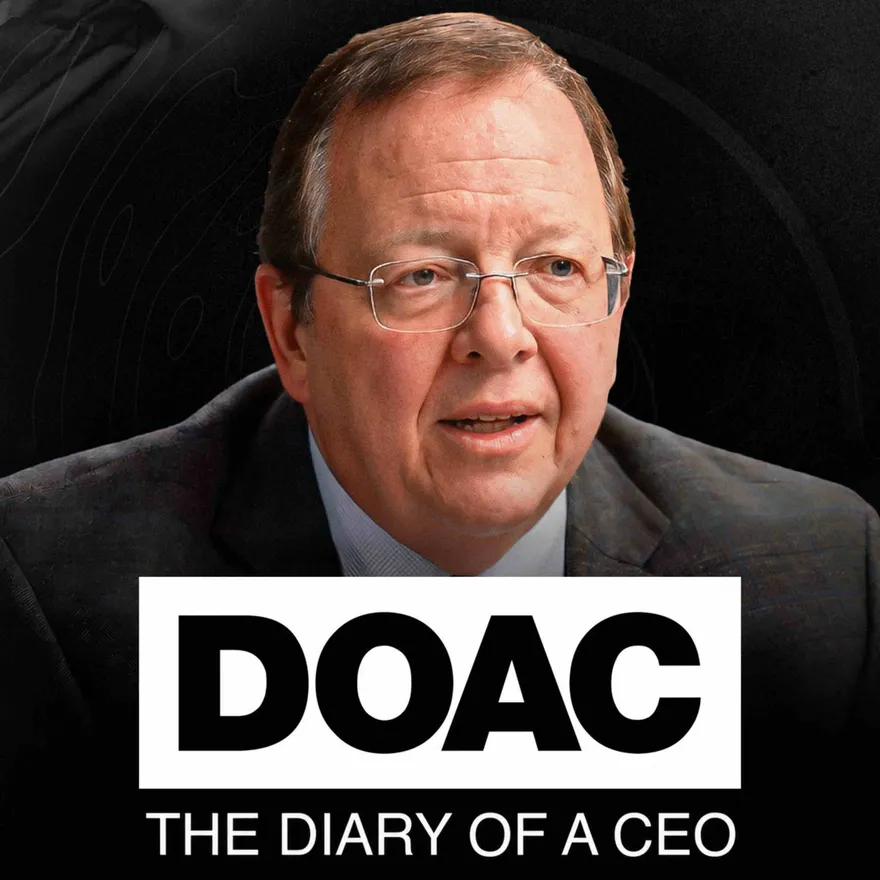

This is a preview of the Shortform summary of the Nov 5, 2026 episode of the The Diary Of A CEO with Steven Bartlett
Sign up for Shortform to access the whole episode summary along with additional materials like counterarguments and context.
1-Page Summary
Escalation Trap: Leaders Doubling Down On Losses
Robert Pape describes how international crises create escalation traps where leaders repeatedly double down on failed strategies, borrowing political capital in risky gambles with elections as looming deadlines. This phenomenon is driving dangerous escalations in U.S.-Iran tensions and Russia's invasion of Ukraine.
Facing Decline, Leaders Risk Losing More
Pape uses chess and roulette analogies to illustrate the trap. When politicians face setbacks after initial gains, they rarely accept what amounts to a humiliating draw. Instead, they "chase losses" like Lyndon Johnson during Vietnam, escalating conflicts in hopes of recovering credibility before electoral deadlines. As Pape explains, leaders borrow more political "chips" to make increasingly risky bets, much like gamblers doubling down at roulette tables.
Trump's Iran Policy: Tactical Successes Miss, Iran Controls Strait of Hormuz
Applying this framework to Trump's Iran policy, Pape details how tactical victories failed strategically. Despite assassinations and airstrikes, Iran seized control of the Strait of Hormuz—through which 20% of world oil flows—driving up gas prices. Trump's escalating responses culminated in plans for a three-day bombing campaign modeled on "Instant Thunder" strategies, though history suggests such campaigns extend far beyond initial plans. Trump's personal financial interests in cryptocurrency and prediction markets, whose value depends on his political standing, further intensify the pressure to avoid failure.
Putin's Invasion of Ukraine: Massive Losses, Minimal Gains
Putin exemplifies this escalation trap in authoritarian form. Despite deploying 200,000 troops, Russia has suffered over 250,000 deaths while capturing only 1% of Ukrainian territory. Putin cannot retreat—authoritarian leaders who lose major wars face coups or assassination. Pape predicts that once Putin concludes Trump cannot deliver Ukrainian territory through negotiations, he'll escalate by targeting civilian infrastructure, orchestrating attacks on power stations to create a "dark winter" and break Ukrainian resistance.
Eight Dangerous Weeks: Converging Crises Creating Systemic Risk
Pape warns the world is entering an exceptionally volatile eight-week period where domestic and international crises converge, threatening to destabilize political systems globally. Drawing on three decades studying political violence, he emphasizes these crises aren't isolated but mutually reinforcing, compounding systemic risk.
US Midterm Transition Poses Highest Risk for Political Violence Since Civil War
Pape identifies the post-midterm transition as the most dangerous period for political violence since the Civil War. Recent data shows over 40 million Americans support using the military to suppress anti-Trump protests, while over 60 million support using force to prevent Trump's return—both figures doubling in two years. If Democrats take Congress, their investigative powers could trigger an uncontrollable political spiral, potentially sparking January 6th-style violence on a larger scale.
Multiple Crises Escalate Simultaneously, Creating Cascading Interactions
Parallel to domestic turmoil, the Iran War is entering a dangerous phase with planned strikes following midterms, which could spike energy prices and fuel global economic dissatisfaction. Meanwhile, Russia threatens to target Ukrainian infrastructure, portending a "dark winter." These crises interconnect—energy shocks from Iran ripple through the global economy, sparking protests from France to beyond, while cyber attacks on European infrastructure could push the continent toward direct confrontation with Russia.
Crises Convergence Likely to Ignite Violent Populism Globally
Pape stresses that converging crises multiply systemic risk beyond what each poses individually. The days after midterms, when ballot counts remain contentious, present acute danger for violent clashes. Internationally, military escalation, economic disruption, and mass protests create feedback loops where economic hardship fuels populism, protests spark government overreach, and violence begets further crises.
Violent Populism in America: Mainstreaming of Political Violence
Pape explains that violent populism occurs when political violence shifts from isolated fringe acts to the mainstream, involving large numbers of people across multiple regions.
Violent Populism Spreads Rapidly Across Regions
Unlike the localized 1992 Los Angeles riots, violent populism enables anger to proliferate across regions and internationally from a single triggering event. Steven Bartlett notes that Black Lives Matter protests demonstrated this, spreading globally from one focal point. Pape likens this to wildfire, where millions of Americans represent "combustible material" awaiting a spark, with social media accelerating the spread as leaders direct crowds through rhetoric and tweets.
The Trump Administration Links Political Violence To Presidential Power
Pape details how Trump's December 2020 tweet urging supporters to Washington, followed by his January 6 tweet blaming Mike Pence, demonstrates the causal link between presidential rhetoric and violence. Trump's more recent statements about considering the Insurrection Act signal willingness to use military force against opposition, normalizing political violence as an expected tool.
Power Transition Vulnerability Creates Sparks for Violent Populism
Periods of power transition become especially dangerous, with clashes between federal agents and protesters during ballot counting serving as potential focal points for larger violence. Governors and mayors have urged moratoriums on armed federal agents to prevent such sparks, while social media amplifies conflicts and election legitimacy narratives, creating conditions for nationwide violence triggers.
Escalation Scenarios: Regional Conflicts to World War III
Current regional conflicts risk spiraling into broader global confrontation, with overlapping crises removing institutional safeguards.
Iran Bombing Campaign: Likely Pathway to Prolonged Engagement
The leaked U.S. plan resembles Operation Instant Thunder from 1991, which stretched from a planned three days to 43 days, killing 5,000-15,000 Iraqi civilians. Pape notes that if Iran bombing fails by day three, decentralized Iranian forces will retaliate against infrastructure and necessitate ground force deployment, while massive civilian casualties may inspire decades of revenge-driven terror.
European Cyber Attacks May Prompt Military Retaliation Against Russia
The UK's "Be Ready" campaign, urging households to stockpile emergency supplies, suggests governments see significant cyber attack risk. Pape explains that Russian cyberattacks crippling European infrastructure could spur public demand for military retaliation, and direct attacks by European militaries on Russian territory would constitute World War III—major powers directly engaging each other's homelands.
Crises May Prompt Trump to Use Emergency Powers Domestically
Trump refused to rule out invoking the Insurrection Act, which allows deploying military against citizens without Congressional approval. A convergence of Iran war escalation, Europe-Russia conflict raising energy prices, U.S. cyber attacks, and violent protests could justify such deployment. U.S. military presence during transition may hinder democracy, allowing Trump to extend emergency powers through 2027.
Pathway to World War III
Pape outlines a plausible sequence: Europe retaliates militarily for Russian cyberattacks, Russia strikes European cities, and the U.S.—preoccupied with costly Iran war and domestic crisis—cannot mediate. As crises converge simultaneously, traditional circuit-breakers fail, trapping decision-makers in escalation cycles and making World War III alarmingly possible.
Firebreaks and Solutions: Policies to Prevent Catastrophic Escalation
Pape lays out urgent policy measures to prevent catastrophic escalation during this high-risk period.
"No Escalation in Iran Without New Congressional Approval"
The primary firebreak is for Congress to declare that Trump cannot escalate militarily in Iran unless Iran strikes first. This removes the perceived urgency driving risky military actions and asserts Congressional authority over war powers.
Moratorium on Federally Armed Agents
Pape proposes a two-month moratorium on federally armed agents operating without local authorization. This prevents clashes between agents and protesters that could ignite widespread violent populist actions during ballot counting and certification, allowing peaceful power transfer.
Binding Commitment to Protect Civilian Infrastructure
Mediation countries like Pakistan, Qatar, and India should urge all parties to commit to not targeting civilian infrastructure or homes. Such "hands off civilians" agreements would lower retaliation cycles and reduce humanitarian crises.
Urge Leaders to Adopt Firebreak Policies
Pape argues against individual stockpiling, which provides false security. Instead, people should pressure political leaders through emails, texts, and calls to adopt these three firebreaks. Sustained public pressure can shift political incentives away from reckless escalation, with social media playing a critical role in transmitting public sentiment and reminding leaders of the broad mandate against catastrophic escalation.
1-Page Summary
Additional Materials
Clarifications
- An escalation trap occurs when leaders continue increasing conflict intensity to avoid admitting failure, fearing political or personal loss. This cycle is driven by sunk costs and the desire to maintain credibility, making de-escalation politically costly. In military contexts, it often leads to prolonged wars with rising casualties and destruction. The trap limits rational decision-making, as retreat is seen as weakness rather than a strategic choice.
- Lyndon Johnson escalated U.S. involvement in the Vietnam War despite growing losses, aiming to maintain U.S. credibility and avoid political defeat. Operation Instant Thunder was a 1991 U.S. air campaign during the Gulf War, initially planned for three days but extended to over a month. It involved intense bombing of Iraqi military and infrastructure targets to weaken Saddam Hussein's forces. The campaign caused significant civilian casualties and prolonged conflict beyond initial expectations.
- The Strait of Hormuz is a narrow waterway between the Persian Gulf and the Gulf of Oman, crucial for global oil transport. About one-third of the world's seaborne oil passes through it, making it a strategic chokepoint. Control or disruption of the strait can significantly impact global oil prices and energy security. Its geopolitical importance makes it a frequent flashpoint in Middle East conflicts.
- Trump's financial interests in cryptocurrency and prediction markets create incentives for him to maintain political influence, as their value often depends on political stability or outcomes favorable to him. Prediction markets allow betting on political events, so his standing can affect market prices and potential profits. This financial entanglement increases pressure on Trump to avoid political losses that could devalue these assets. Consequently, it may drive him to escalate conflicts or political gambles to protect his investments.
- Russia's invasion of Ukraine began in February 2022, involving a large-scale deployment of troops and military equipment. The conflict has resulted in significant casualties on both sides, with Russia suffering heavy losses in personnel and materiel. The war has caused widespread destruction, displacement of civilians, and severe economic consequences for Ukraine and the region. International sanctions and military aid to Ukraine have further complicated Russia's military efforts and strategic goals.
- Authoritarian leaders often rely on demonstrating strength to maintain control and legitimacy. Retreating from wars can be seen as weakness, undermining their grip on power. This loss of support may trigger coups by rivals or assassination attempts to remove them. Thus, they escalate conflicts to avoid appearing vulnerable.
- "Dark winter" refers to a scenario where attacks on civilian infrastructure, such as power grids, cause widespread and prolonged blackouts during winter months. This leads to severe hardships including lack of heating, water, and medical services, increasing civilian suffering and weakening societal resilience. The term gained prominence from a 2001 bioterrorism simulation named "Dark Winter," highlighting the catastrophic impact of infrastructure collapse. In conflict, creating a "dark winter" aims to break civilian morale and resistance by intensifying humanitarian crises.
- The U.S. post-midterm transition refers to the period after congressional elections when power shifts or is contested, often heightening political tensions. Historically, the Civil War era saw extreme violence and division during power transitions, making it a benchmark for political instability. Comparing current risks to that era highlights the potential severity of political violence today. This context underscores fears that unresolved election disputes could trigger widespread unrest.
- Federally armed agents are law enforcement officers employed by the federal government with authority to enforce federal laws nationwide. Local authorization refers to permission or cooperation from state or municipal governments for federal agents to operate within their jurisdictions. Tensions arise when federal agents act without local consent, potentially undermining local law enforcement and escalating conflicts. The U.S. system balances federal and state powers, but disputes over jurisdiction can create political and legal challenges.
- The Insurrection Act is a U.S. federal law that allows the President to deploy military forces within the country to suppress civil disorder, insurrection, or rebellion. It bypasses the usual requirement for Congressional approval in emergencies. Historically, it has been invoked during events like the Civil Rights Movement to enforce federal laws. Its use is controversial because it can militarize domestic law enforcement and impact civil liberties.
- Cyber attacks on European infrastructure target critical systems like power grids, communication networks, and transportation, causing widespread disruption. Such attacks can cripple essential services, leading to economic losses and public safety risks. Governments may view these attacks as acts of war, prompting military retaliation to deter further aggression. This escalation risks expanding conflicts beyond cyber warfare into conventional military confrontations.
- Violent populism involves widespread political violence supported or tolerated by large segments of the population, often linked to a political movement or leader. It differs from isolated acts, which are sporadic and lack broad social or political backing. Violent populism can mobilize mass participation and spread rapidly across regions through shared grievances and coordinated rhetoric. This phenomenon often undermines democratic norms by normalizing violence as a political tool.
- Social media platforms use algorithms that prioritize emotionally charged and sensational content, increasing its visibility and engagement. This amplifies outrage and fear, motivating rapid sharing and mobilization. Networks connect like-minded individuals, enabling quick coordination and spreading of violent calls to action. Real-time updates and live streams create a sense of immediacy, encouraging participation and escalation.
- On January 6, 2021, a mob of supporters of then-President Trump stormed the U.S. Capitol to disrupt the certification of the 2020 presidential election results. This event exposed deep political polarization and the potential for violence linked to contested elections. It serves as a warning that similar or larger violent incidents could occur if political tensions escalate, especially during sensitive periods like election transitions. The text uses this event to highlight risks of widespread political violence if current crises worsen.
- Congress holds the constitutional power to declare war and authorize military actions, ensuring civilian oversight of the armed forces. The President can respond to immediate threats but generally needs Congressional approval for prolonged or large-scale military engagements. This system prevents unilateral executive decisions that could lead to unnecessary or unauthorized conflicts. Congressional approval also legitimizes military actions domestically and internationally.
- Mediation countries act as neutral parties to facilitate dialogue and negotiations between conflicting sides. Pakistan, Qatar, and India have regional influence and diplomatic ties that enable them to build trust and propose compromises. They help de-escalate tensions by encouraging agreements that protect civilians and prevent further violence. Their involvement can legitimize peace efforts and pressure parties to honor commitments.
- "Firebreak" policies are deliberate actions designed to interrupt or slow down the progression of conflict or violence, much like a firebreak in a forest stops a wildfire from spreading. They create controlled pauses or barriers that prevent escalation from spiraling out of control. These policies reduce immediate risks and provide space for diplomacy or de-escalation efforts. Their goal is to protect political stability and civilian safety by limiting opportunities for conflict to intensify.
- Economic hardship increases public frustration, making people more receptive to populist leaders who promise simple solutions. Populism often fuels protests by mobilizing discontent against perceived elites or institutions. Governments may respond with overreach, such as excessive policing or restrictive laws, to control unrest. This overreach can provoke further violence, deepening instability and perpetuating the cycle.
- Regional conflicts can escalate when military actions provoke retaliations beyond initial combatants, drawing in allies and expanding the war's scope. Cyberattacks on critical infrastructure may trigger military responses, crossing thresholds that involve direct attacks on sovereign territories. Political instability and domestic crises can weaken diplomatic channels, reducing opportunities to de-escalate tensions. This breakdown of control and expanding involvement risks spiraling into a global conflict involving multiple major powers.
- Ballot counting and election certification are critical because they finalize election results, determining who holds political power. These processes can be contentious if results are close or disputed, leading to accusations of fraud or illegitimacy. Such disputes may trigger protests or violence from supporters on both sides, especially when political tensions are high. The period between voting and certification is vulnerable to manipulation and misinformation, increasing the risk of conflict.
Counterarguments
- The concept of "escalation traps" may overstate leaders' irrationality; some escalations are calculated responses to evolving threats or opportunities rather than mere loss-chasing.
- Not all leaders escalate conflicts to recover credibility; historical examples exist where leaders have chosen de-escalation or negotiated settlements despite political risks (e.g., U.S. withdrawal from Afghanistan).
- The assertion that Trump's Iran policy failed strategically is debated; some analysts argue that maximum pressure constrained Iran's regional ambitions and deterred attacks on U.S. interests.
- The link between Trump's personal financial interests and his foreign policy decisions is speculative and not conclusively established by available evidence.
- Putin's inability to retreat is not universally accepted; some authoritarian leaders have survived military setbacks through internal repression or narrative control without escalating further.
- The prediction of a "dark winter" in Ukraine assumes escalation is inevitable, but diplomatic efforts and international pressure could still influence Russian strategy.
- The claim that the U.S. post-midterm transition poses the highest risk for political violence since the Civil War is contested; other periods (e.g., the 1960s) also saw significant unrest.
- The idea that Democratic control of Congress would automatically trigger uncontrollable violence is speculative and not supported by consistent historical precedent.
- The feedback loop between economic hardship, populism, and violence is complex and not always linear; many societies have endured economic crises without widespread political violence.
- Social media's role in spreading violent populism is significant, but it also enables rapid dissemination of de-escalation messages and organizing for peaceful protest.
- The normalization of political violence is a serious concern, but polling data on support for force is subject to interpretation and may not translate into actual violent action.
- The risk of World War III due to overlapping crises is a worst-case scenario; international institutions and diplomatic channels have historically played important roles in preventing global escalation.
- Congressional approval for military action is a constitutional safeguard, but presidents have often acted without it in urgent situations, citing national security needs.
- Individual preparedness (e.g., stockpiling) can be a rational response to uncertainty and does not necessarily detract from collective political action.
Get access to the context and additional materials
Escalation Trap: Leaders Doubling Down On Losses
Robert Pape describes a mounting escalation trap in international crises, where leaders repeatedly double down on failed strategies, borrowing political capital in risky gambles with elections as looming deadlines. This phenomenon heightens both risk and potential for catastrophe, as seen in recent U.S.-Iran tensions and Russia’s ongoing invasion of Ukraine.
Facing Decline, Leaders Risk Losing More
Pape uses the analogy of chess and roulette to illustrate the escalation trap. In chess, White (America/Trump) might make early gains, yet when the opponent (Iran, Russia, or another adversary) counters, traditional logic suggests accepting a draw. Yet politicians rarely settle for draws—especially when initially ahead—because this equates to humiliating loss of face, party, and legacy.
In explaining decision-making under pressure, Pape recalls how presidents like Lyndon Johnson, facing mounting opposition at home during the Vietnam War, refused to abandon their agendas or legacies. Instead, they “chased losses,” escalating the conflict in the belief each new risk offered a chance to recover credibility and avert historical ruin. As Pape puts it, “He kept going up the ladder, chasing his losses, hoping, even though each risk is riskier... he sees it as the only way to dig out of this doom loop.” Elections act as hard deadlines, akin to a gambler’s debt coming due, amplifying urgency and peril. If a president refuses to double down, Pape says, “He becomes Jimmy Carter and Lyndon Johnson combined—the worst president that we've ever had in any of our lifetimes.”
Leaders, therefore, often borrow further “chips”—political support from their party or public—to make even larger bets, seeking to reclaim lost ground before electoral reckoning. This cycle mirrors roulette: “Now a lot of gamblers will suddenly dig in deeper... And what are they going to do? They're going to bet an even bigger pile of chips... I’m going to get it back.”
Trump's Iran Policy: Tactical Successes Miss, Iran Controls Strait of Hormuz, 20% of Oil Supply
Applying the escalation trap to Trump’s Iran policy, Pape details how tactical victories failed to deliver strategic gain. Trump gambled that high-profile attacks—such as assassinating Iranian leaders or launching air campaigns—would force Tehran’s submission. Instead, Iran seized and maintained control of the Strait of Hormuz, through which 20% of world oil flows, driving up gas prices and undermining U.S. political leverage.
After repeated airstrikes and economic pressure, Iran did not capitulate. With each failed bet, Trump wagered bigger—moving from targeted strikes to drawing up contingency plans for a rapid, high-intensity three-day bombing campaign against Iran’s key infrastructure and command centers. This plan, modeled after historic “Instant Thunder” strategies, aimed to force quick Iranian surrender without a ground war. Yet history shows short-term bombing campaigns often extend well beyond initial plans. Should the three-day strike fail, Pape warns, the U.S. could be drawn into lengthier military involvement, with Iran potentially retaliating against Gulf and U.S. targets.
Trump’s personal and financial interests also intensify the trap. Much of his wealth and his family’s fortunes are tied to cryptocurrency and prediction market companies, sectors whose value is tethered to his political standing and perceptions of power. Regulatory and corporate interests further raise the pressure to avoid loss of office, ma ...
Here’s what you’ll find in our full summary
Escalation Trap: Leaders Doubling Down On Losses
Additional Materials
Clarifications
- An escalation trap occurs when leaders continue increasing their commitment to a failing course of action to avoid admitting defeat. This often happens because backing down is seen as a sign of weakness, risking political or personal loss. In military conflicts, it leads to progressively intense actions, making de-escalation harder. The trap creates a cycle where each side feels compelled to respond with greater force, increasing the risk of wider conflict.
- The chess analogy highlights strategic thinking and the choice between risking more or accepting a compromise. Roulette represents gambling with uncertain outcomes, emphasizing risk escalation when trying to recover losses. Political leaders, like players, face pressure to avoid admitting defeat, pushing them to take bigger risks. This combination shows how leaders may irrationally escalate conflicts to protect reputation and power.
- Lyndon Johnson escalated U.S. involvement in Vietnam despite growing public opposition, hoping to secure a military victory and protect his political legacy. He feared that withdrawing would be seen as a defeat, damaging his reputation and the Democratic Party. This led to increased troop deployments and prolonged conflict, illustrating the "escalation trap." His decisions show how leaders may risk greater losses to avoid admitting failure.
- "Borrowing political capital" means using the trust, influence, or goodwill a leader has built to push risky decisions or policies. "Chips" is a metaphor from gambling, representing these valuable resources or support that leaders wager to achieve goals. When leaders "bet" their political capital, they risk losing public or party backing if their actions fail. This can weaken their power or chances of re-election.
- The Strait of Hormuz is a narrow waterway between the Persian Gulf and the Gulf of Oman. It is a critical chokepoint for global oil transportation, with about one-fifth of the world's petroleum passing through it daily. Any disruption there can cause significant spikes in global oil prices and impact energy security worldwide. Control over the strait gives strategic leverage in international politics and economics.
- “Instant Thunder” was a U.S. military plan developed in the early 1990s for a rapid, intense air campaign aimed at crippling an enemy’s command and control infrastructure quickly. It focused on precision bombing to minimize ground combat and force a swift enemy surrender. The strategy was designed to avoid prolonged conflict but often underestimated the complexity and resilience of targets. Historically, such campaigns frequently extended beyond initial timelines due to unforeseen resistance and operational challenges.
- Trump’s financial interests in cryptocurrency and prediction markets create a personal stake in maintaining political power, as their value often depends on political stability and his influence. Political decisions that threaten his standing could reduce these assets' worth, incentivizing riskier moves to protect them. This intertwines his economic well-being with his political survival, increasing pressure to avoid losses. Consequently, his policy choices may be driven partly by financial motivations, not just strategic or ideological reasons.
- The high number of Russian casualties reflects severe military losses and challenges in Ukraine. Despite deploying a large force, Russia's minimal territorial gains indicate ineffective advances and strong Ukrainian resistance. Such disproportionate losses weaken Russia's military capacity and morale. This imbalance also signals strategic failure and prolongs the conflict.
- Authoritarian leaders often rely on strong control over the military and security forces to maintain power. Losing a war can weaken ...
Counterarguments
- Not all leaders respond to setbacks by escalating; some have successfully de-escalated or sought diplomatic solutions, as seen in cases like the Cuban Missile Crisis or the U.S. withdrawal from Afghanistan.
- The analogy between political decision-making and gambling may oversimplify the complex calculations and institutional constraints leaders face.
- Accepting a "draw" or compromise is sometimes politically viable and has been chosen by leaders without necessarily resulting in loss of legacy or party support.
- The escalation trap framework may not account for the influence of advisors, public opinion, or international alliances that can restrain or redirect leaders' actions.
- Trump’s Iran policy did result in some deterrence, as evidenced by periods of reduced Iranian attacks on U.S. interests following high-profile actions.
- The assertion that Trump’s personal financial interests in cryptocurrency and prediction markets significantly influenced his foreign policy decisions lacks widely accepted evidence.
- Putin’s continued aggression in Ukraine may also be driven by ...
Get access to the context and additional materials
Eight Dangerous Weeks: Converging Crises Creating Systemic Risk
Robert Pape warns that the world is entering an exceptionally volatile period—eight weeks defined by a convergence of domestic and international crises that threaten to destabilize political systems and ignite violence. These risks stem from the volatile US midterm transition, simultaneous escalations in the Iran War and the Russia-Ukraine conflict, and the complex interactions and feedback loops between these events. Pape, drawing on three decades of experience studying political violence and advising US administrations, emphasizes that these converging crises are not isolated but mutually reinforcing, compounding systemic risk on a global scale.
US Midterm Transition Is Highest-Risk for Political Violence Since Civil War, as Millions Support Force Against Opponents
Pape identifies the post-midterm transition—when political control of Congress and the fate of President Trump’s administration are in play—as the most dangerous period for potential political violence since the Civil War. He cites recent data showing that over 40 million Americans now support the use of the US military to suppress anti-Trump protests. More than 60 million support the use of force to prevent Trump from returning to the presidency. Both figures have doubled in the last two years, showing that the public’s willingness to support violent populism is growing rapidly.
If Democrats take control of the House or, especially, both chambers of Congress, they will wield extensive investigative and legal powers: issuing subpoenas, leveraging the threat of jail to ensure cooperation, and launching impeachments of not just President Trump but also key cabinet members like the attorney general or the secretary of homeland security. Gaining the Senate and flipping just a small number of Republican votes—especially with many GOP members frustrated with Trump and seeking distance—provides a route to actual removals from office. Such actions would cause an uncontrollable political “spiral down,” with no clear bottom, as infighting grows and Republican support for Trump collapses even further.
This expanding rift weakens Trump’s position, as senators and congresspeople—facing backlash and electoral risk—withdraw support. The resulting instability, with millions ready to endorse force, raises the danger of a repeat or even escalation of events like January 6th, with intense uncertainty over whether either side will accept electoral outcomes.
Iran War, Russia-Ukraine Conflict, and US Political Crisis Escalate Simultaneously, Creating Cascading Interactions and Amplifying Risks
Parallel to the US domestic crisis, Pape notes that the Iran War is entering a dangerous phase. President Trump has repeatedly promised a military escalation against Iran and reportedly has plans for American and Israeli strikes targeting Iran, timed to follow the US midterms. Such military action could trigger an immediate surge in energy prices, exacerbating already high inflation, sparking protests, and fueling a global wave of economic dissatisfaction and populism.
Meanwhile, Russia is threatening dramatic escalation in its war on Ukraine. President Putin is preparing to target critical civilian infrastructure, including electric power grids in cities like Kyiv, Kharkiv, and Odessa, portending a “dark winter.” The situation in Ukraine is seen by European governments as especially volatile, stoking fears of cascading spillovers beyond Eastern Europe.
These crises are interconnected. Energy price shocks caused by the Iran conflict ripple across the world economy, leading to secondary effects: economic anxiety, frozen housing markets, and public outrage. The situation is not static; what unfolds in IRan, Russia, Ukraine, and the US doesn't stay contained, but each crisis compounds the next. For example, economic unrest from energy disruptions can spark mass protests in France and other countries, as already witnessed, turning localized events into international contagions of unrest.
At the same time, as Russia’s war escalates, the possibility grows of cyber attacks on European critical infrastructure as a pressure tactic, prompting potential European military responses and pushing th ...
Here’s what you’ll find in our full summary
Eight Dangerous Weeks: Converging Crises Creating Systemic Risk
Additional Materials
Clarifications
- US midterm elections occur every two years to elect members of Congress, influencing legislative control and government direction. They often shift political power, affecting the president's ability to govern and prompting intense partisan conflict. Historically, periods around midterms can heighten political tensions and unrest due to uncertainty and power struggles. The 2026 midterms are especially volatile due to deep polarization and contested legitimacy of election outcomes.
- Congress is the US legislative branch, divided into the House of Representatives and the Senate, responsible for making laws and overseeing the executive branch. A subpoena is a legal order compelling someone to testify or produce evidence for investigations. Impeachment is a formal charge of misconduct against a government official, which can lead to removal from office if the Senate convicts. Legal investigations by Congress can uncover wrongdoing and support impeachment or other legislative actions.
- On January 6, 2021, supporters of then-President Donald Trump stormed the U.S. Capitol to disrupt the certification of the 2020 presidential election results. The attack involved violence against law enforcement, vandalism, and breaches of security. It resulted in multiple deaths, injuries, and widespread condemnation as an unprecedented assault on American democracy. The event highlighted deep political divisions and raised concerns about the potential for future political violence.
- The Iran War refers to escalating tensions and potential military conflict between Iran and the US, often involving Israel as a regional ally of the US. US and Israeli strikes are planned to prevent Iran from advancing its nuclear program and to counter its influence in the Middle East. Such strikes risk destabilizing global oil markets, causing energy price spikes worldwide. This economic disruption can trigger inflation and social unrest beyond the region.
- The Russia-Ukraine conflict began in 2014 when Russia annexed Crimea and escalated in 2022 with a full-scale invasion. Targeting civilian infrastructure, like power grids, aims to disrupt daily life, weaken morale, and pressure governments by causing widespread hardship. Such attacks can lead to humanitarian crises and complicate military and diplomatic responses. This strategy often violates international laws protecting civilians during war.
- “Dark winter” refers to a scenario where critical infrastructure, like power grids, is deliberately attacked, causing widespread and prolonged blackouts. This leads to severe disruptions in heating, lighting, communication, and essential services during winter months. Such conditions can cause humanitarian crises, economic paralysis, and heightened social unrest. The term highlights the strategic use of infrastructure attacks to weaken civilian morale and government stability.
- Energy price shocks increase the cost of fuel and electricity, raising production and transportation expenses across industries. This drives up the prices of goods and services, contributing to overall inflation. Higher living costs reduce disposable income, leading to economic hardship for many households. Economic stress often triggers social unrest as people protest declining living standards and government policies.
- Cascading interactions occur when one crisis triggers or worsens another, creating a chain reaction across different regions or sectors. Feedback loops happen when the effects of these crises reinforce each other, amplifying the overall impact. For example, economic disruption from a war can fuel protests, which then lead to government crackdowns, further escalating unrest. This interconnectedness means no crisis exists in isolation, making the combined risk much greater than the sum of individual problems.
- Cyber attacks on critical infrastructure target essential systems like power grids, water supplies, and communication networks, aiming to disrupt daily life and create chaos. Such attacks can cause widespread outages, economic damage, and threaten public safety, increasing pressure on governments to respond decisively. Military responses may be triggered if a cyber attack is perceived as an act of war or a severe threat to national security. This escalation risk arises because cyber attacks blur traditional boundaries between peace and conflict, complicating diplomatic and military decision-making.
- Violent populism refers to political movements that use or endorse violence to achieve goals framed as defending "the people" against perceived elites or opponents. Public support for political violence is typically measured through surveys and polls asking respondents about their willingness to endorse or participate in forceful actions. Researchers also analyze social media trends, protest participation, and incidents of violence linked to political groups. These methods help quantify how widespread acceptance of violence is within a population.
- Political instability in one country can disrupt global markets, especially energy and finance, causing economic hardship elsewhere. This hardship fuels social discontent and protests in other nations facing similar issues. Media and s ...
Counterarguments
- While polling data shows increased support for political violence, actual incidents of large-scale violence remain rare, suggesting a gap between expressed attitudes and real-world actions.
- The US has experienced contentious transitions and political crises before (e.g., Watergate, 2000 election) without descending into systemic violence or collapse, indicating institutional resilience.
- The powers of Congress to investigate and impeach are constitutionally established and have been exercised in the past without uncontrollable political breakdown.
- The escalation of the Iran conflict and Russia-Ukraine war, while serious, are subject to numerous diplomatic, military, and economic constraints that may limit their spillover effects.
- Energy price shocks and economic disruptions have historically led to protests, but not always to systemic breakdown or violent populism on a global scale.
- The interconnectedness of crises is real, but the degree to which they create uncontrollable feedback loops is debated among experts; some argue that global systems have buffers and redundancies.
- Support for political violence in surveys may reflect frustration or symbolic protest rather than a genuine willingness to engage in or endorse violence.
- Cyber attacks on European infr ...
Get access to the context and additional materials
Violent Populism in America: Mainstreaming of Political Violence
Robert Pape explains that violent populism occurs when political violence shifts from isolated fringe acts to the mainstream, involving large numbers of people and recurring incidents rather than one-off attacks or localized protests.
Violent Populism Shifts Political Violence From Fringe to Mainstream, Altering Domestic Conflict
Pape notes that violent populism is not simply a case of a single political assassination or a protest turning violent in one city. Instead, it spreads widely and rapidly, giving domestic conflict a new dimension. Unlike the 1992 Los Angeles riots, which remained localized following the Rodney King verdict, violent populism enables anger and violence to proliferate across regions and even internationally, triggered by a single event. Steven Bartlett points out a recent parallel in the Black Lives Matter protests, which spread from one focal point to cities around the globe, showing how quickly a single spark can ignite widespread turmoil.
Violent Populism Spreads Rapidly Across Regions, Unlike Isolated Incidents or Localized Protests, as Shown by Black Lives Matter Protests Spreading Globally From a Single Focal Event
Pape uses the example of protests in France that didn’t just erupt in one government building or one city but flared in multiple cities and then spread beyond the country itself. The Black Lives Matter movement similarly exemplifies this; a focal point event leads to a cascade of violence and protest in many locations.
Wildfire Analogy: Millions of Americans as "Combustible Material" Awaiting a Spark For Violence
Pape likens violent populism to a wildfire. The "combustible material" in this analogy is the millions of Americans—over 40 million who support political violence aligned with Trump’s goals, and over 60 million who support political violence against Trump’s goals. This mass of ready supporters is like dry tinder, and only needs a "spark" to ignite.
Violent Populism Spreads Via Social Media, With Leaders Directing Crowds Through Rhetoric and Tweets Toward Political Targets
Social media accelerates this spread. Leaders can direct crowds through rhetoric and tweets, channeling anger instantly and broadly toward political targets, further mainstreaming violence.
The Trump Administration Links Political Violence To Presidential Power, Normalizing It As a Political Tool
Pape details how the Trump administration’s actions explicitly linked political violence to presidential power. On December 19, 2020, Trump tweeted to urge MAGA supporters to rally in Washington. Once gathered, Trump encouraged them to march on the Capitol, channeling their agitation. The true ignition point came with his January 6 tweet blaming Mike Pence, which immediately precipitated the violent storming of the Capitol, demonstrated by chants of "hang Mike Pence." This sequence shows a clear causal link between Trump’s rhetoric and the eruption of violence.
Trump's Tweets Urging Maga Supporters To Washington On Dec 19, 2020, and Blaming Mike Pence On Jan 6 Incited the Capitol Attack, Showing Rhetoric's Causal Link to Violence
Trump's explicit instructions were conveyed directly through tweets. His words guided crowds and formed the focal spark that set off coordinated and violent action at the Capitol.
Trump's October 2024 Statement to Consider Insurrection Act Use Domestically Signals Willingness to Use Military Against Opposition
Pape points to Trump’s more recent statements about considering the Insurrection Act for domestic deployment as evidence of the normalization of using political violence and even military force as a political tool.
Normalization of Political Violence by Major Parties Makes It Expected
As such rhetoric and action become tied ...
Here’s what you’ll find in our full summary
Violent Populism in America: Mainstreaming of Political Violence
Additional Materials
Clarifications
- Violent populism is a political phenomenon where mass political violence is driven by populist leaders who claim to represent "the people" against perceived elites or enemies. Historically, it has roots in movements where leaders mobilize large groups to use violence as a tool to achieve political goals, often bypassing legal or institutional norms. Examples include early 20th-century fascist movements in Europe and some radical populist uprisings in Latin America. It differs from isolated acts of violence by its scale, organization, and direct connection to populist political agendas.
- The 1992 Los Angeles riots erupted after four police officers were acquitted in the beating of Rodney King, an African American motorist, despite video evidence. The verdict sparked outrage over racial injustice and police brutality, leading to six days of widespread violence, looting, and arson. The riots caused over 50 deaths and extensive property damage but remained largely confined to Los Angeles. This event highlighted deep racial tensions but did not spread nationally or internationally like later movements.
- The Black Lives Matter movement began in 2013 to protest systemic racism and police violence against Black people in the United States. It gained global attention after high-profile incidents of police brutality, sparking protests worldwide. These protests often called for justice, police reform, and racial equality. The movement's use of social media helped spread its message rapidly across countries.
- The protests in France, such as the Yellow Vest movement starting in 2018, involved widespread demonstrations across multiple cities, not confined to a single location. These protests showed how local grievances can quickly escalate into national unrest, spreading rapidly and involving diverse groups. This pattern illustrates violent populism by demonstrating how anger and mobilization can transcend local issues and geography. It highlights the potential for political violence to become a broad, sustained movement rather than isolated incidents.
- The Insurrection Act is a U.S. federal law that allows the president to deploy military forces within the country to suppress civil disorder, insurrection, or rebellion. It is intended for extreme situations when state authorities cannot maintain order. Using the Act domestically is rare and controversial because it involves military intervention in civilian affairs. Its invocation signals a serious escalation in government response to unrest.
- On January 6, 2021, supporters of then-President Trump stormed the U.S. Capitol to disrupt the certification of the 2020 presidential election results. The attack resulted in extensive property damage, injuries, and several deaths. It exposed deep political divisions and raised concerns about threats to democratic institutions. The event led to widespread condemnation and multiple investigations into security failures and extremist involvement.
- Social media platforms enable rapid, widespread sharing of information and emotions, often bypassing traditional fact-checking. Algorithms prioritize sensational or emotionally charged content, increasing visibility of extreme views and calls to action. This creates echo chambers where users reinforce each other's beliefs, escalating tensions. Coordinated groups use social media to organize events and spread propaganda, amplifying political violence.
- After the 2020 presidential election, Trump falsely claimed widespread voter fraud and refused to concede. On December 19, 2020, he urged supporters to rally in Washington, D.C., to protest the election results. On January 6, 2021, Congress was certifying the Electoral College vote when Trump blamed Vice President Pence for not overturning the results. These tweets mobilized supporters, culminating in the violent Capitol riot that day.
- A "power transition" refers to the period when political authority shifts from one leader or party to another, often after an election. This time is vulnerable because the outgoing and incoming sides may dispute the legitimacy of the results, creating uncertainty. Such uncertainty can weaken institutions and increase tensions, making violence more likely. Historical examples show that contested transitions often trigger unrest or conflict.
- Federal agents during ballot counting primarily ensure the security and ...
Counterarguments
- The characterization of the Black Lives Matter protests as primarily examples of "violent populism" is contested; many demonstrations were peaceful, and violence was often limited to a minority of participants or instigated by outside actors.
- The claim that over 40 million Americans support political violence aligned with Trump’s goals and over 60 million against them may overstate the extent of active support for violence, as survey responses can reflect abstract or hypothetical approval rather than a genuine willingness to participate in violence.
- The analogy of "combustible material" may oversimplify the complex motivations and thresholds required for individuals to engage in political violence.
- The causal link between specific presidential rhetoric and the eruption of violence, such as the events of January 6, is debated; some argue that multiple factors contributed, including pre-existing extremist groups and broader social tensions.
- The spread of protests across multiple cities and countries, as seen with Black Lives Matter, can also be interpreted as a sign of global solidarity and shared grievances rather than solely as evidence of violent populism.
- The use of the Insurrection Act o ...
Get access to the context and additional materials
Escalation Scenarios: Regional Conflicts to World War III
The current international climate is shaped by rapidly escalating regional conflicts, which, if unchecked, could spiral into a broader global confrontation. Analysts like Robert Pape draw on historical precedents, modeling and warning of pathways that begin with targeted campaigns or cyberattacks but risk cascading into world war and domestic authoritarianism, especially as overlapping crises remove institutional safeguards.
Iran Bombing Campaign: Likely Pathway to Prolonged Engagement, Civilian Casualties, and Uncontrolled Terrorist Attacks
Three-Day Bombing Parallels 1991 Iraq's Operation Instant Thunder, Targeting Leadership and Infrastructure, Killing 5,000-15,000 Civilians Over 43 Days Despite a 6-Day Plan
The leaked U.S. plan for air strikes against Iran closely resembles Operation Instant Thunder, the initial phase of the 1991 Gulf War where an ostensibly three-day campaign against Iraq’s leadership and infrastructure ultimately stretched to 43 days. Robert Pape notes that such plans prioritize the paralysis of military and economic functions, targeting refineries, power structures, and civic bridges. Despite aiming for surgical efficiency, the campaign against Iraq resulted in 5,000 to 15,000 civilian deaths—a sobering indicator of what a similar assault on Iran would bring, with infrastructure devastation and overwhelming civilian impact.
If the Bombing Campaign Fails By Day Three, Decentralized Iranian Forces Will Retaliate Against Infrastructure, Risk American and Ally Lives, and Necessitate Ground Force Deployment
Pape stresses that even after heavy bombing, Iranian military remnants would retain substantial retaliatory capabilities, including drone, missile, and cyber attacks. When air strikes fail to fully neutralize opposition, the risk sharply increases of Iran striking U.S. assets, Gulf state infrastructure, regional airports, or directly targeting civilians, as has been seen with past Houthi missile attacks in Saudi Arabia. This triggers a likely progression to deploying U.S. ground troops for localized objectives, deepening American entanglement. As with Iraq, the initial days morph easily into prolonged campaigns that cannot be neatly contained or disengaged.
Iranian Civilian Deaths From Bombing May Inspire Revenge-Driven Terror Similar to Attempted Tel Aviv Flight Hijacking
Massive civilian casualties are not only a humanitarian disaster but also a catalyst for decades of revenge-motivated terror, spurring individual or organized attacks far beyond Iran’s borders. Analogous scenarios have already played out, such as the attempted hijacking of an El Al flight to Tel Aviv, linked to broader cycles of reprisal and escalation following civilian-targeted violence.
European Infrastructure Cyber Attacks May Prompt Military Retaliation Against Russia, Shifting to Direct Great-Power War
UK's "Be Ready" Campaign Suggests Governments See Significant Cyber Attack Risk on Infrastructure
Amidst intensifying Ukraine conflict, the UK launched a “Be Ready” campaign, warning households to stockpile food, water, flashlights, battery-powered radios, and physical cash—preparations aimed at withstanding national emergencies, cyber warfare, or infrastructure collapse. This move highlights government belief in the realistic risk of cyber sabotage, with possible widespread outages disrupting supply chains and payment systems, fueling public anxiety and panic buying.
Cyber Attacks on Europe's Critical Infrastructure May Spur Public Demand for Military Retaliation Against Moscow
Pape explains that if Russian state-sponsored cyberattacks cripple key infrastructure in Europe, public demand for retribution is likely to surge. Unlike familiar short-term outages, large-scale cyber warfare could mean days-long blackouts, knocked-out communications, and grid failures—pressuring governments to respond militarily, not merely through proxy support but with direct action.
Direct Attacks by European Militaries on Russian Territory, Rather Than Proxy Support, Would Constitute World War III as Defined by Major Powers Directly Engaging Each Other's Homelands
Pape underscores that a European military response inside Russian territory marks the true threshold for World War III as commonly defined: major powers directly attacking each other's homelands and militaries. Proxy wars—such as aiding the Mujahideen in Afghanistan or providing billions to Ukraine—do not cross that line. Only direct engagement on home soil does, and such a scenario is increasingly plausible if cyberattacks provoke mass outages and public outrage.
Crises May Prompt Trump to Use Emergency Powers, Deploy Military Domestically, Leading to Authoritarianism and a Permanent State of Emergency
Insurrection Act Lets President Deploy Military/National Guard Against Citizens Without Congress During Emergency; Trump Considered It
Robert Pape recounts that President Trump, in an October 2023 interview, refused to rule out invoking the Insurrection Act, a rarely used statute that allows deployment of the military or National Guard within the United States against citizens without Congressional approval. Normally, the principle of posse comitatus bars such actions to guard against militarized authoritarianism.
I ...
Here’s what you’ll find in our full summary
Escalation Scenarios: Regional Conflicts to World War III
Additional Materials
Clarifications
- Robert Pape is a political scientist specializing in security studies and international conflict. He is known for his research on the causes of war, particularly suicide terrorism and air power effectiveness. His analysis is significant because it combines historical data with strategic modeling to predict conflict escalation. Policymakers and analysts often use his work to understand and anticipate military and political outcomes.
- Operation Instant Thunder was the initial air campaign of the 1991 Gulf War aimed at quickly disabling Iraq's military capabilities. It involved coordinated strikes on command centers, air defenses, and infrastructure to achieve air superiority. The operation was designed for rapid success but extended far longer due to Iraqi resistance and complexities. Its scale and impact set a precedent for modern air warfare strategies.
- The Insurrection Act is a federal law that allows the U.S. President to deploy military forces within the country to suppress civil disorder, insurrection, or rebellion. It bypasses the usual requirement for Congressional approval, enabling rapid response to emergencies. Historically, it has been invoked sparingly, often during times of significant unrest or crisis. Its use raises concerns about the militarization of domestic law enforcement and potential threats to civil liberties.
- Posse comitatus is a legal principle originating in English common law that limits the use of the military for domestic law enforcement. In the U.S., the Posse Comitatus Act of 1878 prohibits the Army and Air Force from acting as civilian police without Congressional approval. This law aims to prevent military involvement in civilian affairs to protect democratic governance and civil liberties. Exceptions exist, such as the Insurrection Act, which allows military deployment under specific emergency conditions.
- Houthi missile attacks in Saudi Arabia are part of the ongoing Yemen conflict, where the Houthi rebel group targets Saudi cities and infrastructure. These attacks often use ballistic missiles and drones to strike airports, oil facilities, and civilian areas, causing casualties and damage. They aim to pressure Saudi Arabia politically and militarily while disrupting regional stability. The strikes have escalated tensions and drawn international condemnation.
- The attempted hijacking of an El Al flight to Tel Aviv is a notable example of terrorism linked to political and military conflicts involving Israel. El Al, Israel's national airline, has been a frequent target for attacks due to its symbolic and strategic importance. Such hijackings often aim to leverage hostages for political demands or to spread fear. This incident illustrates how civilian-targeted violence can escalate broader cycles of retaliation and terror.
- The UK's "Be Ready" campaign is a government initiative to prepare citizens for emergencies, including cyberattacks that could disrupt essential services. It encourages households to have basic supplies like food, water, and batteries to cope with potential outages. This reflects growing concern about cyber threats targeting critical infrastructure such as power grids and communication networks. The campaign aims to reduce panic and improve resilience during prolonged disruptions.
- Proxy wars involve major powers supporting third parties or factions to fight on their behalf without direct combat between the powers themselves. Direct military engagement means the armed forces of major powers physically fight each other on their own territory or elsewhere. World War III is defined by this direct conflict between major powers, not by indirect or proxy confrontations. Proxy wars can escalate tensions but do not meet the threshold of a world war.
- Cyberattacks on national infrastructure target essential systems like power grids, communication networks, and financial services, causing widespread disruption. Such attacks can cripple a country's ability to function, creating chaos and undermining public trust in government. They often provoke strong political and military responses due to their potential to harm civilians and national security. This escalation risk is heightened because cyberattacks blur traditional war boundaries, making retaliation more likely and conflict more unpredictable.
- Circuit-breakers are mechanisms or actions that prevent conflicts from escalating uncontrollably. They include diplomatic negotiations, economic sanctions, or third-party mediation. These tools help cool tensions and create space for dialogue. When overwhelmed by multiple crises, these safeguards can fail, increasing the risk of war.
- The timeline to World War II ...
Counterarguments
- While historical precedents like Operation Instant Thunder inform current analysis, each conflict has unique geopolitical, technological, and diplomatic contexts that may prevent direct parallels or outcomes.
- Modern precision-guided munitions and improved intelligence may reduce civilian casualties and infrastructure damage compared to past campaigns.
- The assumption that a failed bombing campaign would necessarily require U.S. ground force deployment overlooks alternative strategies such as intensified sanctions, diplomatic efforts, or limited engagement.
- The likelihood of massive, revenge-driven terrorism as a direct result of civilian casualties is debated; some studies suggest that such outcomes depend on a range of factors including local political dynamics and international responses.
- The UK’s “Be Ready” campaign may reflect general preparedness for a range of emergencies, not solely an imminent cyberattack threat from Russia.
- Not all cyberattacks on critical infrastructure would automatically lead to public demand for military retaliation; governments may pursue diplomatic, economic, or cyber countermeasures instead.
- The threshold for World War III is not universally defined; some analysts argue that even direct attacks may not escalate if contai ...
Get access to the context and additional materials
Firebreaks and Solutions: Policies to Prevent Catastrophic Escalation
Robert Pape lays out urgent policy measures—“firebreaks”—to prevent catastrophic escalation during periods of intense national and international risk, particularly focusing on limits to military action, federal law enforcement conduct, and protection of civilians.
"No Escalation in Iran Without New Congressional Approval" Declarations as Key Firebreak
The primary firebreak is for every member of the current and incoming Congress to declare: no military escalation by the Trump administration in Iran unless Iran strikes first. Pape describes this as a simple and direct message—Congress must ensure that Trump cannot unilaterally escalate U.S. involvement in Iran without provocation during the transition period. Removing the perceived urgency to act before a deadline (such as a new administration taking office) eliminates the pressure on Trump to take risky military actions. This declaration asserts Congressional authority over war powers, acting as a bulwark against any unilateral presidential commitment to a prolonged military campaign during a vulnerable governmental transition.
Call For a Moratorium on Federally Armed Agents Operating Without Local Authorization to Remove the Catalyst for Violent Populism Escalation
Pape’s second proposed firebreak is a two-month moratorium on federally armed agents operating in American cities unless specifically requested by governors or mayors. With the ballot counting and certification season underway, this measure is intended to prevent clashes between agents and protestors, removing sparks that could ignite widespread, coordinated violent populist actions across cities. This respects limits on military deployment, empowers local authorities to determine their own security needs, and provides stability during a high-risk period for domestic violence. The moratorium is designed to allow for a peaceful transfer of power, reducing the likelihood that political violence or confrontations could disrupt democracy during these weeks.
Mediation Countries Should Urge a Binding Commitment to Protect Civilian Infrastructure and Homes
A third firebreak focuses on international mediation. Countries such as Pakistan, Qatar, and India, which have been active or emerging mediators in major conflicts, should urge all involved nations to agree to “hands off civilians” policies. This means a binding commitment not to directly target civilian infrastructure or residential areas in warfare. Such hands-off-civilians agreements would lower the risk of retaliation cycles and reduce humanitarian crises, making it more difficult for any party to justify further military or ...
Here’s what you’ll find in our full summary
Firebreaks and Solutions: Policies to Prevent Catastrophic Escalation
Additional Materials
Counterarguments
- Congressional declarations may not be legally binding and could be ignored by the executive branch, especially if the president claims existing authorization or national security prerogatives.
- In urgent or ambiguous situations, requiring Congressional approval before any military response could delay necessary defensive actions, potentially putting U.S. interests or personnel at risk.
- A blanket moratorium on federally armed agents could hinder the federal government’s ability to respond quickly to genuine threats or coordinate responses to multi-state security challenges.
- Local authorities may lack the resources or intelligence capabilities of federal agencies, potentially leaving gaps in security during high-risk periods.
- International mediation efforts urging protection of civilians, while laudable, often lack enforcement mechanisms and may be ignored by parties in asymmetric or existential conflicts.
- Hands-off-civilians agreements, even if publicly declared, have historically been violated in many conflicts, raising questions about their pra ...
Actionables
- You can create a simple, recurring reminder in your phone or calendar to check for and sign any new online petitions or open letters that call for congressional oversight on military actions, especially during government transitions, so your voice consistently supports checks on unilateral escalation.
- A practical way to reinforce local authority over security decisions is to send a brief, respectful message to your city or state officials asking them to publicly share their protocols for requesting or declining federal armed presence, which encourages transparency and empowers local decision-making.
- You can use a social media ...
Get access to the context and additional materials

 1-Page Summary
- Escalation Trap: Leaders Doubling Down On Losses
- Eight Dangerous Weeks: Converging Crises Creating Systemic Risk
- Violent Populism in America: Mainstreaming of Political Violence
- Escalation Scenarios: Regional Conflicts to World War III
- Firebreaks and Solutions: Policies to Prevent Catastrophic Escalation
Create Summaries for anything on the web
Download the Shortform Chrome extension for your browser
