

Prof Robert Pape: Are We Entering The Eight Most Dangerous Weeks In Our Lives?
In this episode of The Diary Of A CEO, Steven Bartlett speaks with Professor Robert Pape about converging global crises that create exceptional danger during an eight-week transition period following the U.S. midterms. Pape analyzes Trump's escalating Iran strategy, explaining how military strikes could trigger uncontrollable terrorist attacks and economic disruption. He also examines Putin's intensifying attacks on Ukrainian infrastructure and the potential for cyber warfare to draw NATO into direct confrontation with Russia.
The conversation explores how these international conflicts intersect with domestic instability, including the risk of political violence in America as tens of millions of citizens now endorse using force to advance their political agendas. Pape outlines specific actions that leaders and citizens can take to prevent escalation, emphasizing the role of public awareness and diplomatic firebreaks in averting worst-case scenarios during this critical period.
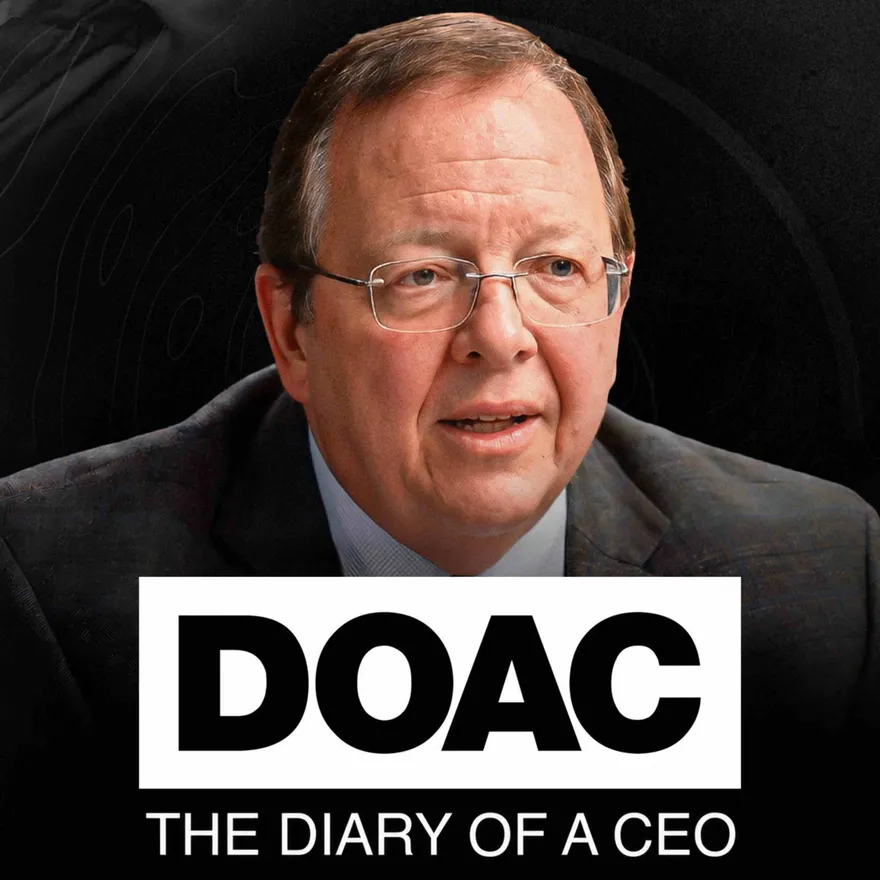

This is a preview of the Shortform summary of the Nov 5, 2026 episode of the The Diary Of A CEO with Steven Bartlett
Sign up for Shortform to access the whole episode summary along with additional materials like counterarguments and context.
1-Page Summary
The Escalation Trap: Trump's Iran Strategy
Robert Pape introduces the escalation trap concept, explaining how despite tactical military successes, the U.S. finds itself strategically weakened. Iran's control over the Strait of Hormuz—securing leverage over 20% of global oil supply—has driven up energy prices and diminished U.S. influence rather than forcing Iranian concessions.
Trump's Risky Military Calculations
Trump's strategy of attacking Iran's Supreme Leader backfired, leading Iran to consolidate control over critical waterways. Pape likens Trump's approach to a gambling addiction: facing political losses and declining approval, Trump continually doubles down on military escalation, hoping to recover his standing with the MAGA base. With Democrats potentially gaining Congress in the midterms—and with it subpoena and impeachment powers—Trump faces political destruction unless he achieves a military victory. He's ordered CENTCOM to prepare strikes on Iranian infrastructure, missile sites, and IRGC command centers, executable within 96 hours, and has begun removing embassy families from the region, signaling concrete escalation beyond mere rhetoric.
Three-Day Bombing Campaign Won't Work
The Pentagon's three-day bombing plan, modeled after the 1991 Iraq campaign targeting 84 objectives, faces critical flaws. Pape points out that destroying Iranian leadership eliminates any negotiating partners, trapping the U.S. in open-ended conflict. The strikes would likely kill 5,000 to 15,000 civilians, provoking widespread anger and revenge motivation, while Iran's military capabilities would remain largely intact—similar to how Iraq's Scud missiles survived heavy bombardment. Without achieving full paralysis, the campaign would drag on indefinitely with no clear exit strategy.
Decentralized Terrorism Threat
Following U.S. strikes, Pape warns of a new threat: Iranian-inspired terrorist attacks that operate without government coordination. He cites a Tel Aviv airline incident where a co-pilot attempted to crash a plane after mourning Iranian casualties. Over ten million Iranians publicly mourned and called for vengeance after U.S. strikes, creating a pool of individuals prepared to act independently. These "inspired attacks" defy traditional military solutions—they can't be negotiated with or stopped through leadership decapitation, making future violence unpredictable and uncontrollable.
Interlinked Global Crises
Pape and Steven Bartlett explore how the U.S. midterm transition, the Iran conflict, and the Ukraine war amplify each other, diminishing leaders' ability to de-escalate.
The Eight-Week Danger Period
Pape identifies the eight weeks following the midterms as exceptionally dangerous due to overlapping crises. The transition period invites political violence because of legitimacy and protection voids, similar to the January 6th Capitol attack. Surveys reveal 40 million Americans would support military force in favor of Trump's agenda, while 60 million would support force to prevent Trump from gaining power. Trump's certification in January will fix his influence, encouraging aggressive moves like Iran strikes before his leverage wanes, while potential Democratic control of Congress could lead to impeachments and cabinet removals, creating governmental chaos.
Putin's Ukraine Strategy Shifts
After four years and over 250,000 Russian combat deaths, Russia has seized just 1% of Ukraine. Pape explains that Putin seeks Trump's help pressuring Ukraine to surrender territory, but only Ukraine can legally cede land—something nearly impossible as any Ukrainian leader doing so faces assassination. With diplomacy failing, Putin is escalating by targeting civilian infrastructure, specifically electric grids in Kyiv, Kharkiv, and Odessa, aiming to cut 90% of power for months. European governments are preparing for a "dark winter," with the UK launching a "Be Ready" campaign urging citizens to stockpile essentials. This intensification directly affects Europe and could pressure governments to intervene more directly, shifting from proxy support to open conflict.
Cascading Effects Amplify Each Crisis
The interconnectedness of these crises compounds their dangers. U.S. midterm chaos, marked by potential violence and contested legitimacy, combines with energy upheavals from the Iran war to fuel domestic anger. European societies show strain—riots in France, partly fueled by energy price spikes, demonstrate how foreign conflicts drive domestic instability. Military and financial resources thin across the U.S. and Europe, leaving leaders less able to de-escalate and increasing the probability of persistent unrest and systemic instability.
Violent Populism Risks
Pape explains how political violence has evolved from fringe acts to widespread participation by ordinary citizens, describing this as "violent populism."
From Fringe to Mainstream Violence
Unlike localized protests, violent populism spreads across multiple cities and countries. Pape likens it to a wildfire requiring two preconditions: combustible material (citizens willing to endorse violence) and an unpredictable spark (a focal event). Over 40 million Americans now support political violence for Trump's agenda, while over 60 million support violence to prevent Trump from gaining power—figures that have doubled since 2022. Federal agents clashing with protesters during ballot counting could serve as the spark that ignites nationwide violence, similar to how Trump's December 2020 tweets pushed supporters to breach the Capitol on January 6th. The midterms' escalating stakes intensify these risks, as both sides view the election outcome as existentially important.
Cascading Cyber and Economic Threats
Pape traces links between geopolitical conflict, cyber attacks, economic turmoil, and the risk of direct power confrontation.
Infrastructure Cyber Attacks
Minnesota's July power and water outages were likely Iranian cyber attacks, according to a New York Times report citing U.S. intelligence. Pape notes the story received no follow-up coverage, suggesting a likely media suppression directive. Real, large-scale cyber attacks could cause prolonged outages affecting supply chains, financial operations, and emergency services. The UK's "Be Ready" campaign reflects concerns that major infrastructure failures are likely. Such attacks create immense pressure on governments to retaliate, potentially shifting cyber conflict to conventional military confrontation.
NATO-Russia Escalation Risk
If attributed cyber attacks cripple European infrastructure, Pape argues the public would demand direct retaliation against Moscow, shifting the conflict from a proxy war to open hostilities between NATO and Russia. World War III would begin once major military powers attack each other's homelands and their armed forces engage directly. Mass disruptions could fuel demands for retaliation, drawing NATO and Russia into direct confrontation.
Economic and Domestic Militarization
Iran's control of the Strait of Hormuz has driven up oil prices worldwide, aggravating the U.S. housing market and dampening consumer spending. Economic distress fuels voter anger and protests, as seen in France where unrest ties to Iran war costs. This pressure makes risky escalation more likely as leaders seek swift victories. Trump has acknowledged in interviews that he might invoke the Insurrection Act to deploy the military domestically—an extraordinary step that would mark a profound change in the government's approach to internal crises and could intensify political violence and further destabilize the nation.
Firebreaks and Prevention
Pape outlines concrete actions leaders and the public can take during the eight-week danger period to prevent escalation.
Three Key Firebreaks
Congress should withhold support for Iran escalation until a new Congress convenes, unless Iran strikes first. This moratorium prevents Trump from launching a disastrous bombing campaign and buys time for diplomatic solutions. Second, federally armed agents should only be sent into cities upon local leaders' request during voting and certification periods, preventing events that could inflame populist violence. Third, Pakistan, Qatar, and India should lead diplomatic efforts asking governments in Iran, Ukraine, and the Middle East to commit to civilian protection, establishing credible mediation by nations trusted by all sides.
Public Action Makes a Difference
Pape urges citizens to contact representatives and demand support for these three firebreaks, increasing the political cost of escalation. Social media campaigns are vital for raising awareness and building pressure on policymakers. He recounts how recent social media discussion of potential U.S. strikes on Iran's drone network led to public questioning that reached key leaders, ultimately resulting in cancellation of that escalation. Public education about escalation risks serves as a foundational firebreak—when citizens and leaders understand the escalation trap and worst-case scenarios, they're more inclined to reverse course before reaching irreversible decisions. Informed citizens are less likely to be swayed by propaganda when serious risks are openly understood and debated.
1-Page Summary
Additional Materials
Clarifications
- The "escalation trap" occurs when a country increases military actions expecting quick success but instead faces growing resistance and unintended consequences. This cycle makes it harder to stop the conflict without appearing weak, leading to deeper involvement. It often results in strategic losses despite tactical victories. Leaders become pressured to continue escalating to avoid political fallout.
- The Strait of Hormuz is a narrow waterway between the Persian Gulf and the Gulf of Oman, serving as a critical chokepoint for global oil transportation. Approximately one-third of the world's seaborne oil passes through it daily, making it vital for energy security. Any disruption there can cause significant spikes in global oil prices and impact economies worldwide. Control over the strait grants substantial geopolitical leverage to influence global energy markets.
- Iran's Supreme Leader is the highest-ranking political and religious authority in Iran, currently held by Ayatollah Ali Khamenei. He controls the military, judiciary, and media, shaping both domestic and foreign policy. His position is more powerful than the president, making him the ultimate decision-maker. Targeting him in conflict risks destabilizing Iran's leadership structure and escalating tensions.
- U.S. Central Command (CENTCOM) is one of the eleven unified combatant commands of the U.S. Department of Defense. It oversees military operations in the Middle East, North Africa, and Central Asia, including Iran and surrounding regions. CENTCOM coordinates joint forces from all military branches to execute strategic missions and respond to crises. Its headquarters is located at MacDill Air Force Base in Florida.
- The 1991 Iraq campaign, known as Operation Desert Storm, was a large-scale U.S.-led air and ground offensive to expel Iraqi forces from Kuwait. It involved precise targeting of military infrastructure to quickly degrade Iraq's combat capabilities. This campaign is often referenced as a benchmark for rapid, decisive military action with clear objectives. However, its success depended on Iraq's centralized command, which differs from Iran's more decentralized military structure today.
- The Islamic Revolutionary Guard Corps (IRGC) is a powerful branch of Iran's military established after the 1979 revolution to protect the Islamic Republic's political system. It operates independently from the regular army and controls significant economic, political, and military assets. The IRGC oversees Iran's missile programs, paramilitary forces, and foreign proxy groups. It plays a central role in Iran's regional influence and internal security.
- U.S. midterm elections occur halfway through a president's term and determine control of Congress, impacting legislative power and oversight. The certification process officially confirms election results, ensuring the legitimacy of elected officials. Disputes or delays in certification can create political instability and undermine public trust. This period is sensitive because it shapes the balance of power and can trigger heightened political tensions.
- The MAGA base refers to supporters of Donald Trump's "Make America Great Again" movement, emphasizing nationalism and conservative policies. This group is highly loyal and influential in Republican politics, often shaping party priorities and election outcomes. Their strong support pressures Trump to take bold actions to maintain their approval. The base's political influence can drive aggressive strategies to demonstrate strength and commitment to their agenda.
- The January 6th Capitol attack was a violent breach of the U.S. Capitol by supporters of then-President Trump aiming to overturn the 2020 election results. It exposed deep political divisions and the potential for extremist violence in American politics. The event highlighted how political legitimacy crises can trigger mass unrest. It serves as a warning about the risks of contested elections and political violence.
- Ukraine's constitution requires any territorial changes to be approved by its parliament and confirmed by a national referendum. Ceding land without broad political and public support is considered illegal and unconstitutional. Political leaders who attempt to negotiate territorial concessions face severe backlash, including threats to their safety. This legal framework and political reality make formal land cessions nearly impossible during conflict.
- Targeting civilian infrastructure in warfare aims to disrupt essential services like electricity, water, and transportation, weakening a population's daily life and morale. It often causes widespread suffering, including health crises and economic collapse, beyond immediate physical damage. Such attacks can violate international laws designed to protect civilians and may provoke international condemnation or retaliation. The strategy pressures governments by creating internal unrest and undermining public support for conflict continuation.
- The "Be Ready" campaign is a UK government initiative preparing citizens for potential energy shortages during winter. It encourages stockpiling essentials like food, water, and fuel to cope with possible power outages. The campaign responds to threats from cyber attacks and infrastructure disruptions linked to geopolitical conflicts. It aims to increase public resilience amid anticipated "dark winter" conditions.
- Violent populism involves widespread participation by ordinary citizens who see violence as a legitimate political tool, unlike traditional political violence often limited to fringe groups or organized militants. It is fueled by deep societal divisions and a sense of existential threat to one’s political identity. This form of violence is decentralized, spontaneous, and can erupt simultaneously across multiple locations. It challenges conventional law enforcement and political responses due to its scale and diffuse nature.
- The Insurrection Act is a U.S. federal law that allows the president to deploy military forces within the country to suppress civil disorder, insurrection, or rebellion. It bypasses the usual requirement for state government consent, enabling federal intervention in domestic crises. Its use is rare and controversial because it involves military involvement in civilian law enforcement, raising concerns about civil liberties and government overreach. Invoking the Act signals a severe breakdown in public order and can escalate political tensions.
- Pakistan, Qatar, and India have strategic ties and influence in the Middle East and South Asia, enabling them to act as neutral mediators. Pakistan shares cultural and religious links with Iran and other regional players, facilitating dialogue. Qatar has a history of hosting peace talks and maintaining relations with diverse Middle Eastern factions. India’s growing economic and diplomatic engagement in the region positions it as a credible intermediary trusted by multiple sides.
- The "three-day bombing campaign" refers to a rapid, intense military strike aimed at crippling Iran's key military and leadership targets quickly. Such campaigns often fail because they cannot fully destroy decentralized military capabilities or eliminate all leadership, leaving the opponent able to continue fighting. Civilian casualties from these strikes can increase local and international hostility, fueling prolonged conflict. Without a clear political or military exit plan, the campaign risks becoming an open-ended war.
- Decentralized terrorism involves individuals or small groups acting independently without direct orders from a central authority. "Inspired attacks" occur when people commit violence motivated by ideology or emotions linked to a cause, rather than coordinated planning. These attacks are harder to predict or prevent because they lack formal communication or leadership. Traditional military or diplomatic strategies struggle to address such diffuse threats effectively.
- Cyber attacks can disrupt critical infrastructure, causing widespread damage without physical violence. When such attacks are severe and attributed to a nation-state, they may be seen as acts of war, prompting military retaliation. This retaliation can escalate conflicts from cyber to conventional warfare, involving troops and weapons. Thus, cyber attacks blur the line between peace and war, increasing the risk of full-scale military escalation.
- NATO is a military alliance of Western countries committed to mutual defense. An escalation occurs if cyber or military attacks attributed to Russia prompt NATO members to respond with force against Russian targets. World War III would begin if major powers like NATO and Russia engage in direct, large-scale military conflict on each other's territory. Such a war involves widespread mobilization and could rapidly expand beyond regional disputes.
- The Strait of Hormuz is a critical chokepoint where about one-fifth of the world's oil passes daily. Iran's control allows it to threaten or disrupt this flow, creating supply uncertainty. This uncertainty raises global oil prices due to fears of shortages. Higher oil prices increase costs for transportation and manufacturing, slowing economic growth worldwide.
- Political violence in the U.S. has grown due to deep partisan polarization and distrust in institutions. Social media amplifies extremist views and misinformation, increasing radicalization. Economic inequality and cultural conflicts fuel grievances that some express through violence. Historical events like the 2020 election disputes and January 6 Capitol attack have normalized political violence for many.
- Removing embassy families signals a heightened threat level and potential for imminent conflict. It protects non-essential personnel from harm during escalating tensions. This action often precedes military strikes or increased hostilities. It also serves as a diplomatic warning to the opposing nation.
- Federal agents, such as those from the FBI or Department of Homeland Security, may be deployed to maintain security during elections and vote certification. Their presence aims to prevent violence, intimidation, or interference with the electoral process. However, deploying them without local consent can escalate tensions and provoke confrontations. Coordinating with local authorities helps ensure their role supports peaceful and legitimate election outcomes.
- Leadership decapitation is a military strategy aimed at removing or killing a country's top leaders to disrupt command and control. It assumes that without leadership, the enemy's organization will collapse or become ineffective. However, this can backfire if successors are more radical or if the group decentralizes, making it harder to defeat. It often leads to prolonged conflict rather than quick resolution.
- Energy price spikes increase living costs, straining household budgets and reducing disposable income. This economic pressure heightens public frustration, making protests and unrest more likely. Foreign conflicts, like Iran's control of oil routes, disrupt supply and drive prices up globally. Thus, international tensions directly fuel domestic instability by worsening economic conditions.
Counterarguments
- While Iran controls the Strait of Hormuz, the global oil market has diversified in recent years, with increased U.S. domestic production and alternative supply routes, somewhat mitigating Iran's leverage.
- The assertion that Trump's military escalation is solely motivated by political self-preservation may oversimplify a complex decision-making process that involves multiple actors and strategic considerations.
- The comparison of the proposed Iran bombing campaign to the 1991 Iraq campaign may not fully account for differences in military capabilities, geography, and political context between the two countries.
- The claim that destroying Iranian leadership would eliminate all negotiating partners overlooks the possibility of new leadership emerging or backchannel diplomacy continuing.
- The estimate of 5,000 to 15,000 civilian casualties from a three-day bombing campaign is speculative and may not reflect actual outcomes, which would depend on targeting, intelligence, and operational execution.
- The idea that Iranian-inspired terrorism would necessarily increase after U.S. strikes is plausible but not certain; past U.S. actions in the region have not always resulted in significant upticks in decentralized attacks.
- Surveys indicating tens of millions of Americans support political violence may overstate the immediacy or likelihood of widespread violent action, as expressed support does not always translate into actual behavior.
- The risk of World War III resulting from cyber attacks and escalation, while serious, may be mitigated by existing diplomatic channels, cyber norms, and mutual deterrence between major powers.
- The suggestion that media coverage of cyber attacks is suppressed is difficult to verify and may not account for editorial decisions or lack of confirmed information.
- The recommendation that Congress withhold support for any Iran escalation until a new Congress convenes could limit the executive branch's flexibility to respond to rapidly evolving security threats.
- The proposal for Pakistan, Qatar, and India to lead mediation efforts may not be realistic given their own geopolitical interests and limited influence over all parties involved.
- The assertion that public education and awareness alone can prevent escalation may underestimate the influence of entrenched interests, misinformation, and the complexity of international crises.
Get access to the context and additional materials
The Escalation Trap: Trump's Losing Stance in Iran War Pressures Strategy Escalation
Robert Pape introduces the concept of the escalation trap, explaining how the U.S., despite tactical military successes against Iran, finds itself in a weakening strategic position. As Iran swiftly gained control over the Strait of Hormuz, securing leverage over 20% of the world's oil supply, American actions resulted in higher global energy prices and a loss of U.S. influence rather than Iranian capitulation.
Trump Pressured by Failed Iran Strategy, Considers Risky Military Options
Strike on Iran's Leader Failed; Iran Controls Strait of Hormuz and 20% of Oil Supply, Gaining Tactical Advantages Despite US Success
Trump bet that attacking Iran's Supreme Leader would destabilize Iranian leadership and force concessions. Instead, Iran consolidated control over the crucial Strait of Hormuz. Despite American air power's ability to kill leaders and strike targets, Iran’s tactical position strengthened, further destabilizing global oil prices and disadvantaging U.S. interests.
Trump's Survival Hinges on Military Victory in Iran For Maga Support
Pape relates Trump's repeated escalation to a gambler's mindset, describing how the chips he's risking are the political support of his MAGA base. Facing the prospect of a new Congress and plummeting approval ratings, Trump equates a military victory in Iran with retaining the support he depends on for political survival.
Gambling Addict Analogy Explains Trump's Escalating Risky Behavior
Pape likens Trump's Iran policy to a gambler's addiction: losing bet after bet, Trump continually doubles down, seeking to recover political and strategic losses by escalating his military responses. After each on-field failure—whether an air campaign to eliminate Iranian leaders or a six-week targeting of infrastructure—Trump increases the stakes, borrowing further political capital and international credibility in hopes of winning it all back.
Trump Losing Congress Control In Midterms Makes Political Destruction Likely, With Democrats Gaining Subpoena and Impeachment Powers to Unravel Agenda and Remove Cabinet Members
As the midterm elections approach, the risk grows beyond foreign entanglements to domestic destruction. Should Democrats seize the House and Senate, they acquire broad investigative and impeachment powers, not just over Trump but his entire cabinet. Republican losses at the polls mean declining intra-party allegiance, compounding Trump’s political isolation and making mass removal of administration officials possible, creating governmental chaos and a downward spiral for the MAGA agenda.
Trump Has Military Contingency Plans to Strike Iranian Infrastructure, Including Missile Sites, IRGC Command Centers, and Energy Facilities, With Orders For CENTCOM to Execute Within 96 Hours of the Go-code
In preparation for continued escalation, Trump orders detailed military contingency plans for a rapid, high-intensity campaign against Iran. CENTCOM receives instructions to be ready to execute strikes within 96 hours, targeting missile and drone sites, IRGC command centers, and critical economic infrastructure.
Trump Escalates: Removes Embassy Families, Requests Attack Plans, Indicating Intent Beyond Rhetoric
Concrete signs of escalation emerge as Trump authorizes removal of embassy personnel families from countries like Saudi Arabia and orders updated attack plans. These steps move beyond rhetorical pressure, making military action increasingly likely.
Three-Day Bombing Campaign Will Not Paralyze Iran's Military, but Trigger Prolonged Conflict With Escalating Civilian Casualties and Retaliatory Attacks
Three-Day Plan Mirrors 1991 Iraq Bombing, Targeting 84 Objectives; 43-day Campaign Never Achieved Full Paralysis
The Pentagon contingency envisions a three-day bombing blitz, modeled after the "Instant Thunder" air campaign in Iraq (1991), designed to hit around 84 critical leadership, economic, and military sites. However, history reveals such plans rarely yield full military paralysis; Iraq's forces survived weeks of bombardment and retained the ability to retaliate.
Destroying Iran's Leadership Creates Negotiation Problems: No Clear Authority to Negotiate or Make Deals, Conflicting With the Goal Of Forcing Capitulation
Pape highlights an inherent flaw: decapitating Iran’s leadership stratum eliminates the very authorities needed for negotiations or surrender. Instead of compelling Iranian capitulation, the strikes remove any legitimate partner for peace talks, trapping the U.S. in open-ended conflict.
Iran's Military Capability Intact Despite 1991 Iraqi Scud Missile Strikes
Despite heavy bombardment, significant elements of the Iranian military would survive and continue missile, drone, and cyber operations. Similar to Iraq’s persistent Scud missile attacks post-bombardment, Iranian remnants could coordinate strikes on regional targets, defying full U.S. or coalition control.
Bombing to Kill 5,000-15,000 Iranian Civilians, Inciting Widespread Anger and Revenge Motivation
Drawing parallels to civilian casualties in Iraq, Pape estimates U.S. airstrikes could kill 5,000 to 15,000 Iranian civilians. Such losses would provoke widespread mourning and outrage, intensifying desires for vengeance and entrenching lo ...
Here’s what you’ll find in our full summary
The Escalation Trap: Trump's Losing Stance in Iran War Pressures Strategy Escalation
Additional Materials
Counterarguments
- While Iran gained leverage over the Strait of Hormuz, the U.S. Navy retains significant capabilities to ensure freedom of navigation, and global oil markets have shown resilience to regional disruptions in the past.
- Tactical military successes can have cumulative strategic effects over time, even if immediate capitulation does not occur.
- The analogy of a gambler’s mindset may oversimplify the complex decision-making processes involved in national security and foreign policy.
- Historical comparisons to the 1991 Iraq campaign may not fully account for differences in Iranian military structure, geography, and political context.
- The estimate of 5,000 to 15,000 civilian casualties from airstrikes is speculative and actual numbers could vary significantly depending on targeting and operational conduct.
- Decentralized terrorist threats exist independently of U.S. actions and have been a persistent challenge for decades, not solely a result of escalation with Iran.
- Removing embassy families and preparing military plans are standard precautionary measures in crisis situations and do not necessarily indicate imminent mili ...
Actionables
- you can track and reflect on how escalating responses in your own conflicts (at work, home, or online) often lead to unintended consequences, then experiment with de-escalation techniques to see if you achieve better outcomes; for example, when you feel the urge to double down in an argument, pause and try a conciliatory gesture or ask an open-ended question instead, then note the results.
- a practical way to understand the risks of overcommitting to a failing strategy is to keep a simple journal of decisions where you felt compelled to "win back" a loss (such as making extra purchases after a bad investment or arguing harder after a disagreement), then review patterns and set a personal rule to step back after two failed attempts rather than escalating.
- you can build awareness of how decentralized, unpredictable ...
Get access to the context and additional materials
Interlinked Crises: Midterm Transition, Iran War, and Ukraine War Amplify Dangers
Robert Pape and Steven Bartlett explore how the convergence of the U.S. midterm transition, escalating conflict with Iran, and Putin's stalled ambitions in Ukraine heighten global political and security risks. Each crisis amplifies the others, diminishing leaders' ability to de-escalate and increasing the likelihood of violence, instability, and public unrest.
The Eight-Week Transition Period Invites Political Violence Due to the Legitimacy and Protection Void
Pape warns that the eight-week period following the U.S. midterms is "the eight most dangerous weeks in our lives" due to overlapping crises. The transition is especially volatile as the outcome of the midterms will determine President Trump's fate and influence. Violence peaks during power transitions—a fact exemplified by the January 6th attack on the U.S. Capitol, which followed delayed vote counting and certification processes. Pape highlights that this dangerous dynamic is compounded today by a widespread willingness to support political violence: surveys suggest 40 million Americans would back military force against anti-Trump protesters and 60 million would support force to block Trump from the presidency.
Unlike 2020, this transition is further complicated by foreign policy escalations. Certification of the new Congress in January will fix Trump's influence, encouraging hawkish moves—such as strikes on Iran—before his leverage wanes. Internal U.S. governmental instability is likely; disruption at the Cabinet and department head level will make consistent national security and domestic operations very difficult.
Putin's Ambitions in Ukraine Unmet by Trump; Only Ukraine Can Cede Territory, Risking Zelensky's Assassination if He Surrenders Land
Pape explains that Putin’s objectives in Ukraine remain incomplete. After four years and at least 250,000 Russian combat deaths, Russia has seized just 1% of Ukraine, officially annexing areas like Crimea and Donetsk but falling short of fully seizing all their intended territory, and perhaps even aspiring to further expansion into "Novorossiya," the next tier of Russian-speaking oblasts.
Putin seeks Trump’s intervention to pressure Ukraine into surrendering these regions. However, only Ukraine can legally or politically cede land—something Pape sees as nearly impossible. Any Ukrainian president, especially Zelensky, faces near-certain death or assassination if perceived as betraying Ukraine’s sovereignty. Thus, even if Trump were to broker a so-called peace, he cannot deliver real territorial concessions to Putin.
With diplomacy failing, Putin is likely to escalate militarily, specifically targeting Ukrainian civilian infrastructure—especially electric grids in Kyiv, Kharkiv, and Odessa. The intent is to knock out up to 90% of major city power supplies for months, not just cause brief outages. European governments are now openly warning of a "dark winter" for Ukraine.
Putin Targets Kyiv, Kharkiv, Odessa Infrastructure to Cut 90% of Power, Creating Crisis, Pressuring Europe
Putin’s plan to attack the electrical infrastructure in major Ukrainian cities is designed to be more than temporary disruption. Sustained strikes aim to incapacitate urban life for a month or longer. This demonstrates not only Russian resolve and capacity for long-term civilian targeting but also Putin's willingness to escalate in the face of stalled territorial gains.
Europe is directly affected. The UK government has launched a "Be Ready" campaign, officially advising families to stockpile essential supplies—water, canned food, battery radios, power banks, cash—in anticipation of major emergencies such as cyber warfare or state-sponsored attacks disrupting power, the Internet, and payment systems. These preparations are mea ...
Here’s what you’ll find in our full summary
Interlinked Crises: Midterm Transition, Iran War, and Ukraine War Amplify Dangers
Additional Materials
Clarifications
- The U.S. midterm transition period occurs between the election and the new Congress taking office, typically about eight weeks. During this time, outgoing and incoming officials share power, creating uncertainty and weakened authority. This gap can reduce effective law enforcement and political control, leading to a "legitimacy and protection void." Such voids increase risks of unrest and violence as competing factions challenge outcomes or act without clear oversight.
- On January 6, 2021, supporters of then-President Trump stormed the U.S. Capitol to stop Congress from certifying the 2020 presidential election results. The attack caused extensive damage, injuries, and several deaths. It exposed deep political divisions and raised concerns about threats to democratic processes. The event led to numerous arrests and a historic second impeachment of Trump.
- President Trump, though not president after the 2020 election, remains a powerful figure within the Republican Party. Midterm elections determine the balance of power in Congress, affecting his influence over legislation and party direction. His political base strongly supports him, impacting GOP strategies and responses to election outcomes. Post-midterms, his role could shape party leadership and policy priorities, especially if he seeks future office.
- "Hawkish moves" in foreign policy refer to aggressive or confrontational actions, often involving military force or threats. Such moves prioritize national security and assertiveness over diplomacy or compromise. They can escalate conflicts and increase tensions with other countries. Leaders making hawkish decisions typically seek to demonstrate strength or achieve strategic goals quickly.
- The U.S. Cabinet consists of the President's top advisors, each leading a federal department like Defense, State, or Homeland Security. Department heads, or Secretaries, manage their agencies' operations and implement policies critical to national security and governance. They coordinate with the President to respond to crises, oversee intelligence, military, and diplomatic efforts. Stability in these roles ensures consistent government function and effective crisis management.
- The conflict between Russia and Ukraine began in 2014 when Russia annexed Crimea, a strategically important peninsula with a majority Russian-speaking population. Donetsk is part of the Donbas region in eastern Ukraine, where pro-Russian separatists declared independence, leading to ongoing armed conflict. "Novorossiya" refers to a historical term for a larger area in southeastern Ukraine that some Russian nationalists claim as part of Russia. This conflict reflects deep ethnic, political, and historical tensions between Ukraine's sovereignty and Russian influence.
- Ukraine's constitution prohibits ceding any part of its territory without a national referendum. International law recognizes Ukraine's sovereignty and territorial integrity, making forced land concessions illegal. Politically, any leader agreeing to cede land risks losing legitimacy and facing severe backlash or removal. This creates a near-impossible barrier to territorial compromise despite external pressures.
- Political assassinations have been a tool in Ukraine's turbulent history, especially during times of conflict and political upheaval. President Zelensky, as a symbol of Ukrainian sovereignty and resistance against Russian aggression, faces heightened risks from hostile actors seeking to destabilize the government. Assassination attempts or threats aim to intimidate leadership and disrupt national unity. Such risks increase significantly if Zelensky is perceived as compromising Ukraine’s territorial integrity.
- Kyiv is Ukraine's capital and political center, making it crucial for government operations and national morale. Kharkiv is a major industrial hub and the country's second-largest city, vital for military production and logistics. Odessa is a key port city on the Black Sea, essential for trade and naval access. Targeting their electric grids disrupts governance, industry, and supply chains, weakening Ukraine's overall resilience.
- Sustained attacks on civilian infrastructure aim to disrupt essential services like electricity, water, and communications over extended periods, causing widespread hardship. A "dark winter" refers to a prolonged crisis during cold months when power outages and supply shortages severely impact daily life and public health. Such conditions can lead to increased mortality, economic collapse, and social unrest. These attacks are a form of warfare targeting civilian resilience to pressure governments politically and militarily.
- Cyber warfare involves using digital attacks to disrupt, damage, or control computer systems and networks. State-sponsored attacks are coordinated by governments to target critical infrastructure like power grids, communication systems, or financial networks. These attacks can cause widespread outages, economic damage, and undermine public trust in government stability. They often use malware, hacking, or denial-of-service tactics to achieve strategic military or political goals.
- European governments launched emergency preparedness campaigns like the UK's "Be Ready" due to increased risks of cyberattacks an ...
Counterarguments
- While the U.S. midterm transition period can be politically tense, historical precedent shows that most transitions occur peacefully without widespread violence.
- The January 6th attack was a significant event, but it remains an outlier in the context of U.S. political transitions, which have generally been stable.
- Survey data on support for political violence can be influenced by question wording and may not accurately reflect actual willingness to engage in or support violence.
- The U.S. government has established protocols to maintain continuity of operations during transitions, which can mitigate risks of instability.
- Despite ongoing conflict, Russia controls more than 1% of Ukraine’s territory, including Crimea and parts of Donetsk, Luhansk, Zaporizhzhia, and Kherson regions.
- The prospect of Ukraine ceding territory is highly unlikely, but diplomatic negotiations and ceasefires have occurred in the past without resulting in leadership assassinations.
- While attacks on Ukrainian infrastructure are serious, Ukraine and its allies have demonstrated resilience in restoring services and adapting to disruptions.
- European governments’ preparedness campaigns are standar ...
Get access to the context and additional materials
Violent Populism and Political Violence: Risks of Fringe Violence Spreading to Mainstream During Election Transition, Parallels To January 6th
Political Violence Shifts From Fringe Acts to Mass Participation by Ordinary Citizens
Robert Pape explains that political violence has evolved from isolated, fringe events to episodes featuring widespread participation by ordinary people, describing this as “violent populism.” Unlike localized protests such as the Los Angeles riots, violent populism manifests as unrest that spreads across multiple cities and even countries. Steven Bartlett references the global Black Lives Matter protests as an example, and Pape compares this to the way riots following price hikes after the Iran war spread beyond Paris to other regions in France and subsequently to other countries. These aren’t contained, single-day incidents but rather multi-city waves driven by a broader populace.
Violent Populism Needs two Preconditions: A Combustible Citizen Pool and an Unpredictable Spark
Pape likens violent populism to a wildfire: the “combustible material” is the large number of citizens willing to endorse political violence, and the “spark” is an unpredictable focal event that ignites collective action. He points to unprecedented survey numbers—over 40 million Americans now support political violence in favor of Trump’s agenda, while over 60 million support violence to prevent Trump from gaining power. These figures have doubled since 2022, creating an extraordinary pool of individuals prepared for conflict, awaiting only a triggering event to mobilize them.
Federal Agents Clash With Protesters During Ballot Counting, Risking Widespread U.S. Violent Populism
Pape elaborates that focal events, such as the period when ballots are being counted but not yet certified, have the potential to ignite nationwide violent populism. He cites January 6th as an example: Trump’s tweets in December 2020, calling supporters to Washington and expressing betrayal by Mike Pence, served as the critical spark that pushed an already combustible group to breach the Capitol. Similarly, confrontations between protesters and federal agents around ballot counting or certification in upcoming elections could serve as sparks for further violence. Pape warns that these episodes could unfold not just in a single city, but could spread widely, fueled by emotional momentum and enabled by social media amplification.
Midterm Election's Escalating Stakes Fuel Politica ...
Here’s what you’ll find in our full summary
Violent Populism and Political Violence: Risks of Fringe Violence Spreading to Mainstream During Election Transition, Parallels To January 6th
Additional Materials
Clarifications
- Violent populism involves large-scale political violence driven by widespread public support, not just isolated extremist groups. It reflects a collective identity where ordinary citizens feel empowered to use violence for political goals. Unlike traditional political violence, which is often limited to small, fringe groups or specific events, violent populism spreads across regions and involves mass participation. It is fueled by shared grievances and a sense of political crisis among broad segments of the population.
- On January 6, 2021, supporters of then-President Donald Trump stormed the U.S. Capitol to disrupt the certification of the 2020 presidential election results. The breach resulted in violence, property damage, and multiple deaths, marking a rare attack on the seat of American democracy. It exposed deep political divisions and raised concerns about the stability of democratic processes. The event led to widespread condemnation, investigations, and the second impeachment of Trump.
- In December 2020, Trump tweeted urging supporters to gather in Washington, D.C., on January 6 to contest the election results. He expressed anger at Vice President Mike Pence for not overturning the vote count, framing it as a betrayal. These messages energized and mobilized his followers, contributing to the Capitol breach. The tweets acted as a direct call to action, intensifying existing tensions.
- The “combustible citizen pool” refers to a large group of people who are emotionally charged and willing to engage in political violence. The “unpredictable spark” is a triggering event or incident that suddenly ignites this latent willingness into actual violent action. Together, they create conditions where widespread unrest can rapidly erupt. This concept draws on the idea that social violence needs both readiness among people and a catalyst to begin.
- Ballot counting and certification are sensitive because they determine the official election outcome, which can affect political power. This period often involves delays and disputes, creating uncertainty and tension among supporters. Misinformation and claims of fraud can spread rapidly, fueling distrust and anger. The lack of immediate final results makes this a flashpoint for protests and potential violence.
- “Virtual political destruction” refers to actions that effectively end a president’s power without formal removal. This includes congressional investigations, subpoenas, and impeachment efforts that undermine authority and legitimacy. It creates a political environment where the president cannot govern effectively. The term highlights the impact of political processes short of actual removal from office.
- Symmetrical radicalization occurs when opposing groups become equally extreme in their beliefs and willingness to use violence. Each side views the other as an existential threat, justifying their own escalation. This mutual intensification creates a feedback loop, increasing polarization and conflict risk. It makes peaceful resolution harder as both sides prepare for confrontation.
- The support of millions for political violence indicates a deep polarization and erosion of democratic norms. Such widespread endorsement increases the likelihood of large-scale unrest rather than isolated incidents. It reflects a readiness among ordinary citizens to use violence as a political tool, raising risks of destabilization. This scale of support can overwhelm law enforcement and challenge peaceful governance.
- Social media amplification rapidly spreads information and emotions, reaching millions instantly. It creates echo chambers where users see content that reinforces their beliefs, intensifying anger or fear. Viral pos ...
Counterarguments
- The characterization of large-scale protests like the global Black Lives Matter movement as examples of "violent populism" may be misleading, as the vast majority of BLM protests were peaceful, and equating protest participation with endorsement of violence conflates distinct phenomena.
- Survey data on Americans' support for political violence can be sensitive to question wording and context, and may overstate the actual willingness of individuals to engage in or endorse real-world violence.
- The comparison between January 6th and other mass protests may overlook significant differences in motivation, organization, and outcomes between events driven by attempts to overturn democratic processes and those focused on social justice or policy change.
- The assertion that both sides are equally radicalized and primed for violence may create a false equivalence, as available evidence suggests asymmetries in the scale, organization, and frequency of violent acts between different political groups.
- The prediction that confrontations during ballot cou ...
Get access to the context and additional materials
Cascading Effects: Conflicts Trigger Cyber Attacks, Infrastructure Collapse, Economic Consequences, and Potential Power Confrontation
Robert Pape traces the links between rising geopolitical conflict, cyber attacks on infrastructure, economic turmoil, and the growing risk of direct confrontation between global powers, including the potential for domestic militarization under emergency laws in the United States.
Cyber Threats to Infrastructure: Likely Impact of Military Escalation by Iran and Russia
In July, Minnesota and other states experienced power and water outages, causing significant water problems. According to a New York Times report, which cited U.S. intelligence sources, these incidents were most likely cyber attacks attributed to Iran. Notably, this story received no follow-up coverage by other major outlets, suggesting, in Pape's view, a likely suppression directive from U.S. intelligence aimed at the media. The specific attribution—referencing Iranian "fingerprints"—is a standard unclassified phrasing for cyber activity traced to capable adversaries like China, Russia, Iran, or North Korea.
Pape considers the Iranian attribution credible and notes that such attacks on infrastructure represent only the shallowest layer of cyber warfare that governments worry about. Real, large-scale cyber attacks could result in widespread and prolonged outages of water and power, causing cascading failures in supply chains, financial operations, and emergency services. These impacts are far more severe than a temporary 30-minute internet blackout; instead, they threaten the functioning of whole communities or regions for extended periods.
The United Kingdom has also sounded alarms regarding cyber threats to EU infrastructure. In response, the UK government has launched a "Be Ready" campaign, urging citizens to stockpile essentials like batteries. The advice reflects concerns that major infrastructure failures are likely and would require the public to sustain themselves without immediate state assistance.
Such cyber attacks also create immense pressure on governments to retaliate. The expectation of payback in the wake of infrastructure failures increases the likelihood that cyber conflict could shift rapidly to conventional or even military confrontation between states.
NATO-Europe vs. Russia Escalation: Proxy War to World War III
Pape explains that if large-scale, attributed cyber attacks cripple infrastructure in Europe—especially amid tensions already high from Russia’s war in Ukraine—the public and political classes would likely demand direct retaliation against Moscow. This would shift the conflict from a proxy war supporting Ukraine to open hostilities between NATO-European countries and Russia.
He argues that World War III would begin once the world's largest military powers attack each other's homelands and their armed forces engage directly. At present, the conflict in Ukraine, while severe, has not crossed into direct military exchanges between NATO and Russia. Cyber attacks on infrastructure, however, could provoke escalatory retaliation and trigger just such a scenario.
The UK defense minister’s call to prepare for state-based attacks underscores not just concern about energy and power blackouts, but also the likelihood that such attacks might lead European states to strike back against Russia, potentially inviting Russian counterstrikes.
Public opinion also plays a volatile role: mass disruptions could fuel demands for retaliation, drawing NATO and Russia into direct confrontation and moving the world closer to the reality of global war.
Economic Fallout From Iran War Escalation, Infrastructure Disruptions Will Ripple Through Markets, Amplifying Political Crises and Reducing Leaders' De-escalation Flexibility
Escalating conflict with Iran and cyber attacks on infrastructure threaten severe economic consequences. Iran’s continued control of the Strait of Hormuz has driven up oil prices and, in turn, gasoline and diesel prices worldwide. As Pape notes, these increases aggravate an already freezing U.S. housing market and dampen consumer spending, squeezing the economy further.
As supply chain disruptions ripple through the global market, the resulting economic stress fuels voter anger across ...
Here’s what you’ll find in our full summary
Cascading Effects: Conflicts Trigger Cyber Attacks, Infrastructure Collapse, Economic Consequences, and Potential Power Confrontation
Additional Materials
Clarifications
- The Insurrection Act, enacted in 1807, allows the U.S. president to deploy federal troops domestically to suppress civil disorder, insurrection, or rebellion. It serves as a legal exception to the Posse Comitatus Act, which generally prohibits military involvement in civilian law enforcement. Historically, it has been invoked during events like the Civil Rights Movement to enforce federal authority and protect constitutional rights. Its use is rare and often controversial due to concerns about militarizing civilian spaces and potential impacts on civil liberties.
- Cyber warfare involves using digital attacks to disrupt or damage computer systems and networks. Cyber attacks on physical infrastructure target control systems that manage utilities like power grids, water supplies, and transportation. By manipulating these systems, attackers can cause real-world outages, equipment failures, or safety hazards. Such disruptions can cascade, affecting many interconnected services and critical societal functions.
- The Russia-Ukraine war began in 2014 with Russia's annexation of Crimea and escalated in 2022 with a full-scale Russian invasion of Ukraine. NATO-Europe refers to the alliance of European countries and North America committed to mutual defense, which supports Ukraine politically and militarily but has avoided direct combat with Russia. The conflict strains NATO-Russia relations, raising fears of broader military escalation. Europe's security depends heavily on NATO's response to Russian aggression.
- The Strait of Hormuz is a narrow waterway between the Persian Gulf and the Gulf of Oman. It is a critical chokepoint through which about 20% of the world's petroleum passes daily. Any disruption there can significantly reduce global oil supply and spike prices. Control over the strait gives strategic leverage in regional and global energy markets.
- A proxy war occurs when two powers support opposing sides in a conflict without directly fighting each other. They provide weapons, funding, or training to local forces instead of deploying their own troops. This differs from direct military conflict, where the powers' own armed forces engage each other openly. Proxy wars often aim to avoid full-scale war while still pursuing strategic goals.
- U.S. intelligence agencies gather and analyze information related to national security threats. They can request media outlets to withhold sensitive information to protect ongoing operations or prevent public panic. This influence is informal and relies on cooperation rather than legal authority to censor. Such requests aim to balance transparency with security concerns.
- Attributing cyber attacks involves analyzing digital evidence like malware code, attack methods, and network traces to identify likely perpetrators. This process is complex and often uncertain because attackers use techniques to hide or fake their origins. Governments may publicly attribute attacks to signal responsibility and justify responses, but such claims can be politically motivated. Accurate attribution is crucial for international law and retaliation decisions but remains a challenging and sometimes controversial task.
- Invoking emergency powers or martial law allows the government to temporarily suspend normal legal processes and civil liberties to restore order. This can include curfews, restrictions on movement, and military enforcement of laws. Such measures risk abuse of power, erosion of democratic norms, and increased public fear or resistance. Historically, prolonged use often leads to political instability and weakened trust in government.
- Cyber attacks on critical infrastructure disrupt essential services like power and water, halting business operations and supply chains. These disruptions increase costs and reduce productivity, leading to economic instability. Economic hardship fuels public dissatisfaction, triggering protests and political unrest. This instability pressures governments to take aggressive actions, sometimes escalating conflicts further.
- The U.S. has a long-standing tradition of separating military and law enforcement roles to pro ...
Counterarguments
- Attribution of cyber attacks is often complex and uncertain; public claims of Iranian responsibility for specific outages may be based on circumstantial evidence and are sometimes disputed by independent cybersecurity experts.
- The assertion that U.S. intelligence suppresses media coverage of cyber attacks is difficult to verify and lacks direct evidence; editorial decisions in newsrooms can result from a variety of factors unrelated to government directives.
- While cyber attacks on infrastructure are a real concern, the U.S. and allied countries have invested heavily in cyber defense and resilience, which may mitigate the risk of prolonged, widespread outages.
- The UK’s "Be Ready" campaign is part of broader civil preparedness efforts and does not necessarily indicate an imminent or likely infrastructure collapse.
- Historical precedent shows that even after significant cyber incidents (e.g., the 2015 Ukraine power grid attack), escalation to conventional military conflict has not occurred, suggesting that cyber attacks do not automatically lead to military retaliation.
- Public opinion in democratic societies is often more nuanced, and demands for military escalation are typically balanced by caution and debate among policymakers and the public.
- The risk of World War III resulting from cyber attacks, while not impossible, remains speculative; multiple diplomatic and military safeguards exist to prevent such escalation.
- Economic impacts from international conflict and cyber attacks are significant but are influenced by a wide ra ...
Get access to the context and additional materials
Firebreaks and Prevention: Actions For Leaders and Public During the Eight-Week Danger Period
During a critical eight-week danger period, Robert Pape outlines concrete firebreaks to prevent escalation and catastrophe, emphasizing actions both leaders and the public can take.
Congressional Moratorium Prevents Iran Bombing Campaign and Military Escalation
Congress plays a pivotal role in de-escalation by witholding support for Trump’s Iran escalation plans until a new Congress convenes, unless Iran launches a first strike. This declaration acts as a binding limit on Trump’s ability to launch new military action, directly preventing an immediate and potentially disastrous three-day bombing campaign that could trigger a domino effect throughout the region. The moratorium empowers diplomatic channels, buying crucial time and expanding options for a peaceful solution by reducing the immediacy of military threats.
Moratorium on Federally Armed Agents in Cities Without Local Approval to Prevent Violent Populism
A second key firebreak is a moratorium requiring federally armed law enforcement agents be sent into cities only upon the explicit request of local leaders during the fraught periods of voting, vote counting, and certification. This firebreak prevents federal deployment events that could inflame populist anger or violence, preserving calm necessary to safely complete the transition of power. Rooted in federalist principles, this approach gives state and local authorities genuine control over security, reflecting American traditions of local governance and empowering leaders closest to their communities.
Pakistan, Qatar, India to Lead Diplomatic Efforts for Civilian Protection in Three Conflicts
Internationally, Pakistan, Qatar, and India step forward as credible mediators, asking the governments in Iran, Ukraine, and the broader Middle East to commit to civilian protection. Their joint diplomatic effort asserts civilian safety as a universal principle and enlists respected nations to communicate de-escalation messages to the decision-makers in Tehran, Moscow, and Washington. This diplomatic firebreak not only urges respect for humanitarian norms but also establishes a precedent for mediation by countries trusted by all sides.
Contact Leaders to Support all Three Firebreaks, Using Social Media and Direct Communication to Raise the Political Cost of Escalation
Robert Pape urges ordinary citizens to contact their representatives—by email, text, or phone—and demand support for the three firebreaks: the moratorium on military escalation with Iran, restrictions on the federal deployment of armed agents, and support for civilian protection through diplomatic pressure. Grassroots political engagement increases the political cost of escalation, incentivizing leaders to act with restraint. Pape emphasizes that, beyond direct contact, social media campaigns on these firebreak proposals are vital. Such campaigns raise awareness, build pressure on policymakers, and show leaders that the public is informed and demanding de-escalation.
He recounts how recent social media discussion directly influenced policy: after dark scenarios of potential U.S. strikes on Iran’s drone network were aired and widely discussed, the resulting public and insider questioning reached key leaders. These questions and the raised awar ...
Here’s what you’ll find in our full summary
Firebreaks and Prevention: Actions For Leaders and Public During the Eight-Week Danger Period
Additional Materials
Counterarguments
- Congressional moratoriums may not be legally binding on the executive branch, as the President retains significant authority over military actions as Commander-in-Chief, potentially limiting the effectiveness of such measures.
- Delaying military action could embolden adversaries if they perceive U.S. restraint as weakness or lack of resolve, potentially increasing risks rather than reducing them.
- Restricting federal deployment of law enforcement agents could hinder the federal government’s ability to respond quickly to genuine threats or emergencies in situations where local authorities are overwhelmed or compromised.
- Relying on local and state authorities for security may not always be effective, especially if local leaders are partisan or lack resources to maintain order during high-tension periods.
- The selection of Pakistan, Qatar, and India as mediators may not be universally accepted; some parties to the conflicts may distrust these countries or question their neutrality and influence.
- Grassroots political engagement and social media campaigns can sometimes amplify misinformation or polarize public ...
Actionables
- You can create a personal escalation risk checklist to use when reading news about international or domestic crises, helping you spot early signs of dangerous escalation and prompting you to pause and seek out multiple perspectives before reacting or sharing information. For example, jot down questions like "Is there a clear trigger for proposed military action?" or "Are local authorities being bypassed?" and use these to guide your understanding and conversations.
- A practical way to reinforce civilian protection as a universal value is to set up a recurring reminder to send a short, respectful message to your local officials or community leaders whenever you hear about new conflicts, asking them to publicly support civilian safety and transparent conflict reporting. This keeps the issue visible and encourages leaders to prioritize these principles.
- You can star ...
Get access to the context and additional materials

 1-Page Summary
- The Escalation Trap: Trump's Losing Stance in Iran War Pressures Strategy Escalation
- Interlinked Crises: Midterm Transition, Iran War, and Ukraine War Amplify Dangers
- Violent Populism and Political Violence: Risks of Fringe Violence Spreading to Mainstream During Election Transition, Parallels To January 6th
- Cascading Effects: Conflicts Trigger Cyber Attacks, Infrastructure Collapse, Economic Consequences, and Potential Power Confrontation
- Firebreaks and Prevention: Actions For Leaders and Public During the Eight-Week Danger Period
Create Summaries for anything on the web
Download the Shortform Chrome extension for your browser
