

James Talarico: Is America's Political System Designed To Keep You Poor?
In this episode of The Diary Of A CEO, Steven Bartlett speaks with Texas state representative James Talarico about economic inequality, political corruption, and systemic reform in America. Talarico examines the reversal of wealth distribution since the mid-20th century, arguing that crony capitalism—not free markets—has concentrated wealth among a small elite while the middle class struggles. He outlines reforms including worker empowerment, fair taxation, breaking up monopolies, and removing corporate money from politics.
The conversation extends to artificial intelligence's potential to reshape society through mass unemployment and wealth concentration, with Talarico calling for regulation to protect workers and democratic integrity. He also discusses Congress's failure to provide military oversight, using the Iran conflict as an example of unchecked executive power. Throughout, Talarico draws on his personal faith and seminary education, explaining how his political work aligns with his understanding of service and accountability.
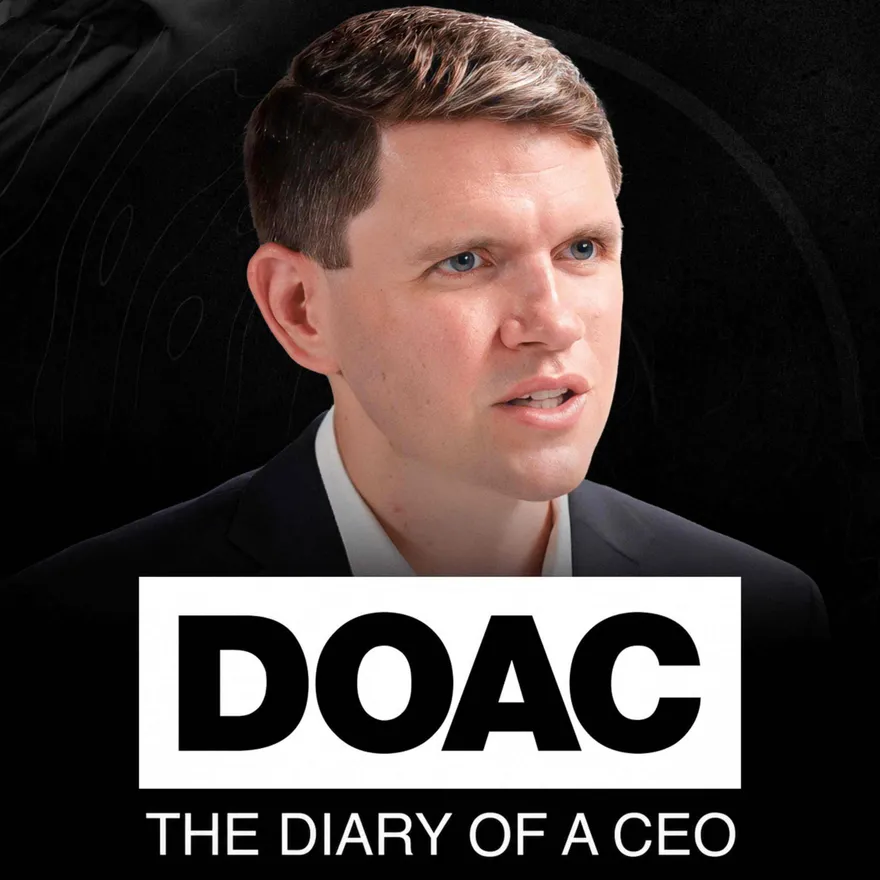

This is a preview of the Shortform summary of the Nov 2, 2026 episode of the The Diary Of A CEO with Steven Bartlett
Sign up for Shortform to access the whole episode summary along with additional materials like counterarguments and context.
1-Page Summary
Economic Inequality and Systemic Economic Reform
Wealth Concentration and Declining Middle Class
James Talarico and Steven Bartlett contrast America's mid-20th-century economic prosperity with today's concentrated wealth. In the 1950s and 1960s, the middle class held 62% of income while upper income households held 29%. Today, those roles have reversed: upper income households claim over 50% of income, while the middle class holds just 42%. Since the 1970s, there's been a 5% increase in low-income families and a 10% reduction in middle-income families.
Talarico traces this shift to the 1971 Powell Memo, which outlined how corporations could consolidate political power by funding campaigns, buying politicians, elevating corporate voices in media, and appointing sympathetic judges. The subsequent adoption of trickle-down economics—cutting taxes for the wealthy and deprioritizing investments in ordinary people—has shaped the last five decades. The result is widespread struggle: people work multiple jobs yet can't afford groceries, gas, utilities, or prescription drugs, while millennials and Gen Z find housing, family formation, and retirement prohibitively expensive.
Crony Capitalism Over Free Markets
Talarico argues that America's economy isn't true capitalism but crony capitalism, where political influence gives the wealthy special advantages. Three men—Elon Musk, Mark Zuckerberg, and Jeff Bezos—now own more wealth than the entire American middle class. While the wealthy accumulate wealth as equity rather than cash, the tax structure enables extreme concentration through loopholes like depreciating yachts and jets as business expenses, the carried interest loophole, and taking loans against equity to avoid taxation.
Billionaires and corporations also benefit directly from government support. Talarico notes that Tesla was made possible by taxpayer dollars, Walmart benefits from taxpayers funding employee Medicaid while avoiding quality benefits, and Wall Street received bailouts after the Great Recession while workers were left behind. Healthcare exemplifies crony capitalism, with companies like CVS owning pharmacy benefit managers, health insurers, and drugstores nationwide—a monopolistic structure that raises prices and restricts access.
Reforms to Restore Shared Prosperity
Talarico and Bartlett outline reforms to restore economic mobility. First, empowering workers through raising the minimum wage, expanding overtime eligibility, and rebuilding labor unions, which historically correlated with middle-class strength. Second, fair tax policies including closing loopholes, ensuring enforcement, and exploring wealth taxation. Talarico notes that collecting just the taxes already owed by the top 1% could raise $172 billion annually—enough to end poverty in America.
Third, investing in people through educational investments comparable to the GI Bill, expanding the Child Tax Credit (which recently cut child poverty in half before expiring), and providing affordable childcare. Finally, restoring competition in healthcare by breaking up monopolies like CVS, which controls the supply chain from insurance to retail pharmacies. Talarico concludes that for America to realize its values, the system must be reformed so economic growth is shared broadly rather than captured by a select few at the top.
Political Corruption and Systemic Government Reform
System Incentivizes Corruption
Talarico emphasizes that American democracy's central problem is not solely corrupt politicians but a system that incentivizes corruption and extremism. Campaign finance laws shaped by Citizens United, rampant gerrymandering, a rigid two-party system, and media algorithms all reward politicians who cater to donor interests and embrace extremism. Most politicians are rational actors focused on reelection, and the current system forces choices based on these skewed incentives rather than public service.
Changing individual leaders offers only temporary relief without addressing root causes. To avoid compromising his core values, Talarico personally imposed a term limit on himself, acknowledging that over time, the system erodes integrity even of those entering politics with the best intentions. He urges shifting focus from personalities and partisan blame toward comprehensive systemic reform.
Corporate Influence Drives Policy Corruption
Talarico provides a concrete example: an out-of-state billionaire from Pennsylvania gave $12 million to the Texas governor to support a private school voucher program. Since Texas has no campaign contribution limits, this enormous sum directly influenced policy, diverting funds from underfunded public schools—Texas ranks 43rd in per-student funding—into the pockets of wealthy parents. Talarico also connects the lack of government regulation of technologies like artificial intelligence to big money's outsized influence, allowing billionaires and corporate interests to set the rules.
Restoring Accountability Through Reform
To counteract political corruption, Talarico urges reestablishing effective government checks and balances, including the legislative branch reclaiming authority over military and foreign policy. He calls for major priority reforms: removing big money from politics, banning gerrymandering, reforming the Supreme Court, and changing campaign finance rules—measures he describes as vital prerequisites for any policy progress.
In evaluating leaders, Talarico states the key criterion should be their commitment to comprehensive systemic reform, not just stances on individual policy issues. Unless the system itself is changed, progress on any issue will remain blocked. Only a broad, united movement of working people can force the systemic overhaul needed to ensure government serves the public.
AI Disruption and Technological Regulation
AI's Threat to Employment and Wealth Distribution
Talarico underscores that artificial intelligence presents an unprecedented challenge that could dramatically reshape society. Drawing on expert warnings, he notes America could face five trillionaires controlling vast wealth and 30% unemployment. Unlike past transformative technologies developed through public-private partnerships with oversight, AI is currently engineered by a handful of for-profit companies with little public accountability.
Bartlett expands on these fears with Elon Musk's prediction that more than a billion humanoid robots could exist within a decade, each with five times human output. Texas is investing heavily in autonomous vehicles, threatening job losses for over 400,000 professional drivers. This scale of automation threatens massive disruption and wealth concentration that society has yet to address.
Lack of Government Oversight
Talarico and Bartlett express alarm at the lack of government action in developing frameworks to address AI risks. They point to social media as a cautionary tale: unregulated platforms have harmed children, driven up youth anxiety and self-harm, and damaged the broader public. AI, without sufficient regulation, could replicate or amplify these harms—youth already turn to AI chatbots for therapy and sometimes receive harmful advice.
Political processes face similar threats. Talarico cites AI-generated deepfakes in Texas Senate campaigns, where voters can't easily distinguish genuine from fake content, with generally no requirements for disclaimers. This opens the door to manipulation of public opinion and erosion of democratic trust.
AI Regulation Priorities
Talarico advocates for regulation centered on protecting workers, ensuring child safety, and preserving democratic integrity. He urges rejection of the false dichotomy between technological advancement and human wellbeing. Rather than fully autonomous vehicles replacing all human drivers, humans should continue to supervise and intervene, resembling aviation where pilots oversee automated systems.
Policy should ensure AI enhances jobs rather than leading to mass unemployment. Talarico champions an "AI dividend" to ensure societal wealth generated from collective knowledge is fairly shared. He calls for entrepreneurship grants and public investment—funded by taxing AI companies—to empower individuals with business ideas, especially those without wealthy connections. The future of AI should be shaped by collective decisions and commitment to an equitable, creative, and democratic society.
Personal Faith and Mission
Faith Background and Family Influences
Talarico's faith is deeply rooted in his upbringing. Born to a single mother who was a preacher's daughter, he has attended the same church since age two. His grandfather was a Baptist preacher, and the church remains his home base. His mother's story of escaping an abusive relationship shaped his values—with limited resources, she built a better life and always made time for service, inspiring him to stand up to bullies and fight for those he loves.
Meeting Mark Talarico, his adoptive father, was pivotal. Mark gave him his name, raised him as his own, and modeled honesty, integrity, and caring for others. James considers Mark the best man he knows and credits him for shaping his character.
Seminary Education Unified His Callings
As a lawmaker, Talarico initially found fulfillment in bipartisan progress but ultimately faced burnout amid increasing partisanship. After meeting with his pastor and grandfather, who reminded him of Jesus's commandments to love God and neighbor, he realized he was neglecting his spiritual life and decided to attend seminary at age 31.
While studying to become a minister, he realized campaigns and political work could also be forms of ministry—bringing hope, uniting people, and helping others see the image of God in themselves and each other. Talarico now seeks balance between inner spiritual life—prayer—and outer active life—service, recognizing that neglecting either can lead to self-centeredness or burnout. His seminary education helped him unite these callings.
Love Requires Accountability
Talarico believes Christian love demands loving not just those like us but also those most different or opposed. He explains that real love requires accountability—just as a true friend takes away car keys from a friend intending to drive drunk, loving even one's most adversarial political opponents means holding them accountable, both for their soul and for the safety of others.
Discussing Ken Paxton, Talarico describes him as a child of God and his "Samaritan"—an adversary but also a neighbor to be loved. He points out Paxton's well-known indictments and alleged corruption, asserting that holding Paxton accountable protects both the people of Texas and, in a sense, Paxton himself. Talarico hopes that if Paxton loses, it could prompt him to reassess his priorities.
Foreign Policy and Military Oversight
Iran Conflict Failures
The conflict with Iran stands as a costly example of unchecked executive power and military oversight failures. Talarico highlights the death of 19-year-old Isabella Gonzalez, a recent Dallas high school graduate killed in an Iranian airstrike in Jordan. He describes sending service members like Isabella to a war with no exit strategy or clear objectives as "deeply immoral."
Bartlett notes the administration expected a swift regime overthrow similar to Venezuela, but Iran's decentralized structure complicates negotiations and military strategy. The administration failed to anticipate Iran's control over the Strait of Hormuz—a chokepoint vital to global oil shipments—and disregarded the likely scenario of an expensive, drawn-out entanglement. More than a year into the conflict, objectives remain undefined and costs steadily increase, with the war costing a billion dollars a day and driving up gas prices.
Congress Must Reassert Authority
Talarico is adamant that Congress has ceded its constitutional responsibility, becoming "completely subservient to the executive branch." Political parties now coordinate across branches, undermining the intended system of checks and balances. Instead of scrutinizing military actions, Congress has deferred to executive decisions, allowing operations and objectives to drift without oversight.
Talarico calls for Congress to withhold defense funding until clear military objectives are articulated. If the executive branch cannot clearly explain its goals, the legislative branch is morally and constitutionally obliged to intervene and pause operations.
Path Forward Requires Diplomacy
Talarico believes resolution requires humility and a shift from unilateral action to inclusive strategy. He urges the President to convene Congressional leadership from both parties along with U.S. allies to build a coalition that can devise strategic direction. He stresses that global partnerships are indispensable and that the administration's tendency to alienate allies only deepens strategic isolation.
Talarico underscores the importance of preventing a nuclear Iran and laments that the U.S. lost diplomatic ground by abandoning the nuclear deal. He advocates a return to diplomatic efforts as an off-ramp from military escalation, with explicit exit strategies to prevent indefinite entanglement and further casualties. Electoral setbacks may ultimately prompt the President to seek bipartisan solutions on domestic issues such as healthcare, childcare, housing, and infrastructure, restoring focus on the needs of working Americans.
1-Page Summary
Additional Materials
Clarifications
- The 1971 Powell Memo was a confidential letter written by Lewis Powell, a corporate lawyer later appointed to the U.S. Supreme Court. It urged American businesses to become more politically active to counteract growing criticism from labor unions, environmentalists, and consumer advocates. The memo recommended strategies like funding think tanks, influencing media, and shaping education to promote pro-business policies. This document is seen as a catalyst for the rise of corporate political power and conservative economic policies in the U.S.
- Trickle-down economics is a theory that suggests tax cuts and benefits for the wealthy and businesses will stimulate investment and economic growth, eventually benefiting everyone. It assumes that increased wealth at the top leads to job creation and higher wages for lower-income groups. Critics argue it often results in wealth concentration without significant benefits for the broader population. Empirical evidence shows it frequently fails to deliver promised widespread economic improvements.
- Crony capitalism occurs when businesses gain unfair advantages through close relationships with government officials, rather than through competition. This undermines free markets, where success depends on innovation, efficiency, and consumer choice. In crony capitalism, wealth and power concentrate among connected elites, distorting economic outcomes. It often leads to corruption, reduced competition, and inefficiency.
- Some wealthy individuals classify luxury items like yachts and private jets as business assets to deduct their costs from taxable income. The carried interest loophole allows investment managers to pay lower capital gains tax rates on income that is effectively compensation. Taking loans against equity lets owners access cash without triggering taxable income, as loans are not considered income. These strategies reduce taxable income and overall tax liability for the wealthy.
- Tesla received substantial government support through federal tax credits and subsidies aimed at promoting electric vehicle adoption and clean energy innovation. These incentives lowered Tesla's production costs and boosted consumer demand by making electric cars more affordable. Walmart employees often earn low wages that do not cover healthcare costs, leading many to rely on Medicaid, a government-funded health insurance program for low-income individuals. This reliance effectively shifts Walmart's employee healthcare costs onto taxpayers.
- Pharmacy Benefit Managers (PBMs) act as intermediaries between insurers, pharmacies, and drug manufacturers to negotiate drug prices and manage prescription drug benefits. They control which drugs are covered and at what cost, influencing patient access and pharmacy revenues. PBMs often own or are affiliated with pharmacies and insurers, creating conflicts of interest that can limit competition and raise prices. This vertical integration enables companies like CVS to dominate multiple stages of the drug supply chain, reducing market competition.
- The Citizens United v. FEC Supreme Court decision in 2010 ruled that corporations and unions can spend unlimited money on political campaigns. This ruling led to the rise of Super PACs, which can raise and spend unlimited funds independently of candidates. It significantly increased the influence of wealthy donors and special interests in elections. Critics argue it undermines democratic fairness by amplifying the voices of the wealthy.
- Gerrymandering is the manipulation of electoral district boundaries to favor a particular political party or group. It often involves "packing" opposition voters into a few districts or "cracking" them across many districts to dilute their influence. This practice can distort representation, allowing politicians to choose their voters rather than voters choosing their representatives. As a result, it undermines democratic fairness and can entrench political power.
- Campaign finance rules regulate how money is raised and spent in political campaigns to prevent undue influence. Loopholes and weak regulations allow wealthy donors and corporations to contribute large sums, often anonymously, increasing their political power. This financial influence can lead politicians to prioritize donor interests over public needs, fostering corruption. Stronger rules aim to increase transparency and limit big money's impact on elections and policymaking.
- AI-generated deepfakes are realistic but fake videos or audio created using artificial intelligence to impersonate real people. In political campaigns, they can spread false information or manipulate voters by making candidates appear to say or do things they never did. These deepfakes undermine trust in authentic media and complicate fact-checking efforts. Without regulations requiring disclaimers or transparency, they pose a serious threat to democratic processes.
- Elon Musk has predicted that within about a decade, over a billion humanoid robots could exist, each capable of performing work at five times the efficiency of a human. This rapid automation could displace many jobs, especially in sectors reliant on manual or repetitive labor. The economic impact includes potential mass unemployment and increased wealth concentration among those controlling the technology. Musk's warning highlights the urgent need for policies to manage this technological disruption fairly.
- The trucking and transportation industries employ millions of professional drivers in the U.S., with Texas being a major hub due to its size and economy. Autonomous vehicles, especially self-driving trucks, threaten to replace many of these jobs by automating long-haul freight transport. This shift could lead to significant unemployment and economic disruption for drivers and related industries. Retraining and new job creation are critical to mitigate these impacts.
- An "AI dividend" refers to distributing the economic gains generated by artificial intelligence broadly across society. It functions like a shared profit, where wealth created by AI technologies funds public programs or direct payments to citizens. This approach aims to reduce inequality caused by AI-driven automation and wealth concentration. Funding for the dividend could come from taxes on AI companies or profits.
- The GI Bill, officially the Servicemen's Readjustment Act of 1944, provided World War II veterans with benefits like low-cost mortgages, low-interest loans, and tuition for education. It significantly expanded access to higher education and homeownership, fueling the growth of the American middle class. The bill helped millions of veterans transition to civilian life and contributed to postwar economic prosperity. Its success is often cited as a model for large-scale public investment in human capital.
- The Child Tax Credit (CTC) is a government benefit that provides families with a tax credit for each child, reducing their tax burden and increasing income. In 2021, the American Rescue Plan temporarily expanded the CTC by increasing the credit amount and making it fully refundable, allowing many low-income families to receive monthly payments. This expansion significantly reduced child poverty rates during its implementation. The recent expiration means the credit has reverted to its previous, less generous form, causing concerns about increased child poverty.
- The U.S. Constitution grants Congress the power to declare war and control military funding, ensuring civilian oversight of armed forces. Congress also has authority to regulate foreign commerce and approve treaties, providing checks on executive actions. The President, as Commander-in-Chief, directs military operations but must operate within Congress's legal and budgetary constraints. This separation aims to prevent unilateral military engagements without legislative approval.
- The Iran nuclear deal, formally known as the Joint Comprehensive Plan of Action (JCPOA), was an agreement reached in 2015 between Iran and major world powers to limit Iran's nuclear program in exchange for lifting economic sanctions. The deal aimed to prevent Iran from developing nuclear weapons by imposing strict monitoring and restrictions on uranium enrichment. In 2018, the U.S. unilaterally withdrew from the agreement, reinstating sanctions that severely impacted Iran's economy. This abandonment increased tensions, reduced diplomatic engagement, and complicated efforts to prevent nuclear proliferation in the region.
- The Strait of Hormuz is a narrow waterway connecting the Persian Gulf to the Arabian Sea. It is one of the world's most critical chokepoints for oil transport, with about 20% of global petroleum passing through it daily. Control or disruption of the strait can significantly impact global oil prices and energy security. Its strategic location makes it a focal point in Middle Eastern geopolitical tensions.
- Ken Paxton is the Attorney General of Texas, a key legal officer responsible for representing the state in legal matters. He is a prominent Republican figure known for his conservative policies and involvement in high-profile legal and political controversies. Paxton has faced multiple indictments related to allegations of securities fraud and abuse of office, which have made him a polarizing figure in Texas politics. His legal troubles and political actions have significant implications for state governance and partisan dynamics.
- "Bipartisan" means involving agreement or cooperation between two major political parties, often to pass laws or policies. "Term limits" are legal restrictions that limit the number of terms an elected official can serve in a particular office. "Checks and balances" is a system in government where different branches (executive, legislative, judicial) have powers that can limit or check each other to prevent any one branch from becoming too powerful. This system ensures no single branch controls all government decisions.
- Seminary education trains individuals in theology, ethics, and pastoral care, deepening their spiritual understanding and moral framework. This foundation helps politicians view their work as a form of service aligned with religious values like compassion and justice. It encourages integrating faith-driven principles into public policy and leadership. Thus, political work becomes an extension of ministry, aiming to uplift and unite communities.
Counterarguments
- The decline in the middle class's share of income may partly reflect broader global economic trends, technological change, and increased international competition, not solely domestic policy choices or corporate influence.
- The 1971 Powell Memo's influence is debated; some historians argue that economic and political shifts were already underway due to globalization, automation, and demographic changes.
- Trickle-down economics remains controversial, but some economists argue that lower taxes on investment and capital gains can stimulate economic growth and innovation, potentially benefiting society as a whole.
- The concentration of wealth among a few individuals is partly a result of the outsized success of technology companies, which have created significant value and new industries, not just policy or regulatory failures.
- Tax loopholes and business deductions, while sometimes abused, are also intended to encourage investment and economic activity; eliminating them entirely could have unintended consequences for entrepreneurship and business growth.
- Government support for companies like Tesla has also led to advances in clean energy and electric vehicles, which many view as positive public outcomes.
- The structure of the healthcare industry is complex, and some argue that vertical integration (e.g., CVS owning insurers and pharmacies) can create efficiencies and lower costs for consumers.
- Raising the minimum wage and expanding union power may have trade-offs, such as potential job losses or increased costs for small businesses.
- Wealth taxes and aggressive tax enforcement are debated; critics argue they could discourage investment, drive capital overseas, or be difficult to implement effectively.
- The assertion that collecting $172 billion from the top 1% would "end poverty" is disputed, as poverty is a multifaceted issue involving education, health, and opportunity, not just income transfers.
- Some believe that campaign finance restrictions could infringe on free speech rights as interpreted by the Supreme Court.
- Gerrymandering is practiced by both major parties, and some argue that independent commissions have their own biases or limitations.
- The two-party system, while criticized, is seen by some as providing stability and clear choices for voters.
- The potential for AI to create mass unemployment is debated; historical technological advances have often led to new industries and job categories.
- Some argue that regulating AI too heavily or too early could stifle innovation and prevent the U.S. from remaining competitive globally.
- The prediction of five trillionaires and 30% unemployment due to AI is speculative and not universally accepted among economists or technologists.
- Public-private partnerships in technology have sometimes resulted in inefficiency or misallocation of resources.
- Faith-based approaches to politics may not resonate with all constituents in a pluralistic society.
- The morality of military interventions is complex; some argue that U.S. engagement abroad can prevent greater instability or humanitarian crises.
- Congressional oversight of military action is constitutionally mandated, but in practice, rapid response to threats sometimes requires executive flexibility.
- Diplomatic solutions with adversarial states like Iran are challenging and may not always be feasible or effective.

Get access to the context and additional materials
Economic Inequality and Systemic Economic Reform
Wealth Shift Creates Two-tiered Economy: Top Gains, Working People Struggle With Stagnant Wages, Rising Costs
James Talarico and Steven Bartlett draw a sharp contrast between America’s mid-20th-century economic prosperity and today’s concentrated wealth. In the 1950s and 1960s, government investments in education, healthcare, and infrastructure fostered the world’s largest and strongest middle class. During this period, the middle class held 62% of all income, while upper income households held 29%. Today, those roles have reversed: upper income households now claim over 50% of aggregate income, and the middle class holds just 42%. There has also been a 5% increase in families living in the low-income category and a 10% reduction in the middle-income category since the 1970s.
This economic restructuring began with the 1971 Powell Memo, which Talarico identifies as a blueprint by corporate interests to undermine the New Deal and Great Society. The memo outlined how corporations could consolidate political power by funding campaigns, buying politicians across both parties, elevating corporate voices in media, and appointing sympathetic judges. The late 1970s and early 1980s ushered in trickle-down economics—cutting taxes for the wealthiest and deprioritizing investments in ordinary people—which has shaped the last five decades.
The consequences are visible across Texas and America. Talarico describes people struggling to afford necessities like groceries, gas, utilities, and prescription drugs, despite often working multiple jobs. This struggle is especially true for millennials and Gen Z, who find the costs of housing, starting a family, and retiring comfortably prohibitively high. The system is widely seen as rigged against working people, with economic gains going overwhelmingly to those at the top while everyday life becomes harder for everyone else.
Crony Capitalism, Not True Free-Market Competition, Defines the American Economy, as Wealthy Interests Use Political Influence to Rig Rules Rather Than Compete Fairly
Talarico argues the US economy today is not true capitalism but crony capitalism, where political access and influence give the wealthy special advantages. Three men—Elon Musk, Mark Zuckerberg, and Jeff Bezos—now own more wealth than the entire American middle class, illustrating an extreme concentration of economic power. This is not about demonizing billionaires, Talarico says, but about recognizing the inhumanity of such disparity when one in five Texas children lives in poverty while a resident of Texas is the world’s first trillionaire.
Bartlett and Talarico further note that, while the wealthy often accumulate much of their fortune as equity rather than cash, the tax structure enables extreme wealth concentration through loopholes, such as the ability to depreciate yachts and jets as business expenses, the carried interest loophole, and the lack of taxation on unrealized gains. Many billionaires avoid taxation altogether by taking loans against their equity, further circumventing existing tax structures.
Billionaires and corporations also benefit directly from government support. Tesla, for example, was made possible by taxpayer dollars. Talarico points out that companies like Walmart benefit from taxpayers funding employee healthcare through Medicaid, effectively subsidizing corporate profits while the company avoids providing quality benefits. Similarly, after the Great Recession, Wall Street executives received bailouts as ordinary workers were left to fend for themselves.
Healthcare is another example of crony capitalism. Talarico highlights the monopolistic structure in the American healthcare system, where companies like CVS own pharmacy benefit managers, health insurers, and the largest drugstores nationwide. This lack of competition leads to higher prices on essentials like prescription drugs, restricting access for working people.
Reversing Economic Decline Requires Investing In Workers, Strengthening Labor Power, and Broadly Sharing Productivity Gains
Talarico and Bartlett outline reforms to restore shared prosperity and economic mobility. First, empowering workers is crucial: raising the minimum wage, expanding overtime eligibility, and especially rebuil ...
Here’s what you’ll find in our full summary
Economic Inequality and Systemic Economic Reform
Additional Materials
Clarifications
- The 1971 Powell Memo was a confidential letter written by Lewis Powell, a corporate lawyer who later became a Supreme Court Justice. It urged business leaders to become more politically active to counteract growing criticism of corporations and government regulation. The memo called for coordinated efforts to influence education, media, and politics to protect corporate interests. This document is seen as a catalyst for the rise of corporate political power and conservative economic policies in the U.S.
- Trickle-down economics is a theory that suggests tax cuts and benefits for the wealthy and businesses will stimulate investment and economic growth, eventually benefiting everyone. Critics argue it often leads to increased income inequality because the wealthy may save or invest money in ways that do not create widespread job growth or wage increases. The policy gained prominence in the 1980s under President Reagan's administration. Empirical evidence on its effectiveness is mixed, with many studies showing limited benefits for lower- and middle-income groups.
- True free-market competition means businesses compete fairly based on quality, price, and innovation without unfair advantages. Crony capitalism occurs when wealthy individuals or corporations use political influence to secure favorable laws, subsidies, or regulations that limit competition. This creates barriers for others and concentrates wealth and power among a few. It undermines the principles of equal opportunity and market efficiency.
- The carried interest loophole allows investment managers to pay a lower tax rate on their earnings by classifying them as capital gains instead of ordinary income. This means they are taxed at rates as low as 20%, rather than up to 37% for regular income. The loophole benefits private equity and hedge fund managers who earn most of their income this way. Critics argue it unfairly reduces tax revenue and favors the wealthy.
- Billionaires often borrow money using their stock or assets as collateral instead of selling them. Loans are not considered income, so they do not trigger capital gains taxes. This allows them to access cash without paying taxes on their wealth. They repay loans later, often with favorable terms, maintaining control of their assets.
- Pharmacy Benefit Managers (PBMs) act as intermediaries between insurers, pharmacies, and drug manufacturers to manage prescription drug benefits. They negotiate drug prices and rebates, often influencing which medications are covered by insurance plans. PBMs can drive up costs by favoring drugs with higher rebates rather than lower prices. Their control over drug formularies and pricing contributes to less transparency and higher out-of-pocket costs for patients.
- Vertical integration occurs when a company controls multiple stages of production or distribution within the same industry. For CVS, this means owning pharmacies, pharmacy benefit managers (which negotiate drug prices), and health insurance services. This control reduces competition by limiting other companies' access to parts of the supply chain. It can lead to higher prices and fewer choices for consumers.
- The New Deal was a series of programs and reforms launched by President Franklin D. Roosevelt in the 1930s to combat the Great Depression, focusing on job creation, social security, and financial regulation. The Great Society, initiated by President Lyndon B. Johnson in the 1960s, aimed to eliminate poverty and racial injustice through expanded education, healthcare (Medicare and Medicaid), and civil rights laws. Both policies significantly expanded the federal government's role in economic and social welfare, helping build a strong middle class. Their reforms laid the foundation for decades of economic growth and reduced inequality before the shifts described in the text.
- Labor unions negotiate collectively for better wages, benefits, and working conditions, which helps raise the overall standard of living for workers. Strong unions reduce income inequality by giving workers more bargaining power against employers. Historically, unionized industries contributed to the growth and stability of the middle class by securing fair pay and job security. Declining union membership has weakened workers' influence, correlating with stagnating wages and shrinking middle-class economic strength.
- The Child Tax Credit (CTC) is a federal tax benefit that provides financial support to families with children. In 2021, it was temporarily expanded under the American Rescue Plan, increasing the credit amount and making it fully refundable, which allowed more low-income families to benefit. This expansion also included monthly advance payments to families, rather than a lump sum at tax time. The enhanced provisions expired at the end of 2021, reverting the credit to its previous, less generous form.
- The GI Bill, officially the Servicemen’s Readju ...
Counterarguments
- The comparison between mid-20th-century and current economic conditions may overlook significant changes in demographics, technology, globalization, and societal expectations that affect income distribution and economic mobility.
- The decline in union membership and middle-class strength may also be attributed to structural economic changes such as automation, offshoring, and the shift from manufacturing to service-based industries, not solely to policy decisions or corporate influence.
- The concentration of wealth among a few individuals does not necessarily mean that the overall standard of living for the majority has declined; many measures of material well-being (such as access to technology, healthcare advancements, and consumer goods) have improved over time.
- Trickle-down economics and tax cuts for the wealthy are argued by some economists to stimulate investment, entrepreneurship, and economic growth, potentially benefiting the broader economy, though the extent of these benefits is debated.
- The use of tax deductions and business expense write-offs is a standard feature of tax systems worldwide and is not unique to the ultra-wealthy; many small businesses and middle-class taxpayers also benefit from such provisions.
- Government support for corporations (such as subsidies or bailouts) can be justified as necessary to preserve jobs, maintain economic stability, or foster innovation, especially during crises or in strategic industries.
- The assertion that collecting $172 billion in unpaid taxes from the top 1% would "end poverty in America" may oversimplify the complexities of poverty, which involve factors beyond income redistribution, such as education, health, and social infrastructure.
- The higher effective tax rates for work ...

Get access to the context and additional materials
Political Corruption and Systemic Government Reform
American Democracy's Issue: A System Incentivizing Corruption, Requiring Systemic Reform For Policy Progress
James Talarico emphasizes that the central problem in American democracy is not solely corrupt politicians, but a system that actively incentivizes corruption and extremism. Political incentives such as campaign finance laws shaped by Citizens United, rampant gerrymandering, a rigid two-party system, and media algorithms all reward politicians who cater to donor interests and embrace extremism over moderation or public good. Talarico explains that most politicians are rational actors focused on getting reelected, and the current system forces them to make choices based on these skewed incentives rather than genuine public service.
Talarico notes that changing individual leaders only offers temporary relief and does not address the root causes of corruption. Without reforming the systemic incentives that shape political actions, new officials will face the same pressures and likely fall into the same patterns. To avoid compromising their core values, Talarico personally imposed a term limit on himself, acknowledging that over time, the system is likely to erode the integrity of even those who enter politics with the best intentions.
He urges that the focus should shift away from personalities and partisan blame and instead move toward comprehensive systemic reform—transforming the structures, rules, and incentives that currently produce bad outcomes and reward self-interest over public interest.
Corporate Influence: Big Money's Role in Policy Corruption
Talarico provides a concrete example of how unchecked campaign finance fuels policy corruption. He describes a case in Texas where an out-of-state billionaire from Pennsylvania gave $12 million to the governor to support the passage of a private school voucher program. Since Texas has no campaign contribution limits, this enormous sum directly influenced policy, diverting funds from already underfunded public schools—Texas ranks 43rd in per-student funding—into the pockets of wealthy parents who already send their children to private schools. This process, he argues, is a clear transfer of public resources from the bottom and middle directly to those at the top, all facilitated by a corrupted political system.
Talarico also connects the lack of government regulation of advanced technologies, like artificial intelligence, to big money’s outsized influence. In the absence of effective government checks, billionaires and corporate interests are allowed to set the rules, further illustrating how politics currently hinders true public protection and serves elite interests over the broader public.
Restoring Accountability Requires Reestablishing Government Checks and Balances and Prioritizing Political Reform For Policy Change
To counter ...
Here’s what you’ll find in our full summary
Political Corruption and Systemic Government Reform
Additional Materials
Clarifications
- Citizens United is a 2010 U.S. Supreme Court case that ruled corporations and unions can spend unlimited money on political campaigns. This decision led to the rise of "super PACs," which can raise and spend vast sums independently of candidates. It significantly increased the influence of wealthy donors and special interests in elections. Critics argue it undermines democratic fairness by amplifying money's role in politics.
- Gerrymandering is the practice of drawing electoral district boundaries to favor one political party over another. It manipulates district shapes to concentrate or dilute voting power, often protecting incumbents or marginalizing opposition voters. This distorts political representation by making election outcomes less reflective of the actual voter distribution. As a result, it can entrench partisan power and reduce electoral competitiveness.
- The U.S. has two dominant political parties, the Democrats and Republicans, which makes it difficult for third parties to gain power. This system is reinforced by "winner-takes-all" elections, where only the candidate with the most votes wins, leaving no representation for others. Ballot access laws and debate rules also favor the two major parties. As a result, political competition and voter choices are limited, reducing diversity in political ideas.
- Media algorithms prioritize content that generates strong emotional reactions, often favoring sensational or extreme viewpoints. This drives users to engage more, increasing the visibility of polarizing content. Politicians respond by adopting more extreme positions to gain attention and support. Over time, this dynamic amplifies political polarization and discourages moderation.
- Out-of-state billionaires can use their vast financial resources to influence local elections and policies by making large campaign contributions or funding political action committees. Their money can sway politicians to support policies that benefit the billionaire’s interests, even if those policies do not align with local public needs. Because local campaign finance laws often have weak or no limits, these contributions can have outsized effects on political outcomes. This dynamic can undermine local democracy by prioritizing wealthy donors over the voices of local residents.
- Private school voucher programs provide public funding to parents to pay for private school tuition instead of public schools. Supporters argue vouchers increase school choice and competition, potentially improving education quality. Critics contend vouchers drain resources from public schools, worsening inequality and reducing oversight of private institutions. The controversy centers on whether public funds should support private education and the impact on public school systems.
- Texas ranking 43rd in per-student funding means it spends less money on each public school student compared to most other states. Lower funding often leads to larger class sizes, fewer resources, and lower teacher pay. This can negatively impact the quality of education students receive. The ranking highlights the strain on Texas public schools, making the diversion of funds to private schools more controversial.
- Texas does not impose legal limits on how much individuals or organizations can donate to political campaigns. This absence allows wealthy donors to contribute very large sums, increasing their influence over elected officials. Large donations can sway politicians to prioritize donor interests over public needs. Consequently, policies may favor the wealthy, undermining democratic fairness.
- Lack of government regulation allows powerful corporations and wealthy individuals to influence AI development and deployment without accountability. This influence can prioritize profit and control over ethical concerns and public safety. Political corruption enables these actors to block or weaken regulations that would limit their power. Consequently, AI policies may serve elite interests rather than the broader public good.
- Government checks and balances are mechanisms that ensure no single branch of government becomes too powerful. They allow each branch—executive, legislative, and judicial—to limit the powers of the others. This system prevents abuse of power and protects democratic governance. Effective checks and balances promote accountability and fair decision-making.
- The legislative branch, primarily Congress, has the constitutional power to approve or deny funding for military and foreign policy actions. This authority acts as a check on the executive branch, which conducts military operations and diplomacy. By controlling the budget, Congress can require clear objectives and hold the government accountable for how funds are used. Without this control, the executive branch ...
Counterarguments
- Some argue that the U.S. political system, while imperfect, has built-in checks and balances that have historically limited corruption and allowed for significant reforms over time.
- Critics of systemic reform caution that sweeping changes, such as banning gerrymandering or overhauling campaign finance, may have unintended consequences or could be difficult to implement without infringing on constitutional rights like free speech.
- Others contend that focusing on systemic issues can sometimes distract from holding individual politicians accountable for unethical behavior.
- Some believe that the two-party system, despite its flaws, provides stability and prevents the fragmentation seen in multi-party systems, which can lead to governmental gridlock or instability.
- There are arguments that large political donations can also support grassroots movements or underrepresented causes, not just elite interests.
- Some point out that term limits can reduce ins ...
Get access to the context and additional materials
Ai Disruption and Technological Regulation
Ai and Robotics Pose the Greatest Technological Challenge, Potentially Concentrating Wealth and Causing Unemployment Unless Policies Ensure Widespread Societal Benefit
James Talarico underscores that artificial intelligence presents an unprecedented technological challenge that could dramatically reshape the economic and social landscape. Drawing on expert warnings, he notes America could face a future of five trillionaires controlling vast wealth and 30% unemployment—a dystopian scenario that should alarm policymakers. Unlike transformative past technologies like the Manhattan Project, nuclear weapons, or the internet—developed through public-private partnerships with significant public oversight—AI is currently engineered by a handful of for-profit companies with little public accountability. Talarico stresses this lack of broad input poses significant risks, as decisions about the technology’s trajectory are made by a small circle of CEOs rather than collectively by society.
Steven Bartlett expands on these fears with Elon Musk’s prediction that more than a billion humanoid robots could exist within the coming decade, each with five times the output of a human. Already, factories demonstrate these robots can vastly outpace human workers in productivity without the same needs for rest or wages. Texas, for example, is investing heavily in autonomous vehicles, leading to the prospect of job losses for over 400,000 professional drivers and even higher numbers when including gig workers. Bartlett emphasizes that the scale of automation threatens massive job disruption and wealth concentration, and this is a challenge society has yet to answer.
Ai Safety Oversight Lacking as Government Neglects Frameworks Amid Emerging Risks
Talarico and Bartlett both express alarm at the lack of government action in developing frameworks to address emerging AI risks. They point to social media as a cautionary tale: platforms that were left unregulated have preyed on children, driven up youth anxiety and self-harm, and harmed the broader public. Talarico warns that AI, without sufficient regulation, could replicate or amplify these harms—youth already turn to AI chatbots for therapy and, in some cases, receive harmful or destructive advice.
Political processes face similar threats. Talarico cites the emergence of AI-generated deepfakes in Texas Senate campaigns, where voters can no longer easily distinguish between genuine and fake content, and notes there are generally no requirements for disclaimers. The fusion of powerful generative AI with minimal oversight opens the doorway to manipulation of public opinion, erosion of trust in democracy, and exploitation of the most vulnerable.
Ai Regulation Should Prioritize Worker Protection, Child Safety, and Democratic Integrity, Rejecting False Choices Between Innovation and Human Welfare
Talarico advocates for a regulatory approach to AI that centers on protecting workers, ensuring the safety of children, and preserving democratic integrity. He urges rejection of the false dichotomy between em ...
Here’s what you’ll find in our full summary
Ai Disruption and Technological Regulation
Additional Materials
Clarifications
- The "five trillionaires" figure is a speculative projection by some economists and futurists about extreme wealth concentration due to AI-driven economic shifts. It suggests that a few individuals or companies could amass wealth far exceeding today's billionaires by controlling dominant AI technologies. This scenario highlights risks of economic inequality and power centralization without regulatory intervention. The number symbolizes a warning about potential future disparities rather than a precise forecast.
- The Manhattan Project was a secret U.S. government research effort during World War II that developed the first nuclear weapons, involving collaboration between public agencies and private scientists. Nuclear weapons development continued under strict government control and oversight due to their immense power and risks. The internet originated from government-funded research, particularly by the U.S. Department of Defense, and evolved through partnerships with universities and private companies. These examples show how major technologies were developed with significant public investment and regulatory frameworks, unlike the current AI landscape.
- Public-private partnerships are collaborations where government agencies and private companies jointly develop technologies, sharing resources and expertise. Public oversight means government or independent bodies monitor and regulate these projects to ensure they serve the public interest. This oversight can include setting safety standards, ethical guidelines, and transparency requirements. Such arrangements aim to balance innovation with accountability and societal benefit.
- Humanoid robots are machines designed to resemble and mimic human movements and tasks. "Five times the output of a human" means these robots can perform work at a rate or volume five times greater than an average person. This increased productivity comes from their ability to operate continuously without breaks, fatigue, or wages. Such robots can handle repetitive, precise, or physically demanding jobs more efficiently than humans.
- Automation in industries like autonomous vehicles uses AI-driven technology to operate vehicles without human drivers. This technology can perform tasks such as navigation, obstacle detection, and decision-making more efficiently and continuously than humans. The widespread adoption threatens jobs in driving professions, including truck, taxi, and delivery drivers, due to reduced demand for human labor. Economic shifts may require retraining workers for new roles in technology management and maintenance.
- AI-generated deepfakes are realistic but fake videos or audio created using artificial intelligence. They can depict people saying or doing things they never did, making it hard to trust what is real. In politics, deepfakes can spread false information, manipulate voters, and undermine trust in candidates or institutions. This threatens fair elections and democratic decision-making.
- Generative AI refers to artificial intelligence systems that can create new content such as text, images, or videos based on patterns learned from data. This technology can produce realistic but fake media, like deepfake videos or fabricated news articles, which can mislead people. When used maliciously, generative AI can spread false information quickly, influencing public opinion and undermining trust in real sources. Its ability to mimic human communication makes it especially powerful for manipulation without easy detection.
- An "AI dividend" refers to the economic benefits generated by AI technologies being shared broadly across society, not just concentrated among AI companies or wealthy individuals. It could function through mechanisms like taxes on AI profits or automation gains, which fund public programs or direct payments to citizens. This approach aims to offset job displacement and wealth inequality caused by AI-driven automation. Essentially, it redistributes AI-generated wealth to support social welfare and economic inclusion.
- In aviation, pilots manage automated systems by monitoring and intervening during complex or emergency situations. These systems handle routine tasks, reducing pilot workload but still require human judgment for safety. The comparison suggests AI in vehicles should similarly assist rather than fully replace human control. This approach balances efficiency with safety and accountability.
- AI chatbots generate responses based on patterns in their training data, which may include biased or harmful content. They lack true understanding and can inadvertently produce misleading, inappropriate, or dangerous advice. Without proper safeguards, chatbots might reinforce negative behaviors or provide incorrect medical or psychological guidance. Continuous monitoring and ethical design are essential to minimize these risks.
- Minimal regulatory frameworks mean there are few or no rules governing how AI technologies are developed and used. Specific regulations might include safety standards, transparency requirements, and accountability measures to prevent misuse or harm. They could also m ...
Counterarguments
- Historical precedents show that technological revolutions, such as the Industrial Revolution and the rise of the internet, initially caused disruption but ultimately led to the creation of new industries and jobs that could not have been foreseen at the outset.
- The prediction of 30% unemployment and a handful of trillionaires is speculative; economic adaptation, retraining, and new sectors may mitigate these outcomes.
- Concentration of AI development in large companies is partly due to the immense resources required, but open-source AI initiatives and academic research also contribute significantly to the field.
- Automation has the potential to improve safety, reduce costs, and increase productivity, which can benefit consumers and society as a whole.
- Regulatory frameworks that are too restrictive could stifle innovation, slow economic growth, and reduce global competitiveness.
- Not all AI applications pose the same level of risk; targeted regulation may be more effective than broad, sweeping policies.
- The analogy to social media harms may not fully apply to all AI technologies, as many AI systems are used in enterprise, healthcare, and scientific rese ...
Get access to the context and additional materials
Personal Faith and Mission
Baptist Heritage and Church Involvement Provide Spiritual Motivation and Ethical Framework Guiding Public Service and Policy Commitments
Growing Up With His Grandfather As a Baptist Preacher and Maintaining the Same Church
James Talarico’s faith is deeply rooted in his upbringing. Born to a single mother who was a preacher’s daughter, he has attended the same church since he was two years old. His grandfather was a Baptist preacher, and Talarico describes the church as his home base, providing the foundation for his life. Even as a child, Talarico was involved in church activities, serving as an acolyte at St. Andrew's Church.
Mother's Escape From Abuse Taught Him to Fight For Love and Justice
His mother’s story of escaping an abusive relationship shaped his values and sense of justice. After enduring violence from Talarico’s biological father, his mother packed their belongings into a small car and left to build a better, safer life for her son. With limited resources, she made a home, decorating his crib in her closet, and always made time for service—volunteering at school, church, and in the community. Talarico credits her fighting spirit with inspiring him to stand up to bullies and fight for the people he loves, both as a teacher and as a public official.
Adoptive Father Mark Talarico, a Model of Honesty and Integrity, Became the Most Important Male Influence and Shaped His Values
Meeting Mark Talarico, his adoptive father, was a pivotal moment in James’s life. Mark gave him his name, raised him as his own, and modeled honesty, integrity, and caring for others—doing what’s right even when no one is watching. James considers Mark the best man he knows and credits him for shaping his character and values.
Seminary Education at 31 Reconciled His Tension Between Political Service and Spiritual Calling, Revealing Both As Complementary Ministries Serving the Same Mission
Burnout Led Him to See Campaigns as Ministry, Offering Hope, Unity, and God's Image In All
As a lawmaker, Talarico initially found fulfillment in bipartisan progress, but ultimately faced frustration, burnout, and a sense of diminished impact amid increasing partisanship. This led him to meet with his pastor and grandfather, who reminded him of Jesus’s commandments to love God and neighbor. Talarico realized he was neglecting his inner spiritual life and decided to attend seminary at age 31—fulfilling a long desire to preach, inspired by his grandfather.
While studying to become a minister, he realized that campaigns and political work could also be forms of ministry—bringing hope, uniting people, and helping others to see the image of God in themselves and each other. He came to view his campaign as a ministry, reaching those disengaged from public life and bridging community divisions.
Faith Requires an Inner Spiritual Life and an Outer Active Life to Prevent Burnout
Talarico now seeks a balance of inner spiritual life—prayer—and outer active life—service. He explains that neglecting either can lead to self-centeredness or burnout. His seminary education helped him unite these callings, recognizing that both fuel and sustain each other. He emphasizes that his work—from teaching to legislating—grows out of his faith and is his way of loving his neighbor through policy and service.
Faith as Visceral Trust: Letting Go and Being Held
As a seminary student, Talarico learned both Greek and Hebrew to study the Bible in its original texts. He found that the word "faith" translates to both "belief" and "trust." For Talarico, faith is more about visceral trust than intellectual belief—a bodily sense of letting go and being held, much like learning to float in ...
Here’s what you’ll find in our full summary
Personal Faith and Mission
Additional Materials
Counterarguments
- While Talarico’s faith-based motivation is sincere, some may argue that public service should be guided primarily by secular principles to ensure separation of church and state and inclusivity for all constituents, regardless of faith.
- Viewing political campaigns as ministry could be seen as blurring the line between religious mission and civic duty, potentially alienating those who do not share the same religious beliefs.
- Emphasizing personal faith as the foundation for public policy may unintentionally marginalize or overlook the perspectives of non-religious or differently religious individuals in a pluralistic society.
- The analogy of holding political opponents accountable as an act of Christian love may not resonate with those who believe accountability should be rooted in legal or ethical standards independent of religious frameworks.
- While Talarico’s approach stress ...
Actionables
- you can create a weekly reflection card where you jot down one moment you stood up for someone or something you believe in, then note how it felt and what you learned about yourself, helping you build a habit of courageous, values-driven action in everyday life.
- a practical way to balance your inner and outer life is to set a recurring five-minute timer each day to pause, breathe deeply, and ask yourself two questions: what do I need right now, and how can I serve someone else today, ensuring you nurture both your spiritual well-being and your outward kindness.
- you can practice loving accountabilit ...

Get access to the context and additional materials
Foreign Policy and Military Oversight
Iran Conflict: A Failure of Executive Power Lacking Legislative Oversight, Clear Objectives, and Exit Strategy; American Lives Lost (E.G., 19-year-Old Isabella Gonzalez)
The conflict with Iran stands as a costly example of unchecked executive power and the failures of military oversight. James Talarico highlights the personal toll, recalling the death of 19-year-old Isabella Gonzalez, a recent Dallas high school graduate, who was killed in an Iranian airstrike in Jordan. Talarico describes sending American service members like Isabella to a war with no exit strategy or clear military objectives as "deeply immoral," underlining that honoring her sacrifice must not equate to accepting unnecessary deaths in "forever wars."
Administration Expected Quick Overthrow of Iran Like Venezuela, but Ignored Predictable Strait of Hormuz Control and Costly Quagmire
Steven Bartlett captures the administration’s miscalculation, noting that the expectation was a swift regime overthrow similar to Venezuela, but the reality is Iran’s decentralized structure, with fragmented and unclear leadership complicating negotiations and military strategy. The administration failed to anticipate Iran’s control over the Strait of Hormuz—a chokepoint vital to global oil shipments—and disregarded the likely scenario of an expensive and drawn-out entanglement.
More Than A Year Into the Conflict, Objectives Remain Unmet and Costs Rise—Tariffs and Gas Price Spikes Increase Expenses, Contradicting Promises to Lower Costs and End Forever Wars
The war continues for more than a year with objectives that remain undefined and costs that steadily increase. Talarico points to a war that is costing the U.S. a billion dollars a day, driving up gas prices and undermining campaign promises to reduce expenses and end endless military commitments. Escalating tariffs and persistent conflict have only made basic goods more expensive for Americans.
Fragmented Leadership in Iran Complicates Decision-Making Authority
Bartlett observes that Iran’s internal structure—split into smaller weaponized factions—means that even when the U.S. negotiates with Iranian representatives, those individuals might not control or influence the forces launching attacks. This confusion adds to the conflict’s intractability and inhibits any coherent diplomacy or resolution.
To Restore Checks and Balances, Congress Must Demand Clear Military Objectives Before Funding and Reassert Its Coequal Role Instead of Deferring To the Executive
Talarico is adamant that Congress has ceded its constitutional responsibility, becoming “completely subservient to the executive branch.” He argues that political parties now coordinate across branches, undermining the intended system of checks and balances. The legislative branch’s primary duty now should be to assert itself by questioning the war’s objectives and strategies—a step Congress has largely failed to take as mission creep sets in.
Congress Fails to Question Military Strategy, Allowing Mission Creep Due to Legislative Subservience To Executive Power
Instead of scrutinizing military actions and demanding accountability, Congress has deferred to executive decisions, allowing military operations and objectives to drift further without oversight. Talarico, referencing painful lessons from the Iraq war, insists Congress must learn from past mistakes and not send American youth to sacrifice for vague or shifting missions.
Withhold Funding Until Military Objectives Are Defined
Talarico calls for Congress to withhold defense funding until clear military objectives are articulated. He argues that if the executive branch cannot clearly explain its goals, the legislative branch is morally and constitutionally obliged to intervene and pause operations, preventing further waste of lives and national resources.
Path Forward Needs Humility, Bipartisan Cooperation, Regional Partn ...
Here’s what you’ll find in our full summary
Foreign Policy and Military Oversight
Additional Materials
Counterarguments
- While the executive branch has significant power in foreign policy, Congress retains substantial oversight tools, including the power of the purse and the War Powers Resolution, which it can choose to exercise more assertively.
- Military objectives in complex conflicts are often necessarily flexible due to rapidly changing circumstances on the ground, making rigid pre-defined objectives or exit strategies impractical.
- The expectation of a quick regime change in Iran may be overstated; administrations often plan for multiple contingencies, and intelligence assessments are not always made public.
- Iran’s fragmented leadership complicates negotiations, but decentralized adversaries are not unique to this conflict and have been managed in other contexts through adaptive diplomatic and military strategies.
- Rising costs and gas prices are influenced by multiple global factors, not solely by the conflict with Iran.
- Congressional deference to the executive in military matters has historical precedent, especially during periods of perceived national security threats.
- Withholding defense funding until objectives are defined could endanger troops already deployed and undermine ongoing operations.
- Preventing Iran from acquiring nuclear weapons may require a combination of diplomatic, economic, and military tools, not solely a return to previous agr ...
Actionables
- you can write a short, clear letter to your elected representatives demanding that they publicly outline what specific military objectives and exit strategies they support before approving any new defense spending, making it clear you expect them to reclaim their constitutional oversight role
- Explain that you want to see your representatives take responsibility for war decisions and not defer blindly to the executive branch, and ask them to share their positions with constituents in plain language.
- a practical way to encourage bipartisan cooperation is to invite friends or family with different political views to join you in co-signing a petition or letter that calls for transparent war objectives and a return to diplomatic solutions
- This shows lawmakers that people across the political spectrum want humility, accountability, and a focus on peaceful conflict resolution, not endless military engagement.
- you can track and share the per ...
Get access to the context and additional materials


Create Summaries for anything on the web
Download the Shortform Chrome extension for your browser
