

James Talarico: America's Corrupt System Is Designed To Keep You Poor! | Texas Senate Candidate
In this episode of The Diary Of A CEO with Steven Bartlett, Texas Senate candidate James Talarico discusses the concentration of wealth in America and its connection to systemic political corruption. Talarico argues that extreme inequality—from billionaires holding more wealth than the entire middle class to millions of children living in poverty—stems from decades of policy decisions that prioritized corporate interests over workers. He traces this shift through historical turning points and proposes reforms ranging from rebuilding unions to overhauling campaign finance laws.
Talarico also shares his personal journey from growing up with a single mother in East Austin to becoming a teacher and legislator, explaining how faith guides his approach to public service. The conversation covers his policy positions on healthcare monopolies, education funding, immigration reform, and emerging challenges like AI disruption and military conflicts. Throughout, Talarico connects economic policy to practical impacts on working families while addressing why voters supported Trump despite Democratic messaging.
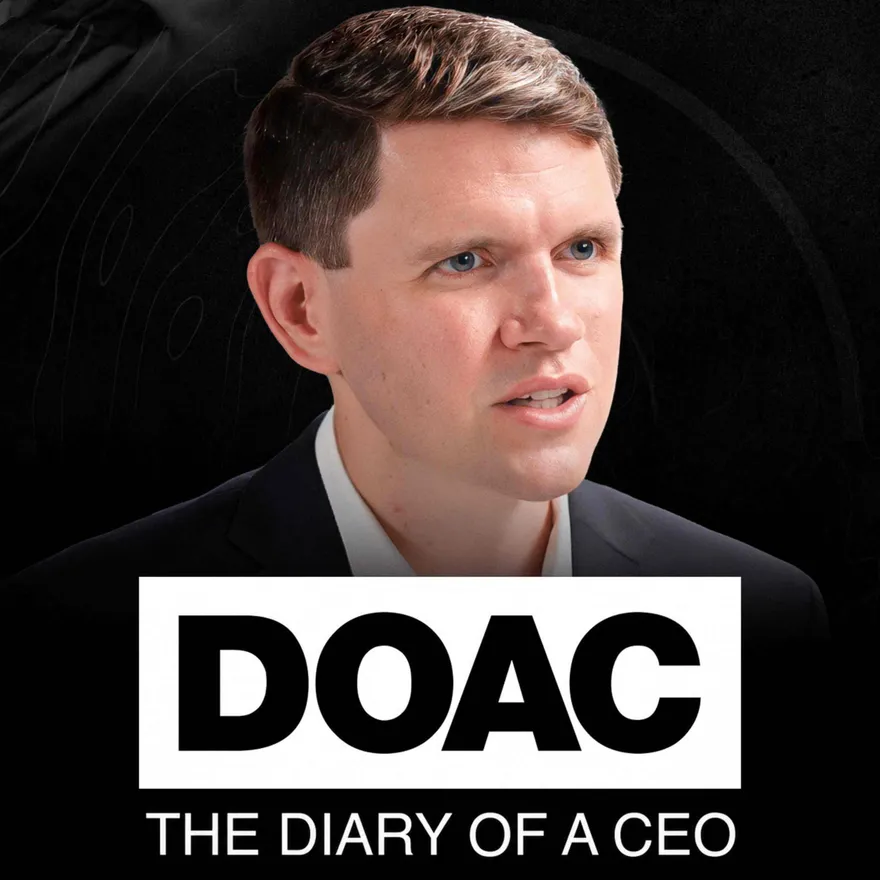

This is a preview of the Shortform summary of the Nov 2, 2026 episode of the The Diary Of A CEO with Steven Bartlett
Sign up for Shortform to access the whole episode summary along with additional materials like counterarguments and context.
1-Page Summary
Economic Inequality, Wealth Concentration, and Systemic Political Corruption
James Talarico describes extreme wealth concentration—where billionaires like Elon Musk, Mark Zuckerberg, and Jeff Bezos together possess more wealth than the entire U.S. middle class while one in five Texas children lives in poverty—as a "spiritual sickness." He traces this inequality to the 1971 Powell Memo, which he says provided a blueprint for corporate power to dismantle New Deal and Great Society gains through political donations, media influence, and judicial appointments.
Historically, the middle class held 62% of American income in the 1950s-60s, but today the upper-income class captures over 50% while the middle class has shrunk to 42%. Talarico attributes this reversal to trickle-down economics starting in the late 1970s, which slashed top tax rates from 90% and weakened unions, eliminating workers' bargaining power and stagnating wages.
Talarico argues the U.S. has shifted from capitalism to "crony capitalism," where wealth accrues to those who buy political influence. He cites healthcare monopolies—like CVS controlling insurance, pharmacies, and pharmacy benefit managers—as prime examples. He points to an out-of-state billionaire giving Texas's governor $12 million to pass school voucher schemes that divert funding from public schools to wealthy families as evidence of systemic corruption.
The wealthy exploit tax loopholes while the top 1% owes $172 billion in uncollected taxes—enough to end U.S. poverty. Meanwhile, corporations like Walmart receive public subsidies when taxpayers cover employee Medicaid costs. Talarico insists billionaires should give back to the country that enabled their success.
His proposed solutions include raising the minimum wage, expanding overtime pay, rebuilding unions, and reviving the child tax credit, which cut child poverty in half before expiring. However, Talarico insists political reform must come first: overturning Citizens United, banning gerrymandering, and overhauling the Supreme Court to eliminate big money's influence and restore government accountability to the people.
Background, Faith, and Public Service Approach
Talarico is an eighth-generation Texan born to a single mother who fled an abusive relationship when he was an infant. She worked overtime to support them, and he slept in a crib inside her closet in their small East Austin apartment. Her fighting spirit and volunteer work despite limited resources inspired his commitment to service. His adoptive father, Mark Talarico, gave him his last name and modeled integrity and principled action.
Talarico struggled academically until inspired by social studies teachers, leading him to become a teacher himself at Rhodes Middle School. His students—including DACA recipients—deepened his resolve for immigration reform. Faith is the foundation of Talarico's life, shaped by his Baptist upbringing and grandfather, a Baptist preacher. Jesus's commandments to love God and neighbor, especially the parable of the Good Samaritan, guide his understanding that Christians must actively love those different from themselves.
After two terms in the legislature left him too focused on external service, Talarico entered seminary to better balance his inner spiritual life with public work. He studies ancient languages like Greek and Hebrew to deepen his understanding of faith, which he describes as trust rather than belief—like learning to swim by relaxing into the water.
Talarico views his political work as ministry. Encouraged by his pastor, he sees campaigns as opportunities to offer hope and build bridges across division. He publicly pledges to serve only two terms in the Senate to guard against power's corrupting influence, believing genuine love requires accountability—even confronting opponents, which he compares to "taking the car keys from a drunk driver."
Policy Positions: Healthcare, Education, Labor, Immigration Reform
Talarico sharply criticizes recent federal healthcare cuts, citing nonpartisan estimates that 51,000 Americans will die needlessly each year. He praises Mark Cuban's Cost Plus Drugs company for making prescription medicines affordable and challenging healthcare monopolies. Talarico advocates breaking up conglomerates that own insurers, hospitals, and pharmacies to increase competition and lower costs.
On education, Talarico notes Texas ranks 43rd in per-student funding. He criticizes school voucher programs that redirect scarce resources from underfunded public schools to private institutions, mainly benefiting wealthy families. He praises the 2019 school finance reform as a bipartisan model and argues for increased federal investment in higher education.
Talarico emphasizes rebuilding unions to restore worker bargaining power, noting that since the 1970s, even workers with multiple jobs struggle to afford necessities. He advocates expanding overtime pay to ensure workers benefit from productivity increases.
On immigration, Talarico argues security and opportunity can coexist. He criticizes both the Biden administration's border chaos and Trump-era extremism—including masked agents in unmarked vehicles and child detention. He supports comprehensive reform addressing border security while creating citizenship pathways for long-term undocumented residents and DACA recipients, drawing on his experience teaching undocumented Dreamers who deeply love America.
Trump's Presidency and Democratic Electoral Losses
Talarico argues that economic distress drove Trump's success. Across Texas, people struggle to afford necessities despite working harder than ever. Many who dislike Trump's actions, including January 6, still supported him hoping to restore pre-pandemic economic conditions. Fifty years of trickle-down economics left wages stagnant, and when post-pandemic inflation hit, both stagnant wages and rising costs squeezed workers from both sides. Biden's failures on border control reinforced narratives of Democratic ineffectiveness, but Trump also failed to deliver: costs remain high, tariffs drive up expenses, a new Iran war strains the economy, and political corruption persists.
Talarico warns of "performative politics," where political energy centers on policing academic terminology rather than building coalitions to address injustices. When politics fixates on language over alliances, division grows and outcomes reflect politicians' emotional needs rather than meaningful change.
Talarico explicitly rejects presidential ambitions, believing long tenures undermine public service by merging politicians' identities with their positions, breeding corruption. He advocates serving limited terms and then stepping aside. His legislative skill set—building coalitions and passing 60 bipartisan bills on housing, healthcare, education, teacher pay, and property tax—suits him better for legislative service than executive power.
Talarico acknowledges democratic socialism's rise as frustration with inequality and embraces channeling that energy toward structural change. He expresses willingness to work with Trump or any Democrat on healthcare, childcare, and housing, stressing cooperation on economic policy is essential. He credits Trump with clear communication and humor but criticizes his ego, chaotic decision-making, corruption, and prioritization of popularity over principles.
Emerging Challenges: Ai Disruption and Iran Conflict
Talarico voices anxiety about rapid AI advances without adequate regulation, criticizing federal inaction as technology outpaces policy responses. He outlines three regulatory priorities: protecting workers and ensuring AI improves jobs without replacing people; shielding children from AI-exacerbated harms like those seen with social media; and defending democracy against deepfakes that manipulate campaigns. Talarico, once confident in his digital literacy, now struggles to distinguish AI-generated content from reality, echoing broader anxiety about undisclosed deepfakes undermining public trust.
Steven Bartlett and Talarico express concern that AI's economic benefits will accrue exclusively to corporate entities and billionaire CEOs. Unlike past public-private partnerships like the Manhattan Project or the internet's birth, AI development involves no meaningful public oversight. Talarico advocates for an "AI dividend"—ensuring all citizens benefit from wealth created using society's collective intellectual property.
Bartlett notes that up to 400,000 Texans work as professional drivers, with over half a million including gig workers, all threatened by autonomous vehicles now deploying in Texas. Bartlett references Elon Musk's prediction that within a decade there could be over a billion humanoid robots performing at five times human output. Talarico rejects the false choice between technology and human workers, arguing autonomous vehicles can reduce fatalities while retaining human oversight, just as pilots remain in cockpits despite automation.
Talarico advocates doubling down on human creativity and ingenuity, suggesting public investment in entrepreneurship grants modeled on successful investments in Tesla and the internet. He emphasizes that society can still shape AI's future through collaboration, regulation, and proactive support for those disrupted.
On Iran, Talarico uses the conflict to demonstrate breakdown in checks and balances, with the legislative branch abandoning its constitutional oversight role. He criticizes the administration for lacking foresight and an exit strategy, noting past war games warned of Iran controlling the Strait of Hormuz. He condemns the U.S. withdrawal from the Iran nuclear deal, which had curbed proliferation through diplomacy. Talarico gives the example of Isabella Gonzalez, a 19-year-old Texan killed in an Iranian airstrike, as tragic proof of deploying military without clear objectives or Congressional approval.
Talarico advocates restoring constitutional balance by requiring clear military objectives before funding military action. He calls for renewed diplomatic engagement with regional partners and allies rather than military escalation, urging the president to adopt humility and seek bipartisan and allied consensus rather than acting unilaterally.
1-Page Summary
Additional Materials
Clarifications
- The 1971 Powell Memo was a confidential letter written by Lewis Powell, a corporate lawyer later appointed to the U.S. Supreme Court. It urged the U.S. Chamber of Commerce to mobilize business leaders to defend free enterprise against growing criticism. The memo is seen as a catalyst for increased corporate political activism and influence in law, media, and government. This shift contributed to the rise of corporate power in American politics.
- The New Deal was a series of programs and reforms launched by President Franklin D. Roosevelt in the 1930s to combat the Great Depression, focusing on job creation, social security, and financial regulation. The Great Society was a set of domestic programs initiated by President Lyndon B. Johnson in the 1960s aimed at eliminating poverty and racial injustice, including Medicare, Medicaid, and education funding. Both expanded the federal government's role in economic and social welfare. They significantly shaped the modern American social safety net.
- Trickle-down economics is a theory that suggests tax cuts and benefits for the wealthy and businesses will stimulate investment and economic growth, eventually benefiting all social classes. It gained prominence in the 1980s during Ronald Reagan's presidency as a response to stagflation and economic stagnation. Critics argue it increases income inequality by disproportionately favoring the rich without guaranteed benefits for lower-income groups. Historical evidence shows mixed results, with many pointing to wage stagnation and wealth concentration despite overall economic growth.
- Crony capitalism is an economic system where business success depends on close relationships between business people and government officials. It often involves favoritism in the form of tax breaks, government grants, or regulations that benefit certain companies. This undermines fair competition and can lead to corruption. Unlike pure capitalism, it prioritizes political connections over market merit.
- Pharmacy Benefit Managers (PBMs) act as intermediaries between insurers, pharmacies, and drug manufacturers to manage prescription drug benefits. They negotiate drug prices and rebates to control costs for insurers and employers. PBMs determine which drugs are covered on formularies and set patient copay levels. Critics argue PBMs can increase costs and limit drug choices due to opaque pricing and rebate practices.
- School voucher schemes provide public funding for students to attend private schools instead of public ones. This diverts money away from public schools, which rely on per-student funding to operate. Reduced funding can lead to larger class sizes, fewer resources, and lower teacher pay in public schools. Critics argue vouchers primarily benefit wealthier families who can supplement vouchers with additional private funds.
- The Citizens United Supreme Court decision (2010) ruled that corporations and unions can spend unlimited money on political campaigns. It struck down restrictions on independent political expenditures, citing free speech protections. This ruling led to the rise of super PACs, which can raise and spend vast sums without direct coordination with candidates. Critics argue it amplifies wealthy interests' influence over elections and policy.
- Gerrymandering is the practice of drawing electoral district boundaries to favor one political party. It manipulates district shapes to concentrate or dilute voting power, often protecting incumbents or marginalizing opposition. This distorts political representation by making election outcomes less competitive and less reflective of actual voter preferences. As a result, it can entrench power and reduce accountability in government.
- The Supreme Court shapes political corruption by interpreting laws that regulate campaign finance and political activities. Its 2010 Citizens United decision allowed unlimited corporate and union spending in elections, increasing big money's influence. Justices appointed for life can reflect political biases, affecting rulings that impact power dynamics. This judicial influence can enable wealthy interests to sway politics, undermining democratic accountability.
- DACA is a U.S. immigration policy established in 2012 that protects eligible undocumented immigrants who arrived as children from deportation. It grants them temporary work permits and renewable two-year protection but does not provide a path to citizenship. DACA recipients, often called Dreamers, must meet specific criteria, including education or military service requirements. The policy is central to debates on comprehensive immigration reform and legal status for long-term undocumented residents.
- The January 6 Capitol attack was a violent breach of the U.S. Capitol by supporters of then-President Trump aiming to overturn the 2020 election results. It disrupted the certification of Joe Biden's victory and exposed deep political divisions. The event led to widespread condemnation, numerous arrests, and ongoing investigations into security failures and extremist groups. It symbolizes a critical challenge to American democracy and rule of law.
- "Performative politics" refers to political actions focused more on appearing virtuous or correct rather than achieving real change. It often involves emphasizing symbolic gestures or language policing instead of addressing substantive issues. This can deepen divisions by prioritizing emotional satisfaction over practical solutions. The term critiques politics driven by image and rhetoric rather than effective governance.
- Democratic socialism is a political ideology that combines a commitment to democracy with social ownership of key industries and expanded social welfare programs. It seeks to reduce economic inequality through policies like universal healthcare, free education, and stronger labor rights. Its rise in the U.S. reflects growing frustration with wealth concentration and perceived failures of capitalism to address social needs. Prominent figures like Bernie Sanders and Alexandria Ocasio-Cortez have popularized these ideas in recent years.
- Mark Cuban's Cost Plus Drugs is a company aiming to lower prescription drug prices by selling medications directly to consumers with transparent pricing. It eliminates middlemen like pharmacy benefit managers, reducing markups. The model charges a fixed markup plus a small fee over the drug's cost. This approach challenges traditional pharmaceutical pricing and healthcare monopolies.
- AI-generated deepfakes use machine learning to create realistic but fake images, videos, or audio by swapping faces or mimicking voices. They can manipulate public perception by making it appear that people said or did things they never did. This technology threatens trust in media and can be used to spread misinformation or interfere with elections. Detecting deepfakes requires advanced tools, as they often bypass human scrutiny.
- An "AI dividend" refers to distributing the economic gains from artificial intelligence broadly to the public, not just to corporations or wealthy individuals. It is inspired by concepts like universal basic income or public wealth funds that share profits from common resources. The idea aims to ensure that society as a whole benefits from AI-driven productivity and innovation. This approach addresses concerns about growing inequality caused by AI concentrating wealth.
- Autonomous vehicles can replace jobs that involve driving, such as truck drivers, delivery drivers, and ride-share gig workers. Gig workers often lack traditional employment protections, making them especially vulnerable to job loss from automation. The shift could reduce demand for human drivers, leading to widespread unemployment or underemployment in these sectors. However, new jobs may emerge in vehicle monitoring, maintenance, and AI system management.
- The Iran nuclear deal, formally known as the Joint Comprehensive Plan of Action (JCPOA), was an agreement reached in 2015 between Iran and major world powers to limit Iran's nuclear program in exchange for lifting economic sanctions. It aimed to prevent Iran from developing nuclear weapons by imposing strict monitoring and restrictions on uranium enrichment. The deal included inspections by the International Atomic Energy Agency to ensure compliance. Its importance lies in reducing nuclear proliferation risks and promoting diplomatic solutions over military conflict.
- The U.S. Constitution grants Congress the power to declare war and control military funding. This ensures civilian oversight and prevents the executive branch from unilaterally engaging in prolonged conflicts. Congress can also pass laws limiting or authorizing military actions. This system of checks and balances aims to maintain democratic accountability in decisions about war.
- The Strait of Hormuz is a narrow waterway connecting the Persian Gulf to the Arabian Sea. It is a critical chokepoint for global oil shipments, with about 20% of the world's petroleum passing through it daily. Control or disruption of the strait can significantly impact global energy markets and economies. Its strategic location makes it a focal point in Middle Eastern geopolitical tensions.
- Isabella Gonzalez was a young Texan civilian killed during an Iranian airstrike, highlighting the human cost of military conflicts. Her death symbolizes the consequences of deploying U.S. military force without clear objectives or Congressional approval. The incident underscores concerns about executive overreach in war decisions. It serves as a call for restoring constitutional checks on military actions.
- Bipartisan consensus in U.S. politics means agreement or cooperation between the two major political parties, Democrats and Republicans. It often involves compromise to pass laws or policies that both sides can support. This approach helps create more stable and widely accepted legislation. Bipartisanship is seen as a way to reduce political polarization and gridlock.
Counterarguments
- While wealth concentration has increased, some economists argue that absolute poverty rates have declined globally and in the U.S. over the past decades, and that economic growth has raised living standards for many.
- The influence of the 1971 Powell Memo is debated; some historians and political scientists contend that broader economic and social trends, such as globalization and technological change, played a larger role in shifting economic policy than any single document.
- The decline in the middle class's share of income is partly attributed by some analysts to demographic changes, increased educational attainment, and changes in household composition, not solely to policy choices.
- Critics of the "trickle-down economics" narrative argue that tax cuts and deregulation have also contributed to economic growth, innovation, and job creation, benefiting society as a whole.
- Some maintain that the U.S. remains fundamentally capitalist, with competitive markets and entrepreneurial opportunities, and that "crony capitalism" is not the dominant system.
- Large integrated healthcare companies argue that vertical integration can improve efficiency, reduce costs, and streamline patient care, rather than always leading to monopolistic abuses.
- Political donations are protected as free speech under current Supreme Court interpretations, and some argue that campaign finance restrictions could infringe on First Amendment rights.
- The $172 billion in uncollected taxes is an estimate; some tax experts note that not all of it is realistically collectible, and that closing the tax gap is complex and may not fully fund anti-poverty programs.
- Public subsidies for corporations like Walmart are sometimes justified as necessary to attract jobs and investment to local communities.
- Some argue that billionaires already contribute significantly through philanthropy, job creation, and tax payments, and that further mandatory redistribution could discourage investment and innovation.
- Opponents of raising the minimum wage caution that it could lead to job losses or increased automation, particularly for low-skill workers.
- Expanding overtime pay requirements may increase labor costs for businesses, potentially leading to reduced hiring or hours for workers.
- Critics of union expansion argue that unions can sometimes stifle flexibility, innovation, and competitiveness in certain industries.
- Some believe that political reforms like overturning Citizens United or banning gerrymandering are complex legal issues with potential unintended consequences, and that there are alternative ways to improve accountability.
- School voucher proponents argue that vouchers increase parental choice and can improve educational outcomes by fostering competition among schools.
- Some analysts argue that increased federal investment in higher education can contribute to rising tuition costs and student debt.
- Critics of comprehensive immigration reform argue that it could incentivize further unauthorized immigration and that border security should be prioritized.
- Some believe that economic distress was not the sole or primary driver of Trump's electoral success, pointing to cultural, social, and identity-based factors.
- Supporters of long political tenures argue that experience and institutional knowledge are valuable for effective governance.
- Critics of democratic socialism argue that it can lead to inefficiency, reduced incentives, and economic stagnation.
- Some believe that bipartisan cooperation is often hindered by fundamental policy disagreements, not just lack of effort or goodwill.
- Proponents of rapid AI development argue that overregulation could stifle innovation and U.S. competitiveness in a global market.
- Some argue that the economic benefits of AI and automation will eventually create new industries and jobs, offsetting losses in traditional sectors.
- Critics of an "AI dividend" contend that it may be difficult to implement fairly and could reduce incentives for private investment in innovation.
- Supporters of U.S. military action in Iran argue that it may be necessary for national security and deterrence, and that Congressional approval is not always feasible in urgent situations.
- Some foreign policy experts believe that unilateral action can be necessary to protect U.S. interests when consensus cannot be reached.
Get access to the context and additional materials
Economic Inequality, Wealth Concentration, and Systemic Political Corruption
Crisis of Wealth Concentration and Moral Implications
James Talarico describes the reality of a Texan becoming the world’s first trillionaire while one in five Texas children lives in poverty as a “spiritual sickness.” He praises business success and innovation but warns that accumulating more wealth than can be spent in a hundred lifetimes, while people starve, undermines our humanity. Today, Elon Musk, Mark Zuckerberg, and Jeff Bezos together possess more wealth than the entire U.S. middle class, a stark example of extreme economic power concentration that Talarico criticizes as “crazy.” He observes that many billionaires have benefited from public resources: schools, highways, and infrastructure funded by taxpayers, yet so little is returned to support the society that enabled their success.
This situation, Talarico argues, is the result of a system intentionally rigged to benefit the wealthy. He points to the 1971 Powell Memo as a blueprint that enabled corporate power to dismantle Great Society and New Deal gains, orchestrating a strategic campaign to unite corporate interests, flood politics with money, elevate corporate voices in the media, and appoint sympathetic judges. This effort reversed decades of progress in building a strong middle class and led to today’s extreme inequality.
Shift From Shared Growth to Trickle-Down Economics
Historically, the middle class held 62% of American income and the upper-income group held only 29% in the 1950s-60s, but these roles have now reversed—with the upper-income class capturing over 50% of total income and the middle-class share falling to 42%. Since the 1970s, the lower-income group increased by 5%, the middle shrank by 10%, and the upper grew by 5%, indicating a shrinking middle class and growing inequality.
Talarico argues that the shift to “trickle-down economics” in the late 1970s and 1980s fueled this transformation. Policies emphasized cutting taxes for the very top, resulting in upward wealth transfer, wage stagnation for workers, and reduced investment in education and health. At one point, the U.S. had a top marginal tax rate of 90%, which supported shared prosperity, but that system has been replaced by one that enables growing wealth gaps.
Union decline has further eroded the middle class by reducing workers’ bargaining power. Talarico points out that the rise of trickle-down economics coincides with the destruction of organized labor, arguing for its revitalization as a way to empower workers to negotiate for better pay and conditions.
Crony Capitalism as the Replacement for Fair Competition
Talarico asserts that the U.S. has moved from capitalism to “crony capitalism,” where economic gains accrue to those who buy influence and access to politicians. He references Dr. Martin Luther King Jr.’s observation that the country provides “socialism for the rich and rugged individualism for the poor,” as seen in government bailouts for Wall Street while ordinary families get no safety net.
This dynamic is evident in monopolistic practices, particularly in healthcare. Talarico, with Mark Cuban, has targeted healthcare monopolies where one company can control insurance, hospitals, and pharmacies, reducing competition and raising prices for ordinary people. For example, CVS owns pharmacy benefit managers, major insurance companies, and a vast drugstore network, exemplifying crony capitalism.
Systemic corruption is enabled by a political system that incentivizes corrupt behavior rather than serving the public interest. Talarico stresses that focusing on individual politicians is futile unless the system itself is changed. Without systemic reform, simply replacing politicians yields the same outcomes. An example he cites is an out-of-state billionaire giving the Texas governor $12 million to pass a voucher scheme that diverts education funding from underfunded Texas public schools to wealthy families using private schools—a direct wealth transfer perpetuated by political corruption.
Tax Failures and Wealthy Evasion
Wealthy Americans exploit tax loopholes to avoid taxes, including taking equity-backed loans and writing off jets, yachts, and claiming carried interest to minimize their liabilities. Not only are these loopholes legal, but the system also fails to enforce collection from the top 1%, who owe $172 billion in uncollected taxes—a sum sufficient to end U.S. poverty if actually paid. Talarico argues for exploring wealth tax policies despite implementation challenges, emphasizing the need for strong federal solutions to ensure the wealthiest pay their share. He notes that while billionaires can move to states with lower taxes, federal policy is the only viable mechanism for equitabl ...
Here’s what you’ll find in our full summary
Economic Inequality, Wealth Concentration, and Systemic Political Corruption
Additional Materials
Clarifications
- The 1971 Powell Memo was a confidential letter written by Lewis Powell, a corporate lawyer later appointed to the U.S. Supreme Court. It urged business leaders to organize and defend free enterprise against perceived attacks from government and society. The memo called for increased corporate influence in politics, media, and education to shape public opinion and policy. This document is seen as a catalyst for the rise of corporate political power and conservative economic policies.
- The New Deal was a series of programs and reforms launched by President Franklin D. Roosevelt in the 1930s to combat the Great Depression, focusing on job creation, social security, and financial regulation. The Great Society, initiated by President Lyndon B. Johnson in the 1960s, aimed to eliminate poverty and racial injustice through expanded social welfare, education, and healthcare programs. Both initiatives significantly expanded the federal government's role in promoting economic security and reducing inequality. Their rollback, as mentioned, contributed to rising economic disparities and weakened the middle class.
- Trickle-down economics is a theory that suggests tax cuts and benefits for the wealthy and businesses will stimulate investment and economic growth. The idea is that this growth will "trickle down" to benefit lower-income individuals through job creation and higher wages. Critics argue it often leads to increased inequality because the wealthy may save or invest money in ways that do not directly help the broader economy. Empirical evidence shows that the promised widespread benefits frequently fail to materialize as intended.
- Labor unions are organizations that represent workers to negotiate better wages, benefits, and working conditions with employers. Their influence peaked in the mid-20th century, helping build a strong middle class by securing higher pay and job security. Since the 1970s, union membership declined due to factors like globalization, automation, and legal and political challenges. This decline weakened workers' bargaining power, contributing to wage stagnation and growing economic inequality.
- Crony capitalism occurs when business success depends on close relationships with government officials rather than fair competition. It often involves favoritism through subsidies, tax breaks, or regulatory advantages granted to certain companies. This system undermines market fairness and concentrates wealth among connected elites. Examples include companies receiving government bailouts or exclusive contracts due to political influence.
- Dr. Martin Luther King Jr. used the phrase “socialism for the rich and rugged individualism for the poor” to highlight a double standard in economic policy. He criticized how wealthy corporations and individuals receive government support and bailouts, while poor people are expected to succeed without similar assistance. This quote underscores systemic inequality where public resources disproportionately benefit the rich. It calls attention to the need for fairness in economic opportunity and social safety nets.
- CVS operates as a vertically integrated company controlling multiple parts of the healthcare supply chain, including pharmacies, insurance plans, and pharmacy benefit managers (PBMs). This integration reduces competition by limiting consumer choices and increasing barriers for other companies to enter the market. PBMs negotiate drug prices and manage prescription benefits, often favoring CVS-owned pharmacies, which can lead to higher costs for consumers. Such consolidation allows CVS to influence pricing and access, exemplifying monopolistic control in healthcare.
- Gerrymandering is the manipulation of electoral district boundaries to favor a particular political party or group. It often involves drawing districts with irregular shapes to concentrate or dilute voting power. This practice can reduce electoral competition and distort representation in legislatures. As a result, it undermines democratic fairness by allowing politicians to choose their voters instead of voters choosing their representatives.
- The Citizens United decision (2010) ruled that corporations and unions can spend unlimited money on political campaigns, treating such spending as free speech under the First Amendment. This ruling led to the rise of Super PACs, which can raise and spend vast sums independently of candidates. Critics argue it amplifies wealthy interests and corporate influence in politics, drowning out ordinary voters. Supporters claim it protects free speech and political participation.
- Carried interest is a share of profits earned by investment managers, typically in private equity or hedge funds, treated as capital gains rather than ordinary income. This tax treatment results in a lower tax rate, often around 20%, compared to higher rates on regular income. Critics argue this allows wealthy fund managers to pay less tax on earnings that are essentially compensation for services. Reform efforts seek to tax carried interest as ordinary income to close this loophole.
- Equity-backed loans ...
Counterarguments
- Wealth concentration can be a byproduct of innovation and entrepreneurship, which drive economic growth, technological advancement, and job creation that benefit society as a whole.
- Many billionaires and large corporations contribute significantly to society through philanthropy, charitable foundations, and investments in public goods and services.
- The U.S. tax system is already highly progressive, with the top earners paying a substantial share of total federal income taxes.
- Economic inequality does not necessarily equate to poverty; overall living standards and access to goods and services have improved for most Americans over time.
- Some argue that trickle-down economics, while controversial, has contributed to economic expansion and increased investment.
- The decline of unions is partly due to changes in the economy, such as the shift from manufacturing to service industries, and not solely the result of policy or corporate action.
- Monopolistic practices in industries like healthcare are also influenced by complex regulatory environments and government policies, not just corporate consolidation.
- Large political donations are a form of free speech protected by the First Amendment, according to Supreme Court rulings.
- Some tax avoidance strategies are legal and reflect the need for tax code re ...
Get access to the context and additional materials
Background, Faith, and Public Service Approach
Origins in Struggle and Maternal Resilience
James Talarico is an eighth-generation Texan, born to a single mother—a preacher's daughter from South Texas—who left for Austin at age 19 and worked overtime to support him. His early life was marked by hardship: his biological father, a high school dropout with a drinking problem, became abusive shortly after Talarico was born. One night, his mother gathered their belongings into her Ford Escort, drove to the hotel where she worked, and begged the manager for a room. Eventually, they found a small apartment in East Austin. The space was modest—so limited that Talarico slept in a crib placed inside his mother’s closet. She decorated the closet with toys and pictures for him, a symbol of her pride and determination despite their situation.
Her fighting spirit profoundly influenced Talarico, teaching him to stand up to bullies and fight for those he loves. Despite a full-time job and little free time, she carved out hours to volunteer at his school, the church, and in the community. Her commitment to service inspired Talarico’s own path, influencing his determination to fight for others both in the classroom as a teacher and later as a legislator.
The Transformative Influence of His Adoptive Father
Talarico’s mother later met Mark Talarico, who adopted James and raised him as his own. James describes this as the luckiest event of his life. Mark gave him his last name and shaped him with his honesty, care for others, and unwavering integrity—doing what is right even when no one is watching. Mark’s example of principled action became a fundamental part of who Talarico is.
Path From Struggling Student to Teacher and Legislator
Growing up, Talarico struggled academically and with behavior in school until inspired by his social studies and history teachers, who not only got him interested in learning but kept him on the right track. This influence drew him to education, initially guiding his path to becoming a teacher so he could provide the same support for others.
In high school, Talarico took on leadership roles—he was the president of the choir and the captain of the debate team. His classmates recognized his leadership, voting him "most likely to be president." As a high school teacher at Rhodes Middle School, Talarico saw the patriotism of DACA students and the ongoing need for immigration reform, deepening his resolve to advocate for change through public service.
Faith as the Foundation of Life
Faith is the bedrock of Talarico’s life. Since childhood, Talarico has been a regular attendee at the same Baptist church, influenced by his grandfather—a Baptist preacher. Talarico sees his faith as the “soil” from which all his work grows, guiding his roles as teacher and public official.
He is especially moved by Jesus’s commandments to love God and neighbor. The parable of the Good Samaritan, in particular, shapes his understanding that Christians must actively love those different from themselves, including their enemies. For Talarico, faith feels more like trust than belief—akin to learning to swim by relaxing and trusting the water rather than trying to control it.
Seminary Education: Integrating Inner and Outer Life
After experiencing a shift toward partisanship and difficulty in the Texas legislature following his first two terms, Talarico realized he was focusing too much on “loving his neighbor” through service and not enough on nurturing his direct spiritual connection—loving God. Conversations with his grandfather and pastor led him to seminary to seek a deeper balance between an inner spiritual life and external public service.
While studying at seminary, ...
Here’s what you’ll find in our full summary
Background, Faith, and Public Service Approach
Additional Materials
Counterarguments
- While Talarico’s personal story is inspiring, relying heavily on personal narrative in politics can sometimes overshadow policy specifics or measurable legislative achievements.
- Emphasizing faith as a foundation for public service may not resonate with all constituents, particularly those who value a strict separation of church and state or who come from different religious or non-religious backgrounds.
- The pledge to serve only two terms, while intended to prevent corruption, could also limit the accumulation of legislative experience and long-term policy impact.
- Viewing political service as a form of ministry may blur the lines between religious conviction and secular governance, which could be concerning in a pluralistic society.
- Fo ...
Actionables
- you can create a weekly gratitude note for someone in your life who has shown resilience, care, or integrity, to reinforce the value of recognizing and encouraging positive influence in your community; for example, write a short message to a neighbor who volunteers, a coworker who supports others, or a family member who overcomes challenges, and deliver it by hand or text.
- a practical way to deepen your understanding of loving others, including those you disagree with, is to set a recurring reminder to intentionally perform a small act of kindness for someone outside your usual circle, such as offering a compliment to a colleague with different views or helping a neighbor ...

Get access to the context and additional materials
Policy Positions: Healthcare, Education, Labor, Immigration Reform
Healthcare Access and Pharmaceutical Cost Control
James Talarico sharply criticizes recent federal healthcare cuts, citing nonpartisan estimates that 51,000 Americans will die needlessly each year due to these reductions in coverage. He characterizes the current healthcare system as one where access is determined by wealth, causing financial barriers that often lead to avoidable deaths, even among children who do not yet work. Talarico underscores the urgency for transformational political and economic reforms to address these inequities.
As an example of positive private sector intervention, Talarico hails Mark Cuban’s Cost Plus Drugs company, which makes prescription medicines more affordable for everyday Americans and actively challenges entrenched healthcare monopolies. He and Cuban both advocate for policies that would break up monopolistic practices in healthcare, where one conglomerate can own the insurer, hospital, and pharmacy, stifling competition and driving up prices. Talarico sees these efforts as a way to inject real capitalism into healthcare, increase choices, and lower costs, so that people do not suffer or die simply because they cannot afford medicine.
Education Investment and Teacher Support
In the realm of education, Talarico points out that Texas currently ranks 43rd in the country for per-student funding. He criticizes school voucher programs that redirect already scarce resources from underfunded public schools to private institutions, mainly benefiting wealthy families and exacerbating inequity. Despite these ongoing challenges, he praises the historic 2019 school finance reform as a model of bipartisan cooperation capable of improving educational outcomes.
Talarico argues that public education is a foundational investment in human potential. He asserts it is critical for the federal government to commit to increasing access to higher education as part of the nation’s long-term economic and social health.
Labor Rights and Worker Protections
Talarico emphasizes the importance of rebuilding unions to restore worker bargaining power within capitalism. He explains that robust unions enable employees to negotiate for better wages, benefits, and working conditions without always having to rely on government intervention. According to Talarico, since the 1970s, even workers holding multiple jobs have struggled to afford life’s necessities, demonstrating a systemic failure to adequately reward work in the current economy.
He further advocates for expanding overtime pay so that workers directly benefit from increases in their productivity, helping to address the disconnect between rising profits and stagnant wages for ordinary Amer ...
Here’s what you’ll find in our full summary
Policy Positions: Healthcare, Education, Labor, Immigration Reform
Additional Materials
Counterarguments
- The estimate that 51,000 Americans will die annually due to federal healthcare cuts is based on projections and models, which can vary depending on methodology and assumptions; some analysts argue that such figures may overstate the direct impact of coverage reductions.
- Some critics argue that increasing government intervention or regulation in healthcare could stifle innovation, reduce efficiency, or lead to longer wait times, as seen in some single-payer systems abroad.
- While Mark Cuban’s Cost Plus Drugs company has lowered prices for some medications, critics note that it does not address the high cost of many specialty drugs or the broader structural issues in pharmaceutical pricing.
- Opponents of breaking up healthcare conglomerates argue that integrated systems can provide coordinated care, reduce administrative costs, and improve patient outcomes through streamlined services.
- Some believe that school voucher programs offer low-income families more educational choices and opportunities to escape underperforming public schools.
- Critics of increased federal spending on higher education argue that it can contribute to rising tuition costs and student debt, and that not all degrees provide a positive return on investment.
- Some contend that declining union membership reflects worker choice and changing economic conditions, and that unions can sometimes hinder flexibility, innovation, ...
Actionables
- you can track and compare your own healthcare and prescription costs over time, then anonymously share your findings with local advocacy groups or online forums to help build a crowdsourced map of affordability gaps and highlight where monopolies or lack of competition are hurting access
- By keeping a simple log of your medical and prescription expenses, you can spot patterns—like sudden price hikes or limited pharmacy options—and contribute your data to collective efforts that push for transparency and reform.
- a practical way to support public education and fair funding is to write a short, personal letter to your local school board or state representative describing how education funding (or lack thereof) has directly affected you or your community, and request specific improvements
- Sharing your firsthand experience—such as larger class sizes, outdated materials, or extracurricular cuts—puts a human face on funding debates and can influence decision-m ...
Get access to the context and additional materials
Trump's Presidency and Democratic Electoral Losses
James Talarico analyzes the recent Democratic losses to Donald Trump, grounding his assessment in Texans’ real economic struggles, political cultures that prioritize posturing over coalition-building, the philosophies governing public service, and the need for pragmatic bipartisanship to address entrenched systemic failures.
Economic Distress as Primary Driver of Trump's Success
Talarico observes that, everywhere he goes, people are struggling to survive and afford necessities despite working harder than ever. Across Texas in 2024, high living costs dominate concerns. Many Texans who dislike Trump’s tone or actions—including January 6—still supported him, hoping he would restore the pre-pandemic economic conditions of 2017–2019, when costs were lower and middle-class advancement seemed possible.
He argues that fifty years of trickle-down economics left wages stagnant for middle- and working-class people, exacerbated by systematic attacks on education and healthcare. For decades, people tolerated flat incomes because cheap goods created the illusion of progress. When post-pandemic inflation hit, that buffer collapsed; now, both stagnant wages and rising costs squeeze workers from both sides, making the system feel even more rigged against them.
Talarico notes that Biden’s failures on border control contributed to Trump’s appeal by reinforcing narratives of Democratic ineffectiveness. Yet Trump, more than a year into his new administration, also failed to deliver on key promises: costs remain high, tariffs drive up expenses, a new war in Iran strains the economy, the Epstein files remain unreleased, and political corruption persists, leading many to feel conned by both parties.
Performative Politics and Ideological Language Policing
Talarico warns of “performative politics,” where political energy centers on using academia-approved terminology rather than confronting racism or promoting dignity and respect through coalition-building. When politics fixate on policing language rather than building alliances to address real injustices, division grows, coalitions shrink, and outcomes reflect the emotional needs of politicians rather than meaningful, systemic change.
Governing Philosophy and Presidential Ambitions
Talarico explicitly rejects presidential ambitions, believing that long tenures and relentless pursuit of higher office undermine public service. He contends that politicians in office for too long risk merging their identity with the position, becoming fixated on self-preservation and power at the expense of their values, which breeds corruption. Instead, he advocates for officials to serve a limited number of terms, bring fresh perspectives, and then “give the reins over” instead of building careers solely in politics.
He finds his legislative skill set—building coalitions and passing substantial bipartisan bills on issues like housing, healthcare, early childhood education, teacher pay, and property tax—more suited to serving in legislative bodies than seeking executive power. Talarico has passed 60 bipartisan bills in the Texas State House and credits his collaborative approach for these tangible results.
Bipartisan Approach and Willingness to Work Across Lines
Talarico stresses that politicians function within a broken, corrupt system that resists nee ...
Here’s what you’ll find in our full summary
Trump's Presidency and Democratic Electoral Losses
Additional Materials
Counterarguments
- While economic distress is a significant factor, some research suggests that cultural issues, identity politics, and concerns about social change also play a major role in driving support for Trump, not just economic conditions.
- The impact of trickle-down economics is debated; some economists argue that other factors, such as globalization and automation, have contributed more to wage stagnation than tax policy alone.
- The claim that Biden’s border policies alone drove perceptions of Democratic ineffectiveness may overlook other factors, such as media framing, misinformation, or longstanding partisan attitudes.
- Trump’s failure to deliver on certain promises is acknowledged, but some supporters argue that external factors (such as Congressional opposition or global events) limited his ability to fulfill those promises.
- The critique of performative politics may understate the importance of language and representation for marginalized groups, for whom terminology and public discourse can have real-world impacts.
- Term limits for politicians are a contested issue; some argue that experience and institutional knowledge gained from longer tenures can lead to more effective governance.
- The assertion that legislative skills are inherently more valuable than executive skills is subjective; effective executive leadership can also drive significant policy change.
- The rise of democratic socialism is not universally seen as a p ...
Actionables
- You can track your own household spending on essentials like groceries, healthcare, and housing for a month, then compare your findings with friends or family to spot shared pain points and brainstorm small group solutions, such as bulk buying or informal childcare swaps, to counteract rising costs and stagnant wages together.
- A practical way to encourage honest leadership assessment is to keep a personal journal where you regularly list both strengths and flaws of current leaders (local, state, or national), then reflect on how these traits affect your daily life and decisions, helping you move beyond party loyalty or media narratives.
- You can set up a recurring reminder to reach ...
Get access to the context and additional materials
Emerging Challenges: Ai Disruption and Iran Conflict
Ai Development and the Need for Regulatory Framework
James Talarico voices the anxiety many Texans, himself included, feel about the rapid advance of artificial intelligence (AI) technologies without an adequate regulatory framework. He criticizes the U.S. Senate, Congress, and federal government for their lack of action as AI technology outpaces policy responses, referencing recent dangerous incidents like the OpenAI model hack. Talarico argues for a regulatory approach that ensures AI works for society at large, not just for the interests of a few.
Federal Absence in Ai Regulation Fails Amid Dangerous Tech Developments and Openai Hacks
Talarico underlines that the lack of meaningful AI regulation at the federal level leaves the field open to dangerous developments like hacks and the unchecked spread of new AI capabilities.
Regulatory Priorities for Ai: Safeguarding Jobs, Shielding Children From Social Media Harms, and Upholding Democracy Against Deepfakes
Talarico outlines three main priorities for a regulatory framework: First, protecting workers and ensuring AI improves jobs and quality of life without replacing people. Second, shielding children from the dangers seen with social media, like increases in self-harm and mental health issues, warning that AI could exacerbate these harms through unregulated tools and chatbots. Third, defending democracy against deepfakes that can manipulate political campaigns, with personal concern as even millennials like himself struggle to distinguish AI-generated deepfakes from reality, a problem now confusing voters as deepfakes are often released without disclaimers.
Millennial Talarico Struggles to Distinguish Ai Deepfakes From Reality, Reflecting a Trend of Undisclosed Deepfakes Confusing Voters
Talarico, once confident in his digital literacy, now finds himself unable to reliably tell the difference between genuine and AI-generated content online, echoing a broader anxiety about undisclosed deepfakes undermining public trust and confusing the electorate.
Risks of Billionaire-Controlled Ai Without Democratic Input
Steven Bartlett and Talarico express concern that the economic benefits of AI, such as those driven by big tech companies and frontier labs like Nvidia, will accrue almost exclusively to corporate entities and a small group of billionaire CEOs. Talarico emphasizes the difference between AI innovation today and landmark public-private partnerships of the past—like the Manhattan Project, the space race, and the birth of the internet—which involved broad public oversight. Currently, the AI field is directed solely by for-profit corporations without meaningful public input, raising the risk that AI’s benefits will flow only to the top.
"Billionaires Setting Ai Rules Risks Concentrating Benefits, Excluding Workers' Voice"
The danger, per Talarico, is a future where decision-making rests with the richest and most powerful individuals, cutting out workers and concentrating both power and rewards at the very top.
Ai Dividend Ensures Citizens Benefit From Wealth Created Using Collective Intellectual Property Without Compensating the Public
Talarico advocates for concepts like an “AI dividend”—a policy mechanism ensuring all citizens benefit from the wealth created by AI, especially given that these technologies use the collective intellectual property and ingenuity of society at large.
Job Disruption From Autonomous Vehicles and Humanoid Robots
Bartlett and Talarico discuss the very real possibility of massive job loss due to AI-driven automation, especially in Texas. Bartlett notes that up to 400,000 Texans work as professional drivers, and when including gig workers for Uber or DoorDash, the number rises above half a million. Autonomous vehicles now being deployed in Texas threaten to upend these jobs. Bartlett highlights that even Uber’s CEO has acknowledged these jobs will disappear.
Elon Musk Predicts Over a Billion Humanoid Robots In a Decade With Five Times Human Productivity, Risking Massive Unemployment Unless Society Addresses Supervision, Job Design, and Wealth Distribution
Bartlett references Elon Musk’s prediction that within a decade there could be over a billion humanoid robots performing at five times the output of humans—many built in Texas—posing a staggering challenge for worker protection and employment.
Rejecting the False Choice Between Technology Replacing Human Workers and Safety Benefits, Such as Pilots in Cockpits Despite Autonomous Flights
Talarico insists society need not accept that the benefits of technology can only be realized by fully replacing humans. For example, while autonomous vehicles can reduce road fatalities, they need not exclude human oversight and supervision. The same reasoning applies to other professions, like pilots remaining in cockpits despite automation.
Investment in Human Creativity and Entrepreneurship as Counterbalance
Talarico advances the idea that society should double down on human creativity and ingenuity, investing in what only people can do.
Invest In Entrepreneurship Grants for Unconnected Innovators, Like Public Investments in Tesla and the Internet
He suggests public investment in entrepreneurship grants, modeled on successful investments in Tesla and the internet, to give support to innovators who lack wealthy backers.
Emphasizing Creativity and Ingenuity in Response to Automation
Talarico argues for focusing on those human traits that cannot be replicated by machines—creativity and ingenuity—using AI-generated wealth to invest in the potential of everyday people.
Society Can Shape Ai Future, Requiring Proactive Engagement to Prevent Harm
Both Talarico and Bartlett emphasize that the AI future is not preordained: society can still shape it by choosing collaboration, regulation, and proactive support for those disrupted by technology.
Iran Conflict as Example of Executive-Legislative Dysfunction
Shifting to foreign policy, Talarico uses the Iran conflict to demonstrate a breakdown in checks and ba ...
Here’s what you’ll find in our full summary
Emerging Challenges: Ai Disruption and Iran Conflict
Additional Materials
Counterarguments
- While rapid AI development poses risks, overregulation could stifle innovation and hinder the U.S.'s global competitiveness in AI.
- Some argue that existing laws and regulatory bodies (such as the FTC and DOJ) already have tools to address many AI-related harms, and new regulations may be redundant or premature.
- The economic benefits of AI accruing to large companies can drive significant investment, job creation in new sectors, and technological progress that ultimately benefits society as a whole.
- Automation has historically led to job displacement but also to the creation of new industries and opportunities, and a focus on retraining and education may be more effective than restricting automation.
- Deepfakes and misinformation are not unique to AI; similar challenges have existed with other media technologies, and public education and media literacy may be more effective than regulation alone.
- The concept of an “AI dividend” is controversial, as it may be difficult to implement fairly and could disincentivize private investment and innovation.
- Public-private partnerships in the past (e.g., the Manhattan Project) were not without controversy and did not always include broad public oversight or input.
- Some believe that the U.S. withdrawal from the Iran n ...
Actionables
- you can create a personal AI risk log by noting any AI-driven tools, apps, or features you use daily and briefly recording any moments when you feel uncertain, manipulated, or anxious about their influence, then use this log to identify patterns and decide where to limit or adjust your usage for greater control and peace of mind.
- a practical way to support worker-focused AI outcomes is to ask your employer or local businesses about their plans for AI adoption and suggest simple feedback channels (like anonymous suggestion boxes or regular check-ins) where employees can share concerns or ideas about how AI could improve—not replace—their work.
- you can test ...
Get access to the context and additional materials

 1-Page Summary
- Economic Inequality, Wealth Concentration, and Systemic Political Corruption
- Background, Faith, and Public Service Approach
- Policy Positions: Healthcare, Education, Labor, Immigration Reform
- Trump's Presidency and Democratic Electoral Losses
- Emerging Challenges: Ai Disruption and Iran Conflict
Create Summaries for anything on the web
Download the Shortform Chrome extension for your browser
