

James Talarico: 3 Men Now Own More Wealth Than The Entire Middle Class!
In this episode of The Diary Of A CEO, James Talarico joins Steven Bartlett to discuss wealth inequality in America, where three billionaires now hold more wealth than the entire middle class. Talarico examines how systemic corruption—fueled by campaign finance laws, tax loopholes, and political influence—has reshaped the economy since the 1970s. He argues that addressing inequality requires structural reform rather than focusing on individual politicians or policies.
The conversation extends to the risks of AI and automation, with Talarico warning that unchecked development could produce massive unemployment and further wealth concentration. He also shares how his Christian faith shapes his political philosophy and discusses specific policy positions on immigration, border security, and foreign policy. Throughout, Talarico emphasizes the need for democratic oversight, worker protections, and systemic change to ensure technology and economic policy serve the broader public rather than a small elite.
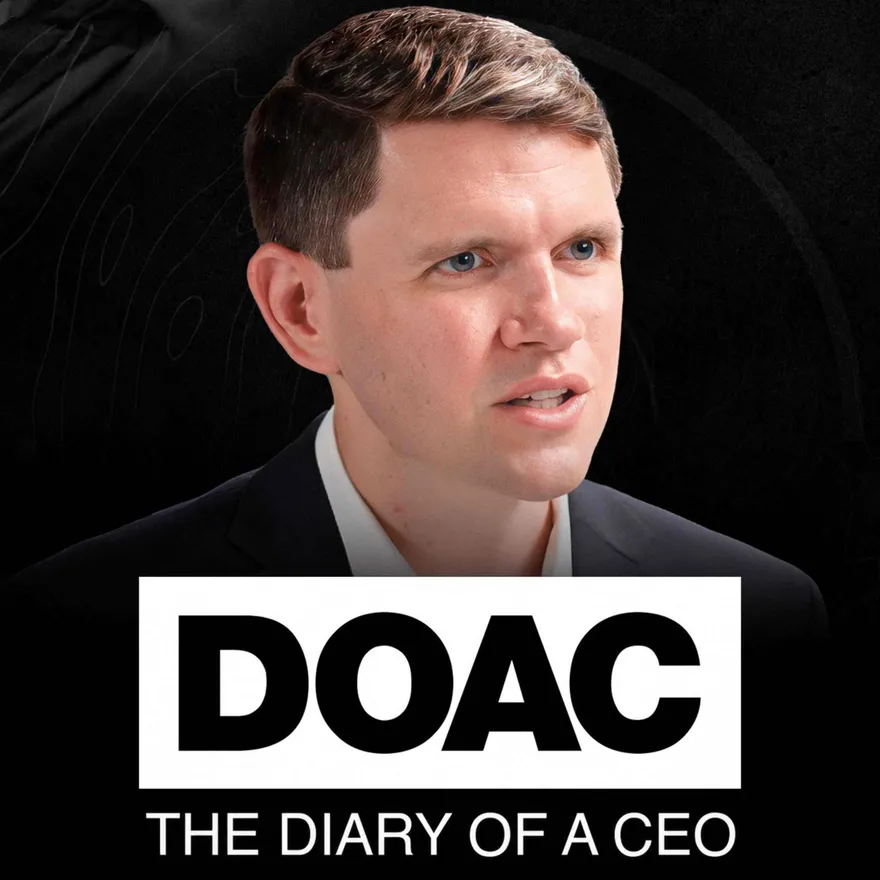

This is a preview of the Shortform summary of the Nov 2, 2026 episode of the The Diary Of A CEO with Steven Bartlett
Sign up for Shortform to access the whole episode summary along with additional materials like counterarguments and context.
1-Page Summary
Economic Inequality and Systemic Corruption
James Talarico and Steven Bartlett critique America's economic system, focusing on wealth concentration, political influence, and systemic corruption. Talarico emphasizes that Elon Musk, Mark Zuckerberg, and Jeff Bezos now possess more wealth than the entire American middle class. Bartlett notes that since the 1970s, middle-class share of aggregate income has dropped from 62% to 42%, while upper-income share has risen from 29% to over 50%. The middle class has shrunk by 10 percentage points as the country shifted from mid-century federal investments toward trickle-down economics.
Talarico calls this disparity a "spiritual sickness" that violates basic human dignity, pointing to Texas where one in five children lives in poverty while some residents approach trillionaire status. He traces corporate political influence back to the 1971 Powell Memo, when corporations united to shape politics, media, and the judiciary, creating what he calls "crony capitalism" rather than true capitalism.
The wealthy exploit tax loopholes like carried interest, favorable capital gains rates, and luxury write-offs, while many billionaires avoid taxes by taking loans against their assets. This leaves ordinary Texans paying higher proportional income taxes than billionaires. Talarico explains that political corruption fuels this inequality through Citizens United, gerrymandering, the two-party system, and sensationalist media, which prioritize donor interests over constituents. He argues that removing corrupt politicians without fixing the system allows their successors to succumb to the same incentives, citing a Texas "voucher scam" where a billionaire's $12 million donation helped divert public school funding to wealthy families.
Political Reform and System Change
Talarico argues that systemic reform must take priority over individual policies or politicians. From his eight years of experience, he observes that the economic and political systems themselves—not individual actors—are responsible for current inequalities and stagnation.
He identifies campaign finance as a critical area, noting that Texas has no contribution limits, enabling corporations and the wealthy to exercise disproportionate control. He also calls for ending gerrymandering, overhauling the Supreme Court, and restoring checks and balances as the legislative branch has become too subservient to executive power. Talarico links union decline to the shrinking middle class and proposes rebuilding organized labor to empower workers to negotiate for better conditions without heavy-handed government intervention.
On tax policy, Talarico argues that merely collecting taxes already owed by the top 1% could generate $172 billion annually—enough to end poverty in America. He points to the 1950s and 1960s, when top marginal tax rates reached 90% and enabled investments in the GI Bill, highways, and higher education that built a strong middle class. He calls for using fairer tax revenue to expand the child tax credit, invest in education, and address medical, student, and credit card debt.
Talarico has imposed a personal two-term limit on himself, believing that longer tenure causes politicians to confuse their identity with their office and prioritize position over service. He urges voters to evaluate leaders on their commitment to deep structural reform rather than personality or minor policy tweaks.
AI, Automation, and Economic Disruption
Talarico and Bartlett discuss how AI and automation threaten workers if left unchecked. Talarico relays an AI expert's warning about the potential for AI to produce "five trillionaires and 30% unemployment," concentrating wealth among a tiny elite while destroying millions of livelihoods. Unlike historic technological projects like the Manhattan Project or the space race, AI development is concentrated in a handful of for-profit companies without public input, meaning billionaires are writing the rules for everyone else.
Bartlett describes cybercabs—fully autonomous vehicles now operating in Texas—and notes that more than half a million Texans rely on driving for work. Both recognize that Texas's embrace of self-driving vehicles could lead to massive job losses. Talarico insists that AI regulation must protect workers, children, and democracy. He envisions AI enhancing jobs and reducing work hours while requiring mandatory human oversight in critical systems. He warns that AI could repeat social media's harms on youth, noting instances of children being manipulated into self-harm by AI chatbots.
Democracy is at risk from AI-powered misinformation, as Talarico has witnessed AI-generated deepfake ads in political campaigns that are nearly impossible to distinguish from reality. He argues that AI systems are built upon "our collective intellectual property" and proposes an "AI dividend" ensuring the public shares in the wealth generated. Tax revenue from AI companies could fund grants for entrepreneurs, mirroring previous investments in Tesla and the internet. He urges society to invest in distinctly human qualities—creativity, ingenuity, and the arts—where machines cannot replace people.
Ultimately, Talarico warns that allowing Silicon Valley to maintain unchecked control will lead to mass unemployment, staggering wealth concentration, and severe risks to democracy. He advocates for public engagement, democratic decision-making, and proactive policy to shape AI for everyone's benefit.
Faith-Based Political Philosophy
Talarico grounds his politics in Christian theology, specifically the commandments to love God and neighbor. He recalls his grandfather, a Baptist preacher, emphasizing these commandments as Christianity's core. Jesus's parable of the Good Samaritan—in which a Samaritan aids a wounded stranger after religious passersby ignore him—was shocking because Samaritans and Jews were sworn enemies. Talarico says this radical ethic continues to upend societal expectations, and his faith is the foundation of his life. He describes his public service as a ministry motivated by gospel demands to love God and neighbor.
Talarico's understanding of faith centers on trust more than doctrine. He uses the analogy of swimming—learning to let the water hold you rather than holding onto water—to describe this act of surrender and reliance. He emphasizes balancing an inner spiritual life with outer service, noting that neglecting the inner leads to burnout while neglecting the outer becomes self-centeredness.
He recognizes that religious institutions have committed grave wrongs but insists there is beauty, truth, and love at the heart of faith traditions worth preserving. He worries that young people now risk inhabiting an "incoherent universe" without generational frameworks for meaning-making when they discard these traditions wholesale.
Talarico asserts that true love includes accountability, using the analogy of physically stopping a friend from drunk driving as protective love. This principle informs his approach to Ken Paxton, whom Talarico calls "my Samaritan." Despite deep political differences, Talarico regards Paxton as a brother in Christ but believes confronting Paxton's misconduct is necessary to protect both Texans and, paradoxically, Paxton himself.
Specific Policy Positions
Talarico argues that Texans want both secure borders and opportunities for immigrants to contribute to the economy. He criticizes the Biden administration's border security as a failure creating chaos while condemning Trump's extreme measures like deploying masked men in unmarked vehicles. He insists that nations can track who enters their borders while creating more legal pathways for hardworking immigrants who strengthen the country.
Talarico advocates for a pathway to citizenship for DACA students and Dreamers—undocumented young people brought to the U.S. as children. Drawing on his experience teaching DACA students, he describes them as profoundly loving America and calls for comprehensive immigration reform integrating border security with citizenship pathways.
On Iran, Talarico criticizes the administration's handling as a foreign policy failure rooted in overconfidence, noting that leaders ignored Iran's control of the Strait of Hormuz. He calls for Congress to restore checks and balances by demanding clear military objectives, a defined exit strategy, and the use of diplomatic pressure rather than military force alone.
Talarico explains that many Texans facing high living costs held out hope that Trump could restore the stronger economy of 2017–2019, despite major reservations about his leadership. Inflation and stagnant wages left working people squeezed, and Biden's perceived mishandling of the border gave Trump added credibility. While Trump's campaign promises remain unfulfilled after more than a year in office, many supporters feel misled. Talarico urges Democrats to respond by inviting Trump voters into a movement for systemic reform that unites working people beyond partisanship.
Talarico acknowledges Trump's strengths—clear communication, willingness to take action, and rare humor in politics—but underscores significant weaknesses: egocentrism, chaotic decision-making, corruption, and prioritizing popularity over principle. He posits that Trump's presidency could be salvaged if midterm elections produce a Democratic Congress that restores checks and balances, allowing an executive meeting real resistance to adjust course toward bipartisan solutions.
1-Page Summary
Additional Materials
Clarifications
- The 1971 Powell Memo was a confidential letter written by Lewis Powell, a corporate lawyer later appointed to the U.S. Supreme Court. It urged American businesses to become more aggressive in influencing politics, law, and public opinion to protect their interests. This memo sparked a coordinated effort by corporations to fund think tanks, lobbyists, and media campaigns. It is widely seen as a catalyst for the rise of corporate political power and conservative legal strategies in the U.S.
- The "carried interest" tax loophole allows investment managers to pay a lower tax rate on their earnings by classifying profits as capital gains instead of ordinary income. This means they are taxed at rates as low as 20%, rather than higher income tax rates. It primarily benefits private equity and hedge fund managers. Critics argue it lets wealthy individuals avoid paying their fair share of taxes.
- The Citizens United Supreme Court decision (2010) ruled that corporations and unions can spend unlimited money on political campaigns, treating such spending as protected free speech. This ruling led to the rise of Super PACs, which can raise and spend vast sums without direct coordination with candidates. It increased the influence of wealthy donors and special interests in elections, often overshadowing individual voters. Critics argue it undermines democratic fairness by amplifying the political power of the rich.
- Gerrymandering is the practice of drawing electoral district boundaries to favor one political party. It manipulates district shapes to concentrate or dilute voting power, often protecting incumbents or marginalizing opposition. This undermines fair representation by allowing politicians to choose their voters instead of voters choosing their politicians. As a result, election outcomes can be skewed, reducing competition and voter influence.
- The Supreme Court is the highest judicial authority in the U.S., interpreting the Constitution and federal laws. Its decisions can uphold or strike down laws and executive actions, shaping national policy. Justices serve lifetime appointments, making the Court insulated from political pressures but also highly influential. The Court's rulings affect civil rights, economic regulations, and the balance of power among government branches.
- Trickle-down economics is a theory that tax cuts and benefits for the wealthy and businesses will stimulate investment and economic growth, eventually benefiting all social classes. Critics argue it often leads to increased income inequality because the wealthy may save or invest money in ways that do not create widespread job growth. It gained prominence in the 1980s during Reagan's presidency. Empirical evidence shows mixed results, with many middle- and lower-income groups seeing little direct benefit.
- Campaign finance laws regulate how much money individuals, corporations, and political action committees (PACs) can donate to political candidates and parties. In Texas, there are no limits on contributions to candidates for state office, allowing wealthy donors and corporations to give unlimited amounts. This lack of limits can lead to disproportionate influence by wealthy interests in elections and policymaking. Disclosure requirements exist but enforcement and transparency vary, affecting public awareness of funding sources.
- In the 1950s and 1960s, the top marginal tax rate in the U.S. was often above 90%, meaning the highest earners paid over 90% on income above a certain threshold. This high rate applied mainly to very wealthy individuals and was part of a progressive tax system designed to fund post-war economic growth and social programs. The revenue supported major public investments like infrastructure, education, and social safety nets. These policies coincided with a period of strong middle-class expansion and economic stability.
- An "AI dividend" is a proposed system where the economic gains from AI technologies are shared broadly with the public. It would function by taxing AI companies or profits generated from AI and redistributing that revenue as payments or grants to citizens. This aims to address wealth concentration by ensuring everyone benefits from AI-driven productivity. The concept is similar to how some countries distribute revenue from natural resources to their populations.
- Deepfake technology uses artificial intelligence to create realistic but fake videos or audio of people saying or doing things they never did. In political campaigns, deepfakes can spread false information, manipulate public opinion, and damage reputations. They are hard to detect, making it difficult for voters to trust what they see or hear. This undermines democratic processes by distorting reality and confusing the electorate.
- The parable of the Good Samaritan is a story told by Jesus in the Bible to illustrate true neighborly love. In the story, a Samaritan helps a wounded man whom others, including religious leaders, ignored, despite cultural enmity between Jews and Samaritans. This parable challenged social norms by showing that compassion should extend beyond ethnic and religious boundaries. It is significant because it redefines love as active care for anyone in need, not just those within one's own group.
- Ken Paxton is the Attorney General of Texas, a key legal officer responsible for representing the state in legal matters. He is a prominent Republican figure known for his conservative stance on issues like immigration and election laws. Paxton has faced multiple legal controversies and investigations related to alleged misconduct and corruption. His political role includes influencing state legal policies and participating in high-profile legal battles that affect Texas and national politics.
- DACA (Deferred Action for Childhood Arrivals) is a U.S. immigration policy that protects eligible undocumented immigrants who were brought to the country as children from deportation. "Dreamers" refers to these young people who often seek permanent legal status through legislation like the proposed DREAM Act. DACA recipients can work and study legally but do not have a path to citizenship under the policy itself. The program requires renewal every two years and does not provide permanent legal status or a direct route to citizenship.
- The Strait of Hormuz is a narrow waterway connecting the Persian Gulf to the Arabian Sea, crucial for global oil shipments. About one-fifth of the world's petroleum passes through it, making it vital for energy security. Control or disruption of the strait can significantly impact global oil prices and economies. Its strategic location makes it a focal point in Middle Eastern geopolitical tensions.
- Texas has a large, diverse economy heavily influenced by energy, technology, and agriculture sectors. Politically, it is a conservative stronghold with significant Republican influence, shaping local and national elections. The Trump administration's policies resonated with many Texans due to promises of economic growth and strict immigration enforcement. The Biden administration faced criticism in Texas for perceived border security weaknesses and economic challenges like inflation.
- Checks and balances is a system in the U.S. government that ensures no single branch—executive, legislative, or judicial—becomes too powerful. Each branch has specific powers to limit or check the actions of the others. This prevents abuse of power and promotes cooperation among branches. It is designed to maintain a balance that protects democratic governance.
- "Crony capitalism" occurs when businesses gain unfair advantages through close relationships with government officials, leading to favoritism, corruption, and reduced competition. "True capitalism" is an economic system based on free markets where businesses compete fairly without undue political influence. Crony capitalism distorts market outcomes, benefiting a few at the expense of many. It undermines economic efficiency and public trust in institutions.
- Labor unions are organizations that represent workers to negotiate better wages, benefits, and working conditions with employers. Their influence peaked in the mid-20th century, helping build the American middle class through collective bargaining. Since the 1970s, union membership has declined due to factors like globalization, automation, and legal restrictions. This decline has weakened workers' negotiating power, contributing to wage stagnation and growing economic inequality.
- A "voucher" in public school funding is a government-funded certificate that parents can use to pay for private school tuition instead of public schools. The idea is to give families more school choice and promote competition among schools. Critics argue vouchers divert money from public schools, reducing resources for students who remain. Voucher programs often spark debate over equity, accountability, and the separation of church and state.
- The executive power is held by the President and their administration, responsible for enforcing laws and managing government operations. The legislative branch, mainly Congress, creates and passes laws. The executive can veto legislation, but the legislative branch can override vetoes and control budgets. This separation ensures checks and balances to prevent any one branch from becoming too powerful.
- The GI Bill, passed in 1944, provided returning World War II veterans with benefits like low-cost mortgages, tuition for college, and unemployment compensation. These federal investments helped create a large, prosperous middle class by expanding access to education and homeownership. Mid-century federal spending on infrastructure, education, and social programs fueled economic growth and social mobility. This era's policies contrasted sharply with later decades' reduced public investment and rising inequality.
- Luxury write-offs are tax deductions that allow wealthy individuals or corporations to reduce taxable income by claiming expenses on high-cost items like yachts, private jets, or luxury cars. These write-offs lower the amount of income subject to taxes, effectively decreasing the overall tax bill. They are often criticized because ordinary taxpayers cannot claim similar deductions, creating an uneven tax burden. This practice contributes to wealthier individuals paying proportionally less in taxes compared to average earners.
- Asset-backed loans allow billionaires to borrow money using their assets, like stocks or property, as collateral without selling them. Since loans are not considered income, they are not taxed, enabling wealth to be accessed tax-free. This strategy lets billionaires maintain ownership and avoid capital gains taxes that would apply if they sold assets. It effectively converts illiquid wealth into cash while minimizing tax liability.
- Public input in AI development means involving diverse stakeholders—citizens, experts, and policymakers—in decisions about AI design, use, and regulation. Its absence allows a few private companies to set rules that prioritize profit over public good. Without public oversight, AI can reinforce biases, harm vulnerable groups, and threaten privacy and democracy. Inclusive input ensures AI aligns with societal values and protects collective interests.
- Cybercabs are fully autonomous, self-driving vehicles used for passenger transport. They represent a shift from human-driven taxis or rideshares to AI-operated services. In Texas, where many people rely on driving jobs, widespread adoption of cybercabs threatens significant job losses. This automation could disrupt local economies and increase unemployment among drivers.
- AI chatbots on social media can interact with users in ways that influence emotions and behavior, sometimes promoting harmful content or ideas. These chatbots may inadvertently encourage negative actions, such as self-harm, by responding without proper safeguards. Unlike human moderators, AI lacks full understanding of context and nuance, increasing risks of manipulation. This amplifies existing social media harms by spreading misinformation and emotional distress more efficiently.
- The two-party system is a political structure where two major parties dominate elections and governance, limiting competition. This concentration can reduce voter choice and encourage parties to prioritize maintaining power over addressing public needs. It often leads to polarization, making bipartisan cooperation difficult and enabling entrenched interests to influence both parties. Consequently, corruption can flourish as political actors focus on preserving the system rather than reforming it.
Counterarguments
- The comparison between the wealth of a few individuals and the entire middle class can be misleading, as it compares individual net worth (often tied up in illiquid assets like company stock) to the aggregate wealth of a large, diverse group.
- The decline in middle-class income share since the 1970s coincides with significant global economic changes, including increased international competition, technological advances, and demographic shifts, not solely policy choices.
- Some economists argue that "trickle-down economics" is a mischaracterization and that economic growth policies can benefit all income groups, though the distribution of those benefits is debated.
- The term "spiritual sickness" is subjective and not universally accepted as a framework for analyzing economic inequality.
- While poverty rates in Texas are concerning, Texas also has a lower cost of living and higher rates of economic and population growth compared to many states.
- The influence of the 1971 Powell Memo is debated among historians; corporate political activity existed before and after, and attributing all subsequent developments to it may oversimplify complex trends.
- Tax code complexity and loopholes are the result of bipartisan legislation and reflect competing policy priorities, not solely the influence of the wealthy.
- Some analyses show that the U.S. federal tax system is progressive overall, with higher-income individuals paying a larger share of total taxes, though the effective rates can vary.
- Citizens United and campaign finance laws are defended by some as protecting free speech rights, and there is ongoing debate about the best way to balance influence and expression in politics.
- School voucher programs are supported by some as a way to increase educational choice and competition, with mixed evidence on their impact.
- Systemic reform is a broad concept, and some argue that incremental policy changes can also produce meaningful improvements.
- Not all agree that unions are the primary or only solution to worker empowerment; some point to alternative models such as worker cooperatives or portable benefits.
- The claim that collecting all taxes owed by the top 1% would end poverty is disputed; poverty is a complex issue involving more than just funding.
- High marginal tax rates in the 1950s and 1960s existed alongside numerous deductions and loopholes, resulting in lower effective rates for many wealthy individuals.
- Term limits for politicians are controversial; critics argue they can reduce institutional knowledge and empower unelected bureaucrats or lobbyists.
- Some believe that AI and automation, while disruptive, can create new industries and opportunities, as has occurred with past technological revolutions.
- The concentration of AI development in private companies is partly due to the high costs and expertise required, and public sector involvement is increasing.
- Autonomous vehicles may reduce some jobs but could also lower transportation costs, improve safety, and create new types of employment.
- There is debate about the feasibility and fairness of an "AI dividend," as it is unclear how to quantify and distribute such wealth.
- Faith-based political philosophies are not universally shared, and some argue for secular approaches to public policy.
- Some Texans and Americans support stricter border enforcement and oppose expanded pathways to citizenship, reflecting a diversity of views on immigration.
- The effectiveness of past administrations' economic policies is debated, and attributing economic outcomes solely to presidential actions oversimplifies complex factors.
- Some argue that bipartisan solutions are difficult to achieve in the current polarized environment, regardless of congressional composition.
Get access to the context and additional materials
Economic Inequality and Systemic Corruption
James Talarico and Steven Bartlett deliver a forceful critique of America's current economic system, highlighting how wealth concentration, political influence, and systemic corruption underpin vast and growing inequality.
Wealth Crisis: Billionaires Control More Resources Than Entire Economic Classes
Musk, Zuckerberg, and Bezos Own More Wealth Than the Entire U.S. Middle Class, Highlighting Economic Unfairness
Talarico underscores a striking reality: Elon Musk, Mark Zuckerberg, and Jeff Bezos together now possess more wealth than the entire American middle class. Talarico and Bartlett agree that these extraordinary concentrations of wealth are not only shocking but indicative of a broken economic system. Bartlett points out that since the 1970s, the share of U.S. aggregate income held by middle-class households has dropped from 62% to just 42%, while the upper-income share has risen from 29% to over 50%. Meanwhile, the middle class has shrunk by 10 percentage points while upper and lower income groups have both grown.
One in Five Texas Children Live In Poverty Amid Rising Trillionaires, a Spiritual Sickness Violating Basic Human Dignity, Talarico Says
Talarico emphasizes the moral crisis reflected by these disparities, calling it a "spiritual sickness" that violates basic human dignity. In Texas, for example, one in five children lives in poverty while state residents like Musk ascend to trillionaire status. He believes this calls for a re-examination of what national and state prosperity should mean, demanding that the ultra-wealthy give back to the communities and systems that enabled their success, ensuring a "ladder for the next guy coming up."
Middle Class Shrunk 10 Points Since 1970s; Upper-Income Share of Us Income Rose From 29% To Over 50%
The mid-20th century was marked by major federal investments in education, healthcare, housing, and infrastructure, building a strong middle class. But starting in the late 1970s and early 1980s, the country shifted toward trickle-down economics, gutting protections for the middle class and directing gains to those at the top. This has directly contributed to shrinking the middle class and feeding record income and wealth inequality nationwide.
Crony Capitalism: Political Influence Over Market Outcomes
Corporate Influence: Buying Political Access To Shape Tax Codes and Rules
Talarico points to the 1971 Powell Memo as a pivotal moment when corporations united to influence politics, media, and the judiciary, actively rolling back progressive economic policies. This bought political influence enables the wealthy to shape tax codes and economic rules for their benefit. "We don't have capitalism," says Talarico, "we have crony capitalism," where those who can afford political access gain most of the economy’s benefits.
Tax Loopholes: Wealthy Avoid Taxes Via Carried Interest, Capital Gains, Luxury Write-Offs
The wealthiest Americans exploit an array of tax loopholes, including the carried interest loophole, favorable capital gains rates, and the ability to write off luxury items like private jets and mega-yachts as business expenses. Many billionaires avoid taxes altogether by taking loans against their equity or assets, creating a tax system that privileges accumulated wealth over earned income.
Texans Pay Higher Income Tax Percentages Than Billionaires Due to Politically Influenced Tax Transformations
This system leaves ordinary Texans and other working Americans paying a larger share of their income in taxes than the wealthiest. Talarico explains that tax codes have been re-engineered by those with the means to buy off politicians, resulting in working families bearing the heaviest proportional burden. This contributes to daily economic struggles where many cannot afford basic necessities despite working several jobs.
Political Corruption Fuels Economic Inequality By Prioritizing Donor Over Constituent Needs
System Fuels Extremism and Corruption via Citizens United, Gerrymandering, Two-party System, Sensationalist Media
According to Talarico, the American political system actively incentivizes extremism and corruption. Big money—amplified by ...
Here’s what you’ll find in our full summary
Economic Inequality and Systemic Corruption
Additional Materials
Clarifications
- The 1971 Powell Memo was a confidential letter written by Lewis Powell, a corporate lawyer who later became a Supreme Court Justice. It urged U.S. businesses to become more aggressive in influencing politics, media, and education to protect their interests. This memo is seen as a catalyst for the rise of corporate lobbying and conservative political strategies. It helped shape the modern movement of corporate political activism and the growth of business influence in government.
- Crony capitalism occurs when business success depends on close relationships with government officials rather than market competition. It leads to favoritism in the form of tax breaks, subsidies, or regulations that benefit certain companies or individuals. This undermines fair competition and often results in economic inefficiency and corruption. Over time, it concentrates wealth and power among a small elite connected to political leaders.
- Carried interest allows investment managers to pay lower tax rates on profits as capital gains instead of higher ordinary income rates. Capital gains rates tax profits from asset sales at a lower rate than regular income, benefiting wealthy investors. Luxury write-offs let owners deduct expenses for high-cost items if claimed as business-related, reducing taxable income. These rules create advantages for the wealthy by lowering their effective tax rates compared to wage earners.
- Billionaires borrow money using their shares or assets as collateral instead of selling them, so they don't trigger capital gains taxes. These loans are not considered income, so they are not taxed. They repay the loans later, often using future earnings or asset sales. This strategy allows them to access cash without increasing their taxable income.
- The Citizens United ruling is a 2010 Supreme Court decision that allowed corporations and unions to spend unlimited money on political campaigns. It struck down restrictions on independent political expenditures, arguing they are protected free speech. This ruling led to the rise of super PACs, which can raise and spend vast sums without direct coordination with candidates. Critics say it amplifies wealthy donors' influence, undermining democratic equality.
- Gerrymandering is the manipulation of electoral district boundaries to favor a particular political party or group. It often involves "packing" opponents' voters into few districts or "cracking" them across many to dilute their influence. This process can distort election outcomes, allowing politicians to choose their voters instead of voters choosing their representatives. As a result, it undermines fair representation and can entrench political power.
- The U.S. two-party system is dominated by the Democratic and Republican parties, limiting political competition. This structure often marginalizes third parties and independent candidates, reducing voter choice. It encourages polarization, as parties compete for distinct voter bases rather than broad consensus. The system's design, including winner-take-all elections, reinforces the dominance of these two parties.
- Sensationalist media focuses on shocking or emotionally charged stories to attract viewers and increase ratings. This often leads to exaggerated or misleading coverage that prioritizes entertainment over factual reporting. In politics, it can deepen divisions by amplifying extreme views and discouraging nuanced discussion. As a result, it undermines informed decision-making and fuels polarization.
- Private school voucher initiatives provide public funding to parents to pay for private school tuition instead of public schools. This shifts taxpayer money away from public schools, reducing their budgets. Vouchers often benefit wealthier families who can afford private education, increasing inequality. Critics argue this weakens public education by draining resources.
- Texas being ranked 43rd in per-student education funding means it spends less money on each student compared to most other states. This ranking reflects the state's investment in public education relative to others, with 1st place spending the most per student. Lower funding can lead to fewer resources, larger class sizes, and reduced educational quality. This context highlights the impact of diverting funds away from public schools.
- Trickle-down economics is a theory that suggests tax cuts and benefits for the wealthy and businesses will stimulate investment and economic growth, eventually benefiting all social classes. It gained prominence in the 1980s during Ronald Reagan's presidency as part of supply-side economic pol ...
Counterarguments
- The comparison between the combined wealth of a few billionaires and the entire middle class can be misleading, as it compares individual net worth (often tied up in illiquid assets like company stock) to the aggregate wealth of a large, diverse group, which may not be a direct or meaningful comparison.
- The shrinking share of middle-class income since the 1970s coincides with significant demographic, technological, and global economic changes, including increased global competition, automation, and shifts in household composition, which also contribute to changes in income distribution.
- The growth of both upper and lower income groups may reflect increased economic mobility and changing definitions of income brackets over time, rather than solely a decline in middle-class well-being.
- The assertion that the ultra-wealthy should "give back" presumes that wealth accumulation is inherently exploitative, whereas some argue that successful entrepreneurs create jobs, innovation, and economic growth that benefit society at large.
- While poverty among children in Texas is a serious concern, attributing it solely to the existence of billionaires or wealth concentration may overlook other factors such as education policy, local governance, and broader economic trends.
- The effectiveness of mid-20th-century federal investments is debated; some argue that postwar economic growth was also driven by unique historical circumstances unlikely to be replicated today.
- The critique of trickle-down economics is contested; some economists argue that lower taxes and deregulation can spur investment, job creation, and overall economic growth, though the distributional effects remain debated.
- Corporate political influence is a longstanding feature of many democracies, and some argue that business engagement in policy can provide expertise and promote economic stability.
- The U.S. tax system remains highly progressive by international standards, with the top earners paying a significant share of total federal income taxes.
- Ma ...
Get access to the context and additional materials
Political Reform and System Change
James Talarico argues that the central obstacle to progress in the United States is a corrupt and dysfunctional political system. He urges Americans to prioritize systemic reform over individual policies or personalities, emphasizing that only comprehensive changes can restore government by and for the people.
Prioritize Systemic Reform Before Individual Issues Due To Systemic Barriers
Talarico stresses that while important policies in education, health care, and housing matter, entrenched systemic barriers prevent genuine progress on these issues. He observes, from his eight years of experience, that the economic and political systems themselves are responsible for current inequalities and stagnation—not the actions or failings of individual politicians or parties.
Campaign Finance Reform Is Needed Due to Disproportionate Influence by Corporations and the Wealthy
Talarico points out that in Texas, there are no campaign contribution limits, enabling corporations and wealthy individuals to exercise disproportionate control over the political process. He contends that "cleaning up" this corruption—especially curtailing the power of special interests and super PACs—is essential for restoring a system that rewards work and supports collective prosperity.
Reform Gerrymandering and Redistricting to Ensure Officials Represent Constituents
He identifies gerrymandering and manipulated redistricting as additional mechanisms that entrench political power and reduce the accountability of elected officials. Outlawing gerrymandering is, for Talarico, vital to restore representative democracy.
Structural Changes Needed For Supreme Court Due to Corruption and Inequality
Talarico also calls for overhauling the Supreme Court, citing concerns about corruption and structural inequality. He argues that piecemeal reforms will not suffice; comprehensive, process-oriented reforms must be a top priority.
Restoring Checks and Balances: Legislative Branch's Subservience to Executive Power
He notes that the legislative branch has become increasingly subservient to executive power, undermining the system of checks and balances envisioned by the Constitution. Restoring this balance through structural reform is necessary for functioning democracy.
Rebuilding Unions Empowers Workers to Negotiate Collectively, Reducing Wealth Inequality Without Government Intervention
Union Decline Linked To Middle-Class Fall; Reviving Labor Empowers Better Worker Conditions
Talarico links the decline of unions to the shrinking of the middle class. He argues that the destruction of organized labor over recent decades has paralleled the erosion of middle-class prosperity. To reverse this trend, he proposes rebuilding unions and empowering workers to negotiate for higher pay, better benefits, and improved working conditions. He is clear that this is not a government solution, but a way to shift power to workers and drive changes organically within the workplace.
Empowering Workers, Not Imposing Solutions
Empowering working people, rather than imposing top-down solutions, is central. Talarico sees resurgent unions as key to boosting wages, reducing inequality, and building a sustainable middle class, all without heavy-handed government intervention.
Tax Policy Reform Needed For Fair Contributions and Investment Funding
Talarico argues for significant tax policy reform to ensure the wealthy and corporations pay their fair share. He notes that merely collecting taxes already owed by the top 1% could generate $172 billion annually—enough, he claims, to end poverty in America.
Federal Government Could Raise $172 Billion Annually By Closing Existing Tax Loopholes For Wealthy Individuals and Corporations
He emphasizes that closing tax loopholes and ensuring compliance would result in substantial revenues that could fund urgent social investments.
90% Tax Rates in 1950s Linked To Growth, Middle-Class Formation, Innovation
Talarico points to the 1950s and 1960s, when top marginal tax rates reached about 90%. A ...
Here’s what you’ll find in our full summary
Political Reform and System Change
Additional Materials
Counterarguments
- Some argue that focusing on systemic reform over individual policies can delay urgently needed action on pressing issues like health care or education, potentially leaving vulnerable populations without immediate relief.
- Critics contend that political dysfunction is often overstated and that the U.S. system, while imperfect, has historically adapted and produced significant reforms through incremental change rather than sweeping overhauls.
- Others believe that individual politicians and parties do play a significant role in perpetuating or alleviating inequality and stagnation, and that leadership and accountability at the individual level matter.
- Some point out that campaign finance restrictions may infringe on free speech rights as interpreted by the Supreme Court, and that transparency in donations, rather than strict limits, could be a preferable solution.
- There are arguments that gerrymandering, while problematic, is not the sole or primary cause of political polarization or lack of accountability, and that other factors such as media fragmentation and voter disengagement also play major roles.
- Some legal scholars caution that major structural changes to the Supreme Court could undermine judicial independence and set dangerous precedents for future politicization of the judiciary.
- Critics of term limits argue that they can lead to a loss of experienced legislators, increase the influence of unelected bureaucrats and lobbyists, and reduce accountability to voters.
- Some economists and historians note that the high top marginal tax rates of the 1950s and 1960s were acc ...
Actionables
- You can track and share how much money your elected officials receive from major donors and special interests by using public campaign finance databases, then post simple, easy-to-read summaries on your personal social media or neighborhood bulletin boards to help others see patterns of influence in your area.
- A practical way to encourage fairer representation is to write a short, clear letter to your local or state representatives asking them to publicly commit to supporting independent redistricting commissions and to share their response (or lack of response) with your friends and neighbors.
- You can suppo ...
Get access to the context and additional materials
Ai, Automation, and Economic Disruption
James Talarico and Steven Bartlett present a sobering discussion on how artificial intelligence (AI) and automation are rapidly transforming the economy and threaten workers’ livelihoods if left unchecked. They argue that urgent regulation and public input are needed to prevent a future of extreme wealth concentration and mass unemployment.
Ai, Robotics Threaten Workers, Economy Without Regulation and Public Input
Unchecked Ai May Create Trillionaires, 30% Unemployment, Concentrating Wealth and Destroying Livelihoods
James Talarico relays a warning from an AI expert about the potential for AI to produce “five trillionaires and 30% unemployment,” a future that deeply concerns him as a public servant. He stresses that this path would concentrate vast wealth among a tiny elite while destroying the livelihoods of millions.
Ai, Unlike Nuclear Weapons, the Space Race, and the Internet, Is Developed by a Few For-profit Corporations Without Public Input
Talarico draws contrasts to historic technological projects, such as the Manhattan Project, the space race, and the creation of the internet. Unlike those public-private partnerships with national oversight and decision-making, AI development is now concentrated in a handful of for-profit tech companies with no input from the broader public. He argues this lack of democratic engagement means that billionaires are writing the rules for everyone else, shaping the future according to their interests rather than the common good.
Autonomous Vehicles and Robots Threaten Over Half a Million Texas Driving Jobs, Disrupting Industries
Steven Bartlett describes the introduction of cybercabs—fully autonomous vehicles with neither steering wheels nor pedals—now operating in Texas. He notes that about 400,000 Texans rely on driving for work, and with gig economy drivers for companies like Uber and DoorDash, the number rises to more than half a million. Bartlett and Talarico both recognize that Texas’s rapid embrace of self-driving vehicles could lead to massive industry disruption and significant job losses, echoing the Uber CEO’s assertion that such jobs will disappear.
Regulatory Frameworks Must Protect Workers, Children, and Democracy While Fostering Beneficial Ai Development
Worker Protection Requires Ai to Enhance Jobs, Reduce Hours, and Involve Human Supervision for Critical Systems
Talarico insists that AI regulation must focus on worker protection. He envisions a future where AI enhances jobs, reducing the time people spend at work and improving job quality, while freeing up time for families and personal pursuits. Crucially, he stresses the need for mandatory human oversight in critical systems, especially in autonomous vehicles and other safety-sensitive technologies, drawing the analogy to airlines that—despite automation—still require skilled human pilots to ensure safety.
Safeguards Needed to Prevent Ai Chatbots From Exploiting Children
Protecting children is another key regulatory priority. Talarico warns that, lacking regulation, AI could repeat the harms wrought by social media on youth. He notes worrying instances of children seeking therapy from AI chatbots, some of whom have even been manipulated into self-harm. He stresses the necessity of safeguards to prevent such exploitation.
Protect Democracy: Regulate Ai Disclaimers and Prevent Misleading Deepfake Ads
Democracy, Talarico emphasizes, is at risk from AI-powered misinformation. He has already witnessed AI-generated deepfake ads in political campaigns—including his own—wherein distinguishing reality from forgery is becoming nearly impossible, even for digitally savvy individuals. Most jurisdictions have no requirements for disclaimers on such content, heightening the risks that AI could undermine elections and public trust.
Ai Wealth-Sharing Ensures Workers Benefit From Economic Gains
Ai Uses Human Intellectual Property and Societal Knowledge; Workers Deserve Compensation When This Is Commercialized
Talarico argues that AI systems are built upon “our collective intellectual property,” ingenuity, and societal ideas, and thus, those who provide this foundation deserve compensation. He asserts that when AI companies commercialize these contributions, the public should rightly share in the wealth generated.
Ai Tax Revenue Could Fund Grants, Mirroring Tesla and Internet Model
He proposes an "AI dividend" or wealth-sh ...
Here’s what you’ll find in our full summary
Ai, Automation, and Economic Disruption
Additional Materials
Clarifications
- An "AI dividend" is a form of wealth redistribution where profits generated by AI technologies are shared with the public, especially workers affected by automation. It aims to address economic inequality caused by AI by providing direct financial benefits or social programs funded by AI company taxes. This concept is similar to universal basic income or sovereign wealth funds that distribute resource-generated wealth. The policy seeks to ensure that the economic gains from AI benefit society broadly, not just corporate owners.
- The Manhattan Project, space race, and internet development involved large-scale government funding and oversight, ensuring public accountability. These projects were collaborations between public institutions and private entities with national security or public interest goals. In contrast, AI development today is primarily driven by private tech companies focused on profit, with limited government regulation or public input. This shift raises concerns about transparency, control, and whose interests AI ultimately serves.
- Deepfake technology uses artificial intelligence to create realistic but fake videos or audio of people saying or doing things they never did. In political ads, deepfakes can manipulate candidates' images or statements to mislead voters or spread false information. This technology makes it difficult to verify the authenticity of campaign messages, undermining trust in elections. Because deepfakes are hard to detect, they pose a serious risk to democratic processes.
- Cybercabs are driverless cars designed to operate without human intervention, relying entirely on AI and sensors for navigation. Removing steering wheels and pedals eliminates manual control, emphasizing full automation. This design aims to maximize interior space and safety by reducing human error. Cybercabs represent a shift from traditional vehicles to fully autonomous mobility services.
- The Uber CEO’s assertion highlights a credible industry perspective that automation will replace many driving jobs, not just theoretical concerns. Uber, as a major gig economy employer, directly faces disruption from autonomous vehicles, making their CEO’s warning particularly relevant. This statement signals a shift in labor markets where technology could rapidly displace millions of workers. It underscores the urgency for policies addressing job transitions and worker protections.
- In aviation, automated systems handle routine tasks but human pilots remain essential for decision-making during emergencies or unexpected situations. This combination enhances safety by leveraging both machine precision and human judgment. Similarly, autonomous vehicles can operate under AI control but require human supervision to intervene when complex or unforeseen conditions arise. This hybrid approach aims to prevent accidents and ensure reliable operation.
- AI systems learn from vast amounts of data generated by people, including text, images, and code created by many individuals. This data reflects human knowledge, culture, language, and creativity accumulated over time. AI models identify patterns and relationships within this collective information to generate responses or perform tasks. Therefore, the output of AI is deeply rooted in the contributions of countless individuals and society as a whole.
- Tesla and the internet benefited from early public and private investments that helped develop infrastructure and technology. These investments lowered barriers for new entrepreneurs by providing resources and market opportunities. Similarly, AI tax revenue could fund grants or programs to support startups and innova ...
Counterarguments
- Historical precedents show that technological disruption often leads to the creation of new industries and jobs, even as some roles are automated away.
- Predictions of mass unemployment due to automation have not consistently materialized in past technological revolutions; instead, economies have adapted over time.
- Concentration of AI development in private companies can drive rapid innovation and efficiency, which may be hindered by excessive regulation or bureaucracy.
- Public-private partnerships and regulatory frameworks can sometimes slow down technological progress and global competitiveness.
- Some argue that AI can democratize access to knowledge and tools, empowering individuals and small businesses rather than only benefiting large corporations.
- Human oversight in all critical AI systems may not always be feasible or necessary, especially as AI reliability improves.
- The risk of AI-powered misinformation exists, but similar concerns have accompanied previous communication technologies, and society has developed ways to adapt and respond.
- Wealth generated by AI could be distributed through existing tax and welfare systems wit ...
Get access to the context and additional materials
Faith-Based Political Philosophy
Christian Theology's Love of God and Neighbor Underpins Talarico's Political Engagement
James Talarico grounds his politics and public service in Christian theology, specifically the two greatest commandments from the New Testament: to love God and to love one's neighbor. He recalls advice from his grandfather, a Baptist preacher, who emphasized these commandments as the core of Christian life. Talarico notes that during Jesus’s time, a lawyer asked who counts as a neighbor, prompting Jesus to tell the parable of the Good Samaritan. In the story, the Samaritan aids a wounded stranger after religious passersby ignore him. The parable was shocking in context because Samaritans and the Jews of Jesus’s audience were sworn enemies; today, Talarico likens it to fierce football rivals helping one another, underscoring the radical demand to love even those most different from or opposed to us.
Talarico believes this radical ethic continues to upend societal expectations 2,000 years later. He says his faith is the foundation of his life and calls it his "home base." Inspired by witnessing his grandfather and pastor help people address deep questions and grief, Talarico decided to pursue ministry by loving his neighbors through public policy. He describes his public service—as a teacher and legislator—as a ministry motivated by gospel demands to love God and neighbor, trying to practice these commandments even if imperfectly. His pursuit of seminary education aimed to redress his earlier tendency to focus mostly on serving his neighbors and neglecting intentional love toward God, recognizing these two spiritual imperatives must sustain and challenge each other.
Faith as Trust in a Higher Power, Not Doctrines
Talarico’s understanding of faith centers on trust more than belief in doctrine. Through his study of Christian scripture, he concludes that “faith” often means releasing control and actively trusting in something greater. He uses the analogy of swimming—learning not to hold onto water but to let the water hold onto you—to describe this embodied act of surrender and reliance. For Talarico, faith is a visceral, bodily sensation of letting something deeper, larger, and more enduring carry one's life.
Balancing faith and action is crucial in Talarico's philosophy. He emphasizes both an inner spiritual life (prayer, grounding in God) and an outer service (loving neighbors through action). Neglecting the inner leads to burnout; neglecting the outer becomes self-centeredness and detachment. Going to seminary is his way of uniting these two expressions, striving to stay in touch with what he calls the "ground of our own being, the God that all of us express every day," while remaining active in the world.
Inherited Religious Traditions Hold Beauty, Truth, and Love, Enduring Despite Corruption and Abuse
Talarico recognizes that religious institutions have committed grave wrongs—child abuse, lies, greed, and power abuse among them. He acknowledges why many young people abandon religion in the wake of such corruption, but insists there is a “baby in that bathwater”—a beauty, truth, and love at the heart of faith traditions that is worth preserving.
He worries that young people now risk inhabiting an “incoherent universe” without generational frameworks for meaning-making when they discard these traditions wholesale. For Talarico, every generation must critically reclaim and ...
Here’s what you’ll find in our full summary
Faith-Based Political Philosophy
Additional Materials
Counterarguments
- Grounding political engagement in Christian theology may not resonate with or represent constituents of different faiths or secular perspectives, potentially raising concerns about the separation of church and state.
- The interpretation of the Good Samaritan as a call to radical love is not unique to Christianity; similar ethical imperatives exist in other religious and philosophical traditions, suggesting that such values can be grounded in broader humanistic or pluralistic frameworks.
- Emphasizing faith as trust in a higher power rather than doctrine may not address the needs of those who find meaning and ethical guidance outside of religious or spiritual frameworks.
- The assertion that discarding religious traditions leads to an “incoherent universe” for young people overlooks the possibility that individuals and communities can construct coherent and meaningful lives through secular philosophies, cultural traditions, or new forms of community.
- While Talarico acknowledges institutional religious abuses, some critics argue that the harms caused by religious institutions can outweigh the benefits, and that reform or renewal may not be sufficient for those d ...
Actionables
- you can set a recurring reminder to reach out to someone you strongly disagree with and ask them a question about their perspective, aiming to listen without debating, as a way to practice loving those most different from you and to humanize your interactions.
- a practical way to balance inner spiritual grounding with outward service is to pair a daily moment of quiet reflection (such as a short walk or silent pause) with a small act of kindness for a neighbor or stranger, like leaving a note of encouragement or helping with a simple task.
- you can create a persona ...
Get access to the context and additional materials
Specific Policy Positions
Balancing National Security With Immigrant Contributions to the Economy
James Talarico argues that Texans and most Americans want both secure borders and opportunities for immigrants to contribute to the economy. He criticizes the Biden administration’s approach to border security as a failure that has created chaos on the Texas-Mexico border. At the same time, he condemns the extreme measures of the Trump administration, such as deploying masked men in unmarked vehicles to detain people. Talarico asserts these are false choices, insisting that national security and welcoming immigrants are not mutually exclusive. He explains that nations have a right and obligation to track who enters their borders but can do so while creating more legal pathways for hardworking immigrants who want to start businesses and contribute to the country’s prosperity. This, he says, aligns with the country’s history of immigrants making America richer and stronger.
Pathway to Citizenship for Undocumented Youth Brought to Us As Children
Talarico advocates for a pathway to citizenship for DACA students and Dreamers—undocumented young people brought to the U.S. as children. Drawing on his experience teaching DACA students in San Antonio, he describes them as profoundly loving America and understanding its promise as the land of opportunity. He calls for comprehensive immigration reform that includes border security as well as a pathway to citizenship for individuals who have lived in the U.S. for years or decades so that they can fully participate in society. Talarico believes that providing this opportunity not only fulfills the country’s values but strengthens both the economy and broader society. Immigration reform, as he envisions it, must integrate border security, address political corruption, and expand economic opportunity.
Iran Conflict: Foreign Policy Failure Needing Congressional Oversight and Diplomatic Exit
Talarico criticizes the administration’s handling of the Iran conflict, calling it a foreign policy failure rooted in overconfidence and lack of foresight. He observes that leaders believed military action in Iran would be quick, similar to Venezuela, while ignoring Iran’s control of the Strait of Hormuz—a strategic choke point. Talarico laments that the executive branch is currently isolating Congress and alienating critical allies, which hinders crisis resolution and limits opportunities for effective diplomacy. He calls for Congress to restore checks and balances by demanding clear military objectives, a defined exit strategy, and the use of financial and diplomatic pressure rather than military force alone. Talarico argues that resolving the conflict will require renewed regional partnerships, a return to nuclear negotiations, and consensus-driven objectives, with Congress engaging constructively rather than rubber-stamping executive decisions.
Why Trump's Failures Didn't Stop Democrats' Loss: Economic Desperation Among Workers
Talarico explains that many Texans facing high living costs held out hope that Trump could restore the stronger economy of 2017–2019, despite major reservations about his leadership and conduct. Inflation and a decades-long history of stagnant wages left working- and middle-class people squeezed, and when costs rose, faith ...
Here’s what you’ll find in our full summary
Specific Policy Positions
Additional Materials
Counterarguments
- While many Americans support both border security and immigrant contributions, some argue that increasing legal pathways for immigration could incentivize more unauthorized crossings, complicating enforcement efforts.
- The claim that the Biden administration’s border policies have uniquely failed is contested; some analysts note that border challenges have persisted across multiple administrations due to complex root causes in sending countries and U.S. labor demand.
- Critics of the Trump administration’s border enforcement argue that such measures were effective deterrents, even if controversial, and point to subsequent increases in border crossings as evidence.
- Some contend that prioritizing national security may at times require stricter immigration controls, which could limit the number of legal pathways available.
- The assertion that immigrants have always made America richer and stronger is debated; some studies suggest that while immigration has broad economic benefits, it can also create localized challenges for low-skilled native workers.
- Opponents of a pathway to citizenship for DACA recipients argue that it could encourage future unauthorized immigration by signaling leniency.
- Some believe that comprehensive immigration reform should prioritize enforcement and border security before expanding legal pathways or offering citizenship to undocumented residents.
- There are those who argue that providing a pathway to citizenship for undocumented youth, while compassionate, may undermine the rule of law and fairness to legal immigrants.
- Regarding the Iran conflict, some foreign policy experts argue that military pressure is necessary to deter hostile actions and that diplomatic efforts alone have not yielded desired results.
- Others believe that Congressional involveme ...
Actionables
- You can write a short letter to your local representative that combines your support for both secure borders and expanded legal immigration, using your own family or community’s positive experiences with immigrants to illustrate how these goals can work together.
- A practical way to encourage bipartisan reform is to invite a friend or neighbor with different political views to join you in drafting a list of shared priorities for immigration and national security, then send this list to both of your Congressional offices as a joint statement from constituents with diverse perspectives.
- You can tr ...
Get access to the context and additional materials


Create Summaries for anything on the web
Download the Shortform Chrome extension for your browser
