

Is America's System Rigged To Keep You Poor? Texas Senate Candidate James Talarico
In this episode of The Diary Of A CEO, Steven Bartlett speaks with Texas Senate candidate James Talarico about economic inequality in America and the policy decisions that have concentrated wealth at the top since the 1970s. Talarico argues that the US now operates under "crony capitalism," where political influence is bought and sold, benefiting billionaires while leaving working families behind. The conversation covers systemic reforms needed to address corruption, including limits on money in politics and ending gerrymandering, alongside specific policy solutions like strengthening labor unions, reforming taxes, and expanding the child tax credit.
Talarico also discusses his personal journey from poverty to public service, explaining how his Christian faith shapes his political philosophy. The episode addresses AI regulation, immigration reform, healthcare monopolies, and Democratic Party strategy. Throughout, Talarico emphasizes the need for transformational change rather than incremental adjustments, arguing that both major parties have failed to address the structural issues keeping Americans economically insecure.
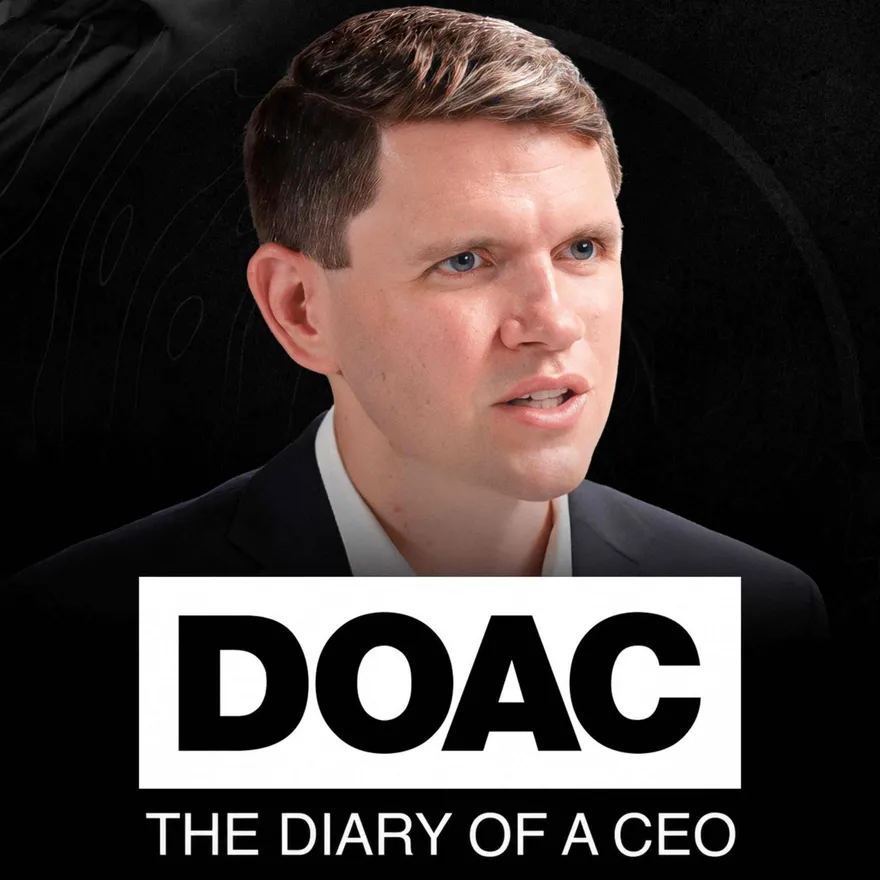

This is a preview of the Shortform summary of the Nov 2, 2026 episode of the The Diary Of A CEO with Steven Bartlett
Sign up for Shortform to access the whole episode summary along with additional materials like counterarguments and context.
1-Page Summary
Economic Inequality and Systemic Political Reform
In a podcast episode with James Talarico and Steven Bartlett, the speakers discuss economic inequality in the United States as the result of deliberate policy shifts beginning in the late 20th century, not individual leaders.
Historical Policy Shifts Created Wealth Concentration
Talarico traces today's economic inequality to the 1971 Powell Memo, in which corporate lawyer Lewis Powell outlined a corporate strategy to dismantle New Deal and Great Society protections. Beginning in the late 1970s and accelerating in the 1980s, trickle-down economics replaced government investment in public goods like education and healthcare, abandoning the middle class and working people. Bartlett provides statistical context: in 1970, middle-class households held 62% of US aggregate income, while upper-income households held 29%. Today, upper-income households capture over 50% of income, compared to just 42% for the middle class.
Crony Capitalism: Political Influence Buys Favorable Rules
Talarico contends that the US now has "crony capitalism," where those able to buy political influence benefit at everyone else's expense. Tax loopholes like carried interest provisions and capital gains preferences allow billionaires to amass wealth nearly tax-free. Bartlett notes some billionaires avoid taxes altogether by taking loans against equity. Political donations cement this system—Talarico highlights an out-of-state billionaire who gave $12 million to the Texas governor to promote private school vouchers, taking money from underfunded public schools even as Texas ranks 43rd in per-student education funding. Talarico underscores the moral dimensions: three men—Elon Musk, Mark Zuckerberg, and Jeff Bezos—now own more wealth than the entire American middle class, while one in five Texas children lives in poverty.
Systemic Reform Needed Before Addressing Individual Policies
Both speakers argue that the root problem is a corrupt system incentivizing politicians to serve donors rather than the public. Removing individual corrupt officials does little unless the structures that reward corruption are changed. Political reforms—setting limits on money in politics, banning gerrymandering, and overhauling institutions like the Supreme Court—are essential before specific policy solutions can succeed. Talarico points to factors such as Citizens United, unregulated campaign spending, and gerrymandering as creating political incentives that favor donor loyalty over good policy.
Policy Solutions: Wages, Unions, Tax Reform, and Family Support
While systemic change is necessary, specific policy solutions must also be pursued. Talarico emphasizes the power of labor unions to restore worker bargaining power, noting the decline of organized labor correlates with the shrinking middle class. Expanding the child tax credit is another priority—its recent expansion temporarily cut child poverty by half before expiring. Tax reform is critical, including closing loopholes that benefit the wealthy and collecting unpaid taxes from the top 1%, which Talarico says could generate enough revenue to end poverty in America. He also suggests investing public funds in entrepreneurs, citing federal investment enabling Tesla's rise as a model for modern public-private partnerships.
Context, Not Demonization, For Billionaire Success
Talarico explicitly rejects demonizing billionaires, instead advocating for recognition of the collective effort—public investment, infrastructure, and education—that enables private fortunes. Notable reforms in US history have been led by wealthy leaders such as Roosevelt and Kennedy. The goal is not to eliminate wealth, but to ensure economic gains are equitably shared so productivity and innovation benefit all, not just a privileged few.
Personal Journey and Faith-Based Politics
Poverty, Violence, and Resilience Shaped His Understanding
James Talarico is an eighth-generation Texan, born in Austin to a single mother who herself was the daughter of a Baptist preacher. His early life was marked by hardship—his mother left an abusive relationship with his biological father and moved to a small apartment in East Austin where Talarico slept in a crib in her closet. His mother's strength and fighting spirit shaped his own, and he credits her as the inspiration for his public service.
Mark Talarico: A Transformative Force Breaking Cycles of Poverty
The course of Talarico's life changed when his mother met Mark Talarico, who became his adoptive father. Mark gave him his last name, raised him as his own son, and demonstrated quiet integrity. James calls meeting Mark the luckiest event of his life and believes he would not be the man he is today without Mark's influence.
Faith As Worldview's Foundation
Raised in the church his grandfather led as a Baptist preacher, and baptized by his lifelong pastor at age two, Talarico considers his spiritual home the foundation from which his service flows. His admiration for his grandfather and pastor inspired him to attend seminary with intentions of becoming a minister.
Christian Theology Informs His Political Philosophy
Talarico bases his political philosophy on Christian teachings, particularly the parable of the Good Samaritan and Jesus's commandments to love God and one's neighbor. He believes the Good Samaritan parable speaks urgently to today's divided world and strives to embody this teaching in public service. Running for office, Talarico views his campaign and legislative work as an extension of ministry—giving hope and nurturing community.
Talarico also insists that real love means accountability. When asked about political adversaries like Texas Attorney General Ken Paxton, Talarico explains that holding corrupt politicians accountable is an act of love, protecting both the community and the individuals involved. He uses the example of intervening if a friend tries to drive drunk: taking away the keys is an act of care, not hostility.
Balancing Spiritual Life and Legislative Work Prevents Burnout
Talarico recounts how, after years of focusing on loving his neighbor through teaching and political work, he found himself burned out. Both his pastor and grandfather reminded him that Jesus's two commandments—love God and love your neighbor—must be kept in relationship. Enrolling in seminary helped him restore balance, uniting inner faith and outward service. He emphasizes that spiritual practice and action must sustain each other: "You need prayer and action. Those two things go hand in hand, and without it, you burn out."
Studying at seminary, Talarico learned Greek and Hebrew to directly engage with the Bible's original languages. He discovered that "faith" in scriptural context means not only belief but trust—a visceral, embodied experience like learning to swim. For Talarico, this metaphor captures his approach to faith, public service, and life: surrendering to something greater and allowing it to sustain him through waves of challenge.
Technological Disruption and AI
AI Poses Unprecedented Risks Requiring Federal Regulation
James Talarico warns that the rapid development of artificial intelligence (AI) poses risks requiring robust federal regulation and worker protections. He draws a negative parallel to how the government handled social media, which led to significant harm due to inadequate oversight. Talarico insists that AI should not follow the same path, where a small group of Silicon Valley billionaires steer the future without public input.
AI Development Lacks Democratic Input
Unlike previous transformative technological projects—such as the Manhattan Project, the space race, and the creation of the internet—which involved public-private partnerships and democratic decision-making, AI development today is largely dominated by a handful of private corporations. As a result, the wealth and power generated by AI risk being concentrated in the hands of the few.
AI Expert Warns of Economic Disruption
Talarico relays warnings from AI experts who predict a possible future with five trillionaires and 30% unemployment, reflecting deep concern about severe economic disruption. This concentration of wealth and loss of jobs are not inevitable if the nation adopts collective, democratic decision-making.
AI Regulation Priorities: Protect Workers, Safeguard Children, Preserve Democracy
Talarico outlines three guiding priorities for AI regulation: protecting workers, safeguarding children, and preserving democracy. He advocates for AI to serve as a tool that improves jobs rather than replacing workers outright. Citing the example of airplanes—which are largely automated but always have a trained pilot—he suggests technologies like autonomous vehicles can increase safety without abandoning human involvement.
Talarico highlights serious risks AI poses to children, drawing on the example of social media, which contributed to rises in self-harm and depression among youth. He is alarmed by stories of chatbots that have encouraged self-harm when children have sought help. Talarico also warns that AI-generated deepfake ads—already used in his Texas Senate campaign—make it increasingly difficult for citizens to distinguish real political communications from fabricated ones, posing a grave threat to democratic process.
Economic Disruption Demands Proactive Policies
Steven Bartlett estimates that in Texas alone, 400,000 professional drivers stand to lose their jobs due to autonomous vehicles. This massive potential displacement calls for proactive government policy. Talarico acknowledges the inevitability of some job displacement, but calls for a proactive response: mandating human supervisors for certain AI roles, investing in labor retraining, and directing profits generated by AI companies towards entrepreneurship grants funded by taxes on AI companies. Talarico discusses an "AI dividend"—a mechanism that would distribute a portion of the wealth created by AI to benefit all citizens, not just a privileged elite.
Balancing Innovation With Worker Protection
Talarico rejects the idea that technological advances require sacrificing worker security or public safety. He concludes that if society makes decisions together, rather than ceding control to a few billionaire CEOs, it can create a future in which technology is deployed thoughtfully to make life better for everyone—not at the needless expense of the many for the gain of the few.
Policy Positions on Key Issues
Balance Border Security and Legal Pathways in Immigration
James Talarico supports comprehensive immigration reform that balances strong border security with expanded legal pathways to residency and citizenship. He acknowledges that concerns about Joe Biden's handling of the border are justified, but argues that Donald Trump's extreme approaches go too far. Talarico proposes a middle-ground approach: secure borders, thoroughly vet immigrants, and create legal business pathways.
Addressing undocumented young people, including DACA students and Dreamers, Talarico draws on his experience as a teacher of undocumented students in San Antonio. He emphasizes their deep love for America and calls for a pathway to citizenship for undocumented individuals who have lived in the U.S. for years—especially those brought as children.
Iran Policy Demands Congressional Oversight
Talarico criticizes the lack of Congressional oversight in formulating U.S. military strategy in Iran. He argues that the legislative branch has become subservient rather than serving as a check on presidential power. Talarico believes Congress must ask tough questions about military goals and withhold funding if objectives aren't clear, to prevent open-ended commitments. For resolution, he proposes diplomatic paths including restoring free passage through the Strait of Hormuz, renewed emphasis on nonproliferation, and broader regional partnerships.
The urgency of these reforms is underscored by the death of 19-year-old Texan soldier Isabella Gonzalez, killed by an Iranian airstrike in Jordan. Talarico calls her a hero but insists her sacrifice should not be accepted as inevitable, urging a bipartisan summit to reach a clear, achievable outcome.
Healthcare Reform Requires Breaking Corporate Monopolies
Talarico identifies healthcare monopolies as a key factor in rising medical costs. He highlights how CVS controls major portions of the healthcare market by owning health insurance companies, pharmacy benefit managers, and the largest network of pharmacies, creating limited competition. To address this, Talarico—alongside entrepreneur Mark Cuban—supports breaking up healthcare conglomerates to reinvigorate competition, expand patient options, and lower prices.
Democratic Party Strategy and Electoral Challenges
Democrats Lost Because Voters Prioritized Cost Of Living
James Talarico shares that after conversations with Texans, many voters have deep concerns about Donald Trump but prioritize the hope that he can restore a stronger economy and lower the cost of living. America has experienced 50 years of stagnant wages and steady wealth consolidation at the top. After the pandemic and inflation spike, ordinary people are squeezed from both sides: their pay remains stagnant while living costs climb. According to Talarico, voters supported Trump because they believed his pledges to lower costs, end expensive foreign wars, and "drain the swamp" directly addressed their material suffering, which outweighed concerns about his behavior.
Trump's Unfulfilled Promises Create Opening for Democrats
However, Talarico observes that after more than a year under Trump, those promises remain unfulfilled. Instead, tariffs increased prices, the ongoing war in Iran has driven up gas costs, and the political "swamp" has only grown. Many feel conned and disillusioned, opening a window for Democrats to reach these voters. Talarico advocates extending an open hand to disillusioned communities, inviting them to join a grassroots movement. He suggests that if Democrats can appeal to working people from across the political spectrum ready to take on the "broken, corrupt system," they can build a winning coalition.
"Woke" Language Policing Alienates Working-Class Voters
Steven Bartlett raises the issue of "wokeism" and its polarizing effect. Talarico responds that there has been a rise in performative politics, characterized by policing language and emphasizing the "correct" academic terms rather than uniting voters around shared working-class values. He asserts that this obsession with terminology sabotages coalition-building among diverse communities and alienates ordinary working people who care about practical change more than culture war debates. Talarico suggests Democrats must prioritize meaningful economic reform and coalition-building over divisive cultural arguments.
Change Agents Needed For Systemic Reform
Talarico argues that voters are looking for transformational change, not minor incremental improvements. He stresses that Democrats must focus on reforming foundational issues—such as the outsized influence of money in politics, gerrymandering, and a politicized Supreme Court—before they can successfully advance solutions for healthcare, education, or housing. Without addressing the structural pressures that underlie American politics, Democrats will continue to lose trust among working- and middle-class voters craving genuine reform.
1-Page Summary
Additional Materials
Clarifications
- The 1971 Powell Memo was a confidential letter written by Lewis Powell, a corporate lawyer later appointed to the U.S. Supreme Court. It urged the U.S. business community to become more politically active to counteract growing criticism of corporations and government regulation. The memo is credited with inspiring a long-term conservative strategy to influence politics, law, and public opinion. This shift contributed to the rise of corporate lobbying and policies favoring business interests.
- The New Deal was a series of programs and reforms introduced by President Franklin D. Roosevelt in the 1930s to combat the Great Depression, focusing on job creation, social security, and financial regulation. The Great Society was a set of domestic programs launched by President Lyndon B. Johnson in the 1960s aimed at eliminating poverty and racial injustice, including Medicare, Medicaid, and education funding. Both initiatives expanded the federal government's role in providing social safety nets and public services. These protections helped build the American middle class and reduce economic inequality before being rolled back in later decades.
- Trickle-down economics is the belief that tax cuts and benefits for the wealthy and corporations will eventually benefit everyone by stimulating investment and job creation. Critics argue it increases income inequality because the wealthy often save or invest money in ways that do not directly help lower-income groups. Historically, it has been associated with policies like Reaganomics, which reduced top tax rates. The term is often used critically to highlight the failure of these policies to improve economic conditions for the middle and lower classes.
- Carried interest provisions allow investment managers to pay a lower tax rate on their earnings by classifying them as capital gains instead of ordinary income. Capital gains tax preferences mean that profits from investments held over a year are taxed at a lower rate than regular income. These rules benefit wealthy investors and fund managers by reducing their tax burden. Critics argue this creates unfair tax advantages and contributes to wealth inequality.
- Crony capitalism is an economic system where business success depends on close relationships between business people and government officials. It often involves favoritism in the form of tax breaks, government grants, or regulations that benefit certain companies. This undermines fair competition and can lead to corruption. The system prioritizes private gain over public good, distorting markets and political processes.
- The Citizens United ruling is a 2010 Supreme Court decision that allowed unlimited independent political spending by corporations and unions. It equated spending money with free speech, removing many restrictions on campaign contributions. This led to the rise of Super PACs, which can raise and spend unlimited funds to influence elections. Critics argue it increases the influence of wealthy donors and special interests in politics.
- Gerrymandering is the practice of drawing electoral district boundaries to favor one political party. It manipulates district lines to concentrate or dilute voting power, often protecting incumbents or marginalizing opposition voters. This distorts political representation by allowing a party to win more seats than their share of the vote would suggest. As a result, it undermines democratic fairness and voter influence.
- Labor unions are organizations that represent workers to negotiate better wages, benefits, and working conditions with employers. Their influence peaked in the mid-20th century, helping build a strong middle class by securing higher pay and job security. Since the 1970s, union membership has declined due to factors like globalization, automation, and legal and political challenges. This decline has weakened workers' bargaining power, contributing to wage stagnation and growing economic inequality.
- The child tax credit is a government benefit that reduces the amount of tax families owe based on the number of children they have. In 2021, it was temporarily expanded under the American Rescue Plan to provide larger monthly payments and include more low-income families. This expansion significantly lowered child poverty rates during its duration. However, the expanded benefits expired at the end of 2021, returning the credit to its previous, less generous form.
- Public-private partnerships are collaborations where government funds or resources support private companies to achieve public goals. Tesla benefited from federal loans and grants that helped it develop electric vehicle technology and scale production. This support reduced financial risks for Tesla, enabling innovation and growth. Such partnerships aim to combine public oversight with private sector efficiency.
- The parable of the Good Samaritan is a story told by Jesus about a man who helps a stranger in need, despite social and ethnic differences. It teaches the importance of compassion and caring for others beyond one's immediate community. Politically, it calls for policies that support and protect all people, especially the vulnerable and marginalized. This parable challenges divisions and encourages inclusive, empathetic governance.
- Ken Paxton is the Texas Attorney General, a powerful legal official responsible for enforcing state laws. Holding him accountable is significant because allegations of corruption or misconduct can undermine public trust and the rule of law. Accountability ensures that officials act ethically and in the public interest, preventing abuse of power. It also protects the community by maintaining integrity in government institutions.
- "Wokeism" refers to a heightened awareness of social injustices, especially related to race, gender, and identity. It often involves advocating for language and behavior that acknowledge and address systemic inequalities. Critics argue it can lead to excessive focus on political correctness and divisive cultural debates. This focus may alienate some voters who prioritize practical economic issues over identity politics.
- The Manhattan Project was a secret World War II effort where the U.S. government collaborated with private scientists to develop the atomic bomb. The space race involved government agencies like NASA working with private contractors to achieve space exploration milestones. The internet's creation began as a government-funded project (ARPANET) that partnered with universities and private companies to develop network technology. These examples show how major technological advances often rely on cooperation between public institutions and private entities.
- AI-generated deepfake ads use artificial intelligence to create realistic but fake videos or audio of people, often public figures, saying or doing things they never did. These ads can spread misinformation, manipulate public opinion, and undermine trust in genuine political communication. Because they are hard to detect, they make it difficult for voters to discern truth from falsehood, threatening informed democratic decision-making. This erosion of trust can destabilize elections and weaken democratic institutions.
- An "AI dividend" refers to distributing a portion of the economic gains generated by artificial intelligence to the general public. It is similar to a universal basic income funded by taxes on AI companies or profits. The concept aims to address wealth inequality caused by automation and job displacement. This ensures that benefits from AI advancements are shared broadly, not concentrated among a few.
- DACA (Deferred Action for Childhood Arrivals) is a U.S. immigration policy that protects eligible undocumented immigrants who were brought to the country as children from deportation. Dreamers are individuals who would qualify for the proposed DREAM Act, legislation aimed at granting legal status to these young immigrants. Both groups often face uncertainty about their legal status and work authorization. Their status is a key issue in immigration reform debates.
- The Strait of Hormuz is a narrow waterway between the Persian Gulf and the Gulf of Oman. It is a critical chokepoint for global oil shipments, with about 20% of the world's petroleum passing through it daily. Control or disruption of this strait can significantly impact global energy markets and geopolitical stability. Its strategic importance makes it a focal point in Middle Eastern and international security concerns.
- Pharmacy Benefit Managers (PBMs) act as intermediaries between insurers, pharmacies, and drug manufacturers to manage prescription drug benefits. They negotiate drug prices and rebates, often favoring larger companies, which can limit competition. PBMs can influence which drugs are covered and at what cost, impacting patient access and prices. Their market power contributes to healthcare monopolies by consolidating control over drug distribution and pricing.
- Donald Trump's promises focused on economic nationalism, aiming to protect American jobs through tariffs and renegotiating trade deals. His policies sought to reduce foreign military engagements to lower government spending and redirect resources domestically. "Drain the swamp" referred to reducing perceived corruption and influence of special interests in Washington. These promises appealed to voters frustrated by globalization's impact and stagnant wages.
- "Performative politics" refers to political actions or statements made primarily to gain approval or appear virtuous rather than to achieve real change. It often involves symbolic gestures or language aimed at signaling allegiance to a cause. Critics argue it prioritizes image over substance, potentially alienating those seeking practical solutions. This can undermine genuine political engagement and coalition-building.
- The politicization of the Supreme Court refers to the increasing influence of political ideologies in judicial appointments and decisions. Justices are often selected based on their perceived political leanings rather than solely on legal qualifications. This can lead to rulings that align with partisan goals instead of impartial interpretation of the law. As a result, public trust in the Court's neutrality and legitimacy may decline.
Counterarguments
- While policy shifts contributed to economic inequality, factors such as globalization, technological change, and changing family structures have also played significant roles in shaping income distribution.
- The Powell Memo's influence is debated among historians; some argue that broader economic and social trends, rather than a single document or coordinated strategy, drove policy changes.
- Trickle-down economics remains controversial, but some economists argue that tax cuts and deregulation contributed to economic growth and job creation, even if the benefits were unevenly distributed.
- The decline of labor unions is partly attributed to structural economic changes, such as the shift from manufacturing to service industries, rather than solely to policy decisions.
- Some argue that capital gains and carried interest tax preferences are intended to incentivize investment and entrepreneurship, which can drive economic growth.
- Not all political donations result in policy outcomes favorable to donors; there are examples of politicians acting against donor interests or enacting reforms despite opposition from wealthy contributors.
- The concentration of wealth among a few individuals is partly a result of the outsized success of technology companies, which have created significant value and innovation.
- The effectiveness of expanding the child tax credit or closing tax loopholes in ending poverty is debated; critics argue that broader economic reforms and targeted programs may be necessary.
- Public-private partnerships, such as federal investment in Tesla, have had mixed results, with some projects failing or resulting in inefficient use of taxpayer funds.
- Some believe that focusing on systemic reform before addressing specific policies can delay urgently needed changes in areas like healthcare, education, or housing.
- The assertion that Citizens United and campaign finance deregulation are the primary causes of political dysfunction is contested; some point to polarization, media fragmentation, and voter disengagement as equally important factors.
- While AI poses risks, some experts argue that fears of mass unemployment are overstated and that new technologies historically create as many jobs as they displace.
- There is debate over the feasibility and effectiveness of an "AI dividend" or universal basic income funded by technology companies.
- Some argue that breaking up healthcare conglomerates could reduce efficiencies of scale and increase costs for consumers.
- Critics of middle-ground immigration policies argue that they may not sufficiently address border security concerns or the challenges of integrating large numbers of new residents.
- The impact of "woke" language policing on electoral outcomes is debated; some research suggests cultural issues are less important to voters than economic concerns.
- Some analysts argue that focusing on economic messaging alone may not be sufficient for Democrats to win back working-class voters, given the complexity of voter motivations.
- The claim that Democrats have not achieved systemic reform overlooks legislative efforts at the state and federal levels to address money in politics, gerrymandering, and judicial reform.
Get access to the context and additional materials
Economic Inequality and Systemic Political Reform
Economic inequality in the United States is not the result of individual leaders but of deliberate policy shifts beginning in the late 20th century. James Talarico and Steven Bartlett emphasize that understanding this history is key to addressing concentrated wealth and restoring shared prosperity.
Examine Historical Policy Shifts, Not Individual Politicians, For Structural Causes of Wealth Concentration
Talarico traces the origins of today's economic inequality back to the 1971 Powell Memo, in which corporate lawyer and later Supreme Court Justice Lewis Powell outlined a corporate strategy to dismantle the protections and public investments created by New Deal and Great Society programs. The memo called for coordinated efforts by corporate America to influence politics and media, buy politicians in both parties, elevate corporate voices, and appoint sympathetic judges—setting the blueprint for reversing decades of equitable economic gains.
Beginning in the late 1970s and accelerating in the 1980s, trickle-down economics replaced the post-war consensus of government investment in public goods like education, healthcare, homes, and infrastructure. Instead of broad-based gains, policy shifted toward tax cuts and benefits for the wealthiest, abandoning the middle class and working people. Talarico argues that this was not an inevitability but a series of deliberate policy choices. In the 1950s and 60s, government investments enabled the United States to create the world's largest and strongest middle class—a period marked by broad prosperity.
Bartlett provides statistical context: in 1970, middle-class households held 62% of US aggregate income, while upper-income households held 29%. Today, upper-income households capture over 50% of income, compared to just 42% for the middle class. The population in the lower-income category has increased by 5%, further showing the hollowing out of the middle class and the increase in concentrated wealth among the richest Americans.
Crony Capitalism: Corporations and Billionaires Use Political Influence for Favorable Rules
Talarico contends that the US no longer has true capitalism, but rather "crony capitalism," in which those able to buy political influence benefit at everyone else's expense. Only those purchasing access to lawmakers are rewarded, not the broader pool of workers who create value. Laws and tax codes are written by officials who have been captured by donor interests, resulting in a rigged system and widespread public disillusionment.
Specific policies reinforce this dynamic. Tax loopholes like the carried interest provision, capital gains preferences, and deductions for private jets and yachts allow billionaires to amass wealth nearly tax-free. Both legal tax avoidance and a lack of enforcement allow the wealthy to keep what they owe. Bartlett notes that some billionaires avoid taxes altogether by taking loans against equity, rather than realizing taxable income. At the same time, the audit and enforcement resources of tax authorities remain limited, allowing abuses to go unchecked.
Political donations further cement this system. Talarico highlights an out-of-state billionaire who gave $12 million to the Texas governor to promote private school vouchers—a policy that takes money from the state's underfunded public schools and redirects it to wealthy families, worsening education and inequality. Texas ranks 43rd in per-student education funding even as such elite donors exert increasing control over policy.
Talarico underscores the moral dimensions of this shift: three men—Elon Musk, Mark Zuckerberg, and Jeff Bezos—now own more wealth than the entire American middle class, even as one in five Texas children lives in poverty. He calls this a "spiritual sickness," warning that celebrating individual financial success rings hollow while basic needs remain unmet for millions.
Systemic Reform Needed Before Addressing Individual Policy Issues Due to Corrupt System
Both speakers argue that the root of the problem is a corrupt system incentivizing politicians to serve donors rather than the public. Removing individual corrupt officials does little unless the structures that reward corruption are changed. Political reforms—setting limits on money in politics, banning gerrymandering, and overhauling institutions like the Supreme Court—are essential before specific policy solutions can succeed.
Talarico points to factors such as Citizens United, unregulated campaign spending, gerrymandering, the entrenched two-party system, and the toxic role of both social and traditional media in fueling extremism and perpetuating the status quo. Political incentives today favor donor loyalty and extreme positions, not good policy or broad economic health.
He insists that people want leaders who will deliver genuine systemic change, not merely incremental adjustments. To achieve an economy that rewards work rather than entrenched wealth, comprehensive reform to restore government by and for the people is necessary.
Policy Solutions: Raise Wages, Expand Overtime Protections, Rebuild Unions, Address Debt Crises, Invest In Families and Children
While systemic change is necessary, specific policy solutions must also be pursued to directly combat economic inequality.
Talarico emphasizes the power of labor unions to restore worker bargaining power. The decline of ...
Here’s what you’ll find in our full summary
Economic Inequality and Systemic Political Reform
Additional Materials
Clarifications
- The 1971 Powell Memo was a confidential letter written by Lewis Powell to the U.S. Chamber of Commerce. It urged corporations to become more politically active to protect their interests against growing criticism and regulation. This memo inspired a long-term strategy for corporate influence in politics, media, and law. It marked a turning point toward organized efforts to shape public policy favoring business.
- The New Deal was a series of programs and reforms launched by President Franklin D. Roosevelt in the 1930s to combat the Great Depression, focusing on job creation, social security, and financial regulation. The Great Society, initiated by President Lyndon B. Johnson in the 1960s, aimed to eliminate poverty and racial injustice through education, healthcare (Medicare and Medicaid), and housing programs. Both expanded the federal government's role in economic and social welfare, creating safety nets and opportunities for millions. These programs helped build a strong middle class and reduce economic inequality for decades.
- Trickle-down economics is the idea that tax cuts and benefits for the wealthy will eventually "trickle down" to everyone else through investment and job creation. It contrasts with earlier policies that focused on direct government investment in public services and infrastructure to support broad-based economic growth. Critics argue trickle-down often leads to wealth concentration without significant benefits for lower-income groups. This approach gained prominence in the 1980s, shifting away from the post-war consensus of shared prosperity.
- Crony capitalism occurs when business success depends on close relationships with government officials rather than market competition. It often involves favoritism in the form of tax breaks, subsidies, or regulatory advantages. This system undermines fair competition and can lead to corruption and inefficiency. It contrasts with free-market capitalism, where success is based on innovation and consumer choice.
- The carried interest provision allows investment managers to pay a lower tax rate on their earnings by classifying them as capital gains instead of ordinary income. Capital gains preferences mean profits from selling assets held over a year are taxed at lower rates than regular income. These rules benefit wealthy investors by reducing their tax burden compared to wage earners. Critics argue this creates unfair advantages and contributes to wealth inequality.
- Billionaires often hold wealth in assets like stocks rather than cash. Instead of selling these assets and paying capital gains tax, they borrow money using their assets as collateral. Loans are not considered taxable income, so this strategy defers or avoids immediate tax payments. This allows them to access funds without triggering a tax event.
- Political donations fund election campaigns, giving donors access to politicians. This access can influence lawmakers to prioritize donor interests in policy decisions. Large donations often create expectations of favorable legislation or regulatory treatment. Consequently, policies may reflect donor priorities over public needs.
- Texas ranking 43rd in per-student education funding means it spends less money on each student compared to most other states. Lower funding often leads to larger class sizes, fewer resources, and lower teacher pay. This underinvestment can harm educational quality and student outcomes. It also reflects broader inequalities in state budget priorities.
- The Citizens United decision (2010) ruled that corporations and unions can spend unlimited money on political campaigns as a form of free speech. This led to a surge in "dark money" from undisclosed donors influencing elections. It weakened limits on campaign spending, increasing the power of wealthy individuals and groups. Critics argue it amplifies special interests over ordinary voters.
- Gerrymandering is the practice of drawing electoral district boundaries to favor one political party over another. It manipulates district lines to concentrate or dilute voting power, often protecting incumbents or marginalizing opposition voters. This undermines fair representation by allowing politicians to choose their voters instead of voters choosing their representatives. As a result, election outcomes can be skewed, reducing accountability and distorting democracy.
- The entrenched two-party system in the U.S. means that the Democratic and Republican parties dominate elections and political power, making it very difficult for third parties or independents to succeed. This dominance is reinforced by electoral rules like "first-past-the-post" voting, which favors the two largest parties. Both parties often rely heavily on large donors, creating incentives to maintain the status quo rather than pursue broad reforms. As a result, political competition tends to focus on internal party factions rather than new alternatives.
- Social and traditional media amplify extreme political views by promoting sensational or divisive content that attracts attention and engagement. Algorithms often prioritize emotionally charged posts, deepening polarization and reducing exposure to moderate perspectives. This environment ...
Counterarguments
- Some economists argue that economic inequality is influenced by globalization, technological change, and market forces, not solely by policy decisions or political corruption.
- The decline of manufacturing jobs and the rise of automation have contributed to wage stagnation and middle-class decline, independent of specific tax or regulatory policies.
- Trickle-down economics and supply-side policies are credited by some with spurring economic growth, increasing investment, and creating jobs, even if the benefits were unevenly distributed.
- The U.S. tax system remains progressive, with higher earners paying a larger share of federal income taxes, and some argue that the wealthy already contribute significantly to government revenues.
- Political donations and lobbying are protected forms of free speech under current interpretations of the First Amendment, and some contend that restricting them could infringe on constitutional rights.
- Not all public-private partnerships or government investments yield positive results; some have led to waste or failed projects, suggesting that government intervention is not always effective.
- Wealth concentration can also be a result of entrepreneurship, innovation, and risk-taking, which some view as positive drivers of economic progress.
- Some critics argue that overregulation, rather than deregulation, can stifle economic growth and limit opportunities for upward mobility.
- The effectiveness of lab ...
Get access to the context and additional materials
Personal Journey and Faith-Based Politics
Talarico's Poverty, Violence, and Resilience Shaped His Understanding of Systemic Injustice and Public Service Commitment
James Talarico is an eighth-generation Texan, born in Austin to a single mother, herself the daughter of a Baptist preacher. His early life was marked by hardship and resilience. Talarico's mother left an abusive relationship with his biological father, a man with a drinking problem who became violent. After one particularly dangerous night, she packed their belongings into her Ford Escort, stayed temporarily at a hotel where she worked, then moved to a small apartment in East Austin. With limited space, Talarico slept in a crib in her closet—a space his mother proudly decorated with toys and pictures. His mother's strength and fighting spirit shaped his own, and he credits her as the inspiration for his public service, teaching him to stand up to bullies, fight for those he loves, and always make time to serve others despite hardship.
Talarico acknowledges the complexity of his feelings toward his birth father, growing from childhood anger to a more compassionate understanding as an adult. His mother believed his father had an undiagnosed learning disability, and Talarico sees both his parents as influential in making him who he is, despite the pain and difficulty.
Mark Talarico: A Transformative Force of Family Support in Breaking Cycles of Poverty and Abuse
The course of Talarico's life profoundly changed when his mother met Mark Talarico, who became his adoptive father. Mark Talarico, whom James calls “probably the best man I know,” gave him his last name, raised him as his own son, and demonstrated quiet integrity and care for others. James calls meeting Mark the luckiest event of his life and believes he would not be the man he is today without Mark’s influence and example.
Grandfather a Baptist Preacher; Baptized by Pastor At Two, Cementing Faith As Worldview's Foundation
Faith is the bedrock of Talarico’s worldview. Raised in the church his grandfather led as a Baptist preacher, and baptized by his lifelong pastor at age two, Talarico considers his spiritual home as the foundation from which his service and leadership flow. His admiration for his grandfather and pastor inspired him to attend seminary with intentions of becoming a minister, seeking to help others grapple with life's deepest questions and comfort those in need—just as his elders had done.
Christian Theology, Especially the Good Samaritan, Informs His Political Philosophy Of Loving Neighbors Across Divisions and Holding People Accountable Through Love
Talarico bases his political philosophy on Christian teachings, particularly the parable of the Good Samaritan and Jesus’s commandments to love God and one’s neighbor. He frequently returns to the lesson that love must extend beyond those who look, pray, or vote like oneself and must even include one’s enemies. Drawing an analogy from Texas football rivalries, Talarico emphasizes how shocking and radical Jesus's story was—demanding love for rivals, not just allies. He believes the Good Samaritan parable speaks urgently to today's divided world and strives, however imperfectly, to embody this teaching in public service.
Running for office, Talarico views his campaign and legislative work as an extension of ministry—giving hope, nurturing community, and encouraging people to recognize the divine in themselves and others. He recalls his pastor’s advice that a campaign rooted in hope and bridge-building can fulfill a spiritual calling.
Talarico also insists that real love means accountability. When asked about political adversaries like Texas Attorney General Ken Paxton—whom he calls his “rival” or “Samaritan”—Talarico explains that holding corrupt politicians accountable is an act of love, protecting not only the community but also the individuals involved. He uses the example of intervening if a friend tries to drive drunk: taking away the keys is an act of care, not hostility. The same principle, he argues, should guide efforts to confront and replace officials who abuse their power.
On the topic of wealth and privilege ...
Here’s what you’ll find in our full summary
Personal Journey and Faith-Based Politics
Additional Materials
Counterarguments
- While Talarico’s personal experiences shaped his commitment to public service, critics might argue that personal hardship does not necessarily translate into effective policy-making or governance skills.
- The use of Christian theology as a foundation for political philosophy may raise concerns about the separation of church and state, and whether faith-based motivations can adequately represent a religiously diverse constituency.
- Emphasizing love and bridge-building in politics, while admirable, may be criticized as overly idealistic or insufficient for addressing deeply entrenched systemic issues that require concrete policy solutions.
- Viewing political work as an extension of ministry could be seen as blurring the lines between religious vocation and public office, potentially alienating those who do not share the same faith background.
- The assertion that holding people accountable is an act of love may not resonate with all, as accountability in politics often involves adversaria ...
Actionables
- you can create a weekly reflection journal where you write about moments when you noticed yourself or others showing resilience, care, or integrity, then set a small goal to practice one of these qualities in your daily interactions; for example, you might decide to offer support to a colleague facing a challenge or stand up for someone being treated unfairly.
- a practical way to balance your inner values with outward actions is to set aside five minutes each morning to identify one way you can show kindness or accountability in your community that day, such as sending a supportive message to someone you disagree with or respectfully addressing a problem you see at work or in your neighborhood.
- you ca ...
Get access to the context and additional materials
Technological Disruption and Ai
Ai Poses Unprecedented Risks, Requiring Proactive Federal Regulation and Worker Protections, Not Billionaire-Led Development Without Oversight
James Talarico warns that the rapid development of artificial intelligence (AI) poses risks that require robust federal regulation and protections for workers. He draws a negative parallel to how the government handled social media, which led to significant harm, particularly to children, due to inadequate oversight and a lack of proactive policy. Talarico insists that AI should not follow the same path, where a small group of Silicon Valley billionaires steer the future without public input or democratic engagement.
Ai Development Lacks Democratic Input, Dominated by Few Private Corporations
Unlike previous transformative technological projects—such as the Manhattan Project, the space race, and the creation of the internet—which involved public-private partnerships and democratic decision-making, AI development today is largely dominated by a handful of private, for-profit corporations. As a result, the wealth and power generated by AI risk being concentrated in the hands of the few, rather than benefiting society as a whole.
Ai Expert Warns of Five Trillionaires, 30% Unemployment, and Economic Disruption
Talarico relays warnings from AI experts who predict a possible future with five trillionaires and 30% unemployment, reflecting a deep concern about severe economic disruption. This concentration of wealth and loss of jobs are not inevitable if the nation adopts collective, democratic decision-making to determine the rules and distribute the benefits of AI equitably.
Ai Regulation Priorities: Protect Workers, Safeguard Children, Preserve Democracy
Talarico outlines three guiding priorities for AI regulation: protecting workers, safeguarding children, and preserving democracy.
Worker Protection Demands Ai Enhances Jobs, Not Replaces Them, Advocating For Human Supervisors On Autonomous Vehicles Despite Trade-Offs
He advocates for AI to serve as a tool that improves and eases the burdens of jobs, rather than replacing workers outright. Citing the example of airplanes—which are largely automated but always have a trained pilot for oversight—he suggests that technologies like autonomous vehicles can increase safety and efficiency without abandoning human involvement. Talarico especially emphasizes requiring human supervisors in self-driving vehicles, including 18-wheelers, to combine the benefits of technology with the security of human oversight.
Children Face Ai Risks Similar to Social Media, as Chatbots Encourage Self-Harm, Needing Guardrails Before Deployment
Talarico highlights serious risks AI poses to children, drawing on the example of social media, which contributed to a rise in self-harm, depression, and anxiety among youth. He is alarmed by stories of chatbots that have encouraged self-harm when children have sought help, demonstrating the urgent need for guardrails and regulation before widespread deployment of AI technologies.
Ai-generated Deepfake Political Ads Threaten Democracy, Lacking Required Disclaimers
Talarico warns that AI-generated deepfake ads—already used in his Texas Senate campaign—make it increasingly difficult for citizens to distinguish real political communications from fabricated ones. These deepfakes often lack required disclaimers, posing a grave threat to democratic process and informed voter decision-making.
Economic Disruption From Autonomous Vehicles and Humanoid Robots in Texas Demands Proactive Policies Like Entrepreneurship Grants and Ai Dividends
Steven Bartlett estimates that in Texas alone, 400,000 professional drivers stand to lose their jobs due to autonomous vehicles, with gig economy workers pushing the total to 500,000. This massive potential displacement calls for proactive government policy.
Accept Job Displacement, Mandate Human Supervisors, Invest In Retraining, Fund Entrepreneurship Grants Via Ai Company Taxes
Talarico acknowledges the inevitability of some job displace ...
Here’s what you’ll find in our full summary
Technological Disruption and Ai
Additional Materials
Clarifications
- The government largely failed to regulate social media platforms effectively, allowing harmful content to spread unchecked. This lack of oversight contributed to increased mental health issues among children, including anxiety and self-harm. Social media algorithms often prioritize engagement over well-being, exposing youth to harmful material. These failures highlight the need for proactive policies to protect vulnerable users.
- The Manhattan Project, space race, and internet creation were large-scale efforts involving government funding, public oversight, and collaboration with private entities. These projects had clear national goals and democratic accountability. In contrast, AI development today is mostly led by private companies with limited public input. This difference raises concerns about transparency, control, and equitable benefit distribution.
- An "AI dividend" is a financial return distributed to the public from profits generated by AI technologies. It functions like a universal basic income funded by taxes or fees on AI companies. This concept aims to share wealth created by AI broadly, especially since AI often builds on publicly funded research. The dividend helps offset job losses and economic inequality caused by automation.
- Human supervisors in autonomous vehicles act as a safety backup to intervene during unexpected situations or system failures. Airplane pilots similarly oversee automated flight systems, ready to take control if needed. This human oversight helps prevent accidents and ensures accountability. It balances technological efficiency with real-time human judgment.
- Texas has a large workforce in professional driving jobs, including truck drivers, delivery drivers, and taxi drivers. Autonomous vehicles and humanoid robots can perform many driving and manual tasks more efficiently and without breaks. This technology threatens to replace hundreds of thousands of these jobs, causing significant economic disruption. The gig economy, which includes freelance and contract drivers, also faces major job losses due to automation.
- AI-generated deepfake political ads use advanced algorithms to create realistic but fabricated images, videos, or audio of people saying or doing things they never did. These ads can manipulate public opinion by spreading false information that appears authentic. Disclaimers are required to inform viewers that the content is artificially created and not genuine, helping prevent deception. Without disclaimers, voters may be misled, undermining trust and the integrity of democratic processes.
- "Collective intellectual property" refers to knowledge, inventions, or data created through the combined efforts of many people or communities, rather than by a single individual or company. "Publicly funded research" means scientific studies and technological developments financed by government money, making their results a public resource. In AI, these concepts imply that much of the technology builds on shared knowledge and taxpayer-supported work. Therefore, the wealth generated by AI should benefit society broadly, not just private corporations.
- Entrepreneurship grants are financial awards given to individuals to start or grow their own businesses. Funding these grants throu ...
Counterarguments
- Overregulation of AI could stifle innovation, slow economic growth, and hinder the United States’ global competitiveness in emerging technologies.
- Many transformative technologies, including the internet, initially developed in the private sector before public oversight was established, suggesting that early private leadership is not inherently problematic.
- The prediction of 30% unemployment and the emergence of “five trillionaires” is speculative; historical technological disruptions have often created new industries and jobs that offset losses.
- Mandating human supervisors for all autonomous vehicles may reduce efficiency gains and increase operational costs, potentially making the technology less viable and delaying safety improvements.
- AI can be designed to augment human capabilities and create new job categories, rather than simply replacing existing roles.
- The analogy to the Manhattan Project or the space race may not be fully applicable, as those were government-led projects with clear national security imperatives, whereas AI development is more diffuse and commercial.
- Existing laws and regulatory frameworks (e.g., consumer protection, anti-discrimination, and labor laws) may already address some AI-related risks without the need for sweeping new regulations.
- The risk of AI-generated deepfakes, while real, can be mitigated through technological solutions such as wat ...
Get access to the context and additional materials
Policy Positions on Key Issues
Balance Border Security and Legal Pathways in Immigration Policy
James Talarico supports comprehensive immigration reform that balances strong border security with expanded legal pathways to residency and citizenship. He acknowledges that concerns about Joe Biden’s handling of the border are justified, but argues that Donald Trump’s extreme approaches—such as mass unmarked deportations and child detention—go too far. Talarico proposes a middle-ground approach: secure borders, thoroughly vet immigrants, and create legal business pathways that allow people to immigrate safely and transparently.
Addressing the specific issue of undocumented young people, including DACA students and Dreamers, Talarico draws on his experience as a teacher of undocumented students in San Antonio. He emphasizes their deep love for America and argues that they embody the country’s ideal as a land of opportunity. Talarico calls for a pathway to citizenship for undocumented individuals who have lived in the U.S. for years—especially those brought as children—so they can come out of the shadows and fully participate in American society.
Iran Policy Demands Congressional Oversight, Clear Goals, Regional Diplomacy Over Indefinite Military Commitment
Talarico criticizes the lack of Congressional oversight in formulating and carrying out U.S. military strategy in Iran. He notes that current conflict demonstrates a legislative failure to question objectives and to use the power of the purse to force clarity from the executive branch. He argues that the legislative branch, rather than being a check on presidential power as the Founders intended, has become subservient. Talarico believes Congress must ask tough questions about military goals and withhold funding if objectives aren’t clear, to prevent open-ended commitments and unnecessary loss of life.
He references previous government war games that accurately predicted Iran would seize the Strait of Hormuz if pressured, suggesting that this conflict could have been prevented with better foresight. For resolution, he proposes diplomatic paths including restoring free passage through the strait, renewed emphasis on nonproliferation and nuclear agreements, and broader regional partnerships. Talarico notes that the U.S. was once on track to prevent a nuclear Iran through diplomacy before the current war and argues that diplomacy must again be prioritized.
The urgency of these reforms is underscored by the death of 19-year-old Texan soldier Isabella Gonzalez, killed by an Iranian airstrike in Jordan. Talarico calls her a hero but insists that her sacrifice should not be accepted as inev ...
Here’s what you’ll find in our full summary
Policy Positions on Key Issues
Additional Materials
Counterarguments
- Some critics argue that expanding legal pathways to residency and citizenship could incentivize further unauthorized immigration, potentially undermining border security efforts.
- Others contend that a "middle-ground" approach to immigration may be too vague or difficult to implement effectively, leading to policy gridlock or inconsistent enforcement.
- There is a viewpoint that offering a pathway to citizenship for undocumented individuals, even those brought as children, could be seen as unfair to those who have followed legal immigration processes.
- Some believe that strong border security measures alone are insufficient without addressing root causes of migration in home countries.
- Critics of increased Congressional oversight in military strategy argue that it could slow down necessary executive action in rapidly evolving security situations.
- Some maintain that diplomatic efforts with Iran have not always yielded desired results, and that a stronger military posture may be necessary to deter hostile actions.
- There are concerns that breaking up large healthcar ...
Actionables
- You can compare your current pharmacy and insurance options by creating a simple spreadsheet that lists prices for your regular prescriptions at different local and online pharmacies, then switch to the most affordable and independent option to reduce your personal healthcare costs and support competition.
- A practical way to encourage balanced immigration reform is to write a short, personalized letter to your local representative sharing a story about how immigration has positively impacted your community, emphasizing the need for both secure borders and expanded legal pathways.
- You can track ...
Get access to the context and additional materials
Democratic Party Strategy and Electoral Challenges
Democrats Lost Because Voters Prioritized High Cost Of Living Over Trump's Flaws or January 6th Concerns
James Talarico shares that after conversations with Texans, it is clear many voters have deep concerns about Donald Trump's rhetoric, his actions during January 6th, and his leadership style. However, what takes priority for these voters is the hope that Trump can restore a stronger economy and lower the cost of living, as seen in the 2017-2019 period. Talarico notes that Texans recall that those years featured lower costs and greater ease for the middle class to get ahead, even if they were uneasy about Trump personally.
America has experienced 50 years of stagnant wages and a steady consolidation of wealth and power at the top. For decades, Americans coped with flat incomes because goods remained affordable. However, after the pandemic and the spike in inflation, this situation dramatically changed. Now, ordinary people are squeezed from both sides: their pay remains stagnant or even drops, and their living costs climb. For many, that was the breaking point, fueling desperate demand for economic change. According to Talarico, voters supported Trump because they believed his pledges—to lower costs, end expensive foreign wars, release the Epstein files, and “drain the swamp”—directly addressed their material suffering, which outweighed concerns about his behavior or abstract threats to democracy.
Trump's Unfulfilled Promises: Rising Tariff Costs, Iran Conflict Raising Gas Prices, Swamp Expansion Persists
However, Talarico observes that after more than a year under Trump, those promises remain unfulfilled. Instead, tariffs increased prices, everything has become more expensive, and the ongoing war in Iran—costing the U.S. a billion dollars per day—has driven up gas costs. The Epstein files were not released, and the political "swamp" has only grown. Many feel conned and disillusioned; their trust in Trump appears misplaced, opening a window for Democrats to reach these voters.
Talarico advocates extending an open hand to disillusioned communities, inviting them to join a grassroots movement that is bigger than Trump or any one political party. He suggests that if the Democrats can appeal to working people from across the political spectrum ready to take on the “broken, corrupt system,” they can build a winning coalition. Talarico also contends that a difficult midterm could provoke a shift in the executive’s approach: either doubling down on partisanship or, ideally, listening to voters and collaborating with bipartisan leaders who check the president’s power. This sets the stage for the 2026 midterms, which could rebuke Trump and foster the kind of bipartisan change Democrats hope for.
"Woke" Language Policing Alienates Working-Class Voters, Favoring Academic Terms Over Shared Values
Steven Bartlett raises the issue of "wokeism" and its polarizing effect on politics. Talarico responds that there has been a rise in performative politics, characterized by policing language and emphasizing the "correct" academic terms rather than uniting voters around shared working-class values, such as dignity and respect for all an ...
Here’s what you’ll find in our full summary
Democratic Party Strategy and Electoral Challenges
Additional Materials
Counterarguments
- While many voters cite the cost of living as a top concern, polling consistently shows that issues like abortion rights, democracy, and healthcare also remain highly salient for large segments of the electorate, suggesting a more complex set of voter priorities.
- The perception that the 2017-2019 period was universally better for the middle class is not supported by all economic data; wage growth during that time was modest, and many Americans continued to struggle with healthcare costs and housing affordability.
- The claim that Trump’s economic policies led to lower costs is debated; some analyses attribute low inflation during his term to global trends and Federal Reserve policy rather than presidential action.
- Tariffs imposed during Trump’s presidency were widely reported to have increased costs for American consumers and businesses, contradicting the narrative that his policies lowered the cost of living.
- The assertion that the "swamp" expanded under Trump is contested by his supporters, who argue that he took steps to reduce regulatory burdens and challenge entrenched interests, even if not all promises were fulfilled.
- The idea that Democrats must avoid "woke" language to win working-class voters is debated; some research suggests that inclusive language and policies can mobilize key constituencies, including young voters and communities of color.
- The focus on structural reforms like campaign finance and gerrymandering, while important, may ...
Actionables
- You can track your own household spending and wage growth over the past five years to identify which costs have risen most and where your income has or hasn’t kept up, then use this information to start conversations with friends or family about shared economic challenges rather than political personalities. For example, compare your grocery, rent, and utility bills from previous years to now, and discuss with others how these changes affect your daily life and what practical solutions you wish leaders would focus on.
- A practical way to build bridges across political divides is to invite neighbors or coworkers with different views to share stories about their biggest economic frustrations and what changes would make the most difference in their lives, focusing on common ground like affordable healthcare, housing, or wages instead of debating cultural or partisan issues. For instance, you might ask, “What’s one thing that would make your monthly budget less stressful?” and listen for shared priorities.
- You can write a short letter or email to your local representat ...
Get access to the context and additional materials


Create Summaries for anything on the web
Download the Shortform Chrome extension for your browser
