

90 Million People: Why Iran Is The Most Incompetent War In Human History
In this episode of The Diary Of A CEO, Steven Bartlett speaks with Sarah Paine about escalating global conflicts and the potential for nuclear confrontation. Paine examines the wars in Iran and Ukraine, Trump's territorial threats toward allies, and how reckless leadership and unlimited war objectives are destabilizing international relations. She warns that putting adversaries on "death ground" increases the likelihood of nuclear proliferation and catastrophic escalation.
The conversation explores the collapse of the post-WWII rules-based international order, contrasting maritime systems built on trade and cooperation with continentalist approaches centered on territorial expansion. Paine discusses how American unreliability has damaged alliances, prompting Europe and other nations to build independent security architectures. The episode also examines the broader contest between democracy and authoritarianism, highlighting how each system shapes economic prosperity, stability, and the future of global order.
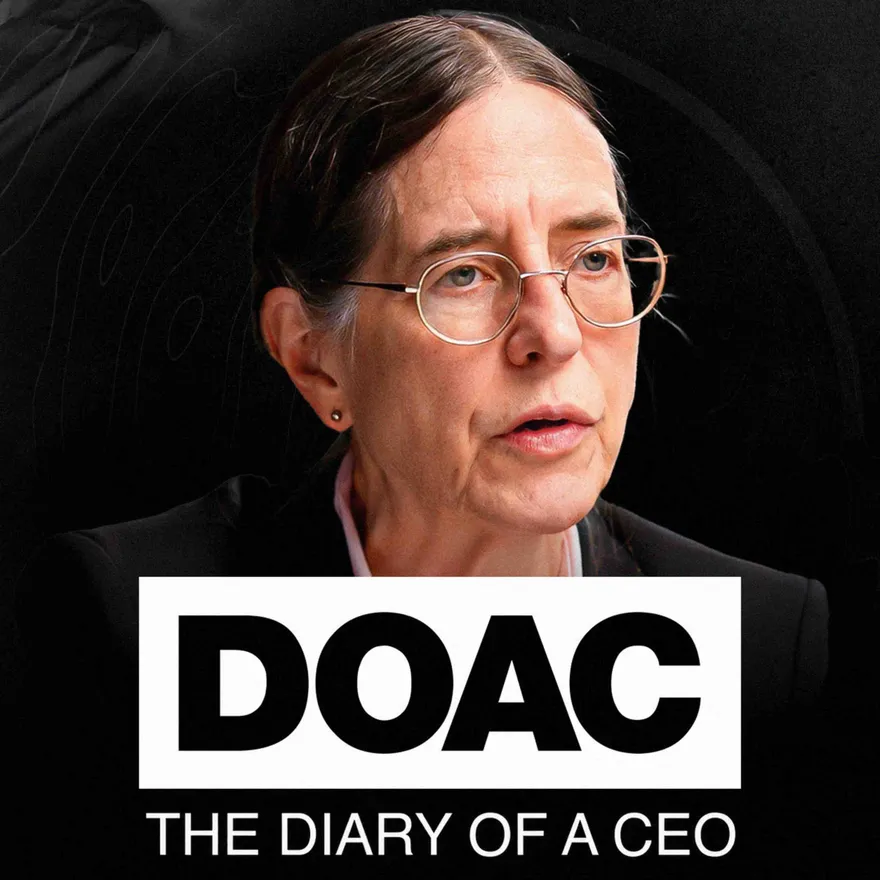

This is a preview of the Shortform summary of the Oct 29, 2026 episode of the The Diary Of A CEO with Steven Bartlett
Sign up for Shortform to access the whole episode summary along with additional materials like counterarguments and context.
1-Page Summary
The Risk of World War III
Sarah Paine and Steven Bartlett analyze escalating international conflicts, warning that reckless leadership and unlimited war objectives are pushing the world toward potential nuclear confrontation.
Geopolitical Conflicts Escalating Toward Nuclear Confrontation
Paine describes Trump's war in Iran as "recreational" and destabilizing, putting Iran on "death ground"—a state where adversaries feel forced to escalate. She notes that while prior Iranian leadership was anti-nuclear, continued provocation increases the likelihood of Iran pursuing nuclear weapons. These efforts, she argues, incentivize nuclear proliferation in the most destabilizing manner.
Paine characterizes Putin's invasion of Ukraine as a "pivotal error." Russia's economy, historically reliant on primary goods rather than manufacturing, faces harsh Western sanctions, frozen reserves, widespread inflation, and defense spending now comprising 40% of the national budget. Ukraine's use of drones and missiles has further damaged Russia's industrial capacity, while skilled professionals flee the country. Paine and Bartlett label the invasion as genocide, with explicit attempts to eradicate Ukrainian culture.
She also cites Trump's threats toward Canada, Greenland, and Venezuela as signs of continental ambitions replacing strategic restraint. Paine stresses the folly of unlimited war objectives, which put adversaries on "death ground" and guarantee prolonged, destructive conflicts. Wars persist because losing parties refuse to accept defeat, instead escalating.
Incompetent, Reckless Leadership Drives Global Conflict
Paine laments the replacement of experienced leaders like General Mattis with ideologically driven, unqualified staff. She critiques American hubris—both believing all global decisions center on the U.S. and assuming excellence in one domain confers judgment across all others—leading to failed strategy. She accuses U.S. foreign policy thinkers of only playing "half court tennis," focusing solely on American interests and failing to study adversaries' perspectives, resulting in fatal underestimations.
Nuclear Weapons and the Risk of Escalation
Paine warns that Putin has repeatedly violated NATO countries' airspace with drones, moving closer to triggering NATO's Article 5 collective defense clause—a direct path to world war. She expresses terror at the thought of Trump using tactical nuclear weapons on Iran, which would devastate America's moral standing and shatter global norms.
Bartlett questions whether Mutually Assured Destruction (MAD) still acts as a brake on full-scale war. Paine responds that MAD fails as a deterrent when leaders like Putin and Trump act outside rational constraints. As Paine summarizes, history is "moving really fast," and the current combination of reckless leaders and unlimited war aims creates conditions where any spark could ignite World War III.
The Collapse of the Post-WWII Rules-Based International Order
Paine and Bartlett discuss the unraveling of the international order established after World War II, highlighting how eroding norms, American unreliability, and shifting alliances are leading to systemic dysfunction.
Democratic Norms Erode as Power Trumps Principles
Paine describes how election denial, refusal to concede, and attempts to manipulate voting systems—such as sending ICE agents to polling stations or tech billionaires buying influence—undermine democratic civility and violate post-WWII norms.
She highlights how normalized disinformation from leaders poses grave dangers, likening it to the Soviet Union's collapse, which she attributes largely to a culture of lies. When dishonesty from officials becomes accepted, citizens lose the ability to discern truth, undermining democracy and making functional governance impossible.
Drawing an analogy to traffic rules, Paine explains that just as civil society relies on shared practice rather than constant enforcement, international order depends on mutual respect for norms. When leaders repeatedly violate these norms, the entire rules-based system becomes unworkable.
Europe Organizes Defense Institutions Due to American Unreliability
In response to U.S. unreliability, Paine describes how Europe is rapidly building security architectures, investing in space programs, and developing independent satellite systems. Europeans are also developing alternate payment systems and using apps to identify and boycott American goods in retaliation for Trump's trade wars and threats.
She notes that Canadian Prime Minister Carney is organizing middle powers into a new global order that explicitly excludes the United States as a result of its shift away from dependable partnership.
Loss of U.S. Trustworthiness Erodes Leverage, Causes Lasting Global Relationship Damage
Paine details how U.S. credibility has been deeply damaged by threats to allies like Canada and Greenland, and withdrawal of support for Ukraine. Canada is actively reorienting its energy trade away from the U.S. to Europe, seeking to "de-risk" their dependence on American unpredictability.
She emphasizes the strategic catastrophe of the U.S. breaking its pledge to protect Ukraine after it surrendered nuclear weapons. This betrayal sends a global message: only nuclear-armed states are safe, heightening proliferation incentives and undermining nonproliferation norms.
Continentalism vs. Maritime World Orders
Continentalism: Land-Based Imperialism With Territorial Conquest as Primary Power Source
Paine explains that continentalism prioritizes land acquisition and territorial expansion through force rather than economic cooperation. Powers like Russia, China, and Trump's America embody these tendencies. Trump's rhetoric on claiming Canadian territory and Greenland reflects this continentalist mindset.
Russia exemplifies the continentalist path through continual expansion. Paine lists Russia's annexation of Crimea, interventions in Georgia, and moves in Belarus and Ukraine. She argues that history provides no evidence Russian expansionism will cease, describing it as a 360-degree expansion effort that may pause but never permanently stops.
Maritime Order: Universal Rules and Wealth Through Trade
In contrast, Paine explains the maritime world order, where the primary currency of power is industry, commerce, and trade. Maritime powers compound wealth through rules-based systems that protect property rights and enable economic growth. These systems foster "win-win" strategies where all parties benefit. The effectiveness is built on the vast global reach of oceans—about 90% of the world's trade moves by sea.
Conflict Is Inevitable Unless Continentalists Are Contained Due to Fundamental System Incompatibility
Paine argues these two systems are fundamentally incompatible, making geopolitical conflict likely unless continentalist ambitions are checked. Continentalist states lack the economic dynamism of democracies and rely on territorial expansion to maintain power. Putin's Russia represents the most dangerous variant: nuclear-armed yet economically weak. She argues that only by standing firm and supporting threatened nations can the maritime, rules-based system and prosperity be preserved.
U.S. Foreign Policy Catastrophes and Their Consequences
Paine and Bartlett discuss the ramifications of recent U.S. foreign policy decisions, with special attention to the Iran war and its global economic fallout.
Iran War Launched Without Strategic Assessment, Caused Multidimensional Disasters
Paine contends the Iran war represents one of the "most incompetent wars in human history," launched with no serious strategic assessment. Trump officials failed to anticipate that Iran would shut down the Strait of Hormuz, a critical chokepoint for global oil shipments. The war put Iran on "death ground" and has driven it closer to nuclear weapons, precisely the opposite of the original intent.
Iran War's Impact Harms Global Economy
The war's economic consequences have been severe. Oil prices soared, disrupting global markets and hurting industries worldwide. Paine explains this escalation has "trashed the US economy," "blown the US alliance system," and inflicted "collateral damage of taking down the world's economy." Americans feel these effects at the gas pump with skyrocketing fuel prices. Higher grocery costs and general inflation are traced back to these foreign policy missteps.
Trump's Threats to Canada, Greenland, and Venezuela Show Continentalist Thinking in U.S. Foreign Policy
Trump's foreign policy exhibits a sharp turn toward continentalist ideas. Paine highlights Trump's threats to annex Canadian territory, invade Greenland, and his administration's kidnapping of a Venezuelan government representative, signaling the region is a "US preserve" and causing Latin American nations to seek alignment with China. Ultimately, adopting continentalist rhetoric signals the end of the post-WWII rules-based international order, dividing the globe into self-serving spheres of influence.
Democracy vs. Authoritarianism
Paine argues that the contest between democracy and authoritarianism holds profound implications for global prosperity, stability, and human flourishing.
Democracies Generate Prosperity and High Living Standards
Democracies consistently deliver high per capita living standards. Paine notes that democracies alone generate massive wealth by protecting property rights, allowing business startups, and maintaining transparent legal systems. She highlights Scandinavia as a key example: despite harsh geography and limited natural resources, these countries have built thriving democracies and economies. In contrast, Russia squanders its vast resources due to lack of rule of law and economic freedom.
She quantifies the compounding effects of economic mismanagement: at 3% annual growth, an economy doubles in about 23 years, but at 1% growth, doubling takes around 70 years. Poor policy choices suppress growth and delay prosperity for generations.
Authoritarian Collapse From Systemic Lying and Economic Dysfunction
Authoritarian regimes undermine their own stability through systemic dishonesty and economic mismanagement. Paine recounts how the Soviet Union was built on lies: industries reported exaggerated needs and understated inventory, leading Soviet planners to base resource allocation on fiction. This produced endemic waste, inefficiency, and hidden crises, contributing to the Soviet collapse.
Dictators Create Dangerous Instability Through Perverse Incentives
Paine argues that authoritarian systems, by denying dictators a safe retirement, inherently foster instability. She explains Putin's predicament: because there is no secure off-ramp, he must hold onto power at all costs. Unlike the post-Stalin Soviet era's "dacha retirements," Putin reversed this minimal security guarantee.
Paine predicts that after Putin, Russia's lack of democratic institutions could trigger a destabilizing power struggle. The country is structured like an organized crime family, with uncertainty about which elite will seize power, raising the risk of chaotic conflict and nuclear instability.
Geopolitical Contest: Coexistence and Human Flourishing vs. Domination and Suffering
Globally, Paine characterizes the democracy-authoritarian divide as a contest over world order: human flourishing and coexistence versus domination and suffering. Democracies, built on trust, transparent information, and fair voting, facilitate peaceful cooperation and prioritize shared prosperity.
Paine explains that dictators see fair elections as existential threats. If Xi Jinping or Putin allowed free elections, they would not survive politically. She discusses China's policies towards the Uyghurs as an effort to prevent ethnic fragmentation—pursuing genocide and cultural erasure to forcibly homogenize and control their society, illustrating the lengths authoritarians will go to maintain power.
1-Page Summary
Additional Materials
Clarifications
- "Death ground" is a military concept where forces are placed in a position with no option to retreat, forcing them to fight with maximum determination. It creates a psychological pressure that can lead to desperate and escalated actions. In international conflict, putting a nation on death ground risks provoking extreme responses, including escalation to war. This dynamic makes diplomatic resolution more difficult and increases the chance of prolonged violence.
- NATO's Article 5 is a mutual defense agreement stating that an attack on one member is considered an attack on all. It obligates members to respond collectively, potentially with military force. This principle aims to deter aggression by ensuring unified retaliation. Article 5 has only been invoked once, after the 9/11 attacks on the United States.
- Mutually Assured Destruction (MAD) is a Cold War-era doctrine where two opposing nuclear powers possess enough weapons to destroy each other completely. This balance of terror deters either side from launching a first strike, as it guarantees their own destruction in retaliation. MAD relies on credible second-strike capability, meaning each side can respond even after being attacked. It assumes rational actors who value survival and thus avoid nuclear war.
- The Soviet Union's planned economy relied on falsified production reports to meet unrealistic targets, causing widespread inefficiency. This systemic dishonesty hid shortages and surpluses, preventing effective resource allocation. Over time, economic stagnation and loss of public trust weakened the regime's legitimacy. These factors contributed significantly to the Soviet Union's eventual political and economic collapse in 1991.
- Continentalism emphasizes control over large land territories to gain power, often relying on military conquest and resource extraction. Historically, continental empires like Russia and China have focused on expanding borders to secure influence and security. Maritime world orders prioritize naval power, trade, and economic interdependence, fostering global commerce and alliances through sea control. This distinction shapes global conflicts, as continental powers seek territorial dominance while maritime powers promote rules-based international cooperation.
- The Strait of Hormuz is a narrow waterway between the Persian Gulf and the Gulf of Oman. It is the world's most critical chokepoint for oil transport, with about 20% of global petroleum passing through it daily. Any disruption there can sharply reduce oil supply and spike global prices. Its control is thus vital for energy security and economic stability worldwide.
- Middle powers are countries that are not superpowers but have moderate influence and often act as mediators or coalition builders in international affairs. They can shape global norms and policies by forming alliances and promoting multilateral cooperation. Organizing a new global order involves these states creating alternative institutions and frameworks to address global challenges without relying on dominant powers like the U.S. This can include new trade agreements, security pacts, and diplomatic networks that reflect their shared interests and values.
- Trump's threats toward Canada included suggestions of annexing parts of Canadian territory, reflecting aggressive territorial ambitions. He also proposed buying Greenland from Denmark, treating it as a strategic asset rather than a sovereign territory. In Venezuela, his administration supported opposition forces and was involved in covert actions, escalating regional tensions. These actions signaled a shift toward continentalist policies, undermining traditional alliances and provoking neighboring countries to seek alternative partnerships.
- The post-WWII rules-based international order is a system of global governance established mainly by the United States and its allies to prevent future large-scale wars. It includes norms like respect for national sovereignty, peaceful dispute resolution, free trade, and collective security through institutions like the United Nations and NATO. This order promotes cooperation, stability, and economic growth by encouraging countries to follow agreed-upon rules rather than resorting to force. Its effectiveness depends on major powers honoring commitments and maintaining trust.
- Democracies foster prosperity by protecting property rights, encouraging entrepreneurship, and ensuring transparent legal systems that reduce corruption. This stability attracts investment and innovation, driving economic growth. Authoritarian regimes often lack these protections, leading to inefficiency, misallocation of resources, and suppressed economic dynamism. Without accountability, authoritarian leaders may prioritize short-term control over long-term economic health.
- China's policies toward the Uyghurs include mass detention in "re-education" camps, forced labor, and strict surveillance. These actions aim to suppress Uyghur religious practices, language, and cultural traditions. Reports document forced sterilizations and family separations, contributing to accusations of genocide. International bodies and human rights groups widely condemn these measures as systematic cultural and physical repression.
- When Ukraine gave up its nuclear weapons in the 1990s under the Budapest Memorandum, it received security assurances from the U.S., Russia, and the UK to respect its sovereignty. Russia's later invasion of Ukraine violated these assurances, undermining trust in such nonproliferation agreements. This breach signals to other countries that disarming may leave them vulnerable, encouraging them to keep or develop nuclear arms for security. Consequently, global nonproliferation efforts weaken, increasing the risk of nuclear proliferation.
- "Continentalist rhetoric" refers to political language emphasizing control over large land territories and regional dominance rather than global trade or cooperation. It promotes the idea that power comes from expanding and securing contiguous land areas, often through force or coercion. This mindset leads countries to carve out exclusive zones of control, or "spheres of influence," where they exert political, military, and economic dominance. Such division fragments the global order into competing regional blocs instead of a unified, rules-based system.
- Replacing experienced leaders with ideologically driven staff often reduces practical expertise and strategic judgment in decision-making. Ideological staff may prioritize political agendas over nuanced understanding of complex international issues. This shift can lead to miscalculations and inflexible policies that escalate conflicts. Experienced leaders typically bring institutional knowledge and crisis management skills that help avoid reckless actions.
- Normalized disinformation erodes public trust by making it difficult for citizens to distinguish truth from falsehood. This confusion weakens informed decision-making, essential for healthy democratic participation. When leaders spread falsehoods, it undermines accountability and enables manipulation of electoral outcomes. Over time, this degrades the legitimacy and effectiveness of governance institutions.
- "Half court tennis" in U.S. foreign policy refers to focusing only on one's own interests without fully engaging with or understanding the perspectives and strategies of other countries. It implies a limited, one-sided approach rather than a comprehensive, strategic analysis. This mindset leads to underestimating adversaries and misjudging global dynamics. The term highlights a failure to play the "full game" of international relations.
- Russia's annexations and interventions have led to international sanctions that cripple its economy by restricting trade and investment. These actions isolate Russia politically, reducing its influence in global institutions and alliances. Neighboring countries respond by strengthening their own defenses and seeking closer ties with Western powers. The instability also disrupts regional markets and deters foreign investment, harming economic growth.
- The analogy means that just as traffic rules rely on drivers voluntarily following them to keep order, international order depends on countries respecting shared norms without constant enforcement. When these norms are broken repeatedly, trust erodes and cooperation collapses. Unlike laws enforced by police, international rules depend heavily on mutual agreement and self-restraint. Without this, global chaos and conflict become more likely.
- Space programs and independent satellite systems provide Europe with secure communication, surveillance, and navigation capabilities critical for military and intelligence operations. They reduce reliance on U.S. or other foreign satellites, enhancing strategic autonomy. Satellites also enable early warning of missile launches and monitor troop movements, improving situational awareness. This technological independence strengthens Europe's ability to respond quickly and coordinate defenses.
- "Safe retirement" for dictators means allowing them to step down from power without fear of punishment or violence. This reduces their incentive to cling to power at all costs, lowering the risk of violent power struggles. Without this option, dictators may act desperately to maintain control, causing instability. Providing a secure exit can promote smoother political transitions and greater national stability.
Counterarguments
- The characterization of U.S. actions in Iran as a "war" and as uniquely destabilizing is debated; some analysts argue that Iran's own regional activities and pursuit of missile technology have also contributed significantly to instability and proliferation risks.
- The assertion that Trump's threats toward Canada, Greenland, and Venezuela reflect genuine continental ambitions is contested; some view these statements as rhetorical or symbolic rather than actionable policy shifts.
- The claim that the U.S. has entirely abandoned strategic restraint may overlook ongoing diplomatic and multilateral efforts in various regions.
- While the invasion of Ukraine has harmed Russia's economy, Russia has also adapted to sanctions in some sectors, and its economy has not collapsed as some predicted.
- The description of the Ukraine invasion as genocide is debated among international legal scholars; while there is evidence of war crimes, the legal threshold for genocide is subject to interpretation.
- The idea that Mutually Assured Destruction (MAD) no longer acts as a deterrent is disputed; many experts believe that nuclear deterrence remains a significant factor in preventing large-scale war between nuclear powers.
- The view that the post-WWII rules-based order is unraveling solely due to American unreliability may understate the roles of other actors and broader global trends, such as rising multipolarity and regional power shifts.
- The claim that democracies alone generate high living standards does not account for some non-democratic states (e.g., Singapore, UAE) that have achieved high per capita incomes.
- The assertion that continentalist and maritime systems are fundamentally incompatible may be overly rigid; some states blend elements of both, and cooperation between such systems has occurred historically.
- The argument that authoritarian regimes are inherently unstable overlooks examples of long-lasting authoritarian states that have maintained internal stability for extended periods.
- The statement that only nuclear-armed states are safe is challenged by the security of non-nuclear states under strong alliances (e.g., NATO members).
- The depiction of all U.S. foreign policy thinkers as failing to understand adversaries' perspectives may not reflect the diversity of views and expertise within the U.S. policy community.
- The claim that Russia's expansionism has never ceased may not fully account for periods of retrenchment or cooperation in Russian history.
- The assertion that all dictators suppress fair elections to maintain power does not consider cases where authoritarian regimes have allowed limited or managed electoral processes.
- The economic impact of the Iran conflict on global markets, while significant, is influenced by multiple factors beyond U.S. policy, including OPEC decisions, global demand, and other regional conflicts.
Get access to the context and additional materials
The Risk of World War III
Sarah Paine and Steven Bartlett analyze the escalating trajectory of international conflicts, warning that reckless leadership and unlimited war objectives are pushing the world toward a potential third world war, with nuclear risks at an all-time high.
Geopolitical Conflicts Escalating Toward Nuclear Confrontation
Iran War: A Military Misstep Destabilizing Energy Markets and Encouraging Nuclear Proliferation
Sarah Paine describes Donald Trump’s war in Iran as “recreational,” damaging both the U.S. economy and the broader global alliance system. The destabilization spills into the world economy, and the U.S. approach puts Iran on “death ground”—a state where adversaries feel they have no alternative but to escalate. She notes that prior Iranian leadership was anti-nuclear, but as provocation continues from leaders like Trump and Netanyahu, the likelihood of Iran pursuing nuclear weapons increases. These war efforts, she argues, incentivize nuclear proliferation in the most costly and destabilizing manner. Paine emphasizes that once conflict escalates, leaders like Trump are unlikely to back down and are motivated to claim victory, regardless of cost.
Putin's Ukraine Invasion Erodes Russian Economy, Strengthens Ukrainian Identity
Paine points to Vladimir Putin’s invasion of Ukraine as a “pivotal error.” Putin believed a swift victory was possible, but Ukraine’s resistance has only solidified its national identity—much like the American colonies during the Revolution. She cites Russia’s long-standing weakness as a manufacturing power, with its economy historically reliant on primary goods, not industry or innovation. Russia’s war effort has triggered harsh Western sanctions, resulting in the loss of European energy markets, freezing of $300 billion in reserves, widespread domestic inflation, and a significant shift of resources from health and education to defense, with record defense spending now comprising 40% of the national budget.
Ukraine’s use of technology—drones, rapid missile development, and targeting Russian oil refineries—has further damaged Russia’s industrial capacity, and defense support such as U.S. Patriot missiles is hampered by limited supply and slow production. Skilled professionals are fleeing Russia, exacerbating labor shortages and inflation. Paine warns that Russia’s ability to recover and influence, especially over China, is diminished due to these errors and continued demographic decline.
Bartlett and Paine highlight the brutality of Russia’s actions in Ukraine, labeling the invasion as blunt aggression and genocide, with explicit attempts to eradicate Ukrainian culture and leadership.
Trump's Threats Toward Canada, Greenland, and Venezuela Show how Continentalist Ambitions Replace Strategic Restraint In U.S. Foreign Policy
Paine cites Trump’s threat to treat Canada as the “51st state” and to take over Greenland as indications of U.S. continental ambitions supplanting traditional strategic restraint. These ambitions, in her view, overextend American power toward unattainable objectives, risking disaster.
Unlimited War Objectives Trap Adversaries on "Death Ground," Forcing Them Into Prolonged, Destructive Conflicts
Paine stresses the folly of unlimited war objectives, such as regime change or genocide, which put adversaries on “death ground”—leaving them no option but to fight to the end. This mindset guarantees fierce resistance and prolonged, destructive wars, as seen in Ukraine and with Iran, and historically in World War II. She notes that wars persist because losing parties (such as Russia in Ukraine and the U.S. in Iran) refuse to accept defeat, instead escalating the conflict.
Incompetent, Reckless Leadership Drives Global Conflict
Trump's Team Replaces Experienced Generals With Ideologically Driven, Inexperienced Personnel
Paine laments the replacement of experienced leaders like General Mattis with ideologically driven, historically unqualified staff. She specifically calls out figures like “Major Pete,” whose focus on diversity issues distracts from core military competence, undermining both U.S. and party futures.
American Hubris—Assuming Global Decisions and Domain Success Are Centered In the U.S.—Leads To Underestimating Adversaries and Misunderstanding Complexities
Paine critiques two strains of American hubris: one believing all global decisions center on the U.S., and another, especially among tech leaders, believing excellence in one domain confers judgment across all others. This hubris leads to failed strategy and pivotal errors. She accuses U.S. foreign policy thinkers of only playing “half court tennis”—focusing solely on U.S. interests and failing to study adversaries’ perspectives and capabilities, leading to fatal underestimations.
She notes that this overconfidence is mirrored in R ...
Here’s what you’ll find in our full summary
The Risk of World War III
Additional Materials
Clarifications
- “Death ground” is a military concept where forces are placed in a position with no option to retreat. This forces them to fight with maximum determination, as survival depends on victory. Strategically, it can lead to prolonged, desperate conflicts because adversaries resist fiercely rather than surrender. Leaders who create “death ground” situations risk escalating wars beyond control.
- NATO’s Article 5 was established in 1949 as a collective defense clause. It states that an armed attack against one member is considered an attack against all members. This principle was first invoked after the 9/11 terrorist attacks in 2001. Its activation commits members to respond collectively, potentially with military force.
- Mutually Assured Destruction (MAD) is a Cold War-era doctrine where two opposing sides possess enough nuclear weapons to destroy each other completely. It relies on the certainty that any nuclear attack would trigger a devastating retaliatory strike, deterring both sides from initiating conflict. This balance of terror assumes rational actors who value survival above all. MAD breaks down if leaders act irrationally or use nuclear weapons as tactical tools rather than last-resort deterrents.
- Donald Trump was the U.S. president from 2017 to 2021, known for aggressive foreign policies and confrontational rhetoric. Vladimir Putin has been Russia’s president or prime minister since 1999, centralizing power and pursuing assertive military actions like the Ukraine invasion. Benjamin Netanyahu served multiple terms as Israel’s prime minister, advocating strong security measures and opposing Iran’s nuclear ambitions. Their leadership styles and decisions have significantly influenced the geopolitical tensions described.
- Western sanctions on Russia restrict its access to international financial markets, technology, and key exports like oil and gas. These measures limit foreign investment and freeze Russian assets abroad, reducing government revenue. Sanctions also disrupt supply chains, hindering industrial production and innovation. Over time, this weakens Russia’s economic growth and increases inflation and unemployment.
- U.S. Patriot missiles are advanced surface-to-air missile systems designed to detect, target, and destroy incoming enemy missiles and aircraft. They play a critical role in defending allied forces and infrastructure from aerial attacks. However, their production is complex and costly, leading to limited availability and slow replenishment. This scarcity restricts how extensively they can be deployed in prolonged conflicts.
- The American colonies resisted British rule despite being militarily weaker, ultimately winning independence through persistent struggle and unity. This resistance forged a strong national identity and commitment to self-determination. Similarly, Ukraine’s defiance against Russian invasion strengthens its national unity and resolve. Both cases show how external aggression can solidify a people's identity and determination to resist.
- “Continentalist ambitions” refer to a foreign policy focus on expanding or dominating the North American continent, prioritizing control over neighboring countries like Canada and Greenland. This approach emphasizes territorial or political influence within the continent rather than global strategic balance. It often involves aggressive or expansionist goals that can strain international relations. Such ambitions contrast with traditional U.S. policies that favor strategic restraint and global alliances.
- Tactical nuclear weapons are designed for use on a battlefield with shorter ranges and lower explosive power than strategic nuclear weapons, which target large-scale, long-range destruction. Tactical nukes aim to achieve specific military objectives without necessarily causing widespread devastation. Strategic nuclear weapons are intended to deter or respond to major attacks by threatening massive retaliation. Using tactical nukes risks escalating conflicts into full-scale nuclear war due to their lower threshold for deployment.
- The United States is the only country to have used nuclear weapons in war, dropping atomic bombs on Hiroshima and Nagasaki in 1945. This action ended World War II but caused massive civilian casualties and long-term suffering. It has since sparked glob ...
Counterarguments
- While reckless leadership and unlimited war objectives can increase risks, the existence of robust international institutions, diplomatic channels, and checks and balances within major powers may help prevent escalation to world war.
- The characterization of Trump’s actions in Iran as a “war” is debated; while there were escalatory incidents, the U.S. did not launch a full-scale war against Iran during his administration.
- Iran’s pursuit of nuclear capabilities predates recent U.S. administrations and is influenced by a range of regional security concerns, not solely by U.S. or Israeli actions.
- Leaders sometimes do back down or seek negotiated settlements when faced with high costs or international pressure, as seen in various historical conflicts.
- Russia’s economy, while challenged by sanctions and war, has shown resilience in some sectors, such as energy exports to non-Western countries, and has adapted to some sanctions.
- The assertion that Russia’s invasion of Ukraine constitutes genocide is a matter of ongoing international legal debate and not universally accepted as fact.
- U.S. threats toward Canada, Greenland, and Venezuela have not resulted in actual military action or annexation, and some statements may be interpreted as rhetorical rather than concrete policy.
- The replacement of military leaders in the U.S. is a common occurrence across administrations and does not always result in diminished competence; civilian ...
Get access to the context and additional materials
The Collapse of the Post-Wwii Rules-Based International Order
Sarah Paine and Steven Bartlett discuss the unraveling of the international order established after World War II, highlighting how eroding norms and trust, American unreliability, and shifting alliances are leading to systemic dysfunction.
Democratic Norms Erode as Power Trumps Principles
Election Denial, Refusal to Congratulate Winners, and Attempts to Manipulate Voting Systems Violate Post-Wwii Democratic Norms
Sarah Paine draws a stark picture of the erosion of democratic principles in the United States. She describes how attempts to manipulate voting systems—such as sending ICE agents to polling stations, bribing voters, or foreign-born tech billionaires like Elon Musk buying influence—undermine democratic civility. Election denial, with losing candidates refusing to concede and instead proclaiming fraud, violates the core democratic practice that held since WWII: congratulating one’s opponent and vowing to try again.
When Governments Normalize Lying, Citizens Lose Trust in Institutions, Making Accurate Information Impossible to Obtain, Leading To Dysfunction
Paine highlights how normalized disinformation from leaders and institutions poses grave dangers, likening it to the collapse of the Soviet Union, which she attributes in large measure to a culture of lies. She specifically calls out Donald Trump’s habitual dishonesty and notes that when dishonesty from officials becomes accepted, citizens lose the ability to discern truth, undermining the basis of democracy and making functional governance impossible. Paine stresses the necessity of honest information from multiple sources for citizens to come to informed opinions.
Rule of Law Relies On Shared Norms, Not Enforcement; Leaders' Violations Collapse System
Drawing an analogy to traffic rules, Paine explains that just as civil society relies on shared practice rather than constant enforcement, international and legal order depends on mutual respect for norms. She warns that if leaders repeatedly violate these norms—breaking laws and retroactively legitimizing wrongdoing—the entire system becomes unworkable. The rules-based order collapses when leaders act outside norms and enforcement cannot keep pace.
Europe Organizes Defense Institutions Due to American Unreliability
European Nations Building Security Architectures, Investing In Space Programs, Developing Independent Satellite Systems
In response to U.S. unreliability, Paine describes how Europe is engaging in rapid institution building and defense cooperation. She highlights countries like Finland, Sweden, Norway, Denmark, Estonia, Latvia, Lithuania, and Iceland, which are working together on security, remilitarization, and even developing independent spaceports and satellite systems to secure their sovereignty.
Europe Develops Alternate Payment Systems, Apps Identifying American Products, Boycotting U.S. Goods In Response to Trump's Threats and Trade Wars
Paine points out that Europeans are developing their own credit card payment systems and using apps that identify American goods, fueling boycotts against U.S. products in retaliation for Trump’s trade wars and threats. The economic backlash directly impacts American industries, such as Kentucky bourbon makers, who lose profits due to Canadian and European boycotts.
Prime Minister Carney Organizes Middle Powers For a U.s.-exclusive Global Order Realignment
She also notes the diplomatic leadership of Canadian Prime Minister Carney, who is working to organize ...
Here’s what you’ll find in our full summary
The Collapse of the Post-Wwii Rules-Based International Order
Additional Materials
Clarifications
- After World War II, democratic norms emphasized peaceful transitions of power to maintain stability. Conceding elections and congratulating winners symbolize acceptance of results and respect for democratic processes. This practice helps prevent conflict and reinforces public trust in institutions. It also signals commitment to rule of law and political fairness.
- ICE (Immigration and Customs Enforcement) agents are federal officers responsible for enforcing immigration laws. Their presence at polling stations is controversial because it can intimidate voters, especially immigrants, potentially suppressing turnout. This practice is seen as a tactic to influence election outcomes by discouraging certain groups from voting. It violates norms of free and fair elections by introducing fear and coercion into the voting process.
- Elon Musk, born in South Africa, is a prominent tech entrepreneur with significant influence in the U.S. through companies like Tesla and SpaceX. His public statements and social media presence can sway public opinion and political discourse. Musk's financial resources and media reach allow him to support or oppose political candidates and policies. This influence raises concerns about foreign-born individuals impacting U.S. democratic processes.
- The Soviet Union's collapse was partly due to widespread government dishonesty that eroded public trust and legitimacy. Citizens became skeptical of official information, weakening social cohesion and political stability. This loss of trust made effective governance impossible, accelerating systemic failure. The comparison suggests that similar normalized lying in the U.S. risks undermining its democratic institutions in the same way.
- The "rules-based international order" is a system where countries agree to follow shared laws and norms to maintain peace and cooperation. It relies on mutual respect and voluntary compliance rather than constant enforcement by a single power. This order was established after World War II to prevent conflicts and promote stability through institutions like the United Nations and trade agreements. Its effectiveness depends on trust and the willingness of states to uphold agreed-upon rules.
- European countries have increased joint military exercises and intelligence sharing to strengthen collective security. They are investing in independent space capabilities, such as launching satellites for communication and surveillance, to reduce reliance on U.S. systems. This includes developing national spaceports and satellite navigation systems like Galileo. These efforts aim to enhance Europe’s strategic autonomy amid doubts about U.S. commitment.
- Alternative payment systems are financial networks created to process transactions independently of dominant U.S.-based systems like Visa or Mastercard. They reduce reliance on American financial infrastructure, protecting European economies from U.S. sanctions or trade pressures. These systems enhance economic sovereignty by allowing Europe to control cross-border payments and data flow. They also facilitate trade within Europe and with other global partners without U.S. interference.
- Canadian Prime Minister Carney is a fictional or hypothetical figure in this context, as no Canadian prime minister by that name exists up to 2021. The name likely references Mark Carney, a prominent Canadian economist and former Governor of the Bank of Canada and Bank of England, known for his global financial influence but not a political leader. In the text, "Prime Minister Carney" symbolizes a diplomatic leader from Canada organizing middle powers to form a new global order excluding the U.S. This role highlights Canada's potential leadership in reshaping international alliances amid U.S. unreliability.
- The U.S. threats to Canada and Greenland refer to geopolitical tensions where the U.S. pressured these neighbors over resource control and strategic military positioning. For example, the U.S. expressed interest in purchasing Greenland, causing diplomatic strain with Denmark and Greenland's local government. Additionally, disputes over Arctic sovereignty and energy resources have led to economic and security concerns. These actions contributed to allies questioning U.S. reliability and prompted them to seek alternative partnerships.
- After Russia's 2014 annexation of Crimea and the 2022 invasion of Ukraine, the U.S. initially provided military aid and diplomatic support to Ukra ...
Counterarguments
- While concerns about democratic erosion in the U.S. are valid, the country continues to hold regular, competitive elections with high voter turnout and robust legal challenges, indicating that core democratic processes remain functional.
- Disinformation is a global issue, not unique to the U.S., and many democracies have implemented media literacy programs and fact-checking initiatives to counteract its effects.
- The rule of law in the U.S. is supported by a strong judiciary and active civil society organizations that continue to hold leaders accountable through legal and institutional mechanisms.
- European efforts to build independent security and economic systems can also be interpreted as a natural evolution of sovereignty and technological advancement, rather than solely a reaction to U.S. unreliability.
- Economic boycotts and alternative payment systems are common tools in international relations and do not necessarily indicate a permanent rupture in transatlantic relations.
- The U.S. remains a key member of NATO and continues to provide significant security guarantees to Europe, as evidenced by ongoing military cooperation and deployments.
- Many European and demo ...
Get access to the context and additional materials
Continentalism vs. Maritime World Orders
Continentalism: Land-Based Imperialism With Territorial Conquest as Primary Power Source
Sarah Paine explains that historically, the dominant mode of organizing power for empires was continentalism, where land acquisition is the main currency of power. Continentalist states prioritize expanding their territories and controlling neighbors primarily through force rather than fostering economic ties or participating in cooperative global markets. Powers like Russia, China, and, at times, Trump's America embody these continentalist tendencies. For example, Trump's rhetoric on claiming Canadian territory and Greenland reflects a continentalist mindset, as does the kidnapping of a head of state.
In the continentalist worldview, nations divide the globe into spheres of influence, where weaker nations are expected to submit to stronger, more dominant powers. This dynamic generates instability and domination rather than cooperative, mutual benefit. As Paine describes, in a continentalist system such as Russia’s, property is insecure—even successful business owners may have their assets seized by those connected to the ruling authority. Citizens may be forced into front-line military service with no choice.
Russia exemplifies the continentalist path through continual expansion. Historically, Russia has increased its territory by force, viewing itself as perpetually threatened while simultaneously threatening others. Paine lists Russia’s annexation of Crimea, interventions in the Caucasus, and moves in Belarus and Ukraine. She highlights Putin’s coming to power during the Second Chechen War and his subsequent support from the Russian public. In 2008, Putin intervened in Georgia, aiding two breakaway regions. Paine argues that history provides no evidence that Russian expansionism will cease, describing it as a 360-degree expansion effort. Continentalists may pause before further moves but only pause, never permanently stop, always seeking to extend outward.
Maritime Order: Universal Rules and Wealth Through Trade
In contrast, Paine explains the maritime world order, originating from sea powers like Britain. With the Industrial Revolution, the primary currency of power shifted from land to industry, commerce, and trade. Maritime powers compound wealth by participating in commerce and establishing universal, rules-based systems that protect property rights, create the confidence necessary for cross-border business, and enable economic growth. These rules-based systems ensure, for instance, that a business or individual can operate across many countries with predictable legal protections—credit cards and business transactions work internationally because of the integrity of the system.
Democracies within the maritime order protect individual rights and wealth, fostering high per capita prosperity. Unlike the win-lose logic of continentalists, the maritime order strives for “win-win” strategies—where all parties benefit and thus are incentivized to participate. Paine calls the maritime world order an “infinite game positive sum” system. Its effectiveness is built on the vast global reach of oceans: about 90% of the world’s trade moves by sea. The scale of ocean transport and its efficiency—container ships vastly out-capac ...
Here’s what you’ll find in our full summary
Continentalism vs. Maritime World Orders
Additional Materials
Clarifications
- Continentalism is a strategy where empires focus on controlling large land areas to gain power and security. It often involves direct military conquest and domination of neighboring territories. This approach contrasts with building influence through trade or alliances. Historically, it reflects a mindset that values territorial control as the primary source of strength.
- Russia’s annexation of Crimea in 2014 marked a major breach of international law, signaling aggressive territorial expansion. The Chechen Wars were brutal conflicts in the 1990s and early 2000s where Russia fought to suppress separatist movements in Chechnya, asserting control over the region. In 2008, Russia’s intervention in Georgia supported separatist regions, demonstrating its willingness to use military force to influence neighboring states. Belarus and Ukraine have been focal points of Russian influence efforts, with Ukraine’s 2014 revolution and ongoing conflict highlighting Russia’s aim to prevent these countries from aligning with Western institutions like NATO and the EU.
- "Spheres of influence" refer to regions where a powerful country exerts dominant control or influence over weaker neighboring states, often limiting their political or economic independence. This control can be formal or informal, involving military presence, political pressure, or economic dependency. Such spheres often prevent smaller countries from aligning with rival powers, maintaining the dominant state's regional supremacy. The concept can lead to conflicts when multiple powers compete for influence over the same area.
- Continentalism focuses on controlling large land areas to gain power, often through military conquest and direct governance. Maritime world order relies on controlling sea routes and fostering international trade under shared rules to build wealth and influence. Continental powers tend to prioritize security and dominance over neighbors, while maritime powers emphasize cooperation and economic interdependence. This fundamental difference shapes their strategies, alliances, and global interactions.
- The Industrial Revolution introduced mechanized production, greatly increasing goods output and economic scale. This shift enabled nations to generate wealth through manufacturing and global trade rather than solely through land conquest. Improved transportation, like steamships and railroads, expanded trade networks and connected markets worldwide. Consequently, economic power became tied to industrial capacity and commerce, reducing the primacy of territorial expansion.
- Rules-based systems are frameworks of agreed-upon laws and regulations that govern how countries and businesses interact internationally. They create predictable environments where contracts are enforceable and property rights are legally protected across borders. This predictability reduces risks and encourages investment and trade by ensuring fair treatment and dispute resolution. Without such systems, businesses face uncertainty and potential losses from arbitrary actions or legal inconsistencies.
- An "infinite game" is a concept where the goal is to keep playing and improving, not to win once and end the game. A "positive sum" system means that all participants can gain benefits simultaneously, rather than one side winning at another's expense. Together, an "infinite game positive sum" system describes ongoing cooperation where everyone can prosper over time. This contrasts with zero-sum games, where one party's gain is another's loss.
- Maritime trade accounts for about 90% of global trade because oceans connect most countries, allowing large volumes of goods to be transported efficiently over long distances. Container shipping revolutionized trade by standardizing cargo sizes, enabling faster loading, unloading, and transfer between ships, trucks, and trains. This efficiency drastically lowers shipping costs and transit times compared to other transport modes. As a result, container ships support the vast scale and complexity of modern global supply chains.
- Democracies typically feature transparent governance, rule of law, and protection of individual rights, fostering innovation and economic growth. They rely on voluntary cooperation, market competition, and legal sys ...
Counterarguments
- The distinction between "continentalist" and "maritime" world orders can be overly simplistic, as many states historically and currently blend both approaches (e.g., the United States has both continental and maritime characteristics).
- Not all territorial expansion is inherently destabilizing; some historical expansions have led to periods of stability or integration (e.g., the European Union's enlargement).
- The portrayal of Russia and China as purely continentalist overlooks their significant participation in global trade and economic institutions.
- Property rights and individual freedoms can be insecure in some maritime democracies as well, especially during times of crisis or war.
- The claim that continentalist states lack economic dynamism does not account for China's rapid economic growth and integration into global markets.
- The assertion that maritime orders always produce "win-win" outcomes ignores the history of colonialism, exploitation, and unequal trade relationships by maritime powers.
- The idea that conflict is inevitable between these systems may underestimate the potential for coexistence, negotiation, and hybrid models of international orde ...
Get access to the context and additional materials
U.S. Foreign Policy Catastrophes and Their Consequences
Sarah Paine and Steven Bartlett discuss the ramifications of recent U.S. foreign policy decisions, with special attention to the war with Iran, its global economic fallout, and the shift toward aggressive continentalist rhetoric under the Trump administration.
Iran War Launched Without Strategic Assessment, Caused Multidimensional Disasters
Sarah Paine contends that the Iran war represents one of the “most incompetent wars in human history,” launched with no serious strategic assessment. She highlights how Trump officials failed to anticipate that Iran would shut down the Strait of Hormuz, a critical chokepoint for global oil shipments. Closing the strait would not only halt Iranian exports but also block access to the U.S. Navy base in Bahrain, effectively forcing U.S. operations to relocate 2,500 miles away to Diego Garcia, an isolated base ill-suited for such a role.
Far from containing Iran, the war put the Iranian regime and its population in a situation Paine calls “death ground”—a condition in which desperate circumstances drive an adversary toward extreme measures. As a result, the war has driven Iran closer to nuclear weapons, precisely the opposite of its original intent. This outcome has reversed the Obama-era nuclear agreement, which assembled all permanent United Nations Security Council members and the EU around a feasible system of intrusive inspections to reduce Iran’s nuclear threat at an affordable cost. The war discarded this agreement for the unachievable objective of regime change and, in doing so, incentivized nuclear proliferation far beyond Iran. Paine points out that the lesson now is: “If you don’t have [nuclear weapons], you’re toast,” a message echoed by the actions of Putin and now the U.S.
Iran War's Impact Harms Global Economy
The war’s economic consequences have been severe. Oil prices soared, disrupting global markets and hurting industries across the world. Sarah Paine explains that this escalation has “trashed the US economy,” “blown the US alliance system,” and inflicted “collateral damage of taking down the world’s economy.” As the U.S. initiated actions that caused oil disruptions, it shifted from a valued ally to a primary adversary in the eyes of other countries for threatening their prosperity.
Paine notes that Americans and others worldwide feel these effects each week at the gas pump, with skyrocketing diesel and gasoline prices. She directly attributes these rising costs to decisions made during Trump’s war in Iran, dismissing excuses that blame the Ukraine war or Russian diesel deals. Paine details that refinery capabilities and oil supply disruptions in the Middle East are the real cause, and that adjusting refineries to handle new types of oil would take immense time and money.
The economic pain is persistent and widespread: “Every time you load up at the pump, you have a weekly reminder that Donald Trump’s war has done a number on you.” Higher costs at grocery stores and general inflation are traced back to these foreign policy missteps, yet misplaced blame often falls on President Biden. Paine insists, “It’s not Biden...it’s mind blowing. Just mind blowing. Thank you, Donald Trump.” She also n ...
Here’s what you’ll find in our full summary
U.S. Foreign Policy Catastrophes and Their Consequences
Additional Materials
Counterarguments
- While the war with Iran had significant consequences, some analysts argue that the U.S. did conduct strategic assessments, but the outcomes were shaped by rapidly changing circumstances and intelligence limitations.
- The Strait of Hormuz has long been recognized as a strategic chokepoint, and U.S. military planners have contingency plans for its closure, though the effectiveness of these plans is debated.
- The Obama-era nuclear agreement (JCPOA) faced criticism for not addressing Iran’s ballistic missile program or regional activities, and some policymakers believed a tougher stance was necessary to address these gaps.
- Oil prices are influenced by a complex set of factors, including OPEC decisions, global demand fluctuations, and other geopolitical events, not solely by U.S. actions in Iran.
- Some economists argue that inflation and rising fuel prices are also driven by post-pandemic supply chain disruptions and broader global economic trends, not just U.S. foreign policy.
- The U.S. alliance system has shown resilience in the past, adapting to policy shifts and recovering from periods of tension.
- Tariffs on imports from Mexico and Canada were intended to address perceived trade imbalances and protect certain domestic industries, a policy approach supporte ...
Actionables
- you can track your weekly fuel and grocery expenses, then write a short note to your local representatives explaining how global oil disruptions and foreign policy decisions directly impact your household budget, making the connection between international events and your daily life clear for policymakers.
- a practical way to understand the ripple effects of international alliances is to map out where your most-used products (like electronics, clothing, or food) originate, then research how shifts in global partnerships or tariffs could affect their availability or price, helping you anticipate and adapt to future changes.
- you can se ...
Get access to the context and additional materials
Democracy vs. Authoritarianism
Sarah Paine argues that the contest between democracy and authoritarianism holds profound implications for global prosperity, stability, and human flourishing. Drawing on economic evidence, case studies, and historical analysis, she delineates key differences and the dangers embedded in authoritarian systems.
Democracies Generate Prosperity and High Living Standards
Democracies consistently deliver high per capita living standards. Sarah Paine notes that democracies alone generate massive wealth, enabling and protecting property rights, allowing for business startups, the preservation of earnings, and the maintenance of transparent legal systems. These enabling features foster broad prosperity. The ability to tolerate differences, provide legal protections, and let people retain the fruits of their labor creates a foundation for sustainable economic growth.
Scandinavian Countries: Limited Resources, Tough Geography, Thriving Democracies; Russia: Wasting Vast Resources on Military Expansion
Paine highlights Scandinavia as a key example: despite their harsh geography and limited natural resources, these countries have built strong, functional democracies and thriving economies. In contrast, Russia, despite being the world's largest country with vast resources, squanders its potential due to the lack of rule of law and economic freedom. Instead of investing in growth, Russia focuses on military expansion and, as a result, misses opportunities for economic development that stem from entrepreneurship and secure property rights.
3% Growth Doubles Economy In 23 Years; 1% Takes 70 Years; Authoritarianism & Mismanagement Hinder Prosperity
She quantifies the compounding effects of economic mismanagement: at a 3% annual growth rate, an economy doubles in about 23 years, but at 1% growth, doubling takes around 70 years. Poor policy choices—such as unnecessary wars and protectionism—suppress growth and delay prosperity for generations, a recurring flaw in authoritarian states.
Authoritarian Collapse From Systemic Lying and Economic Dysfunction
Authoritarian regimes undermine their own stability through systemic dishonesty and economic mismanagement. Paine recounts how the Soviet Union was built on lies at every level: under communism, all industries reported exaggerated needs and understated inventory to abuse the central planning system, leading to grossly inaccurate data. As this faulty information moved up the chain, Soviet planners based resource allocation on fiction, resulting in profound misallocation of capital and labor.
Soviet Collapse: Lies, Resource Exaggeration, Production Understatement, Capital Misallocation
This process produced endemic waste, inefficiency, and hidden crises, contributing to the Soviet collapse. Centralized regimes, blinded by bad data and unable to correct course, repeatedly make catastrophic errors in war, economics, and infrastructure, eventually shattering their power.
Moscow Planners Made Poor Resource Decisions Based On Bad Data, Eventually Destroying the System
Paine gives the example of Tsarist and Soviet Russia misallocating resources, such as prioritizing military spending over essential infrastructure like railways. Such choices caused logistical failures in World War I and led to avoidable disasters that weakened the state from within. Aid and opportunity were also forfeited due to the regime’s focus on power retention rather than broad development.
Dictators Create Dangerous Instability Through Perverse Incentives
Paine argues that authoritarian systems, by denying dictators a safe retirement, inherently foster instability. In democracies, leaders can peacefully leave office without fear for their life or assets. Dictatorships, on the other hand, transition power violently or not at all—removal from office may mean death, imprisonment, or loss of wealth.
Dictators Lack Safe Retirement; Putin's System Makes Stepping Down Mean Death, Imprisonment, or Loss of Wealth, Forcing Him to Keep Fighting For Survival
She explains Putin’s predicament: because there is no secure off-ramp, he must hold onto power at all costs. If forced out, his own entourage or rivals could kill him or strip him of everything. Unlike the post-Stalin Soviet era, when retiring leaders could expect to be sent to country homes (“dacha retirements”), Putin reversed this minimal security guarantee, increasing personal stakes for leaders and making voluntary retirement virtually impossible.
Lack of Peaceful Succession Could Lead To a Power Struggle and Nuclear Instability in Russia Post-Putin
Paine predicts that after Putin, Russia’s lack of democratic institutions and succession norms could tr ...
Here’s what you’ll find in our full summary
Democracy vs. Authoritarianism
Additional Materials
Clarifications
- Per capita living standards refer to the average economic well-being of each person in a country. It is often measured by dividing the country's total economic output (GDP) by its population. This metric reflects the average income, consumption, and access to goods and services per individual. Higher per capita living standards generally indicate better quality of life and economic prosperity.
- Property rights legally protect individuals' ownership of assets, ensuring they can use, sell, or invest them without fear of arbitrary seizure. Secure property rights encourage investment and entrepreneurship by providing confidence that returns will not be stolen or confiscated. This security fosters economic activity, innovation, and efficient resource allocation, driving growth. Without clear property rights, people are less likely to invest or engage in productive economic behavior.
- Scandinavia consists of Norway, Sweden, and Denmark, characterized by cold climates, mountainous terrain, and limited arable land. Historically, these geographic challenges restricted large-scale agriculture and population growth. Despite scarce natural resources compared to larger countries, they developed strong social institutions and democratic governance. Their economies diversified into technology, manufacturing, and services, overcoming geographic limitations.
- Russia’s focus on military expansion stems from its historical emphasis on securing vast borders and projecting power to deter external threats. Authoritarian leaders often prioritize military strength to maintain regime control and national prestige. Economic development is deprioritized because it requires political openness and reforms that could weaken centralized authority. Additionally, military spending supports elite networks that sustain the ruling regime.
- Compound economic growth means that the economy grows by a certain percentage each year, and this growth builds on the previous year's total. This causes the economy to increase exponentially, not just by a fixed amount annually. Small differences in growth rates lead to large differences in economic size over time due to this compounding effect. Therefore, even a 1-2% difference in growth rates can dramatically change how quickly an economy doubles in size.
- Protectionism is an economic policy that restricts imports through tariffs, quotas, or regulations to protect domestic industries from foreign competition. While it can shield local jobs temporarily, it often leads to higher prices and less choice for consumers. Protectionism can provoke retaliatory measures from other countries, reducing overall trade and economic growth. Over time, it tends to hinder innovation and efficiency by insulating domestic companies from global competition.
- The Soviet Union’s centralized planning system was managed by a government agency called Gosplan, which set production targets for all industries. Factories and farms had to meet these quotas without market feedback, leading to inefficiencies and shortages. Data was often manipulated to meet unrealistic goals, causing planners to allocate resources based on false information. This rigid system lacked flexibility, preventing timely adjustments to economic needs.
- Exaggerated needs make planners believe more resources are required than actually necessary, causing overproduction or misallocation. Understated inventory hides available supplies, leading to unnecessary orders and shortages elsewhere. Together, these distortions create false data that misguides resource distribution. This results in inefficiency, waste, and economic imbalance.
- Tsarist Russia was an autocratic monarchy ruled by emperors (Tsars) until 1917, characterized by rigid social hierarchies and limited political freedoms. The Soviet Union, established after the 1917 revolution, was a communist state with centralized economic planning and one-party rule. Both regimes prioritized military strength over infrastructure, leading to systemic inefficiencies and resource misallocation. The Soviet system intensified state control and propaganda, but inherited many structural weaknesses from Tsarist governance.
- "Safe retirement" means a political leader can leave office without fear of punishment or harm. It encourages peaceful power transitions and reduces violent conflicts. Without it, leaders may cling to power to protect their lives and wealth. This stability is crucial for orderly governance and avoiding chaos.
- After Stalin's death in 1953, Soviet leaders often retired peacefully and were granted dachas—country homes—as a form of honorable retirement. This practice signaled a degree of political stability and safety for former leaders. It contrasted with Stalin's era, when political rivals were frequently executed or imprisoned. The "dacha retirement" symbolized a tacit agreement that leaders could step down without fear of violent retribution.
- The "organized crime family" analogy describes Russia’s elite as a tightly knit group bound by loyalty and mutual protection, similar to mafia structures. Power is maintained through personal relationships, patronage, and control over resources rather than formal institutions. This creates a system where leadership transitions are unpredictable and often violent, as rivals compete for dominance. Such a structure undermines stable governance and increases the risk of internal conflict.
- Nuclear instability occurs when political chaos increases the ris ...
Counterarguments
- Some authoritarian regimes, such as Singapore and China, have achieved rapid economic growth and high living standards for large segments of their populations, challenging the notion that only democracies can generate prosperity.
- Democracies are not immune to economic mismanagement, corruption, or policy failures; examples include financial crises and persistent inequality in some democratic countries.
- Scandinavian countries’ prosperity is also attributed to historical, cultural, and social factors, such as strong social cohesion and effective welfare states, not solely their democratic systems.
- Some resource-rich democracies have also struggled with corruption and misallocation of resources (e.g., Nigeria, Venezuela), indicating that democracy alone does not guarantee effective resource management.
- Authoritarian regimes can sometimes implement long-term policies more efficiently due to less political gridlock, which can be a challenge in democracies with frequent leadership changes and partisan divisions.
- Peaceful transitions of power are not exclusive to democracies; some authoritarian states have managed stable leadership successions without widespread violence (e.g., Singapore, Vietnam).
- Not all authoritarian regimes experience catastrophic collapse; some have demonstrated resilience and adaptability over decades.
- The relationship between regime t ...


Get access to the context and additional materials


Create Summaries for anything on the web
Download the Shortform Chrome extension for your browser
